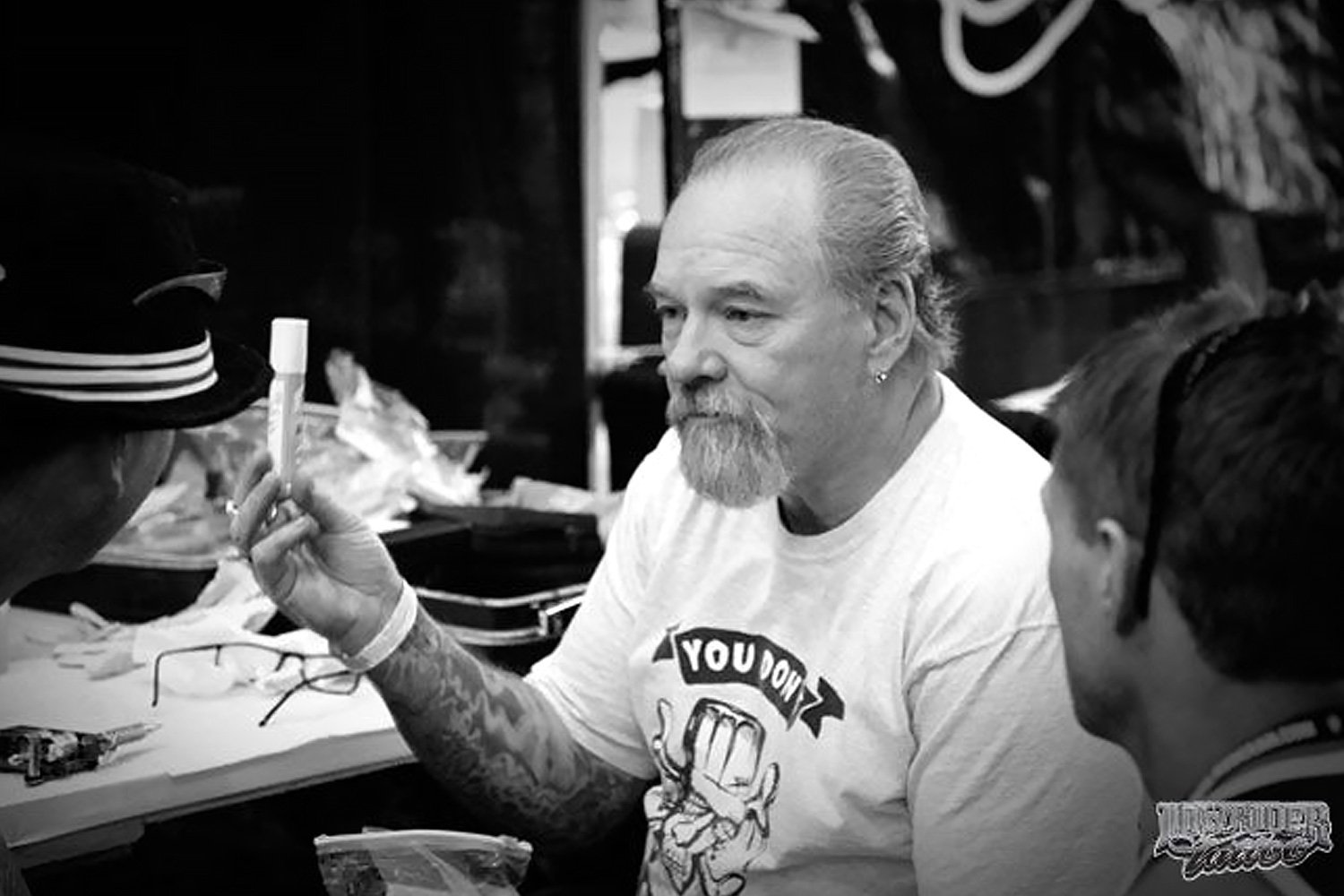
Jack Rudy
Jack Rudy: The man who built the machine
Jack Rudy’s contribution to tattooing can be summed up in a single sentence: he took a prison technique and refined it into a professional method. The black-and-grey single-needle style that came out of the California penitentiary system — improvised machines, smuggled ink, rough but undeniably original — was, when Rudy encountered it, a folk art without the tools to become anything else. Jack Rudy built the tools. He engineered the single-needle tattoo machine configuration that made the technique reliable, repeatable, and precise enough for fine-line portraiture and photorealistic rendering. Every single-needle tattoo machine setup in use today descends from the work he and Charlie Cartwright did at Good Time Charlie’s on Whittier Boulevard in East Los Angeles in 1975.
Growing up in Southern California
He was attracted to the lowrider scene from an early age. His first car, acquired at the start of high school in 1972, was a 1953 Chevrolet 210 club coupe. The lowrider world — with its emphasis on custom craftsmanship, on personalising a mass-produced object until it became unique, on visual display as a form of identity — shared a deep affinity with tattooing, and the two cultures fed each other continuously in 1970s Southern California.
Jack Rudy had been drawing for most of his life. His first tattoo was done in 1969, when he was fifteen. He began building improvised tattoo machines almost immediately — the first was constructed from his father’s electric razor. “I started making homemade machines. The first one I made was out of my dad’s electric razor when I was seventeen years old,” he told Lowrider magazine. “I didn’t tell him what I was going to use it for.”
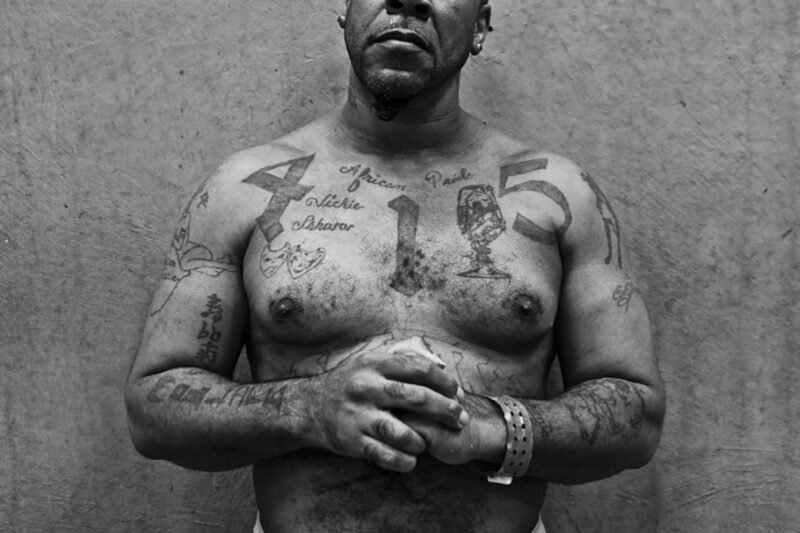
The improvised machines, the self-taught drawing, the hand-built tattoos traded between friends — this was the same amateur tattoo culture that existed in garages and backyards across working-class Southern California, and it was continuous with the prison tattoo tradition that was producing the black-and-grey style Rudy would later professionalise. The distance between the garage and the cell block was short; many of the same people moved between the two.
The Marines and the meeting
Cartwright agreed to teach Rudy the professional trade when he left the Marines. The arrangement was informal — the two were friends first, and the mentorship grew from the friendship rather than from a formal apprenticeship structure. As Jack Rudy later said, he “didn’t have a typical apprenticeship.”
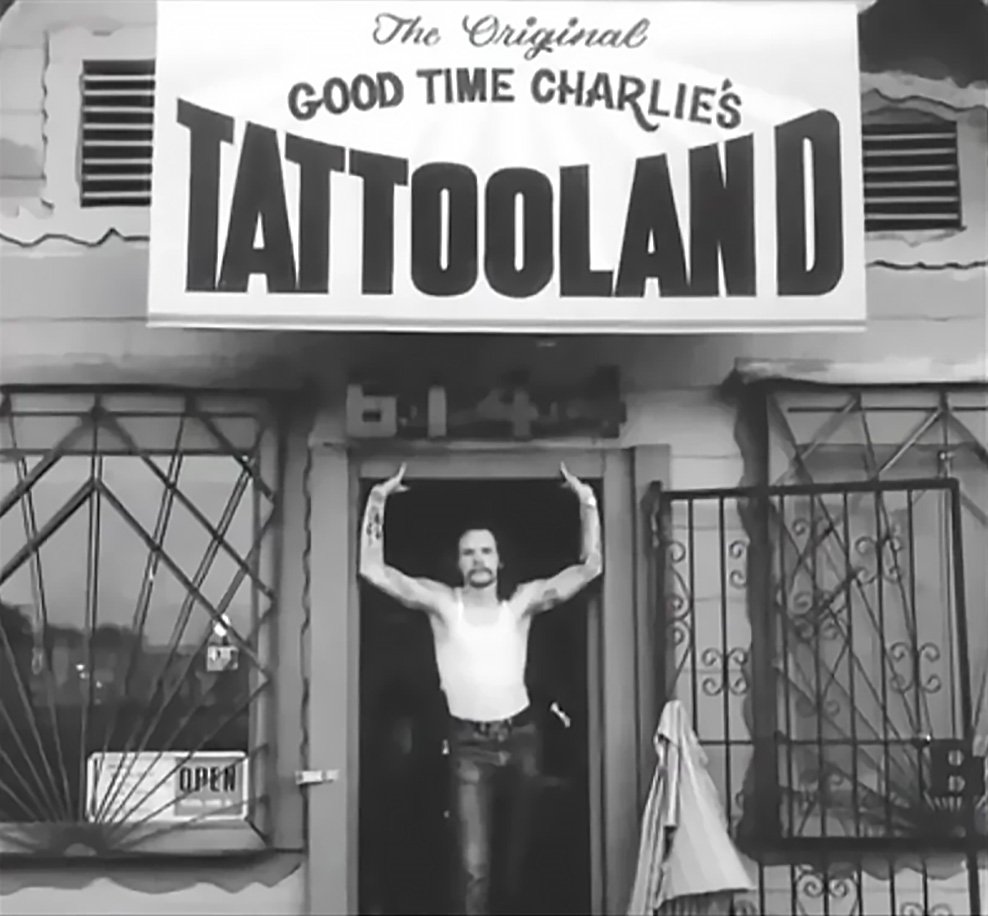
Good Time Charlie's
In the summer of 1975, Jack Rudy left the Marines and went to work for Cartwright at Good Time Charlie’s, the shop Cartwright had just opened on Whittier Boulevard in East Los Angeles. The shop was on a block surrounded by twenty-seven gangs. The clientele was cholos, bikers, lowriders, and blue-collar workers. “We just thought this would be a great place for a tattoo shop — and it was,” Rudy said.
The clients who walked into Good Time Charlie’s wanted something specific. They wanted the tattoos they had seen inside — the fine-line, single-needle, black-and-grey work being done in California prisons with improvised equipment. They wanted the portraits of girlfriends and mothers, the religious imagery, the Old English lettering, the lowrider cars and Aztec warriors — all rendered in the monochrome, tonal, photographic style that the prison artists had developed. The demand was clear. The problem was that no professional tattoo machine existed capable of delivering what the prison machines did.
Standard professional tattoo machines of the era used configurations of three to six needles. These were designed for the bold lines and solid fills of American traditional work. They could not produce the fine, single-needle lines and the subtle tonal gradients that the prison style required. The prison machines — improvised from pen motors, guitar strings, and whatever else was available — used single needles by necessity (because that was all the materials allowed), and the single-needle approach produced results that multi-needle setups could not replicate.
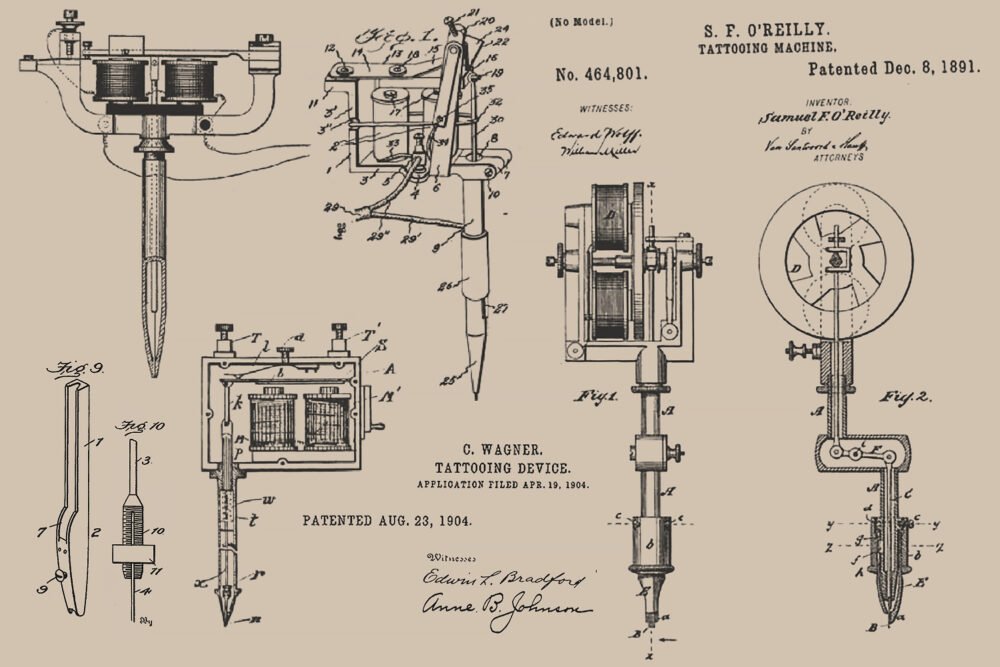
Rudy and Cartwright solved the problem by engineering a professional tattoo machine configured for a single needle. They modified existing machines to funnel ink into a single needle point, which allowed for the fine lines and detailed shading that defined the style. The innovation was mechanical — it was about building a tool that could do what the clients were asking for — and it was the technical breakthrough that made the fine-line black-and-grey movement possible as a professional practice.
Jack Rudy developed the greywash technique alongside the machine: diluting black ink with distilled water to produce a range of grey tones, then building tonal depth through multiple layered passes — lighter greys first, darker values on top. The method allowed for smooth gradients, realistic shadow rendering, and a level of tonal subtlety that had not existed in professional tattooing before.
The gang style writing
One detail from Rudy’s account of this period captures something essential about how the style developed. He told Lowrider magazine:
“The first time I saw gang writing was in Venice Beach. I was so attracted to that style that I wrote all the letters I could find on a napkin so I could learn it.”
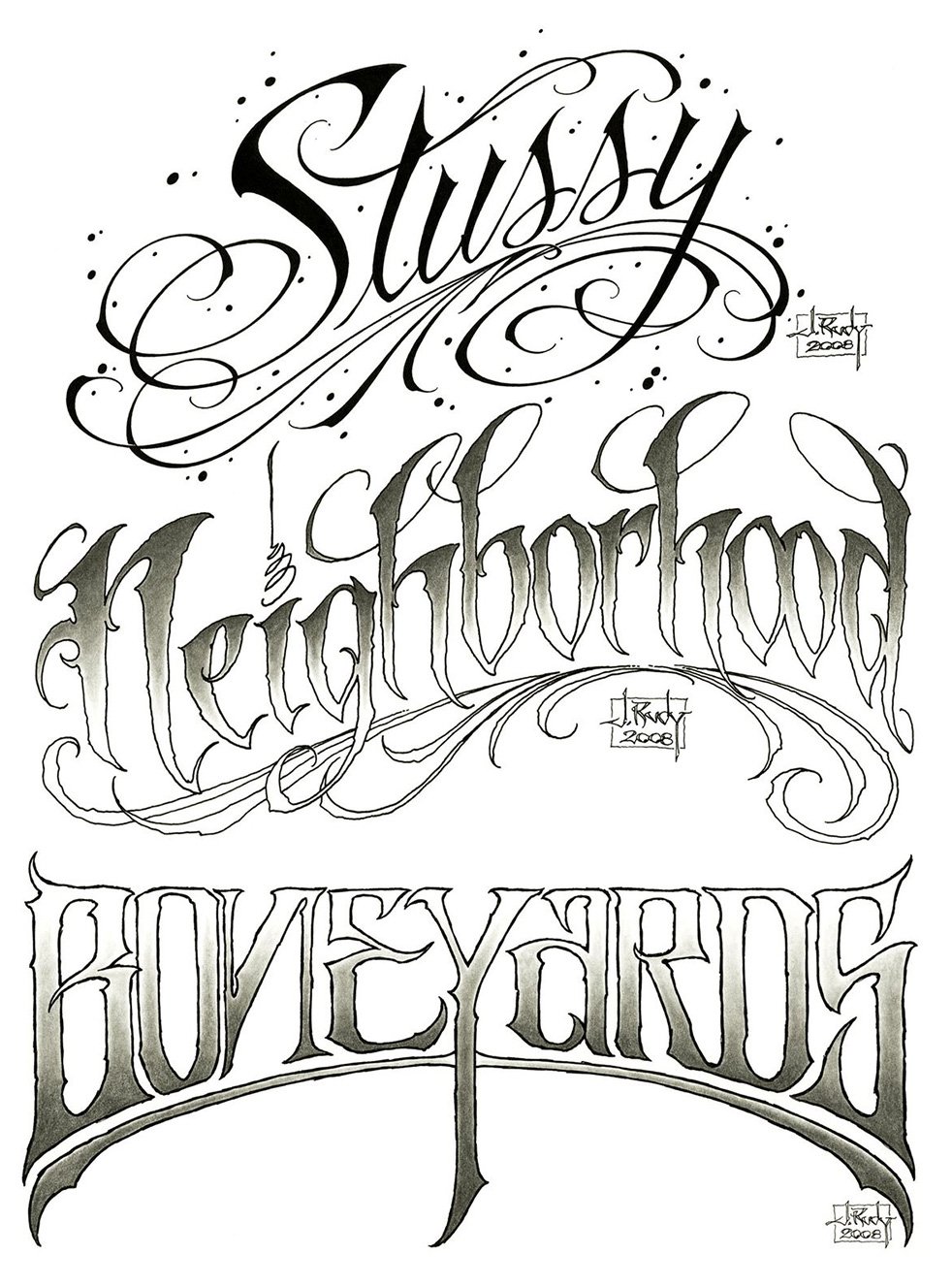
Chicano gang lettering — the elaborate Old English, the flowing script, the stylised calligraphy that covered the walls and the bodies of East Los Angeles — was one of the visual sources that Rudy absorbed and incorporated into his practice. He became known for his lettering work, which he described as one of the most difficult aspects of tattooing:
“Whether it be Old English or script, there’s a lot of style involved in it and you can get stuff where it’s too crowded, where you can’t read it, or it spreads out and gets even worse with age, and in some ways it’s even harder to do than a portrait because with a portrait there’s a lot of sketching involved, doing it really light, and with the lettering you get only the one chance.”
The Hardy connection
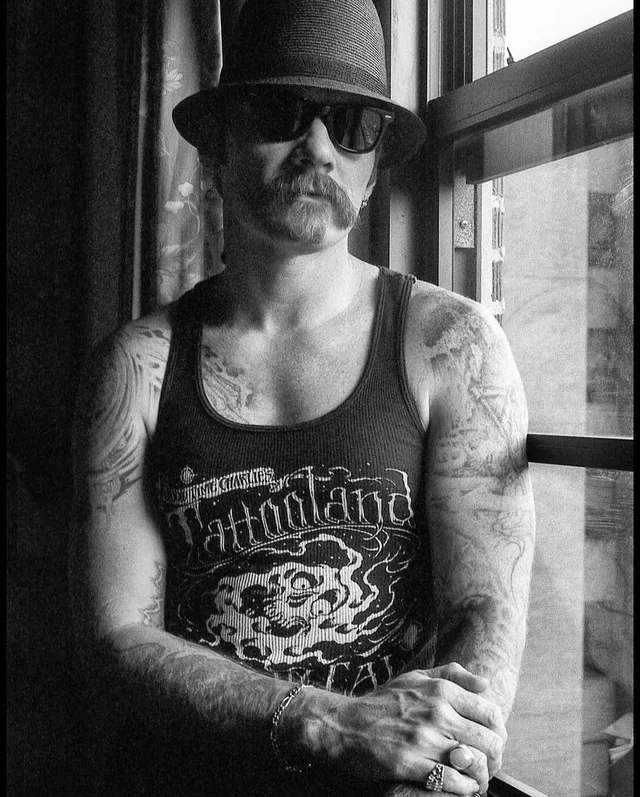
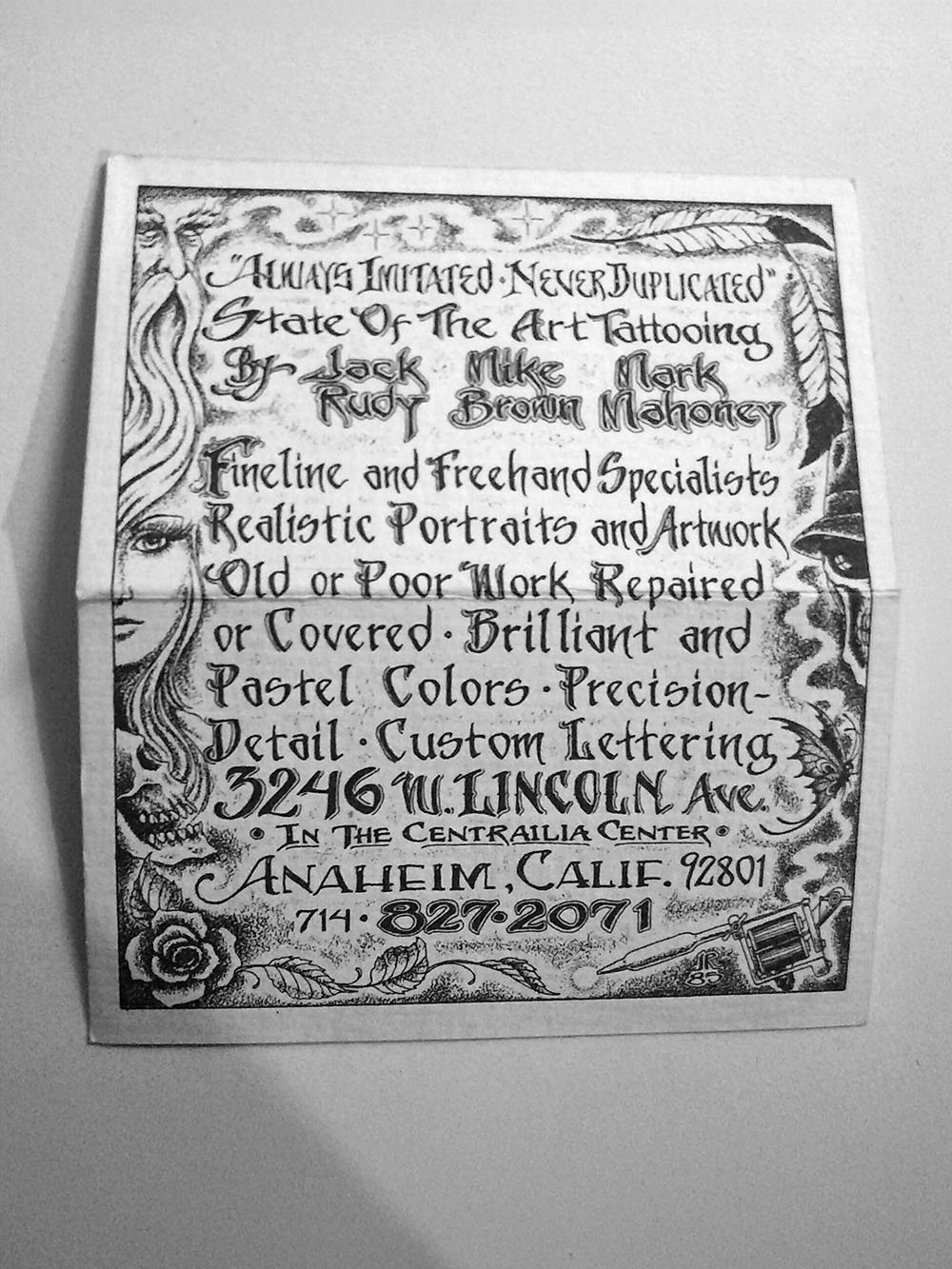
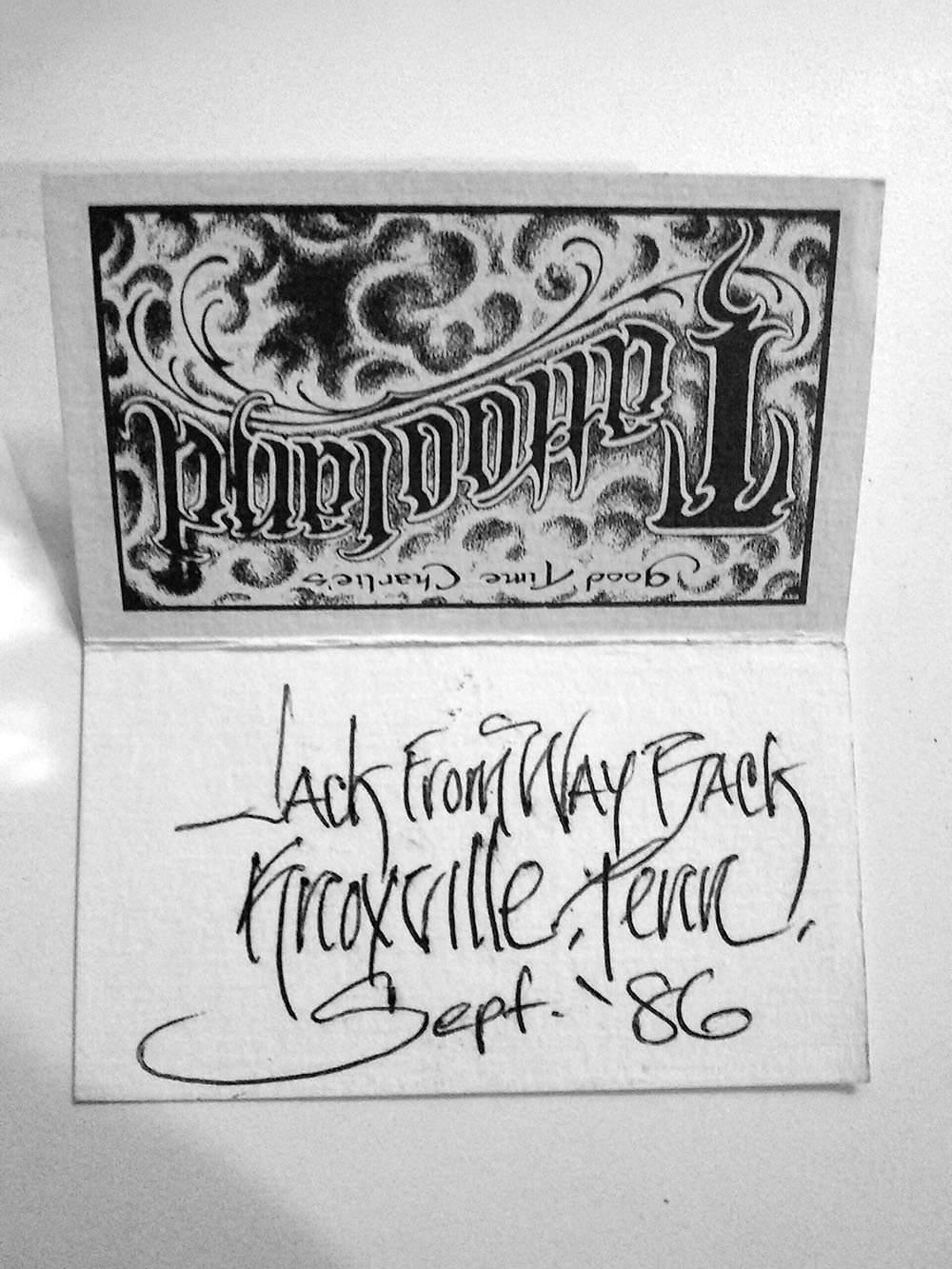
Jack Rudy continued working at the shop through these transitions. When the Whittier Boulevard location closed, Rudy took the name and reopened Good Time Charlie’s Tattooland in Anaheim, California, in January 1985. He ran the Anaheim shop — an old-school street shop at 2641 West Lincoln Avenue — for the next four decades, until his death in 2025.
Tattooland in Anaheim
The Anaheim shop became an institution. Tattooland operated as a traditional street shop — walk-ins welcome, the door open, the work happening in the front room, flash on the walls. Rudy did not pursue the private-studio, appointment-only model that later generations of fine-line artists would adopt. His shop was, by deliberate choice, the kind of place where anyone could walk in and get a tattoo.
The walls of Tattooland held old flash samples from the Pike — the traditional designs that predated the black-and-grey revolution — kept as decoration and as a connection to the history. The shop served as a meeting ground for tattoo artists, car builders, musicians, and gang members — an intersection of the subcultures that defined Southern California.
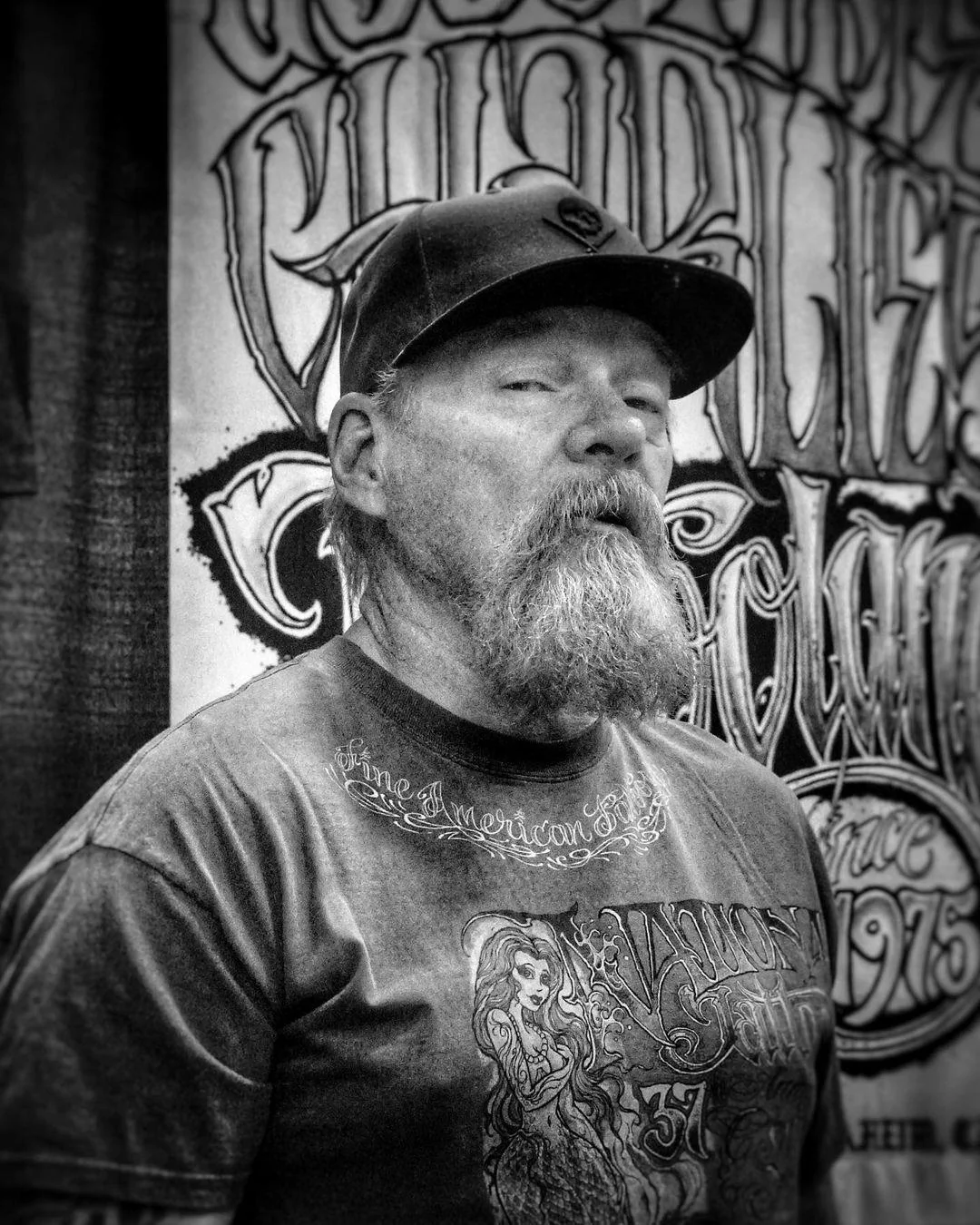
Many artists who trained at or visited Tattooland went on to shape tattoo culture around the world. Rudy’s mentorship was a defining feature of his career. He emphasised professionalism, precision, and respect for the craft and its history. He was known for being generous with his knowledge — a contrast to the guarded, information-hoarding culture that had characterised older generations of tattooers (including the Pike artists who gave Cartwright the cold shoulder decades earlier). His warmth and willingness to teach were mentioned in virtually every tribute published after his death.
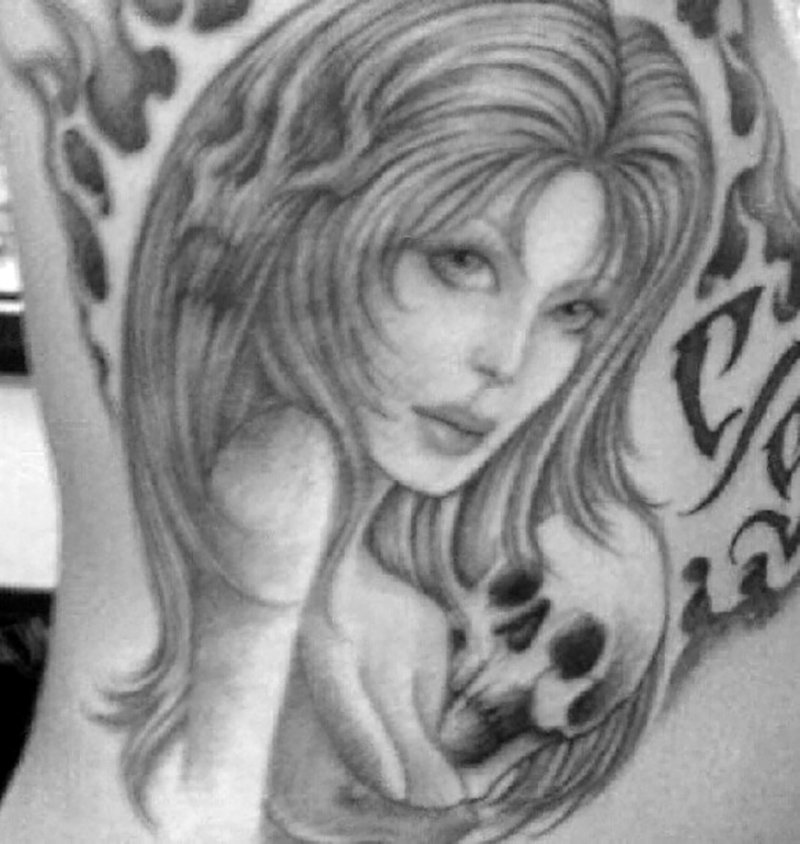
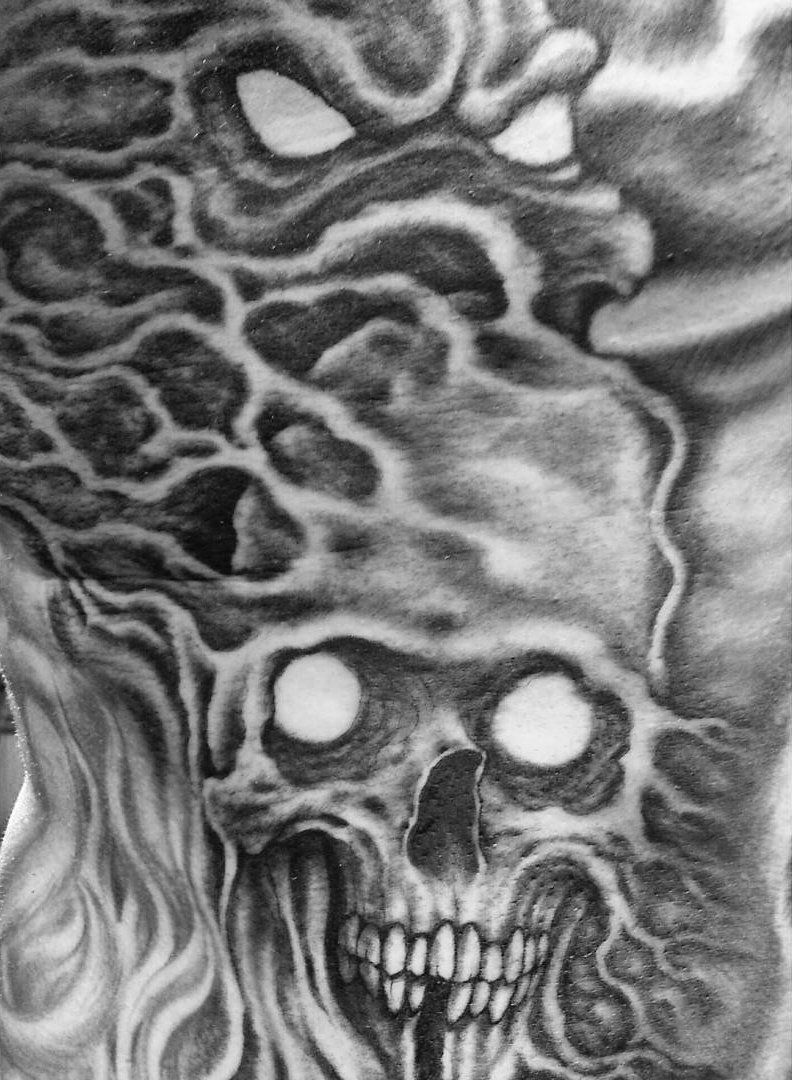
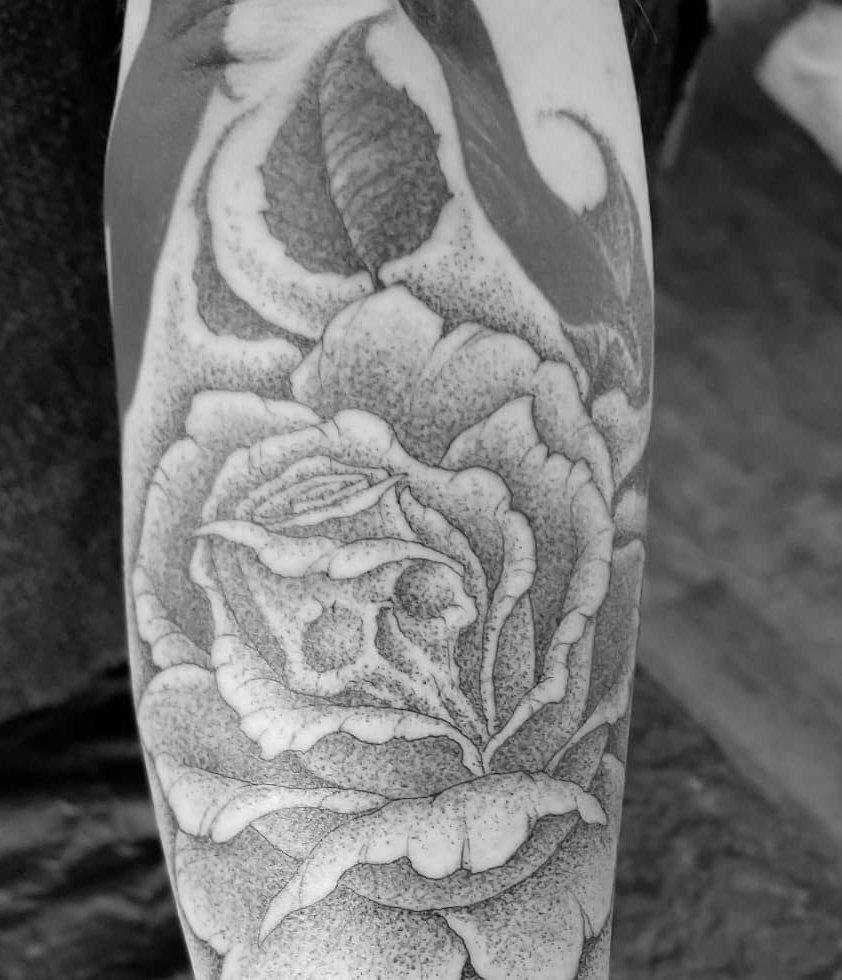
The signature work
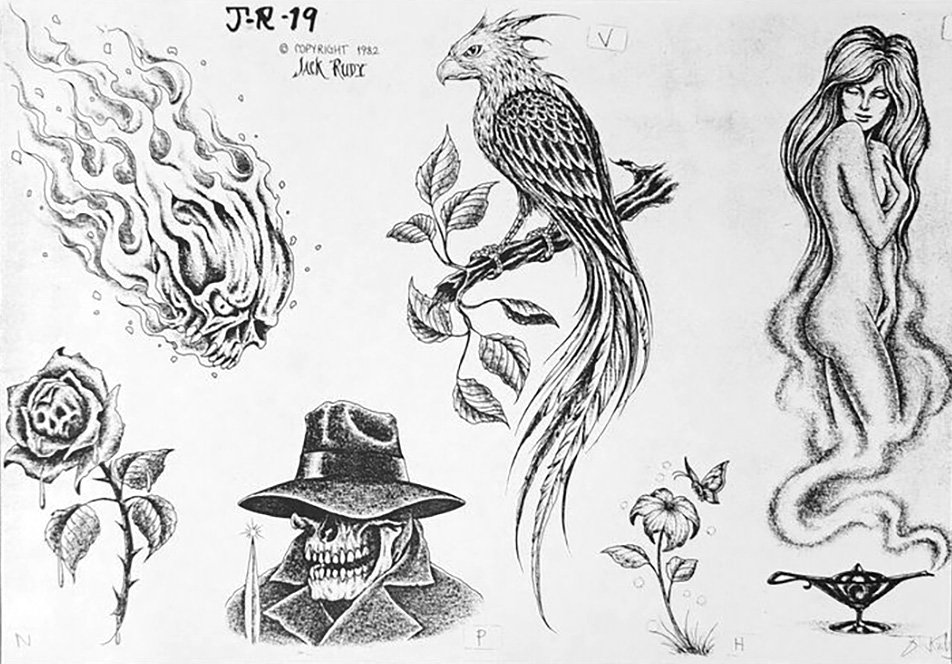
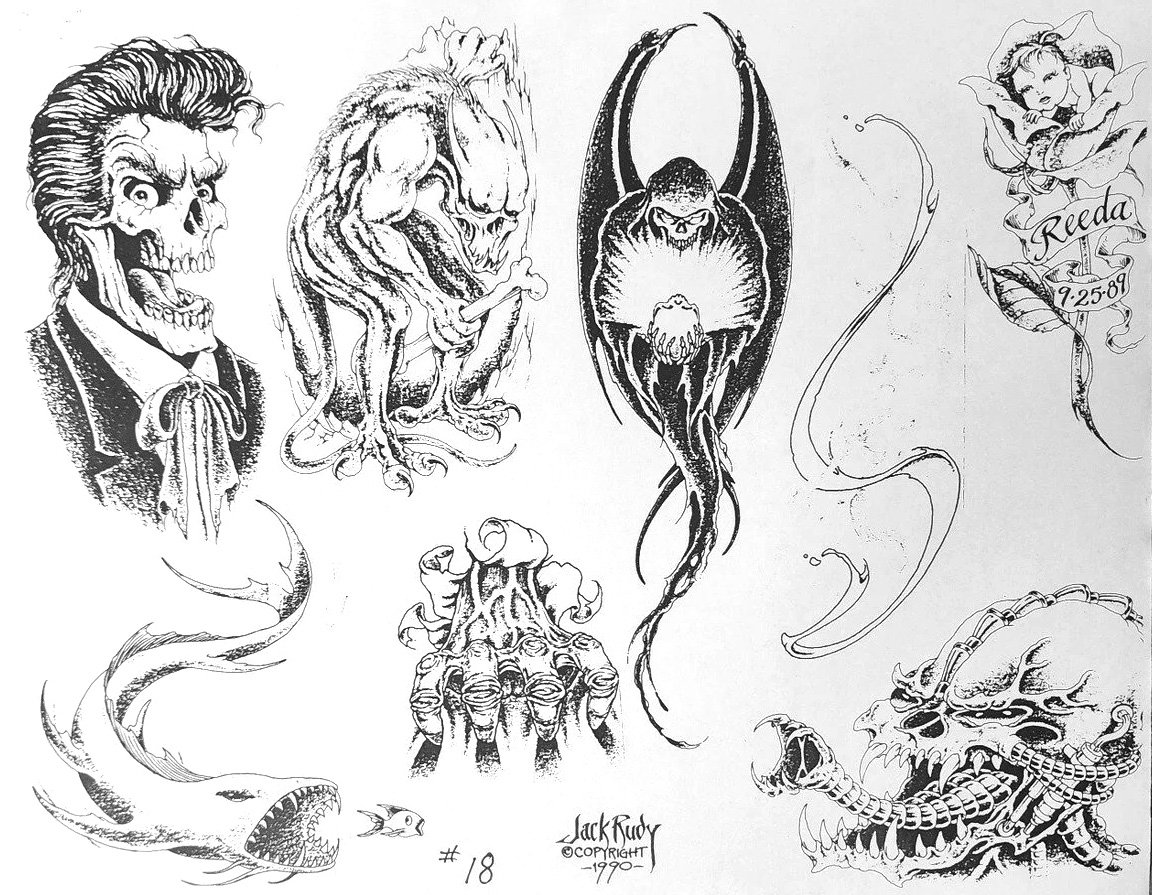
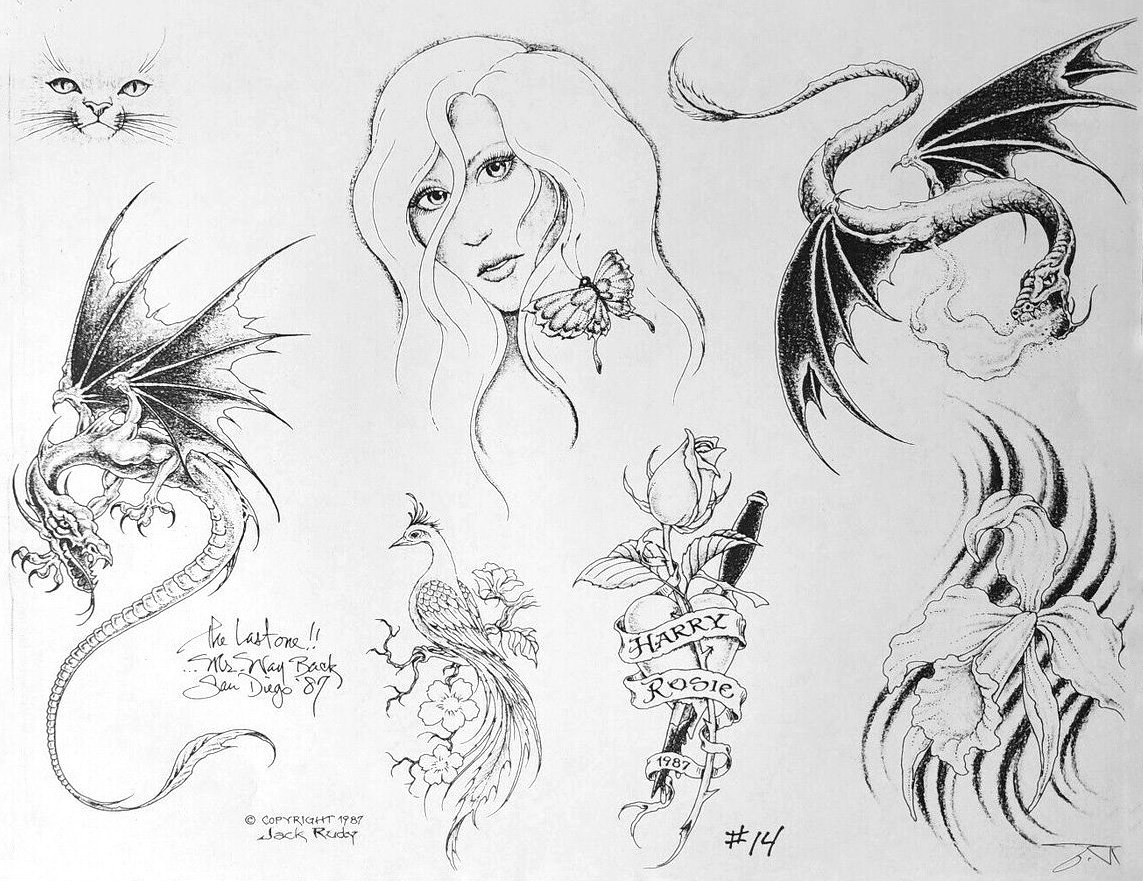
Rudy’s personal body of work, centred on the subjects that defined the Chicano tradition:
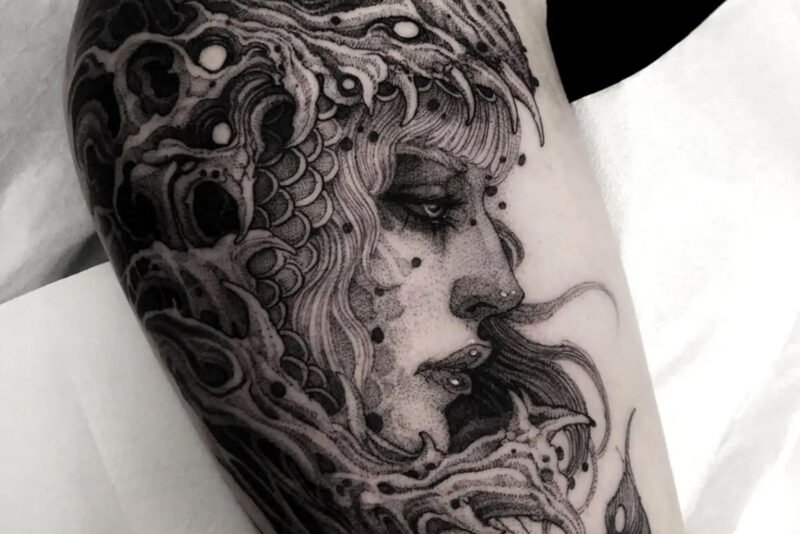
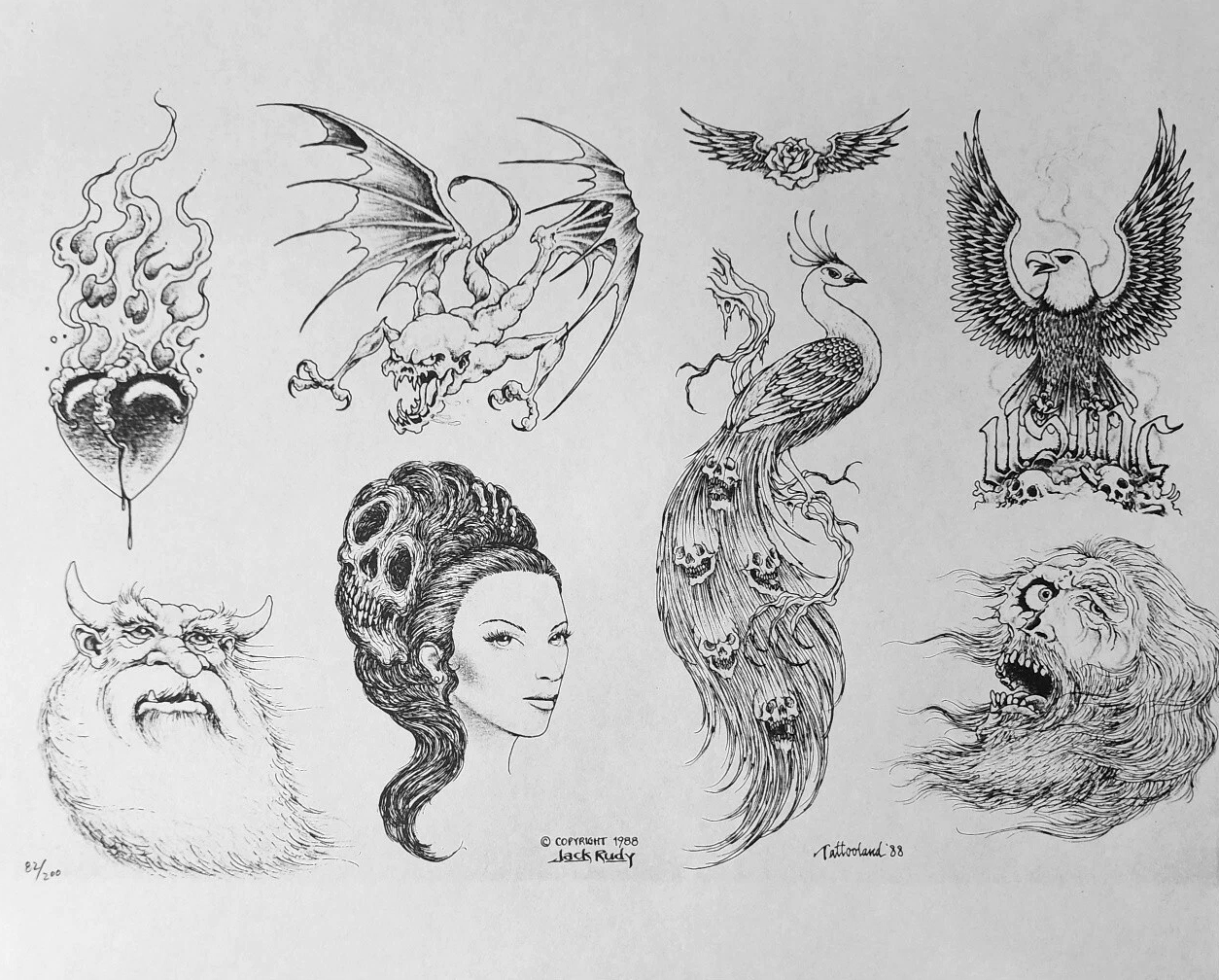
- portraits (women’s faces — his signature “Rudy lady heads” — rendered in fine-line black-and-grey with the tonal subtlety that his technique made possible),
- skulls (drawn from lowrider and Mexican cultural iconography),
- religious imagery (Christ, the Virgin Mary, praying hands — the Catholic visual vocabulary that permeates Chicano visual culture),
- lettering (Old English, Chicano script, and other calligraphic forms executed with the precision and style he considered the hardest discipline in tattooing).
He was also known for his mechanical understanding of tattoo machines. He constantly modified and customised his rotary and coil setups — adjusting them for smoother shading, longer strokes, and cleaner lines. The engineering sensibility that led him to build the first professional single-needle machine at twenty-one never left; he remained a toolmaker as well as an artist throughout his career.
Beyond the shop
Jack Rudy was president of the Beatnik’s Car Club — a car club whose membership requirements included owning a 1950s-styled hot rod and having “lots of tattoos.” The club connected his two lifelong passions: custom cars and custom tattoos.
He served as president of the American Tattoo Association, a professional organisation for the tattoo industry.
He appears in Tattoo Nation, the documentary film directed by Eric Schwartz that covers the history of Southern California tattooing and the development of the black-and-grey style. In the film, he discusses the origins of the technique alongside Cartwright, Hardy, Negrete, and Danny Trejo. He says in the documentary:
“We weren’t trying to change the course of tattoo history. We were just trying to make a living.”
He and Cartwright published Tattoo Man — The Story of Good Time Charlie’s in 2021, a 350-page limited-edition art book documenting their careers, the shop, and the development of the style. The book includes handwritten accounts from both artists and contributions from artists they mentored.
Jack rudy in tattoo history
The downstream effects of that innovation are evident throughout contemporary tattooing. The fine-line movement — from the Chicano tradition through Mark Mahoney through Dr. Woo through the Korean fine-line scene through the global proliferation of single-needle work — all trace back to the mechanical and technical innovations that Jack Rudy developed at Good Time Charlie’s in 1975. Every artist working with a single-needle configuration today is using a descendant of the tool Rudy built.
He ran Tattooland for forty years. He kept the doors open. He taught anyone who wanted to learn. He maintained the connection between the style’s origins — the prisons, the barrio, the lowrider scene, the working-class streets of East Los Angeles — and its present, even as the style migrated to Hollywood studios, Instagram feeds, and luxury watch collaborations.
He died in his sleep at the age of seventy. The shop name he inherited from Cartwright had been in continuous operation for fifty years.
Sources & further reading
- Jack Rudy’s official Instagram account: @j_rudy_gtc
- Jack Rudy, Wikipedia, The Free Encyclopedia. Biographical overview with citations, updated July 2025.
- Sullen Clothing, artist page: Jack Rudy.
- Daniel Collins. Rose Tattoo Artist Spotlight: Jack Rudy. Rose Tattoo, San Diego, 2025.
- Tattoo.com, Legends of Ink: Jack Rudy @ Good Time Charlie’s Tattoo Land (Video).
- Phoenix New Times, New Film Documents Southern California’s Tattoo Scene, from Danny Trejo to Ed Hardy.2013.
- LA Weekly, L.A. (L)INKED: Cultural Expression and the Art of Tattoo in Los Angeles. 2021.
- Bishop Tattoo Supply, Tattoo Man — The Story of Good Time Charlie’s.
- Tattoo Nation documentary, dir. Eric Schwartz.
- Tattoo Heritage Project: www.tattooheritageproject.org
- Freddy Negrete with Steve Jones, Smile Now, Cry Later: Guns, Gangs, and Tattoos — My Life in Black and Gray. Seven Stories Press, 2016.
- Tattooo Memorabilia – Tattoo auction platform and store: tattoomemorabilia.com
- Margo DeMello, Bodies of Inscription: A Cultural History of the Modern Tattoo Community. Duke University Press, 2000.
- Matt Lodder, Painted People: Humanity in 21 Tattoos. Harper, 2024.
- Anna Felicity Friedman, The World Atlas of Tattoo. Yale University Press, 2015.