Related Posts

Polynesian tattooing
Polynesian tattooing: where the word tattoo comes from
The English word “tattoo” is Polynesian. It enters the language through the journals of Captain James Cook, whose crew encountered the practice during their Pacific voyages in the 1760s and 1770s and recorded the Tahitian word tatau — meaning “to strike” or “to mark” — as the name for the permanent body markings they saw on the peoples of the Pacific Islands. Before Cook’s voyages, the English had no dedicated word for the practice. The fact that the global term for tattooing is Polynesian tells the story in miniature: of all the world’s tattoo traditions, the Polynesian traditions are among the oldest, the most technically sophisticated, the most socially embedded, and — through colonialism, missionaries, and the responses to both — among the most dramatically suppressed and most powerfully revived.
Polynesian tattooing is not one tradition. It is a family of traditions, developed across the thousands of islands of the Polynesian Triangle — the vast area of the Pacific bounded roughly by Hawai’i to the north, Aotearoa (New Zealand) to the southwest, and Rapa Nui (Easter Island) to the southeast. Each island group — Samoa, Tonga, Tahiti, the Marquesas, Hawai’i, Aotearoa, the Cook Islands, Fiji, Niue, Tokelau — developed its own distinct tattooing practice, with its own tools, its own design vocabulary, its own rules about who receives which marks, and its own relationship to the social structure of the community. These traditions share a common ancestry (the Austronesian peoples who settled the Pacific beginning roughly 3,000 years ago) and a set of common principles (black ink, geometric and stylised patterning, culturally encoded meaning, hand-tapping technique), but each is its own complete system.
The shared elements
Black ink. All Polynesian tattooing traditions use black pigment — traditionally made from the soot of burned candlenut kernels (lama or kukui) mixed with water. The resulting pigment is a rich, stable black that holds its tone in the skin for decades.
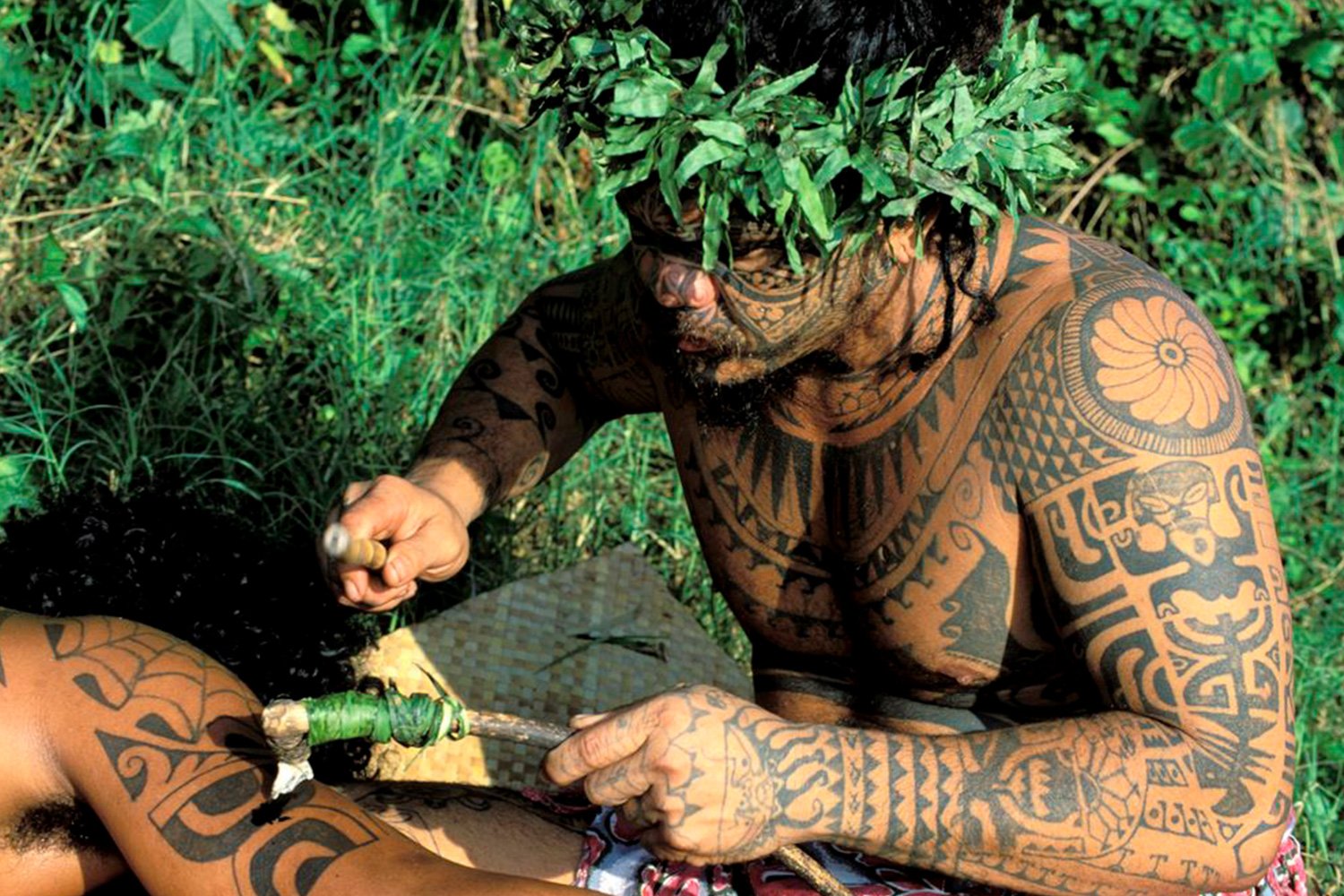
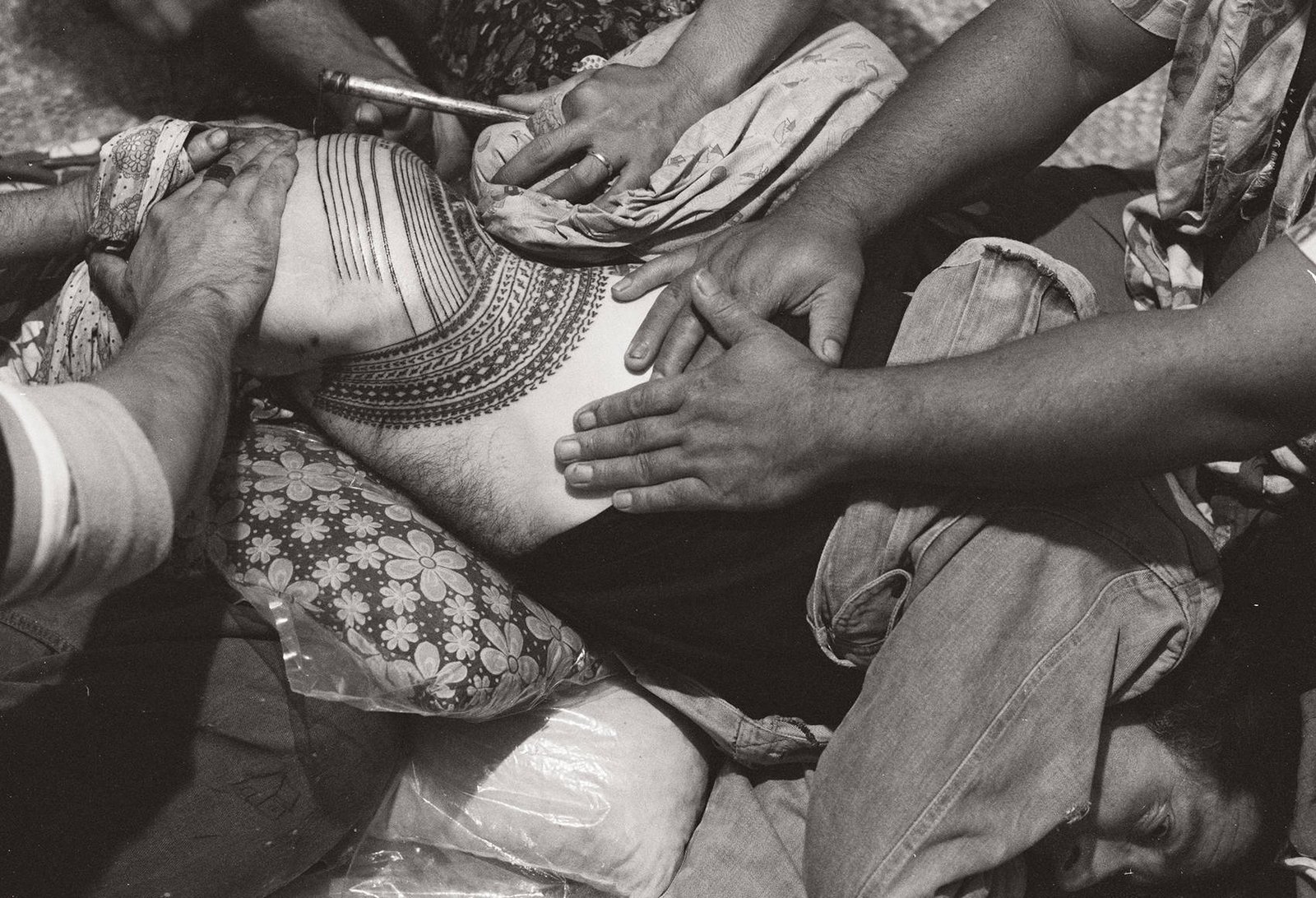
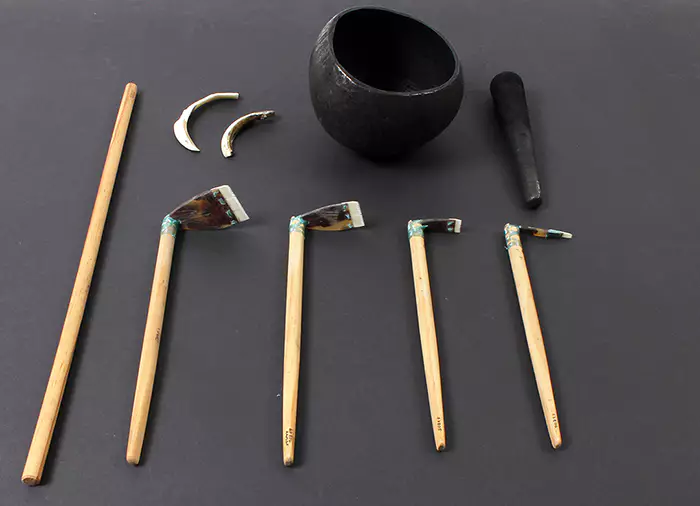
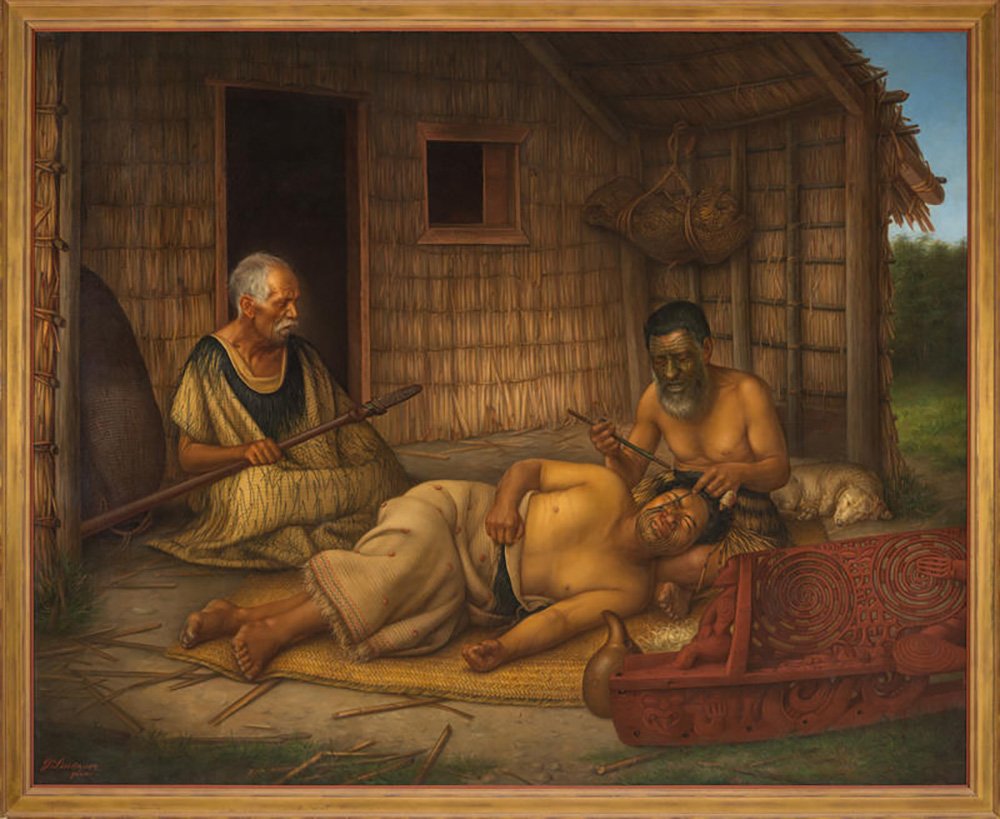
Hand-tapping technique. The ink is deposited in the skin using a comb of pointed teeth (historically made from bone, tusk, turtle shell, or shell) mounted on a handle and struck with a mallet to drive the teeth into the skin. The tapping produces a rapid series of punctures, depositing ink across a line or area with each strike. The technique is faster than single-needle hand-poke and produces the dense, even coverage that Polynesian designs require. The rhythmic tapping sound is the origin of the word tatau.
Geometric and abstract patterning. Polynesian tattoo designs are built from geometric motifs — lines, arcs, triangles, chevrons, zigzags, solid fields — arranged in structured patterns. The patterns are abstract or highly stylised; figurative representation in the Western sense (portraits, realistic images) is absent from the traditional vocabulary. The visual complexity comes from the arrangement and combination of simple elements, not from representational mimicry.
Culturally encoded meaning. The patterns carry information. They encode identity (which island, which family, which clan), status (rank, title, social position), achievement (skills mastered, battles fought, rites completed), genealogy (lineage, descent), and spiritual function (protection, connection to ancestors, cosmological orientation). A knowledgeable observer can read some of this information from looking at the tattoo. The specific meanings vary between island groups and between communities within island groups.
Social embeddedness. Receiving a Polynesian tattoo is a social event — not a private transaction between an individual and a service provider. It involves obligations to family, to community, and to the practitioner. It marks a transition (from youth to adulthood, from one status to another) and it announces that transition publicly and permanently. The tattoo is not chosen from a menu; it is given within a cultural framework that determines who receives what, when, and from whom.
The practitioner as a figure of authority. The tattoo master — tufuga ta tatau in Samoa, tohunga tā moko in Aotearoa, tahu’a tatau in Tahiti, tuhuka patu tiki in the Marquesas — holds a specific social position: a master of a sacred craft, trained through years of apprenticeship, authorised by lineage or title to perform the work. The practitioner’s authority comes from the culture, not from a business licence.
Samoa: the unbroken tradition
Samoan tattooing is the only Polynesian tattoo tradition that survived the colonial era intact. The practice was suppressed but never fully eliminated, and it has been practised continuously in its traditional form from pre-contact times to the present. This makes Samoa the anchor of the broader Polynesian tattoo revival — the tradition to which other island groups have turned when seeking to reconstruct their own interrupted practices.
The pe'a and the malu
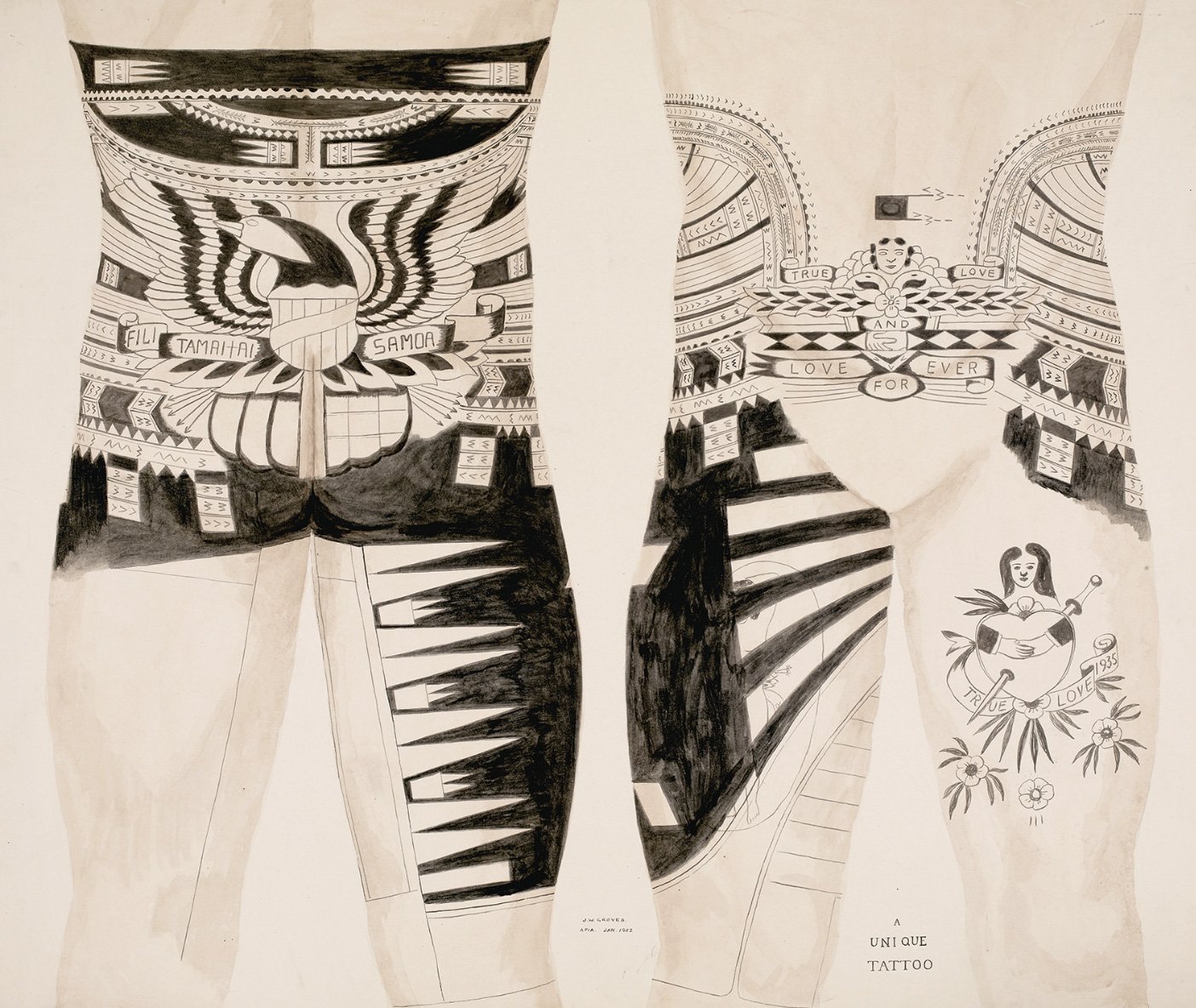
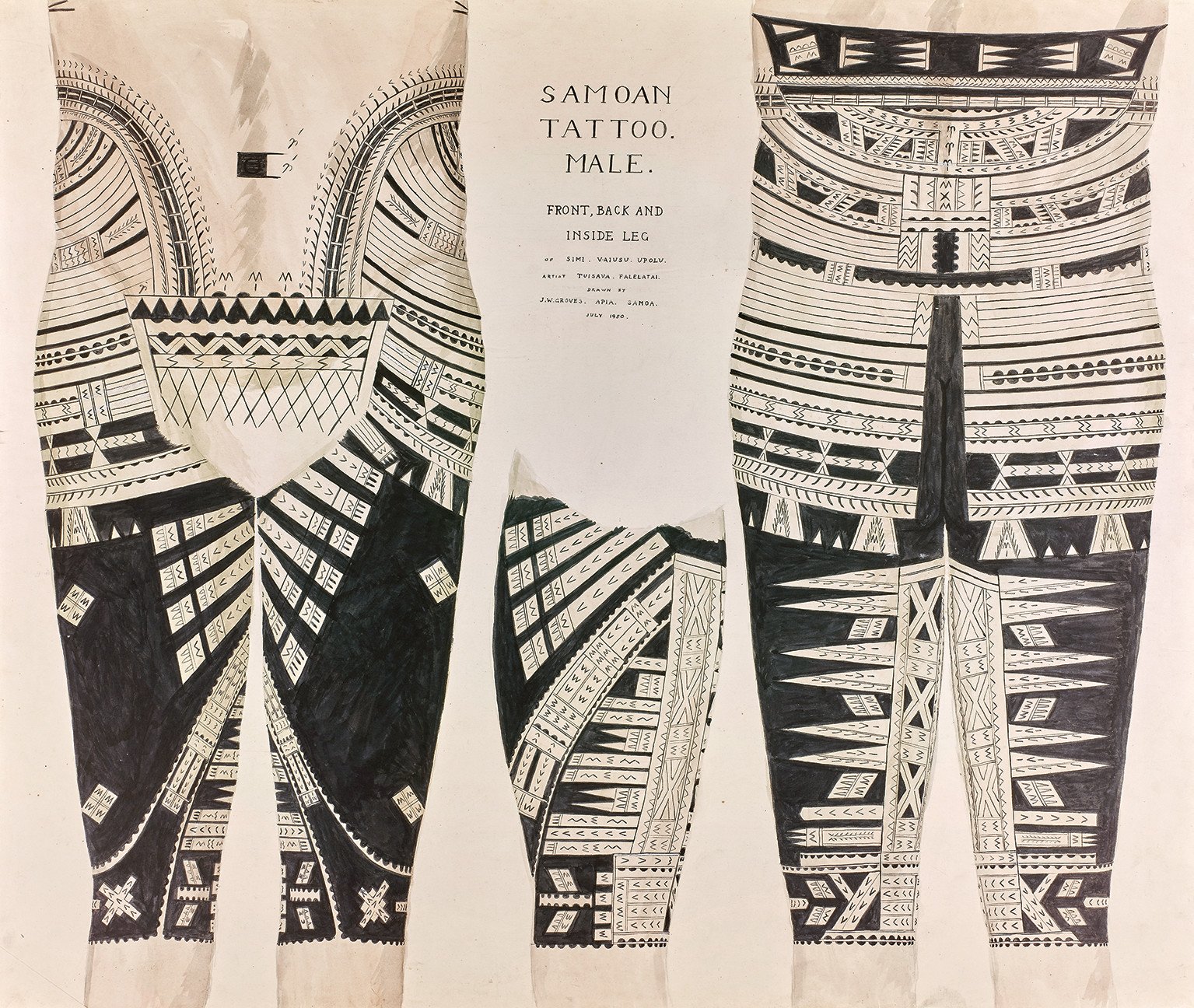
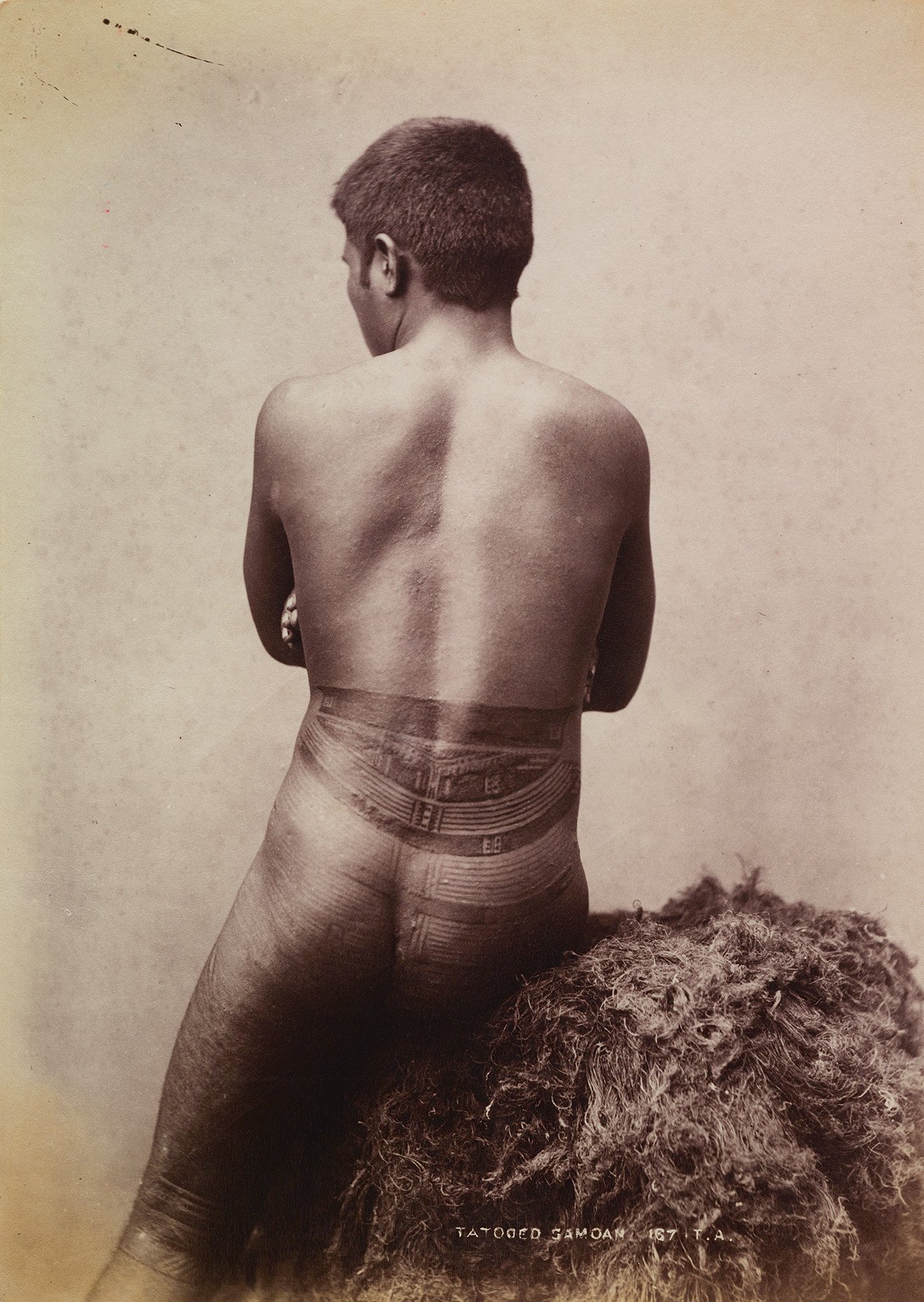
The Samoan male tattoo is the pe’a — a dense geometric composition covering the body from the waist to below the knees. The design is symmetrical, covering the lower back, buttocks, hips, upper thighs, and the fronts and backs of the legs down to the knees. The composition is built from bands, arcs, and solid black fields arranged in a specific sequence that follows the body’s anatomy. The final element is the pute — the belly-button tattoo that completes the design. A pe’a typically takes 30 to 35 hours of tattooing spread across daily sessions of four to six hours, completed over the course of one week to one month.
The Samoan female tattoo is the malu, a more delicate geometric pattern covering the thighs from the upper thigh to the back of the knee. The malu uses finer lines and more open patterning than the pe’a, and it is often completed in a single sitting or over two days.
Both the pe’a and the malu are rites of passage — the pe’a marks a man’s entry into adult male responsibilities, and the malu marks a woman’s. A man who has received a pe’a is called soga’imiti (literally “one who is qualified to squeeze the dye”). The process is understood as a test of endurance, courage, and commitment to one’s family and community. Abandoning the process partway through — failing to endure the pain — brings shame to the recipient and their family.
The tufuga ta tatau
The title of tattoo master — tufuga ta tatau — is hereditary, held within specific families. The two principal families are the Sa Su’a (of Savai’i) and the Sa Tulou’ena (of Upolu). A third family, the Lai’afaiva, is also recognised, though the historical legitimacy of all three guilds is a matter of ongoing discussion within the Samoan community.
The most internationally prominent family is the Su’a Sulu’ape, a branch of the Sa Su’a. The late Su’a Sulu’ape Paulo II (1949 or 1950–1999), based in New Zealand from the 1970s, was the figure who brought Samoan tattooing to international visibility. He tattooed at the Amsterdam Tattoo Museum at the invitation of Henk Schiffmacher, and he served a growing Samoan diaspora in New Zealand, Australia, and the United States. His brother Su’a Sulu’ape Alaiva’a Petelo — who was the first Samoan tufuga ta tatau invited to an international tattoo convention, in Rome in 1985 at the invitation of Ed Hardy and Henk Schiffmacher — is one of the most respected master tattooists alive today and heads the Sulu’ape family.
The Sulu’ape family has been instrumental in the revival of traditional tattooing across the broader Pacific: in Tonga, French Polynesia, the Cook Islands, Hawai’i, and Aotearoa, new generations of Pacific tattooists have learned from Samoan tufuga and adapted the techniques and protocols for their own cultural contexts.
The tools
The Samoan tufuga works with a set of handcrafted tools collectively called the ‘au.
The core instrument is the tattooing comb — a row of sharp teeth made historically from boar’s tusk or bone, now often from surgical steel, mounted on a handle of wood or bone and bound with nylon (historically coconut fibre). Different combs have different widths for different purposes: narrow combs for fine lines, wider combs for filling solid areas. Each tool has a specific name — ‘au tapulu (wide comb), ‘au mono (narrow comb), and others — corresponding to its function.
The sausau is the mallet — a short wooden stick used to strike the comb handle, driving the teeth into the skin. The rhythmic tapping of the sausau against the ‘au is the sound that gives the practice its name.
The pigment is made from the soot of burned candlenut (lama) mixed with water on a half-coconut shell palette, often using a taro leaf as a mixing surface.
The tufuga works with one or more assistants — the ‘au toso — who stretch the skin taut, wipe excess ink and blood, and support the recipient through the sessions. The assistants are usually apprentices learning the craft.
Samoa adopted hygiene standards for traditional hand-tap tattooing in 2017. Modern tufuga use synthetic materials that can be autoclaved, disposable stainless-steel combs, and commercially manufactured ink, while maintaining the traditional hand-tapping method and the cultural protocols that surround it.
Why Samoan tradition survived
The survival of the Samoan tradition through the colonial era — when every other Polynesian tattooing tradition was disrupted or destroyed by missionaries — is one of the most remarkable facts in the history of tattooing. Three factors are cited.
First, Samoa adopted Christianity pragmatically rather than exclusively. Samoans accepted the Christian God alongside their existing gods rather than replacing one with the other. The biblical prohibition on tattooing (Leviticus 19:28) was known but not treated as binding.
Second, the pe’a was embedded in the social structure — connected to the matai (chiefly) system, to masculine identity, to village governance — so thoroughly that removing it would have disrupted the social organisation on which the colonial administration depended.
Third, the tufuga ta tatau families maintained the practice within their own lineages through the colonial period, passing the tools and the knowledge from father to son without interruption.
Aotearoa (New Zealand): tā moko
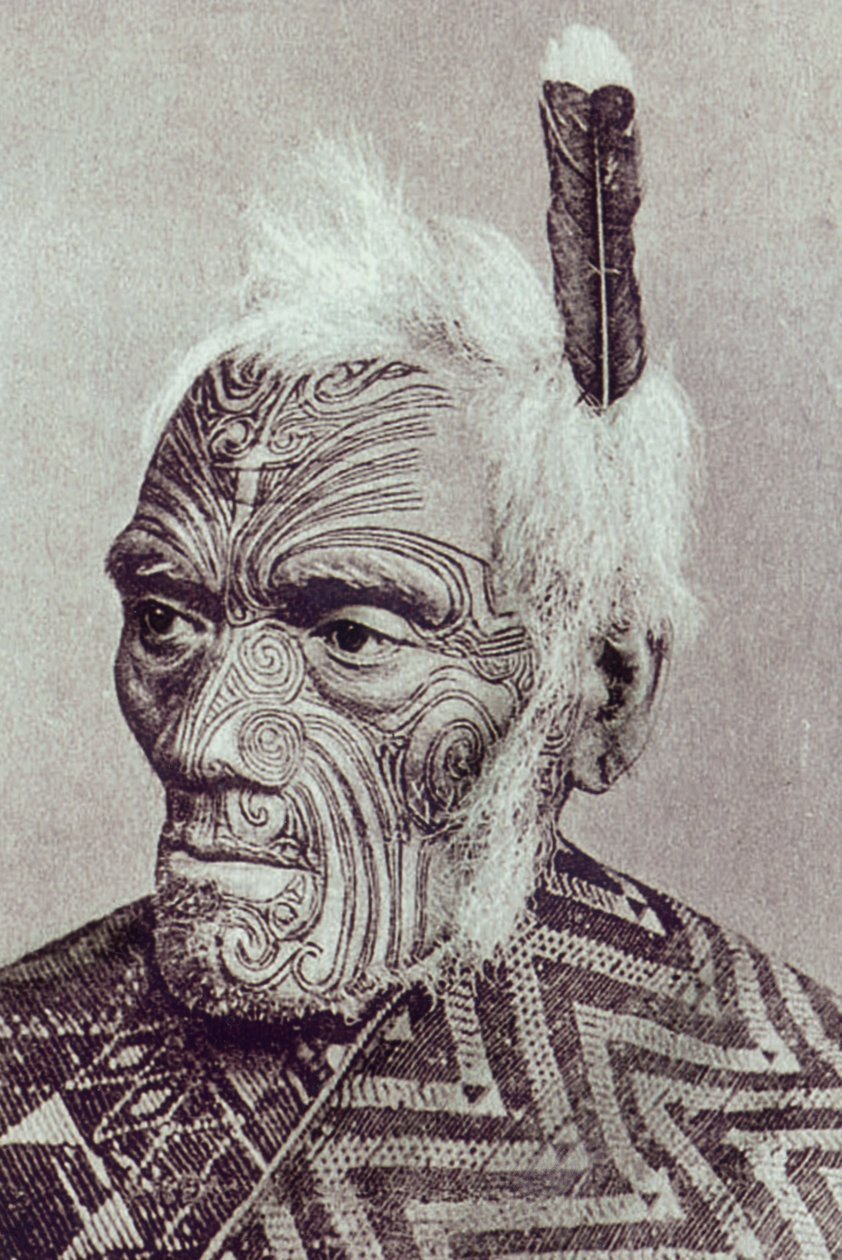
The Māori tattoo tradition of Aotearoa is called tā moko. It is one of the most visually distinctive tattoo traditions in the world, characterised by its curvilinear designs, its historical technique of chiselling rather than puncturing, and its specific cultural function as a visual record of identity, genealogy, and social status.
The method
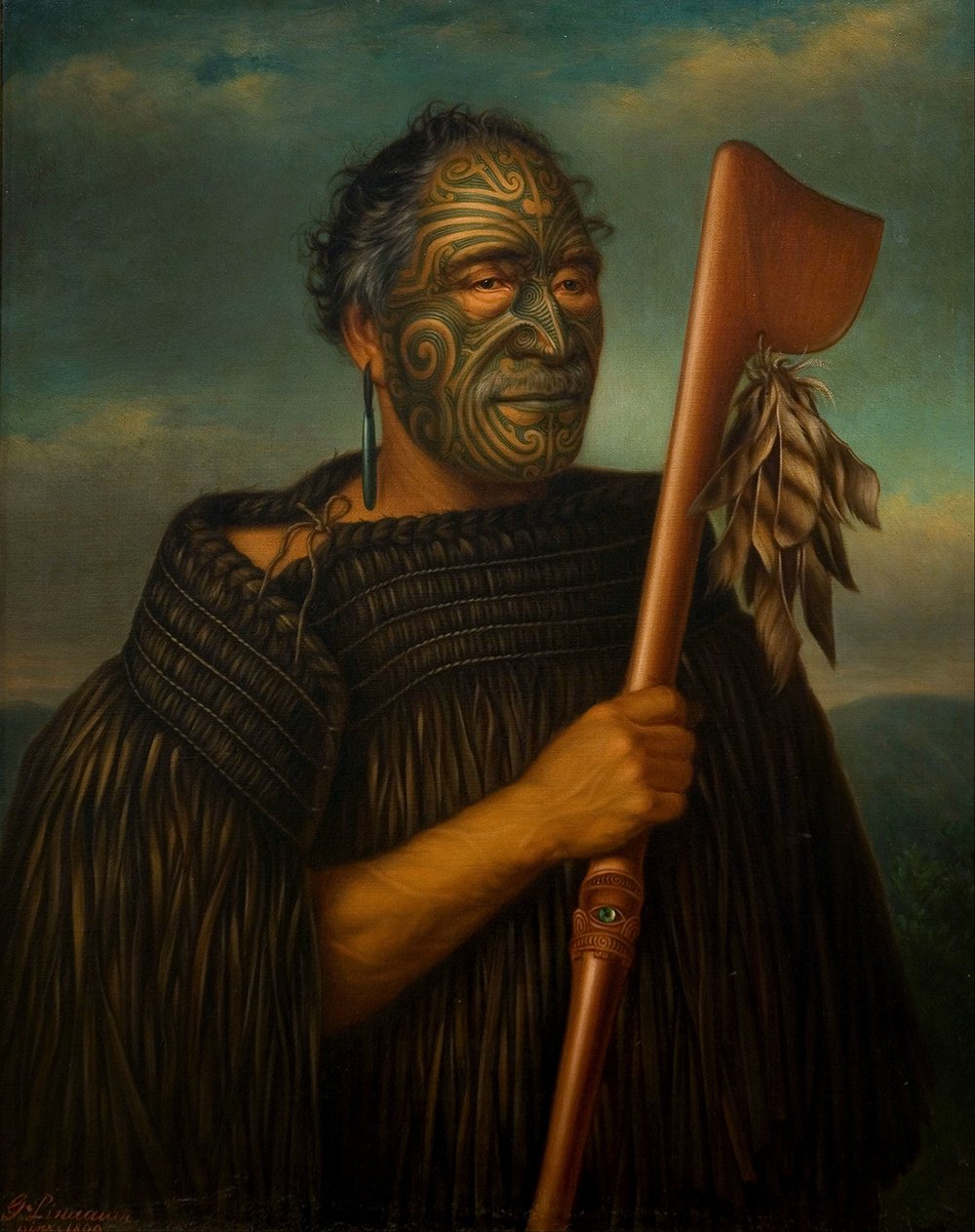
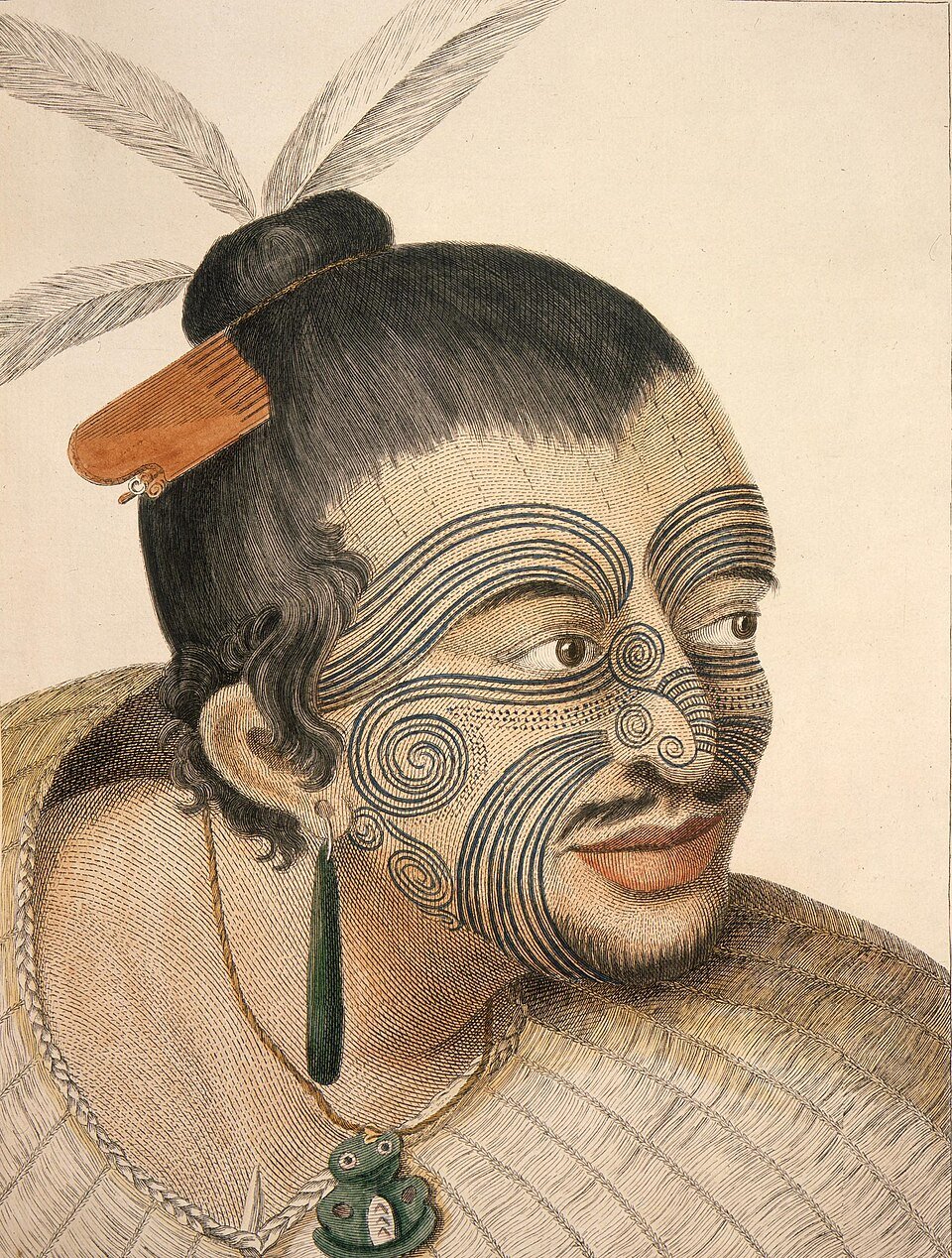
Historically, tā moko was applied using bone chisels (uhi) rather than combs. The uhi was a chisel-edged blade that cut grooves in the skin, into which pigment was introduced. The resulting mark was textured — raised, grooved, tactile — rather than flat, giving tā moko a sculptural quality distinct from all other tattoo traditions. The skin was carved rather than punctured, and the surface of a fully tattooed face had a visible texture that could be felt as well as seen.
Contemporary tā moko practitioners use both the traditional uhi chisel and modern tattoo machines. The choice of tool varies with the practitioner and the recipient’s wishes.
The face
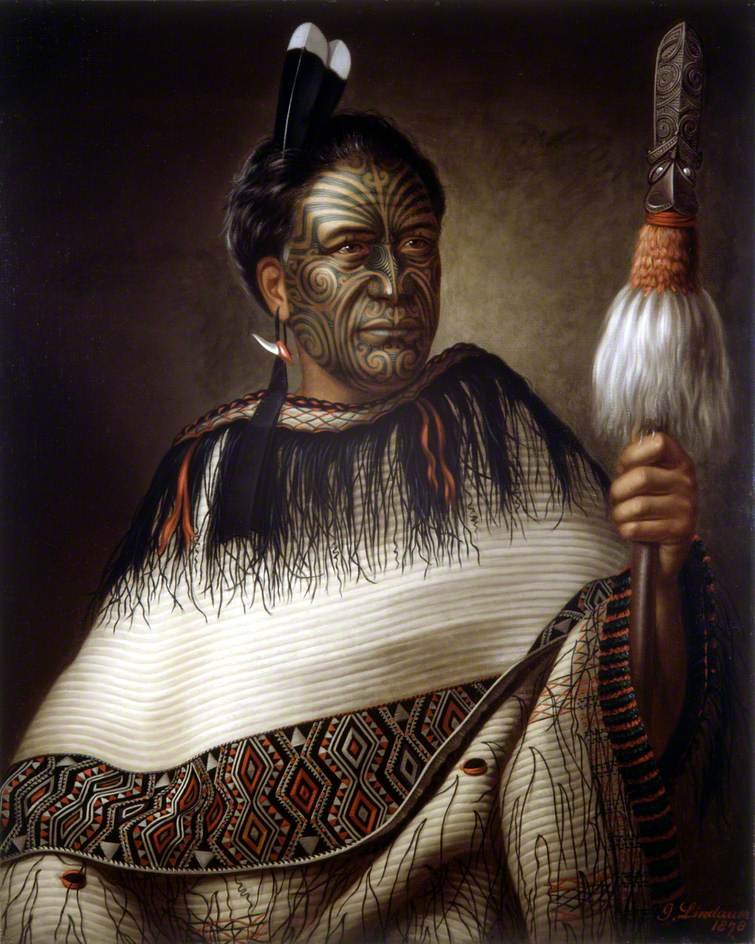
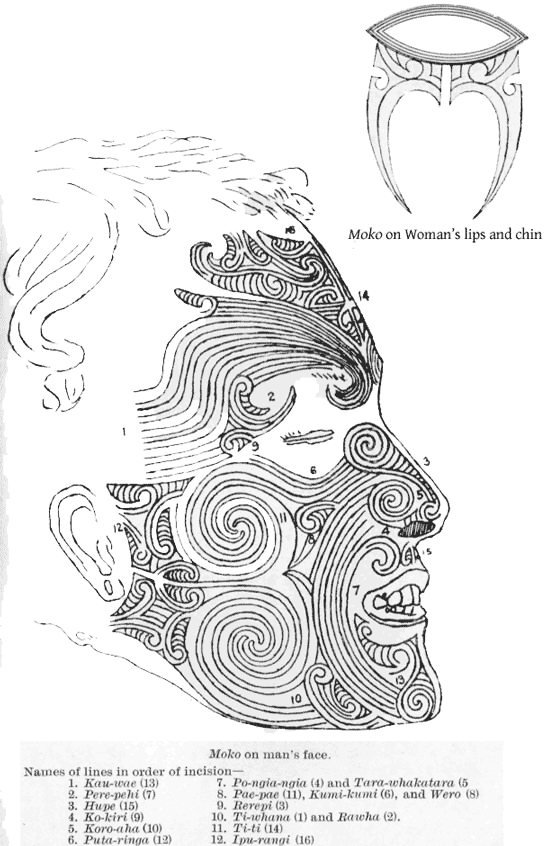
The most significant form of tā moko is the facial tattoo. In historical practice, a high-ranking man could receive moko covering the entire face — each section of the face carrying specific information about the wearer’s whakapapa (genealogy), tribal affiliation (iwi and hapū), social rank, and personal history. The design was unique to the individual — no two moko were identical — and it functioned as a visual identity document readable by anyone fluent in the design system.
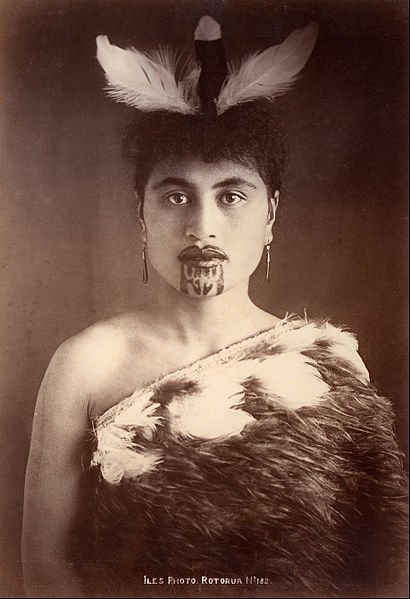
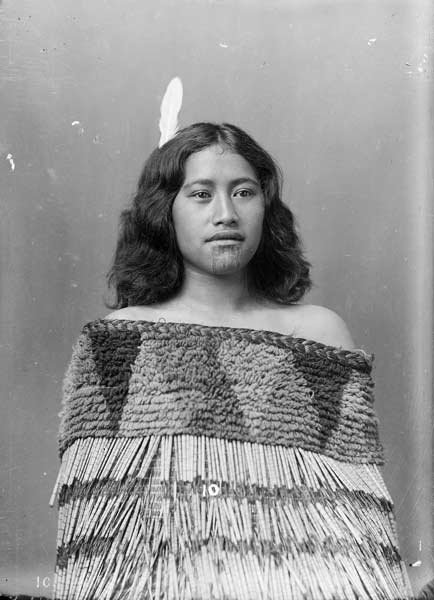
Facial tā moko was given to both men and women, though the designs differed. Men received full-face moko; women typically received moko kauae — tattooing on the chin and the lower lip. The moko kauae marked a woman’s maturity, her lineage, and her social standing. The tradition of moko kauae has been prominently revived in contemporary Aotearoa — a number of Māori women in public life, including politicians and media figures, wear moko kauae.
The revival of tā moko
Tā moko was severely disrupted during the colonial period. Missionaries and colonial authorities discouraged or prohibited the practice, and by the mid-twentieth century, it had largely ceased. The revival began in the 1970s and 1980s as part of the broader Māori cultural renaissance — the reassertion of Māori language, arts, and identity rights that produced the Māori Language Act (1987), the settlement of Treaty of Waitangi claims, and a general resurgence of Māori cultural practice.
Contemporary tā moko is practised by Māori artists (tā moko practitioners) who have studied both the traditional design system and the cultural protocols surrounding it. The practice is understood as belonging to Māori — the designs carry specific Māori cultural meaning, and the right to wear tā moko is connected to Māori identity, genealogy, and cultural authority.
The kirituhi distinction
The term kirituhi (literally “drawn skin”) is used by some Māori practitioners to describe Māori-inspired tattoo designs applied to non-Māori people. A kirituhi uses the visual vocabulary of tā moko — the curvilinear forms, the koru (spiral) motifs, the general aesthetic — but does not carry the specific cultural meaning of moko, because the wearer does not have the whakapapa that moko encodes. The distinction between tā moko (for Māori, carrying specific genealogical meaning) and kirituhi (Māori-inspired design without the cultural encoding) is maintained by many practitioners, though not all Māori artists agree on the terminology or the boundary.
The Marquesas: the most tattooed people
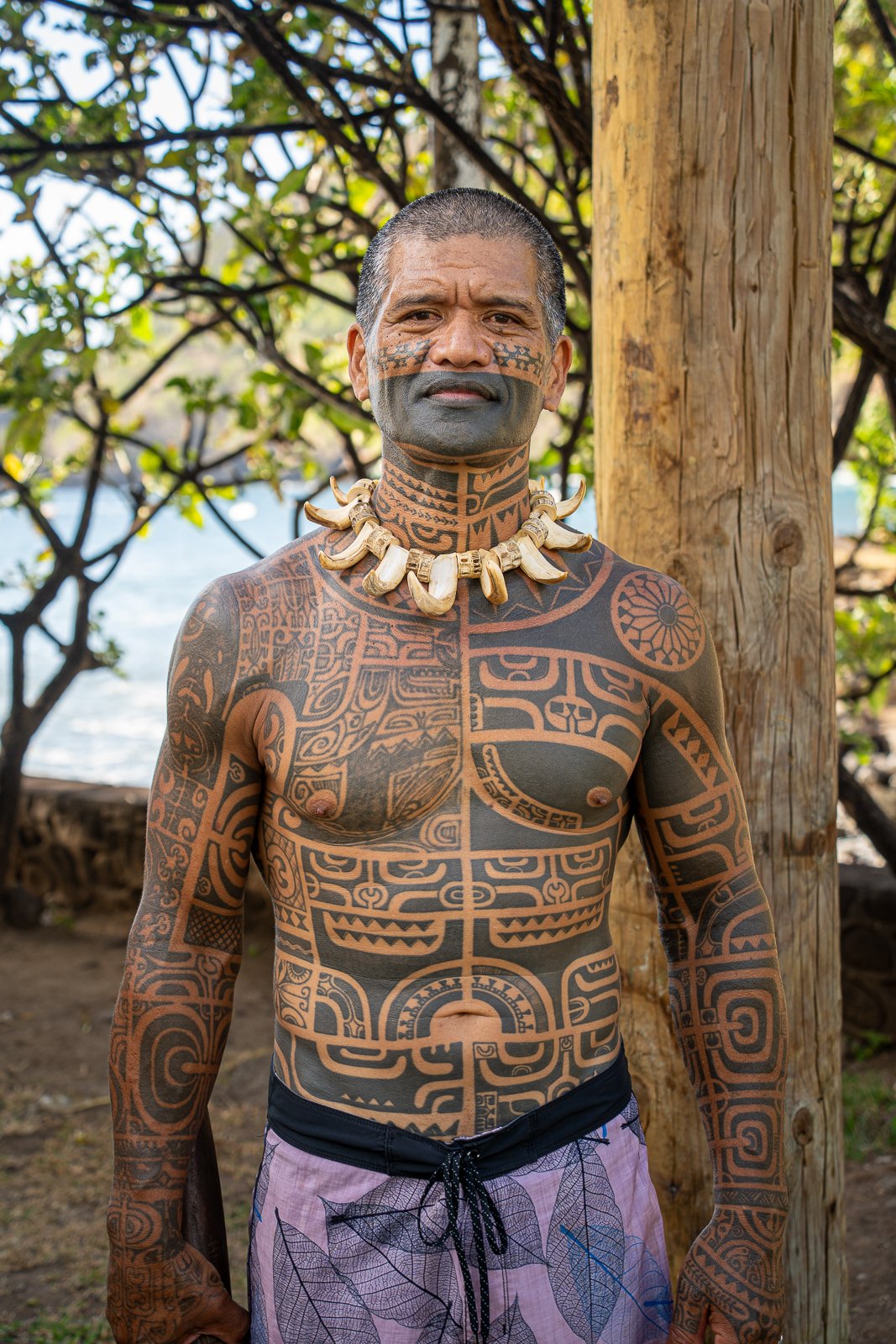
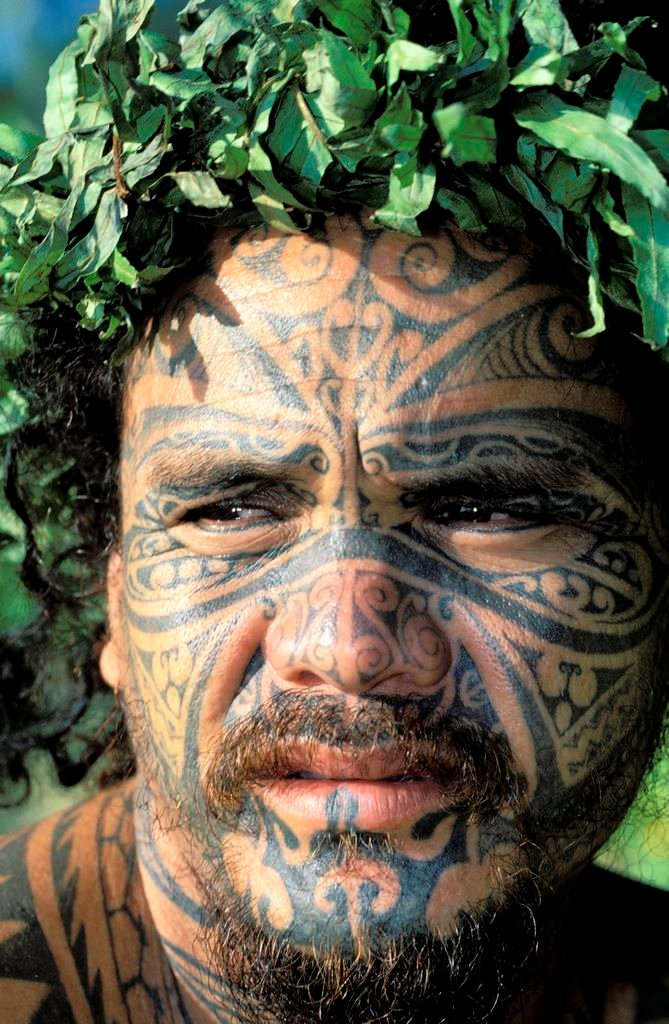
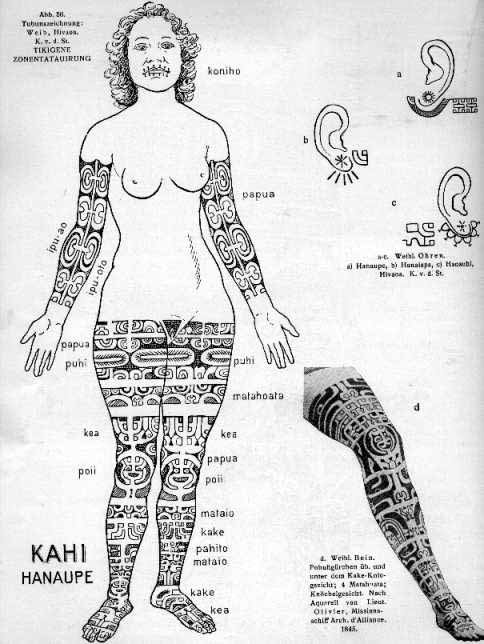
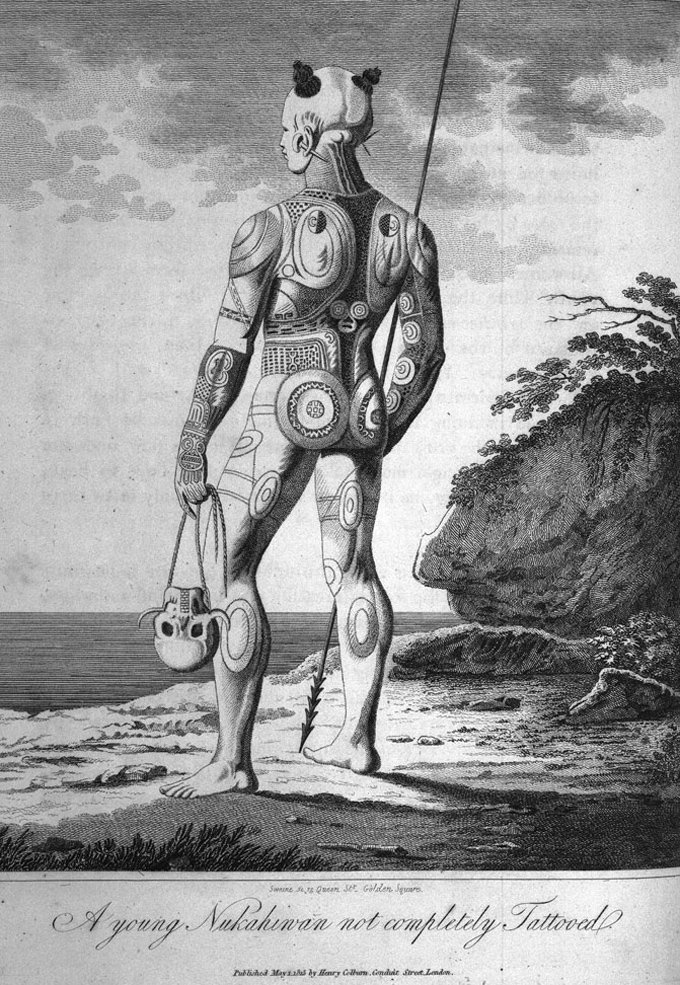
The Marquesas Islands — a volcanic archipelago in French Polynesia — produced what European observers consistently described as the most extensively tattooed people in the Pacific. Marquesan tattooing could cover the entire body — face, head, torso, arms, hands, legs, feet — in dense geometric patterning that left almost no skin unmarked.
The designs used a vocabulary of geometric and stylised motifs — including the mata komoe (a face-like motif, sometimes called “tiki eyes”), etua (divine or ancestral figures), and elaborate banding and fill patterns — arranged in compositions that followed the body’s anatomy and encoded information about the wearer’s genealogy, status, and achievements. The complexity and density of the designs made Marquesan tattooing the most visually elaborate tradition in the Pacific.
The term for tattooing in the Marquesas is patutiki — patu meaning “to strike” and tiki meaning “image.” The practitioner was called a tuhuka patu tiki — a master of striking images.
Marquesan tattooing was severely disrupted by colonial contact and population collapse in the nineteenth century. The population of the Marquesas declined by as much as ninety per cent after European arrival, and the tattooing tradition was effectively destroyed. Contemporary Marquesan tattooing is a reconstruction, drawing on the drawings and descriptions of European explorers (particularly the ethnographic records of Karl von den Steinen, published in 1925–28) and on the oral traditions that survived within the community.
Tonga
The Tongan tattooing tradition — tatatau — was closely related to the Samoan tradition, and Tongan nobility historically received pe’a-style tattoos from Samoan tufuga ta tatau. The Tuʻi Kanokupolu dynasty established the practice of pe’a tattooing among Tongan aristocracy in the pre-contact era. King George Tupou, I received a pe’a from a Samoan tufuga.
Unlike Samoa, Tonga lost its tattooing tradition during the colonial and missionary period. The practice ceased, and the revival — which began in the 1960s — has been significantly influenced by the Samoan tradition. Contemporary Tongan tattooists have learned from Samoan tufuga and are developing a distinctly Tongan design vocabulary that draws on Tongan material culture (tapa cloth patterns, carving motifs, architectural ornament) alongside shared Polynesian forms.
Tahiti
Tahitian tattooing — the tradition that Cook’s crew encountered and named — was widespread in pre-contact Tahiti and was practised by specialists known as tahu’a tatau. The designs were geometric, applied by hand-tapping, and carried social and spiritual meaning. The tradition was suppressed by missionaries in the nineteenth century and disrupted to the point of near-extinction.
The revival of Tahitian tattooing, which began in the 1980s, has been part of the broader resurgence of Polynesian culture in French Polynesia — including tapa-making, weaving, carving, dance, and navigation. Contemporary Tahitian tattooing draws on both reconstructed traditional designs and new compositions developed by contemporary artists.
Hawai'i
Hawaiian tattooing — kakau — was practised in pre-contact Hawai’i with designs that could cover large areas of the body. Hawaiian designs shared some visual elements with Marquesan tattooing (Hawai’i was settled from the Marquesas roughly 800 years ago), but developed a distinct vocabulary, including asymmetric compositions and bold geometric forms.
Hawaiian tattooing was suppressed during the missionary period and effectively ceased by the mid-nineteenth century. The revival, led by artists including Keone Nunes (who has researched and reconstructed traditional Hawaiian tools and techniques), is producing a contemporary Hawaiian tattooing practice that draws on the limited historical record and on the broader Polynesian design language.
Cultural protocols
Polynesian tattoo designs belong to Polynesian peoples. Specific patterns — Samoan pe’a motifs, Māori moko designs, Marquesan patutiki compositions — carry cultural meaning belonging to their communities of origin. Using them without cultural connection is appropriation, and the communities are clear and specific about this.
The practitioner matters. A traditional tattoo received from a tufuga ta tatau, or a tā moko practitioner within the cultural framework, is a different object from a Polynesian-influenced design applied by a Western artist in a commercial studio. The cultural weight, the social meaning, and the spiritual function are present in the first and absent in the second.
Some traditions welcome outsiders; others do not. Some Samoan tufuga — including Su’a Uilisone and others — explicitly welcome non-Samoans who approach the tradition with respect. Māori practitioners are more protective of tā moko specifically, distinguishing between moko (for Māori) and kirituhi (for others). The boundaries vary by tradition, by practitioner, and by the specific designs involved. Asking is better than assuming.
The “Polynesian-inspired” category. Many contemporary tattoo artists — both Polynesian and non-Polynesian — create designs that draw on Polynesian visual traditions without reproducing culturally specific patterns. These designs use the general aesthetic (black, geometric, body-following, patterned) without claiming the specific cultural meaning of any particular tradition. This category is broadly accepted, provided the artist is transparent about what the work is and what it is not.
Sources & further reading
- Sean Mallon, Tatau: A History of Sāmoan Tattooing. Te Papa Press, 2002.
- Sean Mallon, Nicholas Thomas, and Peter Brunt, photographs by Mark Adams, Tatau: Sāmoan Tattoo, New Zealand Art, Global Culture. Te Papa Press, 2018.
- Ngahuia Te Awekotuku with Linda Waimarie Nikora, Mau Moko: The World of Māori Tattoo. Penguin New Zealand, 2007.
- Alfred Gell, Wrapping in Images: Tattooing in Polynesia. Clarendon Press, 1993.
- Tricia Allen, Tattoo Traditions of Hawai’i. Mutual Publishing, 2006.
- Ink Master, Paramount. ‘Polynesian Tattoos’ The Art of Ink (Season 2) Digital Exclusive, Paramount Network, 2018.
- Pe’a, and Su’a Sulu’ape Paulo II on Wikipedia, The Free Encyclopedia.
- Auckland War Memorial Museum, “The art of Samoan tātatau and tatau (tattooing and tattoo).” Barbara Makuati-Afitu. Published 2016, updated 2021.
- Te Papa blog, Samoan tatau: a tufuga begins his work. Published 2014.
- Pacific Journal of Health, Physiology of Pe’a and Malu: Biocultural Case Studies of Endocrine and Immune Responses to Samoan Tatau. Vol. 7, 2024.
- Japanese American National Museum, Tatau: Marks of Polynesia.
- Faasamoa Arts, The Traveling Tufuga Ta Tatau: Samoan Tattooing Around the World. Published March 2023.
- The Koko Samoa, The Sacred Tapestry of Skin: How Traditional Samoan Tattoos Are Done. Published October 2025.
- Pitt Rivers Museum, University of Oxford, Polynesian tattooing tools.
- Lars Krutak, Spiritual Skin: Magical Tattoos and Scarification. Edition Reuss, 2012.
- Margo DeMello, Bodies of Inscription: A Cultural History of the Modern Tattoo Community. Duke University Press, 2000.