Tattoo styles are not a fixed system but a set of working conventions — ways of drawing, lining, shading, and composing that have developed over time within different traditions. Some names point to established visual systems with clear rules, while others describe how the tattoo is made or how it looks in terms of tone. There are also practices in which style cannot be separated from cultural meaning and protocol. At the same time, newer labels often emerge from trends and hybridisation, borrowing freely from existing approaches without forming a stable canon. In practice, “style” serves less as a strict category and more as a shared reference point — helping align expectations between artist and client around form, durability, and intent.
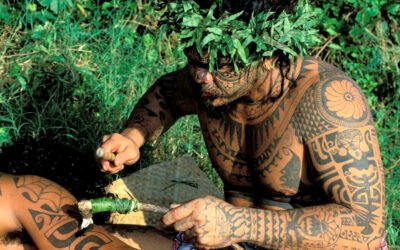
The Marquesan word for tattooing is patutiki — patu meaning “to strike” and tiki meaning “image.” A tattoo is a struck image. The practitioner was called a tuhuka patu tiki — a master of striking images — and the title carried authority and social prestige comparable to the other tuhuka (specialists, experts) who held essential roles in Marquesan society.
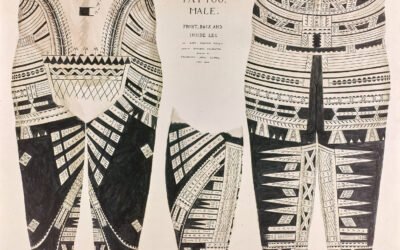
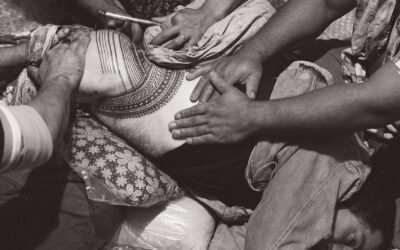
The Samoan tatau tradition has been practised continuously, in its traditional form, from pre-contact times to the present. The tools have changed materials, the pigment is now commercially manufactured, and the hygiene protocols have been formalised — but the method, the design system and the cultural protocols are unbroken.
Polynesian tattooing is not one tradition. It is a family of traditions, developed across the thousands of islands of the Polynesian Triangle — the vast area of the Pacific bounded by Hawai’i, Aotearoa and Rapa Nui. Each island group has its own tattooing practice, with own tools, design vocabulary, rules, and relationship to the community’s social structure.