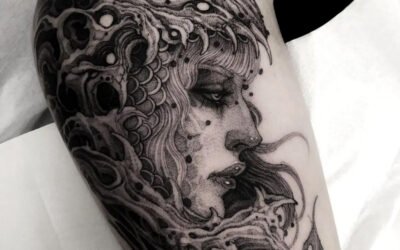
Tattoo styles are not a fixed system but a set of working conventions — ways of drawing, lining, shading, and composing that have developed over time within different traditions. Some names point to established visual systems with clear rules, while others describe how the tattoo is made or how it looks in terms of tone. There are also practices in which style cannot be separated from cultural meaning and protocol. At the same time, newer labels often emerge from trends and hybridisation, borrowing freely from existing approaches without forming a stable canon. In practice, “style” serves less as a strict category and more as a shared reference point — helping align expectations between artist and client around form, durability, and intent.
Illustrative tattooing is the style that draws most directly from traditions outside tattooing — from book illustration, from printmaking, from pen-and-ink drawing, from etching, woodcut, engraving, and lithography. Where American traditional draws from flash sheets and Japanese irezumi draws from ukiyo-e and painted scrolls, illustrative work draws from the printed page.