Tattoo history is not a single, continuous narrative but a set of parallel traditions that developed independently across different regions and periods. Evidence of tattooing appears in ancient contexts — from preserved skin on mummified bodies to written accounts describing its use in ritual, status marking, punishment, or protection. In many societies, tattooing was embedded in social structure and belief systems, while in others, it moved between acceptance and stigma over time. The modern, globalised form of tattooing emerged through contact — particularly maritime exchange — where motifs, techniques, and tools were shared, adapted, and standardised. Tracing these shifts shows how tattooing moved from local, culturally bound practices to a widely practised craft, while still carrying fragments of its earlier meanings.
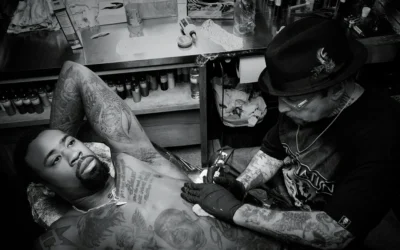
Freddy Negrete is one of pioneers in black-and-grey tattooing. His life has included gang membership, incarceration, a decade of evangelical ministry, addiction and recovery, the loss of a son, and — through all of it — a career in tattooing that helped define one of the most important stylistic developments in the craft’s modern history.
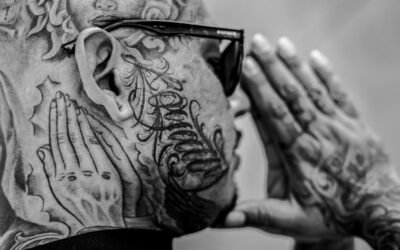
Most tattoo styles can be described in technical terms first and cultural terms second. Chicano cannot. The style is so completely bound up with the community that produced it — Mexican-American working-class life in California and the Southwest, the Pachuco and lowrider cultures of mid-century Los Angeles, the prison systems of the same period and (…)
Realism in tattooing is older than most accounts suggest. Sailors in the nineteenth century commissioned portraits of loved ones, and prison tattooing in multiple traditions produced recognisable likenesses centuries before the electric machine. The idea of putting realistic depictions on skin is not a late-twentieth-century invention.
New school is the most maligned of the major tattoo styles. Some of that reputation is earned; some of it comes from a reflex against cartoon imagery in a craft tradition that has come to prefer fine-art references. Either way, the style is also one of the most technically demanding in the tattooing repertoire, and the work of the best new-school artists has aged considerably better(…).
Neo-traditional is in a period of consolidation. The experimental energy of the 2000s and early 2010s has given way to a more established set of conventions, and a recognisable neo-traditional aesthetic now exists within which an artist can work without feeling they are reinventing anything. This has produced a great deal of competent work and some criticism from within(…).
American traditional is a port-town style. It grew up in the tattoo shops that clustered near naval bases and harbours in the first half of the twentieth century — Honolulu, San Diego, Norfolk, the Bowery in New York, and Chatham Square. The clientele was sailors, soldiers, and the people who worked the docks. The constraints of the trade shaped the style completely.
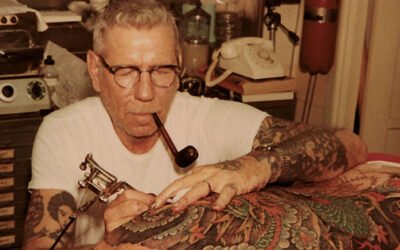
Norman Keith Collins (1911–1973), best known as “Sailor Jerry,” was a U.S.-based tattoo artist who worked primarily in Honolulu and became a key bridge between early 20th‑century American flash tattooing and later “tattoo renaissance” practice that treated tattooing as a serious craft with international artistic references.