Tattooing – how does it work?
Ink under skin
A tattoo is ink trapped in the second layer of the skin. Everything else — the machine, the needle, the artist’s technique, the aftercare, the healing process — exists to get the ink to that layer and keep it there. The process is mechanical (a needle punctures the skin and deposits pigment), biological (the body reacts to the wound and to the foreign material), and — over the long term — a negotiation between the ink’s stability and the body’s slow, persistent effort to remove it.
Understanding how tattooing works at the level of needles, tissue, and chemistry is useful for anyone who has a tattoo, is considering one, or makes them. It explains why certain techniques produce certain results, why tattoos age the way they do, why some placements hold better than others, and why aftercare matters.
The skin
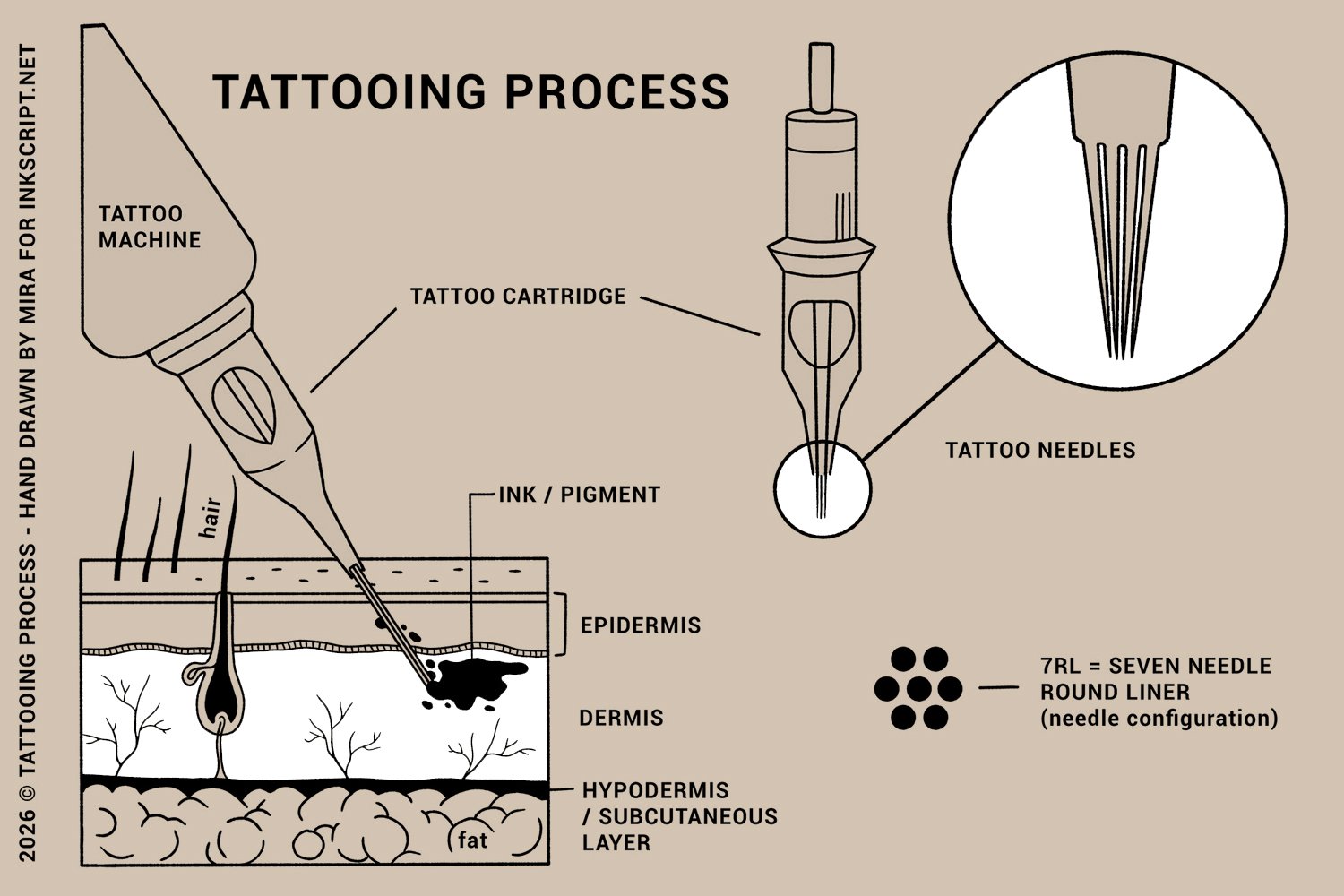
1st: Epidermis
The outermost layer — the part you can see and touch. It is roughly 0.05 to 1.5 millimetres thick, depending on the body part (thinnest on the eyelids, thickest on the palms and soles). The epidermis is built from keratinocytes, cells produced at the bottom of the layer that migrate upward over roughly four weeks, flattening and hardening as they go, until they reach the surface, die, and are shed. The epidermis is in constant turnover. Any ink placed only in the epidermis would be pushed out and lost within weeks, which is why temporary tattoos and henna stains fade — they sit in or on the epidermis.
2nd: Dermis
The layer beneath the epidermis. It is roughly 1 to 4 millimetres thick and is made primarily of collagen and elastin fibres — the structural proteins that give skin its strength and flexibility. The dermis contains blood vessels, lymphatic vessels, nerve endings, hair follicles, and sweat glands. It does not shed and replace itself the way the epidermis does. Cells in the dermis are relatively stable, and the structure persists for the life of the person. This is where tattoo ink is deposited, and this is why it stays.
3rd: Hypodermis / subcutaneous layer
The deepest layer, mostly fat and connective tissue. It is not a target for tattooing. Ink placed too deeply, into the hypodermis, spreads in the fat tissue and produces a blurred, diffuse mark rather than a clean line. Hitting the hypodermis is one of the causes of “blowout” — the blurring that occurs when ink migrates below the dermis.
The target zone for tattoo ink is the upper to mid dermis, at a depth of roughly 1 to 2 millimetres below the surface of the skin. This is the zone where the ink is deep enough to survive the epidermal turnover cycle but shallow enough to remain visible through the translucent epidermis above it. Placing ink consistently at this depth, across different body parts with different skin thicknesses, is the fundamental technical skill of tattooing.
Skin types and individual variation
Melanin content affects how visible the ink is through the epidermis. Darker skin contains more melanin in the epidermis, which acts as a filter between the viewer and the ink sitting in the dermis below. Black and very dark inks show through all skin tones. Lighter colours — whites, yellows, pastels, light oranges — have reduced contrast against melanin-rich skin and may appear muted or shift in tone over time. This is a physical property of light transmission through pigmented tissue, and it affects colour selection, style suitability, and the artist’s approach to contrast and saturation. Skilled artists adjust their colour palette and technique to work with the client’s skin tone rather than against it.
Age affects skin receptivity. Younger skin is typically thicker, firmer, and more elastic, which holds ink well. Older skin tends to be thinner, less elastic, and more fragile, which can make it more prone to blowout and slower to heal. Sun-damaged skin — regardless of age — has compromised collagen structure that affects ink retention.
Scar tissue responds differently from intact skin. Scars have altered collagen structure, changed blood supply, and may have reduced or heightened sensitivity. Ink can be successfully placed in scar tissue, but the result is less predictable: the ink may not hold evenly, the scar may absorb ink at different rates than surrounding skin, and the healed tattoo may look different from what the same design would look like on unscarred skin. The age and type of the scar matter — mature, flat scars generally accept ink more reliably than raised or keloid scars.
Stretch marks are a specific form of scar tissue — the dermal collagen and elastin have torn from rapid stretching. Old, mature stretch marks (silvery, flat) can be tattooed, though the ink may settle unevenly. Fresh, still-reddish stretch marks are actively healing and should not be tattooed.
Previously tattooed skin has already undergone the wounding and healing cycle once. Cover-up work and reworking of existing tattoos operate on skin that has ink in the dermis already, altered collagen structure from the previous healing, and potentially residual scarring from the first session. The existing ink affects how new colours layer and read optically.
Tattoo ink

Composition
All tattoo inks consist of two primary components: a colourant (pigment) and a carrier solution that suspends the pigment and allows it to flow from the needle into the skin.
Pigments fall into two categories.
- Inorganic pigments are mineral-based compounds: carbon black (the most commonly used black pigment, derived from soot or combustion products), iron oxides (which produce browns, reds, and ochres), and titanium dioxide (the standard white pigment, also used as a lightening agent when mixed into other colours). Inorganic pigments tend to be chemically stable in the skin and cause fewer adverse reactions over time.
- Organic pigments are synthetic compounds — typically azo-based chemicals — that produce the bright, vivid colours used in contemporary colour tattooing. Organic pigments offer greater colour brilliance than their inorganic counterparts but may be less chemically stable over the long term.
Carrier solutions are the liquids that suspend the pigment particles. The most common carriers are distilled water, glycerin, ethanol, and propylene glycol. Carriers keep the ink at a workable viscosity, help distribute pigment evenly, and assist the flow of ink from the needle into the tissue. When alcohol is used as a carrier component, it increases the skin’s permeability, potentially helping transport more pigment into the dermis. Inks may also contain preservatives (to prevent microbial contamination) and other additives to control viscosity, shelf stability, and pH.

Colour and stability
Different pigments behave differently in the skin over time. Carbon black has relatively large, chemically stable particles and holds its tone well over decades, which is one reason black tattoos maintain contrast longer than coloured ones. Titanium dioxide (white) is prone to yellowing and loss of opacity over time, particularly with UV exposure. Red pigments have the highest documented rate of allergic reactions among all tattoo colours. This history traces back to older formulations containing mercury sulfide (cinnabar), though modern reds typically use organic alternatives. Yellow and orange pigments can be photosensitive — reacting to sunlight in ways that cause irritation. Blue and green pigments, often copper-based, tend to be stable but are among the most resistant to laser removal.

Regulation
Tattoo ink regulation varies by jurisdiction. In the United States, the FDA classifies tattoo ink pigments as cosmetics but does not pre-approve individual formulations before they reach the market. In the European Union, REACH regulations that took effect in January 2022 restricted over 4,000 substances in tattoo inks, including certain azo pigments and aromatic amines linked to carcinogenic risk. These regulations forced reformulation of many popular inks and generated significant debate within the industry — some manufacturers and artists argued that the restricted pigments had been used safely for decades, while regulators cited the precautionary principle given the limited long-term data on intradermal pigment exposure. Research into tattoo ink composition and safety is ongoing, with studies examining heavy metal content, polycyclic aromatic hydrocarbon (PAH) contamination in carbon black, and the long-term fate of pigment particles in lymph nodes and other tissues.

Vegan inks
Traditional tattoo inks sometimes contained animal-derived ingredients — bone char in black pigments, shellac as a carrier additive, gelatin as a binding agent. The rise of vegan tattooing has driven demand for inks certified free of animal products, and most major ink manufacturers now offer vegan-labelled lines. The pigments and carriers in vegan inks function identically to their conventional counterparts in terms of application and behaviour in skin.
How the needle works
A tattoo needle is a solid, pointed piece of steel (or, in modern cartridges, a group of solid points) that punctures the skin and carries ink into the wound by capillary action. It does not inject ink through a hollow tube the way a hypodermic needle does.
The process, at the level of a single puncture, works like this: the needle is dipped in or passes through a reservoir of ink. A thin film of ink clings to the needle’s surface due to surface tension. The needle pierces the skin, passing through the epidermis and into the dermis. As the needle enters and exits, it creates a tiny wound channel, and the ink that clings to the needle is deposited in the tissue along that channel. The needle withdraws, and a small amount of ink remains in the dermis.
A single puncture deposits a very small amount of ink. A tattoo is built from thousands or tens of thousands of these punctures, placed close enough together that the individual deposits merge into continuous lines, solid fills, or tonal gradients. The spacing, depth, speed, and angle of the punctures determine the character of the mark — whether it is a crisp line, a smooth gradient, a dense fill, or a scattered stipple.
Needle configurations
Tattoo needles come in standardised groupings that determine the kind of mark they produce. The grouping, the diameter of the individual needles, and the taper of their points are the three variables that define a needle’s behaviour.
Grouping
Grouping refers to how the individual needle points are arranged.
Round liners (RL) are needles arranged in a tight circular cluster, used for linework. A 1RL is a single needle — the finest possible line. A 3RL is three needles in a tight triangle. 5RL, 7RL, 9RL, and larger configurations produce progressively thicker lines. The tighter the grouping, the crisper the line. Round liners draw the outlines that define most tattoo styles.
Round shaders (RS) use the same circular arrangement but with slightly more spacing between the needles, allowing the group to deposit ink in a broader, softer pattern. Round shaders are used for shading, colour packing in small areas, and smooth gradient work.
Flat needles (FL) are arranged in a single straight row. They produce a clean, consistent line with each pass and are used for geometric work, precise lining, and some shading applications. The flat arrangement lays down ink in a single, even band.
Magnum configurations (M1, M2) are needles arranged in rows, used for filling large areas and for broad shading. A weaved or flat magnum (M1) has the needles arranged in an alternating, interlocking pattern across two rows. A stacked magnum (M2) has two rows of needles aligned directly on top of each other. Terminology varies between manufacturers — some use these designations differently, so checking the specific configuration before purchasing is important. Magnums cover more skin per pass than round configurations and are essential for filling solid colour fields and laying smooth greywash gradients.
Curved magnums (RM, also called “soft edge” magnums) have the needles arranged in a slight arc, which conforms better to the curvature of the skin and produces softer edges with less skin trauma at the outer needles. Widely used for realistic shading, smooth colour blending, and large-area work.
Diameter / gauge
Needle diameter (gauge) refers to the thickness of each individual needle point in the grouping. Standard diameter is #12 (0.35mm). Bugpin configurations use #10 (0.30mm) needles — thinner, packed more tightly, producing finer detail and smoother gradients. Nano configurations use #8 (0.25mm) needles — thinner still, used for extremely fine detail work, micro-realism, and single-needle effects. Larger #13 (0.40mm) needles exist for heavy colour packing and filling large areas. The choice of diameter affects how much ink each needle carries, how much skin trauma each puncture creates, and how fine or coarse the resulting mark appears.
Taper
Taper is the length from the tip of each individual needle to the point where it reaches its full diameter — the steepness of the point. Taper controls ink flow and skin entry behaviour. Exact measurements vary between manufacturers, but the general categories are consistent.
Short taper (1.5–2mm) has a blunter point that releases ink faster and creates larger puncture channels. Suited to solid colour packing, bold lines, and heavy saturation work where volume of ink matters more than fineness.
Medium taper (2.5–3.5mm) balances ink flow and precision. A general-purpose taper used for lining, shading, and filling.
Long taper (5–7mm) has a finer, sharper point that restricts ink flow, entering the skin more cleanly with less trauma per puncture. Suited to realism, fine detail, portraits, and smooth gradients, where controlled, gradual ink layering is needed.
Extra-long taper (8mm and above) is the finest point available, used for ultra-precise detail work and very fine lines. The ink flow is slow, requiring more passes to achieve saturation, but the control is maximal.
Textured taper has a roughened surface that holds more ink due to increased surface friction. Used in black-and-grey and styles requiring dense ink saturation.
The choice of needle configuration is a technical decision that the artist makes based on the style, the passage of the tattoo being worked on, and the skin being tattooed. A single tattoo may use several different configurations — a round liner for the outline, a round shader for detail shading, a curved magnum for large fills, and a switch to a finer gauge for delicate work within the same piece.
Machine tattooing

Coil machines
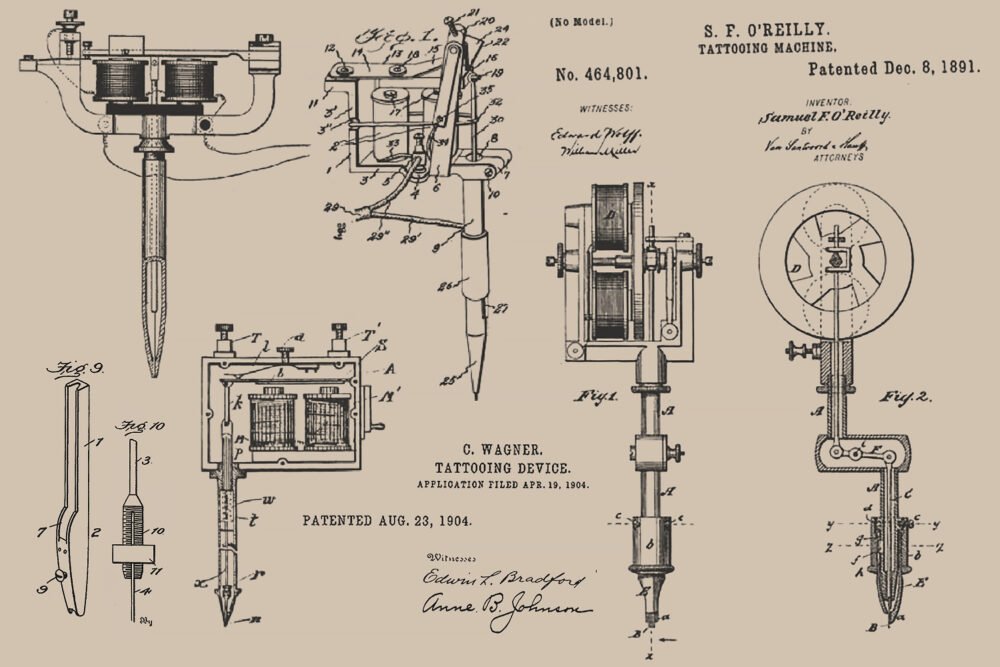
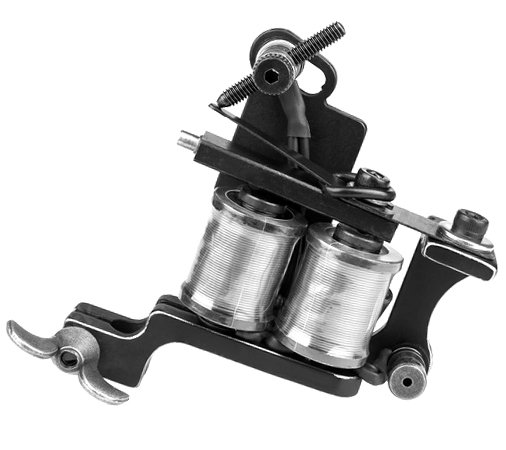
Coil machines are an older technology, in continuous use since the late nineteenth century. A coil machine uses a pair of electromagnetic coils to create a magnetic field that pulls a metal armature bar downward. The armature bar is connected to the needle bar, so when the armature moves down, the needle moves down into the skin. When the circuit breaks (because the armature bar’s movement disconnects a contact point), the magnetic field collapses, a spring pulls the armature back up, the contact reconnects, and the cycle repeats. This produces a rapid reciprocating motion — the characteristic buzzing of a coil machine. Depending on the setup, a coil machine typically drives the needle at roughly 50 to 150 cycles per second.
Coil machines are heavy, loud, and require careful tuning — the spring tension, the contact gap, the capacitor value, and the power supply voltage all affect the machine’s behaviour. A well-tuned coil machine in experienced hands remains a capable tool, and some artists prefer coils for specific applications (heavy linework, traditional colour packing). In most contemporary shops, however, coils have been replaced by rotary machines.

Rotary machines
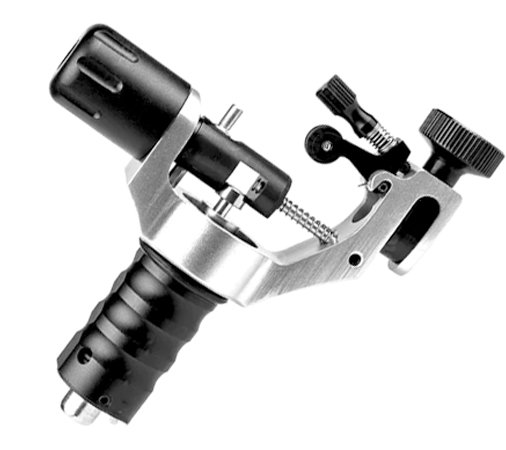
Rotary machines use a small electric motor to convert rotational motion into the linear up-and-down movement of the needle. The motor spins; a cam, crank, or eccentric mechanism converts the spin into reciprocation. Rotary machines have existed since the early twentieth century, but the form that dominates contemporary tattooing — the pen-style rotary — is a development of the 2010s.

Pen machines
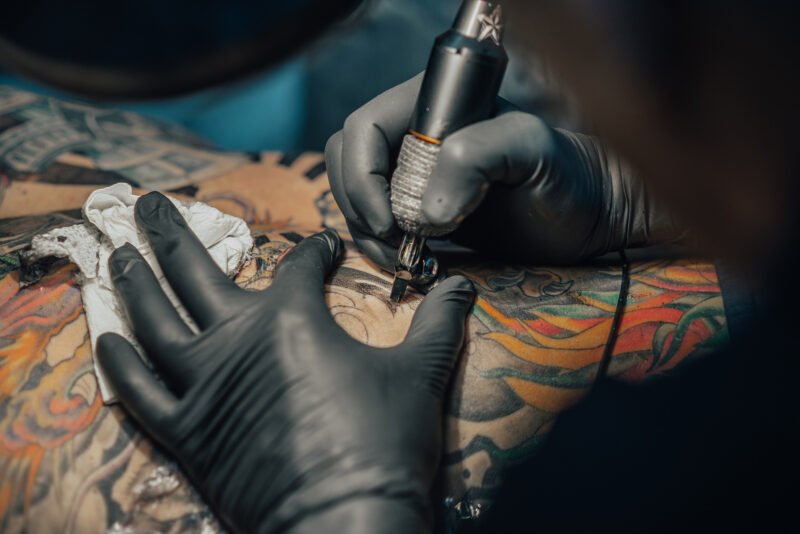
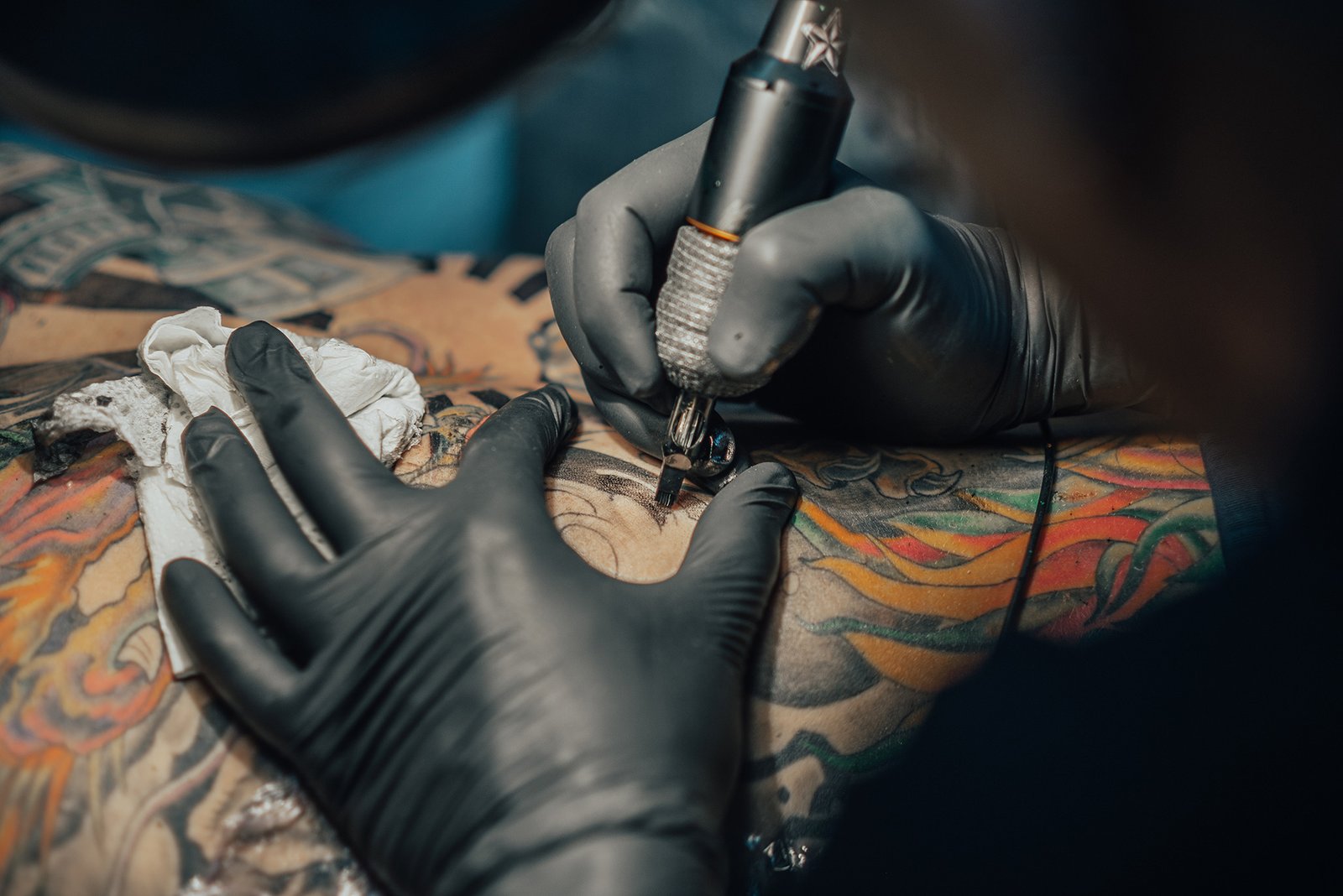
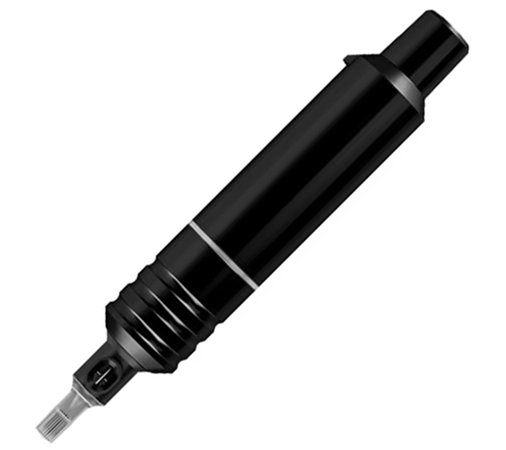
Pen machines are rotary machines built in the form factor of a thick pen or marker. The motor, drive mechanism, and needle attachment are all housed in a single cylindrical body that the artist holds and manoeuvres like a writing instrument. This is a significant ergonomic change from coil machines, which are held more like a power tool and produce substantial vibration in the hand vibration.
Pen machines use cartridge needles — pre-assembled, pre-sterilised, disposable units that click or press into the machine’s grip. Each cartridge contains the needle grouping (liner, shader, magnum, or other configuration), a housing, and a built-in membrane that prevents ink from flowing back into the machine body. This membrane system is a meaningful hygiene improvement over the older tube-and-needle setup used with coil machines, where the needle bar, tube, and grip all had to be sterilised separately between clients.
The artist controls a pen machine through two main settings: voltage (which determines the motor speed and therefore the force of the needle’s stroke) and, on many models, stroke length (the distance the needle travels in each cycle). Lower voltage and shorter stroke produce a gentler, more precise action suited to fine-line work, shading, and delicate skin areas. Higher voltage and longer stroke produce a more forceful action suited to bold outlining and dense colour packing. Some machines offer adjustable stroke via a dial or interchangeable drive mechanisms; others have a fixed stroke and rely on voltage adjustment alone.
Recent pen machines have added wireless capability — a built-in rechargeable battery that eliminates the need for a power cord entirely, giving the artist full freedom of movement. Wireless pens have become standard in many studios, particularly for artists who work at conventions or in positions where a cable is restrictive.
Pen machines are lighter, quieter, and produce less hand fatigue than coil machines. They are easier to set up (insert a cartridge and turn the machine on), easier to clean (dispose of the cartridge, wipe the body), and faster to switch between needle configurations during a session. These practical advantages, combined with the improved hygiene of the cartridge system, are why pen machines have replaced coils as the default equipment in most professional studios worldwide.
Tattooing by hand

Contemporary handpoke (stick-and-poke)
The artist holds a single needle or a small group of needles attached to a handle and pushes it into the skin by hand, one puncture at a time. The needle is dipped in ink, positioned against the skin at a slight angle, and pressed through the epidermis into the dermis. The artist lifts the needle, repositions it a fraction of a millimetre away, and repeats. Each puncture deposits a dot of ink. Lines are built from rows of dots placed close enough together to merge visually. Fills are built from fields of dots. Shading is built by varying the density and depth of the punctures.

Tebori (Japanese)
The traditional method of Japanese tattooing uses a wooden or metal handle (nomi) fitted with a grouping of needles arranged in specific configurations. The artist holds the handle and uses a rhythmic pushing motion — driving the needles into the skin at a consistent angle and depth — that is fundamentally different from both the single-point puncture of Western handpoke and the rapid reciprocation of a machine. The motion is generated from the wrist and forearm, producing a cadence that experienced tebori artists describe as meditative. Tebori produces a distinctive ink saturation and texture that differs from machine application — the ink sits in the dermis slightly differently, often producing softer tonal gradients and a subtle luminosity that tebori practitioners value. The method is slower than machine work but allows the artist an extremely direct tactile relationship with the skin.
Au / bone comb (Samoan, broader Polynesian)
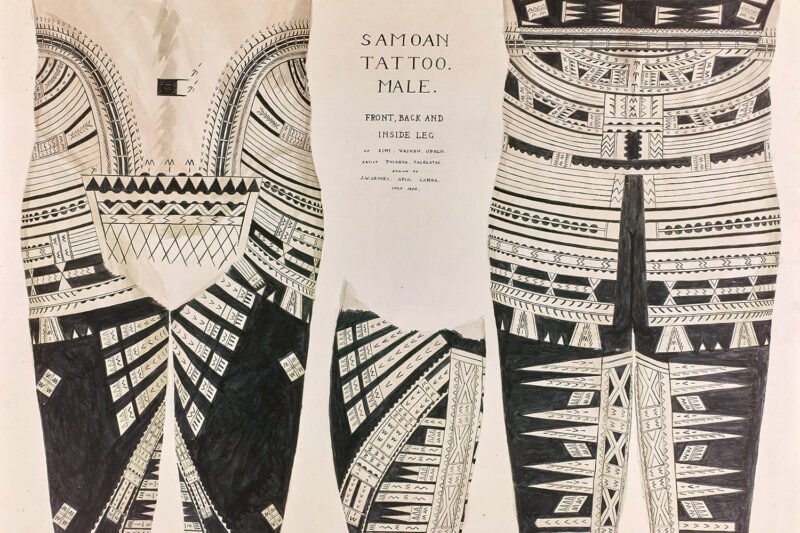
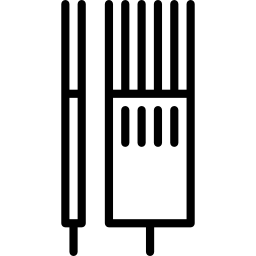
The Samoan tatau is applied with an au — a comb-like tool made from bone, tusk, or shell, mounted on a turtle-shell plate and attached to a wooden handle. The tufuga ta tatau (master tattooist) dips the comb in ink and taps it into the skin using a second stick held in the other hand, driving the comb’s teeth through the epidermis and into the dermis in a rhythmic, percussive motion. Each tap creates multiple punctures simultaneously — the number determined by the width of the comb. The au produces bold, dense lines and solid fills at a rate faster than single-point handpoke but slower than a machine. The method is inseparable from its ceremonial and cultural context — covered in the Culture-bound section of this encyclopedia.

Khem sak / metal rod (Thai, Southeast Asian)
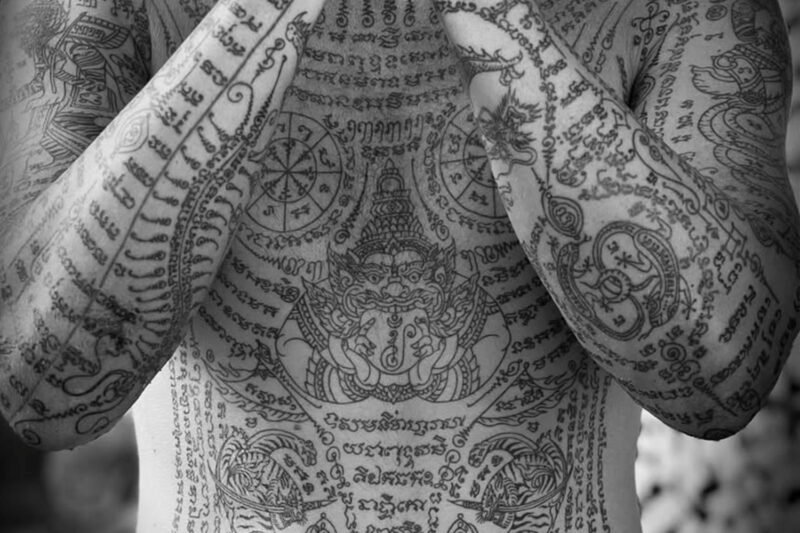
Sak Yant sacred tattoos are traditionally applied using a long metal rod (khem sak) or bamboo stick with a sharpened tip. The practitioner — a Buddhist monk or ajarn (lay master) — uses a rapid, repetitive jabbing motion, driving the single point into the skin at speed. The method produces fine, precise linework suited to the intricate yantra diagrams and Khom script that characterise Sak Yant designs.

Thorn-based tools (Kalinga, Berber, and other traditions)
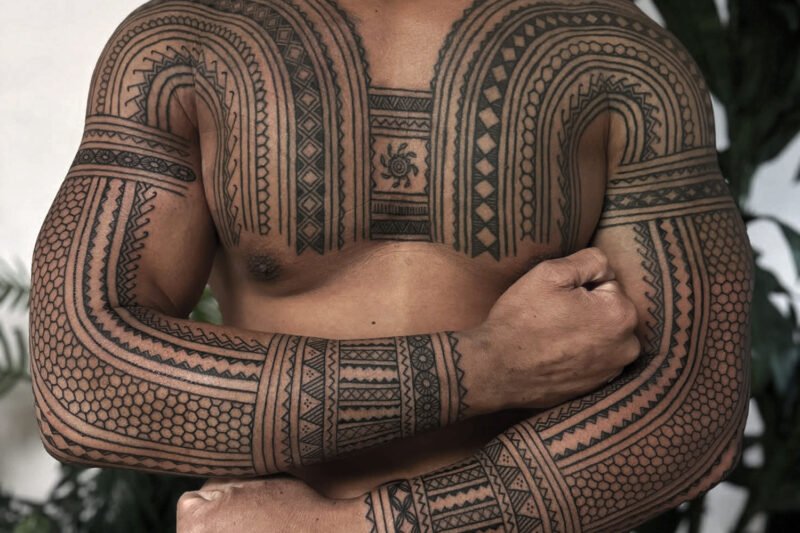
Citrus thorns, cactus spines, and other natural points have been used as tattooing tools across cultures worldwide. In Kalinga batok (Philippines), the thorn is attached to a stick and tapped into the skin with a mallet-like motion, depositing soot-based ink. The approach produces bold, clean marks suited to the geometric patterns of the Kalinga tradition.

Skin-stitching (Inuit)
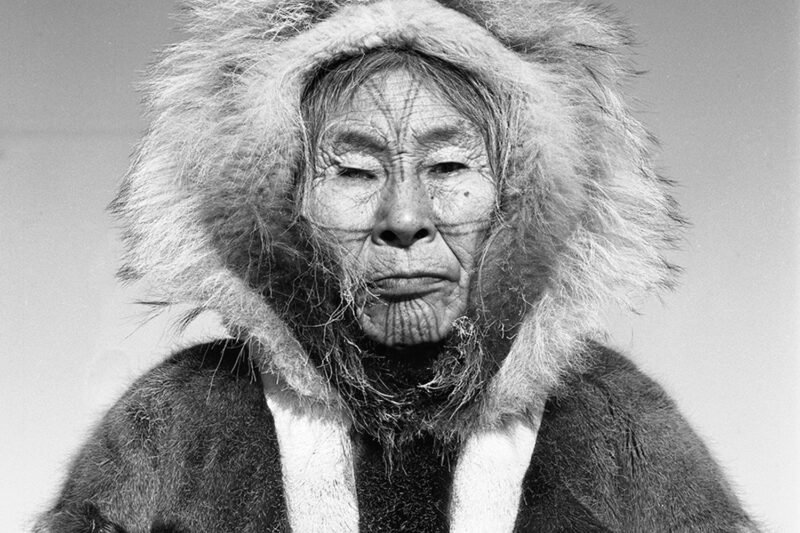
Among Inuit, Yupik, and Inupiaq peoples, traditional tattooing was performed by drawing a needle and sooted sinew thread beneath the skin. The thread leaves a pigmented line as it passes through the tissue. This is mechanically distinct from all puncture-based methods — the pigment is carried by the thread rather than deposited by a needle — and it produces a distinctive fine-line result.
Each of these methods deposits ink in the dermis through a wound, but the mechanics of the wound, the pattern of ink deposition, and the resulting texture differ. Well-executed handpoke and well-executed machine work are often indistinguishable in the healed result when the same style is attempted by both methods. The differences are more pronounced when the technique and the style are closely matched — tebori and irezumi, au and tatau, khem sak and Sak Yant — because the tool and the visual tradition evolved together.
Handpoke compared to machine work.
Handpoke is dramatically slower — a machine delivers dozens of punctures per second; a handpoke artist delivers one at a time. A piece that takes two hours by machine might take six or eight by handpoke. Depth control in handpoke relies entirely on the artist’s hand pressure and tactile sense, without mechanical assistance. Handpoke generally produces less skin trauma per puncture because each entry is a single clean insertion rather than the rapid repeated strikes of a machine needle. Less trauma typically means less swelling, less bleeding, and a faster healing process. Most clients describe handpoke as a pressing or poking sensation rather than the scratching or vibrating sensation of a machine — whether it is more or less painful is individual.
Stencil and design transfer

Thermal transfer is the most common method in contemporary studios. The artist draws or prints the design on a special thermal paper. The paper is applied to the skin (prepared with a transfer solution — typically a stencil gel or a liquid containing glycerin and green soap) and pressed firmly, transferring a purple or blue outline onto the skin’s surface. The artist then tattoos over this stencil. The stencil ink sits on the skin surface and is gradually wiped away during the tattooing process as the area is cleaned.

Freehand drawing involves the artist drawing the design directly on the skin with a skin-safe marker, using the body’s anatomy as the compositional guide. Freehand work is common in styles where the design must respond to the individual body — neotribal, ornamental, biomechanical, and large-scale work that wraps around limbs or follows muscle contours. Freehand requires a high level of spatial confidence from the artist, as the design is being composed in real time on a three-dimensional surface.

Digital projection is a newer method in which a digital design is projected directly onto the skin using a small projector. The artist traces the projected image with a marker and then tattoos over the tracing. This method allows for the precise placement of complex designs without the limitations of thermal paper.
Pain
Tattooing is painful, and understanding why — and why the pain varies by body part and by session duration — requires a brief look at how the nervous system processes the sensation.
Pain from tattooing is detected by nociceptors — free nerve endings in the skin that respond to tissue damage. Two types of nerve fibres carry pain signals from the nociceptors to the spinal cord and brain. A-delta fibres are thinly myelinated and conduct signals quickly (12–30 metres per second). They produce the sharp, localised, immediate pain felt at the moment of each needle puncture — the “bright” sting that the wearer can pinpoint. C fibres are unmyelinated and conduct signals slowly (0.5–2 metres per second). They produce the dull, aching, burning, spreading pain that builds over the course of a session — the “background” discomfort that accumulates.
Both types are activated during tattooing. The initial sensation is predominantly A-delta (sharp, puncture-like). As the session continues and tissue damage accumulates, C-fibre input increases, producing the deep, radiating ache that makes longer sessions progressively more uncomfortable.
Pain varies by body part because nociceptor density varies across the body. Areas with high nerve density — the ribs, the sternum, the inner arm, the spine, the feet, the hands, the kneecap, the groin — are more painful to tattoo because there are more nociceptors per square centimetre detecting the damage. Areas with thicker skin and lower nerve density — the outer upper arm, the thigh, the calf, the upper back — are less painful. Areas directly over bone with little subcutaneous fat (the collarbone, the shin, the elbow) produce a different quality of pain — a vibrating, resonant sensation as the needle’s impact transmits through the bone.
Pain increases over the session duration. This is caused by peripheral sensitisation — the tissue around the tattoo site becomes increasingly inflamed, and the nociceptors in the area lower their activation threshold. Stimuli that were tolerable at the start of the session become increasingly painful as the tissue swells and the inflammatory chemicals (prostaglandins, bradykinin, histamine) accumulate. This is why the last hour of a long tattoo session is typically more painful than the first hour, even if the needle has moved to a less sensitive area.
Endorphins and adrenaline are part of the body’s response. The sustained pain of tattooing triggers the release of endogenous opioids (endorphins) and adrenaline, which can produce a dulling of pain over time and, in some wearers, a mild euphoria. Some people describe a meditative or trance-like state during tattooing — a combination of endorphin release, rhythmic sensation, and focused attention.
Individual pain tolerance varies significantly and is affected by genetics, sleep, hydration, stress levels, hormonal cycles, and whether the wearer has been tattooed before (prior experience can both reduce anxiety and increase awareness of what to expect).
What happens in the skin during tattooing
When the needle punctures the skin, several things happen simultaneously.
The wound. Each puncture creates a micro-wound — a tiny channel through the epidermis and into the dermis. The needle damages cells along its path, rupturing keratinocytes in the epidermis and disrupting collagen fibres in the dermis. Blood capillaries in the dermis are also ruptured, which is why tattooing produces bleeding.
Ink deposition. As the needle enters and exits, the ink clinging to its surface is deposited in the wound channel. Some of the ink settles in the dermis, lodging between collagen fibres and in the extracellular matrix — the structural scaffolding of the dermal tissue. Some of the ink is carried upward and remains on the skin’s surface (the excess ink that the artist wipes away during the session). Some of the ink is carried downward by gravity and by the motion of tissue fluid.
The inflammatory response. The body immediately detects the wound and the foreign material. Within minutes, the area begins to swell and redden as blood vessels in the dermis dilate, increasing blood flow to the site. This is the beginning of the acute inflammatory response — the body’s first line of defence against tissue damage and foreign material.
Immune cell recruitment. The inflammatory signals attract immune cells to the wound site. The first responders are neutrophils — white blood cells that arrive within hours and begin clearing damaged tissue and bacteria. Within a day or two, macrophages arrive. Macrophages are the key players in the tattoo’s long-term fate.
The macrophages and the ink
Macrophages are large white blood cells whose primary function is to engulf and digest foreign particles, dead cells, and debris. When macrophages encounter tattoo ink in the dermis, they attempt to do what they are designed to do: eat it.
Some ink particles are small enough for macrophages to engulf. The macrophage surrounds the particle, internalises it, and attempts to break it down. Many tattoo pigments, however, are chemically inert — the macrophage can contain them but cannot digest them. The macrophage holds the ink particle inside itself indefinitely, sitting in the dermis with its cargo of undigested pigment. This is one of the mechanisms by which tattoo ink persists: it is trapped inside living cells that cannot destroy it.
Other ink particles are too large for any single macrophage to engulf. These particles lodge in the extracellular matrix of the dermis — trapped in the collagen network — and remain there passively.
When a macrophage eventually dies (as all cells do), it releases its contents, including the ink particles it was holding. Neighbouring macrophages then engulf the released ink and take over the job of containing it. This cycle — capture, hold, die, release, recapture — has been demonstrated in research on tattooed mice (Baranska et al., 2018) and is believed to explain why tattoos persist for decades despite the continuous turnover of the immune cells that hold the ink. The ink stays because the system that is trying to remove it keeps inadvertently preserving it.
This is also why tattoos change over time. Each cycle of macrophage death and recapture is imperfect. Some ink is lost — carried away by the lymphatic system to the nearest lymph nodes (which is why the lymph nodes nearest a tattooed area often contain traces of tattoo pigment). Some ink particles shift position slightly with each recapture. Over years and decades, the cumulative effect of these small shifts is the gradual softening and spreading of the tattoo — the loss of fine detail, the thickening of lines, and the overall diffusion that characterises an aged tattoo.
Healing
Phase 1: Inflammation (days 1–6, approximately)
The tattooed area is red, swollen, warm, and tender. The body is actively responding to the tissue damage and the ink. Plasma and lymphatic fluid weep from the surface — the clear, slightly sticky fluid that oozes from a fresh tattoo during the first day or two. This fluid carries excess ink, dead cells, and blood components to the surface. The area may feel hot to the touch. This is a normal inflammatory response and, within typical limits, is a sign that the healing process is working. During this phase, the epidermis begins to reform. The damaged keratinocytes at the surface dry and form a thin protective layer — the beginnings of a scab or, in well-cared-for tattoos, a thin film rather than a heavy crust.
Phase 2: Proliferation (days 6–14, approximately)
The epidermis regenerates. New keratinocytes produced at the base of the epidermis migrate upward to replace the damaged surface layer. The thin scab or film over the tattoo begins to flake and peel — the shedding of the damaged epidermal cells. The peeling often carries some ink with it (ink that was trapped in the epidermis rather than in the dermis), which is why a fresh tattoo can look slightly faded or patchy during this phase. Beneath the peeling epidermis, the dermis is also repairing itself. Fibroblasts — the cells responsible for producing collagen — lay down new collagen fibres around the ink deposits, stabilising the ink in its position within the dermal tissue. New blood vessels form to restore circulation to the damaged area.
Phase 3: Remodelling (weeks 2–8 and beyond)
The repaired tissue matures. The new collagen is reorganised and strengthened. The epidermis fully reforms — a complete, intact outer layer now covers the dermis with its permanent cargo of ink. The redness and sensitivity subside. The tattoo reaches its “settled” appearance — usually slightly less vivid than it looked when fresh, because the new epidermis now sits between the viewer’s eye and the ink, filtering the colour slightly. Full healing — the point at which the dermal tissue has stabilised and the tattoo is no longer actively changing — takes roughly six to eight weeks, though the remodelling phase can continue at a cellular level for several months. Most artists recommend waiting at least four to six weeks before evaluating the final appearance of a piece, and some recommend a touch-up session after this period to reinforce any areas where the ink did not hold fully.
Aftercare

Moisture. Keeping the healing tattoo appropriately moisturised prevents excessive scabbing. A thick scab pulls ink out of the dermis as it separates from the skin — one of the most common causes of patchy healing. A thin, well-moisturised healing layer minimises ink loss. Most aftercare protocols use a thin layer of unscented moisturiser or a specialised tattoo healing ointment applied several times a day during the first one to two weeks. Over-moisturising is also counterproductive — a waterlogged healing surface softens the scab prematurely and can trap bacteria.

Cleanliness. The tattooed skin is an open wound during the first days. Bacteria introduced to the wound can cause infection, which damages tissue and destroys ink. Gentle washing with mild, unscented soap and clean hands, followed by patting dry, is standard practice. Aggressive scrubbing, rough towels, or harsh soaps damage the fragile healing surface.

Sun protection. Ultraviolet radiation breaks down tattoo pigments, particularly lighter colours (red, yellow, orange, and light blue are most vulnerable). Sun exposure during healing is especially damaging because the new epidermis is thinner and less protective than mature skin. Long-term sun protection — sunscreen over healed tattoos, particularly on exposed body parts — slows the fading process over the life of the tattoo.

Avoiding mechanical damage. Picking at scabs or peeling skin pulls ink from the dermis. Tight clothing that rubs against the healing tattoo can have the same effect. Submerging the tattoo in water (swimming pools, baths, hot tubs) during the healing period introduces bacteria, softens the healing scab, and increases the risk of both ink loss and infection.

Second skin and film wraps. Many contemporary aftercare protocols use adhesive film dressings (medical-grade polyurethane film) applied immediately after the tattoo session. The film creates a sealed, moist environment over the tattoo, allowing the wound to heal without exposure to air, bacteria, or friction. The plasma and excess ink that would normally weep and dry into a scab are instead contained beneath the film, where they are gradually reabsorbed. Film wraps typically stay on for three to five days. This method reduces scabbing, minimises ink loss, and can produce a cleaner healed result than traditional open-air aftercare, though it requires correct application — air bubbles, inadequate adhesion, or leaving the wrap on too long can cause problems.
What determines how a tattoo ages
Ink depth. Ink placed consistently in the upper to mid dermis produces the sharpest, most stable result. Ink placed too shallowly sits in or near the epidermis and is gradually shed. Ink placed too deeply enters the hypodermis, where it spreads and blurs. Consistent depth across the entire piece is the technical achievement that separates a lasting tattoo from one that ages unevenly.
Ink particle size and composition. Larger pigment particles are harder for macrophages to remove and tend to stay in place longer. Smaller particles are more easily carried away by the lymphatic system. Carbon black has relatively large, chemically stable particles — one reason black tattoos hold their tone better than coloured ones over time. Some coloured pigments are less chemically stable and can shift hue as they break down: certain reds fade toward brown or pink, some greens drift toward blue-grey.
Body location. Areas with thick, stable skin (upper arm, thigh, back, chest) hold tattoos well. Areas with thin skin, high sun exposure, or frequent friction (hands, fingers, feet, inner wrist, neck) age tattoos faster. Areas with significant movement (joints, the front of the elbow, the back of the knee) stress the dermal tissue and can accelerate ink migration.
Sun exposure. UV radiation is the single largest external factor in tattoo degradation. It breaks down pigment molecules, accelerates the fading of lighter colours, and damages the skin structure that holds the ink in place. A tattoo that is consistently protected from the sun will look better at twenty years than the same tattoo on a sun-exposed body part.
The immune system. Individual variation in immune function affects how aggressively the body’s macrophages work on the ink. Some people’s immune systems are more active in attempting to clear the pigment, which can contribute to faster fading. This is part of why two people can receive the same tattoo from the same artist and see different rates of ageing.
Style and technique. A tattoo with bold outlines and high-contrast fills — American traditional, for example — is designed to survive ageing. The outlines absorb some blurring without losing legibility. A tattoo built from fine lines and delicate tonal gradients — fine line or micro-realism — has less structural redundancy, and the same amount of ink migration produces a more noticeable loss of detail. The style chosen for a tattoo is, among other things, a decision about how that tattoo will look in twenty years.
Tattoo removal
Understanding how tattoos work also explains how removal works. Laser tattoo removal uses targeted pulses of light energy to break large ink particles into smaller fragments. The laser’s wavelength is matched to the colour of the ink — different colours absorb different wavelengths. When a large ink particle absorbs the laser energy, it shatters into smaller pieces. These smaller fragments are now small enough for macrophages to engulf, digest, and transport away through the lymphatic system.
Removal requires multiple sessions because only a fraction of the ink is fragmented in each treatment. The body needs time between sessions to clear the fragmented particles before the next round. Complete removal can take ten or more sessions spread over a year or longer, and some colours (particularly greens and light blues) are more resistant to laser treatment than others. Black ink, absorbing across a wide range of wavelengths, is the easiest colour to remove.
The macrophage cycle that keeps tattoos in place is the same cycle that removal disrupts. The ink stays because the particles are too large for the body to remove; the laser makes them small enough to be removed.
Sources & further reading
- Anna Baranska et al., Unveiling skin macrophage dynamics explains both tattoo persistence and strenuous removal. Journal of Experimental Medicine, 215(4), 2018.
- Desmond Tobin, Biochemistry of human skin — our brain on the outside. Chemical Society Reviews, 35(1), 2006.
- Ines Schreiver et al., Synchrotron-based ν-XRF mapping and μ-FTIR microscopy enable looking into the fate and effects of tattoo pigments in human skin. Scientific Reports, 7, 2017.
- Jørgen Serup, Nicolas Kluger, and Wolfgang Bäumler (eds.), Tattooed Skin and Health. Current Problems in Dermatology, vol. 48, Karger, 2015.
- Nicolas Kluger, Epidemiology of tattoos in industrialised countries. Current Problems in Dermatology, 48, 2015.
- Wolfgang Bäumler, Chemical hazard of tattoo colourants. La Presse Médicale, 49(4), 2020.
- Steve Gilbert, Tattoo History: A Source Book. Juno Books, 2000.
- Matt Lodder, Painted People: Humanity in 21 Tattoos. Harper, 2024.
- Margo DeMello, Bodies of Inscription: A Cultural History of the Modern Tattoo Community. Duke University Press, 2000.
- John Swierk et al., What’s in My Ink? Binghamton University tattoo ink composition research project.