Related Posts
Chicano
A style with a country inside it
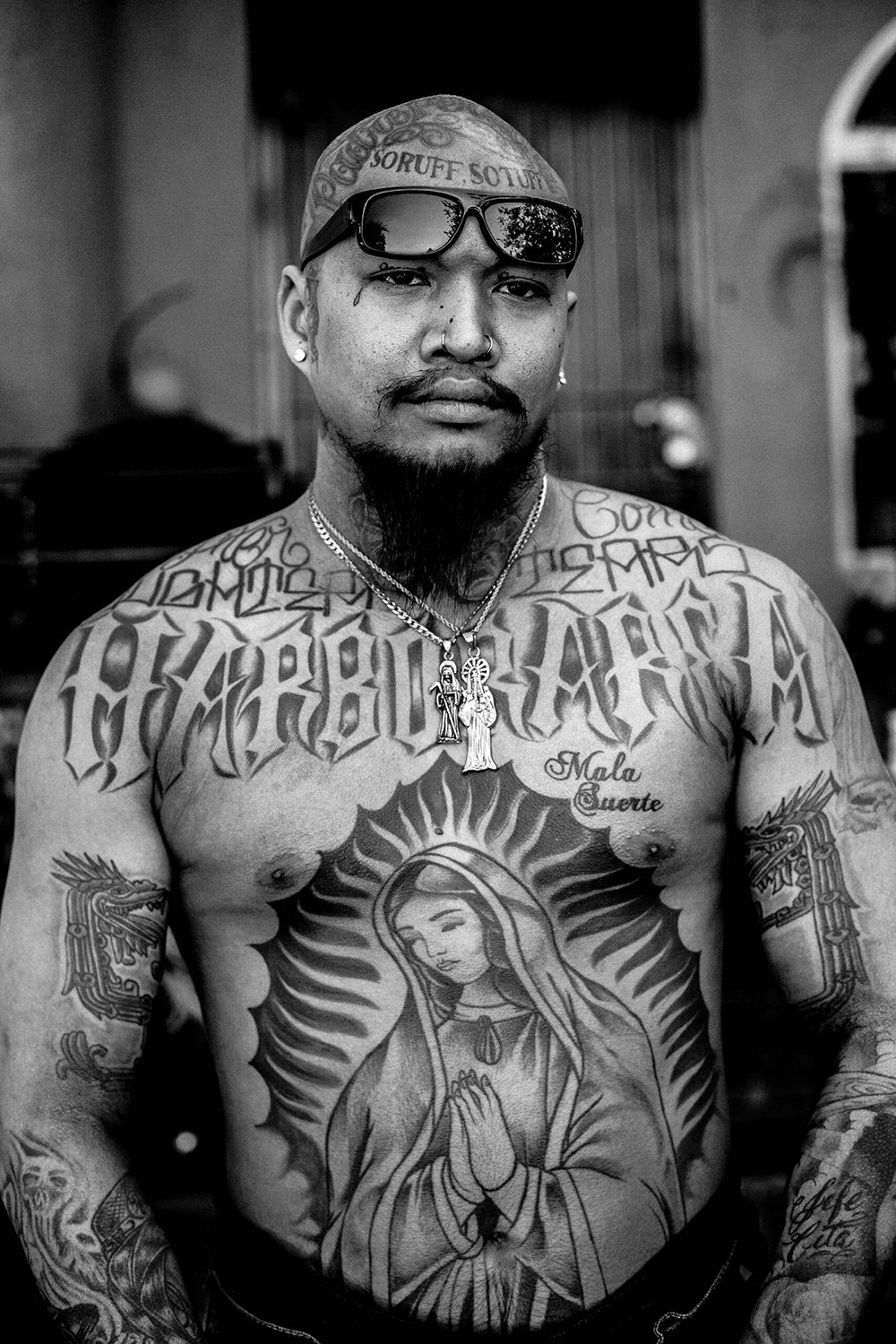
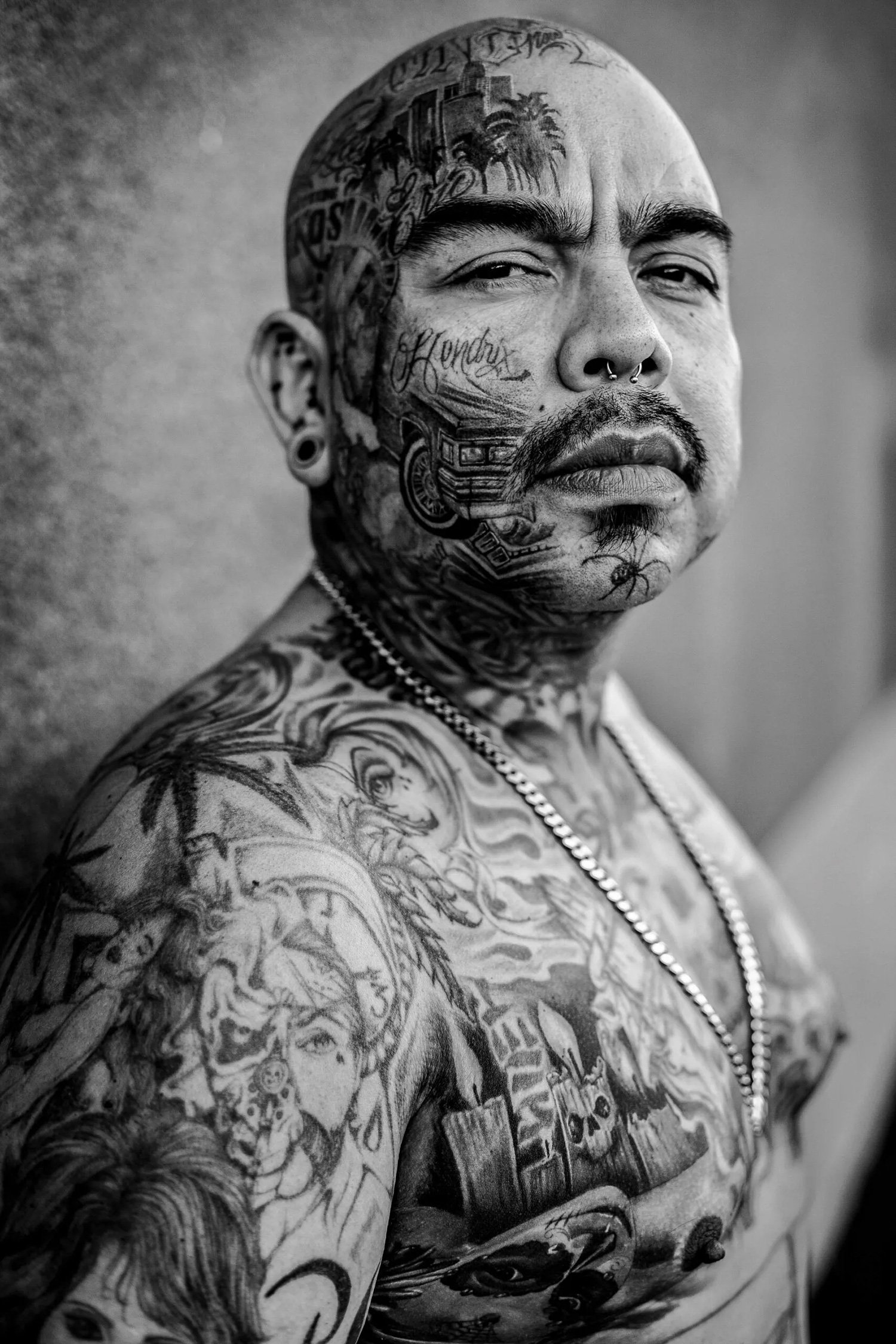
Most tattoo styles can be described in technical terms first and cultural terms second. Chicano cannot. The style is so completely bound up with the community that produced it — Mexican-American working-class life in California and the Southwest, the Pachuco and lowrider cultures of mid-century Los Angeles, the prison systems of the same period and region, the Catholic devotional tradition carried across generations from Mexico — that any description of its visual conventions without the cultural context misses what the style actually is. Chicano tattooing is the visual record of a specific community’s experience over the course of the twentieth century, and the imagery it has produced cannot be lifted out of that record without becoming something else.
This matters at the practical level. The technical language of Chicano tattooing — black-and-grey, single-needle work, fine-line portraiture, certain compositional habits — has been absorbed into mainstream tattooing and is now used by artists with no connection to the community of origin. The imagery itself has not travelled the same way, and for good reason: many of the central images carry specific meanings tied to specific lived experiences, and using them outside that context ranges from misjudged to actively offensive. A piece in this style demands more thought about appropriation and meaning than almost any other tattoo tradition.
The community behind the style
The word Chicano itself is contested and has changed in meaning over the decades. It was originally a pejorative term for Mexican-Americans, particularly working-class and rural ones; it was reclaimed during the civil rights movement of the 1960s and 70s as a term of self-definition and political identity, particularly within the Chicano Movement (El Movimiento). The term carries political weight. Not every Mexican-American identifies as Chicano, and the word’s specific resonance is part of what gives the tattoo style its specific character.
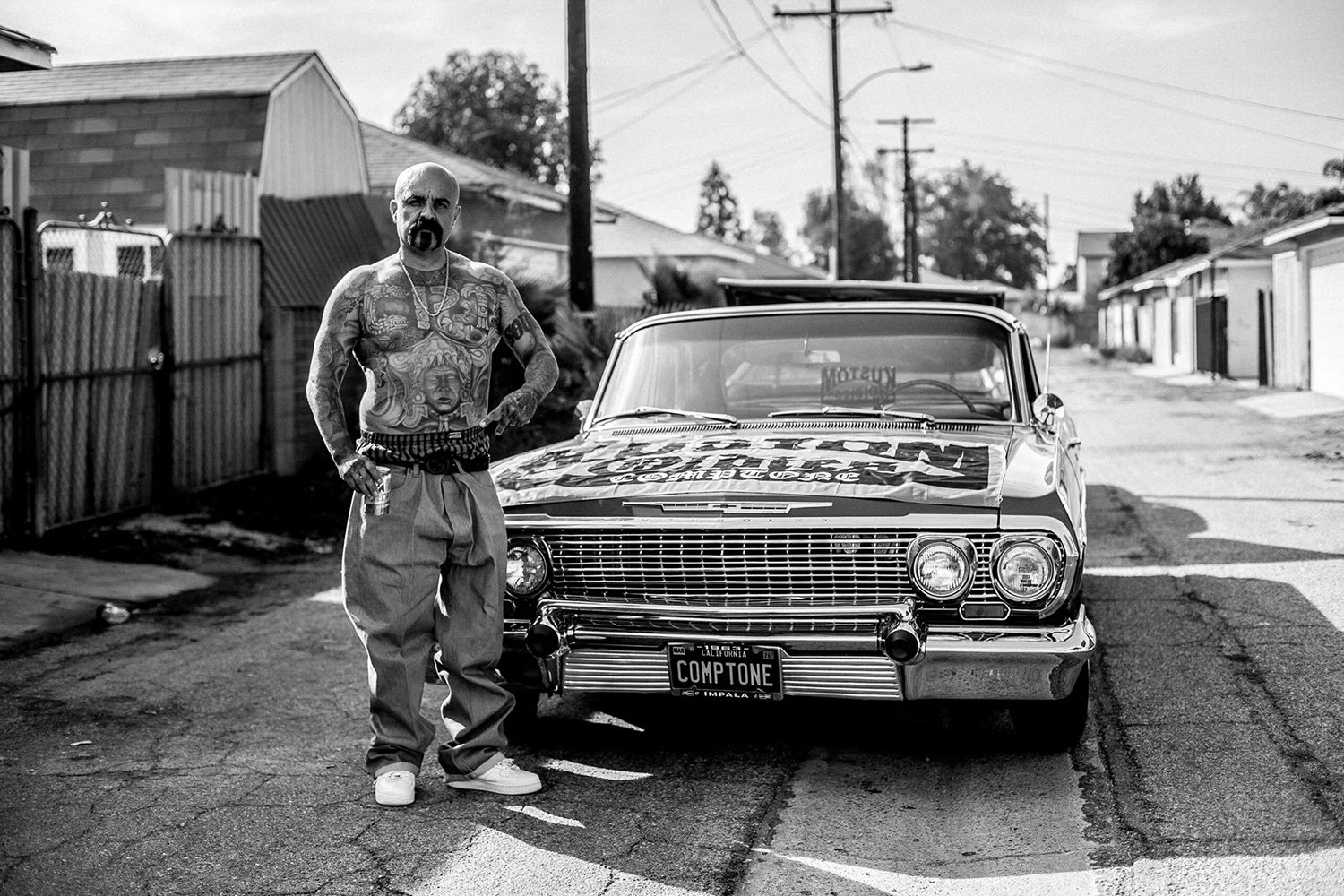
The geography of the style is the American Southwest and California, with Los Angeles as its centre. Earlier Mexican-American communities established in Texas, New Mexico, Arizona, and the agricultural valleys of California became, through the twentieth century, the cultural ground in which several distinct visual traditions developed: lowrider culture (modified cars built primarily by Mexican-American men beginning in the 1940s), Pachuco style (the zoot-suit-era subculture of the 1930s and 40s), Cholo and Cholo-A culture (the working-class street style that succeeded the Pachucos through the 1960s onward), and the broader devotional and folk-art traditions inherited from Mexico itself. Each of these contributed to the visual vocabulary that came to define Chicano tattooing.
The prison system in California, particularly during the 1960s and 70s, was the institution where the technical vocabulary of the style was refined. The reasons are practical and difficult: California’s incarceration rates for Mexican-American men were disproportionately high during this period, and the prison environment produced both the time, the constrained materials, and the cultural conditions in which a specific tattoo aesthetic emerged. Improvised single-needle machines, single-ink black setups, and the dilution of black ink to produce greywash tones were responses to those constraints, and the resulting visual style bore the marks of its origin.
The technical contribution
The single most significant technical innovation of Chicano tattooing is the development of fine-line black-and-grey single-needle work. This is sometimes treated as a footnote in mainstream tattoo histories. It is the most important technical development in Western tattooing in the second half of the twentieth century.
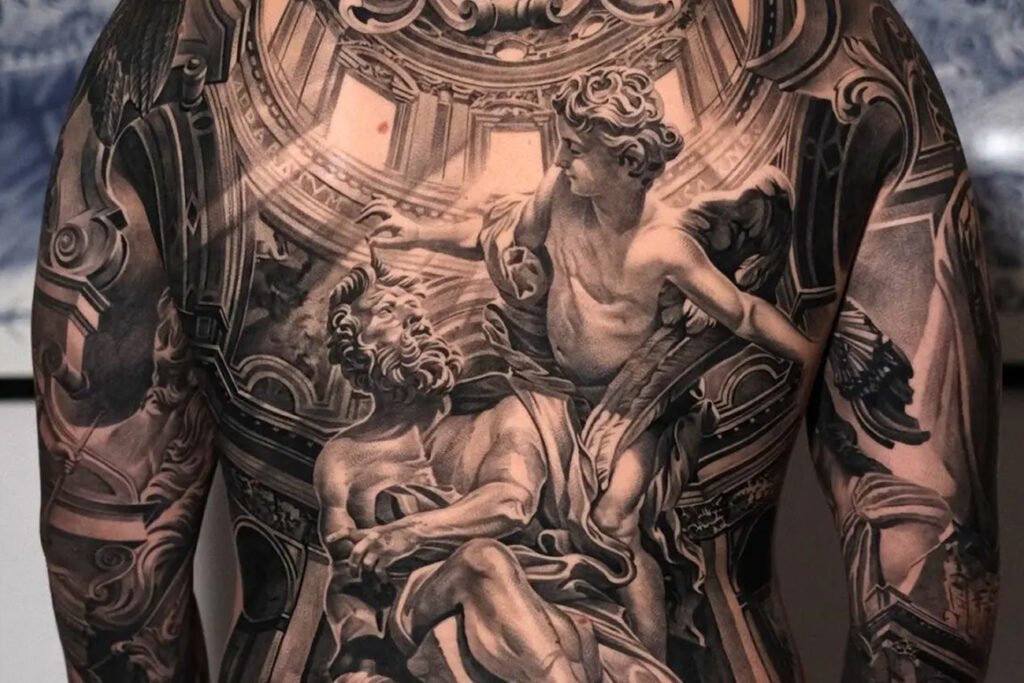
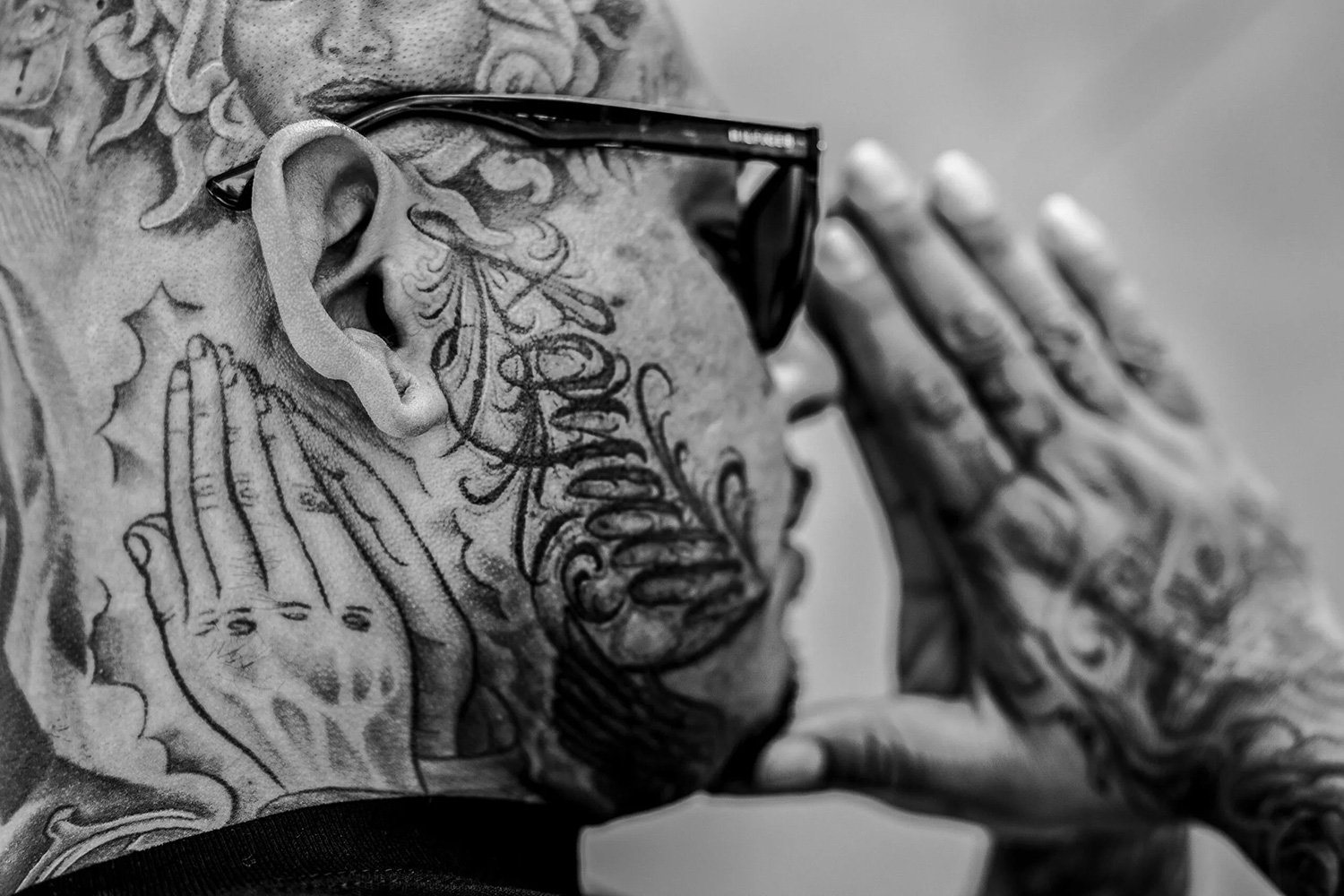
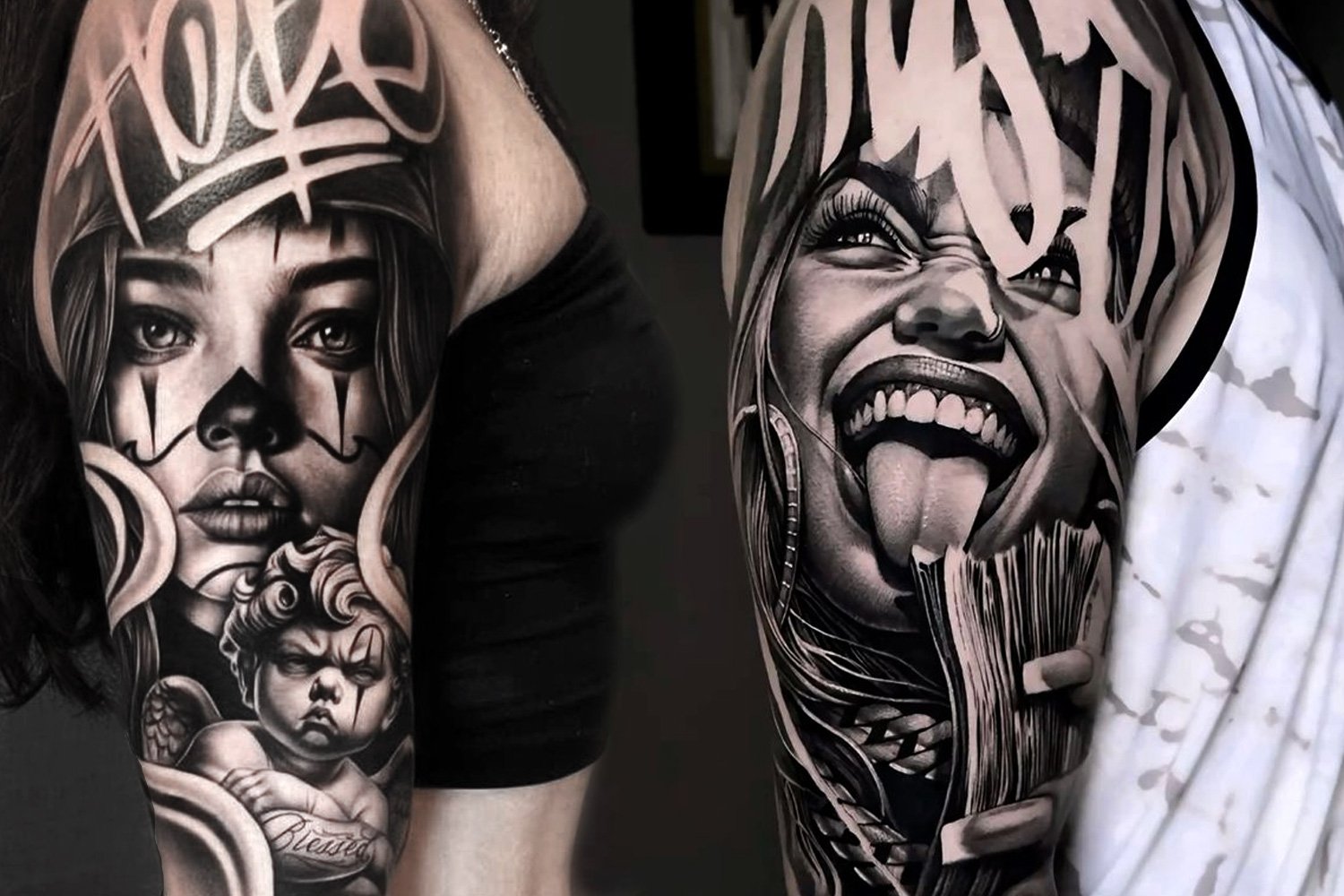
The standard tattoo technique inherited from American traditional uses outlined shapes filled with flat colour, with shading done in black through stippling or parallel lines. Chicano artists working in prison conditions, often with single-needle improvised machines, developed an alternative: drop the colour entirely and build the image in graduated tones of black and grey using diluted black ink. The result was a tattoo vocabulary that resembled drawing — fine pencil shading on paper — more than any prior tattoo style.
The technical achievement is real. Producing a smooth tonal gradient on skin requires careful needlework, careful management of ink dilution, and an artist’s eye for value relationships that most contemporary tattoo training does not include. The pioneering generation — most often cited as Freddy Negrete, Jack Rudy, and Charlie Cartwright, working at Good Time Charlie’s Tattooland in East Los Angeles from 1975 onward — brought the prison technique into a professional shop and refined it into a commercial style. Their work over the following decade established the visual language that black-and-grey realism, micro-realism, and much contemporary fine-line tattooing all descend from.
This lineage is worth clarifying. When a contemporary realist artist in any city produces a fine-line greywash portrait, the technical vocabulary they use was developed in the California prison system by Mexican-American men, brought into professional shops by a small group of pioneers in East Los Angeles, and refined over decades into the form practised today. Accurately crediting that lineage is part of taking the style seriously.
The visual vocabulary
The Virgin of Guadalupe
Praying hands
Religious portraiture
Calaveras
Calaveras — sugar skulls and broader skull imagery rooted in Mexican Day of the Dead (Día de los Muertos) tradition — appear frequently. The imagery has its own complex history; the modern decorated calavera is partly the work of José Guadalupe Posada (the Mexican printmaker whose late-nineteenth and early-twentieth-century work shaped the visual tradition) and partly older folk and pre-Columbian death imagery. In Chicano tattooing the calavera carries memorial meaning and ancestral identification; it is rarely decorative in the way the image is sometimes treated outside the community.
The clown & smile-now-cry-later masks
The clown — payaso — and the smile-now-cry-later masks (a pair of theatrical comedy and tragedy masks, often with the phrase “smile now, cry later” or sonríe ahora, llora después) are among the most distinctive Chicano motifs. The smile-now-cry-later imagery carries the stoic, philosophical position the style often takes — a recognition that joy and sorrow alternate and that one endures both. The clown imagery is multilayered, drawing on circus performance traditions, theatrical mask traditions, and a specific Chicano sensibility that uses the clown to represent the performance of composure under hardship.
Pachuco and Cholo portraits
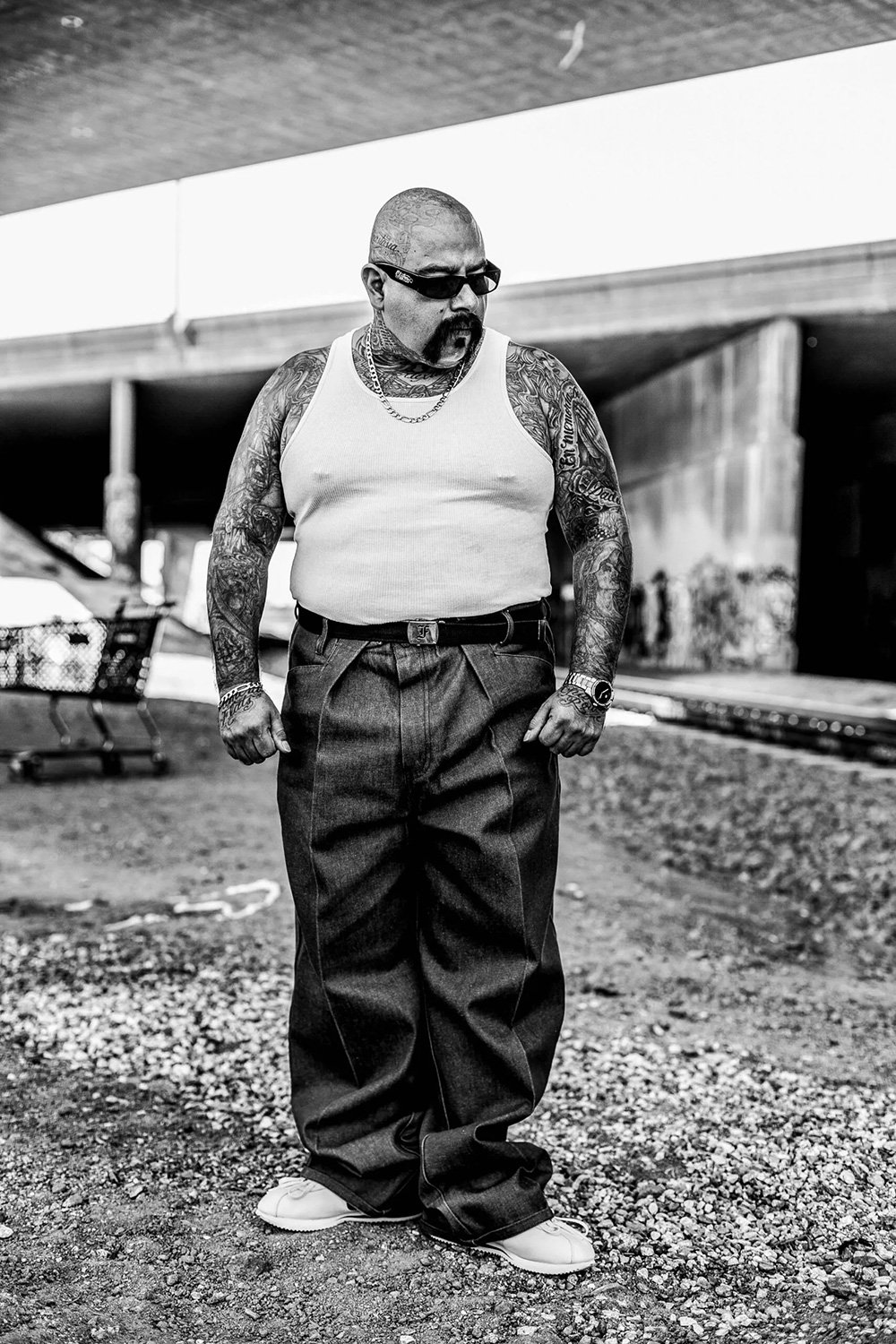
Pachuco and Cholo portraits are stylised renderings of figures from these subcultures — men in zoot suits or in the white t-shirt, plaid shirt, and creased trousers of the Cholo style, often with hats and often smoking. These are portraits of community.
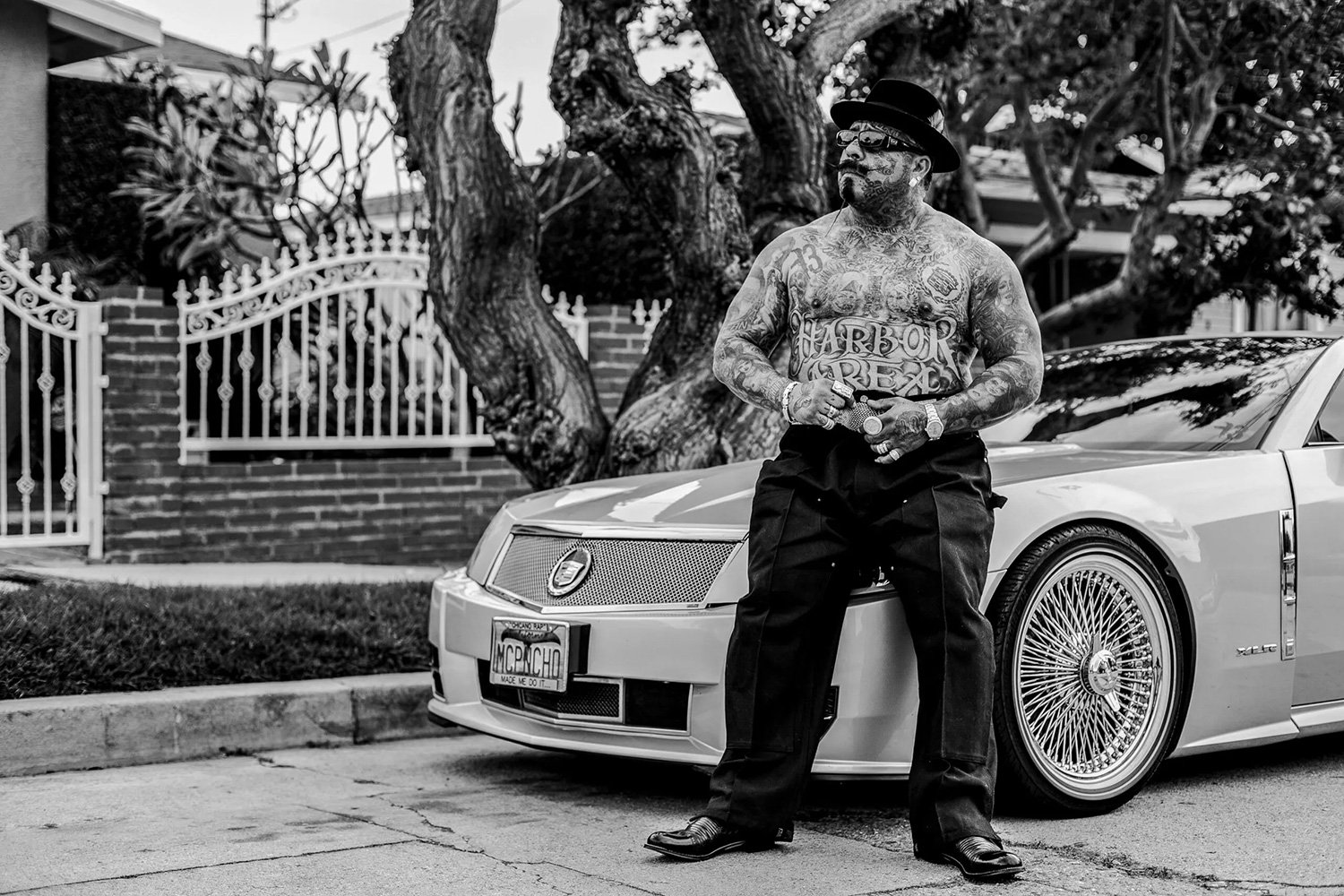
Lowrider
Roses
Script and lettering
Names, dates, locations & phrases
Indigenous Mexican imagery
The Pachuco cross
The composition
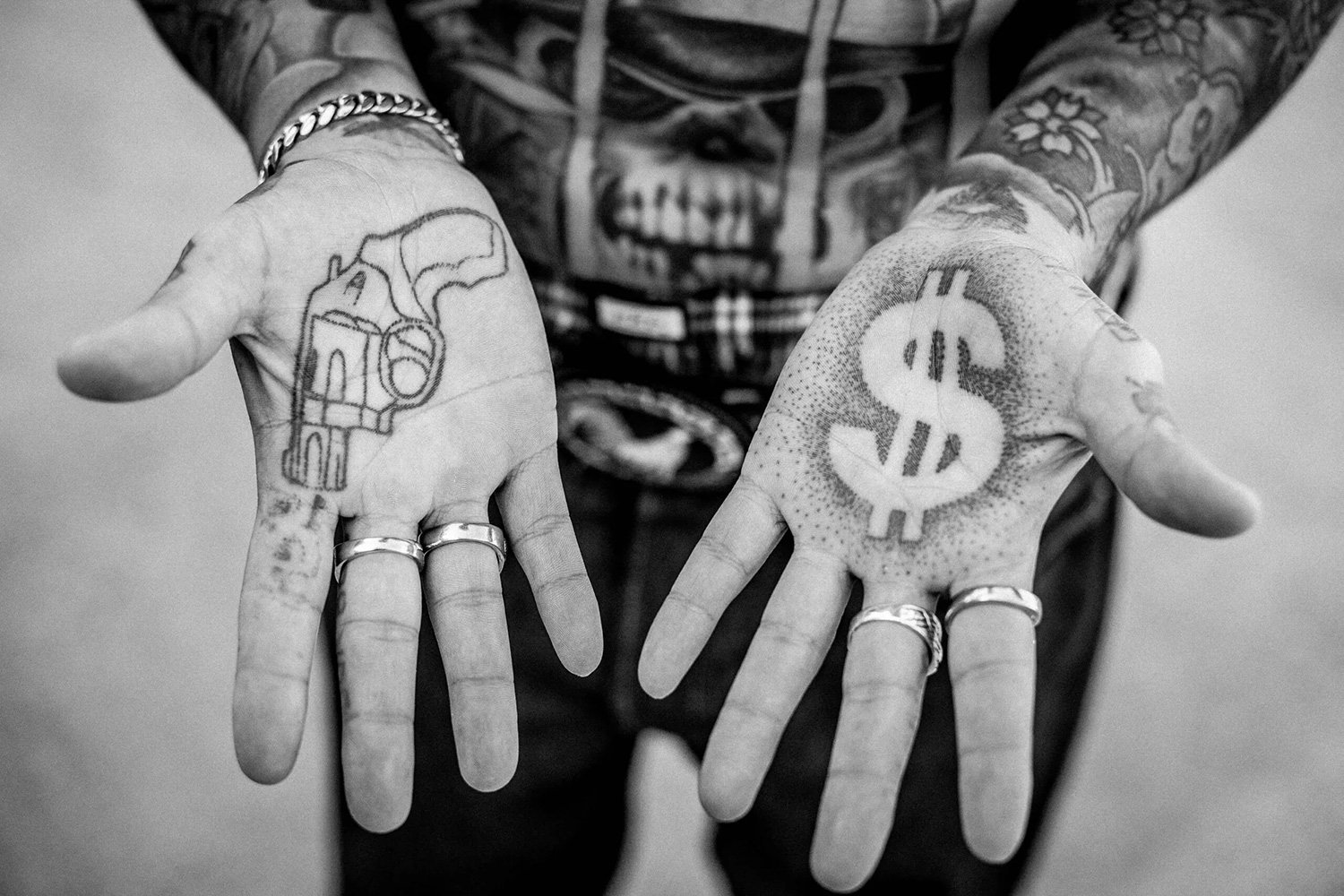
Chicano pieces tend to be carefully composed and often quite large. The style favours the chest, back, upper arm, and forearm for its major works, with smaller pieces — names, dates, the Pachuco cross, small religious imagery — used to fill in around larger compositions. The style developed in a context where a tattooed body was expected to read as a whole, with each piece relating to others and the overall arrangement carrying meaning.
Background work is often elaborate. Smoke, light rays, religious imagery, lettering, and supporting motifs surround the central figures rather than leaving them alone on bare skin. Large pieces frequently have a vertical or pyramidal composition, with religious or memorial imagery at the centre, surrounded by supporting elements.
The greywash technical tradition supports this compositional density. Where flat colour can become visually heavy in dense compositions, tonal greywash holds together visually even in busy arrangements, and the overall image reads as a unified whole.
Cultural use and the question of appropriation
This is the difficult section, and the section that any serious writing about the style must address.
Chicano tattooing is the visual culture of a specific community with a specific history of marginalisation, criminalisation, and political assertion. The imagery is not free-floating decoration; it carries meanings earned through the lived experience of the community that produced it. Wearing a Virgin of Guadalupe tattoo as a Catholic Mexican-American who grew up with the image is a different act from wearing the same tattoo as someone with no connection to the tradition. Wearing a Cholo portrait or a Pachuco cross as a member of the community is a different act from wearing it as someone for whom the imagery is exotic.
There is no single rule about who can or cannot wear which imagery. What is broadly accepted within the community is that respect for the imagery’s meaning, understanding of its origins, and the absence of caricature are the conditions under which non-Chicano clients can sometimes wear elements of the style without offending. What is not accepted is the use of the imagery as aesthetic flavouring without engagement with what it means.
Some specific guidance from artists who work in the style: religious imagery, when treated with respect for its devotional weight, can sometimes be worn by non-Chicano clients (particularly Catholic clients of other ethnic backgrounds for whom the religious meaning is real). Pachuco crosses, gang-associated imagery, and specifically Mexican-American identity markers should generally not be worn by non-Mexican-American clients, and any reputable Chicano artist will refuse such requests. Memorial tattoos for someone the client actually knew are universally accepted across communities.
The question is worth taking seriously rather than dismissing in either direction. The style was developed through real hardship and carries real meaning. Treating it as a visual menu without engaging with what each image means is what both clients and artists most need to avoid.
Practitioners
The pioneering generation has been mentioned: Freddy Negrete, Jack Rudy, and Charlie Cartwright at Good Time Charlie’s Tattooland in East Los Angeles from 1975. Their early collaborators and immediate successors included Mark Mahoney (who later became one of the most prominent tattooers in Hollywood and a major figure in the spread of the black-and-grey aesthetic), Brian Everett, and others.
The contemporary scene of Chicano tattoo artists is large and well-established. Mister Cartoon (Mark Machado) is one of the most internationally recognised practitioners, with a career spanning tattooing, graphic design, lowrider art, and broader visual culture. Chuey Quintanar, Chuco Moreno, Big Sleeps, Jose Lopez, and many others continue and develop the tradition. Lowrider Tattoo Studios in Orange County, founded by Jose Lopez, is one of the most influential contemporary studios working in the style.
The tradition has also produced significant non-tattoo visual art that informs and surrounds the tattoo work: Chaz Bojórquez’s calligraphy, the muralism of figures like Judithe Hernández and the broader Chicano muralist movement, and the lowrider art tradition documented in publications such as Lowrider Magazine (founded 1977).
Ageing and longevity
Black-and-grey tattoos age better than colour tattoos. This is the practical advantage of the technical tradition that Chicano artists developed. A well-executed black-and-grey piece from the 1970s or 80s, even after forty years on skin, generally retains its overall composition and most of its tonal information. The image softens; some of the finest greys lift, but the structure holds.
Chicano work executed at a large scale, with strong dark values committed to fully and with the kinds of compositional choices that survive softening, has aged better than almost any other contemporary style. The early work of Negrete, Rudy, and Cartwright on clients still alive is documented and visible, and much of it reads as clearly today as comparable American traditional work from the same period.
The fine-line portraiture and the most detailed greywash work age less perfectly. The same cautions that apply to all realism — that fine tonal detail softens over decades, that small-scale work loses information faster than large-scale — apply to fine-line Chicano work. Pieces designed with these limits in mind hold up; pieces that pushed for the maximum photographic fidelity at small scale tend to soften visibly within twenty years.
Choosing an artist
For a client who has the cultural connection that makes a Chicano tattoo appropriate, the choice of artist is significant beyond the usual considerations of skill.
A Chicano artist working in the tradition will understand the imagery, the conventions, and the meanings in ways that a generalist working in greywash will not. The collaboration on a memorial piece, a religious image, or a piece carrying specific cultural references is a different kind of collaboration with someone embedded in the tradition than with someone executing the image as a technical exercise.
Travel may be involved. The largest concentration of Chicano artists is in California, particularly in Los Angeles and Orange County, with significant scenes also in San Antonio, Albuquerque, Chicago, and several other cities with established Mexican-American communities. Internationally, artists working in the style exist but are concentrated in places with significant Latin American diasporic populations.
Booking lead times for the most established Chicano artists are long, often a year or more. Pricing is high, reflecting both the skill required and the established cultural significance of the work. Saving money on a piece of this importance is not advisable.
Chicano style now
Chicano tattooing is in a stable, mature, and respected position. It is no longer the marginalised practice it was in the 1970s when Negrete and his colleagues first brought it into professional shops. The technical innovations have been absorbed into mainstream tattooing globally; the cultural recognition of the style as a serious art tradition has grown; and the community of artists working within it includes both veterans of the original Los Angeles scene and younger practitioners who have inherited the tradition and continue to develop it.
The style still faces real challenges. The mainstreaming of technical vocabulary has produced a generation of artists who use the tools without understanding the tradition, contributing to the appropriation issues addressed above. The commercialisation of Mexican-American visual culture by the broader fashion and design industries has produced caricatured versions of the imagery that exist alongside the serious work and sometimes get confused with it. The continued criminalisation and marginalisation of Mexican-American communities in much of the United States gives the cultural questions surrounding the style real weight rather than abstract significance.
What the tradition has produced, across half a century and many thousands of artists and clients, is a body of work that documents a community’s experience with the precision and care that any serious art tradition deserves. Alongside Japanese irezumi and Polynesian tatau, it is one of the major cultural tattoo traditions that has contributed substantial technical innovation to global tattooing while maintaining its specific cultural identities. It is one of the important art forms of twentieth-century North America.
Sources & further reading
- Photos: Chicano Life by Julien Gremm (@julien_gremm)
- Julien Gremm, For Chicanos in Los Angeles, the duty to remember is expressed through tattoos (link). Vice, 2019.
- Freddy Negrete with Steve Jones, Smile Now, Cry Later: Guns, Gangs, and Tattoos — My Life in Black and Gray. Seven Stories Press, 2016.
- Tattoo Nation, dir. Eric Schwartz, 2013.
- Margo DeMello, Bodies of Inscription: A Cultural History of the Modern Tattoo Community. Duke University Press, 2000.
- Anna Felicity Friedman, The World Atlas of Tattoo. Yale University Press, 2015.
- Matt Lodder, Painted People: Humanity in 21 Tattoos. Harper, 2024.
- Clinton R. Sanders, Customizing the Body: The Art and Culture of Tattooing. Temple University Press, revised edition 2008.
- Chaz Bojórquez, Chaz Bojórquez: New World Order. Drago, 2009.
- Chaz Bojórquez, Holly Barnet-Sanchez and Tim Drescher, Give Me Life: Iconography and Identity in East LA Murals. University of New Mexico Press, 2016.
- Shifra M. Goldman, Dimensions of the Americas: Art and Social Change in Latin America and the United States. University of Chicago Press, 1994.
- George Lipsitz, “Not Just Another Social Movement: Poster Art and the Movimiento Chicano” in American Studies in a Moment of Danger. University of Minnesota Press, 2001.
- Lowrider Magazine back issues, 1977–present.
- Ben Chappell, Lowrider Space: Aesthetics and Politics of Mexican American Custom Cars. University of Texas Press, 2012.