Related Posts

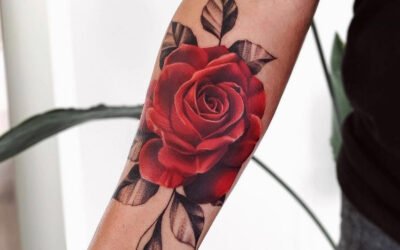
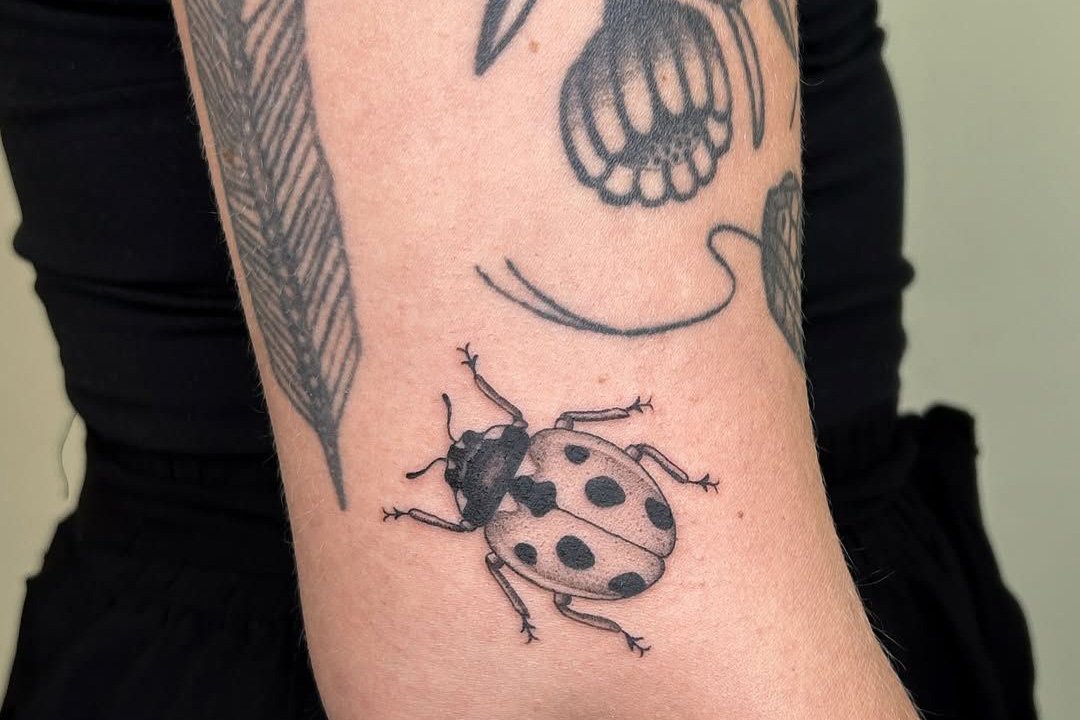
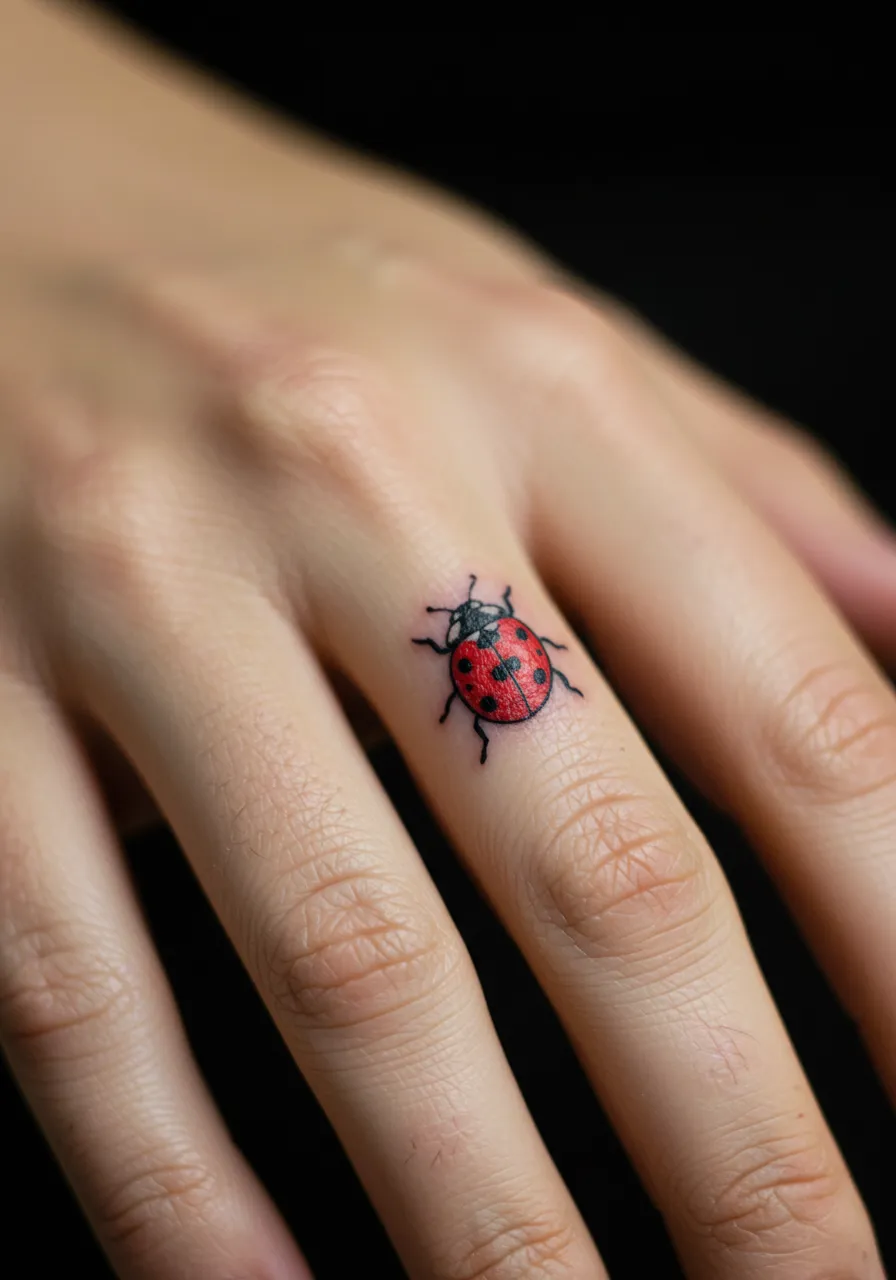
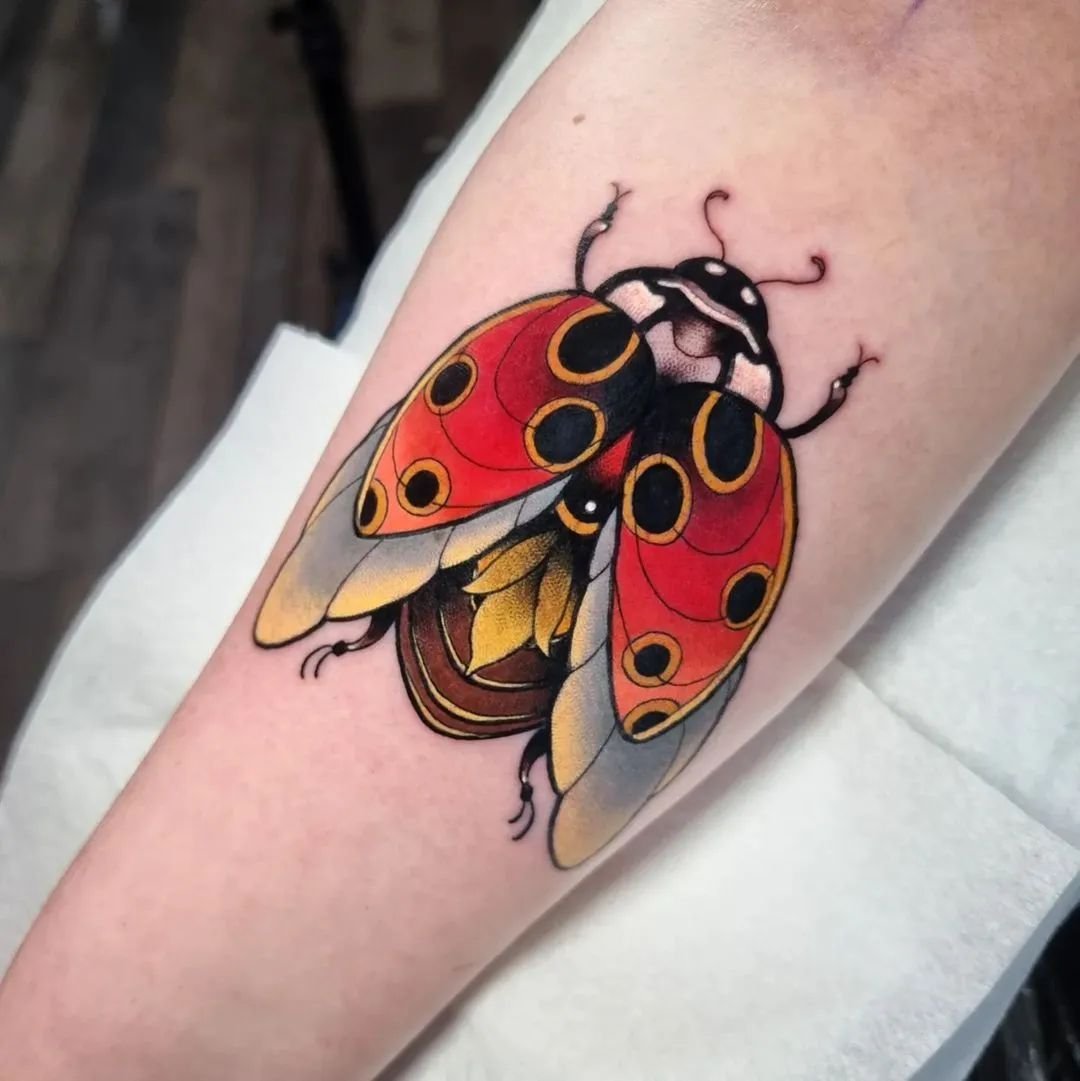
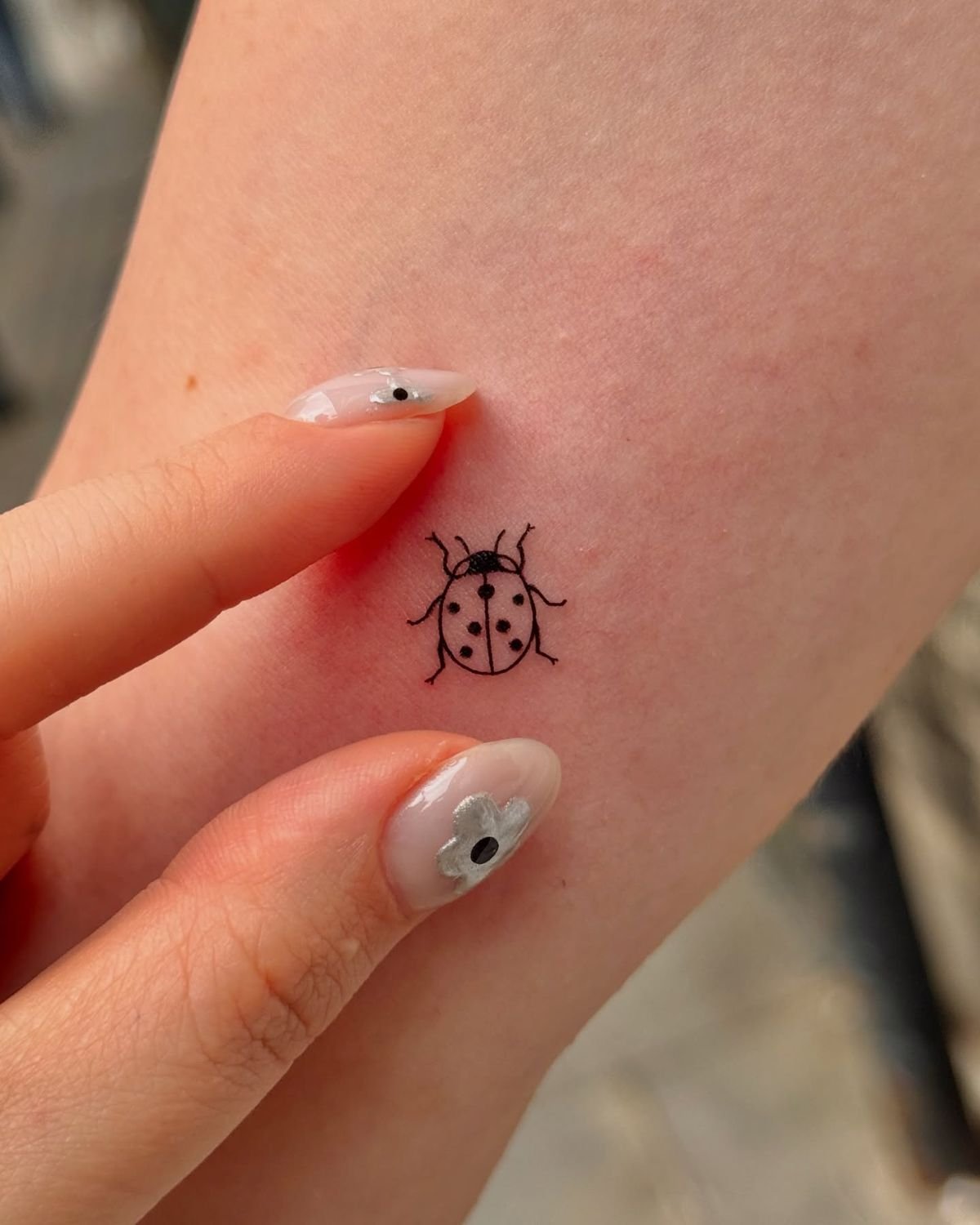
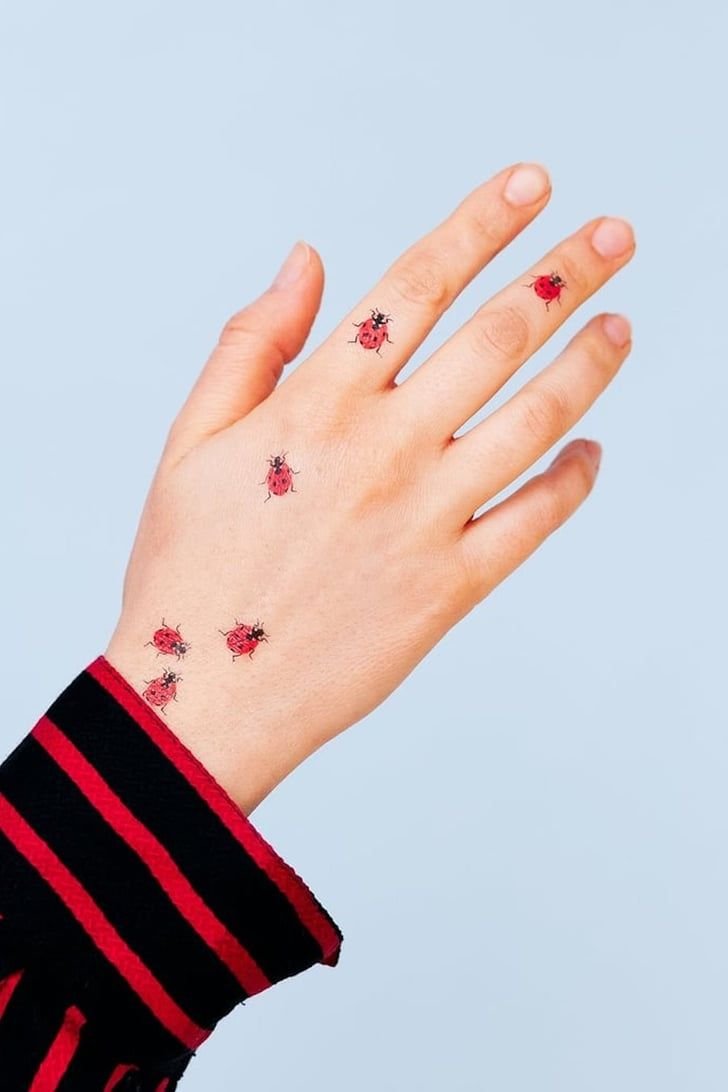
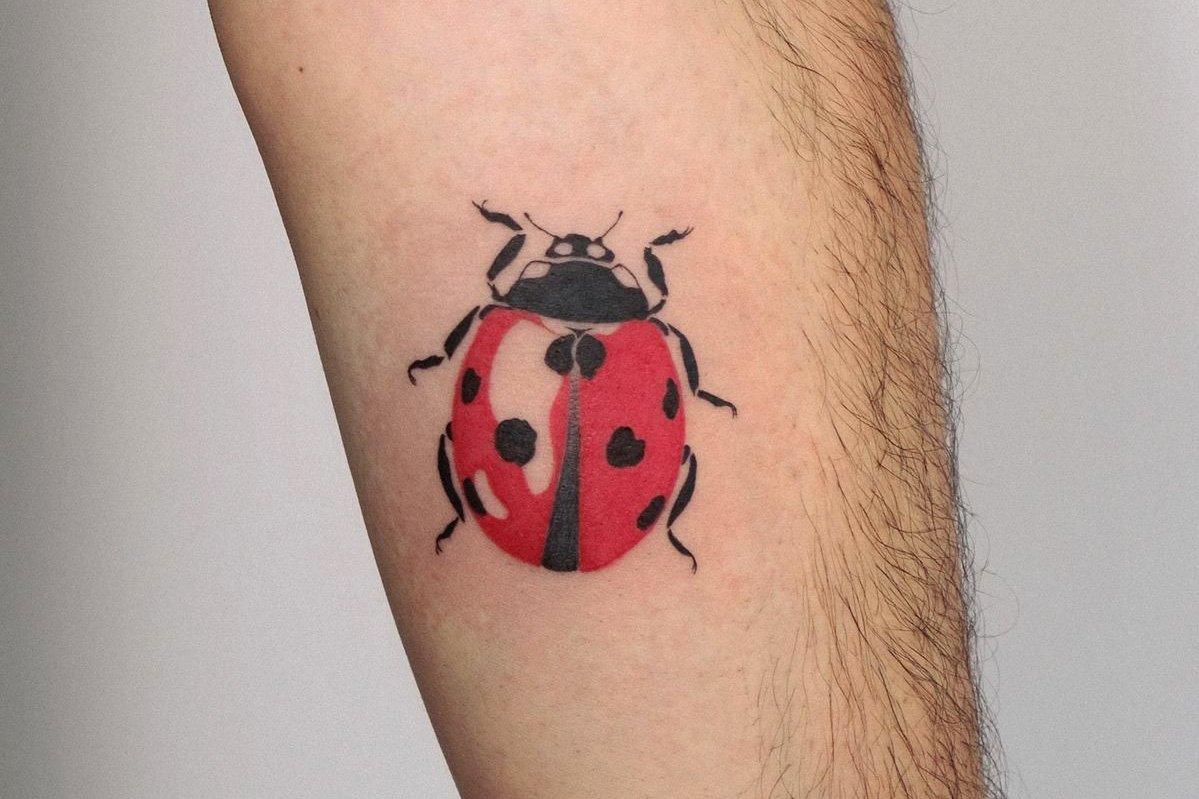
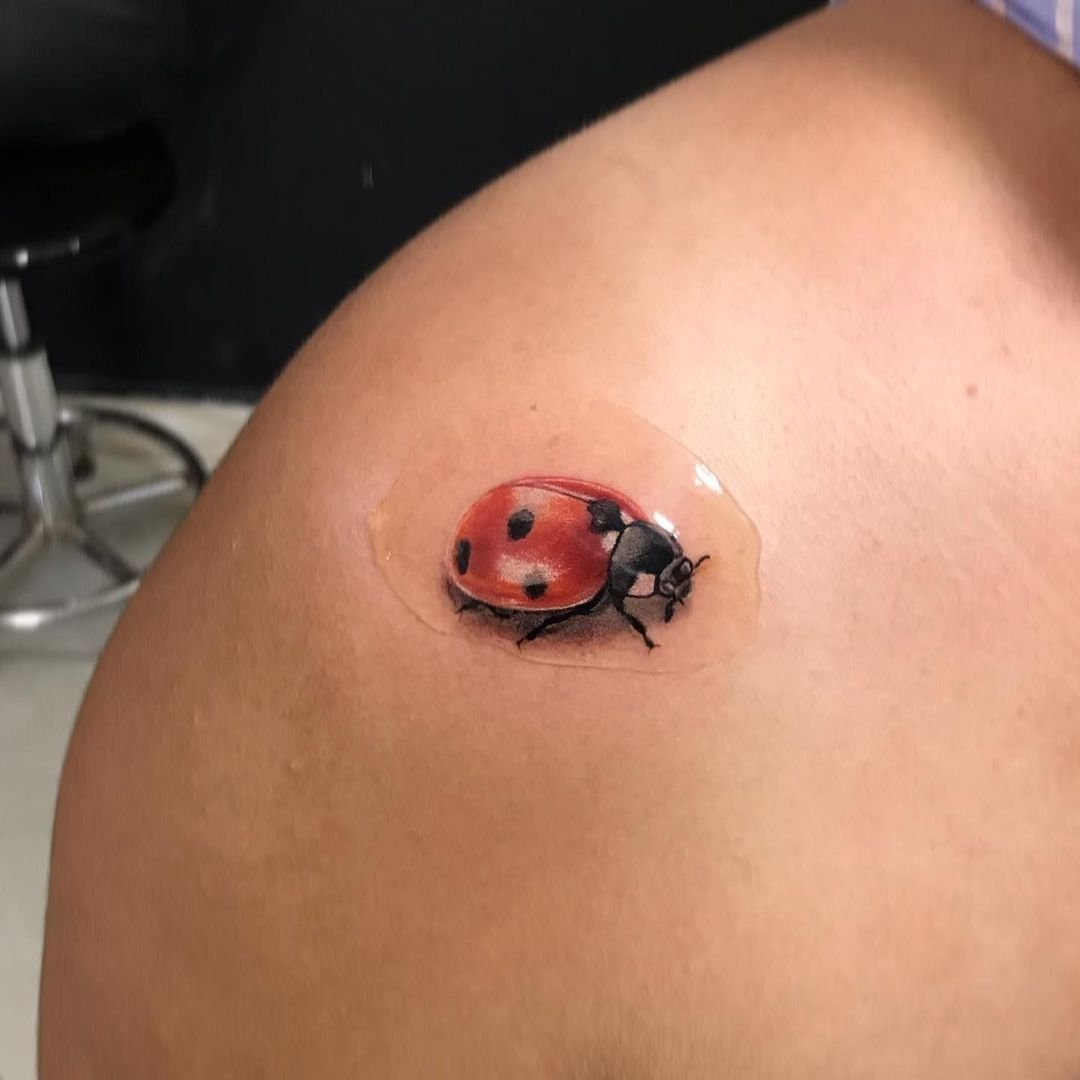
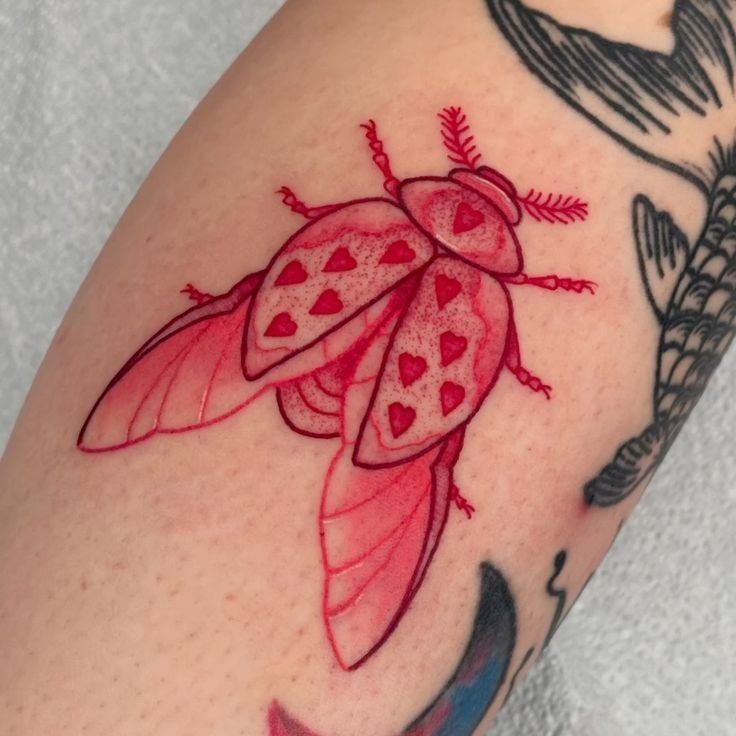
Ladybug tattoo
The beetle that wants to be seen
There are a few animals a person can recognise from across a room at the age of three. The ladybug is one of them. A red dome the size of a fingernail, black spots, six legs that emerge briefly and tuck back under the shell. Children pick them up. Adults move them off windowsills with the edge of a postcard. The beetle has the rare distinction of being almost universally tolerated, even by people who flinch at every other insect.
This tolerance has a long history, and a stranger one than the children’s books suggest. The ladybug has been called Mary’s beetle, God’s little cow, the bride insect, the key-maid of spring. It has been asked to predict the weather, find husbands, deliver letters to the Virgin, and bring bread down from the sky. It has been credited with saving harvests and, in some places, blamed for bringing rain when killed. It is also one of the most chemically defended insects in the average European garden — an animal whose entire visual design is a warning, and whose calm in the open is the result of millions of years of predators learning not to bite.
All of which makes it an unusually loaded choice for a tattoo. People often pick the ladybug because it reads as small, gentle, and harmless. The biology and the folklore both say something different.
About the animal
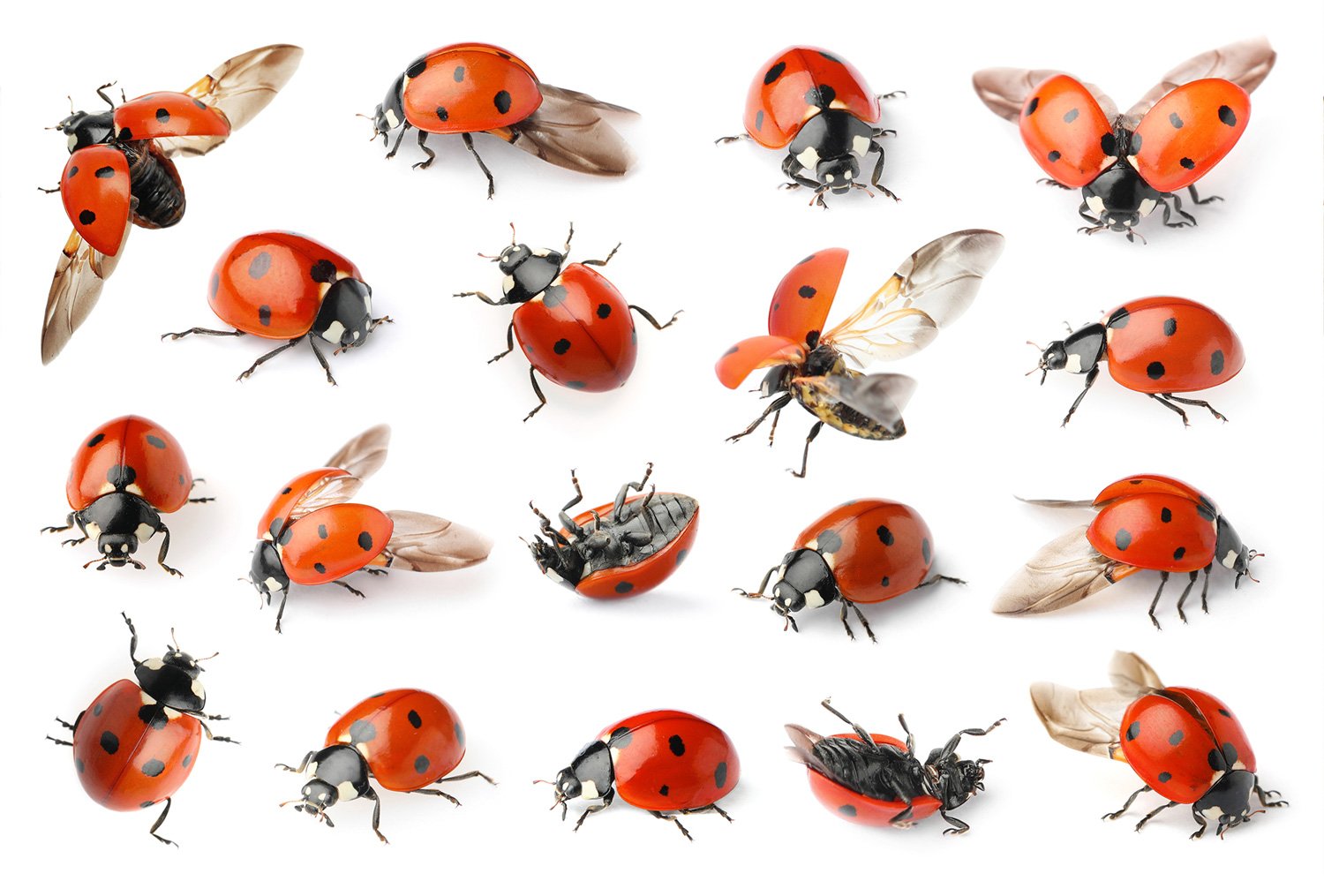
The insects most people call ladybugs are coccinellids — a family of beetles with around six thousand described species worldwide. The seven-spot ladybird, Coccinella septempunctata, is the European archetype: glossy red, three spots on each wing case, one shared across the seam. The two-spot, the ten-spot, the twenty-two-spot all exist. So does the harlequin, Harmonia axyridis, an Asian species now widespread across Europe and North America, which comes in colour variants ranging from orange with black spots to black with red spots.
The red comes from carotenoids embedded in the cuticle, and its function is signalling. Most ladybirds produce alkaloid toxins — coccinelline in Coccinella, harmonine in Harmonia — and store them in their hemolymph, the insect equivalent of blood. When threatened, the beetle bleeds on purpose. Yellow droplets appear at the leg joints, bitter and foul-smelling. A bird that takes a ladybug into its beak usually drops it within seconds and avoids the colour combination afterward. This is called reflex bleeding, and it is why the beetle can sit on the upper surface of a leaf in full sunlight while other insects hide.
The colour combination — red and black, or orange and black — is a textbook case of aposematism: warning colouration. The same logic governs the markings of poison dart frogs, monarch butterflies, and coral snakes. The animal advertises its toxicity. The advertisement only works if predators can recognise it, which is why aposematic species tend to converge on the same few palettes. Red on black reads as do not eat across most of the animal kingdom.
A ladybug, then, is not a shy creature that happens to be pretty. It is a small, conspicuous, chemically armed predator that spends its life eating aphids in plain view.
Her names
In almost every European language, the beetle is named after a holy person. Marienkäfer in German, mariquita in Spanish, coccinella with its Marian echo in Italian, Marias nyckelpiga in Swedish — Mary’s key-maid. In French, it is bête à bon Dieu, the good God’s creature. In Russian, божья коровка, God’s little cow. In Turkish, uğur böceği, the luck insect.
The pattern is too widespread to be a coincidence and too consistent to be an ornament. The beetle belongs to someone. It is not divine itself; it is owned by the divine. This is the grammatical position of a servant, a pet, or a messenger — and the folk practices treat it that way. Children send them on errands. Farmers credit it with answered prayers. Killing it is considered a minor offence against its owner, with consequences ranging from bad luck to crop damage.
The Marian association probably consolidated in the medieval period, when European farmers prayed to the Virgin against pest infestations and the seven-spot ladybird, an effective aphid predator, often arrived in answer. The seven spots were sometimes glossed as Mary’s seven sorrows. The red was her cloak. The naming worked backwards from the observation: a beetle that protected the harvest had to belong to its protector.
What the rhymes ask for
The folk rhymes give a clearer picture of how people actually used the beetle than the theology does. A child holds the ladybug on the palm or fingertip, recites a verse, and watches it fly. The verse usually contains a request. In the Polish version, biedroneczko, leć do nieba, przynieś mi kawałek chleba — ladybug, fly to the sky, bring me a piece of bread. The Russian, Czech, and Ukrainian versions have the same shape and the same request. Bread, weather, and the safe return of someone absent. The sky is the address; the beetle is the courier.
The Basque tradition is more elaborate. The child rotates the hand to keep the beetle walking, recites a verse asking it to count fingers, and only then sends it skyward — sometimes with a letter for the Christ child or the Virgin. In southern France, children asked the beetle which direction their future spouse would come from, and read the answer in the line of flight.
The English-language rhyme that survives best is the strangest of them. Ladybird, ladybird, fly away home, your house is on fire, and your children will burn. It first appeared in print in 1744, in Tommy Thumb’s Pretty Song Book, and it warns the beetle rather than asking anything of it. Some folklorists have linked the fire to the post-harvest practice of burning stubble, which would have killed insects overwintering in the field debris. Whatever its origin, the verse treats the beetle as a small parent with a household to save — one of the few children’s rhymes in any language in which the recited animal is in danger from the speaker’s own world.
“Lady-bird, Lady-bird, fly away home
The field mouse has gone to her nest
The daisies have shut up their sleepy red eyes
and the birds and the bees are at rest
Lady-bird, Lady-bird, fly away home
The glowworm is lighting her lamp
The dew’s falling fast, and your fine speckled wings
will flag with the close clinging damp
Lady-bird, Lady-bird, fly away home
The fairy bells tinkle afar
make haste, or they’ll catch you and harness you fast
with a cobweb to Oberon’s star.”— from Favourite Poems Old and New, Selected for boys and girls, Helen Josephine Ferris, Garden City, N.Y., Doubleday, 1957.
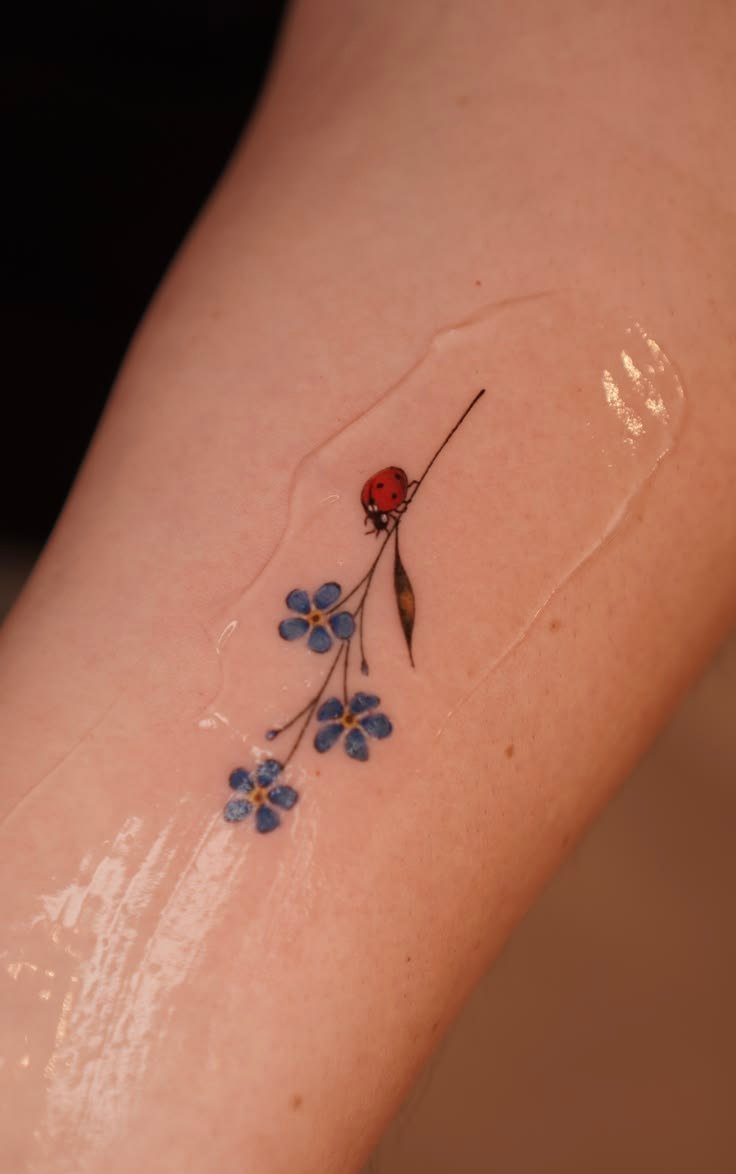
The ladybug tattoo