Tattoo styles are not a fixed system but a set of working conventions — ways of drawing, lining, shading, and composing that have developed over time within different traditions. Some names point to established visual systems with clear rules, while others describe how the tattoo is made or how it looks in terms of tone. There are also practices in which style cannot be separated from cultural meaning and protocol. At the same time, newer labels often emerge from trends and hybridisation, borrowing freely from existing approaches without forming a stable canon. In practice, “style” serves less as a strict category and more as a shared reference point — helping align expectations between artist and client around form, durability, and intent.
A sleeve built from twenty separate pieces: a traditional rose next to a fine line butterfly, a small geometric triangle above a script date, a blackwork moth beside a neo-traditional fox, a tiny mushroom filling a gap near the elbow. Each piece is self-contained. Each was probably done at a different time, possibly by a different artist, possibly in a different city.
American traditional is a port-town style. It grew up in the tattoo shops that clustered near naval bases and harbours in the first half of the twentieth century — Honolulu, San Diego, Norfolk, the Bowery in New York, and Chatham Square. The clientele was sailors, soldiers, and the people who worked the docks. The constraints of the trade shaped the style completely.
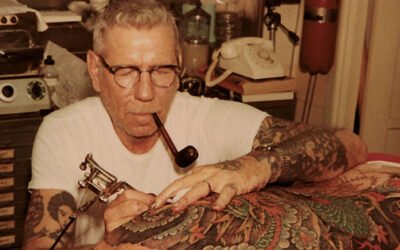
Norman Keith Collins (1911–1973), best known as “Sailor Jerry,” was a U.S.-based tattoo artist who worked primarily in Honolulu and became a key bridge between early 20th‑century American flash tattooing and later “tattoo renaissance” practice that treated tattooing as a serious craft with international artistic references.