Related Posts
Patchwork
The oldest way of being tattooed, given a new name
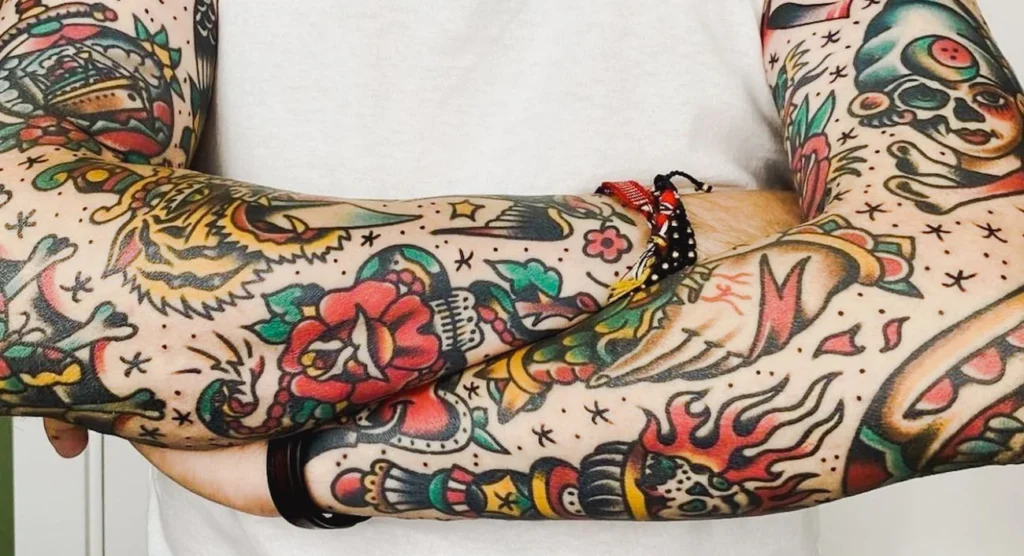
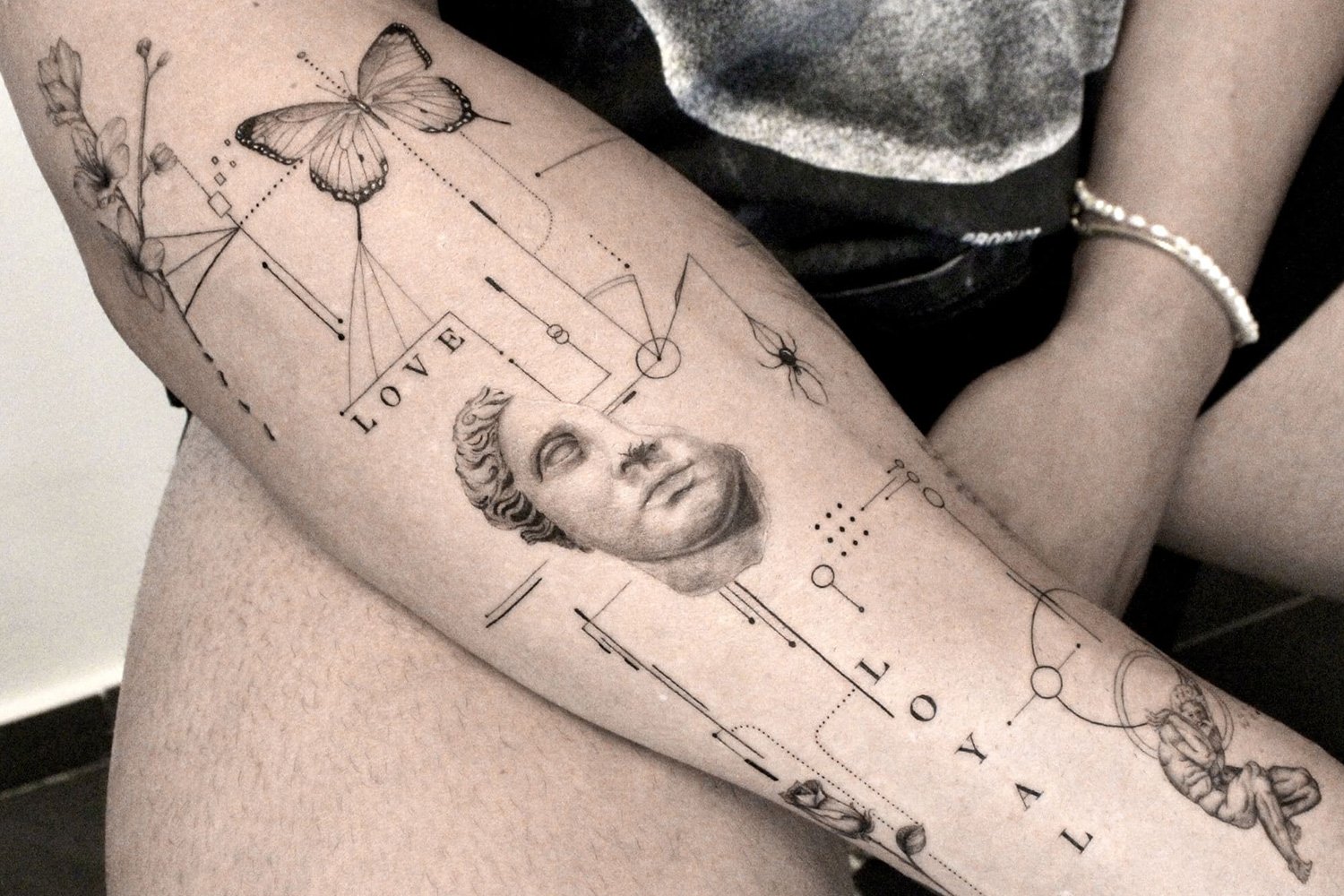
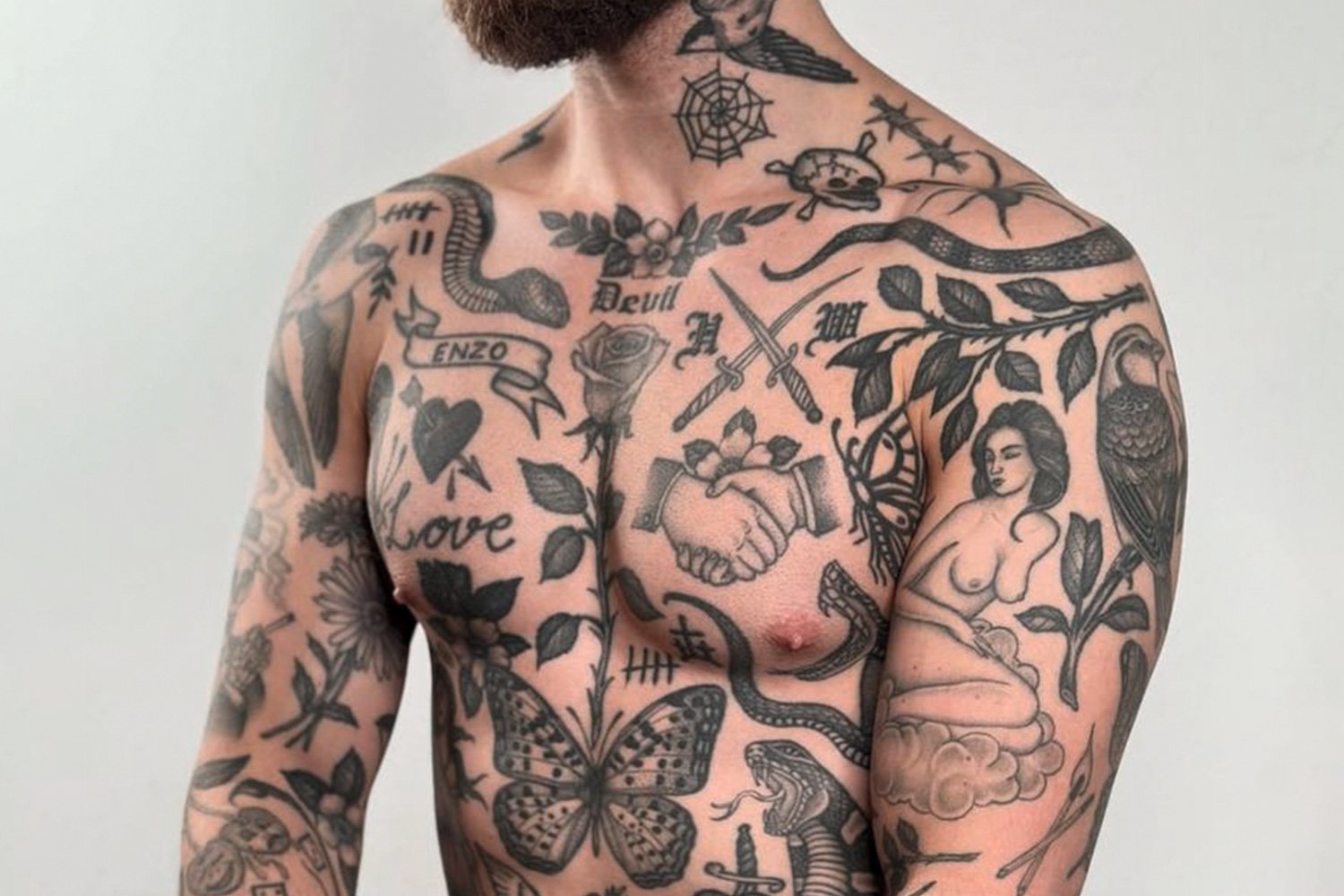
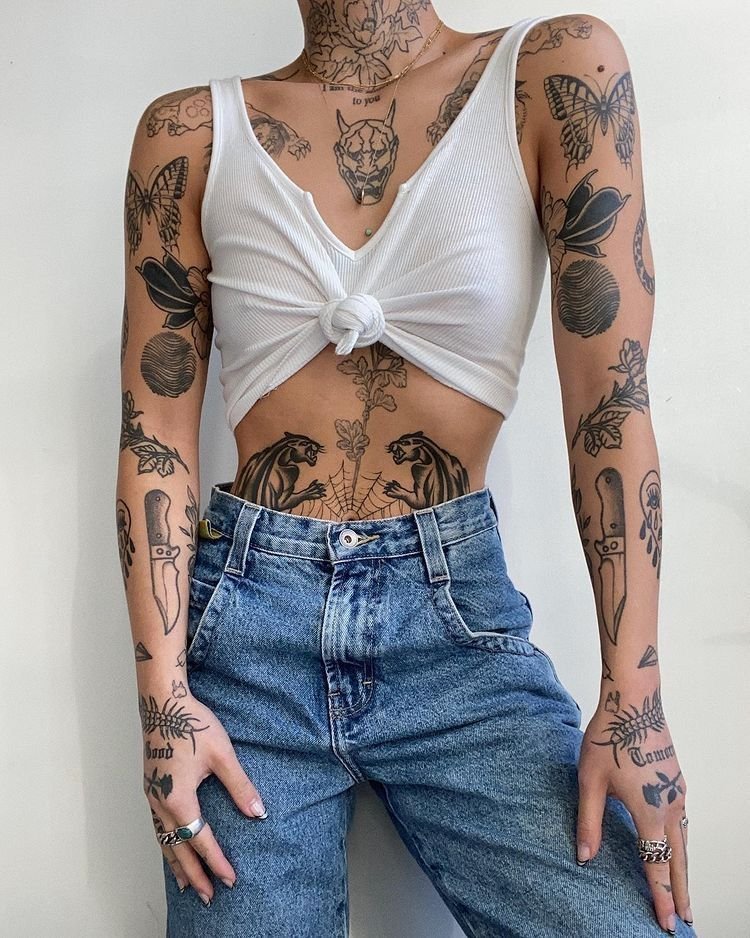
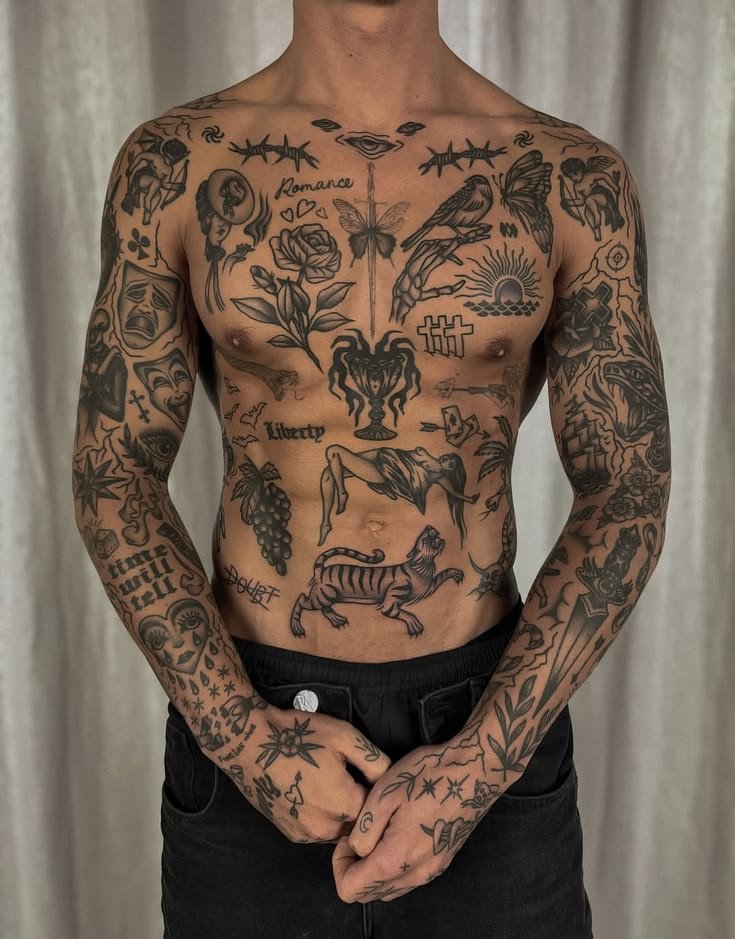
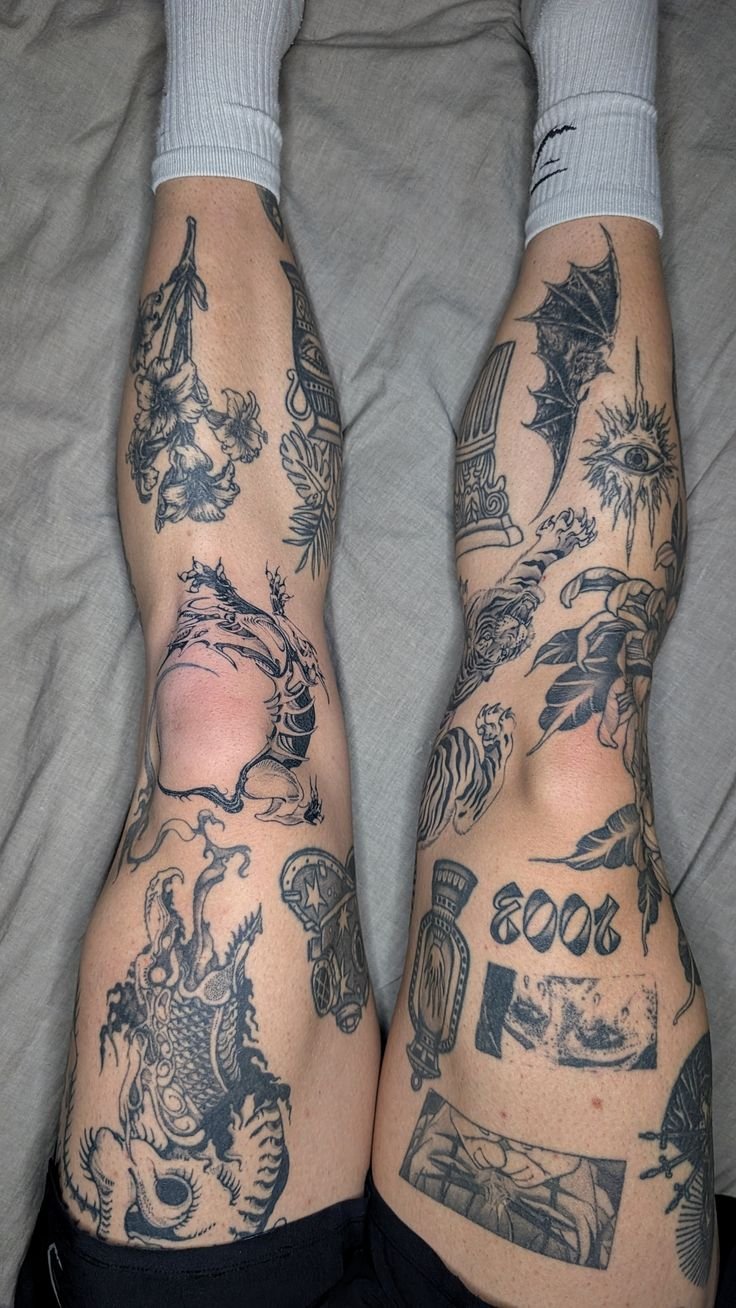
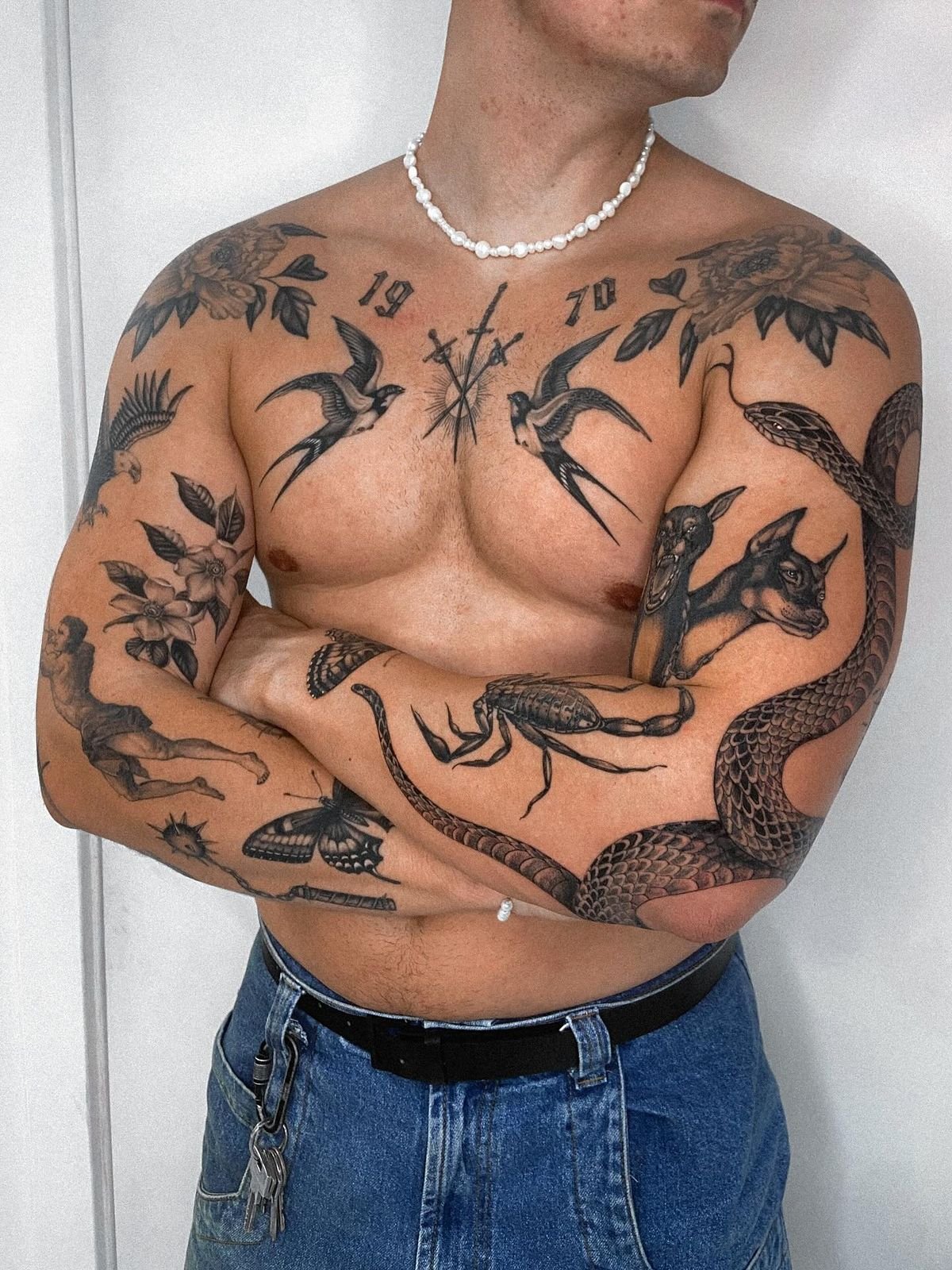
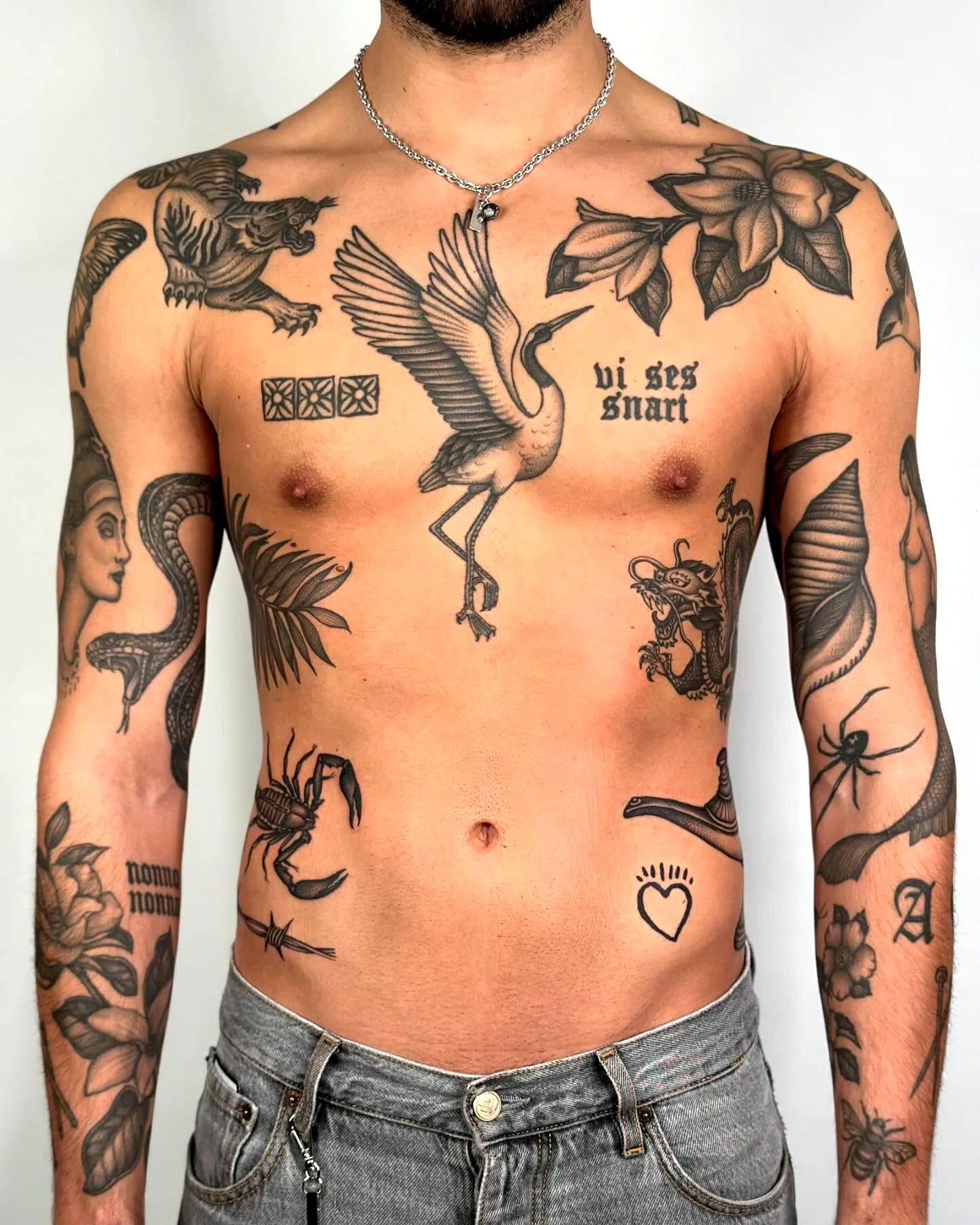
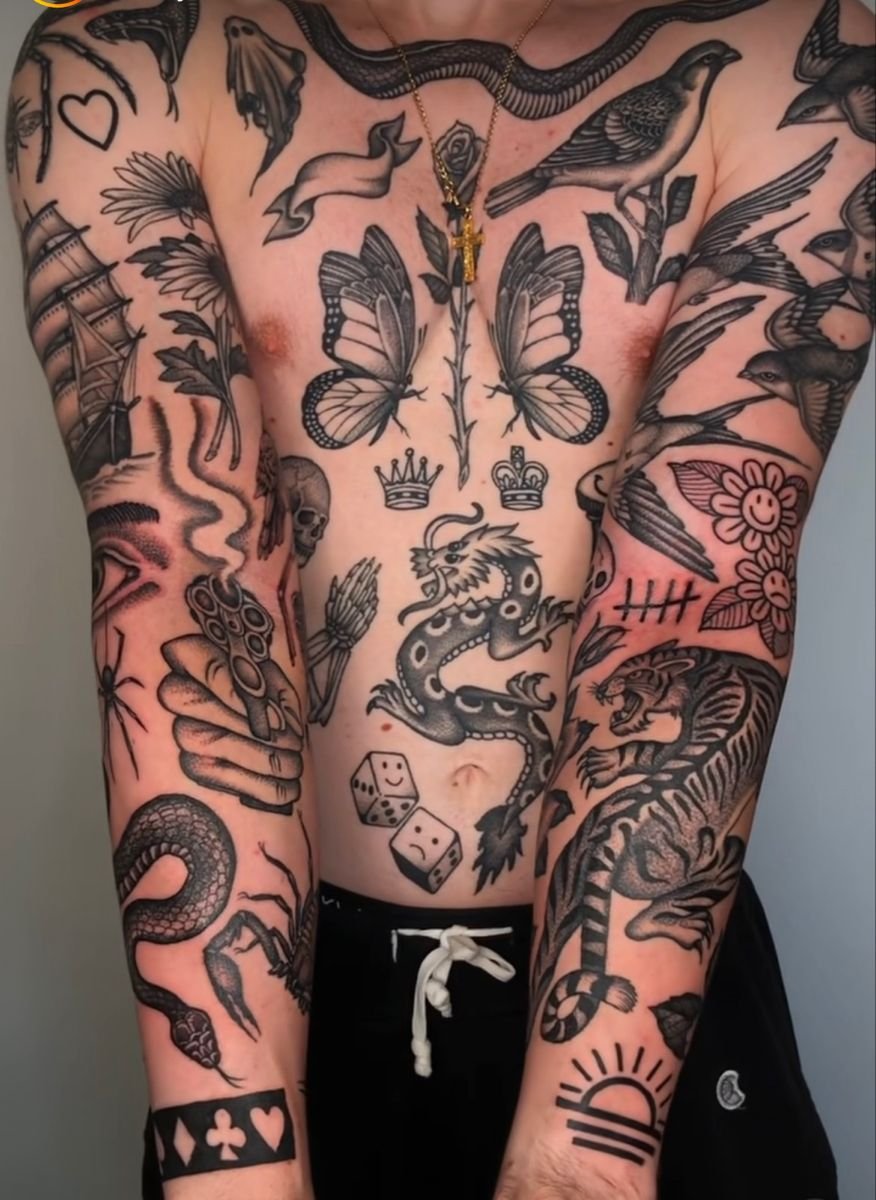
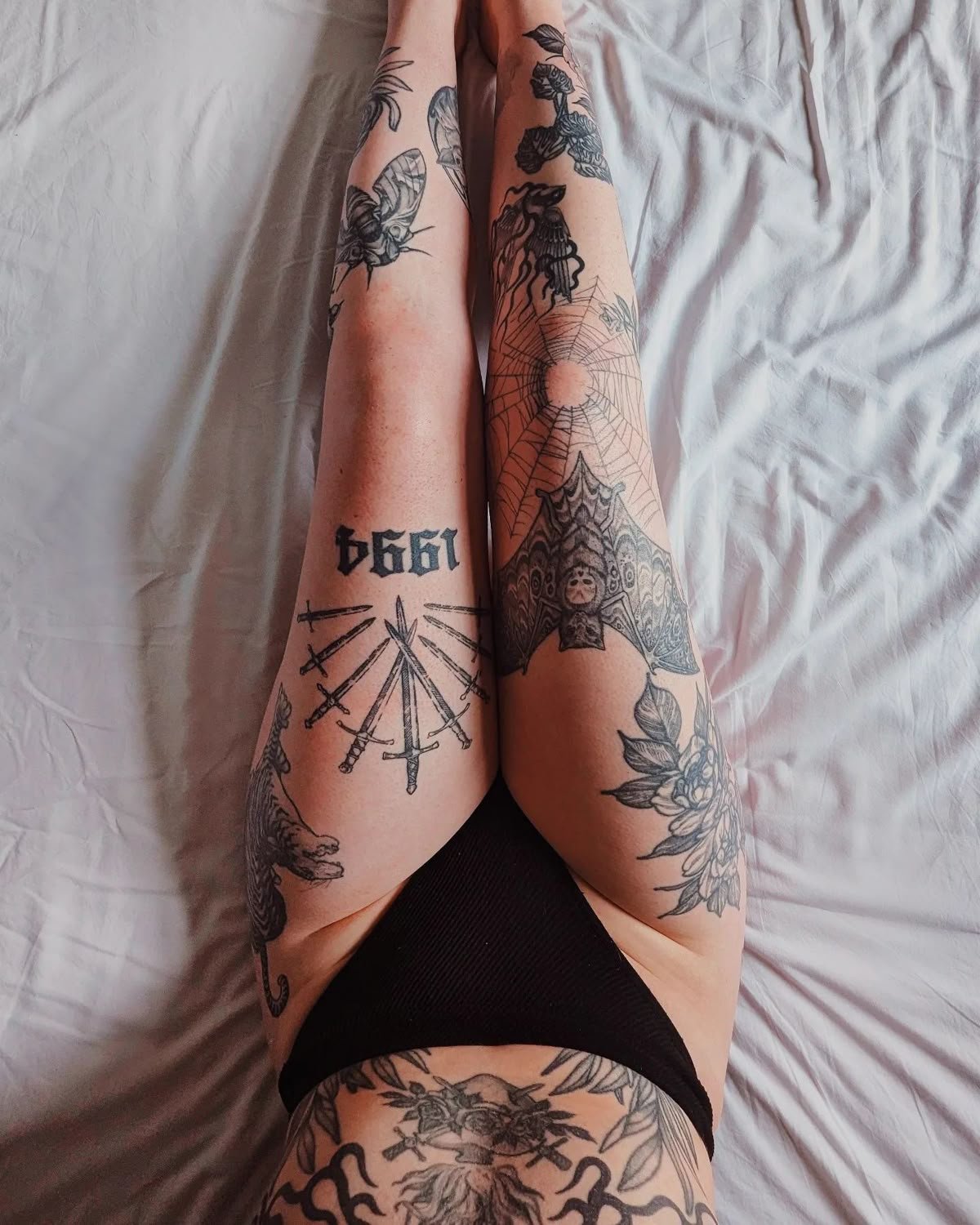
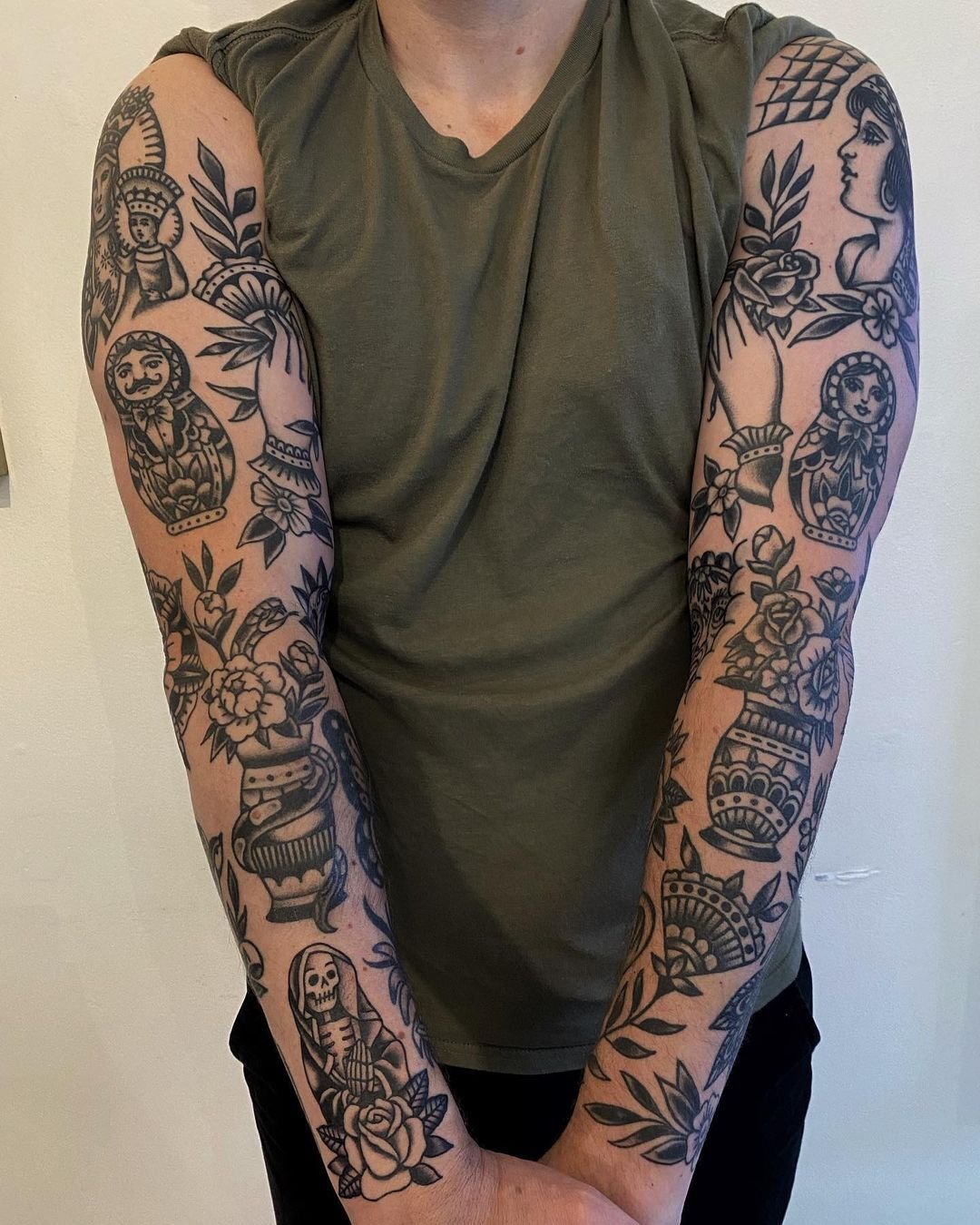
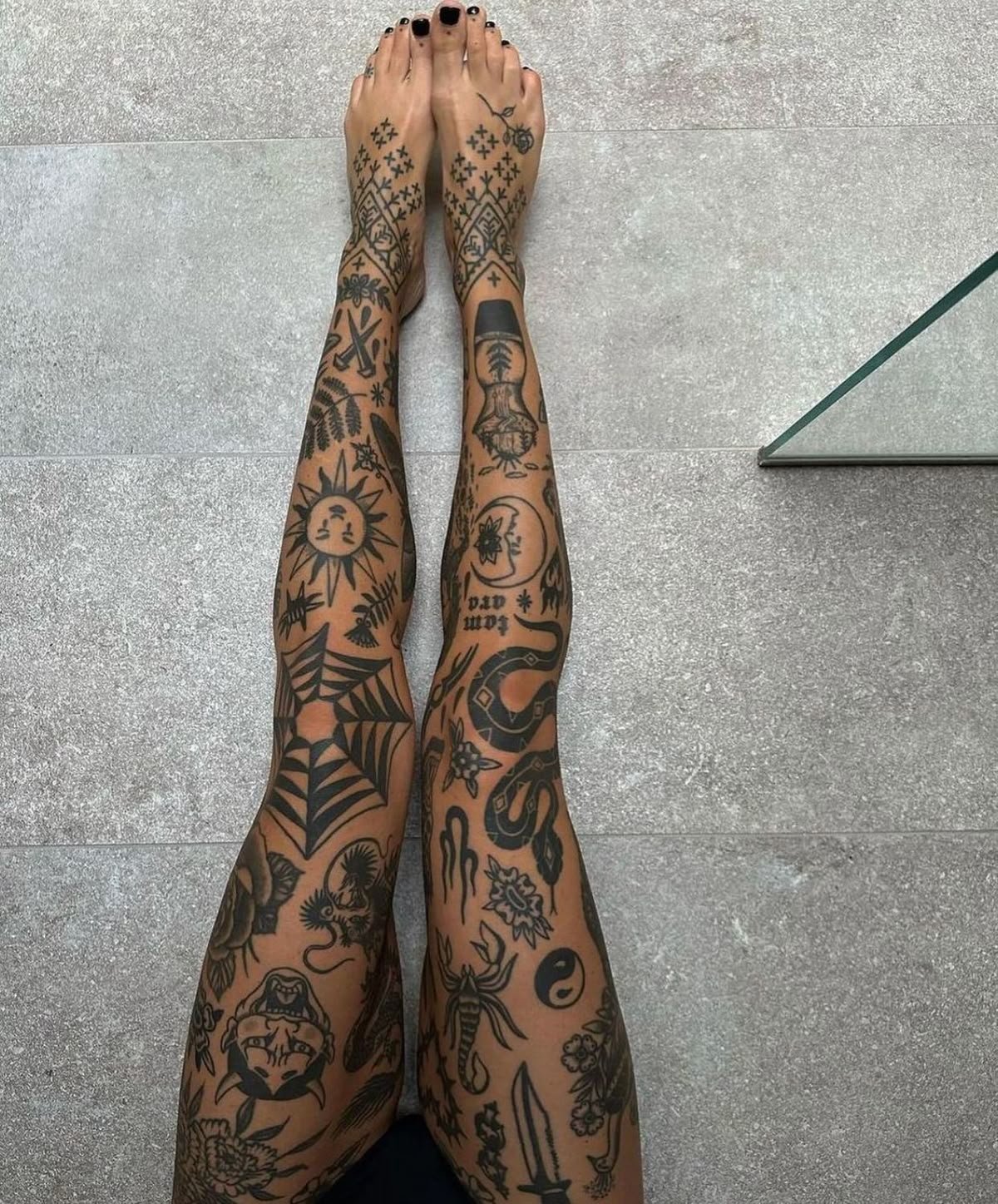
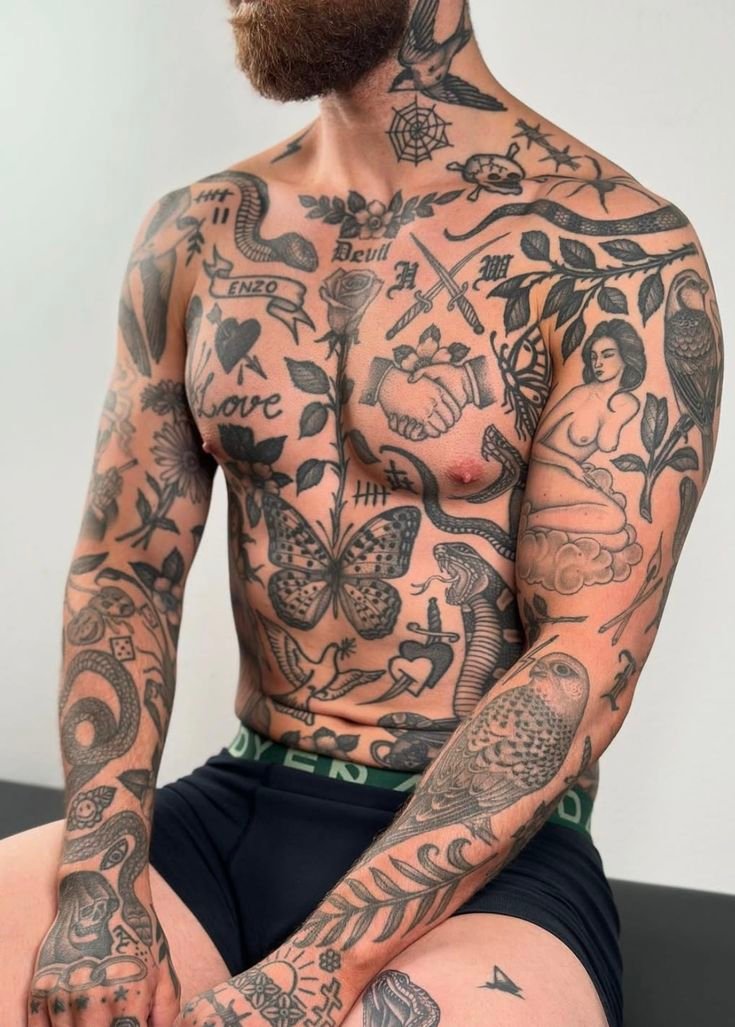
A sleeve built from twenty separate pieces: a traditional rose next to a fine line butterfly, a small geometric triangle above a script date, a blackwork moth beside a neo-traditional fox, a tiny mushroom filling a gap near the elbow. Each piece is self-contained. Each was probably done at a different time, possibly by a different artist, possibly in a different city. They sit near each other with bare skin between them, like patches sewn onto a jacket or stickers arranged on a laptop case. Together they form something — a visual autobiography, a collection, a curated accumulation — but they were never designed as a unified composition.
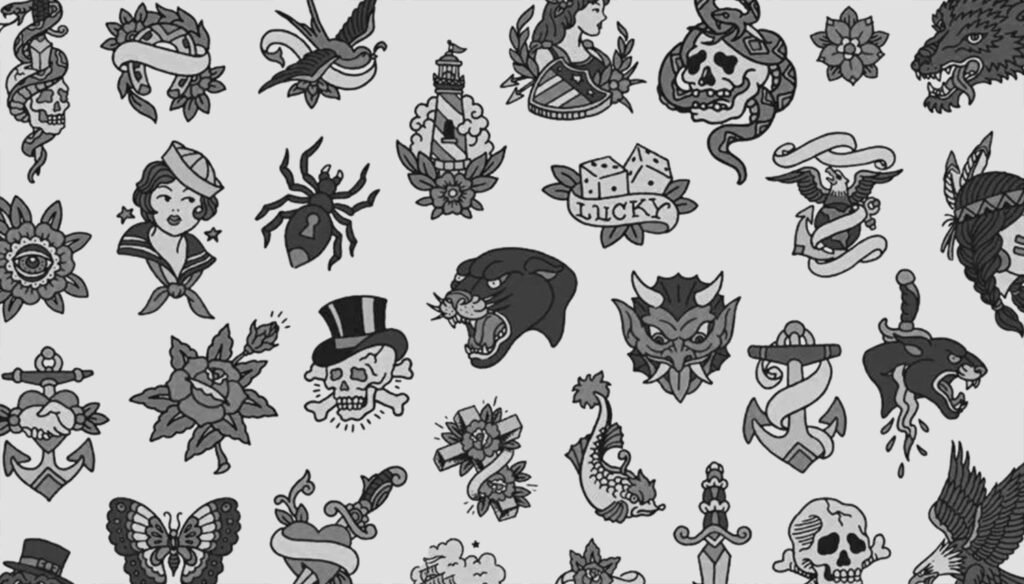
This is patchwork tattooing. The term has gained currency in the 2020s as a named approach to collecting tattoos, but the practice it describes is as old as tattooing itself. Every sailor who accumulated flash pieces over the course of a career — a swallow after one voyage, an anchor after another, a name on the chest, a pin-up on the forearm — was building a patchwork. Every person who got their first tattoo at eighteen, added a second at twenty-three, and a third at twenty-eight, without a master plan, was building a patchwork. What is new is the naming and the intentionality: people now choose the patchwork approach on purpose, plan for it from the first piece, and treat the accumulated, unconnected arrangement as a deliberate aesthetic.
What patchwork is
What patchwork is not
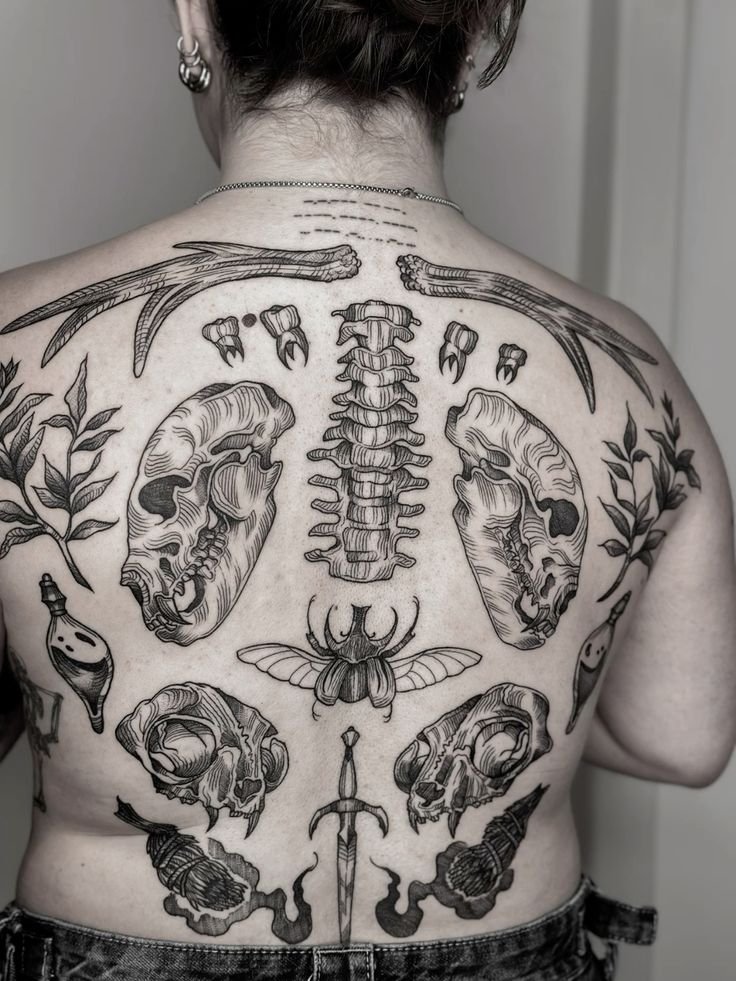
- A traditional sleeve is a unified composition — a single design, or a set of connected designs with shared background (wind bars, water, clouds, colour washes), planned as a whole and often executed by a single artist over multiple sessions. The viewer sees a single image that wraps around the arm. The individual elements are subordinate to the whole.
- A Japanese bodysuit (irezumi) is the most extreme version of the planned approach — a full-body composition governed by specific iconographic rules, seasonal coherence, and compositional conventions that treat the body as a single canvas.
A patchwork collection is the opposite of both. The viewer sees individual pieces. The elements are primary; there is no whole to be subordinate to. The body is not a canvas but a surface on which separate objects have been placed.
Both approaches are valid. The distinction is important because it affects every practical decision — spacing, size, placement, style consistency, and the role of the artist.
Why it has a name now
Patchwork tattooing has always existed, but for most of the twentieth century, it was the default rather than a choice. Before the concept of the planned sleeve became widespread — which happened gradually from the 1970s through the 1990s, influenced by Japanese tattooing conventions and by the fine-art ambitions of artists like Ed Hardy — most heavily tattooed people in the West acquired their tattoos piece by piece, over time, without a unifying plan. The arm full of separate flash pieces was simply what a tattooed arm looked like.
The planned sleeve changed the expectation. By the 2000s, the idea that a full arm of tattoos should be a coherent, composed image had become the dominant aspiration among serious tattoo collectors. Patchwork — the older, unplanned accumulation — began to be seen as the amateur version, the accidental result, the arm that had not been designed.
The reversal happened in the 2010s and accelerated in the 2020s. Several things drove it.
The expansion of the client base
The diversity of available styles
Social media as a gallery of individual pieces
The "sticker" aesthetic in broader culture
Cost and commitment
How patchwork tattoos work in practice
Spacing
Scale consistency
Style mixing
Placement strategy
Filler
Orientation
Aging
Patchwork collections age piece by piece, and this is both an advantage and a complication.
The advantage: each piece is self-contained, so a piece that ages poorly does not damage the surrounding pieces. A fine line butterfly that softens over five years sits next to a traditional anchor that looks the same as it did on day one, and the anchor is unaffected. In a unified sleeve, a section that ages badly can compromise the reading of the entire composition. In patchwork, it compromises only itself.
The complication: pieces done at different times, by different artists, in different styles, will age at different rates. The collection at year ten will not look the way it looked at year one, and the changes will be uneven — some pieces crisp, some softened, some faded. This can give the collection a lived-in quality that some people value (it shows the collection’s history, the years it took to build) and that others find frustrating.
The practical response is the same as for any other tattoo: the style, the scale, and the placement of each piece determine its ageing behaviour. A patchwork collector who understands which styles and placements age well can build a collection that holds up over decades. A collector who does not — who gets very small fine line pieces on the fingers and large bold pieces on the upper arm and expects them to age at the same rate — will be disappointed.
Choosing artist/s for a patchwork tattoo collection
The patchwork approach changes the artist-selection process in specific ways.
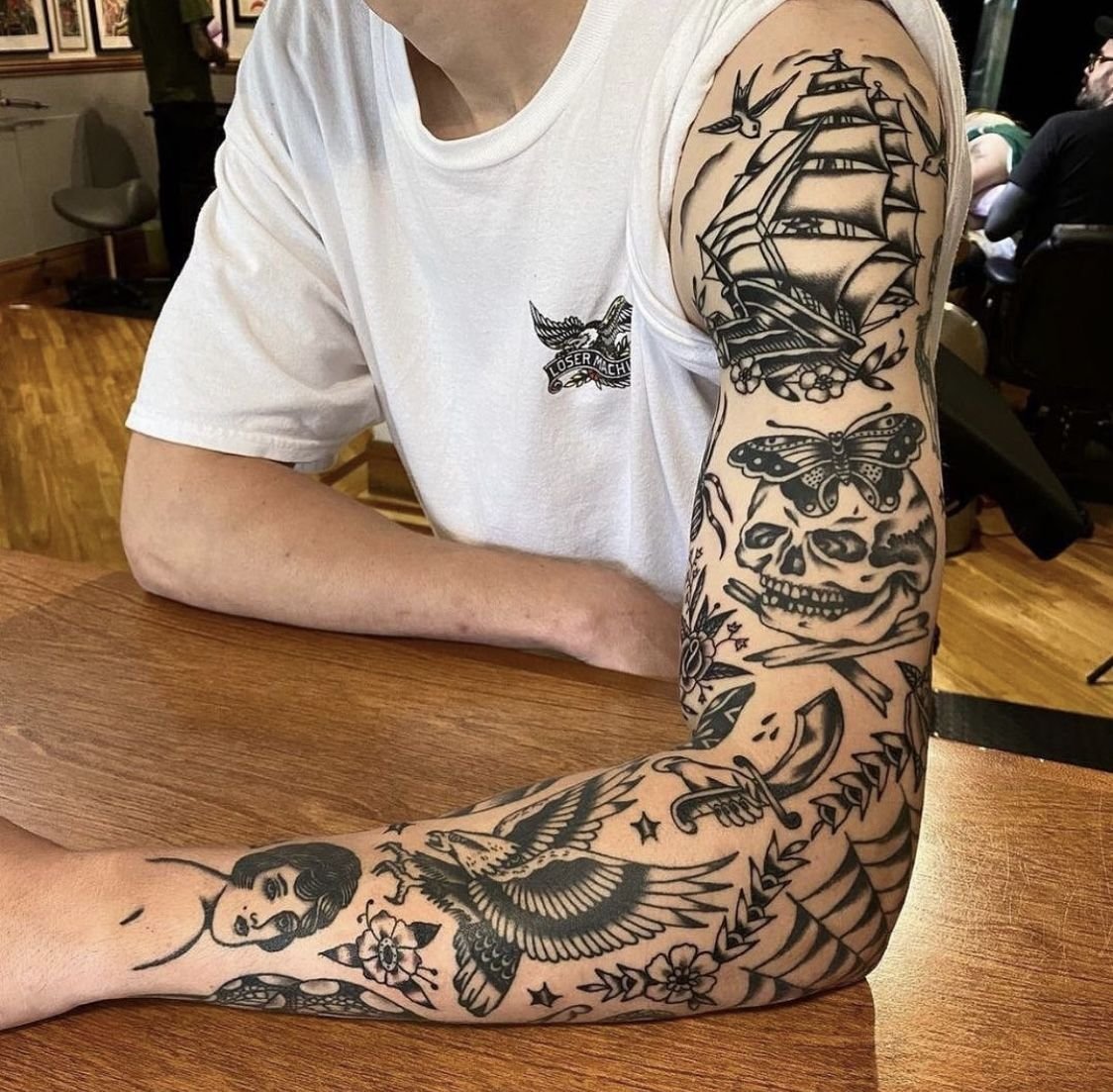
Multiple artists are normal. A patchwork collection is one of the few contexts in tattooing where working with many different artists is expected and appropriate. Each piece is standalone, and choosing the best available artist for each specific piece — a traditional specialist for the traditional piece, a fine-line specialist for the fine-line piece — yields better individual results than having one generalist handle everything.
Consistency is optional. In a planned sleeve, stylistic consistency is essential. In patchwork, it is a choice. Some collectors deliberately build a collection in a single style (all traditional, all blackwork, all fine line); others deliberately mix styles. Both are valid, and the choice should be made consciously rather than accidentally.
Communication about spacing and placement. When adding a piece to an existing patchwork collection, the conversation with the artist should include the existing pieces — where they sit, how much space is available, and what the new piece needs to work alongside. Bringing reference photographs of the body area with the existing tattoos visible helps the artist make placement decisions. A good artist will consider the neighbours.
Trust the artist’s sizing advice. The most common patchwork mistake is requesting pieces that are too small for their body area or too small for their style. An artist who suggests a slightly larger scale is usually protecting the long-term readability of both the new piece and the collection as a whole.
Patchwork tattoo style today
Sources & further reading
- Matt Lodder, Painted People: Humanity in 21 Tattoos. Harper, 2024.
- Anna Felicity Friedman, The World Atlas of Tattoo. Yale University Press, 2015.
- Margo DeMello, Bodies of Inscription: A Cultural History of the Modern Tattoo Community. Duke University Press, 2000.
- Nick Schonberger and Rob Kingston, Forever: The New Tattoo. Gestalten, 2012.
- Steve Gilbert, Tattoo History: A Source Book. Juno Books, 2000.
- Ed Hardy (ed.), Tattootime. Five volumes, Hardy Marks Publications, 1982–1991.
- Albert Parry, Tattoo: Secrets of a Strange Art. Simon & Schuster, 1933; reissued in Dover, 2006.
- Tattooing 101, “What Tattoo Trends Will Be Taking Over in 2025.” Published March 2025.
- Saviour Tattoo Supplies, “What Are The Latest Tattoo Trends In 2024?” Published September 2024.