Related Posts



Tribal
Tribal: A word that means two different things
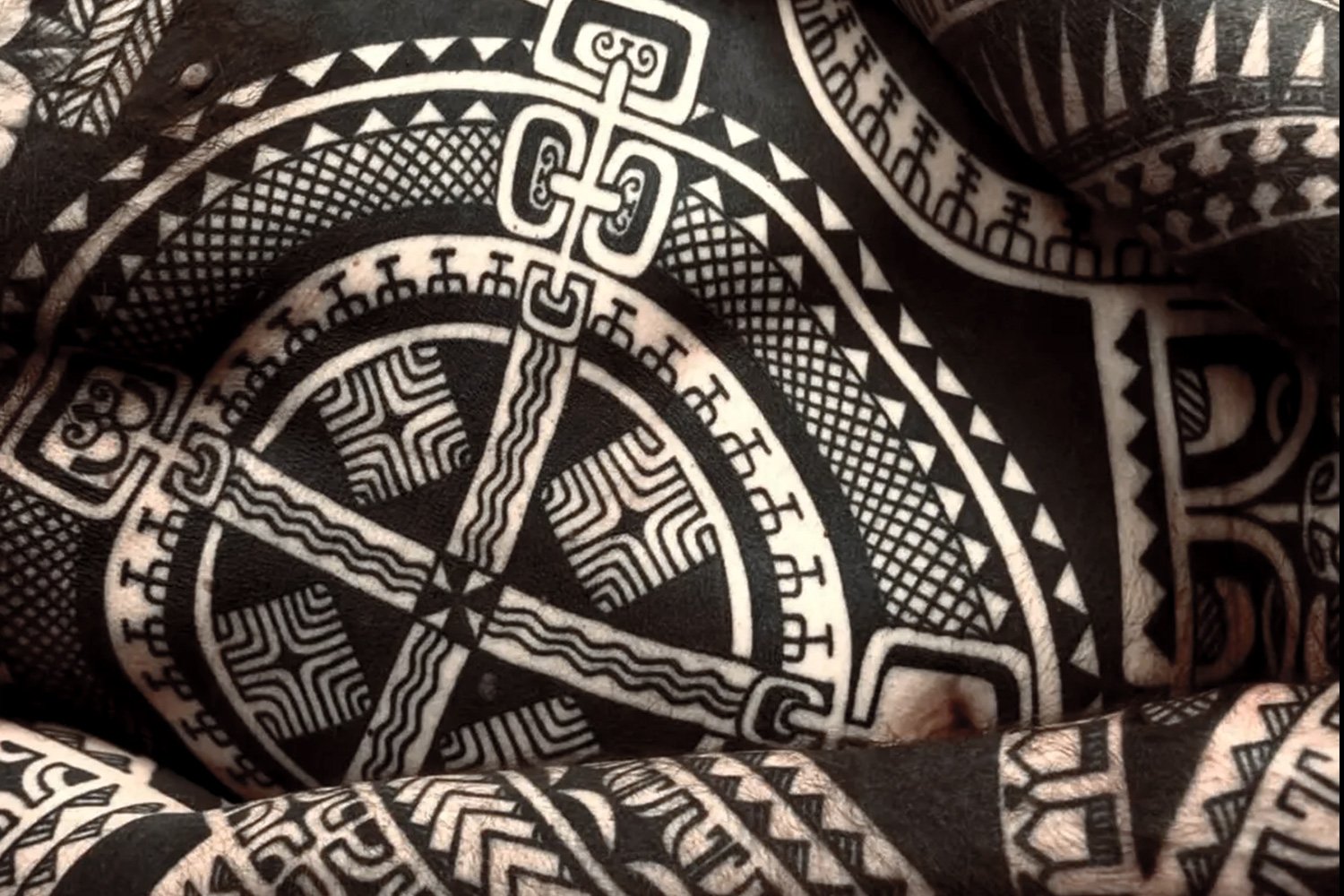
The word “tribal” in tattooing refers to two distinct practices that share a visual resemblance and almost nothing else.
The first is the set of Indigenous tattooing traditions — Polynesian, Bornean, Filipino, Inuit, and others — that have used black abstract patterning on the body for centuries or millennia. These are living cultural practices with specific rules, meanings, tools, and communities of origin. The patterns encode identity, genealogy, achievement, spiritual protection, and social position. They are not available as a menu.
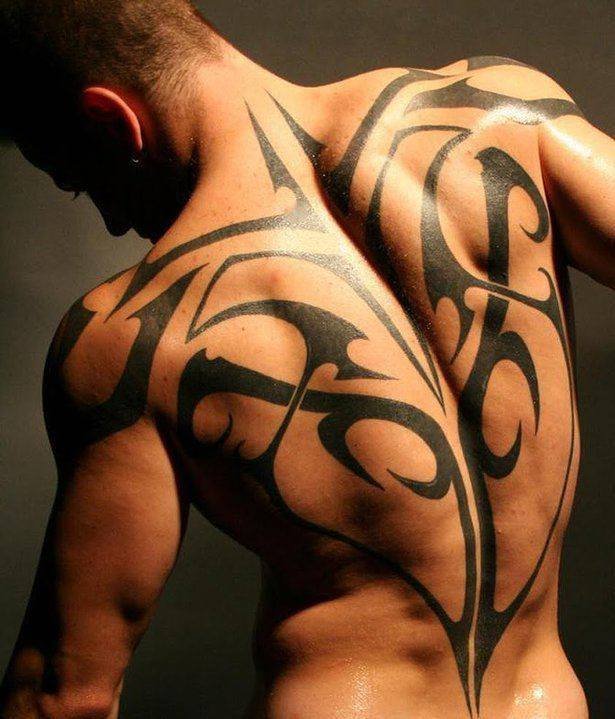
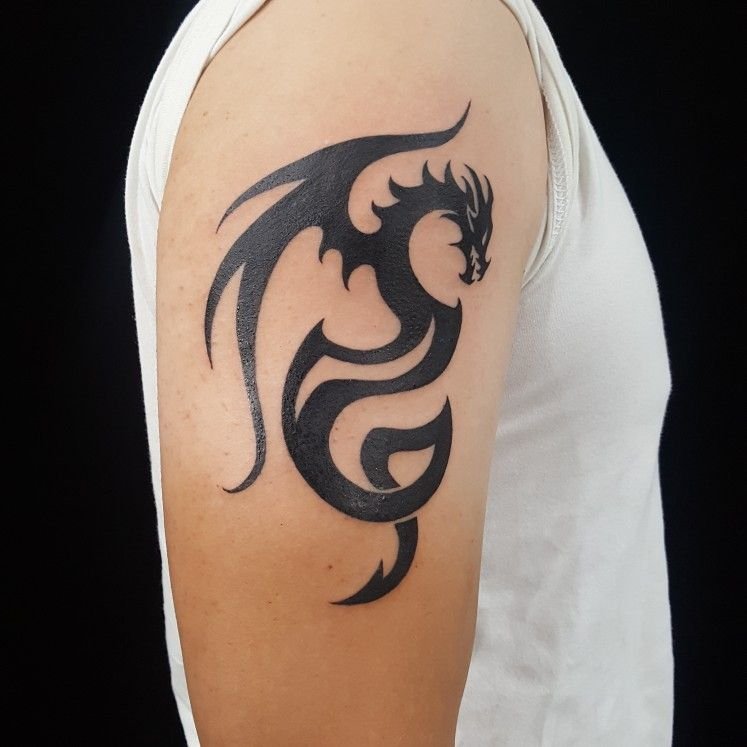
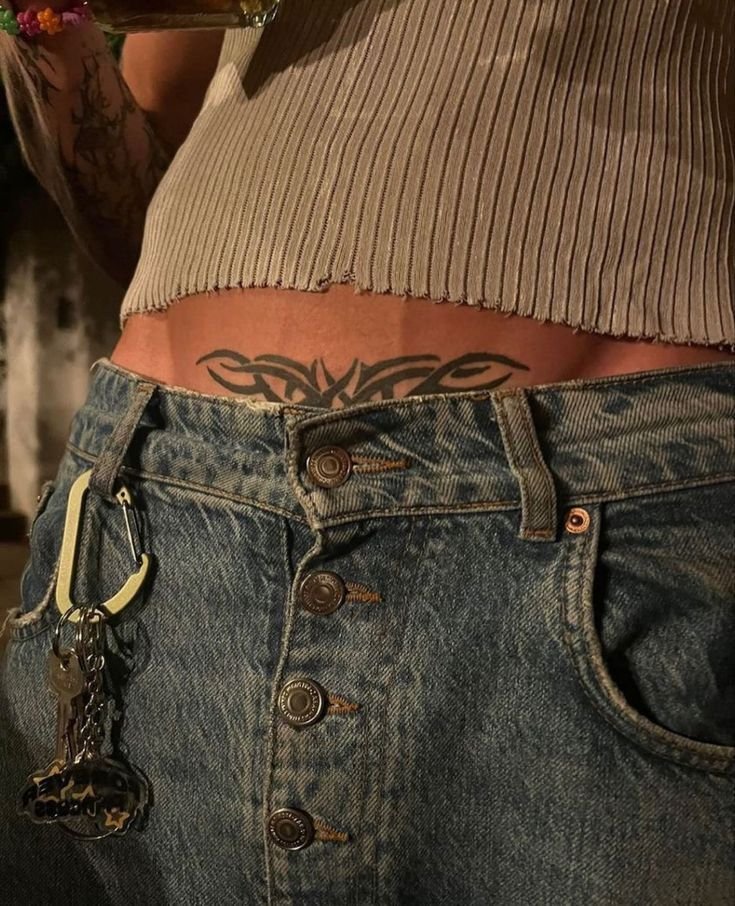
The second is the Western commercial style that emerged in the 1980s and peaked in the 1990s, in which abstract black patterns — inspired by Indigenous designs but detached from their cultural contexts — were applied to Western clients as a decorative tattoo option. This is the “tribal tattoo” that most people in the English-speaking world picture when they hear the term: the black armband, the symmetrical shoulder piece, the generic swirling shapes on the upper arm. It was one of the most popular tattoo styles of its era, it became one of the most ridiculed, and it is now the subject of a complicated cultural reassessment.
This article covers both practices, because understanding the relationship between them — the real traditions and the Western adaptation — is the only way to understand what the word “tribal” means in contemporary tattooing.
The Indigenous traditions
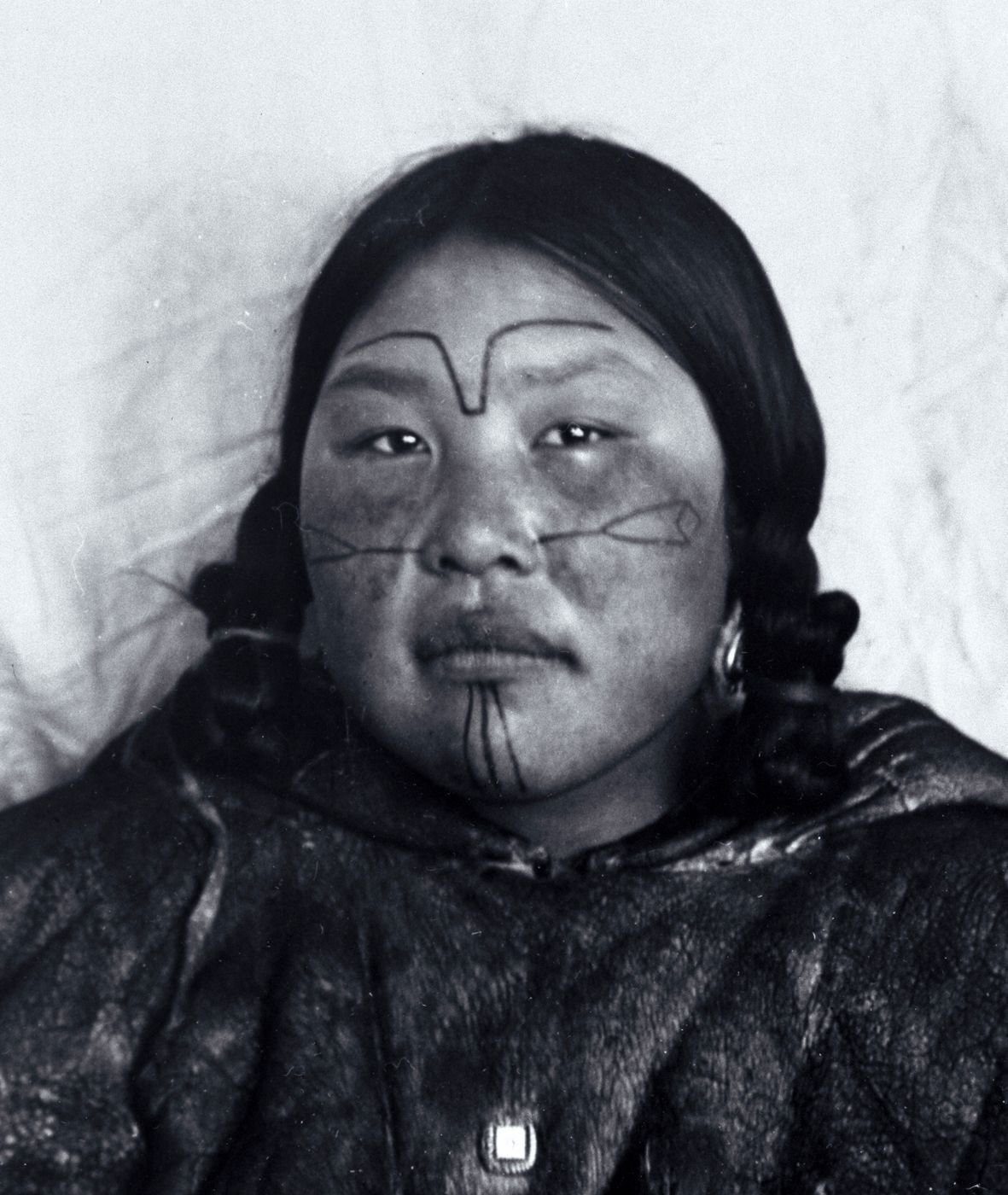
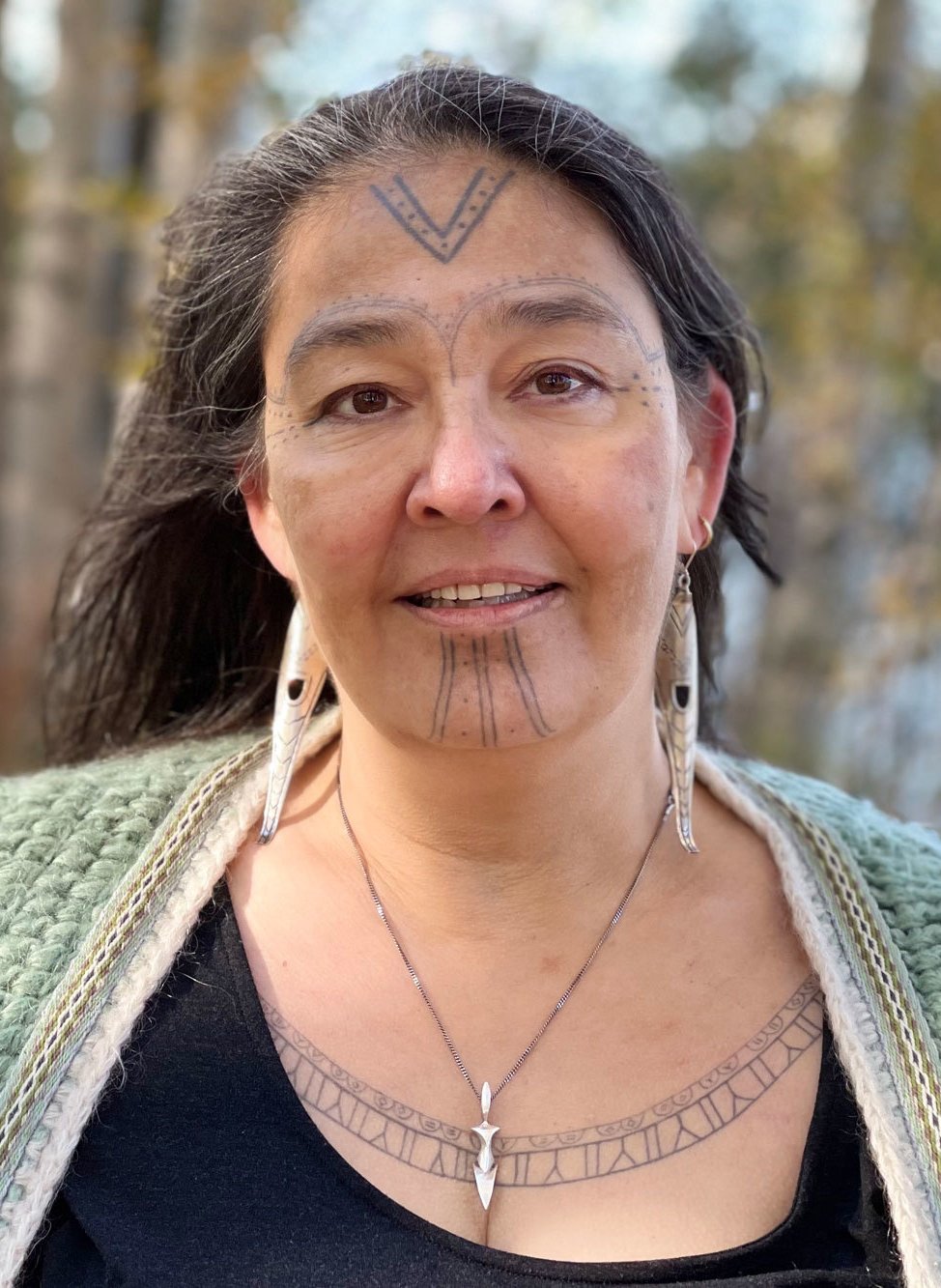
The tattooing practices of Pacific Island, Southeast Asian, Arctic, and other Indigenous peoples are among the oldest and most sophisticated in the world. They are covered in detail in the blackwork article and in their own dedicated articles elsewhere on this site. What follows here is a summary of the major traditions that inform the use of the word “tribal” in tattooing, with emphasis on what each tradition is and what its patterns mean.
Polynesia
The word “tattoo” itself enters English from Polynesian languages — tatau in Samoan, tātau in Tahitian — and the Polynesian traditions are the most direct source for the Western tribal vocabulary.
Samoan tatau
The Samoan tradition is the most continuously practised of the Polynesian tattoo traditions.
The pe’a — the full male body tattoo, covering from the waist to below the knees — is applied by a tufuga ta tatau (master tattoo artist) using a set of hand-tapping tools: combs made from bone, tusk, or shell, mounted on a handle and struck with a mallet to drive the points into the skin. The process is painful, takes multiple sessions over days or weeks, and is a rite of passage marking the transition to adult male status.
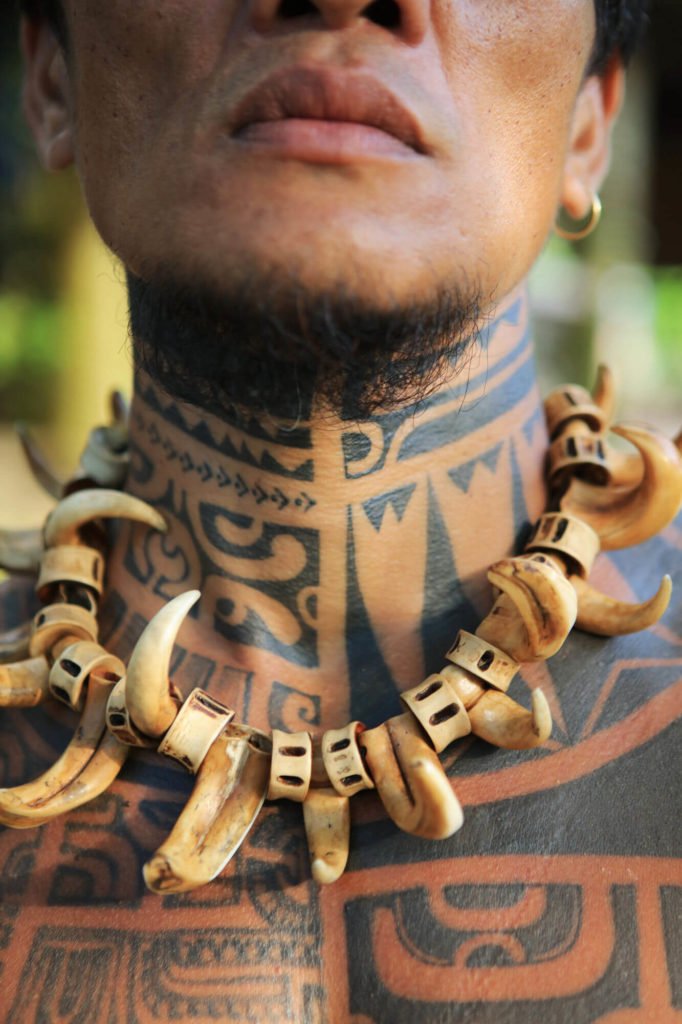
The malu — the corresponding female tattoo — covers the legs from the thigh to below the knee with finer, less dense patterning. The designs use a vocabulary of geometric motifs — arcs, lines, solid fields, repeated triangular and curvilinear forms — that carry specific cultural meanings.
Receiving a pe’a or malu is a communal event with obligations to family and village; abandoning the process partway through brings shame to the recipient and their family.
Māori tā moko
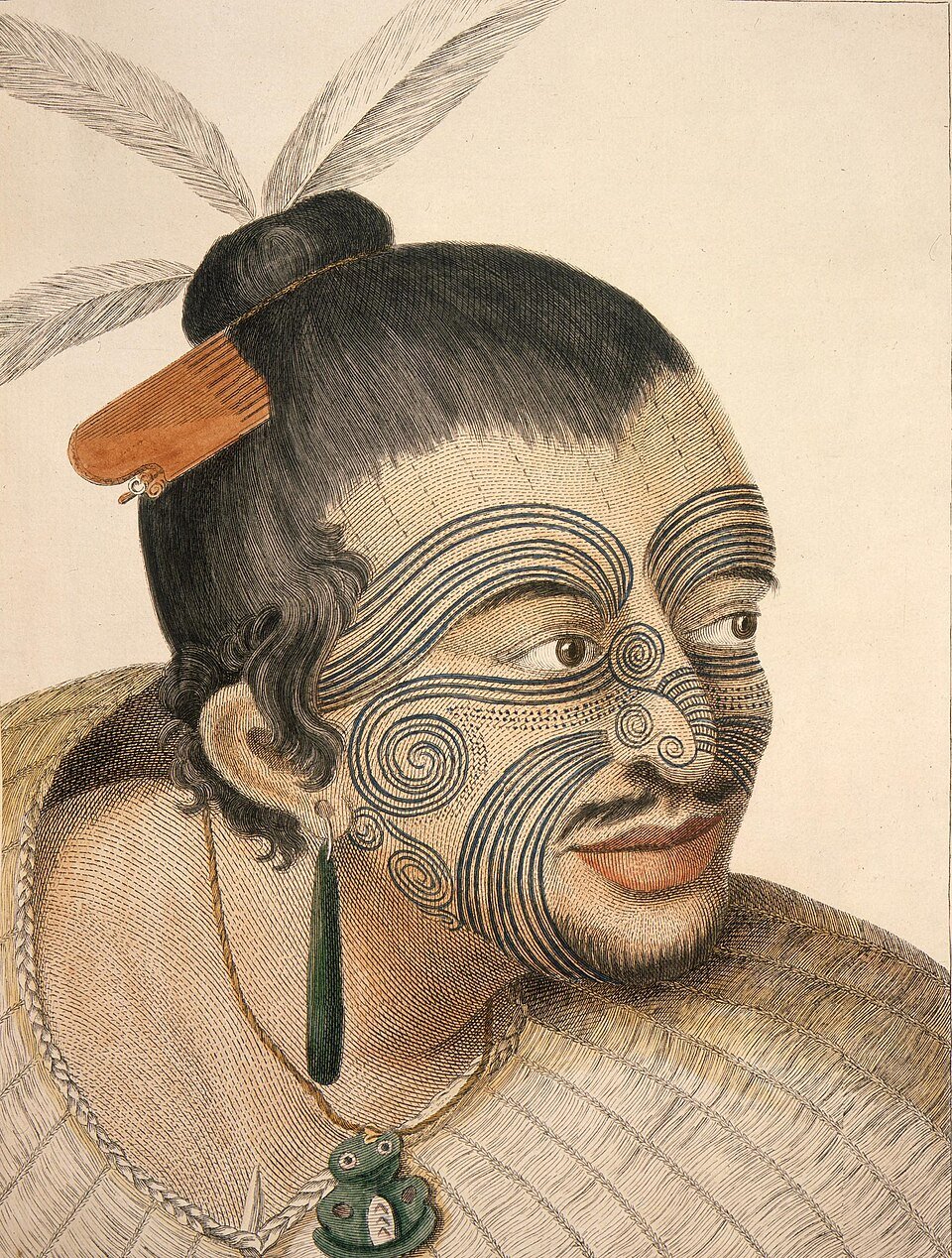
The Māori tradition of Aotearoa (New Zealand) uses curvilinear designs, historically applied with bone chisels (uhi) that cut grooves in the skin, producing a textured surface distinct from needle-based puncture tattooing. Tā moko designs encode whakapapa (genealogy), tribal affiliation, social rank, and personal history. The designs on the face — which, in historical practice, could cover the entire face of a high-ranking man — are unique to the individual and serve as a visual identity document. Tā moko is experiencing a revival in contemporary Aotearoa, led by Māori practitioners who are reclaiming the practice from a period of suppression under colonialism.
Marquesan tattooing
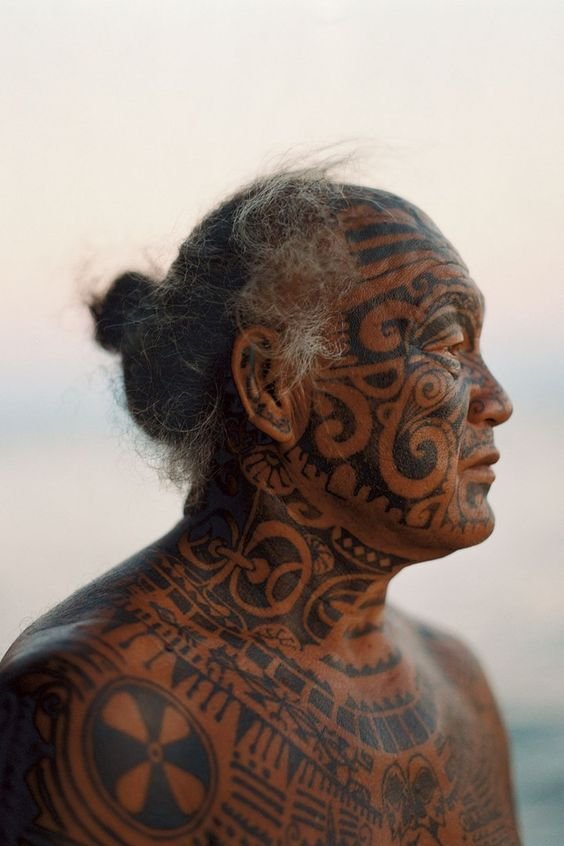
The Marquesas Islands produced one of the densest tattooing traditions in the Pacific — full-body coverage using geometric patterns that included stylised representations of eyes, faces, and natural forms. The tradition was severely disrupted by colonial contact and population collapse in the nineteenth century, and contemporary Marquesan tattooing draws on historical documentation (including the drawings of European explorers and the ethnographic records of Karl von den Steinen) to reconstruct and revive the practice.
Hawaiian, Tahitian, Tongan, and Fijian traditions
Borneo
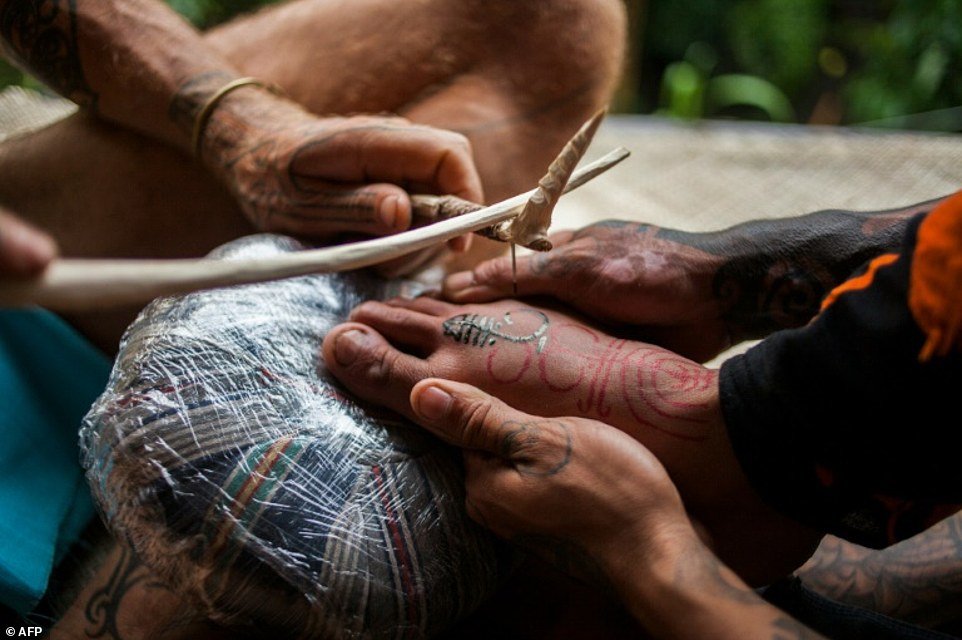
The Philippines
The Philippines has a deep tattooing heritage spanning multiple peoples and regions. The Kalinga tradition of the Cordillera highlands is the most internationally recognised, largely through the figure of Whang-Od (Apo Whang-Od), who was born around 1917 and is widely regarded as the last practitioner of the traditional Kalinga hand-tapping method — though she has trained apprentices, including her grandniece Grace Palicas, to continue the practice. Kalinga tattoos used geometric patterns that marked social status, bravery, and beauty.
The broader Philippine tattooing tradition — including the practices of the Visayan peoples documented by Spanish colonisers, who called them pintados (“the painted ones”) — was largely suppressed during the colonial period and is the subject of ongoing scholarly and cultural recovery.
Indonesia — Mentawai
The Mentawai people of Siberut Island, off the coast of Sumatra, have one of the few full-body tattooing traditions still practised in Southeast Asia outside of Polynesia. Mentawai tattoos cover large areas of the body — arms, legs, torso, and sometimes the face — using geometric and figurative motifs, including representations of animals, plants, and natural forces significant to the Mentawai worldview. The tattoos are applied using a hand-tapping method with a needle set in a wooden handle, struck with a mallet.
Mentawai tattooing is connected to the broader spiritual life of the community. The designs mark an individual’s relationship with the natural world and are part of the animist belief system that governs Mentawai culture. The tradition has survived despite pressure from the Indonesian government and from missionary activity, though it is practised by a diminishing number of people, and the sikerei (shamans) who hold the cultural knowledge are an ageing generation.
The Arctic
Berber (Amazigh)
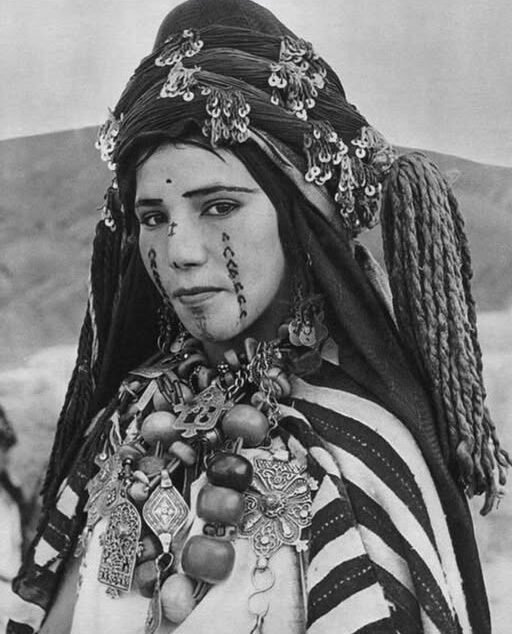
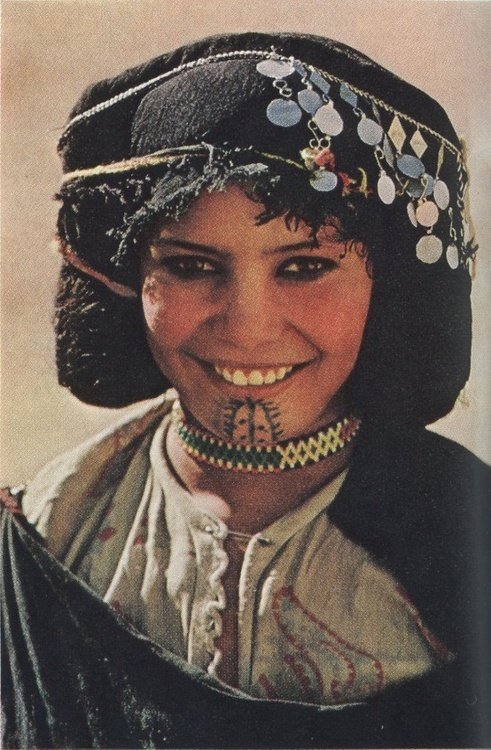
The Amazigh peoples of North Africa — across Morocco, Algeria, Tunisia, Libya, and parts of the Sahara — have a tattooing tradition that is among the oldest documented in the Mediterranean region. Amazigh tattoos were applied primarily to women on the face (chin, forehead, cheeks, between the eyes), hands, feet, and sometimes the chest and arms. The designs use a geometric vocabulary of dots, lines, crosses, diamonds, chevrons, palm motifs, and other abstract forms, applied in black or dark blue-green pigment using a needle-and-soot method.
The tattoos carried multiple functions. They marked tribal and regional identity — specific patterns were associated with specific groups, and a knowledgeable observer could read a woman’s geographic and tribal origin from her tattoo patterns. They served a protective function — many of the motifs are apotropaic, intended to ward off the evil eye and malevolent spirits, continuous with the broader khamsa (hamsa) tradition of the region. They marked life transitions — puberty, marriage, motherhood. And they carried an aesthetic function — the tattoos were considered beautiful, and a well-tattooed woman was admired within her community.
Amazigh tattooing declined sharply through the twentieth century under the combined pressure of Arabisation, Islamisation (mainstream Islamic jurisprudence generally prohibits tattooing), urbanisation, and the social changes that followed decolonisation. Many older Amazigh women still bear traditional tattoos; very few younger women do. The tradition is not entirely dead — there are practitioners and revivalists — but it is severely diminished compared to a century ago. The designs survive in Amazigh textile, pottery, and jewellery traditions, where the same geometric vocabulary is still used.
Myanmar — Chin and other peoples
Sub-Saharan Africa
Tattooing and scarification traditions exist across sub-Saharan Africa, though scarification (raised scars produced by cutting the skin and introducing irritants into the wound) is more widespread than ink-based tattooing in many regions. The two practices serve overlapping functions — marking identity, status, maturity, beauty, and spiritual protection — and they are sometimes practised alongside each other.
Among the traditions that use pigmented tattooing (ink or ash rubbed into incisions), the Nuba of Sudan, the Wodaabe of the Sahel, and various peoples of Ethiopia and Eritrea have documented tattooing practices. The Ethiopian cross tattoo — a small cross on the forehead or hand, marking Christian identity — is one of the most widespread and oldest continuously practised tattoo traditions in Africa, predating the European adoption of tattooing by centuries.
The relationship between scarification and tattooing in African contexts is complex and varies by culture. Both are forms of permanent body modification that encode cultural meaning, and both fall under the broad concept of “tribal” body marking, though scarification is a distinct practice with its own techniques and visual vocabulary.
Celtic and Pictish traditions
The peoples of the pre-Roman and early medieval British Isles — particularly the Picts of what is now Scotland — are described in classical and early medieval sources as practising body marking. However, whether this constituted tattooing, painting, or both is debated. The word “Pict” itself comes from the Latin picti, meaning “painted ones,” and Roman writers, including Julius Caesar, described the Britons as marking their bodies with blue dye, usually identified as woad (Isatis tinctoria). Whether the marks were permanent tattoos or temporary body paint is not settled by the surviving evidence.
Contemporary “Celtic tattoo” designs — knotwork, spirals, zoomorphic interlace drawn from the Book of Kells and other Insular art manuscripts — are modern inventions that reference early medieval art traditions rather than documented tattooing practices. The manuscript art is real and spectacular; its connection to body marking is a modern construction. This does not make Celtic-inspired tattoos invalid as a design choice. Still, it does mean they should be understood as contemporary interpretations of medieval art rather than as continuations of a documented tattoo tradition.
What do all these traditions share?
Despite their geographic and cultural diversity, these traditions share features that distinguish them from the Western commercial use of the term “tribal”:
The patterns carry culturally encoded meaning. They are records of identity, status, belonging, protection, or spiritual relationship — whether formally restricted (as in Polynesian traditions where specific patterns are earned or inherited) or more broadly shared within a community (as in Amazigh regional motifs or Ethiopian Christian cross tattoos).
The application method is traditional — hand-tapping, hand-poking, skin-stitching, or thorn-and-needle — and, in most traditions, it is part of the cultural practice, not incidental to it.
The practice is embedded in the life of a community. Receiving a traditional tattoo involves a relationship — to family, to cultural group, to the practitioner, and sometimes to a spiritual framework — that extends beyond the individual transaction between artist and client. The degree of formality varies: a Samoan pe’a involves strict communal obligations; an Ethiopian forehead cross is simpler, but in each case the tattoo is understood within a social context, not as an isolated personal choice.
The Western movement
Leo Zulueta and the beginning
The person most responsible for introducing Indigenous pattern work into the Western tattoo vocabulary is Leo Zulueta. Born in 1952 to a Filipino-American family, Zulueta grew up in Hawai’i and San Diego, where he studied art in the 1970s and developed an early interest in Bornean traditional tattooing. He met Don Ed Hardy in 1976, and Hardy encouraged him to research Indigenous tattoo traditions systematically — collecting photographs, drawings, and documentation from libraries and museums.
Zulueta began tattooing professionally in 1981, initially working on punk subculture clients in Southern California whose demand for alternative aesthetics pushed him further toward tribal-inspired designs. By the late 1980s, his work — large-scale, black, abstract, body-following patterns adapted from Polynesian and Bornean sources — had become influential enough to attract attention from both the tattoo world and the broader counterculture.
In 1989, Zulueta was featured in the RE/Search publication Modern Primitives, a book documenting the rising Western interest in body-modification practices from Indigenous and pre-industrial cultures. The book, edited by V. Vale and Andrea Juno, was enormously influential in the late-1980s and early-1990s counterculture, and Zulueta’s work was part of its visual identity.
Zulueta founded Black Wave Tattoo in Los Angeles in 1992. He is widely referred to as the “father of modern tribal tattooing.” However, he has been careful to specify that his approach is contemporary and Western, not a reproduction of any specific Indigenous practice. In his own words:
“My tattoo approach is definitely modern, not based on the past. Inspired by the past, but I’ve been trying to come from a very contemporary standpoint. My style is from my Western culture.”
This distinction — between serious engagement with Indigenous visual traditions and wholesale reproduction of them — is one that Zulueta maintained but that the broader tribal tattoo industry largely abandoned as the style became commercially popular.
Alex Binnie and the European strand
The 1990s peak
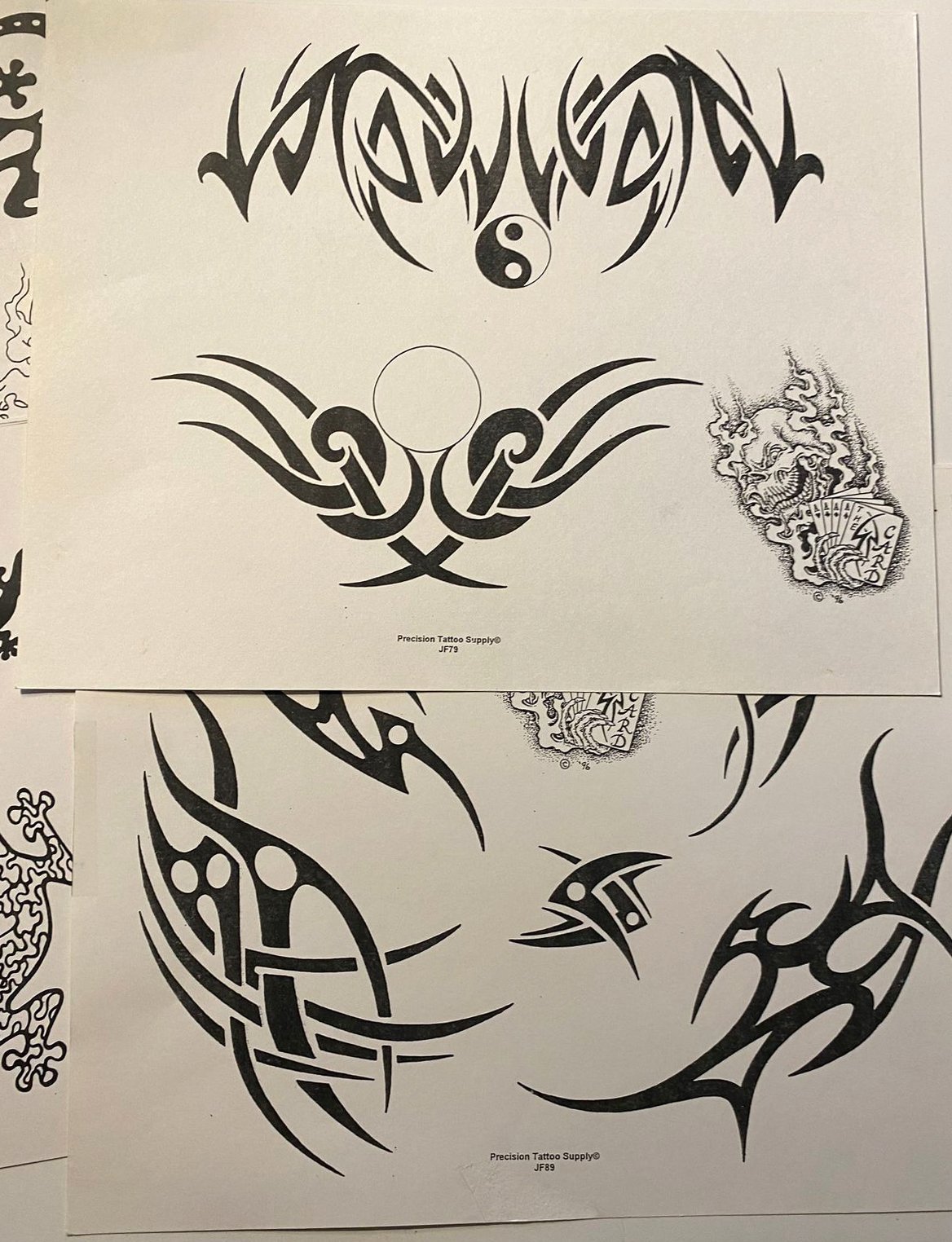
Through the 1990s, tribal became one of the most requested tattoo styles in the Western world. The visual formula — solid black, abstract, flowing with the body’s contours — was widely adopted, and the market responded with mass production. Flash sheets of generic tribal designs appeared in shops everywhere. Tattoo magazines ran tribal patterns as a standard category. The style became associated with specific cultural moments: the rise of MMA, the aesthetic of nu-metal and late-90s rock, the broader interest in “primitive” and pre-industrial aesthetics that Modern Primitives had catalysed.
The designs that saturated the market during this period were, for the most part, far removed from any Indigenous source. The generic tribal armband — a ring of interlocking black shapes around the upper arm, chosen from a flash sheet and applied without reference to any specific tradition — became the era’s defining image. Millions were tattooed worldwide. The designs were visually striking, technically straightforward (solid black fill within clean outlines), and durable on skin.
The cultural problem with the 1990s tribal boom was not the aesthetic. Bold black abstract shapes following the body have real visual power and deep historical roots. The problem was the severing of the shapes from their meanings, the mass reproduction of culturally specific forms as generic decoration, and the lack of acknowledgement that the visual language being used belonged to specific peoples with specific traditions around its use. The generic tribal armband is a potent symbol of the era precisely because it looks like something meaningful while meaning nothing specific — a cultural form emptied of its content and sold as merchandise.
The backlash
Where tribal sits now
The current situation is more nuanced and more interesting than the backlash period suggested.

Indigenous revival
Neo-tribal
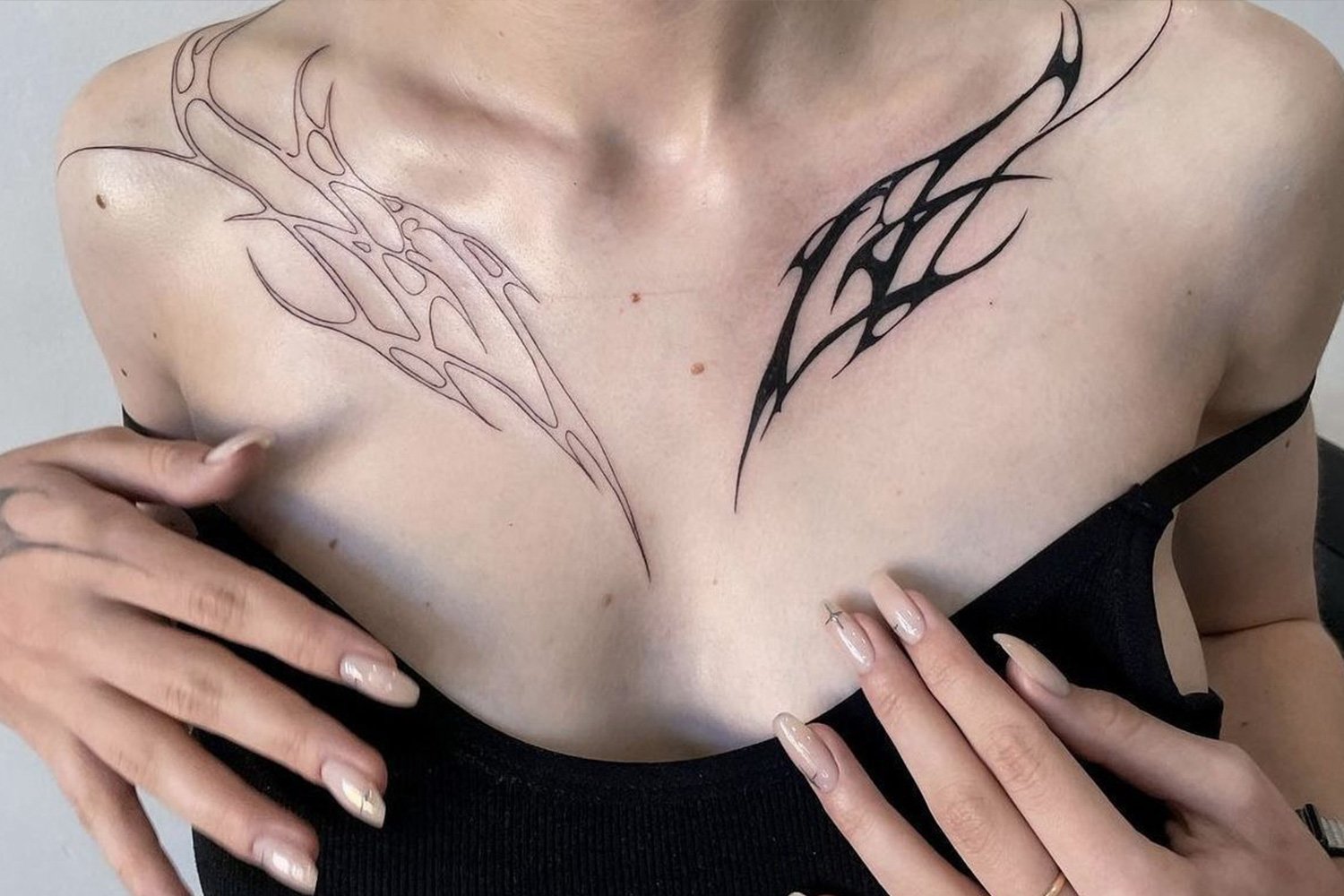
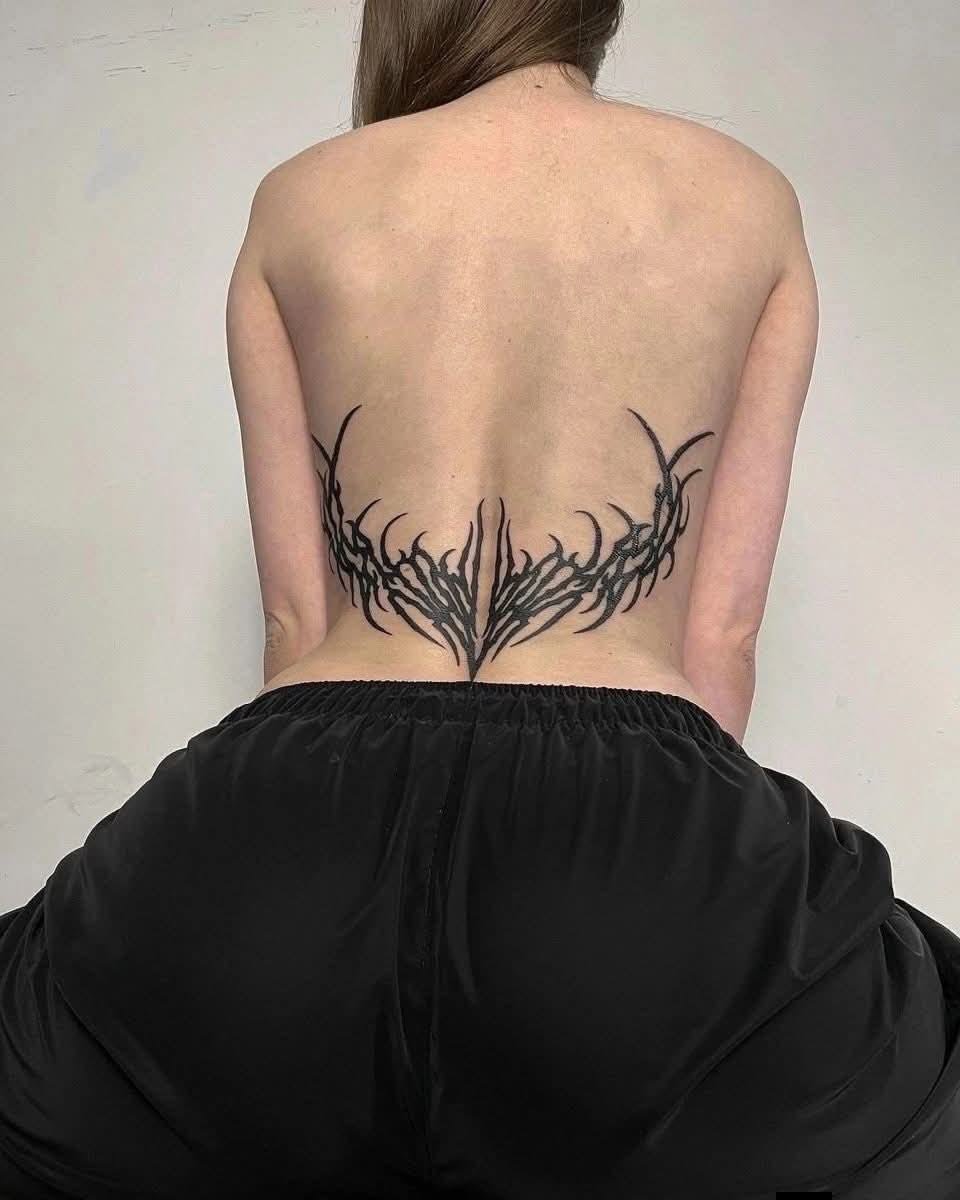
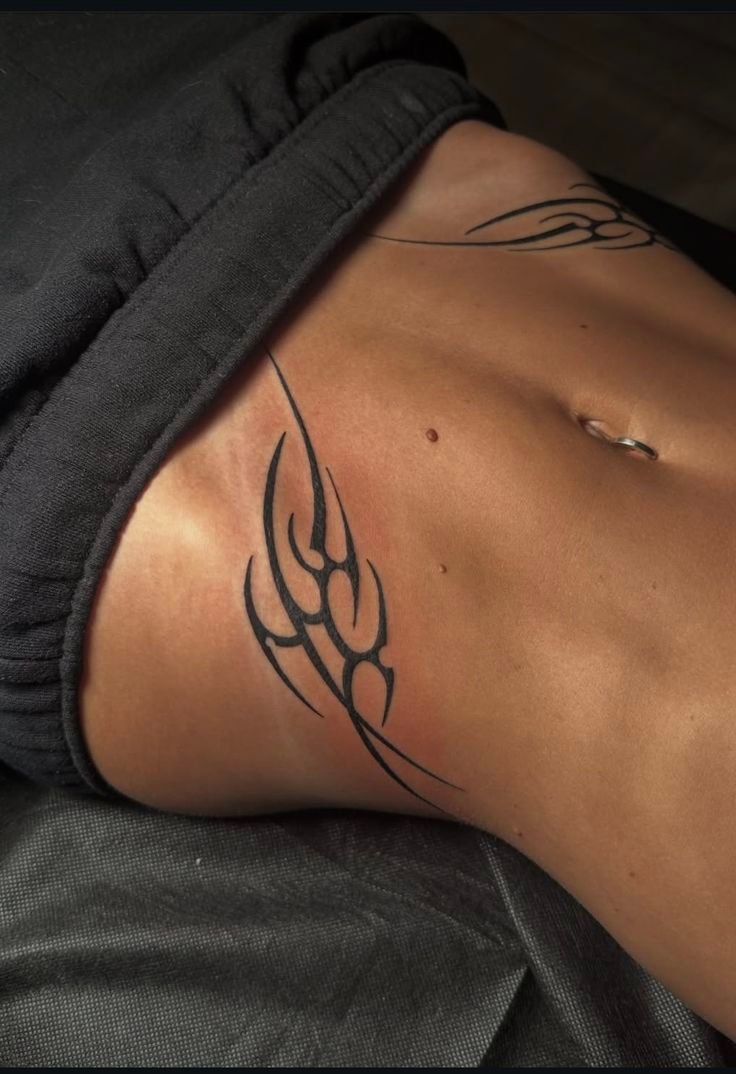
The connection to blackwork and cyber sigilism
The visual characteristics
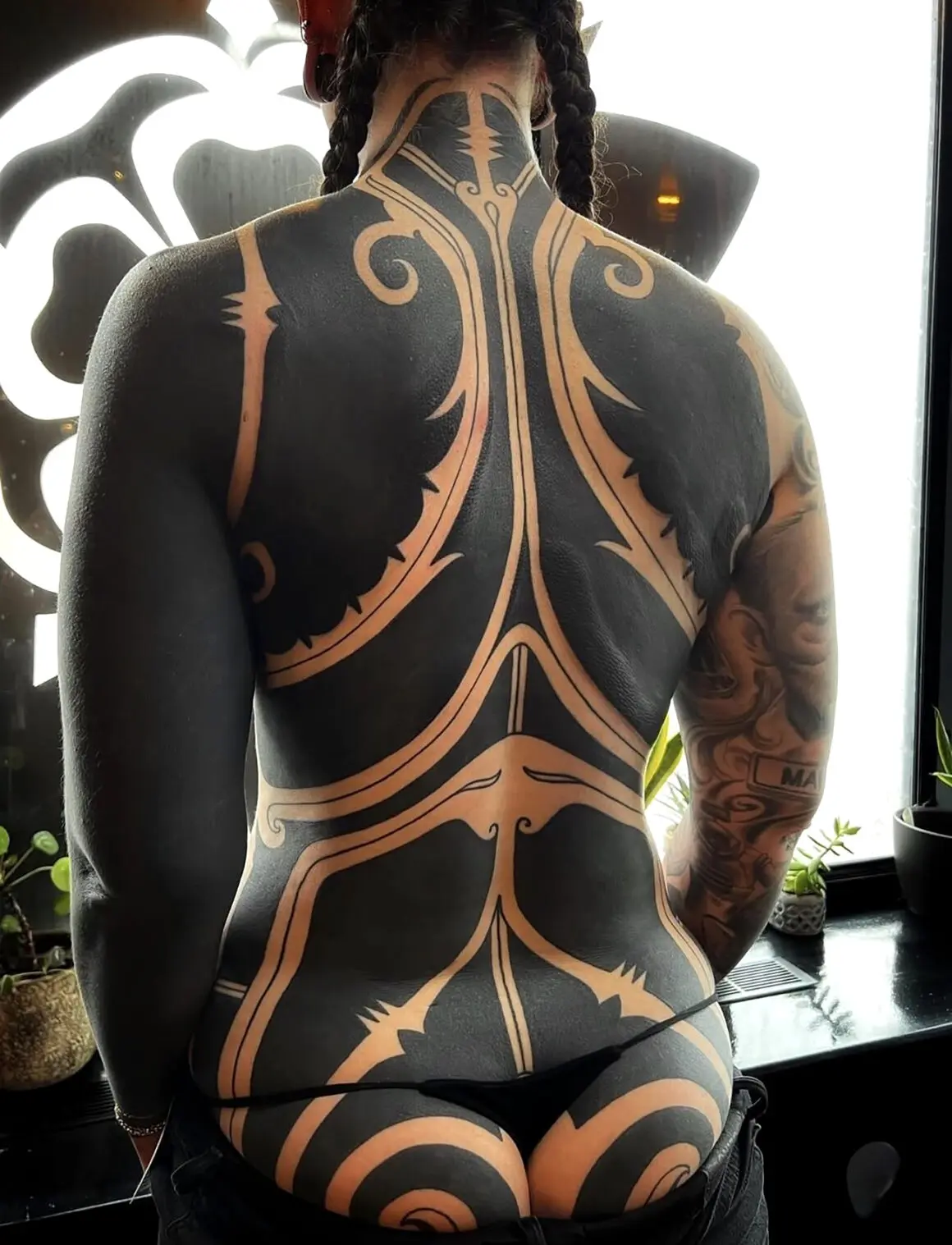
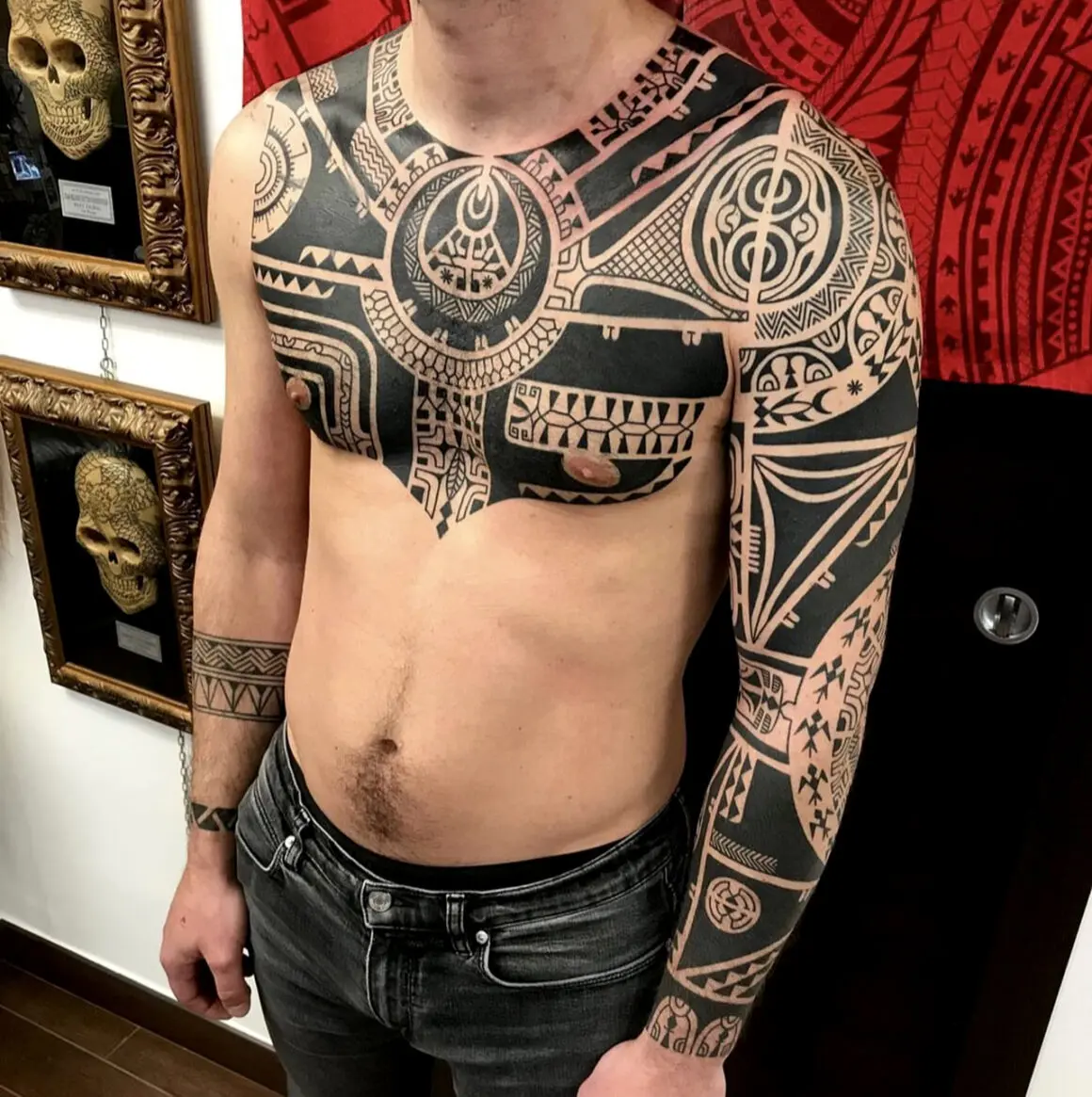
Across both the Indigenous and Western versions, the visual characteristics that define “tribal” tattooing are:
Black ink only.
Tribal work is done in solid black — no colour, no greywash, no diluted tones. The visual effect is high contrast: black on skin.
Abstract or geometric patterning.
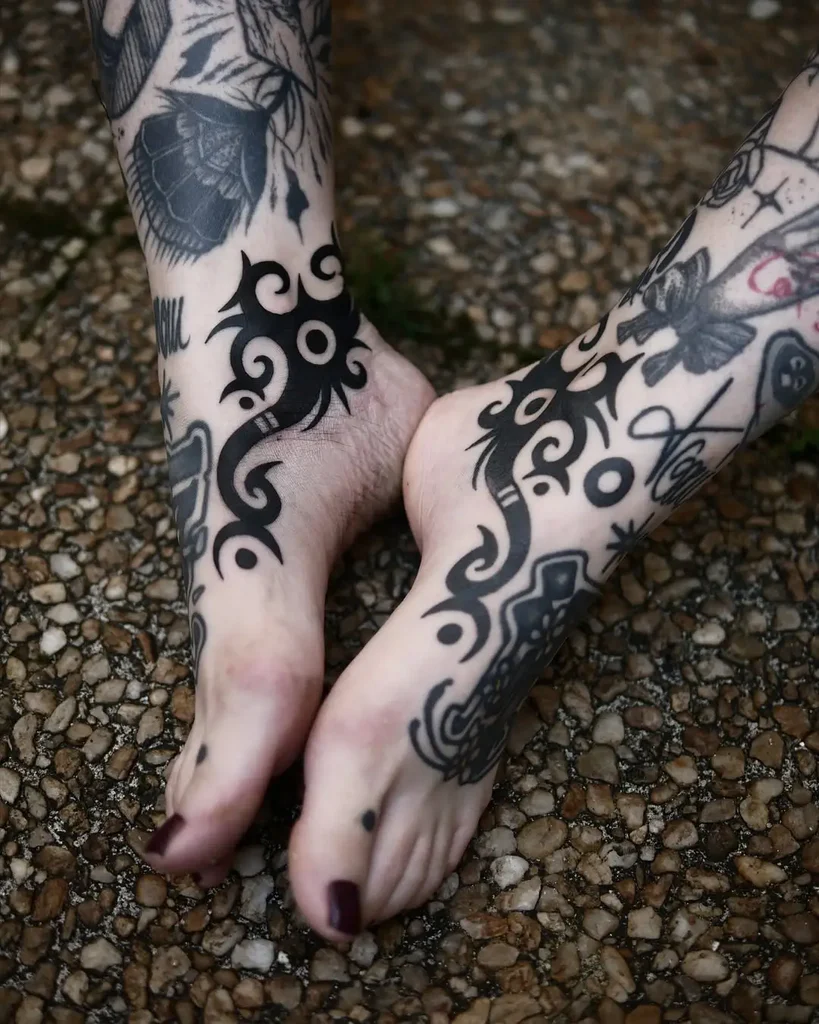
The shapes are abstract — they do not represent specific objects the way figurative tattoo styles do. In Indigenous traditions, the abstract forms carry encoded meaning; in Western tribal, the forms are primarily aesthetic.
Body-following composition.
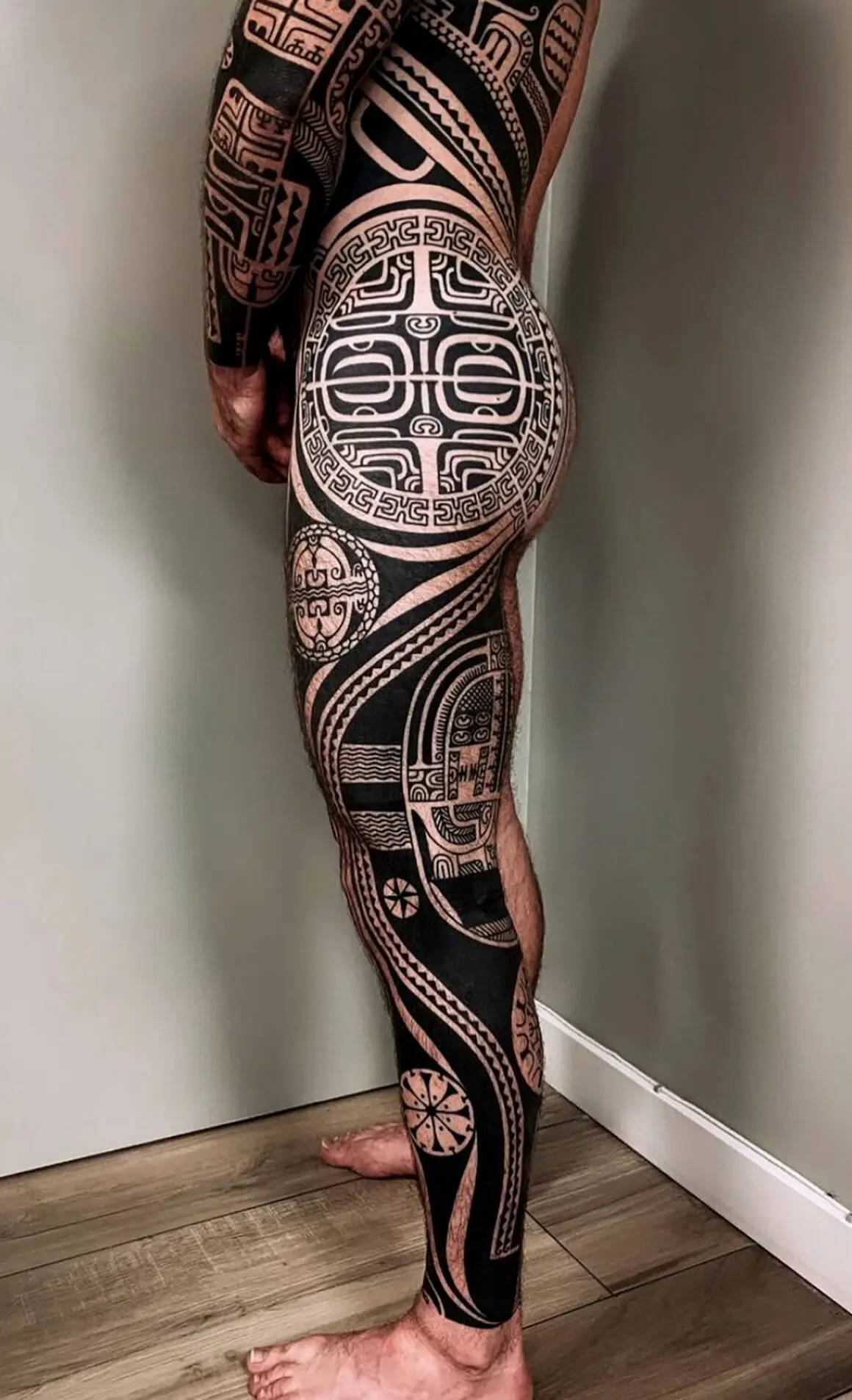
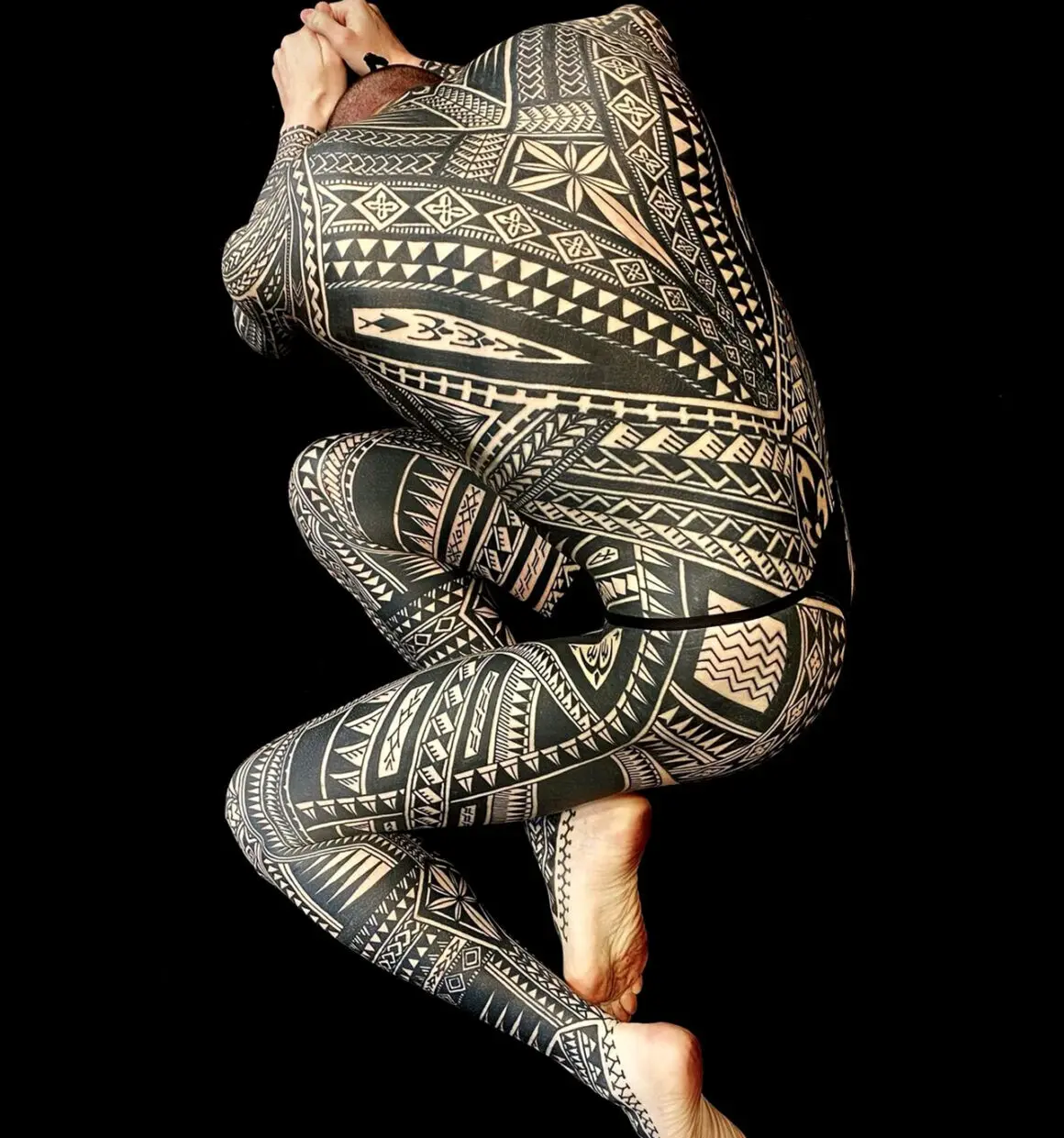
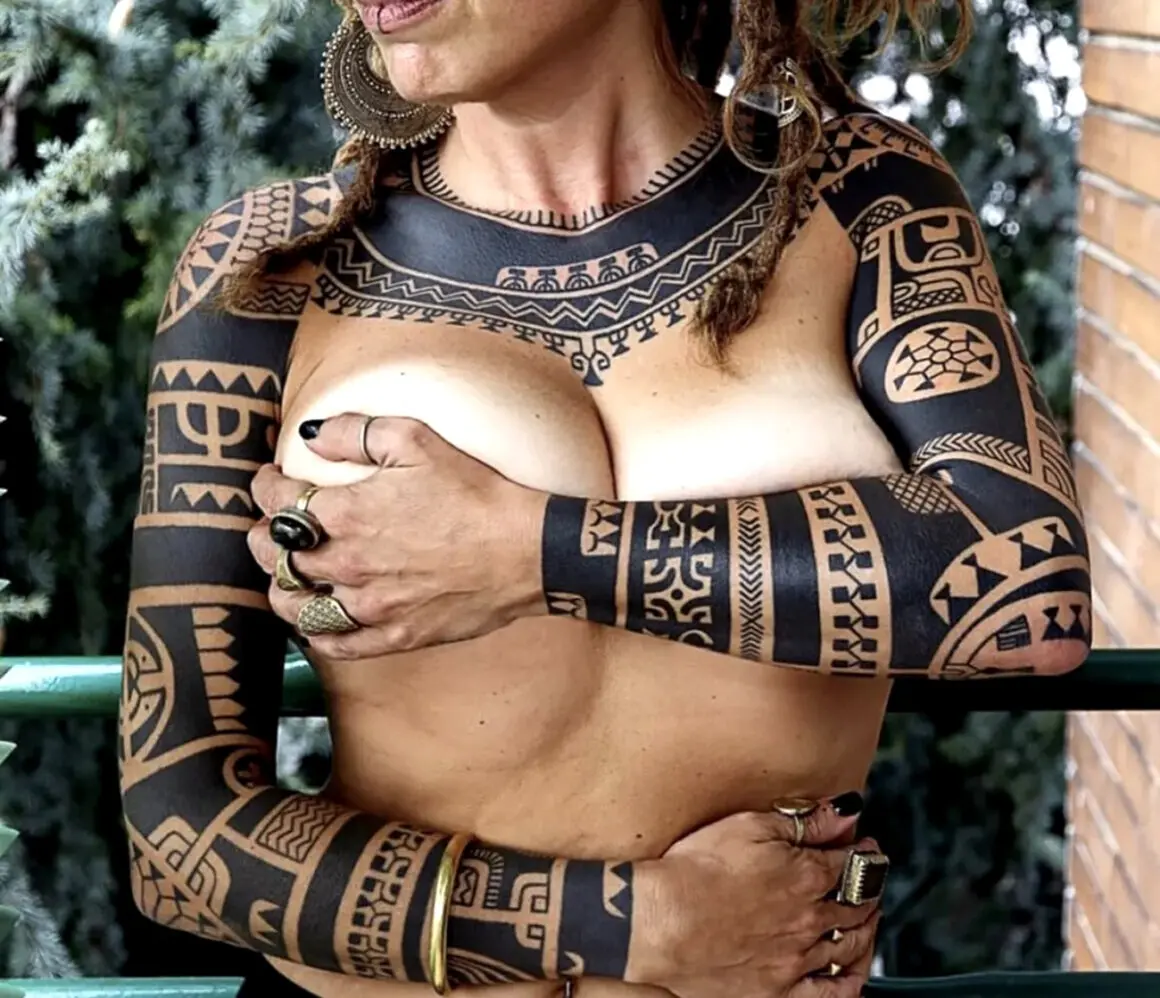
The designs are composed to follow the anatomy — wrapping around muscles, flowing along the lines of the skeleton, conforming to the body’s curves and planes. This is one of the strongest principles in tribal work and one of the reasons the designs look good on the body, even when they carry no specific meaning.
Solid fill.
Large areas of solid black ink, packed evenly and densely. The quality of the fill is one of the most important technical markers of good tribal work — patchy or uneven fill is visible immediately and is the most common quality failure in the style.
Negative space as an active element.
The bare skin within and between the black shapes is a deliberate part of the design. In the best tribal work — Indigenous and Western — the negative space and the positive space are composed with equal care.
Aging
Cultural considerations
Indigenous patterns belong to their communities of origin.
Some designs are restricted.
In several traditions, specific patterns are reserved for specific people — by rank, by gender, by achievement, by family. Using a restricted pattern without authorisation is an offence within the tradition, regardless of whether the person wearing it understands this.
Some designs are restricted.
In several traditions, specific patterns are reserved for specific people — by rank, by gender, by achievement, by family. Using a restricted pattern without authorisation is an offence within the tradition, regardless of whether the person wearing it understands this.
Not all abstract black patterning is culturally owned.
A geometric composition developed by a Western artist, using shapes from mathematical geometry, Islamic tile work, or original abstraction, is not appropriation even if it is rendered in solid black and follows the body. The critical question is whether the specific forms being used are drawn from a specific Indigenous tradition, and whether the use respects or ignores that tradition’s rules about who can wear them.
Developing own visual vocabulary
Choosing a tribal tattoo artist
For Indigenous tattoo work, seek a practitioner within the tradition. Samoan tufuga ta tatau, Māori tā moko practitioners, Filipino hand-tapping artists, and Inuit skin-stitching artists are identifiable through their communities and through the networks of Indigenous tattoo revival. Do not ask a Western shop artist to reproduce specific Indigenous designs.
For neo-tribal or abstract blackwork, look for artists with a developed personal vocabulary who understand the history of both the Indigenous source traditions and the Western neo-tribal movement. A portfolio that shows original composition rather than copied motifs is the strongest indicator. Artists with backgrounds in geometry, graphic design, or abstract art tend to produce the most compositionally strong work.
Check solid fill quality. Tribal work lives or dies on the evenness and density of the black fill. Look at healed photographs — not fresh — and check for patches, grey spots, or texture inconsistencies. Good, solid fill is surprisingly difficult, and a portfolio that shows consistently dense, even black, across multiple healed pieces is evidence of real skill.
Sources & further reading
- Lars Krutak, Spiritual Skin: Magical Tattoos and Scarification. Edition Reuss, 2012.
- Lars Krutak, Tattoo Traditions of Native North America: Ancient and Contemporary Expressions of Identity. LM Publishers, 2014.
- Lars Krutak and Aaron Deter-Wolf (eds.), Ancient Ink: The Archaeology of Tattooing. University of Washington Press, 2017.
- Sean Mallon, Tatau: A History of Sāmoan Tattooing. Te Papa Press, 2002.
- Sean Mallon and Sébastien Galliot, Tatau: Sāmoan Tattoo, New Zealand Art, Global Culture. Te Papa Press, 2018.
- Ngahuia Te Awekotuku with Linda Waimarie Nikora, Mau Moko: The World of Māori Tattoo. Penguin New Zealand, 2007.
- Alfred Gell, Wrapping in Images: Tattooing in Polynesia. Clarendon Press, 1993.
- Tricia Allen, Tattoo Traditions of Hawai’i. Mutual Publishing, 2006.
- Lane Wilcken, Filipino Tattoos: Ancient to Modern. Schiffer Publishing, 2010.
- V. Vale and Andrea Juno (eds.), Modern Primitives: An Investigation of Contemporary Adornment and Ritual. RE/Search Publications, 1989.
- Anna Felicity Friedman, The World Atlas of Tattoo. Yale University Press, 2015.
- Juanita Taylor, Etched on the skin. CBC News, 2021.
- Matt Lodder, Painted People: Humanity in 21 Tattoos. Harper, 2024.
- Margo DeMello, Bodies of Inscription: A Cultural History of the Modern Tattoo Community. Duke University Press, 2000.
- Steve Gilbert, Tattoo History: A Source Book. Juno Books, 2000.
- Ed Hardy (ed.), Tattootime. Five volumes, Hardy Marks Publications, 1982–1991.
- Nick Schonberger and Rob Kingston, Forever: The New Tattoo. Gestalten, 2012.