Related Posts


Cybersigilism
Sharp lines from the internet age
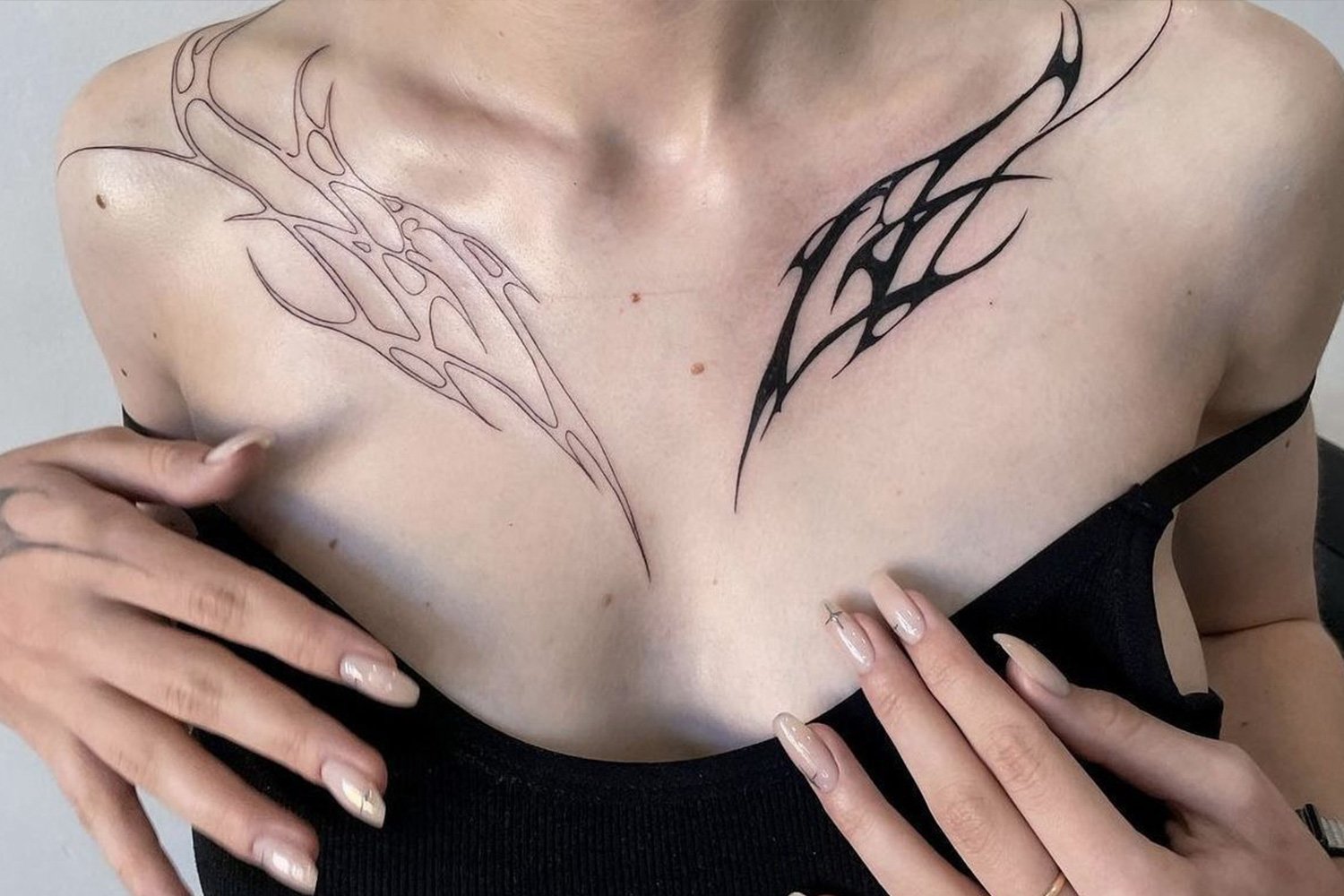
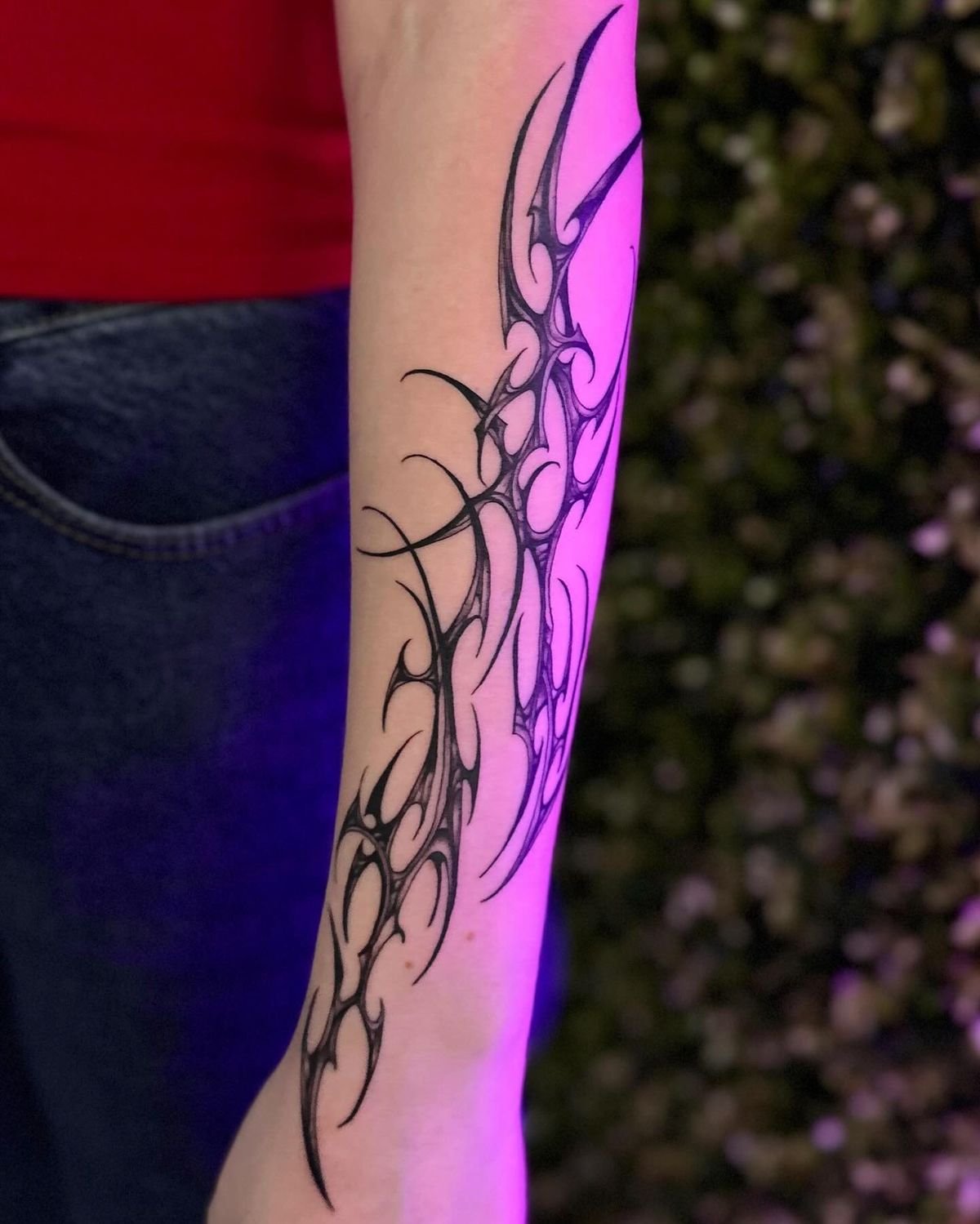
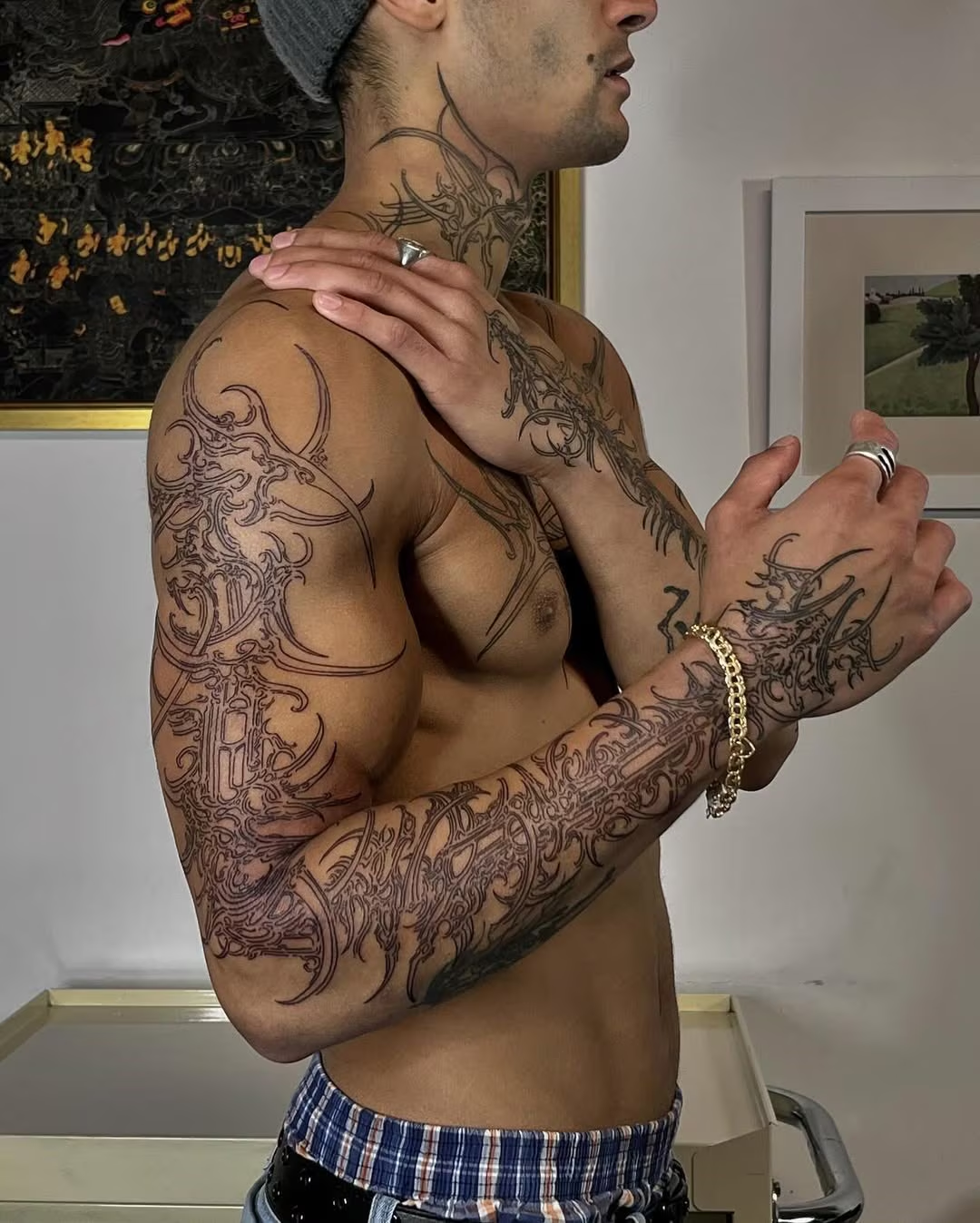
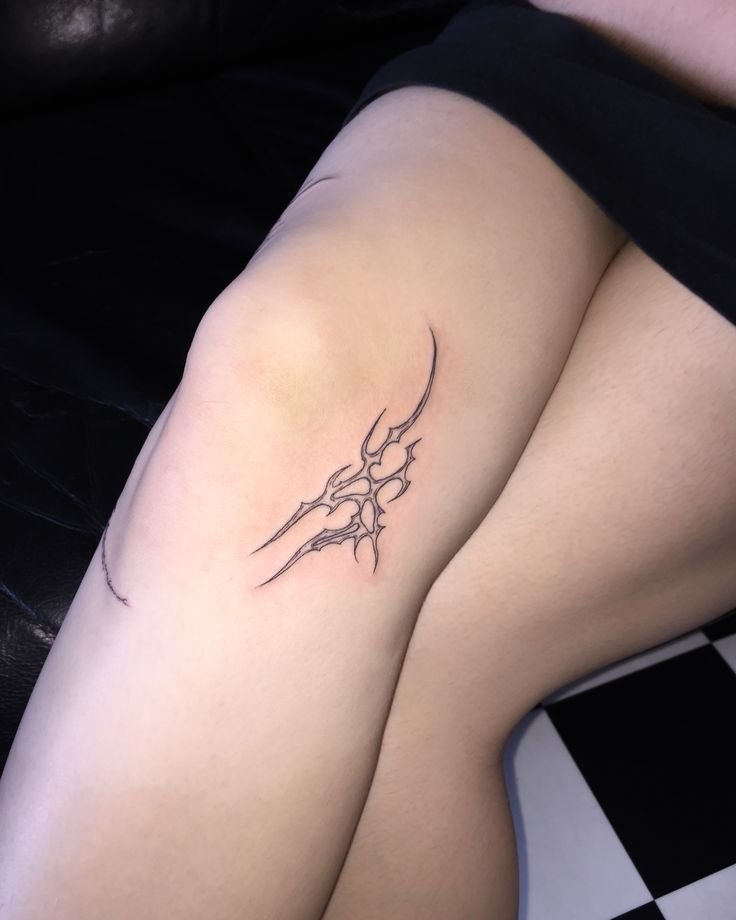
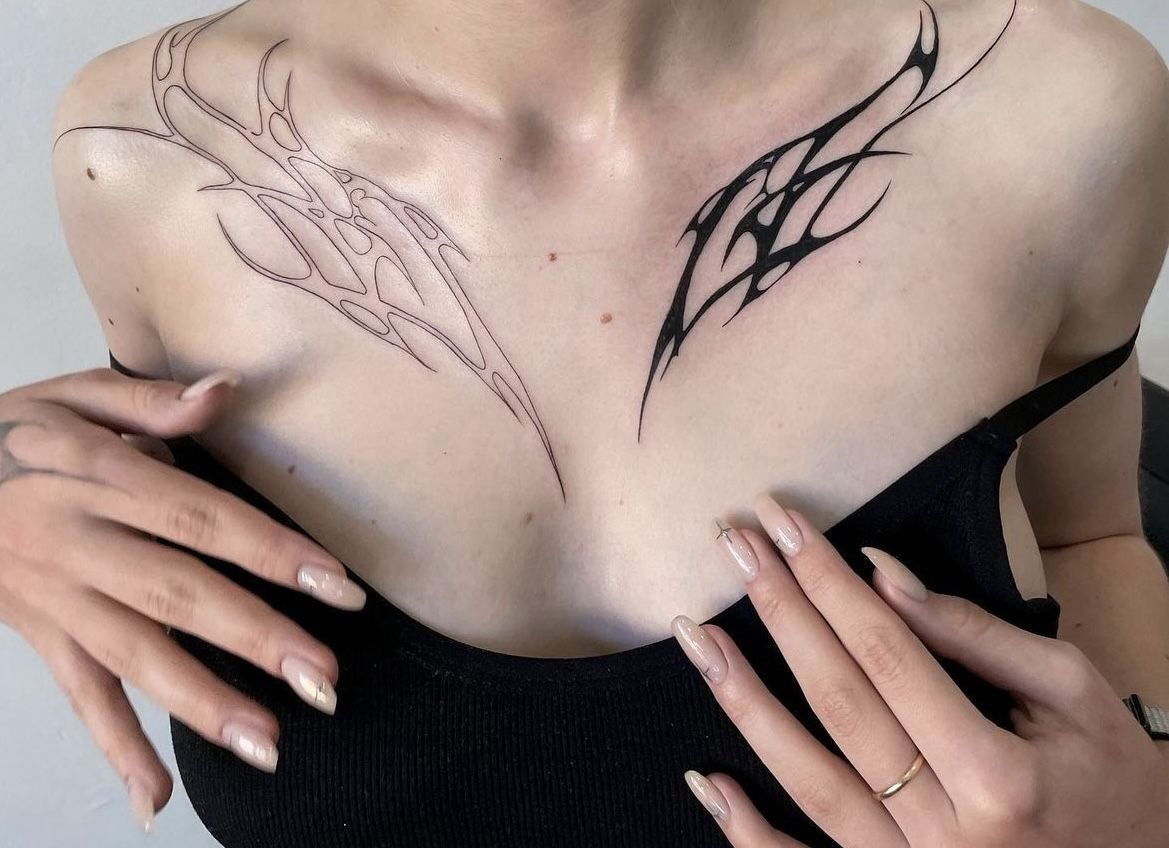
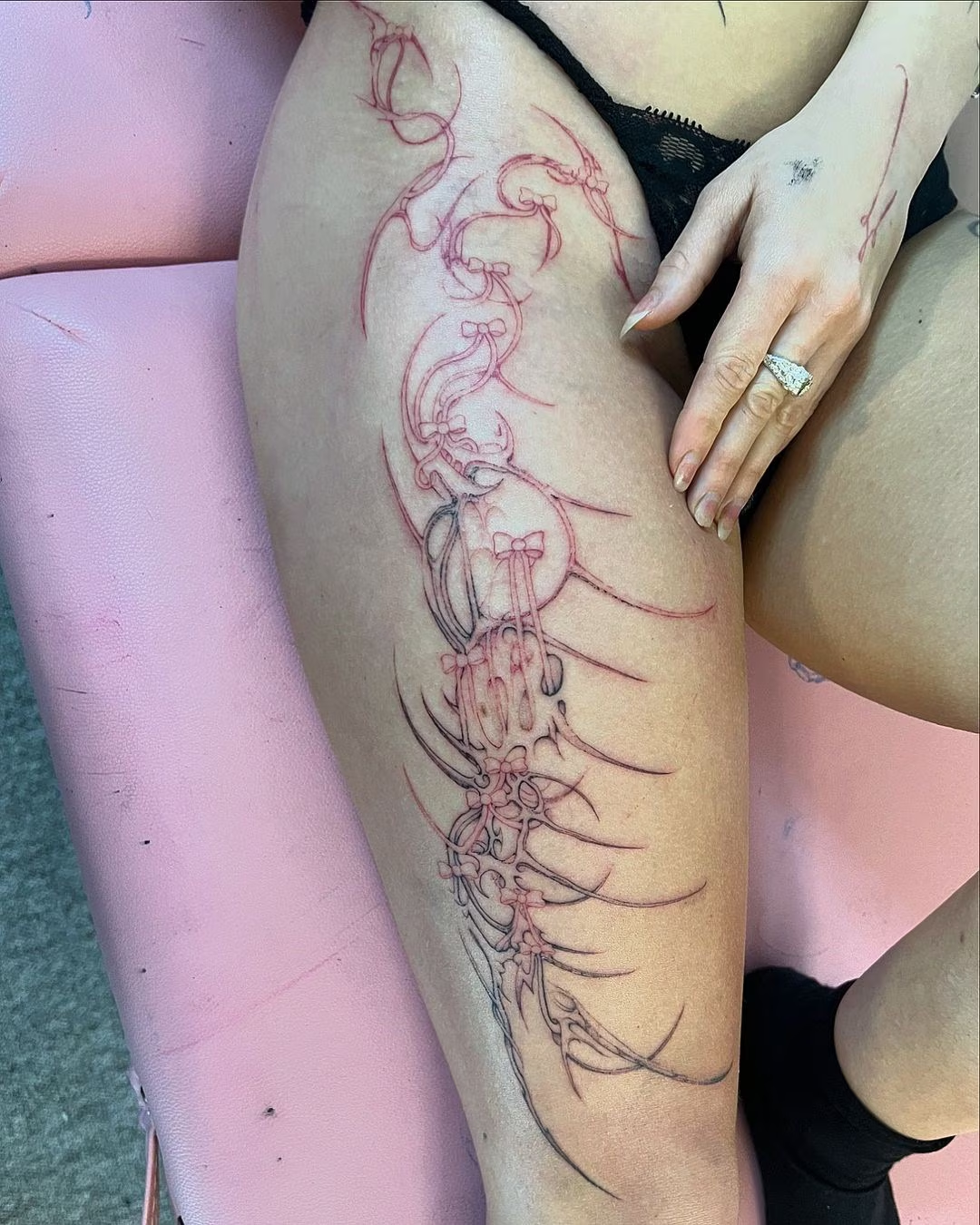
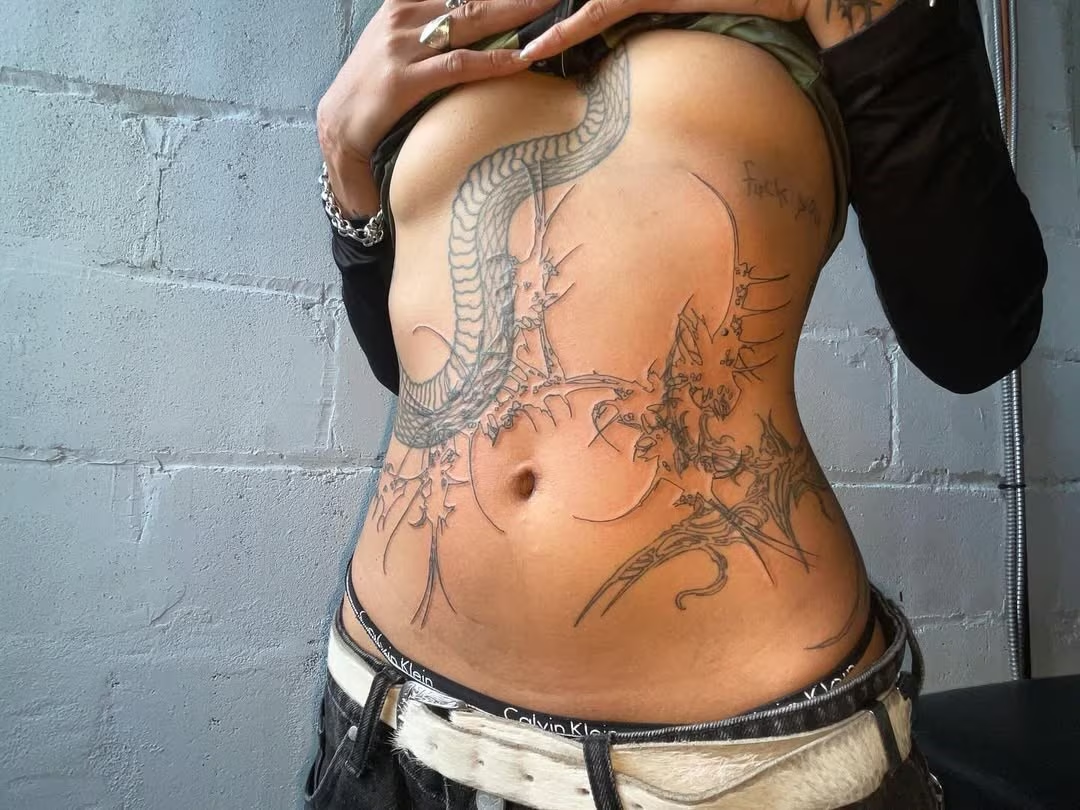
Thin black lines radiating outward from a central point on the sternum, tapering to needle-fine tips, curving along the collarbones and down between the ribs. The pattern is symmetrical, angular, and organic at the same time — part skeletal diagram, part circuit board, part occult symbol, part something that has no analogue in any older visual tradition. It looks like it was designed on a screen, which it probably was. It looks alien, mechanical, and biological at once. This is cyber sigilism, the most recognisable new tattoo style to emerge from the 2020s, and one of the most polarising.
The style is young — developed from around 2018, named in the early 2020s, and mainstream by 2023–2024. It has arrived fast enough that most of the documentation about it exists in social media posts, trend articles, and interview clips rather than in books or academic writing. The cultural conversation around it is still forming. What follows is an attempt to describe what the style is, where it came from, what it draws on, what it looks like on skin, and what is known so far about how it ages.
The name
The name combines two words with specific resonance.
Cyber refers to digital technology, the internet, virtual reality, and the broader culture of screens and computation that defines contemporary life. In this context, the style signals that the designs look digital — they have the precision of vector graphics, the symmetry of mirrored Procreate drawings, and the aesthetic of something generated or processed by a machine, even when they are drawn by hand.
Sigil refers to an inscribed symbol believed to carry magical power. Sigils appear across Western occult traditions — in medieval grimoires, in chaos magic, in ceremonial magic systems — and the word carries connotations of intention, ritual, and the encoding of meaning into abstract form. A sigil is a symbol designed to do something, and the use of the word in the style’s name connects it to the idea that a tattoo can function as a charged object rather than a passive decoration.
The combination — cyber sigil — refers to a symbol that fuses digital aesthetics with occult intent. The style’s practitioners and early adopters have used phrases like “internet mysticism” to describe this fusion: the creation of magical-looking symbols that belong to a reality shaped by technology.
The term “sigilism” in the tattoo context is attributed to Brooklyn-based artist Noel Garcia, who began using it around 2023 to describe designs incorporating sigils and intricate geometry. The broader style is most closely associated with an LA-based artist known online as Aingelblood (@aingelblood / @cybersigilism), who began developing the visual language around 2018 and is widely credited as the style’s originator.
Where it comes from
The Berlin underground club scene
Queer and trans tattoo culture
H.R. Giger and biomechanical art
1990s neo-tribal tattooing
Black metal typography and graphic design
Chaos magic and internet occultism
Digital design tools
Style characteristics
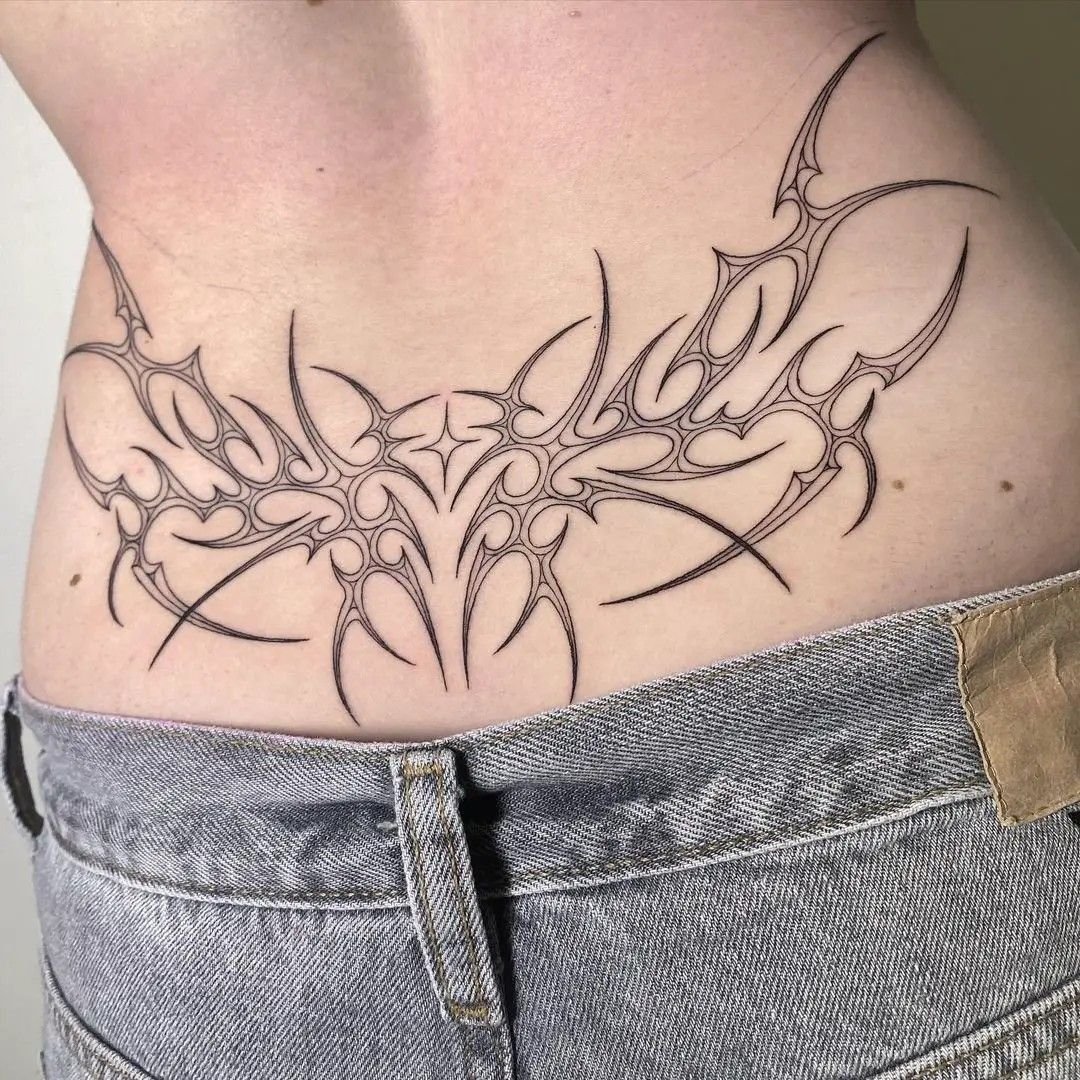
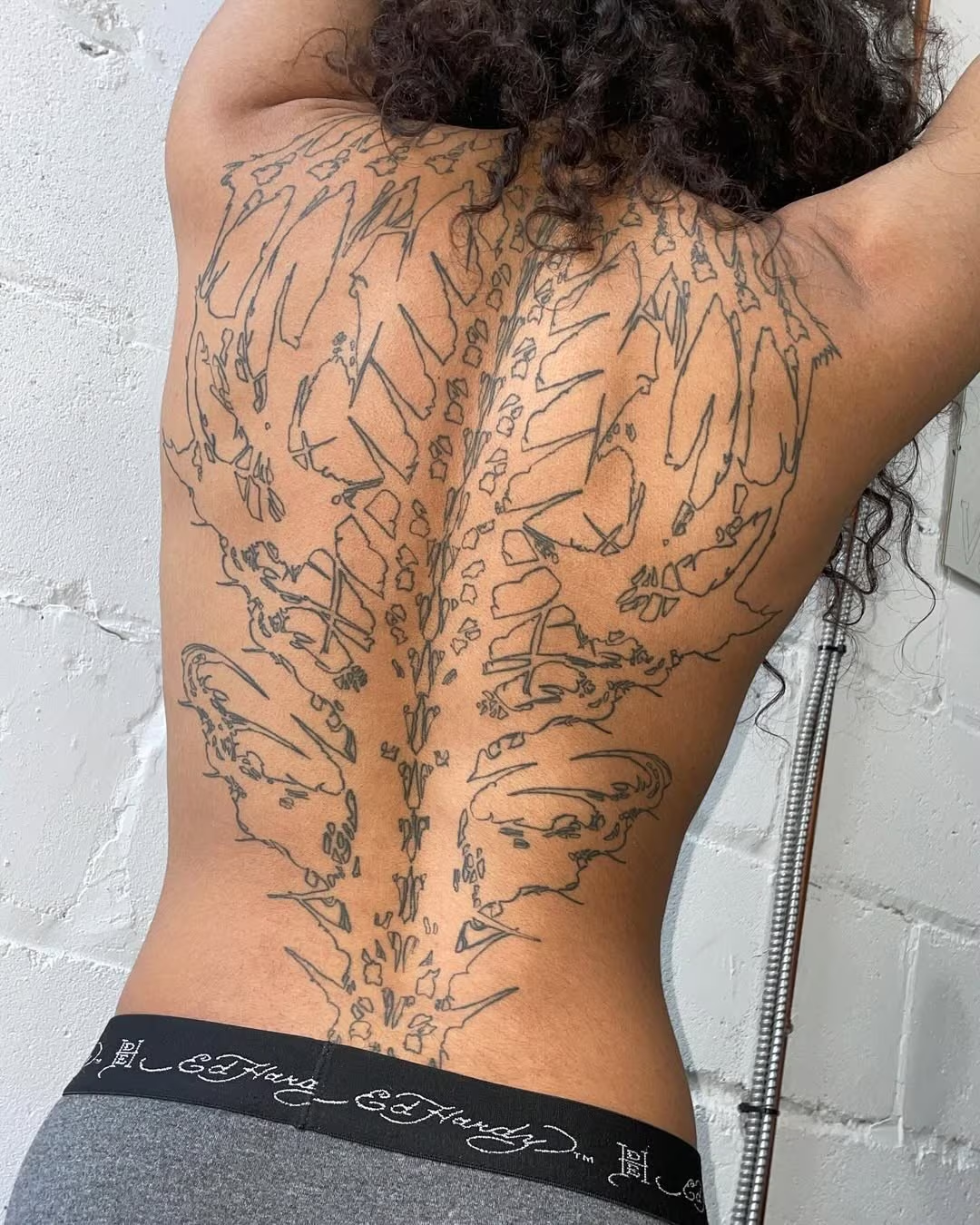
Mainly thin black lines
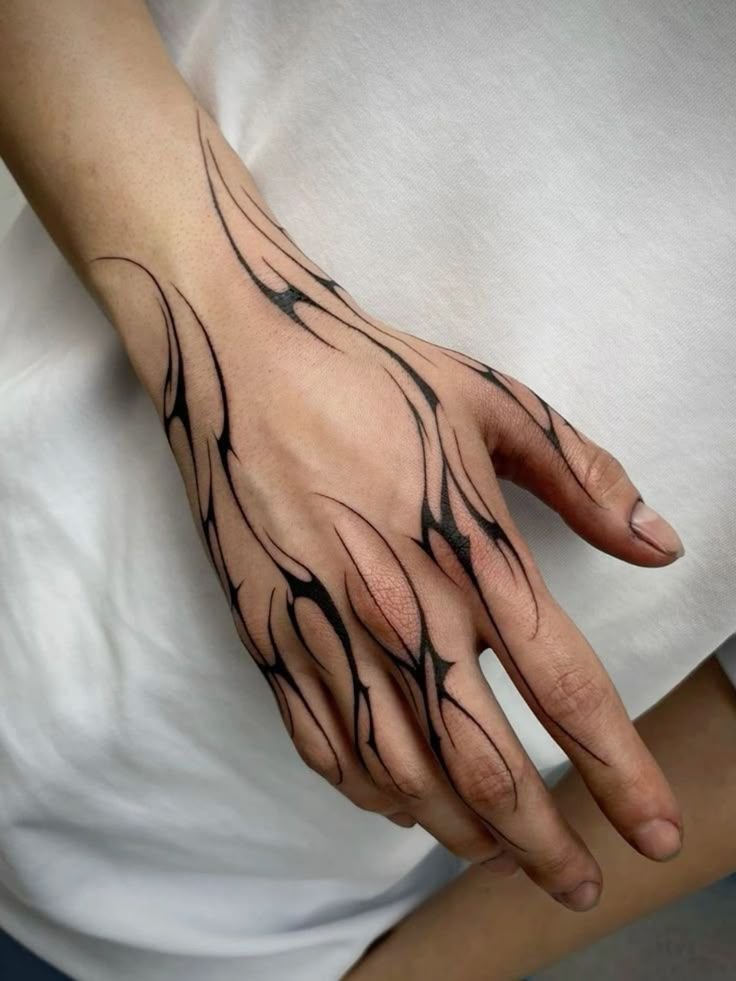
The predominant line weight is fine — single-needle or small round liner, producing lines thinner than those in most traditional or neo-traditional work. The fine line gives the designs their needle-like, almost skeletal quality. However, a bit heavier cyber-sigilism tattoos, more similar to neotribal, are also quite popular.
Sharp angles and tapering points
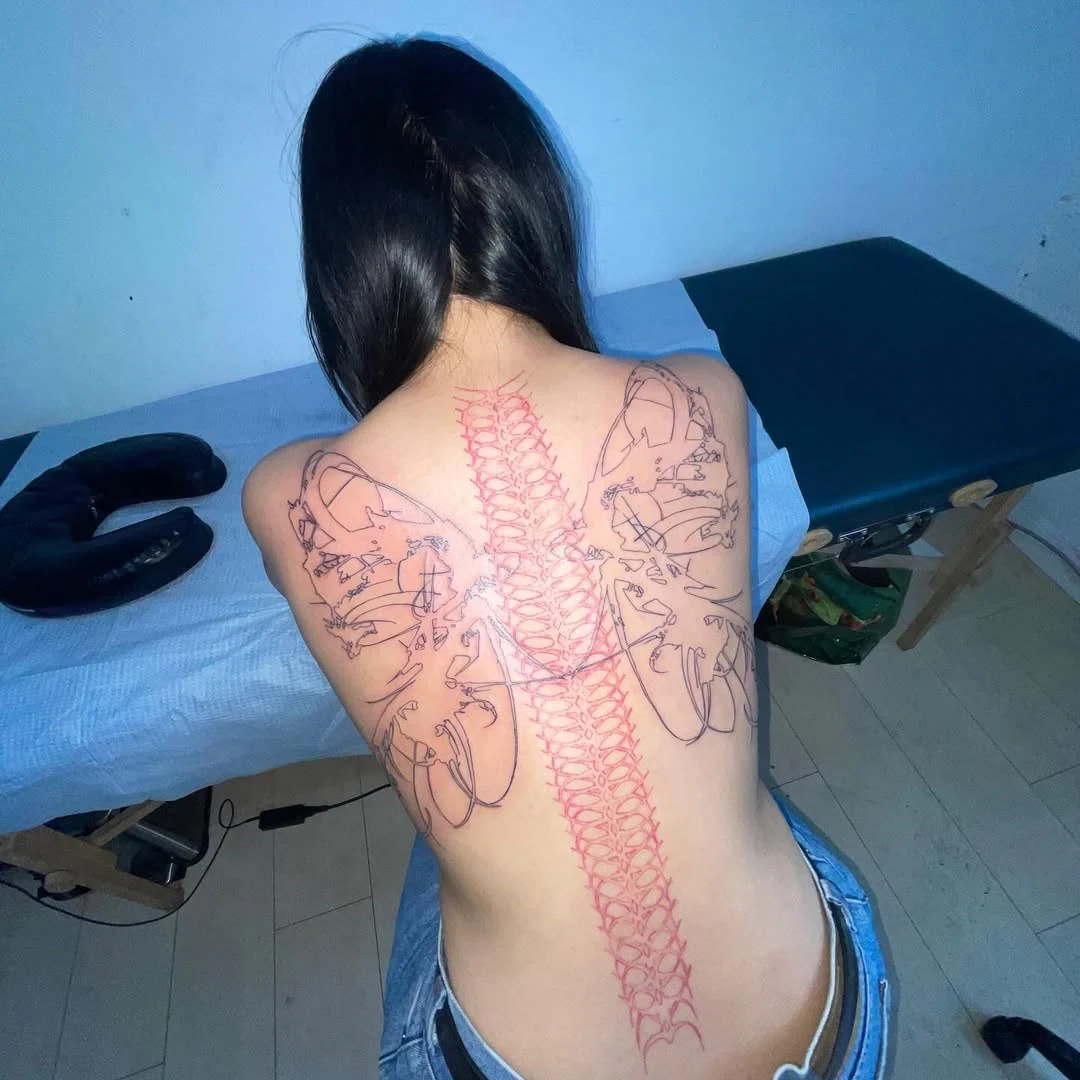
Bilateral symmetry
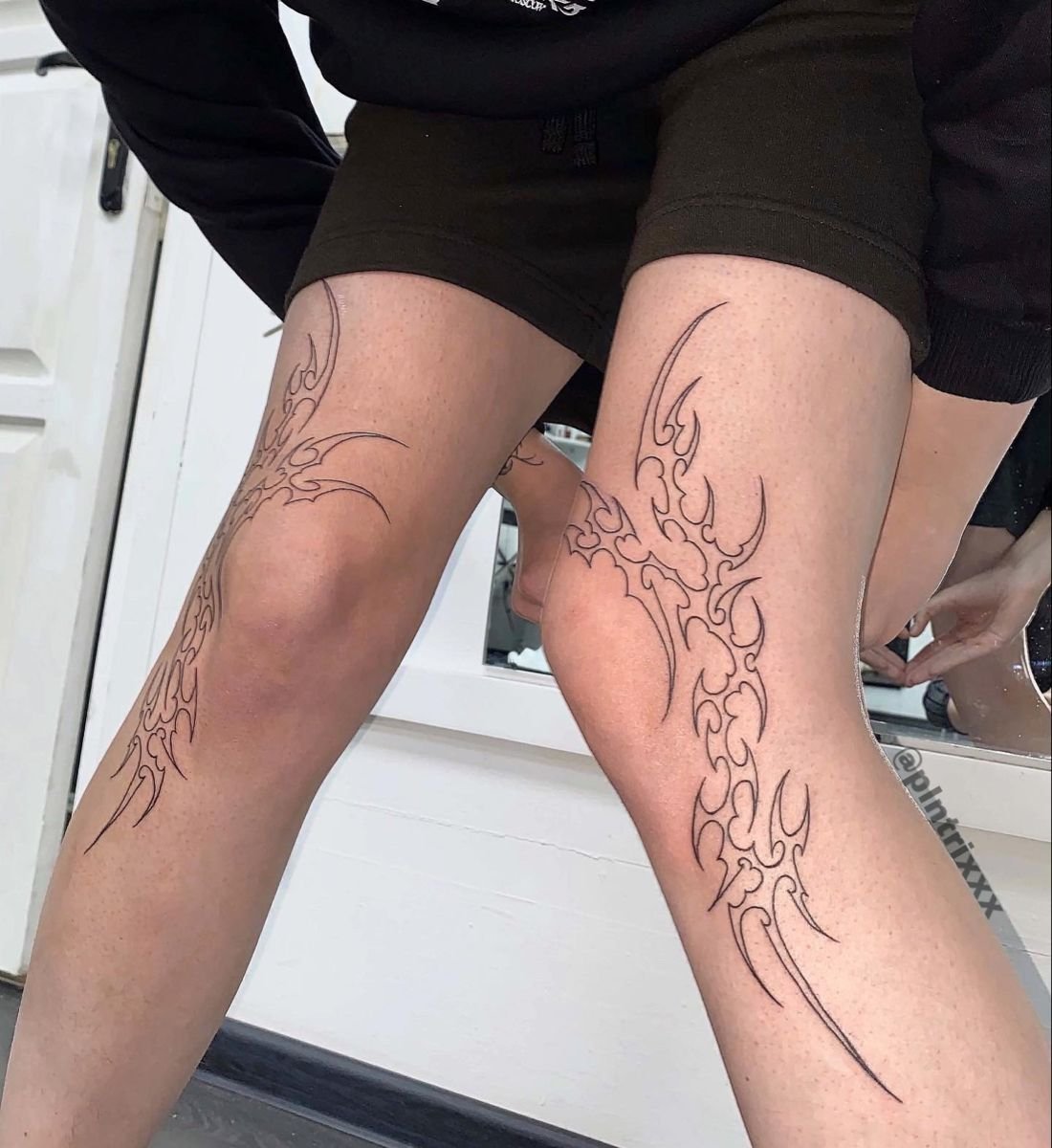
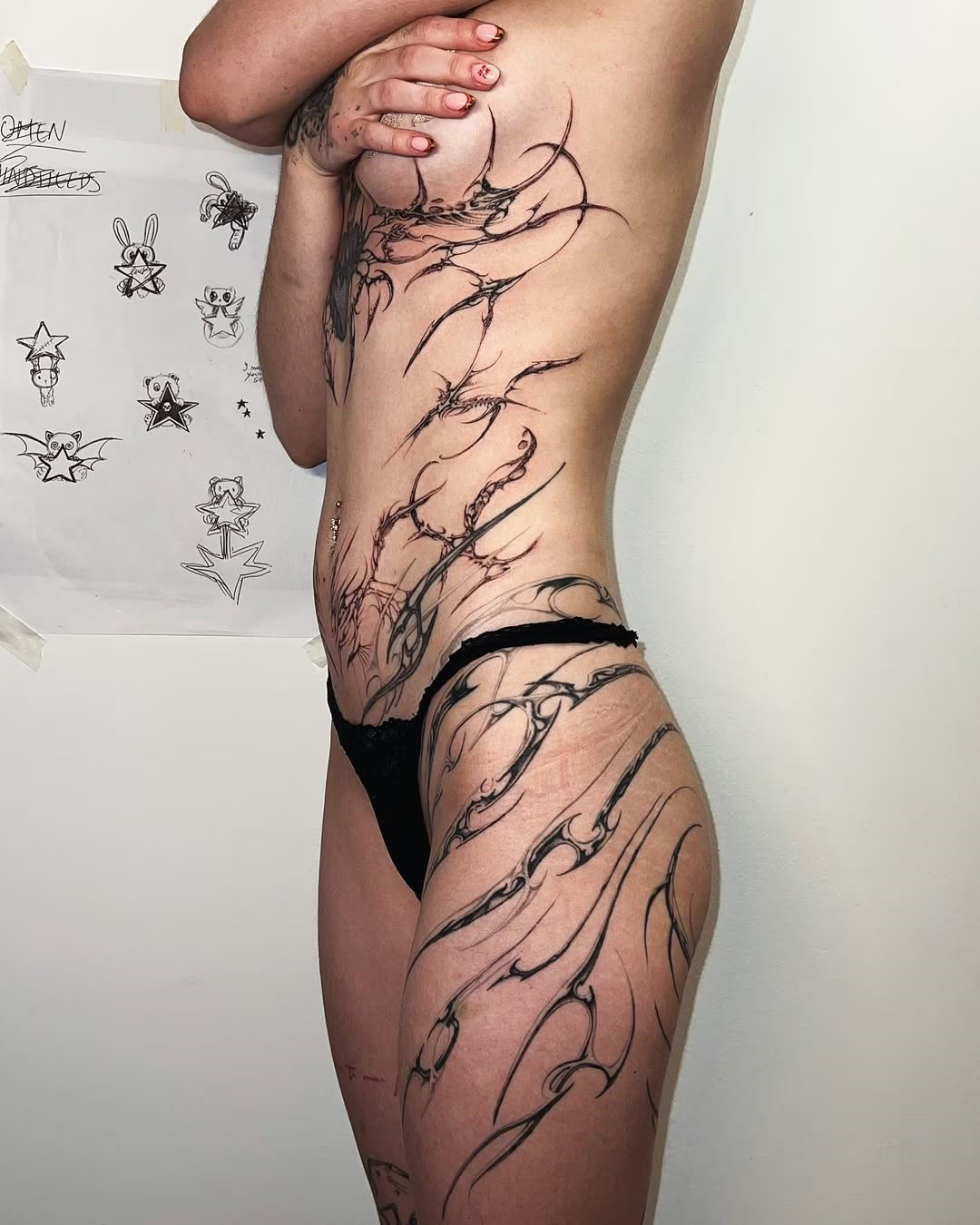
Body-following composition
Organic-mechanical fusion
Black ink, usually
Common placements
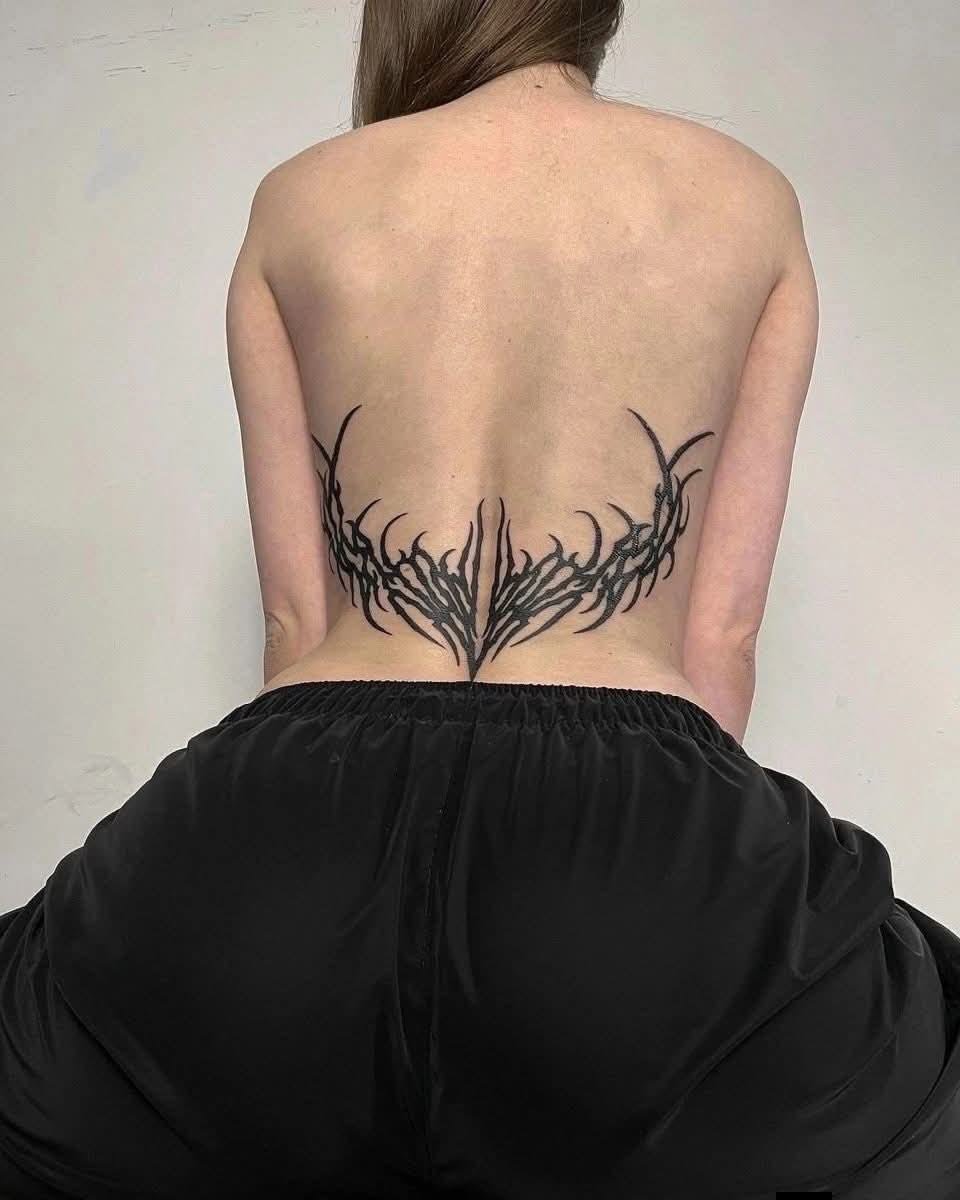
Cybersigilism & tribal comparison
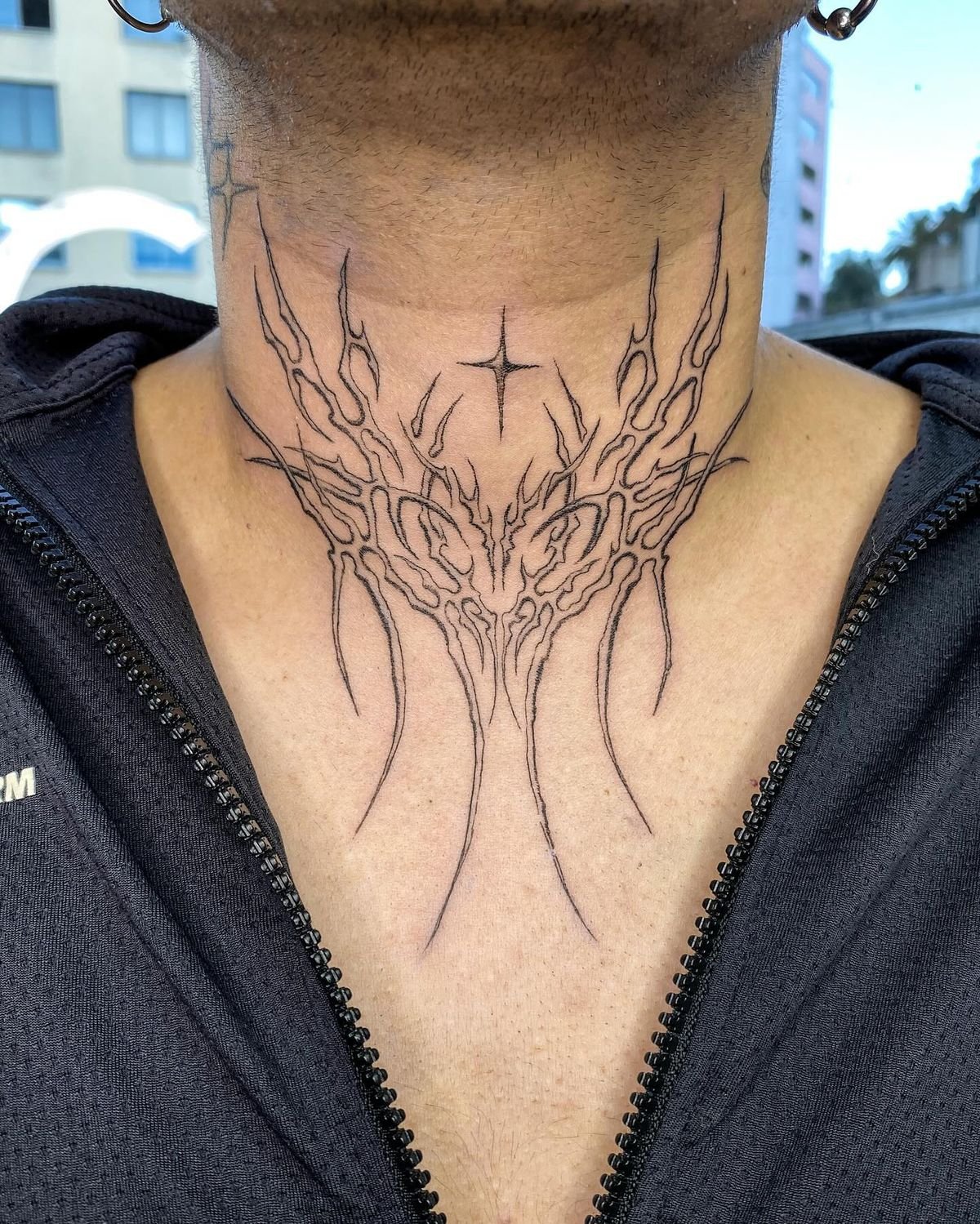
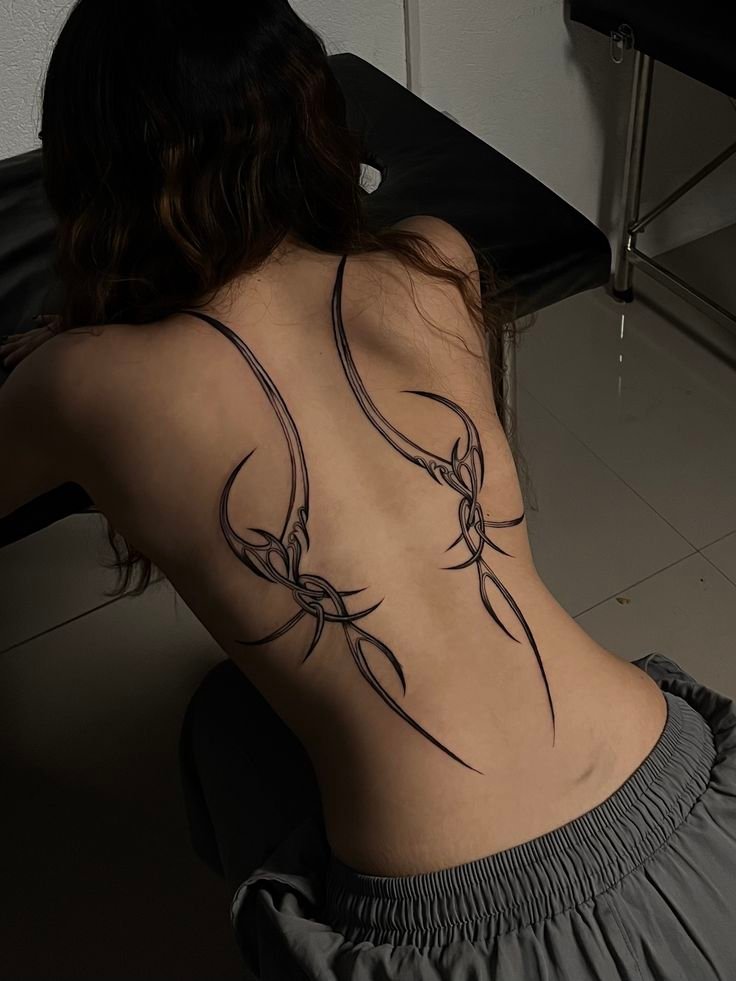
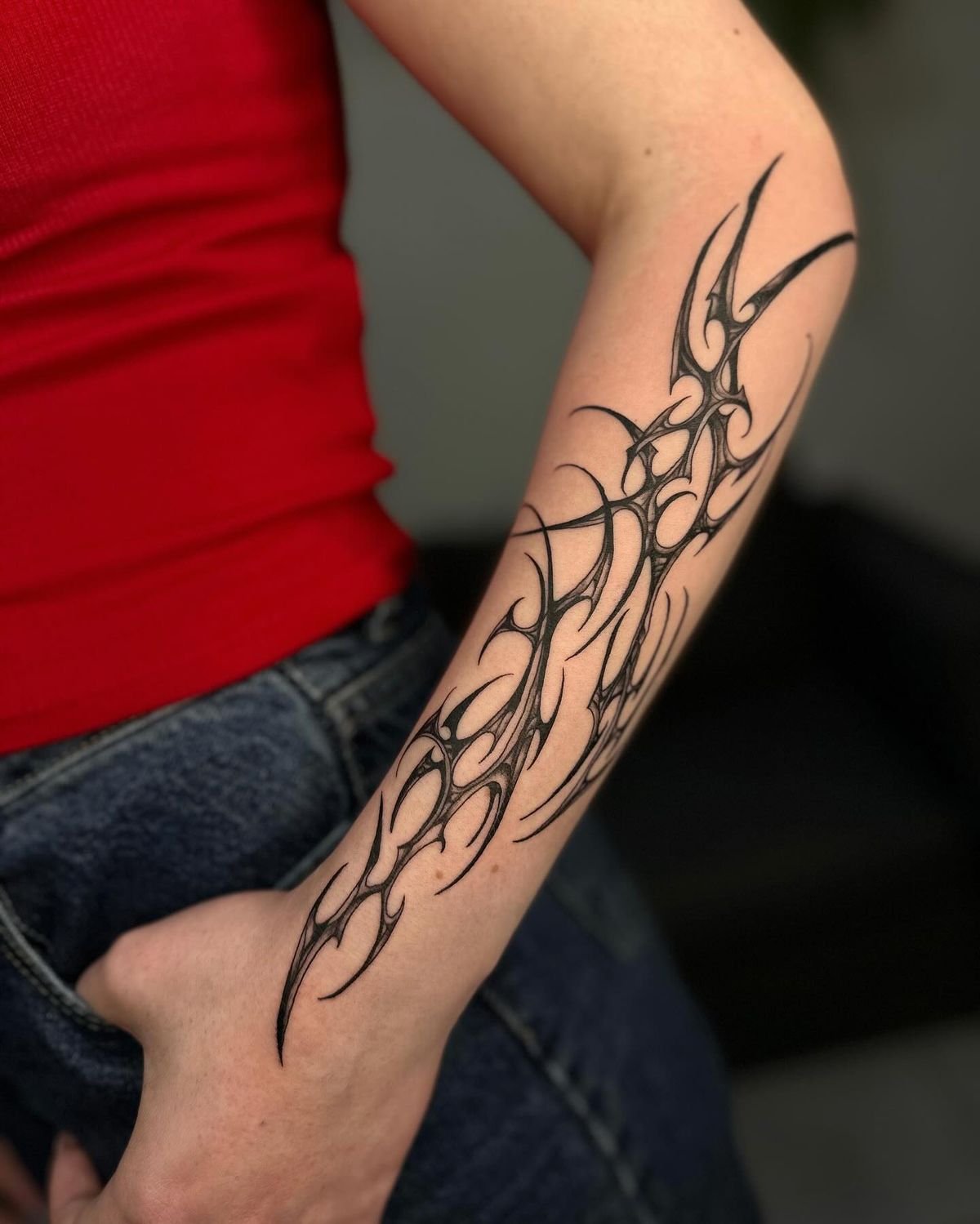
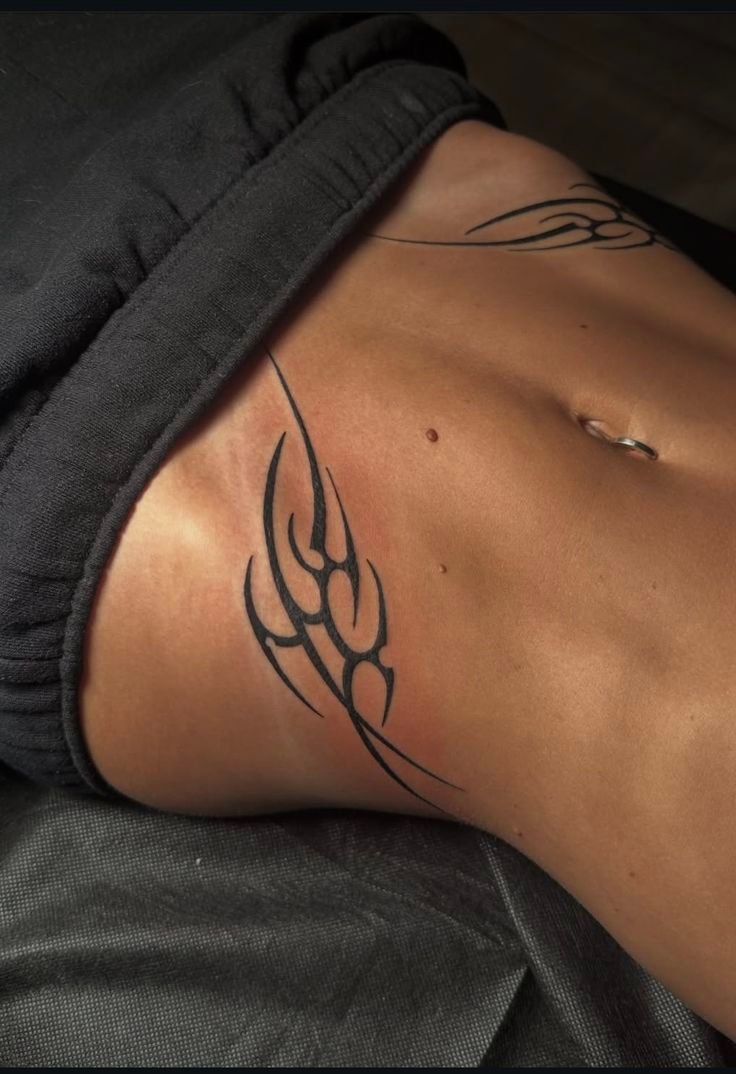
The comparison between cyber sigilism and 1990s tribal tattooing is frequently made by both supporters and critics of the style. The comparison is partly valid and partly misleading, and the distinction matters.
What they share: both are abstract blackwork styles that use body-following shapes composed of angular and curved elements. Both create a visual effect of the body being decorated with a pattern that follows its anatomy. Both gained rapid popularity within a specific generational cohort. And both attracted criticism: tribal for cultural appropriation of Indigenous designs; cyber sigilism for its perceived superficiality and trendiness.
Where they differ: 1990s tribal drew its visual vocabulary from specific Indigenous tattooing traditions — Polynesian, Bornean, and others — and the appropriation of those traditions by people with no cultural connection to them was a legitimate criticism. Cyber sigilism’s visual vocabulary is synthetic — assembled from digital design, biomechanical art, metal typography, and occult symbolism, with no claim to any Indigenous source. The shapes look superficially similar (black, abstract, angular, body-following), but the references are different.
The risk that remains: the resemblance is close enough that some cyber sigilism designs can be mistaken for tribal, and some designs — particularly those by less thoughtful practitioners — borrow motifs that sit uncomfortably close to Indigenous patterns. The style’s originators have made it clear that cyber sigilism is internet-derived and should be understood as a separate practice from Indigenous tattooing; whether every practitioner and every client maintains that distinction is another question.
Technical considerations
Digital design skills
Stencil application
Fine line execution
Body reading
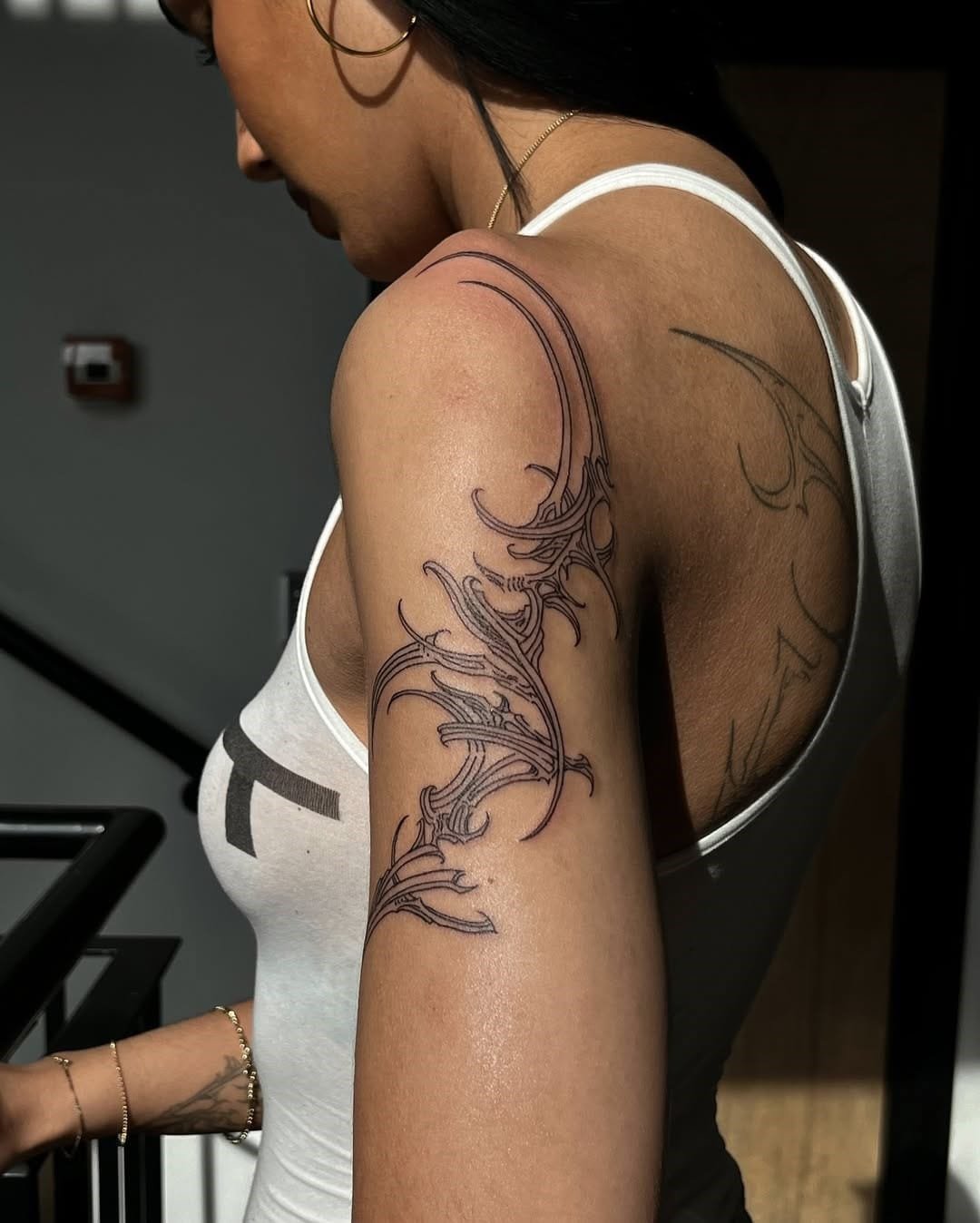
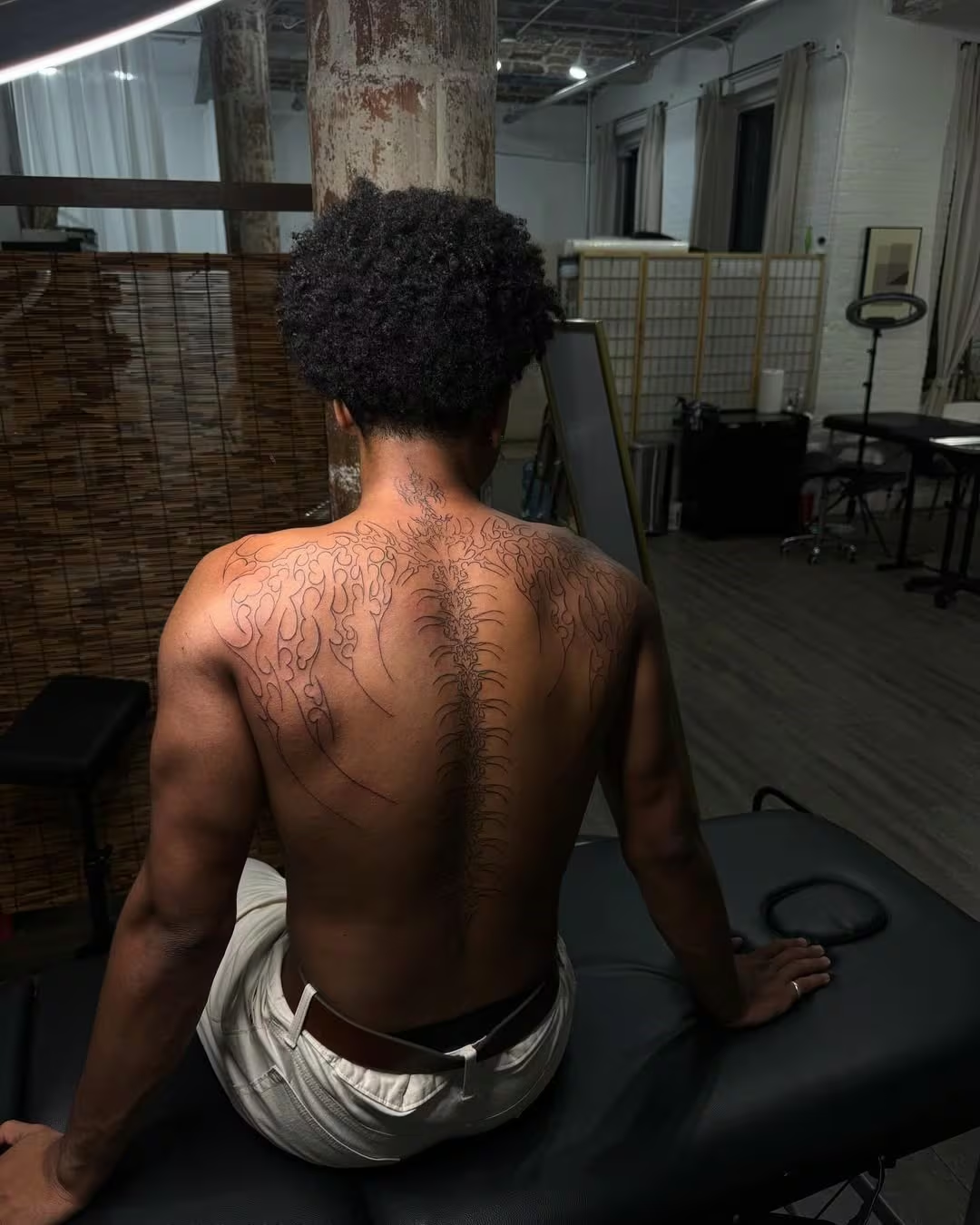
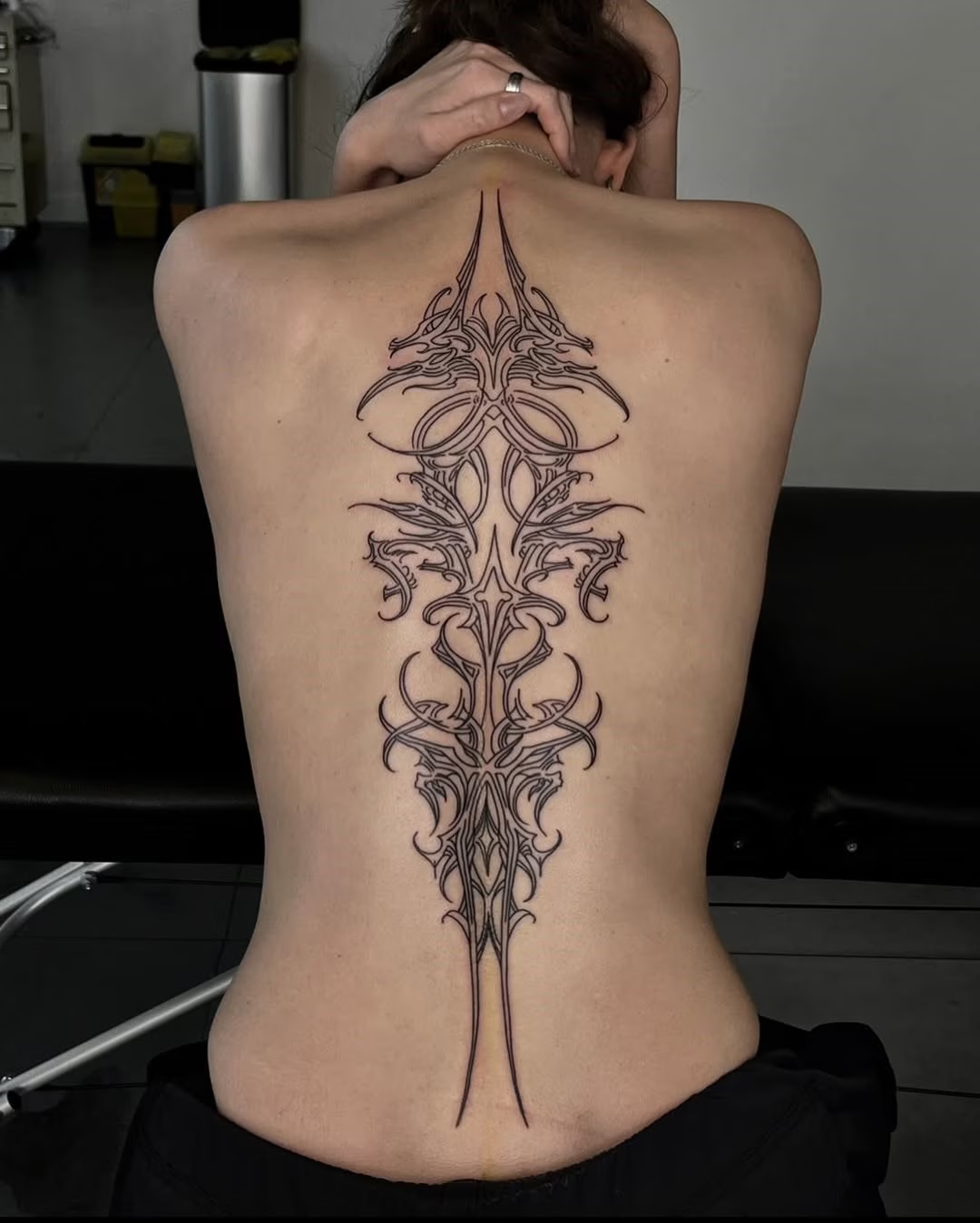
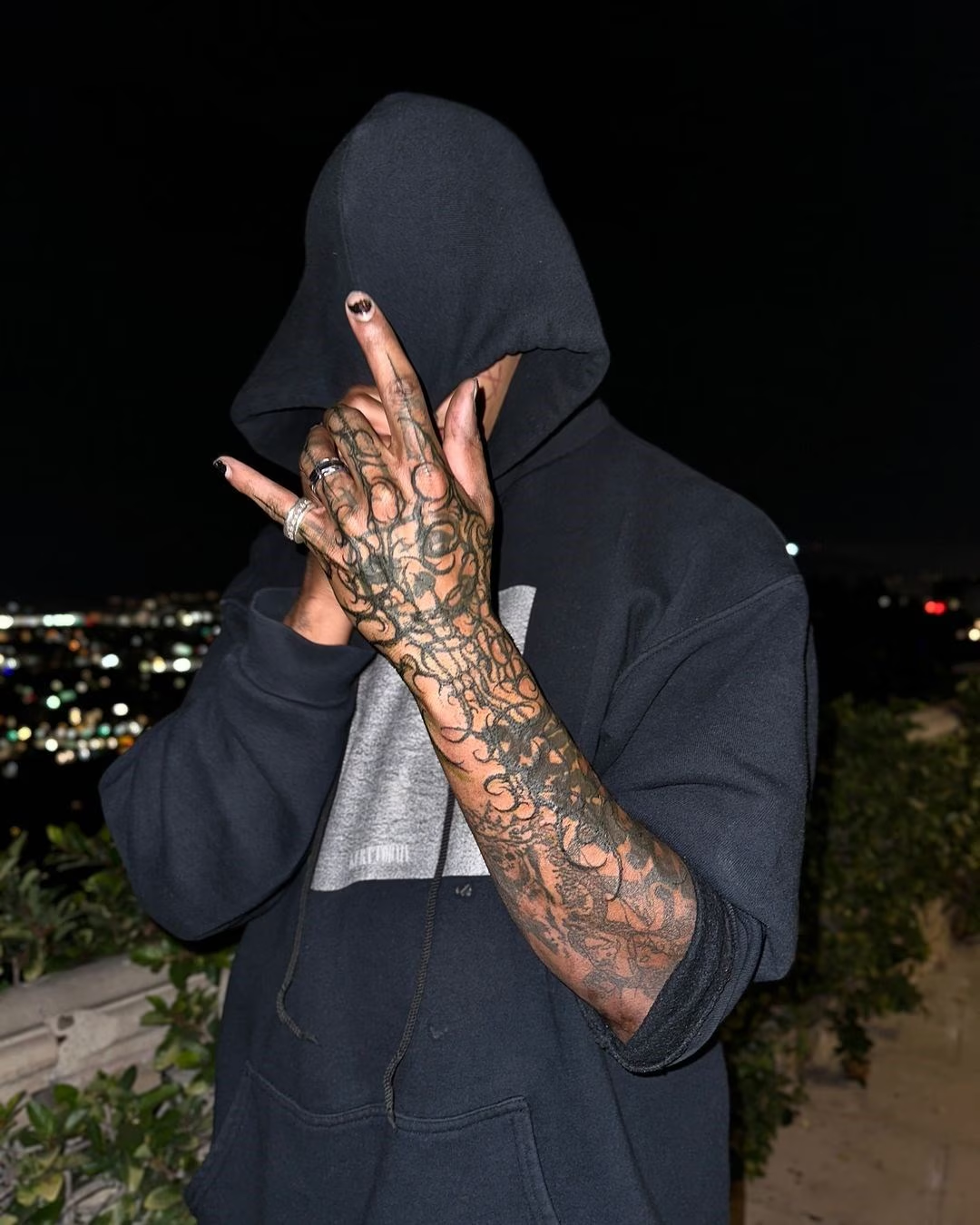
Ageing
The cultural context of cybersigilism
Cyber sigilism is one of the first major tattoo styles to develop primarily online, through social media, and to carry its subcultural meaning through digital platforms rather than through physical spaces. The Berlin club scene and the LA tattoo studios where the style was first practised provided the physical environment, but the style’s spread, its naming, and its cultural identity were shaped by Instagram, TikTok, and the broader visual economy of the internet.
This makes it different in kind from older styles. American traditional developed through physical flash sheets in physical shops. Chicano developed through a specific geographic community. Japanese irezumi developed through master-apprentice transmission. Cyber sigilism developed through posts, reposts, screenshots, and algorithmic distribution. The style’s visual identity was established by the time most people encountered it, and the encounter happened on a screen.
The style’s connection to queer and trans communities is documented and significant. Its connection to rave culture and the Berlin underground is real. Its connection to occultism and sigil practice is genuine for some practitioners and purely aesthetic for others. Its connection to Gen Z as a generational cohort is the most commonly cited demographic fact about the style, though it is not exclusively a Gen Z phenomenon.
The criticism the style attracts — that it is trendy, that it will date, that it is the 2020s equivalent of the 1990s tribal tattoo — is familiar. Every new tattoo style has been called a fad by the generation that preceded it, and some of those styles have endured (neo-traditional), some have contracted (new school), and some have been absorbed into broader practice (the technical contributions of every style). Whether cyber sigilism will follow any of these trajectories is an open question, and the honest answer is that no one knows yet.
Choosing a cybersigilism artist
Check for digital design skills. A strong portfolio will show evidence of sophisticated design work — precise symmetry, complex compositional structure, and designs clearly custom-fitted to the client’s body. Designs that look like generic templates applied without modification are a sign of less invested work.
Check healed work. As with every style. Fresh cyber sigilism photographs dramatically — the dark black against fresh, slightly reddened skin produces maximum contrast. The healed result is the real test. Lines that held their weight and points that retained their sharpness at one to two years are evidence of competent execution.
Ask about the design process. Cyber sigilism at its best involves a collaborative design process — the artist creates a digital design fitted to the client’s specific body, often incorporating personal symbols, intentional elements, or aesthetic preferences. A generic design pulled from Pinterest and applied without customisation will produce a weaker piece.
Consider placement carefully. The style works best on body areas that offer a flat or gently curved surface for symmetrical compositions — the sternum, upper back, forearms, and shoulders. Highly curved or mobile areas (elbows, knees, hands) are challenging for any fine-line style and especially for designs that depend on symmetry and precise angularity.
cybersigilism - the new tattooing style
Cyber sigilism is in its first decade. It has moved from underground to mainstream with a speed that reflects the velocity of internet-driven trend cycles. It is currently one of the most requested styles among younger clients, and it has already influenced adjacent areas — streetwear (brands like Vetements and Balenciaga have incorporated the aesthetic), graphic design, album artwork, and the broader visual language of the internet.
The style’s long-term position in the tattoo landscape is unknown. It may stabilise into a recognised category with its own conventions and its own specialist practitioners, the way neo-traditional did. It may contract as the trend cycle progresses, as the New School did. It may contribute technical and compositional ideas that are absorbed into other styles, the way every significant style has done. The first generation of cyber sigilism pieces is still early in its life on skin, and the question of how the work holds up over decades — which ultimately determines any tattoo style’s staying power — is one that time will answer.
What can be said now is that the style has produced work of genuine visual originality, that it has expanded the vocabulary of blackwork in a direction that did not exist fifteen years ago, and that the best practitioners working in it are producing technically accomplished tattoos that are clearly the product of considered design. Whether the worst of the trend — the hastily executed, template-derived, poorly placed work that any popular style generates — comes to define the style in retrospect will depend on how the next decade unfolds.
Sources & further reading
- Cassidy George, “Cybersigilism: the Forever Trend.” 032c magazine.
- Alex Nino Gheciu, “What’s a Cybersigilism Tattoo and Why Are You Seeing Them Everywhere?” GQ.
- Isabel Wilder, “Are Cybersigilism Tattoos Gen Z’s Tribal Trend?” Miami New Times.
- Dazed Digital, “Tattoo inspiration: 7 cybersigilism artists to follow now.” Published May 2025, updated February 2026
- Nexstar/KTLA interview with Aingelblood and Chris Hernandez, Cybersigilism’ is the latest (divisive) tattoo trend: What is it? Published June 2024.
- Aesthetics Wiki, “Cybersigilism” entry.
- Matt Lodder, Painted People: Humanity in 21 Tattoos. Harper, 2024.
- Anna Felicity Friedman, The World Atlas of Tattoo. Yale University Press, 2015.
- H.R. Giger, Necronomicon. Sphinx/Morpheus, 1977.