Tattoo styles are not a fixed system but a set of working conventions — ways of drawing, lining, shading, and composing that have developed over time within different traditions. Some names point to established visual systems with clear rules, while others describe how the tattoo is made or how it looks in terms of tone. There are also practices in which style cannot be separated from cultural meaning and protocol. At the same time, newer labels often emerge from trends and hybridisation, borrowing freely from existing approaches without forming a stable canon. In practice, “style” serves less as a strict category and more as a shared reference point — helping align expectations between artist and client around form, durability, and intent.
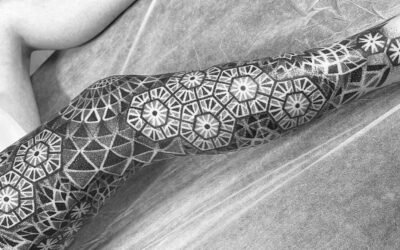
Geometric tattooing — work built primarily from geometric shapes, mathematical relationships, and abstract pattern — draws on this long history. The style has become one of the most requested categories in contemporary tattooing, encompassing everything from a single fine-line triangle on the wrist to a dense dotwork mandala covering the entire back.
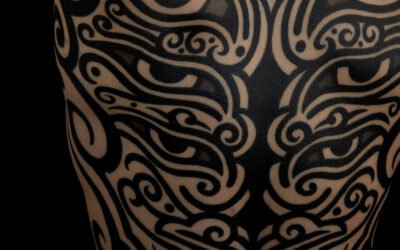
Ornamental tattooing is the style where the representation drops away and the decoration itself becomes the subject. The pattern is the content. The beauty of the arrangement is the meaning. Ornamental design — pattern, motif, and decorative composition applied to surfaces to make them beautiful — is one of the oldest human visual practices.