Gifu Horihide / Kazuo Oguri
Horihide: Building the bridge between two worlds
The two Horihides
The name “Horihide” belongs to two people, and the confusion between them is widespread in English-language tattoo sources. Clarifying the distinction is necessary before the story can be told properly.
Tokyo Horihide (Kakimoto Hideo) was born on January 1, 1929, and died on April 18, 2017. He was a traditional tattoo master based in Tokyo. He is the original Horihide — the master under whom Kazuo Oguri trained. Very little biographical material about him exists in English beyond these basic facts.
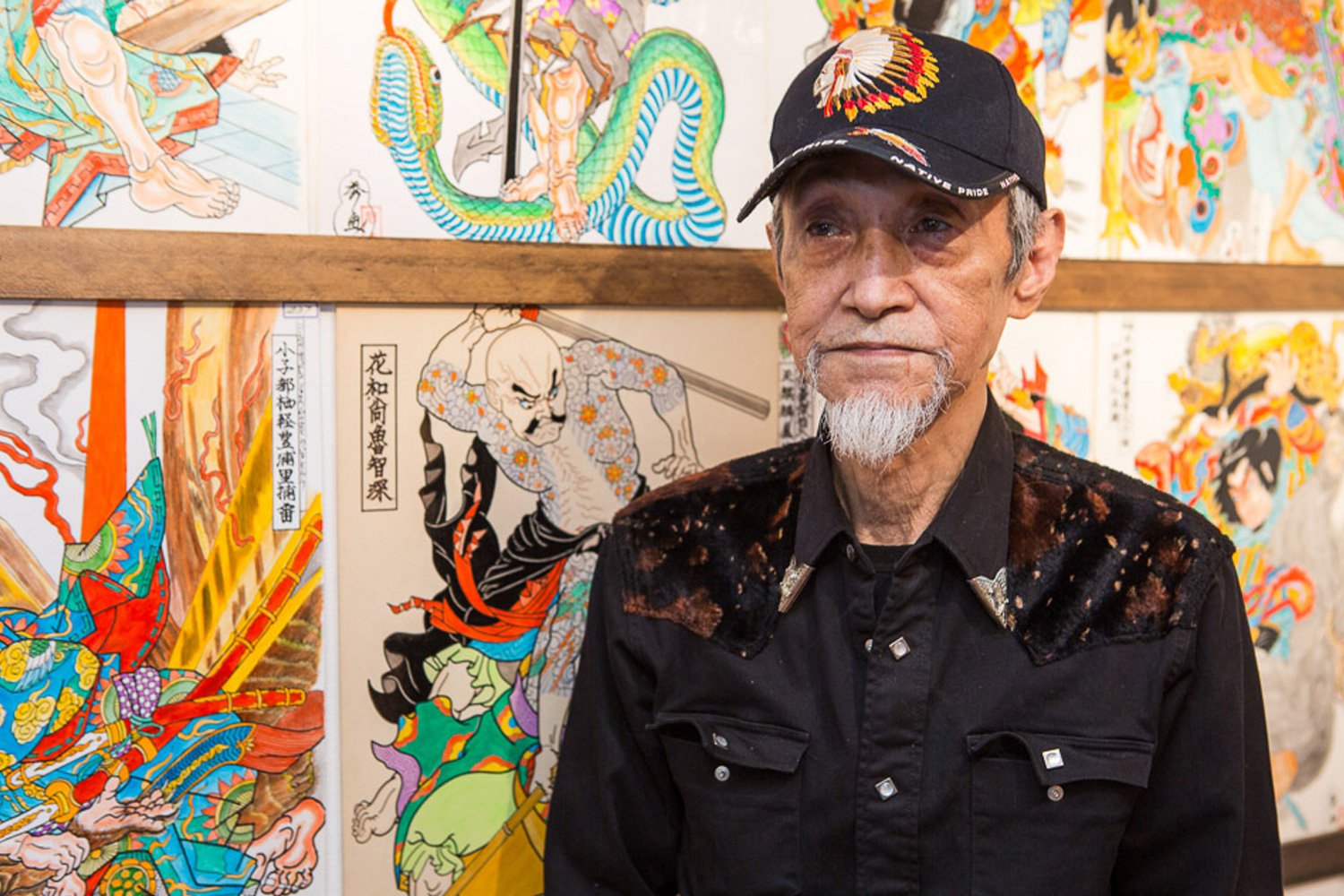
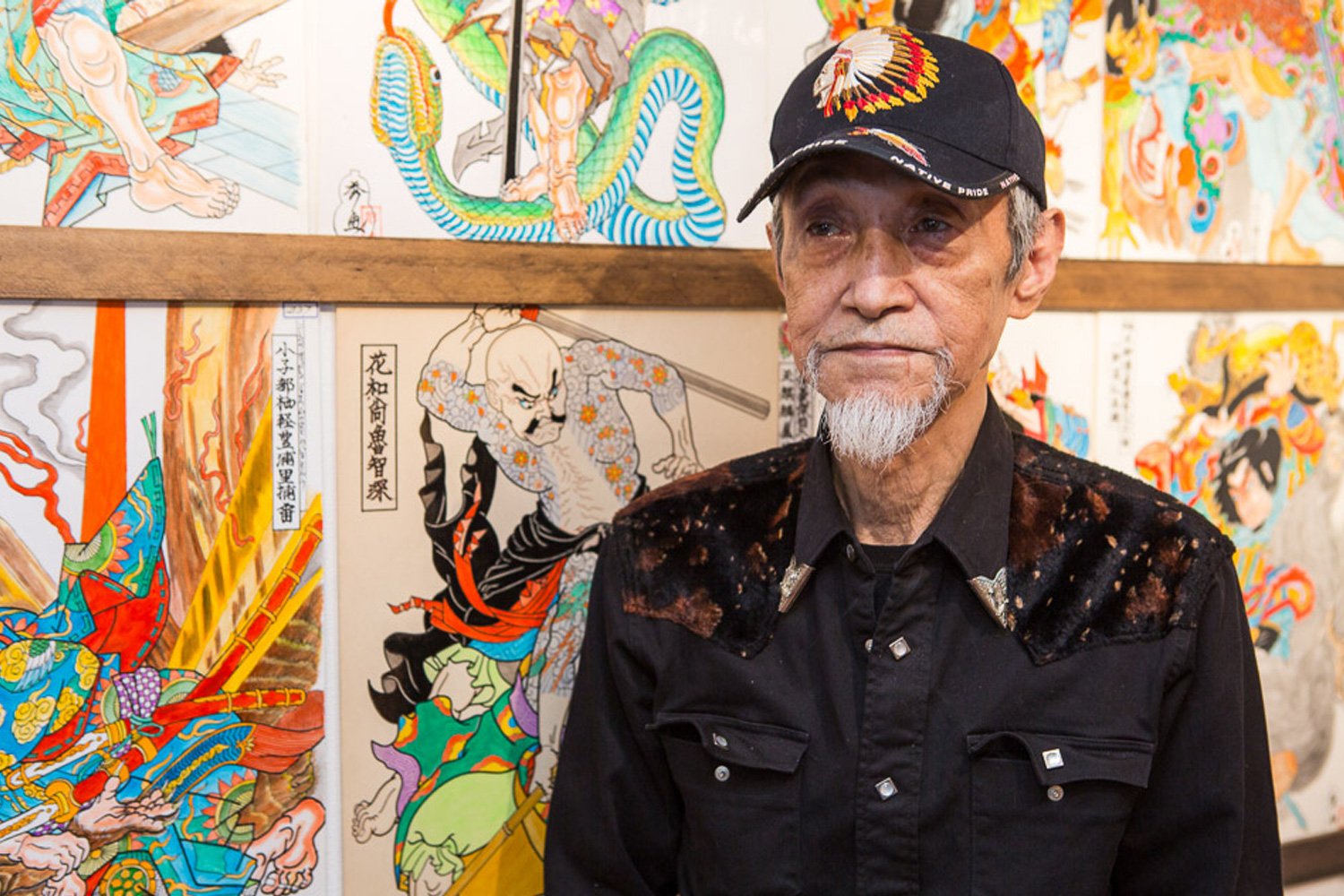
Gifu Horihide (Kazuo Oguri) was born in 1933 in Gifu, a city in central Japan on the Nagara River, roughly 260 kilometres west of Tokyo. He trained under Tokyo Horihide for five years, returned to Gifu, and adopted the professional name Gifu Horihide — Horihide of Gifu — following the Japanese tradition in which an apprentice takes a name derived from or identical to his master’s, distinguished by location.
This article is about Kazuo Oguri, the Gifu Horihide. He is the Horihide who corresponded with Sailor Jerry, travelled to the United States, taught Ed Hardy, and is credited with introducing traditional Japanese tattooing to the Western world. When English-language tattoo sources refer to “Horihide” as Hardy’s teacher and the bridge between Japanese and American tattooing, they are referring to Oguri.
The apprenticeship
Oguri’s path to tattooing began in adolescence. As a teenager, he fled Gifu for Tokyo after a street gang fight — the specifics are not documented in English-language sources, but the departure was abrupt, and the arrival in Tokyo left him without resources. When money ran out and hunger set in, he saw a sign offering room and board to a tattoo apprentice. He applied.
The apprenticeship under Tokyo Horihide lasted five years. It followed the traditional Japanese model — the same structure that governs apprenticeship in calligraphy, pottery, sword-making, and other Japanese craft traditions. The apprentice was expected to serve the master in every capacity: waking at five in the morning, cleaning the house, preparing materials, observing the master at work, and enduring physical discipline for mistakes. In 2012, Oguri told the Los Angeles Times:
“It was very strict. In the morning, you have to get up at 5 o’clock and clean the house. If you didn’t do it right, you could be beaten.”
He practised on his own skin. The scars of faded squares and circles on his thigh — the geometric forms an apprentice uses to develop depth control and line consistency before being allowed to work on clients — were still visible decades later.
After five years, Oguri returned to Gifu as a trained horishi (tattoo master) and established his own practice. He took the name Gifu Horihide — carrying his master’s name to his home city.
The practice
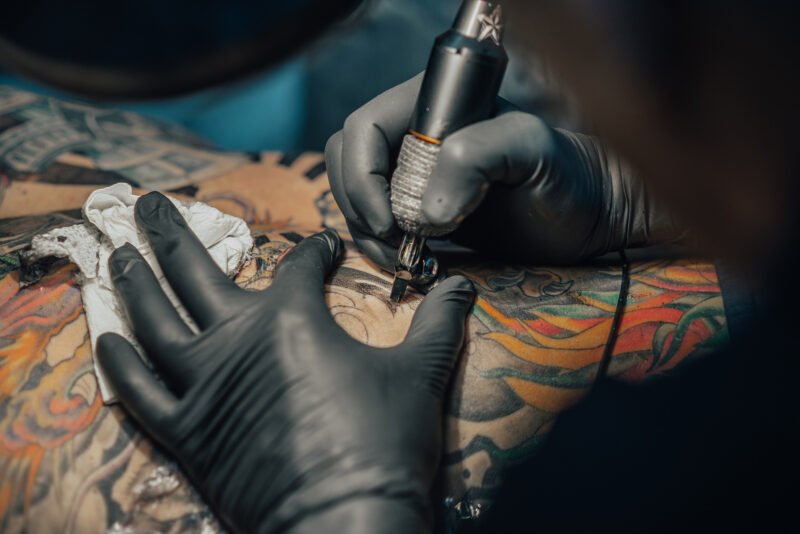
Oguri is a practitioner of tebori — the traditional Japanese hand-tattooing method in which a bundle of needles mounted at the end of a handle is pushed into the skin by hand, without a machine. Tebori produces a visual quality distinct from machine tattooing: softer gradients, more subtle colour transitions, and a particular luminosity in the skin that practitioners and clients describe as different from the machine-produced result. The method is also slower, quieter, and — according to many recipients — less painful than machine tattooing, because the needles enter the skin at a more controlled angle and depth.
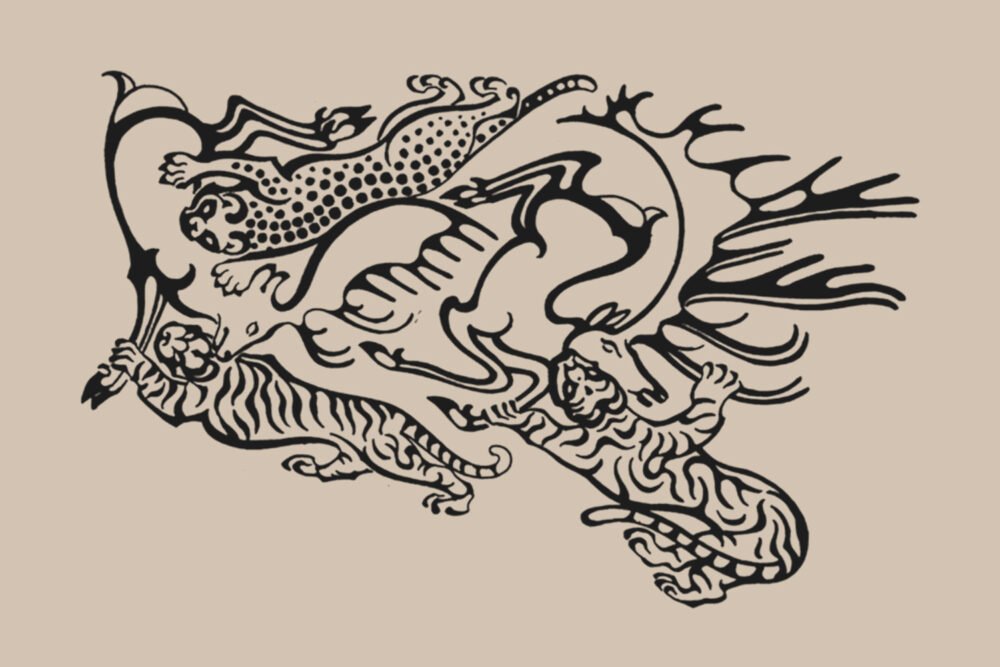
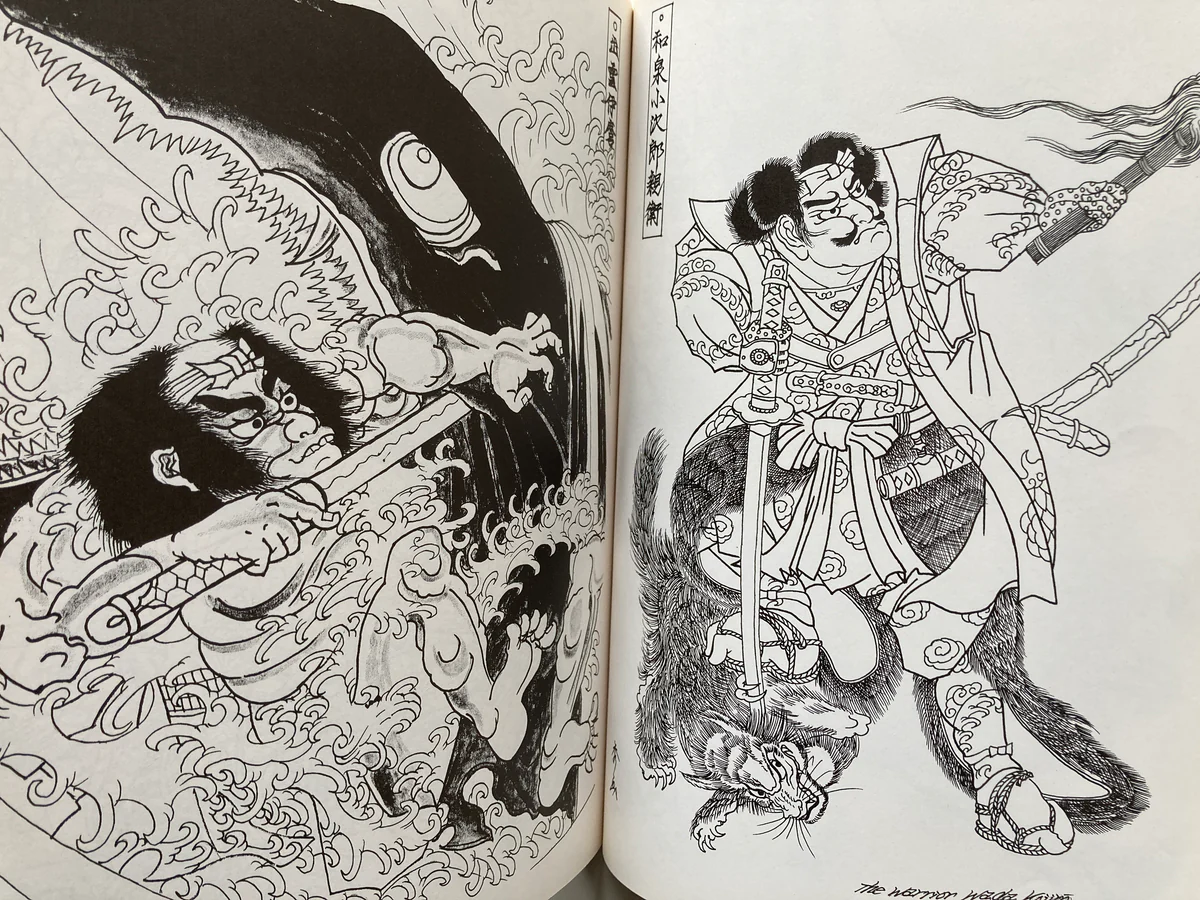
Oguri’s design vocabulary draws from the canonical sources of Japanese tattooing: the ukiyo-e woodblock print tradition, particularly the warrior prints of Utagawa Kuniyoshi and the dramatic compositions of Tsukioka Yoshitoshi. His favourite subjects include the heroes of the Suikoden (the Japanese name for the Chinese novel Water Margin) — the legendary 108 outlaws whose stories have been a primary subject of Japanese tattooing since Kuniyoshi’s celebrated print series in the 1820s. Dragons, tigers, koi, phoenixes, cherry blossoms, peonies, and the wind-and-water backgrounds that unify Japanese bodysuit compositions are all part of his repertoire.
His clients over the decades included yakuza members — the organised-crime figures who have historically been the primary patrons of full-body Japanese tattooing — as well as geisha, construction workers, and firefighters (the latter two groups belonging to fraternal organisations with long-standing tattooing traditions in Japan). In later years, his clientele broadened to include international collectors and tattoo enthusiasts who travelled to Gifu specifically to receive work from him.
The LA Times reported in 2012 that Oguri estimated only five or six masters remained in Japan who could perform traditional black-and-white tebori at the highest level. He had eight students at the time, though he noted that none could yet draw their own designs, and only a few were learning tebori. The difficulty of the apprenticeship — years of service, no salary, strict discipline — was deterring younger practitioners.
“Nowadays, young people can’t do that. Some people who want to be students ask me, ‘How much can you give me as a salary?’ So things have changed.”
He said, laughing and shaking his head.
The correspondence with Sailor Jerry
1970: The visit
In 1970, Oguri travelled to the United States — the first Japanese tattoo master to visit America after World War II. He met Sailor Jerry in Honolulu, toured the American tattoo world, and saw firsthand the practices and the culture that his correspondent had described in letters. The visit gave him a direct understanding of American tattooing that informed his subsequent work with Western students.
The visit also established Oguri as a figure known to the American tattoo community. Through Collins’s network — and Collins knew virtually everyone in American tattooing worth knowing — Oguri became accessible to the small number of American tattooers who were interested in Japanese methods. This accessibility was unusual. Japanese tattoo masters did not, as a rule, accept Western students or share their techniques with outsiders. Oguri’s willingness to teach — rooted in his curiosity about Western methods and in the relationships he had built through correspondence — made him the entry point for a generation of American artists.
1973: Ed Hardy
The retirement and the publications
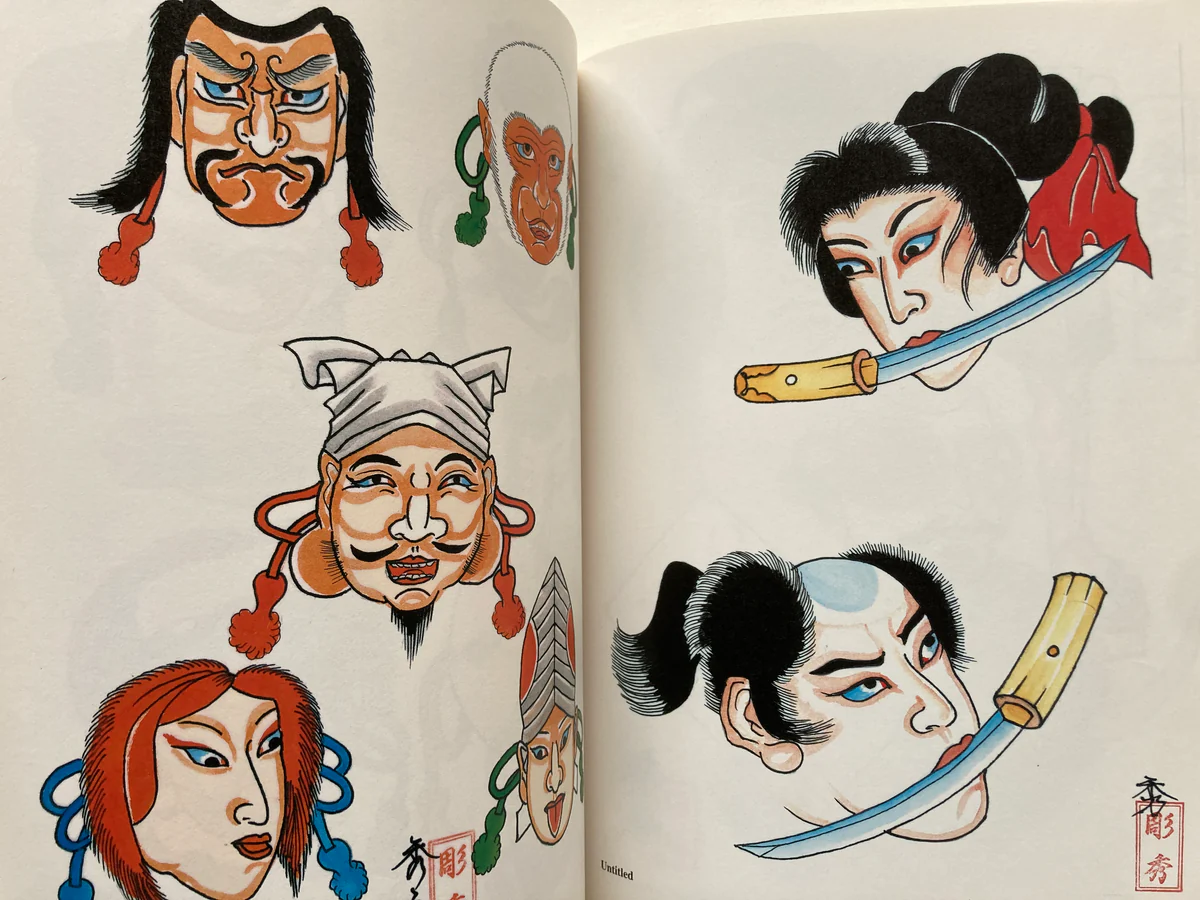
Gifu Horihide: Japanese Traditional Tattoo Designs by Kazuo Oguri, Vol. 1. Published with text by Crystal Morey and Mie Akitsu, in English and Japanese. A collection of Oguri’s recent illustrations — 158 pages of colour tattoo designs highlighting the Suikoden heroes, with an English-language index of the characters and their stories. The book is described as a reference for authentic Japanese tattoo design.
Horihide. Published by the University of Washington Press, this volume celebrates Oguri’s career through seventy-two designs from his body of work, accompanied by a lengthy interview conducted by the young Japanese tattoo artist Yushi “Horikichi” Takei. In the interview, Oguri discussed his youth, his difficult apprenticeship, his love for his master, and anecdotes from his working life. The book includes testimonials from Doc Forest, Bill Loika, and Henk “Hanky Panky” Schiffmacher — three prominent tattoo figures and long-standing admirers of Oguri’s work.
Artefacts from Oguri’s career — tools, drawings, and other materials — are held by the Swiss Tattoo Museum, whose founder has described Oguri as a friend and colleague.
Gifu Horihide's role in tattoo history
Sources & further reading
- Wikipedia, The Free Encyclopedia. Entry on Kakimoto Hideo (Tokyo Horihide).
- Clarissa Sebag-Montefiore, “Japan’s fading art of traditional hand tattoos.” Los Angeles Times, June 24, 2012.
- Kian Forreal (Horisumi), “Kian Horisumi Forreal and Gifu Horihide.” Published at horisumi.com, December 2016
- Tattoo in Japan, “Horihide — famous Japanese tattoo master’s exhibition.” Published February 2016.
- Kazuo Oguri, Crystal Morey & Mie Akitsu (Editor), GIFU HORIHIDE: Japanese Traditional Tattoo Designs by Kazuo Oguri Vol. 1, Gomineko Books, 2015.
- Yushi ‘Horikichi’ Takei, Horihide: Celebrating the Life & Work of Kazuo Oguri, LM Publishers, 2015.
- Swiss Tattoo Museum, “Kazuo Oguri aka Horihide — Gifu City, Japan.” Published April 2022.
- Facts and Details, “Tattoos in Japan: Tattoo Artists, Full Body Tattoos and the Yakuza.” 2012.
- Vice, “Tattoo Artist Don Ed Hardy on the Evolution of Tattoo Art in America.” Published July 2024.
- Anna Felicity Friedman, The World Atlas of Tattoo. Yale University Press, 2015.
- Matt Lodder, Painted People: Humanity in 21 Tattoos. Harper, 2024.