Tattoos on the Oldest Mummies
What do we know about the oldest tattoos and people getting them?
Ötzi the Iceman
Ötztal Alps, Austrian-Italian border. Died c. 3250 BC.
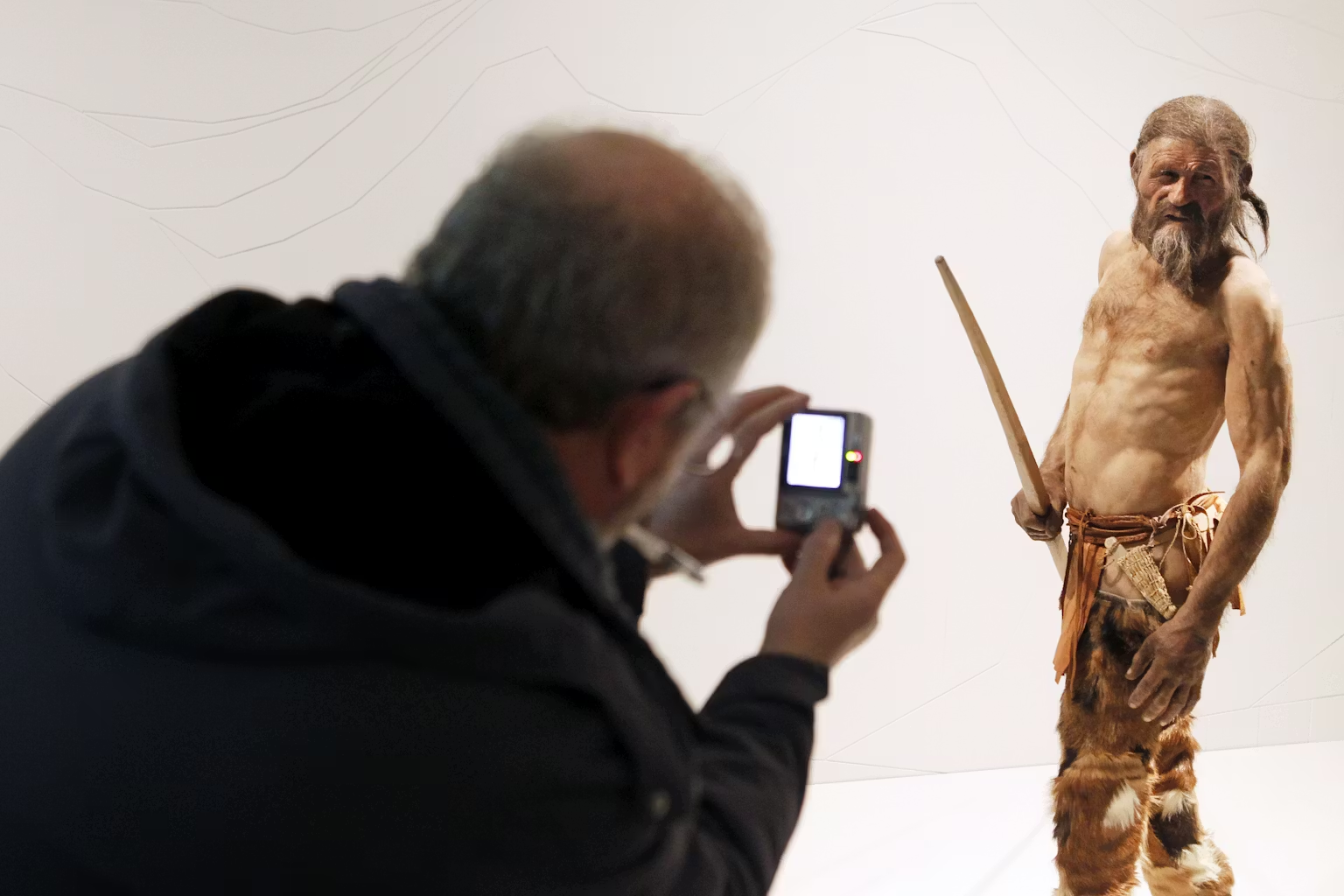
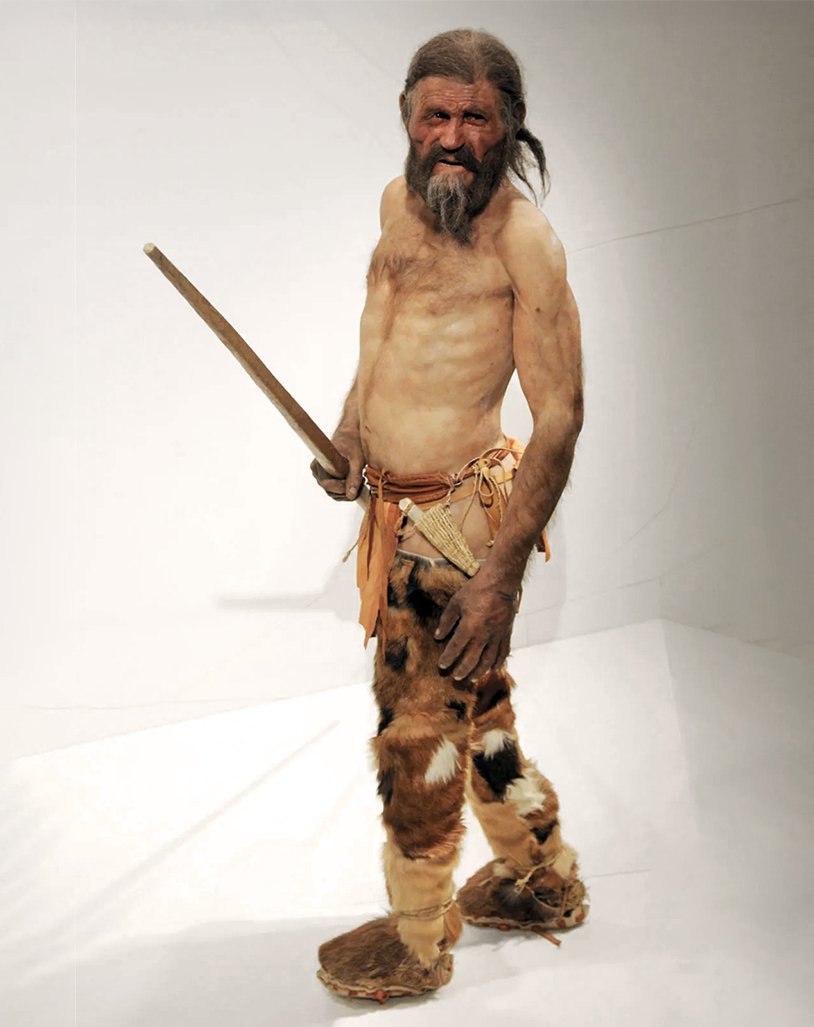
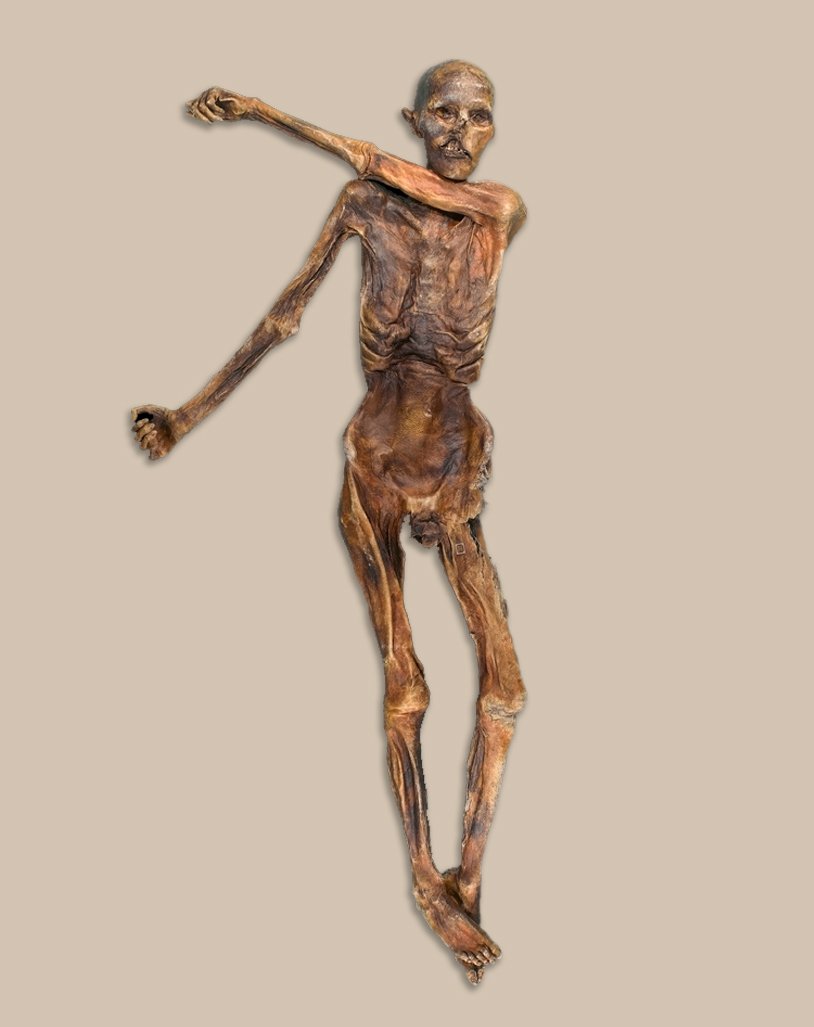
Ötzi was found at an altitude of 3,210 metres in the Ötztal Alps in September 1991, emerging from retreating glacial ice. He was approximately 45 years old at the time of his death. The cold had naturally mummified his body and was remarkably intact — skin, organs, bones, and the contents of his digestive system all survived. He carried a copper axe, a flint knife, a bow and arrows, and a pouch containing a medicinal mushroom called birch polypore. An arrowhead lodged in his left shoulder indicates that another person killed him.
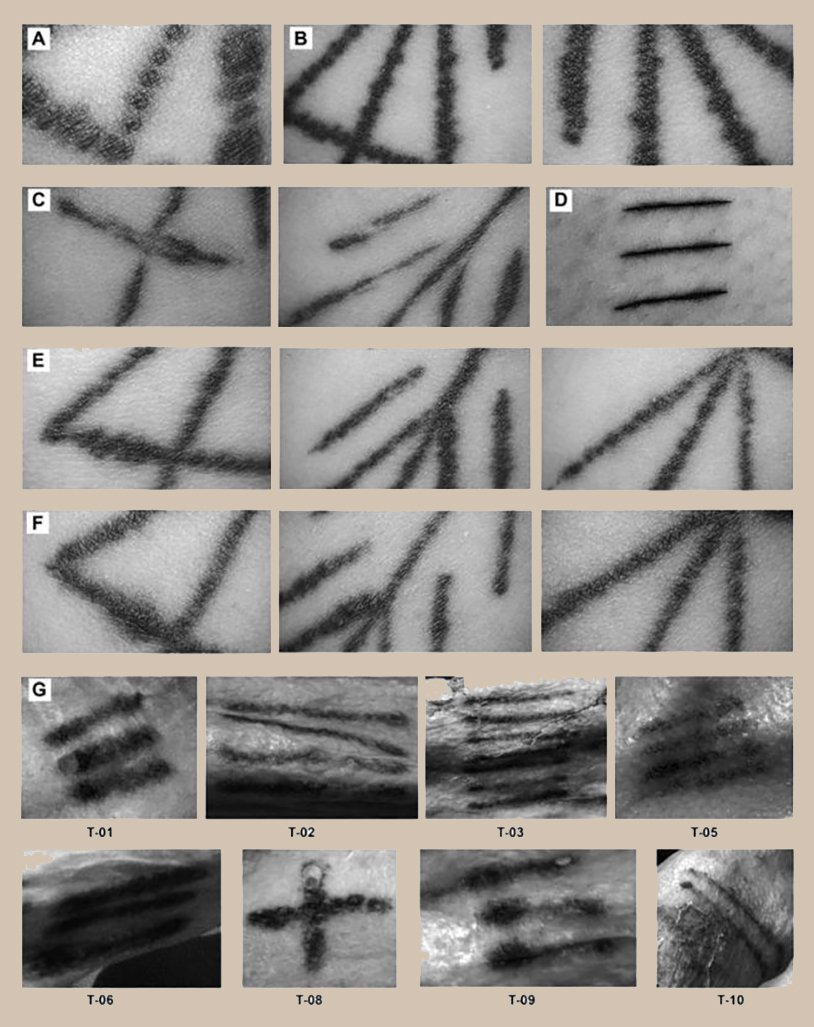
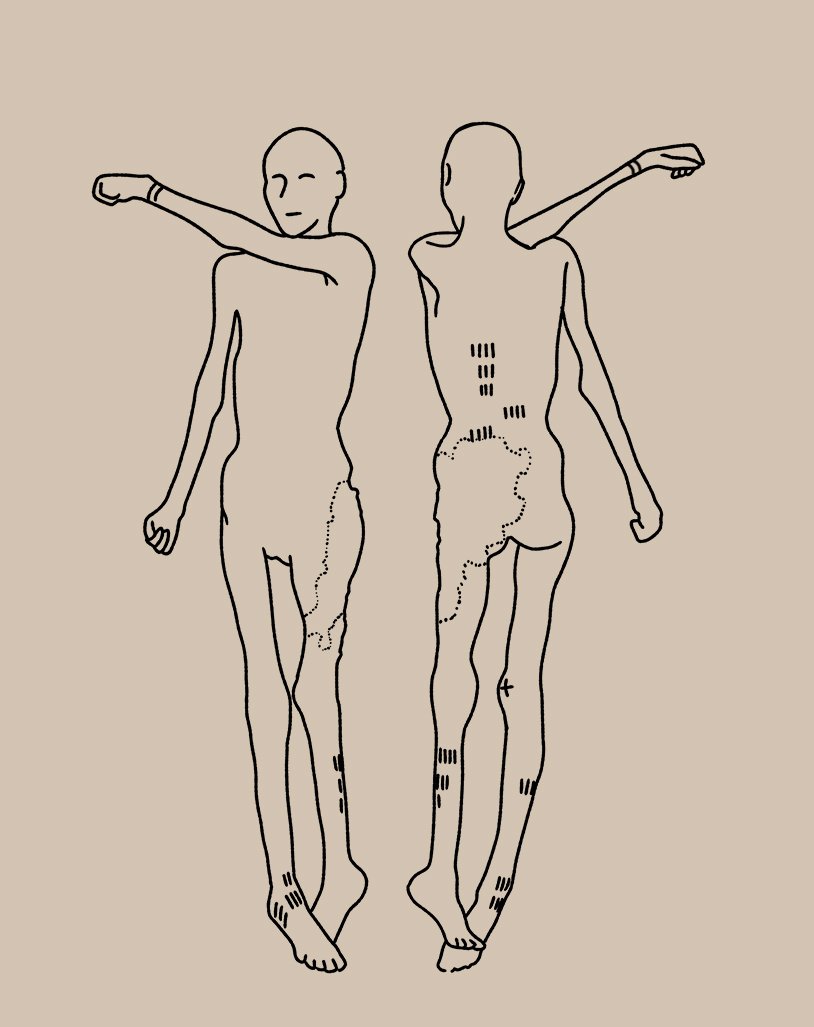
His 61 tattoos were fully mapped by researchers at the Institute for Mummies and the Iceman in Bolzano in 2015. They consist of nineteen groups of lines, ranging from one to seven per group, each between one and three millimetres thick and seven to forty millimetres long, arranged parallel to the long axis of his body. Two crosses mark his right knee and right ankle.
The dominant theory about Ötzi’s tattoos is therapeutic. Clinical examination of his body revealed osteoarthritis, musculoskeletal strain, Lyme disease, intestinal parasites, and a Helicobacter pylori infection. Approximately 80% of his tattoos overlap with classical acupuncture points used to treat rheumatism and joint pain. The tattoos on his chest — discovered only through multispectral imaging, invisible to the naked eye — sit near acupuncture meridians associated with gastrointestinal treatment. This does not prove that Ötzi’s community practised acupuncture in a formal sense. It suggests that they had identified specific locations on the body where marking or stimulating the skin could alleviate pain, and that this knowledge predates the earliest written descriptions of acupuncture in China by over two thousand years.
In 2024, a team of scientists and tattoo artists challenged the accepted method of application. The standard explanation — soot rubbed into cuts — was tested experimentally by creating tattoos using different techniques and comparing the healed results to Ötzi’s marks. The findings suggest the process may have been more complex than a simple incision-and-rub procedure. Research continues.
Ötzi is housed at the South Tyrol Museum of Archaeology in Bolzano, Italy.
The Gebelein Mummies
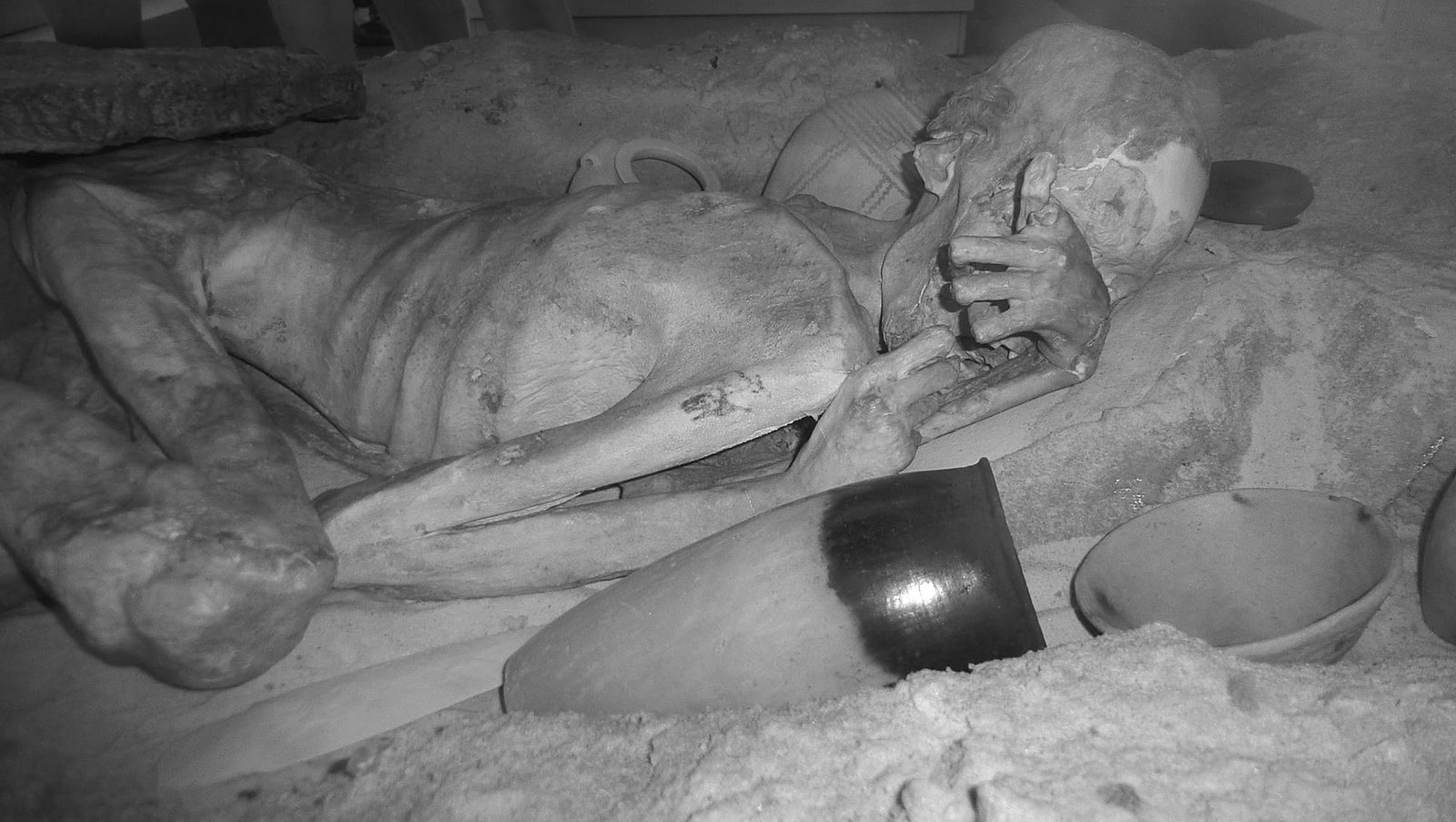
Six naturally mummified bodies were excavated from a shallow sand burial at Gebelein, south of modern Luxor, in 1900. They entered the British Museum’s collection shortly after and remained on display for more than a century. Their tattoos went unnoticed for 118 years.
In 2018, Daniel Antoine, the British Museum’s curator of physical anthropology, re-examined the mummies using infrared imaging as part of a broader conservation project. What had been dismissed as dark smudges on the skin turned out to be tattoos. Two of the six mummies bore them.
The male mummy, known as Gebelein Man A, has a wild bull (Bos primigenius) and a Barbary sheep (Ammotragus lervia) tattooed on his upper arm. These are figurative tattoos — depictions of recognisable animals — and they are the oldest figurative tattoos ever found on a human body. In Predynastic Egyptian art, the bull is associated with status, power, and virility.
The female mummy, Gebelein Woman, has a series of S-shaped motifs and what may be a staff or ceremonial object on her upper arm and shoulder. Her tattoos are the oldest ever found on a woman.
Both bodies date to roughly the same period as Ötzi, making them near-contemporaries. The difference is in the tattoos themselves. Ötzi’s are geometric and therapeutic. The Gebelein tattoos are pictorial, placed on visible parts of the body, and appear to carry social or symbolic meaning. Two cultures, separated by thousands of kilometres, using the same basic technology — pigment pushed under the skin — for entirely different purposes.
The Chinchorro Man
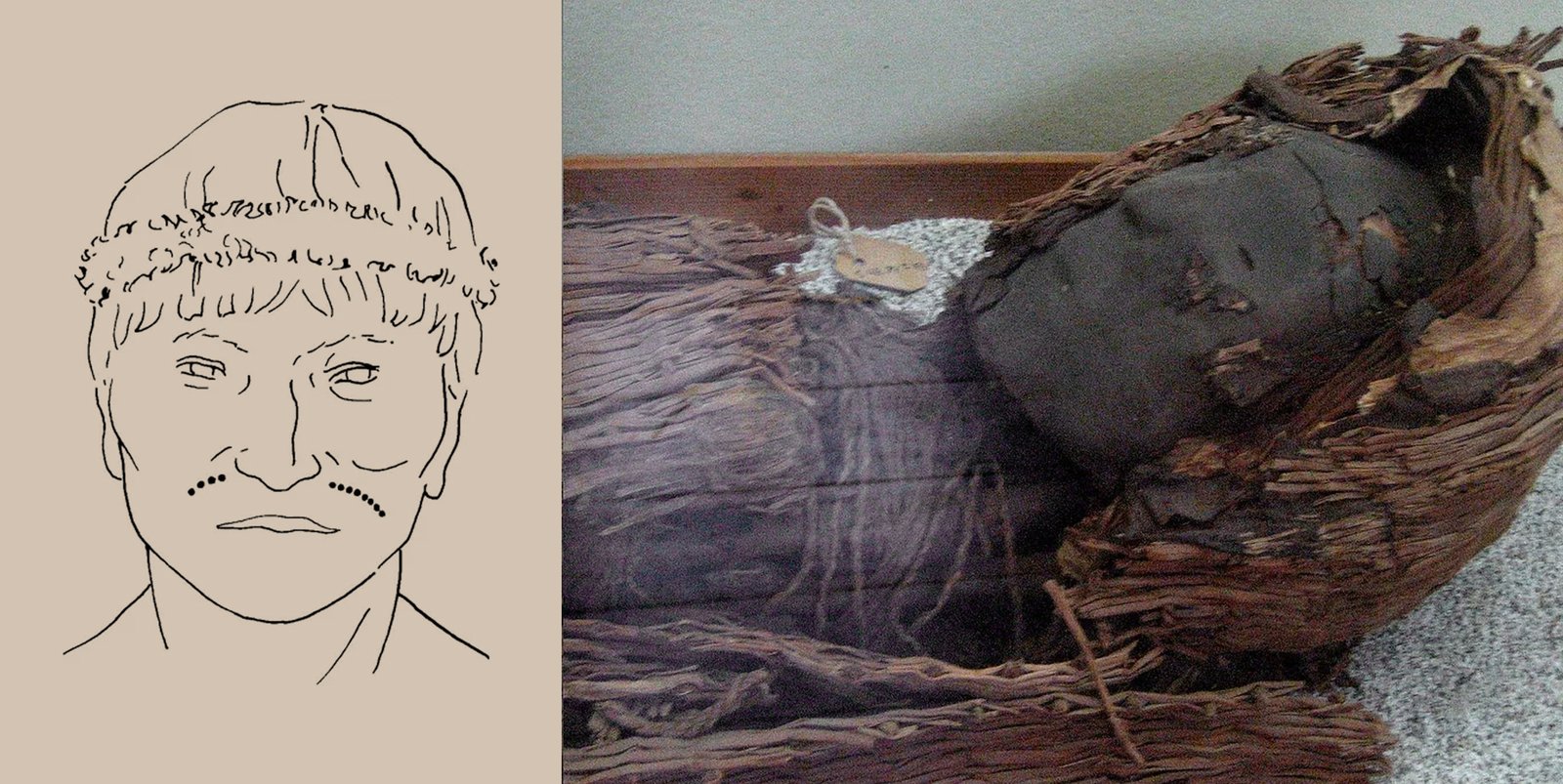
For years, a mummy from the Chinchorro culture of northern Chile was cited as the bearer of the world’s oldest tattoo — a thin line of black dots above his upper lip, resembling a pencil moustache. The Chinchorro are known for the oldest deliberate mummification practices in the world, predating Egyptian techniques by thousands of years, and the mummy’s original dating — approximately 4000 BC — placed it well before Ötzi.
In 2015, a paper published in the Journal of Archaeological Science: Reports by Lars Krutak and colleagues re-examined the radiocarbon data. The confusion had stemmed from a misidentification: the mummy’s catalogue number had been mixed up with that of an older specimen. The Chinchorro man’s actual date range is 2563 to 1972 BC — at least five hundred years younger than Ötzi.
The tattoo itself is distinctive. No other Chinchorro mummy bears similar markings. Researchers have speculated that the dots indicated social status or tribal affiliation, but the sample of one makes interpretation uncertain.
Ancient Egypt: From Amunet to Deir el-Medina
Egyptian tattooing was long misunderstood. The first tattooed Egyptian mummy identified was Amunet, a priestess of the goddess Hathor, discovered in 1891 by Eugène Grébaut at Deir el-Bahari. Amunet bore patterns of dots and dashes arranged in geometric lines across her abdomen. Male excavators in the early twentieth century dismissed these as marks of dancing girls or prostitutes — an interpretation driven by the assumption that respectable women in ancient Egypt would not have been tattooed.
This changed decisively with the Deir el-Medina discoveries. Between 2014 and 2016, during excavations by the Institut Français d’Archéologie Orientale, seven female mummies with tattoos were found at the ancient settlement of Deir el-Medina. This village housed the artisans who built the royal tombs in the Valley of the Kings. Bioarchaeologist Anne Austin, using infrared imaging, found that one of these women bore at least 30 tattoos — many invisible to the naked eye, concealed by skin darkening during mummification.
The designs are entirely religious.
- Dual cows wearing Hathor necklaces appear on her arms.
- Lotus blossoms — symbols of rebirth associated with Osiris — are tattooed on her hips.
- Baboons, representing Thoth, appear alongside snakes and hieroglyphs.
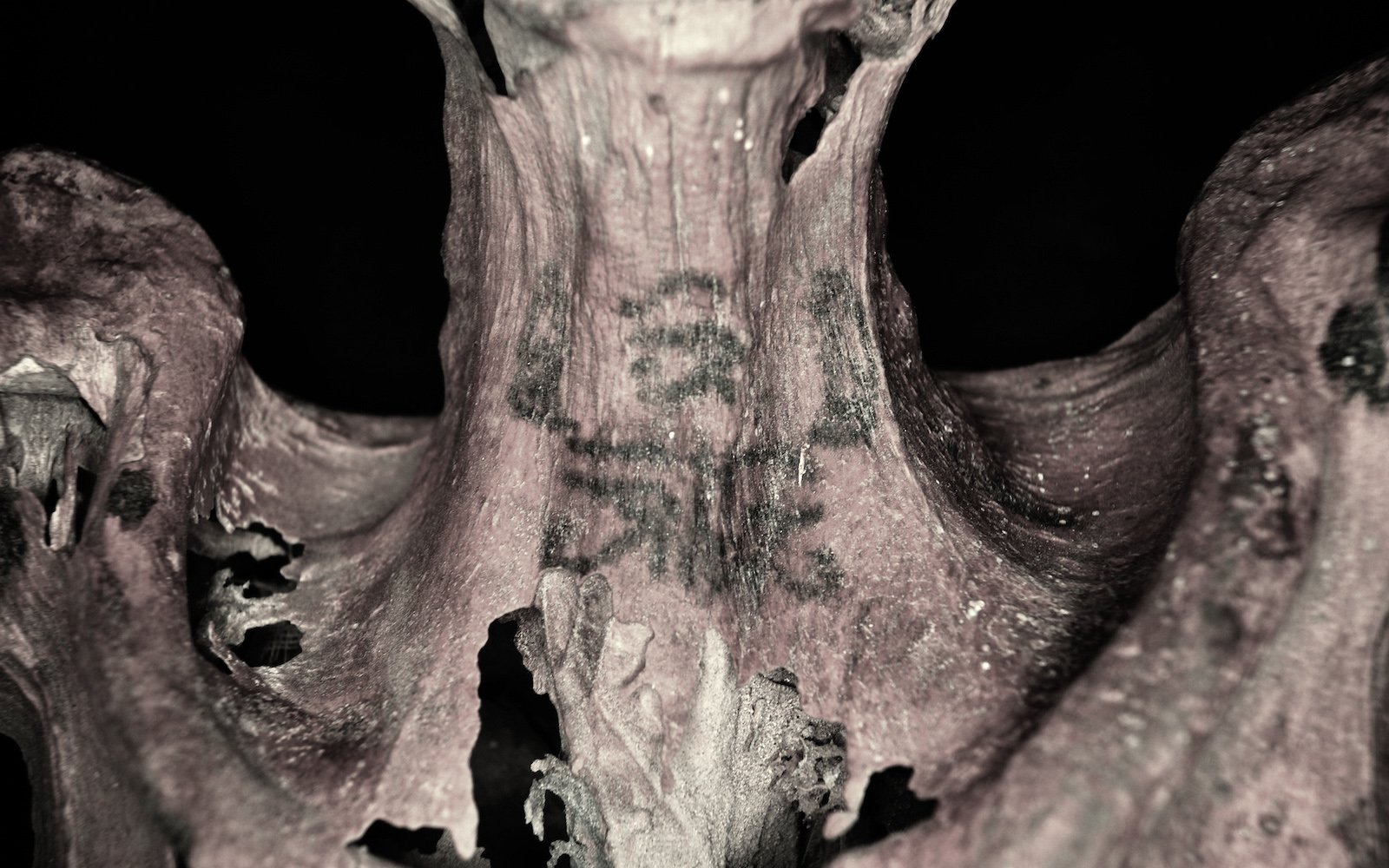
- The Eye of Horus (the Wadjet eye) was placed on her throat, both shoulders, and her back, so that from any angle a viewer would be met by a pair of divine eyes.
- Several tattoos incorporate the hieroglyph nefer, meaning “good” or “beautiful.”
Austin and her colleagues concluded that this woman likely served as a priestess, healer, or ritual performer in the service of Hathor. The tattoos functioned as permanent amulets — magical protections fixed to the body rather than worn as objects that could be lost or removed. The location of the tattoos on visible areas (throat, arms, shoulders) means they were intended to be seen. When this woman performed her ritual duties, her body itself declared her connection to the divine.
The Deir el-Medina findings more than doubled the total number of tattooed Egyptian mummies known to scholarship. They overturned the assumption that Egyptian tattooing was limited to simple geometric patterns and that it was a marginal or low-status practice. The women buried at Deir el-Medina were interred in an elite location, their bodies carefully preserved, their tattoos complex and thematically sophisticated.
The Pazyryk Mummies
Altai Mountains, Siberia. c. 5th–3rd century BC.
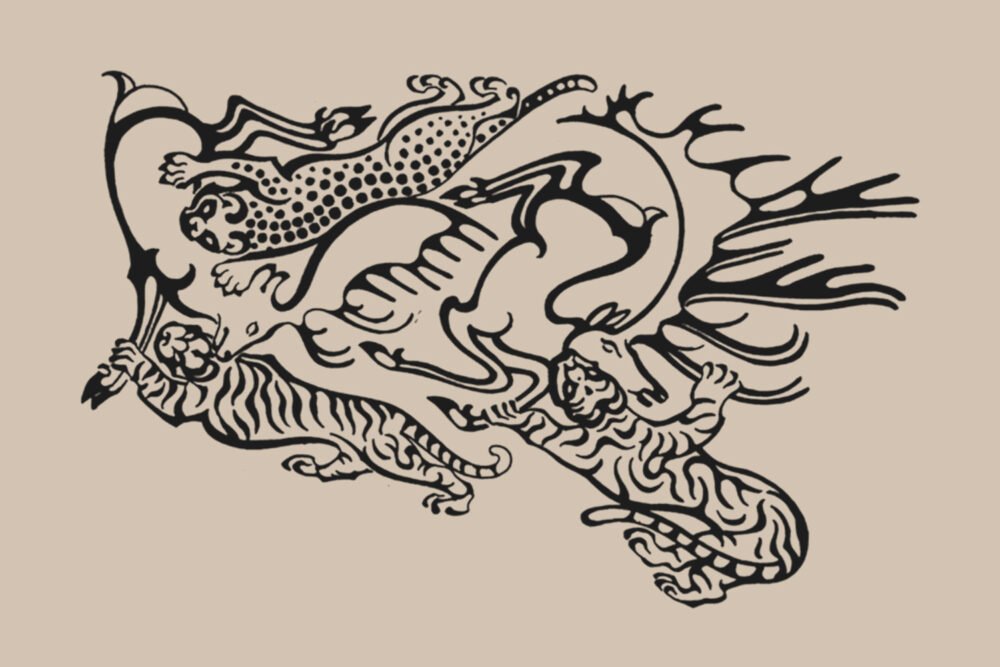
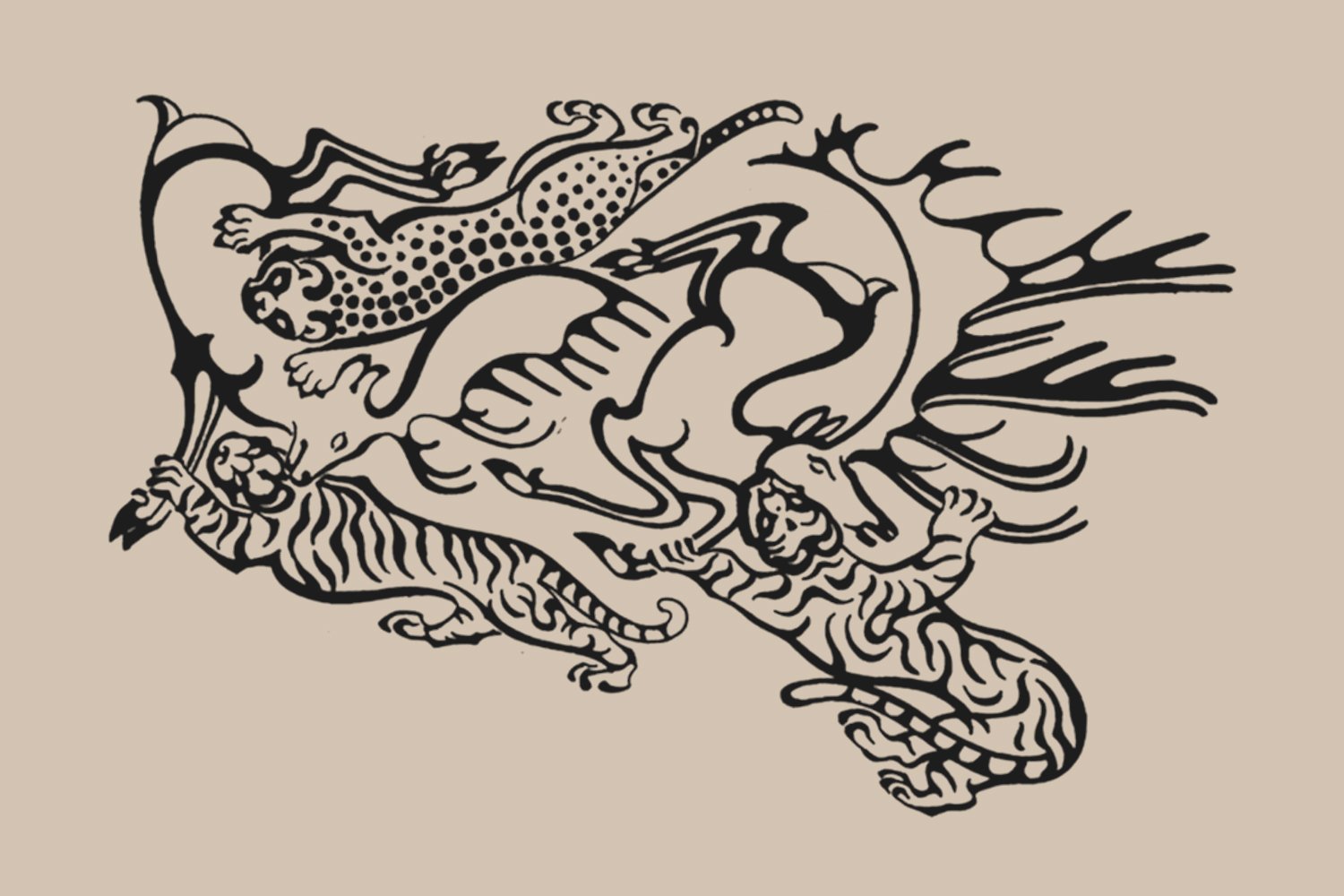
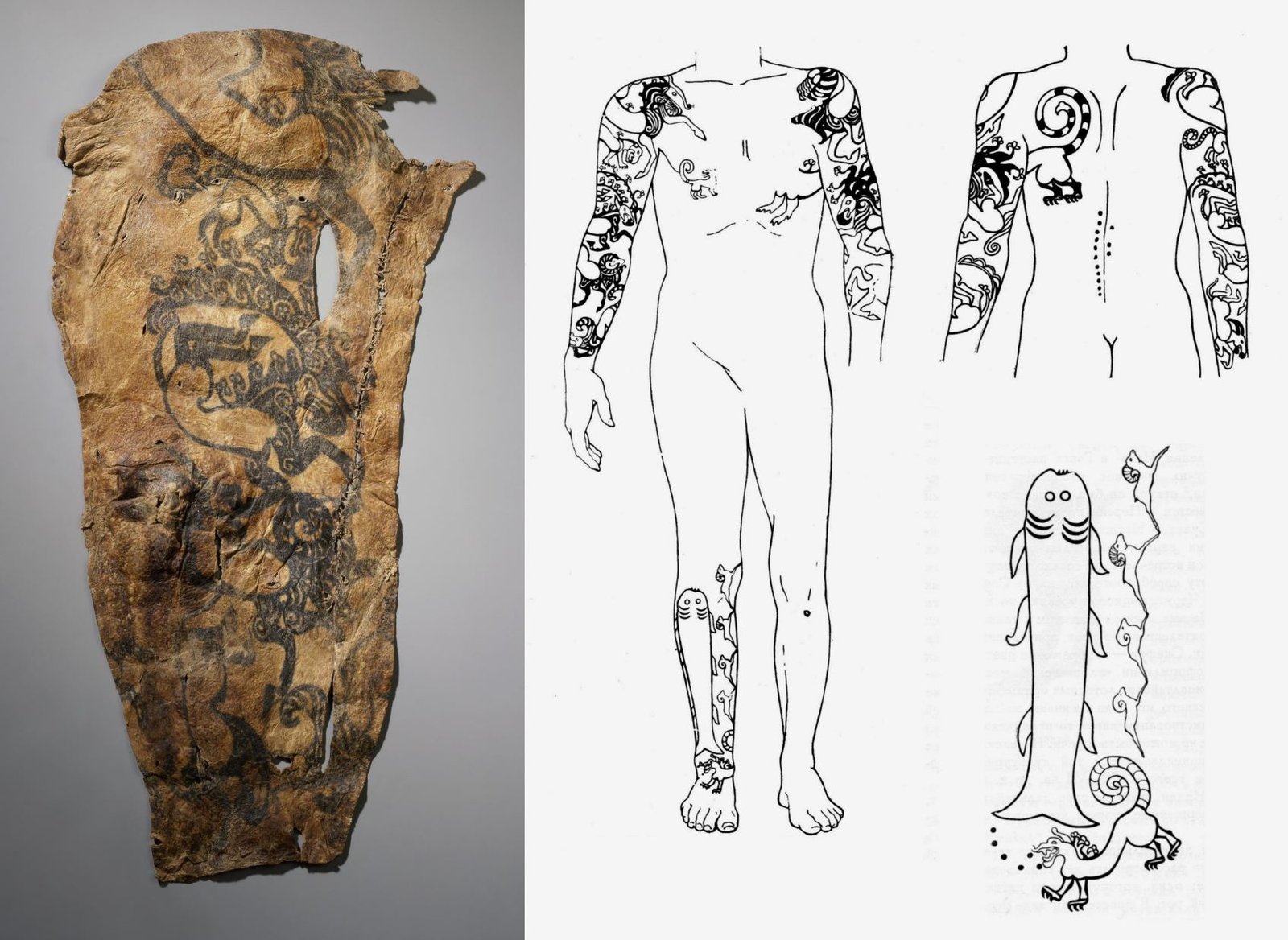
In 1949, Soviet archaeologist Sergei Rudenko excavated a frozen burial mound in the Altai Mountains of southern Siberia and found two mummies belonging to the Pazyryk people — a culture of horse-riding nomads related to the Scythians. One was identified as a chief. His body bore tattoos of fantastic animals — deer, mountain goats, birds, fish — rendered in an elaborate, curvilinear style. His arms, chest, back, and right leg were covered. Along his spine were small circular tattoos that, like Ötzi’s marks, appeared to have no ornamental function and may have been therapeutic.
The Pazyryk chief’s tattoos are among the most artistically complex found on any ancient body. The animals are stylised and interlocking, their bodies twisted into forms that combine naturalism with abstraction. They are the work of skilled artists operating within a developed visual tradition.
In 1993, archaeologist Natalya Polosmak and her team excavated a tomb on the Ukok Plateau that had lain frozen under permafrost for 2,400 years. Inside a larch-wood coffin, accompanied by six sacrificed horses, was the body of a woman in her mid-twenties. She stood 167 centimetres — tall for a woman of that era — and wore a ninety-centimetre felt headdress. Her skin was so well preserved that the tattoos on her shoulders, wrist, and thumb were clearly visible. The most prominent design depicts a creature with a gryphon’s beak, a deer’s body, and antlers tipped with flowers.
Dubbed the “Princess of Ukok” or the “Siberian Ice Maiden,” the woman’s tattoos have been interpreted as sacred. The Pazyryk are believed to have worshipped the animals they tattooed on their bodies — the tattoos were not portraits of real animals but images of spiritual beings. Polosmak noted that all the tattooed Pazyryk mummies appear to have been marked beginning on the left shoulder, suggesting a fixed ritual sequence.
In 2025, researchers led by Gino Caspari at the Max Planck Institute published results from high-resolution digital near-infrared photography of another Pazyryk woman — approximately fifty years old at death — whose tattoos had been invisible since excavation because her skin had darkened. The imaging revealed tigers, stags, a leopard, and a bird with a feathered tail on her forearm and hand. These were not visible when the mummy was first unearthed. The techniques that revealed the Gebelein tattoos in London are now being used to uncover Pazyryk tattoos in Siberia. The technology of seeing is catching up with the technology of marking.
What can and what cannot be known
These mummies — from the Alps, the Nile Valley, the Chilean coast, the Siberian steppe — were preserved by accident of environment: ice, sand, permafrost, desert air. They represent a tiny, arbitrary fraction of all the tattooed people who have ever lived. For every Ötzi frozen in a glacier, there are tens of thousands of tattooed individuals whose skin decomposed normally and whose marks vanished with them.
What the surviving evidence does show is that tattooing is not one practice. It is many practices, arrived at independently in multiple cultures, serving purposes that share almost nothing in common. Ötzi’s lines were probably medical. The Gebelein man’s bull was probably social. Amunet’s dots were probably protective. The Deir el-Medina woman’s Hathor imagery was probably cultic. The Pazyryk animals were probably sacred. The Chinchorro man’s dots are probably unknowable.
The only constant is the act itself: pushing pigment under the skin so that it stays. Humans have been doing this for at least five thousand years, and the archaeological record suggests — through tools, figurines, and indirect evidence — that the practice may extend far earlier. Lars Krutak of the Smithsonian, one of the researchers who settled the Ötzi-Chinchorro dating question, has noted that Ötzi’s tattoos are clearly part of an established tradition, not a first experiment. The oldest tattoo we have found is not the oldest tattoo that was ever made.
Sources & further reading
- Aaron Deter-Wolf et al. The World’s Oldest Tattoos. Journal of Archaeological Science: Reports, 2016.
- Marilyn Scallan. Ancient Ink: Iceman Ötzi Has World’s Oldest Tattoos. Smithsonian Institution (si.edu), 2015.
- Laura Clark. The 61 Tattoos of Ötzi, the 5,300-Year-Old Iceman. Smithsonian Magazine, 2015.
- Ötzi the Iceman. South Tyrol Museum of Archaeology.
- W.F. Kean et al. The musculoskeletal abnormalities of the Similaun Iceman (“ÖTZI”): clues to chronic pain and possible treatments. Inflammopharmacology: Experimental and Therapeutic Studies, 2013.
- Michelle Starr. Artist Tattooed Himself to Solve Mystery of Ötzi the Iceman’s Tattoos. ScienceAlert, 2024.
- Claire Voon. World’s Oldest Figural Tattoos Found on Two Ancient Egyptian Mummies. Hyperallergic, 2018.
- Nell Lewis. Oldest ‘tattoo art’ discovered on ancient Egyptian mummies. CNN, 2018.
- Laura Geggel. Oldest Tattooed Woman Is an Egyptian Mummy. Live Science, 2018.
- Anne Austin et Cédric Gobeil. Embodying the Divine: A Tattooed Female Mummy from Deir el-Medina. BIFAO, 2017.
- Anne Austin. Tattooing in Ancient Egypt. American Research Center in Egypt, 2023.
- Isaac Schulz. Modern Tech Is Revealing Ancient Egyptian Tattooing. Atlas Obscura, 2019.
- Margherita Bassi. Gorgeous, Hidden Animal Tattoos Discovered on a More Than 2,000-Year-Old Ice Mummy. Smithsonian Magazine, 2025.
- Erin Blakemore. The Ancient History of Tattoos — Revealed by Inked-Up Mummies. National Geographic, 2025.
- M. R. Reese. The Stunning Ancient Tattoos of the Pazyryk Nomads. Ancient Origins, 2014.
- PAZYRYK: Their Queen, Burial Sites and Tattoos. Facts and Details, 2020.