Tattoos in the American Civil War
The problem of identification
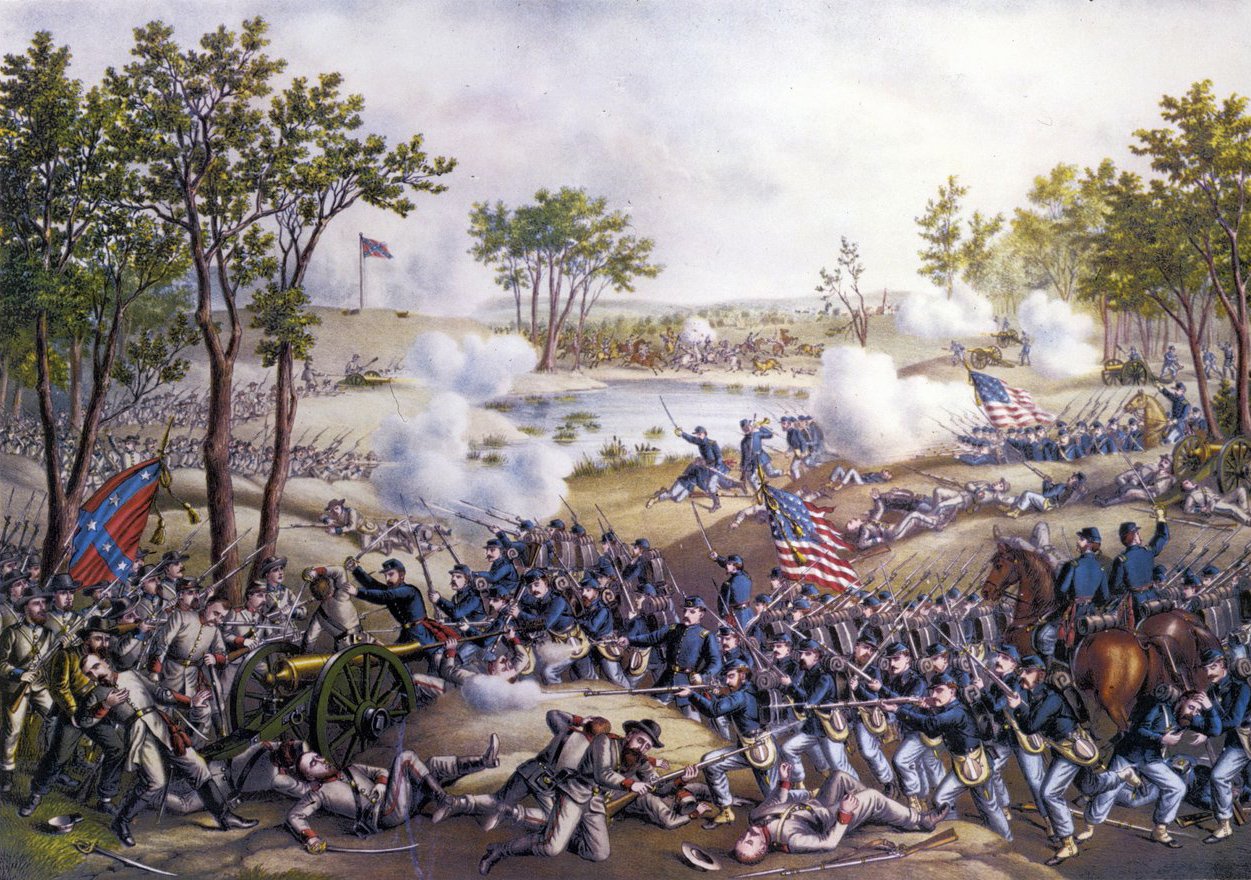
Between 1861 and 1865, approximately 750,000 American soldiers died in the Civil War. Of the more than 325,000 Union dead buried in national cemeteries, almost 149,000 — close to half — were marked “Unknown.” The Confederate figure is thought to be higher. By some estimates, 42 per cent of all Civil War dead were never identified.
Neither army issued any form of identification to its recruits. There were no dog tags; the federal government would not mandate identification discs until 1906. A soldier who fell in battle carried nothing official that connected his body to his name. If his unit was overrun, if the fighting moved on before burial details arrived, if his face was unrecognisable, his family might never learn what happened to him. They would write letters that went unanswered. They would petition the War Department. They would wait.
In May 1862, a New York resident named John Kennedy wrote to Secretary of War Edwin Stanton proposing that every Union soldier be issued an identification tag. Kennedy offered to manufacture them. The proposal was rejected. Two years later, before the Battle of Mine Run in Virginia, soldiers under General Meade took the matter into their own hands: they wrote their names and unit designations on scraps of paper and pinned them to their clothing. The paper was fragile, and the pins came loose. But the men facing combat wanted to be identified afterwards. Some of them found a way that proved much better than paper, a permanent method.
They got tattooed.
Martin Hildebrandt
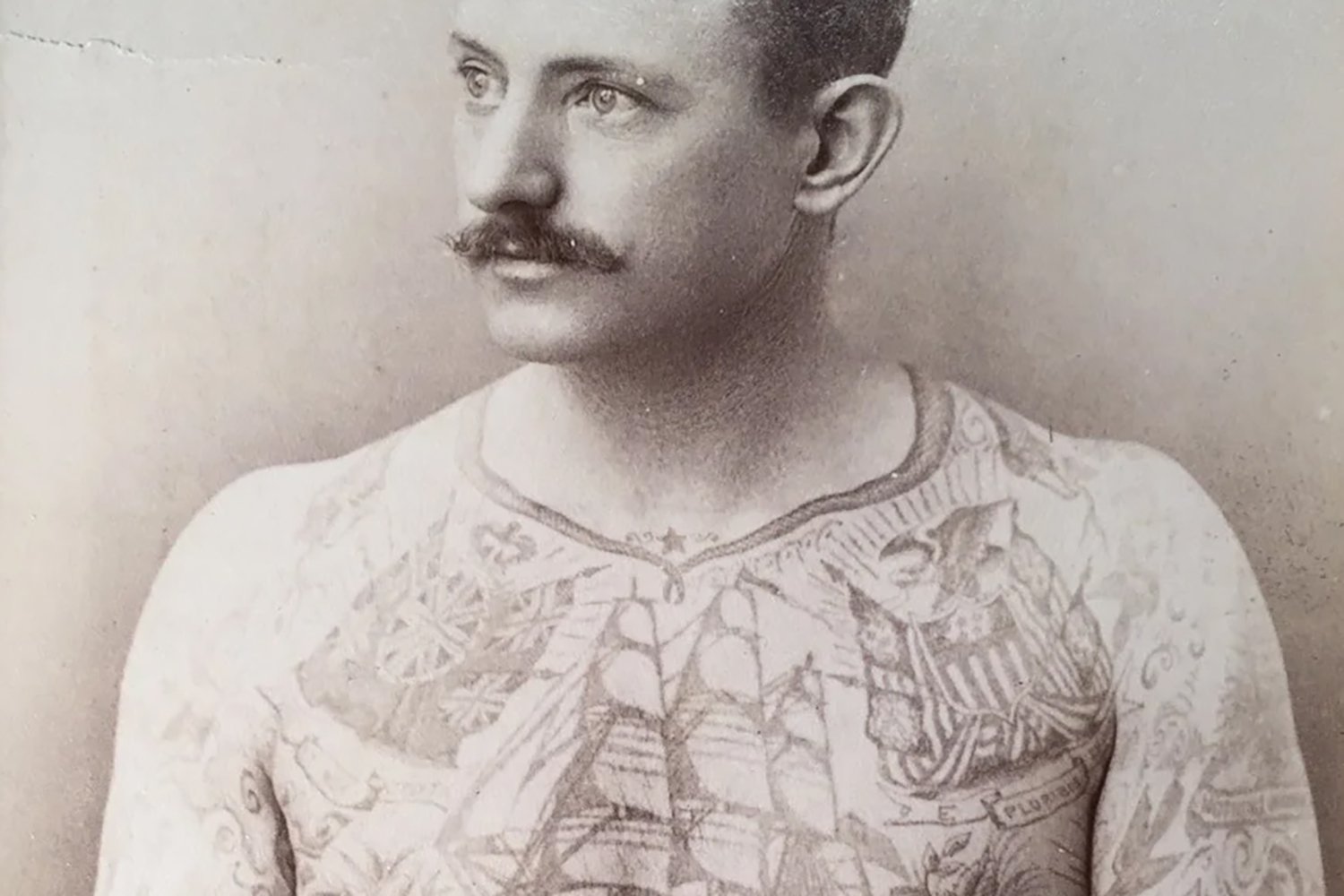
The most prominent tattoo artist of the Civil War era was a German immigrant named Martin Hildebrandt. Born around 1825, Hildebrandt arrived in the United States and enlisted in the Navy, serving aboard the USS United States from 1846 to 1849, where he learned to tattoo from another sailor. In the 1850s, he travelled to Japan as part of Commodore Perry’s expedition — an exposure to a tattooing culture far more developed than anything practised in the West at the time.
By 1859, Hildebrandt was tattooing professionally in New York City. Michelle Myles, co-owner of Daredevil Tattoo on the Lower East Side, has conducted the most extensive archival research on Hildebrandt’s life and has found records listing him as active in New York from that year onward. When the war began, Hildebrandt served with the Army of the Potomac and travelled from camp to camp offering tattoos to soldiers.
His own account of this period, given to a New York Times reporter who visited his Oak Street shop in 1876, is the clearest surviving firsthand testimony from a Civil War tattoo artist:
“During the war times, I never had a moment’s idle time. I must have marked thousands of sailors and soldiers. I put the names of hundreds of soldiers on their arms or breasts, and many were recognised by these marks after being killed or wounded.”
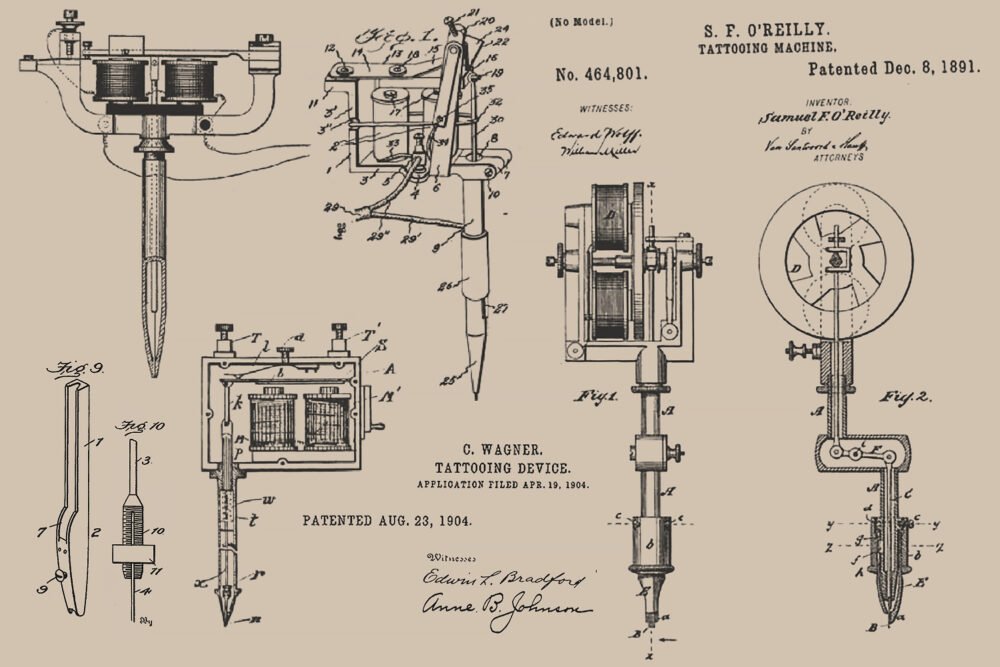
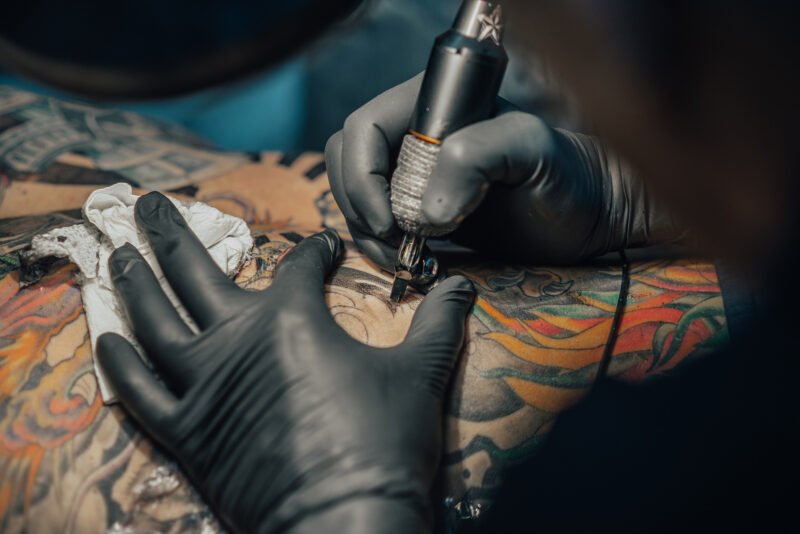
Hildebrandt described his method: six No. 12 needles bound together in a slanting form at the end of a stick, dipped into India ink. The puncture was made at an angle so that the needles pricked only the skin’s surface. A small design took fifteen minutes; a large one, up to an hour and a half. His Oak Street shop, which the reporter described as “a tavern with a well-sanded floor,” displayed a book of drawings that clients selected from to choose their designs.
A persistent story holds that Hildebrandt crossed battle lines during the war, tattooing Confederate as well as Union soldiers, and that he charged Confederates less because they were paid less. Myles, who has tracked down every available scrap of evidence about Hildebrandt’s life, has never found a primary source for this claim. It endures in most retellings of his biography, but there is no documentation to support it.
Hildebrandt died on January 16, 1890, at the New York City Asylum for the Insane on Wards Island. He was sixty-five.
Every Regiment Had Its Tattooers
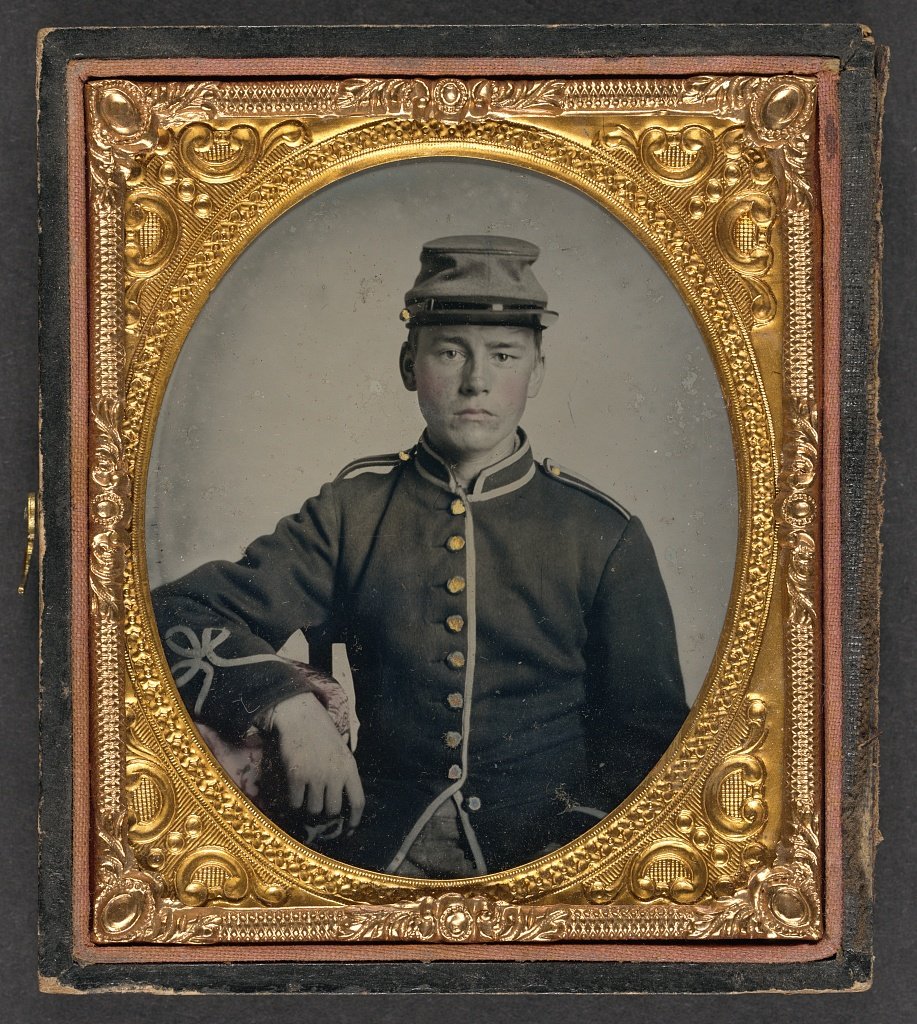
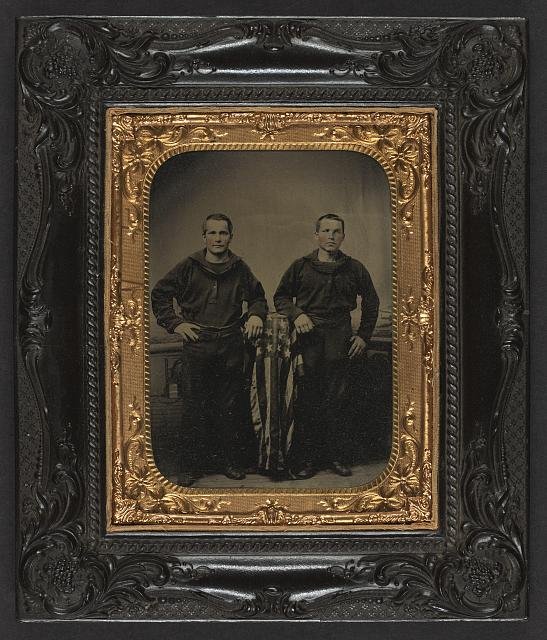
Hildebrandt was the only Civil War tattoo artist to speak publicly about his work. But the evidence from multiple independent sources — military records, veteran memoirs, regimental histories, fiction based on firsthand experience — all point to the same conclusion: tattooing was widespread across both armies, and it was not the province of a single travelling artist.
The fullest description comes from Wilbur F. Hinman, a lieutenant colonel in the 65th Ohio Volunteer Infantry, who published a novel in 1887 called Corporal Si Klegg and His “Pard.” Hinman described the book as an attempt to present “a truthful account of soldiering,” drawing on his own experience to build a fictional narrative. On page 303, he wrote:
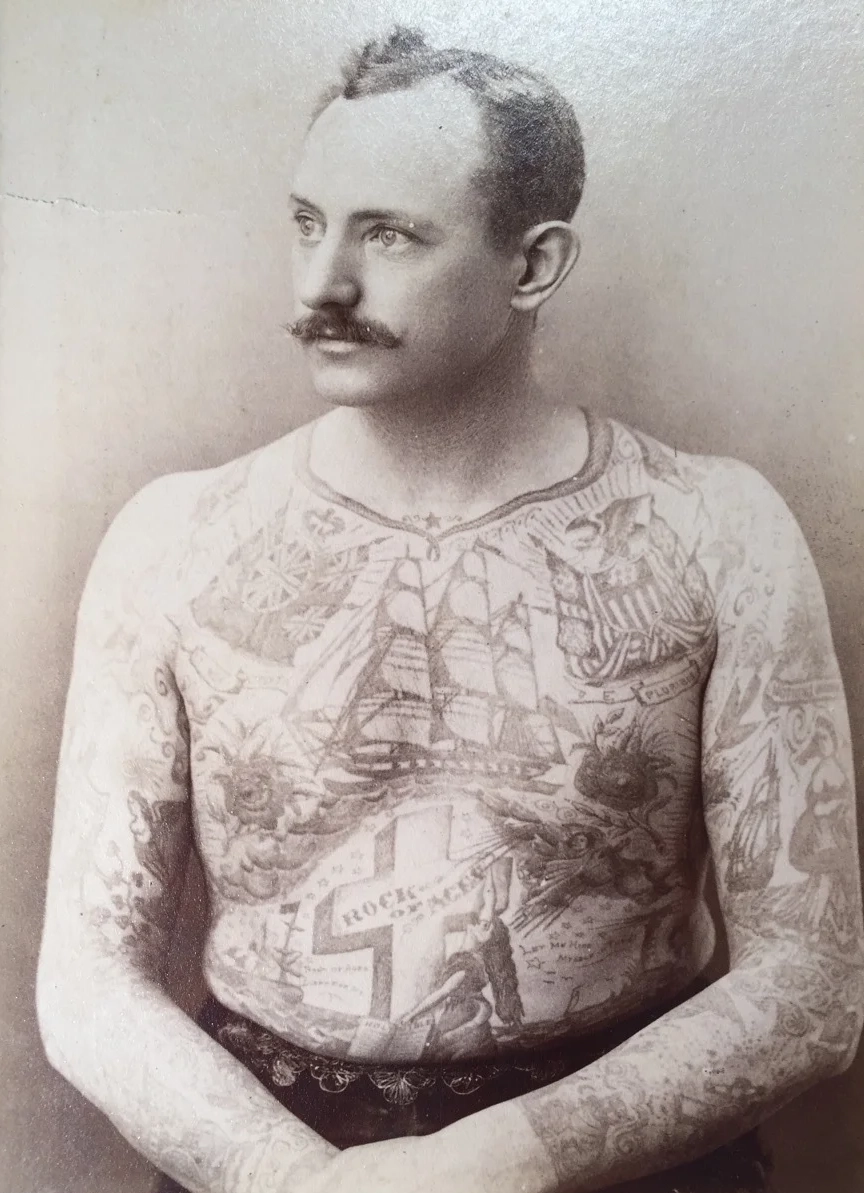
“As a matter of fact, the army did get pretty thoroughly tattooed during the war. Every regiment had its tattooers, with outfits of needles and India-ink, who for a consideration decorated the limbs and bodies of their comrades with flags, muskets, cannons, sabres, and an infinite variety of patriotic emblems and warlike and grotesque devices. Thousands of soldiers had names, regiments, and residence pricked into their arms or legs. In portions of the army, this was recommended in general orders to afford means of identification if killed in battle.”
That last sentence is significant. Hinman is claiming that tattooing for identification was not merely a private initiative — it was officially encouraged in at least some parts of the Union Army. No specific general order mandating tattooing has been located in the Official Records, but Hinman was a serving officer writing for an audience of fellow veterans within two decades of the war’s end. If the claim were fabricated, his readers would have known.
A different perspective comes from Major John M. Gould of the First Maine Regiment, whose regimental history describes tattooing as a camp craze:
“Another mania was that of having India ink and vermillion pricked into the arm and breasts. At one time, it looked as if half the regiment would be tattooed before our three months were out. And it is surprising how the goddesses and Venuses, and all kinds of half-covered women predominated over the other designs in this nonsense.”
Gould’s tone is dismissive — he calls it “nonsense” — but his observation confirms that tattooing was not restricted to hardened sailors or career soldiers. These were three-month volunteers, many of them from rural Maine, who took up tattooing as spontaneously as they might take up whittling or card games.
The Evidence in the Records
The strongest quantitative evidence for the prevalence of Civil War tattooing comes from Navy enlistment records. When a man signed up at a naval rendezvous station, his physical appearance was documented in detail — height, hair colour, eye colour, complexion — along with any identifying marks on his body, including tattoos.
Historian Damian Shiels, working from the records of the New York Naval Rendezvous for July 1863, compiled a database of 319 Irishmen who enlisted that month. Over thirty of them — roughly ten per cent — had tattoos recorded at the time of enlistment. The designs documented included crosses, anchors, hearts, women’s figures, initials, names, and — distinctively — New York fire company numbers. Sixteen-year-old William Carter had the number “12” on his arm, likely representing the fire engine known as “Knickerbocker.” Patrick Holden had “13” for Engine 13, the “Eagle.” William Wogan had “17” accompanied by the name “East River,” the engine based on Goerck Street.
These were not sailors’ tattoos. Many of the tattooed enlistees had no previous maritime experience. They were labourers, machinists, firemen — working-class men from the Five Points and other New York neighbourhoods for whom tattooing was already part of urban life before they entered military service. The Navy’s recording of their marks was not about commemoration. It was administrative — a way to identify deserters, track bounty jumpers (men who claimed their enlistment bounties and then deserted to re-enlist under a different name), and, in the event of death, return remains to families.
Brendan Hamilton’s research into the Clinton Prison military prisoner records from 1864–1865 provides another window. The prison in Dannemora, New York, held several hundred military prisoners — deserters, offenders from the Army and Navy, and civilians convicted of crimes against the military. Hamilton found 103 tattooed men in the admission ledgers. Their designs included corps badges (a shield for the 9th Corps, a heart for the 24th), trade symbols (a butcher with a bull’s head), national emblems, women’s figures, anchors, and initials. Private Hugh Gribben of the 68th Pennsylvania Infantry, a native of County Antrim, had a tattoo of a hand — possibly the Red Hand of Ulster.
The Army, unlike the Navy, did not systematically record tattoos on enlistment. This means the Army’s evidence is anecdotal, whereas the Navy’s is statistical. But the anecdotal evidence is consistent: wherever someone looked — regimental histories, prisoner records, camp accounts — they found tattooed soldiers.
Andersonville
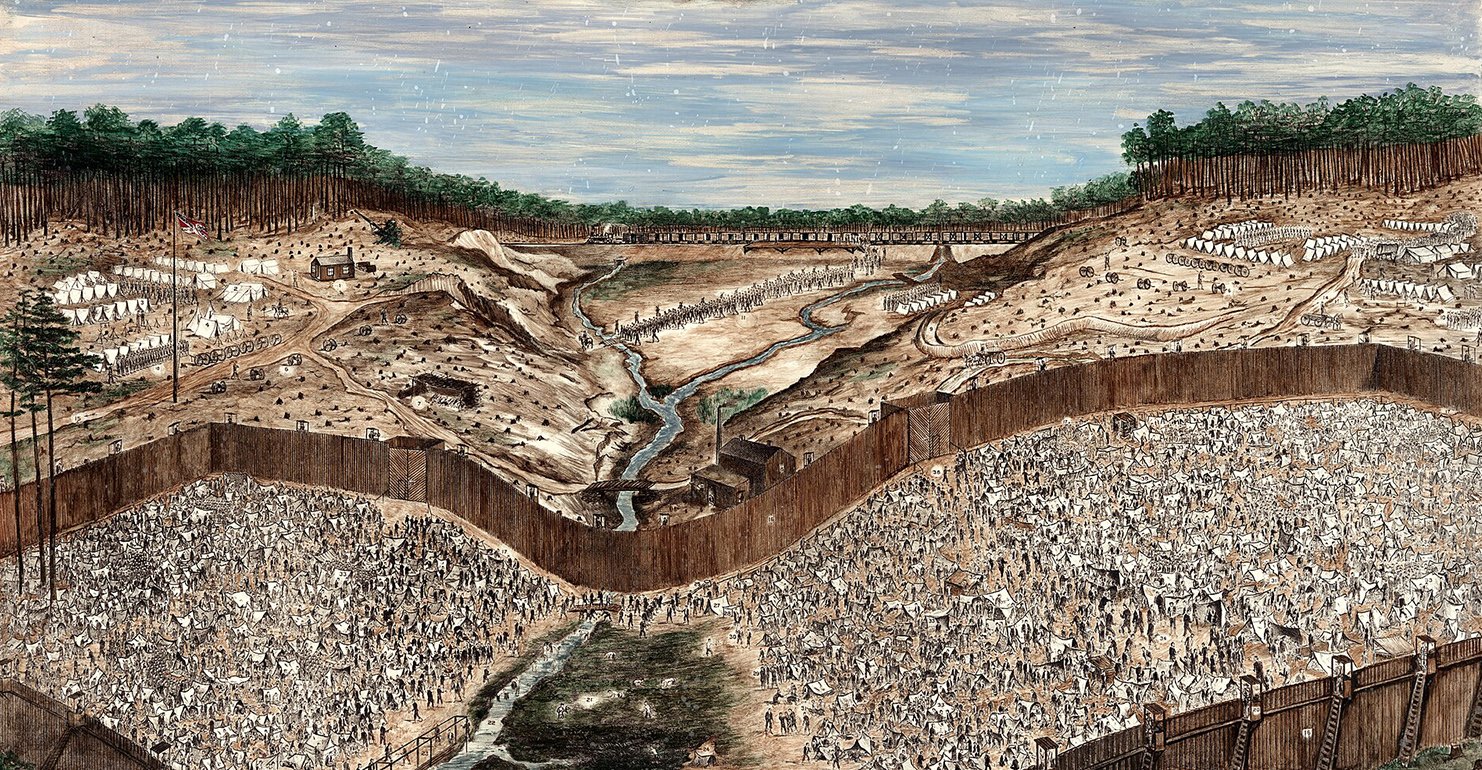
The most vivid account of wartime tattooing comes from inside a prison camp. Robert Knox Sneden was a mapmaker, illustrator, and Union soldier captured on a foggy night near Brandy Station, Virginia, by Confederate rangers under John Mosby. After a period in a tobacco warehouse beside Libby Prison in Richmond, where he contracted typhoid fever, Sneden was transferred in February 1864 to the new Confederate prison at Andersonville, Georgia.
Andersonville was designed for ten thousand men. At its peak, it held over thirty-two thousand. The death rate at times reached a hundred men per day. Sneden, though crippled by his imprisonment, survived and left behind close to five thousand pages of diary entries and nearly five hundred watercolours documenting what he witnessed.
Among Sneden’s observations: a sailor known as “Old Jack” tattooed prisoners at Andersonville using six to eight fine needles. The going rate was one to five dollars — equivalent, in 1864 purchasing power, to roughly thirty to a hundred and fifty dollars today. Even in a place defined by starvation, disease, and despair, men paid to be tattooed. Some wanted identification marks. Some wanted something to carry home on their skin, if they made it home. The impulse to mark the body persisted even under conditions in which the body itself was barely being sustained.
What they got tattooed and why
The designs chosen by Civil War soldiers fall into recognisable categories, reconstructed from Navy enlistment records, prison admission ledgers, regimental histories, and period newspaper accounts.
Identification marks were the most pragmatic: a man’s name, initials, regiment, and home state, usually on the forearm or chest. Hinman describes this as widespread and sometimes officially encouraged. The logic was simple — cloth rots, paper dissolves, but ink under the skin lasts as long as the skin lasts.
Patriotic and military emblems came next: flags, eagles, cannons, crossed sabres, unit insignia, and corps badges. The Monitor and Virginia ironclad battle became a popular subject for tattoos in both navies after March 1862. Shields, stars, and national crests appeared frequently.
Religious symbols — crosses, crucifixes — were common, as were sentimental designs: hearts, women’s names, clasped hands, anchors. Hildebrandt himself had a crucifix on his back.
And then there were what Gould of the Maine regiment called the “goddesses and Venuses” — women in various states of undress, which he reported as the dominant design category in his regiment’s tattooing craze.
The tools were crude: needles bound to sticks, India ink, and sometimes vermillion for colour work. Conditions were unsanitary by any modern standard. Infection was a real risk, though in an environment where dysentery, gangrene, and typhoid were already killing men daily, it was not the primary concern.
After the War
When the war ended, millions of men were discharged. Many carried tattoos home — permanent souvenirs of an experience that had no precedent in their lives or in the life of the country. For some, the tattoos were a source of pride, a visible bond with the men they had served alongside. For others, returning to civilian life in small towns and farming communities, the tattoos were a mark of a world their neighbours had never entered and might not understand. Military tattoos, which had carried status in camp, stirred different associations at home.
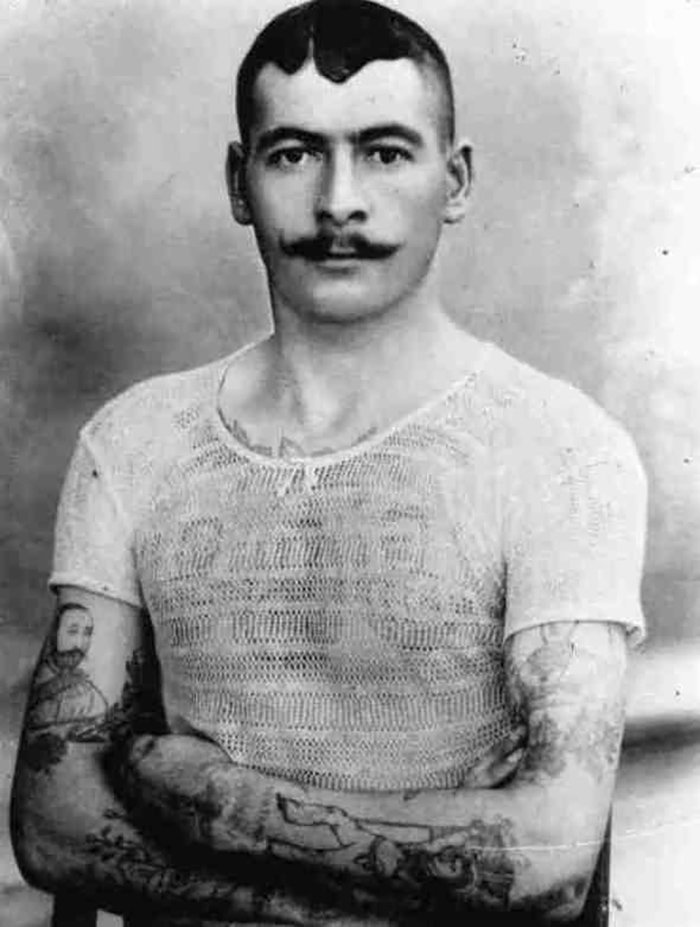
Martin Hildebrandt returned to his Oak Street shop and continued tattooing through the 1870s and 1880s. His daughter Nora became one of the most famous tattooed women in America, exhibited in dime museums and circuses. He tattooed Captain Harry DeCoursey, whose elaborately inked body became a sideshow attraction. The war had widened his client base from sailors to the general public, and the general public had developed a taste for ink.
The first identification discs were not mandated for another forty years. Clara Barton established her Missing Soldiers Office in Washington after the war, receiving thousands of letters from families searching for their dead. She was able to determine the fate of over twenty-two thousand soldiers. The rest — the tens of thousands of unknowns — remained unknown. At Arlington National Cemetery, 2,111 Union and Confederate soldiers lie together beneath the Tomb of the Civil War Unknowns. At Fredericksburg National Cemetery alone, more than twelve thousand graves are marked with a single word.
The soldiers whose names were tattooed into their forearms with India ink and a stick were not sentimental. They were practical. They had seen what happened to men whose bodies could not be named, and they chose the one form of identification that could not be stripped off, washed away, or lost in the mud. It was, as Hinman wrote, like writing one’s own epitaph. But it worked.
Sources & further reading
- Aïda Amer and Sarah Laskow. Tattooing in the Civil War Was a Hedge Against Anonymous Death. Atlas Obscura, 2018
- Michelle Myles. New York’s First Professional Tattooer. Daredevil Tattoo Blog, 2016.
- Martin Hildebrandt, Andersonville Prison, Robert Knox Sneden Wikipedia, The Free Encyclopedia.
- Wilbur F. Hinman. Corporal Si Klegg and His “Pard.” N.G. Hamilton & Co., 1887.
- John M. Gould. History of the First–Tenth–Twenty-ninth Maine Regiment (PDF). Stephen Berry, 1871.
- Damian Shiels. Marked Men: The Tattoos of New York Irishmen, 1863. Irish in the American Civil War, 2013.
- Damian Shiels. Inked Irishmen: Irish Tattoos in 1860s New York. Irish in the American Civil War, 2018.
- Damian Shiels. Inked Inmates: The Tattoos of Military Prisoners at Clinton Prison, 1864–1865. Irish in the American Civil War, 2022.
- Damian Shiels. Marked Boys: The Tattoos of 19th Century Irish and Irish American Reformatory Inmates. Irish in the American Civil War, 2020.
- Sheets from the Fleet: Tattoos & Scars Aboard USS Acacia. The Civil War Bluejackets Project, 2022.
- The Nameless Grave — Identifying Civil War Dead. National Museum of Civil War Medicine.
- Short History of Identification Tags. U.S. Army Quartermaster Museum
- Unknown Civil War Dead Are Nameless No Longer. HistoryNet, 2020.
- Philip Bigler. Quoted in Forensic Science Advances Mean US War Fighters Are No Longer Likely to Be Buried as ‘Unknown.’ The American Legion (legion.org), 2021.
- Albert Parry. Tattoo: Secrets of a Strange Art. Simon & Schuster, 1933.