Boar / Wild Pig tattoo
'Crazy as a peach-orchard boar'
The wild boar is one of the oldest symbolic animals in human culture, which is precisely what makes it a powerful subject for a tattoo. It appears in the mythology and iconography of Greece, Rome, the Celtic world, Norse Scandinavia, Hindu India, Shinto Japan, and across European heraldry — carrying different meanings in each, but anchored everywhere by the same observed traits: the wild boar is dangerous, it does not flee when cornered. It charges. It has killed trained hunters, armed soldiers, and mythological heroes across every tradition that documented it.
That combination — aggression without hesitation, physical power concentrated in a low, dense, armoured body, and a refusal to yield — made the boar a symbol of courage, ferocity, and confrontation in cultures that had no contact with each other. It also became a symbol of darker forces: uncontrollable rage, divine punishment, and the destructive aspect of nature that human civilisation cannot domesticate. A boar tattoo draws on one or more of these lineages, and the specific meaning depends entirely on which tradition the wearer or the artist is working from.
Unlike the wolf, the lion, or the eagle — animals that have been tattooed so widely that their symbolic sharpness has dulled through overuse — the boar retains specificity. A person wearing a boar tattoo is almost always referencing something particular: a mythology, a heritage, a personal quality they recognise in the animal. The boar does not lend itself to vague, generalised “strength” tattoos. It is too specific, too aggressive, and too rooted in particular traditions for that.
The animal
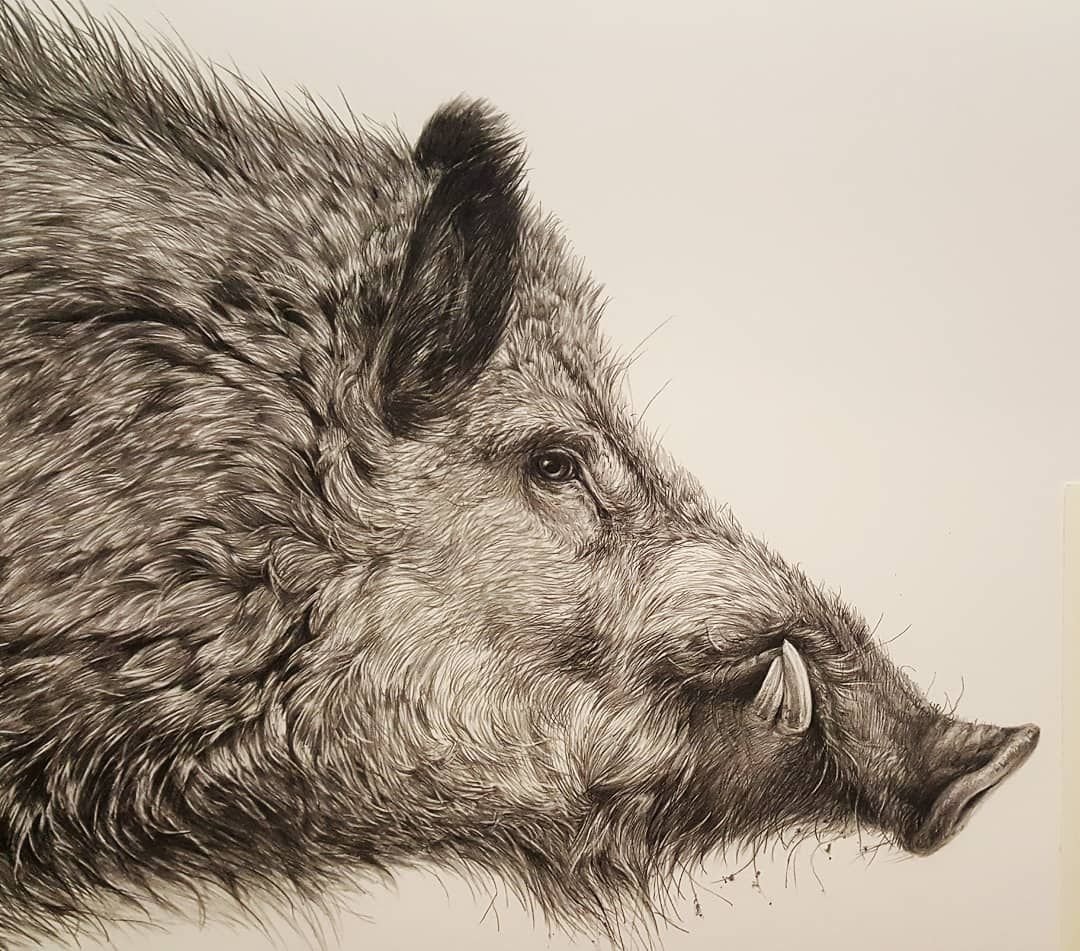
The Eurasian wild boar (Sus scrofa) is the ancestor of all domestic pig breeds and remains widespread across Europe, Asia, and North Africa. Males can weigh over 200 kilograms. Their lower canine teeth grow continuously, curving upward into tusks that function as weapons — capable of goring a human thigh to the bone.
Wild boars are intelligent, adaptable, and difficult to kill. Their hide is thick, layered with dense bristles and underlain by a subcutaneous shield of cartilage across the shoulders — a natural armour plate that develops in mature males and can stop a blade or deflect an arrow. Hunters across centuries and continents have noted that a boar, once wounded, does not run. It turns and charges the source of the attack. This behaviour — reckless, direct, and lethal — is the foundation of nearly every symbolic meaning the animal carries.
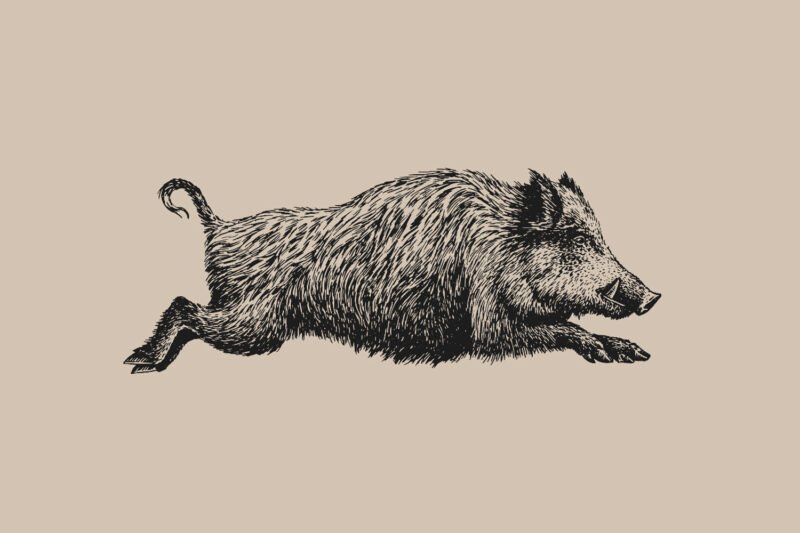
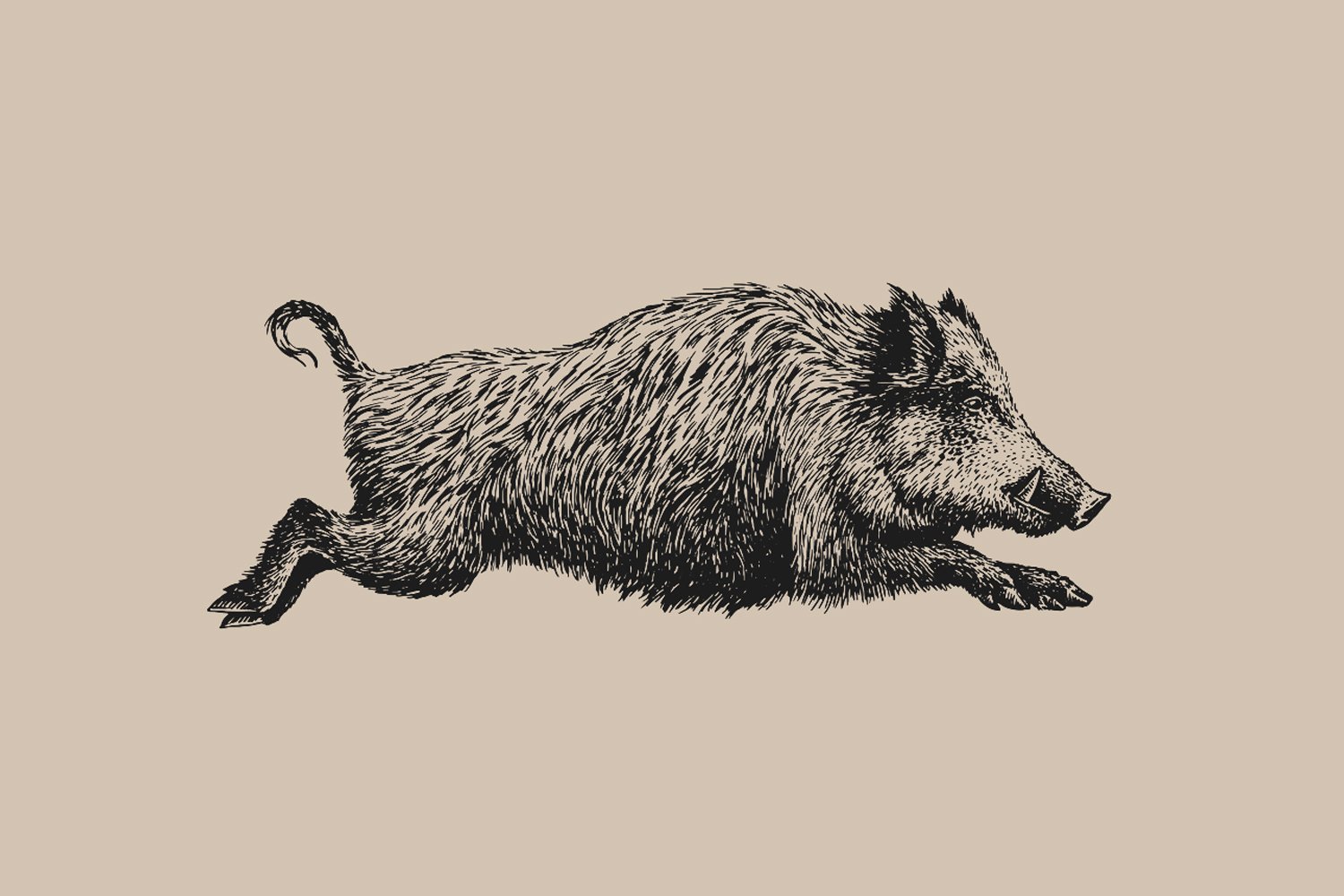
The visual qualities that make the boar compelling as a tattoo subject derive directly from its anatomy. The massive head, low to the ground, with curved tusks and small, deep-set eyes. The raised bristles along the dorsal ridge — a feature that Celtic and Norse artists exaggerated to dramatic effect in their depictions. The compact, barrel-shaped body is built for forward momentum. The animal’s silhouette communicates aggression and unstoppable force in a way that translates effectively across tattoo styles, from realistic rendering to stylised graphic work.
The female, the sow, carries a separate symbolic register in several traditions. She is associated with fertility, the earth, nourishment, and maternal ferocity in defence of offspring. In Druidic lore, the sow represents the generosity of the land itself. This duality — the male boar as warrior, the female as provider — runs through Celtic, Norse, and Hindu symbolism, though the aggressive male image dominates most tattooing contexts.
Greece: the divine hunt
The boar occupies a specific role in Greek mythology: it is the instrument of divine punishment, and the hunt for it is a test that separates heroes from ordinary men.
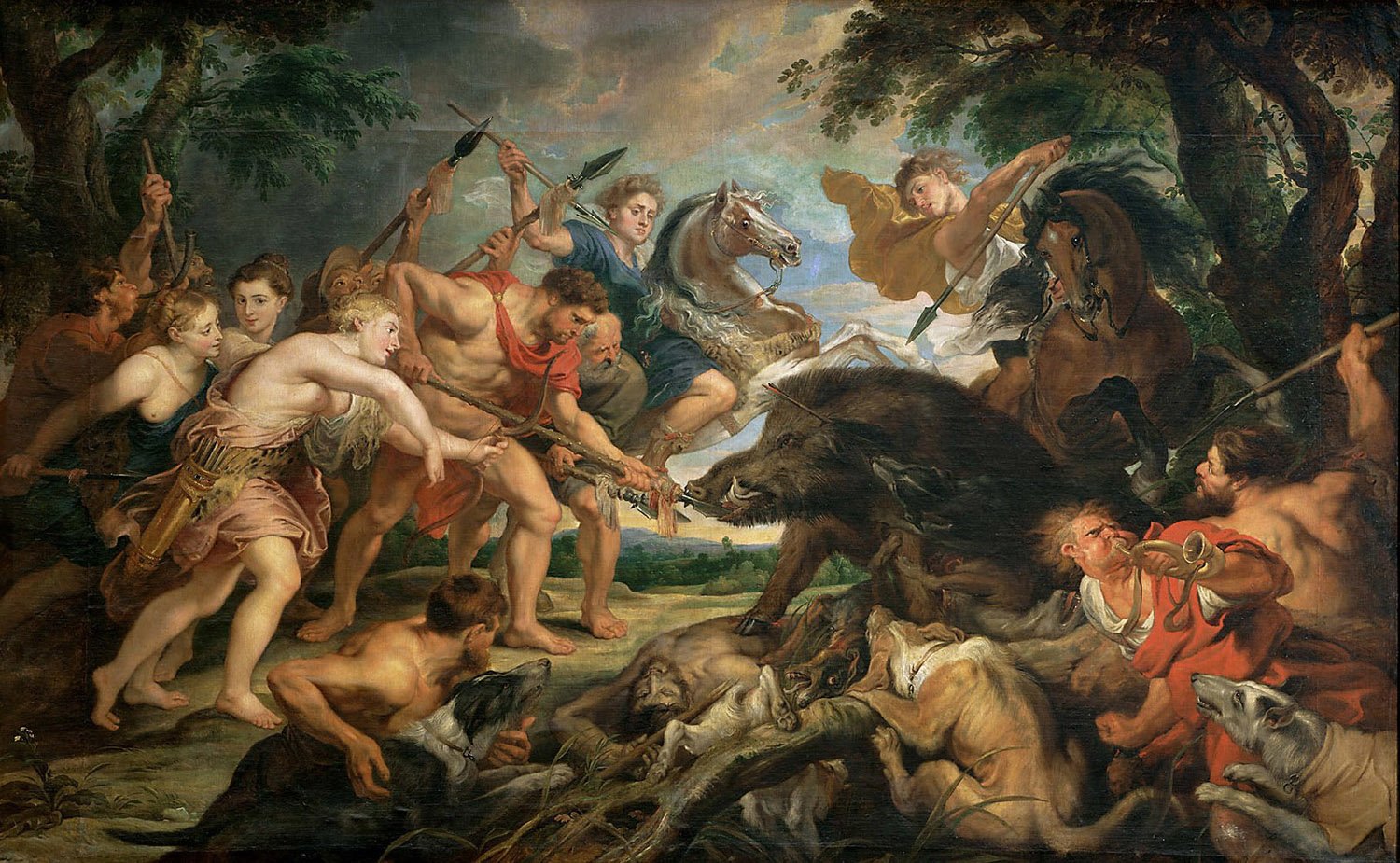
The Calydonian Boar is the most prominent example. The goddess Artemis, angered by King Oeneus of Calydon for neglecting her in his annual sacrifices to the gods, sent a monstrous boar to ravage his lands. The creature destroyed crops, killed livestock, and drove the population from the fields. Oeneus assembled the greatest hunters in Greece to kill it — a roster that reads as a catalogue of mythological heroes: Meleager, Atalanta, Theseus, Castor, Pollux, Jason, Peleus, and Telamon. The hunt itself became one of the defining episodes of Greek heroic narrative, depicted on vase paintings, sarcophagi, and temple friezes from the Archaic period through the Roman era. The boar is shown as enormous, bristling, and often surrounded by fallen dogs and wounded hunters. Atalanta drew first blood. Meleager delivered the killing blow. The aftermath — a dispute over the hide that led to Meleager’s death — carried the story beyond the hunt into tragedy.
The Calydonian Boar Hunt is a narrative composition with direct tattoo potential — a scene of multiple figures in combat with a massive animal, rich in visual drama and mythological weight. It suits large-format work: a back piece, a full thigh, or a sleeve built around the central action. Composition has been rendered in Western art for millennia, providing a rich visual reference library for any artist working with the subject.
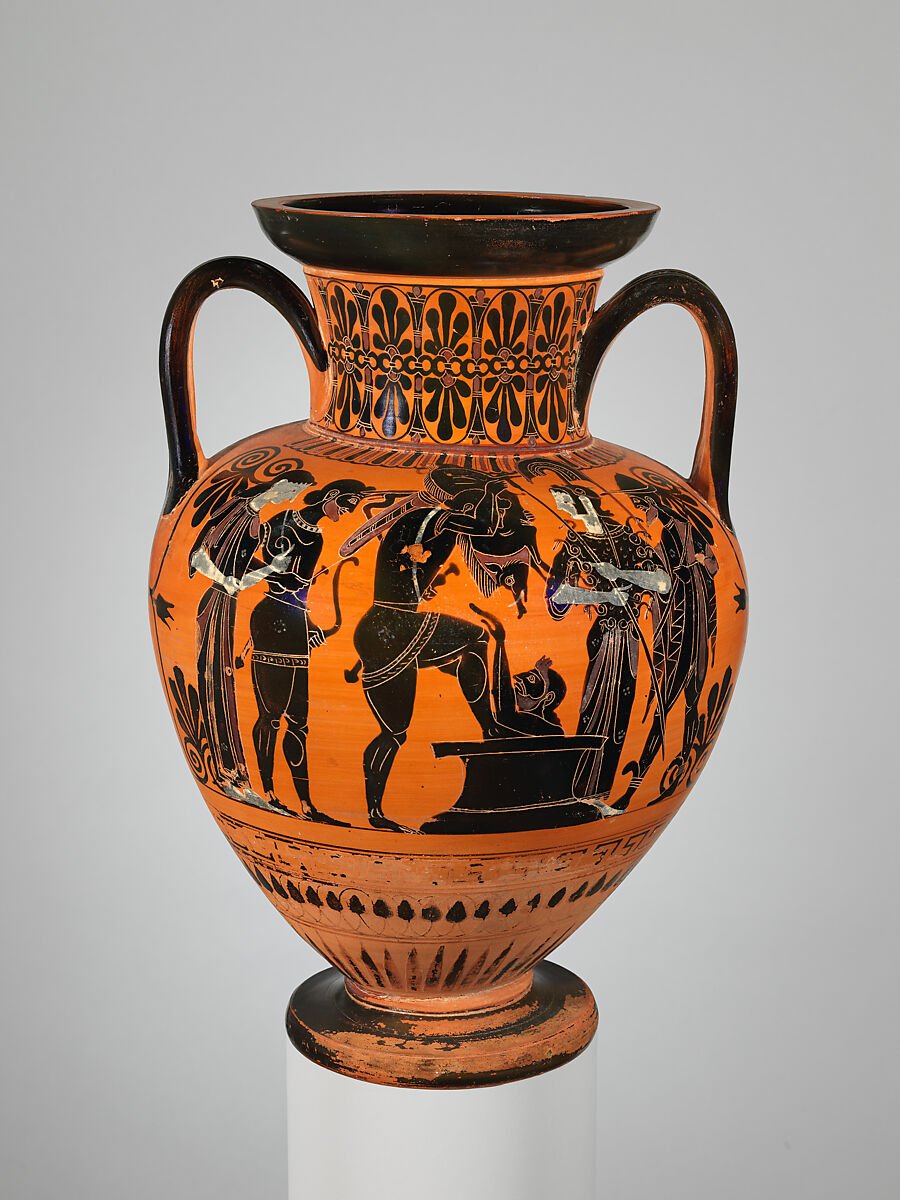
The Erymanthian Boar was the fourth of Heracles’ twelve labours. He was ordered to capture it alive — a task that demanded physical dominance rather than killing skill. Heracles drove it into deep snow, exhausted it, and bound it in chains. The image of Heracles carrying the boar on his shoulders appears across Greek and Roman art and translates into a striking tattoo composition — the hero bearing the beast, an image of overwhelming strength.
The boar also killed Adonis, the mortal lover of Aphrodite. In some versions of the myth, the boar was sent by Ares out of jealousy; in others, it acted as an agent of fate. The death of Adonis became a central image in the cult of Aphrodite and in later Western art — the beautiful youth destroyed by the animal he underestimated.
In each case, the Greek boar is a force — natural, divine, or both — that exposes the limits of human control. Greek athletes swore oaths on the remains of a sacrificed boar at the Olympic Games, binding themselves to fair play with the animal’s sacred blood. The boar was too dangerous and too respected to be merely a monster. A boar tattoo drawn from Greek tradition references this register: the trial that proves the hero, the force that cannot be controlled, the animal that the gods themselves used as a weapon.
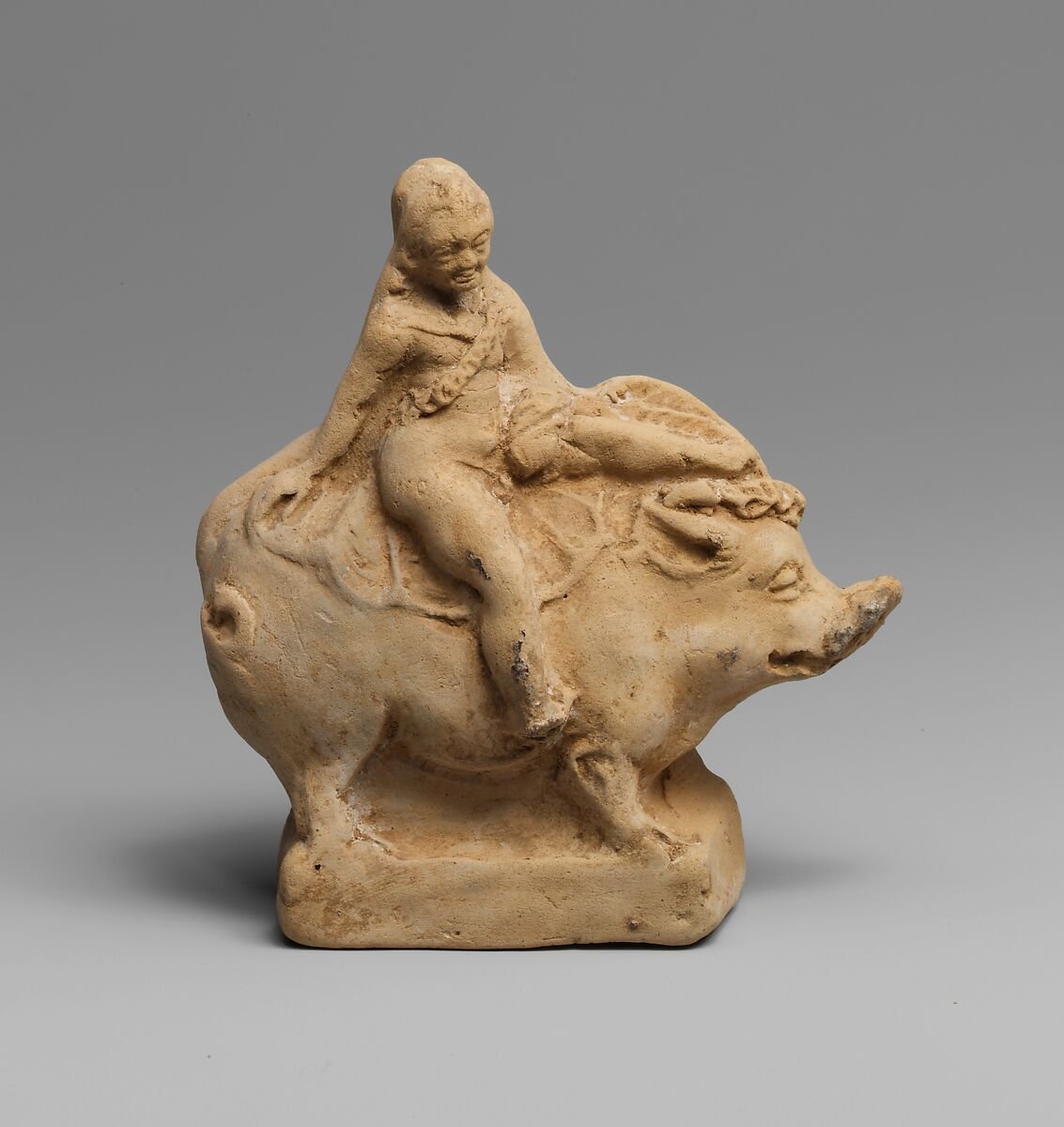
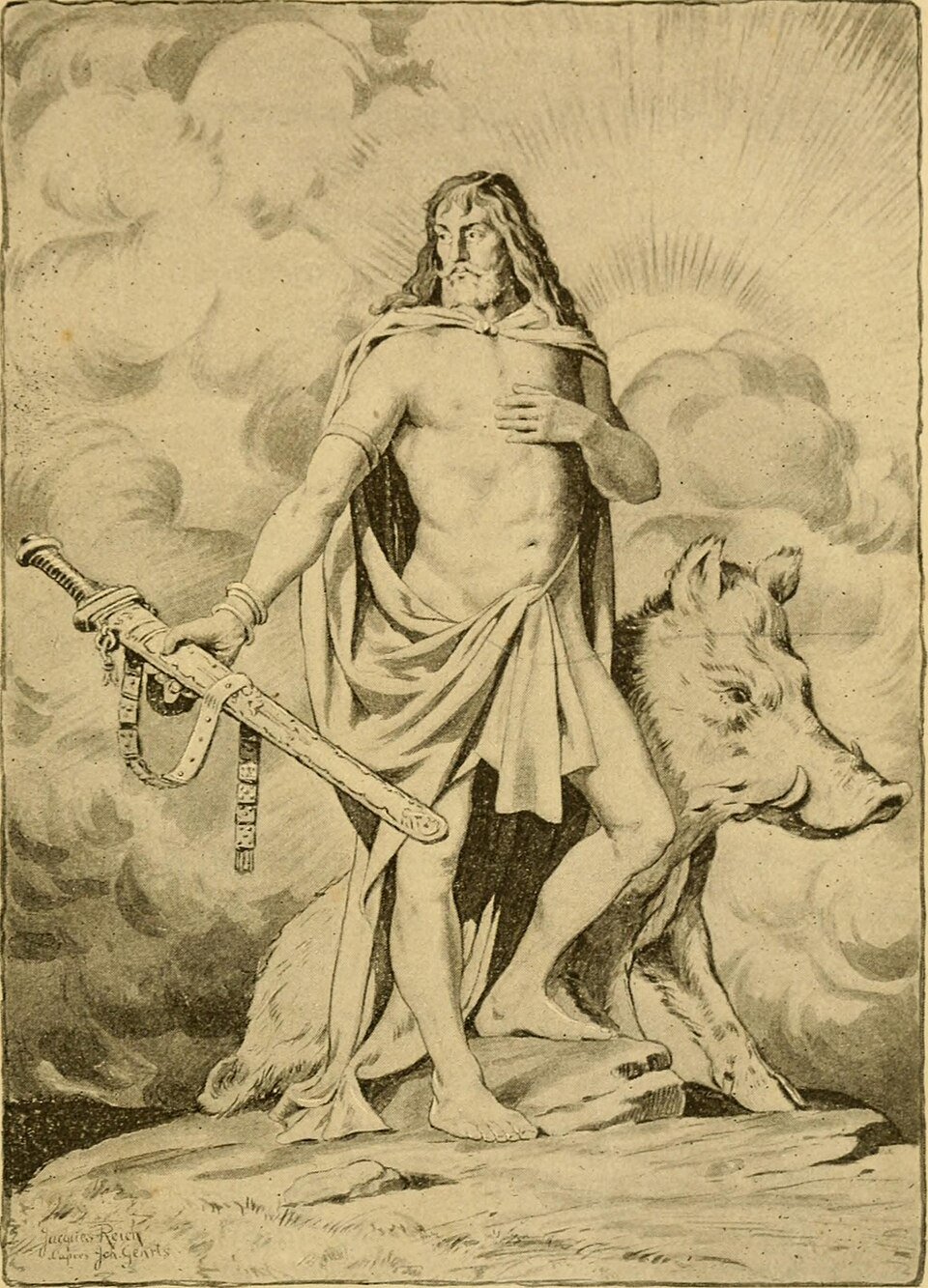
Norse mythology: the sacred beast of Freyr and Freyja
The boar holds a position in Norse mythology that no other animal occupies in quite the same way: it is simultaneously a symbol of war, fertility, and divine authority.
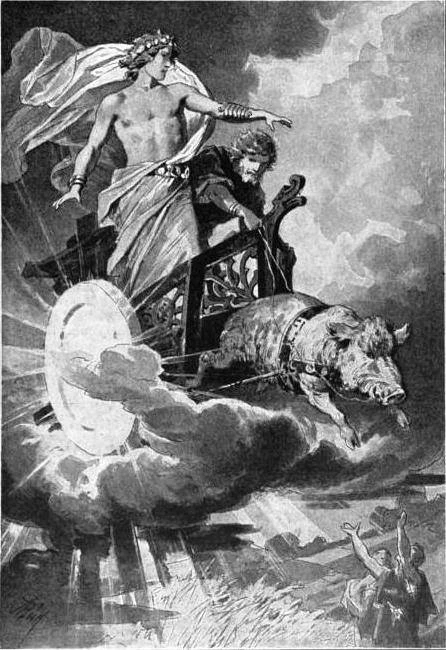
Freyr, the Vanir god of harvests, peace, prosperity, and virility, owned Gullinbursti — a boar whose name means “Golden Bristles.” Gullinbursti was made by the dwarven smiths Brokkr and Sindri (the same pair who forged Thor’s hammer Mjölnir) as part of a wager with Loki. The boar’s golden bristles glowed in the dark, illuminating Freyr’s path. Gullinbursti could run across sky and sea, faster than any horse, and pulled Freyr’s chariot. In the Prose Edda, Snorri Sturluson describes the boar arriving at the funeral of Baldr, carrying Freyr.
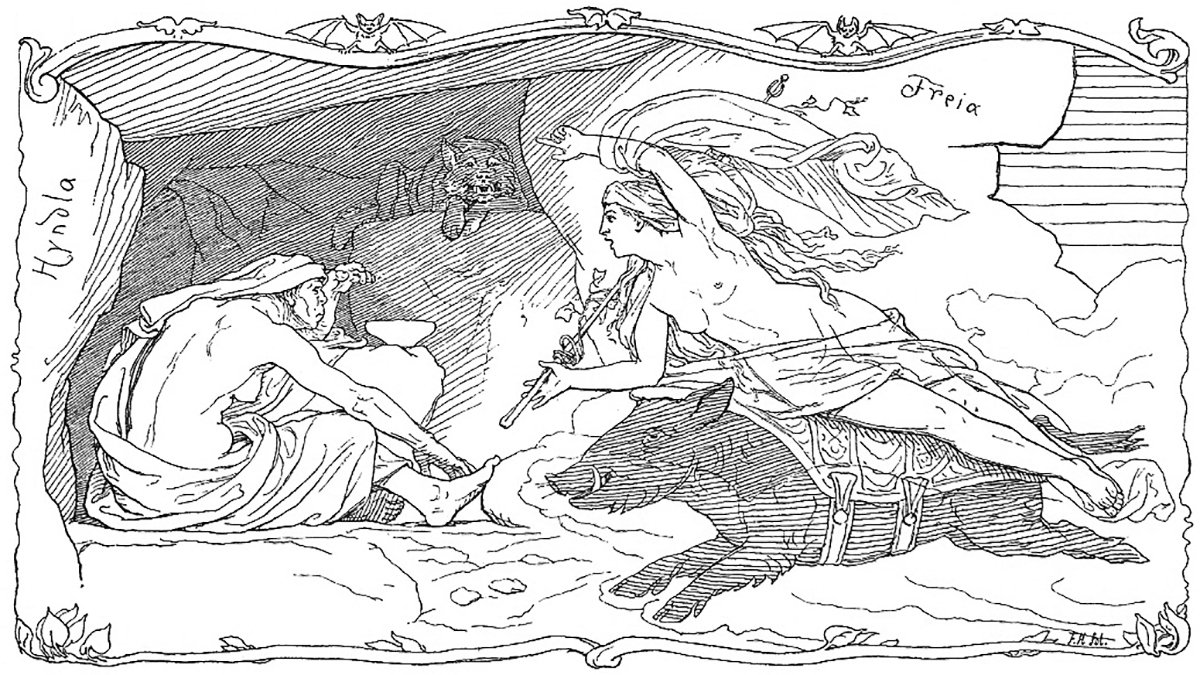
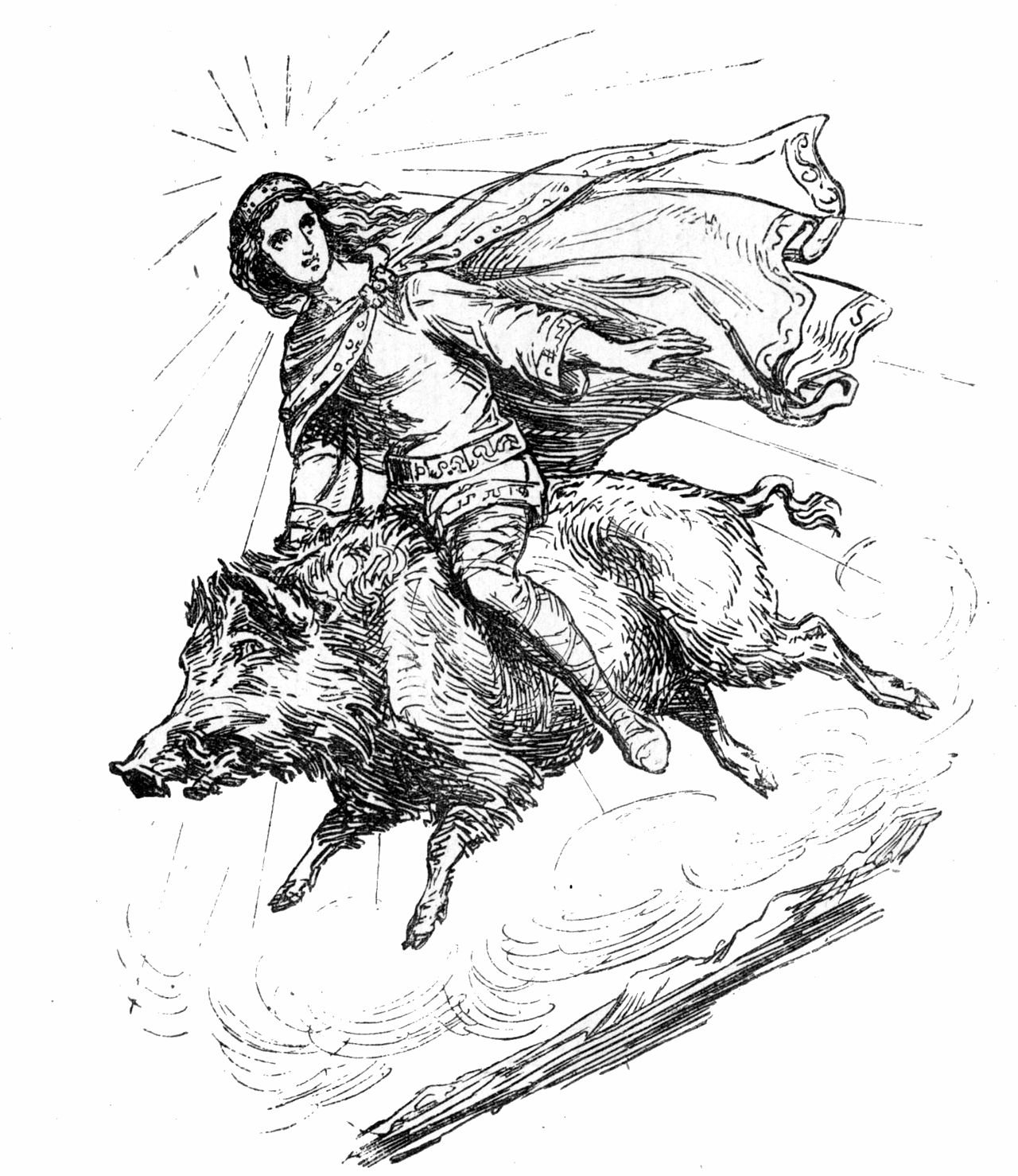
Freyja, Freyr’s sister — goddess of love, beauty, war, and death — rode the boar Hildisvíni (“Battle Swine”) into battle. In the poem Hyndluljóð, Freyja disguises her human protégé Óttar as Hildisvíni to visit the giantess Hyndla and learn his genealogy. The boar here is both a war-mount and a magical disguise.
The connection between boars and Norse warrior culture extended beyond mythology into documented practice. Boar-crested helmets have been found in Anglo-Saxon and Vendel-period archaeological sites — most notably the Benty Grange helmet (7th century, Derbyshire) and examples from the Vendel and Valsgärde boat-graves in Sweden. The Roman historian Tacitus noted that the Aestii, a Germanic or Baltic people, wore boar emblems as a form of divine protection in battle. In Beowulf, warriors go to war under boar-head standards, and the boar crest is described as a guardian over the helmet-wearer. The Svinfylking — “swine array” or “boar’s head formation” — was a Norse battle formation shaped like a wedge, named for the boar’s charging posture. Warriors who practised the boar cult ritualised their connection to the animal’s spirit, channelling its headlong ferocity into combat — distinct from the bear cult (berserkers) and the wolf cult (ulfhednar), which channelled different animal qualities.
At Yule, a boar was sacrificed to Freyr. People swore sacred oaths by placing their hands on the living boar before its slaughter — the sónargöltr, or “oath-boar.” The flesh was then consumed in a ritual meal. The boar’s connection to midwinter and the returning sun made it a symbol of renewal and cyclical rebirth. The tradition survives in attenuated form: bread baked in the shape of a boar for the Christmas table persists in parts of Scandinavia.
Norse priest-kings reportedly wore boar-shaped masks to channel Freyr’s authority. The animal represented the priestly and kingly class — a point where Norse and Celtic symbolism converge.
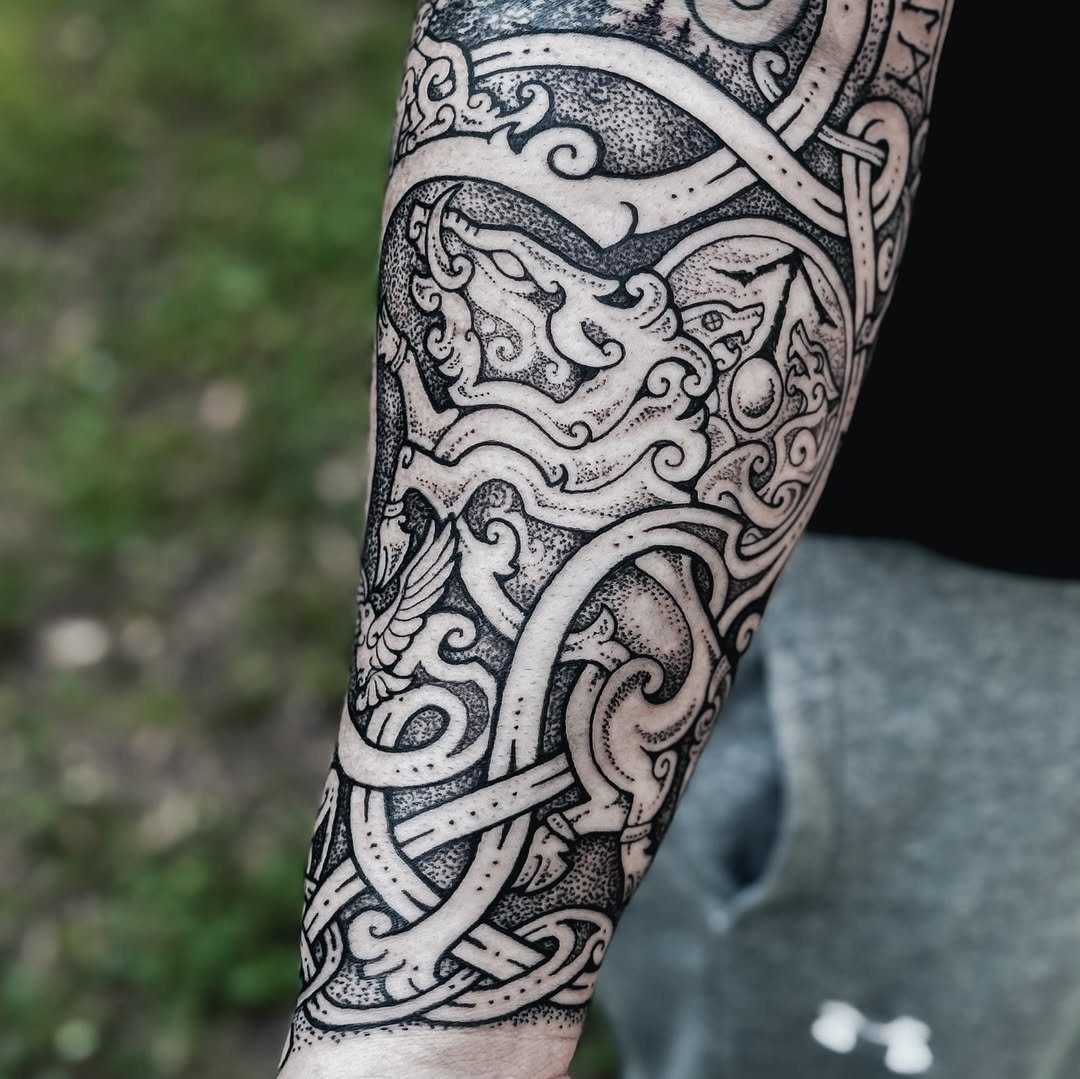
In tattooing, the Norse boar is a natural subject within the broader Nordic tattoo vocabulary. Gullinbursti — a boar with golden, glowing bristles — is a visually striking composition, particularly in colour work or in designs that use gold highlights against blackwork. A boar rendered in Vendel-era or Viking-era animal style — the interlocking, knotwork-influenced aesthetic found on helmets, brooches, and carved stones — connects the image to a specific historical visual language. A more naturalistic boar within a Norse-themed sleeve or back piece sits alongside runes, Yggdrasil, ravens, wolves, and other mythological elements. The boar-crested helmet is itself a tattoo subject — the Benty Grange boar, or a Vendel-style helmet crest — carrying associations with divine protection in battle. And the Svinfylking formation, though abstract, can be referenced through a boar ‘s-head design rendered in a style that evokes Norse knotwork or runestone carving.
Celtic traditions: the most important cult animal
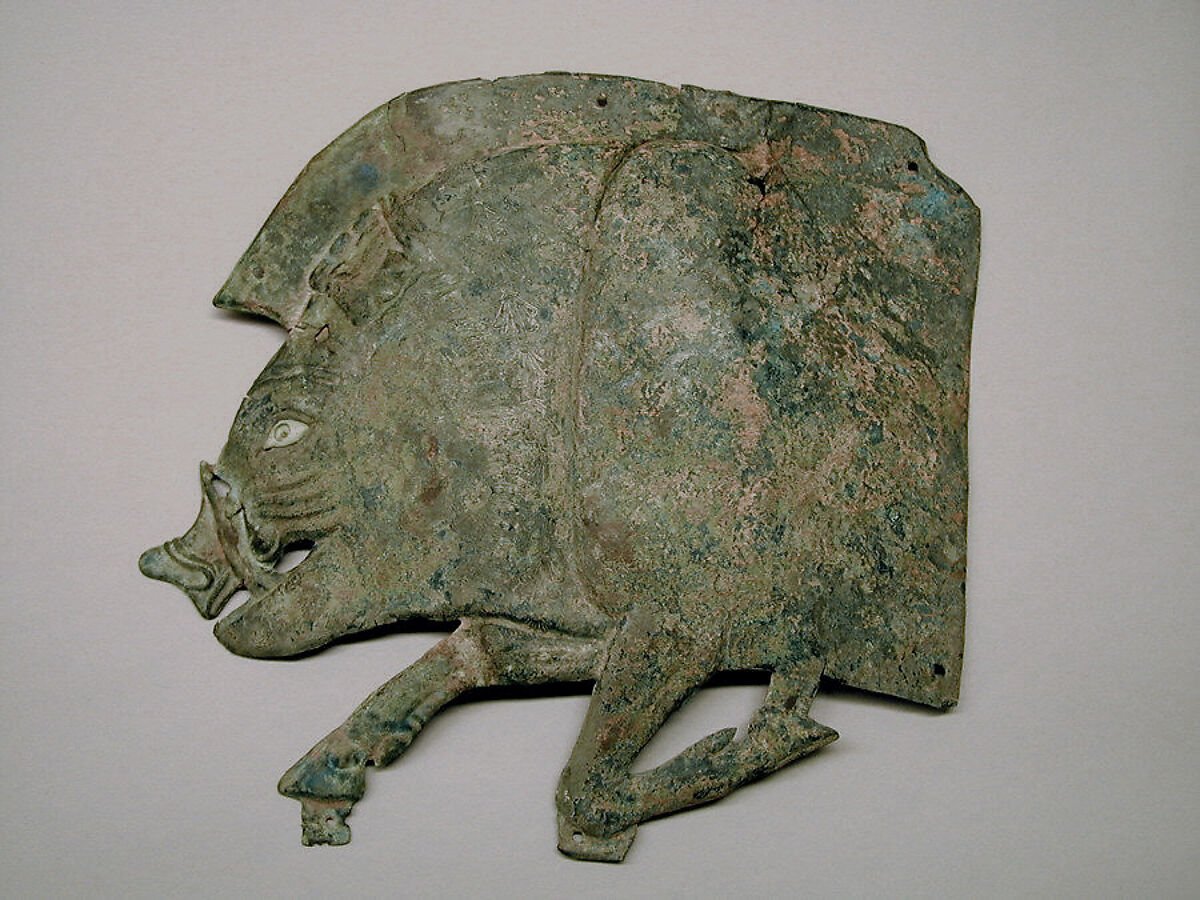
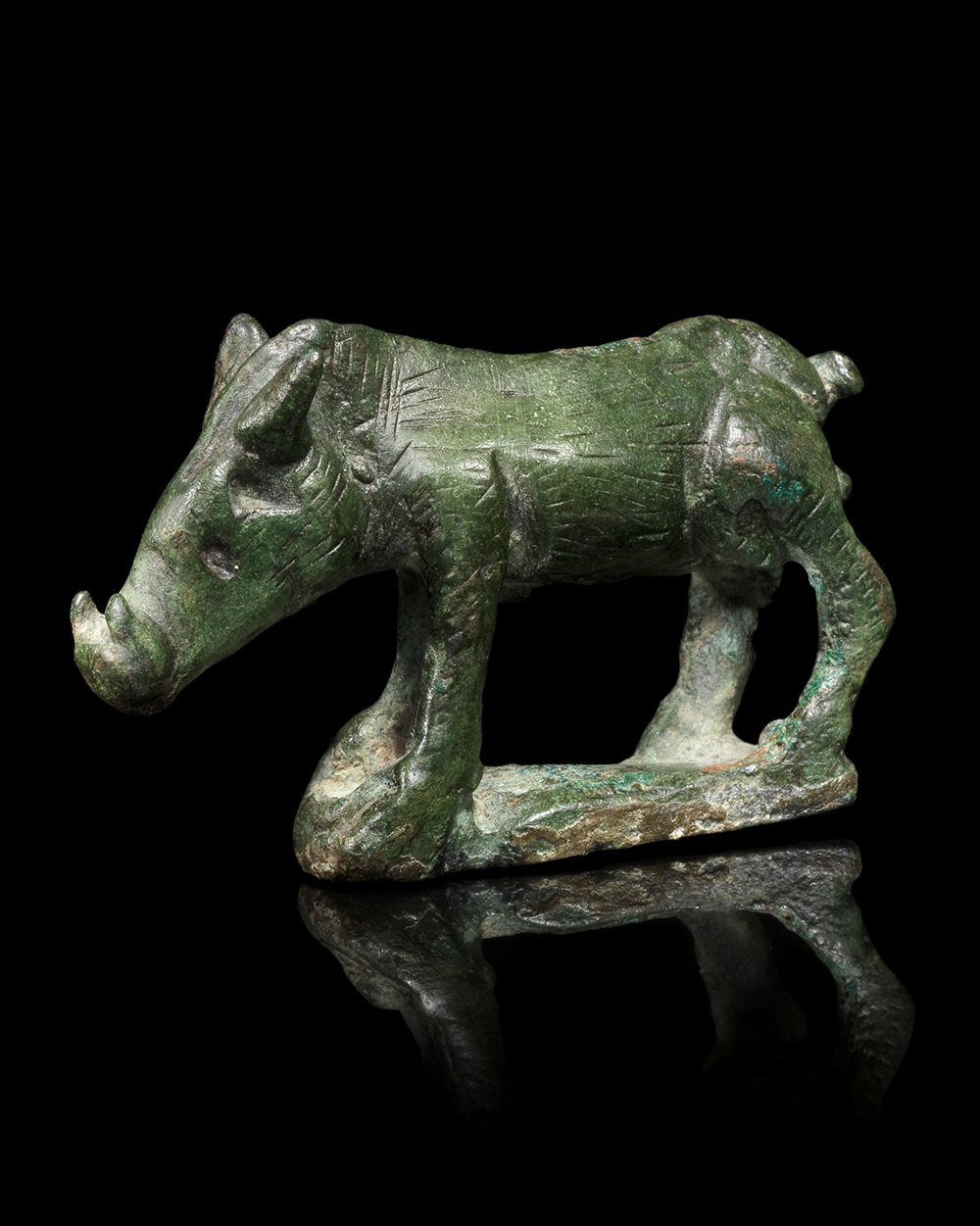
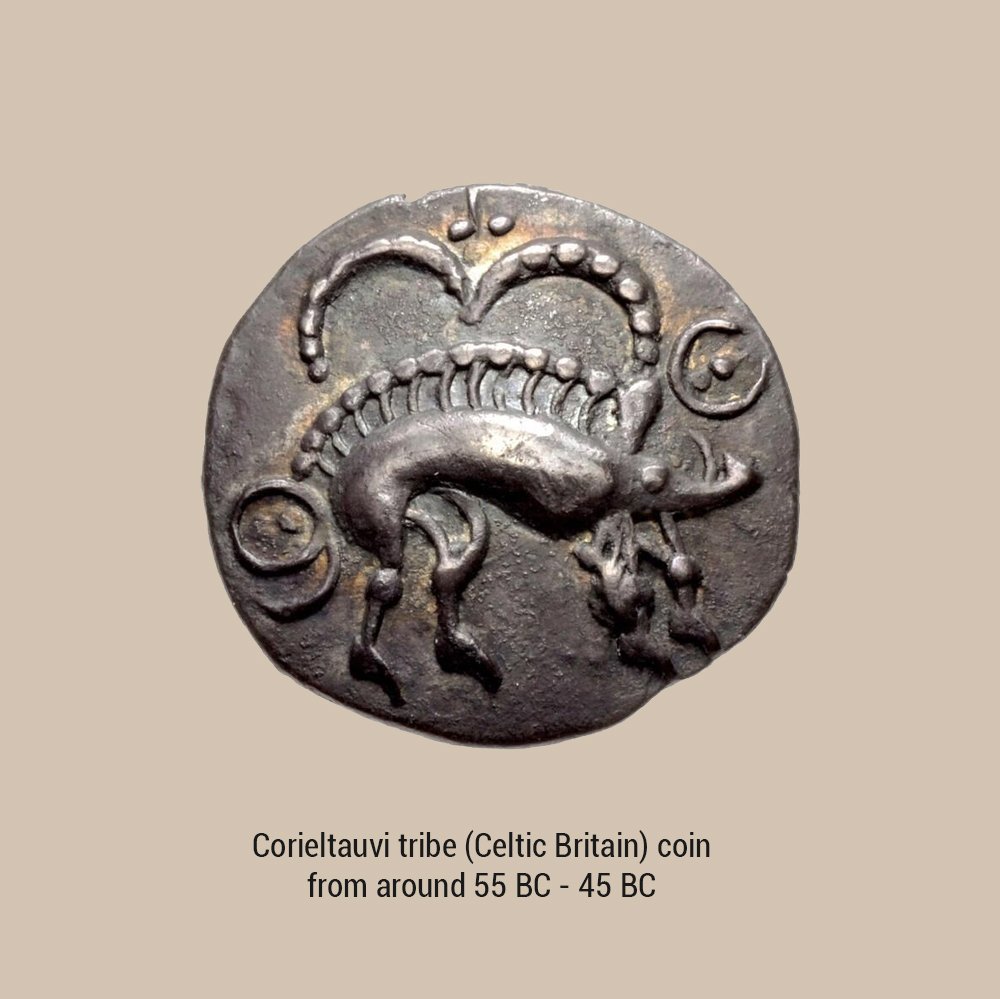
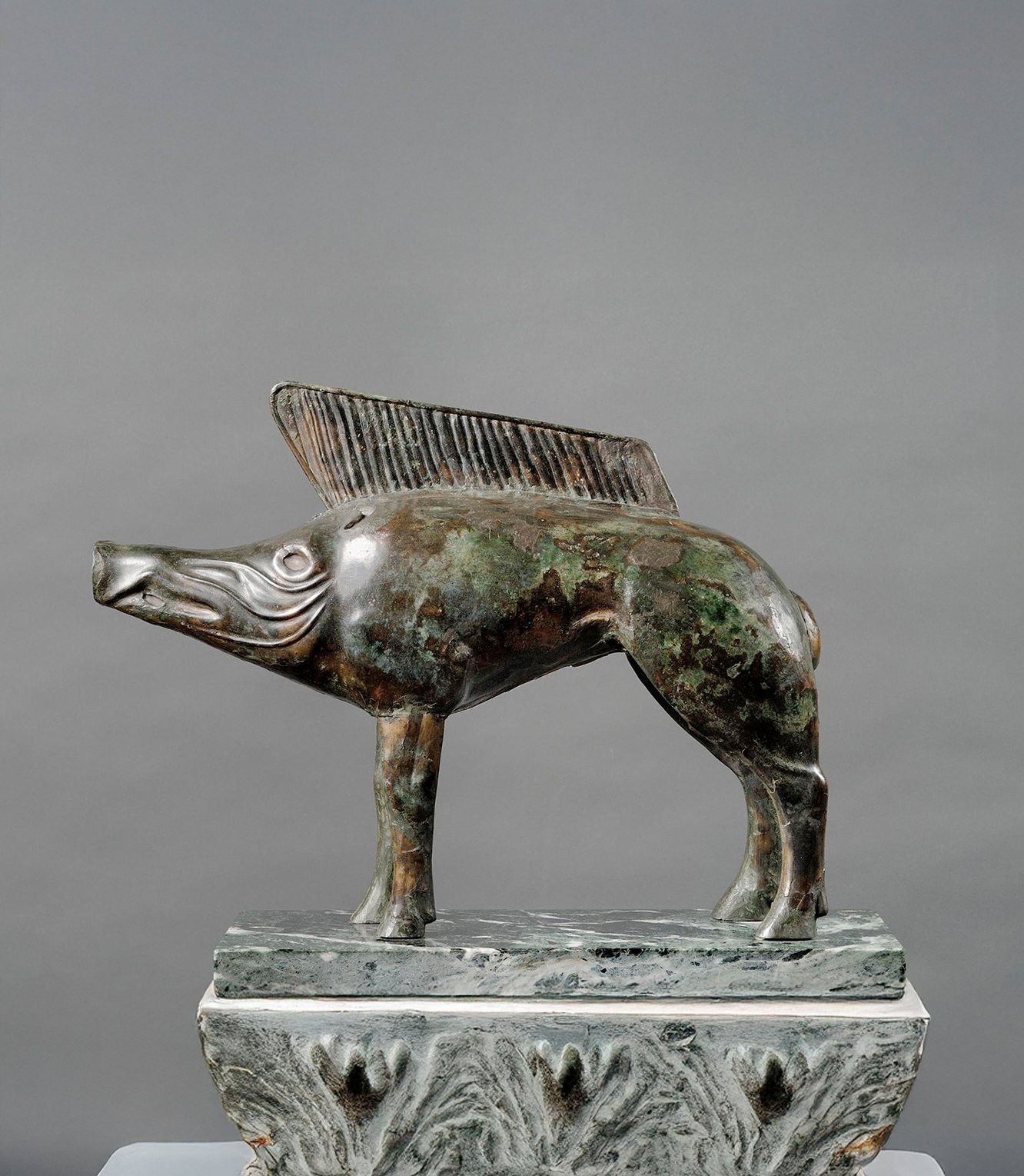
The archaeologist Anne Ross identified the boar as the most important cult animal of the Celtic world. The evidence supports it. Boar imagery appears on Celtic coins, carved stones, bronze figurines, cauldrons, helmets, trumpet terminals, and firedog terminals across a geographic range from Ireland to Galatia.
The Gundestrup Cauldron (c. 200–1 BCE, found in Denmark but likely of Thracian or Gaulish manufacture) depicts soldiers wearing boar-crested helmets in a procession that may represent a ritual or an army on the march. The Euffigneix statue (c. 1st century BCE, found in Haute-Marne, France) shows a torc-wearing figure with a wild boar carved vertically across his torso — a god with the boar as his defining attribute.
Celtic boar symbolism operated on two levels simultaneously. The animal represented ferocity in battle — its charge, its tusks, its refusal to retreat — and it represented the abundance of the feast. Pork was the prestige food of the Celtic aristocracy. The “Champion’s Portion” (curadmír) — the right to the best cut of meat at a feast — was a serious matter of honour in Irish mythological literature, leading to disputes, combats, and elaborate trials in tales like Fled Bricrenn (Bricriu’s Feast). The boar was both the warrior and his reward.
The Mabinogion and broader Welsh mythology feature multiple boar hunts with supernatural significance. Twrch Trwyth was a king transformed into a boar, pursued by Arthur and his warriors across Wales, Cornwall, and Ireland in a hunt that functions as a mythological ordeal — a chase through landscapes that blur into the Otherworld. In Celtic tradition, the boar could lead hunters between worlds. The animal was associated with the forest, solitude, hidden knowledge, and the threshold between the living and the dead.
Gaulish coins from multiple tribal mints depict boars on their war-standards. But the evidence suggests that the boar was not a warrior caste symbol. It belonged to the priestly class — the druids. Its presence on military banners may have functioned as a priestly blessing over the army rather than an identification with the fighting men themselves. The boar’s connection to sacred groves, to the oak (whose acorns it eats), and to truffles (which it uncovers from the earth) reinforced its association with hidden, earth-bound, priestly knowledge.
Celtic boar imagery has a distinctive visual grammar that translates powerfully into tattooing. The exaggerated dorsal bristles — raised and spiked along the spine — are a consistent feature in Celtic depictions, giving the animal a more aggressive and stylised silhouette than naturalistic rendering would produce. Celtic knotwork and La Tène curvilinear designs can be integrated into or around a boar figure, connecting it visually to the broader Celtic artistic tradition. A Celtic boar tattoo can draw on the imagery of the Gundestrup Cauldron, Pictish carved stone designs (the Knocknagael Boar Stone is a particularly striking example), or the stylised boar figurines found across the Celtic world. For wearers with Celtic heritage — Irish, Scottish, Welsh, Breton, Galician — the boar carries lineage and mythological weight.
Hindu tradition: Varaha, the boar who saved the world
In Hindu mythology, the boar is a form of God.
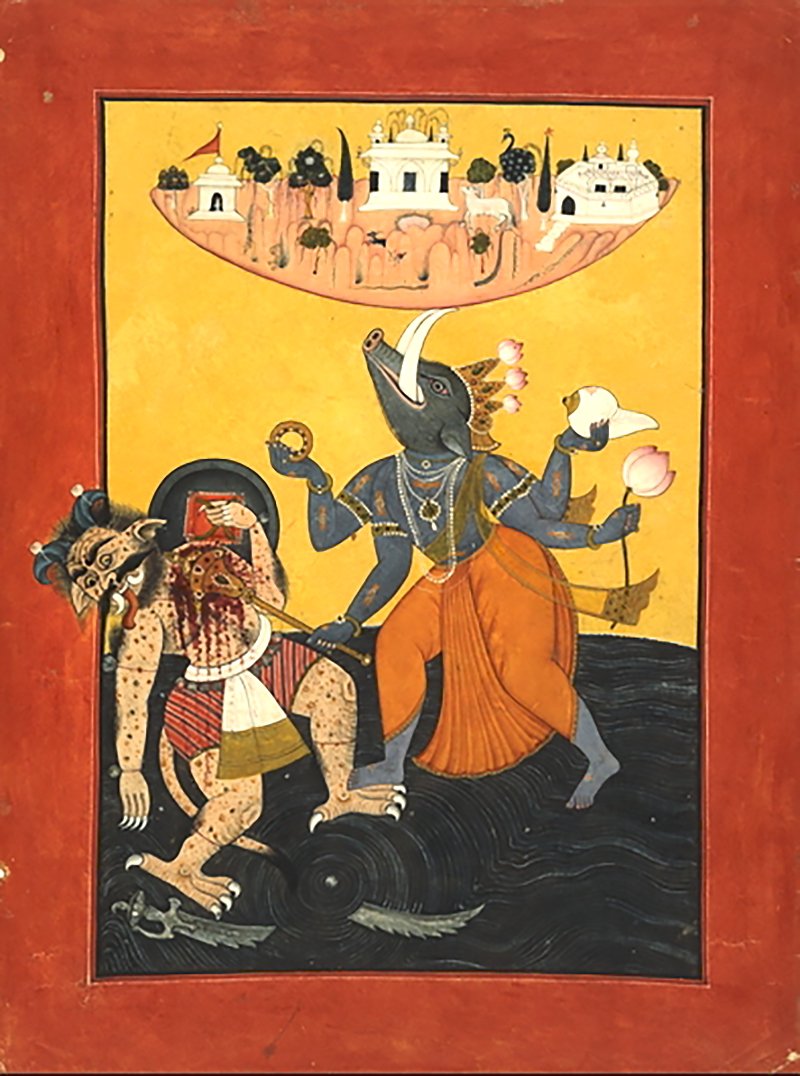
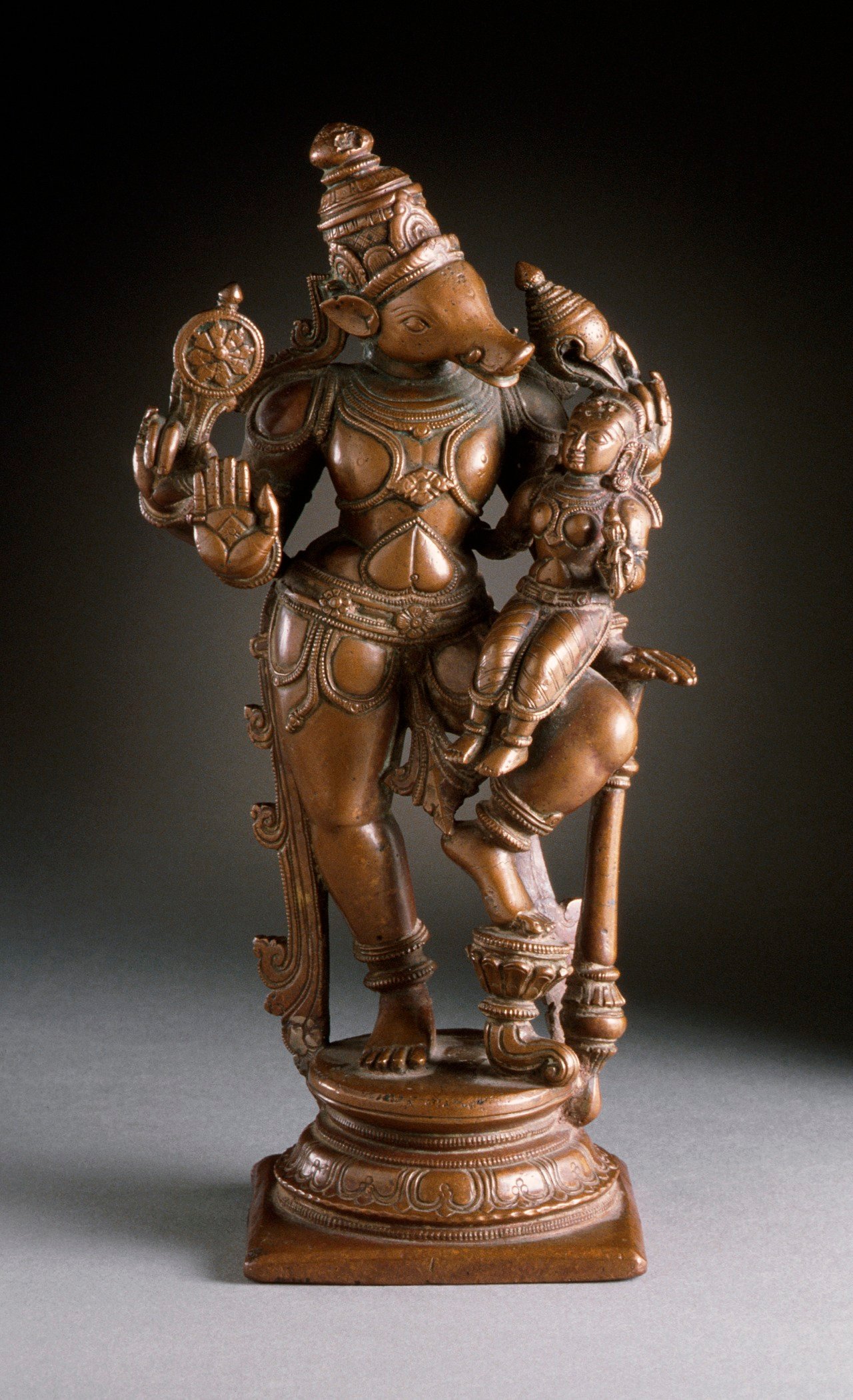
Varaha is the third of the ten principal avatars (Dashavatara) of Vishnu, the preserver and protector of the universe. When the demon Hiranyaksha dragged the earth goddess Bhumi (also called Prithvi or Bhoomi Devi) to the bottom of the primordial cosmic ocean, Vishnu took the form of a colossal boar, dove into the waters, fought Hiranyaksha for a thousand years, killed him, and lifted the earth from the depths on his tusks. The image of Varaha — often depicted as a massive boar or as a figure with a boar’s head and a human body, with Bhumi clinging to one tusk — is one of the iconic images of Hindu art and temple sculpture.
The story’s origin predates the Vishnu framework. In the Vedic texts (Taittiriya Samhita, Rigveda), the boar form is associated with Prajapati, the creator deity, who assumed the shape to raise the earth from the primordial waters as an act of creation. Over time, the myth was absorbed into the Vaishnavite tradition and came to be specifically identified with Vishnu.
Varaha represents sacrifice, cosmic rescue, and the divine commitment to preserving the physical world. The boar form is suited to the task: an animal that roots in the earth, that drives downward, that is built for power rather than elegance. Vishnu chose the form that could enter the deepest waters, confront a demon of overwhelming power, and bear the weight of the world upward.
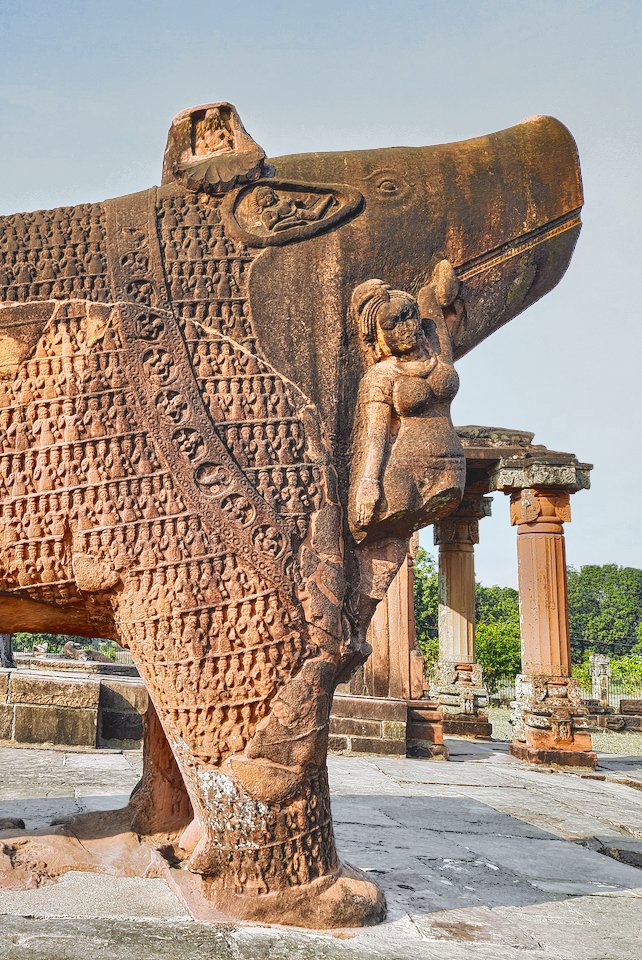
The Eran Varaha in Madhya Pradesh — an 11-foot red sandstone sculpture dating to approximately the 5th century — is among the most elaborate Varaha images surviving from the Gupta period. Temple carvings at Udayagiri, Mamallapuram, and across South and Southeast Asia depict the scene in varying levels of complexity, from single figures to elaborate narrative panels.
A Varaha tattoo carries a particular resonance for anyone connected to the Hindu tradition: it is a manifestation of God in animal form, a saviour figure, and a symbol of strength exercised in the service of cosmic preservation. The anthropomorphic form — the boar-headed human figure lifting the earth — is a composition with strong visual presence, suited to the chest, upper back, or upper arm. The fully zoomorphic form — the colossal boar with the earth on its tusks — works as a standalone piece or as part of a larger Dashavatara-themed composition. In both cases, the tattoo draws on centuries of Hindu temple sculpture as its visual reference, and the subject carries religious weight that the wearer should understand.
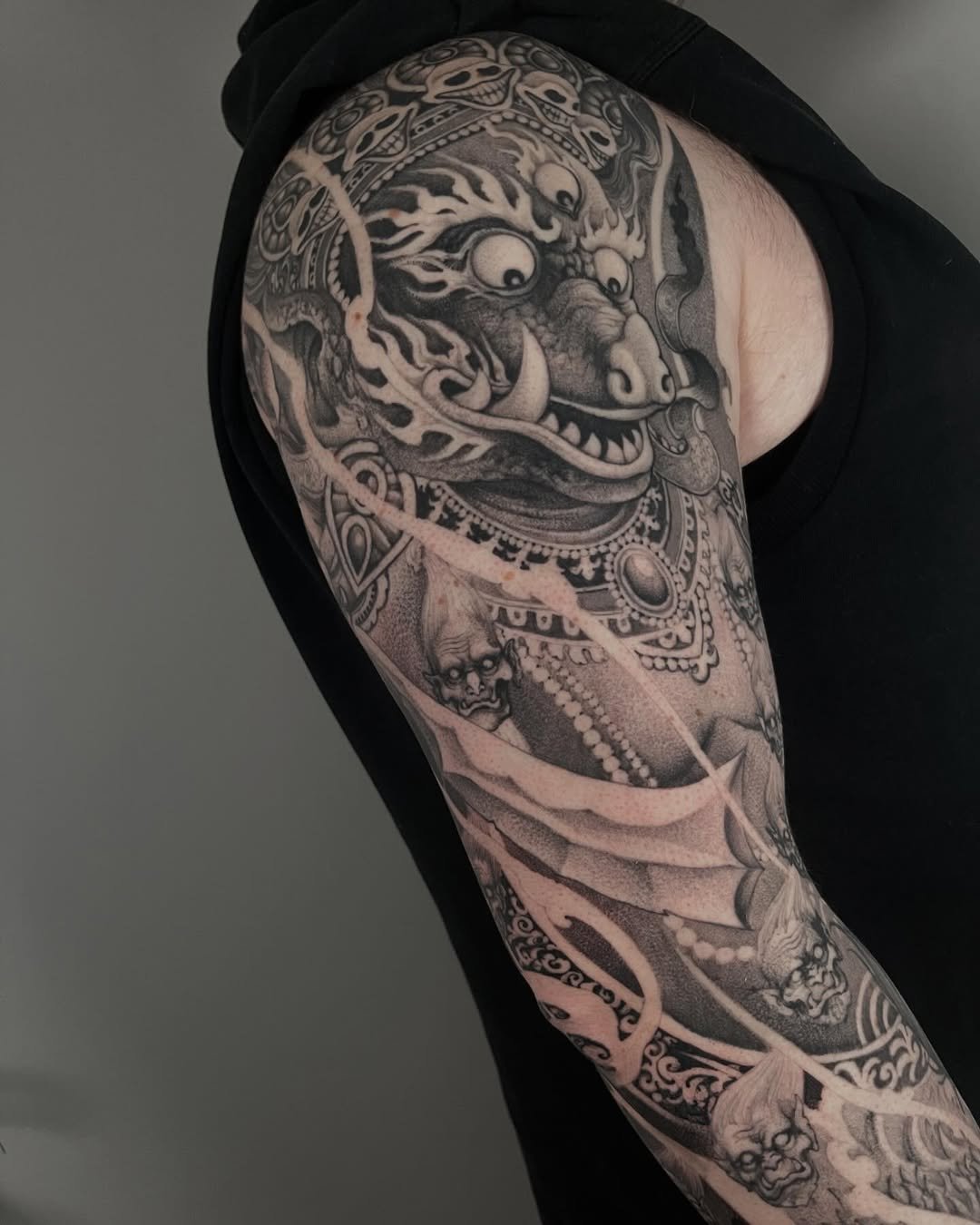
Japan: inoshishi, the boar of courage and recklessness
Japan uses the wild boar (inoshishi, 猪), where the Chinese zodiac uses the pig — a substitution that reflects the animal’s cultural weight. In Japan, the boar represents courage, tenacity, determination, and a particular kind of recklessness that is admired as much as it is cautioned against.
The Japanese word chototsumōshin (猪突猛進) — literally “boar’s charge” — describes rushing headlong at a goal with total commitment and no regard for consequences. It is used both as praise and as a warning. Master Hakuin Ekaku (1685–1768), the Zen monk credited with reviving Rinzai Zen after a period of stagnation, instructed his students to practise with the energy of a wild boar — vigorous and courageous, running straight towards the goal.
The inoshishi is the twelfth and final sign of the Japanese zodiac. People born in the Year of the Boar are considered brave, honest, direct, and sometimes impulsive — qualities mapped directly from the animal’s observed behaviour. Boar imagery appears on New Year cards, shrine charms, and decorative goods during boar years.
In Shinto, the white boar (shira-i, 白猪) is a messenger of the fire deity associated with Mount Atago in Kyoto, where the Atago Shrine — head of over nine hundred Atago shrines throughout Japan — stands. A small number of Shinto shrines are guarded by stone boar statues (koma-shishi) rather than the more common fox (kitsune) or lion-dog (komainu). The deified statesman Wake no Kiyomaro (733–799), honoured for his role in preventing a usurper from seizing the imperial throne, has boar statues at the shrines dedicated to him — a connection rooted in a legend in which wild boars appeared to protect him when he was ambushed.
The boar also carries associations with fertility and prosperity. In some regions, boars are thought to be drawn to the fields of families with pregnant women, and hunters whose wives are pregnant are believed to have better luck in the boar hunt. The animal appeared on the ¥10 banknote during the Meiji period. A folk belief held that keeping a tuft of boar hair in one’s wallet would bring wealth.
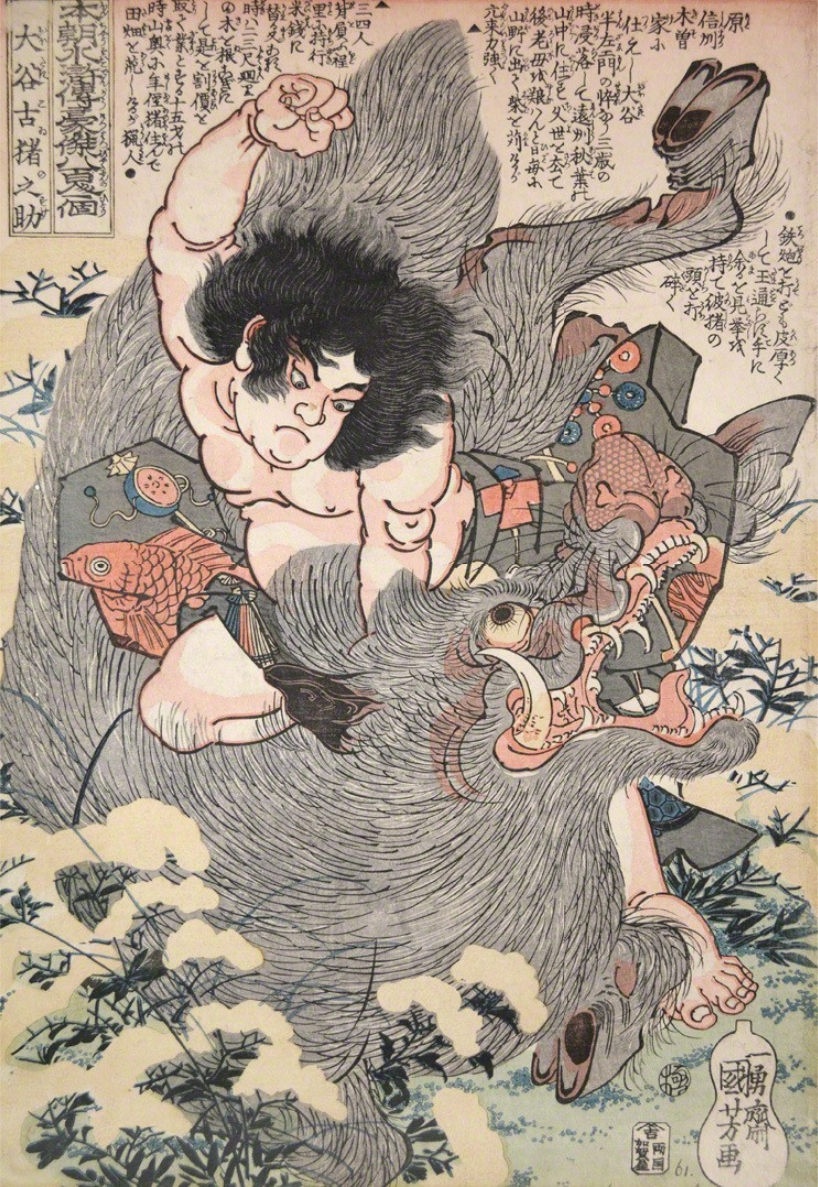
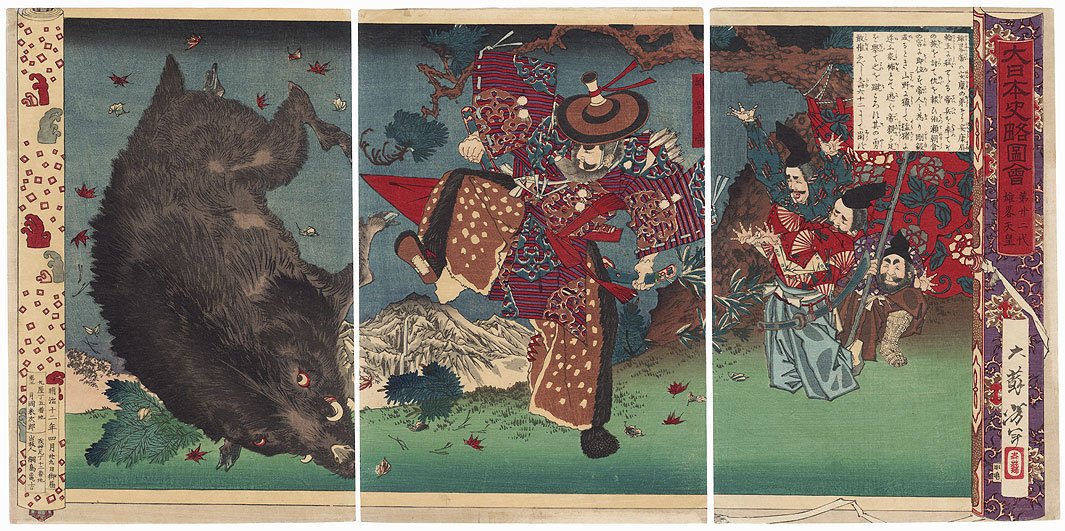
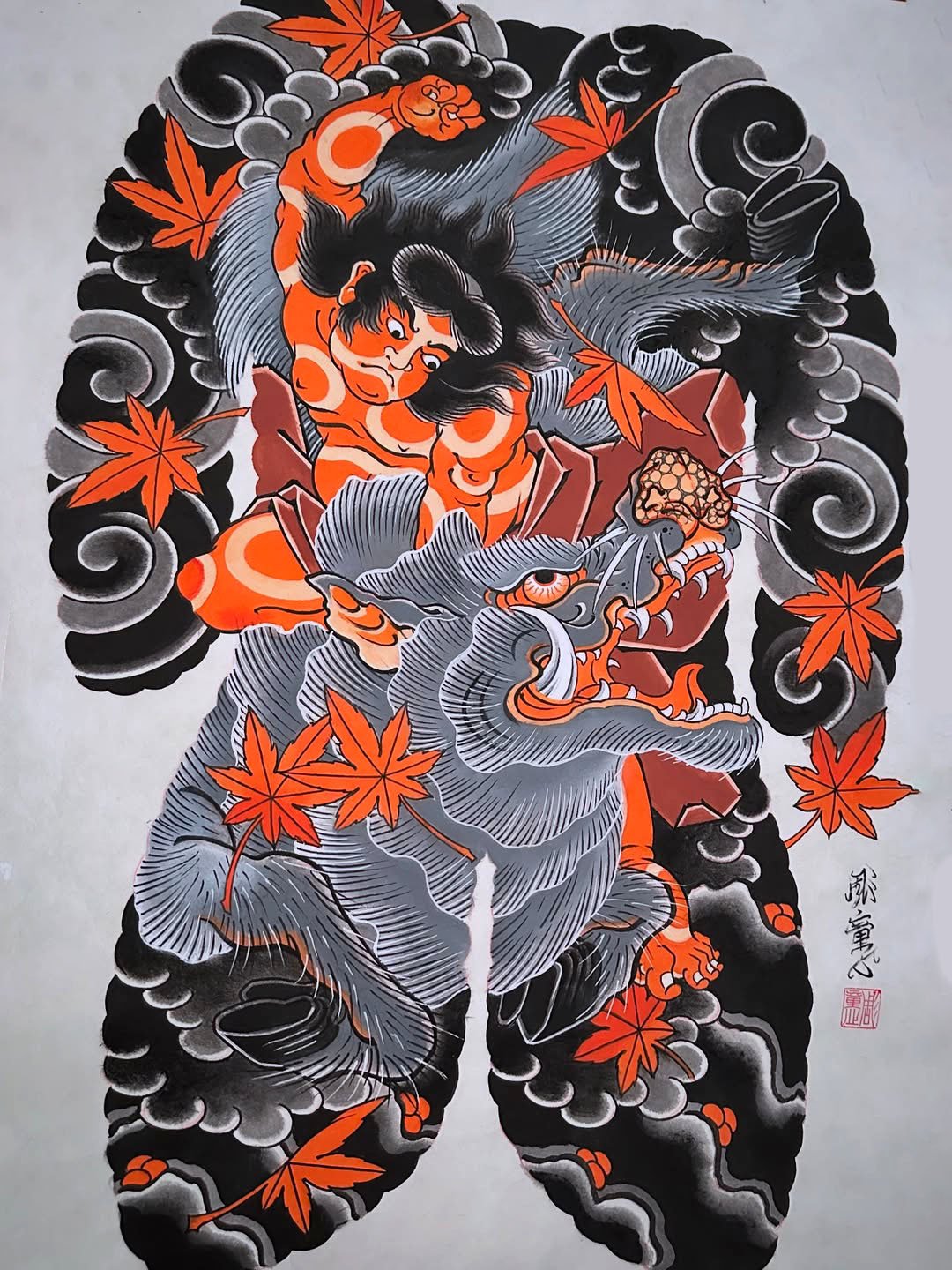
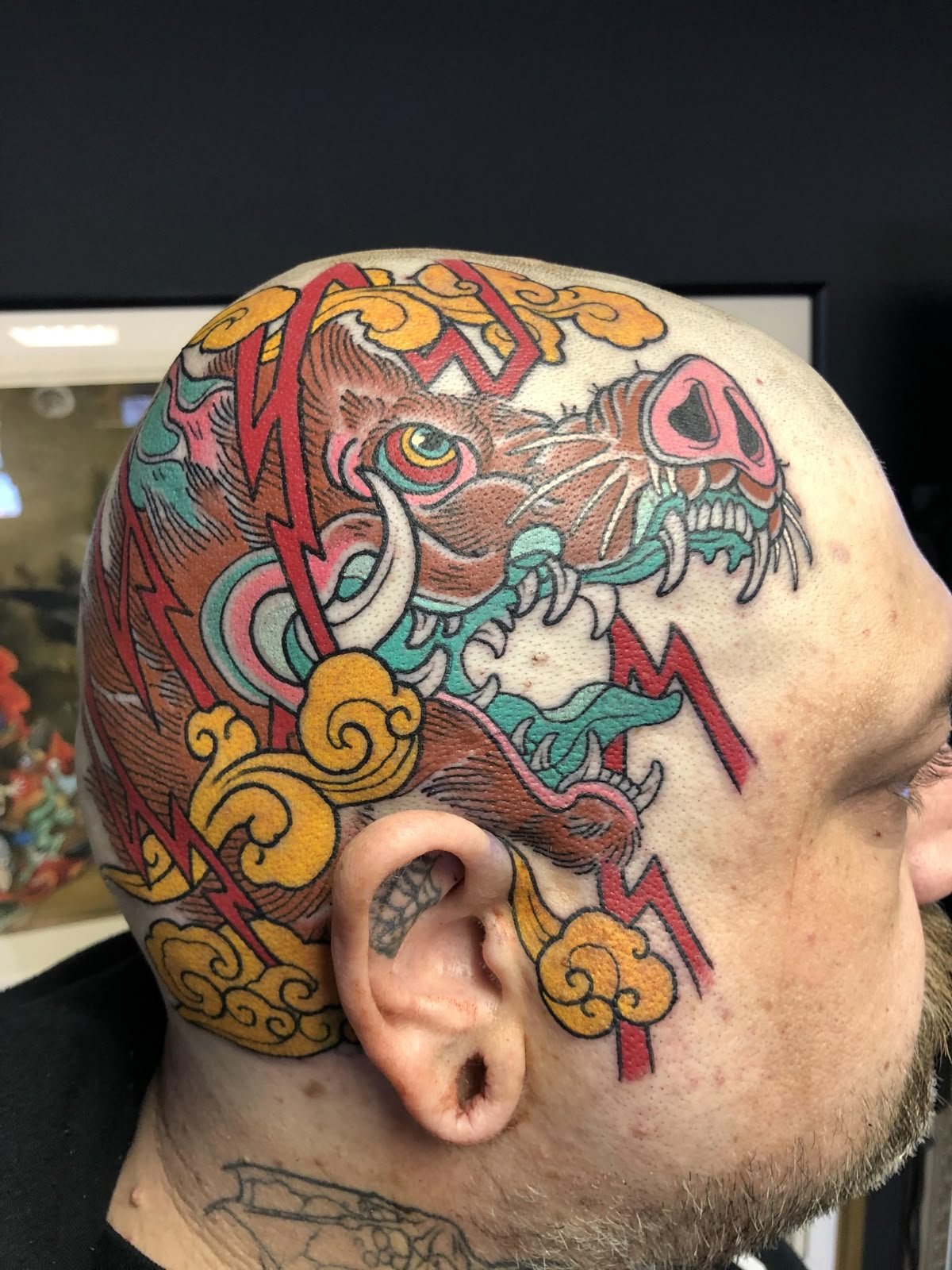
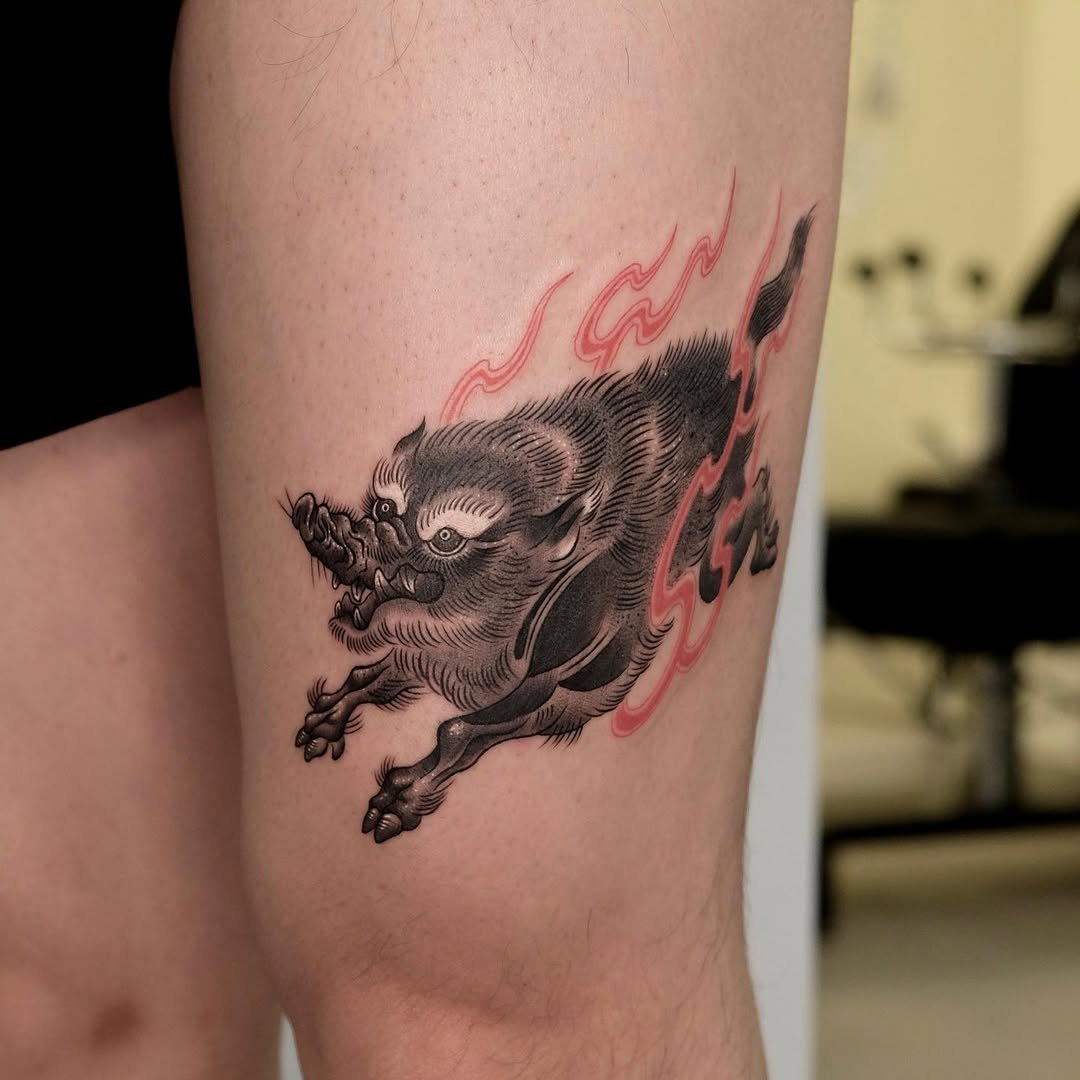
In Japanese tattooing (irezumi), the inoshishi is a recognised subject, though far less common than the tiger, dragon, koi, or snake. When it appears, it is rendered with the same compositional principles that govern all irezumi work: strong lines, integrated background elements (wind bars, clouds, waves, rocks), and seasonal consistency. The boar is associated with autumn and winter — the hunting season — and pairs naturally with autumn elements: maple leaves (momiji), chrysanthemums, bare branches, and falling leaves. A boar rendered in irezumi convention — charging through a mountain landscape, bristles raised, tusks forward, surrounded by wind and autumn foliage — carries the full weight of the inoshishi’s cultural meaning: courage that borders on recklessness, determination that does not calculate, and the energy of an animal that will not turn aside.
The rarity of the boar in irezumi compared to other animals is itself a statement. A wearer who chooses the inoshishi over the tiger or dragon is choosing a less obvious, more specific subject — one that signals familiarity with the deeper layers of Japanese symbolism.

Buddhism: the Wheel of Existence
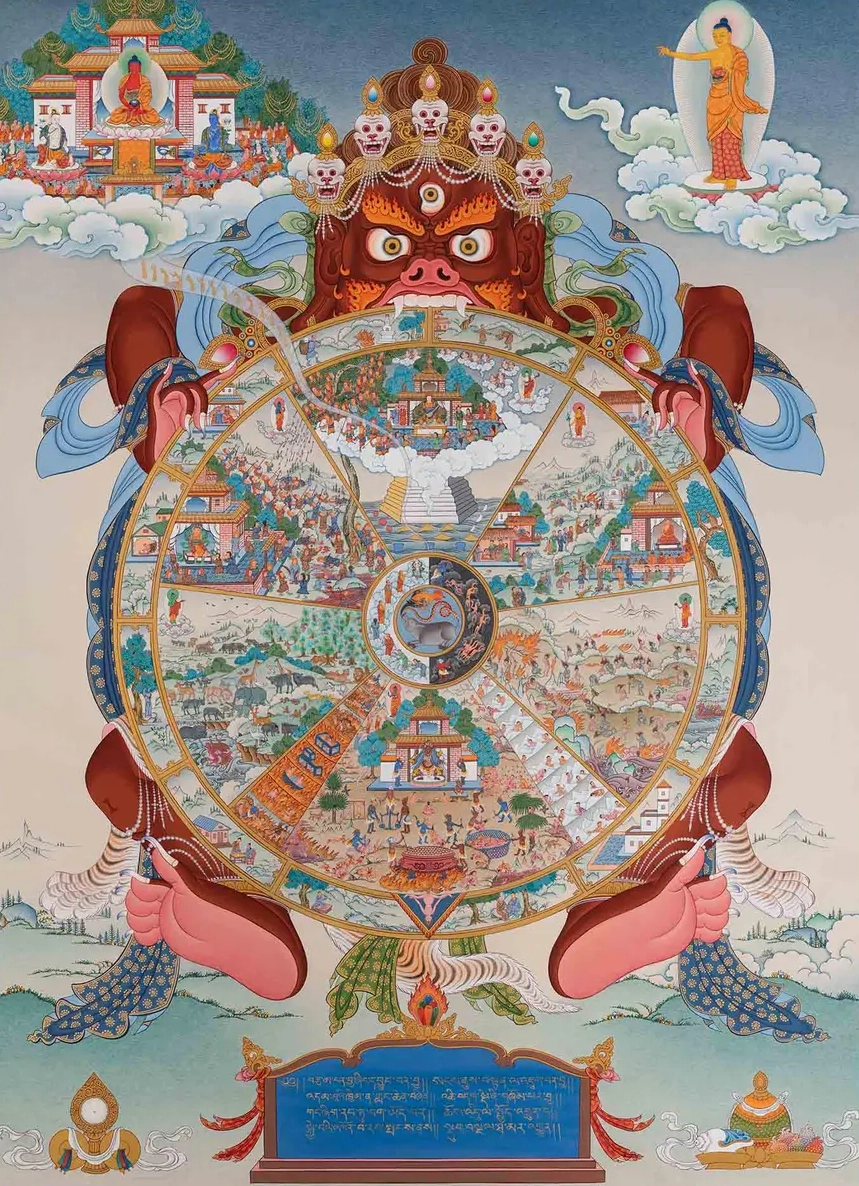
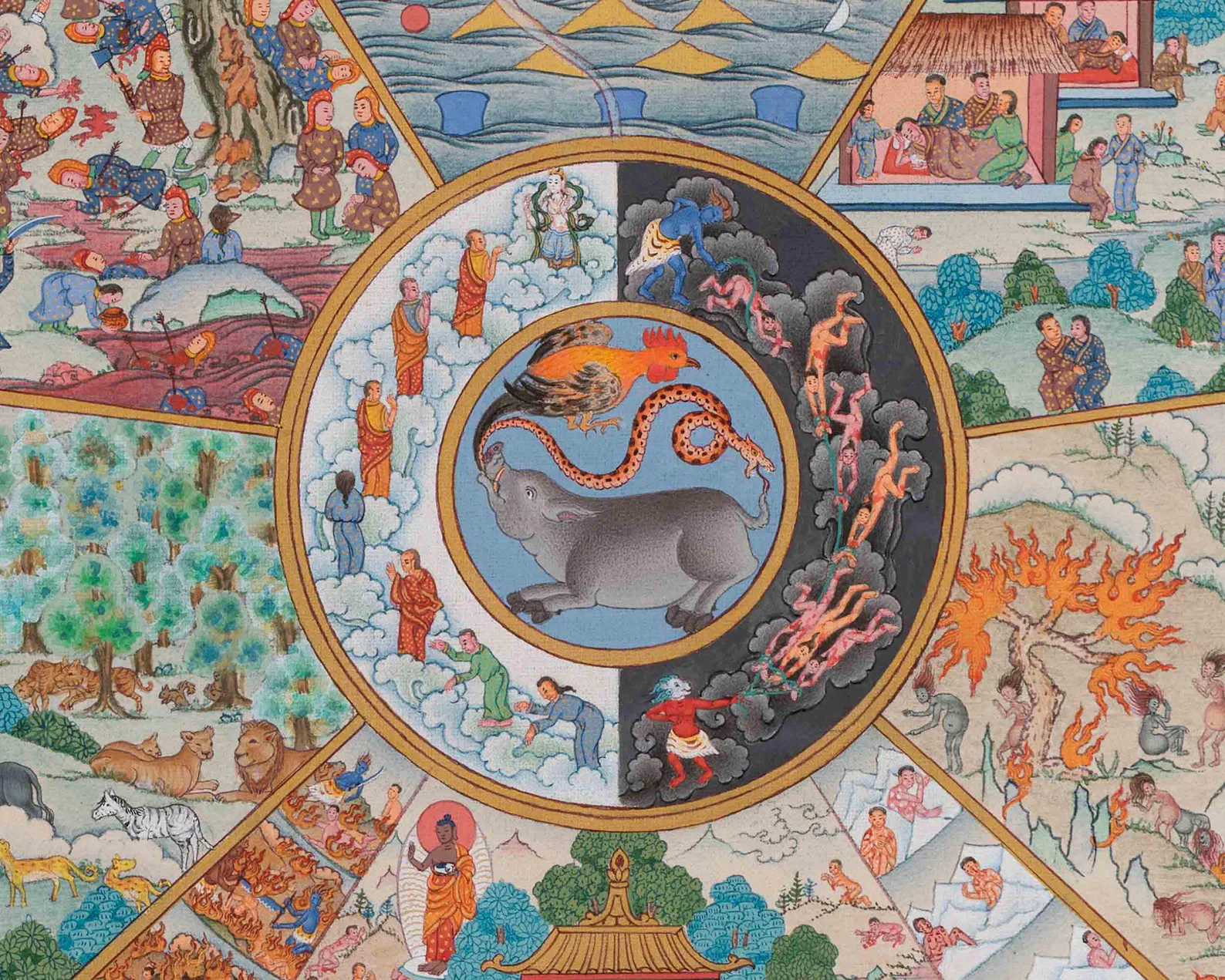
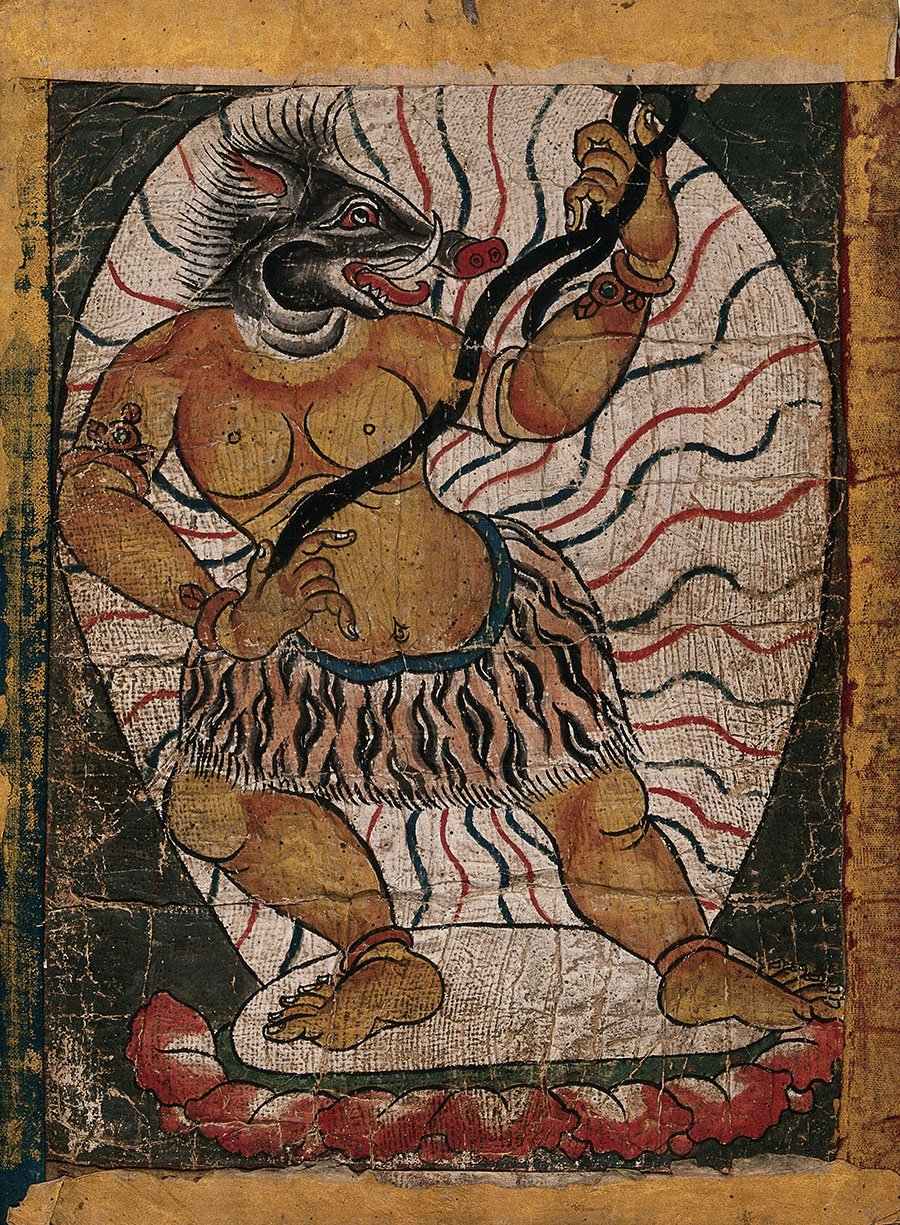
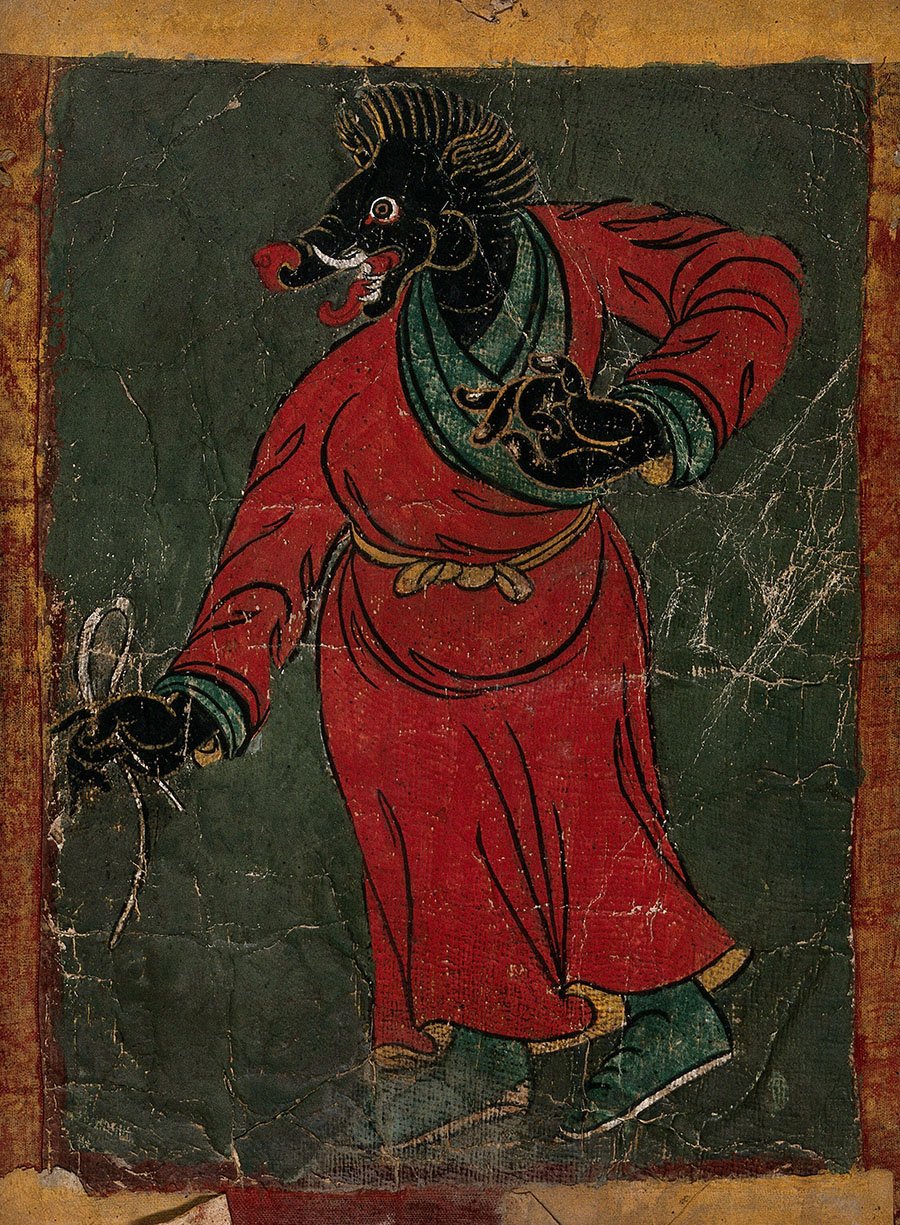
In Buddhist iconography, the boar occupies a specific and less flattering position. It appears at the centre of the Bhavachakra — the Wheel of Existence — alongside a rooster and a snake. The three animals represent the three poisons (kleshas) that keep beings trapped in the cycle of suffering and rebirth. The rooster represents attachment or desire. The snake represents aversion or hatred. The boar (sometimes depicted as a black pig) represents ignorance — moha or avidya — the fundamental delusion that prevents beings from seeing reality clearly.
This is a different symbolic register from every other tradition discussed here. In Buddhism, the boar’s headlong charge — admired in Japanese and Norse culture as courage — is reframed as a form of blindness. The animal that rushes forward without seeing clearly becomes a metaphor for the mind that acts without understanding.
A boar tattoo drawn from Buddhist iconography carries a meaning that might surprise someone who associates the animal only with strength and courage. In this context, it is an acknowledgement of a human tendency — the drive to act without wisdom — depicted honestly rather than celebrated. The three animals of the Bhavachakra — rooster, snake, and boar — often shown chasing each other in a circle at the wheel’s hub — form a compact and visually striking tattoo composition, particularly in the traditional Tibetan Buddhist painting style or when adapted into blackwork or illustrative treatments.
European heraldry: courage, the hunt, and the feast
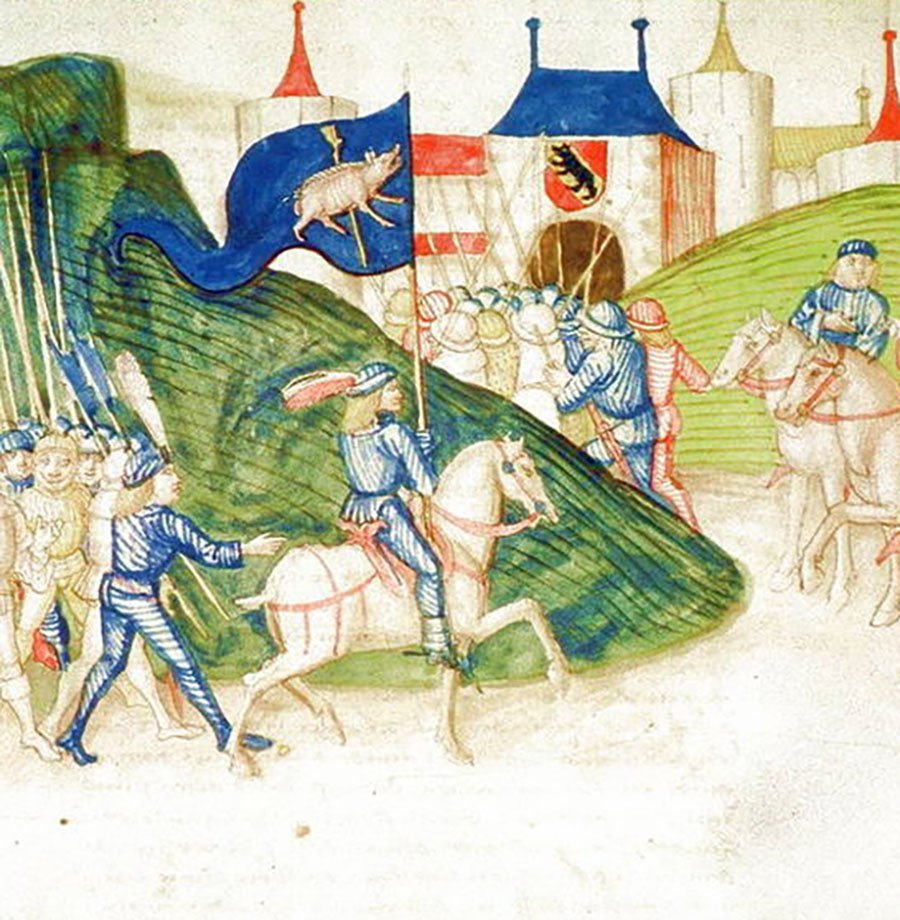
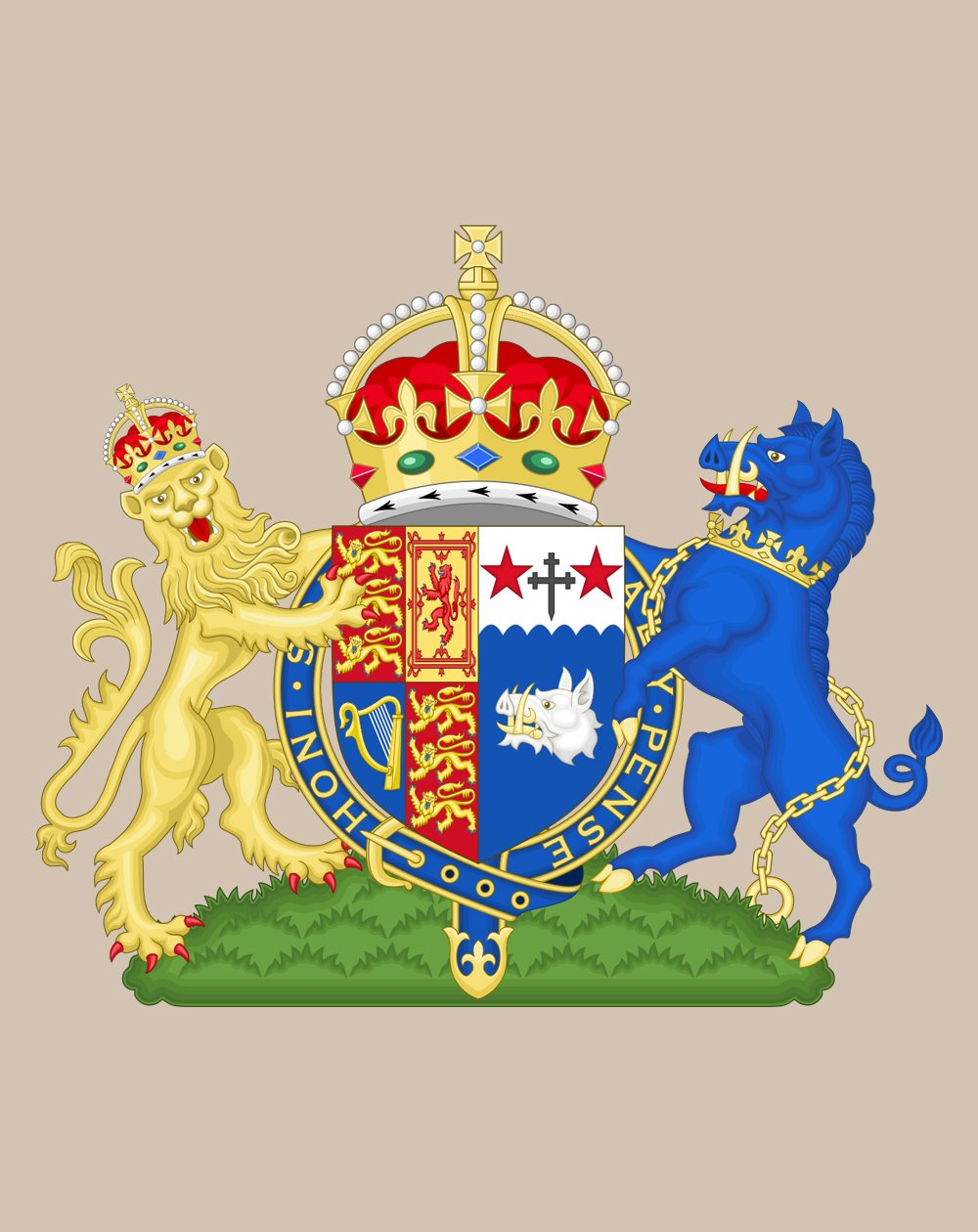
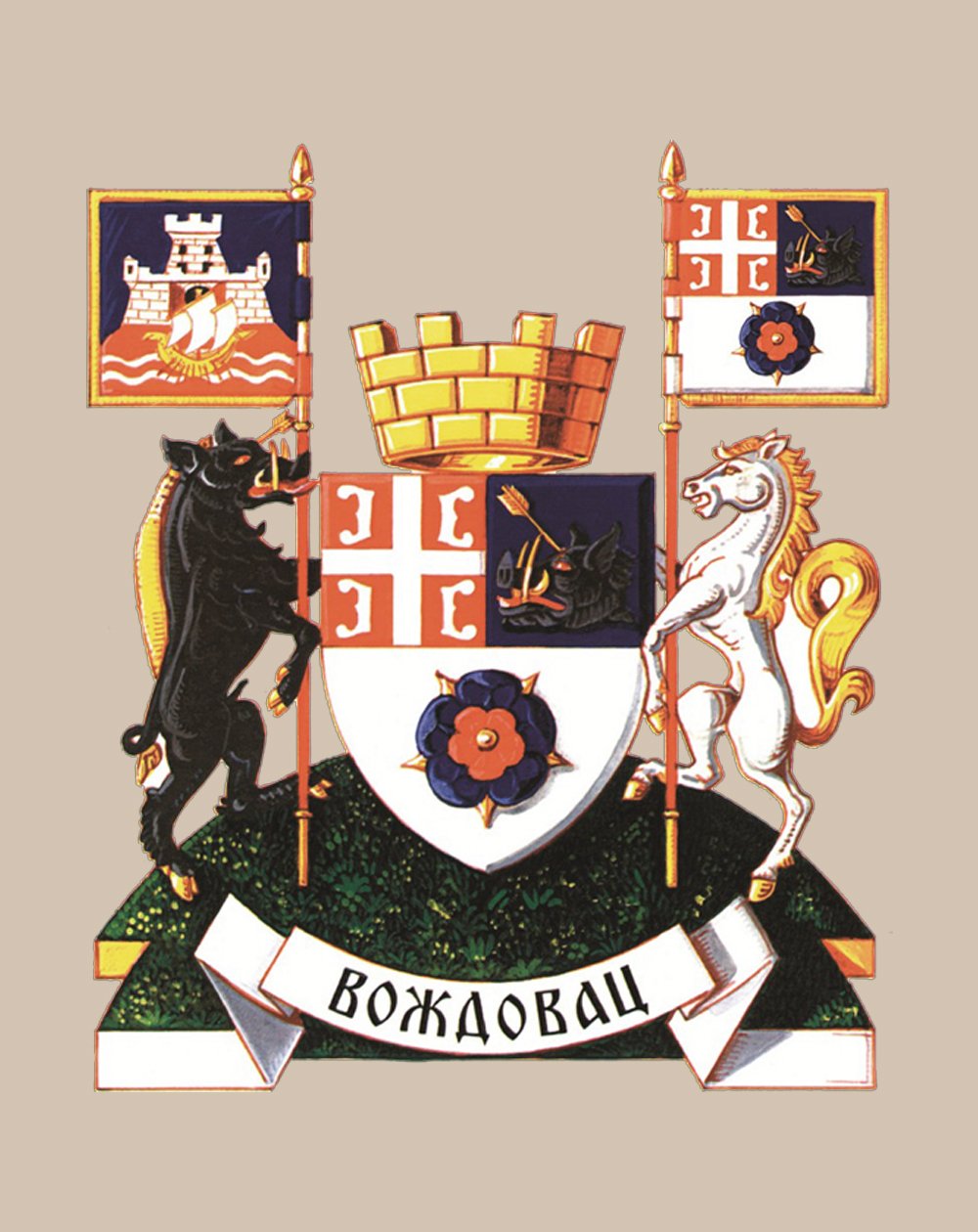
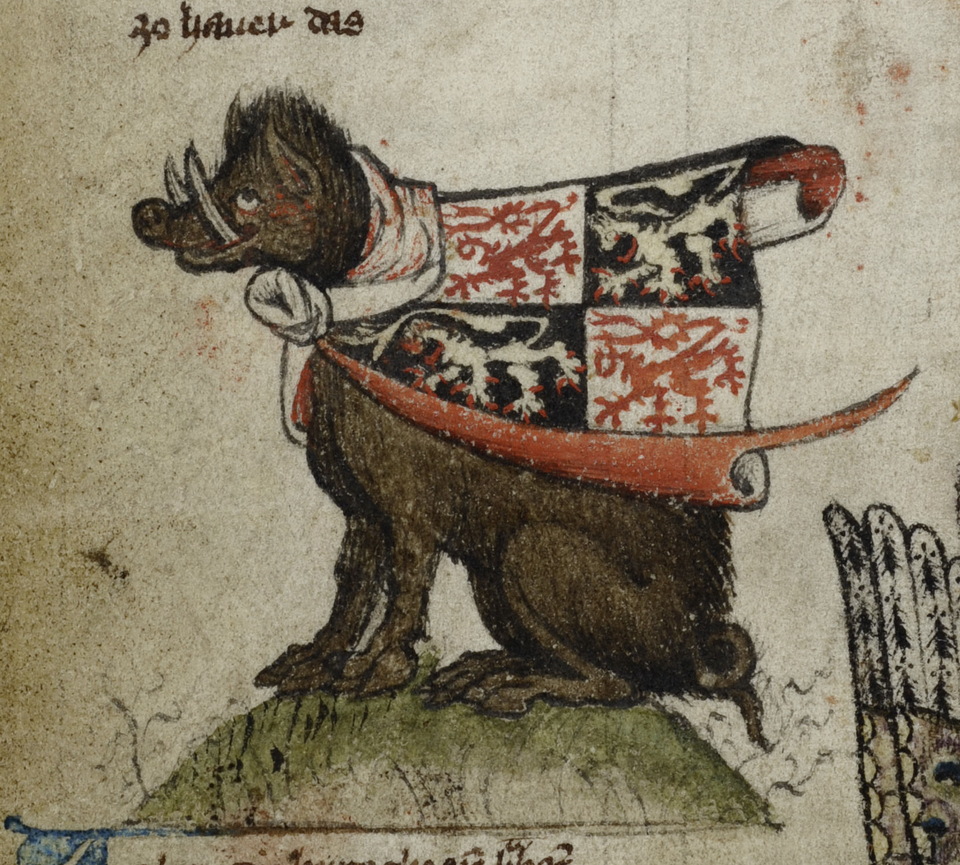
The boar is one of the four heraldic beasts of the chase in European tradition, and it entered heraldry carrying the same dual symbolism it held in Celtic and Norse culture: martial ferocity and the abundance of the table.
A complete boar on a coat of arms represents courage and fierceness in battle. A boar’s head specifically can signify hospitality — from the medieval tradition of presenting a roasted boar’s head as a centrepiece at feasts — or it may indicate that the bearer is a noted hunter.
At least three Roman legions used a boar as their emblem: Legio I Italica, Legio X Fretensis, and Legio XX Valeria Victrix. Pictish carved stones from Scotland depict boar symbols dating to approximately the 7th century, and the name “Orkney” has been interpreted by some scholars as deriving from orc-, a Celtic word for pig, possibly from a Pictish tribe that displayed a boar as its emblem.
The most famous heraldic boar belongs to Richard III of England (1452–1485). The White Boar was his personal badge, distributed in enormous quantities — an order of 13,000 cloth badges is recorded for his coronation alone. Silver-gilt boar badges have been recovered from the site of the Battle of Bosworth Field, where Richard died. The badge was a statement of personal identity and political allegiance during the Wars of the Roses, and after Richard’s death, his supporters would have discarded or hidden their boar badges immediately. Surviving examples are rare and archaeologically significant.
In Scotland, the boar’s head is the crest of Clan Campbell, Clan MacTavish, Clan Innes, and Clan Chisholm. Three boars’ heads appear on the coats of arms of the related clans, Swinton, Gordon, Nesbitt, and Urquhart. In Ireland, the boar appears on the arms of the Sullivan, Doran, Healy, Purcell, and Rogan families, among others. In the Basque Country, boars are common heraldic charges alongside wolves and bears. The Ferguson clan, tracing its origin to three royal brothers from Dál Riata who became among the first Scottish kings, displays three boars across its various branches.
Heraldic boar imagery is actively tattooed, particularly among wearers with heritage connections to specific clans, families, or regions. A heraldic boar’s head — couped at the neck in the English style or erased close behind the ears in the Scottish and Welsh style — is a precise and visually compact design that works well on the forearm, upper arm, calf, or chest. It can be rendered faithfully to the heraldic original, with tinctures (the specific colours of the family’s arms), or adapted into a more contemporary tattoo style while retaining the heraldic composition. For wearers connected to Clan Campbell, Clan Gordon, or any of the families that carry the boar, the tattoo functions as a lineage marker — a permanent statement of belonging. For others, it draws on the broader heraldic register: an animal that represents a willingness to fight, a refusal to be driven off, and a tradition of feeding others from the spoils.
Christianity: the shadow side of boar imagery
The boar became a symbol of lust and gluttony — two of the seven deadly sins. In some Christian bestiary traditions, the boar’s tusks represent the destructive power of uncontrolled desire. Psalm 80:13 describes a wild boar from the forest that ravages God’s vine — an image interpreted allegorically as the enemies of the Church or as sin itself attacking the faithful.
In Egyptian mythology — which predates Christianity but influenced some of its imagery — the god Set took the form of a black boar to tear out the eye of Horus. This association of the boar with darkness, violence against the divine, and chaotic aggression carried forward into Christian readings of the animal.
The Christian reading is the minority position in global boar symbolism, but it exists and affects how the image is received. A person wearing a boar tattoo in a cultural context shaped by Christian iconography may find it read differently than they intended, though this is less common than with the snake, whose Christian associations are far more dominant in Western culture.
The boar in Western tattoo traditions
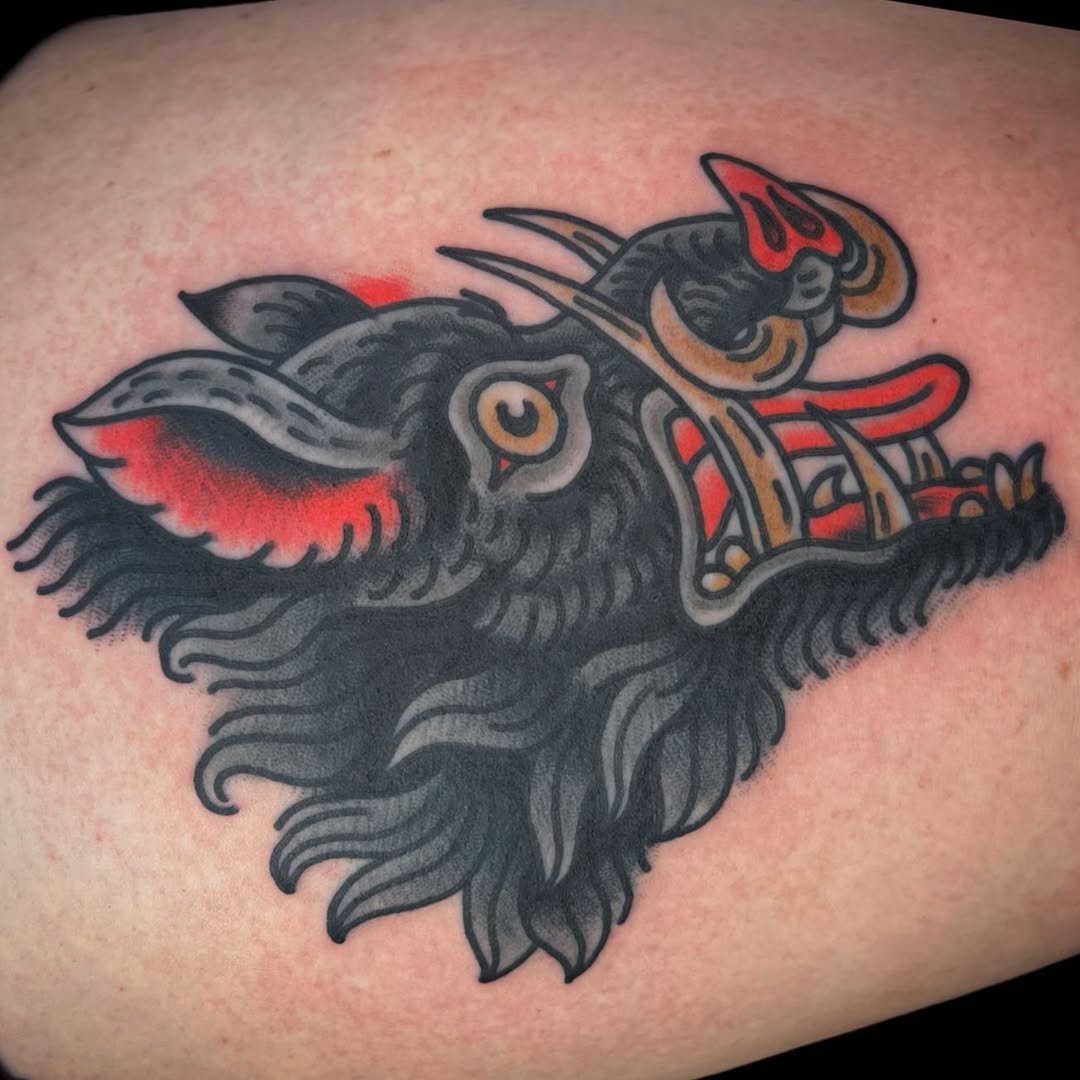
The boar has never been a standard subject in American traditional flash the way the eagle, snake, panther, or skull have. Its absence from the core flash repertoire means it carries no established composition or codified meaning within the American traditional style, which is itself an opportunity. A boar rendered in traditional style (bold outlines, limited palette, flat colour, readable silhouette) reads as a deliberate and unusual choice, drawing attention precisely because it breaks from the expected visual vocabulary.
In neo-traditional work, the boar gains more visual freedom. The animal’s texture — coarse bristles, scarred hide, the ridge of hair along the spine — lends itself to the neo-traditional emphasis on detail, colour range, and decorative framing. A neo-traditional boar’s head surrounded by oak leaves, acorns, or autumnal foliage connects the image to its Celtic and Norse associations with the forest, the harvest, and the priestly class.
In realism and photorealism, the boar is a demanding subject. The texture of bristle on hide, the sheen of a tusk, the depth of a small eye set deep in a massive skull — all require precise tonal control. A realistic charging boar conveys visceral physical threat in a way that stylised treatments do not. Black-and-grey realism is particularly effective for boar portraits, where the contrast between dark bristles and lighter skin tones creates strong visual depth.
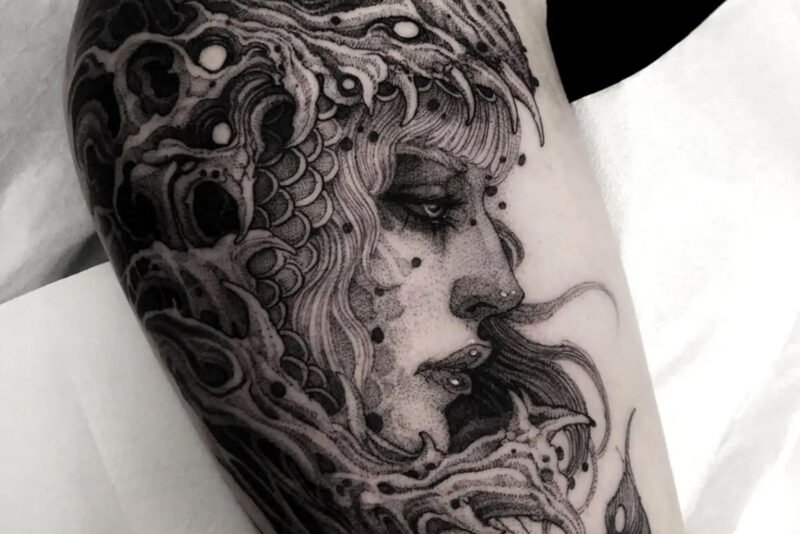
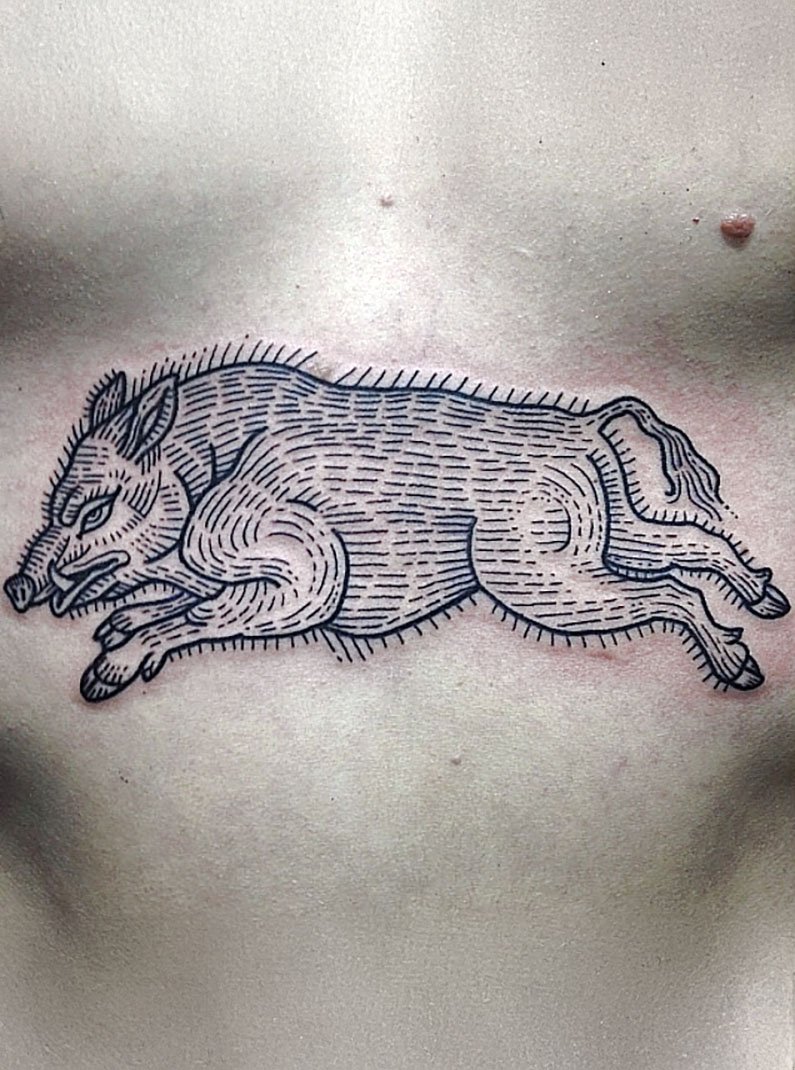
In blackwork and dotwork, the boar can be reduced to its essential graphic form — a silhouette defined by its distinctive shape: the massive head, the sloping back, the raised bristles. Celtic or Norse knotwork integrated into the boar’s body creates a hybrid form that references specific cultural traditions through both the subject and the rendering style. Dotwork boar compositions, built from stippling, can achieve a textural density that echoes the animal’s rough physical presence.
In illustrative and woodcut styles, the boar connects to a long history of depiction in European printmaking — Dürer, medieval bestiaries, heraldic engravings — providing a rich visual reference library for artists working in this register. The animal’s association with the forest, the hunt, and medieval European culture makes it a natural subject for illustrative work that draws on the aesthetics of historical printmaking.
Composition, placement, and pairing
The boar’s visual strength lies in its forward momentum. The most effective boar tattoo compositions capture the animal in motion — charging, head down, tusks forward, bristles raised — or in a moment of confrontation, facing the viewer with the full force of its massive skull. Static poses (a boar standing at rest, a grazing boar) lose the energy that makes the animal symbolically compelling. The boar is an animal defined by its charge, and a boar tattoo that does not convey that energy misses the point.
The head alone is a powerful composition. A boar’s head — tusked, bristled, confrontational — carries heraldic weight and reads clearly at smaller scales. It suits the forearm, calf, upper arm, and chest. A front-facing boar’s head is particularly striking: symmetrical, aggressive, and visually heavy, it works as a standalone piece or as the centrepiece of a larger composition.
The full-body charging boar demands more space. It works best on the thigh, the ribs, the upper back, or as the central element of a sleeve. The animal’s low, horizontal body shape can be challenging to fit into narrow vertical spaces but excels in horizontal or diagonal compositions that follow the body’s contours — across the ribs, around the upper arm, or descending across the shoulder blade.
Common pairings depend on the tradition being referenced. In Norse-themed work: runes, knotwork, Yggdrasil, ravens, the Valknut, and other mythological elements. In Celtic-themed work: knotwork borders, oak leaves, acorns, torcs, and La Tène curvilinear patterns. In heraldic work, the specific tinctures, supporters, and motto of the family or clan are referenced. In Japanese work: autumn elements — maple leaves, chrysanthemums, bare branches — and appropriate background treatments (wind bars, clouds, mountain landscapes). In naturalistic compositions: forest settings, fallen leaves, broken ground, the boar’s natural habitat. A boar-and-spear or boar-and-hunting-dogs composition references the hunting tradition across Greek, Celtic, and medieval European cultures.
The boar pairs less naturally with other animals than the snake or eagle does, because it is not part of an established system of animal dualities in most tattoo traditions. This is an advantage: a boar tattoo composition feels original in a way that an eagle-and-snake or tiger-and-dragon does not. The animal stands on its own.
The meaning of a boar tattoo
The boar is an animal without ambiguity. It faces what lies ahead and moves forward. Every cultural tradition — Greek, Norse, Celtic, Hindu, Japanese, heraldic, and even the Christian inversion — agrees on this fundamental quality. The disagreements are about whether that quality is divine or dangerous, admirable or destructive, sacred or sinful.
A boar tattoo carries directness. It signals a specific engagement with mythology, heritage, or personal identity — the wearer who chooses a boar over a wolf, a lion, or a bear is choosing an animal that most people cannot immediately place, which means they are choosing an image that invites the question rather than assuming the viewer already knows the answer. The boar rewards that curiosity. Its symbolic history is deep, specific, and documented across thousands of years and dozens of cultures.
For some wearers, the boar is ancestral — an energy. For others, it is mythological — Gullinbursti’s golden bristles, Varaha lifting the earth, the Calydonian beast that tested the heroes of Greece. For others still, it is personal — the animal whose behaviour they recognise in themselves.
The boar does not retreat, nor calculate. The boar commits.
Sources & further reading
- Boar, Idioms, The Free Dictionary by Farlex.
- Wild boar, Calydonian boar hunt, Gullinbursti, Bhavacakra, Boars in heraldry on Wikipedia, The Free Encyclopedia.
- Carol Rose. Giants, Monsters, and Dragons: An Encyclopedia of Folklore, Legend, and Myth, W. W. Norton, 2001.
- Karl Kerényi. The Heroes of the Greeks, Thames and Hudson, London, 1959.
- Edward Pettit (Ed.) Hyndluljóð. The Poetic Edda (pp.805-830) CC BY-NC 4.0, DOI:10.11647/OBP.0308.35.
- Jennifer Foster. Bronze Boar Figurines in Iron Age and Roman Britain. British Archaeological Reports: 39. 1977.
- Brazen Beasts, The National Museum of Ireland.
- Gallery of Category: Boars in heraldry. Wikimedia Commons.
- Thijs Porck. Hogs and Heraldry: Medieval Pigs on Coats of Arms. Universiteit Leiden, 2023.