List of tattooing styles
The complete tattoo style tree
There is no single agreed-upon list of tattoo styles. Artists debate the boundaries between styles, terminology shifts across regions and generations, and some categories the industry treats as styles are actually techniques, compositional approaches, or subject-driven specialisations. A comprehensive list needs to include all of them while being honest about what each one actually is.
This article attempts exactly that. Every style, technique, tradition, and category that is actively practised, searched for, or discussed under the label of “tattoo style” is listed here — organised into five groups based on what connects the entries.
- Traditional covers the family of styles rooted in the Western commercial tattoo shop.
- Realism covers styles that aim to reproduce visual reality on skin.
- Graphic covers styles that draw from visual traditions outside tattooing — printmaking, illustration, design, typography.
- Contemporary covers styles that are currently forming or have emerged recently.
- Culture-bound covers tattooing practices inseparable from the culture that produced them.
Some entries appear in more than one category simply because they belong in multiple categories. Some entries are flagged as more techniques or subject categories rather than styles in the strict sense. I also note clearly where historical claims are contested or where evidence is limited. Each entry links to a full article; the rest are described here in enough detail to orient the reader and distinguish one style from the next.
Traditional
Styles rooted in the Western commercial tattoo shop — its flash conventions, studio practices, and apprenticeship transmission.
American Traditional (Old School)
Bold outlines, saturated colour in a limited palette (red, green, yellow, black), standardised flash compositions built for readability and longevity on skin. Codified through decades of American shop practice. The root style of the Western tattoo lineage.
Articles: American traditional, Sailor Jerry — Norman Keith Collins
Neo-Traditional
Expands on American Traditional’s structural logic: varied line weights, broader colour range, more complex shading and detail, influences from Art Nouveau and Art Deco. Retains an outlined, illustrative composition but allows greater technical and aesthetic range within it.
Article: Neo-traditional tattooing style
New School
Exaggerated proportions, cartoon-influenced rendering, maximal colour saturation, pop culture and graffiti references. Emerged in the late 1980s and early 1990s. Takes the conventions of American Traditional as a departure point and pushes them toward caricature and spectacle.
Article: New school
Chicano
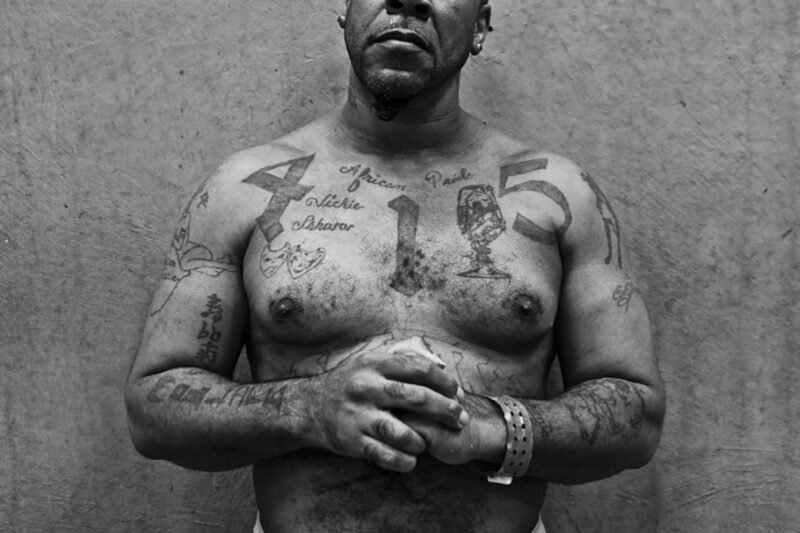
Rooted in Mexican-American culture — its faith, family structures, neighbourhood identity, and experience of incarceration. Fine-line black-and-grey work with distinctive iconography: religious imagery, script, portraiture, lowriders, and memorials. Developed its own shading conventions and a deep relationship between tattooing and cultural identity.
Articles: Chicano, Good Time Charlie, Jack Rudy, Freddy Negrete.
Black-and-grey
Single-ink technique using diluted black washes to build a full tonal range without colour. Originated in Chicano prison tattooing with improvised tools and limited materials, later adopted across realism, illustrative, and other styles. Functions as a technique across multiple style categories rather than a style in the strict sense.
Articles: Black-and-grey tattooing style, Good Time Charlie, Jack Rudy, Don Ed Hardy, Freddy Negrete, Mark Mahoney, Dr. Woo.
Realism
Realism
Aims to depict subjects as they appear to the eye — accurate anatomy, believable light and shadow, three-dimensional depth, tonal range — but with room for artistic interpretation. The artist makes decisions about emphasis, contrast, atmosphere, and composition that depart from strict photographic accuracy. Typically executed without outlines, relying entirely on tonal control and gradient work. Can be rendered in colour or black-and-grey.
Article: Realism
Photorealism
Aims to reproduce a photographic source on skin with maximum fidelity — exact tonal values, precise detail replication, minimal artistic interpretation. The reference image is the standard, and the goal is to make the tattoo indistinguishable from a high-resolution print at a distance. The technical demands are extreme: every value transition, every reflected light, every textural detail must be controlled through needlework alone. Leaves the artist the least creative latitude of any style in tattooing.
Micro-realism
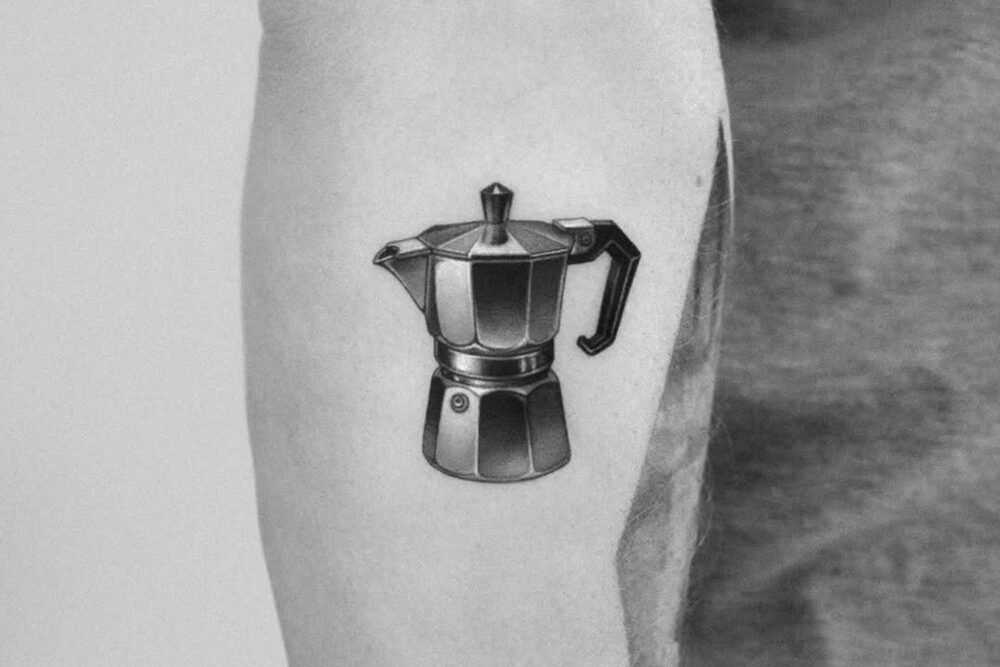
Realism compressed to a small scale. Every detail must remain legible at reduced size, which demands extreme precision in needle configuration and ink placement. The challenge extends beyond execution — the fine tonal gradients and minimal ink density that make micro-realism work at a small scale are also the properties most affected by the natural migration and softening that all tattoos undergo over time.
Article: Microrealism
Colour realism
Full-colour photorealistic work. Shares the foundational principles of realism but diverges in technique: colour mixing on skin, saturation management, layering of pigments, and the behaviour of different colour inks over time all present challenges distinct from black-and-grey work. Skin tone, lighting conditions, and colour temperature must be managed simultaneously.
Hyperrealism
Hyperrealism is the term often applied to works that push photographic fidelity to its extreme — pieces that attempt to be visually indistinguishable from the source photograph at normal viewing distance. The term describes works that seem to be delivered “more realistic than realism”. However, the line between realism and hyperrealism is not agreed upon within the industry and most artists who produce hyperreal work identify themselves simply as realism artists.
Surrealism
Photorealistic rendering applied to impossible, dreamlike, or psychologically charged compositions. Uses the full technical toolkit of realism to depict subjects that could not exist — impossible anatomy, warped perspective, collisions of scale and context. Draws on the visual language of Dalí, Magritte, and surrealist painting, translated into skin.
Dark art / Horror
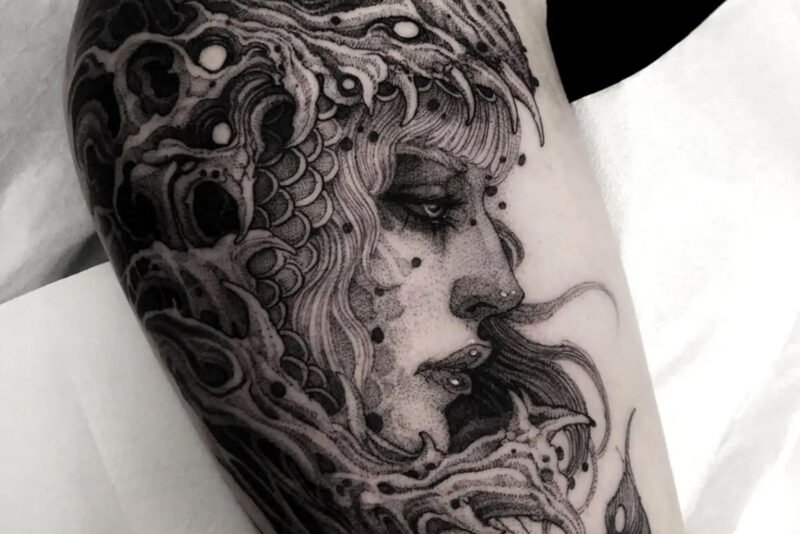
Macabre, supernatural, and horror-derived imagery — demons, skulls, monsters, occult symbols, horror film iconography. Typically rendered in black-and-grey realism or high-contrast blackwork. Paul Booth is among the most influential figures in establishing the category. The style spans a wide range, from photorealistic horror portraiture to heavily stylised blackwork interpretations.
Portraiture
Realistic depiction of human or animal faces, with emphasis on likeness, expression, and emotional accuracy. A specialisation within realism that demands specific technical skill: rendering skin tones, capturing eyes, building hair texture, and preserving the subtleties of expression that make a face recognisable. Frequently executed as memorials, tributes, or personal records.
Trash Polka
Originated in Würzburg, Germany, created by Simone Pfaff and Volko Merschky at Buena Vista Tattoo Club. Combines photorealistic elements with graphic, abstract, and typographic collage in deliberately layered, fragmented compositions. Primarily executed in black and red. The visual logic is closer to mixed-media art or editorial design than to conventional tattoo composition.
Article: Trash Polka tattooing style
3D / Optical illusion
Graphic
Graphic styles draw from visual traditions outside tattooing — printmaking, drawing, illustration, design, typography — and treat the skin as a surface for composed imagery.
Illustrative
A broad category covering tattoo work that retains the qualities of drawing — visible mark-making, intentional line texture, hatching, cross-hatching, or ink wash effects. Sources range from book illustration and editorial art to scientific illustration, printmaking, and contemporary graphic art. What connects the range is that the artist’s hand and the process of drawing remain visible in the finished piece, rather than being concealed by smooth blending or photographic realism.
Article: Illustrative tattooing style
Blackwork
Any tattooing executed exclusively in black ink. The category is broad: it encompasses dotwork, geometric compositions, ornamental patterning, heavy solid-black coverage, tribal-derived designs, and illustrative work rendered entirely without colour. What unifies it is the material constraint — one ink, every possible variation extracted from how it is applied, diluted, layered, and spaced.
Article: Blackwork tattooing style
Blackout
Total solid black coverage of large skin areas. Where blackwork uses black ink to create images and patterns, blackout makes the ink itself the subject — the covered surface, the boundary between inked and uninked skin, and the visual weight of large-scale saturation on a body — sometimes used as a standalone aesthetic statement, sometimes as a method of covering or reworking existing tattoos.
Article: Blackout tattoo style
Biomechanical
Depicts mechanical structures — gears, pistons, cables, circuitry, plating — beneath or fused with organic tissue, as if the skin has been opened to reveal a machine interior. The visual language originates in H.R. Giger’s work, particularly his designs for Alien (1979). Tattoo artists, including Guy Aitchison and Aaron Cain, were among those who translated that aesthetic onto skin and developed it into a freehand tattooing practice designed to follow the wearer’s individual anatomy.
Article: Biomechanical tattooing style
Bioorganic
Uses the same compositional principle as biomechanical — revealing what lies beneath the skin — but the interior is biological: bone, muscle, tendon, plant matter, alien anatomy, with minimal or no mechanical elements. The boundary between bioorganic and biomechanical is often blurred in practice, and many artists work across both.
Dotwork
Images and patterns built entirely from individual dots. Depending on dot density, spacing, and layering, the technique can produce smooth tonal gradients, fine textures, or precise geometric structures. Used across ornamental, geometric, illustrative, and portrait work — a mark-making method that functions across styles rather than defining a single one.
Woodcut / Engraving / Etching
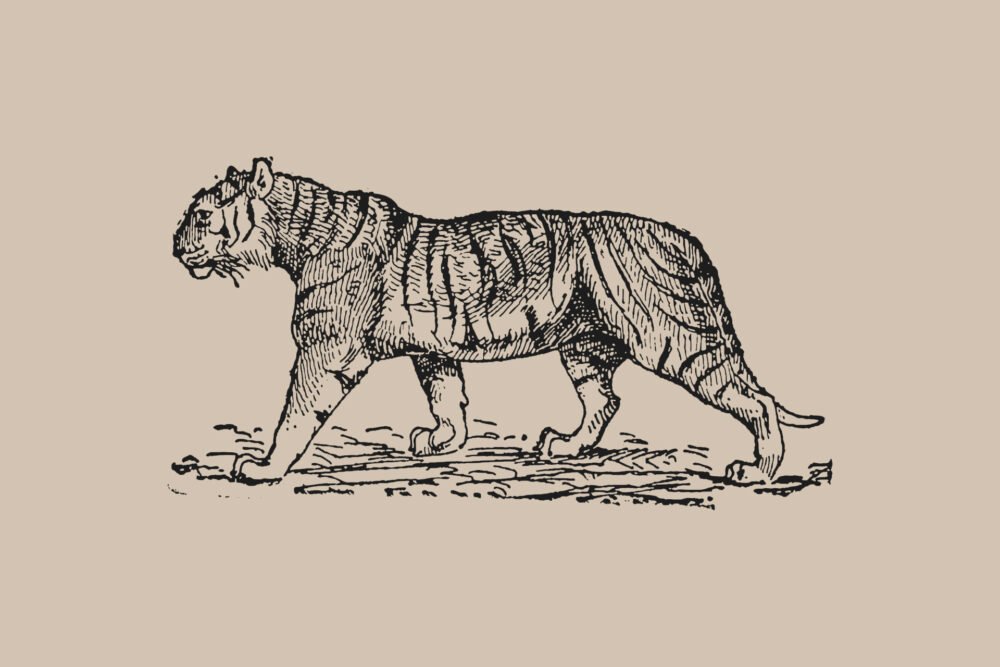
Reproduces the visual language of historical printmaking — relief printing, intaglio, and copperplate engraving. Parallel line shading, dense cross-hatching, strong contrast, and subjects often drawn from medieval or Renaissance-period imagery. The works of Albrecht Dürer and Gustave Doré are common reference points, though the range extends across the full history of printed illustration.
Sketch
Lettering / Script / Calligraphy
Typography as the primary visual element. The range runs from simple font reproduction to complex hand-lettered compositions, Gothic blackletter, Arabic calligraphy, East Asian brush script, Hebrew, Khmer, Tibetan, and decorative monogramming. Each script tradition carries its own structural rules, and executing them on a curved, living surface adds a layer of difficulty that flat-surface lettering does not face.
Single line / Continuous line
The entire image drawn with one unbroken line from start to finish. A compositional constraint that demands precise planning and flawless execution — the artist cannot lift the needle or correct a path once the line is underway. The economy of means shares ground with minimalism, but single-line work can be highly complex and detailed.
Negative space
Compositions that use uninked skin as an active design element — the image is defined as much by what is left out as by what is inked. A compositional principle applied across blackwork, geometric, illustrative, and other styles rather than a style in itself. Included here because the industry frequently discusses and searches for it as a distinct category.
Tribal (Western)
Bold black graphic designs — sweeping curves, pointed forms, symmetrical compositions designed to follow the body’s musculature. Loosely derived from Polynesian, Borneo, and other indigenous tattoo traditions but detached from their specific cultural meanings and iconographic systems. Dominated Western tattooing in the 1990s and early 2000s. Leo Zulueta is among the foundational figures. The category is inherently problematic — it compressed dozens of distinct cultural traditions into a single aesthetic product — but its scale and influence on the industry are too significant to omit from a comprehensive reference. At its peak, it was the most requested tattoo design category in the Western world.
Article: The Western Movement
Contemporary
Styles that are currently forming or have emerged recently, often without the decades of codification that define older styles.
Cybersigilism
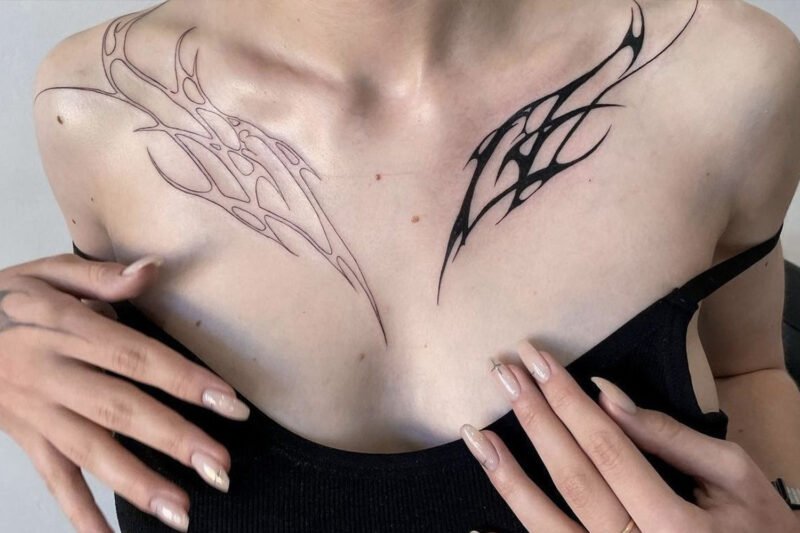
Sharp angular line work evoking circuitry, digital code, glitch aesthetics, and occult sigil structures — often combining all of these into a single visual language. Emerged in the early 2020s from online tattoo culture, strongly influenced by digital design tools and internet-era visual identity. Compositions tend toward symmetry and vertical flow, following the body’s centre line or limb axis.
Article: Cybersigilism
Minimalist
Maximum reduction applied to tattooing — economy of line, negative space as a primary compositional tool, deliberate restraint in scale and detail. Can be executed in fine line, bold line, dotwork, or single needle. The defining principle is not a technique but a design philosophy: stripping the image to its essential elements and leaving everything else out.
Article: Minimalism tattooing style
Ornamental
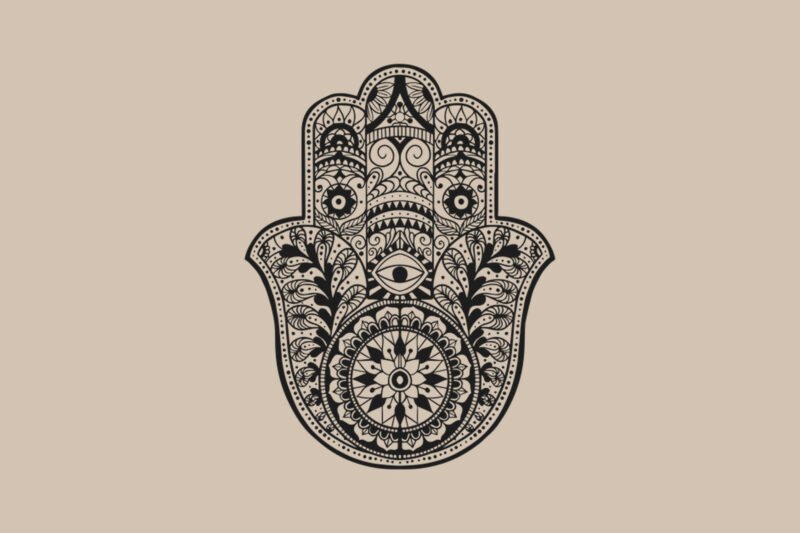
Decorative pattern as the primary subject of the tattoo. Draws on Islamic geometric patterns, Hindu and Buddhist mandalas, Art Deco, textile traditions, and architectural ornament. Compositions are designed to work with the body’s form — wrapping joints, following limbs, framing the torso — often symmetrical, often large-scale. The line between ornamental tattooing and the source traditions it draws from raises some of the same cultural questions as culture-bound styles.
Article: Ornamental tattooing style
Fine line
Extremely thin, precise line work using small-needle configurations — single-needle or tight liner groupings. A technique that has become its own stylistic identity in contemporary tattooing, particularly for small-scale and delicate work. Fine line pieces can range from simple and minimal to highly detailed and complex; the defining characteristic is the weight of the line, not the complexity of the image.
Article: Fine line tattooing style
Watercolour
Mimics watercolour painting on skin: soft colour washes, splashes, bleeds, and drips, often with minimal or no outline. At its best, it produces effects unlike anything achievable in other tattoo styles — translucent colour, fluid movement, and a lightness that most tattooing deliberately avoids. The trade-off is longevity: the soft edges and light colour saturation that define the aesthetic are the properties most vulnerable to degradation as skin ages and is exposed to light.
Article: Watercolour tattooing style
Handpoke (contemporary practice)
Non-electric tattooing as a deliberate contemporary studio choice. Uses a single needle or a small grouping pushed by hand. Produces a texture that differs from machine work — softer saturation, visible dot structure, a different skin trauma profile and healing process. The method is ancient and shared by traditional practices worldwide, but contemporary handpoke operates in a different context: chosen for its aesthetic and process qualities rather than inherited as cultural practice.
Article: Handpoke
Ignorant style
Deliberately crude, childlike, or naïve drawing executed as tattoos. Bold lines, flat or no shading, often humorous or absurdist subject matter. The roughness is intentional — a rejection of technical polish as a measure of quality. The name comes from the scene that produced it, originally associated with punk and underground tattoo culture where the aesthetic carried an anti-establishment stance. Now practised widely, including by technically skilled artists working in deliberate simplicity.
Abstract
Non-representational compositions — colour fields, gestural marks, geometric fragments, painterly strokes — with no figurative subject. Draws on abstract expressionism, modern art, and contemporary painting. Without a recognisable subject to anchor the composition, the work depends entirely on colour relationships, spatial tension, and mark-making quality to hold the viewer’s attention and hold up as a tattoo over time.
Anime / Manga
Reproduces the visual conventions of Japanese animation and comics on skin: large expressive eyes, specific hair rendering, flat colour fields with cel-shading, dynamic poses, speed lines, and panel-influenced composition. The technical demands are specific — the style requires clean colour boundaries, consistent line weight, and faithful reproduction of a visual system originally designed for print and screen, translated onto a curved and textured surface.
Neo-Japanese
Uses Japanese irezumi iconography — dragons, koi, hannya, peonies, waves, foo dogs — but renders it with contemporary techniques: realism-influenced shading, expanded colour range, blended gradients, and compositions that do not follow the traditional canon’s rules on seasonal coherence, background integration, or full-body placement. The imagery is Japanese; the execution and compositional logic are contemporary Western tattooing.
Patchwork
A compositional approach: individual tattoos placed as discrete, separated pieces across the body, each self-contained with its own border and internal style, rather than blended into unified coverage. The skin between pieces is part of the design. Any style can be used within individual patches — patchwork defines the relationship between tattoos, not the tattoos themselves.
Article: Patchwork tattoo style
Sticker style
Tattoos designed to look like adhesive stickers placed on skin — complete with white border, slight shadow or peel effect, and glossy highlight. Uses trompe l’oeil technique to create the illusion of a separate object sitting on the body’s surface. The appeal is in the visual contradiction between a flat, manufactured-looking object and the organic surface it appears to be stuck to.
Pop art
Draws from the visual language of Warhol, Lichtenstein, and the pop art movement: bold flat colours, Ben-Day dots, high contrast, comic-book framing, and commercial or mass-culture imagery recontextualised on skin. The style translates well to tattooing because its graphic qualities — hard edges, flat colour fields, strong outlines — align with what ink does well in skin over time.
Graffiti
Brings the visual language of street art onto skin: bold outlines, vivid colour, drips, spray-paint fade effects, wildstyle lettering, stencil work, and tag-influenced compositions. The style carries the energy and rule-breaking sensibility of its source — work that was never designed for permanence or for galleries, adapted to a medium that is both.
Glitch / Digital
Distorted, corrupted, or fragmented imagery evoking digital errors — pixel displacement, scan-line artefacts, data corruption, rendering failures. Shares digital-culture origins with cybersigilism but operates differently: where cybersigilism builds structured, symmetrical compositions from digital aesthetics, glitch work embraces breakdown and disorder as its visual subject.
Culture-bound
Tattooing practices inseparable from the culture that produced them. The tools, imagery, rules, meaning, and authority to perform the work are determined by specific cultural, spiritual, or social context.
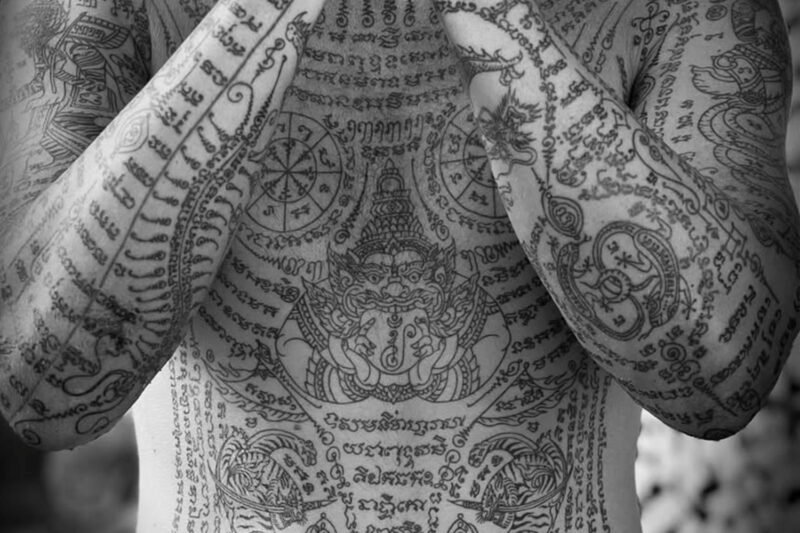
Sak Yant (Thailand / Southeast Asia)
Sacred tattoos applied by Buddhist monks or ajarn (lay masters) using a metal rod (khem sak) or bamboo. Designs combine yantra diagrams, figurative images, and text in Khom (ancient Khmer) script, carrying a Buddhist and Hindu protective function. Recipients are given a set of behavioural rules to follow to maintain the tattoo’s power. The annual Wai Khru ceremony at Wat Bang Phra draws thousands of bearers to pay respects to their masters and reactivate the spiritual charge of their tattoos.
Articles: Thai Sak Yant, Tiger tattoo
Prison tattooing
Tattooing within incarceration systems developed independently across different prison cultures worldwide. Improvised tools, limited ink, and coded iconography with precise meanings tied to criminal hierarchy, offence history, group affiliation, and attitude toward authority. Different systems — Western, Russian, Japanese, Latin American — produced distinct visual languages and codes. Meaning within these systems is enforceable: wearing unearned marks carries consequences.
Article: Prison tattooing
Berber (Amazigh)
Facial and body tattooing practised by Amazigh women across North Africa. Geometric symbols with protective and identity-marking function — specific designs linked to tribe, region, marital status, and fertility. The practice spans centuries and carried deep social meaning within Amazigh communities. The tradition has largely ceased; most surviving bearers are elderly, and documentation of the remaining knowledge is ongoing.
Article: Berber (Amazigh) tattoos
Japanese irezumi
One of the most codified tattoo traditions in the world. Woodblock-derived iconographic canon — dragons, koi, peonies, warriors, deities, demons — governed by rules of seasonal coherence, background integration, and full-body composition designed as a unified suit. Tebori, the traditional application method, uses a wooden or metal handle fitted with needle groupings in a rhythmic pushing motion fundamentally distinct from Western hand-poke. Machine application is now common. The tradition carries deep cultural stigma in Japan connected to its historical association with yakuza, but its artistic and technical sophistication has made it one of the most studied and respected tattooing traditions internationally.
Article: Japanese traditional tattooing style
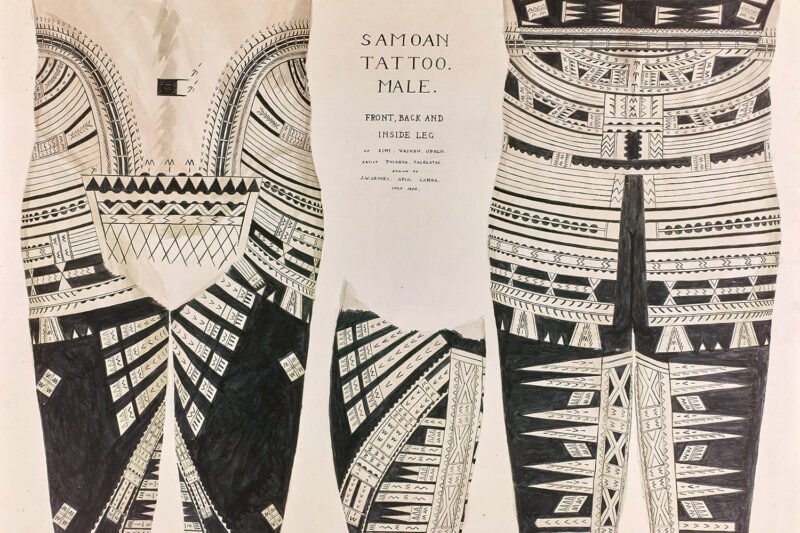
Polynesian — Samoan (tatau)
Pe’a (men’s tattoo covering the waist to below the knees) and malu (women’s tattoo covering the legs from the upper thigh to below the knee). Applied with au (bone comb tool) by tufuga ta tatau (master tattooists) in ceremonies that carry deep social and spiritual significance. Receiving a pe’a is a test of endurance and commitment — leaving the process incomplete carries lasting social consequences. The English word “tattoo” derives from Polynesian languages; both Samoan and Tahitian “tatau” are cited as sources, entering European vocabulary through 18th-century contact.
Articles: Samoan tatau, Sua Sulu’ape Paulo II, Polynesian tattooing traditions.
Polynesian — Maori (tā moko)
Facial and body tattooing using uhi (chisel) traditionally, and machine in contemporary practice. Tā moko encodes whakapapa (genealogy), social rank, tribal identity, and personal history — each design is specific to the individual, carrying information that cannot be transferred to or reproduced on another person. The face is the primary site, and facial moko carries the deepest significance. The practice was disrupted by colonisation and is undergoing active revival as an assertion of Maori identity and cultural continuity.
Articles: Māori tā moko, Polynesian tattooing traditions.
Polynesian — Marquesan
Among the most extensively tattooed cultures in documented history. Full-body coverage was common for men of high rank, achieved progressively over a lifetime. Geometric and figurative motifs — tiki, etua (deity figures), and complex banding patterns — built into compositions designed to cover the entire body surface. European contact and missionary activity severely disrupted the tradition; contemporary revival draws on historical accounts, preserved artefacts, and surviving design knowledge.
Articles: Marquesan patutiki, Polynesian tattooing traditions.
Polynesian — Hawaiian (kakau)
Hawaiian tattooing tradition carrying genealogical and spiritual meaning, severely disrupted by missionary contact in the 19th century. Currently undergoing revival led by practitioners, including Keone Nunes, who works with traditional tools and methods reconstructed through research into historical accounts and material culture. The revival is both an artistic and a cultural sovereignty effort.
Articles: Hawaiian kākau uhi, Keone Nunes, Polynesian tattooing traditions.
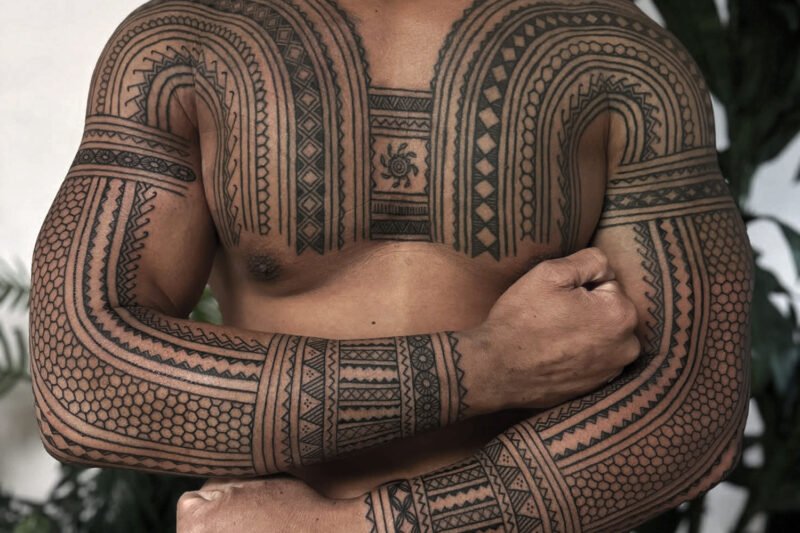
Kalinga (batok)
Hand-tap tattooing tradition of the Kalinga people in the Philippine Cordilleras. Geometric patterns applied with citrus thorn and soot-based ink, marking beauty, bravery, status, and — historically — achievement in warfare. Whang-Od (Maria Oggay) is the most widely known living practitioner and has trained a new generation of Kalinga tattooists to continue the tradition. Batok is receiving international attention, bringing both visibility and pressure to a practice rooted in a small, specific community.
Filipino traditions (Visayan, Igorot, and others)
The Philippines had one of the most extensively documented tattooing cultures at the point of European contact. The Visayan people were called “pintados” (painted ones) by members of Magellan’s expedition, describing full-body tattoo coverage. Igorot, Kalinga, and other Cordillera peoples maintained distinct tattooing traditions with their own tools, designs, and social functions. These practices were suppressed under colonial rule and are now subjects of active cultural recovery and documentation.
Celtic
Knotwork, spirals, key patterns, and zoomorphic interlace drawn from Insular art — the Book of Kells, Lindisfarne Gospels, carved standing stones, and metalwork. Historical evidence for Celtic tattooing as a continuous practice is limited; classical sources describe body markings among Britons and Picts, but the modern tattoo style derives primarily from manuscript illumination and decorative arts rather than a documented tattoo tradition. The visual system is powerful and highly structured regardless of its uncertain connection to historical skin marking.
Nordic / Viking
Runes, stave symbols, knotwork, and mythological imagery — Yggdrasil, Mjolnir, ravens, wolves, serpents. The evidentiary situation mirrors Celtic tattooing: Ibn Fadlan’s 10th-century account describes extensive body markings among the Rus, but details are sparse and their cultural origin is debated. Modern Nordic tattooing draws more from material culture — runestones, wood carvings, saga illustrations — than from a continuous tattoo tradition. As with Celtic work, the visual language is distinct and richly developed regardless.
Mesoamerican / Aztec
Imagery drawn from Aztec, Maya, and broader Mesoamerican visual culture: calendar stones, deity figures, jaguar warriors, feathered serpents, geometric patterns. Historical tattooing and scarification practices among Mesoamerican peoples are documented in both pre-contact sources and early colonial accounts, but the modern tattoo style is largely reconstructed from sculpture, codices, and architectural carving rather than from a surviving tattoo practice.
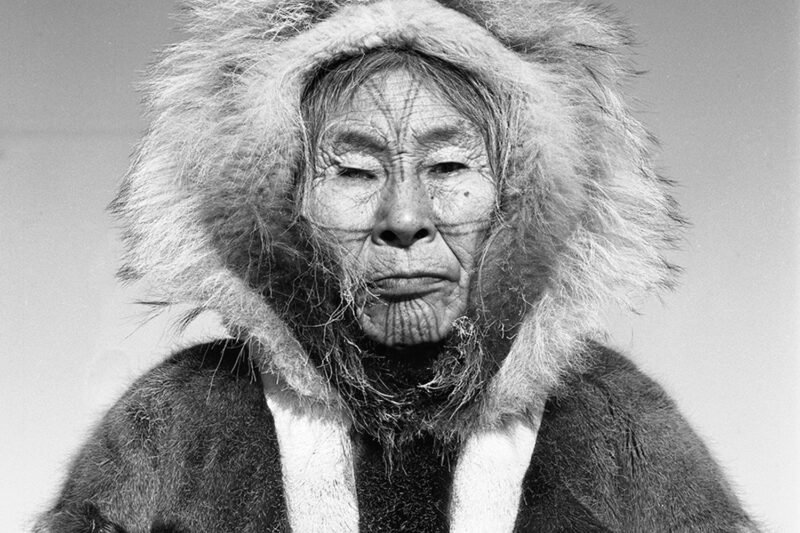
Inuit
Facial tattooing (kakiniit, tunniit, and other regional terms) practised across Arctic peoples — Inuit, Yupik, Inupiaq. Traditionally applied by skin-stitching: a needle draws sooted sinew thread beneath the skin, leaving pigmented lines. Women’s chin lines mark coming of age, kinship, spiritual protection, and skill. The practice was actively suppressed by missionaries and colonial administrators. A cultural revival is underway, led by practitioners and community elders working to restore the tradition and its meanings.
Article: Inuit tattooing tradition (kakiniit).
Haida / Pacific Northwest Coast
The formline design system — ovoid, U-form, and S-form shapes in red and black — is one of the most structurally rigorous visual traditions in the world. Applied to skin, it depicts clan crests: raven, eagle, bear, whale, wolf, and other figures carrying lineage and social identity. Tattooing is documented among Haida, Tlingit, and other Northwest Coast peoples as markers of clan membership, rank, and spiritual connection.
Borneo / Iban
Hand-tap tattooing among Iban, Kayan, and Kenyah peoples of Borneo. Designs mark achievements, spiritual protection, social status, and transitions between life stages. Specific motifs — the bunga terung (eggplant flower), for instance — mark rites of passage. Facial and body tattoos among Kayan women are documented as markers of status and identity. The traditions vary significantly between Borneo’s indigenous peoples and deserve individual treatment.
Naga (northeast India and Myanmar)
Tattooing traditions among Naga peoples of the mountainous border region between India and Myanmar. Facial tattoos, chest tattoos, and body markings recording warrior achievements, clan identity, and social status. The designs and their meanings varied between Naga groups. The practice has largely ceased with the passing of the generations who carried it; surviving bearers are elderly, and documentation efforts are ongoing.
Russian criminal tattooing
A highly codified visual system developed in Soviet-era prisons and labour camps, separate from Western prison tattooing in both iconography and organisational logic. Specific designs — cathedral domes, stars, epaulettes, barbed wire, among many others — denote rank, crime committed, sentences served, and stance toward authority. The code was enforced: wearing symbols one had not earned could result in violent punishment or forced removal of the tattoo. Danzig Baldaev’s documentary work remains the most comprehensive visual record of the system.
Military tattooing traditions
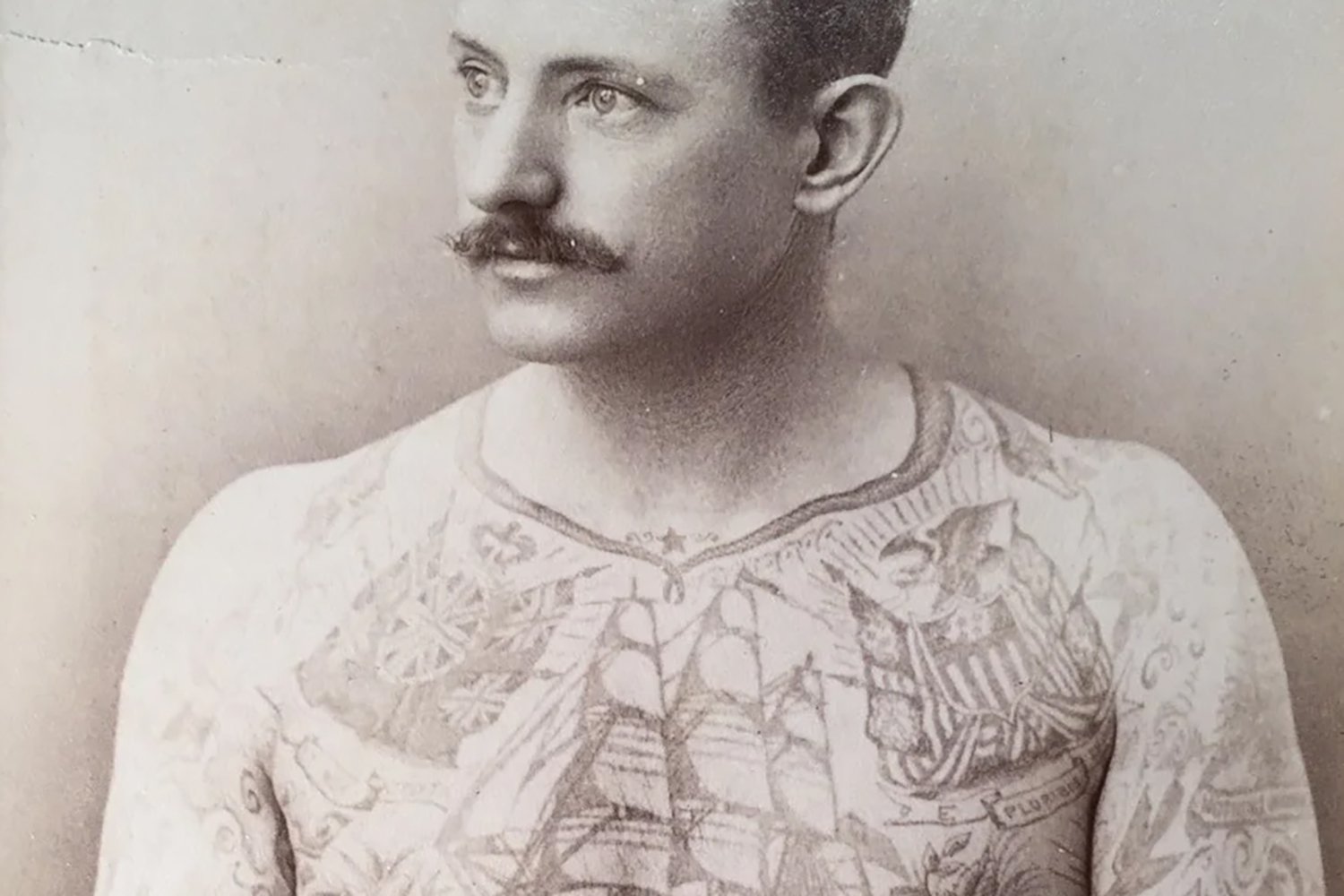
Tattooing practices within military cultures across periods and continents — from marks described on Roman legionaries to British naval tattoo traditions, American servicemember culture, and modern unit insignia. The common thread is that tattooing marks shared experience: service, unit identity, campaigns, loss, and the bonds formed under those conditions. The traditions, tools, and imagery differ enormously between military cultures and periods, making this less a single style than a cross-cultural practice with a shared function.
Thai / Khmer traditional
Traditional tattooing in Thailand and Cambodia outside the Sak Yant system — secular protective tattoos, love charms, animal designs, and folk motifs applied by non-monastic practitioners. Less documented and less internationally visible than Sak Yant, but representing a broader and older layer of Southeast Asian tattoo culture that operates alongside and sometimes overlaps with the sacred tradition.
Indian traditional
Tattooing traditions across the Indian subcontinent encompassing a wide range of distinct practices. Godna tattooing among Baiga, Gond, and other Adivasi communities uses specific motifs tied to marital status, tribal identity, and cosmology. Rabari, Mer, and Kutch communities in western India maintained their own tattooing traditions with protective and social functions. These are not a single practice but many, varying by region, community, and purpose, and most are under threat or already discontinued.
Note: Most sub-Saharan African body-marking traditions — Yoruba ilà, Nuer gaar, Surma and Mursi scarification, Igbo ichi, among many others — are forms of scarification: raised scars cut or branded into the skin, sometimes treated with irritants to promote keloid formation. These are distinct practices from pigment-based tattooing and are not included in this list. The genuine pigment-based tattoo traditions in Africa are fewer and more specific: Coptic and Ethiopian Christian devotional tattooing and Fulani/Wodaabe facial tattooing are the most documented.
Coptic / Ethiopian Christian
Cross tattoos applied to the wrist, forehead, or temples as markers of Christian faith, with roots traceable to at least the 8th century among Egyptian monks. Coptic Christians in Egypt traditionally receive a small cross on the inner right wrist — historically a mark of identity under persecution, now a sign of faith and community belonging. Ethiopian and Eritrean Orthodox Christians continue the tradition with forehead crosses. The Razzouk family has been practising tattoo art for over 700 years, beginning in 14th-century Egypt and continuing from their Jerusalem studio since around 1750 — documented by Guinness World Records as the longest-running tattoo business in the world. A devotional tradition with unbroken lineage.
Fulani / Wodaabe (West Africa and Sahel)
Pigment-based facial tattooing practised across Fulani groups from Senegal to Chad. Wodaabe men and women receive geometric tattoos on temples, cheeks, and lips. Among Fulani women in Mali, mouth tattooing (tchoodi or tunpungalle) — dark pigment applied around and over the lips — functions as a rite of passage into womanhood, a mark of beauty, and a cultural identifier. The practice has visual parallels with Ainu lip tattooing, though the traditions are entirely unrelated. Among the most visible surviving pigment-based tattoo traditions in Africa.
Sudanese facial marking (shulukh)
Facial scarification — not pigment-based tattooing — practised across multiple Sudanese and South Sudanese peoples. Shulukh patterns (parallel cuts on the cheeks or temples) function as tribal identifiers readable at a glance, as well as markers of beauty and social status. Among the Dinka, specific temple patterns indicate clan membership. Among the Nuba, women receive progressive scarification at puberty, first menstruation, and after weaning their first child. Included here because it is frequently encountered in searches for African tattooing, despite being a distinct technique.
Egyptian (ancient)
Among the oldest documented tattoo practices. Evidence from mummified remains — notably the Gebelein mummies and tattooed female mummies from Deir el-Bahari — and from figurines shows geometric and figurative designs on the body, primarily found on women. The function is debated: protective, fertility-related, therapeutic, or ritualistic, depending on the scholar and the specific evidence. Recent discoveries have expanded the known range of ancient Egyptian tattooing significantly beyond what was understood even a decade ago.
Scythian / Pazyryk
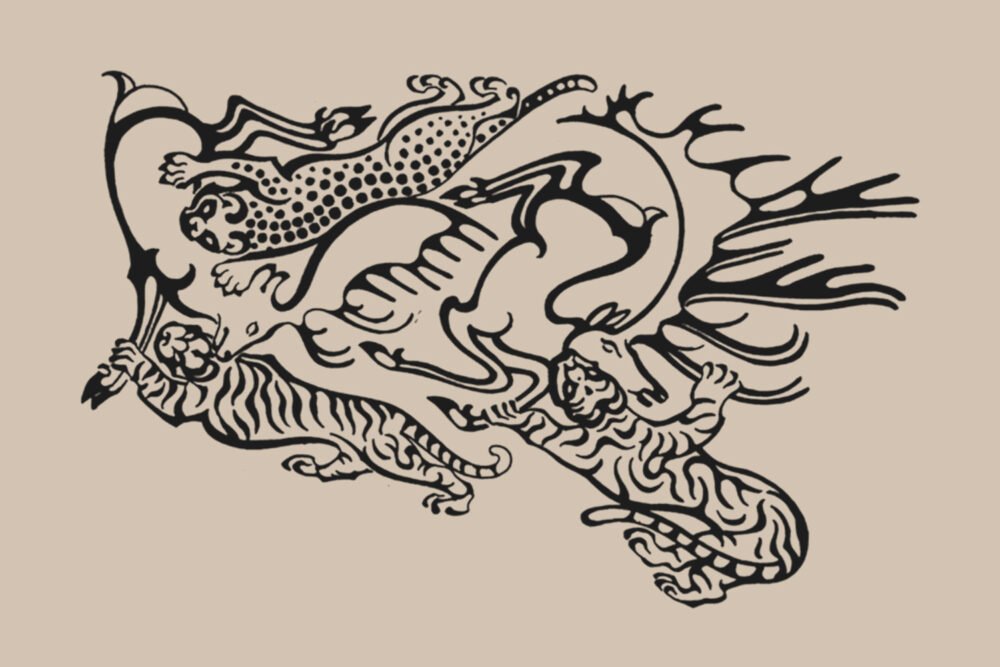
The Pazyryk burials in the Altai Mountains (5th–3rd century BCE) preserved some of the most elaborate figurative tattoos in the archaeological record — highly stylised animals, mythological creatures, and composite beasts covering the shoulders, arms, and torso. The designs are executed with extraordinary sophistication, bearing clear stylistic connections to Scythian metalwork and felt appliqué. The preservation in permafrost provides a level of detail rarely available for ancient tattooing, making Pazyryk a uniquely valuable reference point for understanding how far back complex figurative tattooing extends.
Ainu
Tattooing tradition among the Ainu people of northern Japan, Sakhalin, and the Kuril Islands. Women received tattoos around the mouth, on the hands, and on the forearms — the lip tattoo (sinuye or nuye), built up gradually over years, was the most prominent, extending from the lips outward in a pattern that widened with age and social maturity. The practice was banned by the Japanese government beginning in the 1870s as part of broader assimilation policies. It is among the best-documented examples of a tattooing tradition deliberately suppressed by a colonial state.
Cross-cutting notes
Not everything listed above is a style in the strict sense. A comprehensive reference includes them all because the industry discusses, searches for, and practises them under the label of “tattoo style” — but accuracy requires acknowledging what each entry actually is.
Techniques that function across multiple styles
- Black-and-grey originated in Chicano prison tattooing but now operates across realism, illustrative, ornamental, and portraiture.
- Fine line is a technical approach — small needles, thin lines — that has become its own aesthetic identity.
- Handpoke is a method shared by ancient traditions worldwide and by contemporary studio artists for entirely different reasons.
- Dotwork is a mark-making technique used in geometric, ornamental, illustrative, and portrait work.
- Negative space is a compositional principle — using uninked skin as an active design element — applied across styles rather than constituting one.
Subject-driven categories that the industry treats as styles
- Portraiture is realism applied to faces.
- Dark art and horror is realism or blackwork applied to macabre subject matter.
- Anime and manga is illustrative work using Japanese animation conventions.
- Lettering is typography as the primary visual element.
- Botanical and floral work — one of the most widely practised specialisations in contemporary tattooing — is a subject category executed across illustrative, fine line, realism, neo-traditional, blackwork, and other styles.
Entries that sit between categories
Some styles have genuine dual citizenship.
- Chicano tattooing is rooted in the Western shop tradition but carries a cultural dimension that connects it to culture-bound practices.
- Ornamental tattooing draws directly on Islamic, Hindu, and Buddhist decorative traditions, raising cultural questions similar to those in the culture-bound section.
- Celtic, Nordic, and Mesoamerican tattoo styles function as graphic design systems in contemporary practice, regardless of whether a continuous historical tattoo tradition existed behind them.
These overlaps are noted in the individual entries rather than resolved by forcing each style into a single category.
What this list does not cover
The list is also not closed. Tattooing styles are still emerging, culture-bound traditions are still being documented and revived, and the boundaries between existing categories continue to shift as artists cross them. Entries will be added, corrected, and expanded as new research becomes available and as the articles behind them are written. If a tradition or style is missing, it is more likely an omission than a judgment.
What this list does not cover
The list is also not closed. Tattooing styles are still emerging, culture-bound traditions are still being documented and revived, and the boundaries between existing categories continue to shift as artists cross them. Entries will be added, corrected, and expanded as new research becomes available and as the articles behind them are written. If a tradition or style is missing, it is more likely an omission than a judgment.
Sources & limitations
The information in this list draws on published books, academic papers, ethnographic research, museum documentation, and firsthand practitioner knowledge. Key references include Lars Krutak‘s work on indigenous tattooing traditions worldwide, Danzig Baldaev’s documentation of Russian criminal tattoos, Anna Felicity Friedman’s research on tattoo history, and published scholarship on specific traditions (Evans-Pritchard on the Nuer, Carswell on Coptic tattooing, various researchers on Polynesian, Japanese, and Southeast Asian practices). Individual article pages carry their own detailed source lists.
Where historical claims are contested — the origins of specific styles, the attribution of innovations to individual artists, the precise meaning of symbols within closed cultural systems — the entries note the uncertainty rather than presenting one version as settled fact. Where the evidence is thin, that is stated. Where a tradition has been documented primarily by outsiders rather than by its own practitioners, that limitation shapes what can be said with confidence.
No list of this scope can be fully authoritative. Some traditions included here are living practices with active communities of practitioners who hold knowledge that published sources do not capture. Some are historical practices known only through fragmentary archaeological or colonial-era records. The depth and reliability of available information vary enormously between entries, and the articles that follow from this list will reflect those differences honestly.