Related Posts
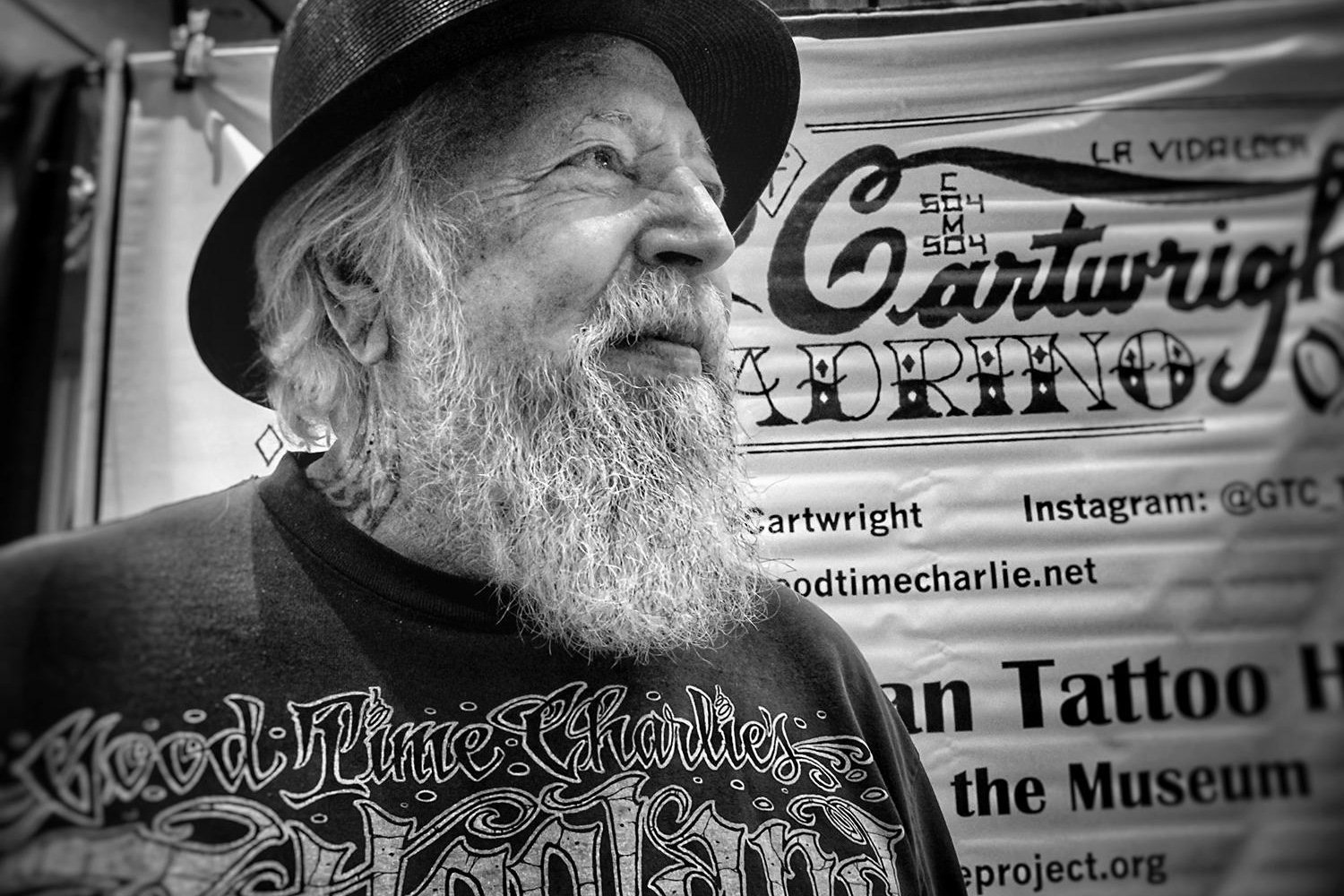
Good Time Charlie Cartwright
The man who opened the shop where fine line was born
Before Good Time Charlie’s, there was no professional tattoo shop doing single-needle black-and-grey work. The technique existed — it had been developed in the California prison system, passed between inmates through improvised machines and smuggled ink, refined in cells and yards across the state. But no commercial shop had adopted it as a primary method, no professional artist had built a practice around it, and no fixed location existed where someone could walk in off the street and receive a tattoo in the style. Charlie Cartwright changed that in 1975, when he and Jack Rudy opened Good Time Charlie’s on Whittier Boulevard in East Los Angeles. The shop became the birthplace of the fine-line black-and-grey movement — the most influential development in American tattooing since the introduction of Japanese-influenced work in the 1960s and 1970s.
Cartwright’s role in this history is specific. He was the one who found the location, opened the doors, assembled the team, and created the conditions in which the technique could be professionalised. He was the shop owner, the organiser, the man who saw a demand nobody was meeting and decided to meet it. He was also a talented artist in his own right — a pioneer of custom freehand work who had been drawing directly on skin since he was fifteen years old. His story begins earlier and in a more unlikely place than most accounts of the Chicano tattoo tradition suggest.
Official website: www.goodtimecharlie.net
Pasadena, Texas, and the preacher's son
Charlie Cartwright was born in 1940 in Pasadena, Texas — not the Pasadena near Los Angeles, but the industrial Gulf Coast city southeast of Houston. He was the son of a Pentecostal preacher. The religious upbringing would stay with him through his entire life — his faith has been a constant, coexisting with a career in an art form that his father did not approve of.
His interest in tattooing was sparked as a child, when he saw his first full-body tattoo — a jungle scene covering a man’s entire body. “Lions were leaping, rhinos charging, elephants trumpeting, monkeys swinging, birds flying, it was crazy,” he has recalled. “And I thought wow, I gotta figure out how you do that.”
He began tattooing at fifteen, in Wichita, Kansas. He had no training, no professional equipment, and no contact with the professional tattoo world. He did not own a tattoo machine. He did not know what a stencil was. He tattooed by hand-poke — pushing a needle dipped in ink into the skin, one puncture at a time — and he drew every design directly on the body, freehand. His studio was the back seat of his 1946 Chevrolet sedan.
From fifteen to twenty, Cartwright tattooed out of the Chevy, practising on friends, neighbours, and anyone willing to sit still. He was teaching himself, from scratch, in a Kansas town where tattooing had no professional infrastructure. The hand-poke method and the habit of drawing freehand — both born from the absence of professional tools — became defining features of his practice. He would draw directly on the skin for the rest of his career, even after he had machines and shops and decades of experience. The custom freehand approach was not a technique he chose; it was the only way he knew how to work, and it became a principle.
His brother was ten years old when Charlie, at fifteen, tattooed him with three designs. His father, the preacher, was furious. Charlie was told never to tattoo his brother again. The tension between the faith and the craft was established early.
The Navy and the Pike
Enlisting in the Navy brought Cartwright to San Diego, where he visited professional tattoo shops for the first time and received his first professional tattoo — done by Tahiti Felix Lynch, one of the established West Coast tattooers of the era. He was also tattooed by Painless Nell and her sister Jo, who ran an assembly-line operation: one sister outlined, the other shaded.
From San Diego, Cartwright found his way to Long Beach and the Pike — the amusement district on the Long Beach waterfront that housed some of the best tattoo artists in the country. The Pike was a revelation. Multiple shops, serious artists, a steady stream of military personnel, tourists, and locals — it was the professional tattoo world that Cartwright had never encountered in Kansas. “The Pike was heaven for the observer,” he has said. “Side shows with the human oddities, games, roller coaster and fun rides, it had something for everyone. The greatest parade of humanity that one could ever hope for.”
Cartwright spent time learning the business side of tattooing at the Pike, studying the established artists — Lou Lewis, Bert Grimm, Owen Jensen, Bob Hayman — and trying to absorb as much as he could. The established artists were not generous with their knowledge. “I was pumping them for information, but received the cold shoulder,” he has recalled. The professional tattoo world of the 1960s was guarded and competitive.
His entry into professional shop work came through Jimbo Laporte, co-owner of West Coast Tattoo, who sensed Cartwright’s talent and set up an audition. Cartwright brought his neighbour Tony to the West Coast Tattoo shop at 5th and Main in Los Angeles, where Zeke Owen loaned him a machine setup — Cartwright’s first encounter with a professional tattoo machine — and left him to work. The result impressed Owen: “Guys who have been tattooing ten to fifteen years don’t tattoo like that.” Cartwright was transferred to West Coast’s shop at the Pike, where he spent the next several years. It was at the Pike that he acquired his professional name: Good Time Charlie.
East Los Angeles
When the Pike began to decline in the early 1970s, Cartwright looked for a new location. He was living in Whittier, and he noticed something: there were no tattoo shops in East Los Angeles. The community — overwhelmingly Mexican-American, the centre of Chicano culture in Southern California — had a visible demand for tattoos. The lowrider scene was active, the gang culture was producing its own tattoo aesthetics, and the prison-derived single-needle black-and-grey style was circulating through the community via men who had learned it inside and brought it out. But there was no professional shop serving this demand.
Cartwright saw the opportunity and took it. In 1975, he opened Good Time Charlie’s on Whittier Boulevard — between Garfield Avenue and Atlantic Boulevard, on a block surrounded by twenty-seven gangs. The clientele was cholos, bikers, lowriders, and regular working-class people. The shop was open from 5:00 pm until 1:00 am, and some nights the work went until 7:00 in the morning.
Jack Rudy joined Cartwright at the shop in the summer of 1975. Rudy — a Marine veteran who had been making improvised tattoo machines since he was seventeen (his first was built from his father’s electric razor) and who had done his first tattoo in 1969 — shared Cartwright’s fascination with the black-and-grey style that was emerging from the prison system. Together, they began to refine the technique for professional practice.
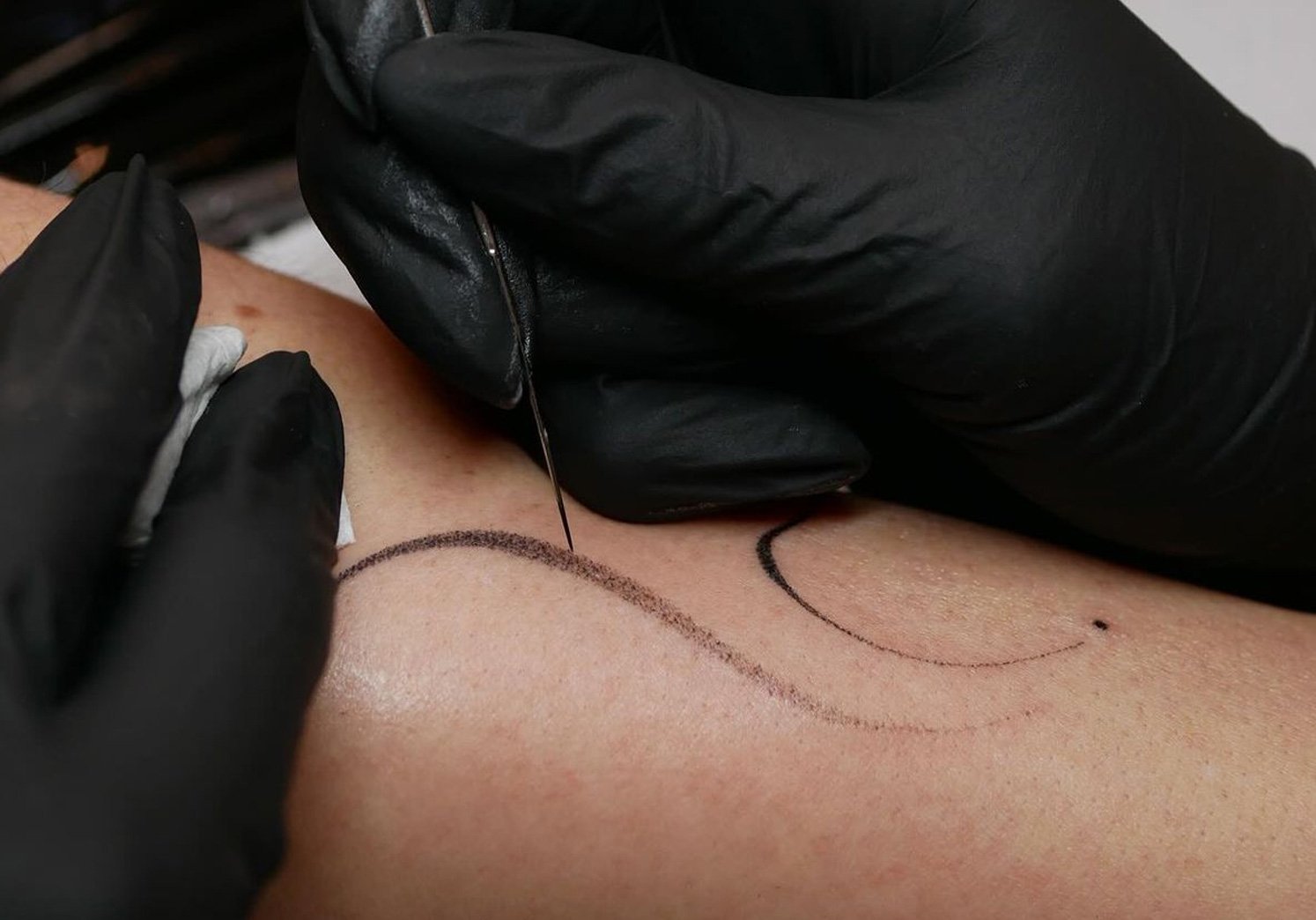
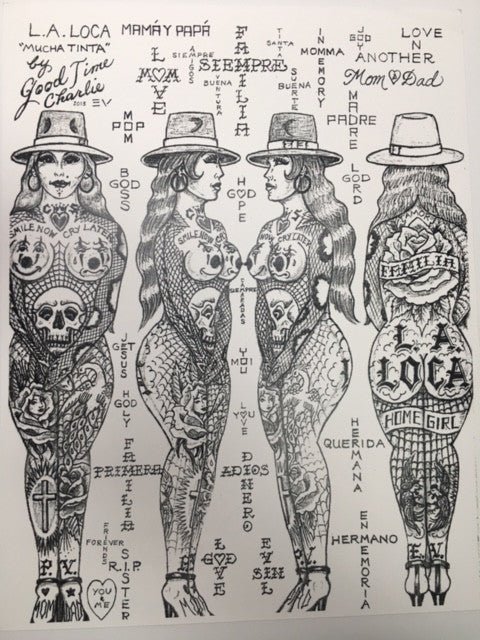
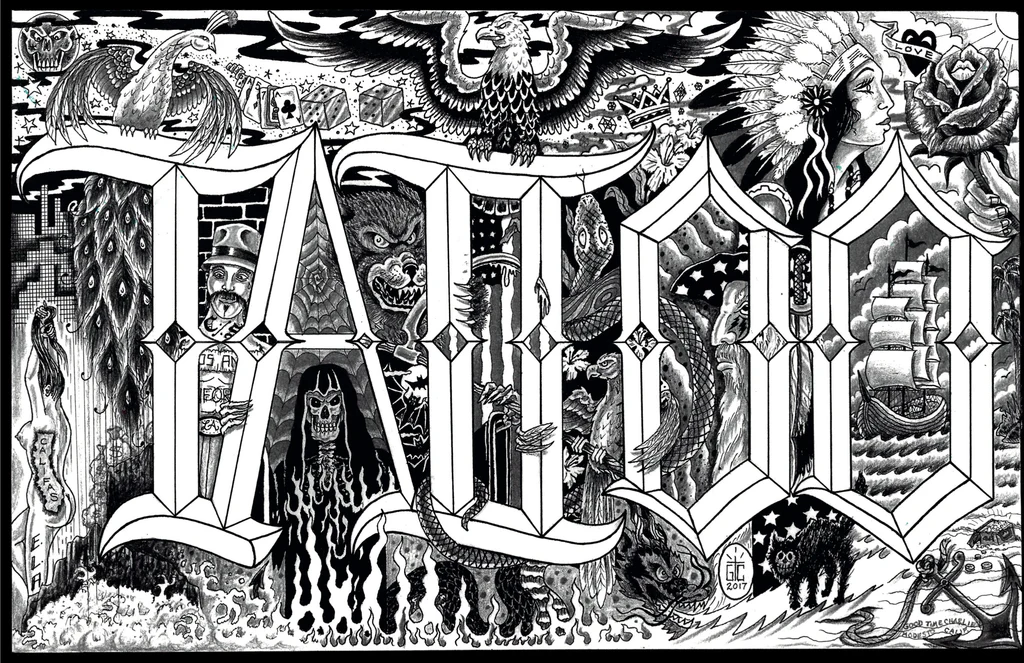
The key innovation was mechanical. The prison-derived style used improvised single-needle setups to produce fine lines and tonal shading in black ink. Cartwright and Rudy adapted this approach to professional equipment, reducing the standard multi-needle configuration (which used three to six needles) down to a single needle, and developing the diluted-ink greywash technique that allowed for smooth tonal gradients. The result was a professional method that could produce the delicate, detailed, photographic-quality work that the community was requesting — portraits, religious imagery, lettering, and narrative scenes rendered in black and grey with a precision and a tonal range that no existing tattoo technique could match.
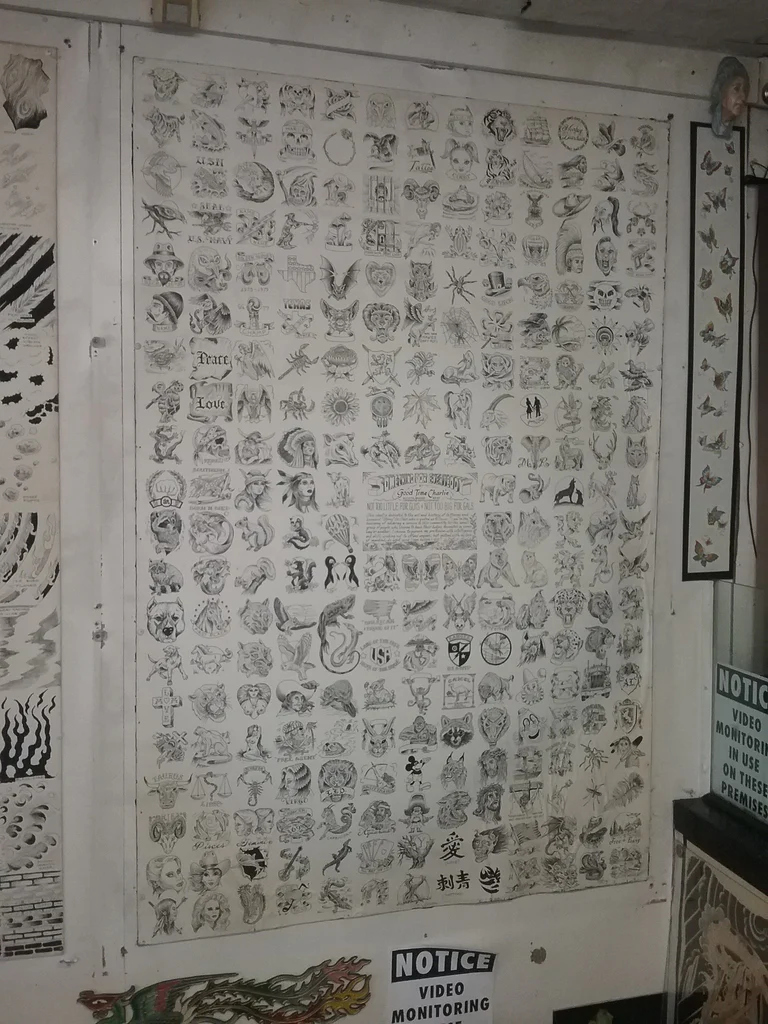
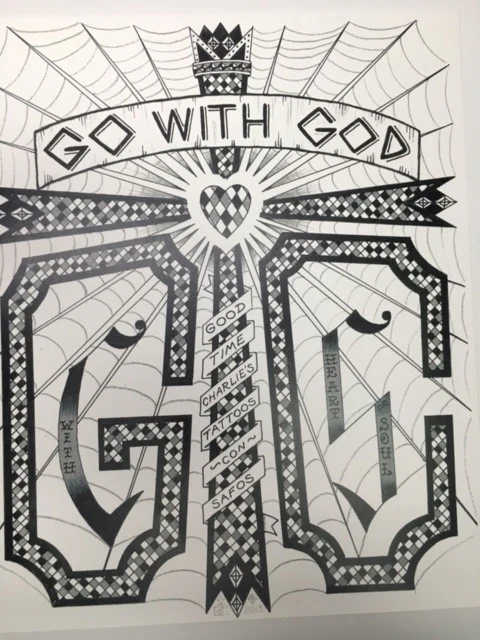
Good Time Charlie’s became the first professional shop to specialise in this approach. The shop offered both traditional colour work and the new black-and-grey method, but it was the single-needle work that drew attention — from the local community, from other tattooers, and eventually from the broader tattoo world.
The meeting with Hardy
In 1977, Cartwright and Rudy attended a tattoo convention — accounts place it in either Reno or Las Vegas — where they met Don Ed Hardy, the San Francisco-based artist who had studied under Sailor Jerry Collins and trained in Japan under the master Horihide. Hardy was already one of the most respected tattoo artists in America, known for his Japanese-influenced colour work and for his ambition to elevate tattooing as a fine art form.
When Hardy saw the black-and-grey work coming out of Good Time Charlie’s, he was impressed. The delicate single-needle technique, the tonal subtlety, the photorealistic potential — it was new, developed by artists working outside the established tattoo-world networks, and it had no precedent in the broader American tattoo tradition. “It made us rethink what we were aware of, what would be interesting and challenging and beautiful and cool,” Hardy later said. The admiration was mutual: the East LA artists were interested in Hardy’s colour technique and his Japanese-influenced compositional methods. Freddy Negrete, who would become one of the most important artists in the Chicano tradition, later described the exchange: “I didn’t want to do what he was doing, I wanted to know how he was doing it.”
Hardy began travelling from San Francisco to Whittier Boulevard to get tattooed and to collaborate. The cross-pollination between Hardy’s colour work and Japanese design sensibility and the East LA artists’ single-needle black-and-grey technique was one of the most productive exchanges in American tattoo history.
The sale and the departure
Modesto and the later career
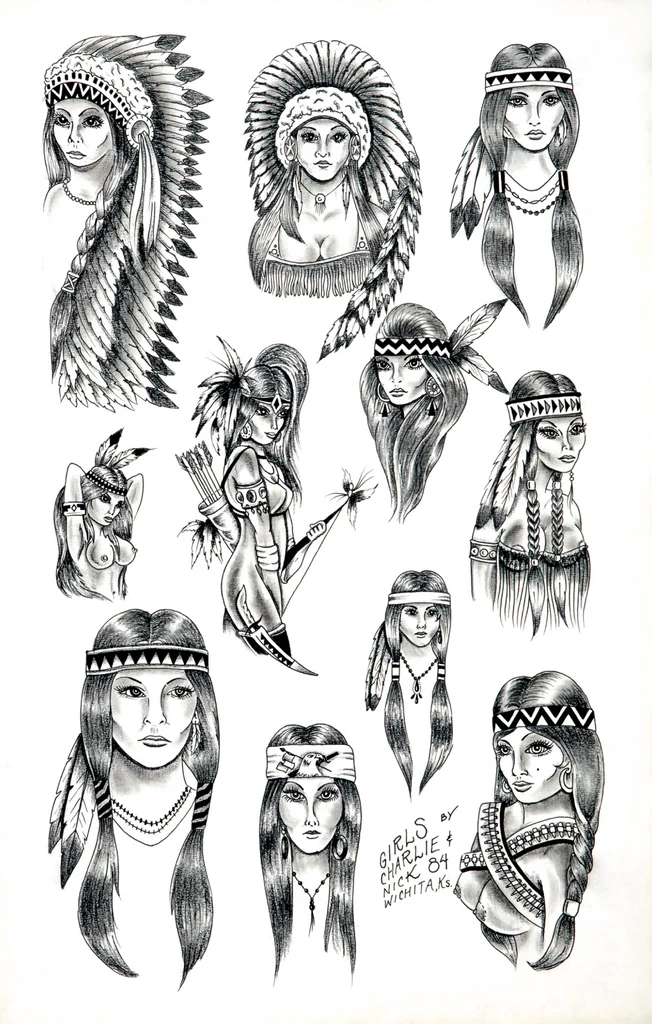
In 1987, Cartwright and his wife relocated to Modesto, California, where he reopened under the name Good Time Charlie’s End of the Trail. Three generations of artists worked at the Modesto shop, and it operated until its closure in February 2020. Cartwright retired from tattooing at the age of sixty — roughly around the year 2000 — but he did not retire from art. He continued to produce visual work, and he spent eleven years on what he calls “my Indian project,” a body of work focused on Native American subjects.
In 2021, Cartwright and Rudy published Tattoo Man — The Story of Good Time Charlie’s, a 350-page limited-edition art book documenting their careers and the history of the shop. The book was produced in an edition of 750 copies (600 regular, 150 signed) and includes handwritten accounts from both artists, never-before-seen photographs, and contributions from artists they mentored and influenced. The book is the primary documentary record of the shop and its significance.
Cartwright also appears in Tattoo Nation, a documentary film covering the history of Southern California tattooing, the Pike, and the development of the Chicano black-and-grey style.
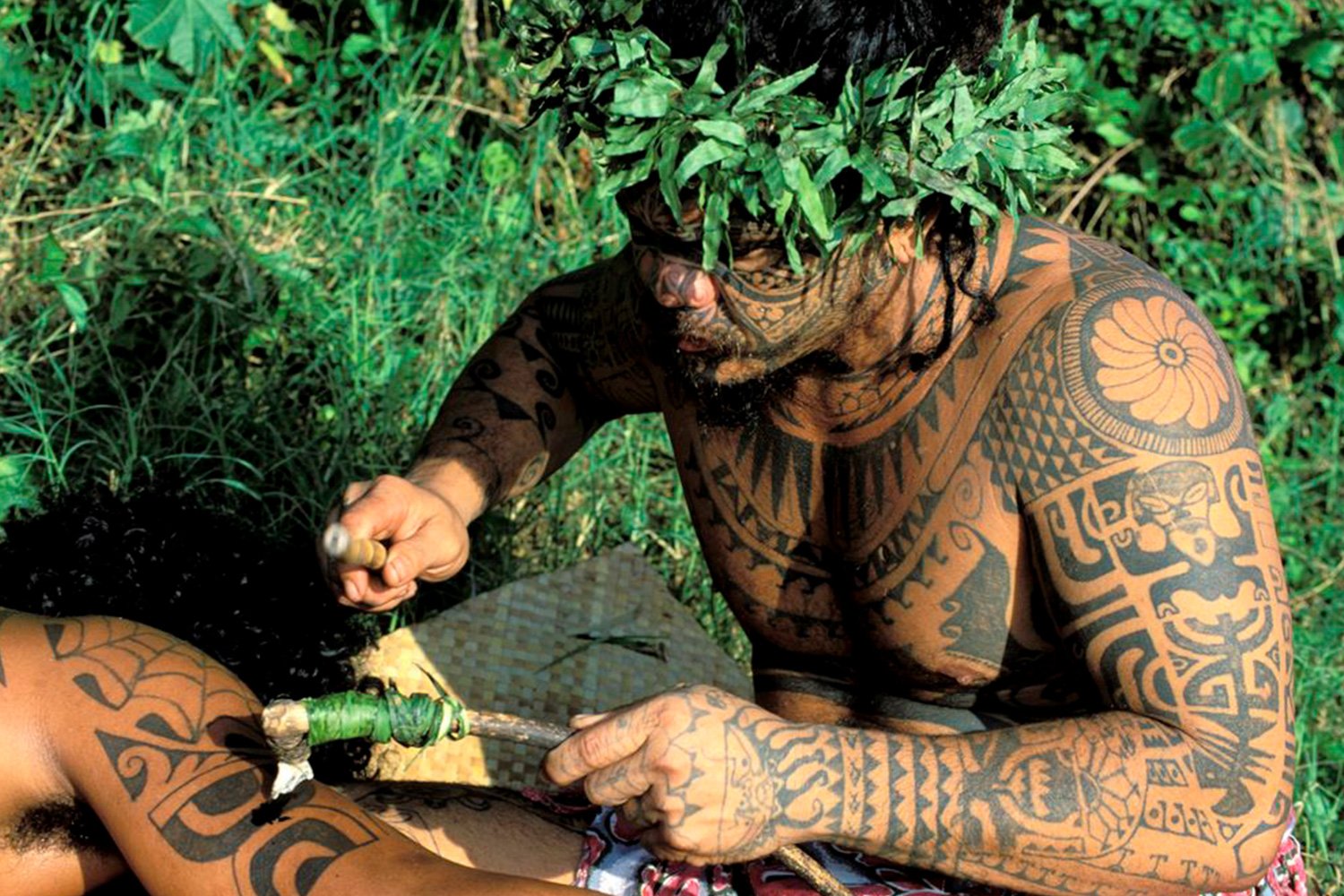
As of 2021, Cartwright was living in Modesto, still producing art, and still going by Good Time Charlie. He was eighty-one years old. His hands bear heavy tattoo coverage — religious crosses, the words “hold fast” on his fingers (a sailor’s tattoo meaning to endure, to fight through the storm, which he also reads as a biblical instruction). His neck carries Polynesian-style patterning. His sleeves are on their fifth layer of black ink.
Charlie Cartwright's contribution to tattooing
Cartwright’s contribution to tattooing is architectural. He built the structure — the shop, the team, the conditions — within which the single-needle black-and-grey technique was professionalised. The technique existed before him (in the prisons), and the technique was refined by others alongside and after him (by Rudy, by Negrete, by Mahoney, by Dr. Woo). But he was the one who opened the door.
He drew freehand from the age of fifteen because he did not know any other way, and the custom freehand approach — every design drawn directly on the body, no two pieces alike — became a founding principle of the Chicano tradition. He chose East Los Angeles because he saw a community that needed a shop and had none, and the shop he opened became the most important single location in the history of American single-needle tattooing. He brought Jack Rudy in, and together they built the technique into a professional practice. He sold the shop to Ed Hardy, and Hardy’s involvement brought the work to the attention of the broader tattoo world. He stepped away, came back, and kept working for decades more.
The lineage that runs from Good Time Charlie’s on Whittier Boulevard through Hardy’s ownership, through Jack Rudy’s continuation of the shop in Anaheim, through Negrete’s career, through Mark Mahoney‘s Shamrock Social Club, through Dr. Woo‘s Hideaway — this is the most important lineage in American fine-line tattooing. And it begins with a preacher’s son from Texas who tattooed out of the back seat of a 1946 Chevy because he didn’t know there was any other way to do it.
Sources & further reading
- Good Time Charlie official website: goodtimecharlie.net.
- Scene360, “Charlie Cartwright: The Godfather of Black-and-Grey Fine Line Tattooing.” Published February 2021.
Sullen Clothing, artist page: Goodtime Charlie. - Bishop Tattoo Supply, Tattoo Man — The Story of Good Time Charlie’s.
- Tattoo Heritage Project, “Good Time Charlie Launches Fundraiser for Tattoo History Museum.” Published September 2021.
- LA Weekly, “L.A. (L)INKED: Cultural Expression and the Art of Tattoo in Los Angeles.” Published December 2021.
- Phoenix New Times / LA Weekly, “New Film Documents Southern California’s Tattoo Scene, from Danny Trejo to Ed Hardy.” Published April 2013.
- Rose Tattoo / Fine Lines Good Times, “Jack Rudy: The Pioneer of Single Needle Tattooing.” Published November 2025.
- Dismantle Magazine, “American Tattoo Culture’s Messy Past and Hopeful Future.” Published September 2020.
- Tattoo Nation (dir. Eric Schwartz). Documentary film featuring Cartwright, Rudy, Negrete, Hardy, and Danny Trejo.
- Freddy Negrete with Steve Jones, Smile Now, Cry Later: Guns, Gangs, and Tattoos — My Life in Black and Gray. Seven Stories Press, 2016.
- Anna Felicity Friedman, The World Atlas of Tattoo. Yale University Press, 2015.
- Matt Lodder, Painted People: Humanity in 21 Tattoos. Harper, 2024.
- Margo DeMello, Bodies of Inscription: A Cultural History of the Modern Tattoo Community. Duke University Press, 2000.