Related Posts
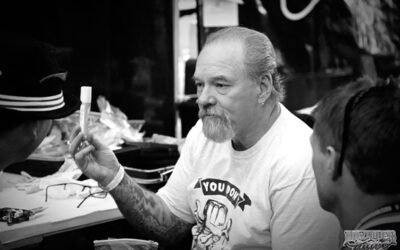
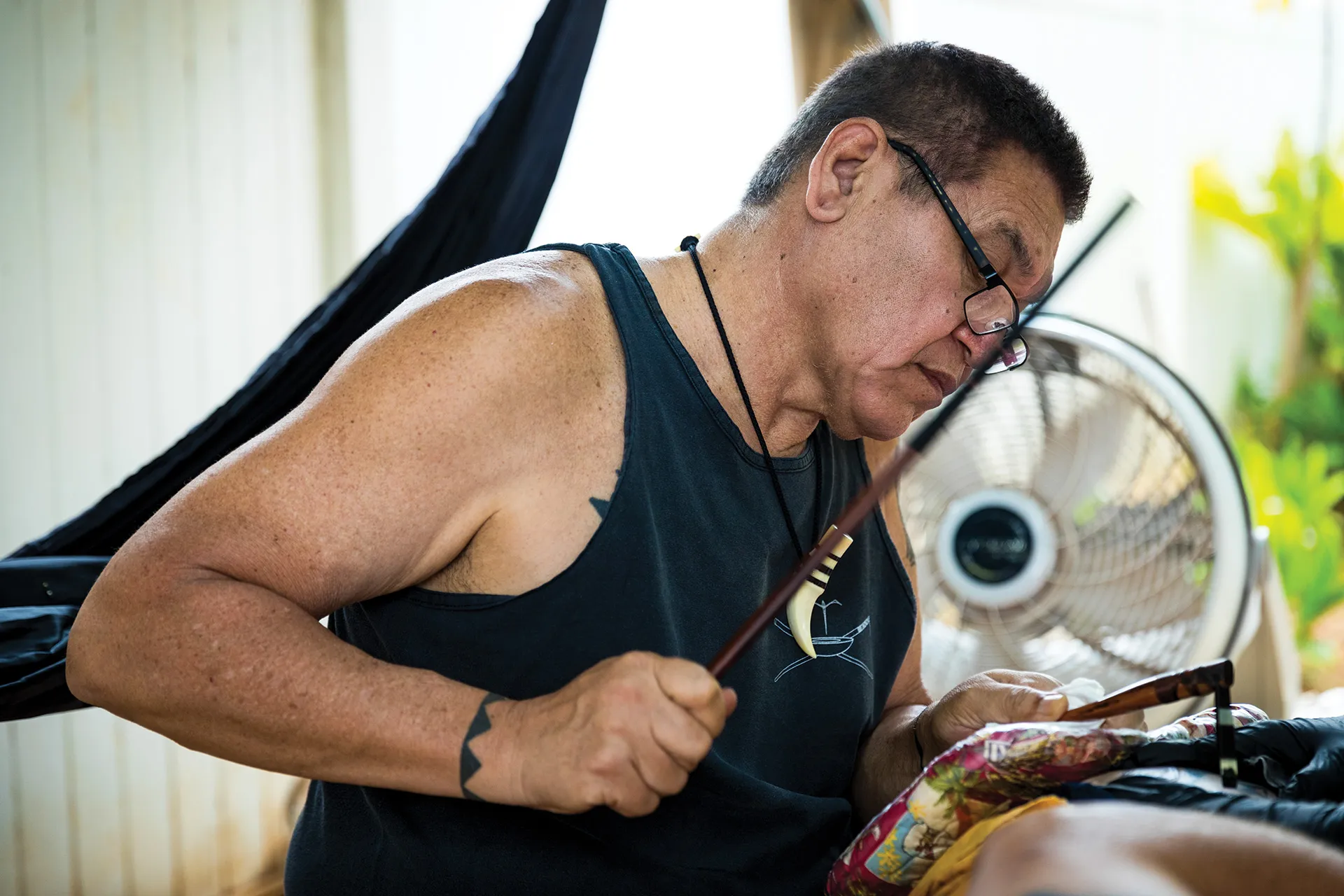
Sulu’ape Mālama o Mataitoa Keone Nunes
Keone Nunes: the cultural practitioner
Sulu’ape Keone Nunes — born John Estrella Nunes on September 8, 1957, in Morioka, Japan — is the practitioner most responsible for the revival of kākau uhi, traditional Hawaiian hand-tapped tattooing, from its near-disappearance in the twentieth century. His formal title, Kahuna Kā Uhi, places him in the category of Hawaiian specialist priest and master. He prefers the term “cultural practitioner” over “tattooist”: the distinction is not cosmetic. For Nunes, tattooing is inseparable from the genealogical research, ritual preparation, and spiritual responsibility that frame each piece of work.
His father, James Joseph Nunes, was American with Native Hawaiian heritage; his mother, Kuniko Yuzawa, was Japanese. The family moved to O’ahu when Keone was two years old. He grew up in Wai’anae, on the island’s leeward west coast — a predominantly Native Hawaiian community — and attended Wai’anae schools before graduating from the University of Hawai’i at Mānoa with a degree in anthropology and a certification in Hawaiian language. He went on to teach at Hawai’i Community College, worked at the Bishop Museum, and taught at Kamehameha Schools.
The tradition he revived: kākau uhi
Kākau is the Hawaiian word for the act of tattooing — from ka, to strike, and kau, upon: to strike upon the skin. Uhi is the resulting tattoo. The compound kākau uhi describes the full practice of traditional Hawaiian hand-tapped tattooing, which has been present in the islands since the first Polynesian settlers arrived, likely between the third and eighth centuries CE.
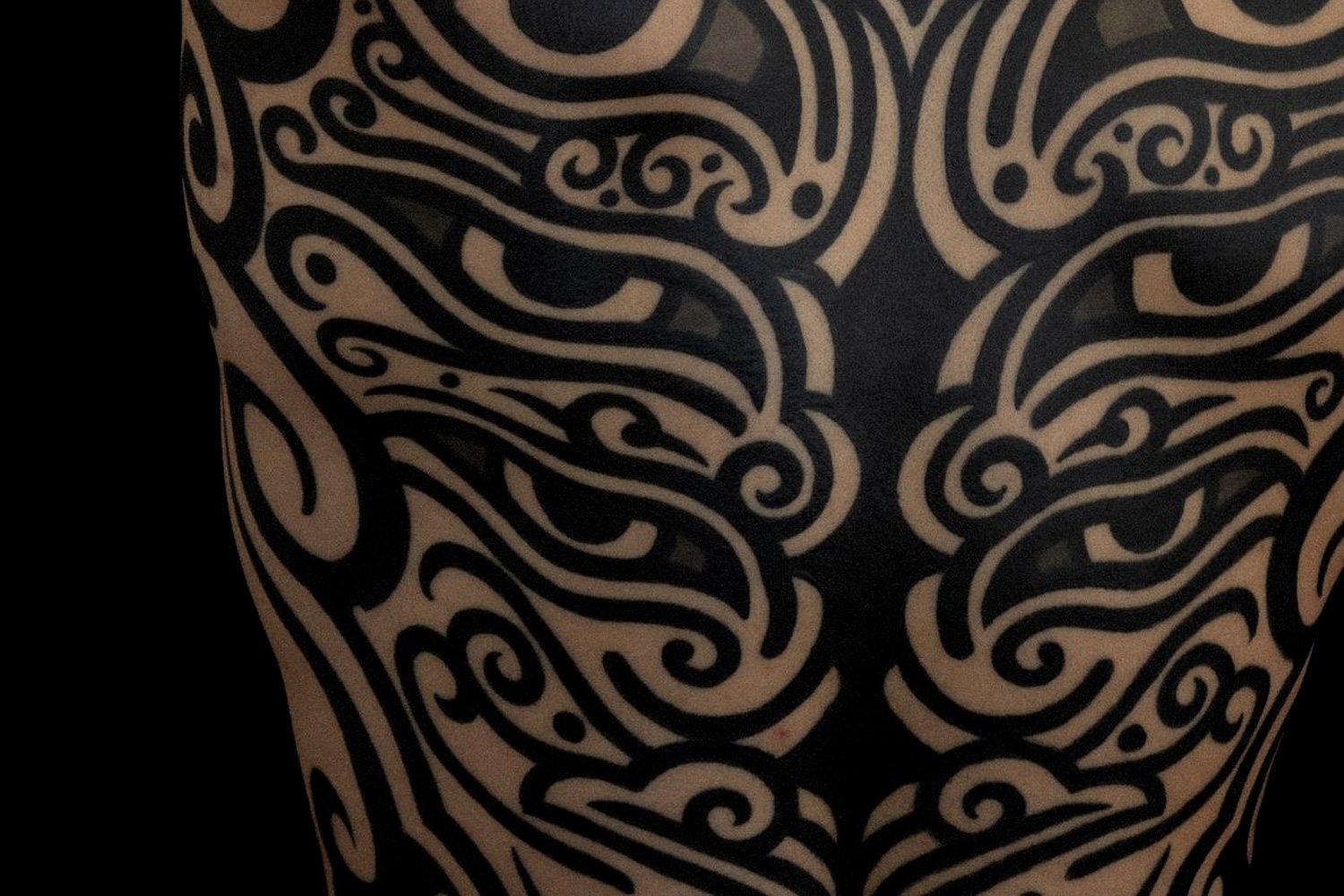
Pre-contact Hawaiian tattooing was practised across the population, with designs covering the body in bold, asymmetrical black patterns. The asymmetry was deliberate: the right side of the body was associated with spiritual protection and typically received denser, solid coverage; the left side carried more open, biographical work. The designs encoded genealogy (moʻokūʻauhau), rank, achievements in war, fishing, and navigation, connections to family gods (ʻaumakua), and key life events. Women received tattoos on the hands, arms, and lips; chin tattoos, known as kūpeʻe, marked significant milestones in a woman’s life. Temporary mourning tattoos, made with plant juices, recorded grief. A fully tattooed person was a fully documented person.
The practitioner was not simply a craftsman. Kākau was performed by a kahuna — a Hawaiian specialist priest — and the role came with an exclusive and specific privilege: the kahuna kā uhi was the only person permitted to draw blood from aliʻi (royalty) without being killed for it. The ritual dimensions of the work included prayers and chants during tattooing, the ceremonial preparation of tools, and the understanding that the designs held mana — spiritual power — that the tattoo transferred to the wearer. In Nunes’s words:
“When you receive a tattoo, you not only change physically, but oftentimes there is a deeper change within you.”
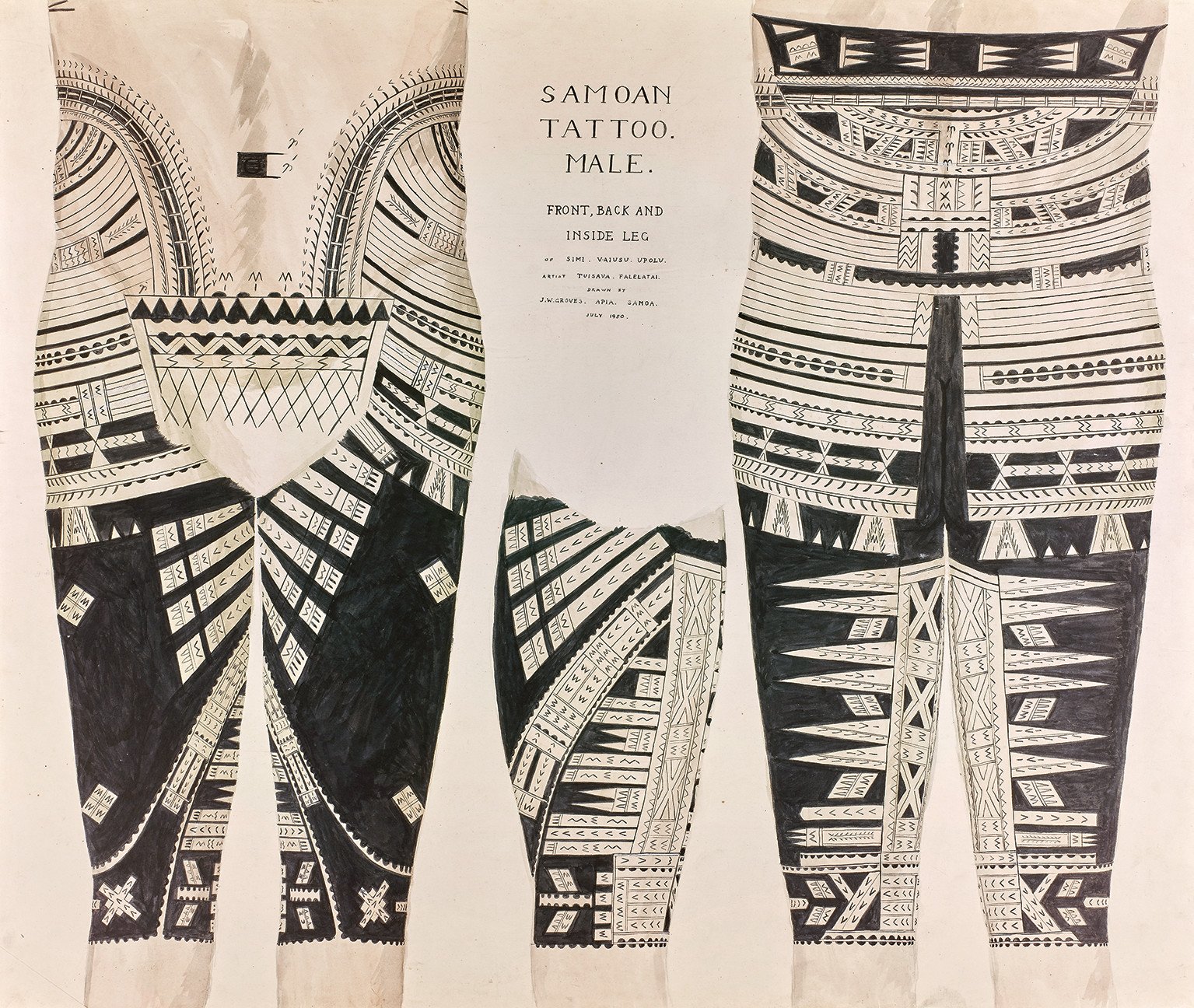
The practice was documented by European sailors and artists in the late eighteenth century — Captain Cook’s voyages in 1778 provided some of the earliest written accounts — though the historical record is imperfect. Most surviving visual documentation was created from memory by observers who couldn’t always follow the designs they recorded. Hawaiian tattooing was not, in the assessments of those early European witnesses, the most technically refined in the Pacific; Marquesas and Samoan work drew more admiring commentary. But the breadth of its coverage, its genealogical depth, and its spiritual function were distinctive.
The missionaries who arrived from New England beginning in 1820 targeted kākau directly, as they did most expressions of the old Hawaiian religious and social order. By the end of the nineteenth century, the practice had largely ceased in the Christianised population. The oral knowledge held by kupuna (elders) survived in fragments — remembered by people who had never practised tattooing themselves, transmitted as cultural memory rather than working craft. The unbroken technical lineage, the knowledge of how to actually make and use the tools, had been broken.
How he came to it
Nunes’s path to kākau uhi was indirect. He grew up surrounded by Hawaiian cultural practice — not in any formal institutional sense, but through regular conversation with kupuna in his family and community. He describes this as “talking story”: long, unhurried exchanges in which elders would discuss Hawaiian life before Western contact. Tattooing would come up in those conversations, embedded in broader discussions about what Hawaiians looked like, how they presented themselves, and what the designs meant.
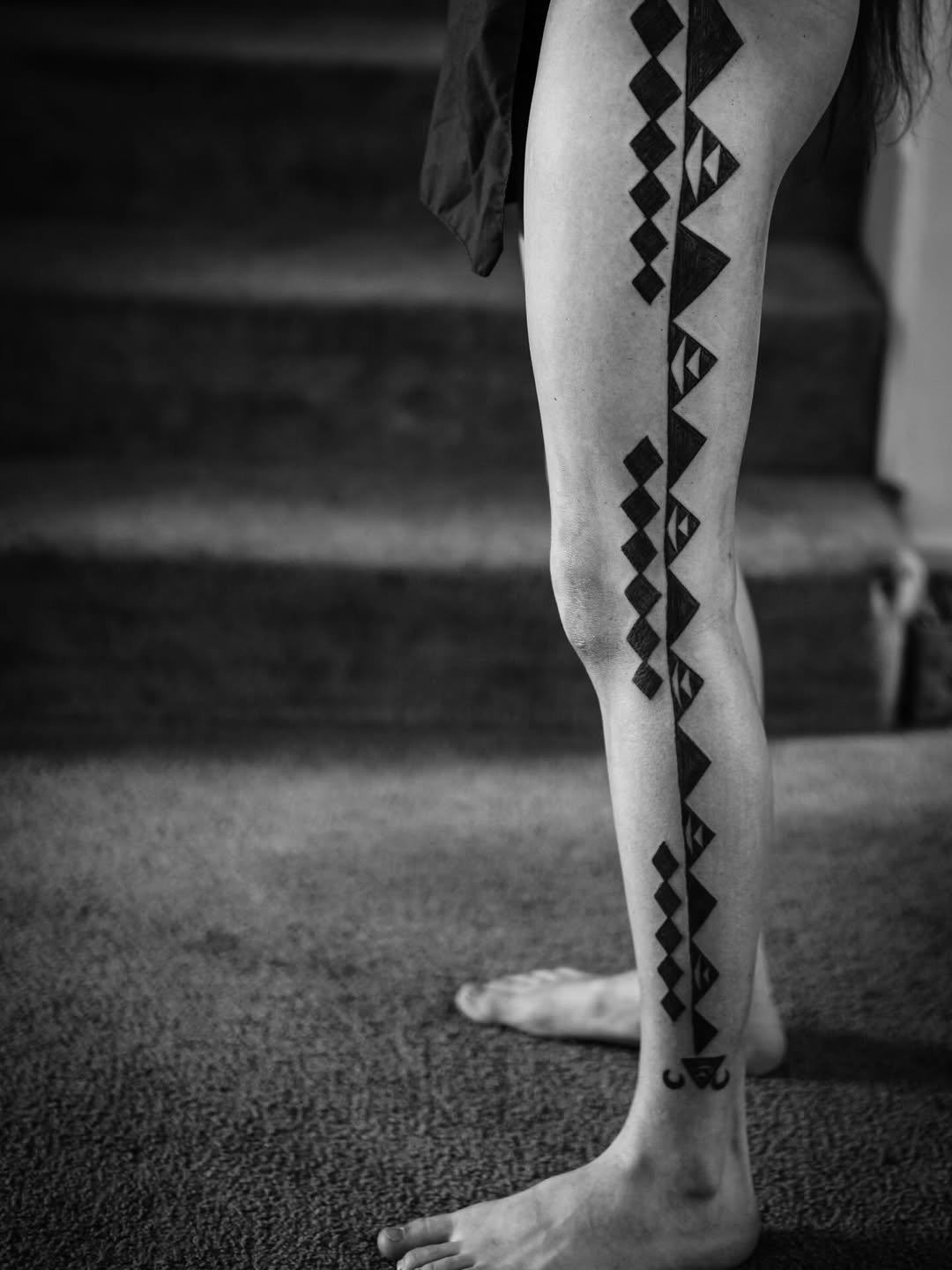
In 1987, he founded a hālau — a hula troupe — and began competing. As he delved deeper into the cultural commitments hula required, he became interested in marking them physically. His aunt, Muriel Lupenui — a significant figure in his cultural education — gave him a pattern she considered appropriate for him: a design rooted in his family history. In 1990, while preparing for a hula competition, he arranged for it to be applied. The design was an alaniho — a traditional tattoo that runs from the hip to the ankle — and it was done with a modern tattoo machine.
The machine bothered him. The design was ancestral; the method wasn’t. That gap became the starting point of his work.
Unable to find anyone in Hawai’i who could teach him the traditional hand-tapping method — the lineage had been broken — Nunes began applying traditional Hawaiian designs using a machine, a compromise he understood as temporary. His work came to the attention of Dutch tattoo artist and historian Henk Schiffmacher, who was making a documentary on tattooing worldwide. Schiffmacher put Nunes in contact with Su’a Sulu’ape Paulo II.
Su'a Sulu'ape Paulo II and the traditional tools
Su’a Sulu’ape Paulo II (1949 or 1950–1999) was a tufuga ta tatau — Samoan master tattooist — from Matafa’a near Lefaga, Samoa, and one of the most respected Polynesian tattoo practitioners of his generation. He had been based in Auckland since the 1970s and had spent decades working across the Pacific, collaborating with Māori, Hawaiian, and other Polynesian communities. He came from one of the hereditary Samoan tattooing families and held the Sulu’ape title, which designated mastery and lineage continuity.
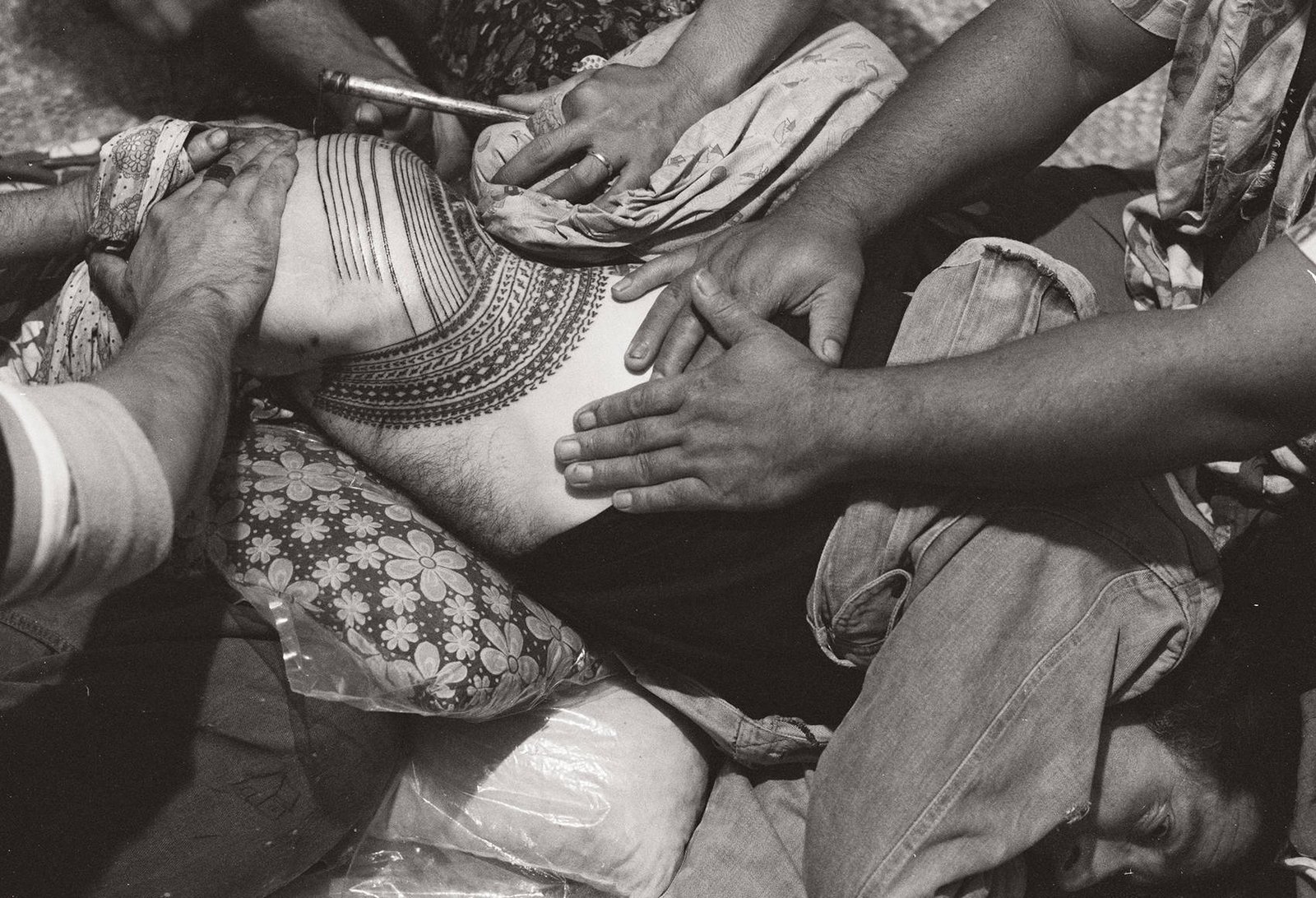
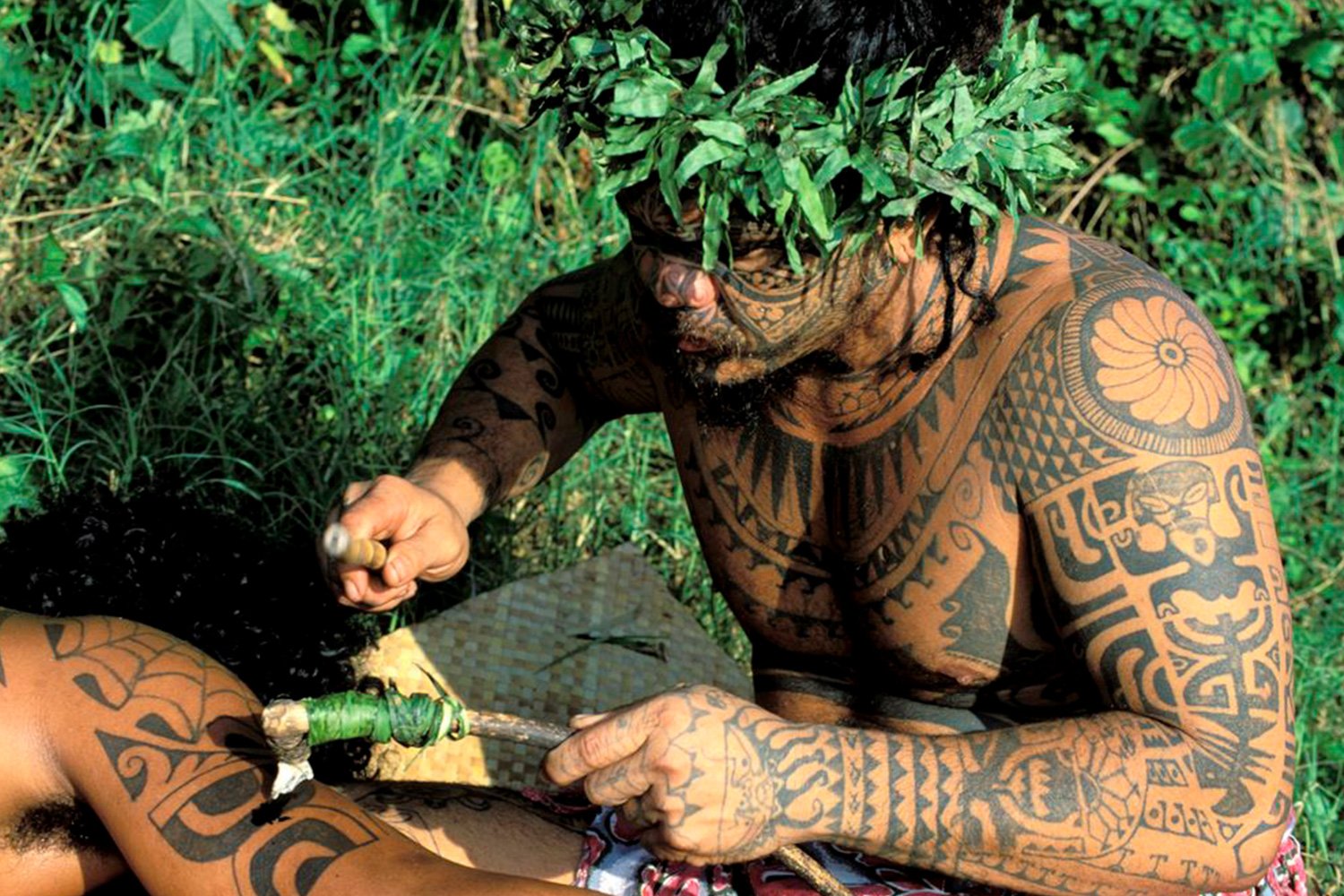
Nunes met Paulo in 1996. In what Nunes describes as an intensive introduction, Paulo showed him how to make a traditional tattooing tool — the mōlī, a comb-like instrument with sharpened bone teeth attached to a wooden handle — and to use it correctly. From that meeting forward, Nunes worked only with traditional tools. He travelled to meet Paulo repeatedly in the years that followed, deepening the practice.
The tools, as Paulo taught and as Nunes uses them:
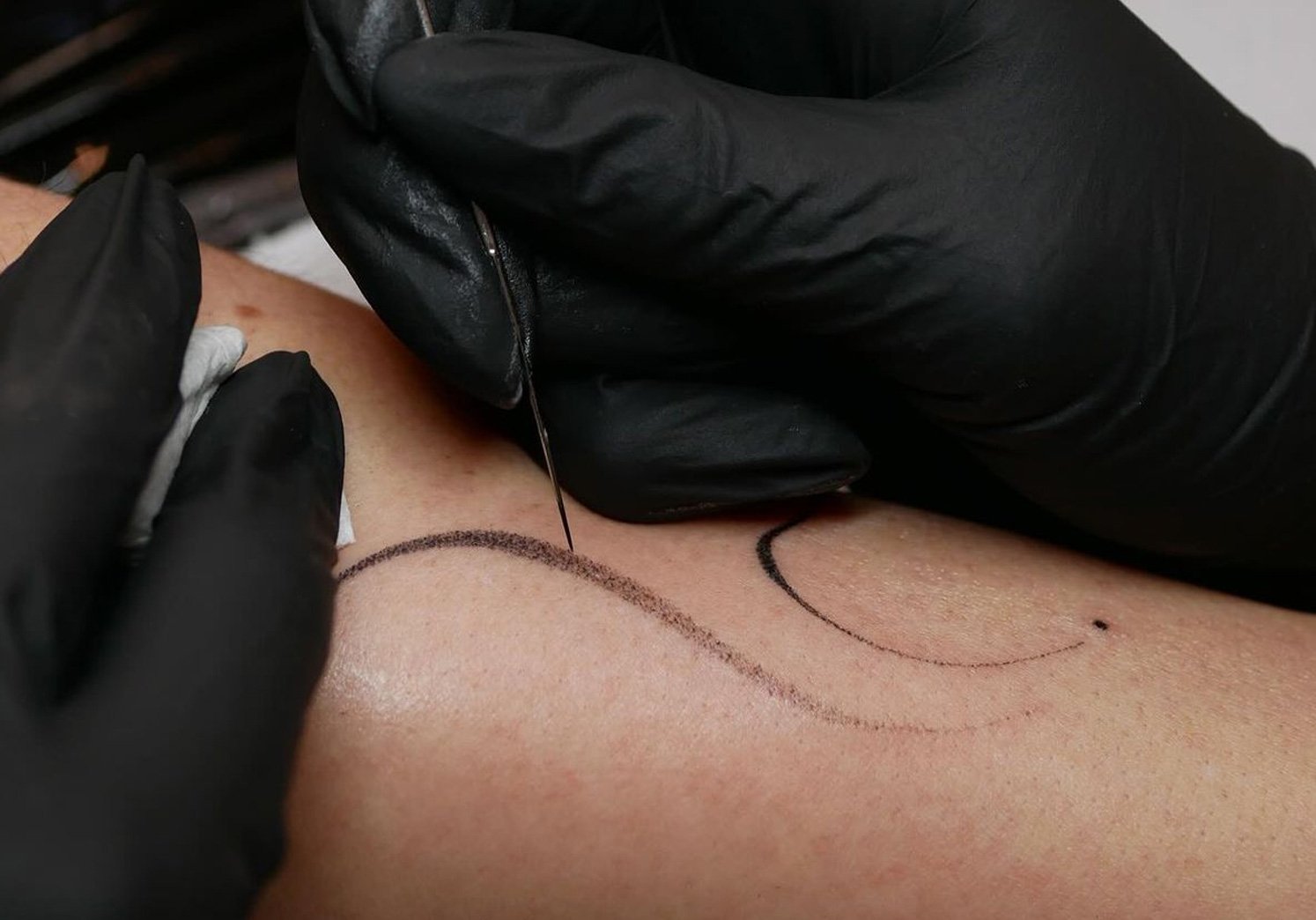
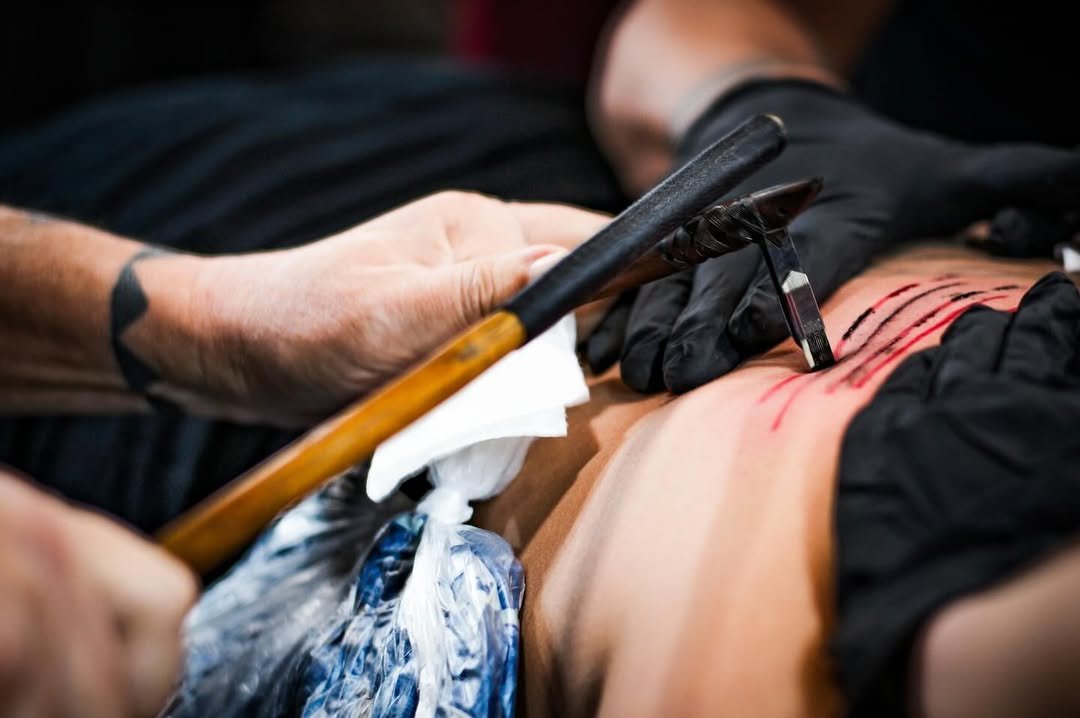
Mōlī. The tattooing instrument — a handle of wood with a comb of fine, sharpened bone attached at the working end. In traditional practice, the bone was from the albatross; current regulatory restrictions sometimes require alternatives. The teeth of the comb pierce the skin when tapped, depositing ink in a line. Different mōlī configurations produce different line widths and effects. Making a mōlī that works correctly is itself a skill requiring years to develop; for Nunes, learning to build the tools is a prerequisite for any student, not a side task.
Hāhau. The wooden mallet used to strike the mōlī. The practitioner holds the mōlī against the skin and taps the hāhau against its handle in a steady rhythm.
Apu paʻu. The ink bowl. The traditional ink is made from kukui nut soot mixed with water; sometimes small amounts of tree sap are added.
The method is the same one used across Polynesia and, in its broad outlines, across much of the Pacific and parts of Southeast Asia for thousands of years. It is slower than machine tattooing, more physical, and leaves a result that looks different from machine work — the lines carry slight irregularity, the ink sits differently in the skin, and the healing process differs.
Nunes ritually prepares his tools before each session. A documented pre-dawn ceremony involves bringing the tools to the shore break at Wai’anae and immersing them in the water, while praying to Kahekili — the Hawaiian tattooed god — to make the tools aware that they are about to perform sacred work.
Paulo died suddenly on November 25, 1999. Nunes has described the loss as devastating. In 2001, the Sulu’ape family formally conferred the Sulu’ape title on Nunes, making him the first Hawaiian and the first non-Samoan to receive it. The title carries the genealogical weight of the Sulu’ape lineage: it signals not personal accomplishment but continuity within a specific hereditary teaching tradition. Nunes’s full formal name is now Sulu’ape Mālama o Mataitoa Keone Nunes.
The practice: how kākau uhi actually works
Receiving an uhi from Keone Nunes is not a process of browsing a flash sheet and booking an appointment. The approach begins with genealogy.
Before any design is discussed, Nunes requires a conversation about the person’s moʻokūʻauhau — their family lineage, their connections to place and ancestry, the significant people and events in their line. The design is developed from that conversation. It is intended to be a specific document, not a generic aesthetic choice: the shapes, their placement on the body, and their relationship to one another carry meaning established before a single mark is made.
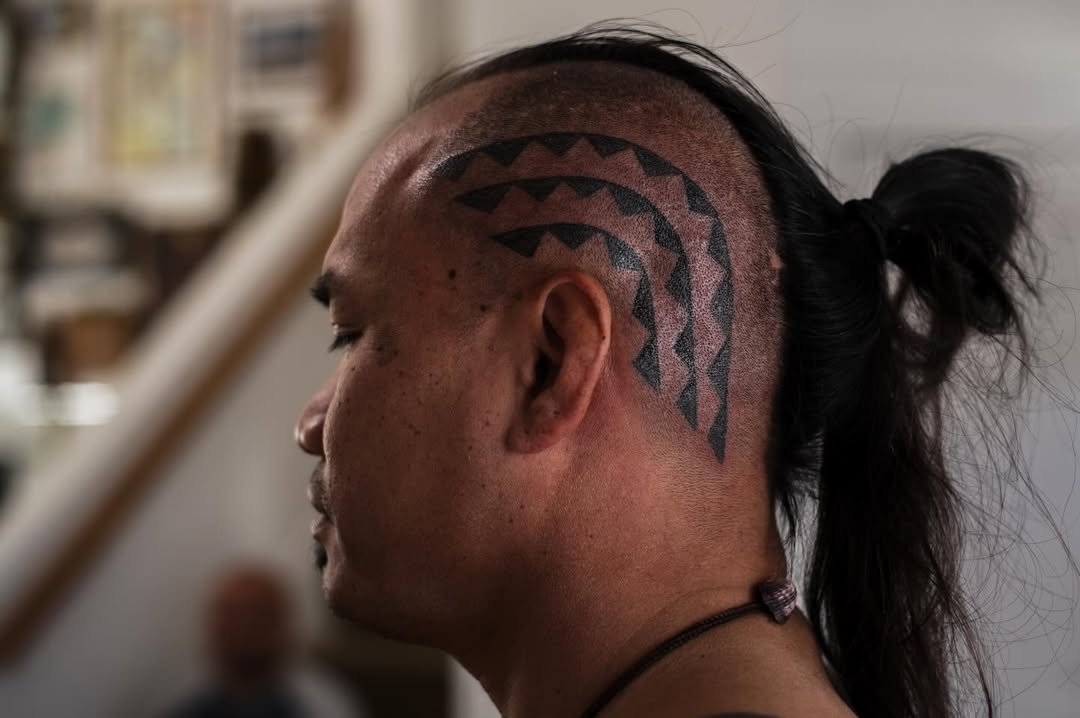
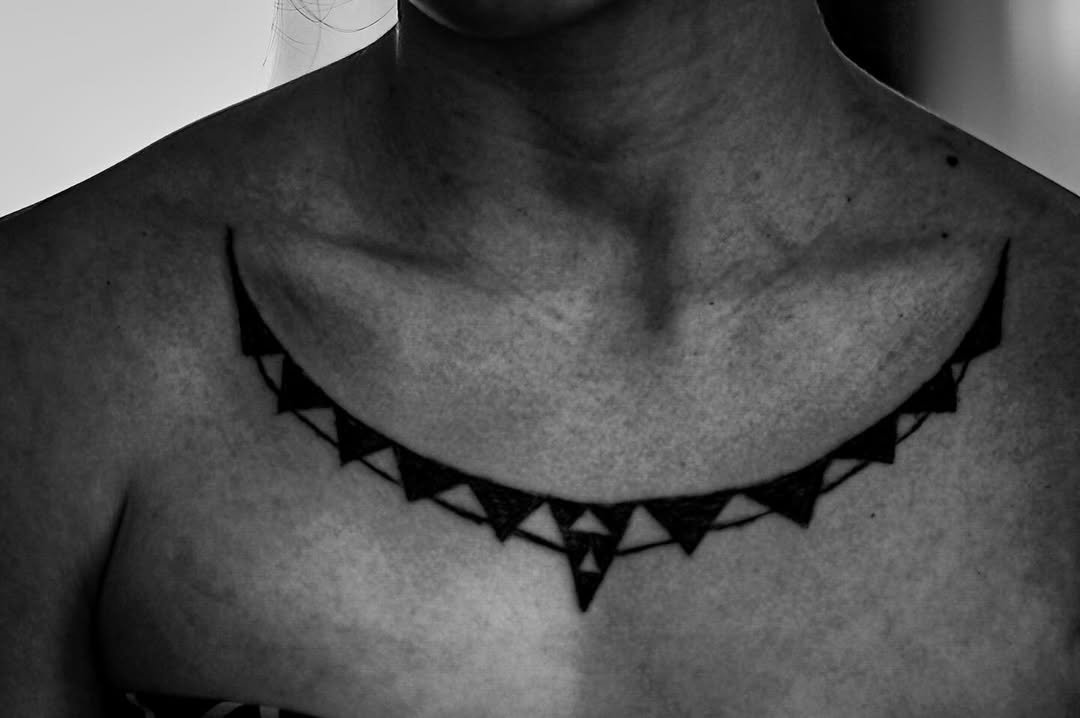
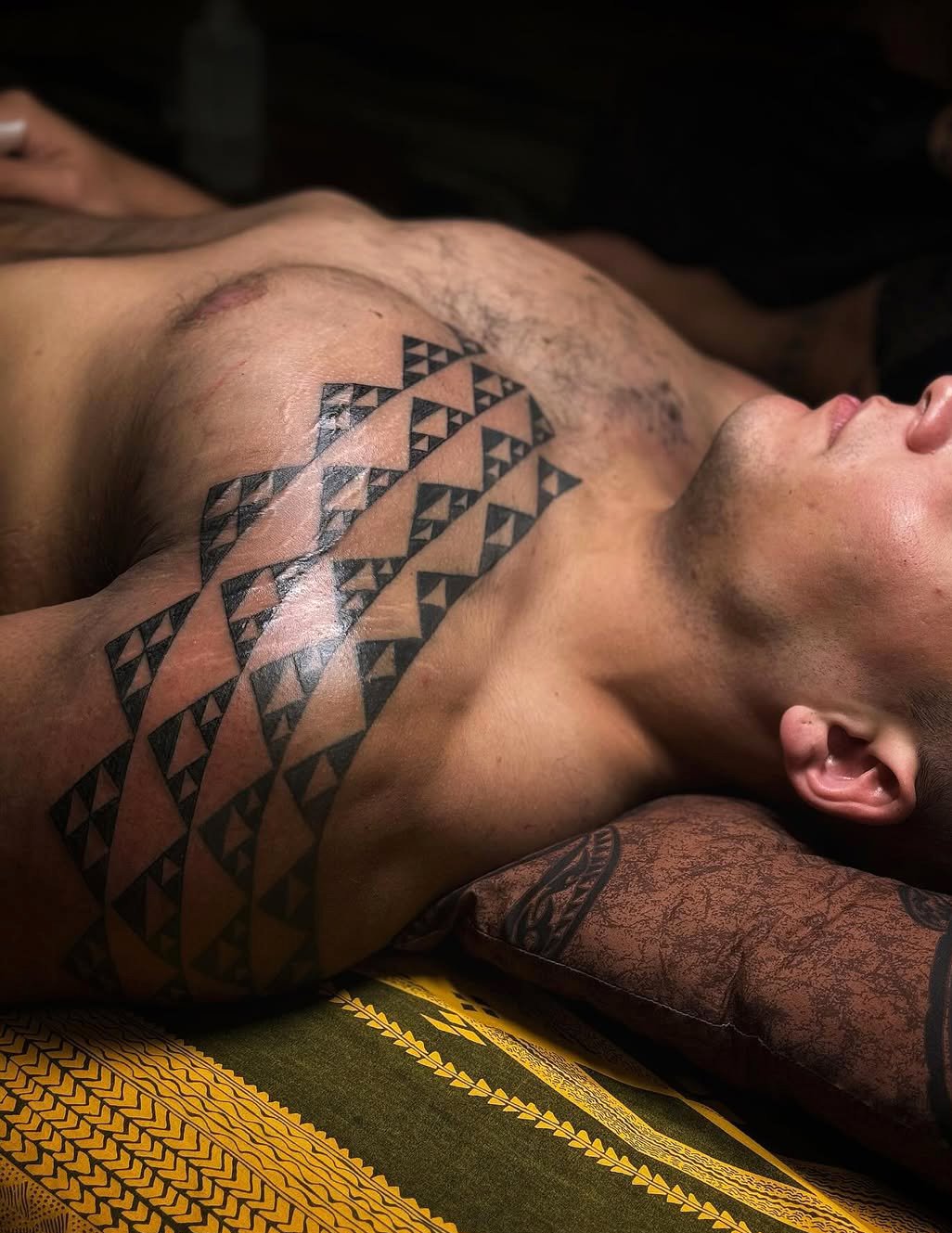
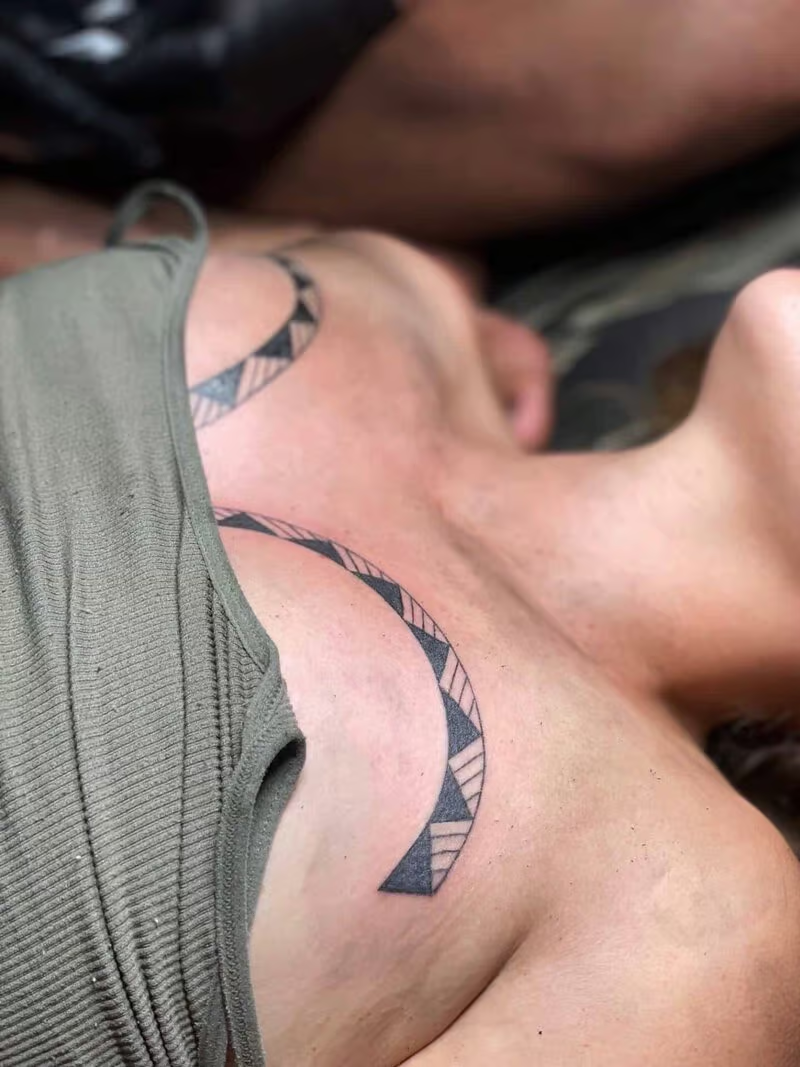
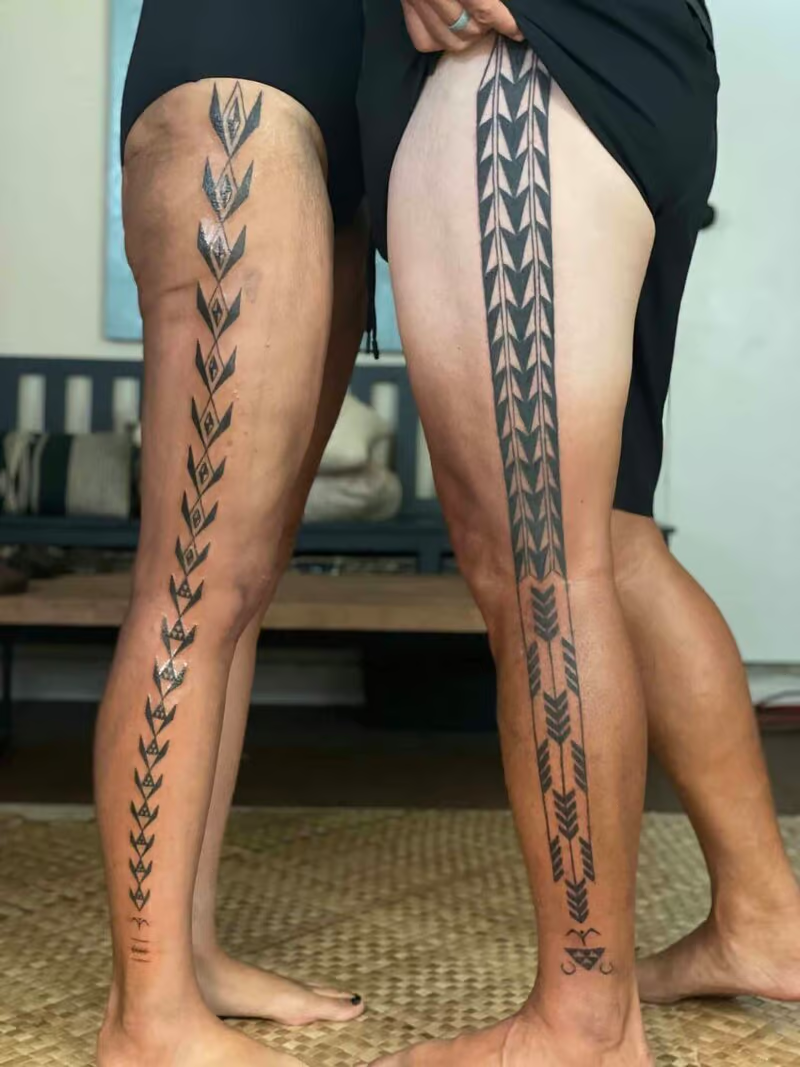
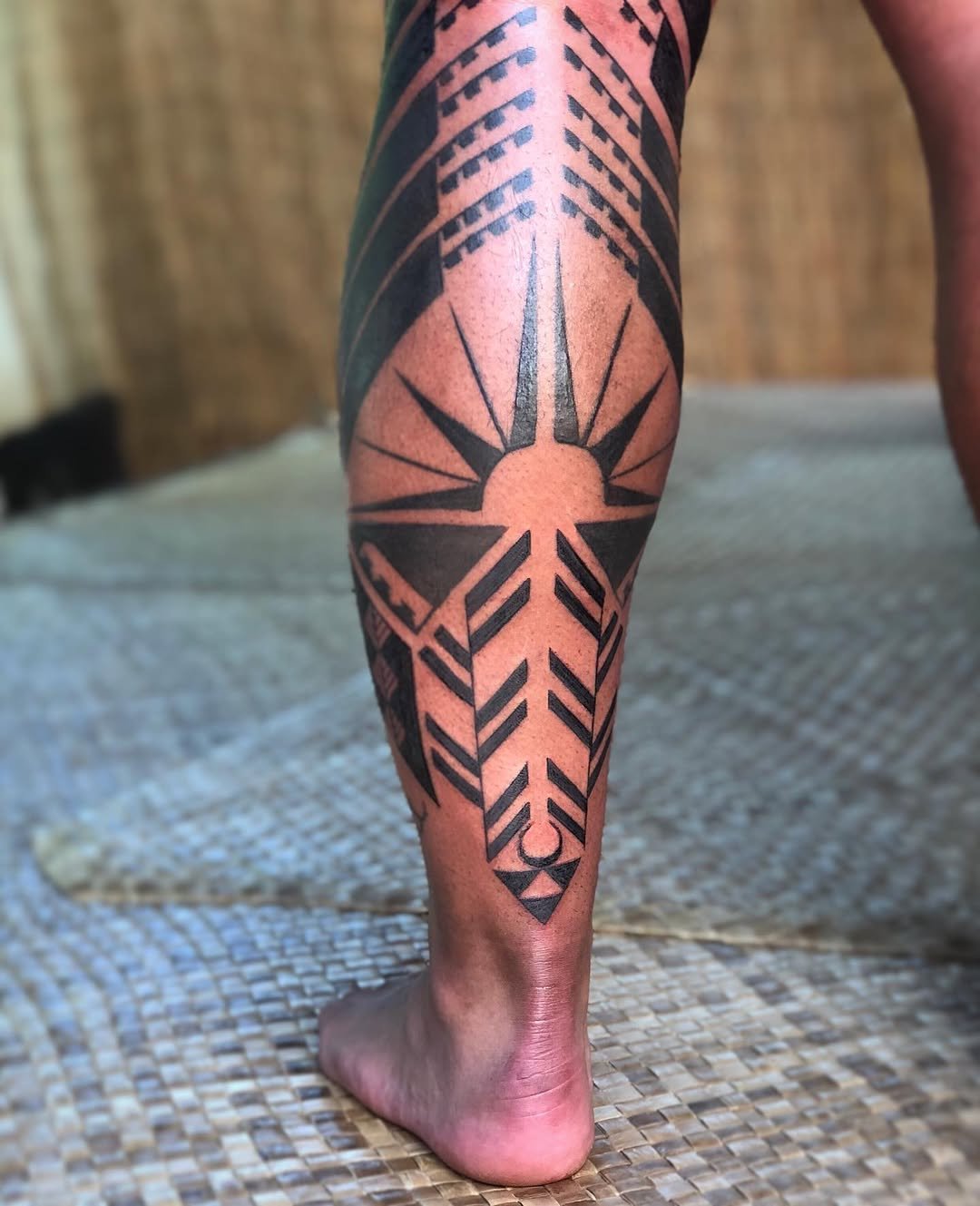
The designs draw from the vocabulary of traditional Hawaiian visual culture: geometric interlocking patterns, shark-tooth motifs (niho manō), spearhead forms, references to specific natural elements associated with the wearer’s ʻaumakua (family gods), and compositional structures that encode the body as a map of identity. Nunes has described the right side of the body as carrying the spiritual protection dimension of a piece — solid, dense, black — while the left side carries the more biographical and genealogical information.
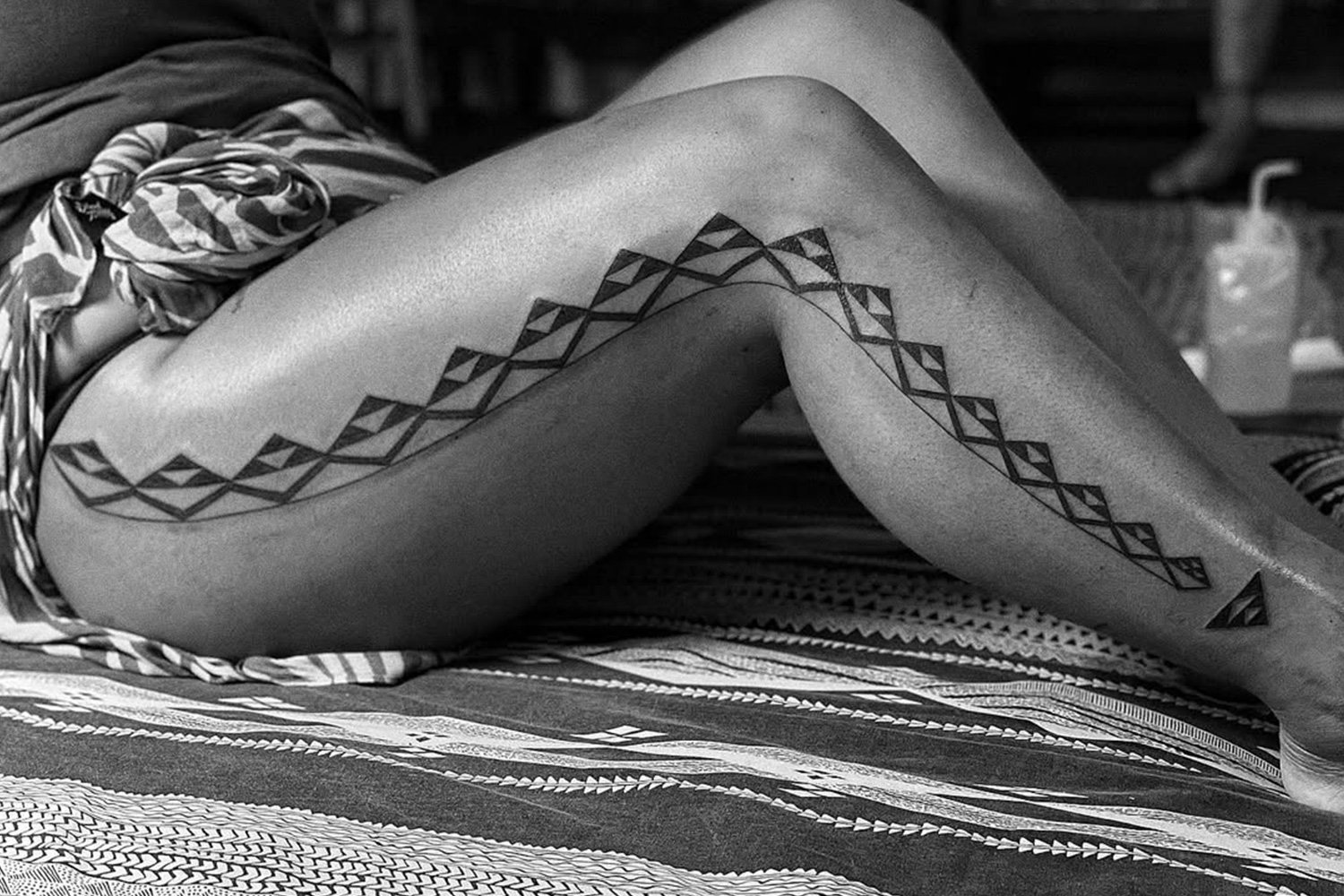
The alaniho — the first design Nunes himself received — runs from the hip to the ankle and remains one of the most significant designs in the tradition. It can take several different forms depending on the wearer’s family connections, profession, and rank. Other named design categories address the upper arms, the chest, the back, and the face; facial tattooing, historically the last and most senior of a person’s tattoos, remains rare and is treated by Nunes as the culmination of a long relationship rather than a starting point.
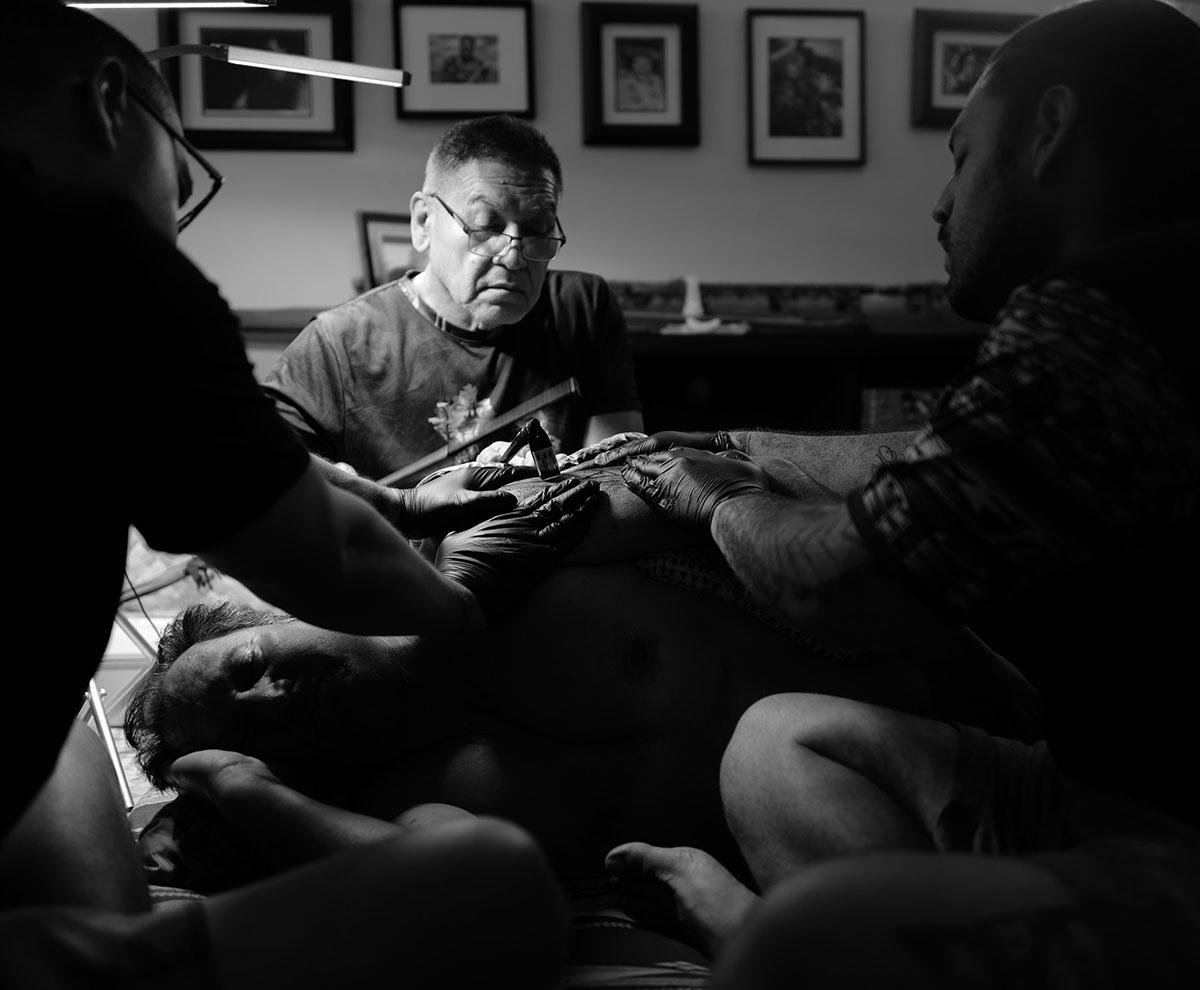
Each session is preceded by prayer. The session itself may include a chant. Nunes works with assistants — kaihoʻonaele — who stretch the skin and support the work, as was done traditionally. Clients lie on lauhala mats, the woven pandanus-leaf mats used in traditional Hawaiian material culture. The physical setup of the practice is not a concession to aesthetics; it is the protocol.
Access to Nunes’s work is selective. He has consistently refused requests that fall outside the parameters he considers appropriate — people wanting names tattooed, or images of unrelated things, or designs applied purely for decorative purposes. His apprentice Keliʻiokalani Mākua said in a 2021 interview:
“What we do is specific, and where it came from was specific.”
Pāuhi: the school of kākau uhi
In 1990, Nunes established Pāuhi — the traditional Hawaiian tattooing school, based in Wai’anae on O’ahu’s leeward coast. He describes Pāuhi as having existed since 1990, practising hand-tapping (kā ana ka uhi) since 1996, and being formally titled since 2001. The school operates out of the Hale Ola Hoopakolea building in Wai’anae, where Nunes has worked for decades.
Pāuhi is not a school in any commercial sense. Students — haumana — are invited, not enrolled. Only a small number have been admitted over the school’s decades of existence. The training is extensive: it begins with tool-making, which alone can take years; advances through design study and genealogical knowledge; and culminates, for those who complete it, in ʻūniki — a formal ceremony marking the passing of knowledge that is itself a significant ritual event.
Of Nunes’s students, two have completed the ʻūniki in recent generations.
Keliʻiokalani Mākua (@kelii_makua) has been with Nunes for many years and is one of the school’s primary practitioners. He is extensively tattooed with uhi designed by Nunes and has spoken publicly about the weight of the knowledge and the responsibility of continuing it.
Kamaliʻikūpono Hanohano (@pokikane) began his apprenticeship with Nunes at the age of twenty, in 2010, after a decade of study, and completed the ʻūniki process. Nunes has stated that Hanohano is the only student who “has the title to continue that practice” in its full traditional form — he carries the knowledge in its totality. Nunes gave Hanohano the title name Keoneʻulaikapōpanopano, meaning “the sacred sands of the deep dark night” — an honour that refers to the place where Taemā and Tilafaigā, the twin women who brought tattooing tools from Fiji to Samoa in the origin narratives of Pacific tattooing, are said to have landed. As of 2020, when Nunes moved to Thailand, Hanohano heads Pāuhi in Wai’anae.
Hanohano has noted that the discipline extends beyond the tattooing itself into the sourcing of materials: the plants used for the tools must be grown and harvested by the practitioner, not purchased. His LIFT project, Garden of Tradition, focuses on cultivating the plants — mea kanu — used to make the tools of kākau uhi, building a supply that will outlast any individual practitioner.
Recognition and reach
Nunes has been named one of the 101 Most Influential People in Tattooing by the late International Tattoo Art editor Bob Baxter. His work is held in the collections of the Smithsonian Institution, the Honolulu Museum of Art, the Oakland Museum of California, and the Museum of New Zealand Te Papa Tongarewa — institutions that treat it as significant material culture rather than a craft curiosity.
- In 2003, he featured in Skin Stories, the PBS documentary on Pacific tattooing traditions.
- In 2014, he was the subject of Na Loea: The Masters — Ancestral Ink, a documentary specifically on his practice and his role in the kākau uhi revival.
- In 2022, he featured in Skindigenous, the thirteen-part documentary series on indigenous tattooing worldwide, produced for APTN and broadcast on KPBS and other public media outlets.
- In September 2022, he applied a traditional Hawaiian head tattoo to actor Jason Momoa — a maka (face/head) tattoo that Momoa described as “a true honour 20 years in the making.” Momoa later served as creator, writer, and star of Chief of War, the Apple TV+ series about the unification of the Hawaiian Islands, released in 2025, for which Nunes served as a cultural advisor on tattooing. The series represents the largest-budget Hawaiian historical drama ever produced, with Nunes contributing the research and framework that governed how tattoos appeared on screen — their designs, placements, and cultural logic.
He has lectured internationally and consulted on major institutional projects, including a guest lecture at the de Young Museum in San Francisco titled E wehe ana i ka maoli (Uncovering What is Real) — Undressing the Savage, addressing the history of Hawaiian representation and misrepresentation in Western cultural contexts.
Keone nunes now
In 2020, Nunes moved to Thailand, where he is currently based. He continues to return to Hawai’i to lead workshops, teach, and visit. The ongoing work in Wai’anae is carried out by Hanohano and the Pāuhi community.
Nunes’s own position in Pāuhi‘s history is summarised in his Instagram (@suluape_keone) bio with characteristic economy:
“Pāuhi — traditional Hawaiian tattoo, in existence since 1990, kā ana ka uhi since 1996, titled since 2001.”
The revival he led was not a reconstruction from academic records. It was assembled from oral knowledge held by kupuna, from historical documentation gathered in colonial-era journals and artwork, and crucially from the living technical tradition that Su’a Sulu’ape Paulo carried. The Samoan and Hawaiian tattooing traditions share deep Polynesian ancestry, and Paulo’s role in giving Nunes access to the working techniques — the actual making and use of traditional tools — was the link that enabled a genuine technical revival rather than a machine-based approximation.
Nunes has been direct about what he understands the tattoos to do. They are, in his framing, a physical statement of identity that cannot be undone or taken away:
“Because once you put this tattoo on, there’s no denying who you are.”
In a community whose culture was systematically targeted and suppressed by American annexation, missionary activity, and the long displacement of Native Hawaiians from their own land, that permanence carries weight beyond aesthetics.
Sources & further reading
- Stuart H. Coleman. Tapping Into Ancestral Wisdom: Reviving the Nearly Lost Art of Native Hawaiian Tattooing. NMAI Magazine.
- Matthew Kaulana Ing. Q&A: Traditional Hawaiian tattoo expert Keone Nunes on the art of kakau. Hawaiʻi Magazine, January 2021.
- Puanani Fernandez-Akamine. Kākau: He Mele Haliʻa Aloha / A Song Remembered. Ka Wai Ola, February 2021.
- Transformation Through Tattoo. Go Hawaii.
- Cultural Traditions’ Indelible Mark. International Labour Organisation.
- Kamaliʻikūpono Hanohano. Native Arts and Cultures Foundation.
- Keone Nunes. EverybodyWiki Bios & Wiki.
- Sua Sulu’ape Paulo II. Wikipedia, The Free Encyclopedia.
- SKINDIGENOUS: Hawaii — Keone Nunes. KPBS / APTN, aired August 22, 2022.
- Na Loea: The Masters — Keone Nunes, Ancestral Ink. Documentary, 2014.
- Skin Stories. PBS, aired May 4, 2003.
- Chief of War — A Turning Point for Native Hawaiian Storytelling. Ka Wai Ola, September 2025.
- Jason Momoa’s new head tattoo. NBC / RCNA, September 2022.
- Chief of War on Apple TV+, 2025.
- University of Hawaiʻi at Mānoa Library Research Guide: Traditional Hawaiian Tattooing.
- Keone Nunes. Guest Lecture: E wehe ana i ka maoli (Uncovering What is Real). de Young Museum, San Francisco, August 2019.