Related Posts
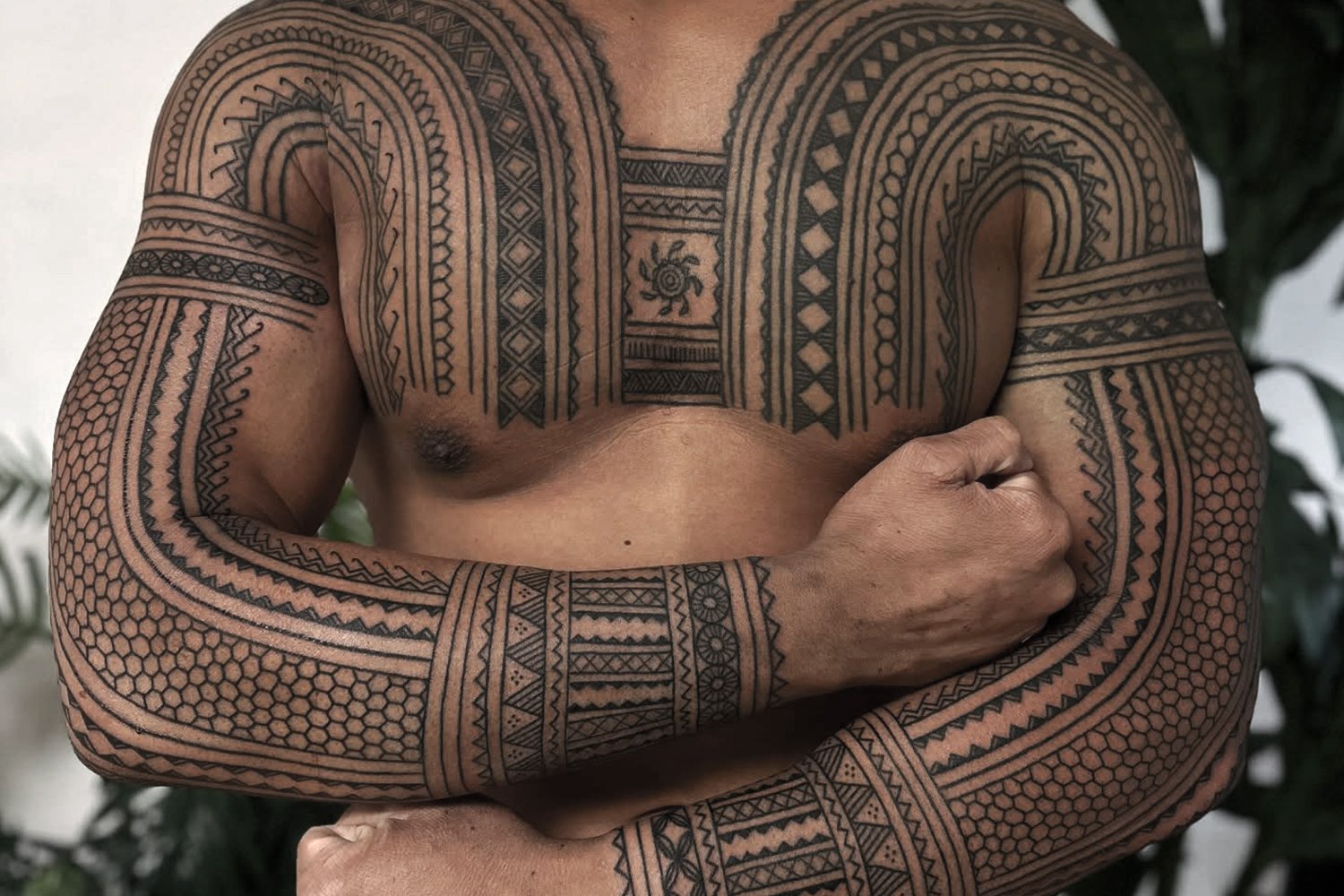
Filipino tattooing (batok/batuk/patik)
The painted ones
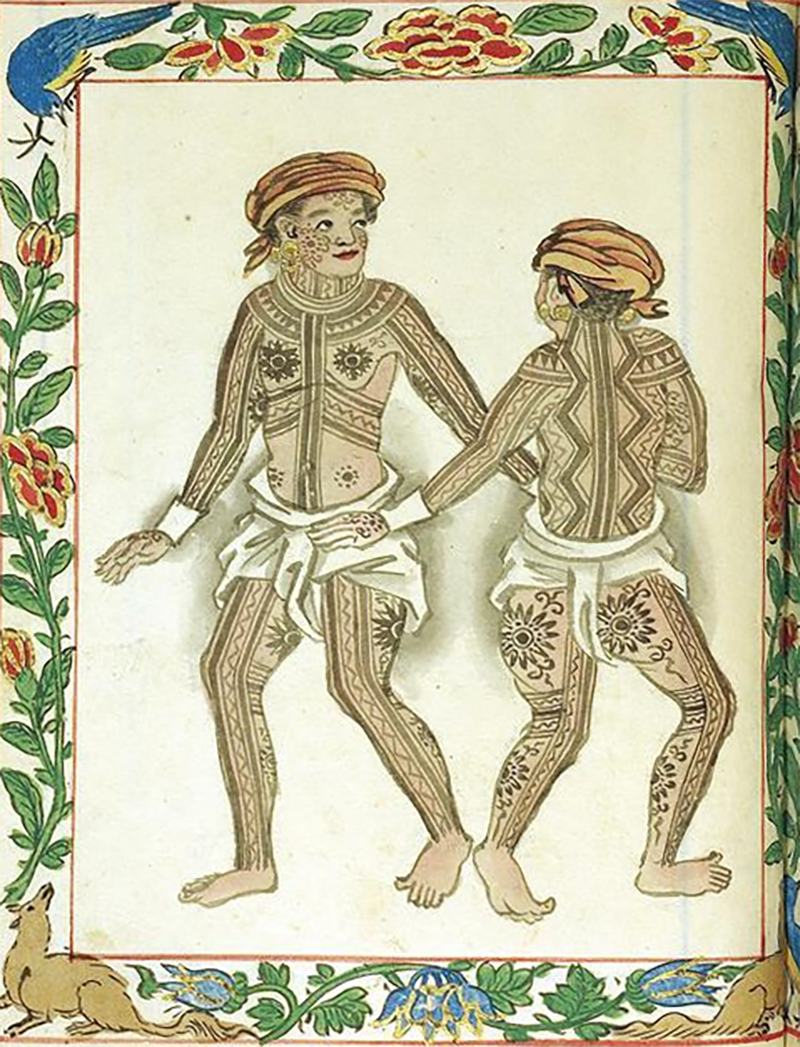
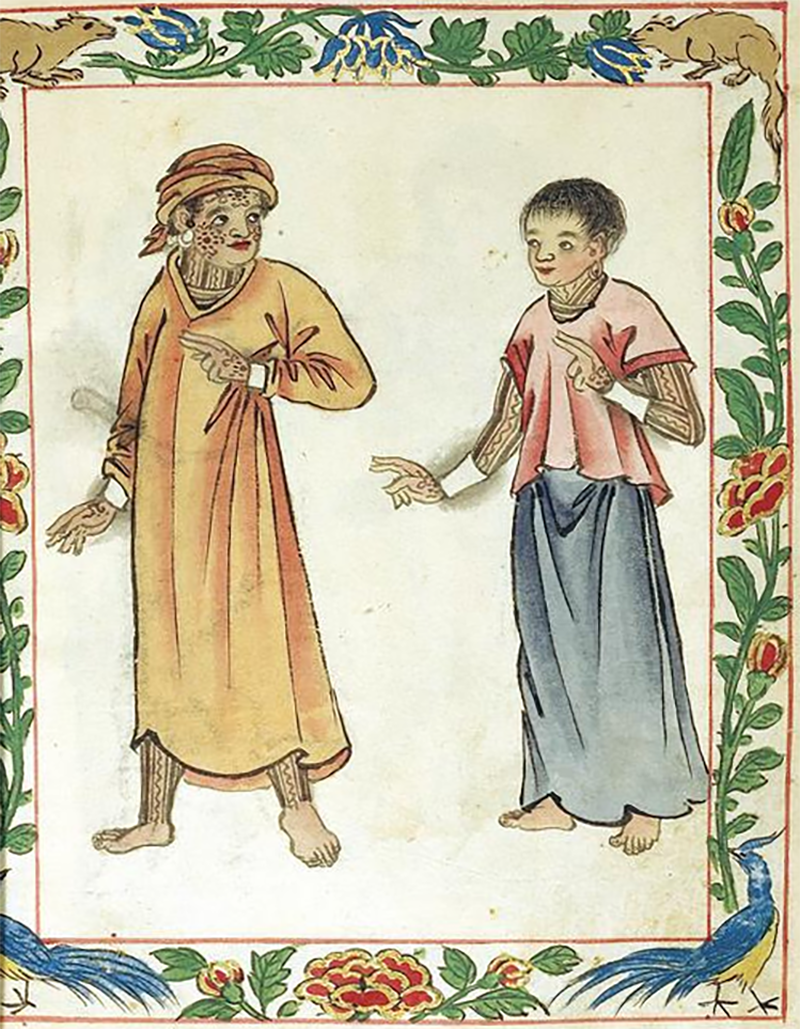
When Ferdinand Magellan’s expedition reached the Visayan Islands of the central Philippines in 1521, the chronicler Antonio Pigafetta described the people they encountered as “painted all over.” The Spanish called them Los Pintados — “the Painted Ones” — and the name stuck so firmly that it became the colonial designation for the entire Visayan population. The tattooing was so widespread, so extensive, and so visually striking that the Spanish unified a diverse set of island peoples under a single term defined by the marks on their skin.
The Philippines has one of the deepest and most diverse tattooing traditions in the Austronesian world. Before the Spanish colonial period, tattooing was practised by almost every ethnic group across the archipelago — in the Visayas, in Luzon, in Mindanao, and across the smaller island groups. Each people had its own terminology, its own designs, its own rules about who could receive which marks and under what circumstances. The practice was connected to warfare, to beauty, to social status, to spiritual protection, and to the identity of the individual within their community. The Spanish, through four centuries of colonisation and Christianisation, destroyed the majority of these traditions. What survives are the Cordilleran highland traditions of northern Luzon — preserved through geographic isolation — and the documentary record of the lowland traditions, preserved in the accounts of the colonisers who destroyed them.
Batok, batuk, patik, batek, butak, fatek, whatok
The vocabulary of Filipino tattooing reflects its archipelagic spread. The terms for tattooing across the Philippines descend from a shared Proto-Austronesian ancestry — beCik (“tattoo”), patik (“mottled pattern”), and burik (“speckled”) — and their descendants appear in every major language group.
- The Visayan peoples used batok, batuk, or patik.
- The Ilocano used batek, butak, or burik.
- The Cordilleran peoples — Kalinga, Bontoc, Ifugao, Kankanaey, and others — used batek, batok, batak, fatek, whatok (also spelt fatok), or buri, depending on the specific group.
- The Manobo peoples of Mindanao used pangotoeb (also spelt pengeteb or pengetev).
Affixed forms of these words described tattooed or accomplished people: batikan in Tagalog, binatakan in Visayan, burikan in Ilocano — used as synonyms for “renowned person” or “skilled person,” because in most Filipino societies, the most extensively tattooed person was the most accomplished warrior.
Crucially, the same vocabulary is applied to the same patterns in other materials. A batok design on skin and a batok design on woven cloth, ceramic pottery, or a decorated shield handle were understood as the same visual language rendered in different media, which is why the suppression of tattooing during the colonial period did not erase the patterns entirely: they survived in the textile traditions that the missionaries left alone.
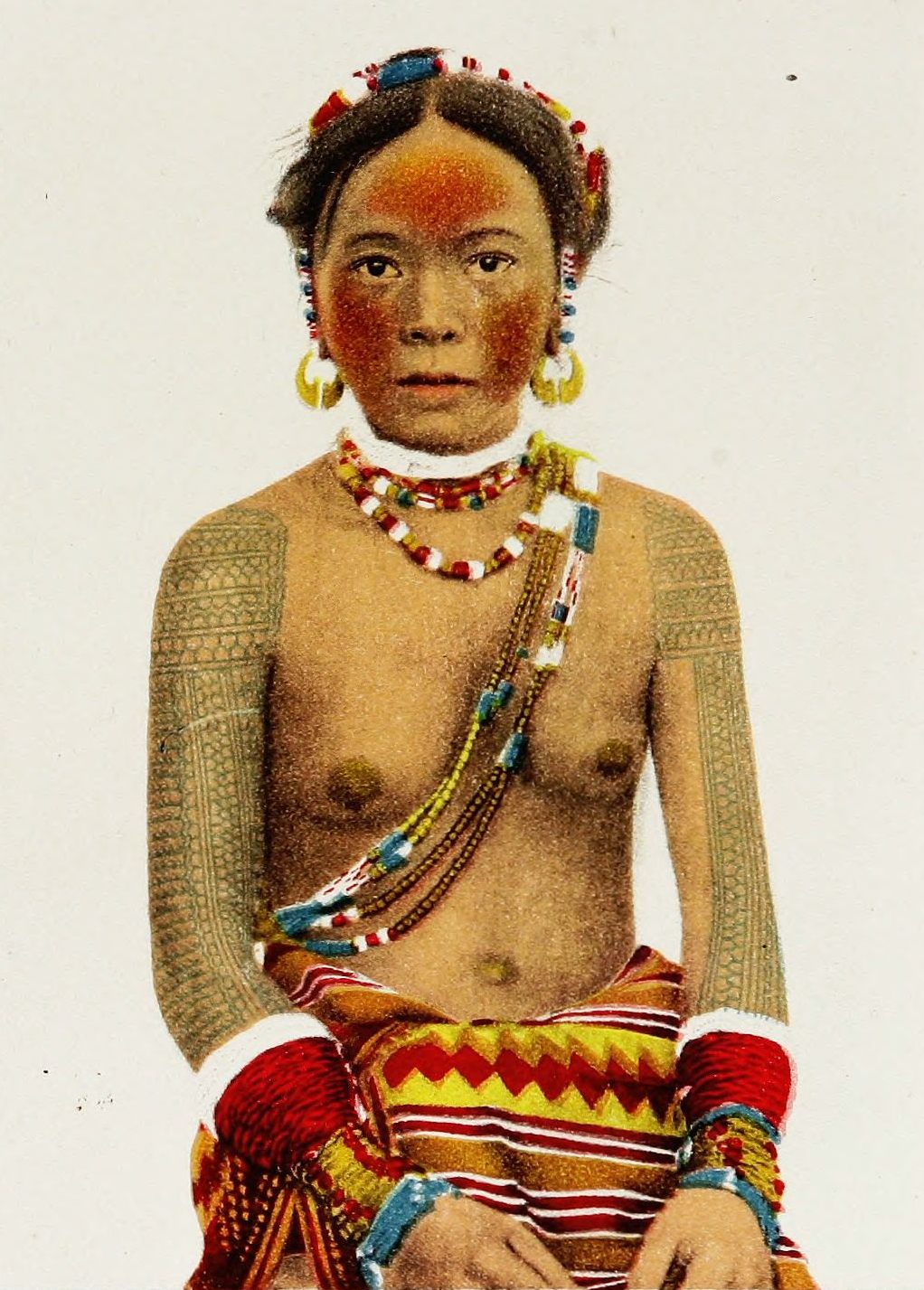
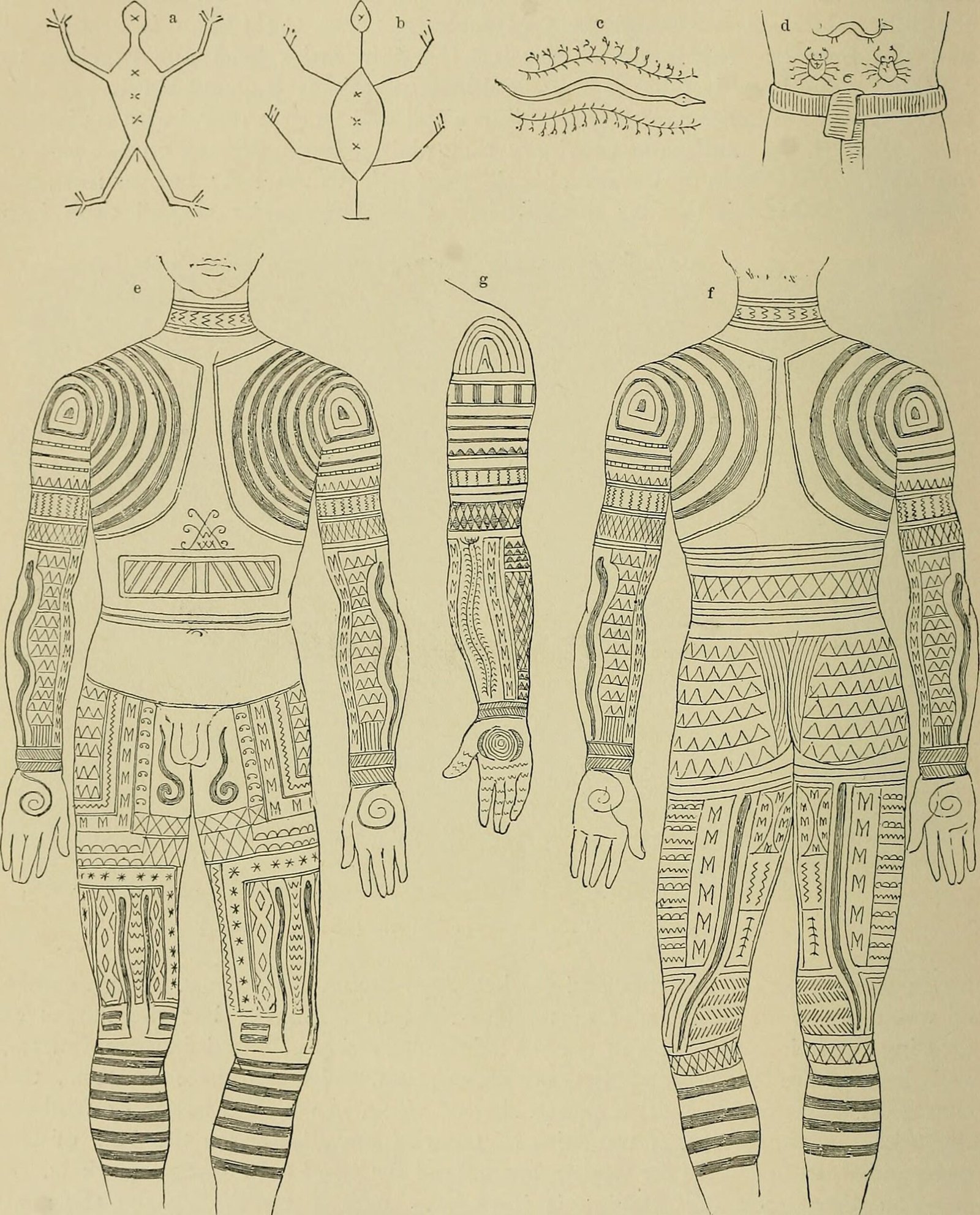
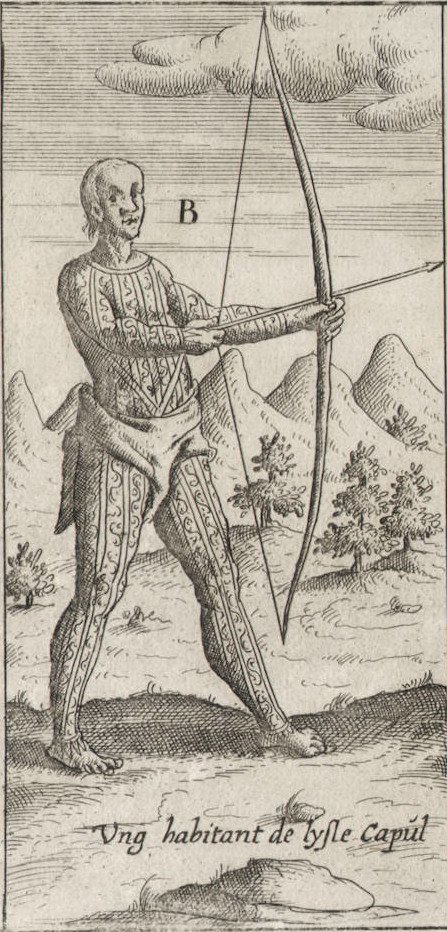
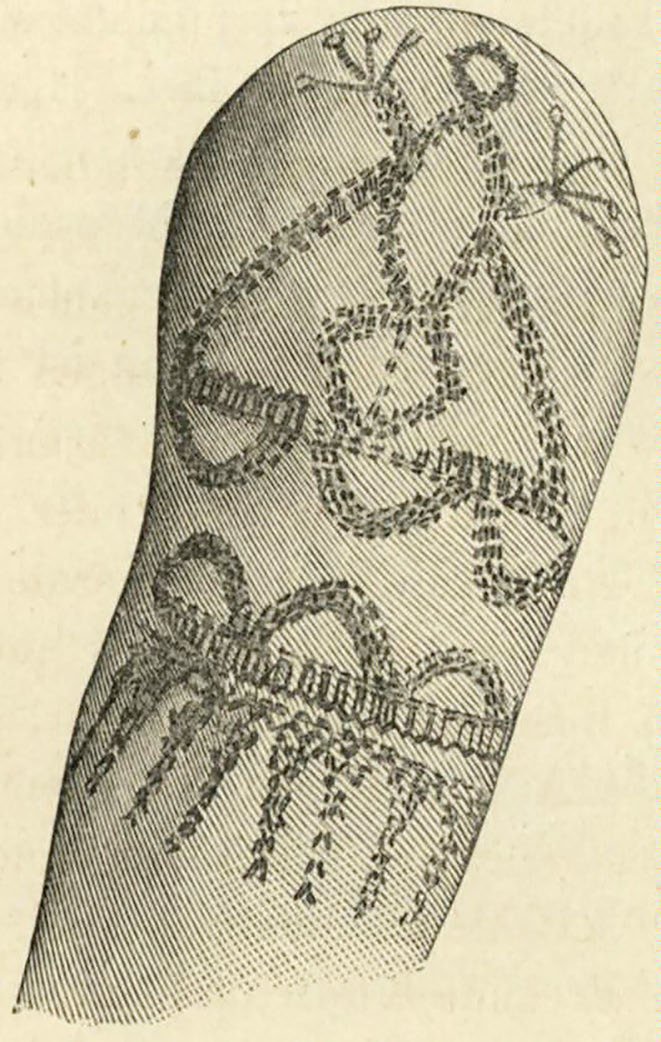
Filipino tattooing traditions in The pre-colonial times
Tattooing in the pre-colonial Philippines was not one tradition. It was dozens — as many as there were distinct ethnic groups in the archipelago. The major documented traditions fall into two geographic categories.
The Visayan lowlands — the Pintados
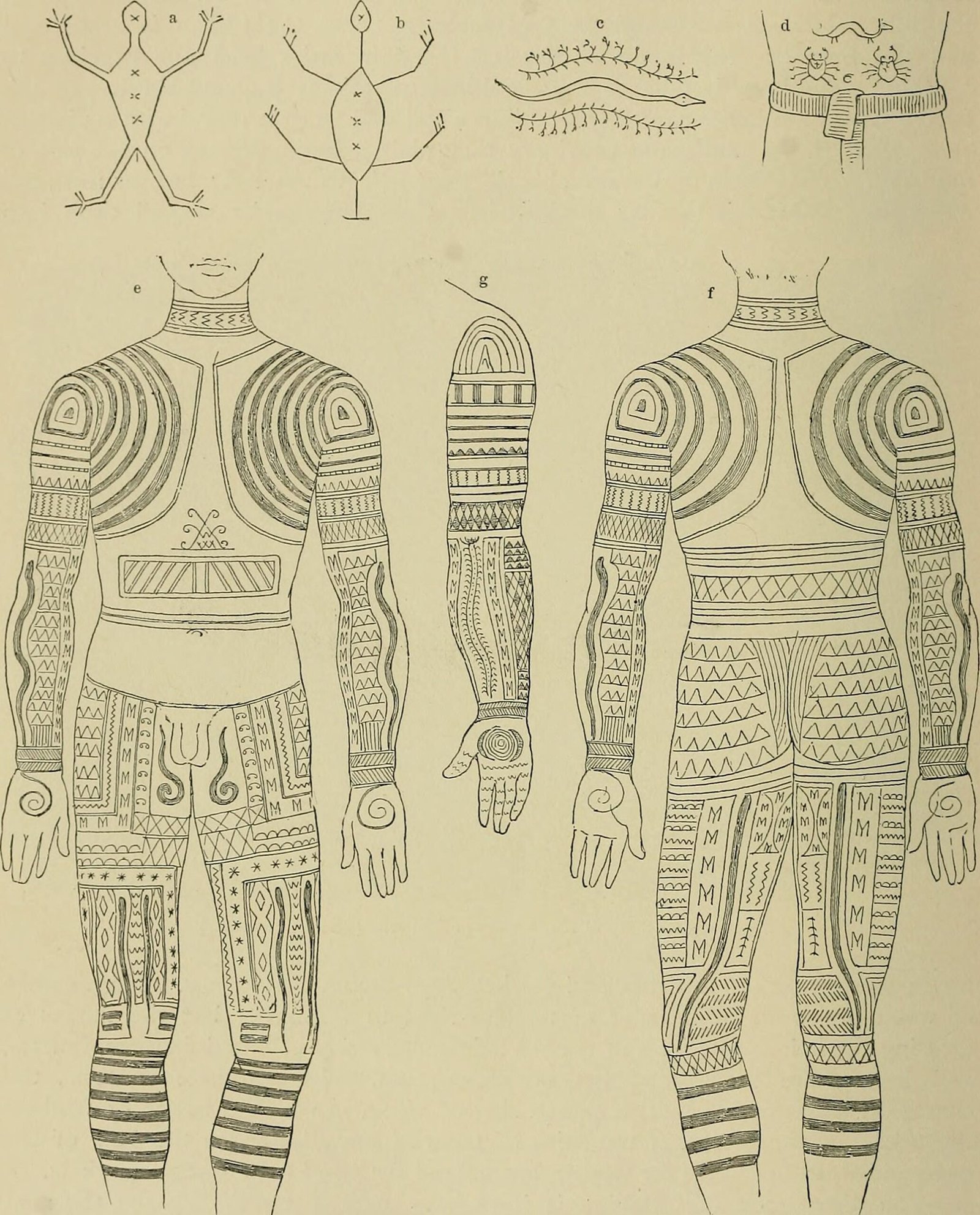
The Visayan Islands — Cebu, Panay, Leyte, Samar, Bohol, and the surrounding islands — produced the tattooing tradition that most impressed and alarmed the Spanish. Visayan tattooing was extensive: men could be tattooed from face to feet, with elaborate designs covering the chest, back, arms, and legs. The more extensive the tattooing, the higher the status of the wearer — a fully tattooed man was a proven warrior who had earned his marks through combat.
The tattooing was called batuk (also batok or batek, depending on the language) in the Visayas. The designs, as documented in Spanish colonial accounts and in the illustrations of the Boxer Codex (a manuscript dated to approximately 1590, now held in the Lilly Library at Indiana University), were bold and complex. The Boxer Codex illustrations show Visayan men with full-body coverage: dense geometric and figurative patterns covering the torso, arms, and legs, with motifs that scholars have linked to solar imagery, serpentine forms, and cosmological symbols.
The Jesuit missionary Pedro Chirino, writing in the late sixteenth century, described the practice: “The Visayans are called Pintados, because in reality they are [painted]; not because this is natural to them, but because they paint themselves with iron and fire.” The “iron and fire” refers to the tattooing tools and process. Francisco Alcina, another Jesuit who spent years in the Visayas, recorded the process in more detail in his Historia de las islas e indios de Bisayas (1668): the tattooing was done by specialists using pointed instruments and soot-based ink, and the designs were applied in stages across a man’s life as he accumulated the achievements that entitled him to additional marks.
The specific designs documented by Spanish observers and in the Boxer Codex include:
Labid. An inch-wide vertical design resembling snake or crocodile scale patterns, zigzagging from the legs to the waist.
Daya-daya. A pattern on the chest, often incorporating solar and cosmic motifs. The Lorenz Lasco study from the University of the Philippines observed that the chest tattoos in the Boxer Codex illustrations bear a resemblance to solar imagery, while serpentine patterns run down the limbs — the sun representing the Kaluwalhatian (Sky World) where the gods dwell, and the snake representing the earth and its power.
Facial tattoos. The most extreme and most feared expression of Visayan tattooing. William Henry Scott, in Barangay: Sixteenth Century Philippine Culture, noted that facial tattooing was the most rugged form and played an important role in intimidating opponents in battle.
Visayan tattooing was destroyed by the Spanish colonial project. The missionaries targeted it specifically as a pagan practice incompatible with Christianity. By the seventeenth century, the tradition had largely ceased in the Christianised lowlands. Today, the Pintados Festival — an annual celebration in Tacloban, Leyte — commemorates the tradition through painted body decoration, though the tattoos themselves are gone.
The Cordilleran highlands — the surviving traditions
The mountainous interior of northern Luzon — the Cordillera Administrative Region — is home to a cluster of ethnic groups who preserved their tattooing traditions through the colonial period. The mountains were never effectively colonised by Spain. The terrain was too difficult, the people too resistant, and the economic incentive too small. The result was that the highland cultures — Kalinga, Bontoc, Ifugao, Kankanaey, Ibaloi, Apayao (Isneg), and others — maintained their pre-colonial cultural practices, including tattooing, into the twentieth century.
Each group had its own designs, its own terminology, and its own rules. The common features across the Cordillera were:
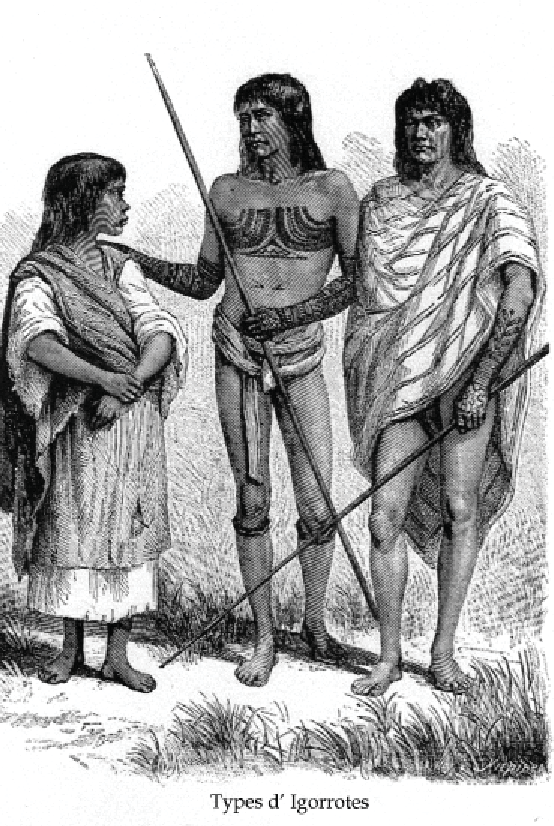
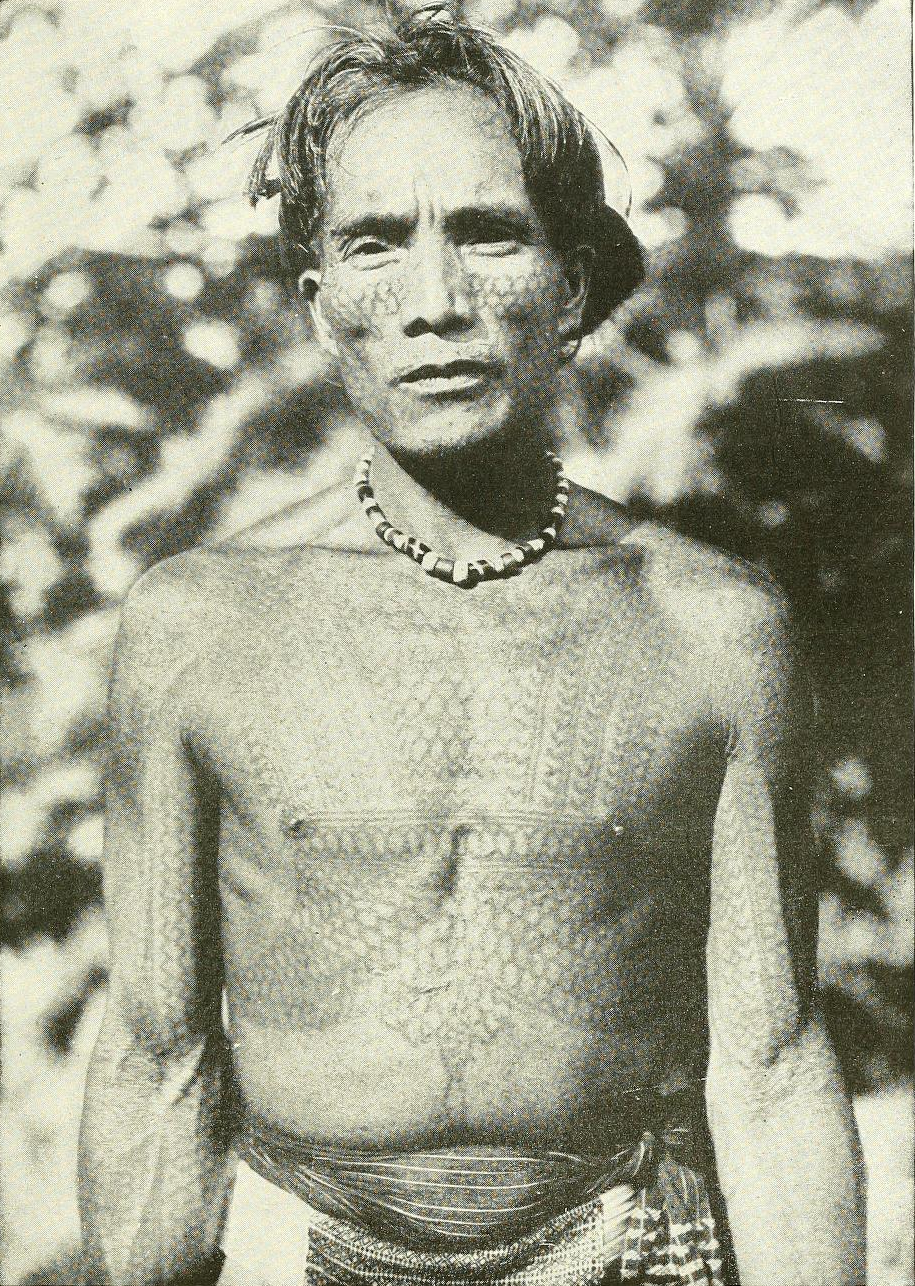
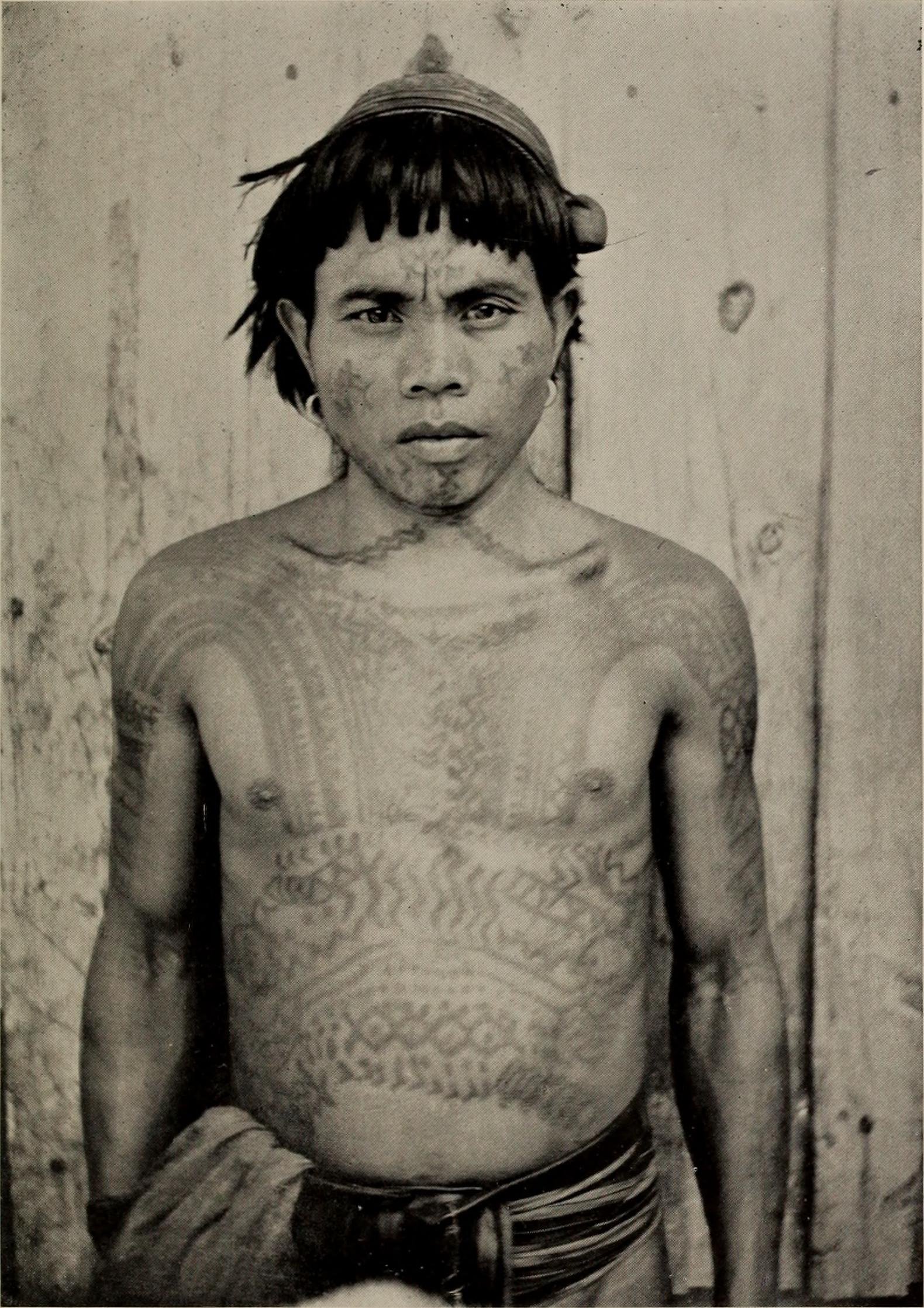
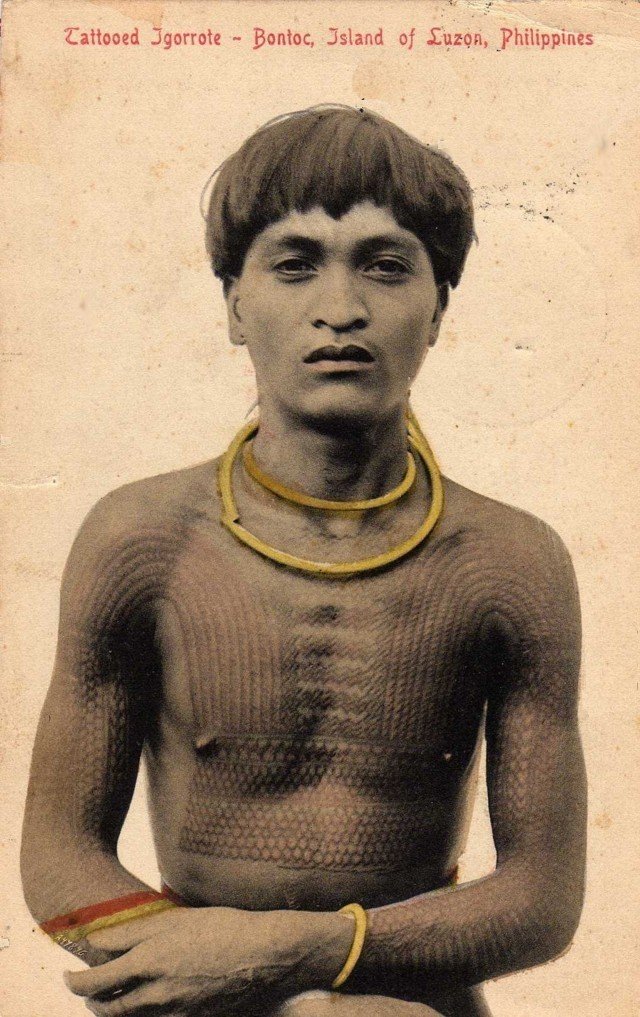
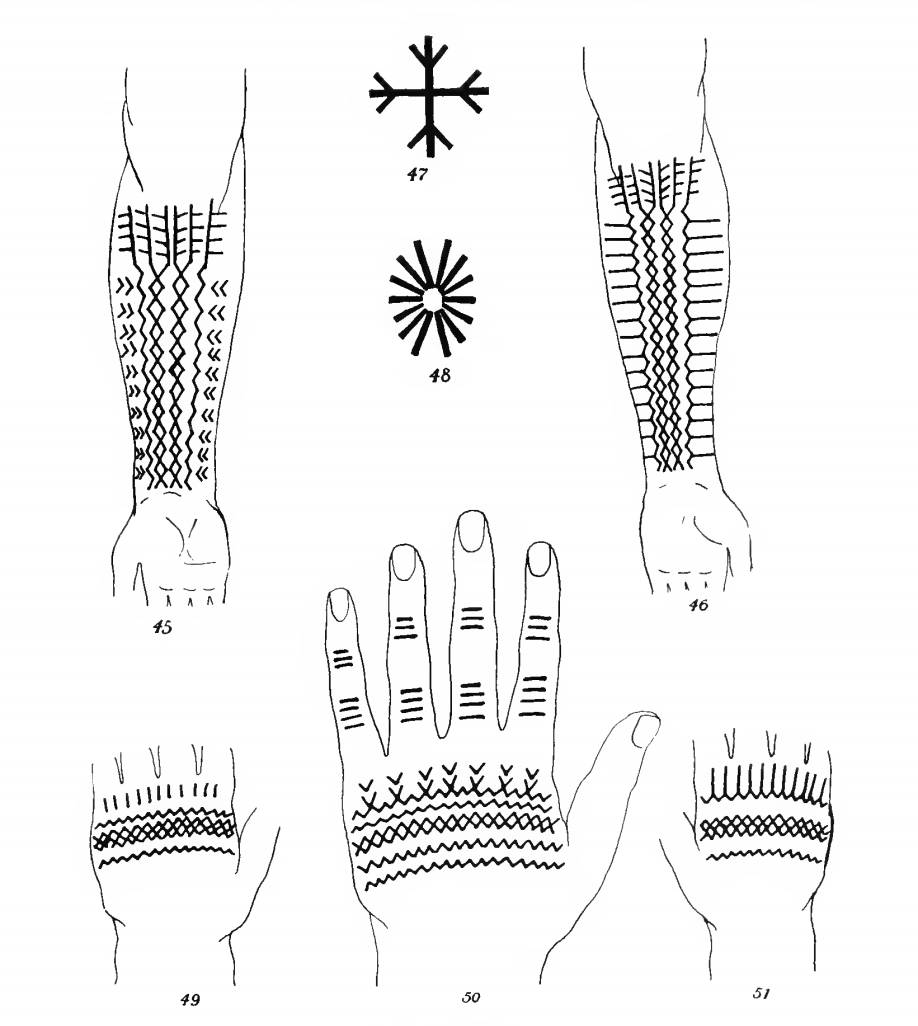
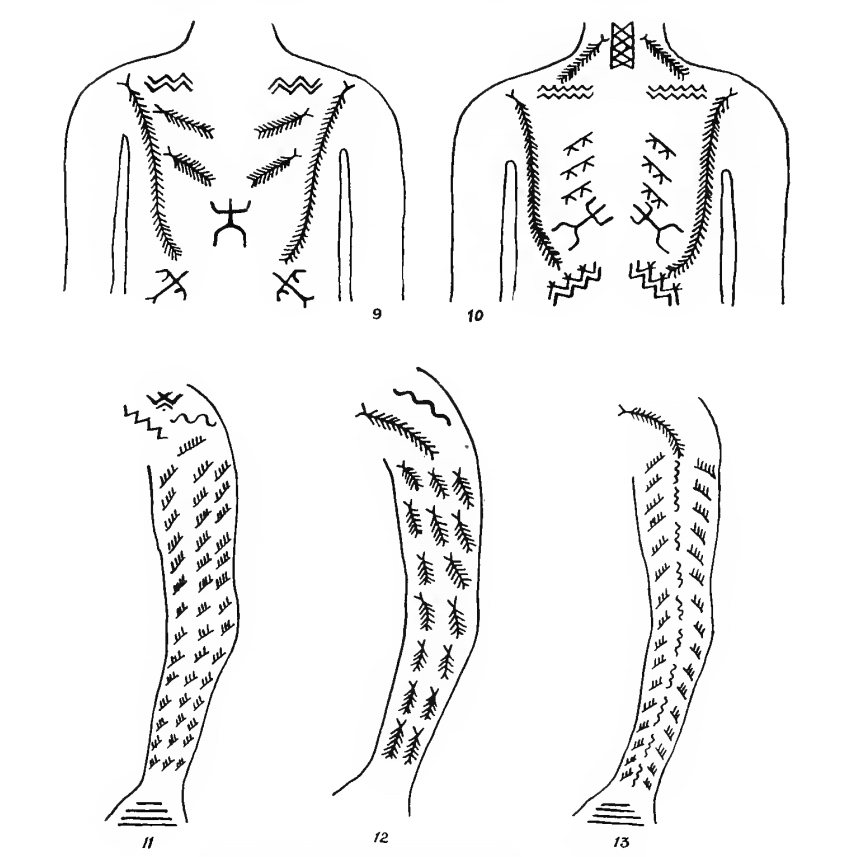
Connection to headhunting. Among the Kalinga, Bontoc, and other Cordilleran groups, men’s tattoos were earned through participation in headhunting raids (kayaw) or inter-village warfare (baraknit). A boy could acquire his first tattoo only after participating in a successful raid — even if he did not personally take a head. The first tattoo, marking his transition to adult warrior status, was applied to the forearm or wrist. Further raids entitled the warrior to additional tattoos, progressing up the arms and eventually to the chest — the biking or bikking — the mark that identified its wearer as a proven killer and a protector of his village. The word gulot, used for the first warrior tattoo (three parallel lines at the wrist), literally means “cutter of the head.”
Specialist practitioners. Tattooing in the Cordillera was performed by specialist artists — the mambabatok in Kalinga — who held a specific social role. The practice was typically patrilineal, passed from father to son, and accompanied by ritual knowledge including incantation and, in some traditions, the ability to read designs as indicators of fate.
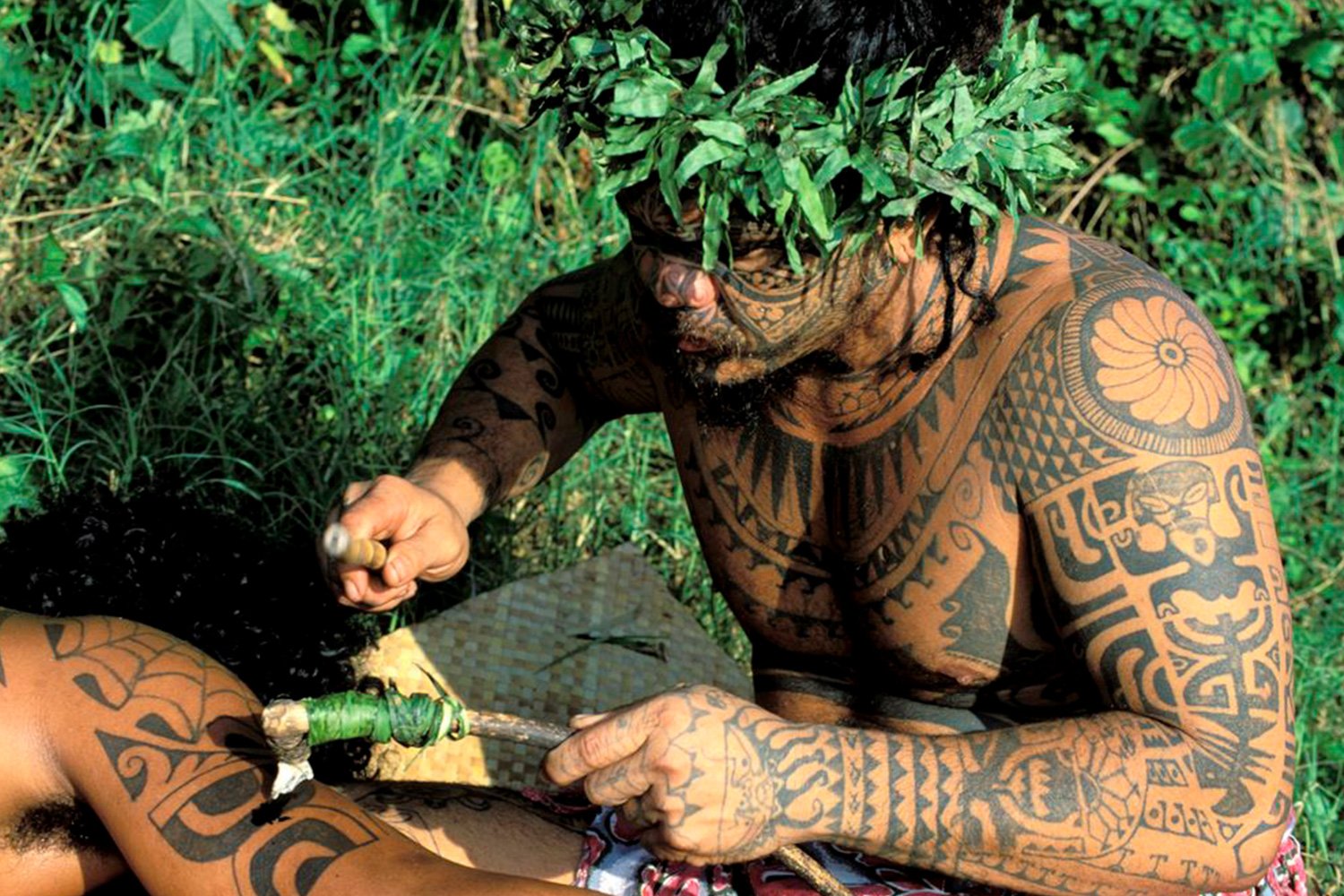
The tools. The hand-tapping method used across the Cordillera (and historically in the Visayas) employs a thorn — from a pomelo or calamansi tree — mounted on a bamboo handle, tapped with a wooden mallet to drive ink into the skin. The ink is made from soot mixed with water, held in a coconut shell. The distinctive sound of the mallet — tak, tak, tak — is the same onomatopoeia that gives the practice its name.
Apo Whang-Od
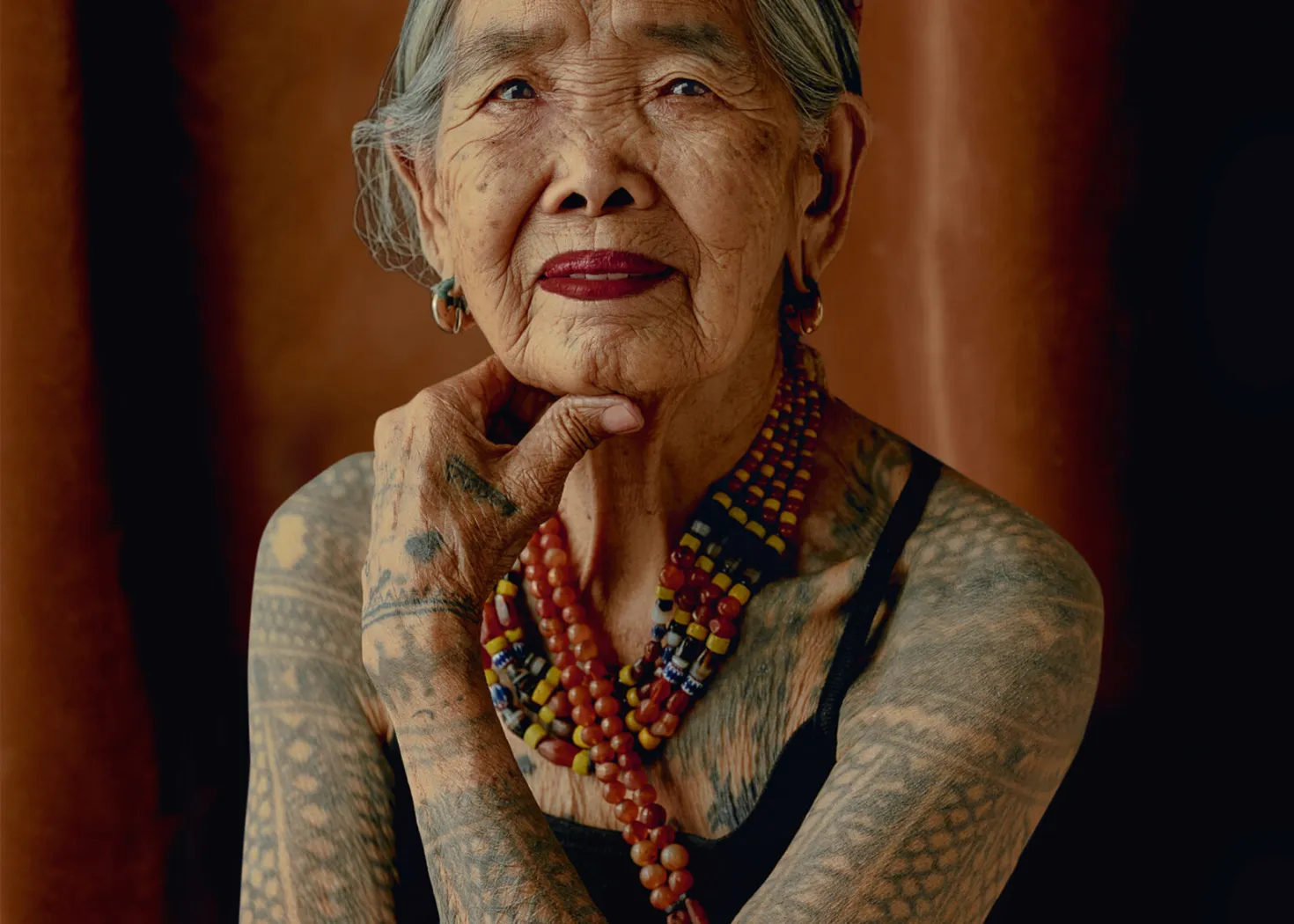
The Kalinga tradition is now inseparable from the figure of Apo Whang-Od Oggay, born on February 17, 1917, in the village of Buscalan in Kalinga province. She is the last traditional mambabatok of the Butbut Kalinga — the sole remaining practitioner who learned the full practice, including the ritual dimensions, before the tradition’s near-collapse in the twentieth century.
Whang-Od learned from her father, an exception to the patrilineal rule, which typically passed the practice through male lineages. She began tattooing at fifteen (some sources say eleven). In her youth, she made a vow known as ang-batang — a pledge of devotion connected to her practice — and never had children. Her partner died before they could marry; she did not take another.
For most of the twentieth century, Whang-Od tattooed in relative obscurity in Buscalan. Many scholars considered the tradition she represented to be dying. Then, in the early 2000s, growing attention from cultural revivalists and, eventually, from international media brought visitors to the village. By the time she was in her nineties, Buscalan had become a pilgrimage site. In April 2023, at the age of 106, she appeared on the cover of Vogue Philippines — the oldest person in the history of any Vogue edition to do so.
As of August 2025, at approximately 108 years old, Whang-Od continues to tattoo, though at reduced frequency.
Whang-Od has trained two grandnieces as apprentices: Grace Palicas and Ilyang Wigan, and among the next generation, Den Wigan (twelve years old as of the most recent confirmed reports). By breaking with the patrilineal custom of training women, she redirected the tradition’s transmission. The cultural anthropologist Analyn Salvador-Amores, who has studied the Kalinga tradition extensively, has noted that while the physical tattooing technique is being successfully transmitted, some of the ritual accompaniments — the incantations, the fortune-telling dimensions of the practice — are not transferring in the same way.
The distinction between old and new
Among the Butbut Kalinga, a clear distinction is maintained between whatok sa awi (“tattoos of the past”) and whatok sa sana (“tattoos of the present”) or emben a whatok (“invented tattoos”). The former are the culturally significant designs reserved for respected elders — earned through life and through the old social system. The latter are the modern designs given to visitors, both local and foreign. Whatok sa sana use traditional motifs in decorative configurations — they are traditional in their visual vocabulary — but they are not earned. Tourists receive whatok sa sana, not whatok sa awi.
The distinction matters, and copying the chest tattoo designs of old warriors (biking) is considered taboo: the biking marks a person as a killer, and wearing it without having earned it through combat is a transgression.
The Visayan and lowland tattoo motifs
Bangut. Facial tattoos — the most senior marks, applied last and reserved for the most accomplished warriors.
Biking / bikking / whiing. Chest tattoos indicating the wearer had taken a head in combat. The most socially significant of all tattoos — the mark of the proven protector.
Gulot. The first warrior tattoo — three parallel lines encircling the forearm at the wrist, earned after participating in a successful raid. The word literally means “cutter of the head.”
Labid. A zigzag or scale pattern, running from legs to waist.
Daya-daya. A chest pattern with solar and cosmic associations.
Dinagat. A shoulder design
Tamboko. A prominent chest or body marking.
The designs were not random: each marked a specific achievement, and the accumulation of tattoos across a man’s body told the story of his career as a warrior. A fully tattooed pintado was a living record of his community’s military history.
The broader look on Philippine tattooing
Beyond the Visayas and the Cordillera, tattooing was documented among numerous other Philippine ethnic groups.
The Apayao (Isneg)
Both men and women wore tattoos. The most prominent design was the andori — geometric patterns (chevrons, zigzags, lines, diamonds, triangles) running from the wrists up the arms to the shoulders.
The Tagalogs and Ilokanos
Tattooing was practised among the Tagalog and Ilokano peoples of Luzon, though the Tagalog traditions were already in decline before the Spanish arrived, disrupted by the spread of Islam from the south, which discouraged tattooing. Francisco Colin, writing in 1663, documented Ilokano tattooing, and scholars have suggested that the patterns now found in Ilokano abel (weaving) may derive from earlier tattoo designs — a case of the tradition surviving in textile form after the skin practice was suppressed.
Prince Giolo (Jeoly)
The revival of Philipine tattooing
The traditional practice in Buscalan
The diaspora and the contemporary tattoo movement
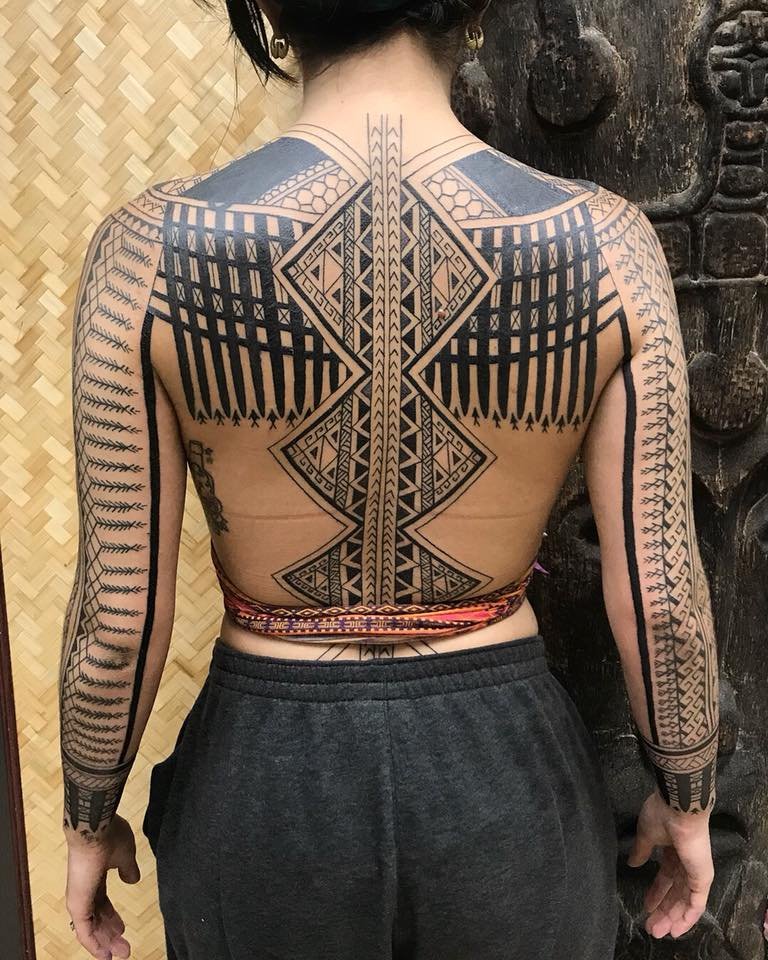
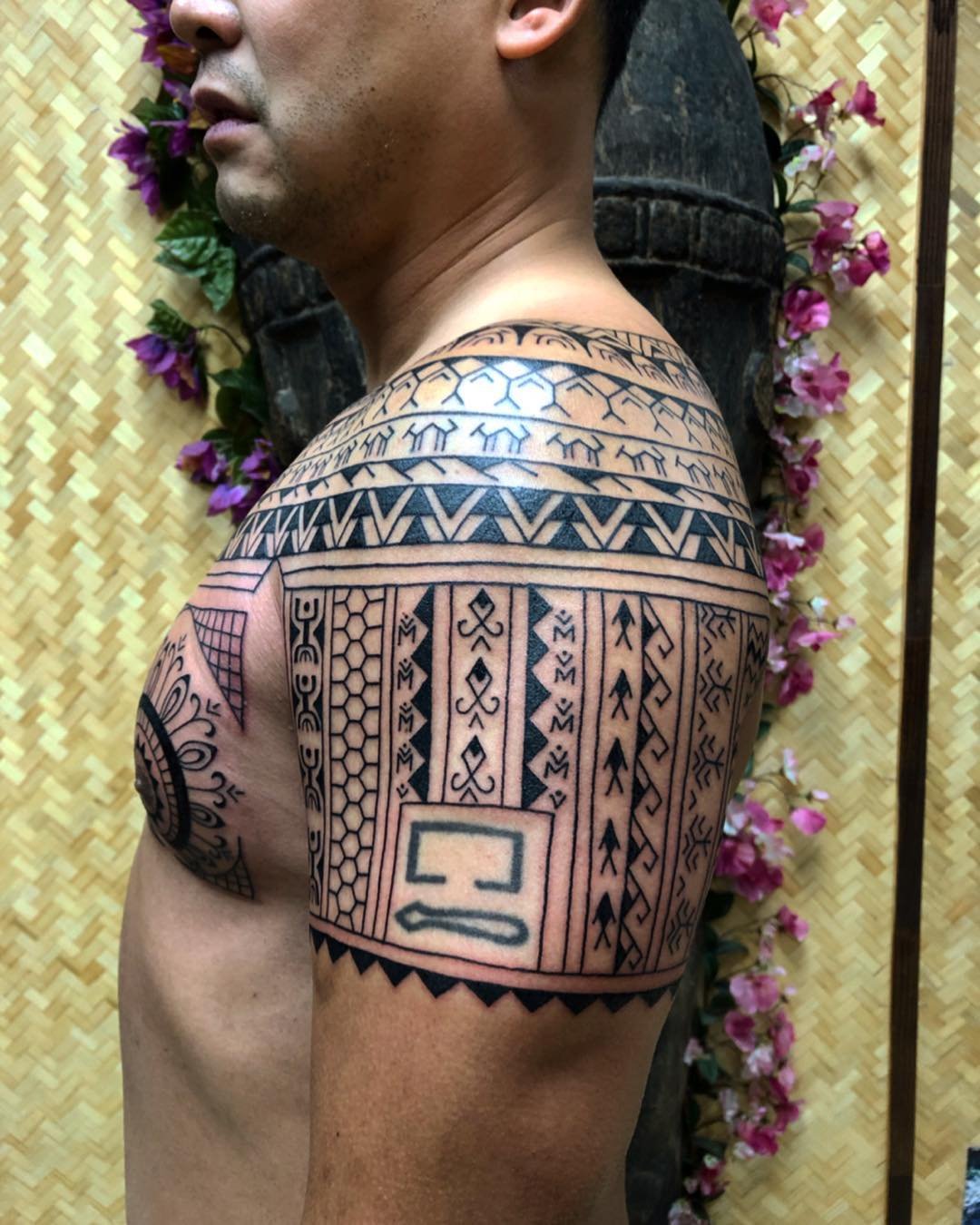
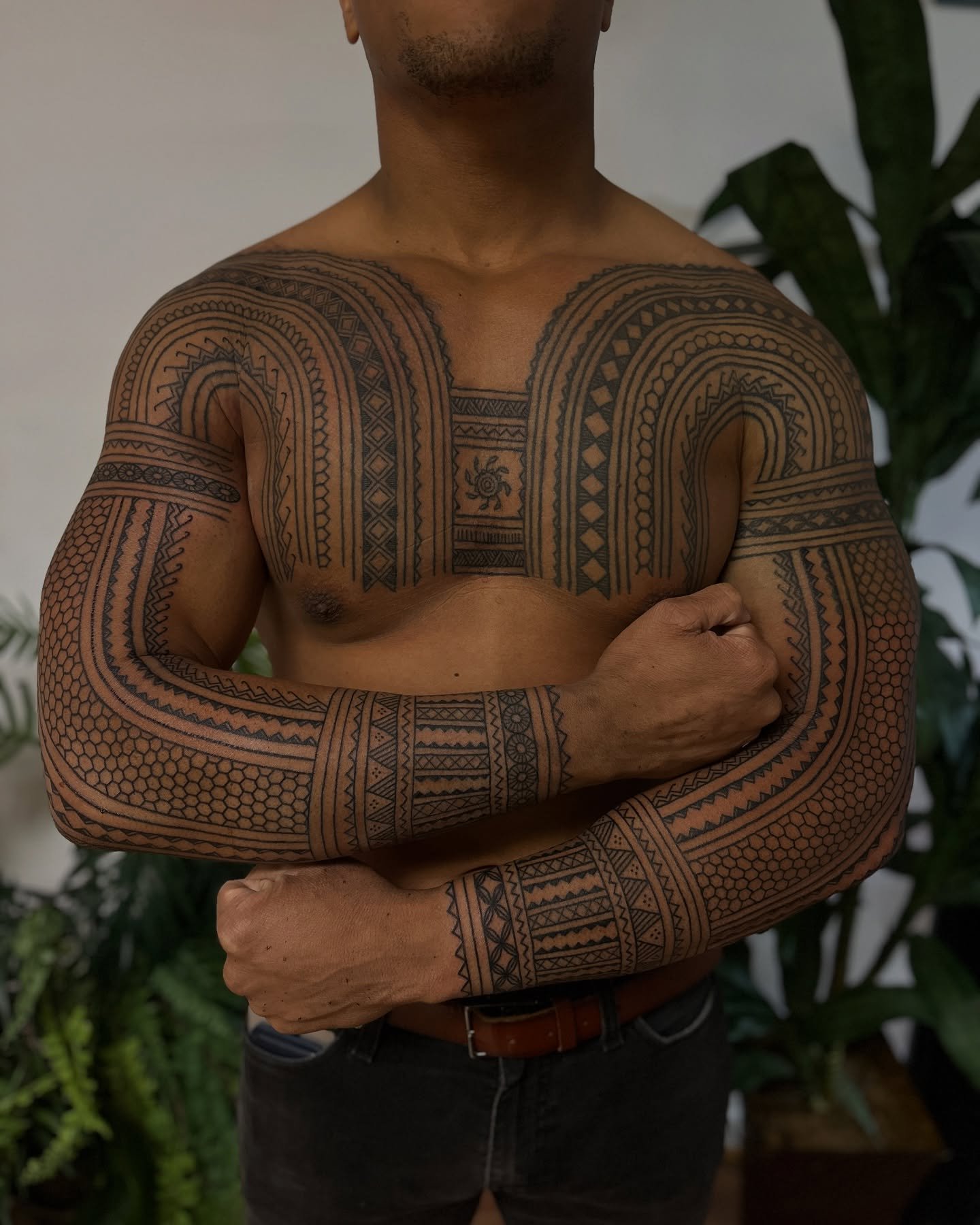
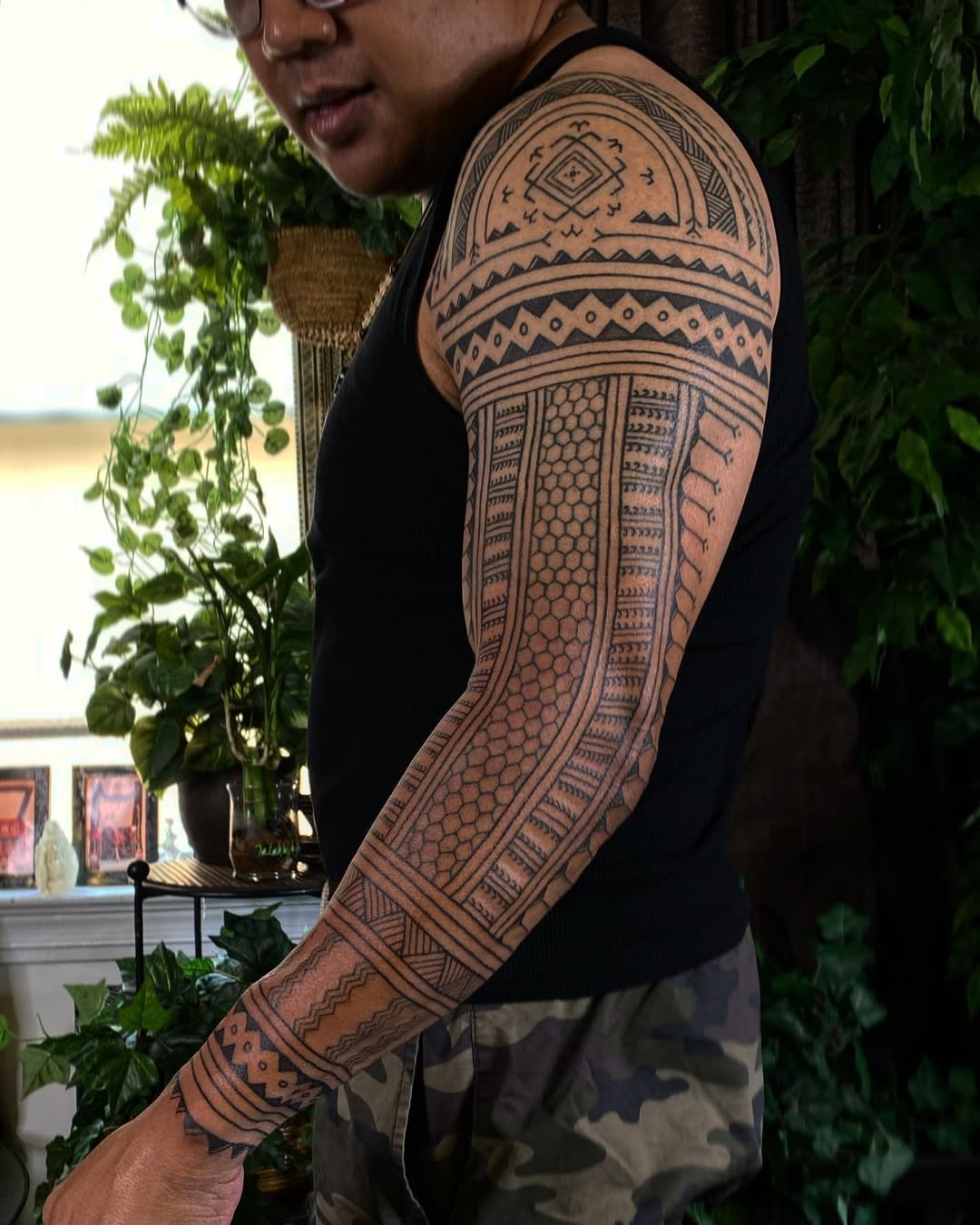
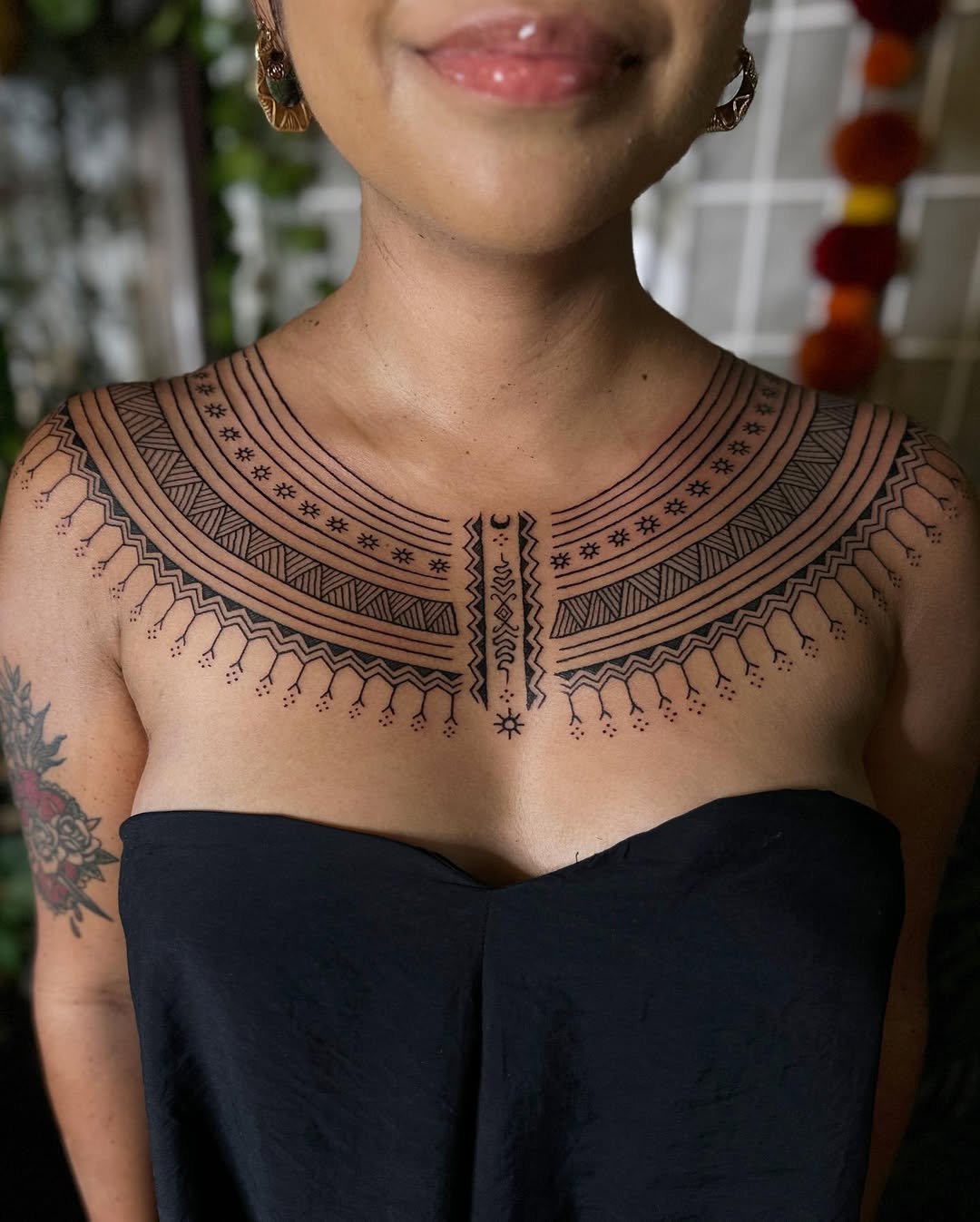
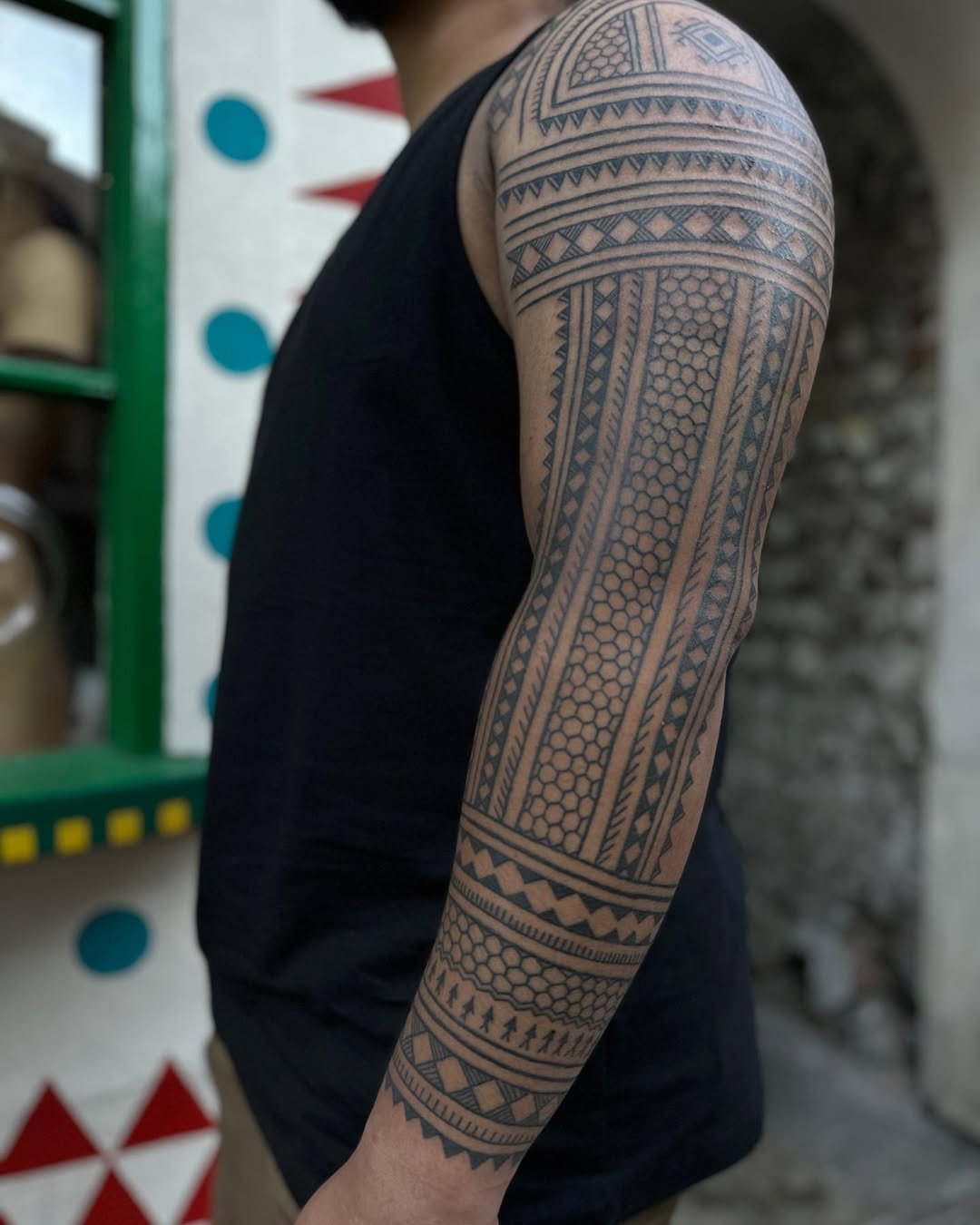
Filipino tattoo artists and cultural practitioners, both in the Philippines and abroad, are researching, reviving, and adapting traditional Filipino designs. The Mark of the Four Waves Tribe, founded by Elle Festin in 1998 in Orange County, California, is one of the earliest organised diaspora efforts to reclaim Filipino tattoo traditions. Lane Wilcken, whose book Filipino Tattoos: Ancient to Modern (Schiffer Publishing, 2010) is the primary English-language reference on the subject, has documented and revived Filipino tattooing practices through both scholarship and hands-on work. Contemporary Filipino tattoo artists use both traditional hand-tapping methods and modern machines to apply designs derived from the pre-colonial visual vocabulary — adapting ancestral motifs for contemporary bodies and contexts.
The revival is part of a broader movement of Filipino cultural reclamation — the recovery of pre-colonial language (baybayin script), of spiritual practices, of textile arts, and of other cultural forms suppressed during four centuries of Spanish and American colonisation. The tattoos are one element in a larger project of rebuilding a cultural identity that colonialism attempted to erase.
Cultural protocols
The cultural considerations for Filipino tattooing are specific.
Earned tattoos are not available as decoration. The biking (chest tattoo marking a headhunter), the gulot (first warrior mark), and other status-specific designs belong to the people who earned them. Wearing them without the cultural authority to do so is considered taboo within Kalinga society.
The whatok sa awi / whatok sa sana distinction applies. Visitors to Buscalan receive modern designs (whatok sa sana) that use traditional motifs in decorative configurations. These are traditional in their visual vocabulary but are not culturally loaded in the way that the old earned designs are.
The bloodline rule is respected. The Kalinga community maintains the principle that the right to tattoo is inherited through bloodline. Non-bloodline practitioners applying Kalinga-specific designs may produce work that the community does not recognise as legitimate. There is also a practical dimension: the community believes that tattoos applied by non-bloodline practitioners may not heal correctly.
Broader Filipino motifs are part of a living cultural recovery. The use of pre-colonial Filipino tattoo motifs by contemporary Filipino artists and by members of the Filipino diaspora is generally understood as cultural reclamation — an act of reconnection with ancestral identity. The use of these motifs by non-Filipinos without cultural connection raises the same appropriation concerns that apply to all culturally owned tattoo traditions.
Sources & further reading
- Batok and Whang-od on Wikipedia, The Free Encyclopedia.
- Lane Wilcken, Filipino Tattoos: Ancient to Modern. Schiffer Publishing, 2010.
- William Henry Scott, Barangay: Sixteenth Century Philippine Culture. Ateneo de Manila University Press, 1994.
- Francisco Ignacio Alcina, Historia de las islas e indios de Bisayas (1668). English translation: The History of the Bisayan People in the Philippine Islands. Published by the Philippine Studies Research Archive.
- The Boxer Codex, c. 1590 (illustrations) and The Boxer Codex: Transcription and Translation of an Illustrated Late Sixteenth-Century Spanish Manuscript Concerning the Geography, History and Ethnography of the Pacific, South-East and East Asia by George Bryan Souza and Jeffrey Scott Turley, Kindle edition.
- Antonio Pigafetta, Relazione del primo viaggio intorno al mondo (c. 1525).
- The Aswang Project, aswangproject.com.
- Great Big Story, The Last Mambabatok.