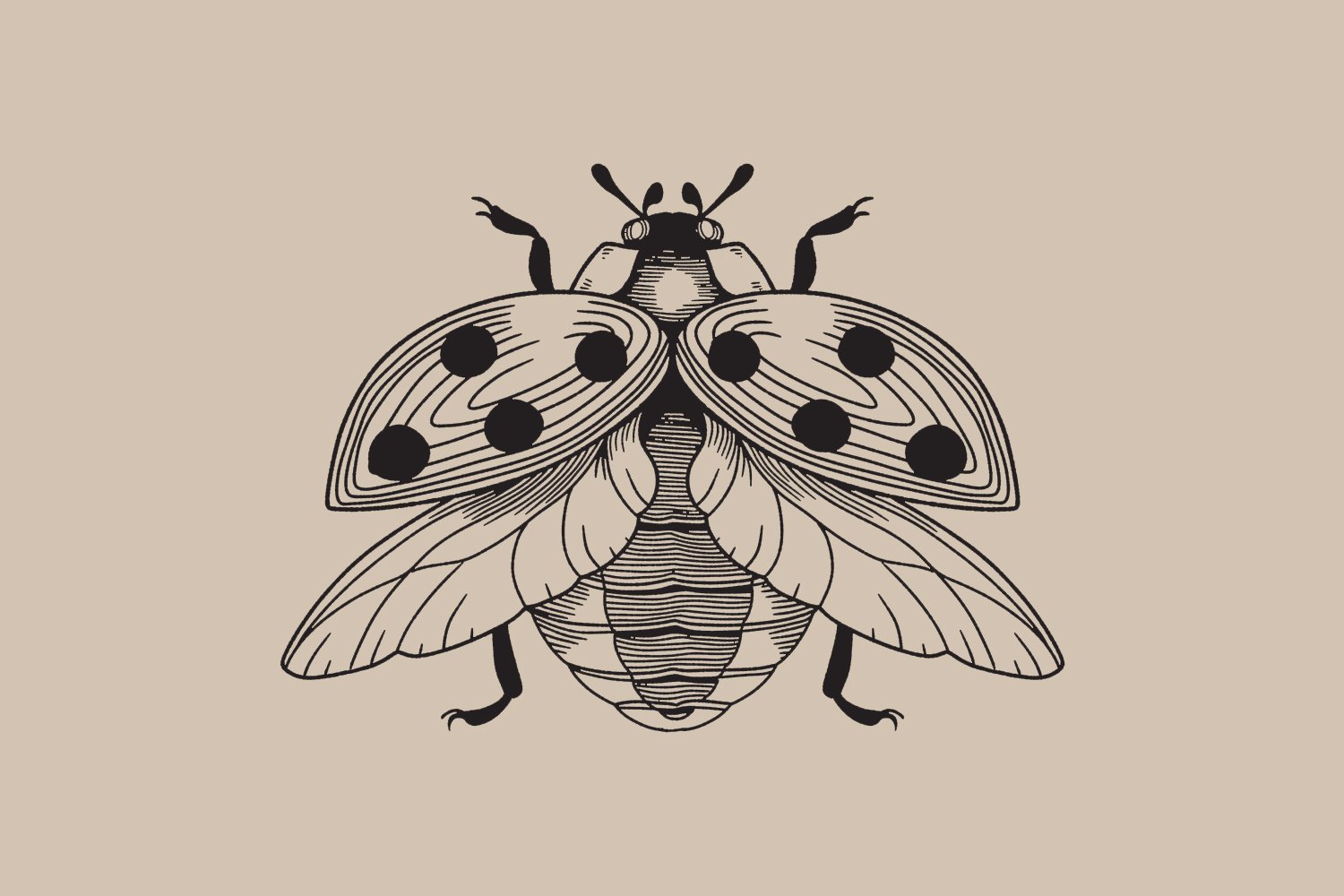
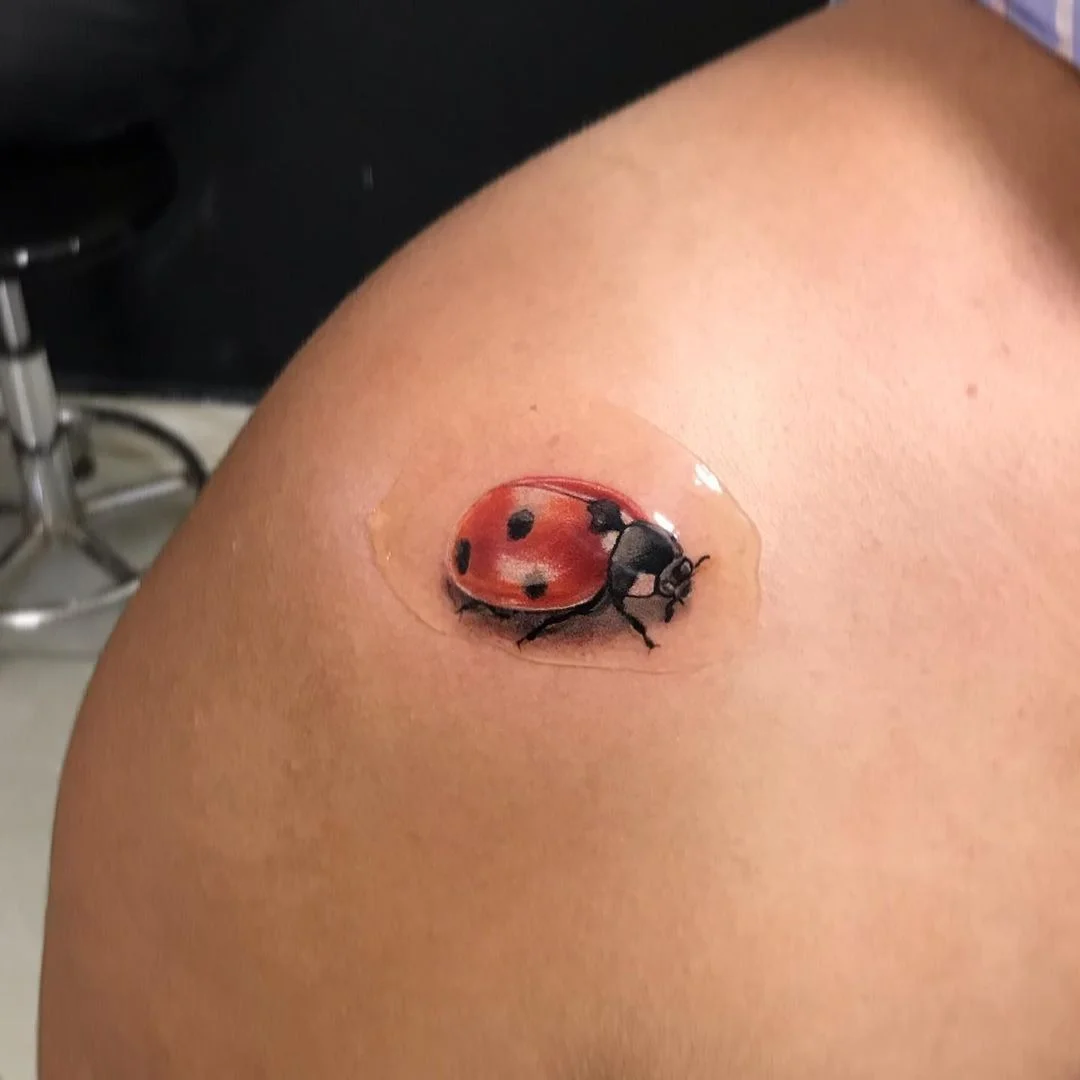
Ladybug / Lady beetle tattoo
The beetle that wants to be seen
This tolerance has a long history, and a stranger one than the children’s books suggest. The ladybug has been called Mary’s beetle, God’s little cow, the bride insect, the key-maid of spring. It has been asked to predict the weather, find husbands, deliver letters to the Virgin, and bring bread down from the sky. It has been credited with saving harvests and, in some places, blamed for bringing rain when killed. It is also one of the most chemically defended insects in the average European garden — an animal whose entire visual design is a warning, and whose calm in the open is the result of millions of years of predators learning not to bite.
All of which makes it an unusually loaded choice for a tattoo. People often pick the ladybug because it reads as small, gentle, and harmless. The biology and the folklore both say something different.
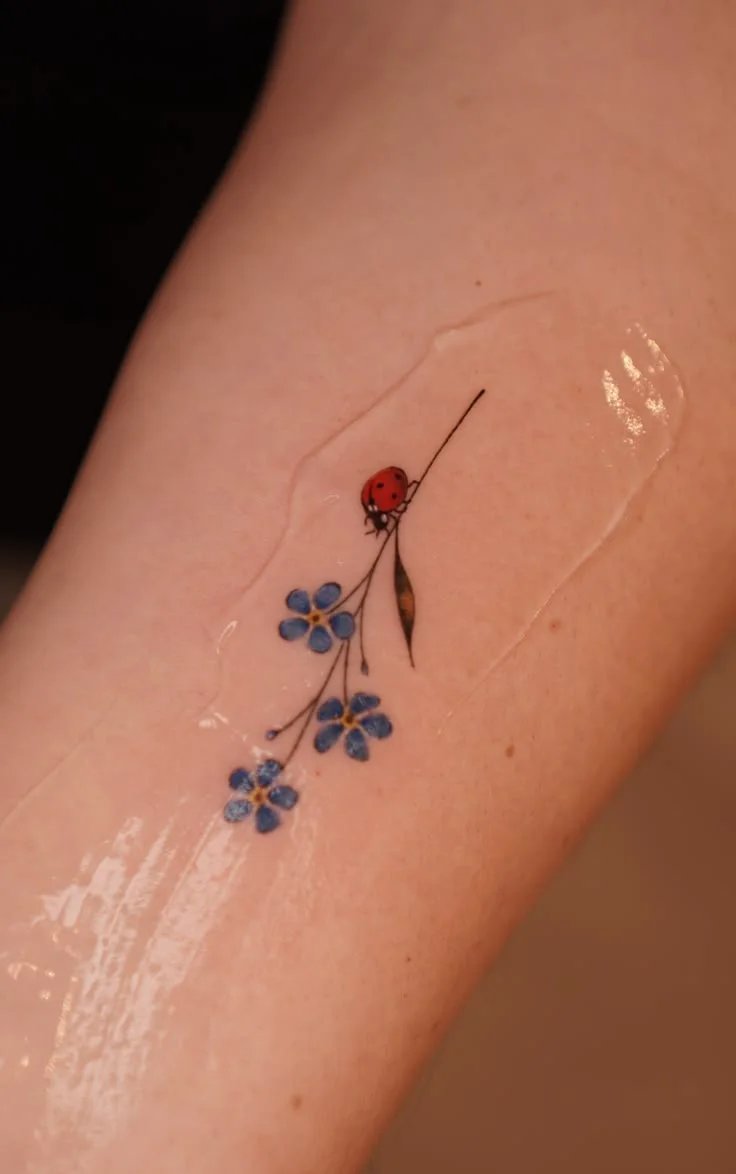
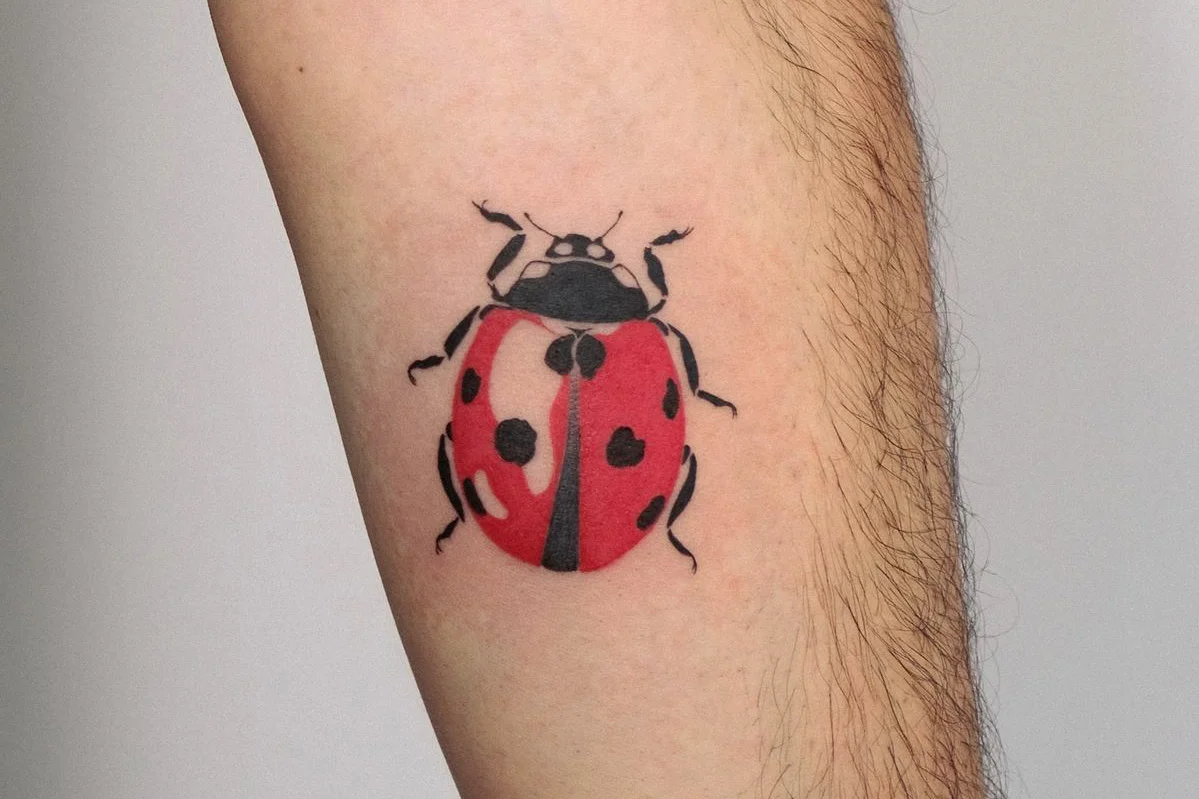
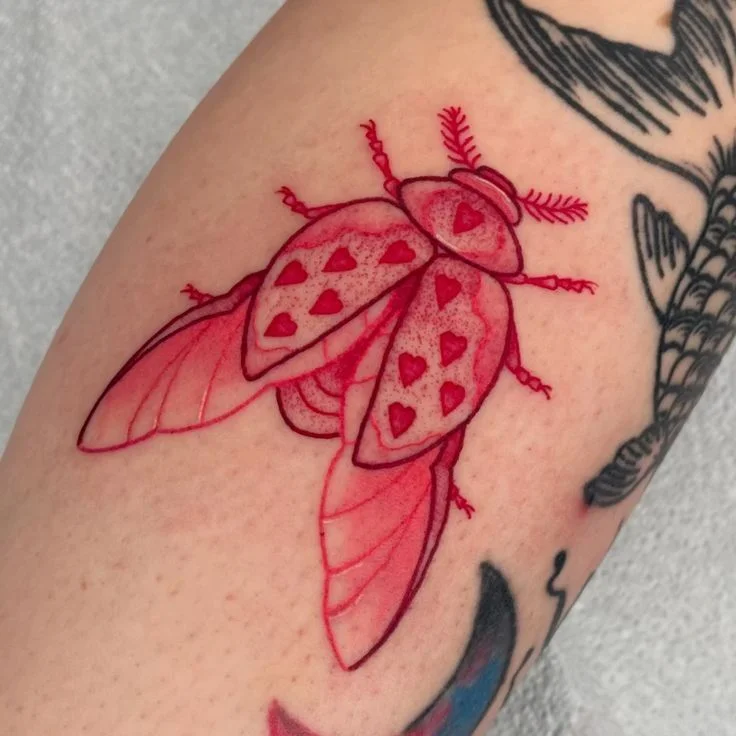
Ladybug tattoo meanings
Luck and Good Fortune
- Good fortune — Ladybugs are traditionally seen as lucky insects in European folklore.
- Blessing — The name “ladybug/ladybird” is linked to “Our Lady,” the Virgin Mary.
- Wish fulfilment — Folk belief often treats a landing ladybug as a positive omen.
Nature and Protection
- Garden guardian — Ladybugs protect plants by eating aphids and other pests.
- Gentle defence — A small, harmless-looking creature that still protects what matters.
- Natural balance — Symbolises harmony with nature and quiet usefulness.
Faith and Spirituality
- Divine protection — Connected historically with Christian symbolism and the Virgin Mary.
- Grace — Represents help, favour, or protection arriving unexpectedly.
- Innocence — A soft, non-threatening symbol often linked with purity and goodness.
Change and Growth
- Transformation — Ladybugs pass through egg, larva, pupa, and adult stages.
- Renewal — A symbol of beginning again after a difficult or hidden phase.
- Small progress — Represents quiet personal growth rather than dramatic change.
Love, Joy and Personality
- Affection — The red colour makes it a natural symbol of warmth and love.
- Remembrance — Often used as a gentle memorial symbol for a loved one.
- Optimism — A reminder to notice small good things.
- Soft strength — Small, delicate, but useful and resilient.
Her names
The pattern is too widespread to be a coincidence and too consistent to be an ornament. The beetle belongs to someone. It is not divine itself; it is owned by the divine. This is the grammatical position of a servant, a pet, or a messenger — and the folk practices treat it that way. Children send them on errands. Farmers credit it with answered prayers. Killing it is considered a minor offence against its owner, with consequences ranging from bad luck to crop damage.
The Marian association probably consolidated in the medieval period, when European farmers prayed to the Virgin against pest infestations and the seven-spot ladybird, an effective aphid predator, often arrived in answer. The seven spots were sometimes glossed as Mary’s seven sorrows. The red was her cloak. The naming worked backwards from the observation: a beetle that protected the harvest had to belong to its protector.
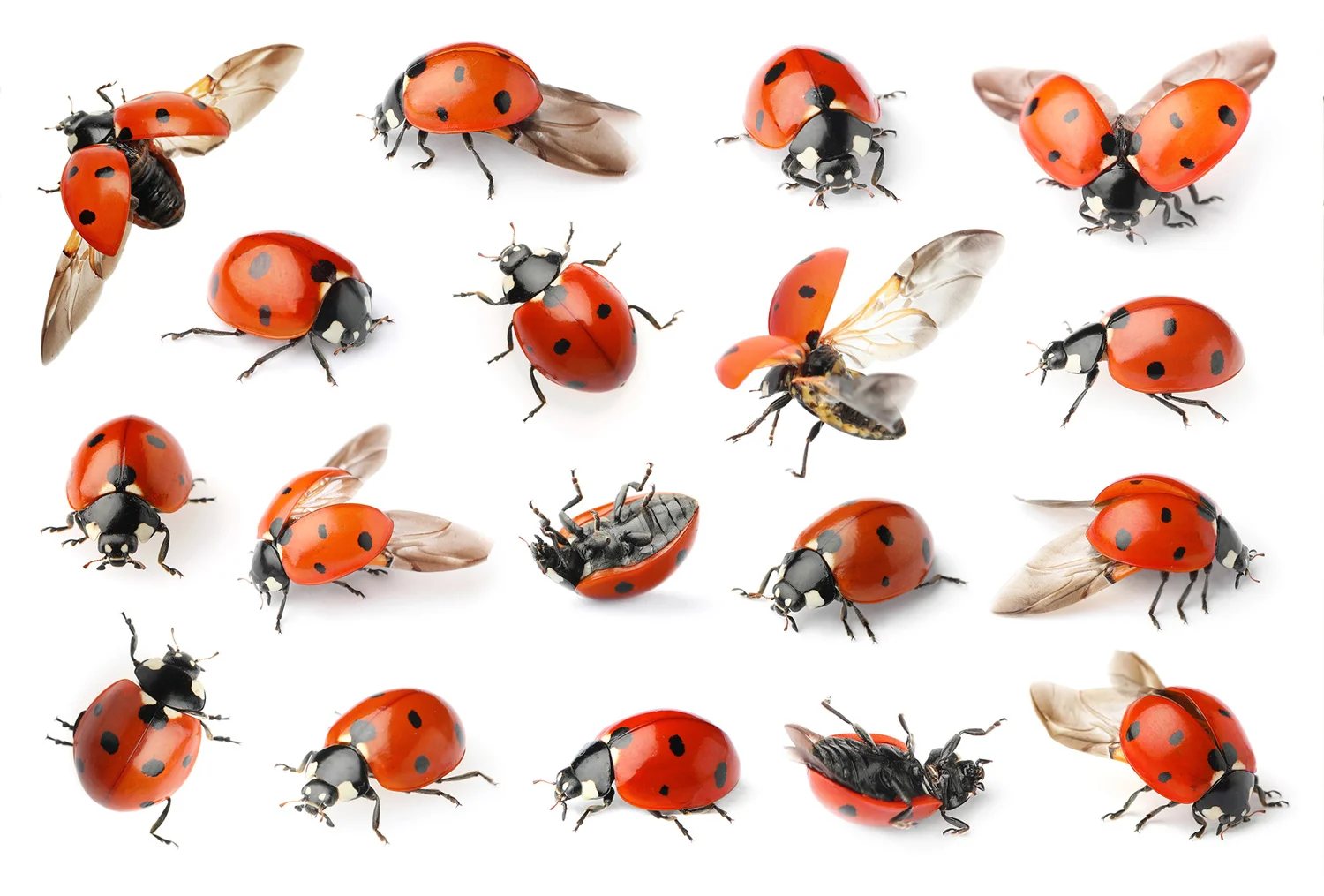
What ladybug rhymes ask for
The folk rhymes give a clearer picture of how people actually used the beetle than the theology does. A child holds the ladybug on the palm or fingertip, recites a verse, and watches it fly. The verse usually contains a request. In the Polish version, biedroneczko, leć do nieba, przynieś mi kawałek chleba — ladybug, fly to the sky, bring me a piece of bread. The Russian, Czech, and Ukrainian versions have the same shape and the same request. Bread, weather, and the safe return of someone absent. The sky is the address; the beetle is the courier.
The Basque tradition is more elaborate. The child rotates the hand to keep the beetle walking, recites a verse asking it to count fingers, and only then sends it skyward — sometimes with a letter for the Christ child or the Virgin. In southern France, children asked the beetle which direction their future spouse would come from, and read the answer in the line of flight.
The English-language rhyme that survives best is the strangest of them. Ladybird, ladybird, fly away home, your house is on fire, and your children will burn. It first appeared in print in 1744, in Tommy Thumb’s Pretty Song Book, and it warns the beetle rather than asking anything of it. Some folklorists have linked the fire to the post-harvest practice of burning stubble, which would have killed insects overwintering in the field debris. Whatever its origin, the verse treats the beetle as a small parent with a household to save — one of the few children’s rhymes in any language in which the recited animal is in danger from the speaker’s own world.
“Lady-bird, Lady-bird, fly away home
The field mouse has gone to her nest
The daisies have shut up their sleepy red eyes
and the birds and the bees are at rest
Lady-bird, Lady-bird, fly away home
The glowworm is lighting her lamp
The dew’s falling fast, and your fine speckled wings
will flag with the close clinging damp
Lady-bird, Lady-bird, fly away home
The fairy bells tinkle afar
make haste, or they’ll catch you and harness you fast
with a cobweb to Oberon’s star.”
— Favourite Poems Old and New, Selected for boys and girls, Helen Josephine Ferris, Garden City, N.Y., Doubleday, 1957.
The ladybug tattoo
The reasons people give for choosing one have stayed remarkably consistent across decades. A grandmother who used to call them God’s beetles. A childhood garden. A daughter named after one in some private family code. A first communion gift card with a ladybug on it. The beetle carries personal weight before it carries any aesthetic weight, and most ladybug tattoos are memorial in some quiet way — for a relative, a season, a version of the self that believed in luck.
The other common reason is the one the man in the earlier legend gave: it seemed small. People who want a tattoo but are nervous about visibility often choose the ladybug because they assume it will be discreet. It usually isn’t. A bright red object on skin reads from a long way off, and the very feature that makes the beetle effective as a predator warning makes it conspicuous as a tattoo. This is worth knowing before committing.
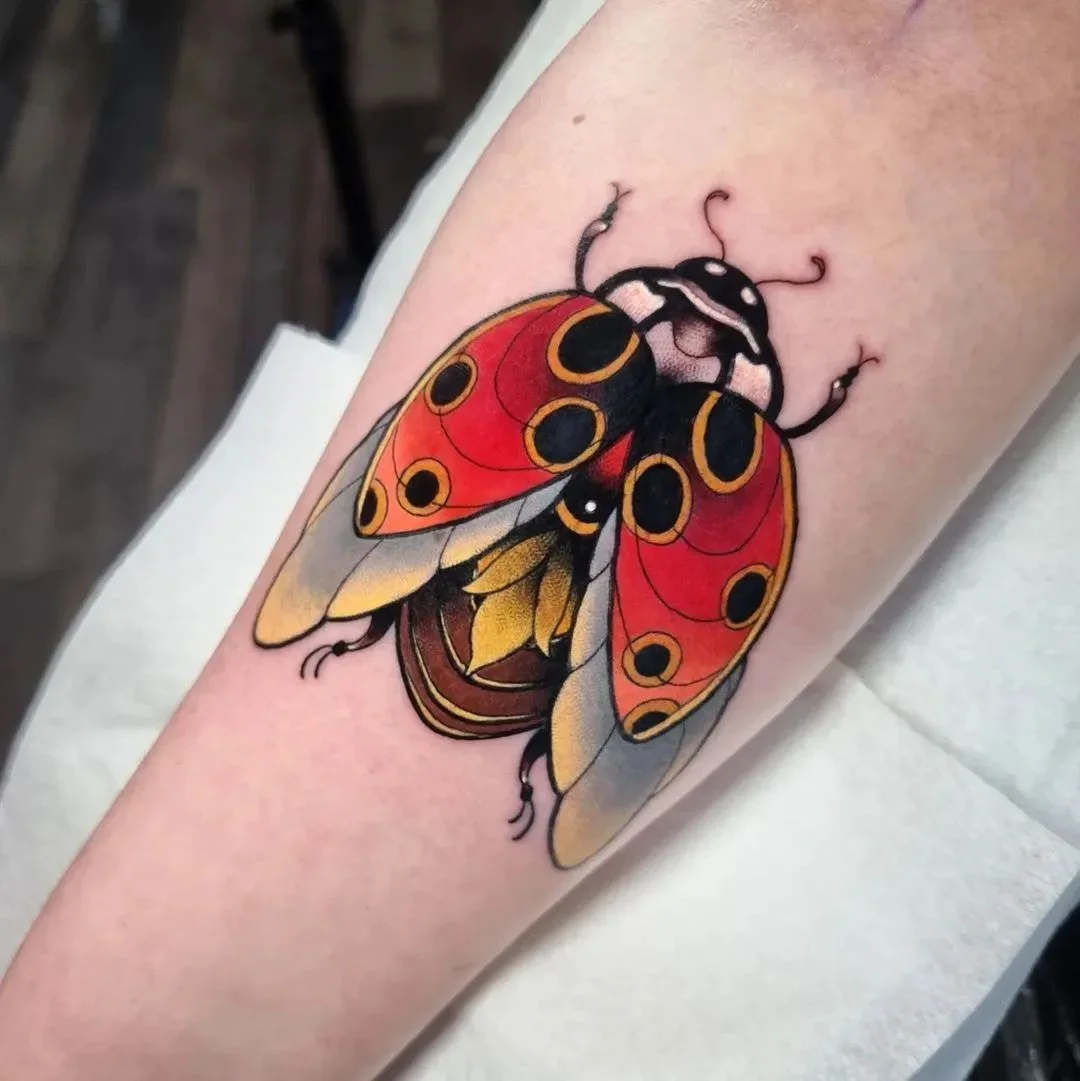
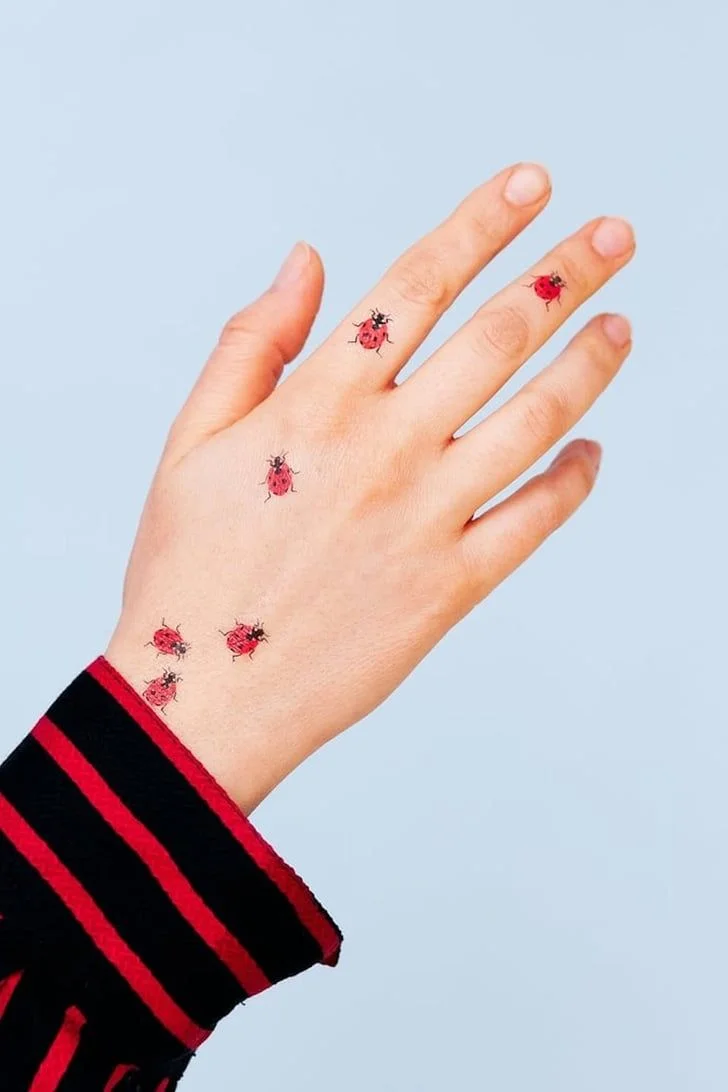
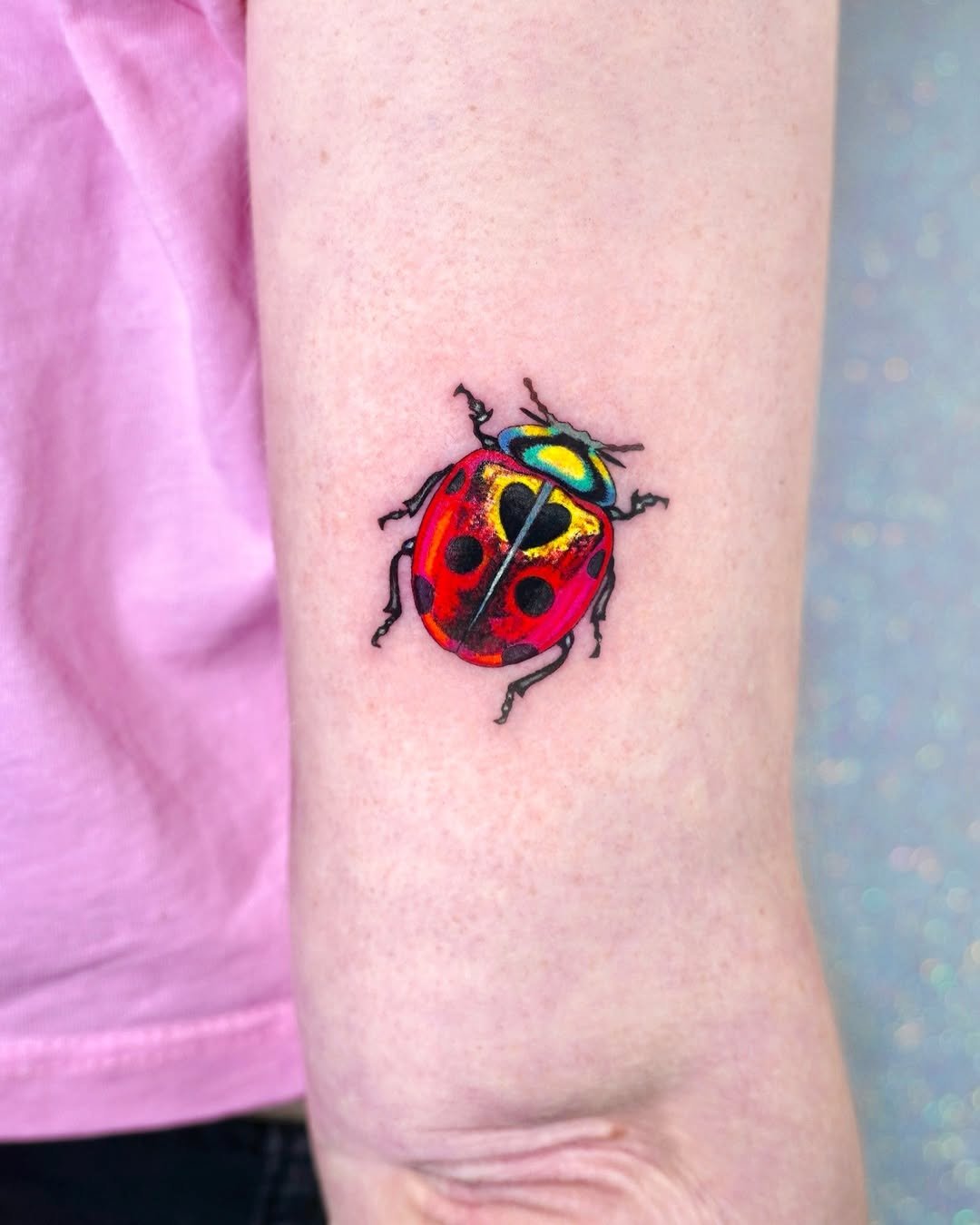
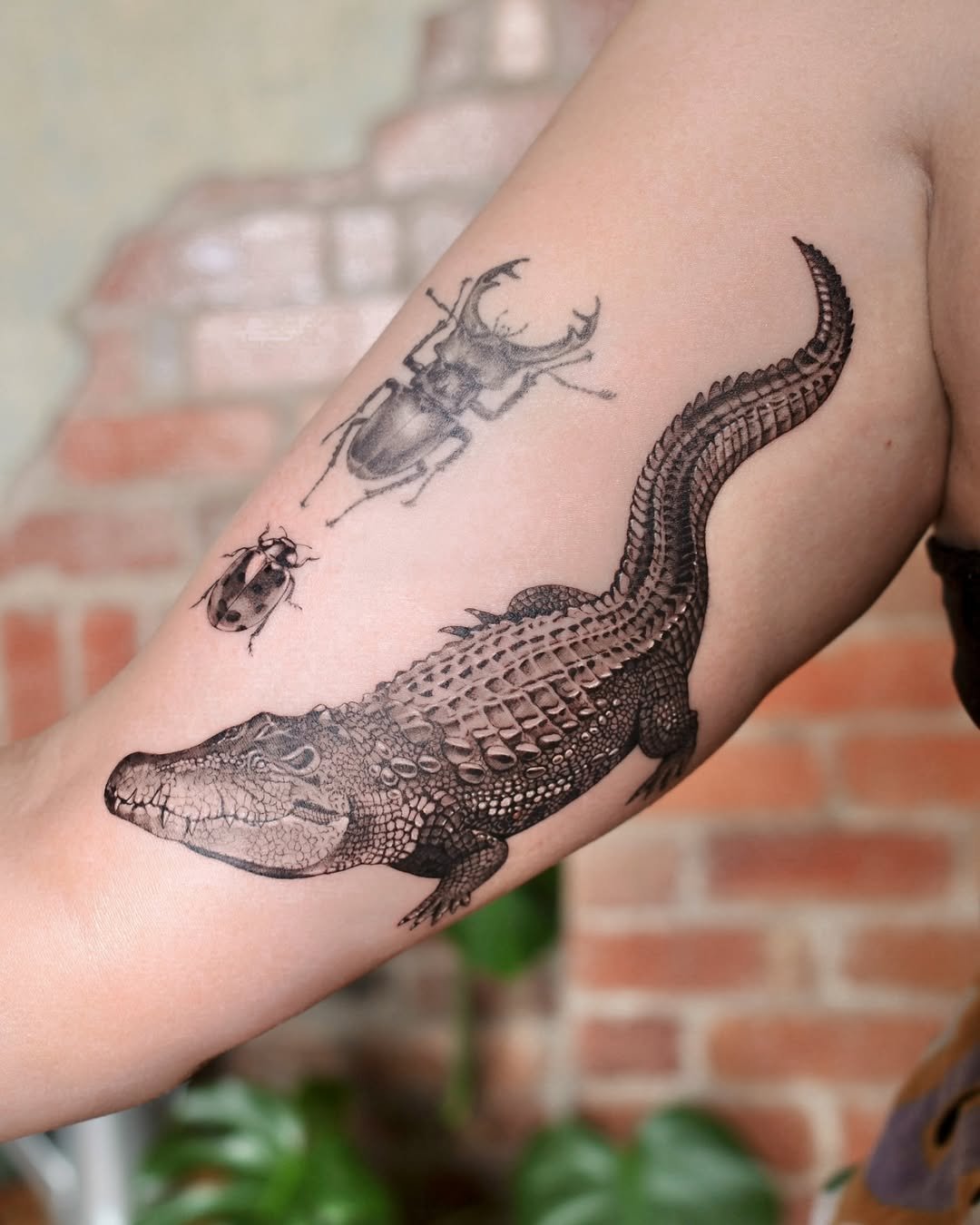
Why do people tattoo ladybugs?
Strip away the design questions, and the reasons left over are interesting. The ladybug is one of the few insects almost nobody finds disgusting. Its folkloric meaning is positive across every culture that has a tradition for it — no version treats it as an omen of death or betrayal. For someone who wants a tattoo carrying meaning without baggage, the ladybug offers something genuinely rare: a symbol most people will read as warm without needing the wearer to explain why.
The less obvious appeal is what the biology suggests once a person knows it. The ladybug survives by being visible. The red is a posted notice, and the calm with which the beetle sits in the open is the result of a long evolutionary agreement: anything that bites it gets a mouthful of bitter alkaloid and learns. There are people for whom this is the more honest reason to wear one. A small red mark on the skin that signals, quietly, that the wearer has chosen visibility over camouflage.
The Virgin’s beetle and the chemically defended predator are the same animal. A tattoo of one carries both at once, whether the wearer knows it or not.
Sources & further reading
- Caplan, J. (Ed.). Written on the Body: The Tattoo in European and American History. Princeton University Press (2007).
- Margo Demello. Encyclopedia of Body Adornment. Greenwood Press (2016).
- Jonathan Shaw. Vintage Tattoo Flash: 100 Years of Traditional Tattoos from the Collection of Jonathan Shaw. powerHouse Books (2022).
- Holloway, G. J., de Jong, P. W., Brakefield, P. M., & de Vos, H. Diet and chemical defence in ladybird beetles (Coleoptera: Coccinellidae). European Journal of Entomology, 119, 37–50 (1991). Chemical defence in ladybird beetles (Coccinellidae). I. Distribution of coccinelline and individual variation in defence in seven-spot ladybirds, Coccinella septempunctata. Chemoecology, 2, 7–14.
- Online Etymology Dictionary. (n.d.). Ladybird. Retrieved May 10, 2026. Opie, I., & Opie, P. (1951).
- The Oxford Dictionary of Nursery Rhymes. Oxford University Press.