Dagger tattoo
Dagger tattoo: one point, but many shapes and meanings
The dagger is one of the oldest human-made objects in existence and one of the most frequently tattooed. Flint daggers from the Neolithic period predate written language by millennia. Bronze daggers accompanied the dead into Egyptian tombs. Iron daggers armed Roman legionaries.
Ceremonial daggers opened sacrificial rites from Mesopotamia to Mesoamerica. Cultural daggers — the Scottish sgian-dubh, the Sikh kirpan, the Indonesian kris, the Yemeni jambiya — carry identity, faith, and heritage in their specific forms. And across every era of Western tattooing, from the earliest flash sheets to contemporary practice, the dagger has been a core subject: compact, versatile, visually precise, and loaded with meaning that shifts depending on what it is piercing, what it is paired with, and whose tradition it comes from.
A dagger tattoo is defined by its pairings and context more than by the blade alone. A dagger through a heart communicates something different from a dagger through a skull, which communicates something different from a dagger wrapped in a snake, which communicates something different from a dagger through a rose. The blade is the constant. The meaning is in what surrounds it.
First: What's a dagger?
A dagger is a short, double-edged blade designed primarily for thrusting. This distinguishes it from a knife (typically single-edged, designed for cutting) and from a sword (longer, designed for both cutting and thrusting at greater range). The dagger’s defining characteristics — short length, double edge, pointed tip, symmetrical blade — make it a weapon of proximity. It is used at close range, in personal encounters, in situations where a longer weapon cannot be drawn or swung. This intimacy is the foundation of the dagger’s symbolic weight: it is the weapon of the close encounter, the personal act, the moment where the distance between two people is measured in centimetres.
The oldest known daggers are flint blades from the Neolithic period, found across Europe and the Near East. A 5,000-year-old crystal dagger was recovered from the Montelirio tholos tomb near Seville, Spain. The Alaca Höyük gold-hilted iron dagger, found in a Hittite funerary complex in modern Turkey and dated to approximately 2500 BCE, demonstrates sophisticated metallurgy a thousand years before the Iron Age reached that region. Two daggers were found in the tomb of Tutankhamun (c. 1323 BCE) — one with a gold blade and one with a blade of meteoric iron, among the earliest known worked iron objects. The meteoric iron dagger is significant: the material came from the sky, lending it a divine or cosmic association that reinforced its ritual function in pharaonic burial.
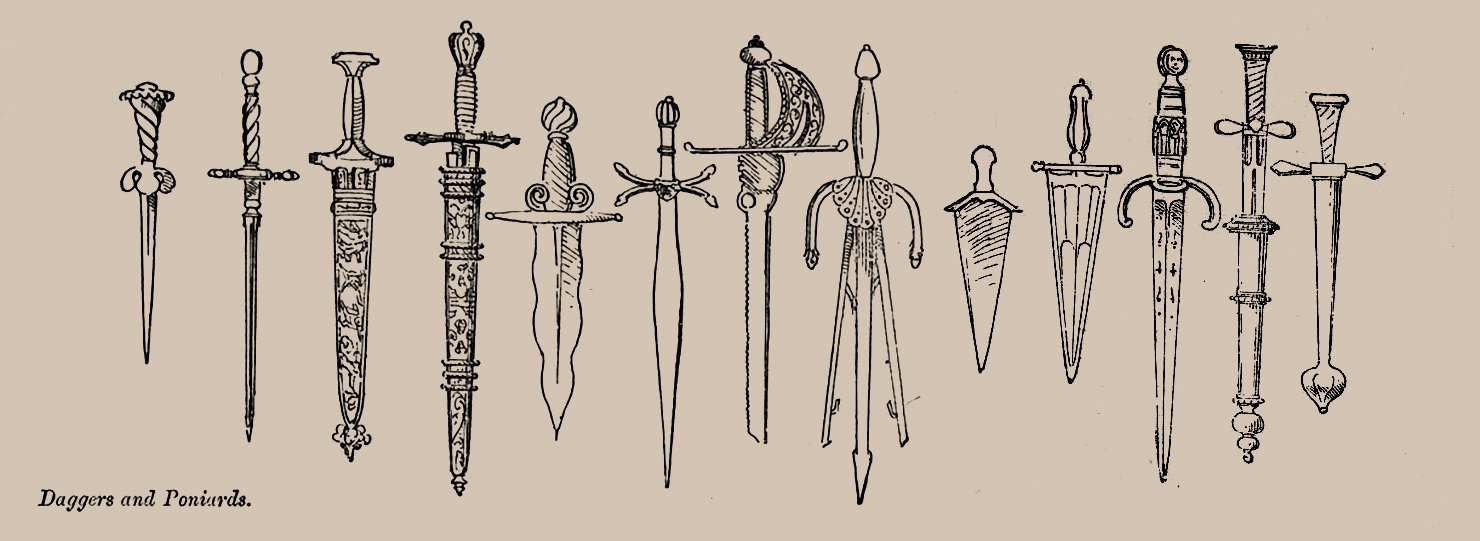
As metalworking advanced through the Bronze and Iron Ages, daggers became both practical weapons and status symbols. The Roman pugio — the standard dagger of the legionary, with a wide, short blade roughly 18 to 28 centimetres long — was both a backup weapon in close combat and a mark of military status. Decorated pugios with silver or gold inlay were carried by officers. The secespita was a specialised Roman sacrificial dagger, used by priests in religious rites. In Celtic culture, elaborately decorated daggers served as grave goods, ritual instruments, and symbols of rank. In medieval Europe, the dagger evolved into specialised forms: the rondel dagger for penetrating armour gaps, the bollock dagger (so named for the shape of its guard), the stiletto for thrusting through chainmail, and the misericorde — the “mercy blade” — used to deliver the killing stroke to a fatally wounded knight.
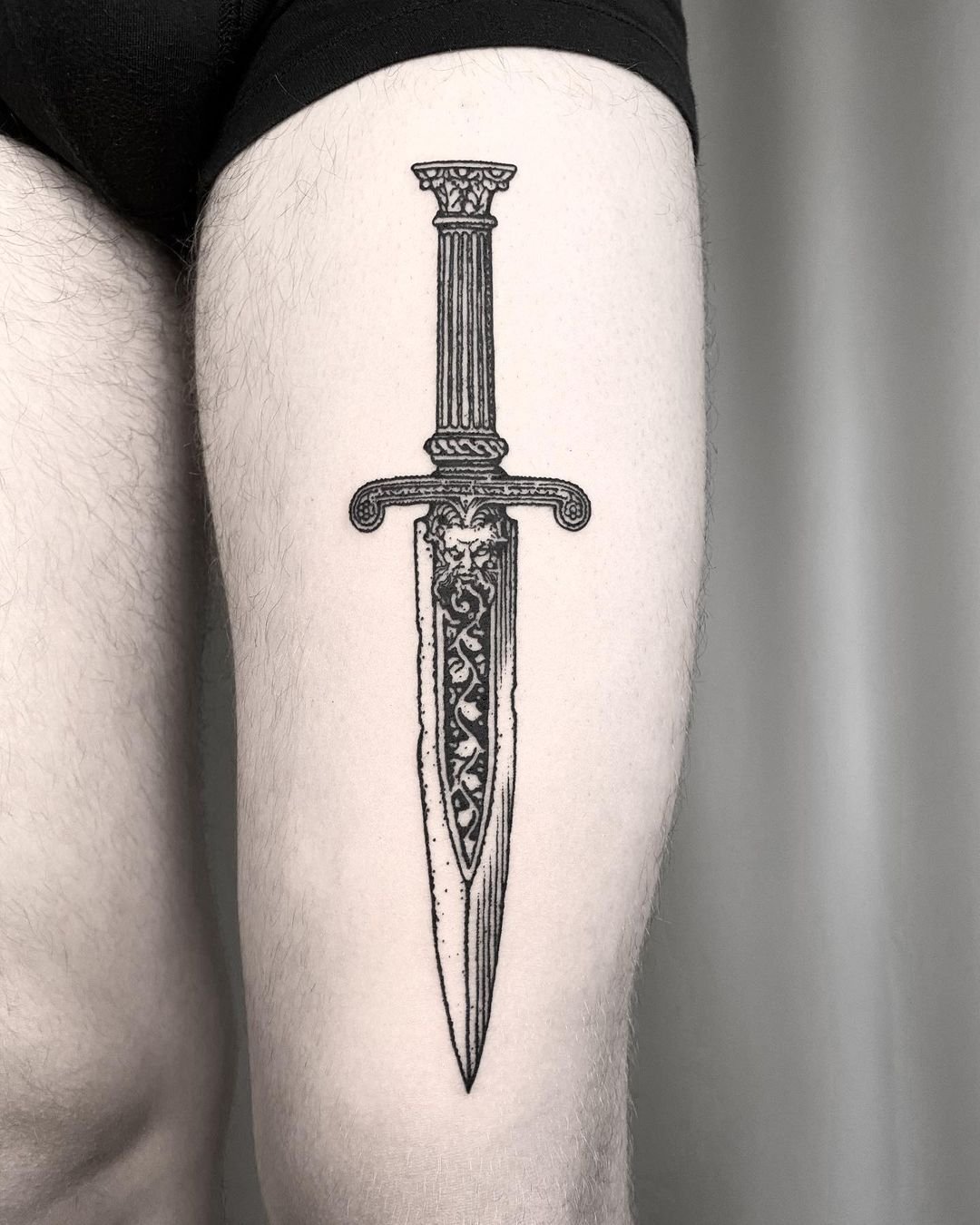
The visual form of the dagger — symmetrical blade, crossguard, grip, pommel — is among the most graphically clear and immediately readable shapes in tattoo iconography. Its bilateral symmetry makes it a natural fit for placements on the body’s midline and for compositions that demand visual balance. Its compact proportions allow it to work at every scale, from a finger tattoo to a full thigh piece.
Symbolic meanings of dagger tattoos

Danger and aggression. The most immediate reading. A dagger is a weapon. Its presence signals the capacity for violence — whether actual or symbolic. A dagger tattoo can represent a willingness to fight, a readiness to defend, or an acknowledgement that the wearer exists in a world where danger is present.
Betrayal. The dagger’s association with treachery is specific and well-sourced. Julius Caesar was assassinated with daggers on the Ides of March, 44 BCE, stabbed by senators who had stood beside him as allies. The phrase “a knife in the back” (or “stabbed in the back”) has been used to describe betrayal across languages for centuries. The dagger’s intimacy — the requirement to be close enough to touch — makes it the weapon of the trusted person turned enemy. A dagger tattoo in this register carries the weight of a betrayal experienced, a warning remembered, or a cynicism earned.
Sacrifice. Daggers were sacrificial instruments across the ancient world. Egyptian priests used ceremonial blades in funerary rites. Mesopotamian temples housed sacred daggers associated with specific deities. Roman priests used the secespita in animal sacrifices. Celtic cultures used specially crafted daggers in ceremonies to gain the favour of gods or to mark transitions between life stages. A dagger in this reading represents the act of giving something up — an offering, a cost paid, a part of the self surrendered.

Protection. The dagger is the weapon that remains on the body when all other weapons have been lost or are unreachable. It is the last defence, the concealed insurance, the tool of final resort. Military daggers, from the Roman pugio to the modern combat knife, serve this function literally. In folklore, iron blades — including daggers — were believed to ward off evil spirits, fairies, and malevolent forces. In Sikh tradition, the kirpan represents the duty to protect the weak and stand against injustice. A dagger tattoo in the protective register signifies readiness, self-reliance, and the refusal to be caught defenceless.
Courage and martial honour. The dagger demands proximity to the enemy. Using it requires closing the distance to a point where both parties are equally at risk. In martial traditions from Roman legionaries to medieval knights, the dagger represented a level of personal bravery that ranged weapons did not require. A dagger tattoo in this reading signals personal courage, the willingness to face difficulty directly, and a martial identity.

Justice and vengeance. The dagger as an instrument of justice — or of personal retribution — runs through mythology, literature, and history. Judith beheading Holofernes with a blade. Brutus killing the tyrant (or the benefactor, depending on perspective). The vendetta traditions of Mediterranean and Balkan cultures, where the blade settled debts of honour. A dagger tattoo in this register carries the idea that wrongs have consequences, that justice — formal or personal — requires an instrument, and that the wearer carries one.
The esoteric and occult. The athame — a ceremonial double-edged blade — is one of the primary ritual tools in Wiccan and neopagan practice, used to direct energy, cast circles, and perform ceremonial actions. It is typically used symbolically rather than for physical cutting. The Tibetan Buddhist phurba (ritual dagger) is used in tantric ceremonies to pin down and subdue negative spiritual forces. In Masonic tradition, daggers represent the search for truth and the elimination of impurity. These esoteric associations give the dagger a spiritual dimension that coexists with its martial one — the blade as a tool for working with forces beyond the physical.
Daggers across cultures
Sgian-dubh (Scotland). Literally “black knife” — a small single-edged blade traditionally concealed in the top of the kilt hose (stocking). Part of Highland dress, carried visibly when entering a friend’s home as a gesture of trust (the concealed weapon made visible). As a tattoo, it carries associations with Scottish heritage and connects to Highland culture, clan identity, and the martial traditions of the Gaelic world.
Kris / Kiris / Keris (Indonesia, Malaysia, Philippines). A distinctive dagger with an asymmetric blade, often wavy, forged from layered steel that produces a patterned surface (pamor). The kris is believed in many Southeast Asian communities to possess spiritual energy or protective power. Certain kris are treated as sacred heirlooms, passed through generations. A kris tattoo carries associations with Southeast Asian heritage, spiritual protection, and the deep cultural traditions surrounding the blade’s creation and ownership.
Jambiya (Yemen, Arabian Peninsula). A curved dagger is traditionally worn at the front of a belt during ceremonies, celebrations, and social gatherings. The jambiya’s ornate handle and decorated sheath reflect the owner’s social status and cultural identity. It represents honour, tradition, and dignity within the communities that carry it.
Kirpan (Sikh tradition). One of the Five Ks — the five articles of faith that initiated Khalsa Sikhs must wear at all times, mandated by Guru Gobind Singh in 1699. The word “kirpan” combines kirpa (grace, mercy) and aan (honour). The kirpan represents the Sikh duty to protect the weak, uphold justice, and stand against tyranny. It is a spiritual and ethical commitment in the form of a blade. The kirpan is among the few sacred daggers that remain part of a living, daily religious practice — worn by millions of Sikhs worldwide. A kirpan tattoo carries deep religious significance within Sikh tradition and should be approached with that understanding.
Phurba (Tibetan Buddhism). A three-sided ritual dagger used in tantric Buddhist ceremonies. The three edges represent the overcoming of the three poisons (ignorance, desire, and aversion). The phurba is driven into the ground — symbolically or literally — to pin down and subdue demonic or negative forces. It is a spiritual weapon, not a physical one, and its form (three-sided blade, deity head at the pommel, often with wrathful faces) is visually distinctive and carries specifically Buddhist meaning.
Phurba (Tibetan Buddhism). A three-sided ritual dagger used in tantric Buddhist ceremonies. The three edges represent the overcoming of the three poisons (ignorance, desire, and aversion). The phurba is driven into the ground — symbolically or literally — to pin down and subdue demonic or negative forces. It is a spiritual weapon, not a physical one, and its form (three-sided blade, deity head at the pommel, often with wrathful faces) is visually distinctive and carries specifically Buddhist meaning.
The dagger in American traditional flash
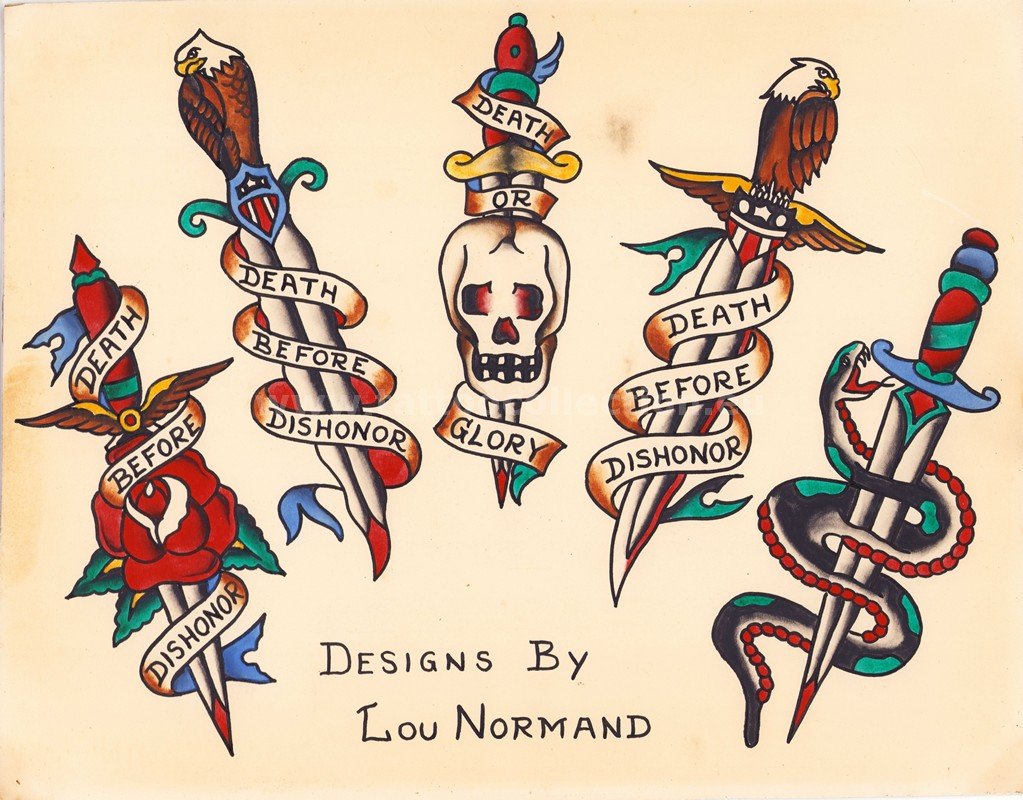
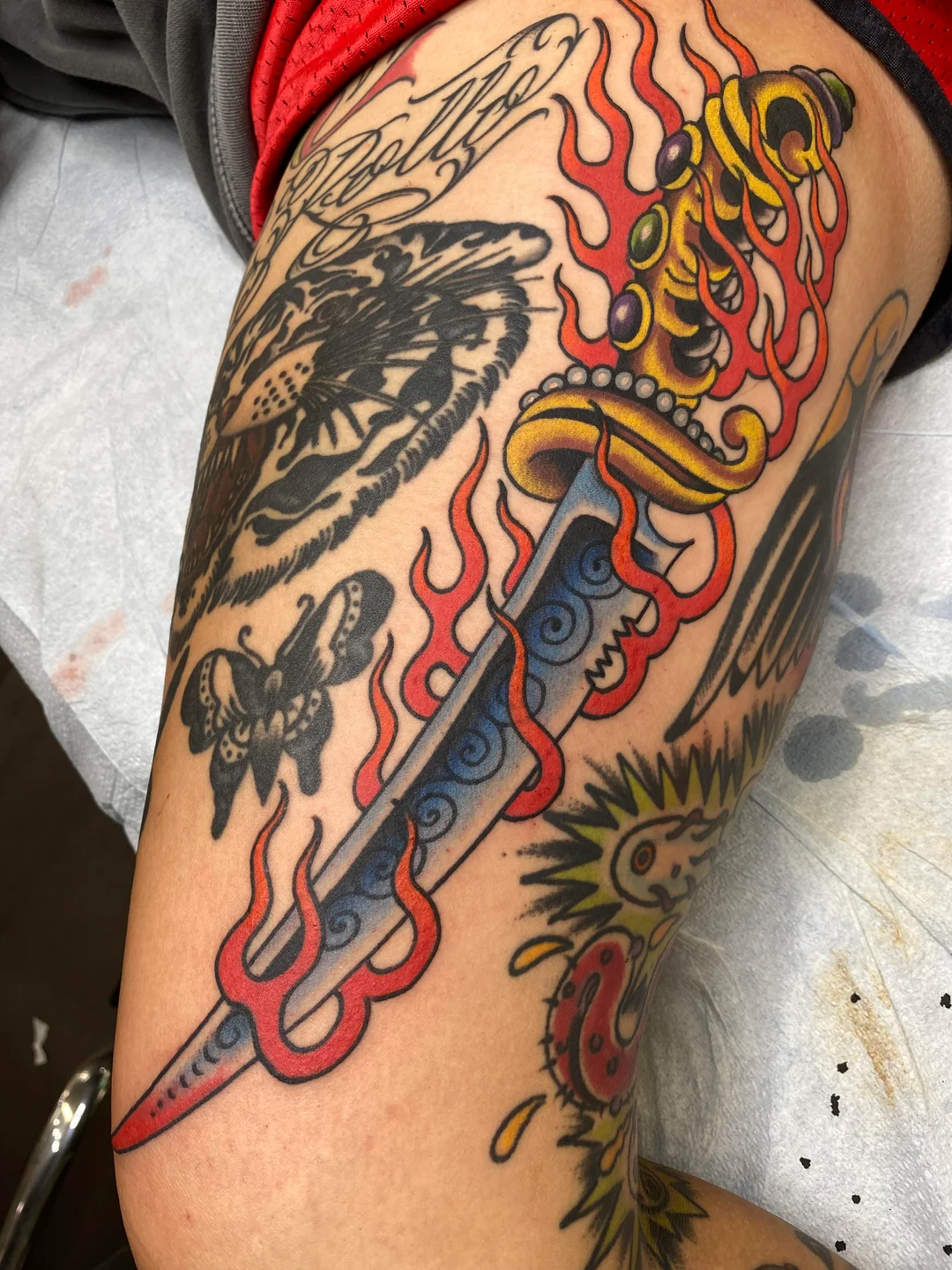
The dagger is a foundational subject in American traditional tattooing. Sailor Jerry Collins, Bert Grimm, Owen Jensen, and other pioneering flash artists included daggers throughout their work — as standalone images and, more commonly, as part of a paired composition. The traditional flash dagger follows specific visual conventions: bold black outlines, a symmetrical double-edged blade with a visible fuller (the groove running down the centre of the blade), a crossguard, a wrapped or jewelled grip, and a pommel. The colour palette is limited: steel grey or blue for the blade, red and green for handle wrapping or jewels, gold or yellow for metalwork, and — when blood is depicted — a saturated red.
The dagger’s role in traditional flash is rarely standalone. It is almost always depicted in relation to another element — piercing, wrapping around, emerging from, or being paired with something else. The dagger is the verb in the sentence: it acts on whatever it touches, and the meaning comes from the interaction.
The dagger's pairings and what they communicate
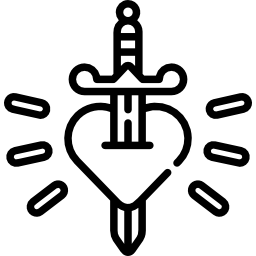
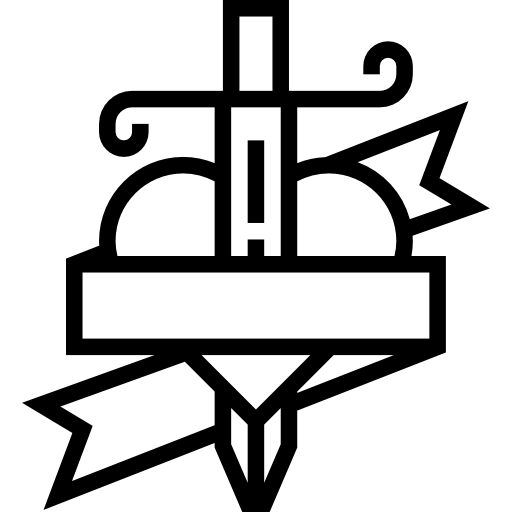
Dagger through a heart. The most classic dagger composition in Western tattoo iconography, traceable to the earliest American traditional flash sheets. A blade piercing a heart represents heartbreak, betrayal in love, romantic loss, or the pain that accompanies deep emotional attachment. The heart is often depicted bleeding, sometimes crying (tears falling from the heart’s form), sometimes wrapped in a banner bearing a name. The composition distils the experience of having loved and been hurt into a single image — the heart opened by the blade, the wound visible, the damage done. In some readings, the dagger and heart represent the willingness to endure pain for love — the acknowledgement that emotional vulnerability has costs and the choice to remain open despite them.
Dagger through a skull. A memento mori — a reminder of death. The skull represents mortality; the dagger represents the agent that delivers it. Together, they communicate the awareness that life ends, that death arrives, and that the instrument of death is close at hand. This pairing can be read as grim acceptance, as defiance (staring death down), or as a philosophical position: the acknowledgement that mortality is present in every moment. In American traditional flash, the skull-and-dagger is a standard composition, often combined with roses, banners, or other elements.
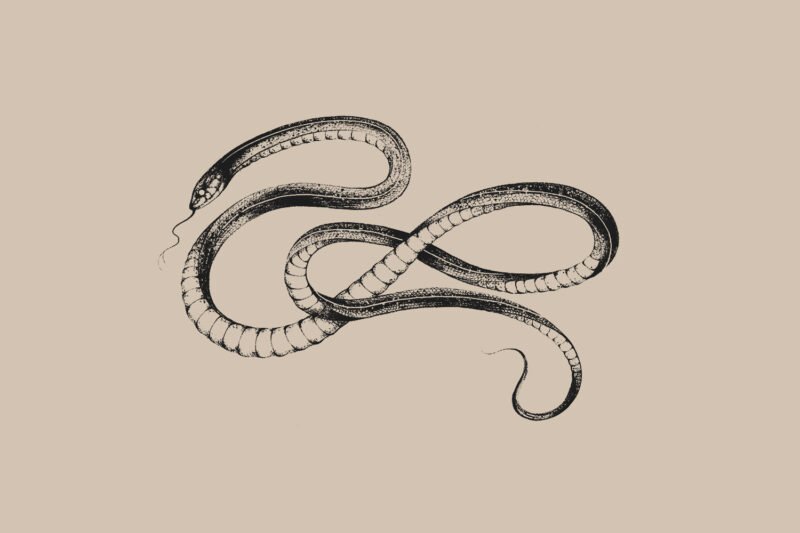
Dagger and snake. A compositionally dynamic pairing — the snake’s curved body wrapping around the dagger’s straight blade creates a visual tension between the organic and the geometric. Symbolically, the pairing carries multiple readings: the balance between danger and wisdom; the duality of healing and harm (the snake as a medical symbol, the dagger as a wound-maker); the confrontation between opposing forces; or the integration of destructive and creative energies. The snake-and-dagger is also visually related to the Rod of Asclepius and the caduceus, though the tattoo composition typically carries darker, more martial associations than the medical symbol.
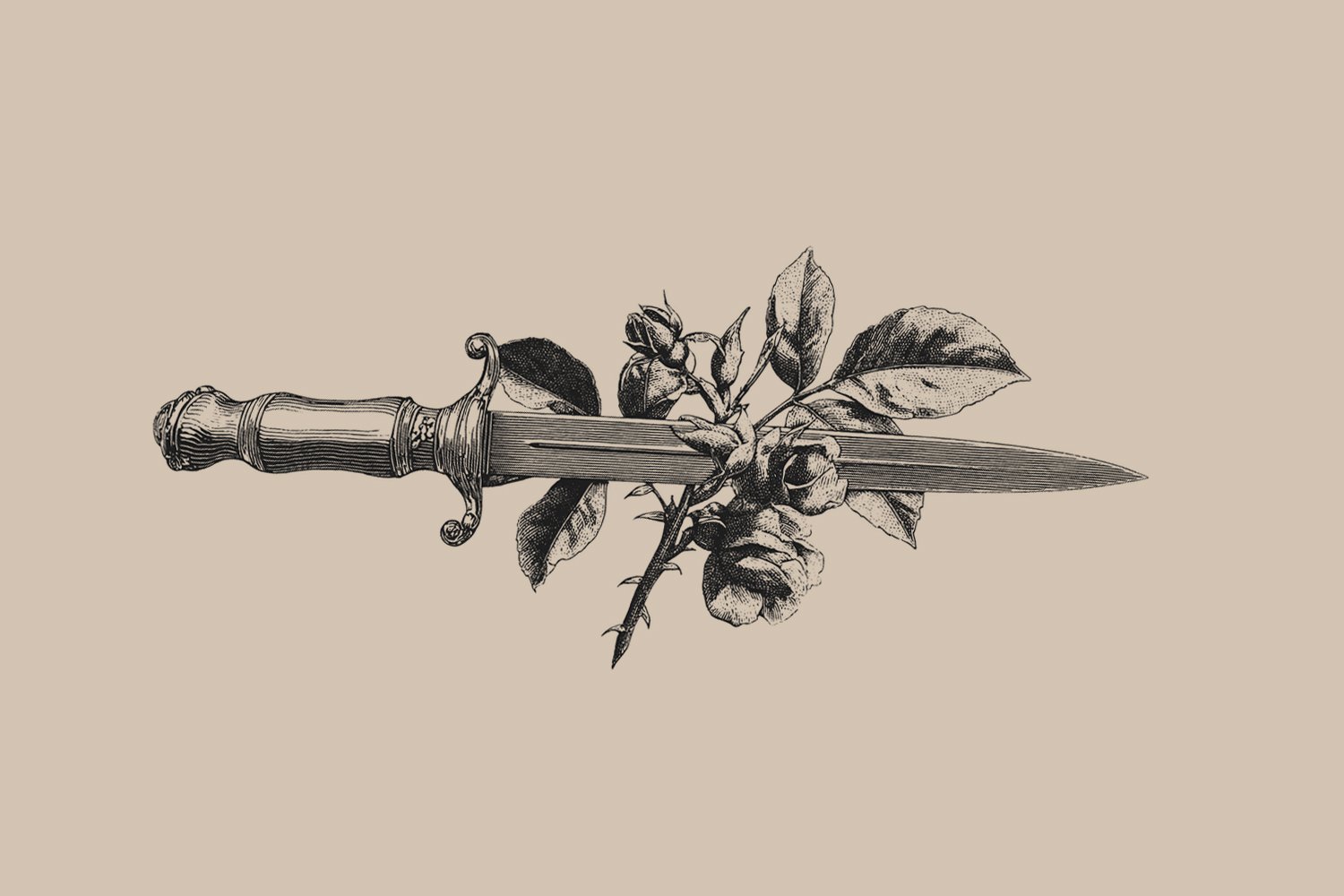
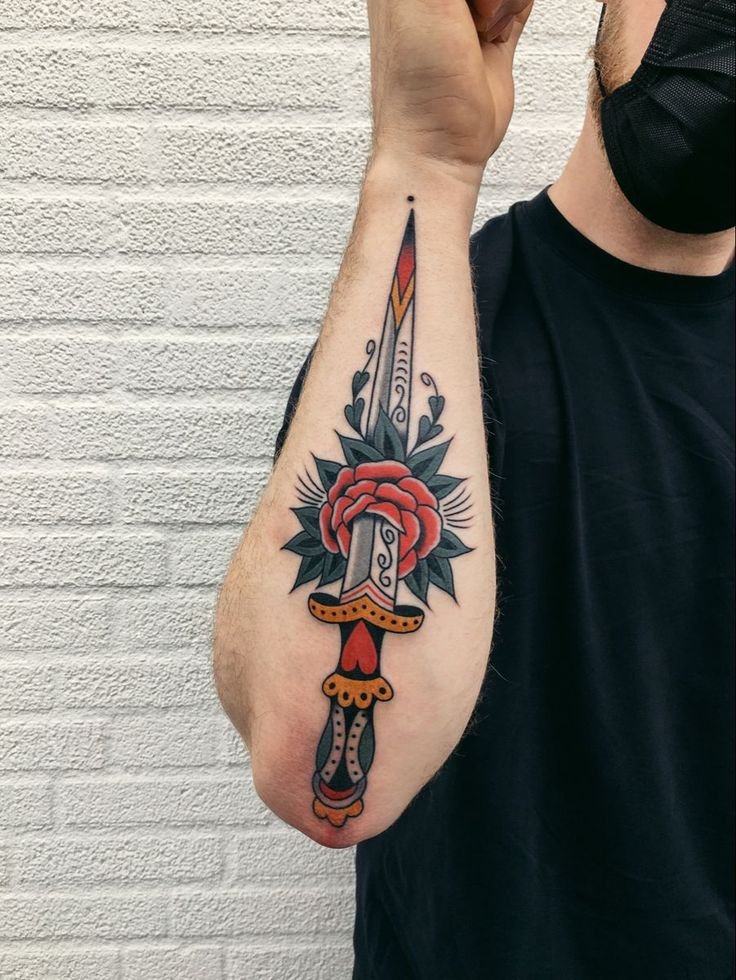
Dagger and rose. One of the most popular and enduring dagger compositions. The rose represents beauty, love, passion, and the softness of the organic world. The dagger represents sharpness, pain, danger, and the hardness of the manufactured weapon. Together, they create a visual and symbolic tension: beauty and pain coexist, love carries risk, and the soft and the sharp inhabit the same space. The placement of the dagger relative to the rose matters — a dagger piercing a rose emphasises destruction and loss; a dagger resting alongside a rose emphasises coexistence and balance; a rose growing around a dagger’s blade emphasises beauty emerging from, or persisting despite, pain.
Dagger and cherry. A traditional flash composition with roots in sailor tattooing. The cherry carries associations with innocence, youth, and — in some readings — virginity. A dagger through a cherry represents lost innocence, the end of naivety, or the experience that marked the transition from innocence to knowledge. The composition has a sexual undertone in some interpretations, drawn from the slang use of “cherry” in English.
Dagger through a hand. Represents loyalty, commitment, and the willingness to endure pain to prove fidelity. The hand — the part of the body that acts, that reaches, that grasps — is voluntarily pierced. The composition says: I will hold fast even at the cost of pain. In some readings, a dagger through an open hand represents a sworn oath.
Dagger and cherry. A traditional flash composition with roots in sailor tattooing. The cherry carries associations with innocence, youth, and — in some readings — virginity. A dagger through a cherry represents lost innocence, the end of naivety, or the experience that marked the transition from innocence to knowledge. The composition has a sexual undertone in some interpretations, drawn from the slang use of “cherry” in English.
Dagger and panther/eagle/other animals. A dagger paired with an aggressive animal amplifies the martial energy of both. The crawling panther with a dagger — a standard American traditional composition — combines feline aggression with edged weaponry. An eagle clutching a dagger references military and patriotic imagery. The animal provides the energy; the dagger provides the edge.
Dagger and banner/scroll. A dagger with a banner or scroll wrapped around the blade provides space for text — a name, a date, a word, a motto. This is one of the most versatile dagger compositions because the text determines the meaning. A dagger with “Loyalty” on the banner reads differently from one with a lover’s name, which in turn reads differently from one with a memorial date.
Dagger with blood/dripping blade. A blade depicted with blood on its edge or dripping from its tip signals that the weapon has been used. The dagger is no longer potential — it has acted. This carries associations with sacrifice, violence committed, consequences endured, or — in darker readings — a warning.
Dagger and eye. A dagger combined with an eye — particularly the all-seeing eye or a third-eye motif — carries esoteric and occult associations. The blade is a tool for piercing illusion, cutting through deception, or accessing hidden knowledge. This pairing appears frequently in blackwork and occult-themed tattoo compositions.
Paired/crossed daggers. Two daggers crossed in an X — a heraldic composition representing readiness for battle, martial skill, and the honour of military or combat service. Crossed daggers are used as insignia across military and paramilitary organisations worldwide and carry those associations into tattooing.
The dagger across tattoo styles
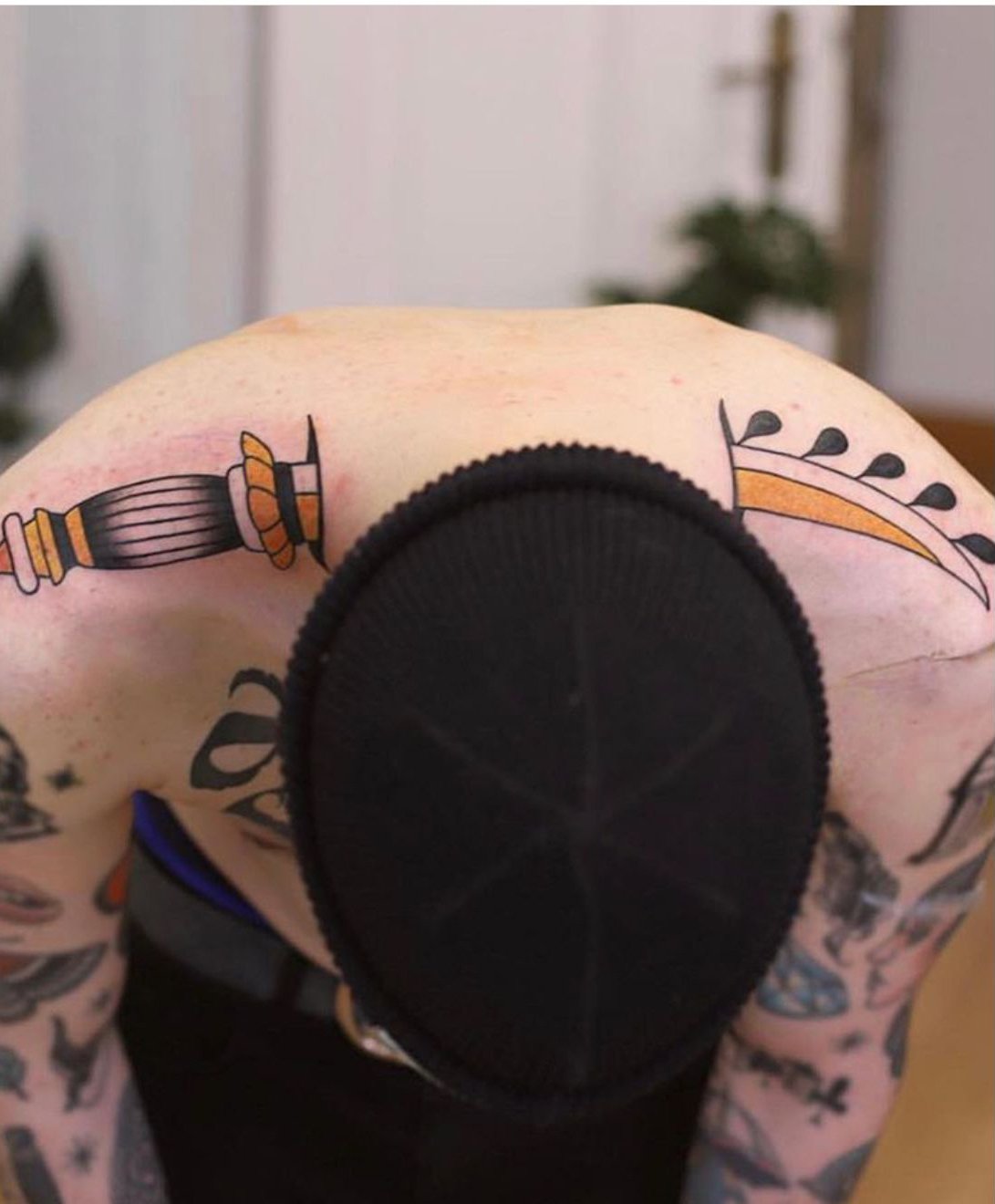
American traditional. The dagger’s home territory. Bold outlines, flat colour, clean symmetry, readable at a distance. The traditional dagger is a graphic object — simplified, stylised, and designed for visual impact. It is one of the most tattooed objects in the style’s history.
Neo-traditional. Gains decorative elaboration — ornate handle details, gem settings, filigree on the blade, Art Nouveau curves in the crossguard, broader colour range. Neo-traditional daggers are often centrepieces of larger compositions with flowers, animals, and ornamental framing.
Realism and photorealism. The dagger becomes a study in material — the reflective surface of polished steel, the texture of a leather-wrapped grip, the patina of an aged blade, the weight of a metal crossguard. Realistic dagger tattoos often depict specific, identifiable dagger types (a Scottish dirk, a Fairbairn-Sykes commando knife, a Roman pugio) with the precision of a still-life painting.
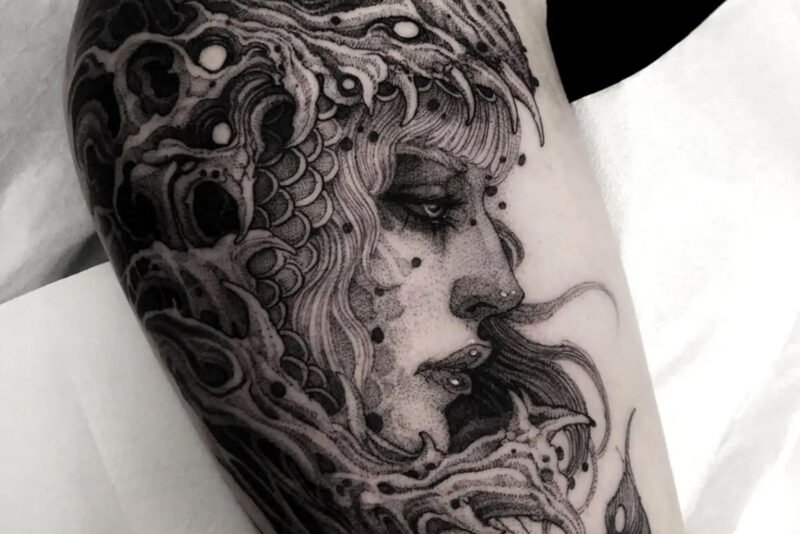
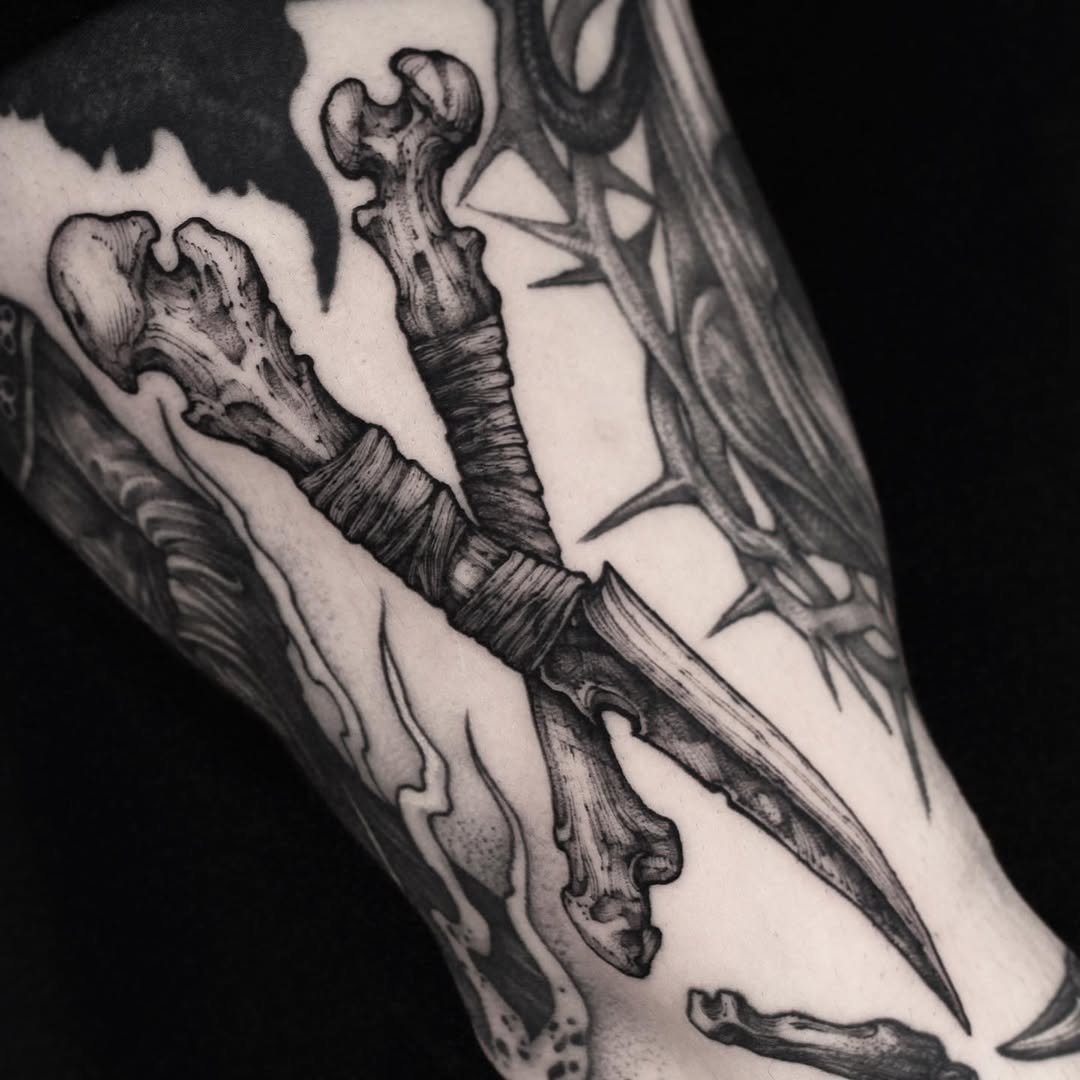
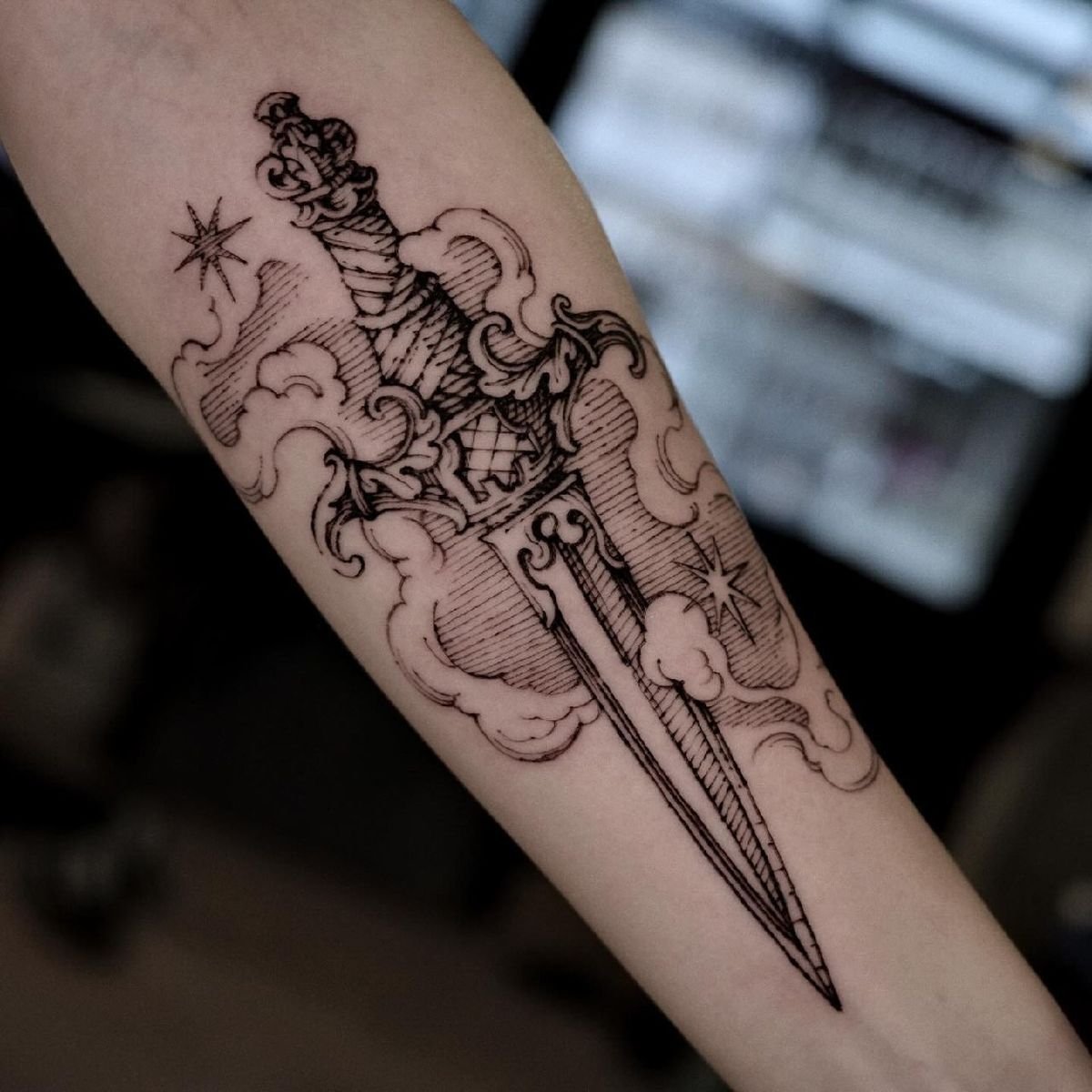
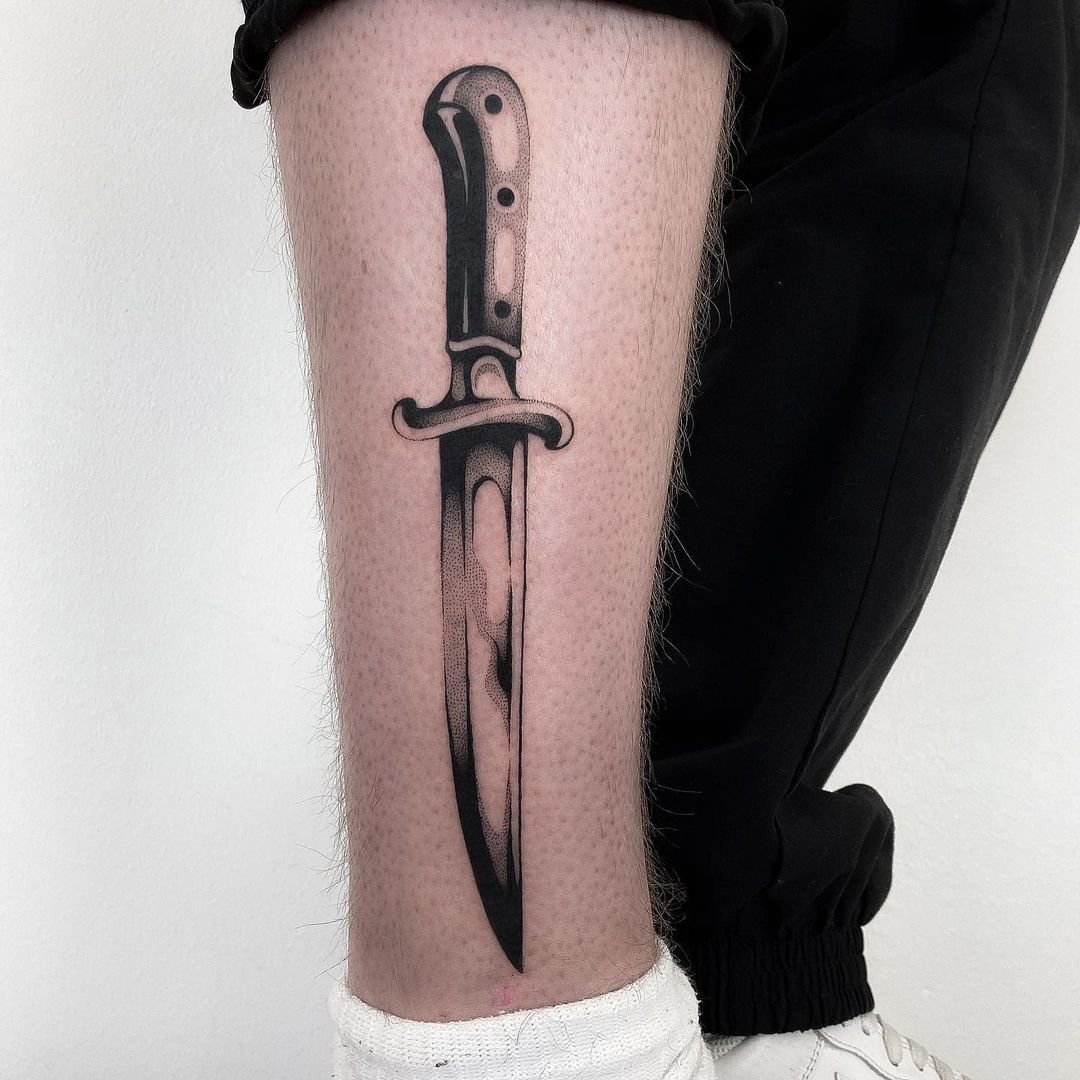
Blackwork. Reduces the dagger to line, silhouette, and high-contrast graphic form. Blackwork daggers — particularly in woodcut or engraving style — connect to the long history of dagger depiction in European printmaking and armorial illustration. The blade’s bilateral symmetry suits blackwork’s graphic precision.
Dotwork. Builds the dagger through stippling, achieving textural density and tonal gradation that evokes aged metal, engraved pattern, or the material quality of a historical weapon.
Fine line and minimalist. A dagger rendered in fine line — a few clean strokes describing blade, guard, and handle — produces a compact, precise image that works at a small scale. The dagger’s simple, recognisable silhouette makes it one of the most effective minimalist tattoo subjects. A single-line dagger on a finger, wrist, or behind the ear is readable at any distance.
Ornamental and geometric. The dagger’s bilateral symmetry integrates naturally into mandala structures, sacred geometry compositions, and ornamental frames. A dagger as the vertical axis of a symmetrical ornamental composition — with geometric or botanical elements radiating from the blade — produces a visually striking design that balances the weapon’s aggression with decorative refinement.
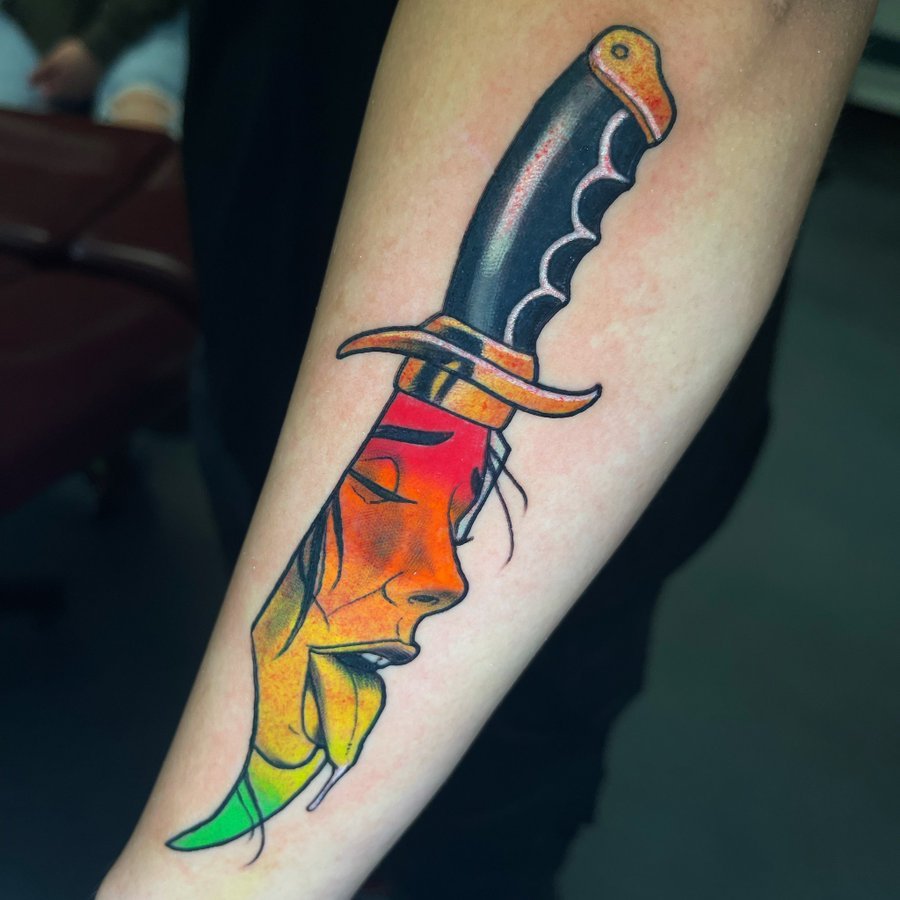
Illustrative. Allows the widest interpretive range — fantasy daggers, mythological weapons, daggers depicted in narrative scenes, stylised or exaggerated forms that prioritise visual storytelling over anatomical accuracy.
Composition, placement, and pairing
The forearm is the most common placement — the dagger’s vertical form follows the forearm’s long axis naturally, and the forearm provides a visible, accessible canvas. A dagger running from wrist toward elbow or elbow toward wrist creates a strong directional composition. The direction the blade points can carry meaning: pointing toward the hand (toward action, toward the world) or pointing toward the body (inward, toward the self).
The sternum uses the body’s central axis and bilateral symmetry — a dagger placed vertically on the sternum, blade pointing down, is one of the most striking midline compositions available.
The hand and fingers — a small dagger on the side of the hand, between the fingers, or on a finger is a compact, high-impact placement. Hand daggers carry additional associations with violence, defiance, and visibility (hand tattoos remain culturally charged placements).
The throat and neck — a dagger on the throat is one of the most visually aggressive placements in tattooing, carrying associations with danger, vulnerability, and the proximity of the blade to the body’s most vital structures.
Centuries of carrying a dagger
The dagger’s endurance as a tattoo subject — from the earliest American traditional flash to contemporary practice across every style — comes from this versatility. A single, precisely rendered dagger on a forearm and a fully composed dagger-and-rose sleeve use the same fundamental image to say different things. The blade adapts. It always has. The oldest human-made weapon is also one of the newest tattoo subjects chosen today, and the reasons for choosing it have remained remarkably stable across the millennia: the need for something sharp, something close, something that fits in the hand and means what you need it to mean.
Sources & further reading
- Steve Gilbert, Tattoo History: A Source Book. Juno Books, 2000.
- Albert Parry, Tattoo: Secrets of a Strange Art. Simon & Schuster, 1933; Dover, 2006.
- Don Ed Hardy (ed.), Tattootime. Hardy Marks Publications, 1982–1991.
- Walter Burkert, Greek Religion. Harvard University Press, 1985.
- A. Leo Oppenheim, Ancient Mesopotamia: Portrait of a Dead Civilisation. University of Chicago Press, 1977.
- Ewart Oakeshott, The Archaeology of Weapons: Arms and Armour from Prehistory to the Age of Chivalry. Boydell Press, 1960.
- Hilda Ellis Davidson, The Sword in Anglo-Saxon England. Boydell Press, 1962.
- Matt Lodder, Painted People: Humanity in 21 Tattoos. Harper, 2024.
- Anna Felicity Friedman (ed.), The World Atlas of Tattoo. Yale University Press, 2015.