Beetle tattoo
Beetle, Bettle, tell me your story...
Beetles are the most numerous order of living things on earth. With over 400,000 described species — roughly a quarter of all known animal species — they occupy every terrestrial habitat and have done so for over 300 million years. The biologist J.B.S. Haldane, when asked what the study of nature revealed about the Creator, reportedly replied that God has “an inordinate fondness for beetles.” The remark, whether or not Haldane actually said it, captures a real fact: if any animal dominates life on this planet, it is the beetle.
In human culture, the beetle’s symbolic weight is concentrated in a handful of species, each carrying its own distinct set of meanings.
- The scarab dung beetle (Scarabaeus sacer) became one of the most sacred symbols in the history of civilisation — the embodiment of the sun god, the guardian of the dead, and the promise of eternal renewal.
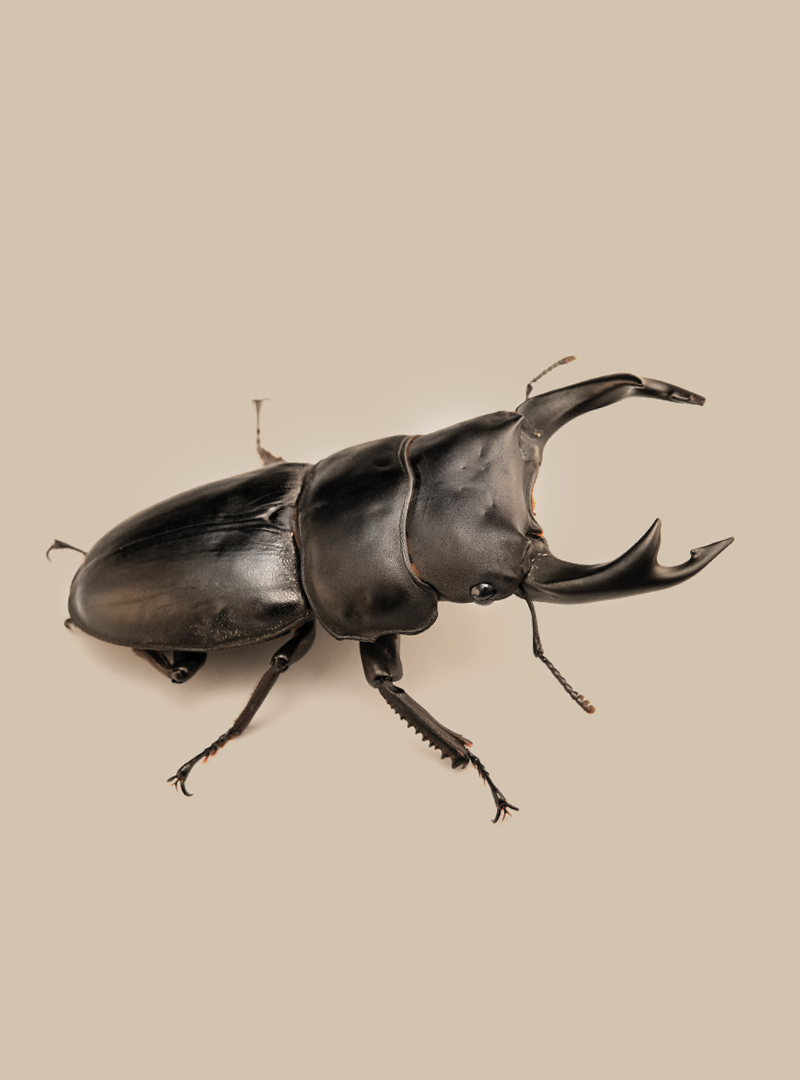
- The stag beetle (Lucanus cervus and related species) entered European and Japanese culture as a figure of strength, combat, and the warrior spirit.
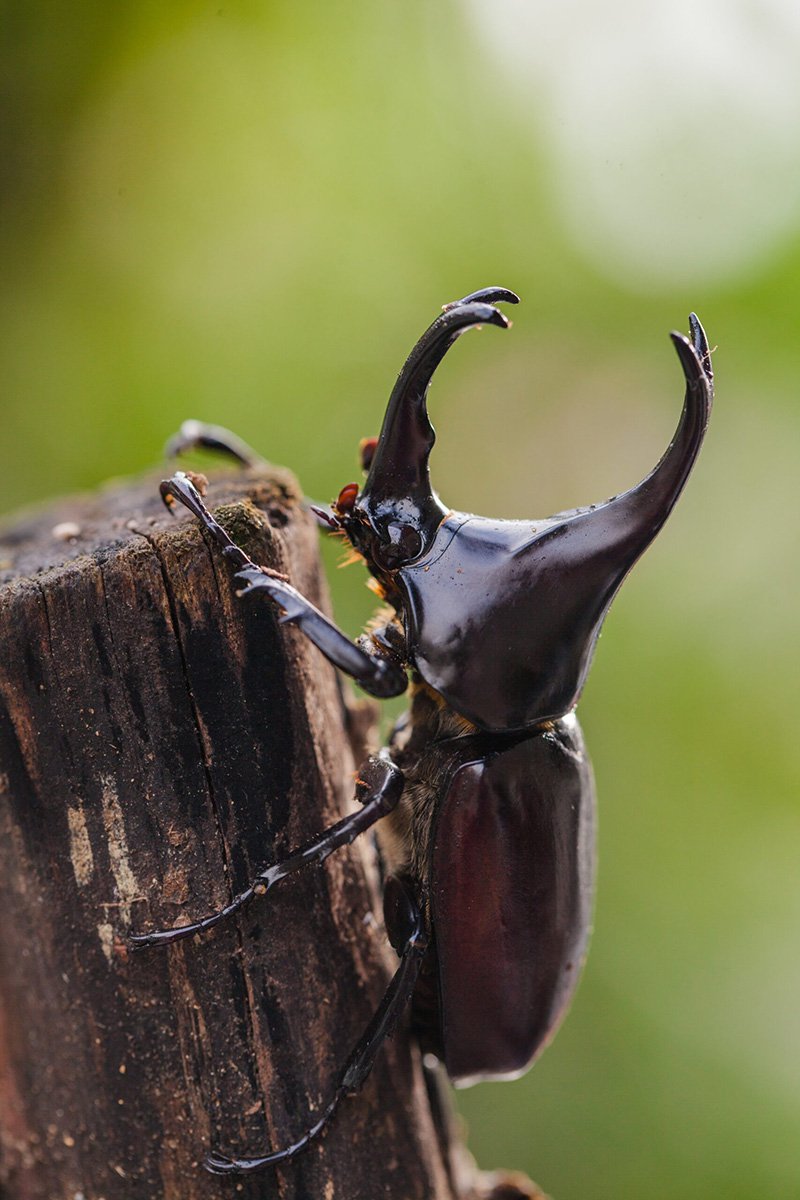
- The rhinoceros beetle (kabutomushi) became the king of insects in Japan, its horned silhouette evoking the samurai helmet.
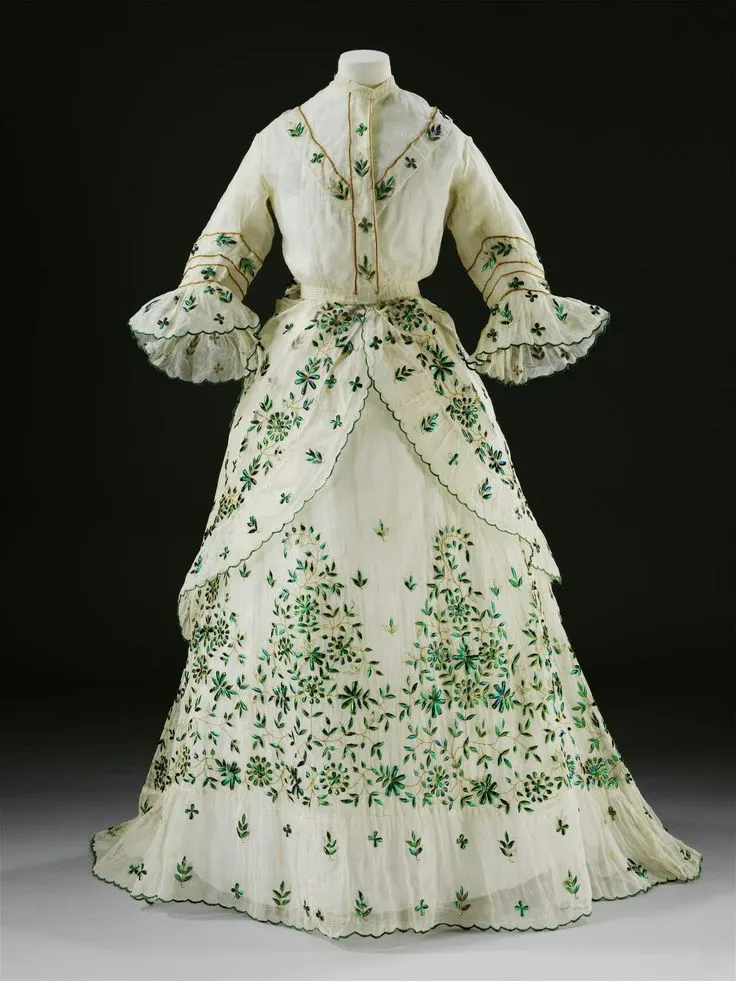
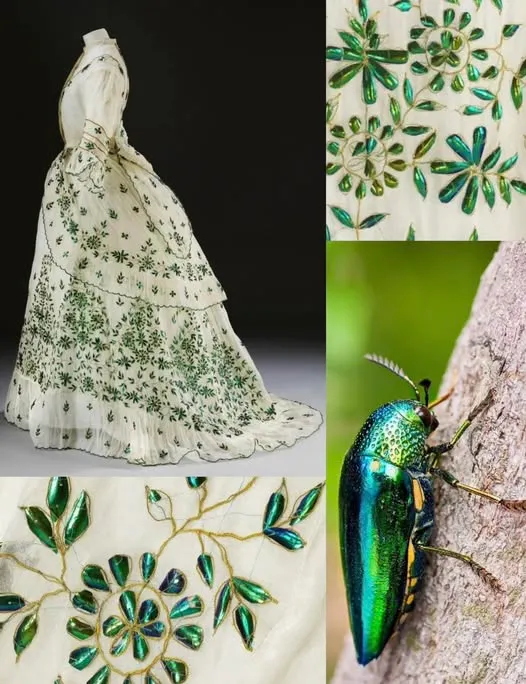
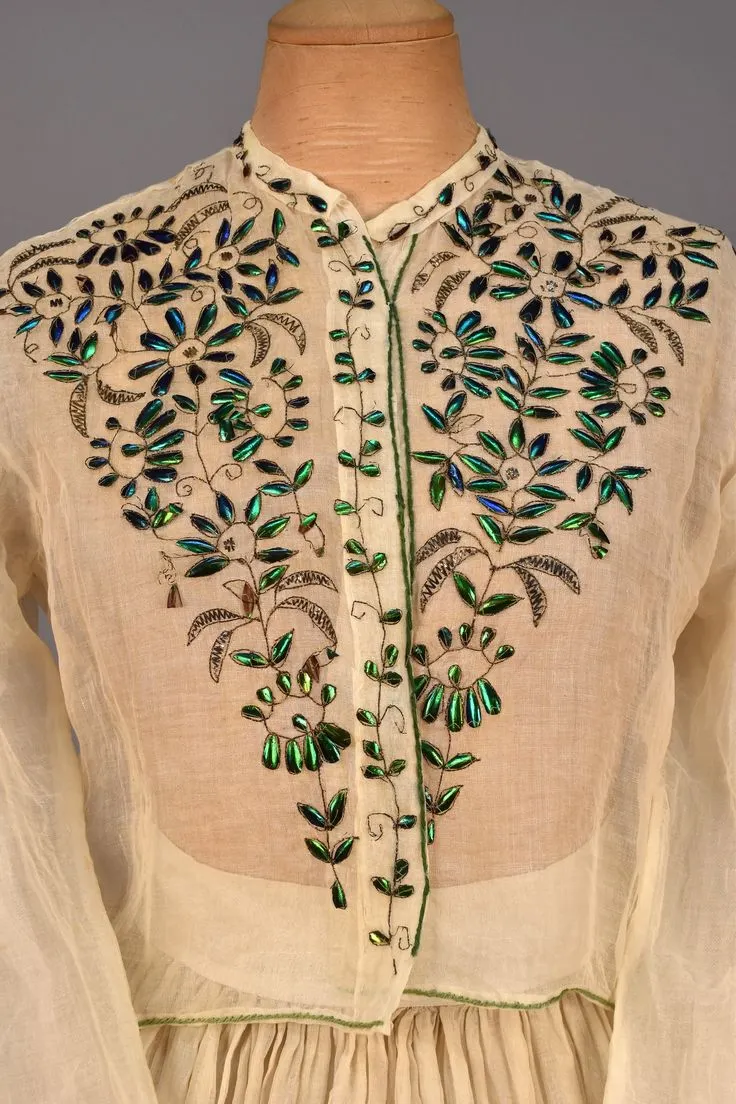
- Jewel beetles — the iridescent Buprestidae — have been used as decorative objects, sewn into textiles, and mounted in jewellery across Southeast Asia for centuries.
- The ladybug, covered in a separate article on this site, carries its own independent symbolic tradition rooted in European Christian folk belief.
A beetle tattoo, unlike a snake or eagle tattoo, is defined first by species. The choice of beetle determines the cultural tradition referenced, the available visual vocabulary, and the meaning the image carries. A scarab and a stag beetle have almost nothing in common symbolically. They are as different as a dove and a raven — both birds, but serving opposite purposes in the symbolic record.
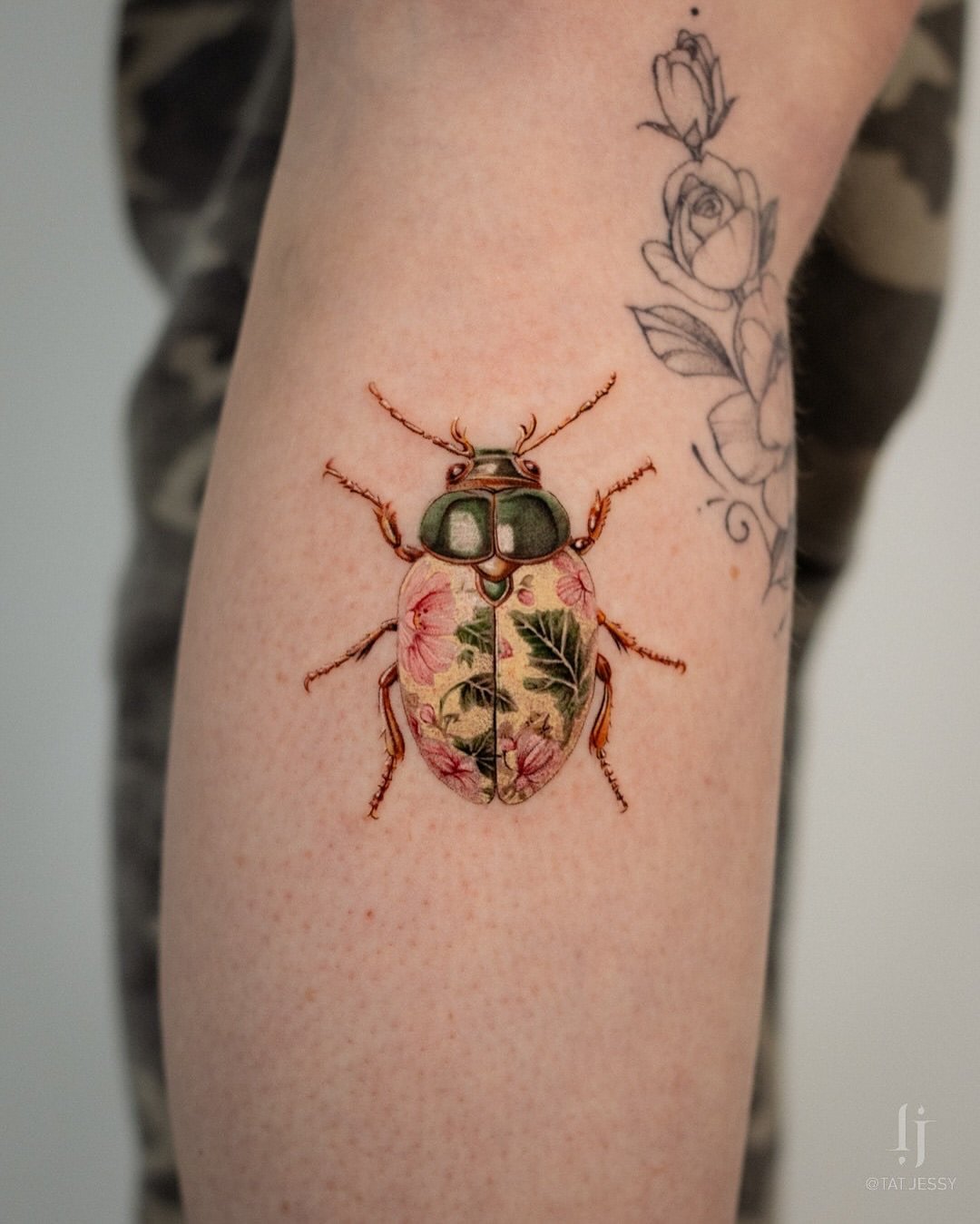
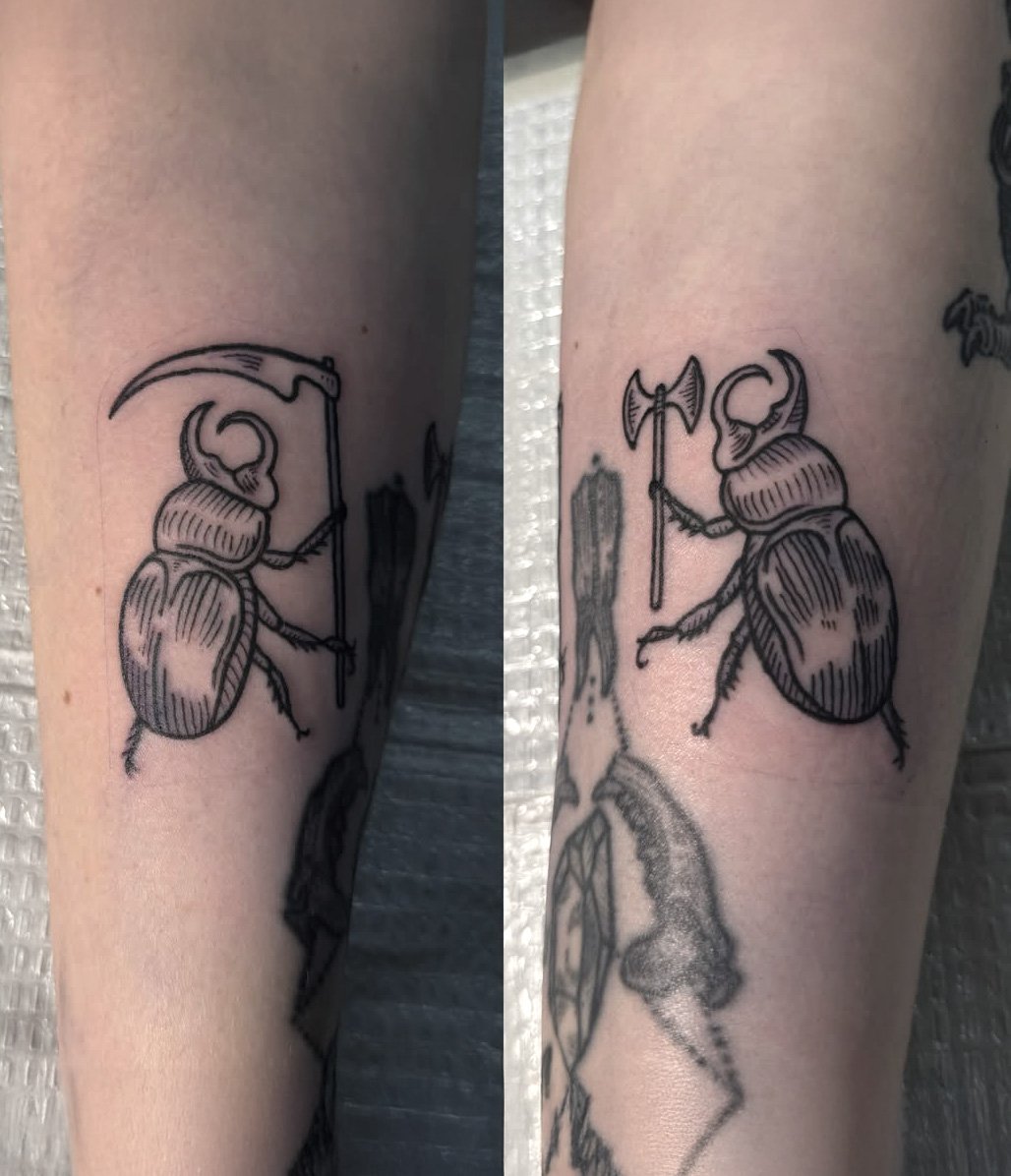
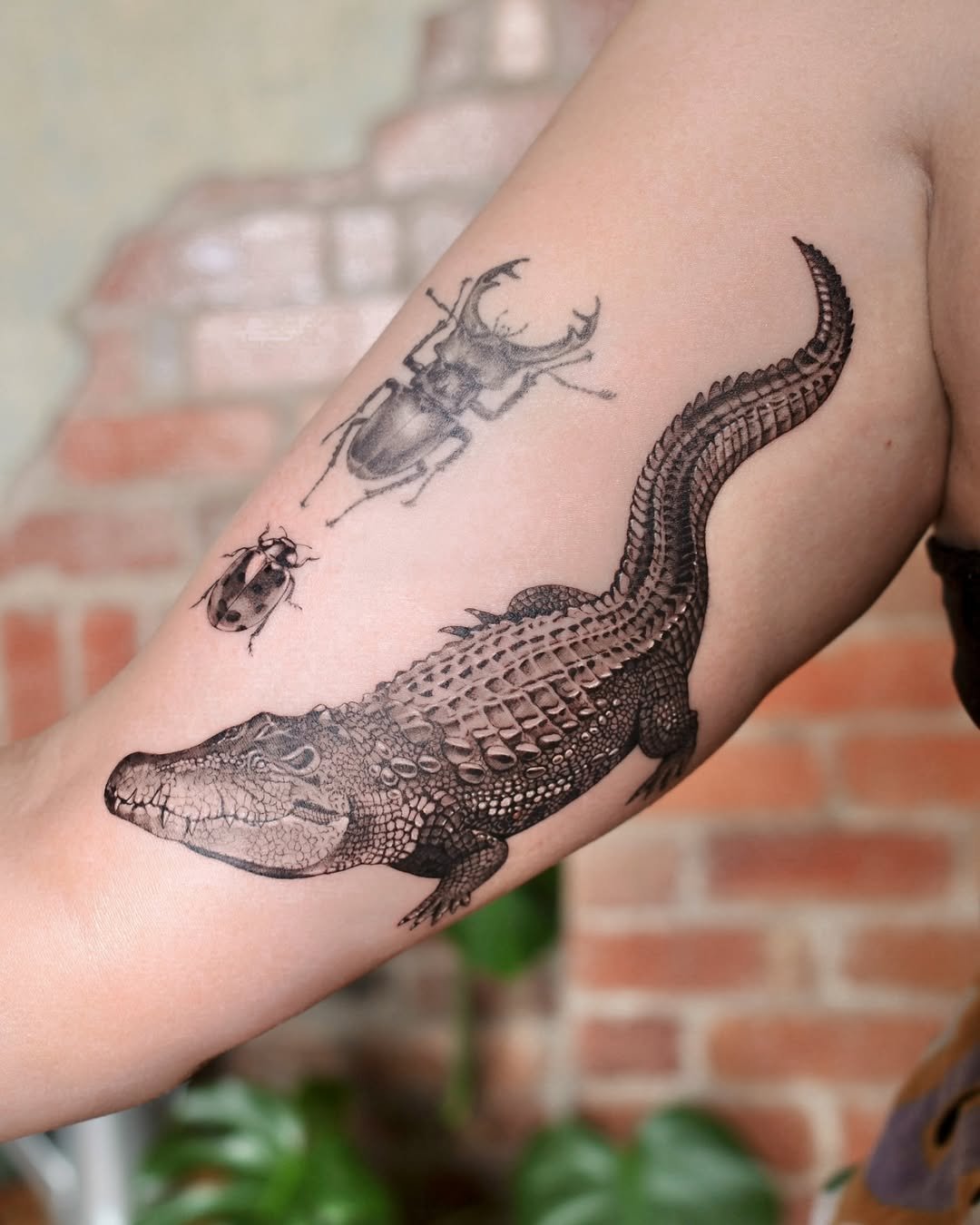
Coleoptera
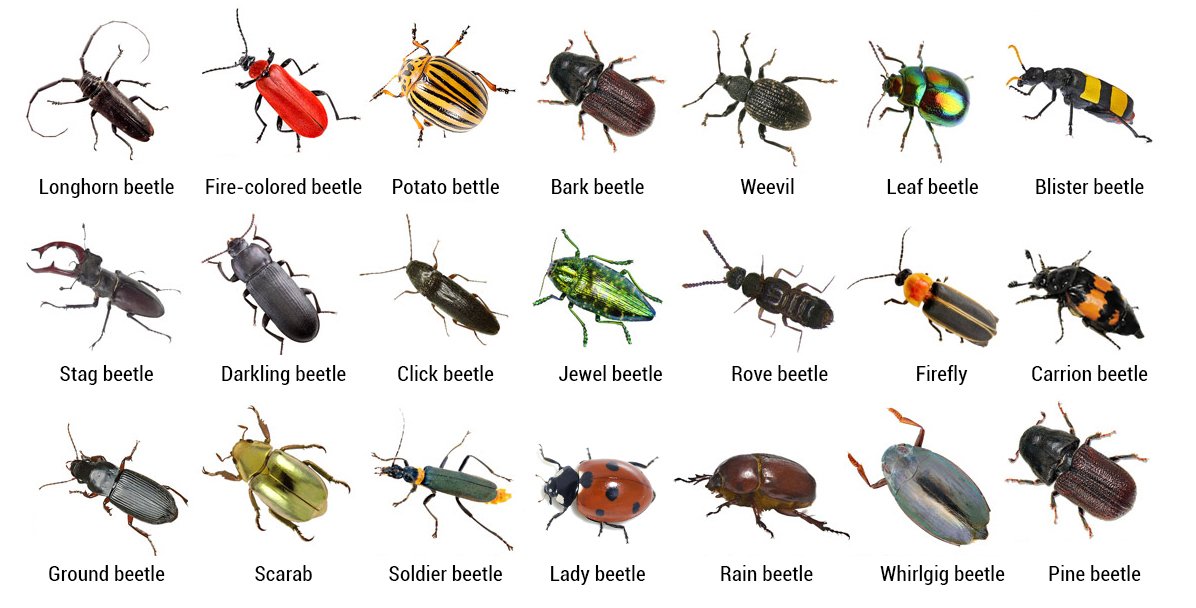
Beetles belong to the order Coleoptera — from the Greek koleos (sheath) and pteron (wing) — named for the hardened forewings (elytra) that form a protective shell over the membranous hindwings beneath. This armoured structure is the beetle’s defining feature: an exoskeleton that functions as both shield and housing, giving the animal a visual quality of containment, enclosure, and self-sufficiency that no soft-bodied insect possesses.
Beetles undergo complete metamorphosis — egg, larva, pupa, adult — a transformation so radical that the creature emerging from the pupal case bears no visible resemblance to the larva that entered it. To ancient observers, this appeared miraculous. Beetles seemed to generate themselves from the earth, from dung, from dead wood — materialising fully formed from substances associated with decay and death. This apparent self-creation, visible and repeatable, is the biological foundation of the beetle’s symbolic association with rebirth and transformation across cultures.
The diversity of beetle forms produced different symbolic readings depending on what the local culture observed. Dung beetles rolling spherical balls across the ground inspired the Egyptian solar myth. Stag beetles, with mandibles resembling antlers, inspired associations with combat and male strength. Rhinoceros beetles, with their massive horns, evoked armoured warriors. Jewel beetles, glowing with structural colour that survives long after death, became symbols of beauty that outlasts mortality. Fireflies — technically beetles — produced living light, connecting them to magic, spirits, and the boundary between the natural and supernatural.
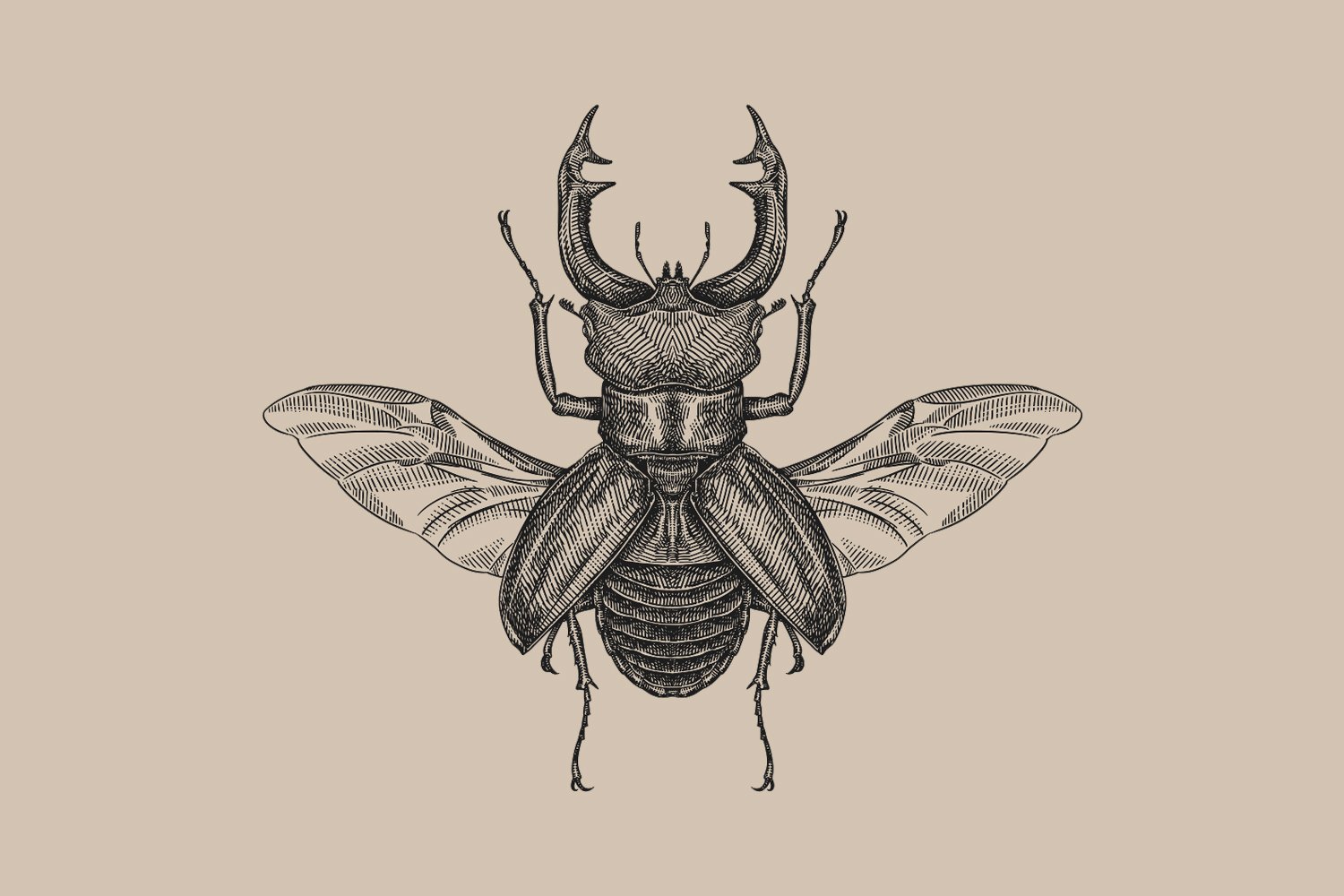
The visual qualities that make beetles compelling tattoo subjects are specific: the hard-edged symmetry of the body viewed from above, the intricate patterning of the elytra, the articulation of jointed legs, the dramatic appendages (horns, mandibles) on certain species, and the iridescent colour of jewel beetles and scarabs. A beetle viewed from directly above is one of the most naturally symmetrical animal forms in nature — a property that makes it exceptionally well-suited to tattoo compositions that demand bilateral balance, particularly sternum, chest, upper back, and throat placements.
Egypt: the scarab and the sun
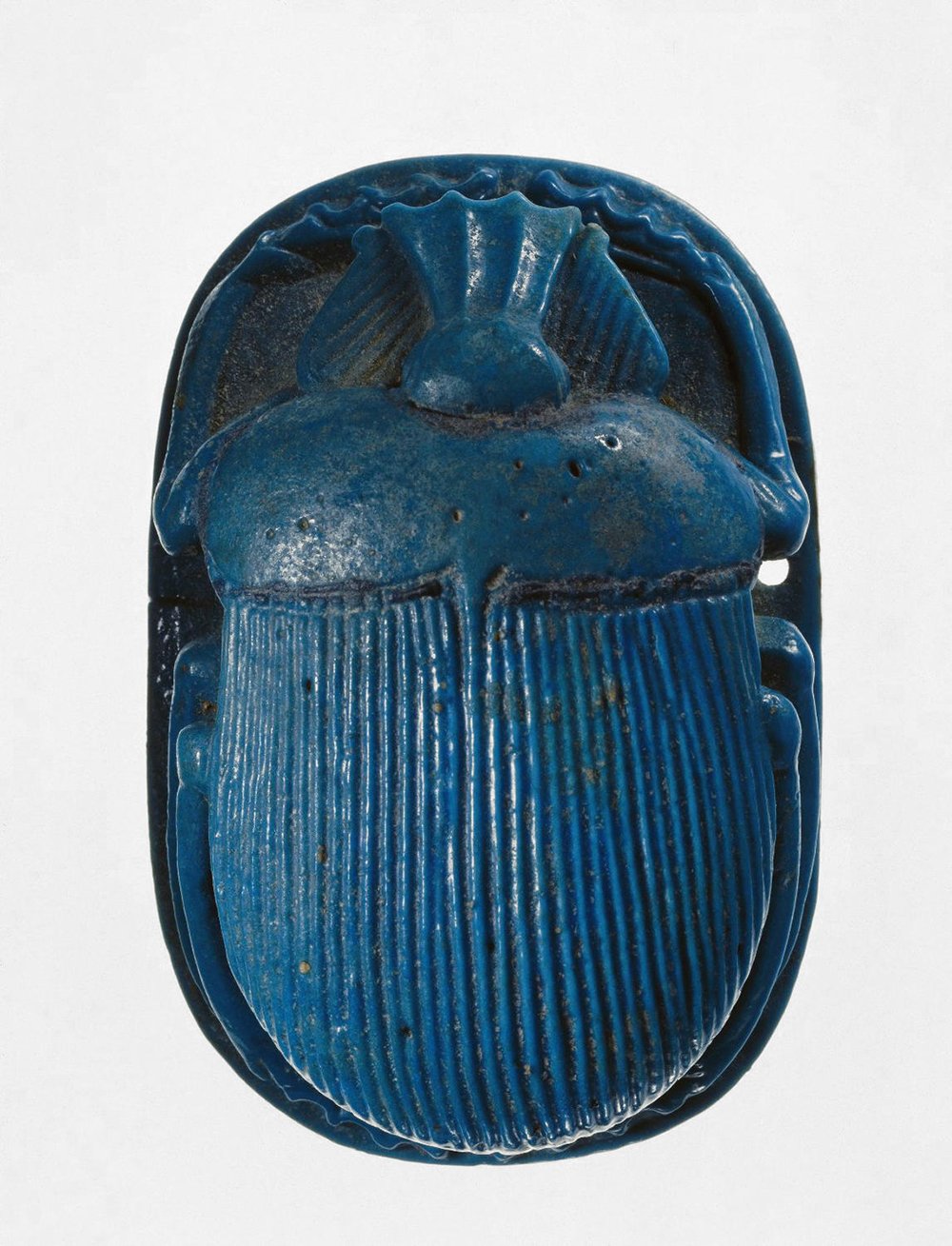
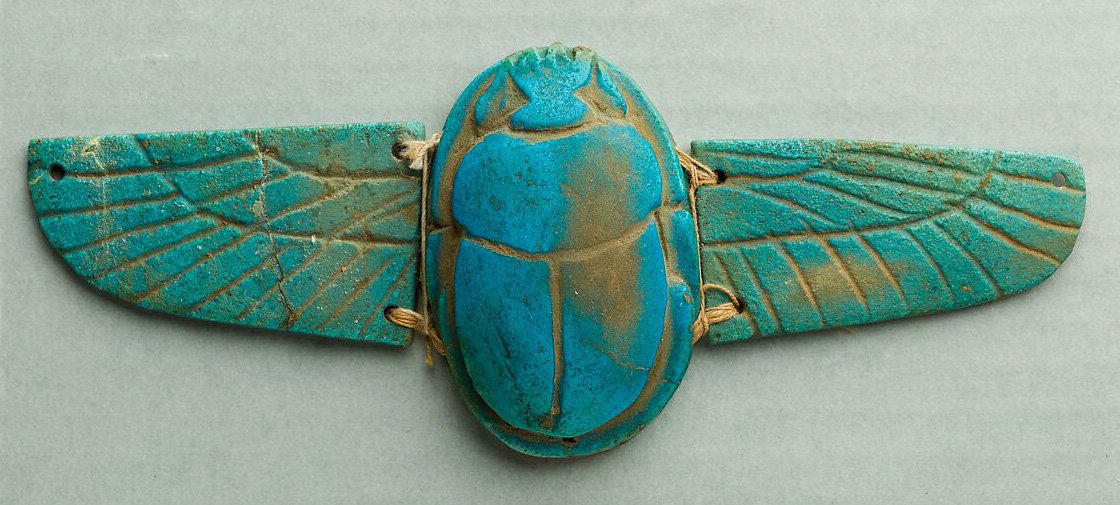
The scarab beetle is the most symbolically significant insect in the history of human civilisation. Its importance in ancient Egypt is difficult to overstate: scarab amulets are among the most commonly found objects in Egyptian archaeology, produced continuously from the early dynasties through the Roman period — a span of over three thousand years.
The connection between the beetle and the divine was grounded in direct observation. The dung beetle (Scarabaeus sacer) collects animal dung, shapes it into a ball, and rolls it across the ground — often in a remarkably straight line — to a burial site where it lays its eggs. The larvae develop inside the dung ball, feeding on it, and eventually the adult beetle emerges from what appears to be lifeless earth. Modern research has shown that dung beetles navigate using the sun and the Milky Way — a celestial connection that the Egyptians could not have known in scientific terms but may have intuited from the beetle’s unwavering straight-line path.
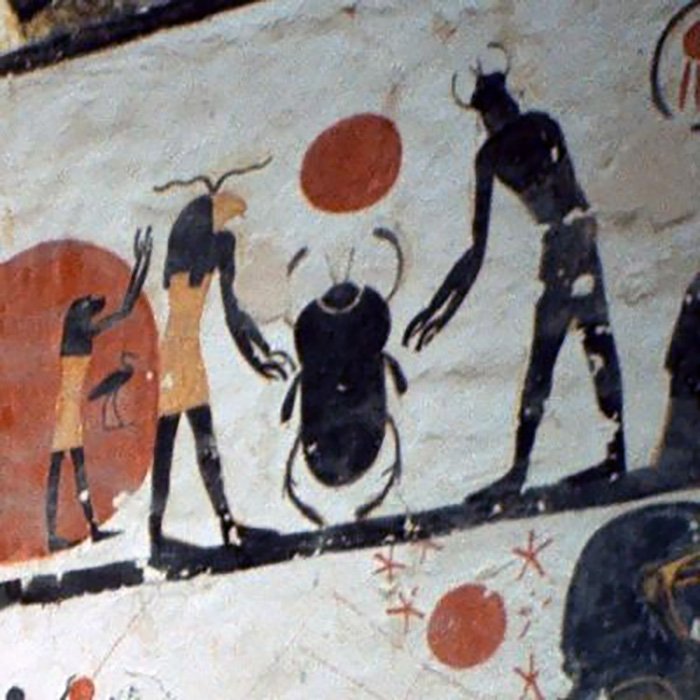
The Egyptians saw in this process a mirror of the cosmos. The beetle rolling its ball was Khepri — the scarab-headed god of the rising sun — rolling the solar disc across the sky each morning. Khepri represented creation, transformation, and the act of coming into being. His name derives from the Egyptian verb kheper, meaning “to develop,” “to create,” or “to come into existence.” The beetle emerging from the earth, apparently self-generated, was the living proof of this principle: life creating itself from death, form arising from formlessness.
Khepri was one of three solar manifestations: he was the morning sun (creation), Ra was the midday sun (full power), and Atum was the evening sun (completion and descent). The scarab carried the most dynamic of these three roles — the daily miracle of renewal, the moment when darkness gives way to light.
Scarab amulets served multiple functions. Worn as jewellery, they provided divine protection. Carved with royal cartouches or inscriptions, they functioned as seals and administrative tools. Placed in tombs, they guarded the dead. The heart scarab — a large scarab amulet placed on the chest of the mummified body, often inscribed with a passage from the Book of the Dead — had a specific funerary function: it prevented the heart from testifying against the deceased during the weighing of the heart before Osiris in the afterlife. The heart was the seat of memory, emotion, and moral judgment in Egyptian belief, and the scarab’s role was to ensure it did not betray its owner at the moment of ultimate reckoning.
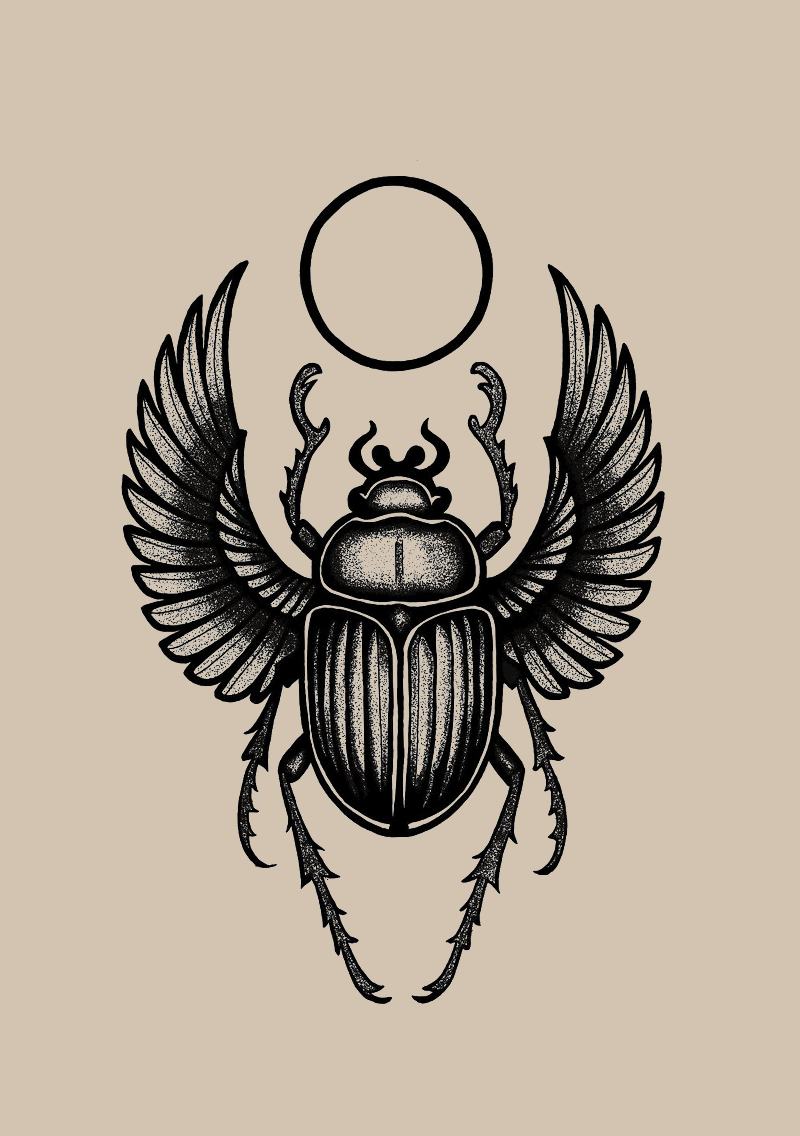
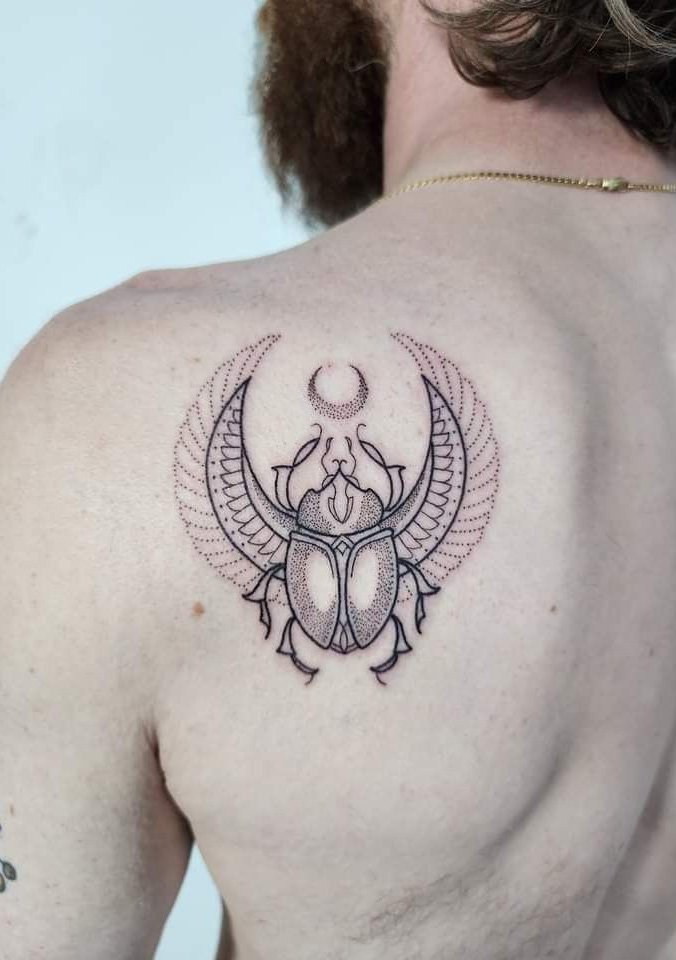
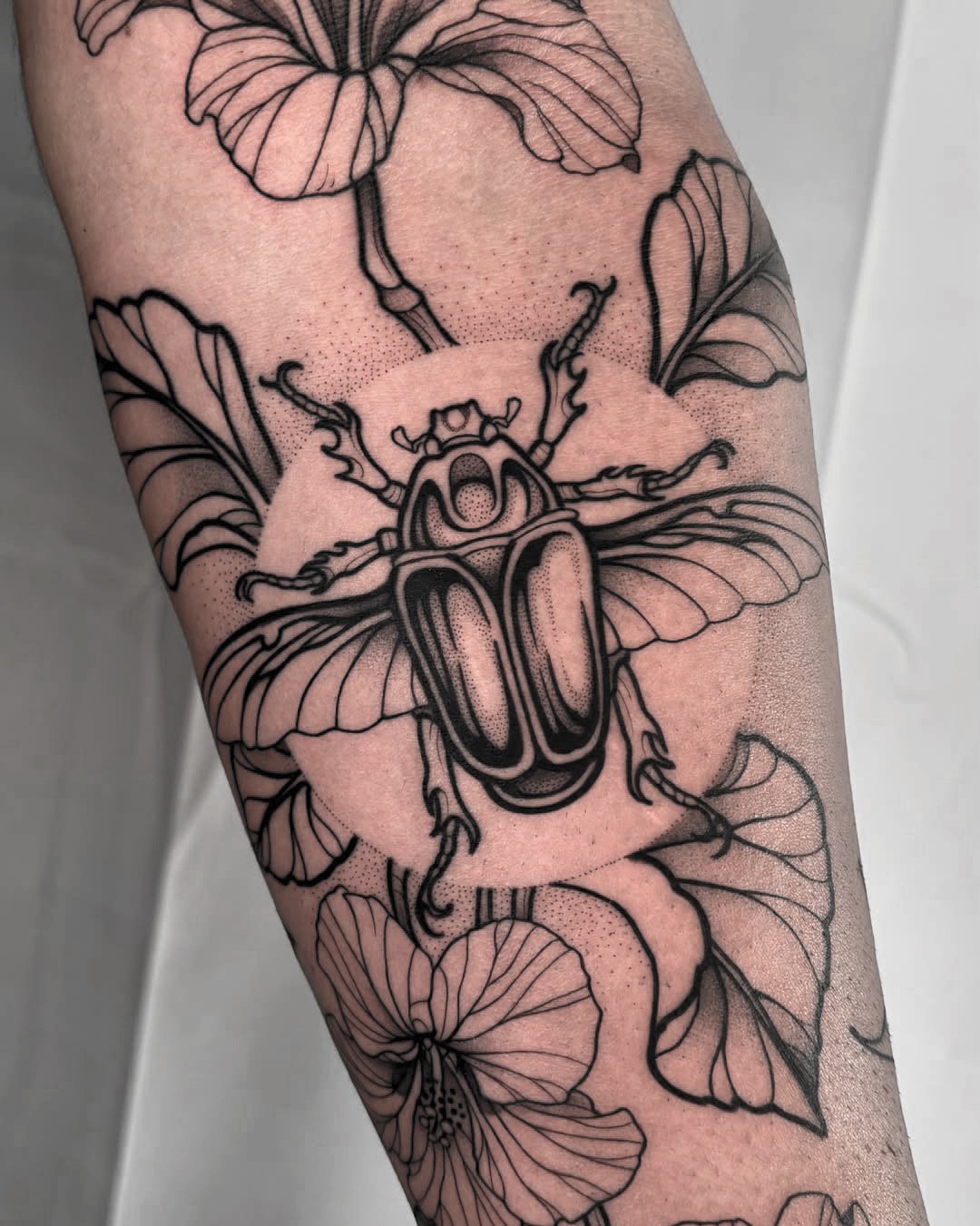
The scarab is the dominant beetle in contemporary tattooing by a wide margin. Its visual form — symmetrical from above, with outstretched wings framing a central body, often holding a solar disc between its forelegs — produces a naturally balanced composition that works exceptionally well on the sternum, chest, upper back, throat, and the back of the neck. The wings-spread scarab is one of the most placement-friendly designs in tattoo iconography, scaling from a compact piece on the forearm to a large chest or back centrepiece without losing its visual logic.
In terms of style, the scarab adapts to virtually every tattoo approach. Egyptian-themed blackwork scarabs draw on the graphic clarity of hieroglyphic art — bold outlines, flat fills, strong geometric shapes. Neo-traditional scarabs gain colour range, decorative detail, and jewel-like rendering that emphasises the beetle’s natural iridescence. Realistic scarab tattoos focus on the texture of the exoskeleton — the segmented body, the fine hairs on the legs, the sheen of the elytra. Dotwork scarabs use stippling to build the form gradually, creating textural density that echoes the beetle’s physical surface. Ornamental and geometric treatments often integrate the scarab into mandala structures, sacred geometry, or decorative frames that reference Egyptian decorative arts without reproducing them literally.
Common pairings for scarab tattoos include:
- the Eye of Horus (divine protection),
- the ankh (eternal life),
- lotus flowers (rebirth — a parallel symbol),
- pyramids and pharaonic architecture,
- wings (emphasising the transformation aspect),
- moons and suns (celestial cycles),
- geometric or decorative borders drawn from Egyptian visual tradition.
The scarab also pairs well with non-Egyptian elements — flowers, gems, ornamental frames — for wearers who connect with the symbolism of transformation without specifically referencing Egyptian mythology.
Greece and Rome: adoption and adaptation
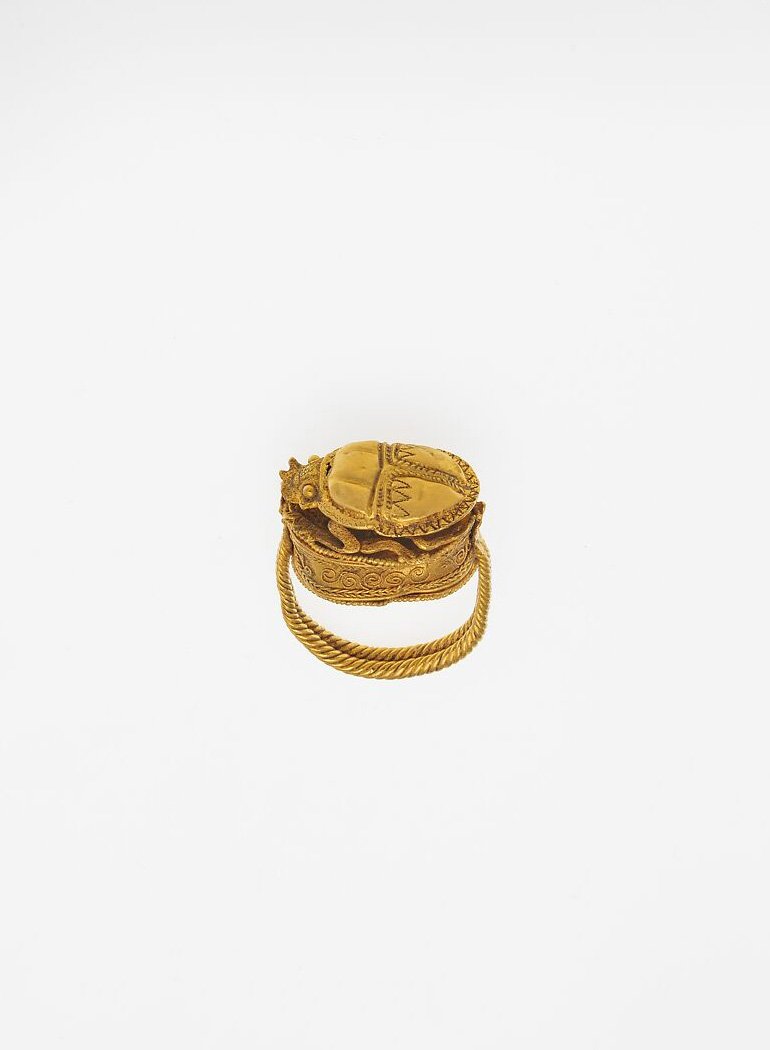
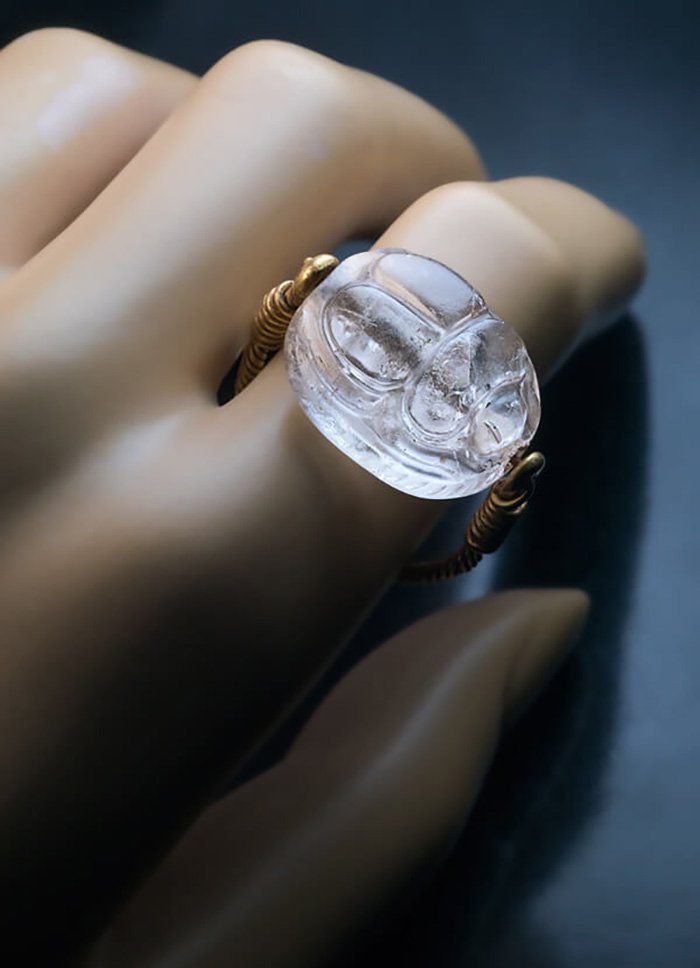
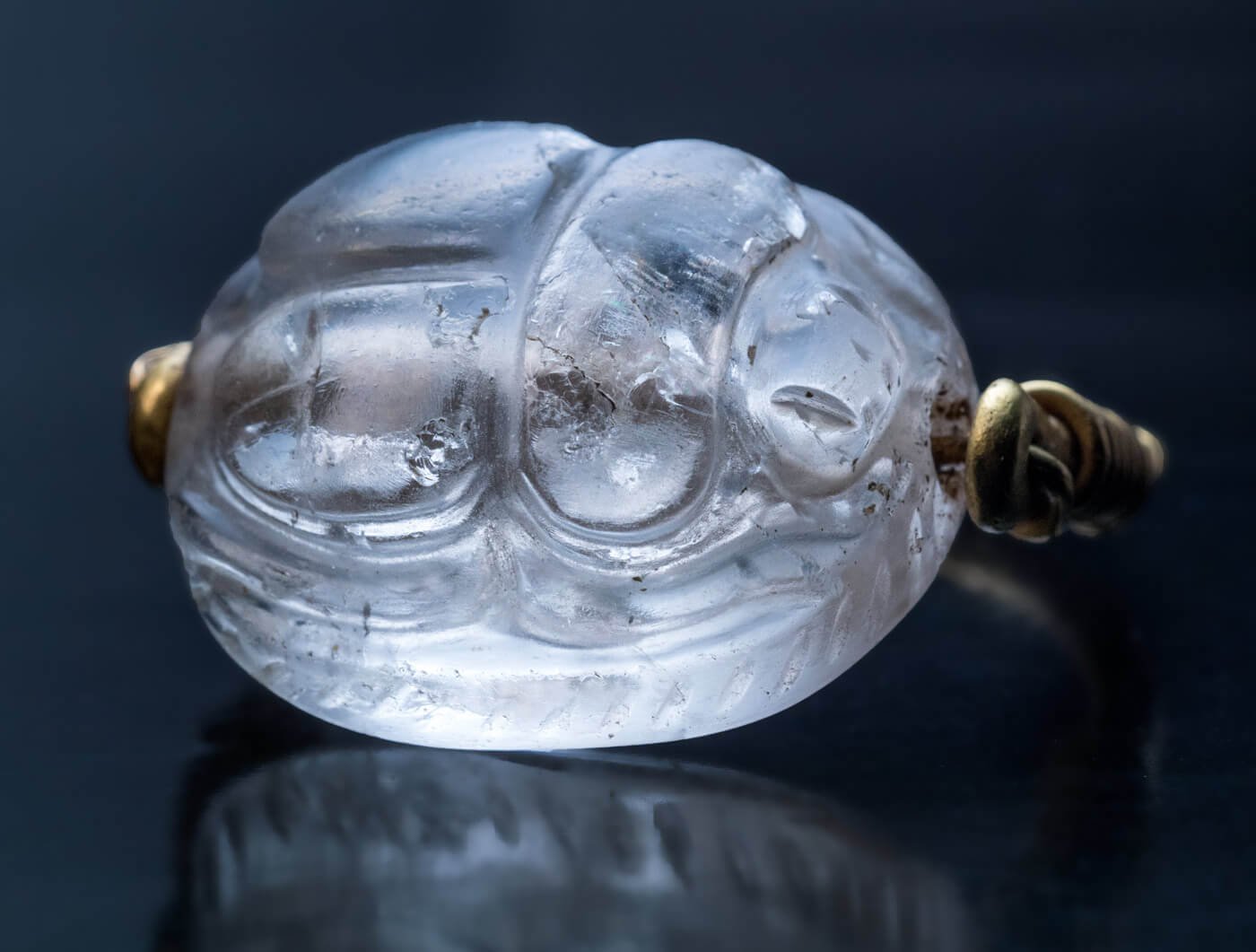
The Greeks and Romans encountered the Egyptian scarab through trade, conquest, and cultural exchange, and adopted it — partially. They recognised the beetle’s association with the sun and self-generation, but the scarab never held the same religious weight in Greek culture as it did in Egypt. Greek scarab gems and amulets were produced as good-luck charms and seal-stones, borrowing the form while diluting the theology.
In Aristophanes’ comedy Peace (421 BCE), the protagonist Trygaeus rides a giant dung beetle to Mount Olympus — a satirical inversion of the heroic ride on Pegasus. The scene uses the beetle’s association with dung for comic effect, but it also acknowledges the creature’s mythological resonance: the beetle can fly to heaven, even if the journey is absurd.
The Roman naturalist Pliny the Elder documented beliefs about beetles in his Natural History, including the claim that scarab beetles were all male and reproduced without females — a misunderstanding of the beetles’ life cycle that reinforced Egyptian self-creation mythology. Roman soldiers wore scarab amulets, and scarab imagery appears on Roman rings, gems, and decorative objects throughout the imperial period.
In tattooing, the Greco-Roman layer adds little to the scarab’s symbolic vocabulary beyond what Egypt already established. Its relevance is historical: the scarab entered European visual culture through Greek and Roman adoption, and this transmission path is the reason the symbol was available to medieval and Renaissance artists — and eventually to modern tattoo culture — rather than remaining locked within the Egyptian archaeological context.

Japan: the king of insects
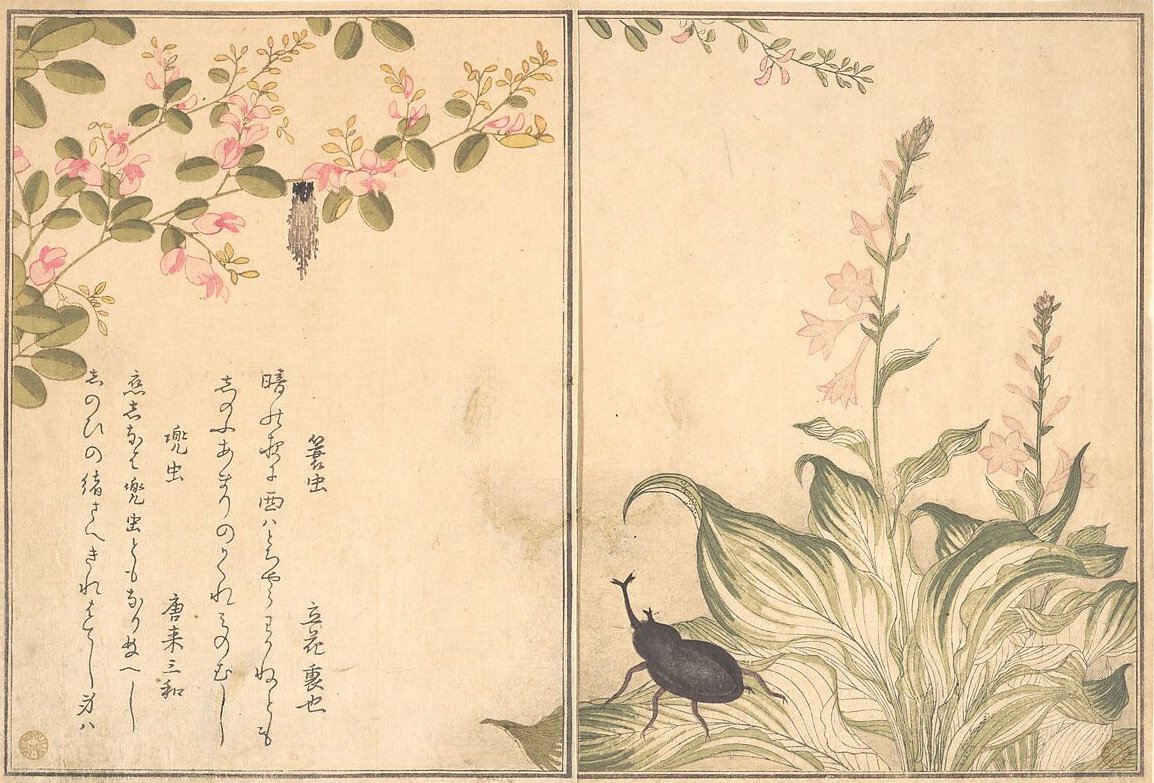
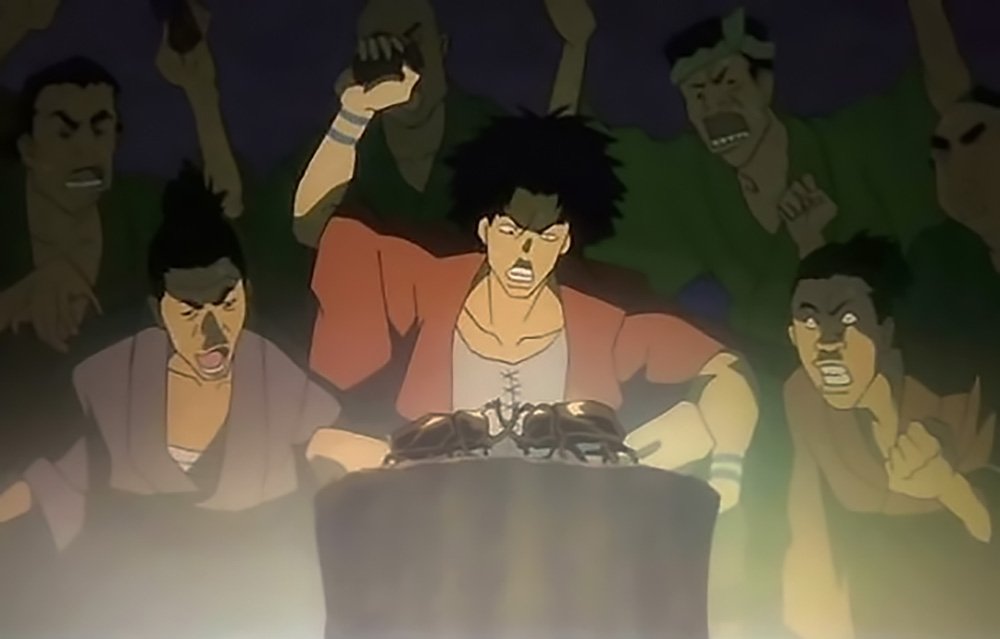
Japan’s relationship with beetles is unlike that of any other culture. The Japanese rhinoceros beetle (kabutomushi, カブトムシ) and the Japanese stag beetle (kuwagatamushi, クワガタムシ) are not merely observed or symbolised — they are kept, bred, traded, fought, and celebrated as cultural presences in everyday life.
The kabutomushi — literally “helmet beetle,” named because the male’s horn resembles the crest of a samurai kabuto helmet — is considered the king of insects in Japanese culture. It represents strength, perseverance, and the warrior spirit. The association with the samurai is direct: the beetle’s horn is a weapon used in male-to-male combat over territory and mates, and the fighting posture — head lowered, horn forward, pushing with the full force of its body — mirrors the physicality of armoured combat.
Kabutomushi-fighting (beetle sumo) has been a popular pastime for centuries, and the pet beetle market in Japan reached an extraordinary scale. In 2005, approximately 190 million foreign rhinoceros beetles and stag beetles were imported, and the stag beetle market alone was valued at over USD 100 million.
The stag beetle (kuwagatamushi) carries similar associations of strength and combat, with the added visual drama of oversized mandibles that resemble antlers or pincers. In Japanese culture, stag beetles are admired for their armoured appearance and aggressive fighting behaviour.
Despite this deep cultural affinity, beetles have a relatively limited presence in surviving Japanese mythology compared to animals such as the dragon, fox, and crane. Their cultural significance is more material than mythological — expressed through keeping, breeding, collecting, and artistic depiction rather than through sacred narratives. In tattooing, the kabutomushi and kuwagatamushi appear as subjects in both traditional and contemporary Japanese tattoo work. However, they are far less common than the core irezumi animals (dragon, tiger, koi, snake). A kabutomushi rendered in irezumi convention — with appropriate seasonal backgrounds (summer foliage, as beetles are associated with the hot months), wind bars, and compositional integration — carries the warrior-spirit associations of the samurai helmet and functions as an unusual, culturally specific subject within the Japanese tattoo vocabulary.
Europe: folklore, fear, and fine art
European beetle symbolism is scattered and contradictory, lacking the unified theological framework that Egypt provided.
The stag beetle (Lucanus cervus) — the largest beetle in Europe — has been a subject of fascination and superstition for centuries. In Germanic folklore, stag beetles were associated with Thor and with lightning, reportedly because they were often found in oak trees (sacred to Thor) and were believed to carry burning coals or to summon thunderstorms. The name “Lucanus” may derive from Lucania in southern Italy, or from the Latin lucere (to shine), reflecting a folk association with light or fire. In parts of England and Germany, stag beetles were believed to attract lightning to houses, making their presence an omen of fire and destruction.
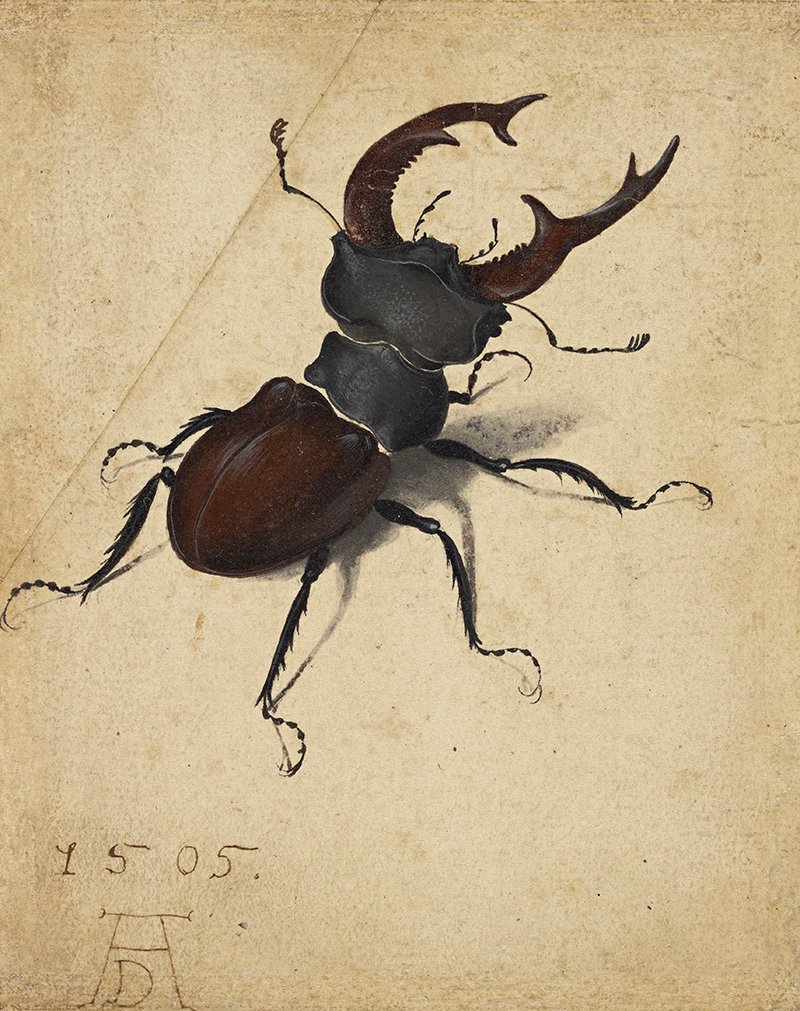
Albrecht Dürer’s watercolour study Stag Beetle (1505), now in the Getty Museum, is one of the most celebrated nature studies in Western art history. Dürer rendered the beetle with a precision and respect unprecedented for his time, singling out an insect as the subject of an independent artwork, even as most of his contemporaries considered insects the lowest of creatures. The painting established the beetle as a legitimate subject for detailed artistic attention in the European tradition, and its influence extends into contemporary illustrative and scientific-illustration tattoo work, where beetles are rendered with the same anatomical precision Dürer brought to the subject five centuries ago.
In Irish folklore, the devil’s coach-horse beetle (dearg-a-daol) — a rove beetle that raises its abdomen like a scorpion when threatened — was associated with evil, cursing, and betrayal. Some legends connected it to the crucifixion of Christ; others treated it as an embodiment of the seven deadly sins. This is one of the few beetle species in European tradition that carries a consistently negative symbolic reading.
The deathwatch beetle (Xestobium rufovillosum), which produces a tapping sound by banging its head against timber, was for centuries considered an omen of impending death. The sound — audible in quiet rooms, particularly at night — was interpreted as a countdown to mortality. Edgar Allan Poe references the deathwatch beetle in The Tell-Tale Heart. The association is entirely acoustic: the beetle’s sound, heard in the silence of a sickroom or deathbed vigil, became inseparable from the experience of waiting for someone to die.
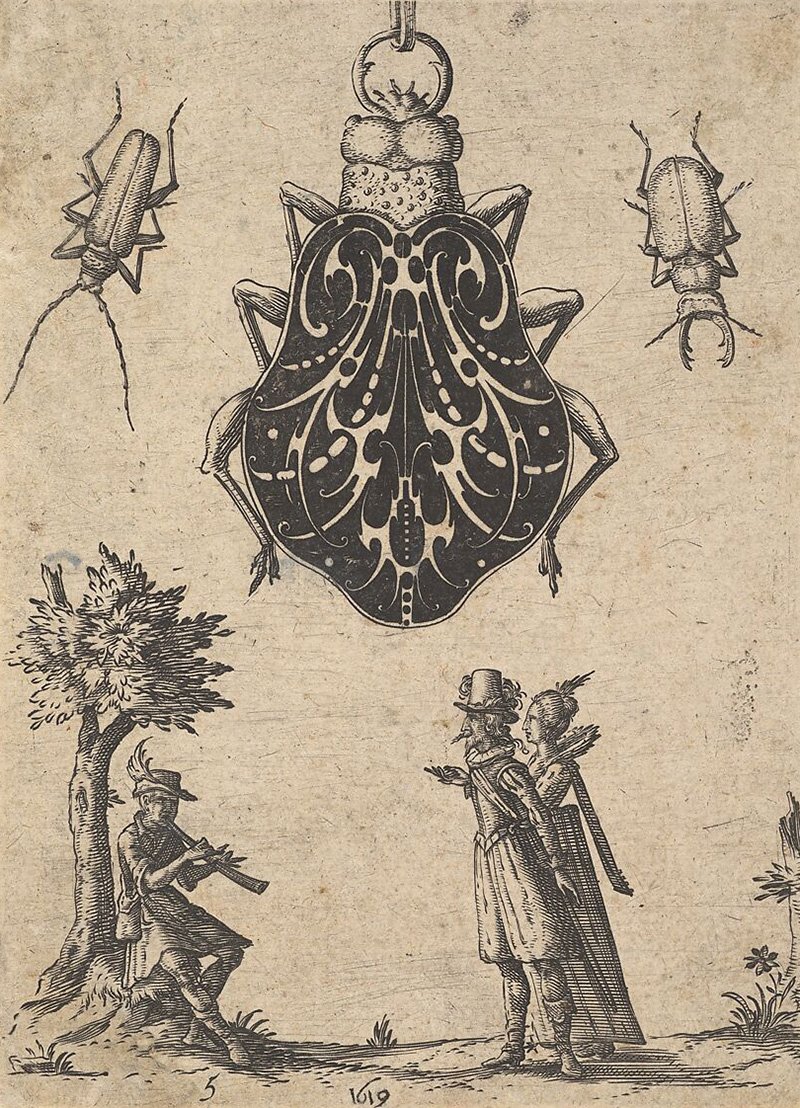
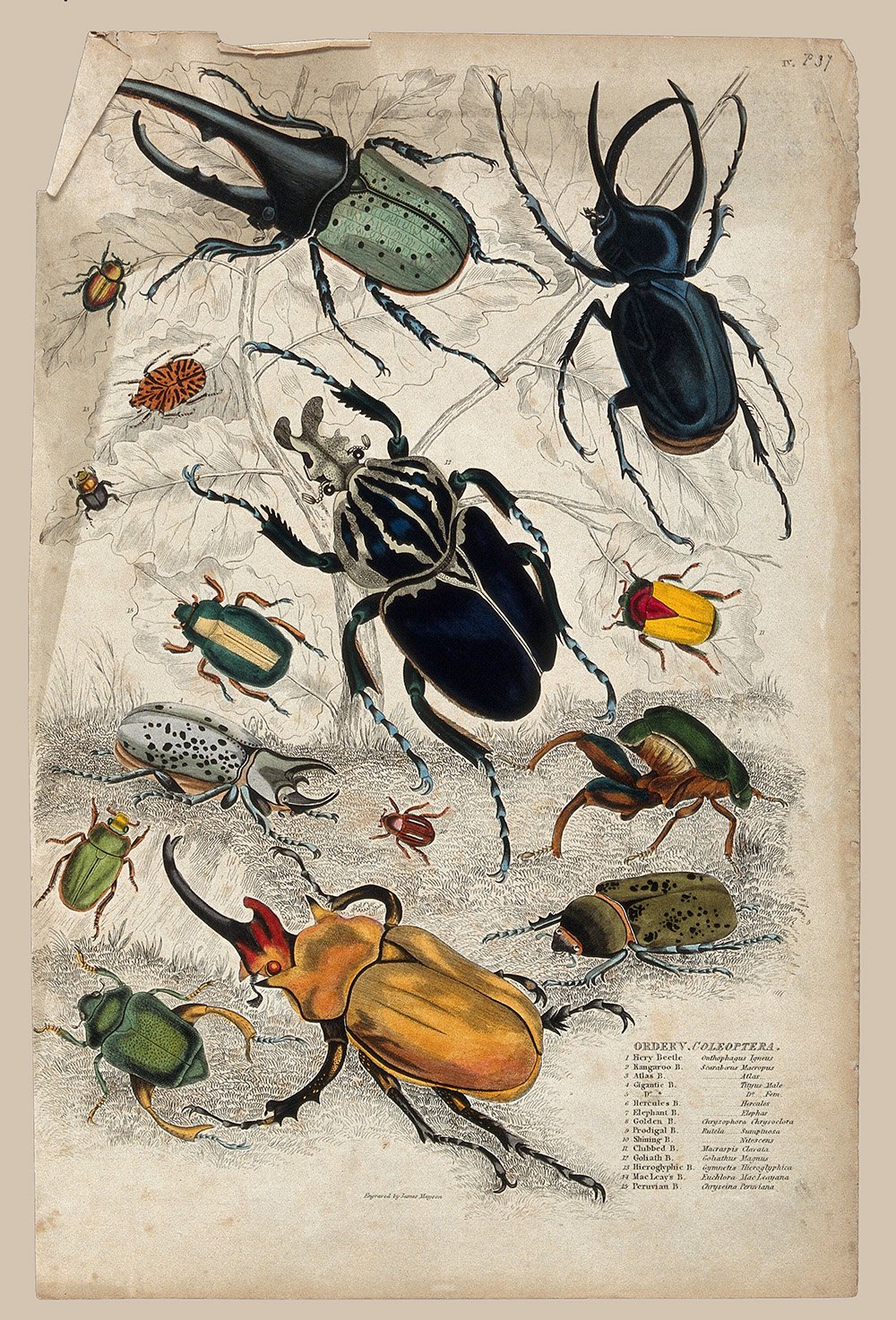
In tattooing, European beetle imagery draws heavily on the scientific illustration tradition — the specimen-plate aesthetic of entomological drawings, where beetles are rendered from above in precise anatomical detail, sometimes with labels, pins, or frame lines that reference the museum display case. This illustrative, naturalist style has become a distinct tattoo genre, particularly in blackwork and fine-line work, where beetles (alongside moths, butterflies, and other insects) function as standalone compositions valued for their visual precision and symmetrical beauty. Dürer’s Stag Beetle is a direct ancestor of this tattoo style — the same impulse to treat an insect as worthy of sustained, careful artistic attention.

China: luck and diligence
Chinese folklore includes the story of a destitute widow who was visited by a spirit, who gave her a charm in the shape of a golden beetle. With it, she could make any food appear in her cooking pot. Her prosperity attracted envy, and the beetle was eventually stolen — a cautionary tale about humility and the transience of fortune.
These associations are less well known in Western tattoo culture than the Egyptian or Japanese beetle traditions, but they inform the broader symbolic register available to beetle tattoos, particularly for wearers with Chinese heritage or connections to East Asian cultural traditions.
Mesoamerica: jewels and adornment
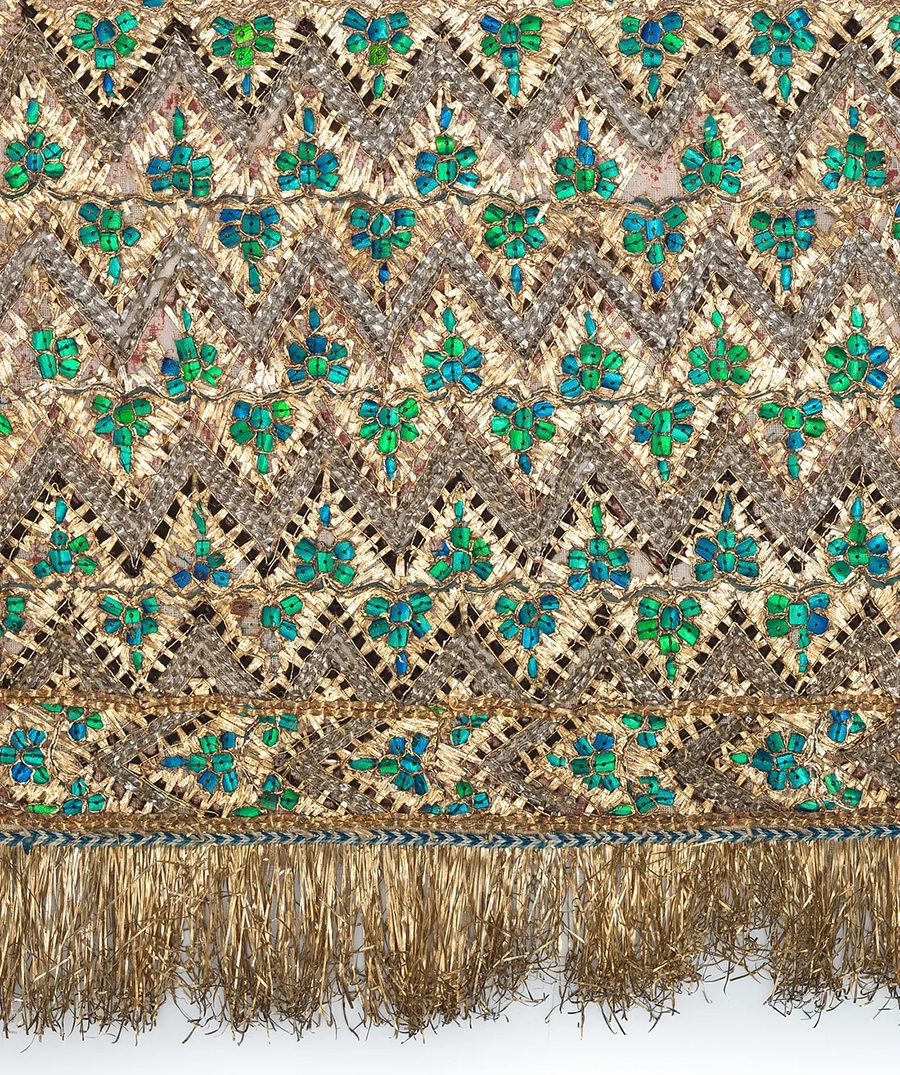
Jewel beetles (Buprestidae) — iridescent, structurally coloured beetles whose wing cases retain their sheen long after death — were used as decorative objects across Mesoamerica and Southeast Asia. In pre-Columbian Central and South America, beetle wing cases were incorporated into ceremonial textiles, headdresses, and body adornment. In Southeast Asia, particularly Thailand, Myanmar, and India, jewel beetle elytra have been sewn onto fabrics and mounted in jewellery for centuries — the metallic green and gold of Chrysochroa and Sternocera species producing a natural iridescence that survives indefinitely.
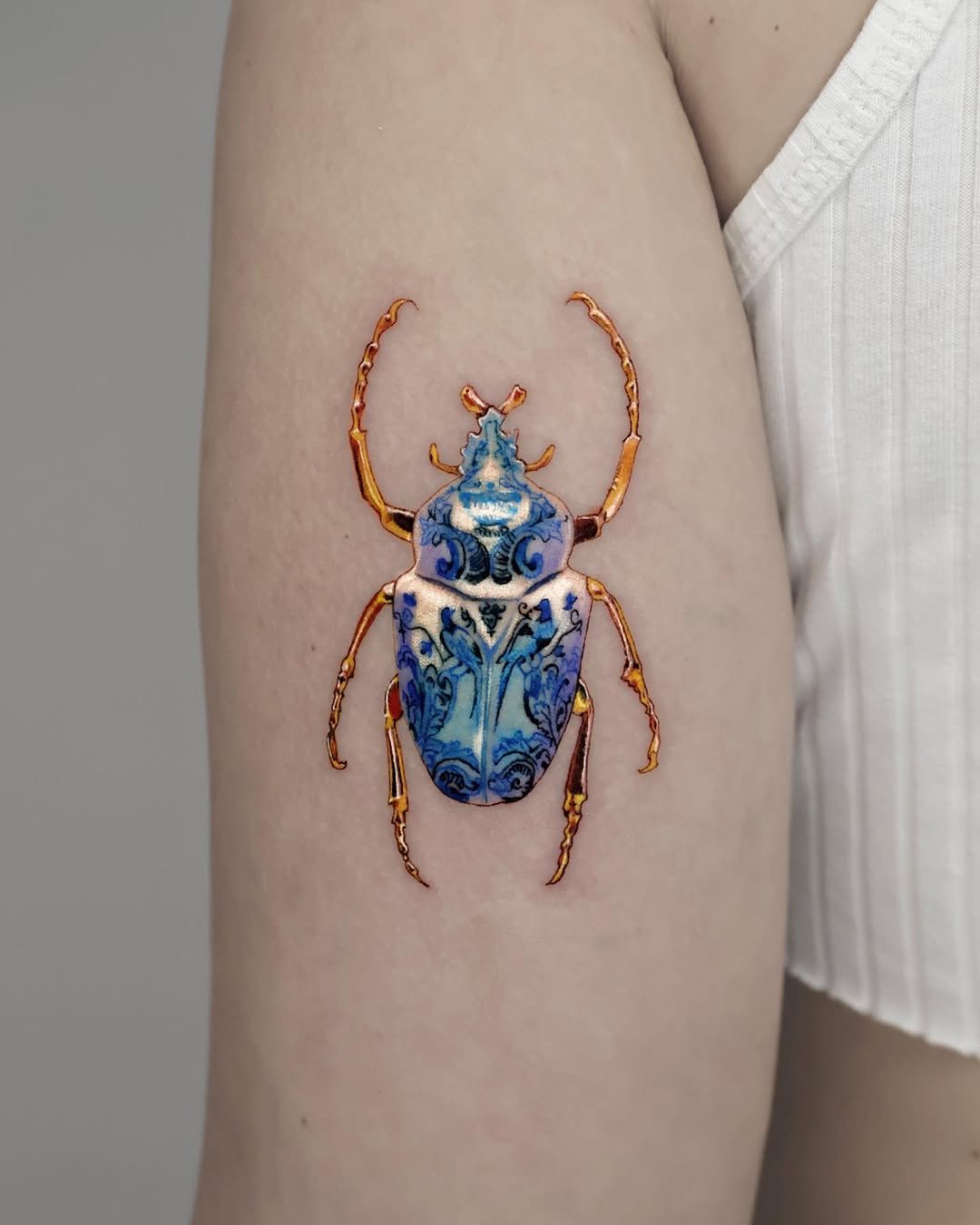
The jewel beetle’s unique property — beauty that outlasts death, colour that does not fade — gives it a symbolic dimension distinct from any other beetle species. The animal’s shell is simultaneously armour and ornament, functional protection and aesthetic display. In tattooing, jewel beetles are primarily chosen for their visual properties rather than for a specific mythological association. The iridescent colour of the elytra is a technical challenge that rewards colour realism, neo-traditional rendering, and even watercolour-style treatments, in which the metallic sheen is rendered in ink. A jewel beetle tattoo is among the most visually striking insect compositions available — the natural iridescence provides a built-in colour palette that few other subjects offer.
The beetle in Western tattoo traditions
Beetles as tattoo subjects have grown significantly in popularity over the past two decades, driven largely by the convergence of several trends: the rise of entomological and scientific illustration as a tattoo aesthetic, the expansion of Egyptian-themed tattooing beyond traditional Egyptian motifs, the influence of natural-history museum culture on contemporary design, and the growing interest in insect and arthropod tattoos as a broader genre.

The scarab dominates. In Egyptian-themed work, the scarab is rendered with wings spread, often holding a sun disc or integrated into a broader composition with hieroglyphic elements. In neo-traditional work, the scarab gains decorative elaboration — gem-like colours, ornamental framing, Art Nouveau or Art Deco influences. In blackwork, the scarab’s symmetrical form is reduced to bold outlines and solid fills that read at a distance. In dotwork, the form is built through stippling that creates textural density. In ornamental and geometric styles, the scarab serves as a natural centrepiece for mandala or sacred-geometry compositions.
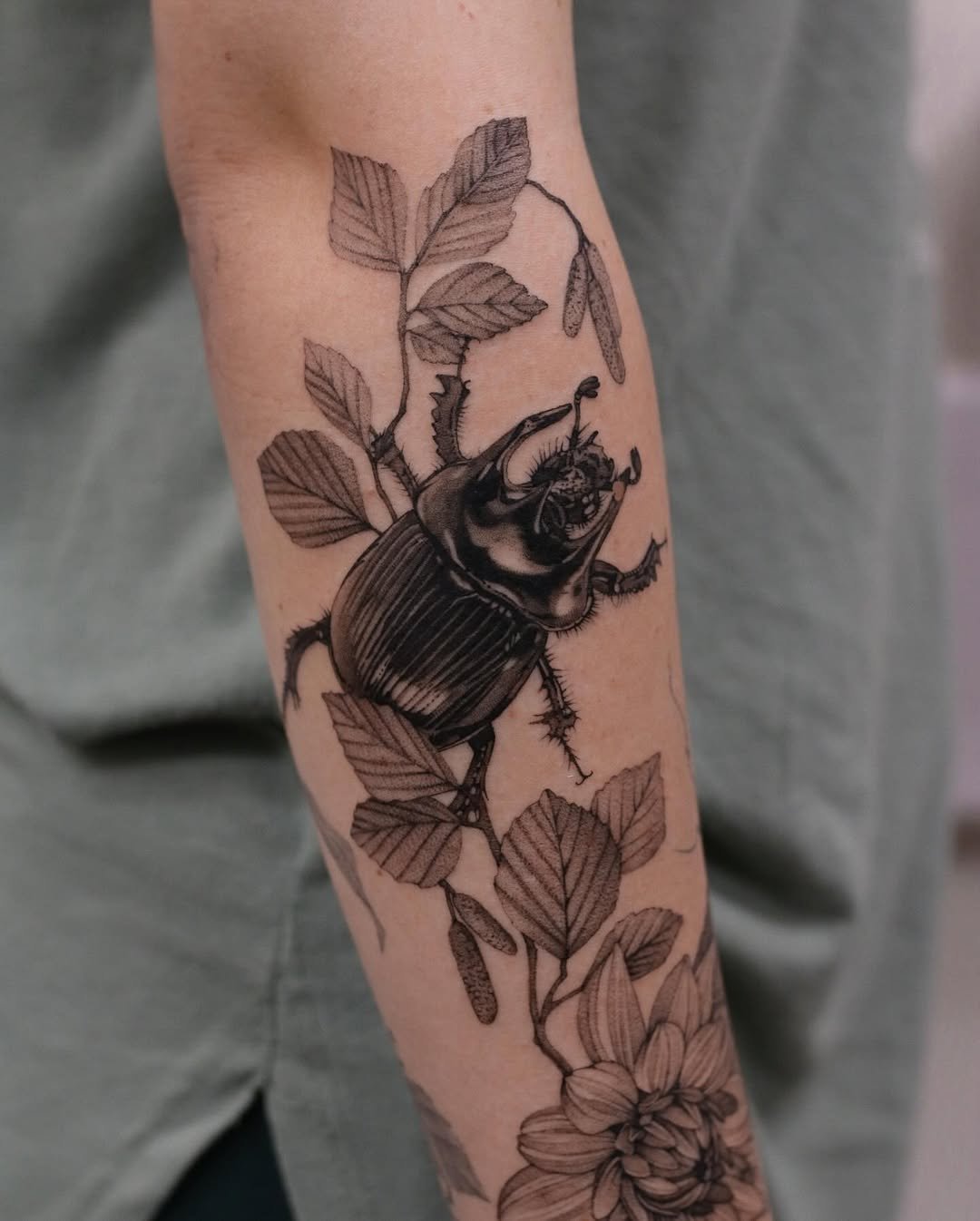
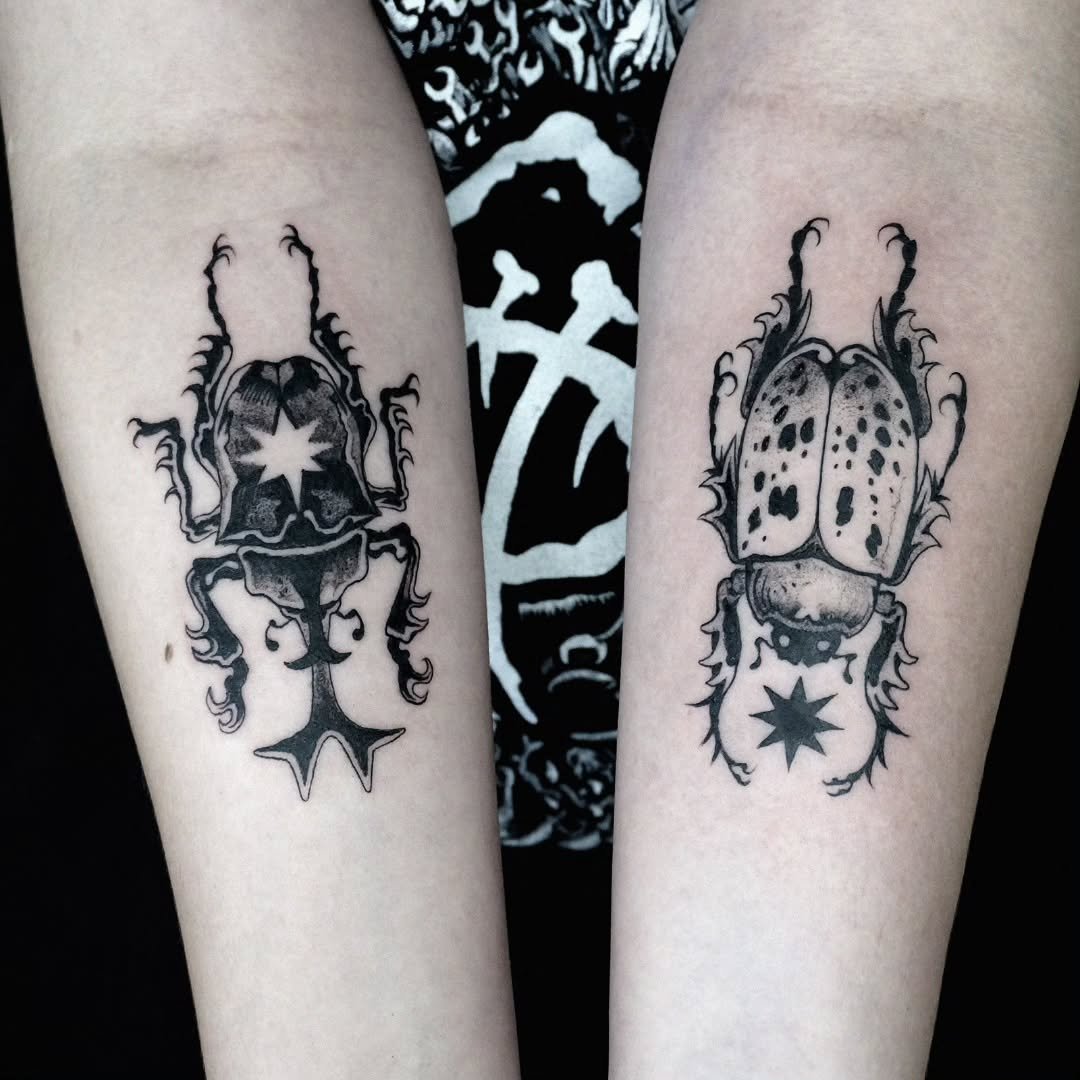
The stag beetle occupies a different aesthetic territory. Its visual drama comes from the mandibles — the oversized, antler-like jaws that dominate the male’s head. In illustrative and scientific-illustration-style tattoos, the stag beetle is rendered with anatomical precision, often from directly above, in the specimen-plate format. In blackwork, it gains graphic weight through the contrast between the beetle’s dark body and the surrounding negative space. In neo-traditional work, the mandibles become decorative elements that can be exaggerated for visual effect.
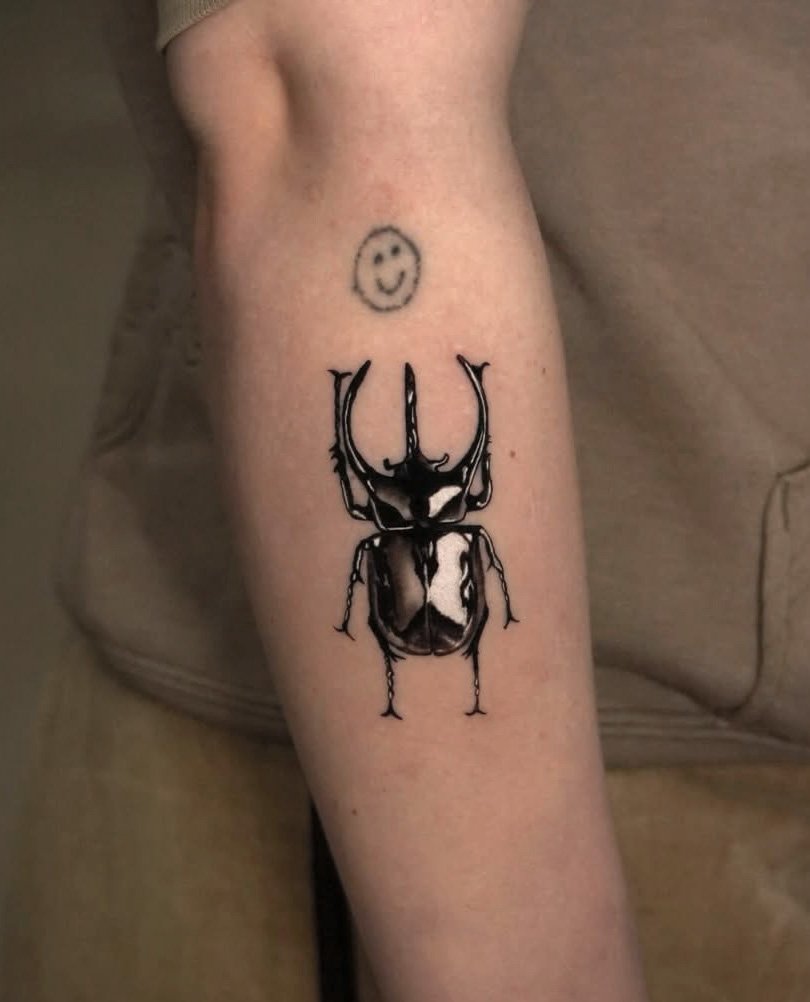
The rhinoceros beetle, with its horn and armoured body, lends itself to compositions that emphasise mass, strength, and martial bearing. Its form is less symmetrical than the scarab’s (the horn breaks the bilateral balance), making it more suited to dynamic, off-centre compositions.
Jewel beetles are chosen primarily for colour. Their iridescent elytra — greens, golds, coppers, blues — provide a colour challenge that rewards skilled artists and produces results unlike anything achievable with a dull-coloured subject. They are the most purely aesthetic beetle tattoo choice, valued for visual impact over symbolic depth.
Across all species, beetles share one compositional property that makes them uniquely effective as tattoos: viewed from above, they are among the most symmetrical forms in nature. This makes them natural candidates for placement on the body’s midline — sternum, throat, spine, nape of neck, centre of the chest, centre of the upper back — where bilateral symmetry is the governing compositional principle. A beetle centred on the sternum, wings spread, legs articulated, creates a composition that uses the body’s own symmetry as its frame. Few other tattoo subjects achieve this so naturally.
Composition, placement, and pairing
The beetle’s visual strength lies in its top-down view. Unlike most animals, which are depicted in profile or three-quarter view, beetles are most commonly rendered from directly above — the dorsal view that reveals the full symmetry of the elytra, the articulation of the legs, and the geometry of the body plan. This perspective is unique to insects and produces a compositional flatness — a graphic, almost heraldic quality — that works on skin differently from the dynamic, three-dimensional compositions used for vertebrate animals.
Wings open or wings closed is the first compositional decision. A scarab with spread wings creates a wide, horizontal composition suited to the chest, upper back, or throat. A beetle with closed elytra creates a compact, vertical form suited to the forearm, calf, finger, or behind the ear. The choice affects both the visual weight and the symbolic reading: open wings suggest transformation in progress, flight, and divine revelation. Wings closed suggest containment, protection, dormancy, and potential.
Common pairings depend on the species and the tradition being referenced.
- For scarabs:
– Egyptian elements (Eye of Horus, ankh, lotus, pyramids, hieroglyphs, solar disc),
– celestial elements (sun, moon, stars),
– botanical elements (flowers, particularly lotus). - For stag beetles:
– forest elements (oak leaves, acorns, mushrooms, ferns, moss),
– scientific-illustration framing (labels, pins, specimen boxes),
– dark aesthetic pairings (skulls, moths, moons). - For jewel beetles:
– botanical settings,
– gemstones,
– ornamental frames. - For rhinoceros beetles:
– Japanese seasonal elements (summer foliage, bamboo),
– warrior imagery,
– naturalistic forest settings.
The beetle pairs effectively with botanical motifs and with other insects — moths, butterflies, dragonflies — in compositions that create entomological collections on skin. A cabinet-of-curiosities approach, where multiple species are arranged as if in a natural history display, has become a recognisable tattoo genre in its own right. Beetles, with their visual precision and symmetry, anchor these compositions.
meaning of a beetle tattoo
A beetle tattoo is an unusual choice, and that is part of its meaning. In a world where lions, wolves, eagles, and snakes dominate the animal-tattoo vocabulary, choosing an insect is a statement in itself — a declaration that beauty, strength, and symbolic depth can be found in forms that most people overlook or dismiss.
The scarab carries the heaviest symbolic weight of any beetle species: three thousand years of Egyptian theology, the daily miracle of the sun’s renewal, the protection of the dead, the promise that what appears to end will begin again. A scarab tattoo engages with one of the oldest and most enduring symbol systems in human history.
The stag beetle carries European associations of strength, combat, and the natural world’s hidden drama — an animal whose mandibles exist solely for fighting other males, whose armoured body is built for a confrontation most humans will never witness.
The rhinoceros beetle carries the samurai’s helmet, the warrior’s horn, the king-of-insects status that Japanese culture assigned to it over centuries.
The jewel beetle carries a property unique among all tattoo subjects: colour that does not die. The iridescence of its elytra outlasts the beetle’s life by decades, even centuries. Beauty that persists beyond death is a meaning available to no other insect — and to very few animals of any kind.
Each of these is a specific choice with a specific lineage. The beetle rewards that specificity. An article elsewhere on this site covers the ladybug as a tattoo subject — its symbolism, rooted in Christian European folk tradition, is entirely distinct from any beetle discussed here. The order Coleoptera is vast enough to contain multitudes, and a beetle tattoo that knows which species it has chosen, and why, carries a meaning as old and as precise as any animal on skin.
Sources & further reading
- Beetle, Scarab (artefact), Japanese rhinoceros beetle, on Wikipedia, The Free Encyclopedia.
- Scarab – Egyptian symbol. Also known as: scarabaeus. Encyclopedia Britannica Online.
- Oryctes nasicornis – Red Rhinoceros Beetle. The Lawrence Hall of Science.
- Gil Wizen. Insect art: The use of insects in Japanese anime. Gil Wizen, Entomologist and Photographer, 2017.
- Albert Parry, Tattoo: Secrets of a Strange Art. Simon & Schuster, 1933; reissued in Dover, 2006.
- ArMargo DeMello, Bodies of Inscription: A Cultural History of the Modern Tattoo Community. Duke University Press, 2000.