Compass tattoo
Compass tattoo: meaning, symbolism, and history
The compass is one of the four great inventions of ancient China, alongside paper, printing, and gunpowder. Its development — from lodestone divination tools in the Han Dynasty to magnetic maritime instruments that enabled the European Age of Discovery — changed the course of human civilisation by making it possible to cross oceans with something other than hope and starlight. As a tattoo, the compass carries this weight: it is the instrument that made the unknown navigable.
The compass and the nautical star are related but distinct tattoo subjects, often confused or used interchangeably. The nautical star is an abstract symbol — a stylised five-pointed star representing Polaris, the North Star. The compass is a depiction of a physical instrument — a device with a needle, a cardinal rose, marked directions, and a mechanical purpose. The star is a celestial reference. The compass is a human-made tool. Both signify guidance and direction, but the compass carries an additional layer: human ingenuity applied to the problem of being lost.

The instrument
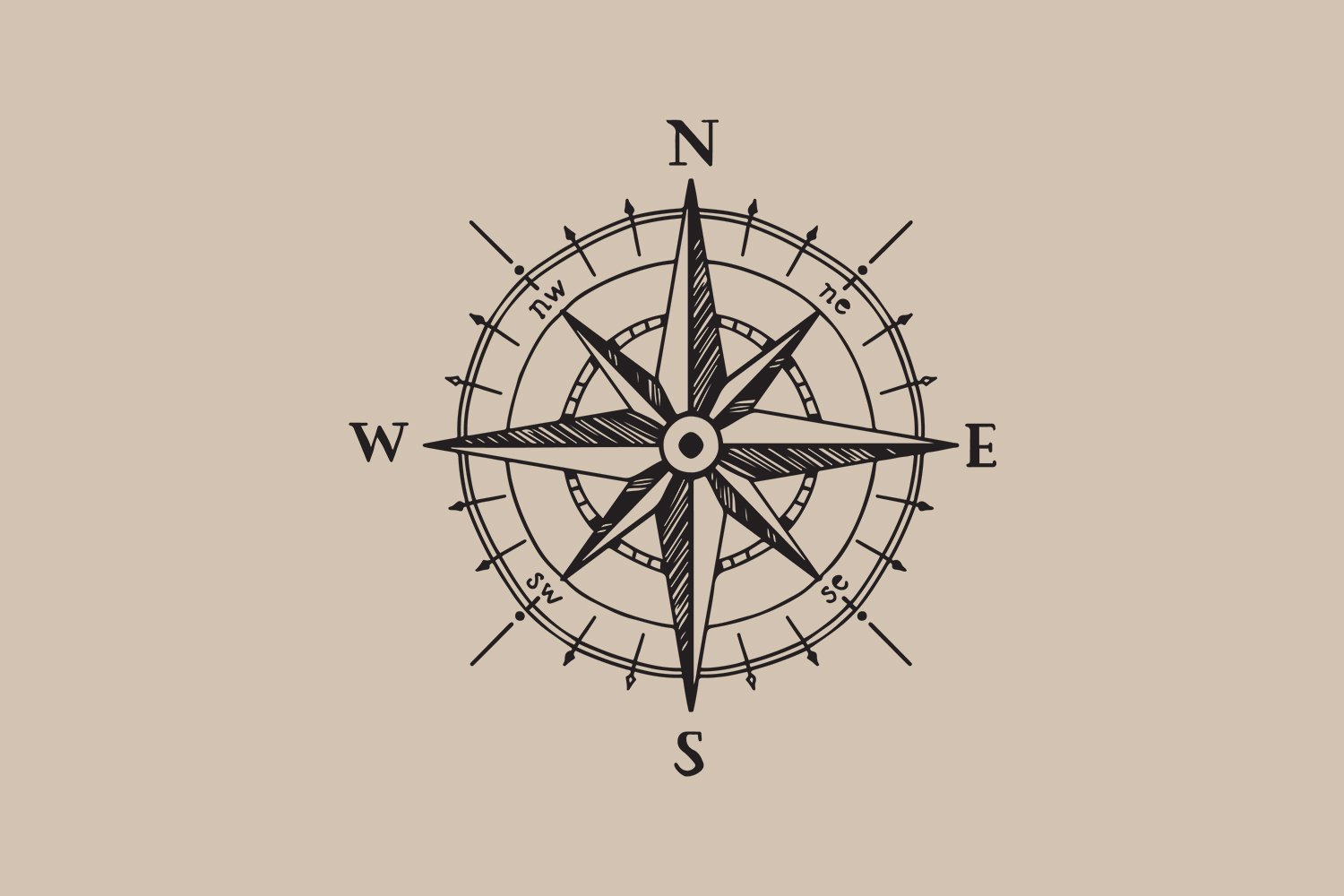
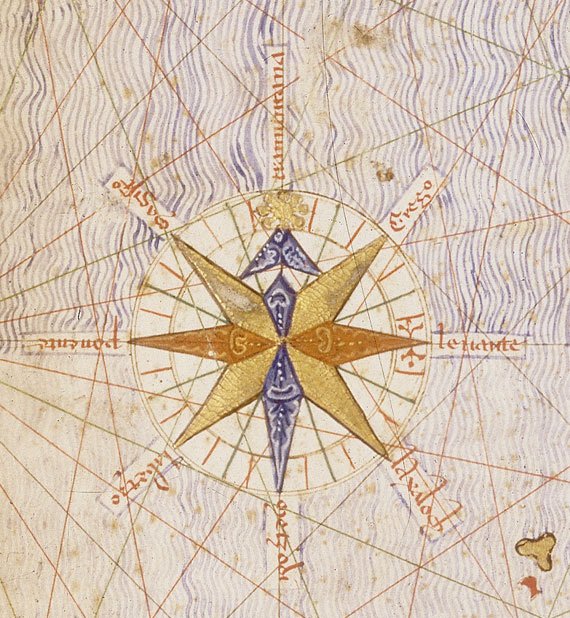
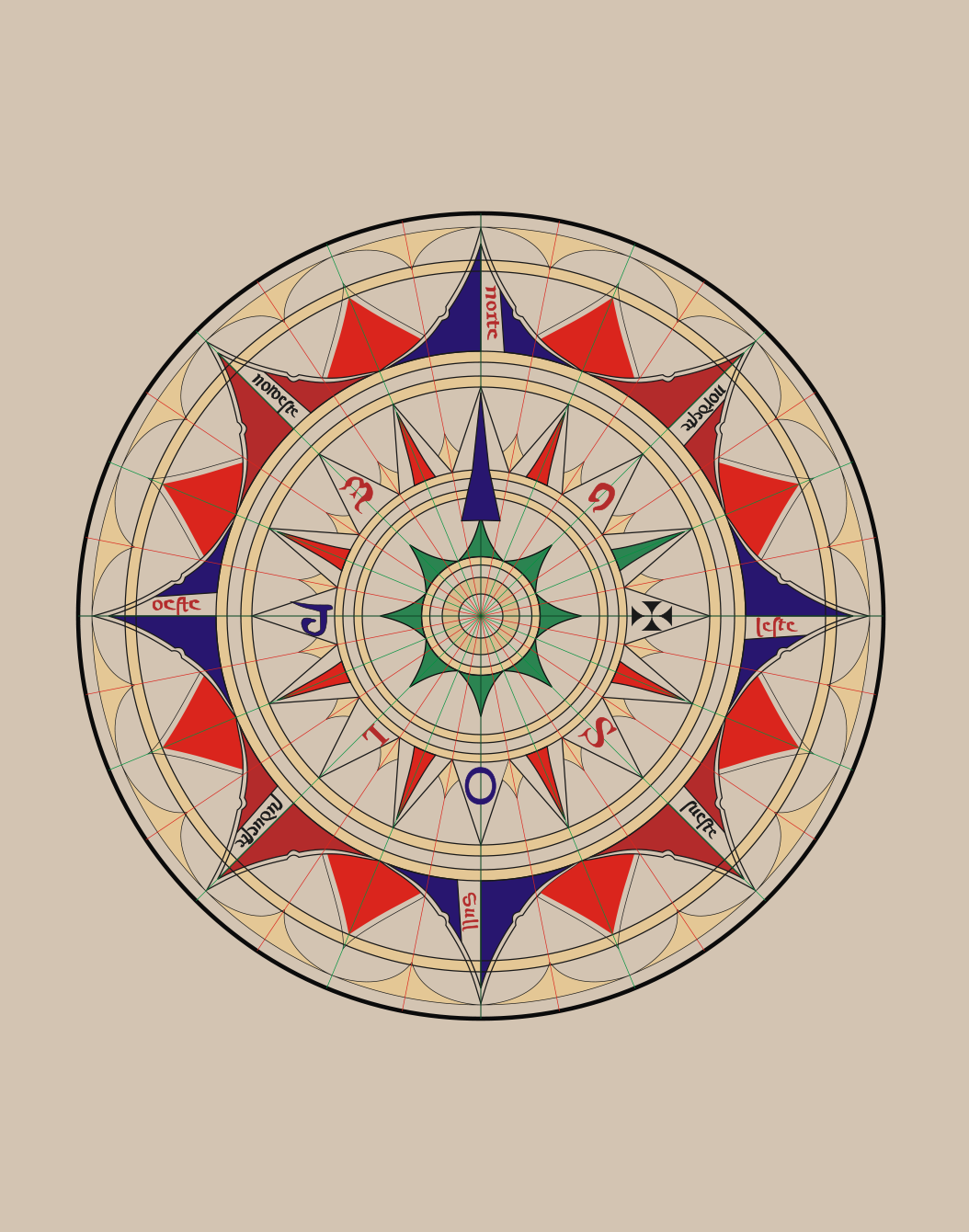
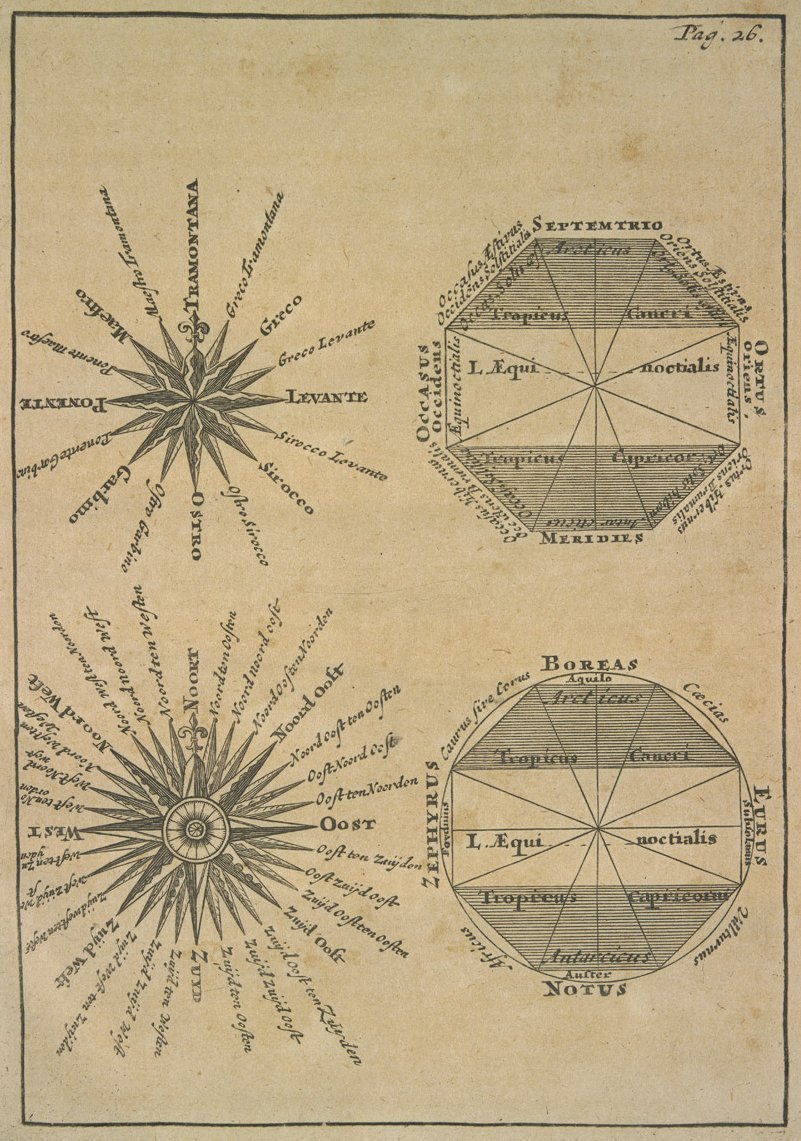
A compass is a device that indicates direction relative to the Earth’s magnetic poles. The fundamental mechanism is simple: a magnetised needle, free to rotate, aligns itself with the Earth’s magnetic field, pointing approximately north-south. The compass rose — the circular diagram of cardinal (N, S, E, W) and intercardinal (NE, NW, SE, SW) directions printed or engraved on the compass face — provides the reference frame that turns the needle’s orientation into usable directional information.
The earliest compasses were Chinese, dating to the Han Dynasty (206 BCE – 220 CE). They were made from lodestone — a naturally magnetic form of the mineral magnetite — carved into a spoon shape and placed on a smooth plate. The handle of the spoon pointed south, giving the device its Chinese name: si nan, the “south-pointing spoon.” These early instruments were used for geomancy and feng shui — the alignment of buildings, tombs, and spaces with the cardinal directions — rather than for maritime navigation.
The transition from divination tool to navigational instrument occurred during the Song Dynasty (960–1279). Shen Kuo, the Chinese polymath, provided the first explicit written description of a magnetised needle compass in 1088. By 1111–1117, Zhu Yu’s Pingzhou Table Talks recorded the use of magnetic compasses for maritime navigation. The technology spread westward through Arab trade networks and reached Europe by the 12th century, where it was refined into the dry-pivot compass and eventually into the gimballed ship’s compass that became standard equipment on European vessels during the Age of Discovery.
The compass made possible what celestial navigation alone could not: reliable directional orientation in any weather, at any time of day, under cloud cover, and in the featureless open ocean where no landmarks existed. The Age of Discovery — the period from the 15th through the 17th centuries during which European navigators reached the Americas, circumnavigated Africa, and crossed the Pacific — was built on the compass. Without it, Columbus, da Gama, Magellan, and every navigator who followed them would have had no reliable way to maintain a course across open water.
The visual form of the compass — the circular face, the directional rose, the needle — is one of the most immediately recognisable objects in Western visual culture. Its image carries centuries of accumulated association: exploration, discovery, wayfinding, the mastery of uncertainty, and the human drive to go beyond the known.
Symbolic meanings

Guidance and direction. The most fundamental and most commonly cited meaning. The compass points the way. A compass tattoo signifies the aspiration to find direction in life — whether literally (a love of travel, navigation, the outdoors) or metaphorically (a search for purpose, a commitment to a chosen path, the desire for clarity in uncertain circumstances). This is the broadest reading and the one that most contemporary wearers connect with.
Protection and safe return. In its maritime context, the compass was a survival tool. A working compass meant you could find your way home. A broken or lost compass meant you might not. Sailors tattooed compasses for the same reason they tattooed nautical stars — as talismans for safe return. The compass tattoo in this reading is a protective symbol: may I always find my way back.
Exploration and adventure. The compass enabled the great voyages of discovery. It is the instrument of the explorer, the traveller, the person who goes beyond familiar territory. A compass tattoo in this reading signals a life oriented toward exploration — physical, intellectual, or both. It says the wearer values the journey into the unknown.
Independence and self-reliance. The compass is a tool for finding your own way — not following someone else’s route, not waiting for instructions, but consulting your own instrument and choosing your own direction. A compass tattoo can signify autonomy, self-determination, and the refusal to be directed by external forces.
Steadfastness. The compass needle always returns to north. It can be disturbed, deflected, thrown off by nearby magnetic interference — but it returns to its orientation. A compass tattoo can represent this quality: the ability to recover one’s direction after disruption, the commitment to a course despite interference, the internal consistency that brings you back to centre when circumstances push you off.
Feng shui and spiritual alignment. In the compass’s original Chinese context, it was an instrument for aligning human activity with natural forces — placing buildings, orienting tombs, arranging spaces so that the flow of qi (vital energy) was harmonious. A compass tattoo that draws on this layer of meaning references spatial and spiritual harmony, the alignment of the self with larger forces, and the ancient understanding that direction matters on levels deeper than navigation.
Compass types in tattooing

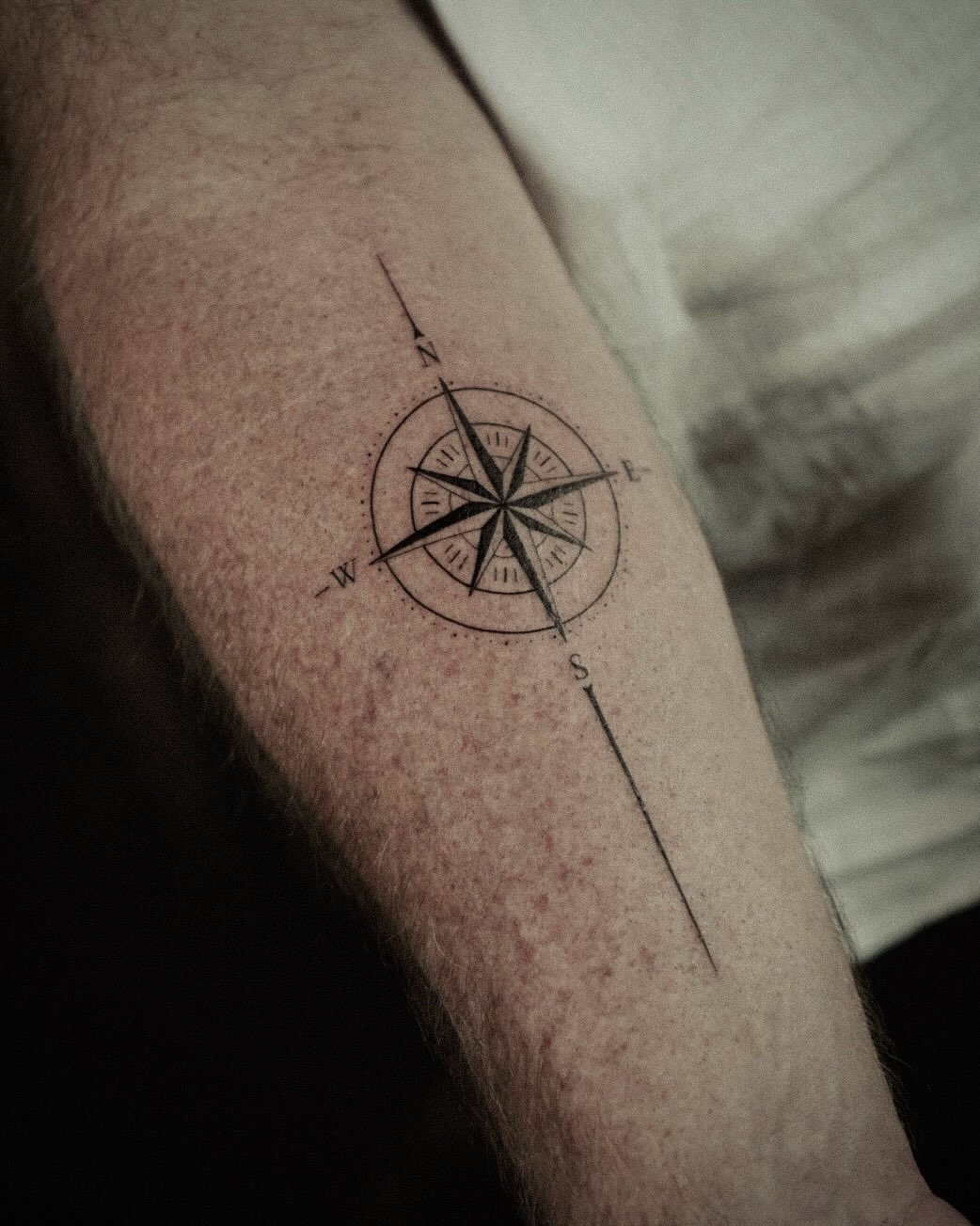
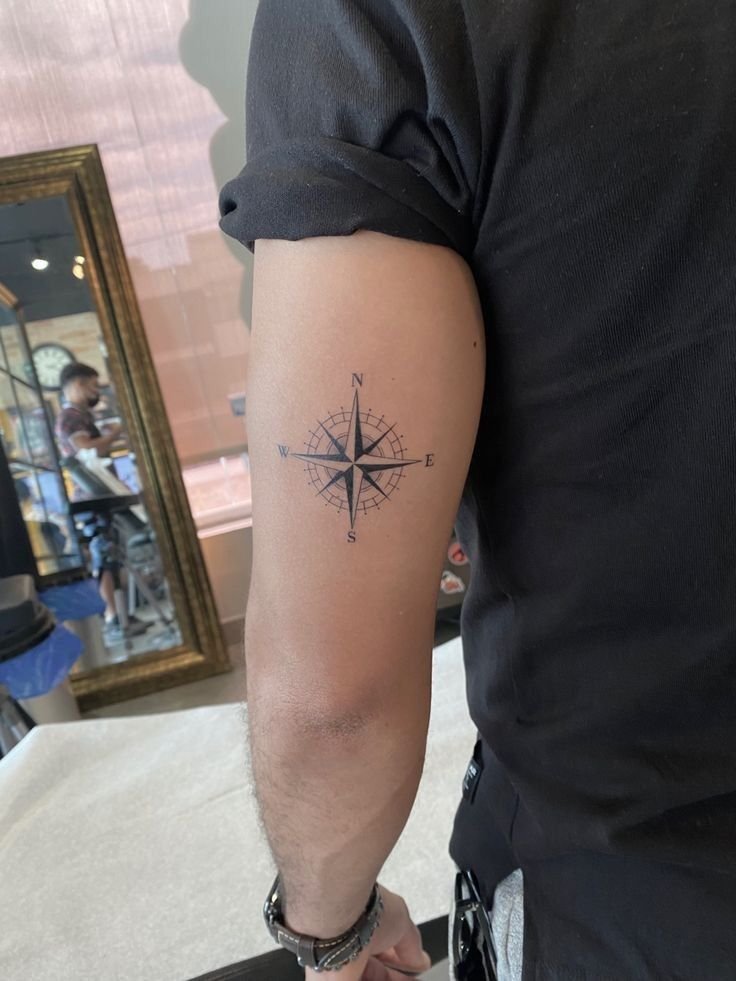
The compass rose is the directional diagram — the circular pattern of points indicating the cardinal and intercardinal directions. In tattoo form, the compass rose can be rendered as a standalone design (a geometric starburst with directional labels) or as the face of a full compass instrument. The compass rose is the most common compass tattoo form. Its visual geometry — radial symmetry, pointed forms extending from a centre — produces a naturally balanced composition suited to placements that benefit from bilateral symmetry: the chest, the upper back, the sternum, the top of the shoulder. An elaborate compass rose with sixteen or thirty-two points approaches the level of an ornamental mandala.

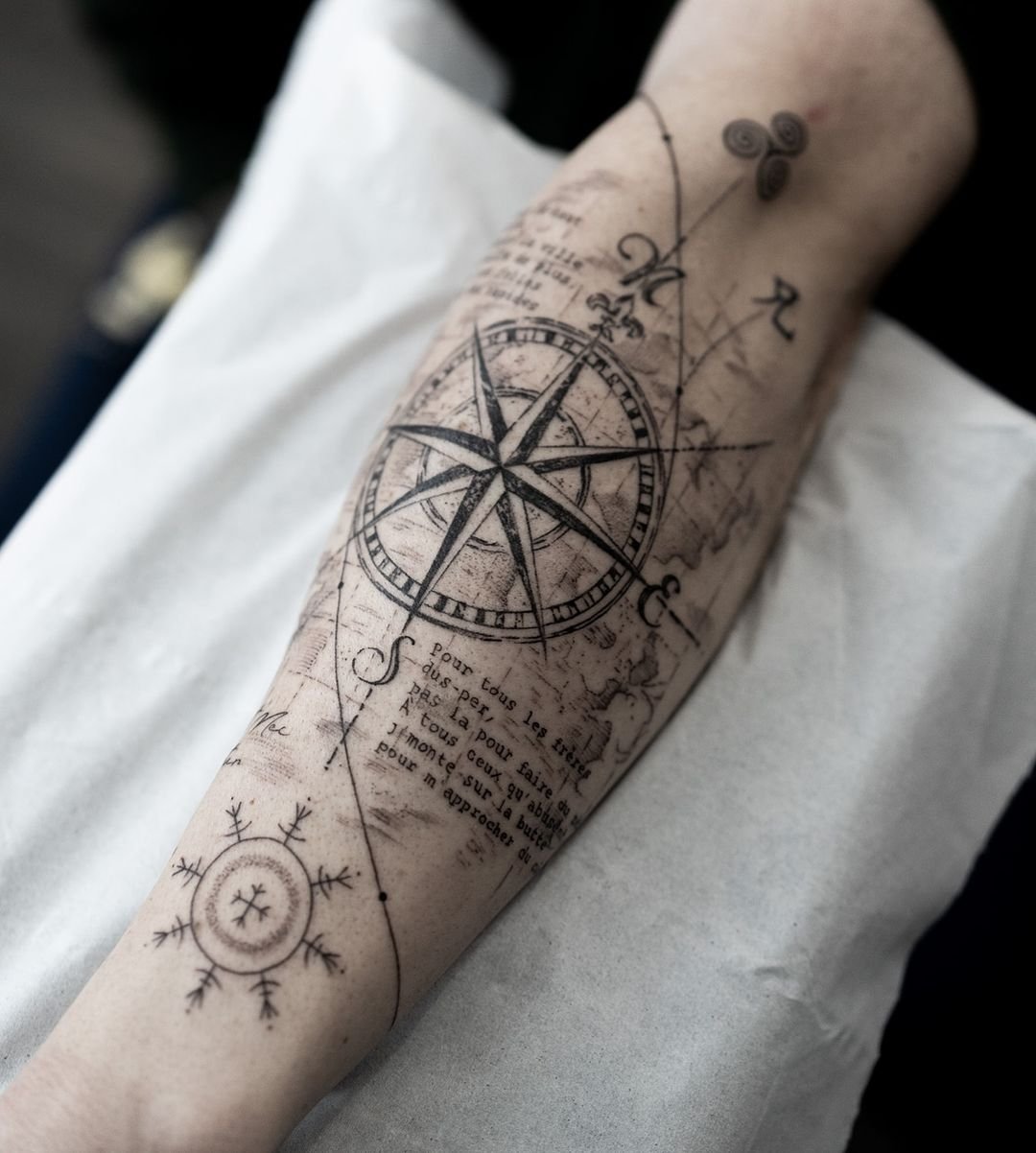
The mariner’s compass — a compass rose enclosed in a circular housing, often with a visible needle and degree markings — references the specific instrument of maritime navigation. This is the compass of the Age of Discovery, the ship’s binnacle, the captain’s chart table. It carries the strongest connection to seafaring history and pairs naturally with other maritime tattoo motifs.

The pocket compass — a hinged, portable compass in a circular metal case, often depicted as an antique or vintage object — carries associations with land exploration, hiking, scouting, and the romantic image of the explorer with compass and map. In tattoo form, the pocket compass is often rendered as a three-dimensional object (with the hinge visible, the case partially open, and the glass face reflecting light), making it a realism-friendly subject.

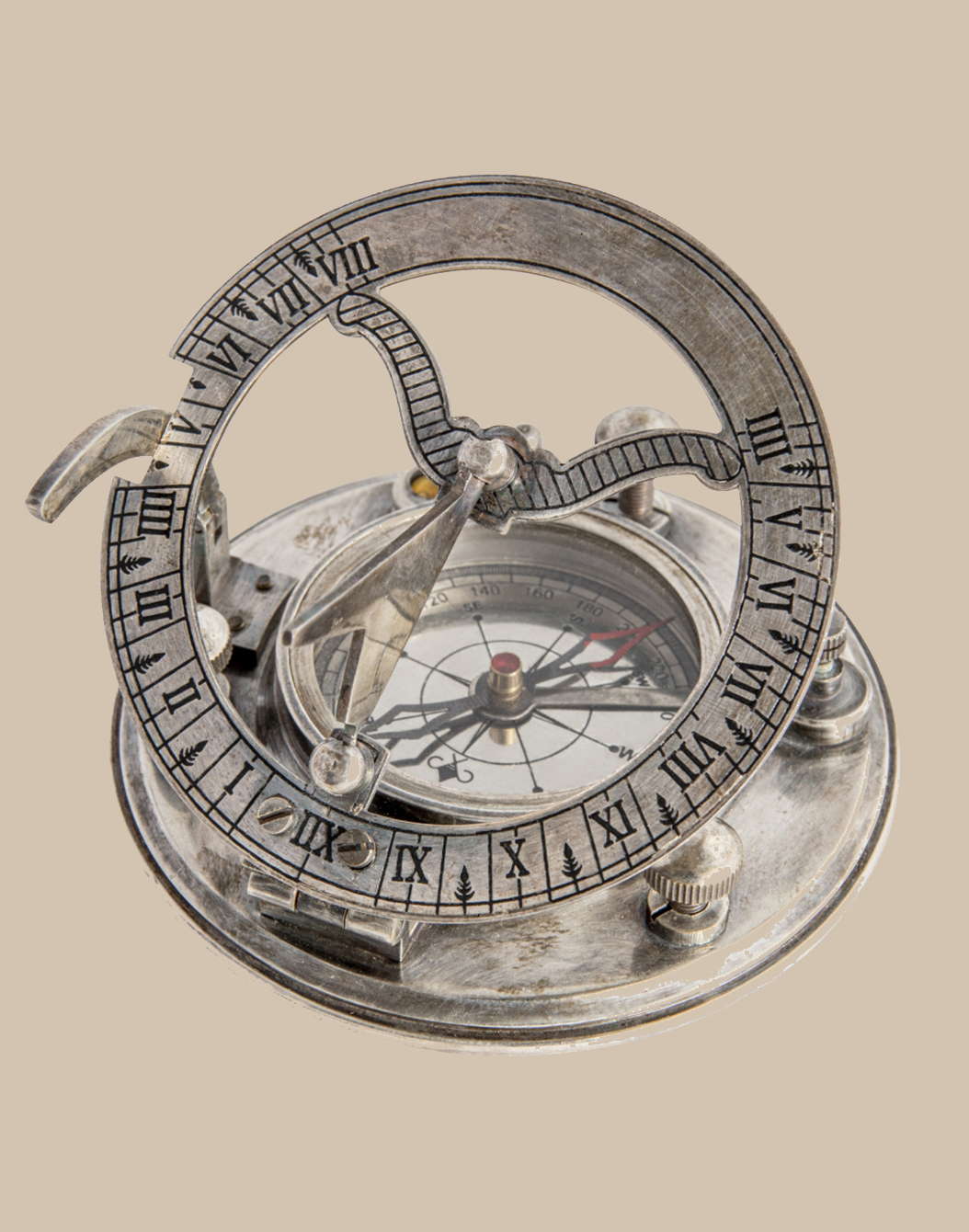
The sundial compass or combination instruments — historical navigation tools that combined a compass with a sundial, astrolabe, or other instrument — are less commonly tattooed but carry associations with scientific history, the Renaissance, and the golden age of instrument-making. These are specialist subjects chosen by wearers with a specific interest in the history of navigation.
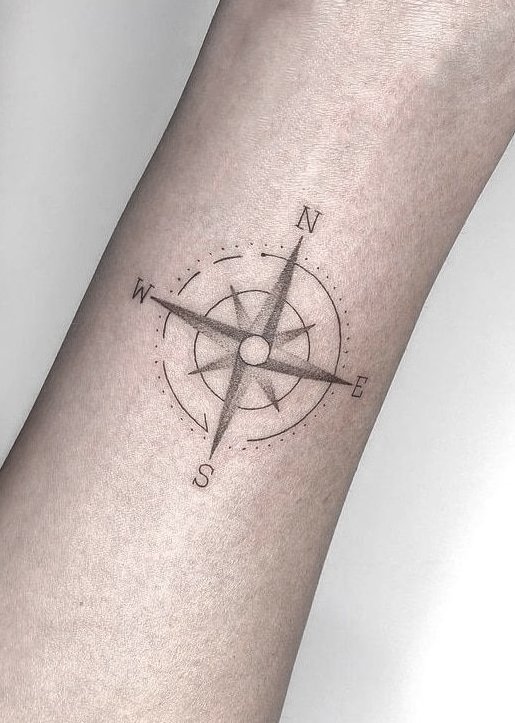
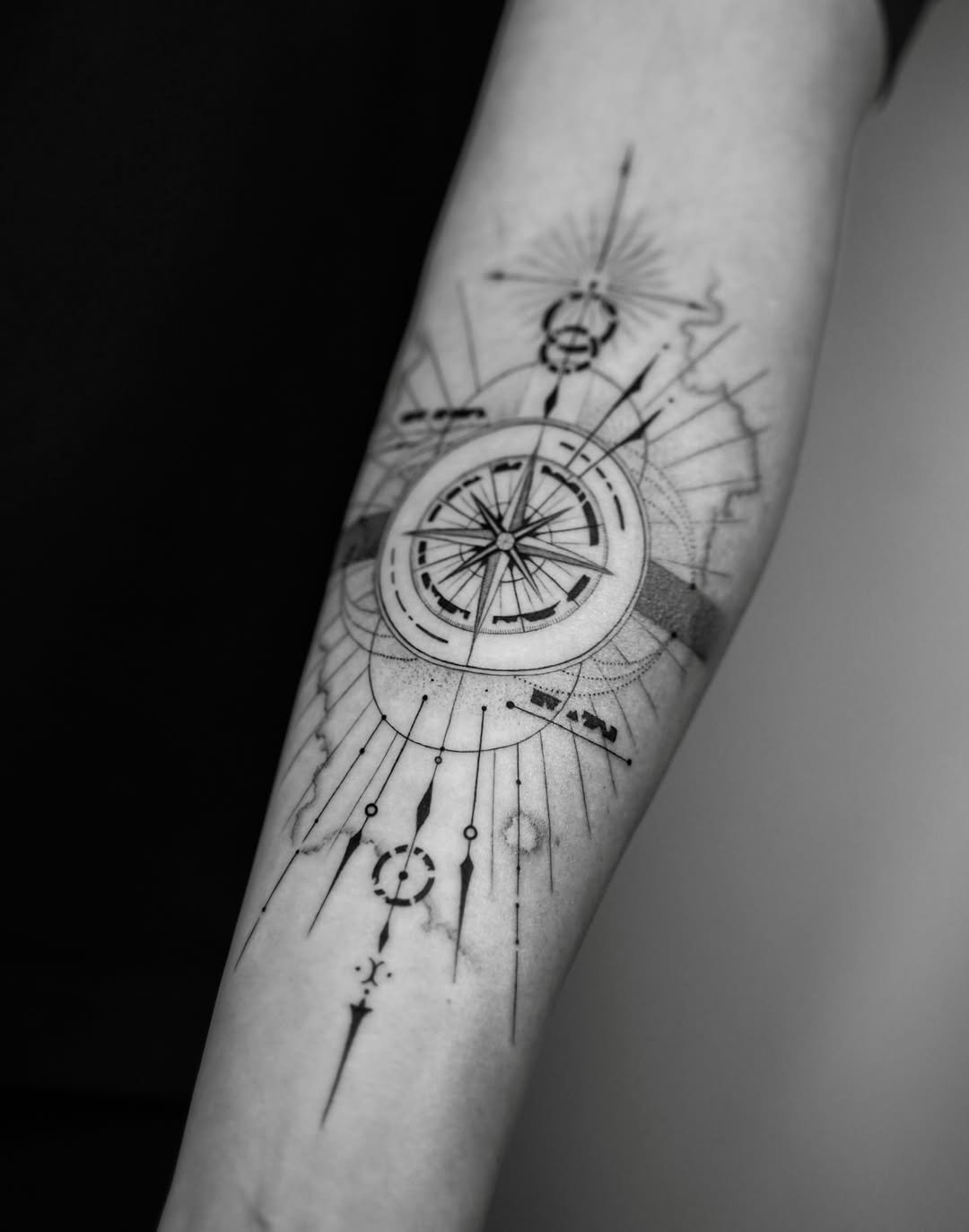
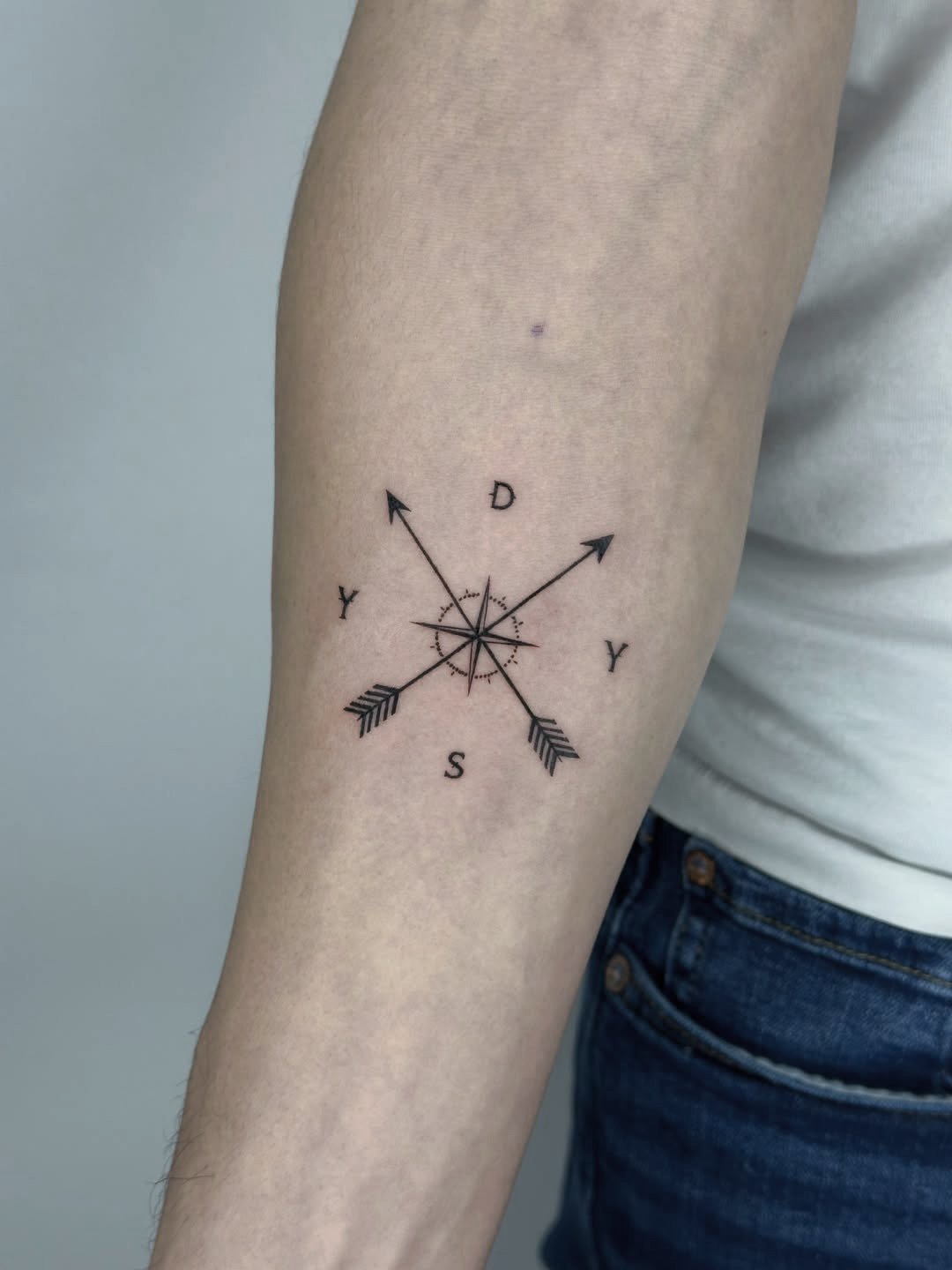
The abstract or stylised compass — a compass reduced to its essential geometric elements (a circle, cardinal lines, a directional indicator) without depicting a specific physical instrument — carries the symbolic meaning of direction and guidance without referencing any particular historical or cultural context. This form is the most versatile and adapts easily to minimalist, geometric, and ornamental tattoo styles.
The compass across tattoo styles
American traditional. The compass is rendered with bold outlines, flat colour fills, and a readable graphic composition. Traditional compasses often include a banner with text — coordinates, a date, a word like “Homeward” or a location name. The style’s graphic clarity suits the compass’s geometric form.
Neo-traditional. Gains decorative elaboration — ornamental borders, Art Nouveau curves, expanded colour palette, jewel-tone rendering. A neo-traditional compass can become a centrepiece composition with surrounding elements (roses, anchors, banners, maps) integrated into a single decorative frame.
Realism and photorealism. The compass becomes a study in metal, glass, and mechanism — the patina of aged brass, the reflection on a glass face, the shadow of the needle, the wear marks of an instrument that has been used. Realistic compass tattoos often depict a specific vintage or antique compass, rendered with the precision of a still-life painting. The three-dimensional quality of a real compass — a physical object with depth, surface, and material presence — makes it a strong subject for realism.
Blackwork. Reduces the compass to line, contrast, and geometric structure. A blackwork compass rose is one of the most visually striking geometric compositions in tattooing — the radial symmetry, the alternating dark and light segments, the pointed forms extending from the centre. In blackwork, the compass approaches pure geometry and attains a graphic intensity that colour treatments cannot match.
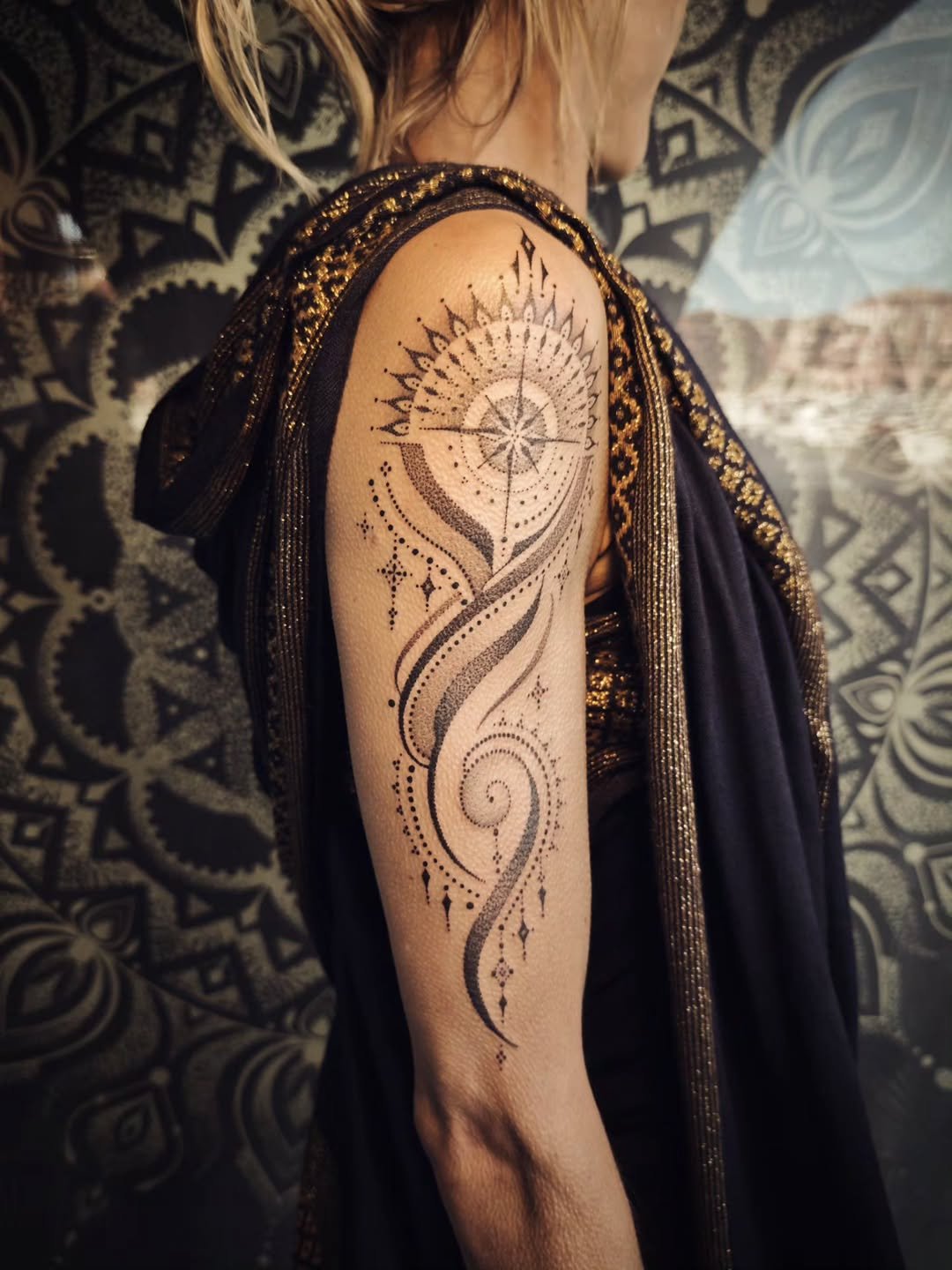
Dotwork. Builds the compass from stippling, using dot density to create tonal gradients and the illusion of form. Dotwork compasses have a textural quality that evokes aged parchment, worn metal, or astronomical instruments — a material richness produced entirely from individual dots.
Geometric and ornamental. The compass rose is already a geometric form, and geometric tattoo styles amplify this quality — sacred geometry, mandala structures, and ornamental borders woven into or around the compass design. The compass as a mandala is a natural fusion: both are circular, both are organised around a centre, and both carry symbolic associations with orientation and wholeness.
Fine line and minimalist. A compass reduced to a few clean lines — a circle, a cross for the cardinal directions, a single line for the needle — produces a compact, readable design that works at a small scale. Fine-line compasses suit the wrist, forearm, ankle, the area behind the ear, and other placements where space is limited.
Watercolour. Soft colour washes behind or within a compass create a map-like quality — as if the compass is sitting on a watercolour painting of a coastline or ocean. The combination of the precise, mechanical compass and the loose, fluid watercolour background produces an appealing visual contrast.
Personalisation through coordinates
One of the most specific and personal compass tattoo variations incorporates real geographic coordinates — the latitude and longitude of a place that matters to the wearer. A birthplace, a home, a proposal site, a location where a significant event occurred, the place where a loved one is buried, the coordinates of a destination that changed the wearer’s life.
Coordinates turn the compass from a general symbol of direction into a specific directional statement: this is my north. This is the place my internal compass points to. The precision of coordinates (numbers, degrees, minutes, seconds) contrasts with the broadly symbolic nature of most tattoo imagery, grounding the meaning in verifiable geography.
Coordinates are typically rendered as text — either on a banner beneath the compass, integrated into the compass face where degree markings would normally appear, or placed along the compass’s outer ring. The font, size, and style of the text affect the overall tone: bold traditional lettering produces a different feeling from fine-line script, which produces a different feeling from stencil or typewriter fonts.
Humbly ambitious
The compass draws on human engineering — the deliberate construction of a tool to solve the problem of disorientation. From this angle, it is a symbol of intelligence applied to uncertainty, making a compass tattoo simultaneously humble and ambitious. Humble because it acknowledges the need for help — the wearer who tattoos a compass is admitting, implicitly, that the way is not always clear, that direction must be sought, with available tools, rather than assumed. Ambitious because it declares intent and knowledge — the wearer is committed to finding the way, to using every available instrument to stay on the right path.
The compass has been a tool of sailors, soldiers, explorers, surveyors, hikers, pilots, and anyone who has ever needed to know which direction they were facing. It has been in continuous use for over a thousand years. As a tattoo, it draws on all of that accumulated use — to find a way through.
The needle points north. The rose shows directions. The choice of which way to go is yours.
Sources & further reading
- Compass, compass rose, and wind rose on Wikipedia, The Free Encyclopedia
- Compass. National Geographic Education.
- Anna Felicity Friedman, The World Atlas of Tattoo. Yale University Press, 2015.
- Nick Schonberger and Rob Kingston, Forever: The New Tattoo. Gestalten, 2012.
- Margo DeMello, Bodies of Inscription: A Cultural History of the Modern Tattoo Community. Duke University Press, 2000.