
Tall ship tattoo
Tall ship: a tattoo that had to be earned
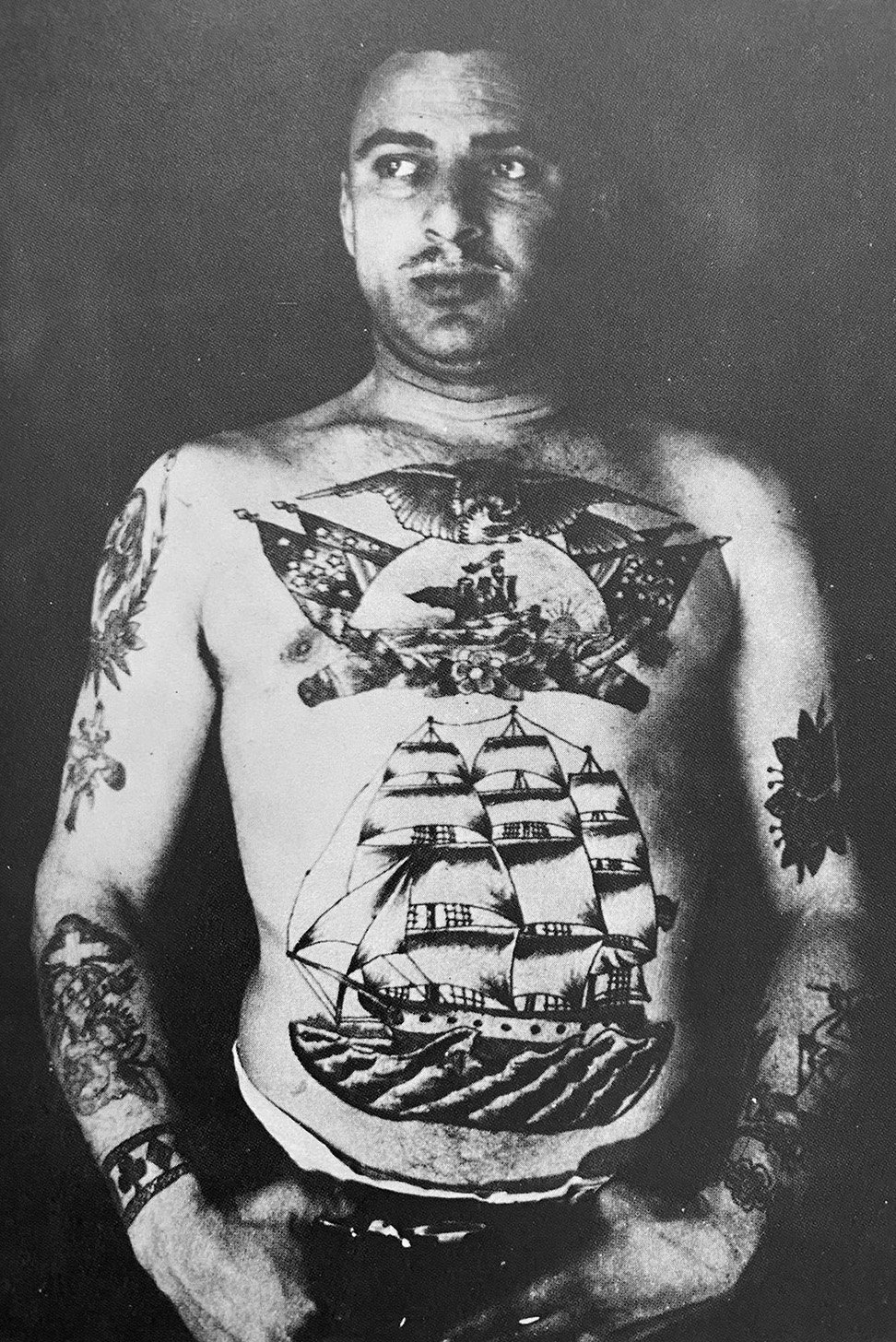
A tall ship tattoo is one of the oldest and most specific images in the Western tattoo tradition. In the era when tattoo culture was inseparable from maritime culture — when the people getting tattooed were overwhelmingly the people who sailed — a fully rigged ship on a sailor’s body was a record. It meant something had been done. Specifically, it meant the wearer had sailed around Cape Horn, the southern tip of South America, through some of the most dangerous waters on earth. The ship tattoo was earned.
That specific meaning — Cape Horn survivor — has faded as tattooing moved beyond its maritime roots. A tall ship tattoo today is chosen for many reasons, and most of them have nothing to do with actual sailing. Adventure, freedom, resilience, personal journeys and transitions, a love of maritime history, or the sheer visual beauty of a vessel under full canvas — all of these drive contemporary tall ship tattoos.
But the history is there for anyone who wants it — because the tall ship, as a tattoo subject, comes from a world where every image on a sailor’s body had a specific, verifiable meaning, and the ship was among the most significant marks a sailor could carry.
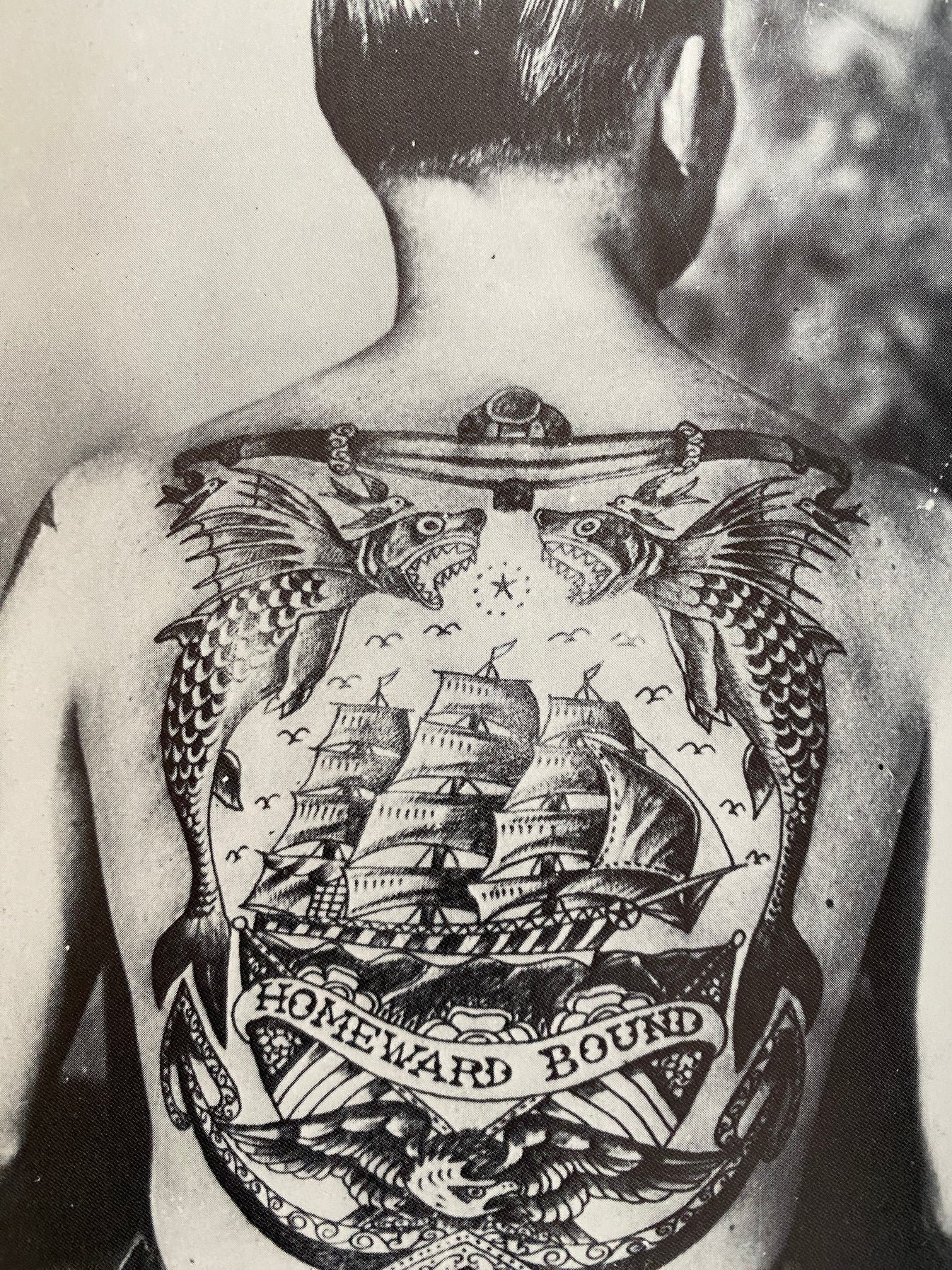
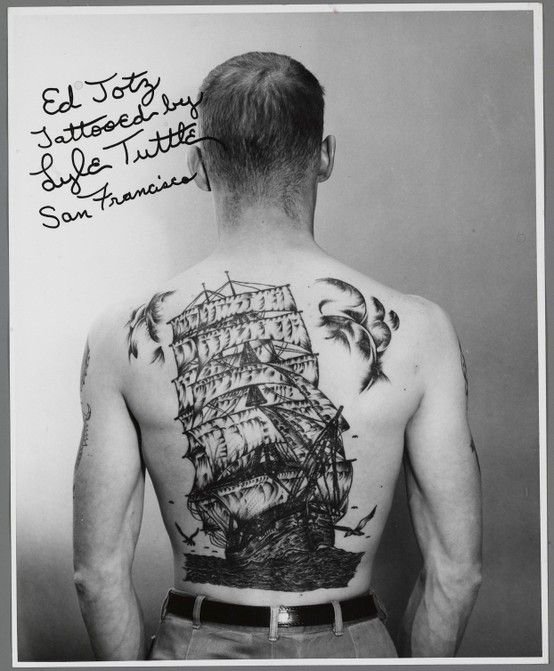

A ship, but what type of ship?
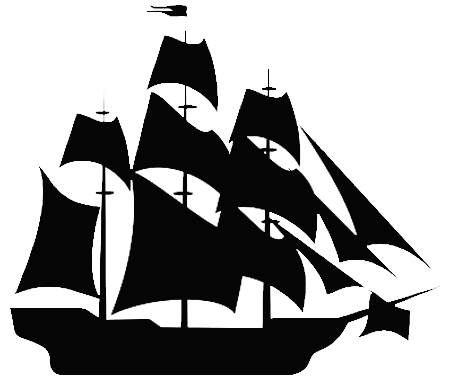
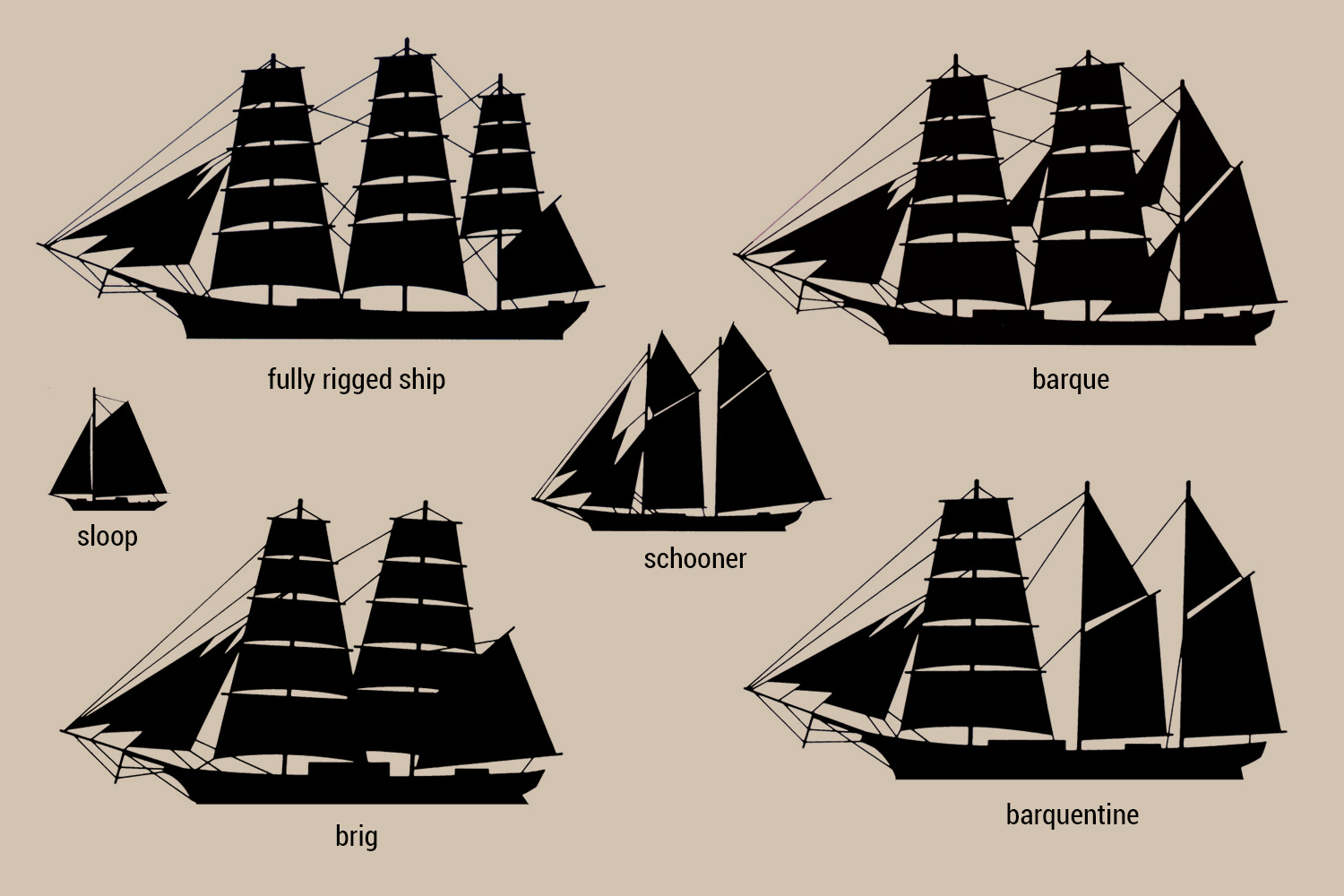
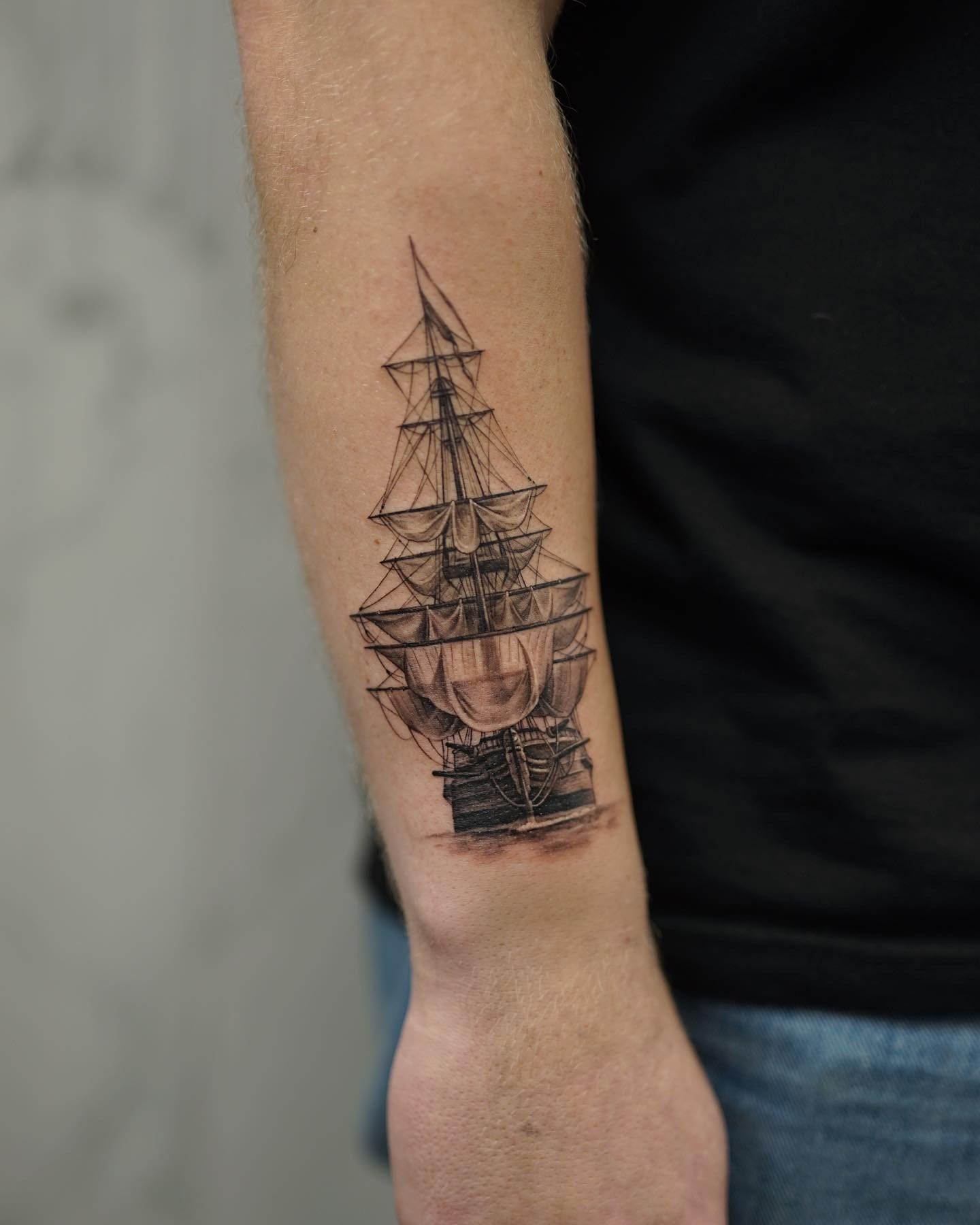
Fully rigged ship — the type most commonly depicted in tattoo iconography — carries three or more masts, all of them square-rigged. It is the vessel that dominated oceanic trade and naval warfare from the 16th through the 19th centuries. When a tattoo depicts a ship with three masts with square sails, billowing canvas, and a full network of rigging, it shows a fully rigged ship.

A clipper is a specific type of full-rigged ship built for speed — narrow-hulled, sharp-keeled, heavily canvassed. Clipper ships reached their peak in the 1840s–1860s, carrying tea from China, wool from Australia, and gold-seekers to California. In 1852, at the height of the clipper era, 200 of these ships rounded Cape Horn in a single year. The Cutty Sark, built in 1869 and now preserved in Greenwich, is the only intact clipper ship surviving.
A barque (bark) carries three or more masts, with square rigging on all masts except the aftermost, which is fore-and-aft rigged. The German Flying P-Liners — Passat, Pamir, Priwall, Peking, and the five-masted full-rigged Preussen — were steel-hulled vessels that sailed the Cape Horn route into the twentieth century. In 1949, the Pamir was the last commercial sailing vessel to round Cape Horn without an engine.
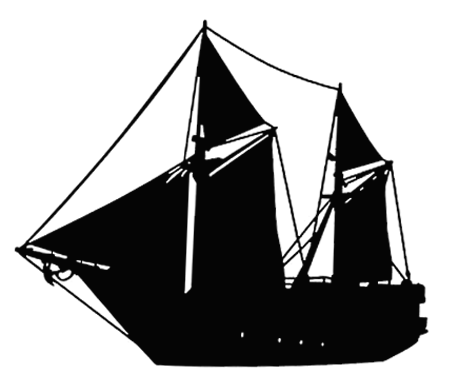
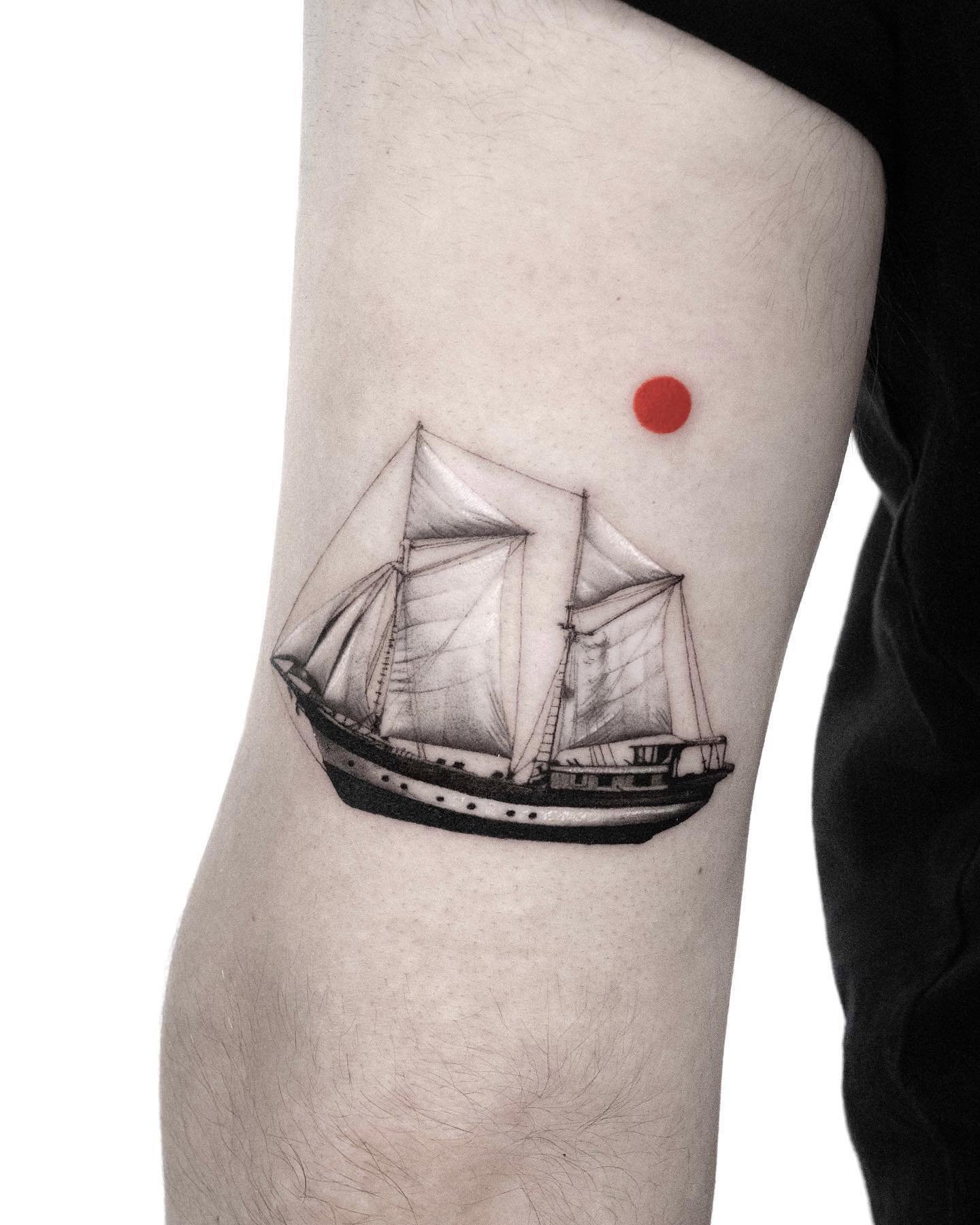
A brig carries two masts, both square-rigged. A brigantine carries two masts with the foremast square-rigged and the mainmast fore-and-aft rigged. A schooner carries two or more masts with fore-and-aft sails. Each of these has a distinct silhouette, and the choice of vessel type in a tattoo can carry specific meaning — a clipper signals speed, a barque signals endurance, a man-of-war signals naval service, a schooner signals coastal work or privateering.
In tattoo practice, the distinction between vessel types is frequently imprecise. Most “tall ship” tattoos depict a generalised full-rigged vessel rather than a historically accurate rendering of a specific ship class. For wearers and artists who value precision, the differences matter — the rigging, the sail plan, the hull shape, and the number of masts all identify the vessel. For others, the image of a ship under full sail is the point, and the specific classification is secondary.
The ship tattoo in maritime tradition
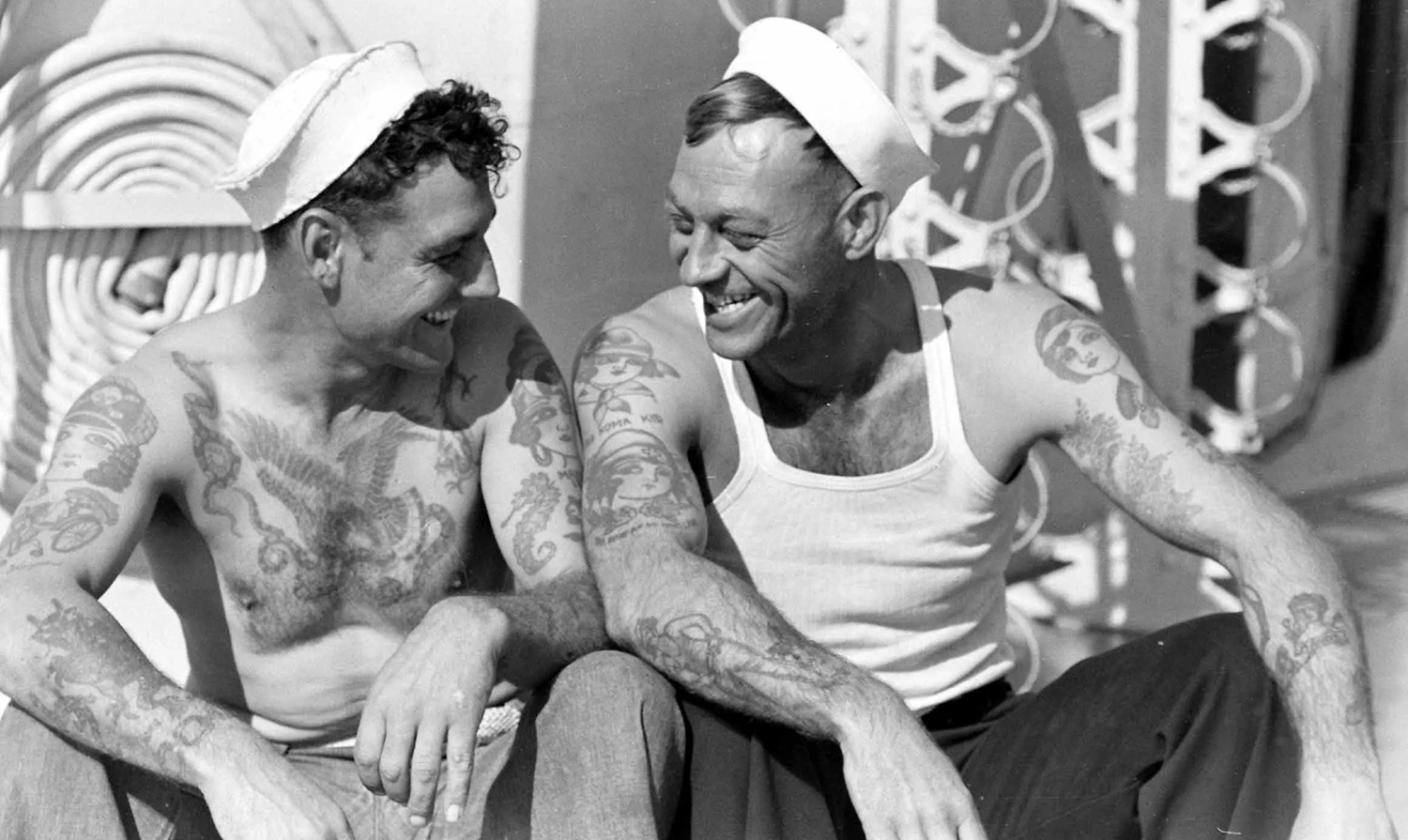
The fully rigged ship is one of the original “milestone” tattoos — images that sailors earned by completing specific feats of seamanship. Historian Albert Parry, in his 1933 book Tattoo: Secrets of a Strange Art, recorded the tradition: a full-rigged ship meant the wearer had sailed around Cape Horn.
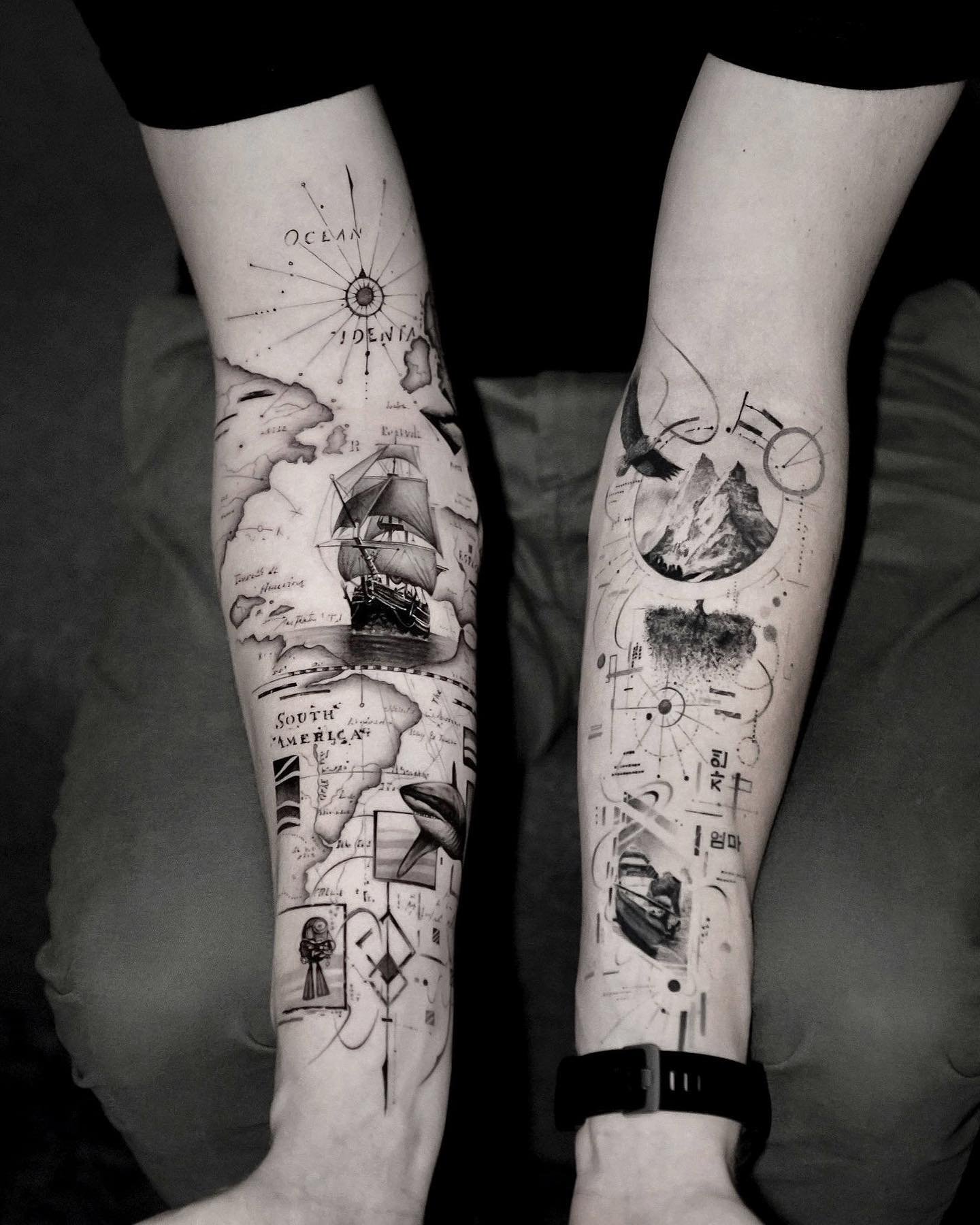
Cape Horn, at the southern tip of South America, is the most dangerous navigational passage in the history of commercial sail. The waters around the Horn sit where the Atlantic and Pacific oceans converge, compressed between the South American landmass and the Antarctic continent into the Drake Passage. The prevailing westerlies — the “Roaring Forties” and “Furious Fifties” — push unbroken seas across thousands of miles of open ocean before funnelling through this gap. Waves routinely exceed ten metres. Icebergs drift north from Antarctica. The weather changes without warning. Over 800 ships and 10,000 sailors were lost in the waters around Cape Horn over the centuries of commercial sailing.
Rounding the Horn from east to west — against the prevailing winds — was the most feared passage. Captain William Bligh, commanding the Bounty in 1788, attempted for four weeks to round the Horn westward and failed, ultimately turning back and sailing the other direction around the world — 10,000 nautical miles longer — rather than continuing to fight the Horn. The full-rigged ship Susanna took 99 days to complete the rounding in 1905. The fastest east-to-west passage under sail was the barque Priwall in 1938: five days and fourteen hours.
Other maritime tattoos formed part of the same system.
- A swallow traditionally meant the distance sailed (5,000 nautical miles per swallow is widespread, but its specific origin is unsure)
- An anchor for crossing the Atlantic.
- A dragon for serving in a Chinese port.
- A golden dragon for crossing the International Date Line.
- A shellback turtle for crossing the Equator.
- Two crossed anchors for a boatswain’s mate.
- A rope around the wrist for a deckhand.
- “Hold Fast” across the knuckles for a rigger.
The fully rigged ship sat at or near the top of this hierarchy — it marked the hardest passage, the most dangerous water, the achievement that separated experienced deep-water sailors from everyone else.
The tradition of these milestone tattoos is well documented, but its precise age is uncertain. Historian B.R. Burg examined records of 310 U.S. Navy sailors from 1796–1818 and found that while tattoos were common, the specific milestone associations (pig on the foot, ship for Cape Horn) did not appear in these early records. The codified system of earned tattoo meanings may have developed later in the nineteenth century, solidifying into the form Parry recorded in the 1930s. The traditions may also have been more fluid than retrospective accounts suggest — varying between navies, between merchant and military fleets, and between different periods.
What is clear is that by the early twentieth century, the fully rigged ship was established in Western tattoo culture as a mark of serious seamanship — and that this meaning persisted long enough to become embedded in the iconography of American traditional flash, where it remains today.
Ships in mythology and the symbolic imagination
The ship as a symbol did not begin with the tattoo parlour. Across cultures and millennia, ships have carried meanings that extend far beyond transportation.
The ship of the dead
In Norse tradition, the dead were buried in ships — or in ship-shaped stone settings — to carry them to the afterlife. The Oseberg ship burial (c. 834 CE, Norway) and the Sutton Hoo ship burial (c. 625 CE, England) are among the most spectacular archaeological examples. The ship carried the dead from this world to the next. Naglfar, in Norse eschatology, is the ship of the dead built from the fingernails and toenails of the deceased, destined to carry an army of the dead at Ragnarök. The ship was the vehicle between worlds — between the living and the dead, between the known and the unknown.
In Greek mythology, Charon — the ferryman of the underworld — carried the souls of the newly dead across the rivers Styx and Acheron to Hades. The passage required payment: an obol, a small coin placed in the mouth of the deceased at burial. Those who could not pay were condemned to wander the shore for a hundred years. The ship of the dead — whether Norse longship or Charon’s skiff — represents the final journey, the crossing from which there is no return.
The ship as journey
This is the most universal and the most personal reading. A ship on water represents a life in transit — moving from one place to another, facing unknown conditions, relying on skill and endurance to arrive. The ship as a metaphor for personal journey, transition, and resilience is the meaning most commonly cited by contemporary wearers who choose a tall ship tattoo without a specific maritime connection. It is a broad reading, but it is an honest one: the ship has represented the human journey in art and literature for as long as humans have built vessels.
The ship as the state
The Latin phrase navis rei publicae — the ship of state — is among the oldest political metaphors in Western thought. Plato used it. Horace used it. The idea that a nation is a ship, its leader the captain, its citizens the crew, and the sea the chaos of fortune, has survived for over two thousand years. A ship tattoo can reference this metaphor — leadership, governance, the collective effort required to navigate difficulty — though this reading is more common in literary and philosophical contexts than in tattoo culture.
The ghost ship
The Flying Dutchman — a phantom vessel condemned to sail the seas forever, never able to make port — is the most famous ghost ship legend, originating in 17th-century Dutch maritime folklore. Ghost ship imagery in tattooing draws on this tradition: the ship as a doomed vessel, sailing endlessly, its crew dead or cursed. Ghost ship tattoos — rendered with tattered sails, skeletal rigging, spectral glow, or emerging from fog — carry associations with fate, damnation, restlessness, and the darker aspects of seafaring mythology.
The ship in Christian symbolism
The church is traditionally represented as a ship (the nave of a church takes its name from the Latin navis, meaning ship) — a vessel carrying the faithful through the storms of life toward salvation. The ark of Noah is the definitive ship symbol in Judeo-Christian tradition: the vessel that preserved life through the destruction of the world. In early Christian art, the ship — sometimes with a cross for a mast — represented the church itself, salvation, and safe passage through tribulation.
The ship in art history
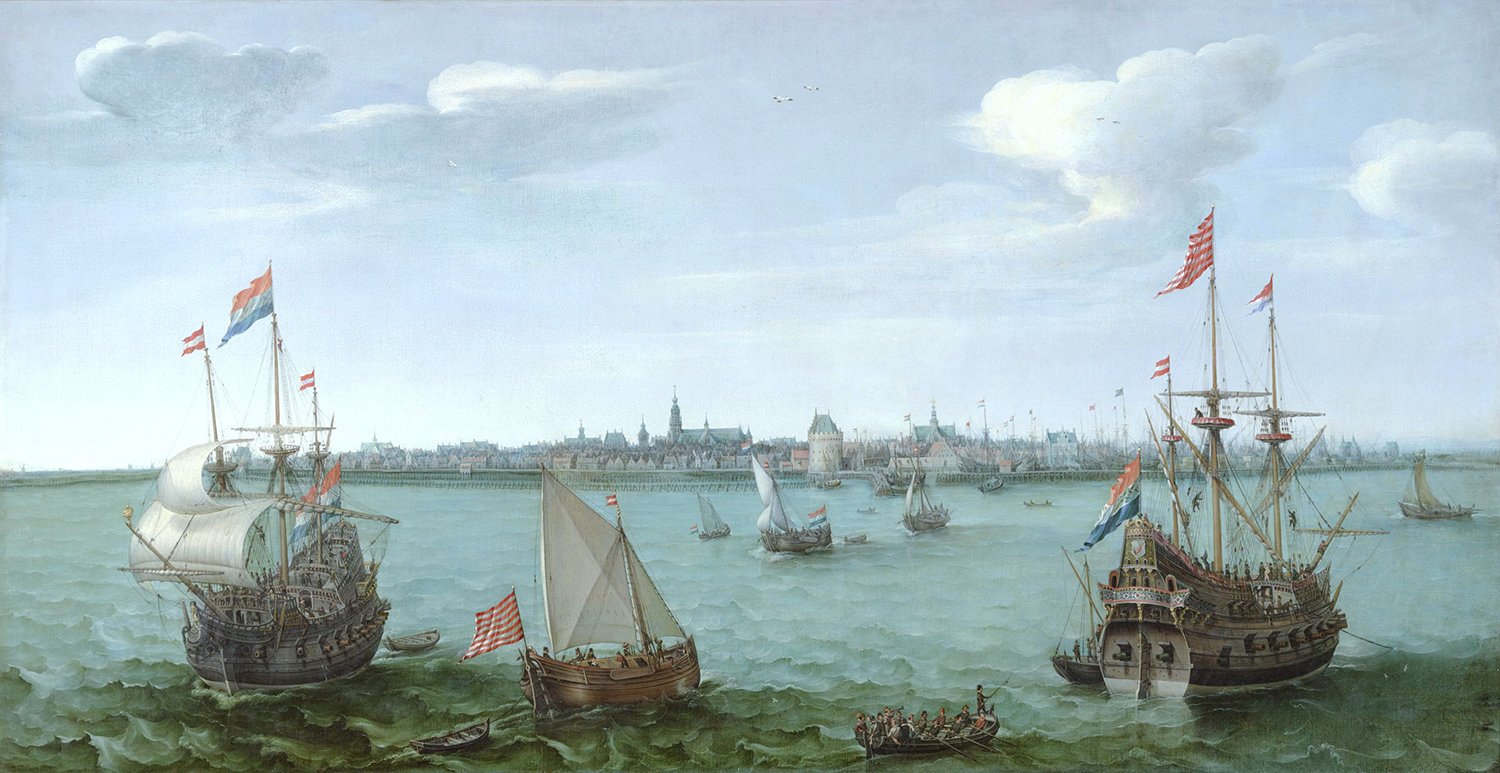
Tall ships have been subjects of art for as long as they have existed. The tradition of marine painting — developed in the Netherlands in the 17th century by artists including Willem van de Velde the Elder and Younger, Hendrick Cornelisz Vroom, and Jan Porcellis — produced detailed, technically accurate depictions of ships at sea that established the visual conventions still used today. These paintings — ships under sail, ships in battle, ships in storms — provided the reference material that tattoo flash artists later drew on.
The Romantic period intensified the ship’s symbolic weight. J.M.W. Turner’s paintings of ships in storms treated the vessel as a figure of human struggle against overwhelming natural force. Caspar David Friedrich’s paintings of ships and the sea carried existential weight — the ship as a human presence in an indifferent cosmos.
By the time tattooing became codified as a Western practice in the late 19th and early 20th centuries, the tall ship had centuries of visual tradition behind it. Tattoo flash artists drew on this tradition — the three-quarter view of a ship under full sail, heeled slightly to one side by the wind, waves breaking at the bow — a composition that appears in both Dutch Golden Age marine painting and in Sailor Jerry flash.
The tall ship in American traditional flash
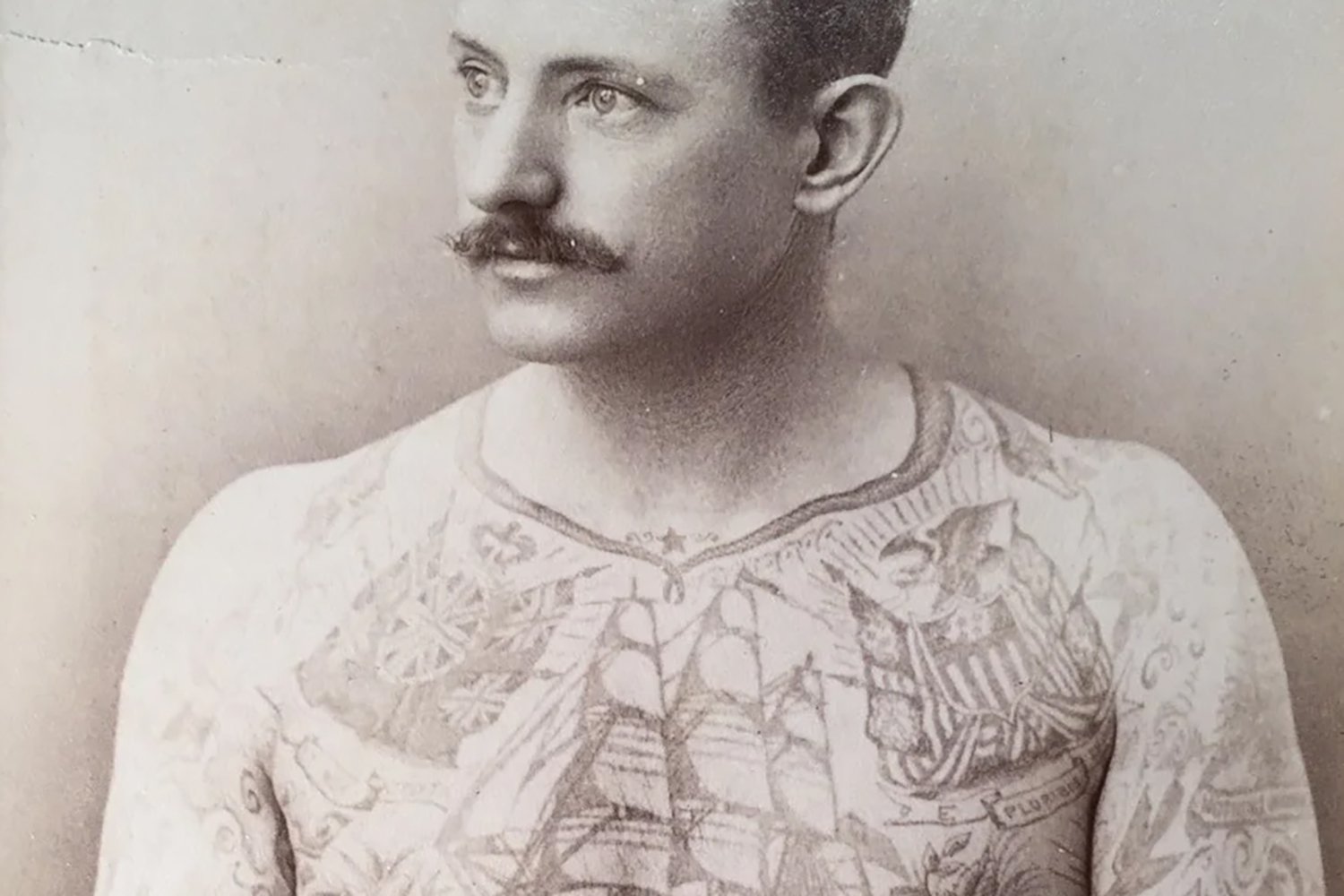
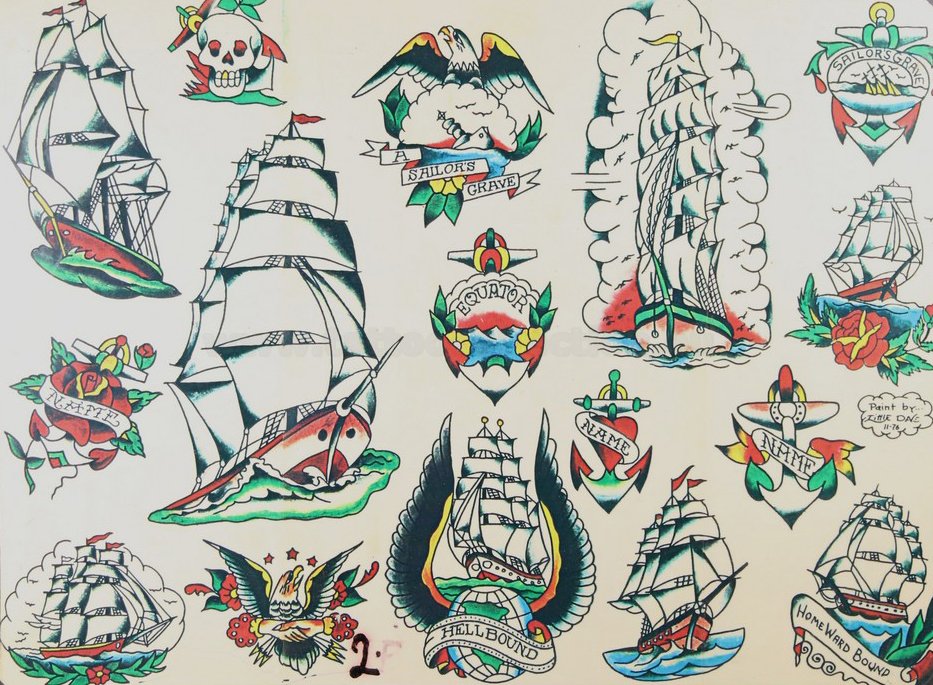
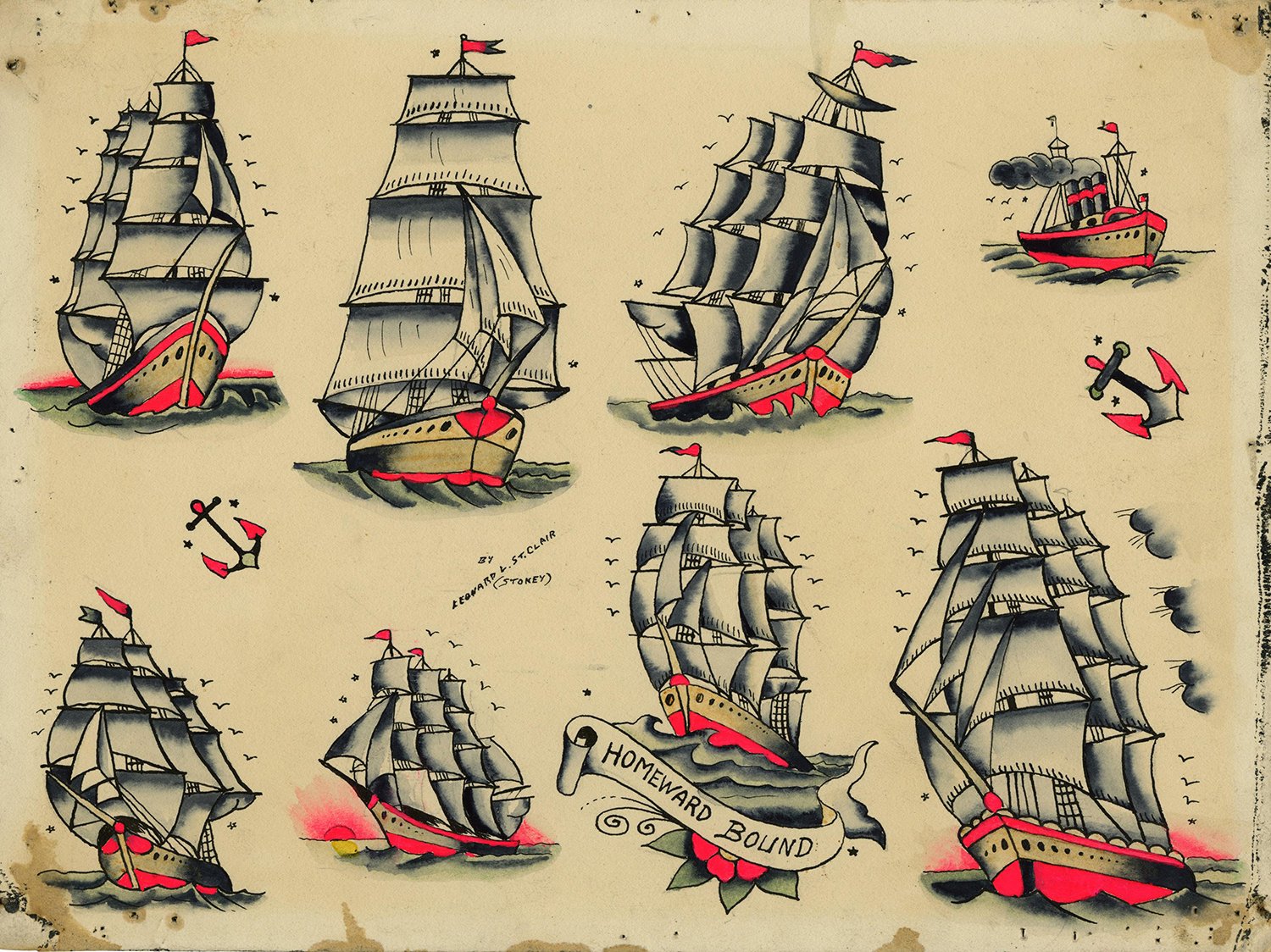
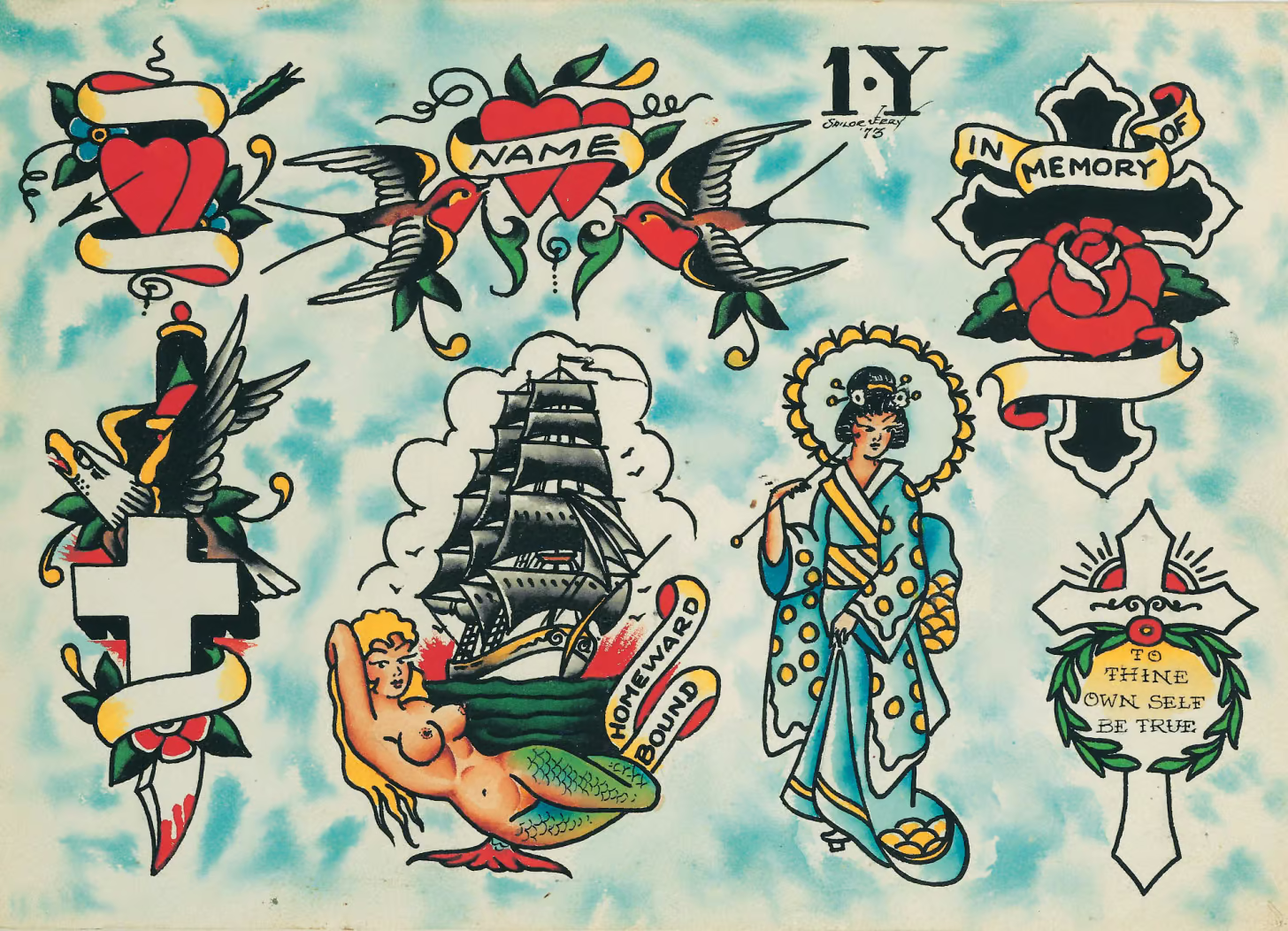
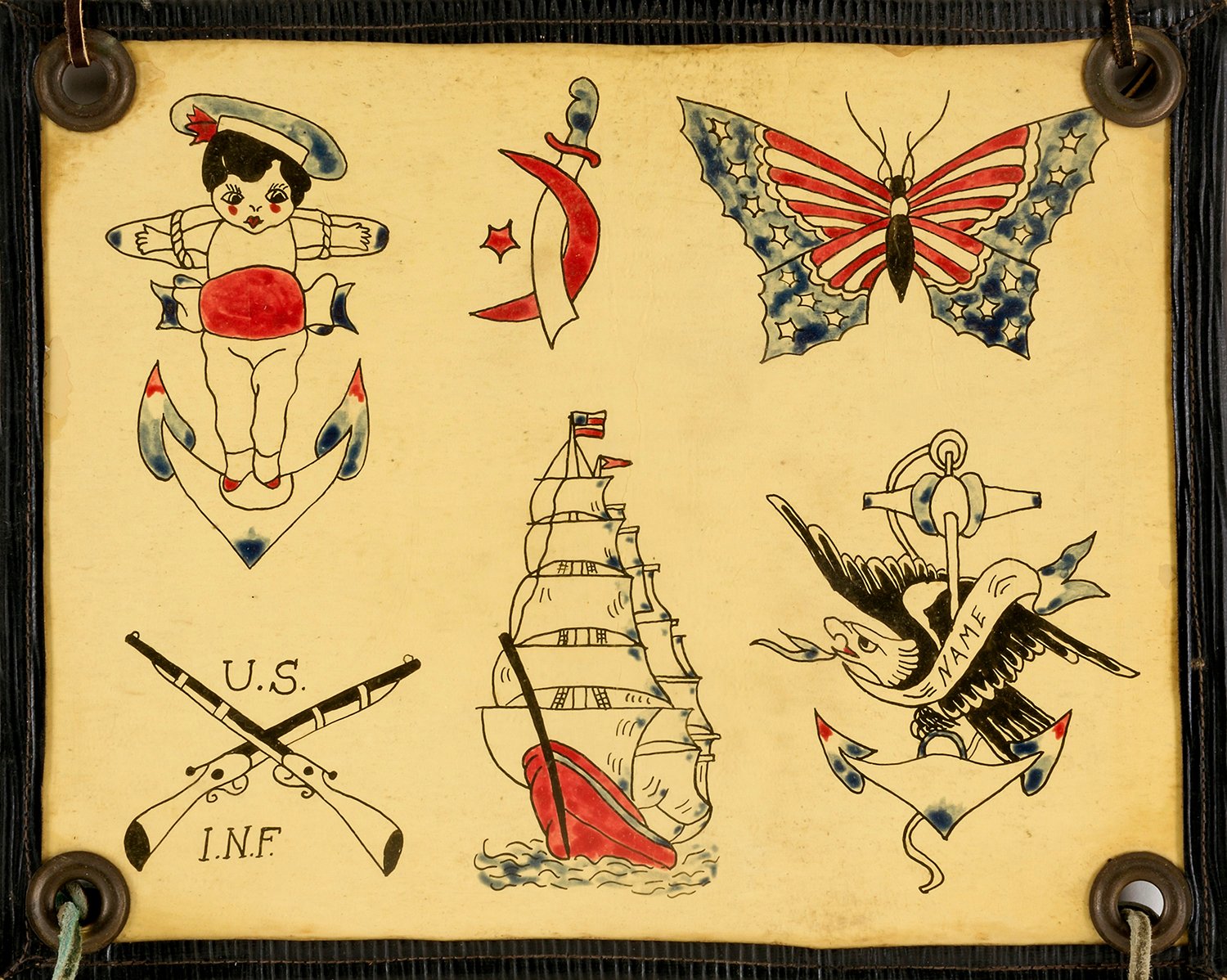
The tall ship is a core subject in American traditional tattooing. Sailor Jerry Collins, Owen Jensen, Bert Grimm, and other foundational flash artists included ships in their standard repertoire. The American traditional ship follows specific visual conventions: bold black outlines, a limited colour palette (typically blues, greens, reds, yellows, and browns), flat or lightly shaded colour fills, and a composition that emphasises readability and graphic impact over anatomical precision.
The traditional flash ship is almost always shown under full sail — all canvas set, the vessel in motion. It is usually depicted from a three-quarter bow view, showing the ship heeled to one side with the sails filled by wind. Waves — rendered as stylised curling forms rather than realistic water — frame the hull. The sky may include clouds, birds, or the sun. The rigging is simplified but provides enough lines to read as a working ship, without the anatomical detail a marine artist would include.
The composition carries inherent drama. A ship under full sail is a ship in motion, going somewhere, in the midst of a voyage. The wind is blowing. The sea is moving. The image captures a moment of active passage — which is why the ship, even stripped of its specific Cape Horn meaning, continues to read as a symbol of journey, movement, and confrontation with the elements.
In traditional flash, the ship often appears as a standalone image — a single ship on a single sea. It can also appear as part of a larger maritime-themed composition alongside anchors, swallows, compasses, nautical stars, mermaids, and other elements of the maritime vocabulary. A traditional ship tattoo on a forearm, chest, or back is one of the foundational images of Western tattoo culture.
The tall ship across tattoo styles
Neo-traditional ships gain a broader colour range, more elaborate detail, and decorative framing. Art Nouveau-influenced curves in the waves and sails, jewel-tone colour palettes, and ornamental borders around the composition expand the visual range while retaining the bold outline structure that keeps the image legible.
Realism and photorealism push the ship toward marine painting. The texture of timber, the translucency of canvas, the reflections on water, the atmospheric perspective of sky and horizon — all demand precise tonal control and an understanding of how light behaves on water. A realistic tall ship is one of the most technically demanding compositions in tattooing, combining architectural structure (the ship), natural elements (the sea, the sky), and atmospheric effects (light, fog, spray) in a single image.
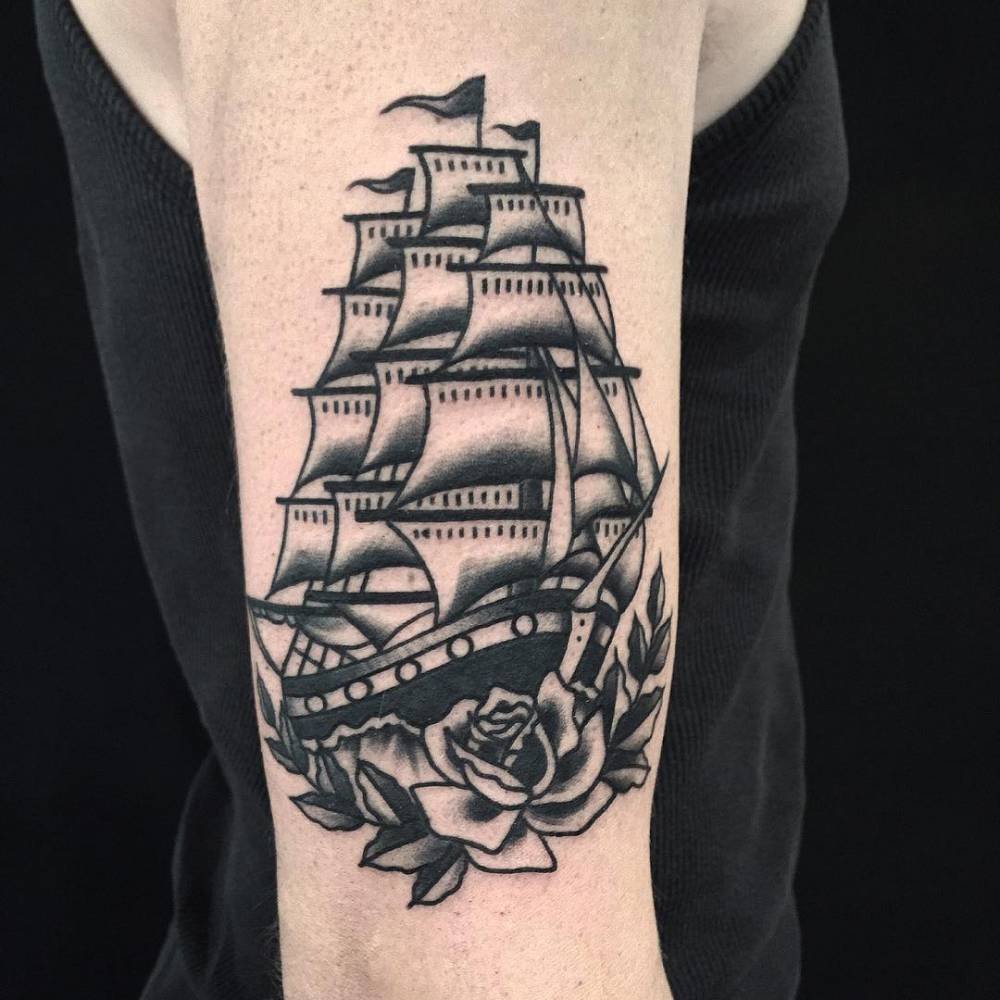
Black-and-grey ships lean toward drama and mood. Without colour, the composition depends on contrast, tonal range, and atmospheric depth. Storm scenes, fog, moonlight, and night passages are natural subjects for black-and-grey ship work — the monochrome palette suits the darker, more atmospheric readings of the image.
Blackwork reduces the ship to its graphic essentials — silhouette, line, and contrast. A blackwork ship can be a bold, flat silhouette on the forearm or a detailed line drawing in the style of nautical engraving. Woodcut and etching-style treatments — cross-hatching, parallel-line shading, the visual language of historical maritime illustration — connect the tattoo to the long history of ship depiction in printed art.
Fine line and minimalist treatments strip the ship to its most essential form — a few masts, a hull line, simplified sails. At small scale, the ship works as a wrist, ankle, or finger tattoo — the iconic silhouette is recognisable even in a few lines.
Illustrative styles offer the widest interpretive range. An illustrative ship tattoo can reference Golden Age marine painting, children’s book illustration, comic art, fantasy, or the artist’s own visual language. The style allows for exaggeration, stylisation, and personal interpretation that more constrained styles do not.
Japanese-influenced ship tattoos are uncommon within traditional irezumi (which has its own maritime vocabulary — waves, koi, dragons — but does not include Western sailing vessels), but contemporary Japanese-influenced work sometimes incorporates ships into wave and water compositions, using irezumi background techniques (wind bars, waves, clouds) to frame a Western vessel.
Sail states and what they communicate
The state of the sails (and of the vessel) is one of the most important symbolic variables in a ship tattoo. The same vessel, in the same style, on the same body, communicates something fundamentally different depending on whether its canvas is set, furled, torn, or slack. The sail state is the ship’s expression — it tells the viewer what the vessel is doing, what it has been through, and where it stands in the arc of its voyage.
Full sail — all canvas set, every yard drawing wind, the ship heeled and moving at speed. This is the image associated with the Cape Horn tradition and with the American traditional flash ship. It communicates committed forward motion, the voyage underway, full engagement with the elements. The ship under full sail is at its most alive — using everything it has, holding nothing in reserve. For wearers, full sail tends to represent purpose, momentum, and the decision to move forward without hesitation. It is the most commonly tattooed sail state by a wide margin.
Partially reefed sails — some canvas reduced, some still drawing. A ship managing heavy weather, adapting to conditions that are too strong for full sail but navigable with careful handling. This is the practical sailor’s image — the vessel that respects what it faces and adjusts accordingly. Reads as endurance, caution, the wisdom to adapt rather than break. Less dramatic than full sail, but it carries a specific kind of experience: the knowledge that survival sometimes requires reducing what you carry.
Furled sails — all canvas gathered and tied to the yards, the ship at rest. A vessel in harbour, at anchor, or waiting for conditions to change. Reads as homecoming, arrival, completion, or the pause between voyages. A ship with furled sails is a ship that has stopped — which can be peaceful (the journey is done, the port is reached) or ominous (the ship is becalmed, abandoned, or waiting for something that may not come). The emotional tone depends on the surrounding composition: calm water and a harbour suggest rest; open ocean and empty sky suggest something else.
Slack or dropping sails — canvas hanging limp, no wind to fill it. A becalmed ship, motionless on flat water. Reads as stagnation, frustration, the inability to move forward despite the desire to. In maritime experience, becalming was feared nearly as much as storms — a ship without wind is a ship without agency, drifting rather than sailing, at the mercy of currents it cannot see. As a tattoo, a becalmed ship can represent a period of being stuck, a loss of direction, or the painful experience of waiting for conditions to change.
Tattered or torn sails — canvas ripped by wind, hanging in shreds from the yards, the rigging damaged. A ship that has been through a storm and carries the evidence. Reads as survival, resilience, damage endured. The ship is still afloat — it has not sunk — but it bears the marks of what it has faced. This is the image associated with ghost ship tattoos and with darker maritime compositions: storm scenes, shipwrecks in progress, vessels emerging from fog. For wearers, torn sails often represent having survived something that left visible damage — the ship is still sailing, but it is changed. The image acknowledges that survival and wholeness are different things.
Sails on fire — a burning ship, whether by enemy action, accident, or deliberate scuttling. Reads as destruction, sacrifice, the point of no return. A burning ship means the retreat is cut off — there is no going back. The phrase “burning one’s ships” (attributed, probably apocryphally, to Hernán Cortés) means committing to a course of action by eliminating the option of retreat. As a tattoo, a burning ship can represent radical commitment, the deliberate destruction of a former life, or the acknowledgement that something has been lost beyond recovery.
Sinking — the ship going down, bow or stern rising as the vessel takes on water. Reads as loss, defeat, the end of a voyage that did not succeed. A sinking ship tattoo is uncommon compared to ships under sail, but it carries powerful meaning: something attempted, something failed, the acknowledegment that effort does not guarantee arrival. It can also be defiant — the ship sinks, but the image survives on the wearer’s body as a record of what was risked.
The vessel’s and sail state is a choice the wearer and artist make together, and it should be deliberate. A ship under full sail says something different from a ship with torn canvas, which says something different from a ship with furled sails resting in a harbour.
Composition, placement, and pairing
The tall ship is a horizontal subject — wider than it is tall when depicted from the side and under sail — or vertical, when seen from the front. This affects placement. The composition fits well on larger body areas: the chest (a ship across the pectorals is a classic placement), the upper back, the ribs (wrapping from the front to the side), the thigh, and the calf. On the forearm and upper arm — more vertical spaces — the ship is typically composed with a taller aspect ratio, with waves stacking vertically below the hull and sky above the masts.
Full-back ship compositions are among the most dramatic in tattooing — a large vessel in heavy seas, fully rigged, with waves, wind, and sky filling the surrounding space. The back provides enough surface area for the level of detail that a ship demands at its most ambitious.
The ship’s compositional flexibility extends to its surroundings. The sea itself can be a design element — calm water reads differently from storming waves, and the treatment of the water affects the mood of the entire piece. A ship on glass-smooth water suggests calm passage or becalming. A ship in towering waves suggests struggle, endurance, and confrontation with nature. A ship emerging from fog suggests mystery, ghost ships, and the unknown.
Common pairings include:
- compass or compass rose (navigation, direction, finding one’s way),
- anchor (stability, homecoming, the end of a voyage),
- lighthouse (safe harbour, guidance, return),
- kraken or sea monster (danger, the unknown, the forces beneath the surface),
- whales (the deep ocean, the natural world’s scale),
- swallows (distance sailed, homecoming),
- nautical star (guidance, the North Star),
- skull and crossbones or Jolly Roger (piracy, rebellion, mortality).
The ship also pairs with text — coordinates, dates, names, quotes — more naturally than most animal subjects. A ship with a date beneath it can mark a specific journey or life event. A ship with coordinates marks a specific place. “Homeward Bound” or “Fair Winds” beneath a ship connects the image to the maritime language tradition.
Tall ships: signs of passage
The tall ship tattoo once carried a single, main, verifiable, earned symbolism —reaching Cape Horn — and has since expanded to encompass a much broader range of personal meanings, without losing the original. What the tall ship consistently communicates, across styles, is passage — movement through difficulty, the act of being underway, the commitment to a direction in conditions that cannot be fully controlled.
A sailor wearing a fully rigged ship tattoo in 1920 was displaying a credential. A person wearing a fully rigged ship tattoo today may be referencing that tradition, or they may be referencing personal resilience, a love of maritime history, a specific life transition, or the sheer beauty of a vessel under canvas. All of these readings are legitimate.
Sources & further reading
- Sailor tattoo, tall ship, full-rigged ship on Wikipedia, The Free Encyclopedia.
- Sailors’ Tattoos: A Basic Primer. Naval History and Heritage Command, 2026.
- Caplan, Jane (ed.). Written on the Body: The Tattoo in European and American History. Princeton University Press.
- Margo DeMello, Bodies of Inscription: A Cultural History of the Modern Tattoo Community. Duke University Press, 2000.
- Albert Parry, Tattoo: Secrets of a Strange Art. Simon & Schuster, 1933; reissued in 2006, Dover.
- Steve Gilbert, Tattoo History: A Source Book. Juno Books, 2000.