Dr. Woo — Biran Woo tattoo artist
Dr. of the ultra-fine single-needle line work
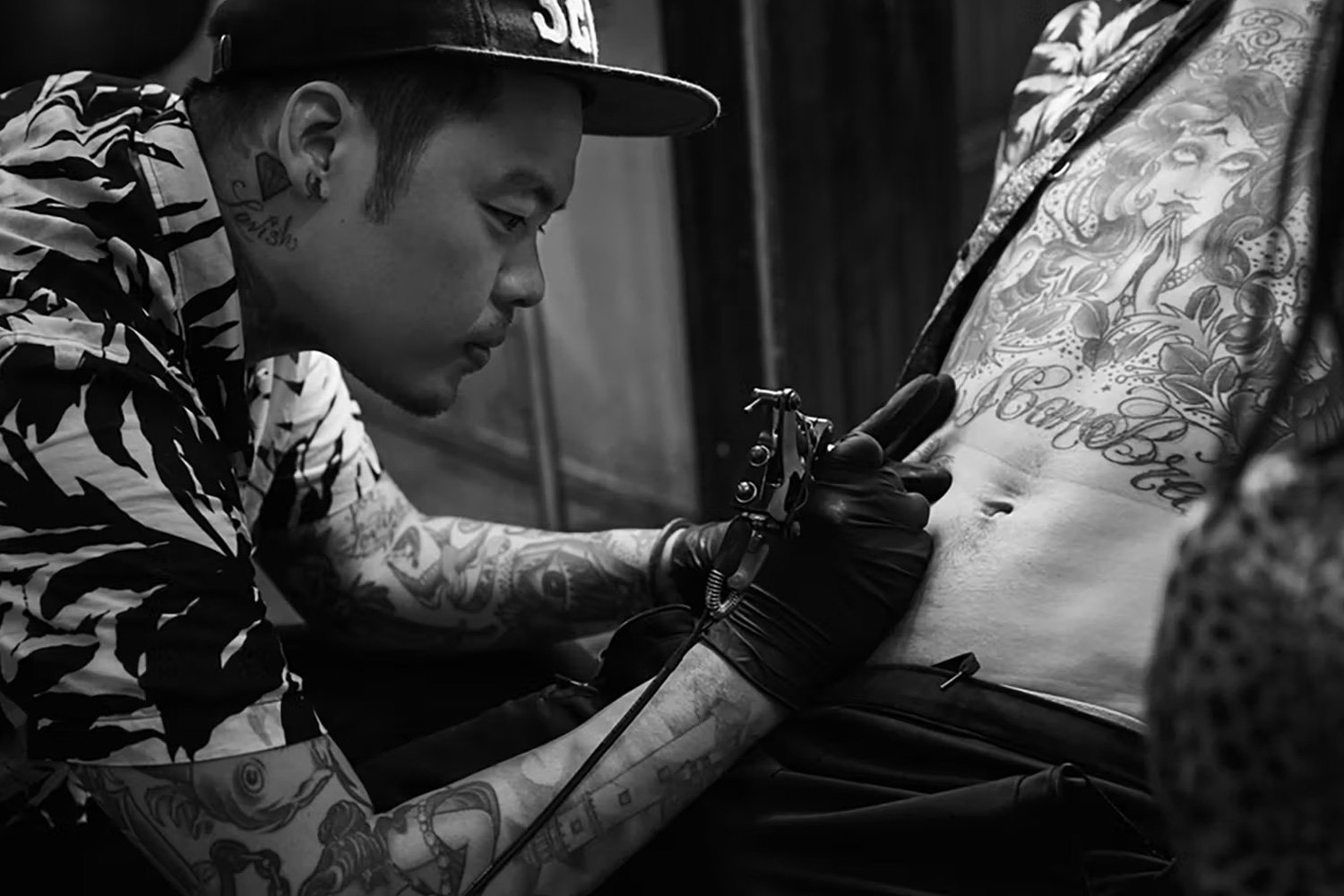
Woo is known professionally as Dr. Woo. His work is characterised by ultra-fine single-needle line work, intricate detail at small to medium scale, and a visual vocabulary drawn from geometry, nature, celestial imagery, and the delicate end of illustrative drawing. His client list includes Drake, Justin and Hailey Bieber, Zoë Kravitz, Miley Cyrus, Cara Delevingne, Emilia Clarke, Harry Styles, David Beckham, Frank Ocean, Kid Cudi, and Rihanna, among many others. His Instagram following exceeds 1.7 million. His waiting list, at various points in his career, has been reported at six months to two years.
These facts are well known. What is more useful is understanding where the work comes from, what it actually entails, and what Woo’s career reveals about the relationship between tattooing, social media, and the broader culture of the 2010s and 2020s.
Early life of Brian Woo
He grew up in a skate-culture environment — Agoura Hills has produced several professional skateboarders — and credits skating with sparking his interest in subcultures, graphics, and the visual cultures that exist alongside and below the mainstream. Before tattooing, he worked as a fashion buyer, then attempted to start his own clothing line — part of the wave of garage-based brand-building that characterised LA in the 1990s and early 2000s.
His parents, who had hoped for a son in medicine, were not immediately supportive of the tattoo direction. The nickname “Dr. Woo,” which he received after transitioning from apprentice to working tattoo artist, carries a residual echo of that family expectation. Woo has described the name’s origin with humour: a colleague at the shop referenced an old film villain named Dr. Woo, the name stuck, and the “Dr.” carried just enough irony to work. His parents, he has said, are now proud of what he has built.
The apprenticeship
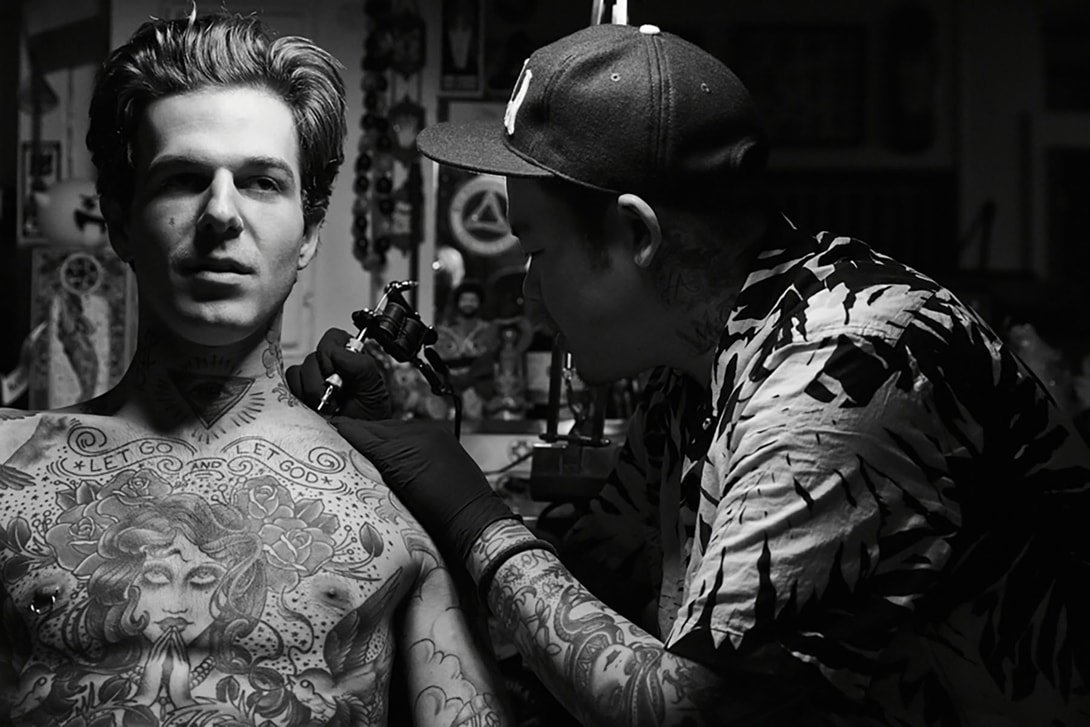
As a teenager and into his early twenties, Woo and his friends would hang out at Shamrock Social Club on the Sunset Strip in West Hollywood — the studio run by Mark Mahoney, one of the most important figures in the history of black-and-grey tattooing. Mahoney had been instrumental in spreading the Chicano single-needle technique from its East Los Angeles origins to a broader, more affluent clientele throughout the 1980s and 90s. Shamrock was a legendary shop, and Mahoney was an idol to the group of young men who frequented it.
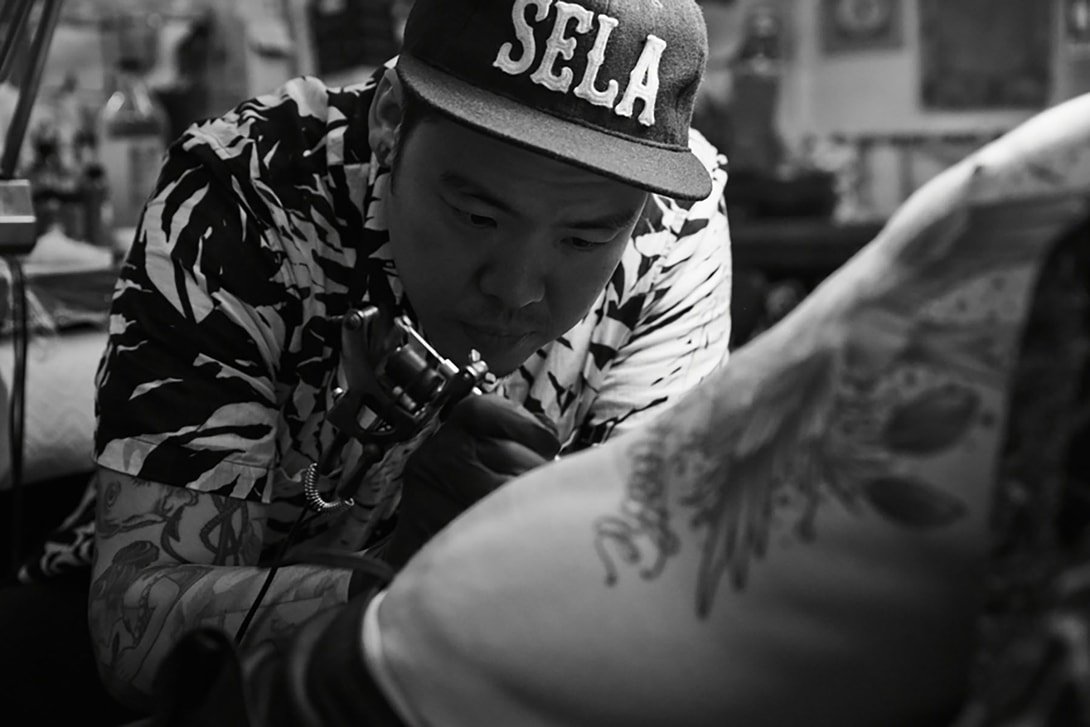
When Woo was around twenty-four, Mahoney offered him the chance to apprentice. Woo accepted. The apprenticeship lasted, by his own account, roughly ten years — a duration that reflects the old-school model of shop apprenticeship, where the apprentice performs every non-tattooing task in the shop (mopping floors, setting up equipment, sterilising tools, cleaning toilets) while slowly earning the right to tattoo under supervision.
Woo has spoken about the apprenticeship in terms that emphasise its length and its formative role. He mopped floors and cleaned toilets at Shamrock for years before he was allowed to pick up a machine in a professional context. The mentorship from Mahoney — a master of single-needle black-and-grey technique, a man who had absorbed the Chicano tradition from its originators and refined it for decades — gave Woo the technical foundation for everything that followed. The single-needle approach that defines Woo’s work descends directly from the Chicano tradition through Mahoney.
Woo has also credited Mahoney with modelling the possibility of a tattoo career that includes family life. Mahoney maintained his marriage and his relationship with his children while running a high-profile studio, and Woo — who is married with two children — has cited this as important.
The work
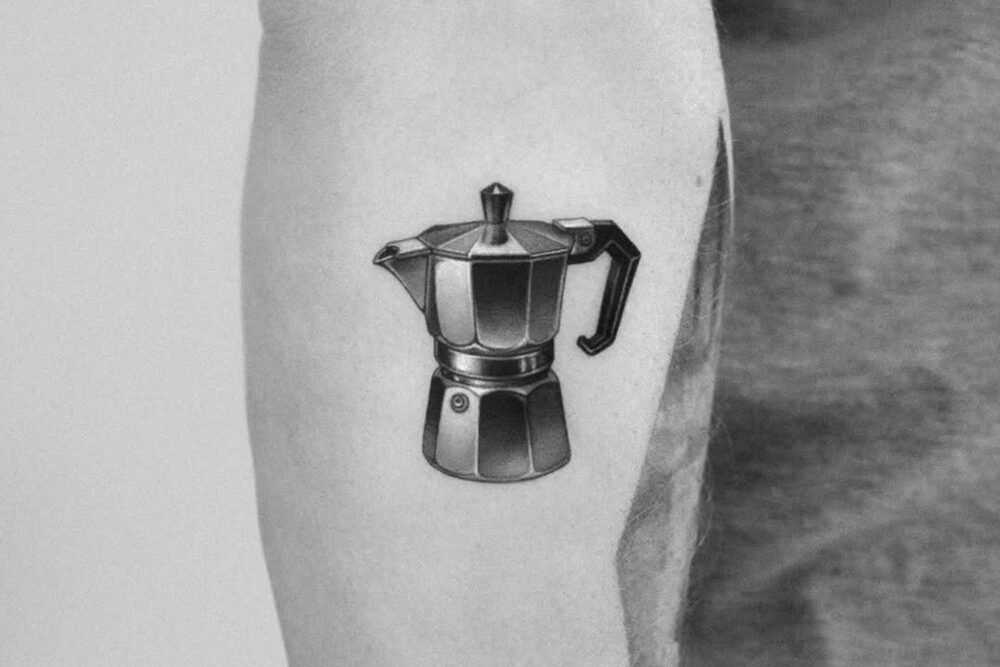
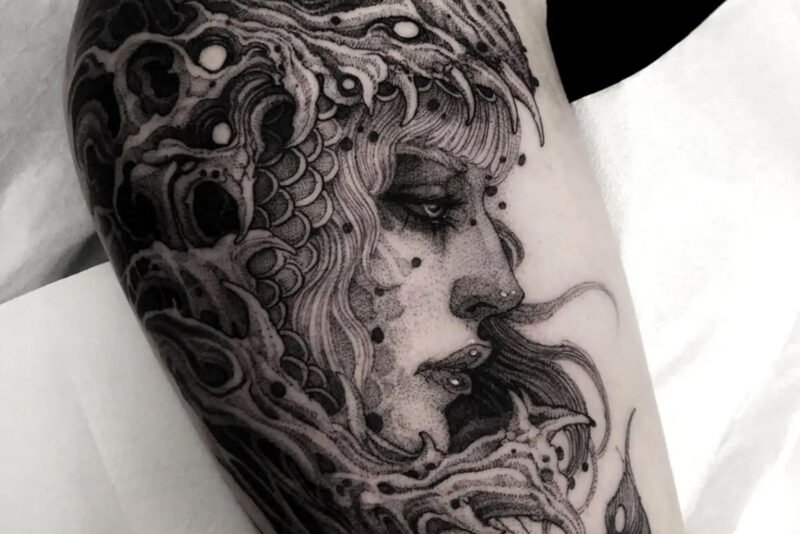
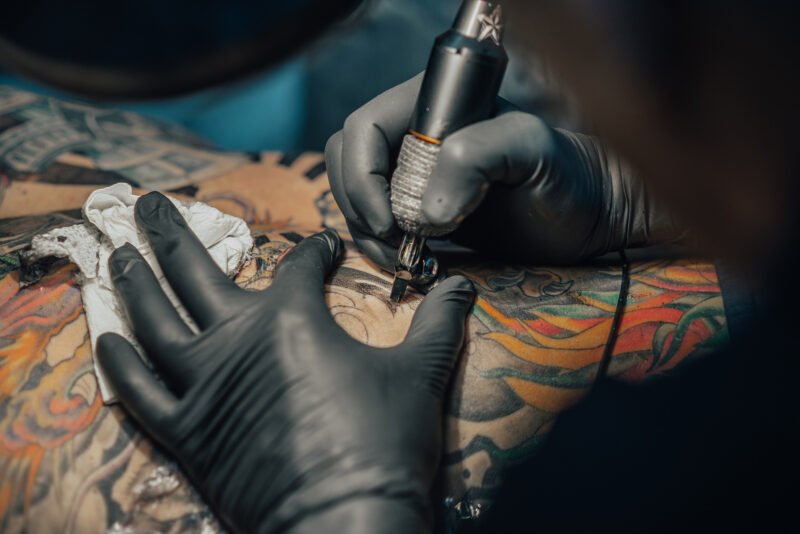
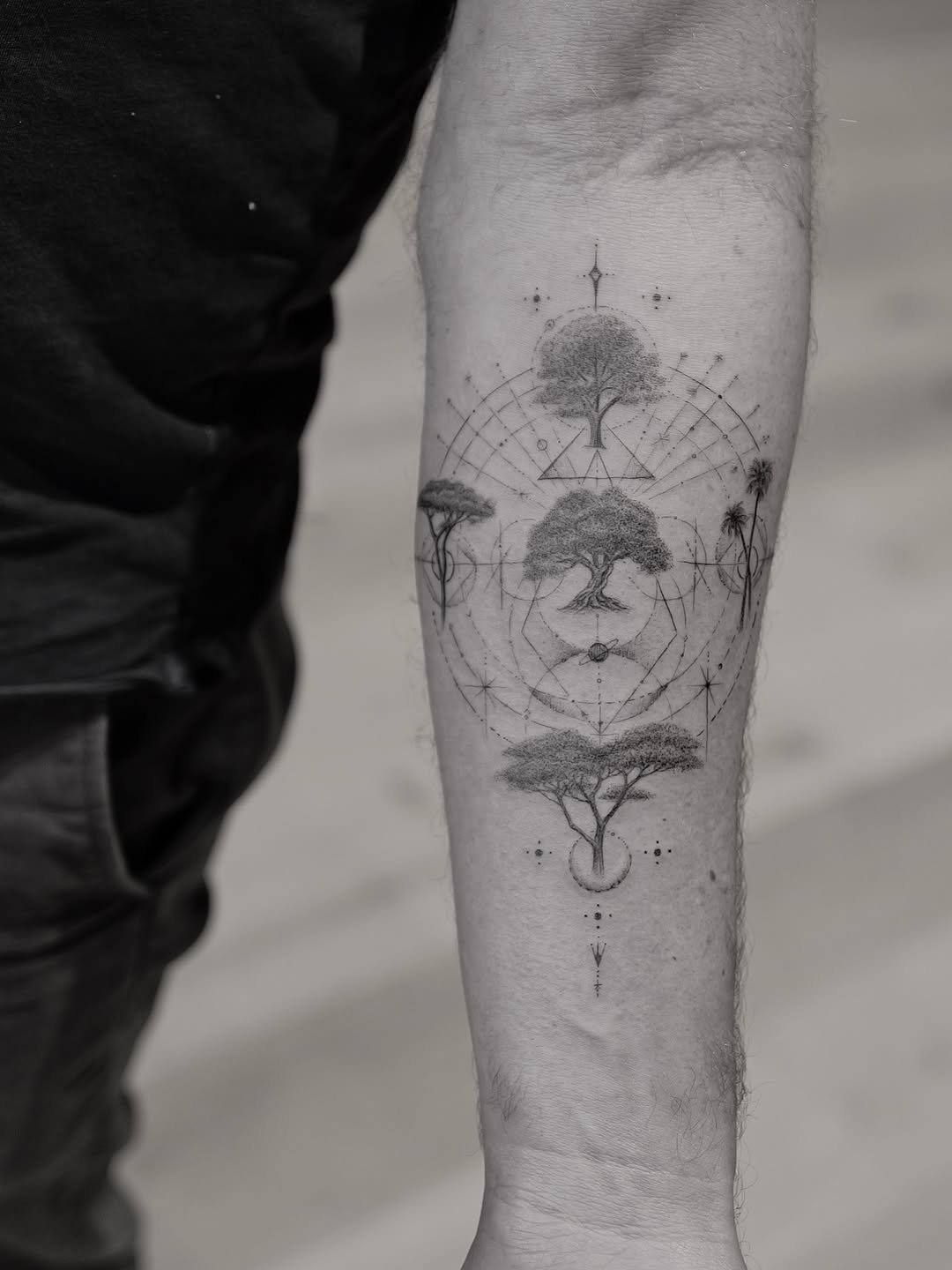
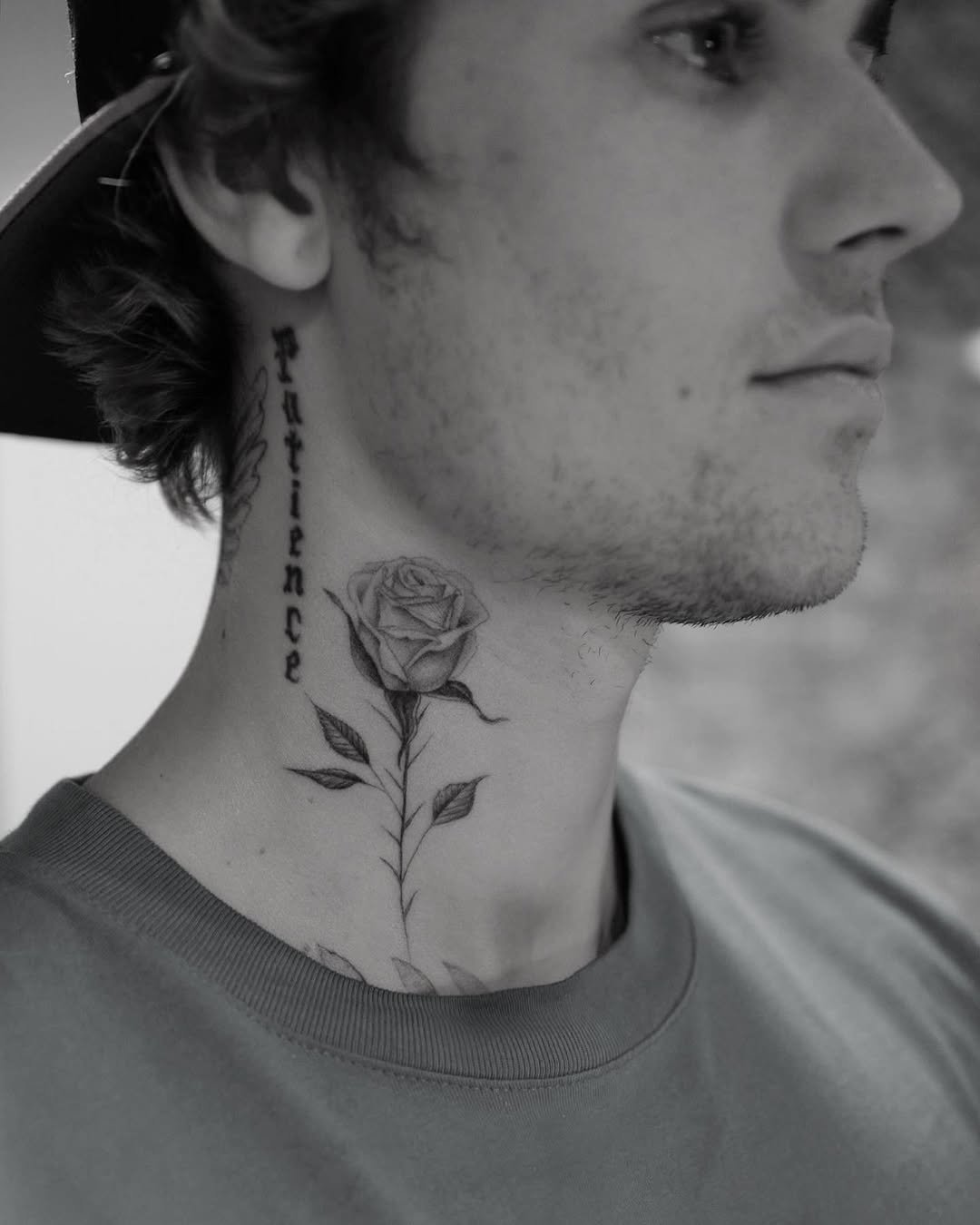
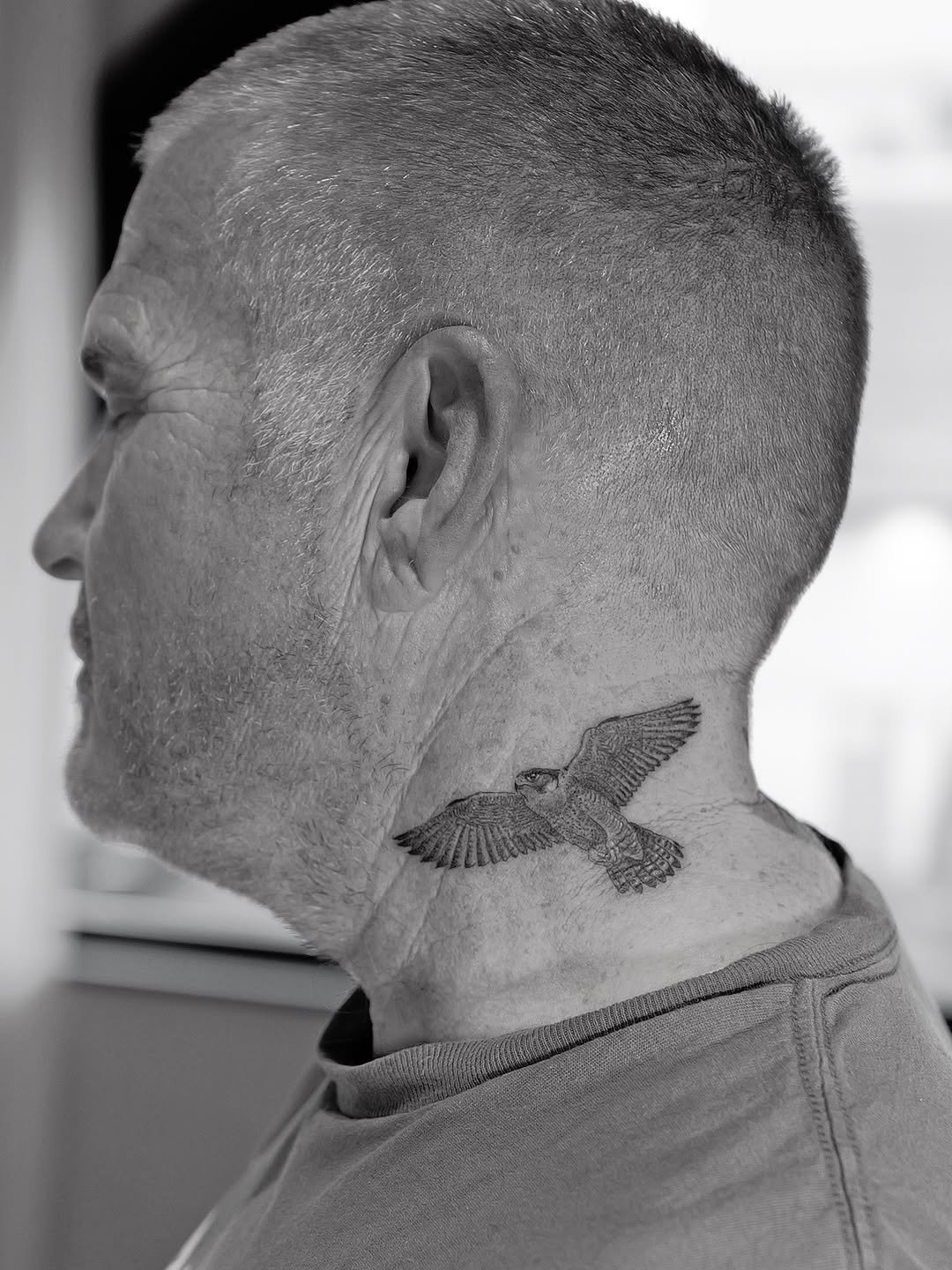
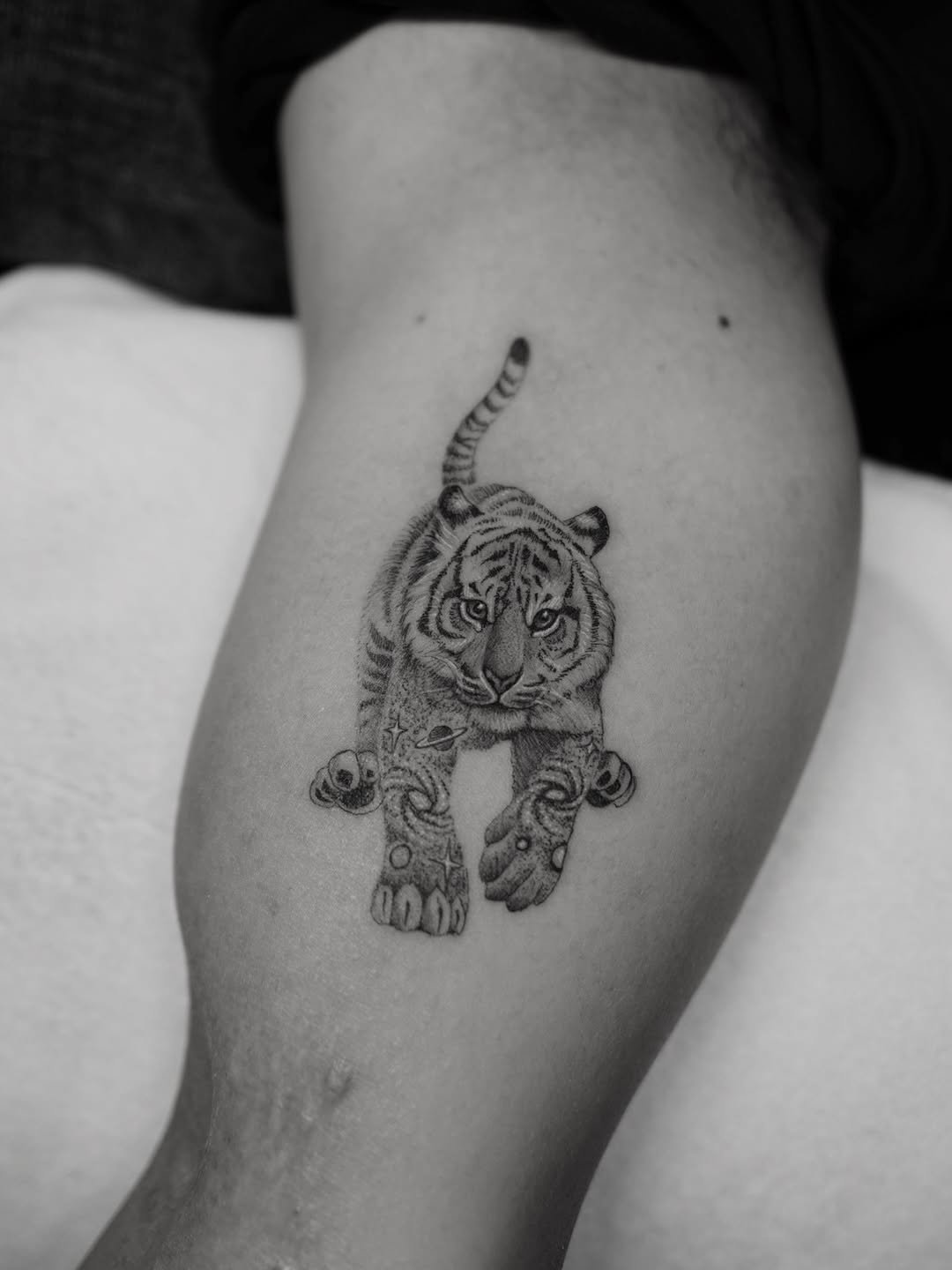
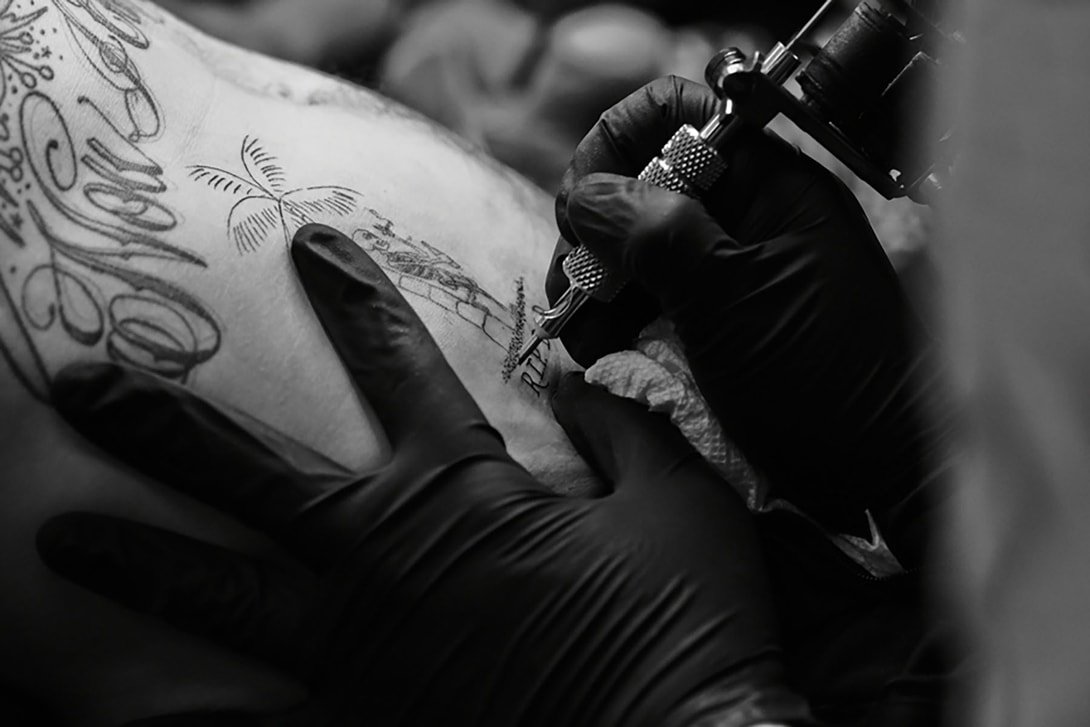
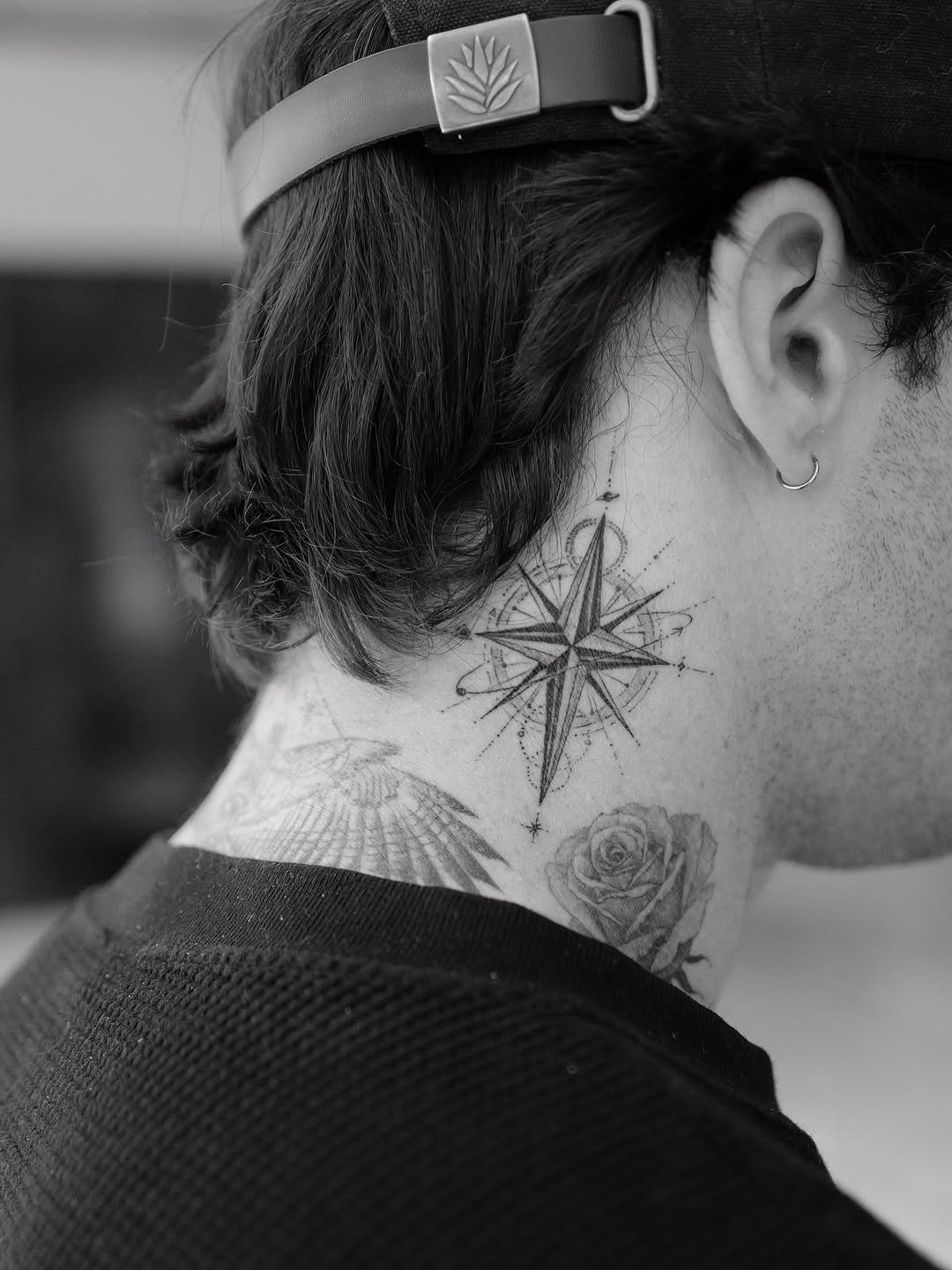
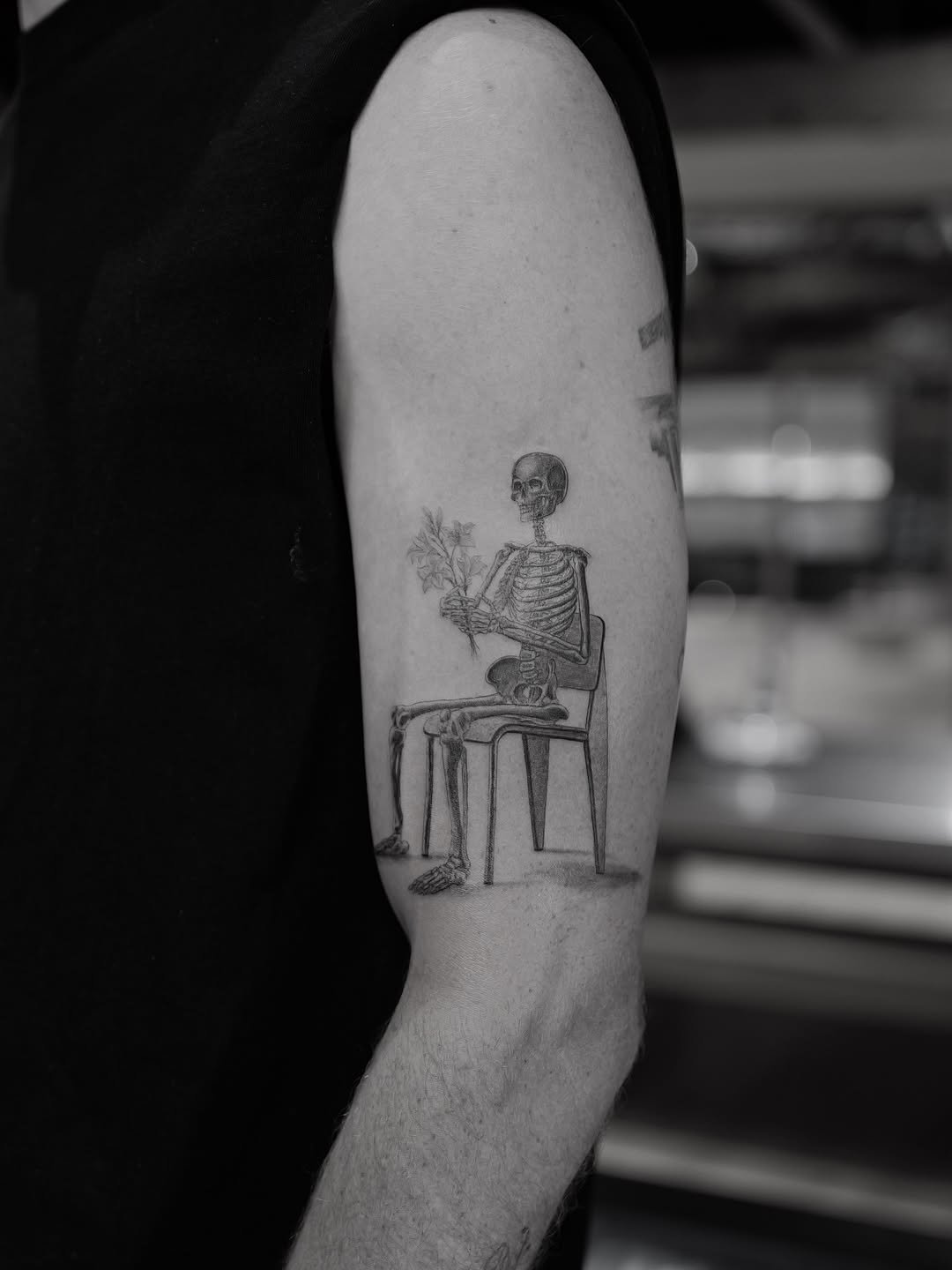
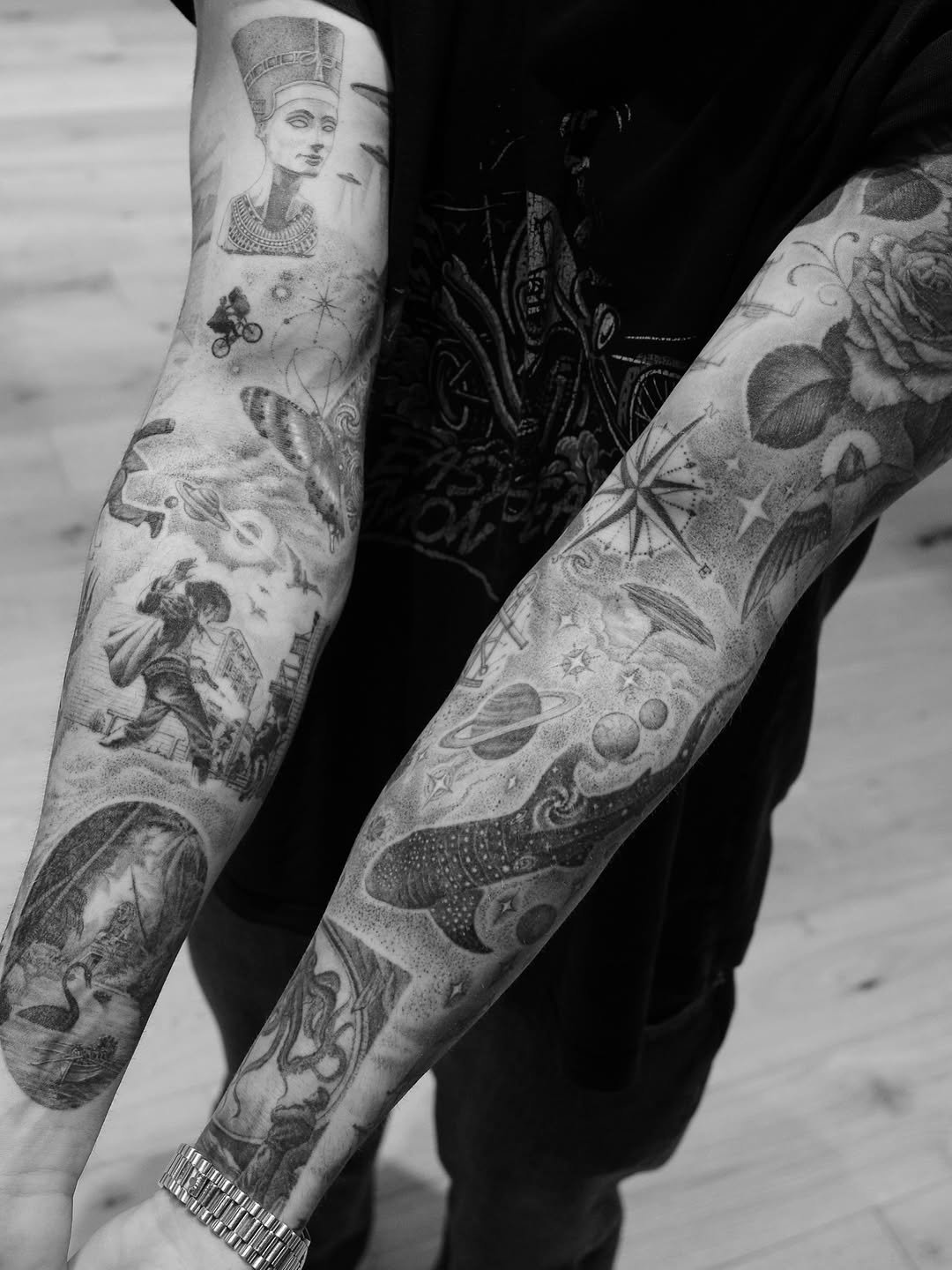
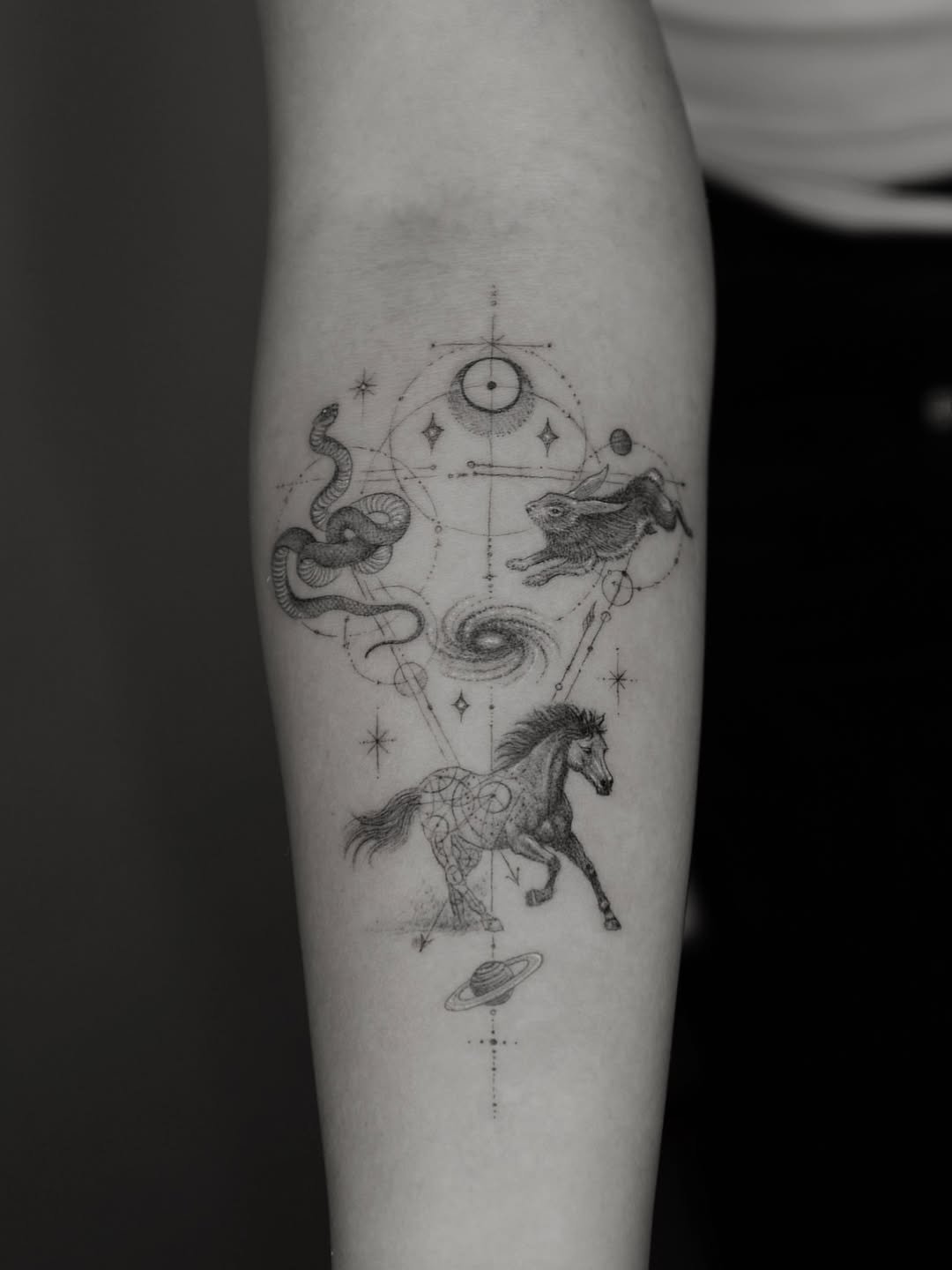
Woo’s technical signature is fine-line single-needle work. He uses a single-needle configuration (1RL) to produce lines thinner than those achieved by standard liner groupings. The result is a visual quality closer to pencil drawing on paper than to the bold, graphic quality of traditional or neo-traditional tattooing.
His visual vocabulary is eclectic and specific. Common subjects in his portfolio include:
- geometric forms (circles, triangles, fine wireframe structures),
- celestial imagery (moons, suns, constellations, planetary diagrams),
- natural history subjects (insects, birds, flowers, animals rendered with illustrative precision),
- timepieces and mechanical objects (watches, compasses, keys, locks),
- architectural elements,
- typographic and calligraphic text,
- small symbolic objects (feathers, arrows, anchors, hearts) rendered at a delicate scale.
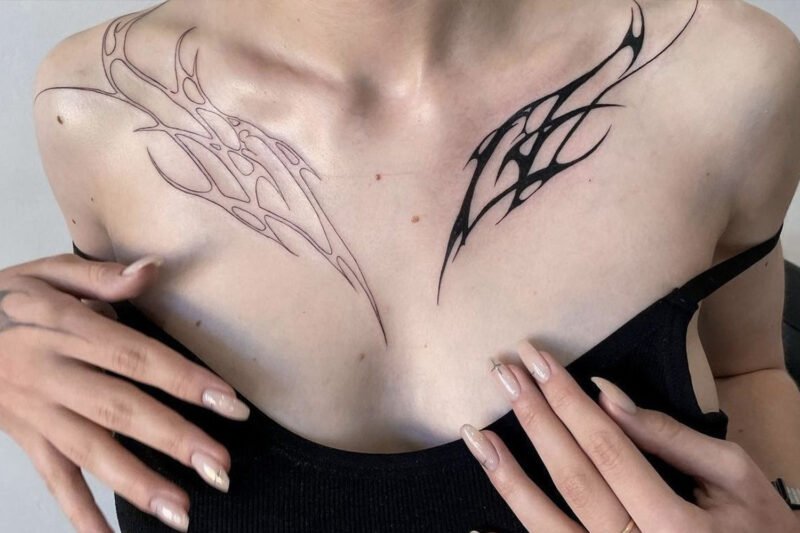
The pieces are typically small to medium — wrist, inner forearm, collarbone, behind the ear, upper arm — and they are designed to sit lightly on the body, occupying space without dominating it.
The stylistic position is specific: Woo’s work sits at the intersection of fine line, single-needle black-and-grey, illustrative, and minimalist tattooing. He has not invented any of these categories, but he has developed a distinctive synthesis of them — a visual language that is immediately recognisable as his, even to viewers who could not articulate what makes it distinctive. The combination of ultra-fine line work, illustrative subject matter, restrained scale, and a predominantly black-and-grey palette (with occasional single-colour accents) constitutes a visual identity that hundreds of other artists have subsequently emulated.
Dr. Woo: The nickname and the lineage
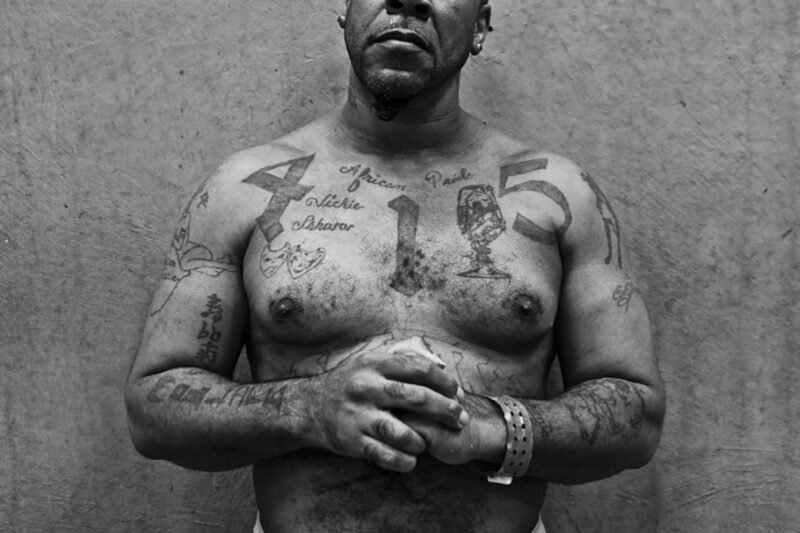
The lineage matters. Woo apprenticed under Mark Mahoney. Mahoney was one of the artists who brought the Chicano single-needle black-and-grey technique from its original community into the broader tattoo world. The Chicano technique was developed in the California prison system by Freddy Negrete, Jack Rudy, Charlie Cartwright, and others, refined at Good Time Charlie’s Tattooland in East Los Angeles from 1975 onward. Woo’s single-needle fine-line work is a direct descendant of this lineage — the same fundamental technique, adapted to a different visual vocabulary and a different cultural context.
Dr. Woo has acknowledged this lineage in interviews. He has spoken about Mahoney’s mentorship in terms that make the connection explicit: the single-needle technique, the black-and-grey palette, the respect for the older tradition, and the understanding that what he does stands on the shoulders of Mahoney and his predecessors. The acknowledgement matters because the fine-line tattoo movement that Woo helped popularise is sometimes discussed as though it had appeared out of nowhere in the 2010s. It did not. It has a traceable lineage through Shamrock, Mahoney, Good Time Charlie’s, and the California prison system.
Celebrity status and social media
Woo’s rise to mainstream visibility began around 2013, when his work at Shamrock Social Club attracted celebrity clients — Drake, Miley Cyrus, Justin Bieber, Rihanna, and others — whose tattoos were photographed, posted on social media, and seen by millions. The timing coincided with Instagram’s rapid growth as a visual platform, and Woo was among the first tattoo artists to benefit from the convergence of celebrity clientele and platform visibility.
The dynamic is specific: a celebrity gets a tattoo from Woo, posts it on Instagram, their followers see it, some of those followers seek out Woo’s own account, his following grows, his waiting list lengthens, the length of the waiting list becomes part of the story, and the story attracts more clients. Woo has spoken about this dynamic with ambivalence — acknowledging the career-building power of social media while noting its downsides: the speed at which a distinctive visual idea is copied and diluted, the reduction of attention spans, and the pressure to produce work that photographs well on a phone screen.
He has also been clear that he does not want to be defined by his celebrity clientele. In interviews, he has drawn a distinction between being known for the quality of the work and being known for the names of the people wearing it: “I want them to like my work, not the fact that I gave a celebrity a small cross tattoo on their ankle.” He does not routinely tag celebrity clients in his posts, and he describes himself as protective of all clients’ privacy, regardless of their profile.
Hideaway at Suite X
In 2017, Woo left Shamrock Social Club and opened his own studio — Hideaway (@hideaway_wrkshp_tattoo) at Suite X, located inside the Hollywood Roosevelt Hotel on Hollywood Boulevard. The move from a street-level walk-in shop to a private studio inside a luxury hotel is significant and deliberate: it positions the tattoo experience as intimate, exclusive, and appointment-only, closer to the model of a private art dealer or a high-end atelier than to the model of the traditional tattoo shop.
The studio is private. Access is by appointment and referral. The environment is designed to feel calm and personal rather than like a commercial tattoo shop. The move reflects both Woo’s personal preference for privacy and the practical reality of his client base — people who value discretion and who are accustomed to private, appointment-based creative services.
Brian Woo beyond tattooing
Brand collaborations
The breadth of the collaboration list is unusual for a tattoo artist and positions Woo as a design figure rather than solely a tattoo practitioner — a visual artist whose aesthetic is applied across media and surfaces, from skin to watch cases to sneakers to luggage.
Woo Skin Essentials (Project Woo)
Fashion and media
NFTs
Dr. Woo's Influence
Woo has spoken about this emulation with the same ambivalence he brings to social media in general. The spread of the style means that the visual ideas have a shorter shelf life — “you do one thing, 20 people copy it, and then people are over it by next week” — and the flood of derivative work can make it harder for the originator’s work to stand out.
The influence also extends to the business model. Woo’s trajectory — from a traditional shop apprenticeship to a private studio, from tattooing to brand collaborations, product lines, and media presence — has become a template for ambitious tattoo artists seeking careers that extend beyond the chair. The integration of tattooing with fashion, luxury branding, and the broader creative economy is something Woo demonstrated was possible, and a generation of younger artists is following the path he mapped.
His place in tattoo history
Whether the work will be remembered primarily for its aesthetic contribution (the synthesis of fine-line, illustrative, and black-and-grey traditions into a distinctive personal style) or for its cultural contribution (the mainstreaming of fine-line tattooing and the establishment of the tattoo artist as a cross-media creative figure) is a question for future historians. Both contributions are real.
What is clear now is that Woo’s career has shaped the expectations of a generation of tattoo clients (who now seek fine-line work as a default aesthetic) and a generation of tattoo artists (who now see brand collaborations and private studios as achievable career goals). The single needle that Freddy Negrete used in a California prison cell and that Mark Mahoney refined on the Sunset Strip is the same needle that Dr. Woo uses in a private suite at the Hollywood Roosevelt. The line of transmission is unbroken; what each generation made with it is their own.
Sources & further reading
- Fashionista, “How Dr. Woo Set the Bar for a Generation of Tattoo Artists.” Published August 2018.
- NYLON, “Dr. Woo On Being A Tattoo Artist To The Stars.” Published December 2022.
- The Hollywood Reporter, “Tattoo Artist Dr. Woo on New UGG Campaign, L.A.’s Post-Pandemic Rebound and New Skincare Line.” Published October 2020.
- Haute Time, “A Recap of the Roger Dubuis x Dr Woo Episodes I, II and III.” Published June 2025.
- 100 Management, official artist page for Dr. Woo. Lists brand collaborations, biography, and representation details. EverybodyWiki, “Dr. Woo.”
- Dr. Woo’s official Instagram: @_dr_woo_. Primary portfolio, over 1.7 million followers.
- Woo Skin Essentials (Project Woo): discoverwoo.com. Skincare line launched in 2020.
- Tattoo Age (Viceland). An episode featuring Dr. Woo, documenting his work, his studio, and his approach.
- Anna Felicity Friedman, The World Atlas of Tattoo. Yale University Press, 2015.
- Matt Lodder, Painted People: Humanity in 21 Tattoos. Harper, 2024.