Related Posts
Sua Sulu’ape Paulo II
Sua Sulu'ape Paulo II
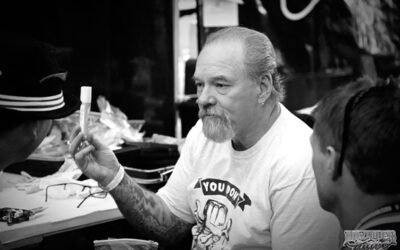
Sua Sulu’ape Paulo II was born in 1949 or 1950 in Matafa’a, a village near Lefaga on the Samoan island of Upolu. He died on November 25, 1999, in Auckland, New Zealand. In the years between starting his practice and his death, he became the most internationally influential Samoan tattooist of the twentieth century — the person most responsible for carrying tatau out of the Samoan diaspora and into contact with the broader world of Polynesian cultural revival, fine art, and global tattoo culture.
His full title, Sua Sulu’ape, is not a name in the ordinary sense. It is an inherited designation held by the leading family of master tattooists — tufuga ta tatau — in Samoa. Sua Sulu’ape Paulo II carried it as his father had before him.
He grew up watching his father work and began tattooing at seventeen or eighteen, trained within one of the two hereditary families that have held the tatau tradition for centuries. When he migrated to Auckland in 1973, he brought that lineage to a city already home to the world’s largest Polynesian urban community and built a practice that eventually extended well beyond the Samoan diaspora. He worked across New Zealand, across Europe, and across the Pacific — connecting with artists, indigenous cultural practitioners, and tattoo communities who found in his work both a living technical tradition and a model for what cultural revival could look like. Several tattooing traditions he encountered, dormant or broken, were in active revival by the time he died.
He was celebrated for all of this, and at times controversial within Samoan culture for the boundaries he chose to cross — particularly his willingness to tattoo non-Samoans with the pe’a, the traditional male tatau, a practice that carried ceremonial obligations extending deep into Samoan cultural life. He was killed at his Auckland home in November 1999, at around fifty years old, at the height of his influence.
The tradition
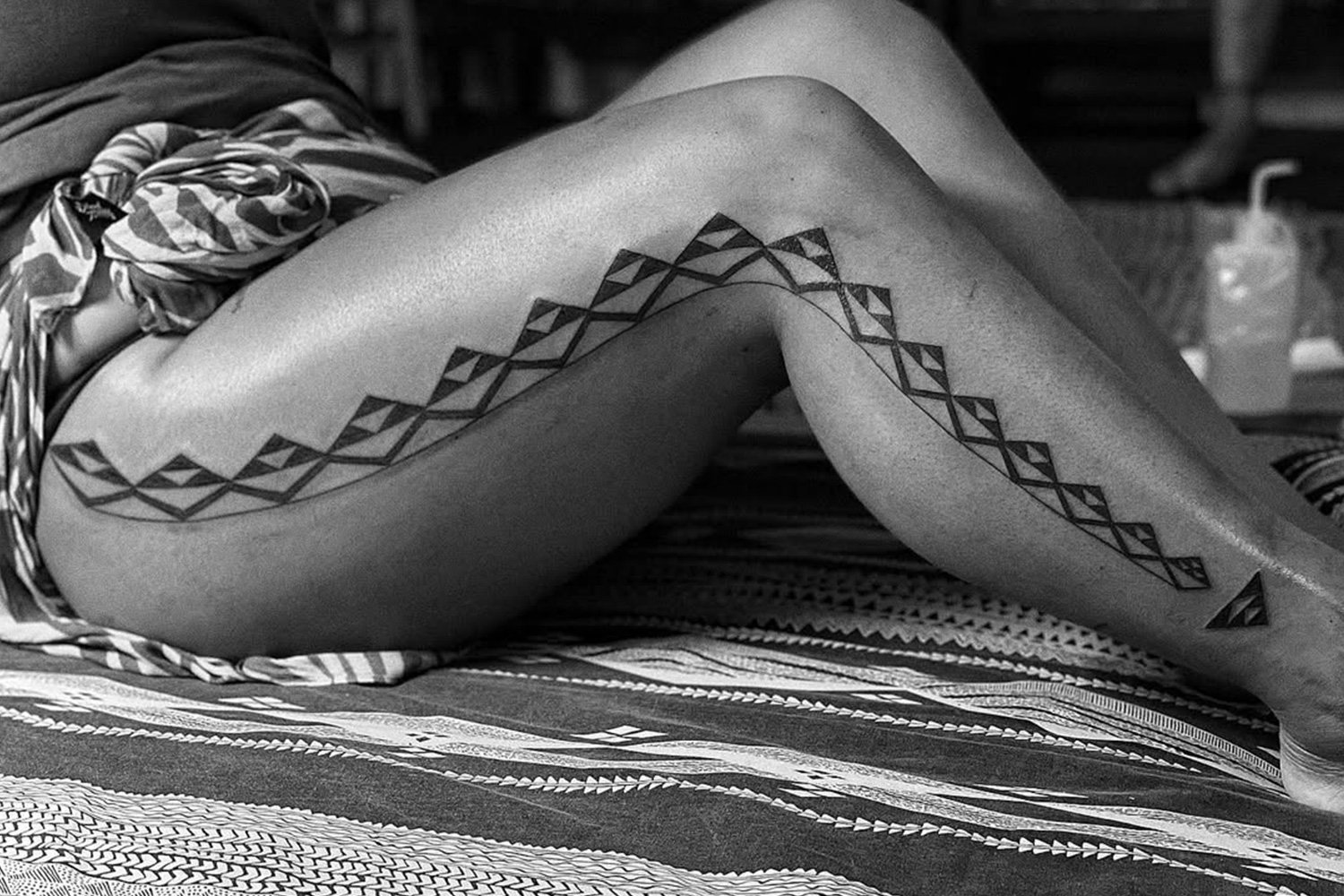
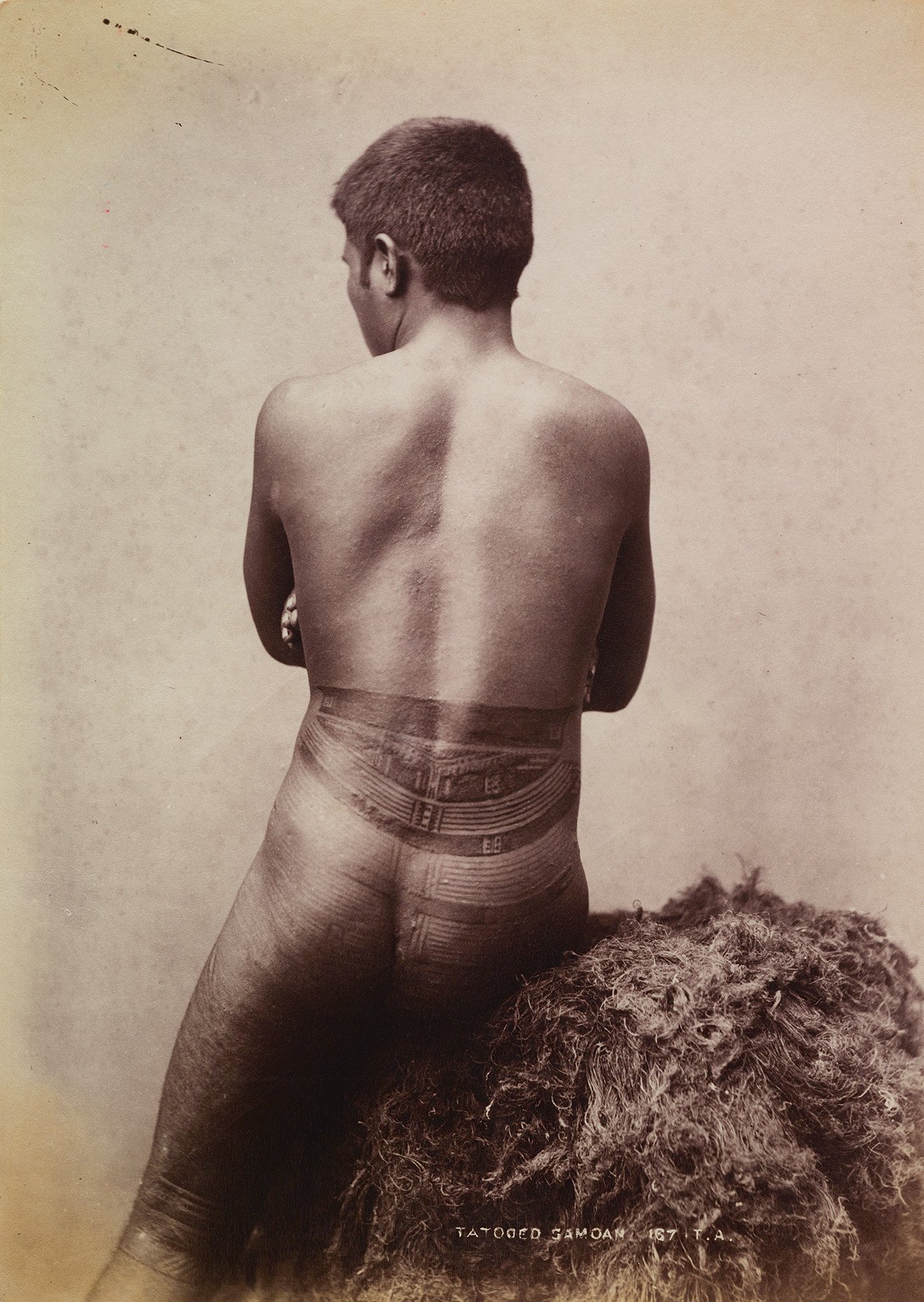
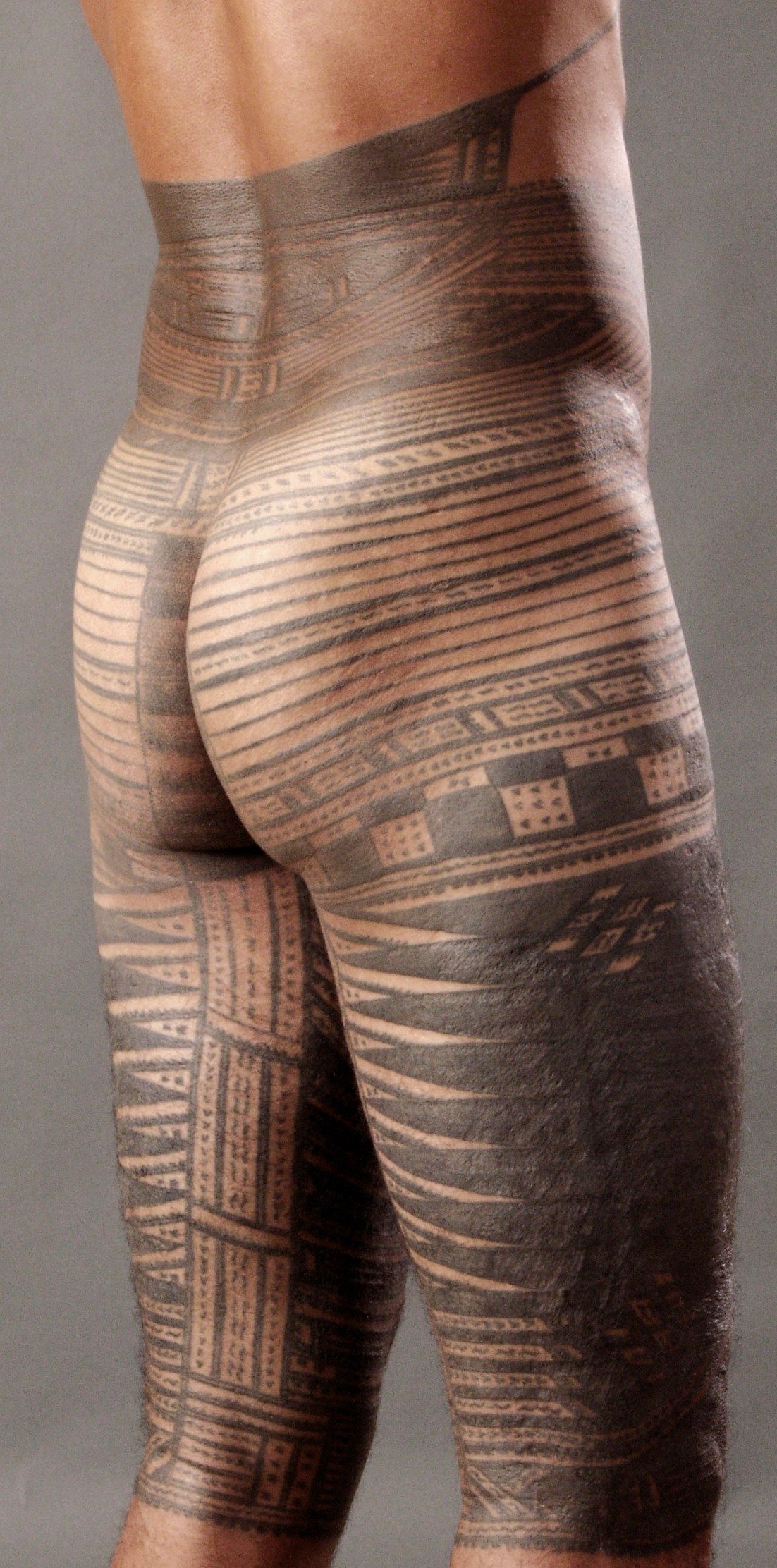
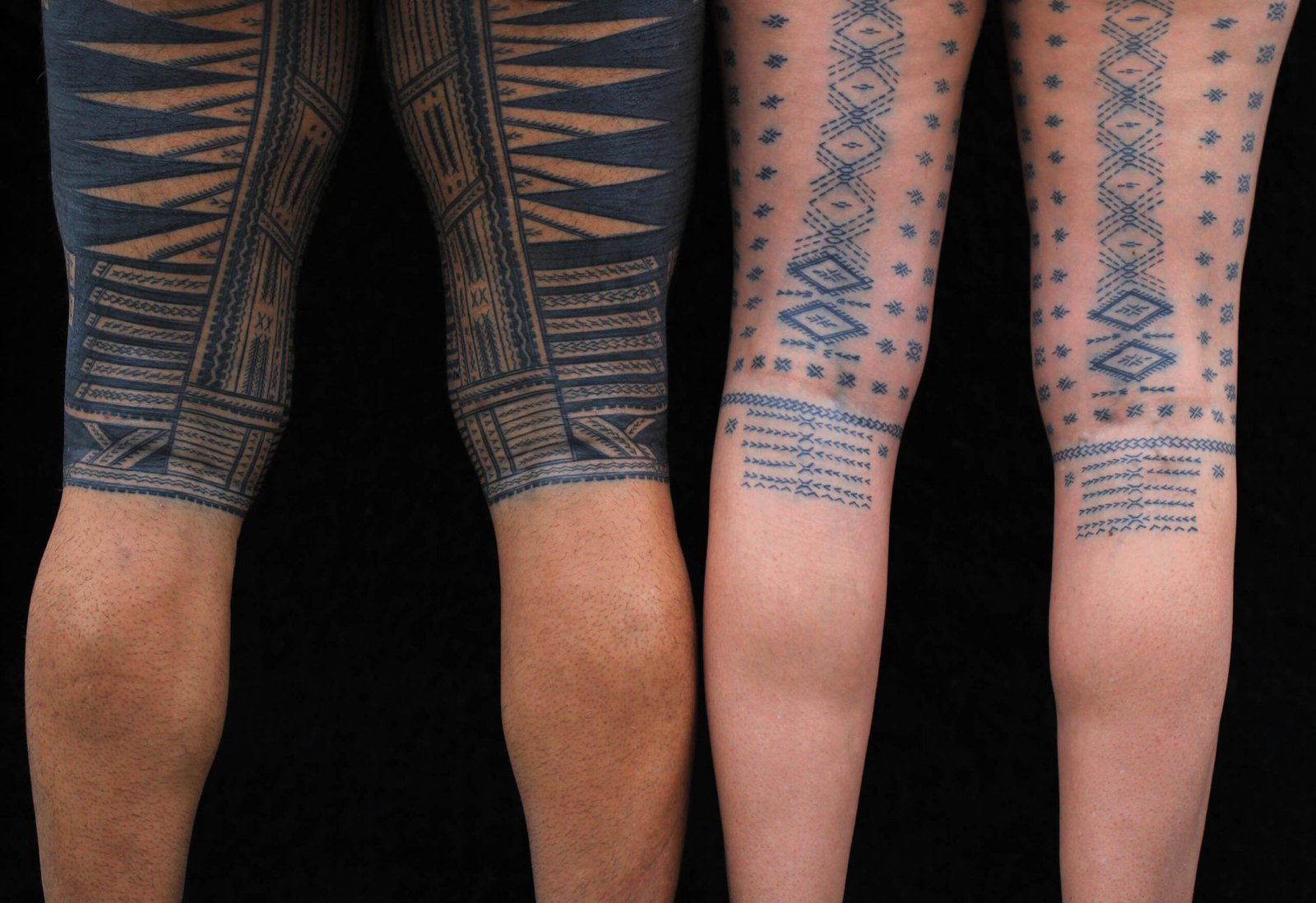
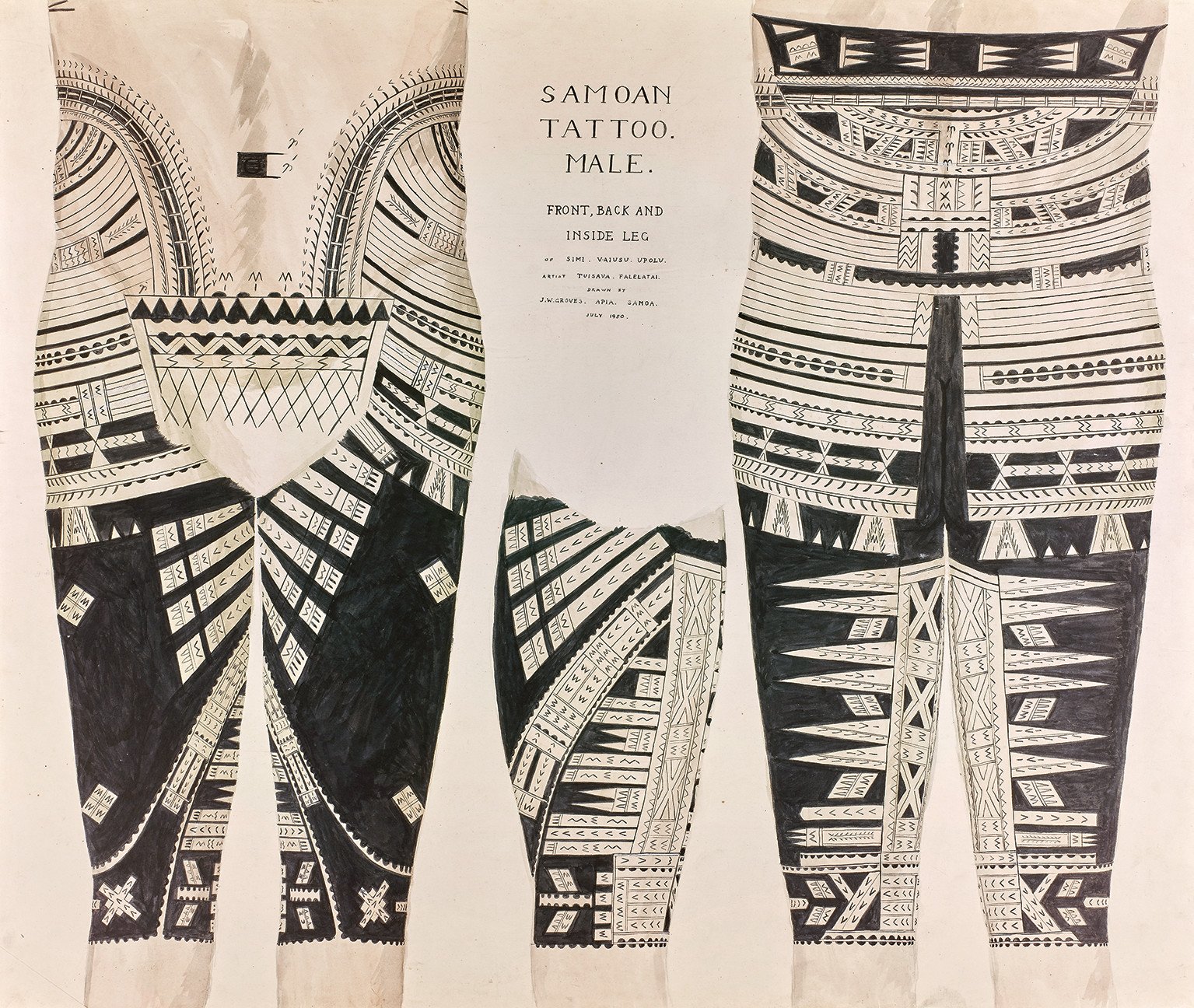
Tatau — the word from which the English word tattoo derives — is Samoa’s most enduring and most demanding cultural practice. The pe’a, the traditional male tatau, covers the body from the waist to the knees in dense, precisely geometric black patterns; receiving it is understood as a sustained act of endurance and commitment, not a single event but a process completed across multiple sessions of real pain. A man who begins the pe’a and stops before it is finished is called pe’a mutu — a broken tattoo — and the social weight of that failure was historically severe. The malu, the female tatau, runs from the upper thigh to below the knee; its Samoan name means “shelter” or “protection,” and it marks a woman’s readiness to carry cultural responsibility for her family and community.
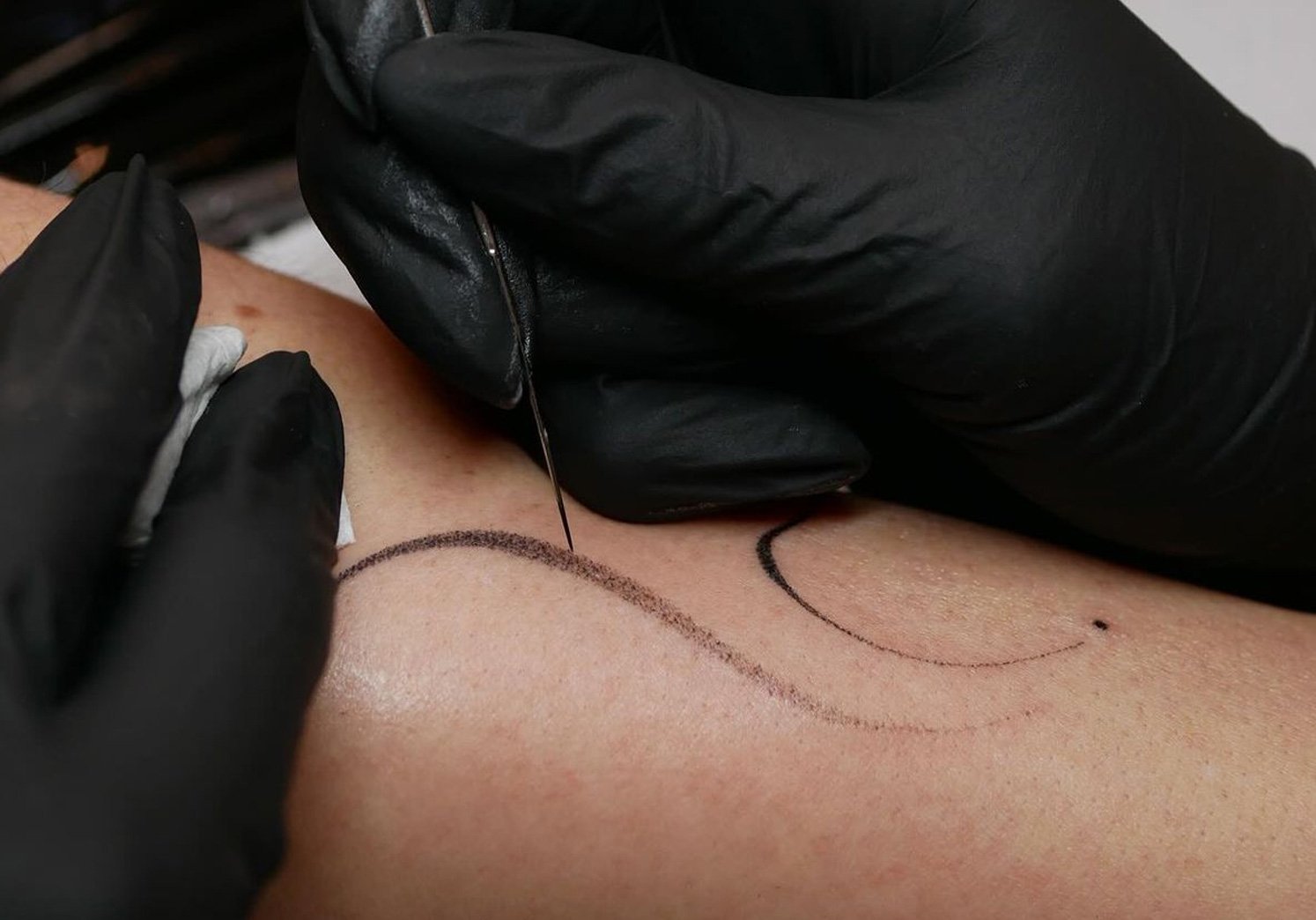
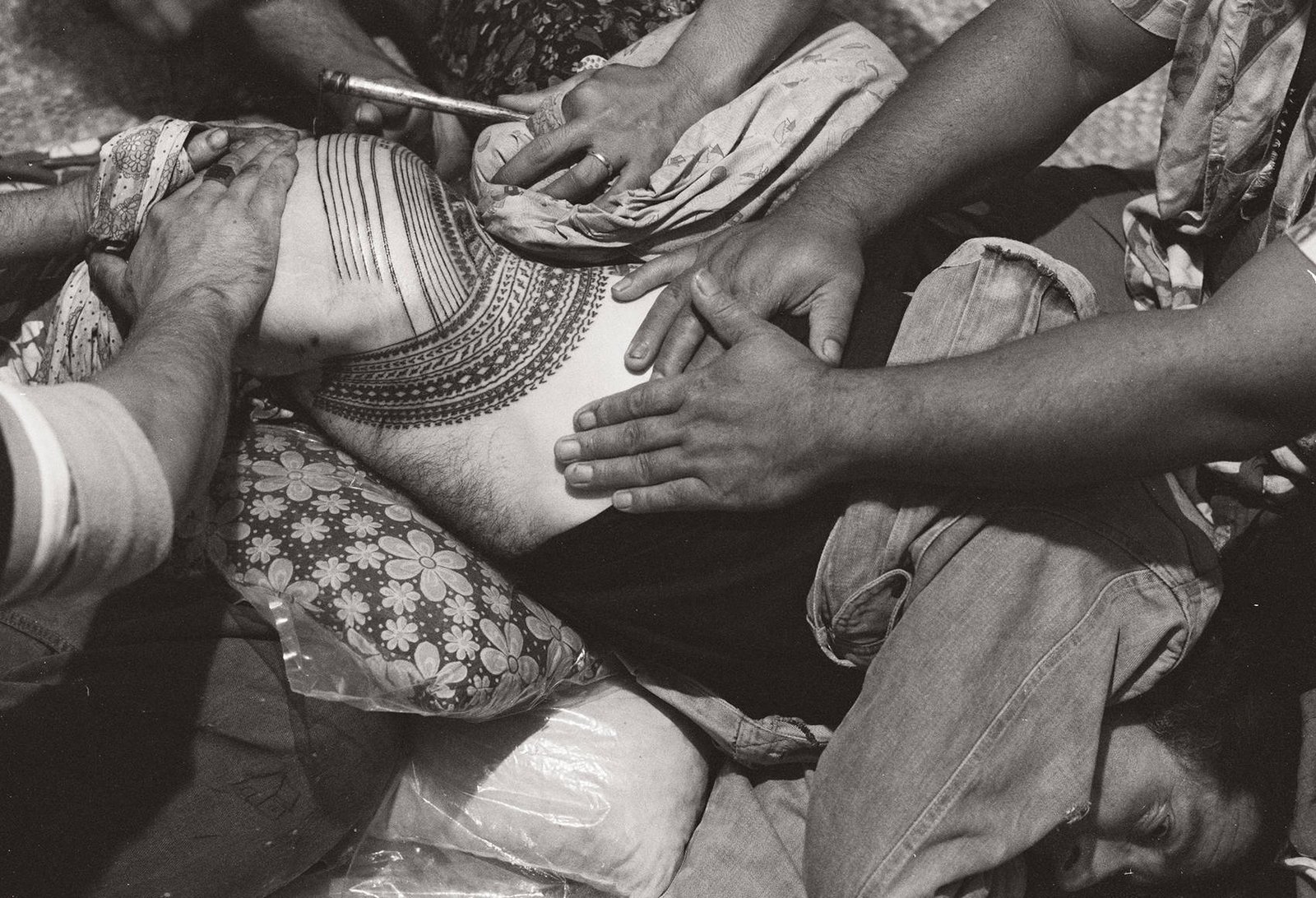
The role of tufuga ta tatau has been held for centuries within two specific Samoan hereditary clans: the Sa Sua family from Savai’i and the Sa Tulou’ena family from Upolu. These are not merely families of skilled craftspeople; they are the custodians of a body of knowledge — the patterns, their meanings, the tools, and the ceremonial protocols — that younger members absorb through years of watching, assisting, and then practising under their elders. A tufuga works with two assistants called ‘au toso, who stretch the skin and support the process. The tools are handmade: combs of sharpened bone or tusk bound to wooden handles, dipped in ink made from burned candlenut soot. Each tufuga makes these tools themselves; the making is part of the mastery.
Sua Sulu’ape Paulo II was born directly into this lineage. His father, Sulu’ape Paulo I, was an established master in Samoa. His brothers — Sua Sulu’ape Petelo, Sua Sulu’ape Alaiva’a Petelo, and Sua Sulu’ape Lafaele — all became practitioners. He grew up watching his father work. In an interview recorded by Sean Mallon at Te Papa Tongarewa in March 1999 — eight months before his death — Paulo said he had wanted to be a tattooist from the age of three or four. His father kept his tools in a bowl in the house, and Paulo watched them.
He attended Chanel College, a Catholic boarding school near Apia. He began tattooing in 1967, at around seventeen or eighteen years old. His father, he recalled, was a hard man to please — when Paulo completed his first work, his father’s assessment was simply okay — neither criticism nor praise, just acknowledgement that the threshold had been crossed.
Auckland
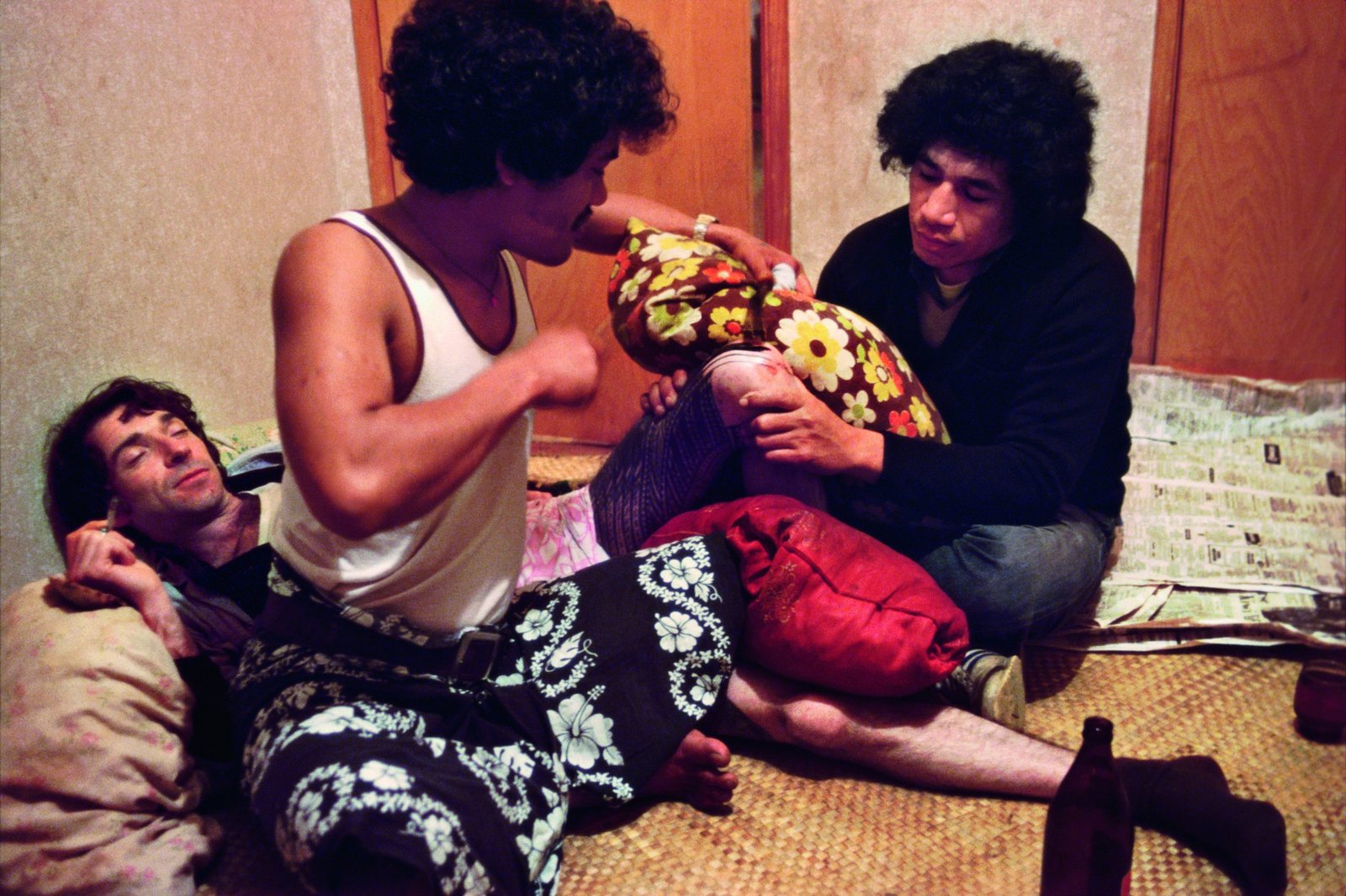
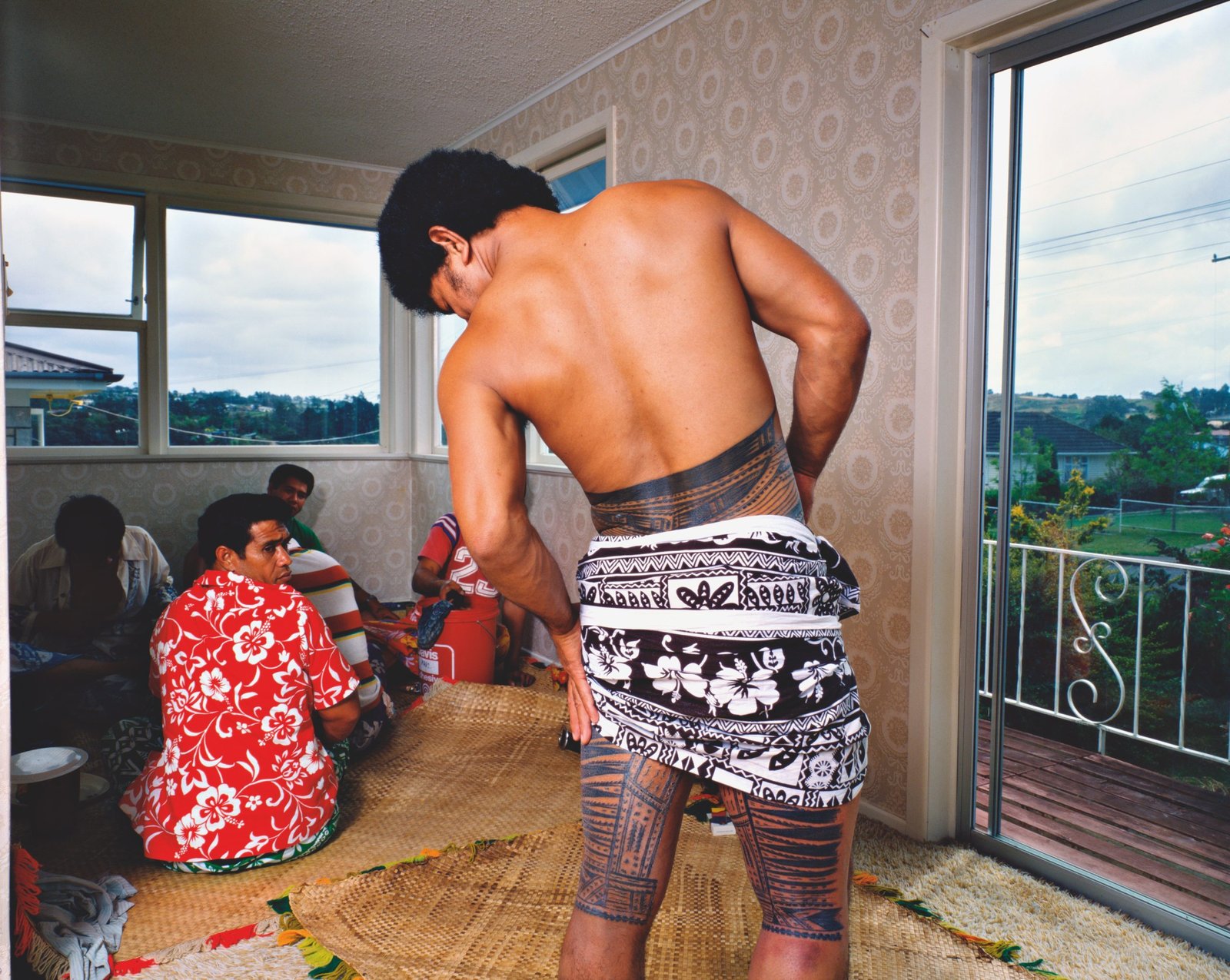
Sua Sulu’ape Paulo II migrated to Auckland in 1973, joining the Samoan diaspora community that had been growing in New Zealand since the 1950s. Auckland was — and still is — the largest Polynesian city in the world. The Samoan community there was substantial, tightly connected, and hungry for cultural continuity. Paulo worked during the day and tattooed in the evenings and at weekends, in people’s homes, on pandanus mats on the floor of suburban living rooms. His clients included prominent members of the community: among them, the artist Fatu Feu’u and the activist and lawyer Fuimaono Tuiasau.
The practice he was carrying out was specific to Samoan cultural life and was expected to stay there. What changed was a New Zealand painter named Tony Fomison.
Fomison (1939–1990) had moved to Auckland in 1973 — the same year as Paulo — and had spent the following years developing an unusually deep engagement with Māori and Polynesian culture. He was a Pākehā artist of working-class origins, and his commitment was serious: not tourism, not aesthetics borrowed at a distance, but a direct personal relationship. In 1979, at the age of forty, Fomison received a pe’a from Paulo. Some Samoans objected — this was a culturally loaded act, not just the application of a design, and placing that mark on a European brought with it the ceremonial obligations of soga’imiti (the man who holds the pe’a). Paulo proceeded anyway, and the decision was quietly significant: it announced that the tradition could cross cultural lines under the right conditions, and it opened a connection between Paulo and the New Zealand art world that would eventually bring his work to international institutional attention.
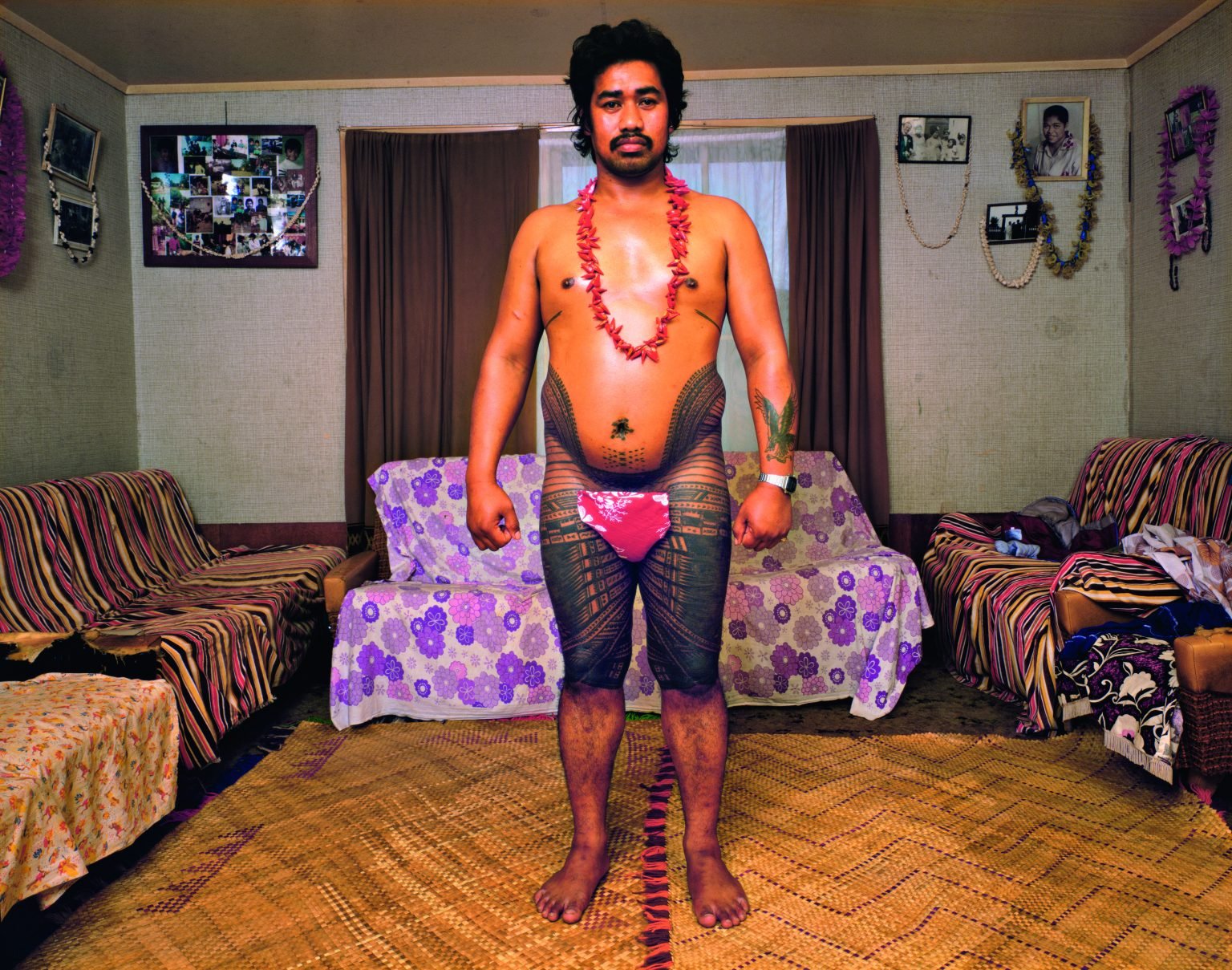
It was Fomison who introduced Sua Sulu’ape Paulo II to photographer Mark Adams. Adams began documenting Paulo’s practice in 1978, building over decades a body of photographs now recognised as a watershed moment in New Zealand photography — and a primary visual record of Paulo’s work and the community it served. The images show sessions in progress in Auckland living rooms: clients prone on mats, skin marked and bloodied, assistants stretched beside them, Paulo working. They are not comfortable photographs. They record a serious, physically demanding practice in its actual context.
Europe and the international circuit
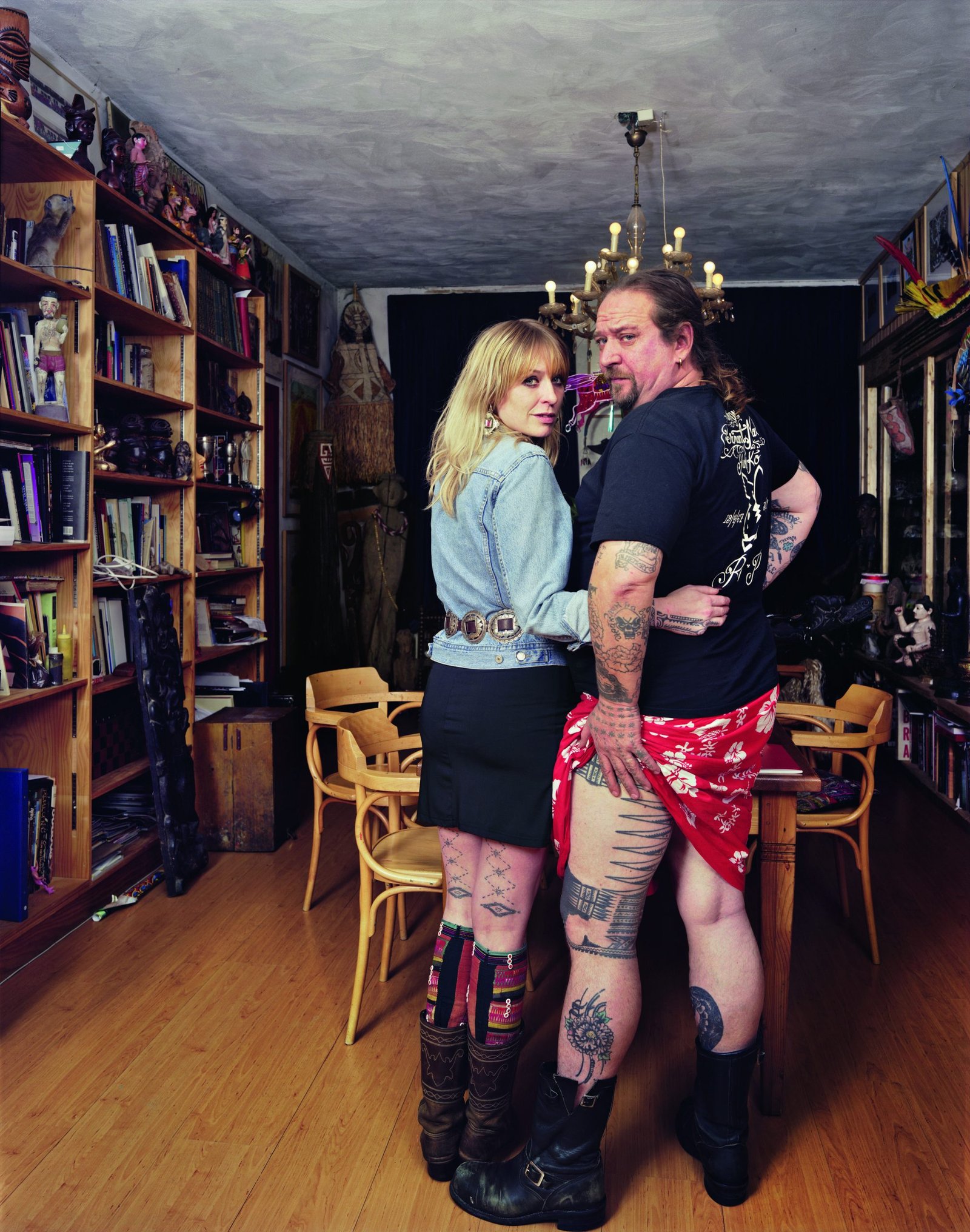
In 1985, Paulo’s brother Sua Sulu’ape Alaiva’a Petelo attended a tattoo convention in Rome at the invitation of American tattooist Don Ed Hardy and Dutch artist Henk Schiffmacher. It made them the first Samoan tufuga ta tatau invited to an international convention. Over the following decade, Paulo followed his brother’s path into European tattooing circles. He developed relationships with practitioners across Europe, did residencies at the Tattoo Museum in Amsterdam at Schiffmacher’s invitation, and began receiving international visitors and clients at his home in Auckland.
His work drew serious attention from people who understood the craft: the precision of the patterns, the density of coverage, the technical difficulty of hand-tapping large-scale geometric designs consistently across the contours of the body. European tattooing at the time was coming off a century of association with sailors, outsiders, and carnival culture; the Pacific traditions, as they became known through practitioners like Sua Sulu’ape Paulo II and through the growing literature on indigenous tattooing, represented something structurally different — a practice embedded in a social order, carrying meaning the wearer lived with. That difference appealed to people in tattoo culture who were already moving toward viewing tattooing as a cultural practice rather than personal decoration.
The Polynesian revival
Paulo’s most lasting influence was not in Europe but in the Pacific. The survival of tatau in Samoa had been imperfect but continuous; the same was not true of other Polynesian tattooing traditions. In Tahiti, the tattooing tradition had been suppressed by missionaries in the nineteenth century and was in the early stages of revival. In Hawaiʻi, the unbroken technical lineage — the knowledge of how to actually make and use traditional tools — had been broken entirely. In New Zealand, tā moko, the Māori tradition of facial and body tattooing, was undergoing a careful revival.
Sua Sulu’ape Paulo II worked actively with all three. He supported Māori tattooists and facilitated the reintroduction of traditional techniques for practitioners who were rebuilding from oral history and documentary records rather than from living transmission. He worked with Tahitian practitioners. He went to Hawaiʻi, where he connected with Keone Nunes, who had been working with Hawaiian designs but using a tattoo machine, unable to find anyone in the islands who could teach him the traditional hand-tapping method. In 1996, Paulo showed Nunes how to make and use traditional tools. The technical gap that had stopped Nunes — the single missing link between historical knowledge and working practice — was closed in that meeting.
This was the character of Paulo’s outreach: not the donation of Samoan designs to other traditions, but the sharing of the underlying technical knowledge — the hand-tapping method, the tool construction — that allowed each tradition to work in its own way. The common ancestry of Polynesian tattooing meant the tools were essentially the same; Paulo’s knowledge of how to make them was transferable to traditions that had lost that thread.
He was also, as Sean Mallon of Te Papa Tongarewa has noted, carrying forward work that earlier members of the Sa Sua guild had already begun. In the 1980s, another tufuga, Lesa Li’o, had gone to Tahiti and helped with the revival there. Sua Sulu’ape Paulo II was working within an established tradition of the Sulu’ape family extending tatau across the wider Pacific — not innovating in isolation but continuing a direction the family had already set.
Controversy
Within Samoan culture, Sua Sulu’ape Paulo II was a celebrated and sometimes controversial figure. The controversy centred primarily on his willingness to tattoo non-Samoans with the pe’a — a practice with deep implications, since the pe’a carries obligations that extend into Samoan ceremonial life. A soga’imiti (a man with the pe’a) is expected to fulfil duties at matai (chiefly) events, to carry the mark with the weight of the culture behind it. The question of what those obligations meant for a European recipient who was committed to the culture but not born into it did not have a simple answer. Paulo’s position was that the recipient’s commitment mattered more than their ancestry — an interpretation some Samoans shared, while others did not.
His wider willingness to push the form — to work in increasingly cosmopolitan contexts, to develop new approaches alongside traditional ones — also divided opinion. The mark of a skilled tufuga includes aesthetic judgment and personal vision; the Sulu’ape family had always operated with an expectation of craftsmanship rather than mere replication. Whether Paulo’s adaptations honoured or strained that tradition was a question without consensus.
His death
Sua Sulu’ape Paulo II was killed on November 25, 1999, at his home in Auckland. His wife, Epifania Sulu’ape, killed him with an axe after learning that he planned to leave her for his Swedish partner, Heidi Hay. He was forty-nine or fifty years old.
The death cut short a practice and a period of influence that showed no sign of slowing. He was at the height of his international reach, working across the Pacific and in Europe, and the network of connections he had built — with Keone Nunes, with Māori practitioners, with Tahitian revivalists, with the European tattooing world — was still active and expanding. The Sulu’ape family continued; his brother Alaiva’a Petelo, who had been balancing full-time education work with tattooing, retired from education and became a full-time tufuga in the wake of Paulo’s death.
The legacy of Sua Sulu'ape Paul II
In 2001, the Sulu’ape family held a title-bestowal ceremony at Lefaga, Samoa. The Sulu’ape title was conferred on Keone Nunes — the first Hawaiian and the first non-Samoan to receive it — in formal recognition of his relationship with Sua Sulu’ape Paulo II and his continuation of the knowledge Sua Sulu’ape Paulo II had shared with him. The ceremony acknowledged what Paulo’s teaching had made possible: that the technical lineage of traditional Hawaiian tattooing now ran directly through the Sulu’ape family.
In 2009, Te Papa Press published Tatau: Samoan Tattoo, New Zealand Art, Global Culture, by Sean Mallon and Sébastien Galliot, with a substantial photographic record by Mark Adams. The book documented Paulo’s life and work alongside the broader history of tatau and its contemporary revival, and became the primary scholarly reference on the subject. A second, expanded edition followed decades later.
Paulo’s tools are held in the collection of the Rotorua Museum in New Zealand — a city with deep Māori cultural connections, where the tools sit as a material record of the cross-cultural transmission that Paulo embodied in his working life.
The tradition he carried has not contracted since his death. Tatau is experiencing what is widely described as one of its strongest revival periods, with tufuga ta tatau travelling internationally to serve diaspora communities and a growing number of young Samoans receiving the pe’a and malu both in Samoa and abroad. In 2022, UNESCO added Samoan tatau to its Representative List of the Intangible Cultural Heritage of Humanity. Paulo did not live to see that recognition, but the revival it marks was, in substantial part, built on the work he did in suburban Auckland living rooms across the last quarter of the twentieth century.
Sources & further reading
- Sua Sulu’ape Paulo II, Pe’a and Tony Fomison. Wikipedia, The Free Encyclopedia.
- Sean Mallon, Sébastien Galliot. Tatau: Samoan Tattoo, New Zealand Art, Global Culture. Te Papa Press, 2009 (subsequently expanded edition).
- Sean Mallon. Samoan Tatau: A Tufuga Begins His Work. Museum of New Zealand Te Papa Tongarewa, Te Papa Blog, May 2014.
- Tatau: Author Biographies and 10 Questions. Museum of New Zealand Te Papa Tongarewa.
- Tatau: Sāmoan Tattoo collections and documentary resources. Museum of New Zealand Te Papa Tongarewa.
- Sean Mallon, Nicholas Thomas, Peter Brunt. A Tribute to Tatau with photos by Mark Adams. E-Tangata, 2023.
- Dominic Godfrey. The Story of Samoan Tattooing. RNZ, August 2018.
- Who was the artist Tony Fomison? That’s still a contentious question. RNZ, March 2025
- Tatau: Marks of Polynesia — Bios. Japanese American National Museum.
- Stuart H. Coleman. Tapping Into Ancestral Wisdom: Reviving the Nearly Lost Art of Native Hawaiian Tattooing. NMAI Magazine (Smithsonian), 2024.
- Kua’aina Associates. Background on Paulo’s 1996 meeting with Keone Nunes and the 2001 bestowal of the Sulu’ape title.