Related Posts

Berber (Amazigh)
Berber Tattoos: Marks of the free people
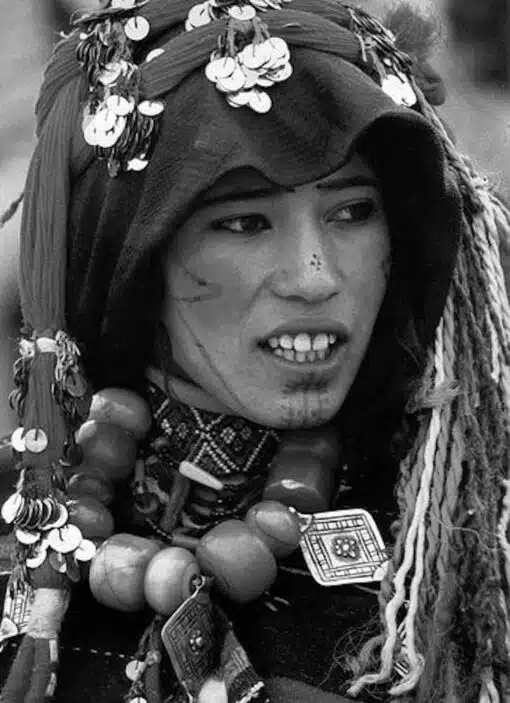
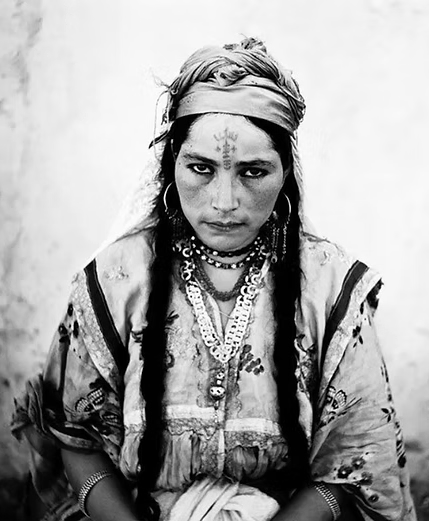
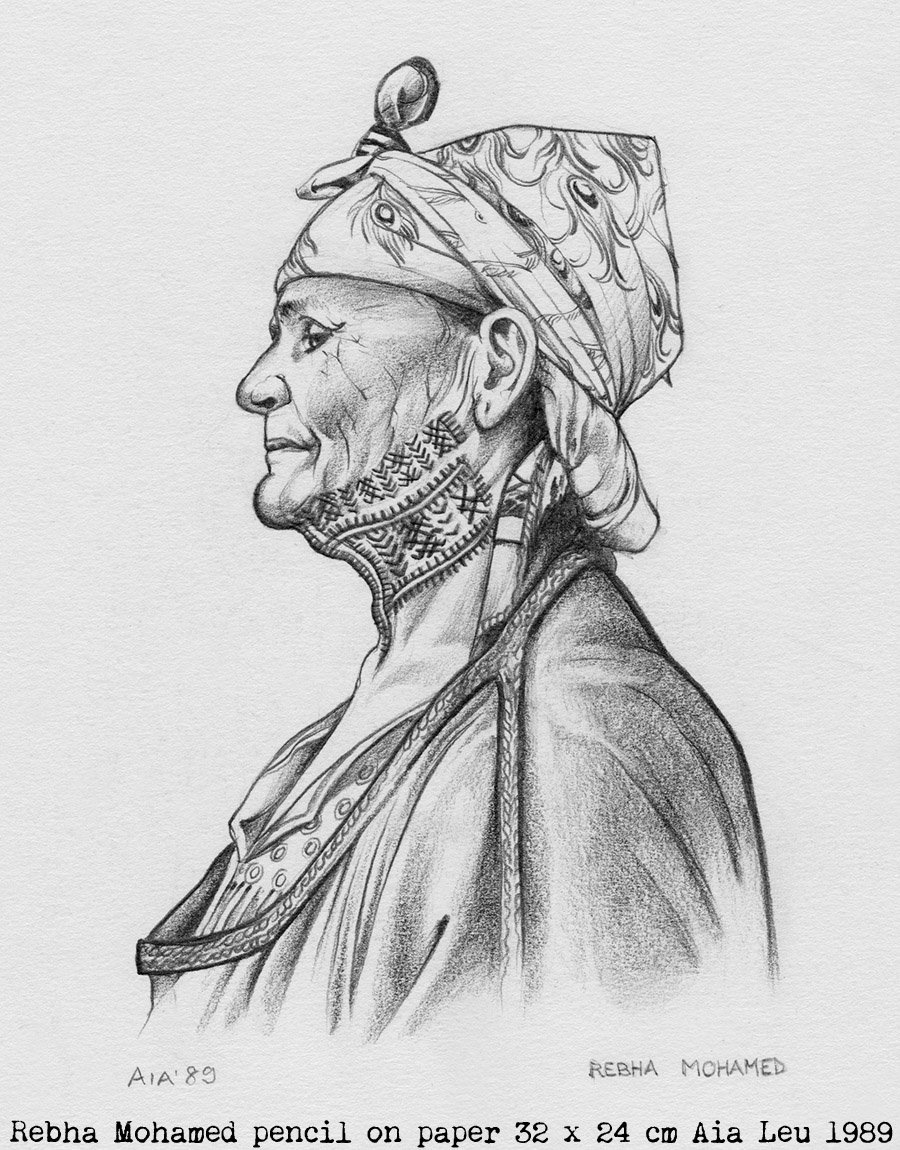
Across the mountains, deserts, and coastal plains of North Africa — from the Atlantic coast of Morocco through Algeria, Tunisia, and Libya to the edges of the Sahel — older women carry geometric tattoos on their faces, hands, feet, arms, and chests. The marks are faded now, blue-green or grey against aged skin, and the women who wear them are among the last generation to have received them. The tradition that produced these tattoos — one of the oldest documented tattooing practices in the Mediterranean region — is disappearing within living memory.
The people who created and sustained this tradition call themselves Amazigh (Imazighen in the plural), meaning “free people.” The term Berber, which derives from the Greek and Latin barbaros (“foreigner”), has been the more common external designation but is increasingly replaced by Amazigh in both scholarly and popular usage. The Amazigh are the indigenous people of North Africa, present across the region long before the Arab conquests of the seventh and eighth centuries. Their language — Tamazight, in its various dialects including Tarifit, Tachelhit, and Kabyle — was recognised as an official language of Morocco alongside Arabic in 2011.
The tattoo tradition — called ticharet in some Tamazight dialects — is part of a broader Amazigh visual culture that includes textile weaving, pottery decoration, jewellery-making, and architectural ornamentation. The geometric vocabulary that appears in the tattoos is the same vocabulary that appears on Amazigh carpets, on the carved doors of Berber villages, on silver jewellery from the Atlas and the Rif, and on the pottery of the Kabylie region. The tattoos are one expression of a design language that runs through the entire material culture.
The Tattooed Women
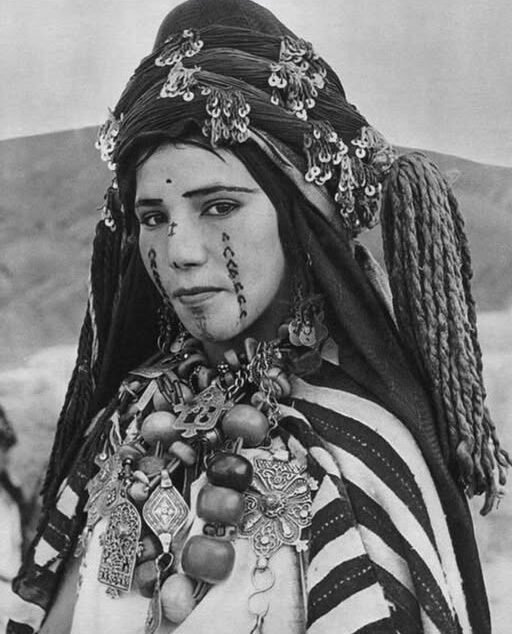
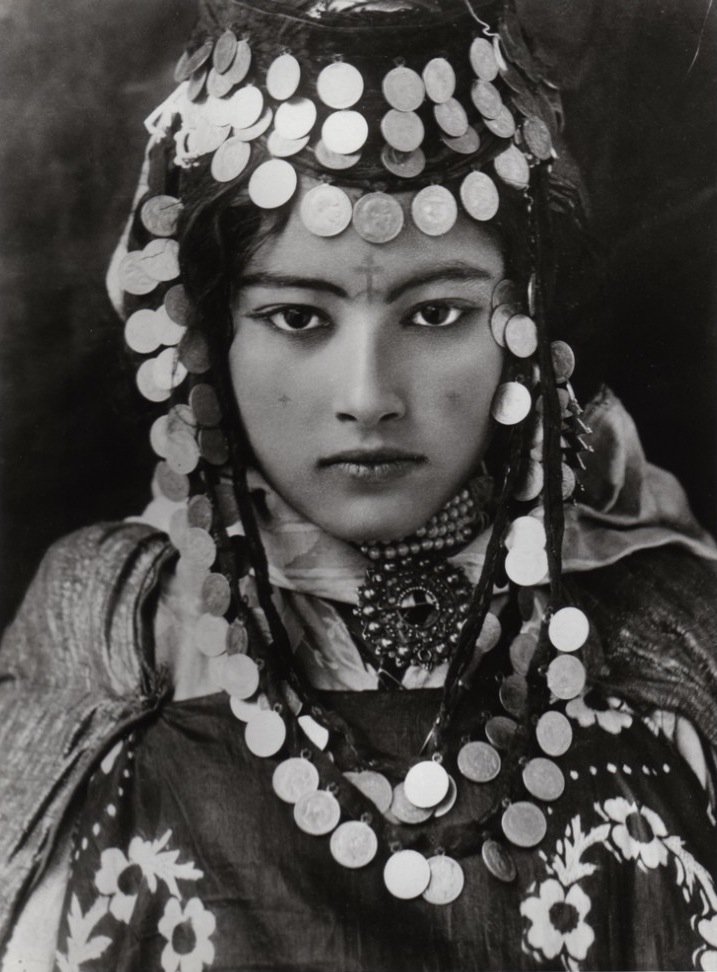
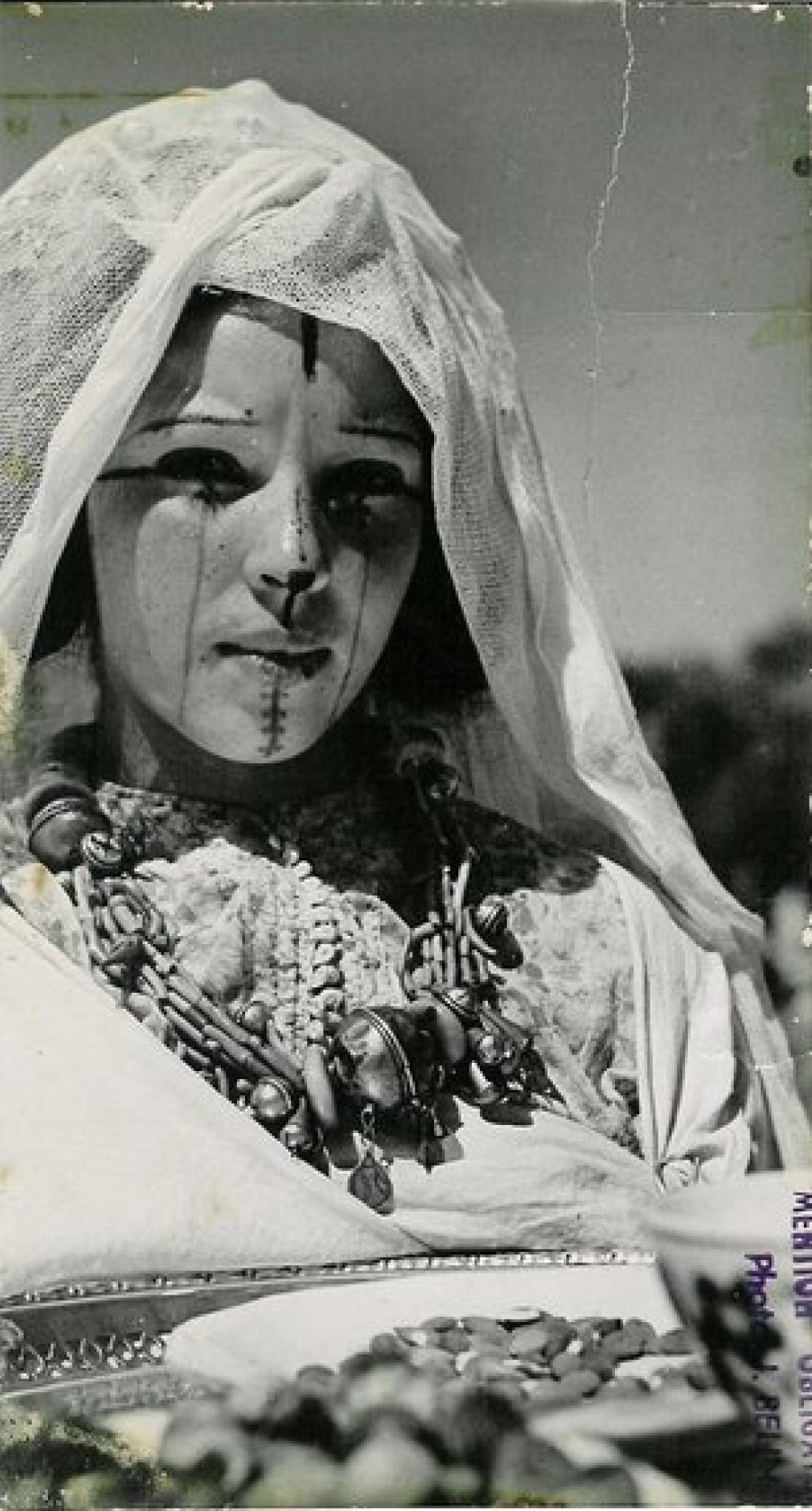
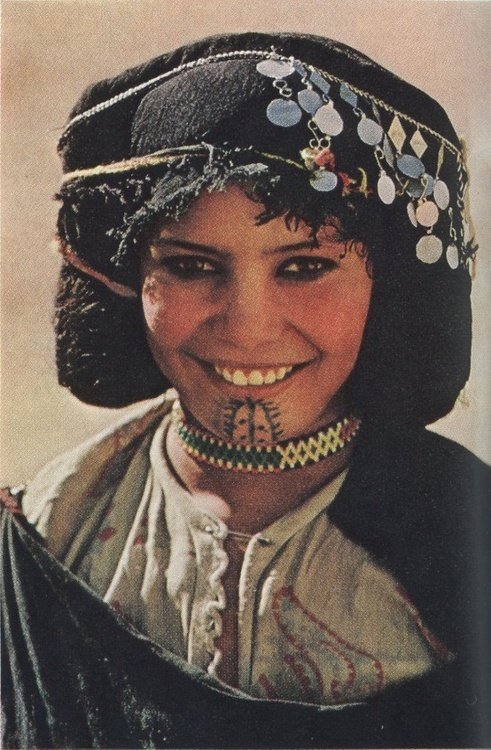
Berber tattoo practitioners
The woman who applied the tattoos held a specific social role. She was called by various terms depending on the region, but her function was consistent: she was a specialist who travelled between villages, carrying her tools and her knowledge with her. She was often described as a wise woman — someone with knowledge of herbal medicine, spells and protective formulas, and remedies for the evil eye and interventions against malevolent spirits. The tattooing was part of a broader practice that included healing, counselling, and the transmission of news between communities.
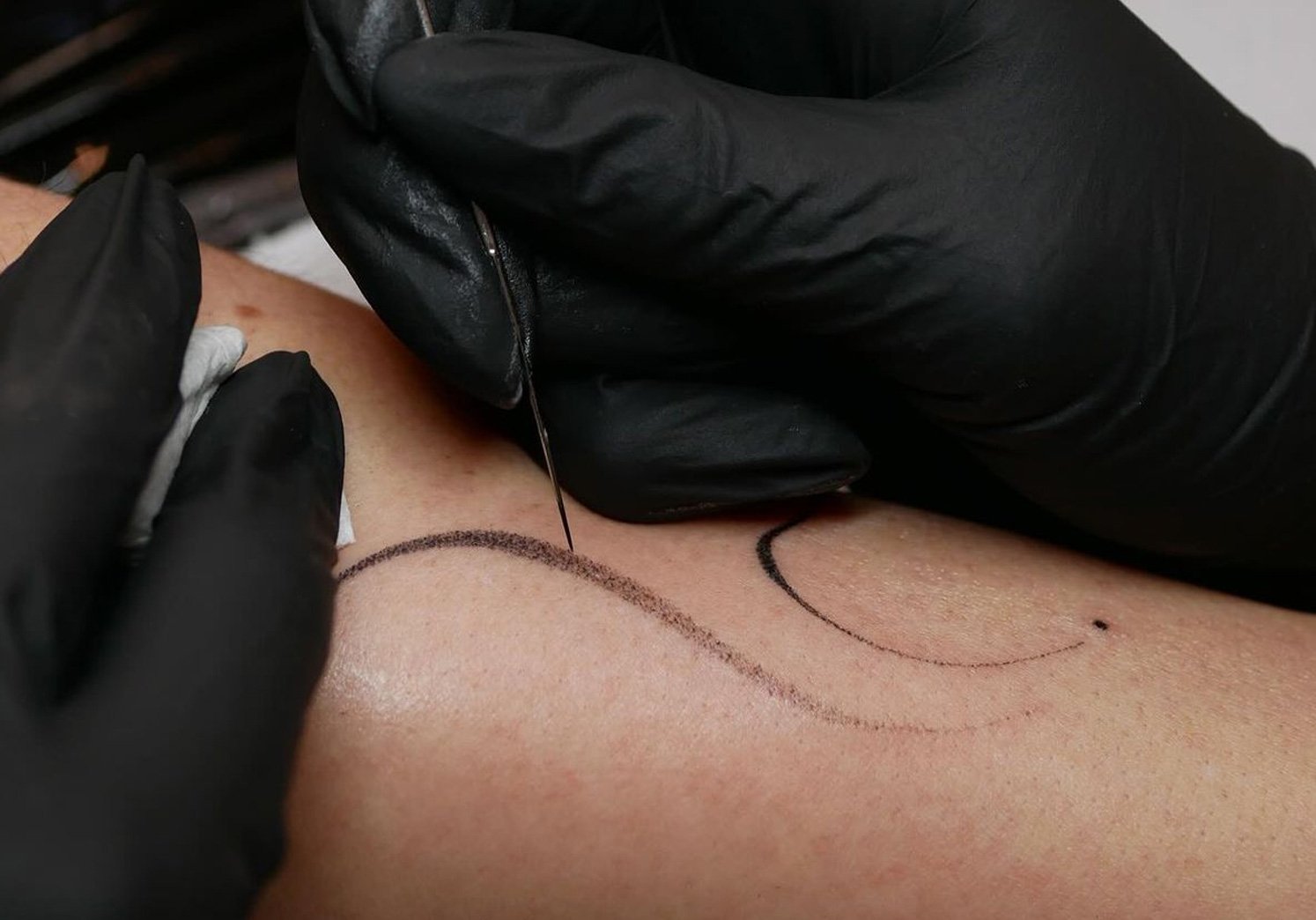
The practitioner used a simple toolkit: a needle or a bundle of needles (sometimes a thorn), soot-based pigment (lampblack mixed with water, sometimes with plant-based additives — gallnut, indigo, and antimony are mentioned in various accounts), and a cloth to wipe the excess. The technique was hand-poke: the needle was dipped in the pigment and pushed into the skin, puncture by puncture, building the design from individual dots and short lines. The pigment settled in the dermis — the same biological mechanism that governs all tattooing.
The application was often painful, and accounts from tattooed Amazigh women describe the experience vividly. Some women received their tattoos willingly and proudly. Others — particularly those tattooed very young — describe being held down by family members while the practitioner worked. The Amazigh women’s relationship to their tattoos is not uniformly positive; the tradition includes both willing participation and coercion, and contemporary accounts from older women reflect both.
Amazigh symbols
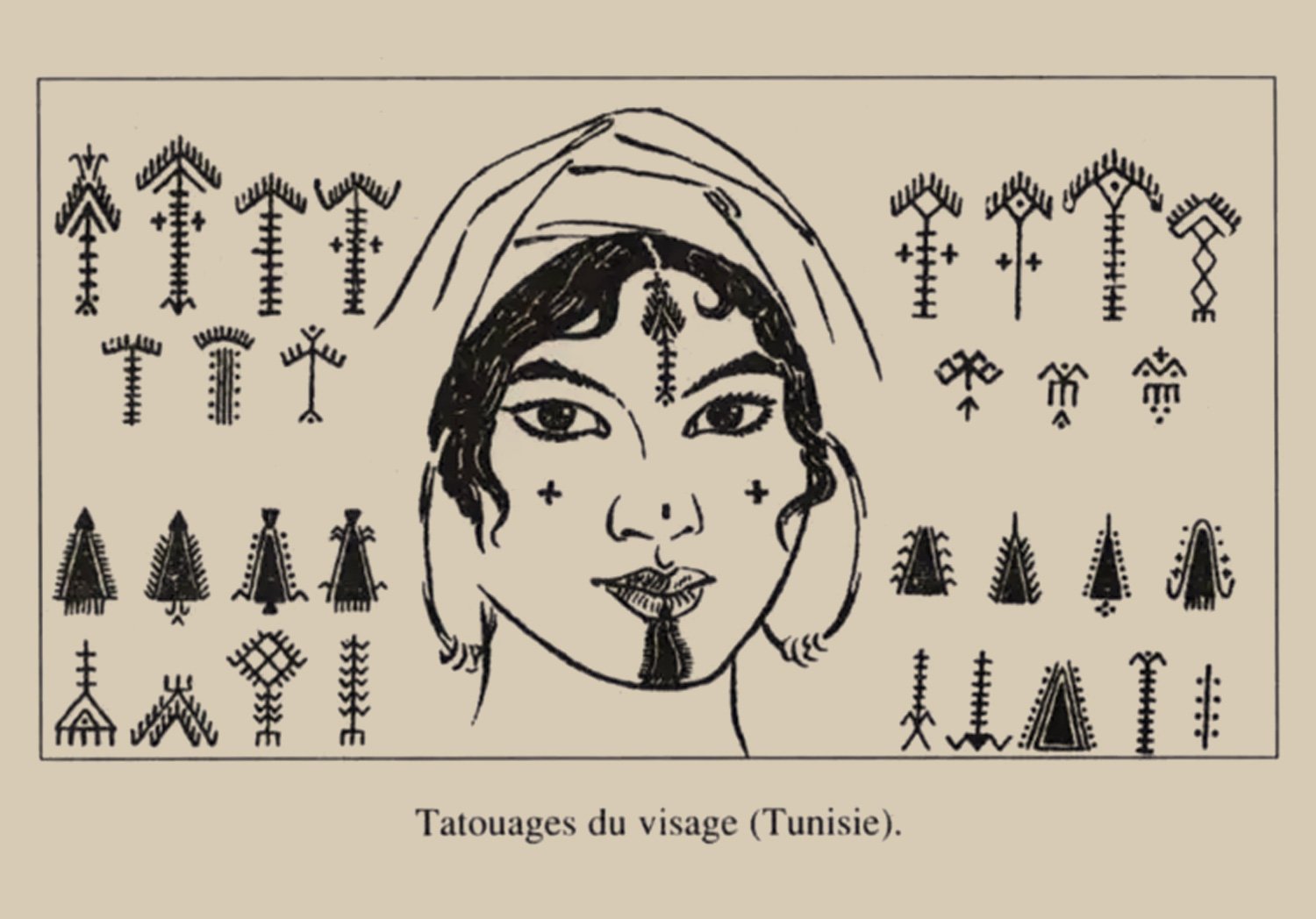
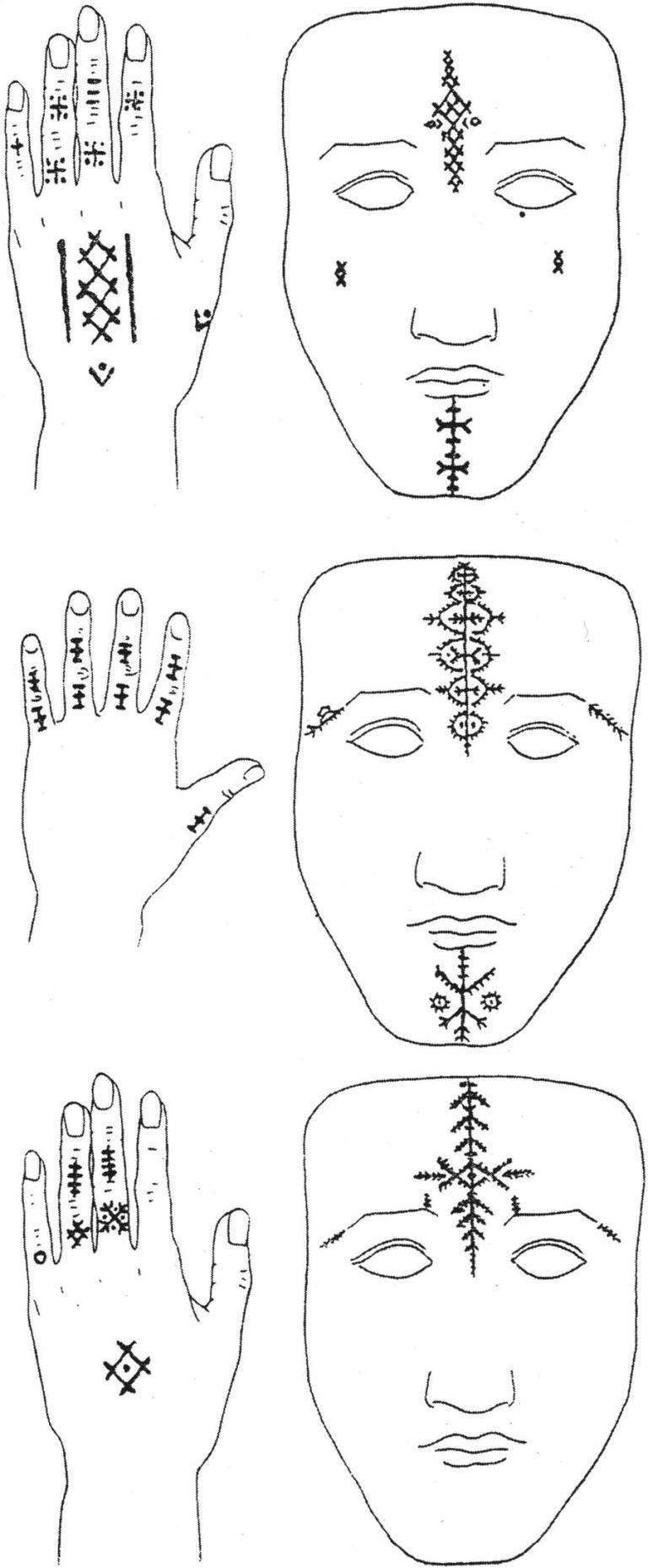
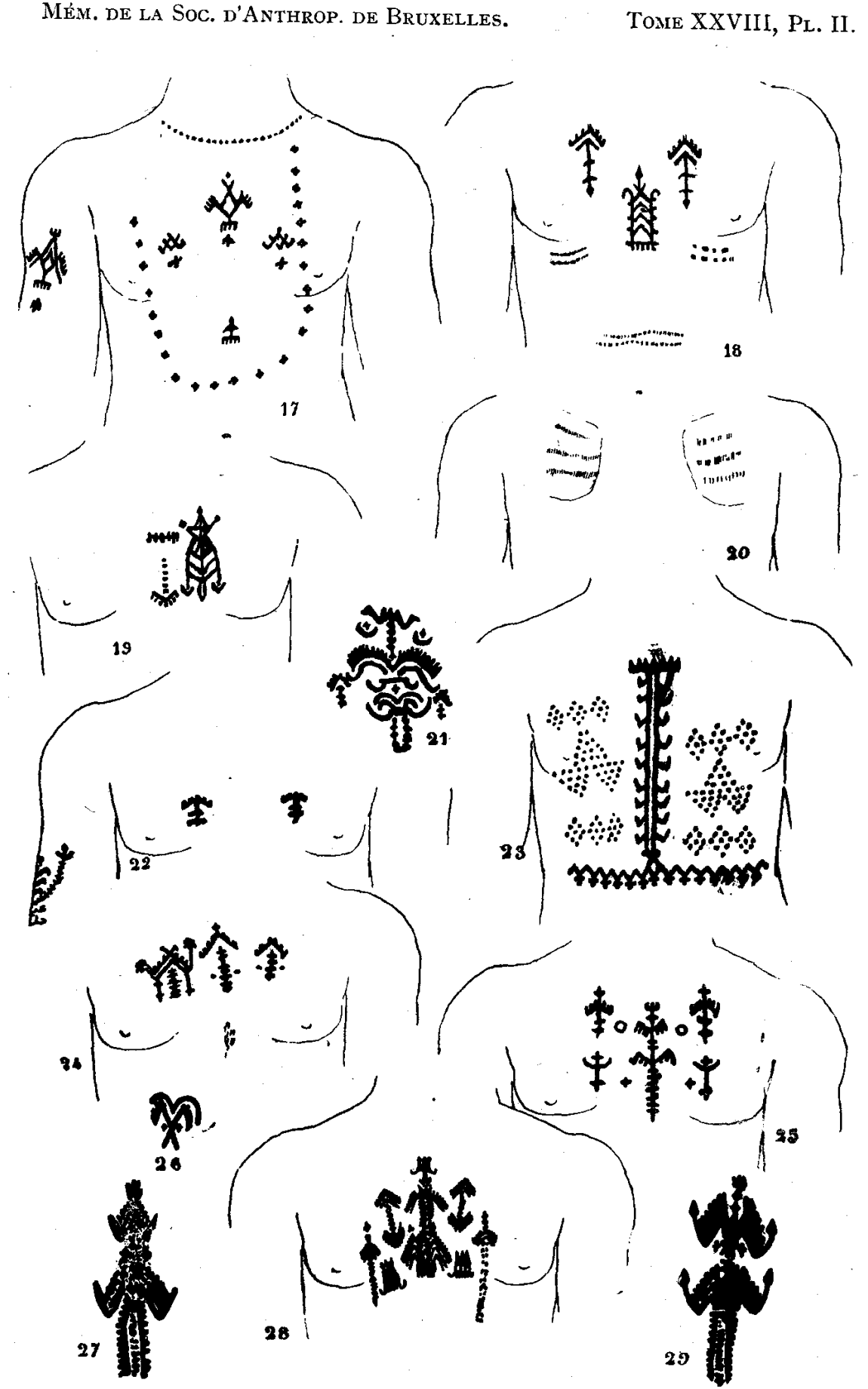
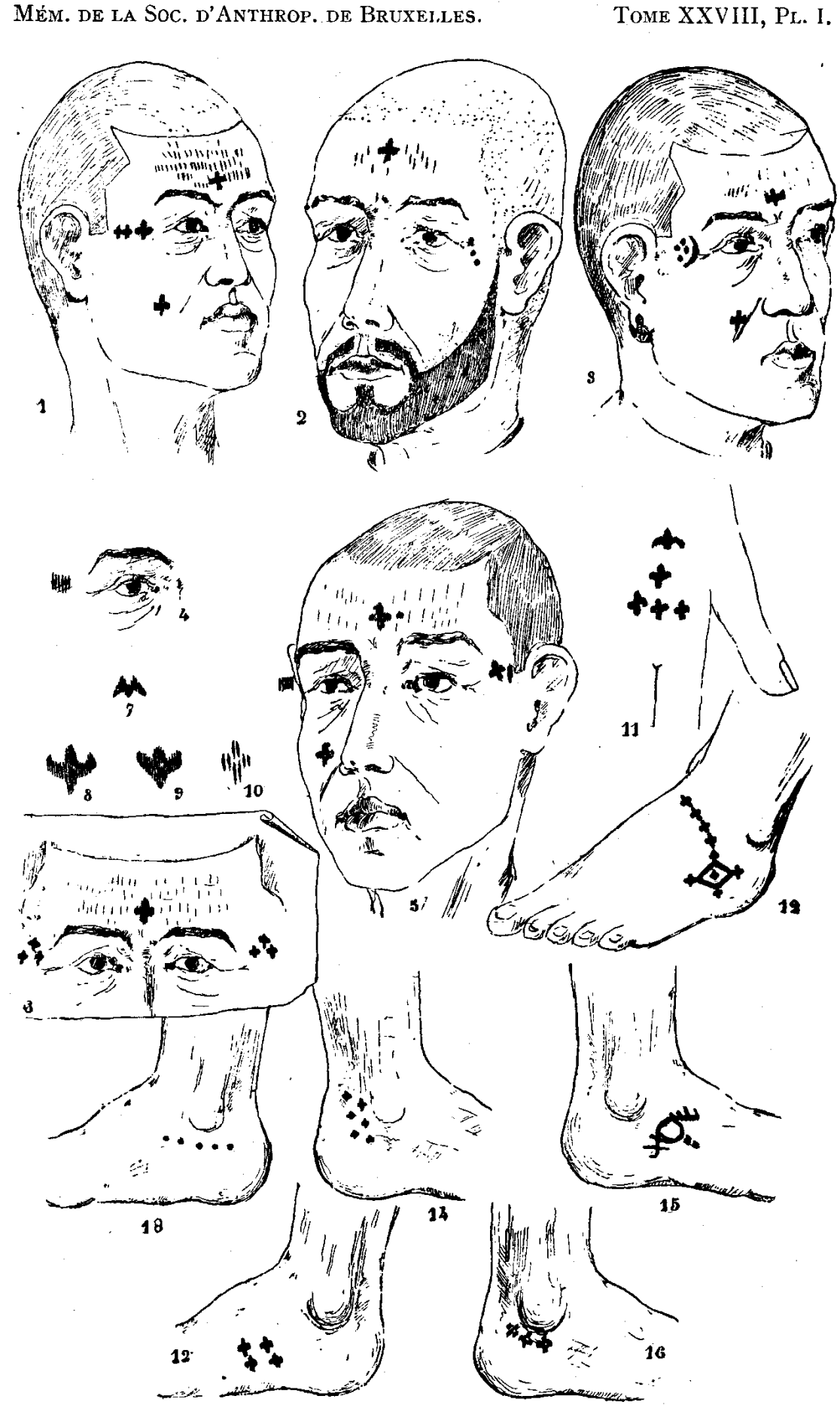
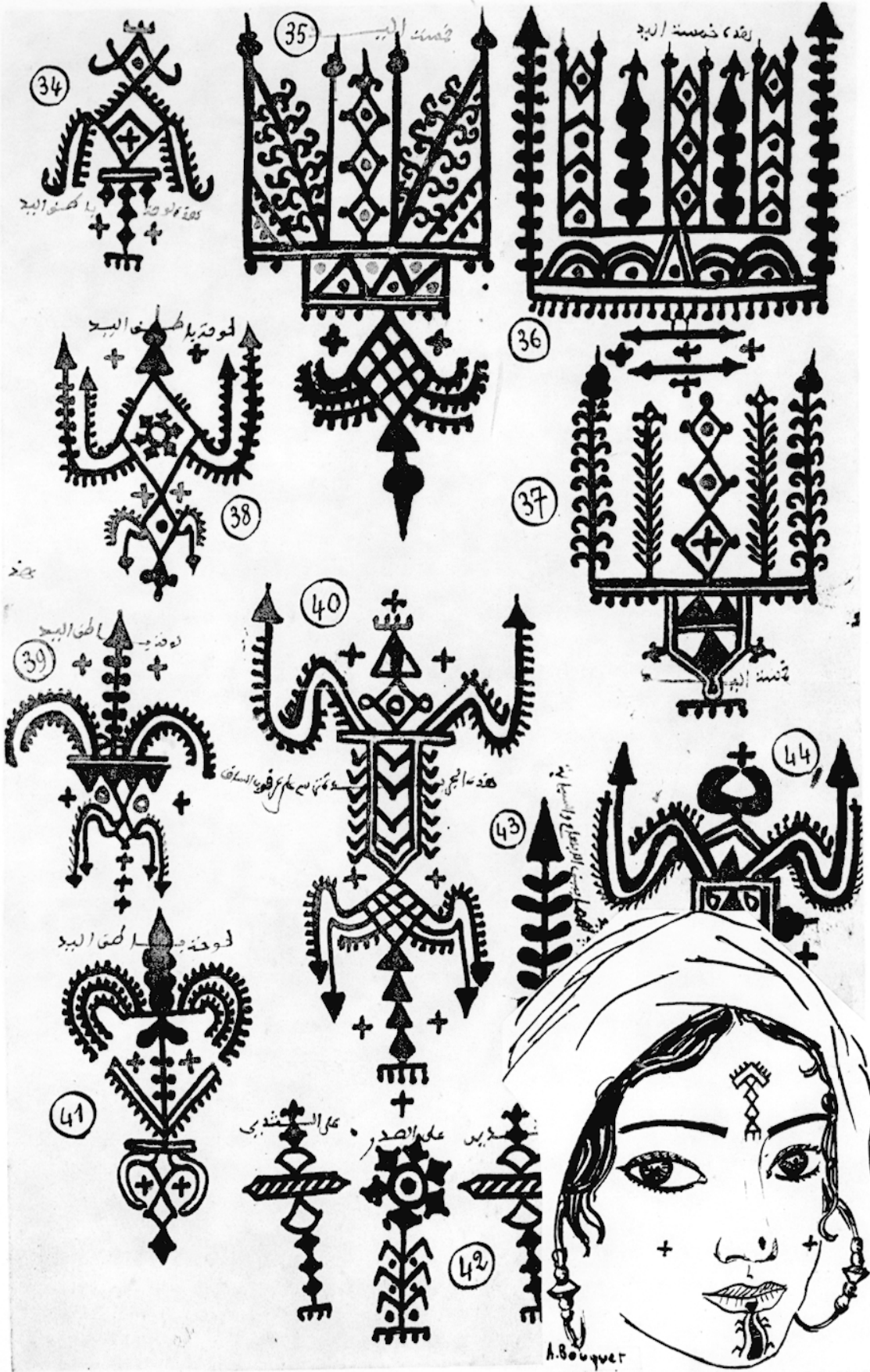
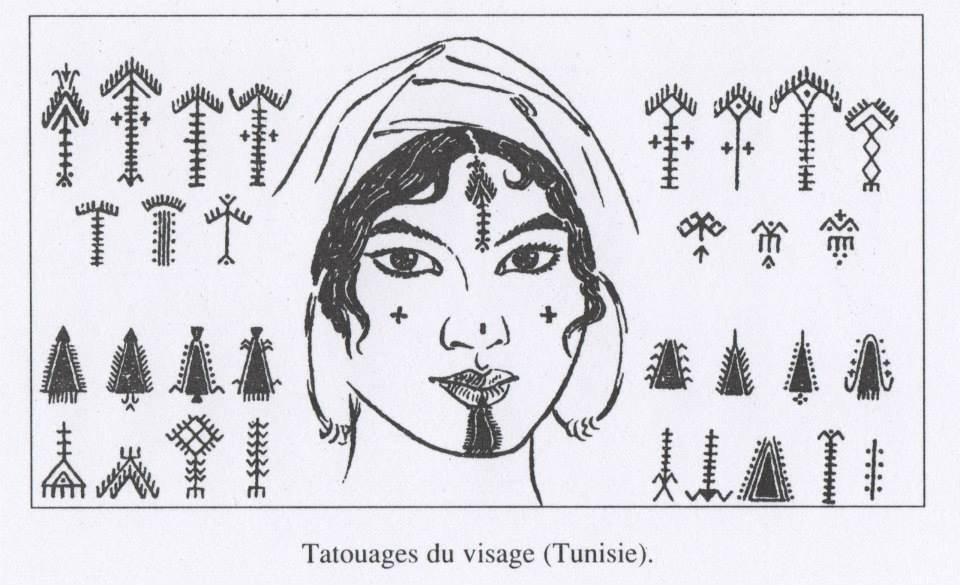
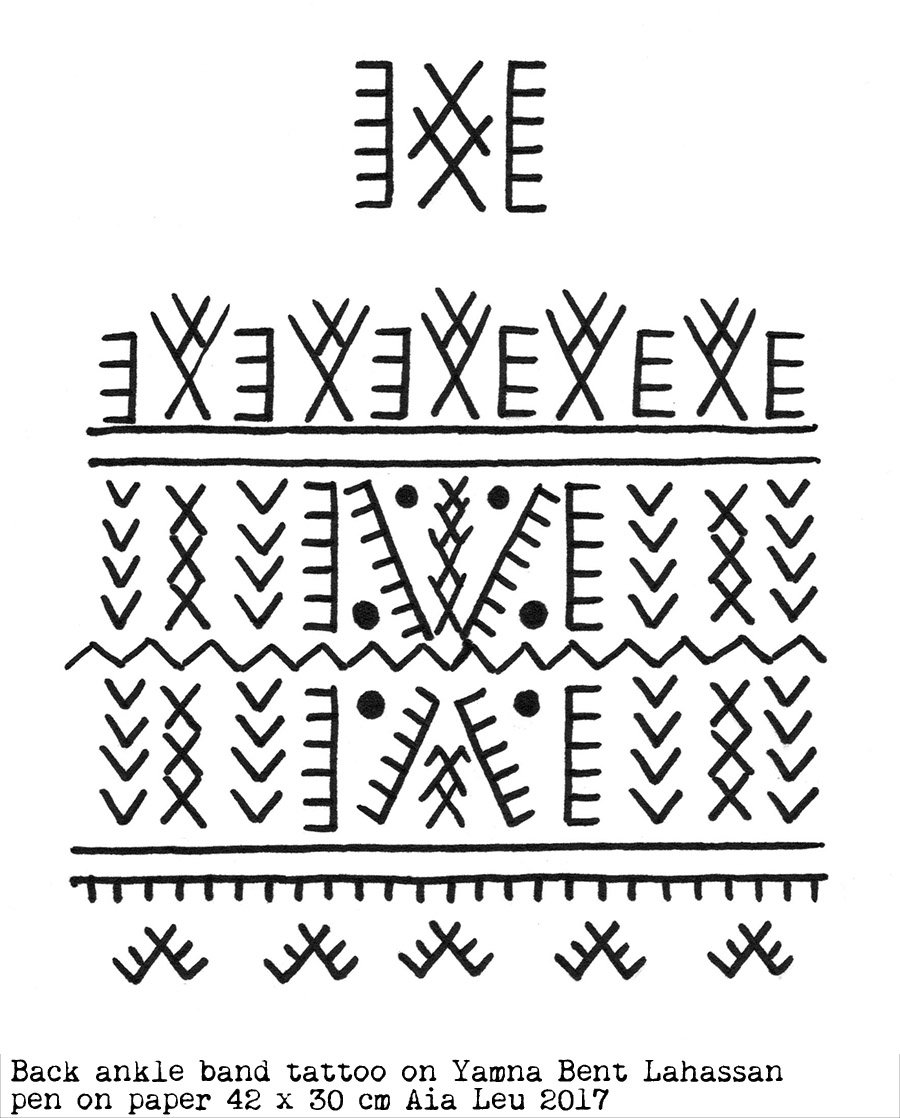
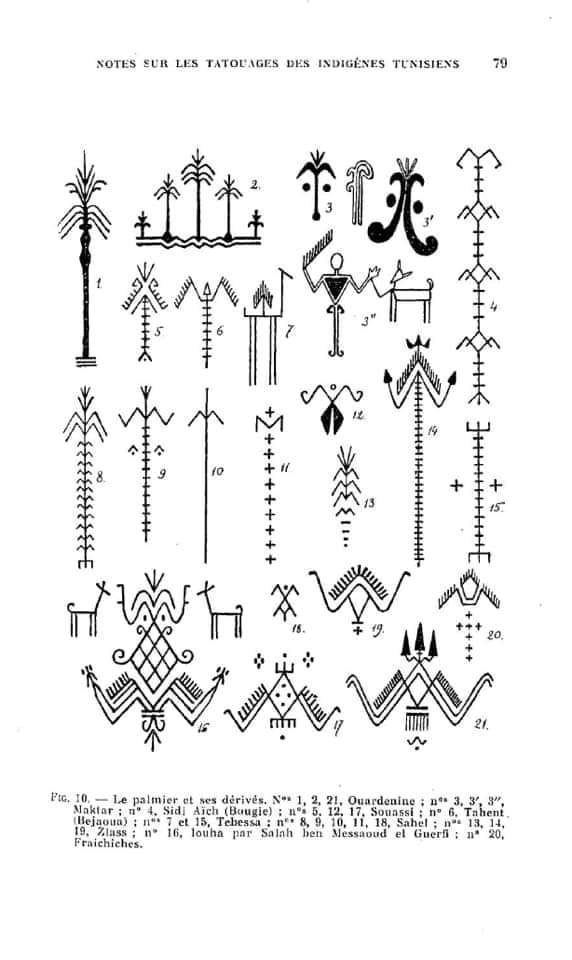
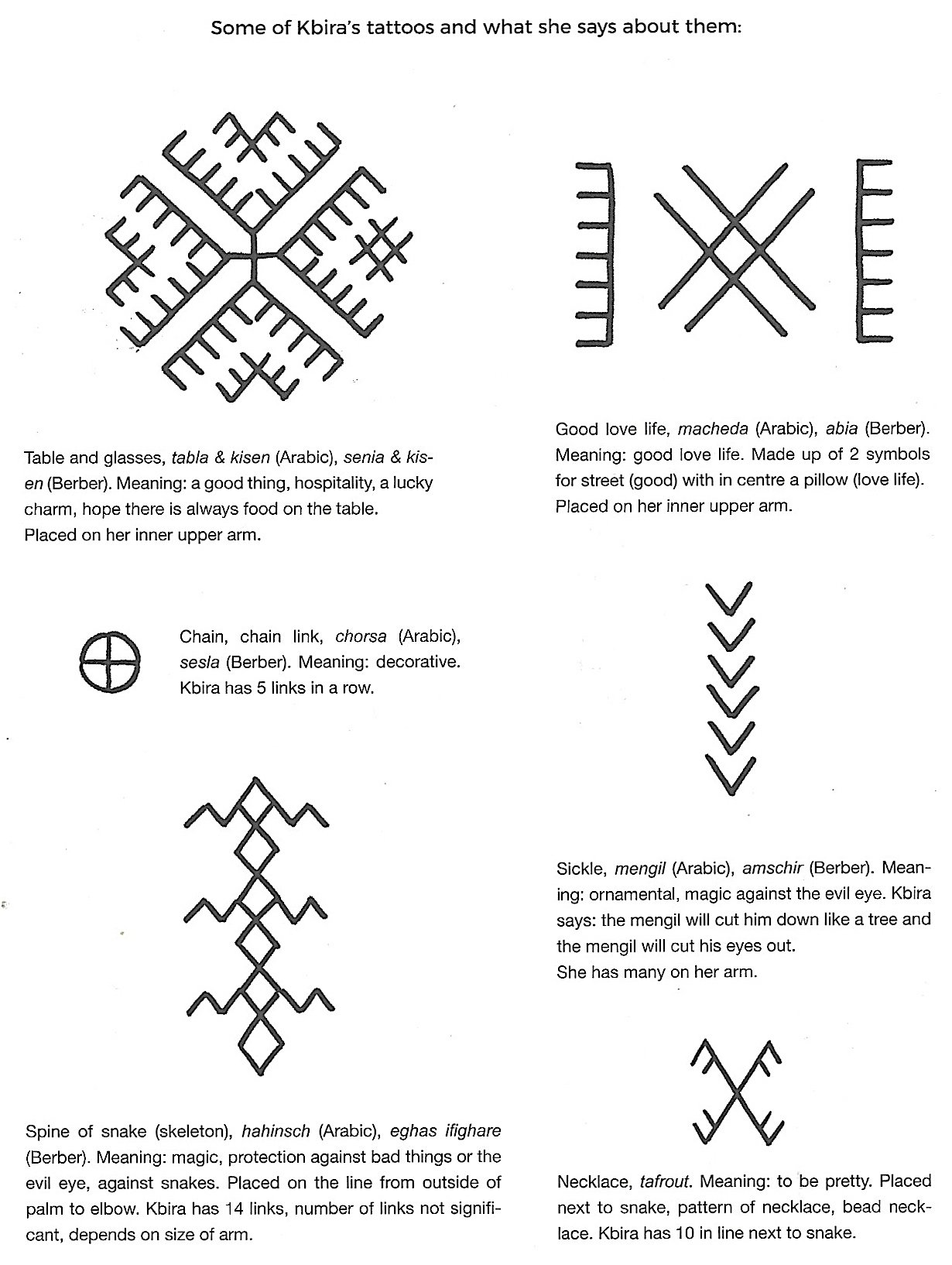
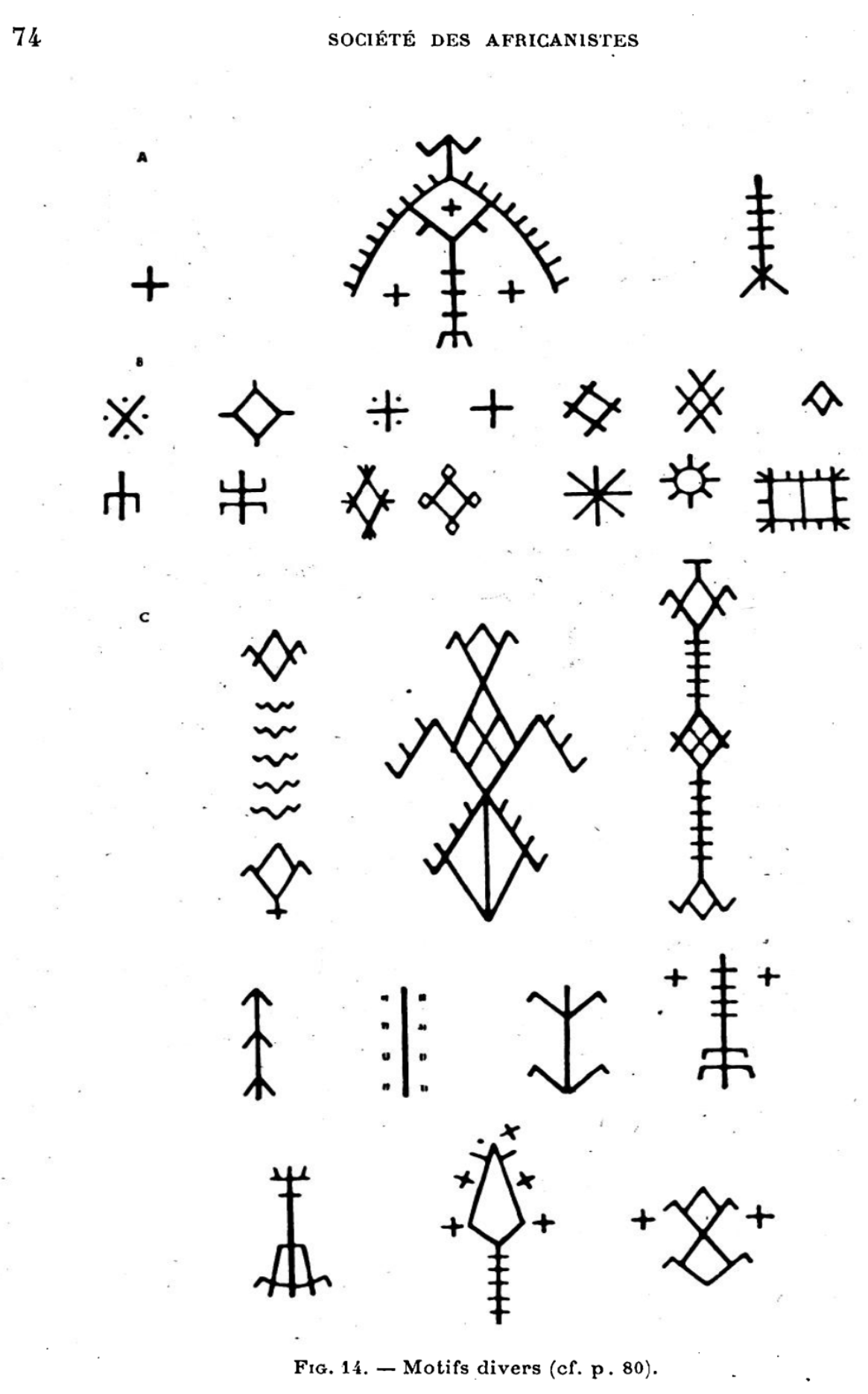
The Amazigh tattoo vocabulary is geometric. The motifs are abstract or highly stylised, built from a limited set of basic forms — dots, lines, triangles, diamonds, crosses, circles, chevrons, and their combinations — arranged in patterns that carry specific meanings. The meanings vary by region, by tribe, and by the oral tradition of the specific community, and any list of meanings should be understood as approximate rather than universal. What follows are the motifs most consistently documented across sources.
Vertical chin line (siyala) — the first tattoo, marking puberty. A straight line from the lower lip to the chin, sometimes flanked by dots (representing seeds) or by small triangular forms. The siyala is associated with fertility and with the goddess Tanit — the Phoenician-Carthaginian deity of fertility and the moon, whose worship predates Islam in North Africa by more than a millennium. The connection between the siyala and Tanit is debated among scholars, but the association is cited in multiple ethnographic accounts.
Triangle — one of the most common motifs. The triangle is a feminine symbol representing fertility, the womb, and the generative power of women. Inverted triangles, stacked triangles, and triangles combined with dots or lines carry variations on this meaning. The triangle appears on the chin, the forehead, the cheeks, and the hands.
Amazigh cross — which predates Christianity and Islam in the region — represents the four cardinal directions, balance, guidance, and spiritual protection. The cross motif appears on jewellery (the croix du Sud, the southern cross of Tuareg silverwork, is one of the most recognisable Amazigh design elements) and in tattoos.
Dots — Single dots, rows of dots, clusters of dots. Dots can represent seeds (fertility), stars (guidance, cosmological order), or eyes (protection against the evil eye). Dots flanking a line or surrounding a central motif are common supporting elements.
Diamond (lozenge) — two triangles joined at their bases, forming a diamond shape. The diamond represents protection, the home, stability, and — in some readings — the union of male and female principles (the upward and downward triangles combined).
Palm tree — a stylised tree form, often placed on the chin. Associated with fertility, prosperity, and the date palm’s role as a sustaining resource in the oasis communities of the Saharan edge.
Eye/partridge eye (ain) — a motif representing an eye, used for protection against the evil eye (al-ayn). The protective logic is the same as in the hamsa tradition: the tattooed eye looks back at the source of the malevolent gaze. The motif is sometimes called ain l-hejla (partridge eye) because of its resemblance to the ringed eye of a partridge.
Lines and chevrons — horizontal lines can represent earth, stability, or a horizon. Vertical lines represent growth, ascent, or the connection between earth and sky. Chevrons and zigzag lines represent water, mountains, or the rhythms of nature.
Snake — a stylised serpentine line representing fertility, healing, and the phallus. The snake motif connects to broader Mediterranean and North African associations of the serpent with renewal and with the earth’s generative power.
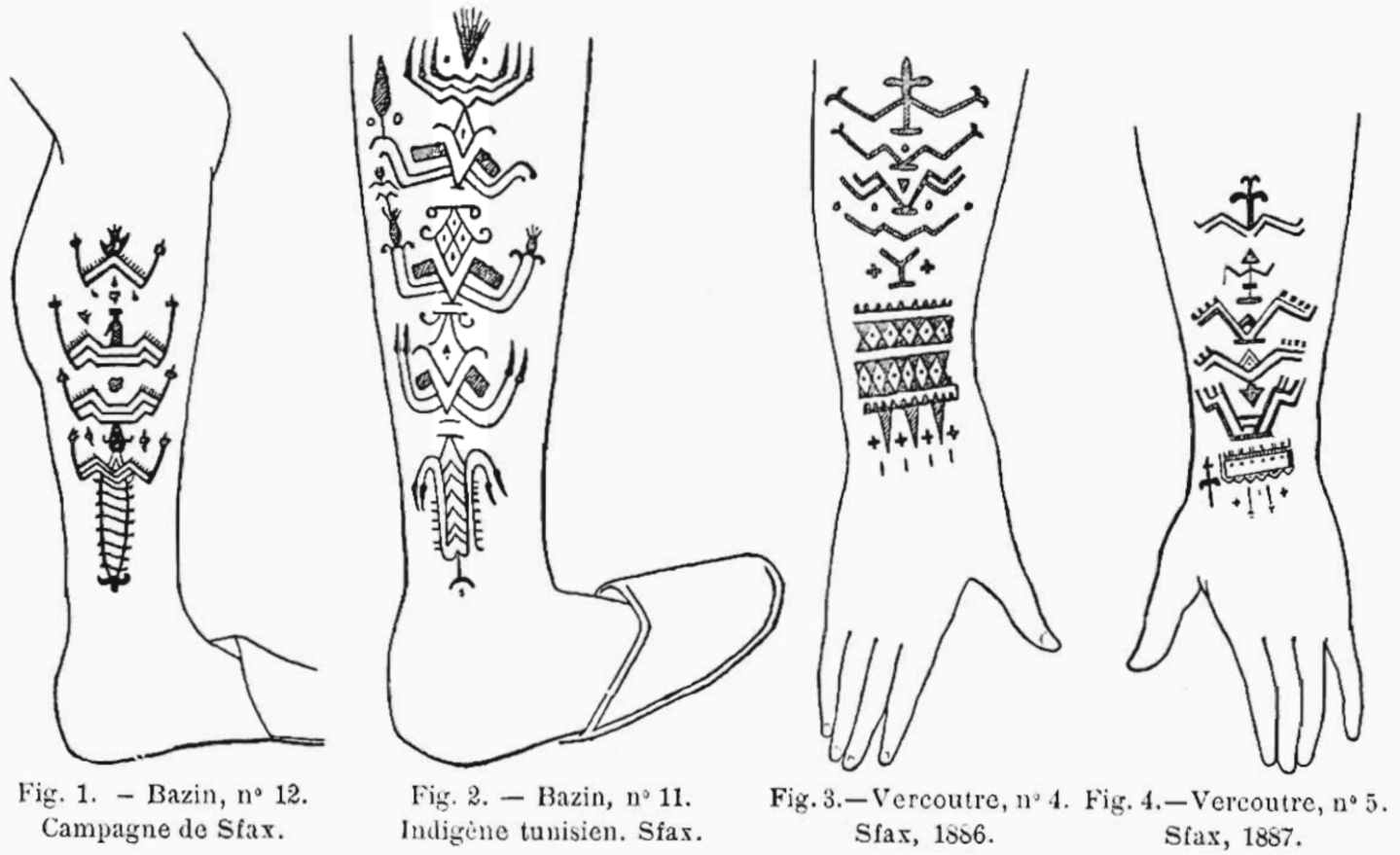
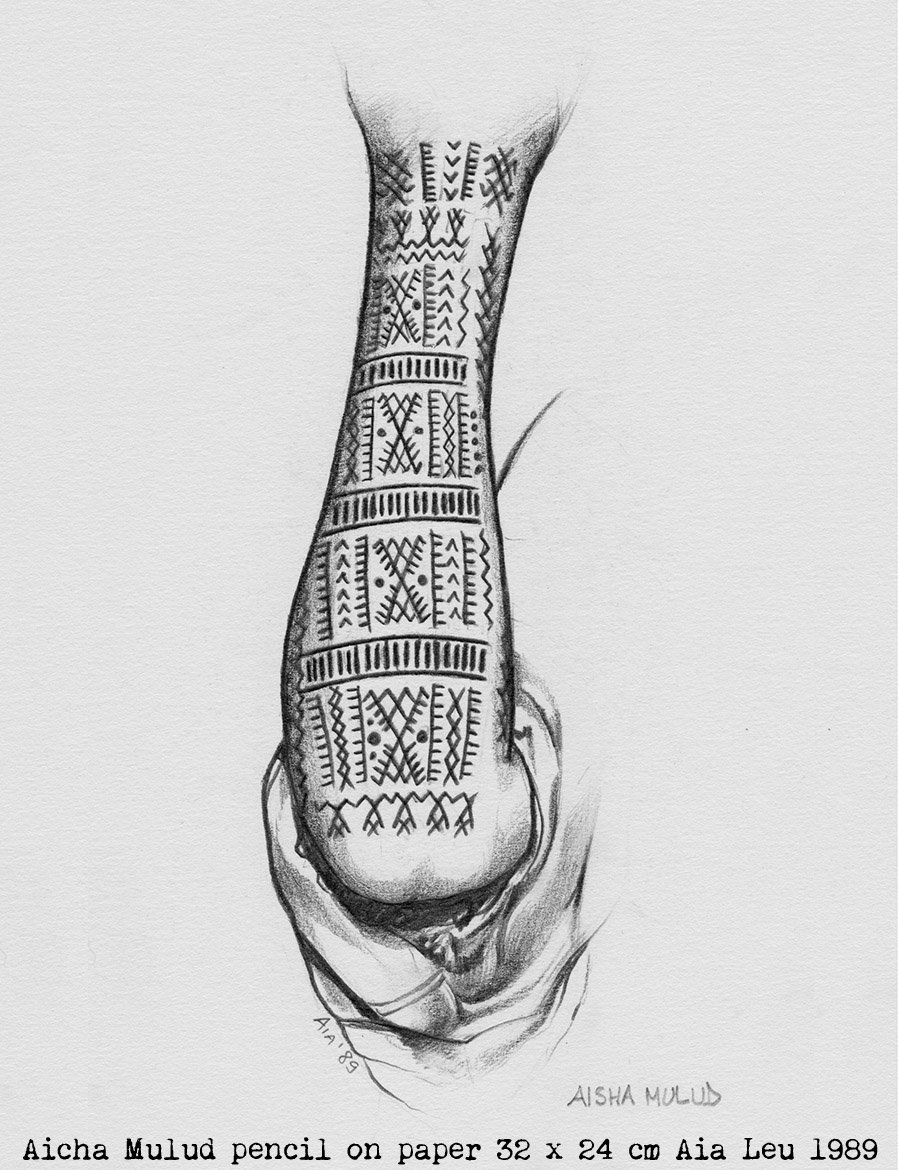
Fish or fishbone — representing water, prosperity, and abundance. Fishbone patterns — a central line with diagonal branches — appear on the hands and arms
Spider or frog — both are associated with fertility, magical rites, and the ability to cross between worlds (the spider as a weaver of connections, the frog as a creature of water and land).
Tattoo placement and its logic
The chin was the most consistently tattooed area — the siyala is the tattoo mentioned in virtually every account of Amazigh tattooing. The chin is visible, it frames the mouth (an opening), and it is the part of the face most associated with speech and identity.
The forehead — between the eyebrows (ghemaza) and extending across the brow (el-ayach) — was the second most common facial placement. The forehead sits above the eyes (openings) and is the part of the face associated with thought, fate, and the third-eye concept found in several Mediterranean and Middle Eastern traditions.
The cheeks received decorative and identity-marking tattoos — motifs that varied by tribe and region, serving as visual identifiers of the wearer’s community of origin.
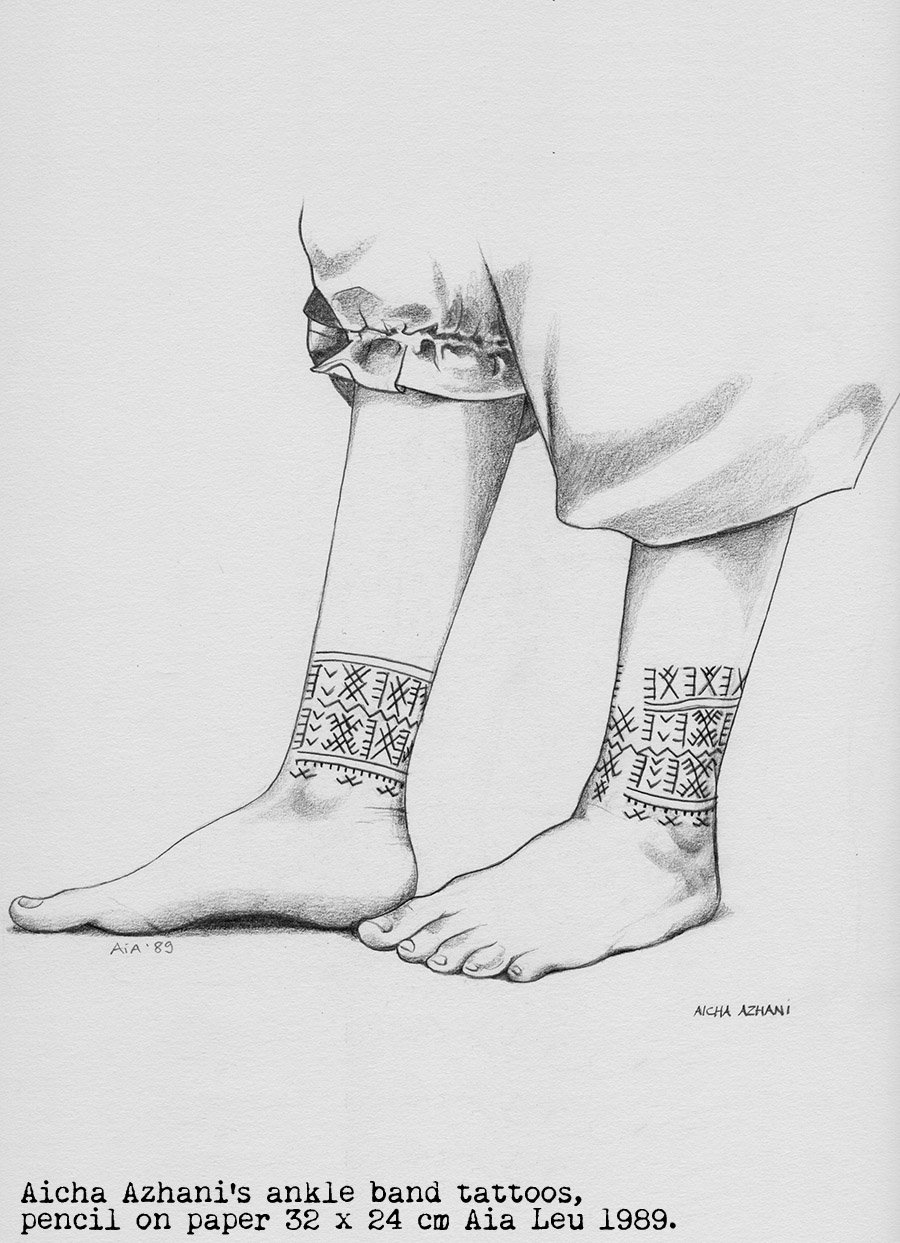
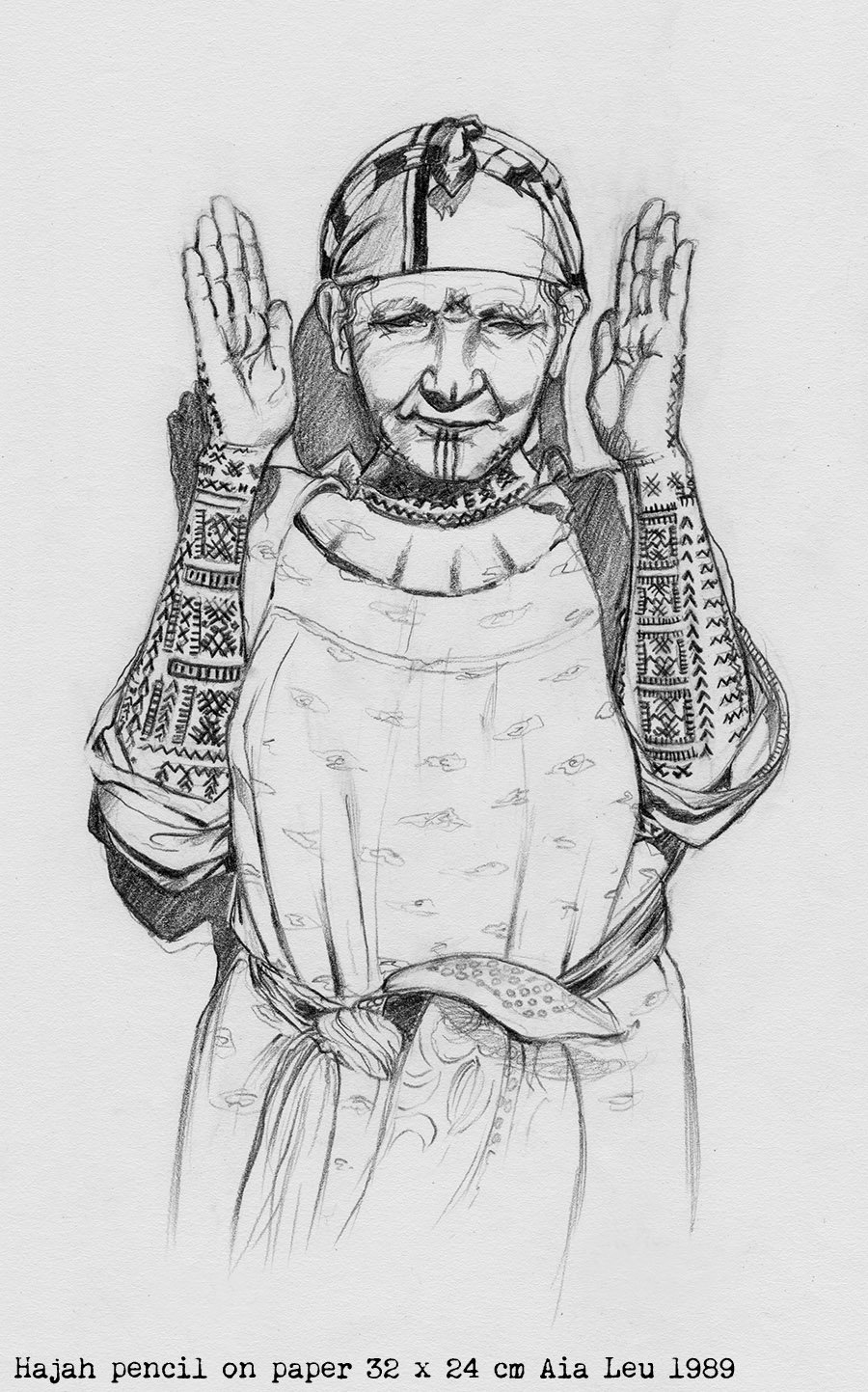
The hands and feet were tattooed both protectively (guarding the extremities, which are exposed and vulnerable) and decoratively. Hand tattoos, in particular, show the most elaborate patterning in some regional traditions, with fine geometric fills covering the backs of the hands and fingers.
The arms and chest received tattoos in some traditions, particularly among women in more rural or remote communities. Intimate tattooing — on the breasts, the abdomen, or near the genitals — is mentioned in ethnographic accounts as a wedding-related practice in some regions.
The decline
Islam
The most frequently cited cause. Mainstream Islamic jurisprudence holds that tattooing is haram (forbidden) — altering the body that God created is considered an offence against God’s design. As North Africa became more deeply Islamised through the twentieth century — through education, urbanisation, the influence of Islamic reform movements, and the increasing dominance of Arabic over Tamazight — the religious prohibition gained social force. Women who had been tattooed in their youth found that their tattoos, once marks of beauty and identity, were now considered religiously improper by their own communities.
Urbanisation
Colonialism
The French colonial period in Morocco, Algeria, and Tunisia brought its own pressures. European administrators and missionaries sometimes discouraged or prohibited Indigenous cultural practices, including tattooing. At the same time, some Amazigh women chose tattooing during the colonial period as an act of cultural assertion — a way of maintaining identity under occupation. Professor Ahmed Aassid has noted that during French colonisation, some women used tattoos to assert independence and freedom.
Generational change
The replacement with henna
In many communities, the symbolic functions of tattooing — marking transitions, providing protection, expressing identity — have been transferred to henna (harquus). Henna provides temporary marks that can serve similar ceremonial purposes (particularly at weddings) without the permanence and religious objections associated with tattooing. The geometric vocabulary of the tattoos often reappears in the henna designs — the same motifs, the same placement logic, the same aesthetic — but the marks wash away.
What remains
The tradition is not entirely dead.
The older women who carry the tattoos are still alive — in their sixties, seventies, eighties, and beyond. Their faces, hands, and bodies are the last primary documents of the tradition, and they are aware of this. Photographic documentation projects, ethnographic studies, and oral history initiatives have attempted to record the remaining tattooed women and their knowledge before the generation passes.
The geometric vocabulary of the tattoos survives in other media. Amazigh carpets, pottery, jewellery, and architectural decoration continue to use the same design language — the same triangles, diamonds, crosses, and palm trees that appear in the tattoos. The visual tradition has not disappeared; it has migrated to other surfaces.
A revival movement exists, though it is small and contested. Some younger Amazigh women and men — particularly in the diaspora and among cultural activists — are choosing to tattoo themselves with traditional Amazigh motifs as acts of cultural reclamation. These tattoos are created by contemporary tattoo artists using modern equipment, and they are chosen voluntarily by adults who understand both the tradition they reference and the political statement they make. The revival is connected to the broader Amazigh cultural rights movement, which has gained political visibility in Morocco and Algeria over the past two decades.
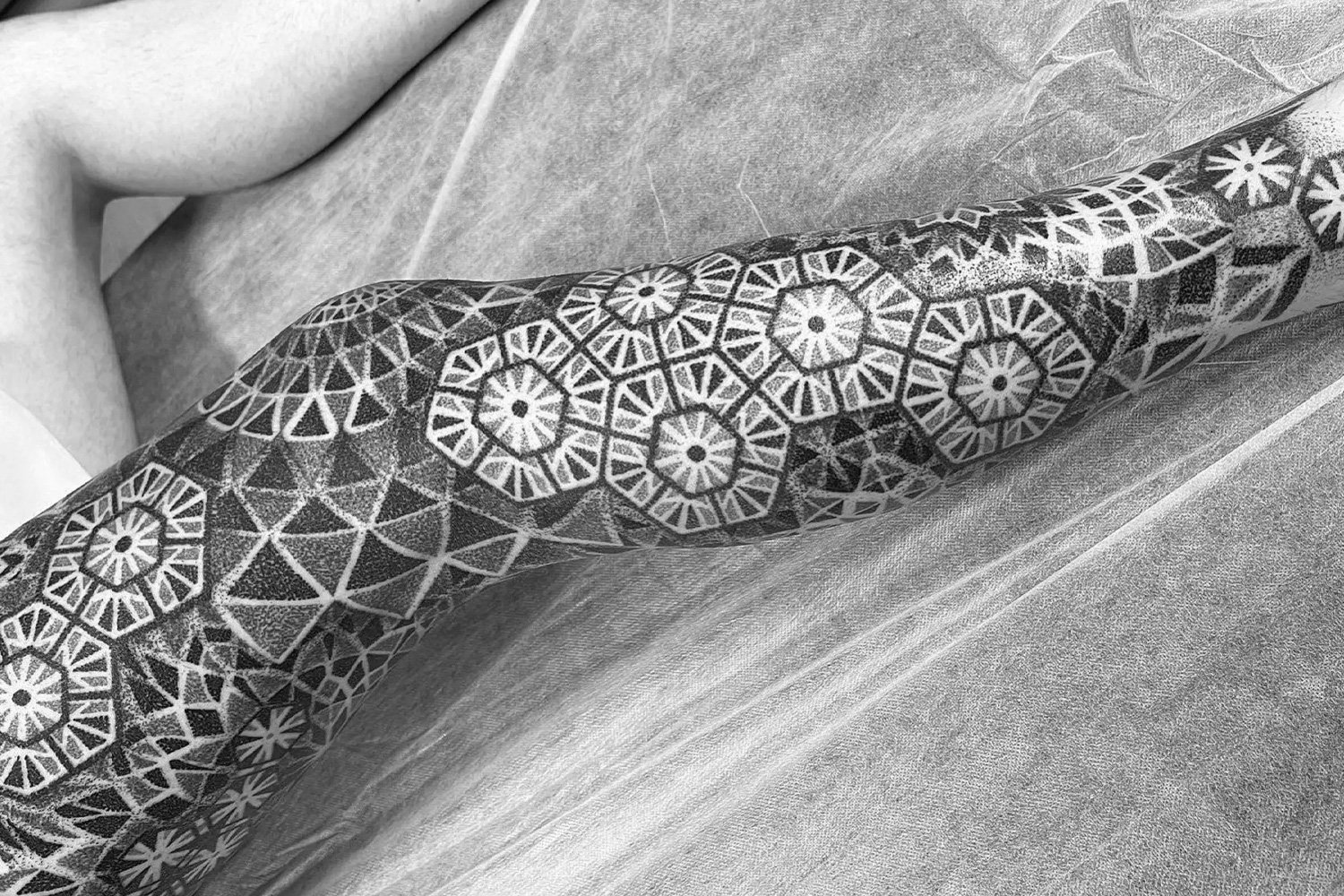
Contemporary tattoo artists outside the Amazigh community also draw on the geometric vocabulary of Amazigh tattooing — incorporating triangles, diamonds, dots, and geometric patterns into ornamental and geometric tattoo work. The cultural considerations discussed in the tribal and ornamental articles on this site apply here: the geometric principles are broadly shared across Mediterranean and North African visual traditions, but specific motifs with specific meanings belong to particular communities, and using them requires awareness of their meanings and origins.
The connection to the hamsa
The hamsa — the protective open hand discussed in its own article on this site — is part of the same visual and protective tradition as Amazigh tattooing. The khamsa (the number five, the five-fingered hand) is a protective device used across North Africa, and the hamsa motif appears in Amazigh jewellery, in doorway decoration, and — in some regional traditions — in tattoo designs. The overlap is not coincidental: the hamsa and the tattoos belong to the same pre-Islamic protective cosmology, in which symbols drawn or worn on the body serve as active defences against the evil eye and other malevolent forces.
The cultural position of berber tattoos
Amazigh tattooing occupies a complicated cultural position. Within the communities of origin, the tattoos are simultaneously a source of pride (a connection to ancestral identity, to the pre-Islamic Amazigh heritage, to the visual language of the culture) and a source of discomfort (a marker of a practice that mainstream Islam prohibits, a visual identifier that has brought social stigma in urban settings, and — for some women — a reminder of a procedure that was not always consensual).
The women who carry the tattoos hold both of these experiences. The interviews and oral histories collected by journalists and ethnographers — the testimony of women like Hannou Mouloud of Imilchil, who was tattooed at six and told the marks were “pretty adornments,” and Hama of Khemisset, who was forcibly tattooed at twelve by a practitioner who held her down despite her cries — show the full range of the tradition’s human reality.
For people outside the Amazigh community, the tattoos are an object of aesthetic admiration, scholarly interest, and sometimes appropriation. The geometric beauty of the designs is real, and the impulse to study, document, and preserve them is legitimate. The impulse to wear them without understanding their context — to treat them as decorative elements detached from the lives, the bodies, and the histories of the women who carry them — is the failure mode, as with any culturally specific tattoo tradition.
Sources & further reading
- Tamazgha History. History of Amazigh tattoos, Tamazgha History website, 2022.
- Cynthia Becker, Amazigh Arts in Morocco: Women Shaping Berber Identity. University of Texas Press, 2006.
- Felix Leu, Aia Leu (Illustrator), Loretta Leu. Berber Tattooing: in Morocco’s Middle Atlas. Self-published, 2017.
- Mohammed Jiari, Tiny Tattoos of Berber Culture: Berber Tattoos Symbols and Meanings (The Amazigh Tattoos). Your Idlisen, 2021.
- Your Idlisen, Berber Tattoo Symbols & Amazigh Identity: The Hidden Meanings Behind Moroccan Women’s Face Tattoos, Cultural Significance, and Regional Patterns. 2025.
- Lars Krutak, Spiritual Skin: Magical Tattoos and Scarification. Edition Reuss, 2012.
- Morocco World News, The Disappearing Tradition of Amazigh Facial and Body Tattoos. Published April 2019.
- The Arab Weekly / AFP, Morocco’s Amazigh tribeswomen see facial tattoo tradition fade. Published October 2024.
- Middle East Eye, Partridge eyes and stars: Traditional tattoos of Amazigh, Bedouin and Kurdish women. Published March 2022.
- Tiziri Camp, Berber Face Tattoos – why they’ve been reduced to a memory? Published January 2025.
- Amazigh World News, Amazigh Tattoos and Patterns: Symbolism and Cultural Significance. Published September 2024.
- Anna Felicity Friedman, The World Atlas of Tattoo. Yale University Press, 2015.
- Matt Lodder, Painted People: Humanity in 21 Tattoos. Harper, 2024.
- Margo DeMello, Bodies of Inscription: A Cultural History of the Modern Tattoo Community. Duke University Press, 2000