

Tattoo Symbols
A collection of tattoo symbols, their meanings, origins, history, and what they carry into contemporary tattooing.

Styles & Traditions
Discover what defines each tattoo style or tradition technically, visually, and culturally — and how it behaves on skin.

Science & History
Tattooing through history, technology and techniques, as well as its biological, chemical and psychological aspects.

Publications & Shop
Hand-drawn tattoo albums, design packs, and books — available as downloadable PDFs or in print through Amazon.
Tattoo symbols
The meanings people assign to tattoos shift across cultures, centuries, and between individuals who wear them. A symbol that reads as sacred in one context reads as decorative in another, and occasionally as offensive in a third. Knowing the lineage does not dictate what a tattoo must mean to its wearer, but it prevents the wearer from carrying something they did not intend to carry.
Each article in this collection covers a specific tattoo symbol — its origin, the cultures that used it, the meanings it accumulated over time, and the forms it takes in contemporary tattooing — organised by subject: animals, botanicals, maritime, mythology and fantasy, sacred and spiritual, subculture, objects, and patterns.
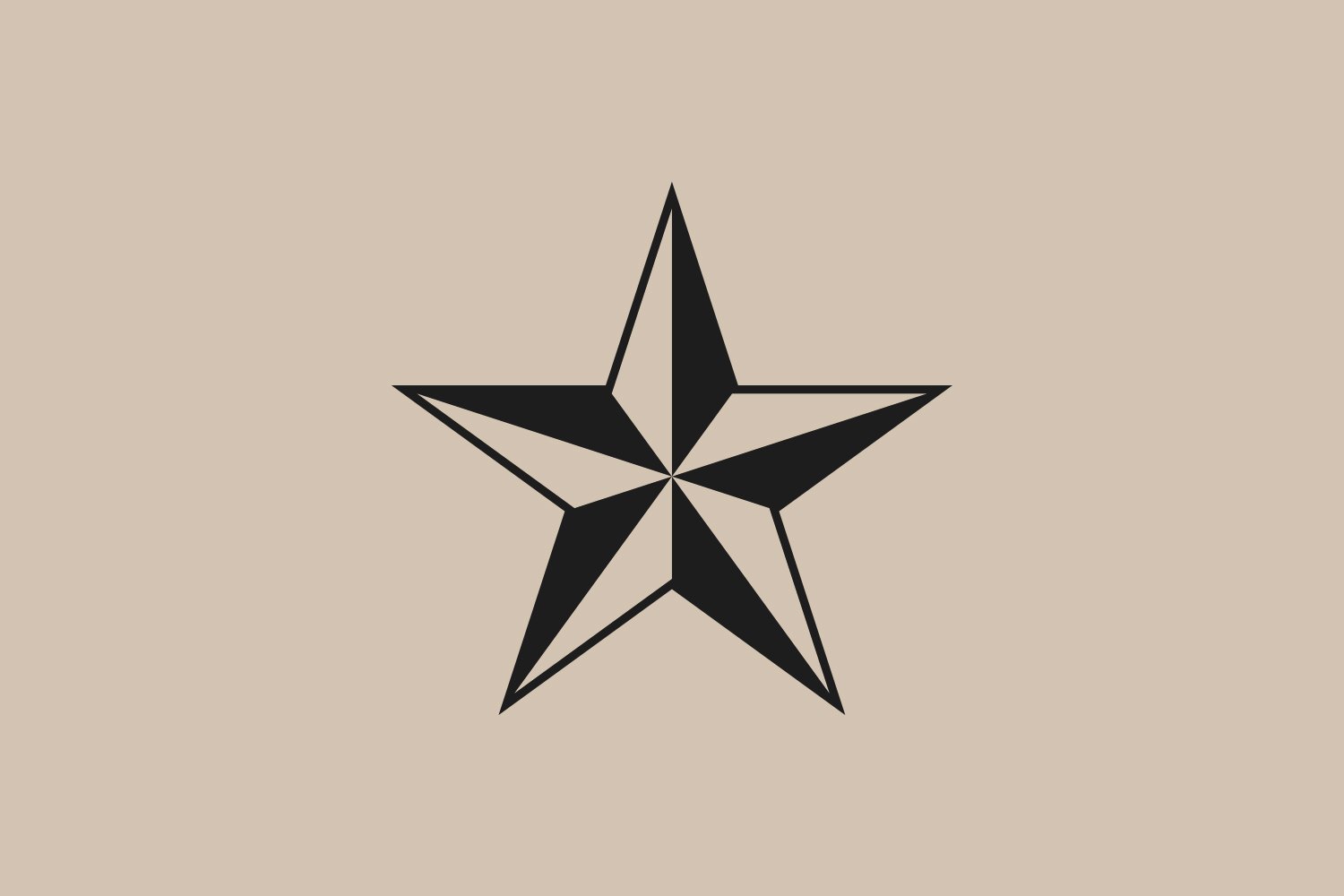
Nautical star tattoo
The nautical star’s power as a tattoo motif comes from layered history rather than singular mythology. It does not tell one story. It tells several — sailor, soldier, lesbian, punk, wanderer — and the wearer’s specific relationship to those stories determines which meaning is active. It’s main meaning, tho, is about orientation and destination.
Tattooing styles & traditions
Style is not a matter of taste alone — it is a set of technical commitments with material consequences and a set of decisions made before and during the work. Technology, line weight, needle configuration, ink density, shading method, colour palette, and compositional rules vary across styles, and these differences affect how a tattoo looks and how it reads years later. Many entries here describe tattooing traditions — practices in which method, meaning, and cultural context are inseparable.
If you’re looking for a good starting point for learning tattoo styles, check out my article: List of Tattooing Styles.
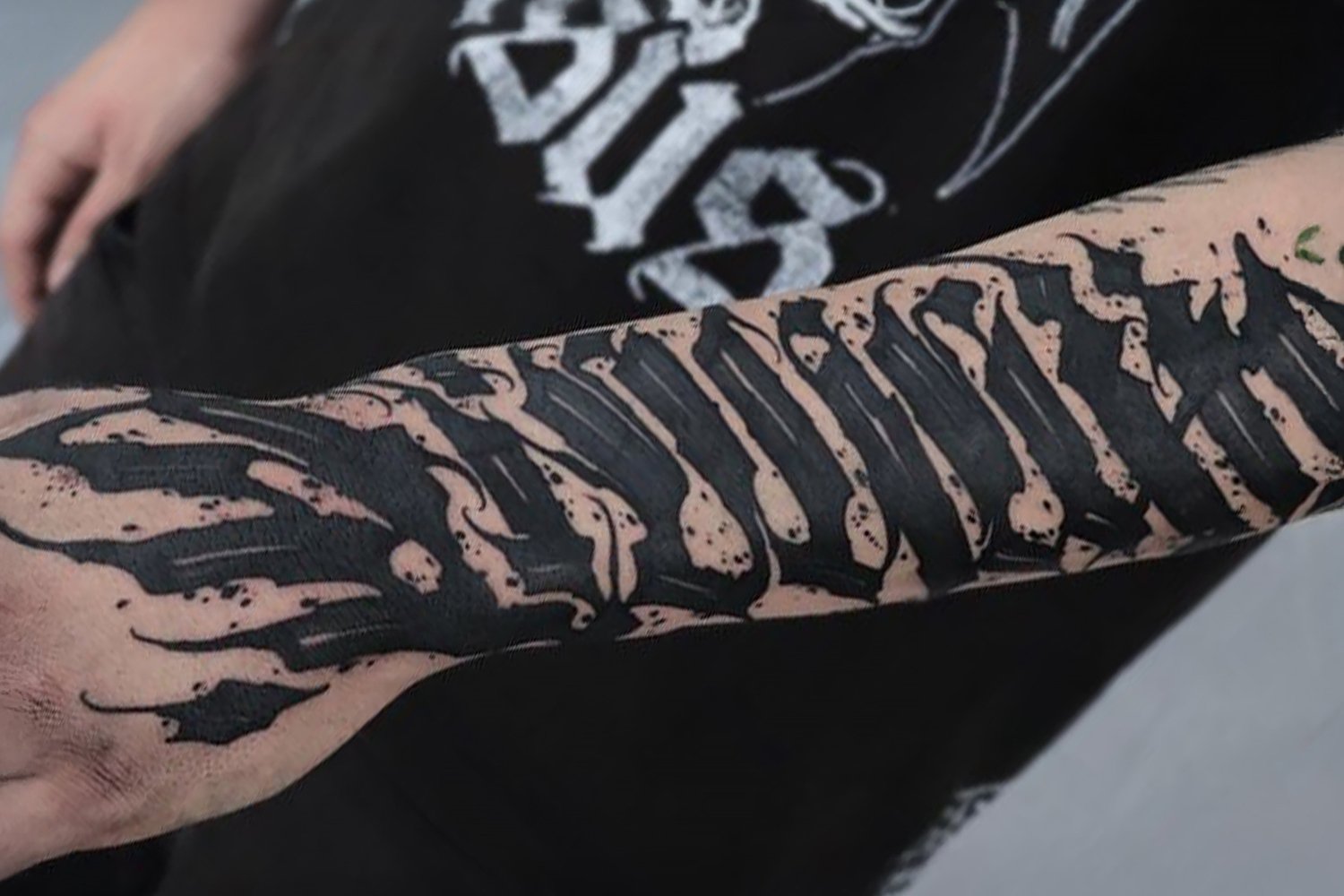
Script / Lettering / Calligraphy
Script and lettering tattoos are the most common category of tattooing worldwide. Among tattooed Americans, the most popular tattoo category is “a meaningful word, phrase, or quote.” The number is consistent with what tattoo artists report: lettering accounts for a substantial share of the work done in most commercial studios.
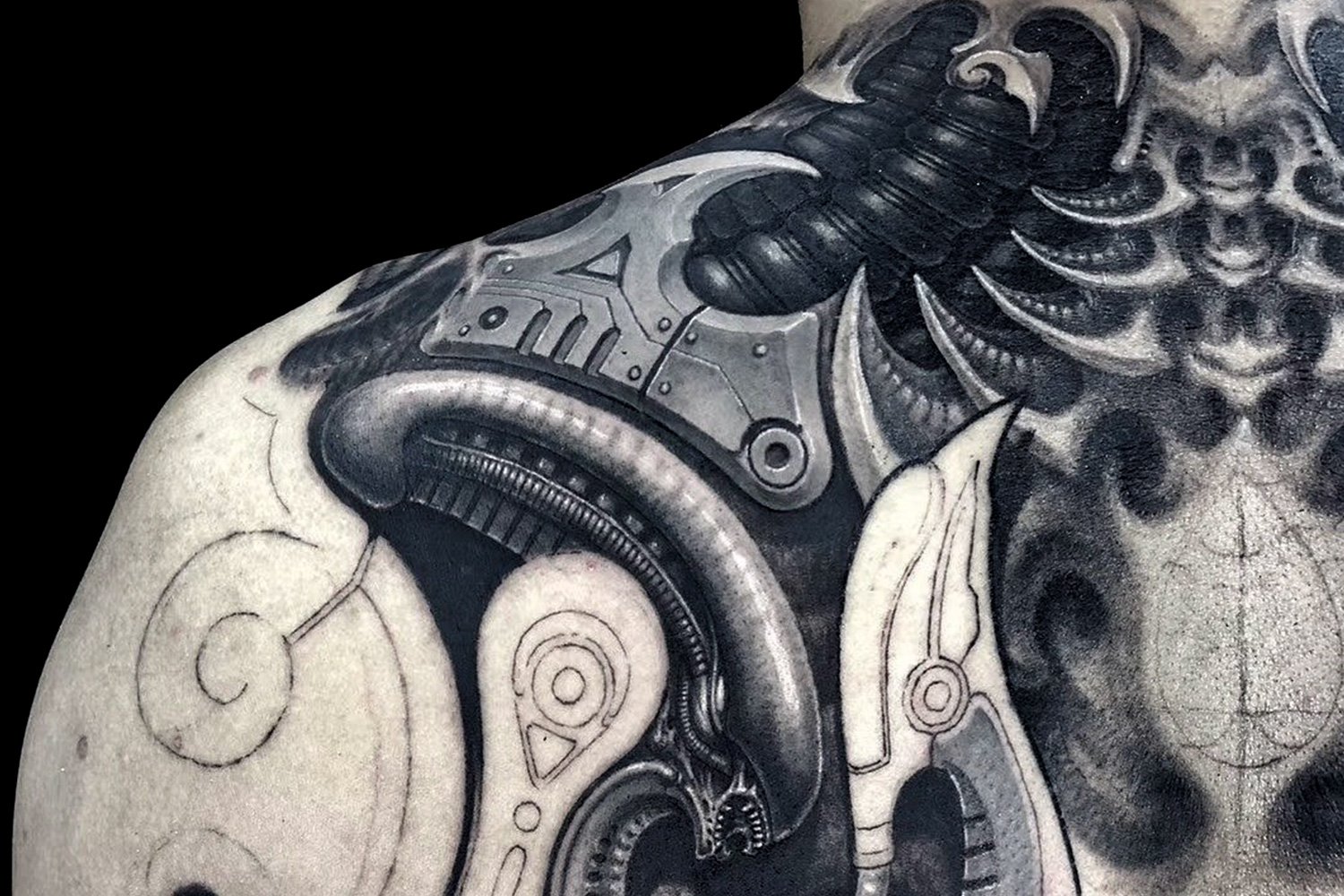
Biomechanical
Biomechanical tattooing creates the illusion that the body contains machinery. The skin is treated as a surface that can be opened, peeled back, or made transparent, revealing an interior that is part biological and part technological. The style fuses organic anatomy with mechanical components into a single coherent system.
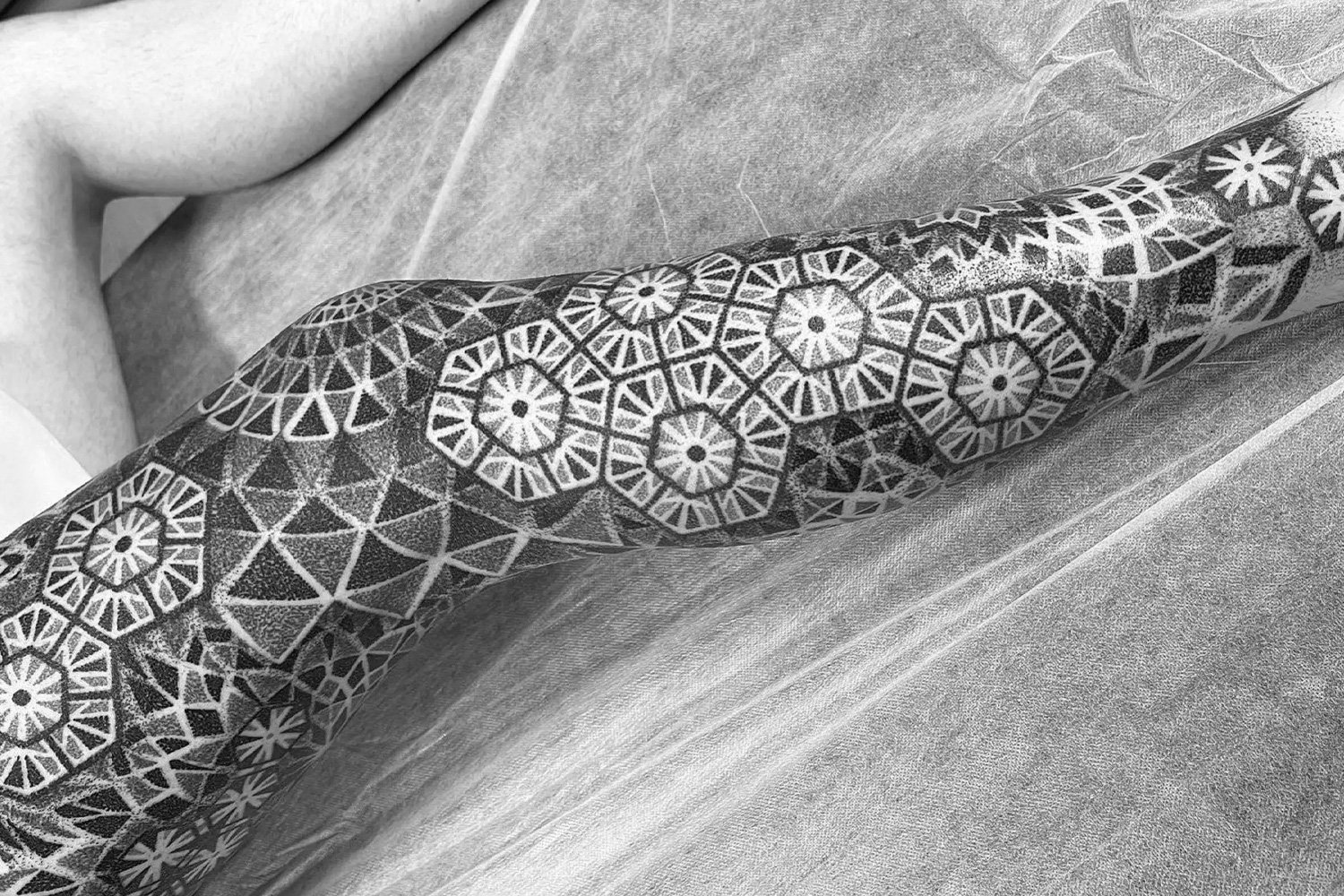
Geometric
Geometric tattooing — work built primarily from geometric shapes, mathematical relationships, and abstract pattern — draws on this long history. The style has become one of the most requested categories in contemporary tattooing, encompassing everything from a single fine-line triangle on the wrist to a dense dotwork mandala covering the entire back.
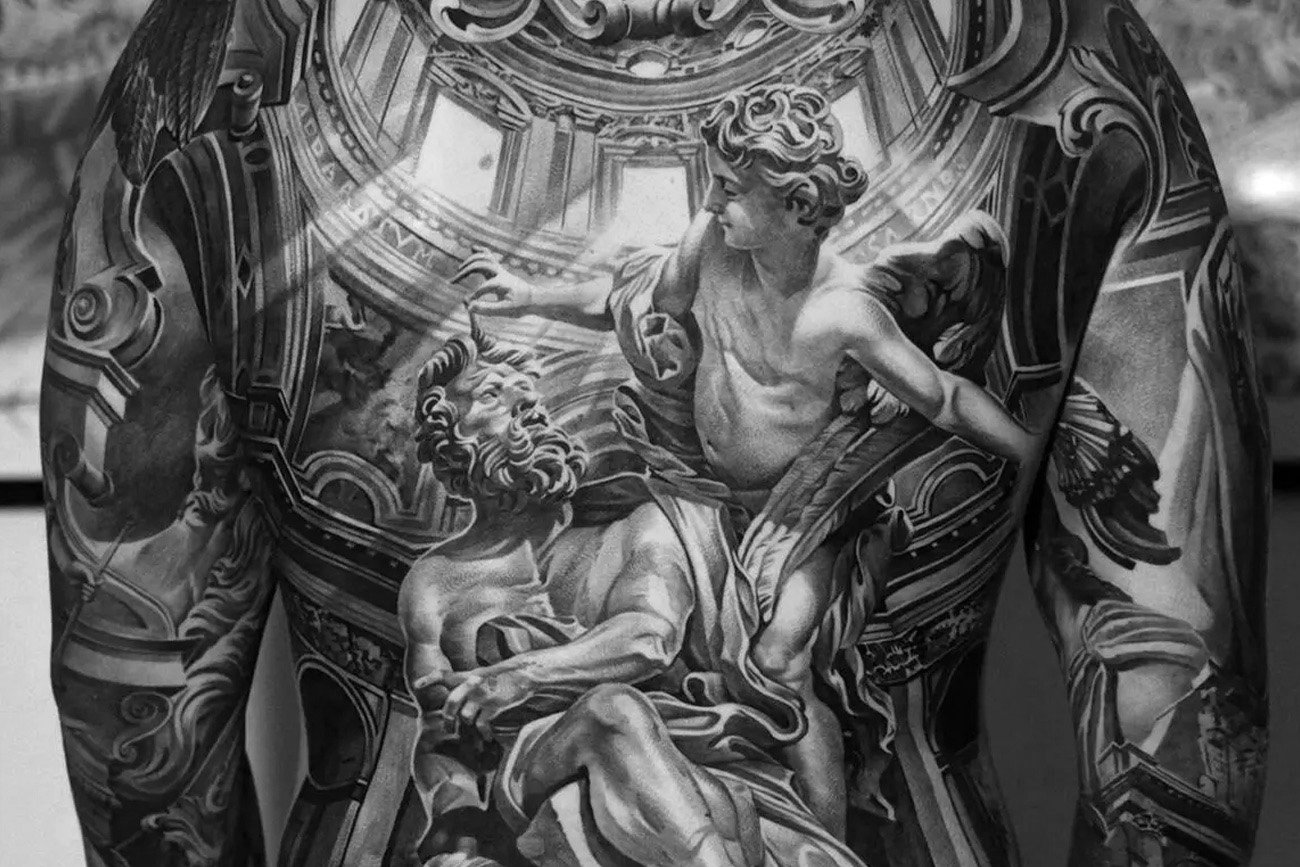
Realism
Realism in tattooing aims to reproduce visual reality on skin — photographic detail, accurate light and shadow, three-dimensional depth, and tonal range that mimics what the eye actually sees. It is among the most technically demanding approaches in the craft because the work relies entirely on tonal control, smooth gradients, and accurate rendering with (…)
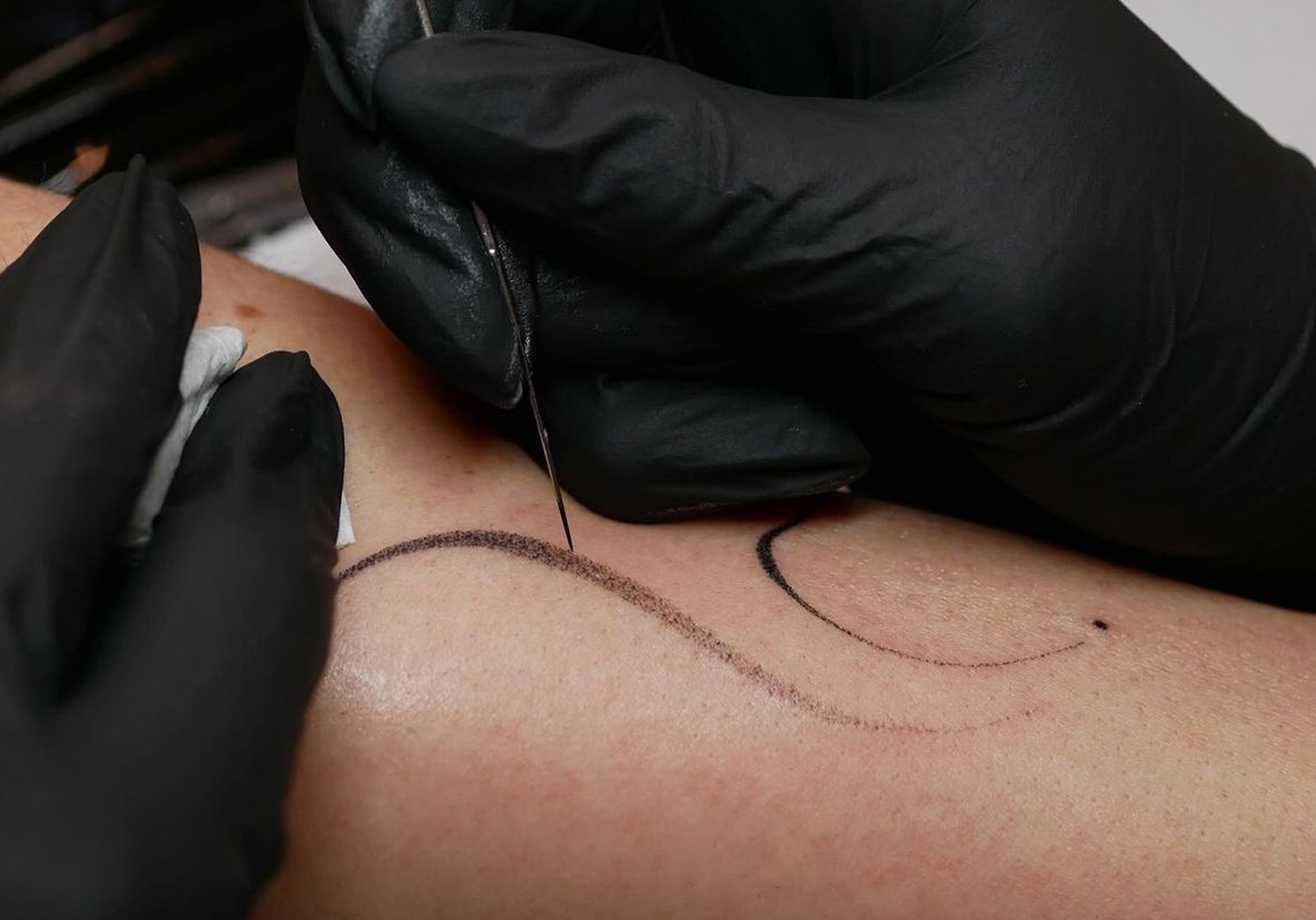
Handpoke
Non-electric tattooing as a deliberate contemporary studio choice. Handpoke uses a single needle or a small grouping pushed by hand. Produces a texture that differs from machine work — softer saturation, visible dot structure, a different skin trauma profile and healing process. The method is ancient and shared by traditional practices (…)
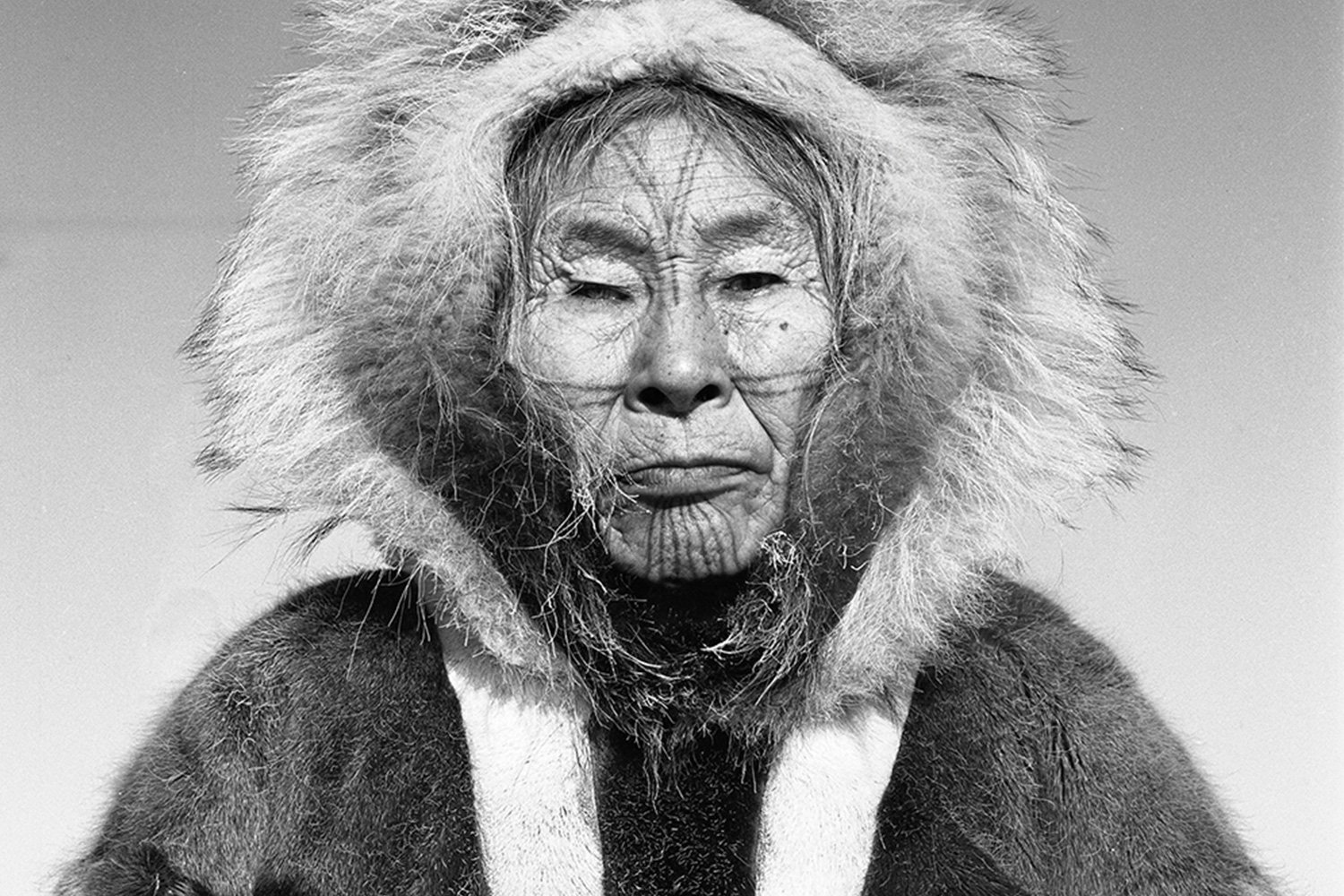
Inuit kakiniit
Inuit tattoo tradition is called kakiniit, facial tattoos are called tunniit. The practice spans the entire Inuit world — from Siberia across Alaska, through Arctic Canada to Greenland — and, until missionaries suppressed it in the early XX century, was one of the most important cultural practices in Inuit life. It is now in active revival, led almost entirely by Inuit women.
Science & History of tattooing
The documented tattoo history is long. It stretches across Polynesia, Japan, North Africa, the Arctic, Southeast Asia, the Americas, and eventually the industrialised tattoo shops of nineteenth-century Europe and the United States. Each of these traditions developed its own tools, techniques, pigments, and reasons for marking the body. The science of tattooing is just as fascinating. How ink stays in the skin, why it degrades, how needle technology and ink chemistry have changed what is physically possible, and how the process of being tattooed can affect our perception of the craft itself — these are questions with specific, documented answers.
The articles here cover the history of tattooing across cultures and periods, as well as the biology, chemistry, psychology, various tattooing techniques, and the technology behind the practice itself.
No Results Found
The page you requested could not be found. Try refining your search, or use the navigation above to locate the post.
