Tattoo aftercare
Aftercare: more than just wound management
A fresh tattoo is a wound. The skin has been punctured thousands of times, ink has been deposited in the dermis, and the body’s immune and repair systems have already begun responding. How the tattoo is cared for during the healing period directly determines how much ink survives, how evenly the tattoo settles, and whether complications develop. Aftercare is wound management applied to a very specific type of wound — one that contains a large quantity of foreign material (ink) that needs to stay in place while the tissue around it repairs itself.
The challenge is that the goals of healing and the goals of the tattoo are partially at odds. The body’s wound-healing response wants to expel foreign material, close the wound surface, and rebuild tissue. The tattoo needs the foreign material to remain exactly where it was placed. Aftercare navigates this tension: it supports healing while minimising the amount of ink that the healing process removes.
This article covers what to do, when to do it, what to avoid, and why each step matters at the level of tissue and biology. The principles are consistent across the tattoo industry, though individual artists may have specific preferences based on their experience. When an artist’s aftercare instructions differ from general advice, follow the artist — they know how their specific technique, ink, and depth of work interact with the healing process.
Downloadable materials for tattoo studios / artists / clients:
Why aftercare matters for the tattoo's final appearance
Most ink loss in a tattoo occurs during the healing period. Some loss is inevitable — ink trapped in the epidermis (the outer skin layer) is shed as the damaged epidermal cells are replaced by new ones over the first two weeks. This is expected and accounts for the slight dulling of colour that every tattoo undergoes between its fresh and healed states.
Additional ink loss — the kind that produces patchiness, faded spots, or thin areas that require touch-ups — is almost always caused by something that went wrong during healing. Heavy scabbing pulls ink from the dermis when the scab separates. Infection destroys tissue and ink together. Mechanical damage (picking, scratching, rubbing) tears healing skin and removes ink prematurely. Excessive moisture softens the healing surface and allows ink to leach out. Insufficient moisture causes cracking and heavy scabbing.
The difference between a tattoo that heals cleanly and one that heals patchily is often not the artist’s work but the client’s aftercare. A well-executed tattoo can be ruined by poor healing, and adequate aftercare can save a tattoo that was applied imperfectly.
The first hours
Cling film (plastic wrap)
The traditional approach. A layer of cling film is applied over the tattooed area, sometimes with a thin layer of ointment beneath it. Cling film is a temporary barrier — it protects the tattoo from airborne bacteria and from contact with clothing during the journey home, but it is not a healing dressing. It traps heat, moisture, and the plasma that weeps from the fresh wound, creating a warm, moist environment against the skin. This covering should be removed within two to four hours (or according to the artist’s instructions). Leaving cling film on overnight creates conditions that encourage bacterial growth.
Adhesive film dressings (second skin)
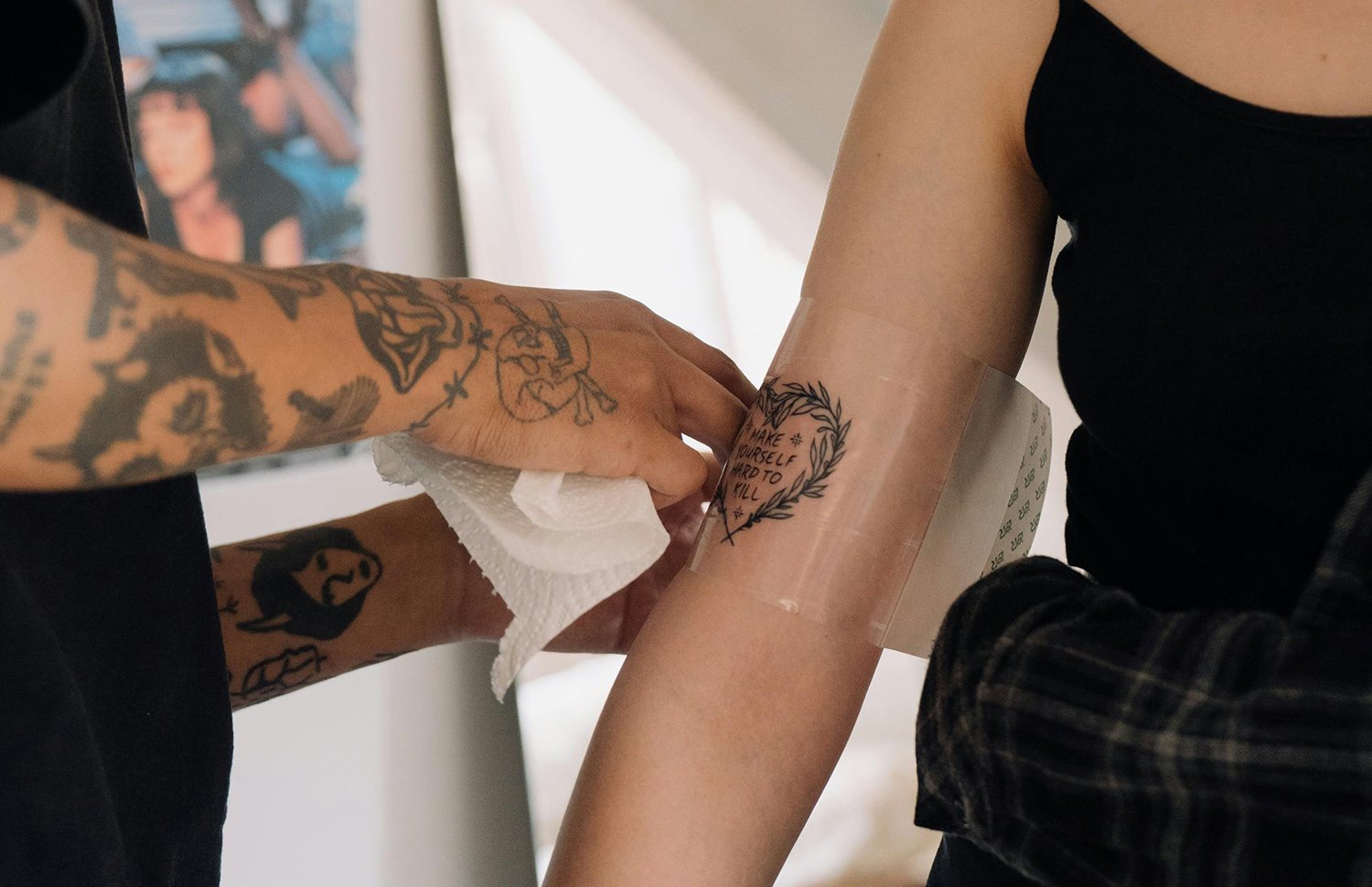
Medical-grade polyurethane film — transparent, breathable, adhesive, waterproof. Brand names include Dermalize, Saniderm, TattooDerm, and others. These are applied directly to the fresh tattoo and left in place for a longer period — typically three to five days, though protocols vary by brand and artist. The film creates a sealed, moist healing environment: the plasma, excess ink, and blood that weep from the tattoo during the first day or two are contained beneath the film, forming a visible dark, fluid-filled layer. This looks alarming, but it is a normal part of the process.
Adhesive film dressings are the most significant development in tattoo aftercare in recent decades. They work on the principle of moist wound healing — a well-established concept in medical wound care — in which maintaining a moist environment over a wound promotes faster, more uniform tissue repair with less scarring than dry, open-air healing. For tattoos, moist healing under film reduces scabbing, minimises ink loss, protects against external contamination, and often produces a cleaner healed result than traditional open-air methods.
Film dressings are removed after the recommended period by peeling them off slowly, ideally under warm running water to soften the adhesive. If the film develops a leak, loses adhesion, or if the fluid buildup is excessive and extends beyond the edges of the film, the dressing should be removed, the tattoo cleaned, and a new piece of film applied, or the client should switch to traditional aftercare. An improperly sealed film is worse than no film — it provides a moist path for bacteria without the sealed environment that keeps them out.
Some people are allergic or sensitive to the adhesive used in film dressings. Signs include redness, itching, or a rash in a pattern that follows the film’s edges rather than the tattoo itself. If this occurs, the film should be removed immediately, and the client should switch to traditional aftercare. The allergic reaction is to the adhesive, not the tattooing, and it resolves once the film is removed.
Absorbent bandages
Traditional aftercare (open-air method)

First wash. Gently wash the tattoo with lukewarm water and a mild, unscented soap. Use clean hands — no cloths, sponges, or towels against the tattoo. The purpose is to remove the plasma, blood, excess ink, and any ointment that accumulated under the covering. The wash should be gentle: no scrubbing, no pressure, no hot water. Pat the area dry with a clean paper towel or let it air dry. Do not rub with a towel.

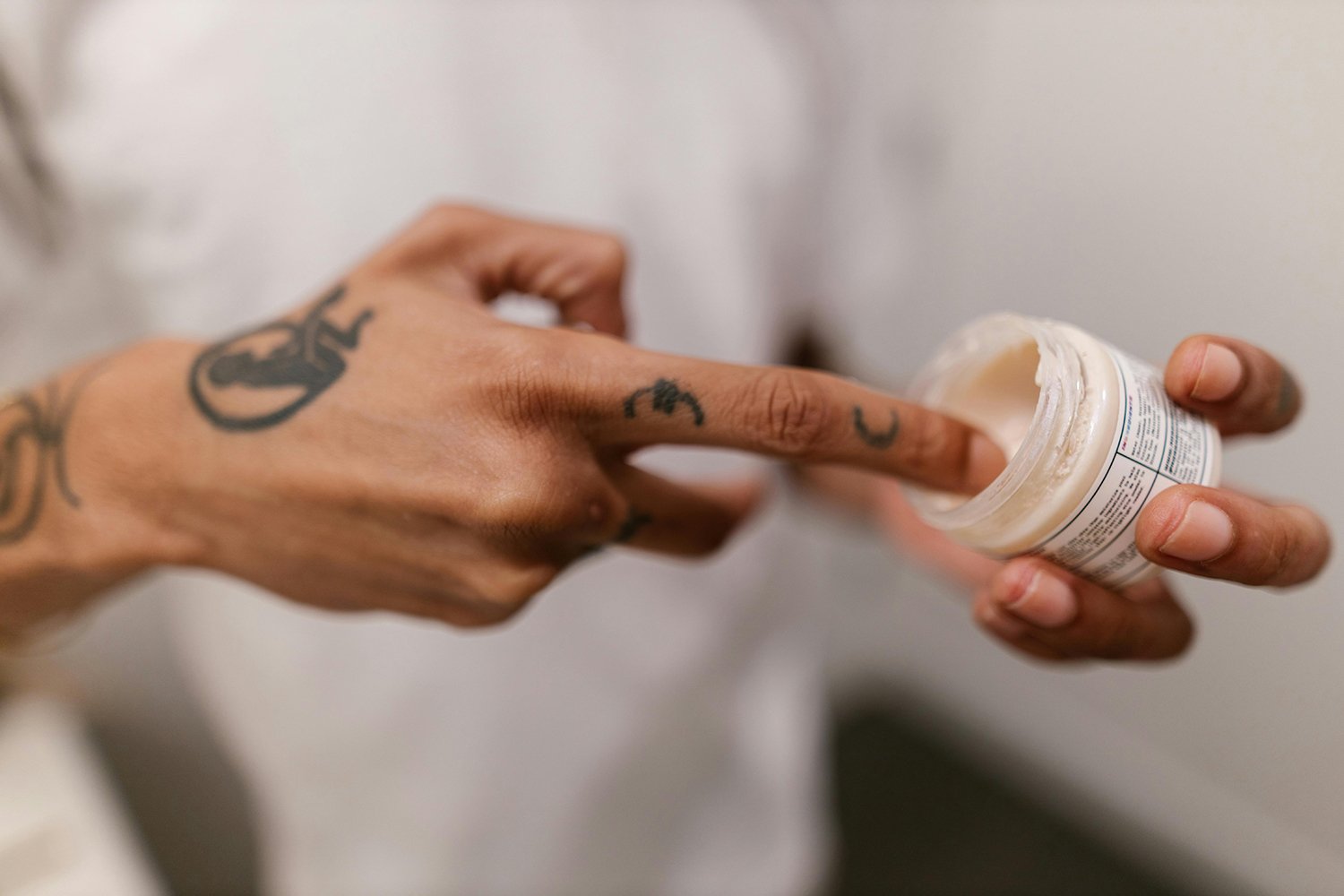
Moisturising. Once the tattoo is clean and dry, apply a thin layer of unscented moisturiser. The keyword is thin — a light film, not a thick coating. The purpose of the moisturiser is to prevent the skin from drying out, cracking, and forming heavy scabs. A thin layer allows the skin to breathe while maintaining moisture. A thick layer traps heat and moisture, clogs pores, and can create an environment where bacteria thrive.
Suitable moisturisers include unscented, hypoallergenic lotions and creams, as well as specialised tattoo aftercare balms. Many artists recommend specific products they have experience with. Coconut oil is used by some practitioners, though its comedogenic properties (tendency to clog pores) make it unsuitable for all skin types.
Products to avoid:
- Petroleum jelly (Vaseline) is too occlusive for ongoing tattoo aftercare — it creates an airtight seal that prevents the wound from breathing and can trap bacteria against the skin. A thin layer applied under the artist’s initial covering is different from repeated applications during the healing period.
- Scented lotions and creams contain fragrances and chemicals that can irritate the healing wound.
- Alcohol-based products (rubbing alcohol, hydrogen peroxide, witch hazel) are antiseptic but too harsh — they strip the skin’s natural oils, dry out the healing tissue, and can damage the ink.
- Antibiotic ointments (Neosporin, Polysporin, and similar over-the-counter products) are designed for minor wounds but are generally too aggressive for tattoo healing — some formulations can draw ink out of the skin, and their active ingredients may cause allergic reactions that present as rashes or bumps over the tattooed area.

Avoid sun exposure until the tattoo is fully healed (for at least 4 weeks). Cover it with natural, breathable, non-tight clothing when it’s very fresh, and use a good UV filter (30 or higher) after it heals to minimise the design’s natural ageing.
Repeat. Wash the tattoo gently two to three times per day and apply a thin layer of moisturiser each time, for roughly the first two weeks. The frequency can be reduced as the tattoo progresses through the healing phases and the skin’s surface integrity is restored.
Second skin / Film dressing aftercare
When a film dressing (second skin) is applied and stays on for the recommended three to five days, the aftercare protocol is different — and simpler.
While the film is on, the tattoo requires no washing, moisturising, or intervention. The sealed environment does the work. The fluid that collects beneath the film — a mixture of plasma, blood, and excess ink — is part of the healing process and should be left alone. The appearance can be unsightly (dark, swampy, uneven), but the tattoo underneath is healing cleanly.
Showering with the film in place is generally fine — the waterproof film prevents water from reaching the tattoo. Avoid submerging the body in water (baths, pools, hot tubs), as prolonged immersion can compromise the film’s adhesive seal.
When the film is removed after the recommended period, the tattoo should be washed gently with lukewarm water and mild soap, patted dry, and then transitioned to the traditional aftercare protocol: apply a thin moisturiser two to three times daily until healing is complete.
Some artists and brands recommend applying a second piece of film after the first is removed. This can work well — particularly if the first removal reveals a tattoo that is still weeping plasma — but the decision should be guided by the artist’s instructions or the film manufacturer’s protocol.
The healing timeline
Days 1–3: acute inflammation. The tattoo is red, swollen, warm, and tender. Plasma and excess ink weep from the surface. The area may feel hot and tight. This is the body’s inflammatory response to the tissue damage and the foreign ink — the same response it mounts against any wound. Redness and swelling that remain roughly within the boundaries of the tattooed area are normal. Redness that spreads significantly beyond the tattoo’s edges, increases in intensity over several days, or is accompanied by heat, pus, or a foul smell may indicate infection and warrants medical attention.
Days 3–7: scab formation and early repair. The weeping stops. A thin layer of dried plasma, dead cells, and a small amount of ink forms over the surface. In well-cared-for tattoos, this is a thin, transparent film. In tattoos that dried out or were over-moisturised, the scab may be thicker and darker. The epidermis is beginning to regenerate beneath this layer. The tattoo may feel tight and itchy as the new skin forms. Itching during this phase is normal — it is caused by the histamine response to healing tissue and by new nerve endings reestablishing connections.
Days 7–14: peeling. The thin scab or film begins to flake and peel. This looks like a light sunburn peel — small, dry flakes that come away gradually. The peeling carries some ink with it — the ink that was trapped in the epidermis rather than the dermis. This is why the tattoo often looks faded, dull, or hazy during this phase. The colour and sharpness return as the new epidermis matures and becomes more transparent. This stage tests the client’s patience and restraint. The peeling flakes are tempting to pick at. They must be left alone.
Weeks 2–4: settling. The epidermis completes its regeneration. The tattoo’s surface is intact but the underlying dermis is still remodelling. The tattoo may look slightly milky or cloudy — a thin, opaque quality caused by the new, immature epidermis. This clears over the following weeks as the new skin matures and becomes more transparent, allowing the ink in the dermis to show through clearly.
Weeks 4–8: maturation. The dermal tissue stabilises. The collagen matrix around the ink deposits is reorganised and strengthened. The tattoo reaches its “settled” state — the appearance it will maintain, with gradual changes, for years and decades. Most artists recommend evaluating the tattoo at the six-to-eight-week mark and scheduling a touch-up if any areas healed unevenly or lost ink.
Common mistakes
Picking and scratching. The single most damaging thing a client can do to a healing tattoo is picking at scabs — or at the peeling flakes during the second week — tears out ink that has settled in the dermis. The result is patchy, uneven areas where the colour is missing or significantly lighter than the surrounding tattoo. Scratching causes the same damage and increases the risk of introducing bacteria from under the fingernails into the wound. The itching during healing can be intense. Gently patting or slapping the area (with a clean hand) can provide some relief without damaging the skin. Cool (not cold) compresses can help. An additional moisturiser can reduce the dryness that contributes to itching. Scratching is never the answer.
Over-moisturising. Applying too much moisturiser, too thickly, or too frequently creates a saturated, airless layer over the tattoo. This clogs pores, promotes breakouts, prematurely softens the healing surface, and can cause ink to leach from the dermis. The visual signal is a tattoo that looks glossy, wet, or slick hours after moisturiser was applied. A properly moisturised tattoo absorbs the product within minutes and feels slightly supple to the touch — not greasy, not wet. If the moisturiser is visible on the surface, too much was applied. The rule is a thin layer, fully absorbed, two to three times per day. More is not better.
Under-moisturising and dry healing. Allowing the tattoo to dry out completely causes heavy, thick scabbing. When these thick scabs eventually separate from the skin, they pull more ink from the dermis than the thin film that forms on a well-moisturised tattoo. “Dry healing” — deliberately avoiding all moisturiser — has advocates, and heavily tattooed individuals sometimes report success with the method. The mechanism is sound (the body can heal wounds without external moisturiser), but the ink loss tends to be higher than with proper moisturising, and the scabbing is heavier. For someone whose priority is the best possible healed tattoo result, appropriate moisturising produces better outcomes than dry healing in most cases.
Submerging in water. Baths, swimming pools, hot tubs, oceans, lakes, and rivers are all off-limits until the tattoo is fully healed — typically a minimum of two to three weeks. Submerging a healing tattoo in water introduces bacteria into the wound (pools and natural bodies of water contain microorganisms, regardless of how clean they appear), softens the healing scab, promotes ink loss, and prolongs the healing process. Showers are fine — brief, lukewarm, and without directing a high-pressure stream at the tattoo.
Sun exposure. Ultraviolet radiation damages tattoo pigments, particularly lighter colours. During the healing period, the epidermis is thinner and less protective than mature skin, making the tattoo especially vulnerable. Even short sun exposure during the first two to three weeks can cause permanent colour fading. After healing is complete, long-term sun protection (SPF 30 or higher sunscreen applied to the tattooed area whenever it is exposed) slows the ageing of the tattoo over its lifetime. Sunscreen should not be applied to a healing tattoo — the chemicals in sunscreen can irritate the wound. During healing, the tattoo should be covered with clothing rather than sunscreen if sun exposure is unavoidable.
Exercise too soon. Heavy exercise during the first one to two weeks after tattooing creates several problems. Sweat contains salt, ammonia, and urea — all of which can irritate a healing wound. Gym equipment is a reservoir for bacteria. Stretching and movement, particularly across joints, can stress the healing skin and crack forming scabs. Tight-fitting athletic clothing rubs against the tattoo. Light, non-sweating activity (walking, gentle stretching) is generally fine immediately. Intense exercise, heavy sweating, and gym attendance should wait until the tattoo’s surface is intact — typically 7 to 14 days, depending on the size and placement of the tattoo.
Using the wrong products. Petroleum jelly, scented lotions, alcohol-based products, and antibiotic ointments have been covered above. The broader point is that the healing tattoo is a wound in the skin that has been traumatised by thousands of needle punctures and loaded with foreign pigment. It is more sensitive to chemical irritation than intact skin. Products that are safe on healthy skin may be harmful on a healing tattoo. When in doubt, use less rather than more, use the simplest product available, and follow the artist’s recommendations.
Using the wrong products. Petroleum jelly, scented lotions, alcohol-based products, and antibiotic ointments have been covered above. The broader point is that the healing tattoo is a wound in the skin that has been traumatised by thousands of needle punctures and loaded with foreign pigment. It is more sensitive to chemical irritation than intact skin. Products that are safe on healthy skin may be harmful on a healing tattoo. When in doubt, use less rather than more, use the simplest product available, and follow the artist’s recommendations.
Re-wrapping. Once the initial covering (cling film or bandage) is removed and the tattoo is washed for the first time, it should not be re-wrapped in cling film. Repeated wrapping traps heat, moisture, and bacteria against the wound. The exception is film dressings (second skins), which are designed to remain sealed against the skin for days, but even these should only be applied in a clean environment, ideally by the artist, and should not be improvised at home with cling film as a substitute.
Touching with unwashed hands. Every time the client touches the tattoo — to wash it, to apply moisturiser, to check how it feels — their hands should be washed first with soap and water. Bacteria from hands, phones, doorknobs, and everyday surfaces transfer easily to a healing wound. This is basic wound hygiene, and it is the easiest aftercare step to forget.
Sleeping on the tattoo. During the first few nights, the tattoo may weep plasma onto bedding. Sleeping directly on a fresh tattoo presses the wound against fabric, which can stick to the weeping surface and pull away scab material when the client moves. Clean sheets (changed before the first night of sleep after the tattoo session) help. Sleeping in a position that avoids direct pressure on the tattoo is ideal, though not always possible. Old, clean sheets or a clean towel placed over the pillow or mattress can protect bedding and reduce the risk of fabric adhering to the tattoo.
Ignoring signs of infection. Mild redness, slight swelling, and tenderness during the first few days are normal. Signs that suggest infection include: redness that spreads beyond the tattoo and increases over several days, increasing pain rather than decreasing, pus (thick, coloured, often foul-smelling discharge distinct from the clear plasma of normal healing), fever, red streaks extending outward from the tattoo, and warm, hard swelling that does not subside. If these occur, the client should seek medical attention. Tattoo infections, while relatively uncommon, can be serious, and early treatment prevents escalation.
Long-term care
Sun protection is the single most effective long-term aftercare practice. UV radiation breaks down tattoo pigments — lighter colours (reds, yellows, oranges, light blues) are most vulnerable, but all colours degrade faster with repeated sun exposure. Applying sunscreen (mineral, SPF 30 or higher, broad-spectrum) over healed tattoos whenever they are exposed to sunlight slows fading and preserves contrast. Mineral sunscreens containing zinc oxide sit on the skin’s surface and physically block UV rays, which some tattoo professionals consider preferable to chemical sunscreens that absorb UV and may interact with pigment.
Moisturising regularly — not at the intensity of the healing period, but as part of normal skincare — keeps the epidermis healthy and supple, which helps maintain the clarity with which the ink in the dermis shows through to the surface. Dry, damaged, or neglected skin obscures the tattoo beneath it.

General skin health affects tattooed skin the same way it affects all skin. Hydration, nutrition, and avoiding excessive sun damage, smoking, and other factors that accelerate skin ageing all contribute to how a tattoo looks over the long term.
When to contact a professional
Contact the tattoo artist if the tattoo appears to be healing unevenly, losing ink in specific areas, developing excessive scabbing, or showing any result that looks different from what the artist expected. Most artists offer a touch-up within a set period after the initial session (often free of charge or at a reduced rate) to correct any areas where the ink did not hold.
Contact a medical professional if signs of infection are present (as described above), if an allergic reaction to the ink develops (persistent raised, itchy, or bumpy skin over specific colours — red ink is the most common trigger), or if any other symptom causes concern. The artist is the first point of contact for questions about the tattoo’s appearance. A doctor is the first point of contact for health-related questions.
Sources & further reading
- Anna Baranska et al., Unveiling skin macrophage dynamics explains both tattoo persistence and strenuous removal. Journal of Experimental Medicine, 215(4), 2018.
- European Academy of Dermatology and Venereology (EADV), guidelines on tattoo aftercare (downloadable PDF).
- Kluger N. et al., Tattoo aftercare management with a dermo-cosmetic product: Improvement in discomfort sensation and skin repair quality. Journal of Cosmetic Dermatology, 20(8), 2021.
- Serup J., Kluger N., and Bäumler W. (eds.), Tattooed Skin and Health. Current Problems in Dermatology, vol. 48, Karger, 2015.
- Leger M.C. and Marmur E., An Analysis of the Content and Recommendations of 700 American Tattoo Aftercare Instructions. Dermatology, 239(5), 2023.
- Medical News Today, Tattoo aftercare: Tips and instructions. Reviewed by Cynthia Cobb, APRN, 2024.
- WebMD, Tattoo aftercare: How to take care of a new tattoo. Reviewed by Stephanie S. Gardner, MD, 2025.