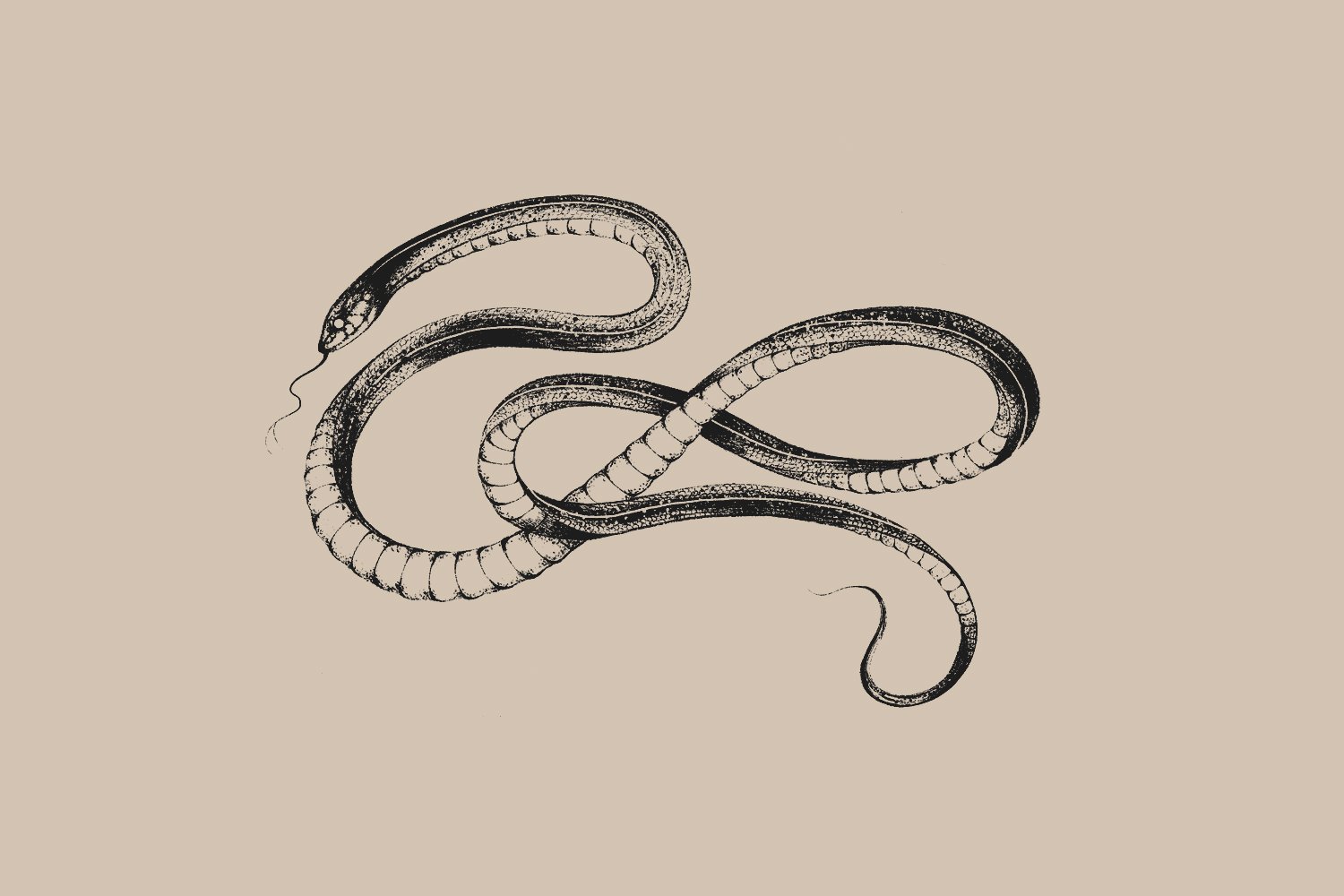
Snake tattoo
Snake: the healer and the killer, the guardian and the tempter
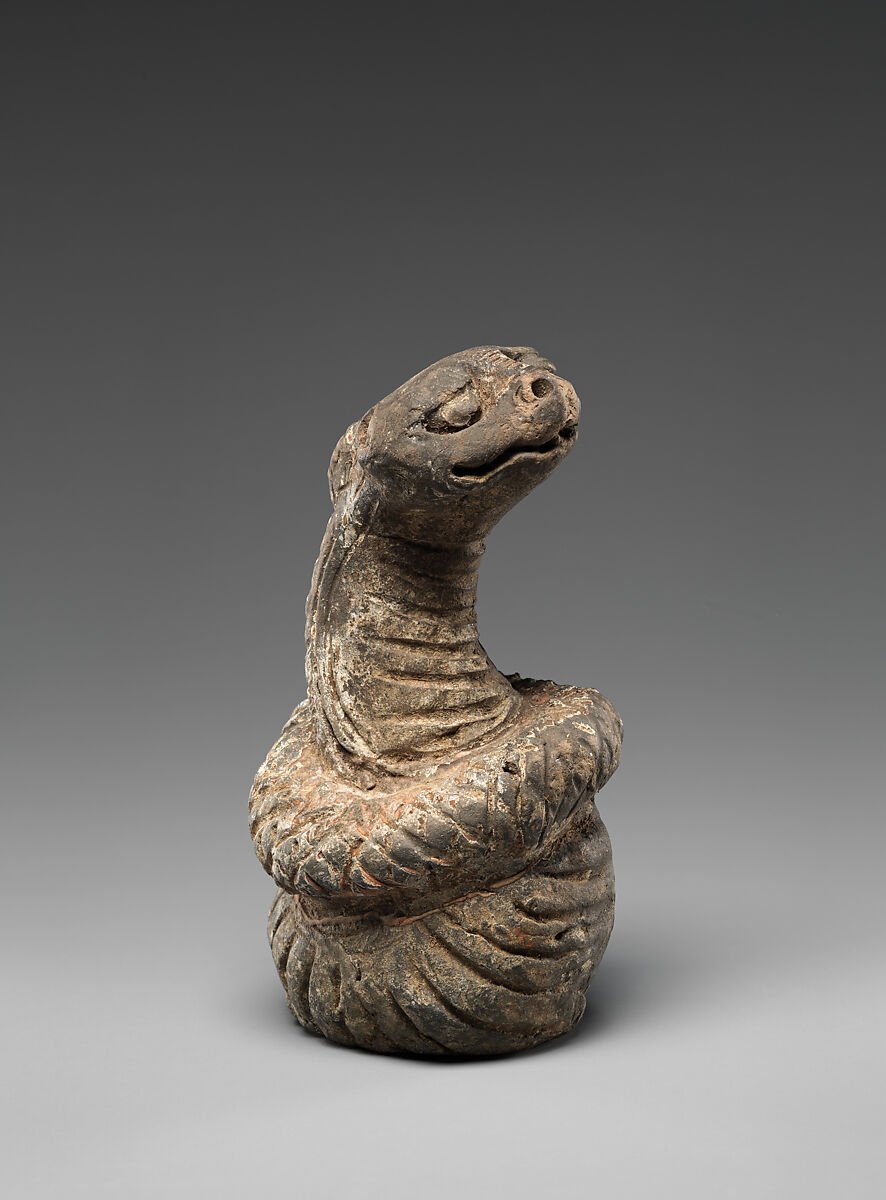
No animal in human culture carries more contradictory meanings than the snake. It is the healer and the killer, the guardian and the tempter, the creator of the world and the agent of its destruction, the embodiment of wisdom and the incarnation of evil. Snakes appear in the mythology, religion, medicine, and art of every civilisation that encountered them, and in almost every case, they occupy positions of extreme symbolic weight — never neutral, never minor, always at the centre of something that matters.
The snake’s biology drives every layer of its symbolism. An animal that moves without limbs, that kills with venom invisible to the eye, that sheds its entire skin and emerges renewed, that lives in the earth and yet climbs trees, that can lie motionless for weeks and then strike in a fraction of a second — this animal demanded explanation in every culture that observed it. The explanations varied enormously. In some traditions, the snake became sacred. In others, it became the enemy of everything sacred. In many, it became both at once.
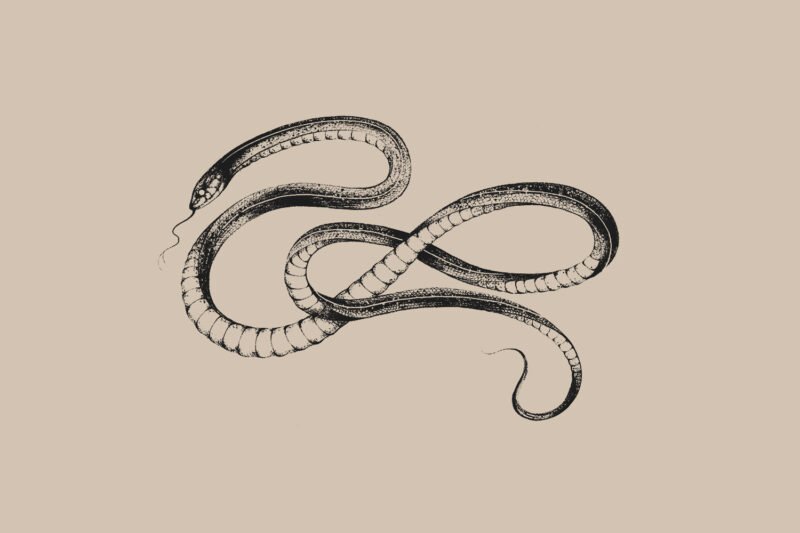
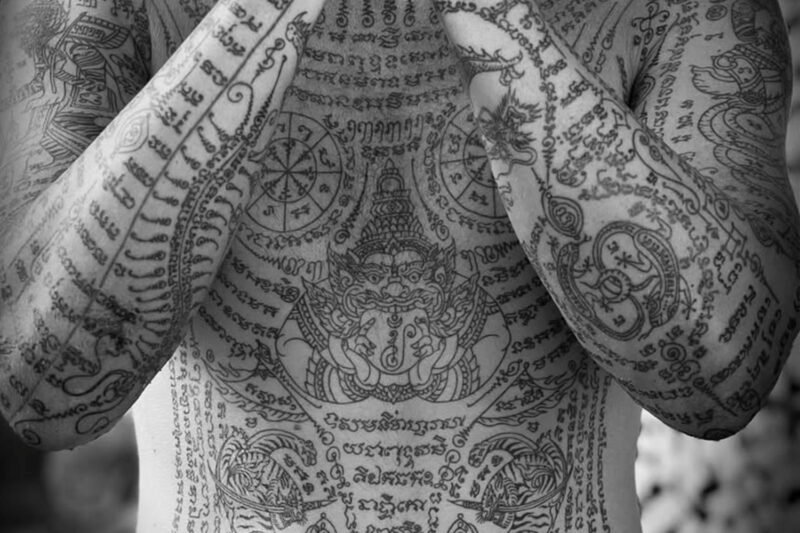
In tattooing, the snake is among the most frequently used animal motifs in the world — and has been for as long as tattooing has been documented. It appears in American traditional flash, Japanese irezumi, Sak Yant sacred tattooing, Mesoamerican-inspired work, blackwork, realism, neo-traditional, and virtually every other tattoo style that has ever engaged with animal imagery. Its body — long, sinuous, infinitely adaptable — wraps around limbs, follows the contours of muscle, coils into compact compositions or stretches across entire backs and sleeves. No other animal conforms to the human body as naturally as the snake does.
But a snake tattoo, more than almost any other animal tattoo, is defined by which tradition the wearer is drawing from. The same image — a coiled serpent — can signify divine protection, spiritual awakening, healing, eternal return, forbidden knowledge, mortal danger, or cosmic evil, depending on the cultural lineage behind it.
The animal
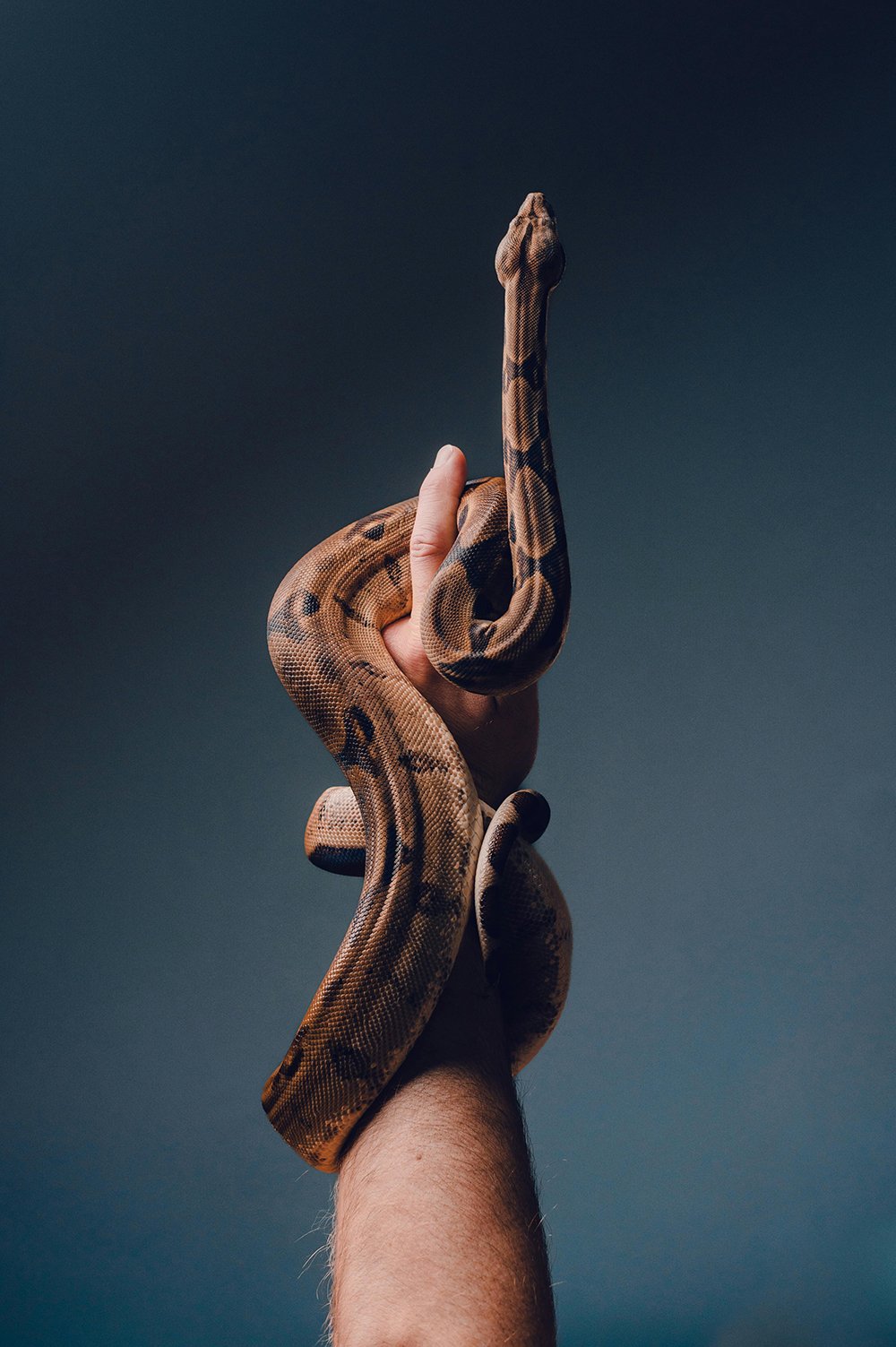
Snakes belong to the suborder Serpentes, with over 3,700 described species distributed across every continent except Antarctica. They range from the thread snake, which can rest on a coin, to the reticulated python, which exceeds six metres. Approximately 600 species are venomous, and of those, around 200 are considered medically significant to humans.
The biological properties that generated symbolic meaning are specific and observable. Snakes shed their skin periodically — a process called ecdysis — emerging from the old integument with new, vivid colouring. To cultures without a framework for understanding this process, it looked like resurrection. An animal that appeared to die and then emerged alive, rejuvenated, and whole became the most obvious natural symbol for rebirth, immortality, and cyclical renewal. This is the single most universal meaning attributed to the snake, and it is the one most commonly cited in contemporary tattooing — though it is also the most general.
Venom added a second dimension. A creature that could kill with a bite — invisibly, through a mechanism no ancient observer could see — occupied the boundary between life and death. The same substance that kills could also, in controlled doses, heal: snake venom has been used medicinally across cultures and remains a source of pharmaceutical compounds today. The snake was therefore simultaneously the bringer of death and the instrument of cure, a duality that runs through its symbolism from Mesopotamia to modern medicine.
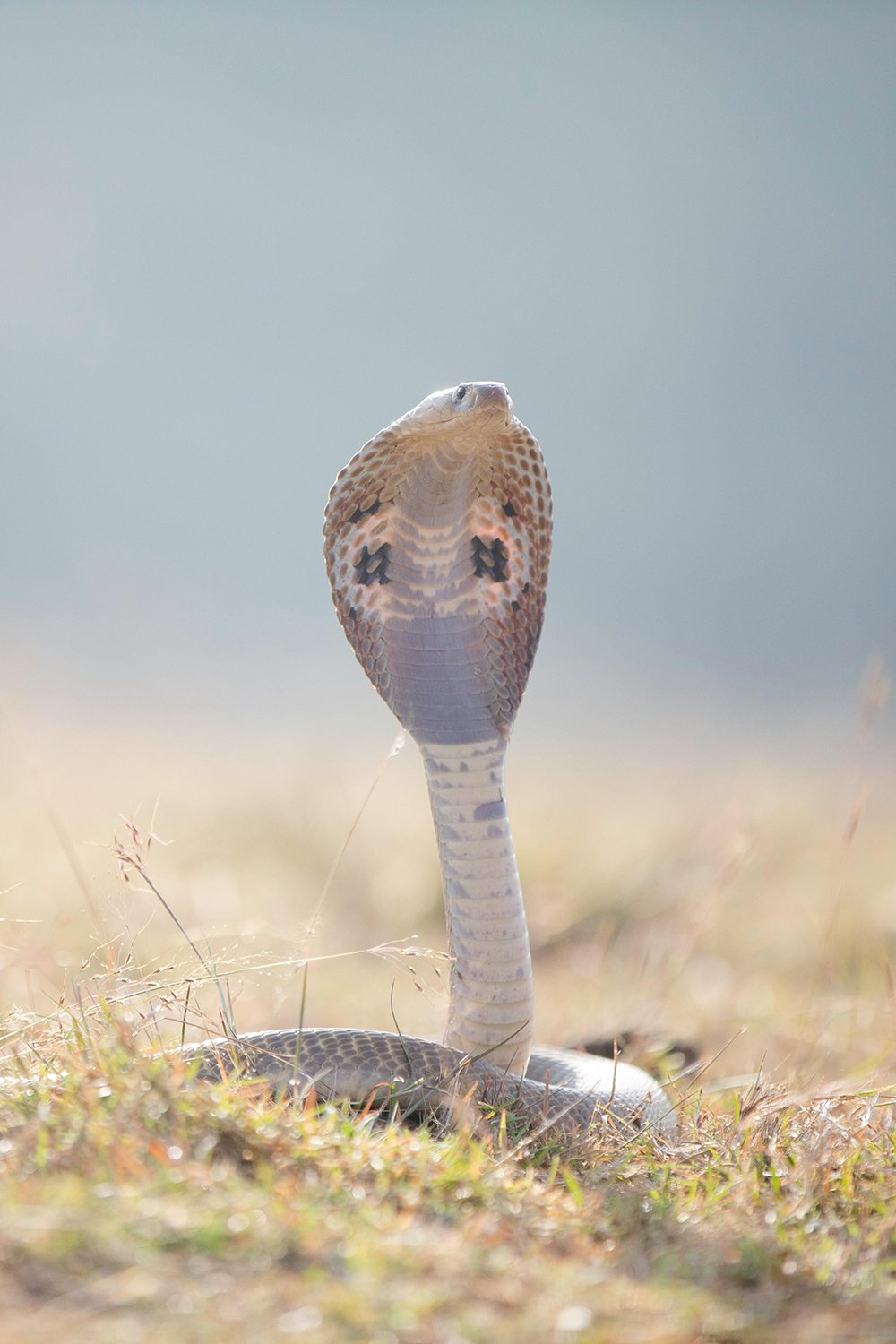
Their movement — legless, fluid, silent — placed them in a category apart from all other animals. They emerge from holes in the earth, suggesting a connection to the underworld. They inhabit water, trees, rock crevices, and human dwellings. The cobra’s hood, the rattlesnake’s warning, the constrictor’s embrace — each species contributed its own specific visual vocabulary to the symbolic traditions that adopted it, and each produces a different visual effect in a tattoo. A rearing cobra communicates something different from a coiled viper, which communicates something different from an ouroboros, which communicates something different from a two-headed serpent. The species, the pose, and the compositional context all carry meaning.
Mesopotamia: the snake that stole immortality
The oldest surviving narrative about a snake’s symbolic meaning comes from ancient Mesopotamia. In the Epic of Gilgamesh — the world’s earliest known major work of literature, composed in Sumerian and later in Akkadian — the hero Gilgamesh travels to the bottom of the waters to retrieve a plant that restores youth. He succeeds, but while he rests, a snake comes and eats the plant. The snake sheds its skin and becomes immortal. Gilgamesh is left with nothing. He is destined to die.
The story treats the snake as the recipient of a gift that was meant for humans. The snake obtained immortality — as evidenced by its shedding of skin — and humans did not. The Mesopotamians saw the shed skin and drew the logical conclusion: the snake had what we lost.
Ningizzida, a Mesopotamian deity associated with the underworld, was depicted as a serpent or as a figure flanked by serpents. He served as a guardian of the gate of heaven and was an ancestor of Gilgamesh in some traditions. His symbol — two intertwined serpents on a staff — predates the Greek caduceus by at least a thousand years and may be its ultimate source.
The Mesopotamians also used serpent imagery on boundary stones (kudurru) and ritual objects, where snakes served as protective figures—guardians of thresholds, borders, and sacred spaces. The serpent in these contexts was a figure of respect, a being that occupied the space between worlds and guarded the thresholds within them. The Mesopotamian reading — the snake as guardian of boundaries and holder of stolen immortality — has no direct visual tradition in contemporary tattooing. Still, its themes echo through every snake tattoo that references transformation, forbidden knowledge, or the crossing of a threshold.
Egypt: ouroboros and the cobra on the crown
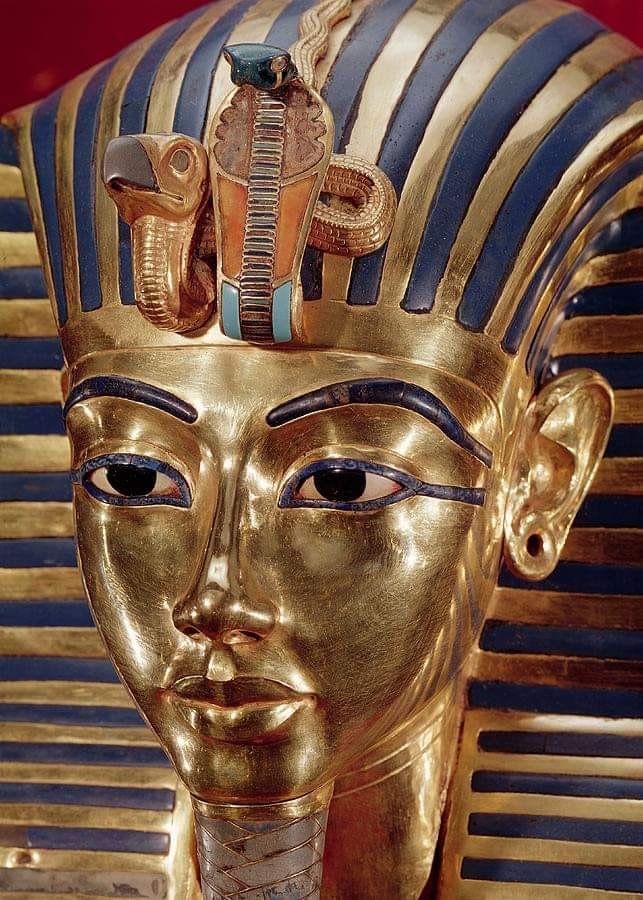
In ancient Egypt, the snake held the highest position an animal could: it sat on the pharaoh’s forehead.
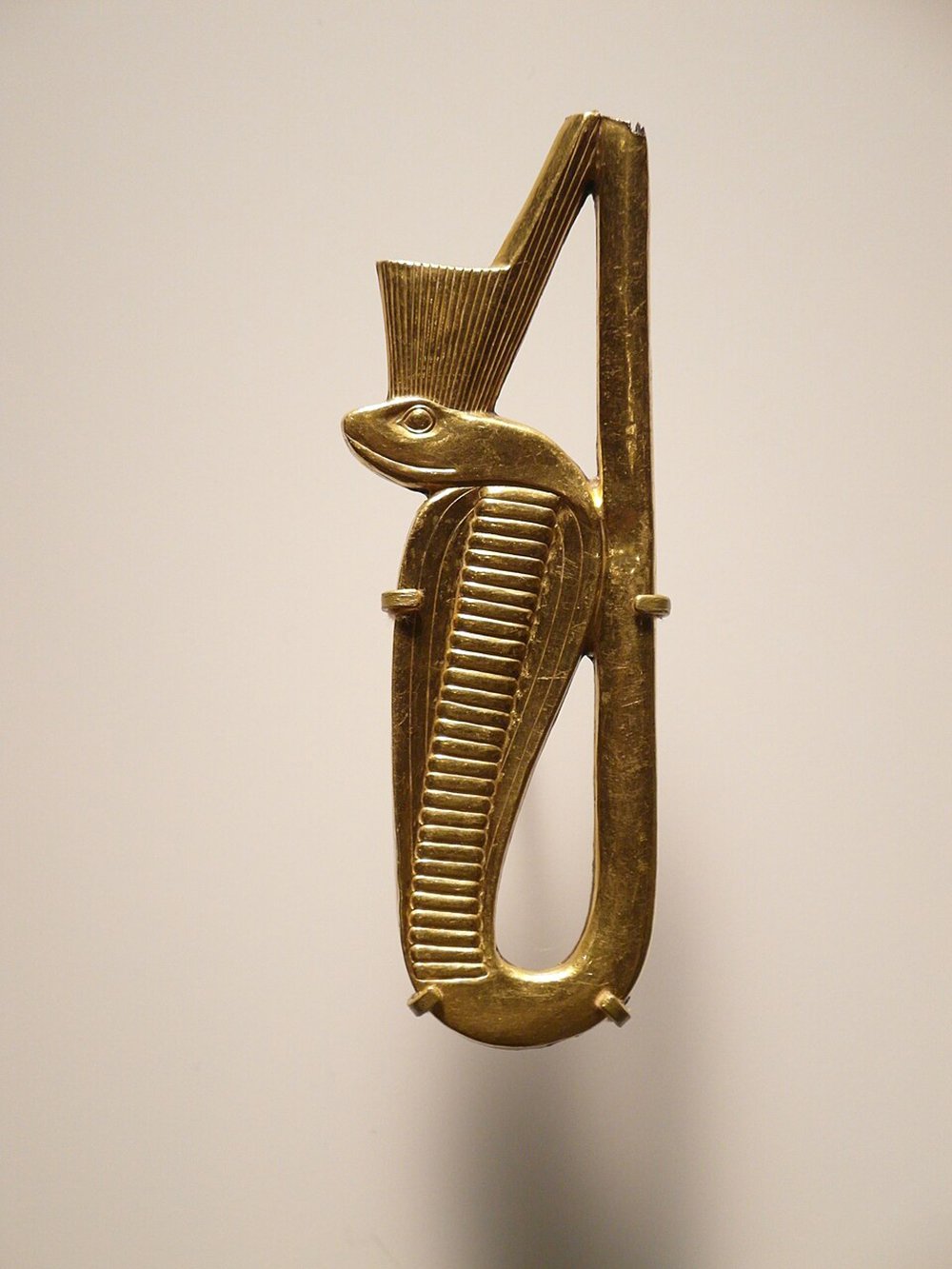
The Uraeus — a rearing cobra — was the defining element of royal Egyptian headdress from the earliest dynasties. It represented the goddess Wadjet, protector of Lower Egypt and one of the oldest deities in the Egyptian pantheon. The Uraeus was believed to spit fire at the pharaoh’s enemies — a weapon, a divine guardian, and a statement of legitimacy: the ruler who wore the cobra carried the protection of the goddess herself.
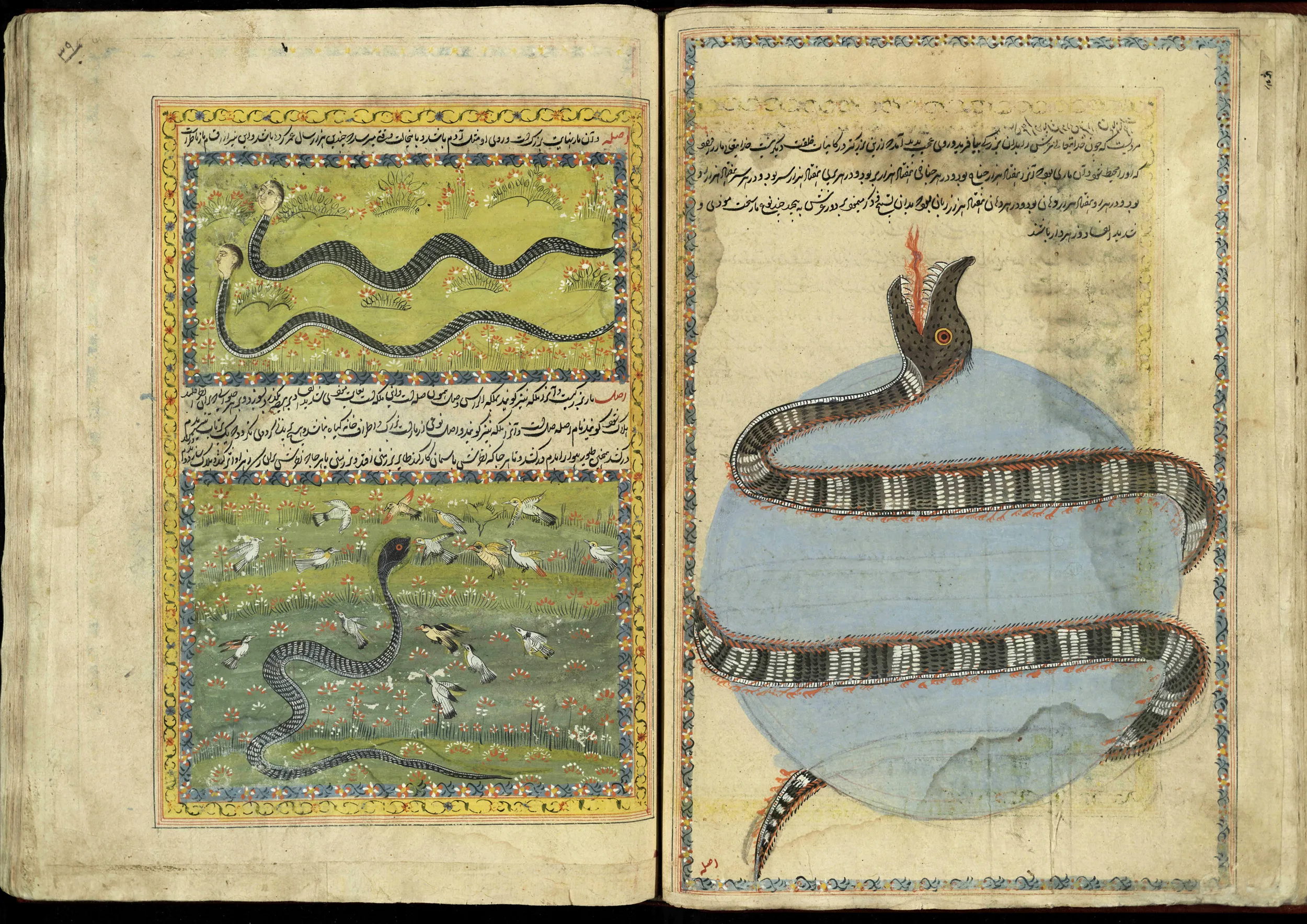
But Egypt did not assign a single meaning to the snake. Apophis (Apep) was a serpent of pure destruction — a vast entity that existed in the underworld and attacked the sun god Ra every night as Ra’s solar barque passed through the darkness. Every dawn was a victory over Apophis. Every sunset was a reminder that the battle would be fought again. Apophis represented chaos, the annihilation of order, the darkness that threatened to extinguish the world.
The same civilisation that placed a cobra on its kings’ crowns also feared the cosmic serpent that tried to devour the sun. Both were true simultaneously. Protection and destruction, sovereignty and chaos, lived in the same animal.
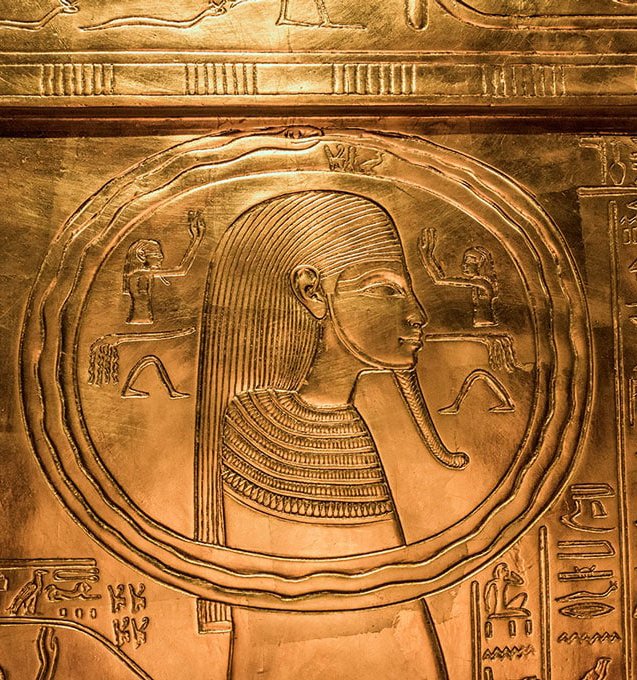
The ouroboros — a serpent eating its own tail — has its earliest known depiction in the Enigmatic Book of the Netherworld, a funerary text found in the tomb of Tutankhamun (c. 14th century BCE). The image encircles the head of a unified Ra-Osiris figure, representing the cycle of death and regeneration that the pharaoh was expected to undergo. This image would travel from Egypt through Greek philosophy, Gnostic mysticism, and medieval alchemy to become one of the most widely tattooed symbols in the modern world. Its meaning has remained remarkably stable across three and a half millennia: the cycle that has no beginning and no end, destruction that is simultaneously creation, the unity of opposites.
The Uraeus cobra and the ouroboros are both actively tattooed today. The Uraeus appears in Egyptian-themed blackwork and illustrative pieces, often combined with the Eye of Horus, ankh, or other pharaonic imagery. The ouroboros, discussed in more detail in the alchemy section below, is one of the most popular snake tattoo compositions across all styles — from fine-line minimalist circles to fully rendered illustrative or blackwork serpents.
Greece and Rome: healing, prophecy, and the staff
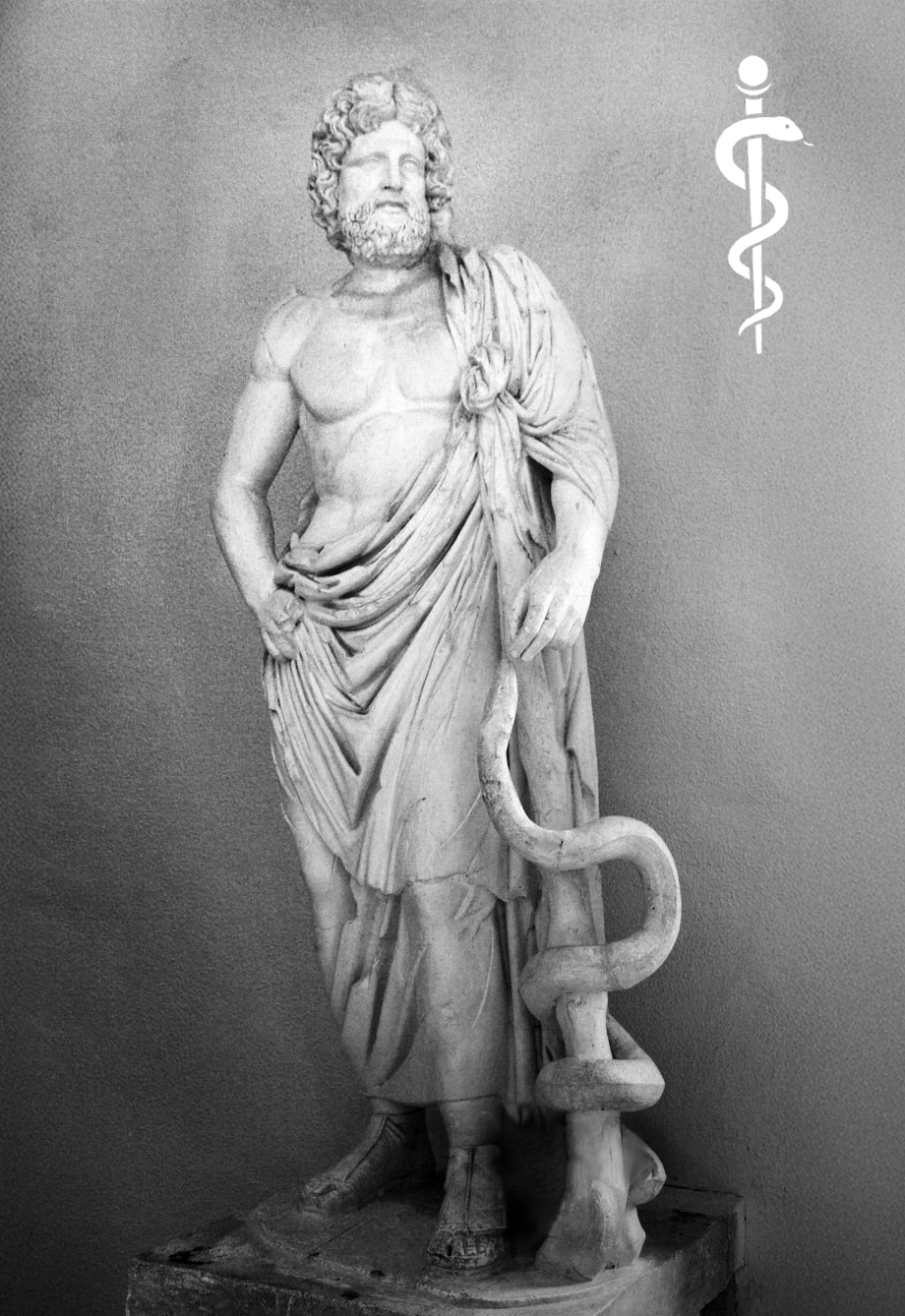
The Greeks gave the snake its most enduring medical association. Asclepius, the god of healing and medicine — son of Apollo, raised by the centaur Chiron — carried a staff with a single serpent coiled around it. The Rod of Asclepius remains the symbol of medicine today: it appears on the logo of the World Health Organisation, the American Medical Association, and medical associations worldwide.
Why a snake for healing? Several theories coexist. The ancient Greeks observed that snakes appeared to renew themselves through skin-shedding, making them symbols of regeneration. Non-venomous Aesculapian snakes (Zamenis longissimus) were kept in the healing temples dedicated to Asclepius, where they roamed freely among patients who slept in the temple seeking cures — a practice called incubation. One myth describes Asclepius killing a snake, then watching a second snake arrive carrying herbs in its mouth to revive the first, teaching the god the secret of resurrection. An alternative theory, based on the Ebers Papyrus, one of the oldest medical texts in the world, connects the staff-and-serpent image to the practice of winding a guinea worm parasite around a stick to extract it from the body — a medical procedure rather than a mythological symbol.
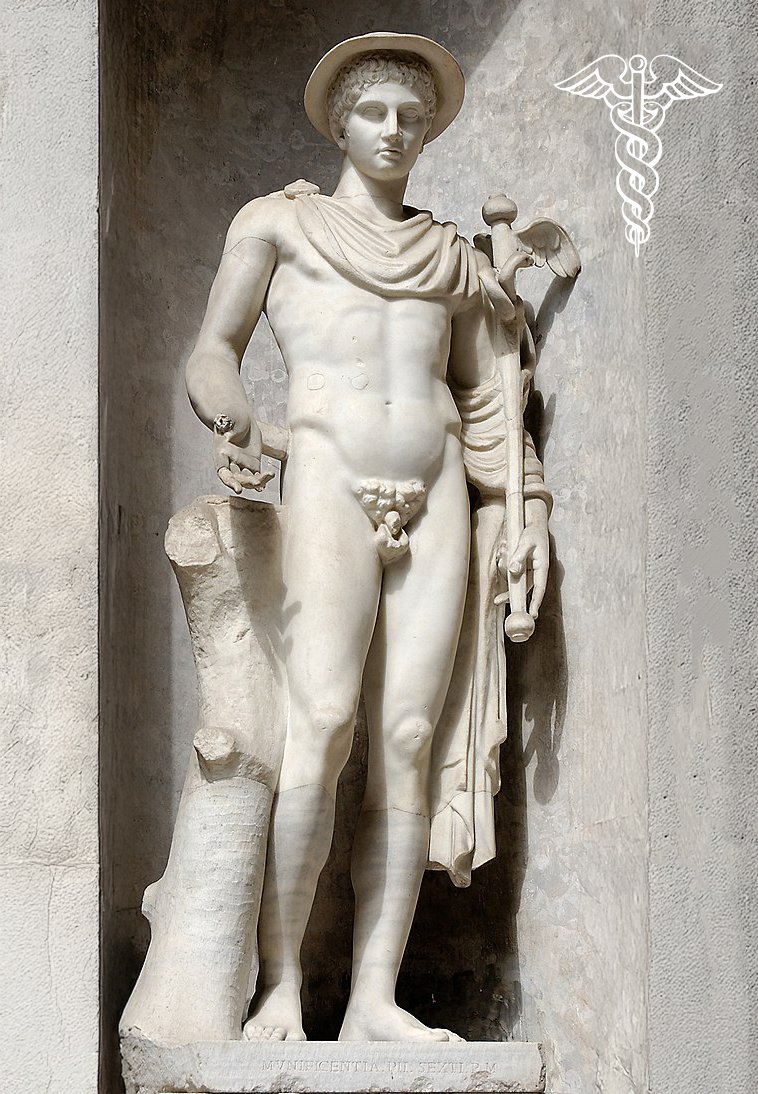
The Rod of Asclepius (one snake, no wings) is frequently confused with the caduceus of Hermes (two intertwined snakes, winged staff). Hermes was the messenger god, patron of merchants, travellers, and thieves — not a healer. The confusion dates to the 16th century and became entrenched when the United States Army Medical Corps adopted the caduceus in 1902, through a decision that has been debated and criticised ever since. The distinction matters for anyone considering a medical-themed snake tattoo: the correct symbol of medicine is the single-serpent staff of Asclepius. The caduceus, while visually striking and widely tattooed, belongs to a different symbolic lineage — commerce, communication, and alchemical transformation, not healing.
Both symbols are popular tattoo subjects. The Rod of Asclepius is commonly chosen by medical professionals, paramedics, nurses, and others in the healing professions. The caduceus, whether chosen knowingly or through common confusion, appears across a broader range of wearers. Both work well as tattoo compositions — a vertical staff with a coiling serpent suits the forearm, calf, spine, and ribcage naturally.
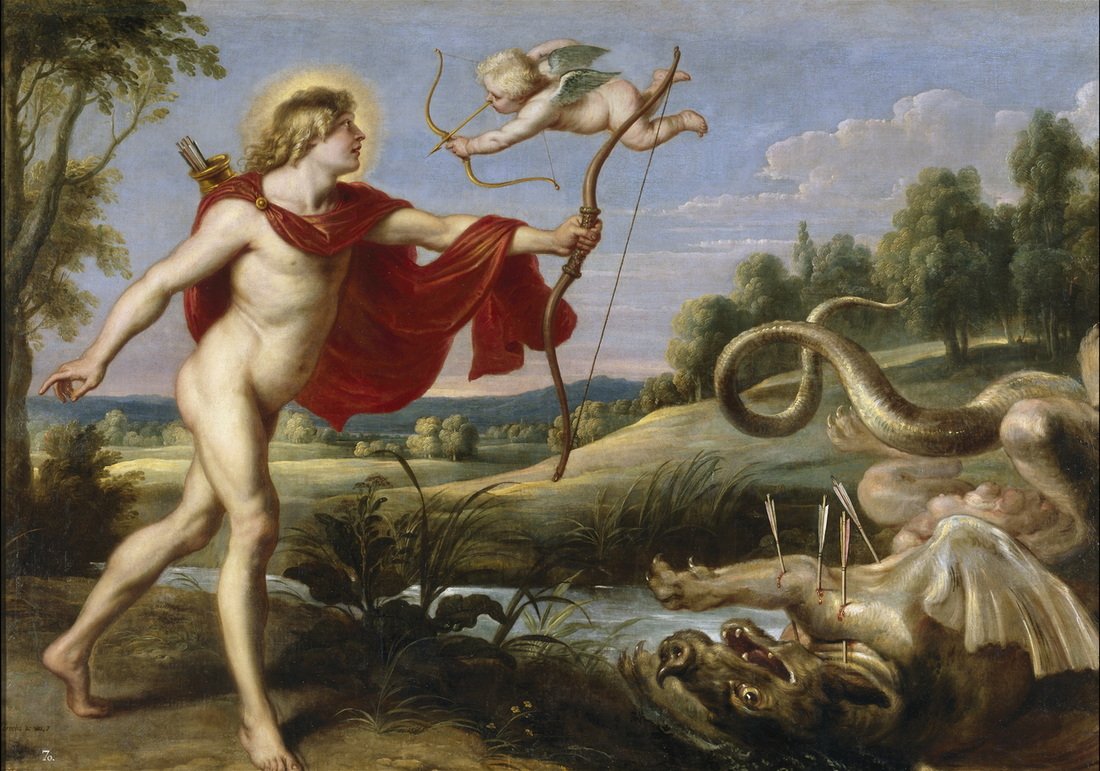
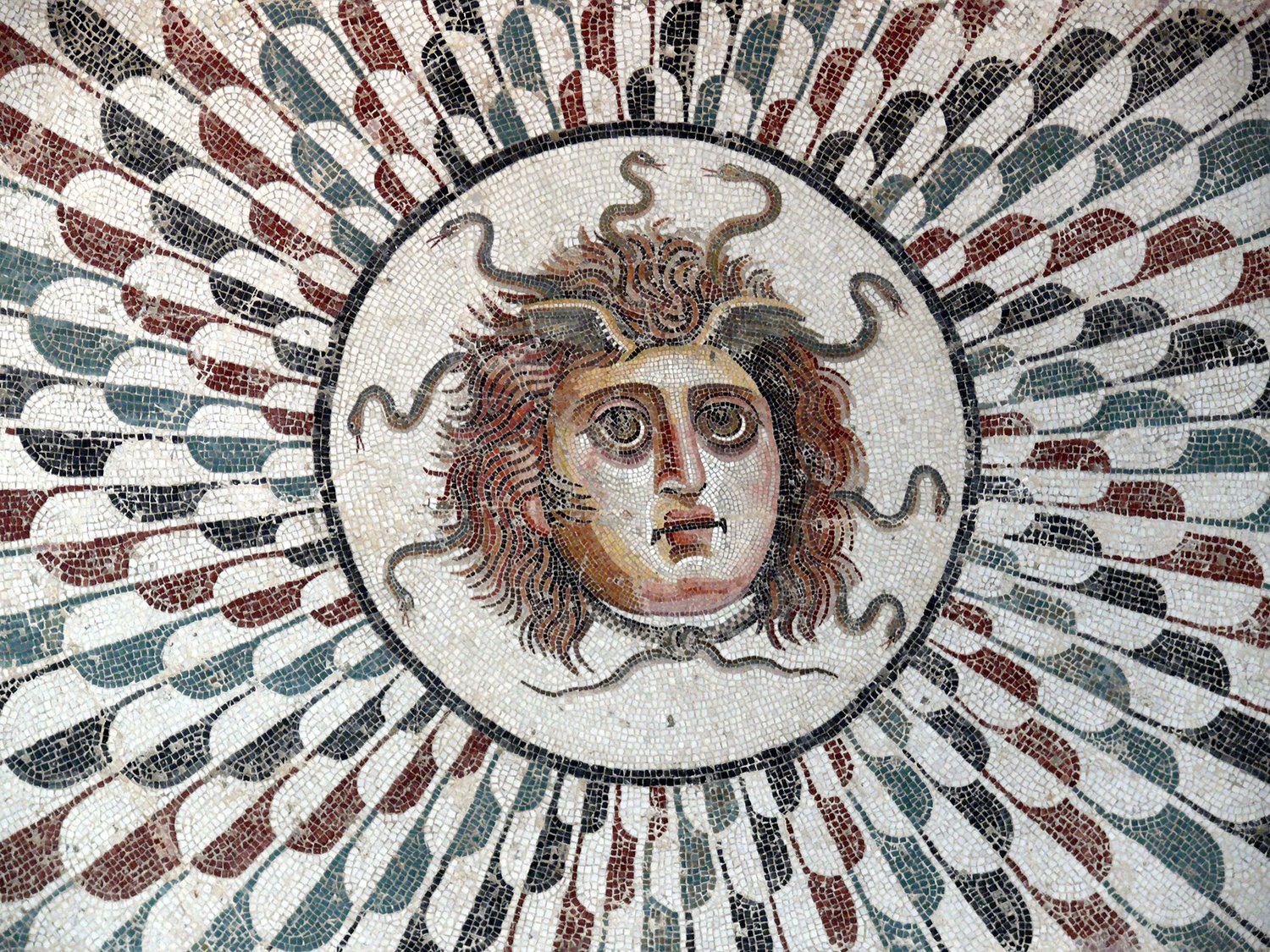
Beyond medicine, Greek mythology used serpents as agents of divine power and punishment. Python was the great serpent that guarded the Oracle at Delphi before Apollo killed it and claimed the site — the priestess retained the title Pythia. Typhon, the most fearsome monster in Greek mythology, was a giant with serpents for legs who challenged Zeus for dominion over the cosmos. The Gorgons — Medusa and her sisters — wore living snakes as hair, and Medusa’s gaze turned the viewer to stone. Medusa is one of the most frequently tattooed figures in Greek mythology — her face framed by living serpents is a powerful composition that works across realism, neo-traditional, blackwork, and illustrative styles.
In Greek religion, snakes were also associated with the chthonic — the underworld, the dead, the earth’s interior. They appeared as household guardians (agathos daimon, the “good spirit”), as attendants of underworld deities, and as symbols of the ancestors.
Hindu and Buddhist traditions: the Nagas
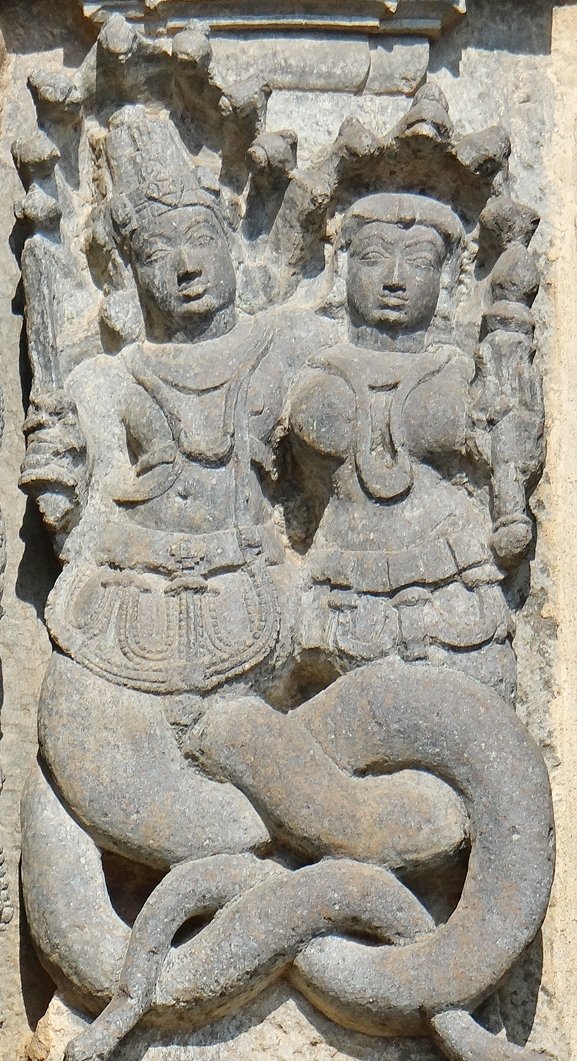
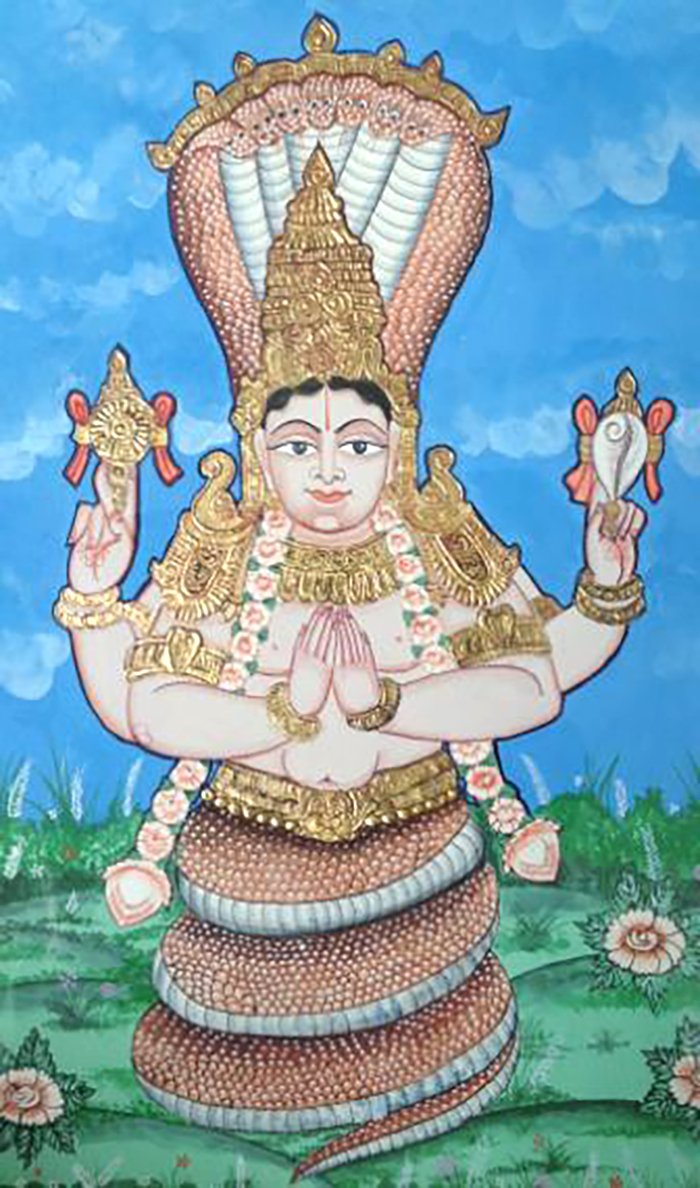
In Hindu mythology, serpents are not symbols. They are beings — a divine race called Nagas, depicted as great cobras, often multi-headed, who inhabit a subterranean realm of jewelled palaces called Patala (also known as Naga-loka). They are children of the sage Kashyapa and Kadru, and they stand among the most powerful entities in the Hindu cosmos.
Three Nagas dominate the tradition. Shesha (also called Ananta, “the endless one”) is the greatest of all serpents — a thousand-headed cobra on whose coils Vishnu reclines between cycles of creation. Shesha holds the universe on his hood. When the cosmos dissolves, only Shesha and Vishnu remain. Vasuki, the Naga king, was wrapped around Mount Mandara during the Samudra Manthan — the Churning of the Ocean — when the gods and demons pulled him back and forth to extract the nectar of immortality from the cosmic sea. Vasuki is also depicted coiled around Shiva’s neck, which he wears as an ornament. Takshaka, the third great Naga, is more dangerous — a king of serpents associated with fire and destruction.
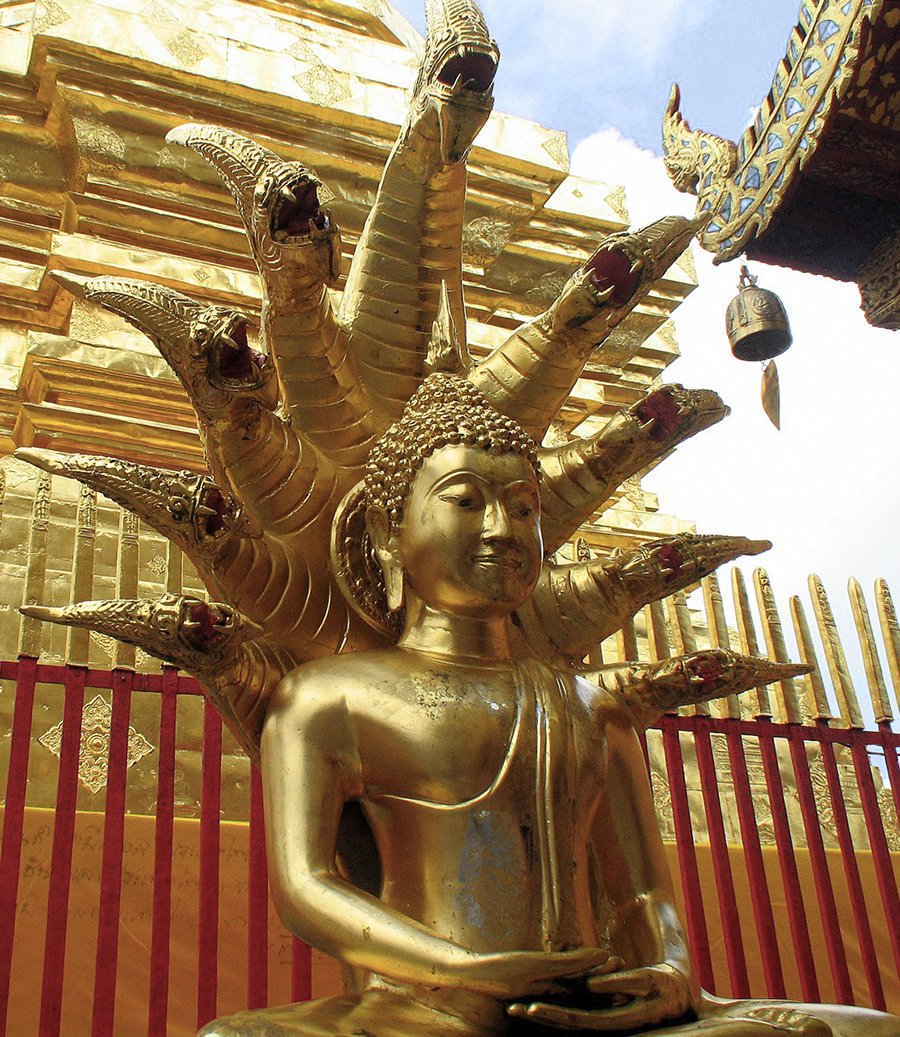
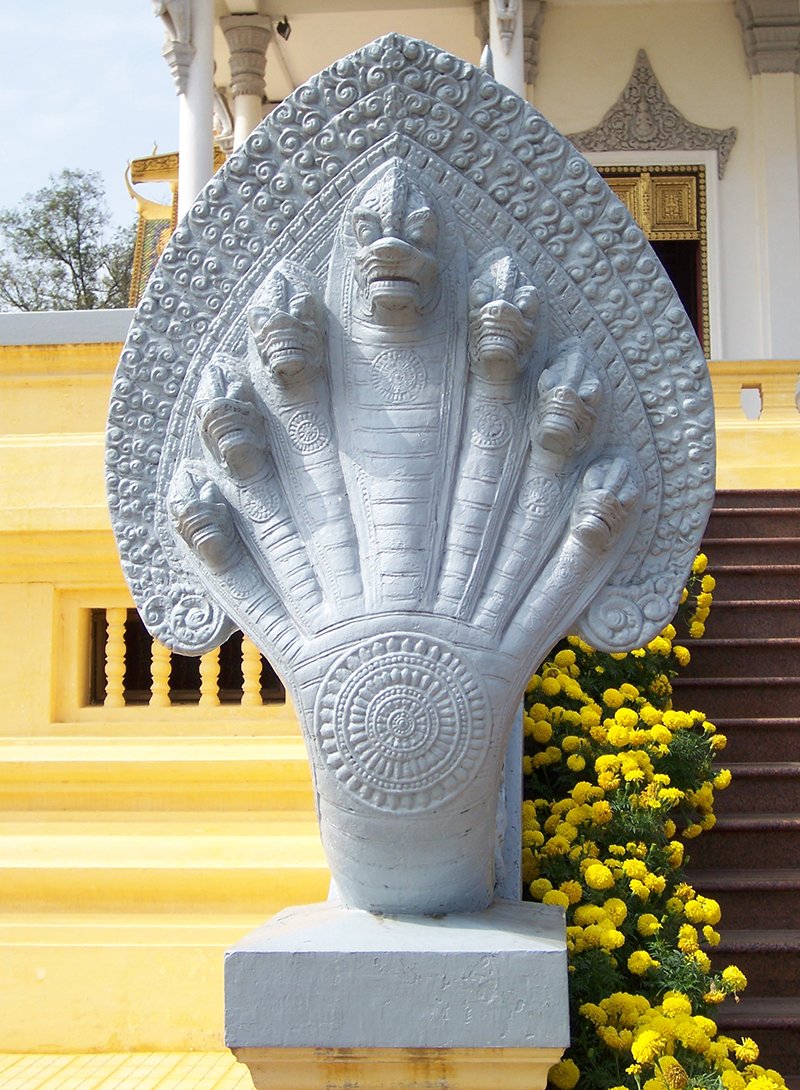
In Buddhism, the Naga king Mucalinda sheltered the Buddha during a great storm, coiling beneath him as a seat and spreading his multi-headed cobra hood above as an umbrella. This image — the meditating Buddha protected by the Naga — is one of the most widespread motifs in Buddhist art across Southeast Asia and appears on temple walls, sculptures, and amulets from Thailand to Cambodia to Sri Lanka. It is also a composition that translates directly into tattooing: the seated Buddha beneath the Naga’s hood is a recognisable tattoo subject in both traditional Southeast Asian tattooing (including Sak Yant practice) and in contemporary studio work. Multi-headed Naga designs, rendered in blackwork or illustrative styles, are increasingly popular as standalone tattoo compositions — the spread cobra hood with five, seven, or nine heads creates a visually commanding and symmetrical design suited to the chest, upper back, or as the centrepiece of a sleeve.
Kundalini — a concept central to Hindu yoga and tantra — describes a dormant spiritual energy that rests at the base of the spine, coiled like a serpent. Awakening Kundalini through meditation and practice causes it to rise through the body’s chakras toward the crown of the head, producing spiritual enlightenment. The Yoga-kundalini Upanishad describes it as a divine power, shining like a young lotus, coiled like a snake, holding her own tail, resting half-asleep at the base of the body. A Kundalini-inspired snake tattoo — a serpent coiling upward along the spine or through the chakra system — is among the more spiritually specific snake tattoo compositions, chosen by wearers with a connection to yoga, tantra, or Hindu spiritual practice.
The Naga festival, Nag Panchami, celebrated across India and Nepal, involves offerings of milk, flowers, and prayers to serpent images and live snakes — an acknowledgement of the Nagas’ role as protectors, healers, and controllers of water and fertility.
A snake tattoo drawn from Hindu or Buddhist tradition carries a specific set of meanings: cosmic support (Shesha), protection of the sacred (Mucalinda), spiritual energy and transformation (Kundalini), or the power to participate in creation itself (Vasuki). These are descriptions of how the cosmos works within their traditions, and tattooing them carries that meaning.
Mesoamerica: the feathered serpent
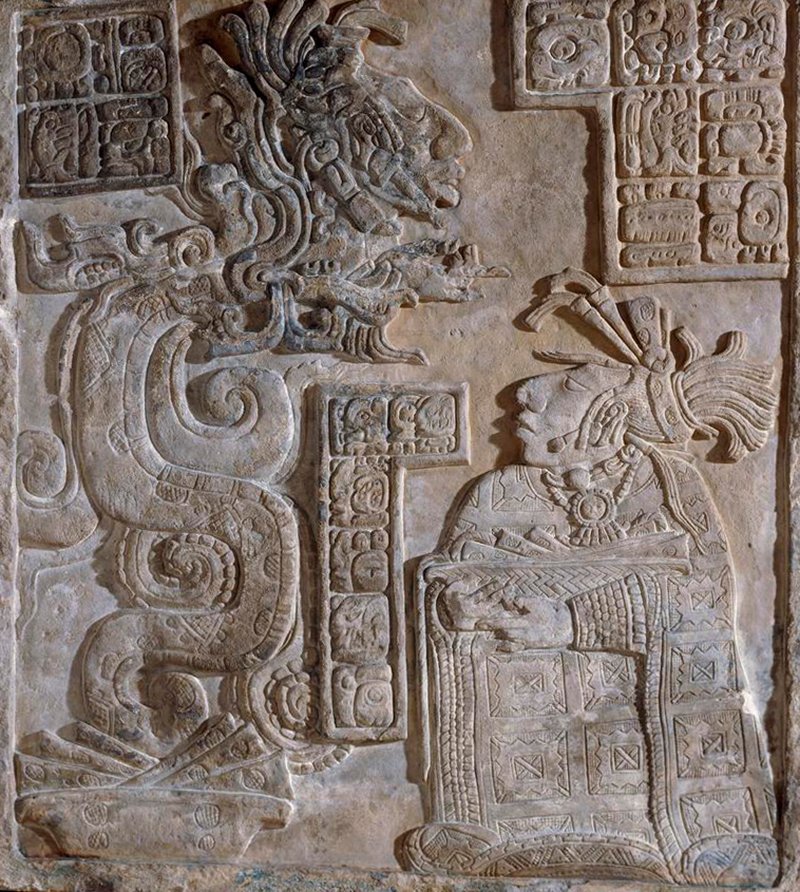
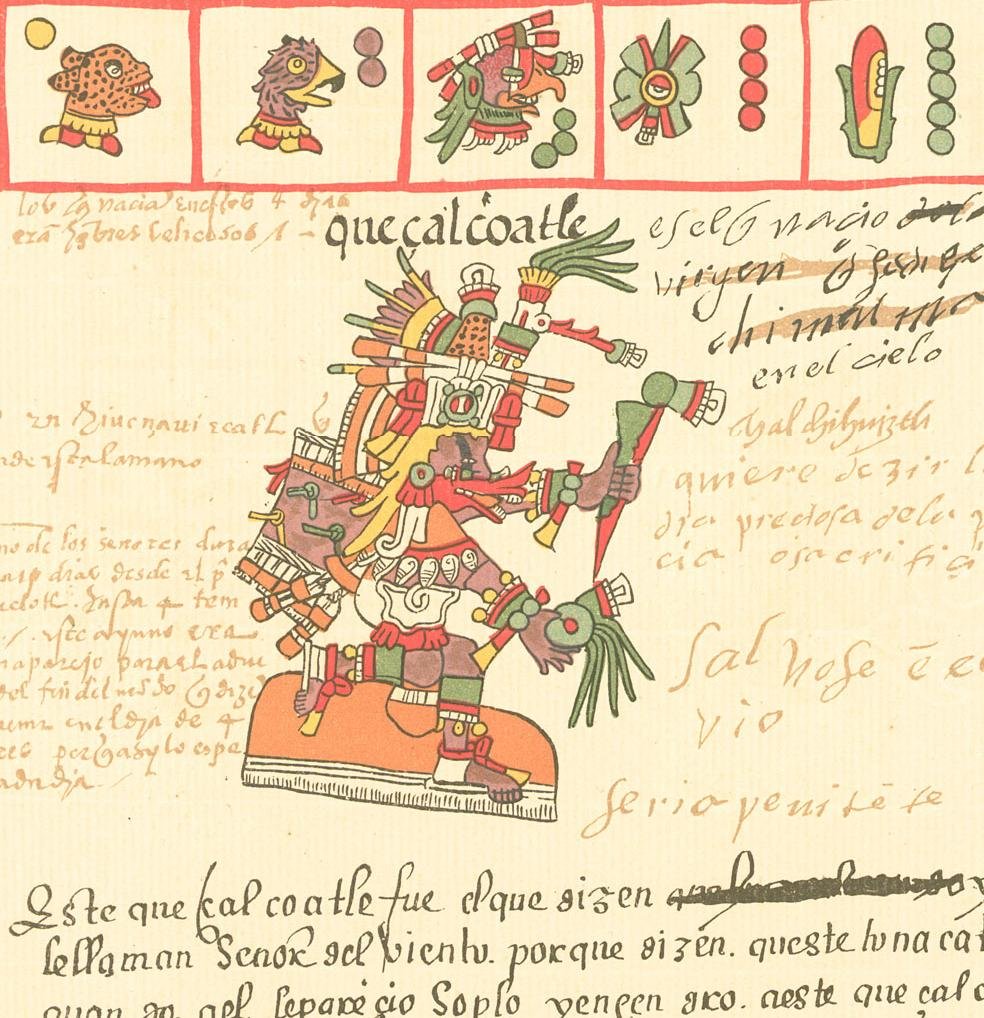
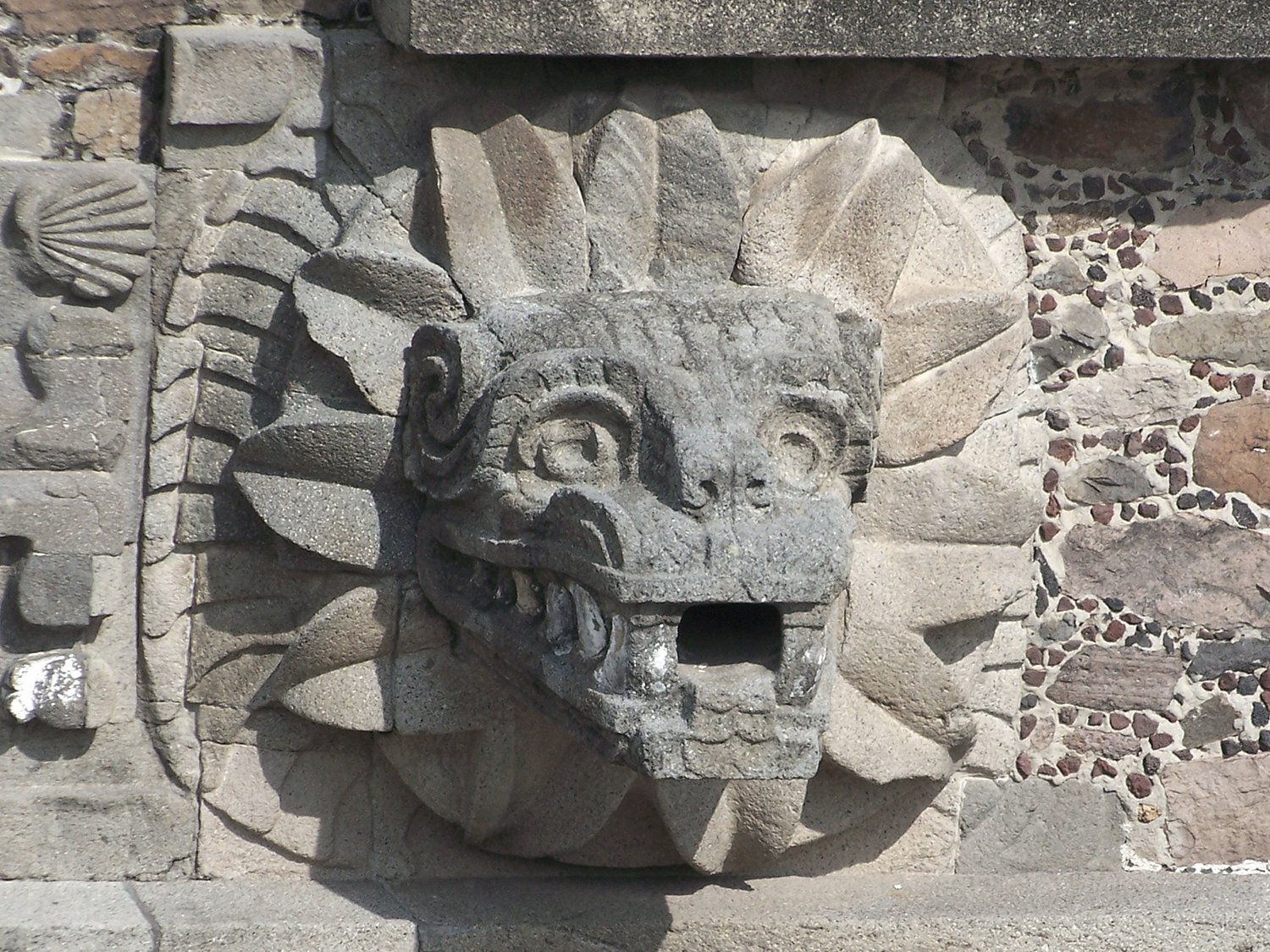
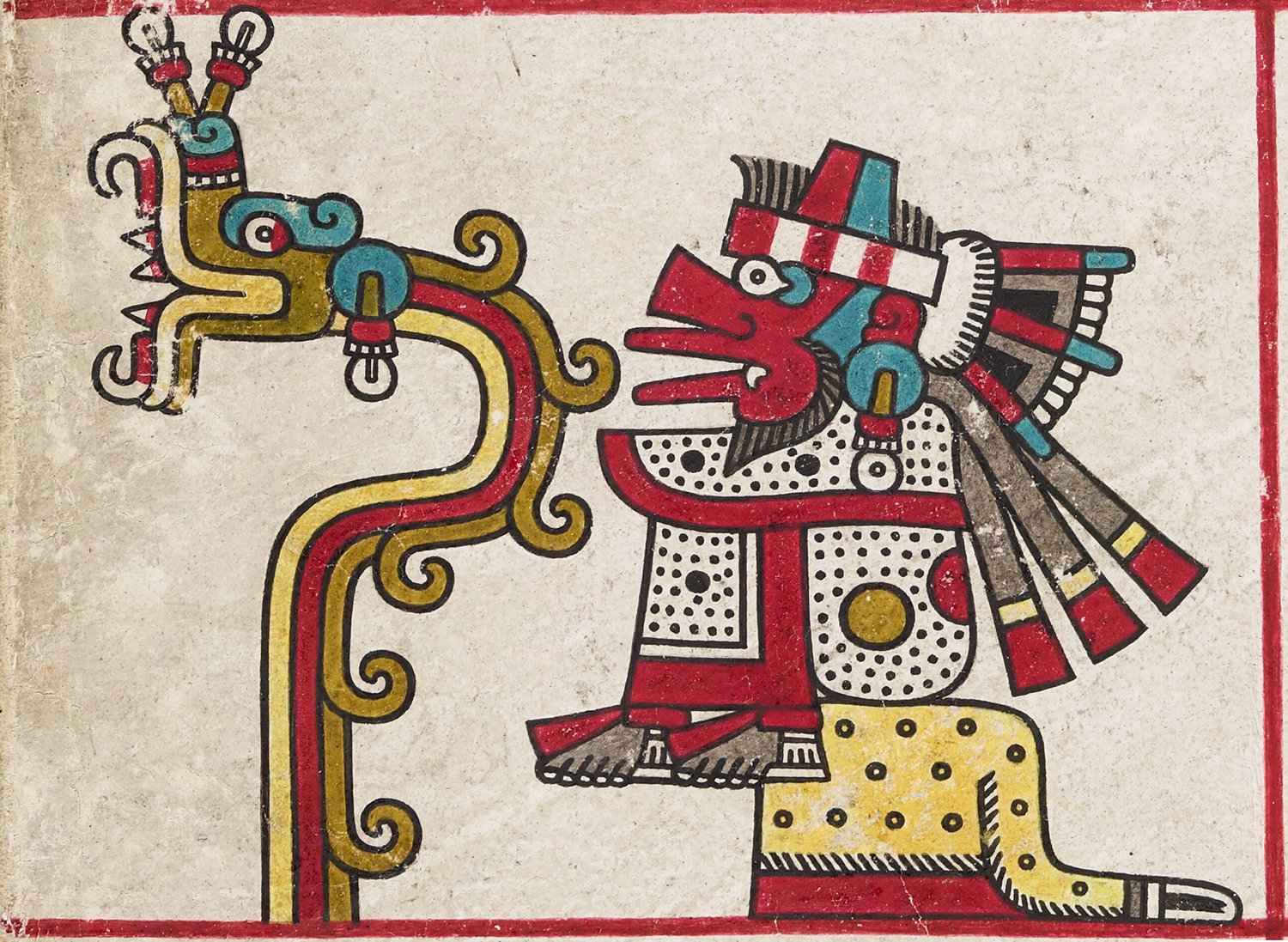
The feathered serpent is among the most important deities in Mesoamerican religious history. Known as Quetzalcoatl to the Aztecs (from quetzalli, “quetzal feather,” and coatl, “serpent”) and as Kukulkan to the Yucatec Maya, it combines the power of the snake with the flight of the bird — earth and sky united in one being.
Representations of feathered serpents appear in Mesoamerican art as early as the Olmec period (c. 1400–400 BCE). By the time of Teotihuacan (c. 1st–7th centuries CE), the feathered serpent had become a major architectural and religious motif. The Temple of the Feathered Serpent at Teotihuacan — covered in carved serpent heads with feathered collars — is one of the most striking sacred buildings in pre-Columbian America.
In Aztec tradition, Quetzalcoatl was a creator deity who shaped the world, discovered maize for humanity, invented the calendar and books, and was associated with wind, the morning star (Venus), and the priesthood. His dual nature — serpent of the earth and bird of the sky — represented the bridging of the terrestrial and the divine, the physical and the spiritual.
At Chichén Itzá, the pyramid of Kukulkan is oriented so that during the equinoxes, a shadow descends the staircase in the shape of a serpent, connecting with the carved serpent head at the base. Architecture, astronomy, and theology converge in a single image: the feathered serpent descending from the heavens.
A Quetzalcoatl or Kukulkan tattoo references one of the most complex deities in the Western hemisphere — a being associated with creation, knowledge, wind, agricultural abundance, and the union of opposing cosmic forces. In tattoo practice, feathered serpent designs draw on the carved-stone aesthetic of Mesoamerican temple art — bold, angular, intricately detailed — and work particularly well as large-scale compositions on the back, ribs, thigh, or as full sleeves. The subject has strong associations within Chicano and Mexican-American tattoo culture, where Aztec and Maya imagery carries cultural identity alongside spiritual meaning. The feathered serpent is also a subject that demands careful execution: the combination of plumage, serpentine body, and the specific visual grammar of Mesoamerican art is technically challenging to render convincingly at a small scale.
Norse mythology: the serpent at the end of the world
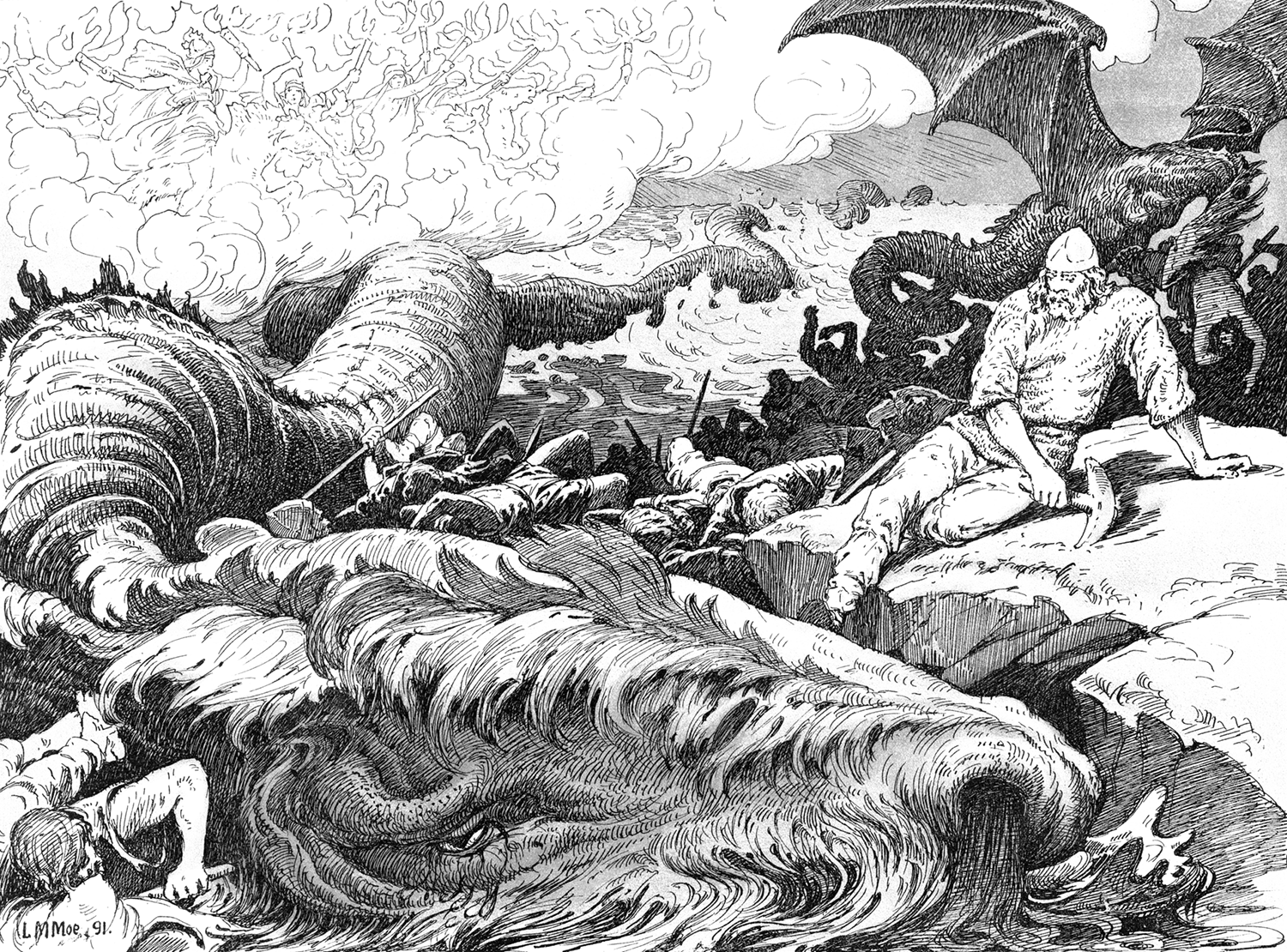
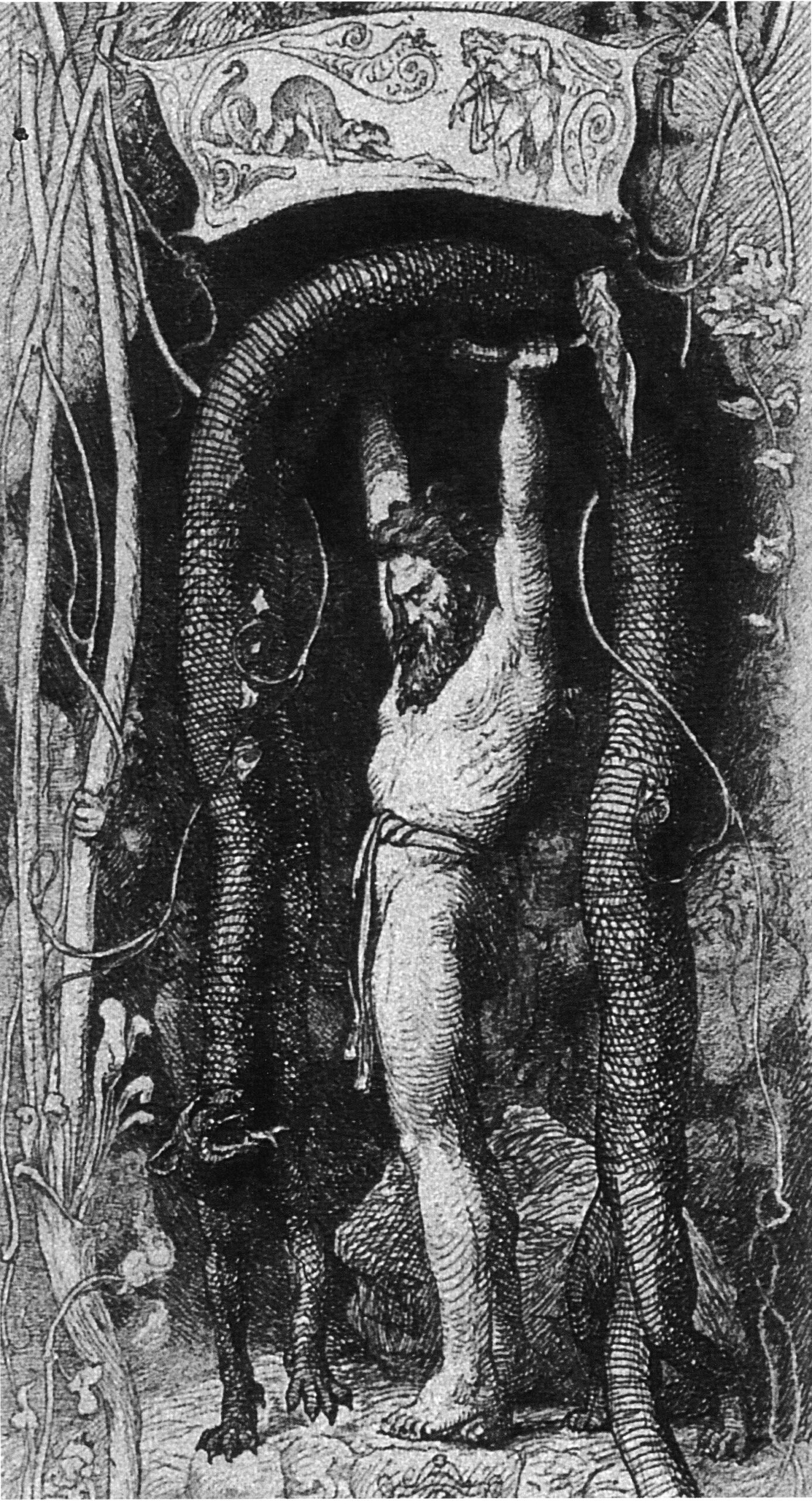
The Norse tradition produced one of the most dramatic serpent figures in any mythology: Jörmungandr, the Midgard Serpent, child of Loki and the giantess Angrboða. Jörmungandr grew so vast that it encircled the entire world, grasping its own tail in its mouth — a Norse variant of the ouroboros. While it holds its tail, the world endures. When it releases its grip, Ragnarök — the cataclysmic end of the world — begins.
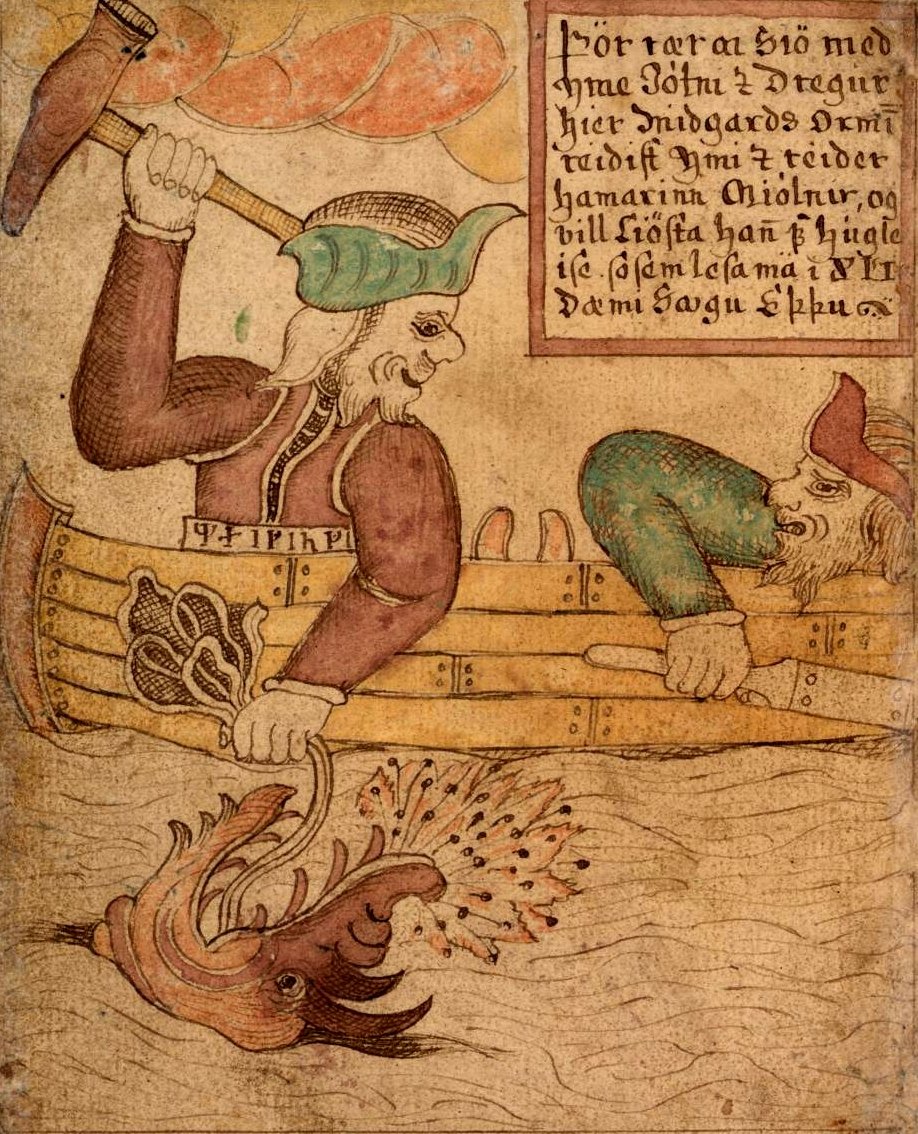
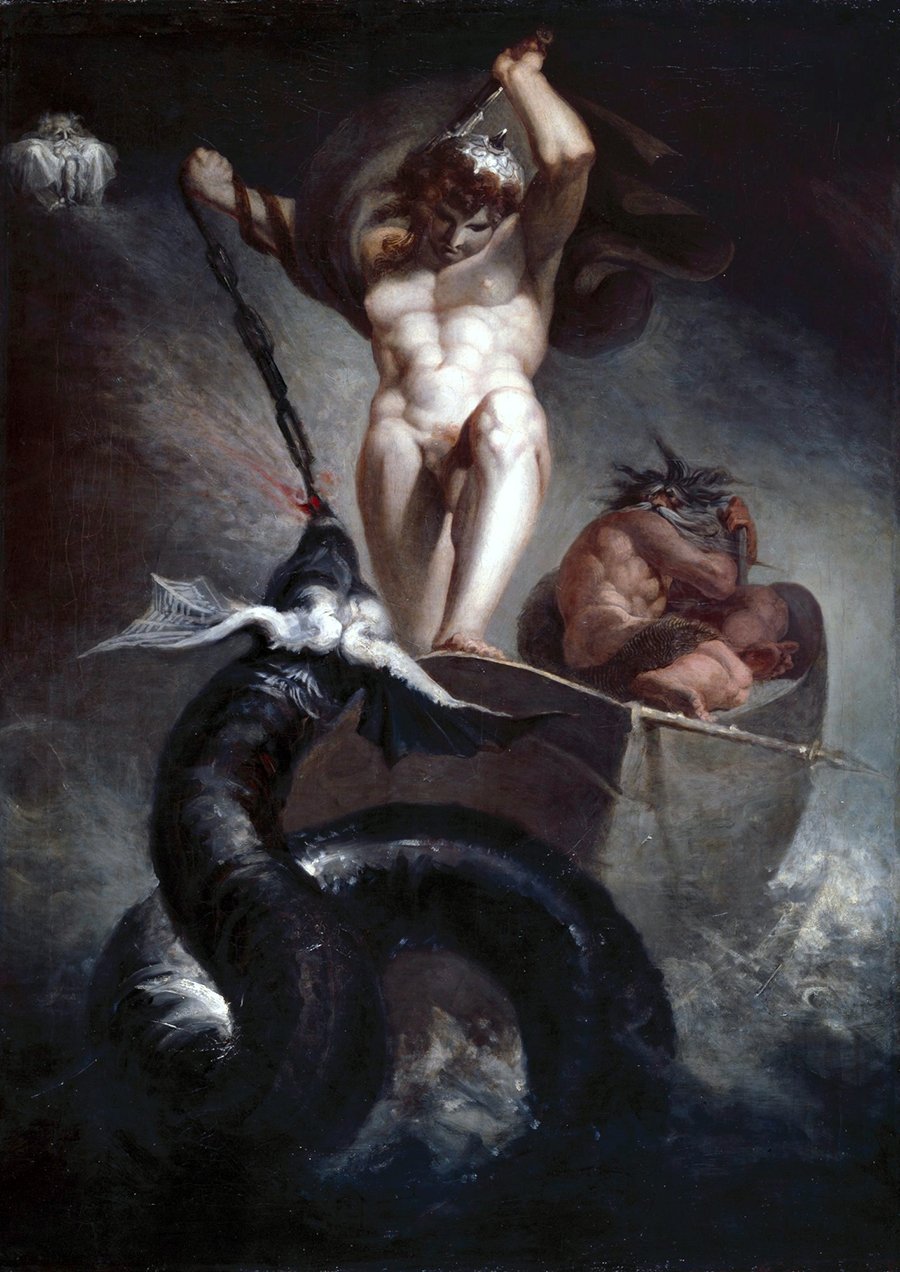
Thor and Jörmungandr are fated enemies. In one of the most celebrated myths, Thor goes fishing and hooks the Midgard Serpent, pulling it to the surface. The two face each other — god and world-serpent — before the giant Hymir, terrified, cuts the fishing line and Jörmungandr sinks back into the deep. At Ragnarök, they meet again. Thor kills Jörmungandr but takes nine steps and falls dead himself, poisoned by the serpent’s venom.
The Midgard Serpent operates in a different moral register from the Christian serpent. It is a boundary — the edge of the known world, the force that holds everything together and that will destroy everything when it lets go. It is the limit of the cosmos made flesh.
In tattooing, Jörmungandr is a popular subject in Nordic-influenced work — rendered in knotwork, in Vendel/Viking-era animal style, or in more illustrative or realistic interpretations. The world-serpent encircling a limb — an arm, a leg, wrapped around the torso — is a composition that mirrors the myth directly: the snake holding the world together. Thor’s fishing scene, depicting the moment god and serpent face each other across the water, is a narrative composition that suits back pieces and larger formats. Both subjects sit naturally within the broader Nordic tattoo vocabulary alongside runes, knotwork, Yggdrasil, and other mythological motifs.
Aboriginal Australia: the Rainbow Serpent
The Rainbow Serpent is among the oldest continuously maintained religious concepts in the world. Rock art depicting the figure dates back at least 6,000 years. Under different names in different Aboriginal language groups — Ngalyod, Borlung, Wagyl, Almudj, and many others — it appears across the Australian continent as a creator being, a shaper of landscape, a controller of water, and a powerful enforcer of law.
In Dreamtime narratives, the Rainbow Serpent emerged from beneath the ground when the earth was flat and featureless, pushing upward to form mountains, gorges, rivers, and waterholes. Its body is carved with the channels through which water flows. It resides in deep permanent waterholes and controls the rains. When the Rainbow Serpent travels between waterholes, it is visible in the sky as a rainbow.
The Rainbow Serpent is both creator and destroyer. It gives life through water and rain. It punishes those who violate the law or disturb sacred sites with storms, floods, sickness, and death. Some traditions describe it as swallowing humans and regurgitating them transformed — emergence from the serpent’s body as a form of initiation and rebirth.
It should be noted that “Rainbow Serpent” is an English-language generalisation coined by the anthropologist Alfred Radcliffe-Brown. The actual beliefs, names, stories, and iconographic forms vary significantly between Aboriginal language groups. The concept is a family of related beings, each belonging to a specific people and place. Non-Indigenous use of Rainbow Serpent imagery — including in tattoos — raises cultural questions similar to those discussed in the Culture-bound section of this encyclopedia. The symbol belongs to specific communities, and reproducing it as a tattoo without connection to those communities is a decision that should be made with that awareness in mind.
Abrahamic traditions: the serpent in the garden
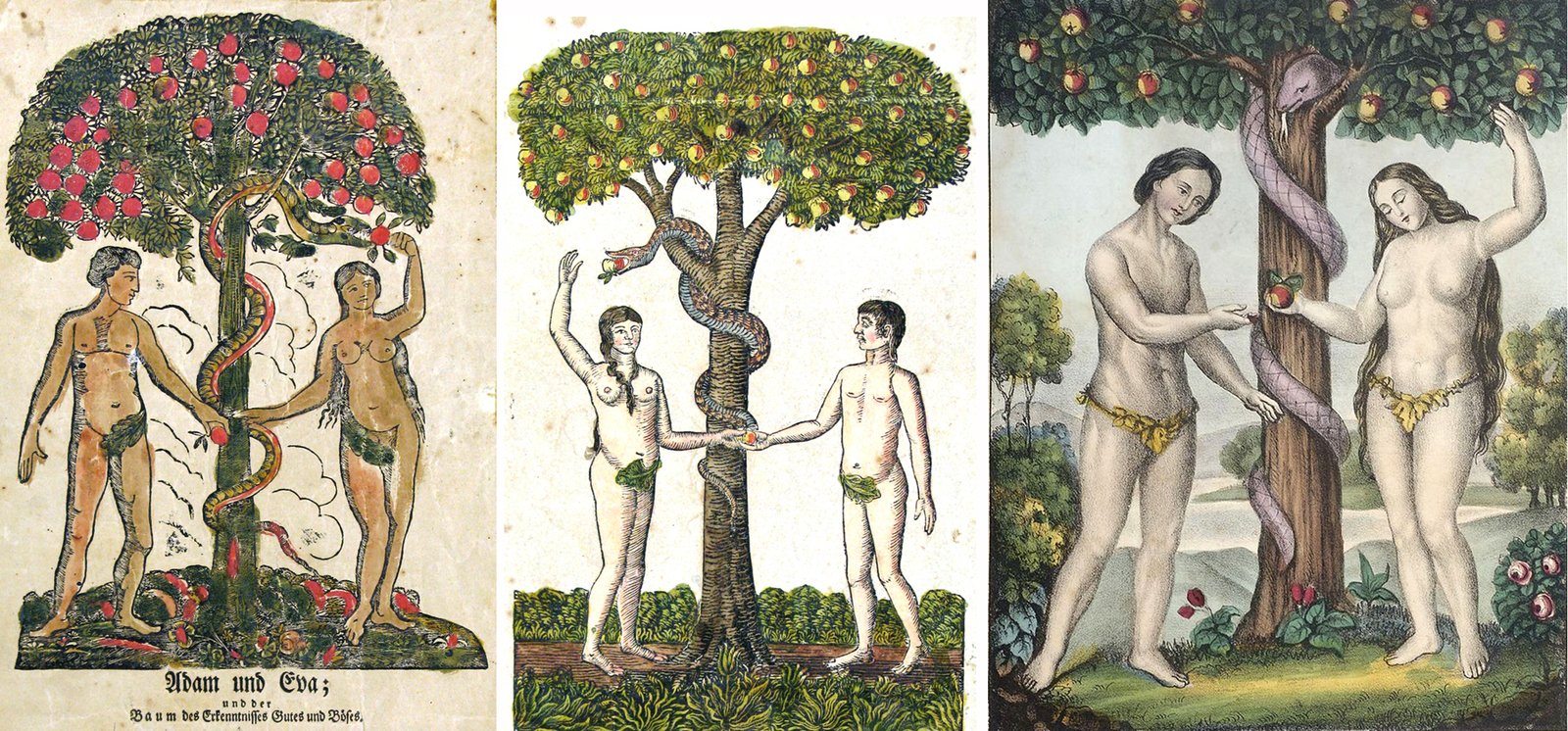
The book of Genesis placed the serpent at the origin of human suffering. In the Garden of Eden, the serpent persuaded Eve to eat the fruit of the Tree of Knowledge of Good and Evil, which God had forbidden. Eve ate, gave the fruit to Adam, and both gained knowledge — but lost paradise. God cursed the serpent to crawl on its belly for eternity.
This narrative transformed the snake’s symbolic position in every culture influenced by Judaism, Christianity, and Islam. Where older traditions — Mesopotamian, Egyptian, Greek, Hindu — had treated the serpent as sacred, dangerous, wise, or protective, the Abrahamic reading made it the instrument of humanity’s fall. In Christian theology, the serpent in Eden was later identified with Satan, and the snake became the embodiment of temptation, deception, and evil itself.
But the Abrahamic tradition is not entirely negative on snakes. In the Book of Numbers, God sent “fiery serpents” to punish the Israelites, then instructed Moses to fashion a bronze serpent (Nehushtan) and mount it on a pole. Anyone who looked at it was healed. This image — a serpent on a staff as a source of healing — parallels the Rod of Asclepius and predates its Greek equivalent in the biblical timeline. In the Gospel of Matthew, Jesus instructs his disciples to “be wise as serpents and harmless as doves” — acknowledging the snake as a symbol of wisdom even within a tradition that otherwise condemns it.
In Islamic tradition, the serpent (often identified as Iblis or acting on Iblis’s behalf) plays a similar role in the expulsion from paradise, though the specific details vary between Quranic sources and later commentaries.
The Genesis serpent is one of the most tattooed biblical images. The composition — a snake coiled around a tree, an apple, the figures of Adam and Eve — is a standard subject in American traditional flash, in neo-traditional work, in blackwork, and in illustrative tattooing. It can be read as a religious statement, as an ironic or transgressive gesture, as a celebration of forbidden knowledge, or as a purely aesthetic composition depending on the wearer’s intent and the viewer’s assumptions. The Abrahamic serpent is the reason a snake tattoo can carry a charge of sin or rebellion in parts of the world shaped by Christian, Jewish, or Islamic culture — a person wearing a snake may be asked whether it represents the tempter.
Alchemy and the occult: the prima materia
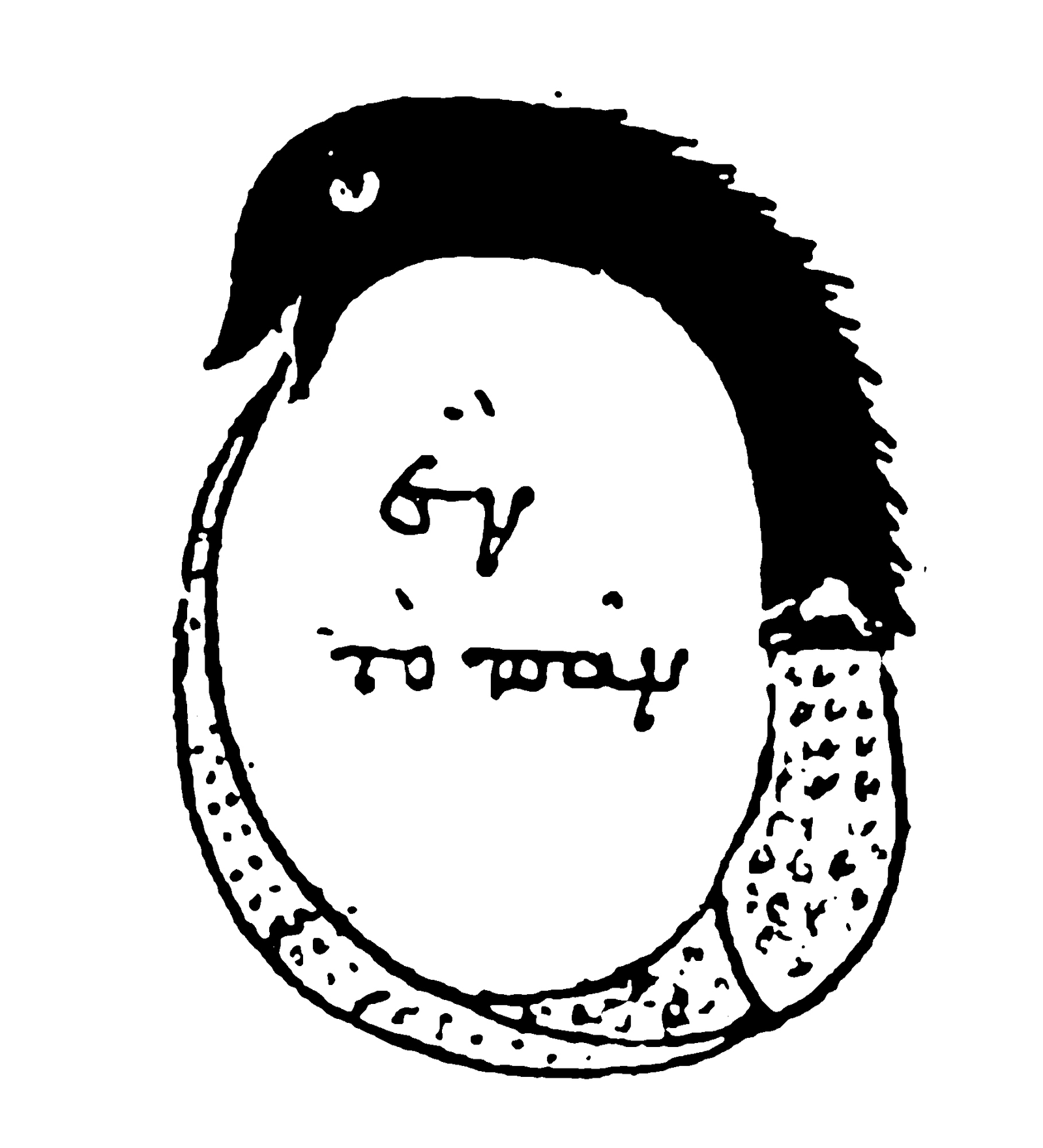
The ouroboros — the serpent eating its own tail — became the central visual symbol of Western alchemy. Medieval and early modern alchemists used it to represent the prima materia, the fundamental substance from which all matter derives and to which it returns. The accompanying inscription hen to pan (“the one, the all”) captured the alchemical conviction that creation and destruction are the same process viewed from different angles.
The Chrysopoeia of Cleopatra, an alchemical text probably originating in 3rd-century Alexandria (surviving in a 10th-century copy), contains one of the most famous ouroboros images in Western tradition: a dark-and-light serpent forming a circle, enclosing the Greek text “one is all.” The image encoded the alchemical programme in a single figure: the union of opposites (male and female, creation and destruction, light and dark) that produces transformation.
In Gnostic traditions, the serpent of Eden was sometimes reinterpreted as humanity’s liberator — the being that brought knowledge to a species kept ignorant by a controlling deity. This reading inverted the Christian narrative entirely and made the serpent a figure of enlightenment. The Ophites, a Gnostic sect, reportedly venerated the serpent of Genesis for precisely this reason.
The caduceus of Hermes — two serpents intertwined around a winged staff — was adopted by alchemists as a symbol of Hermes Trismegistus, the mythical founder of alchemy and the hermetic tradition. The dual serpents represented opposing forces (sulphur and mercury, sun and moon, male and female) held in dynamic balance. Through this alchemical route, the caduceus entered modern visual culture and was eventually (mistakenly) adopted as a medical symbol.
The ouroboros is one of the most commonly tattooed snake compositions in the world, spanning virtually every style — from a simple fine-line circle on a wrist to an elaborately rendered serpent devouring itself across a full forearm or thigh. Its visual simplicity (a circle) and its symbolic density (eternity, renewal, the unity of opposites, the alchemical process, the cycle of creation and destruction) make it accessible at every level of engagement. Some wearers choose it for its aesthetic elegance. Others choose it as a reference to a specific philosophical or esoteric tradition. Both readings are legitimate — the symbol has sustained both for over three thousand years.
In contemporary occult and esoteric practice, the snake continues to represent transformation, hidden knowledge, and the crossing of thresholds between states of being. Occult-inspired snake tattoos often incorporate other esoteric imagery — pentagrams, alchemical symbols, moons, geometric structures, the all-seeing eye — building compositions that reference the hermetic tradition specifically. Blackwork and dotwork are common style choices for this material, though illustrative and neo-traditional treatments are equally viable.
East Asia: ambivalence and the zodiac
In Chinese tradition, the snake is the sixth animal of the zodiac. People born in the Year of the Snake are considered intelligent, intuitive, private, and strategically minded. The snake in Chinese culture carries associations with wisdom, elegance, and mystery, but also with deception and danger — an ambivalence that the Chinese zodiac openly acknowledges. The White Snake Legend (Bai She Zhuan), one of the most famous folk tales in Chinese literature, tells the story of a white snake spirit who takes human form and falls in love with a mortal man — a narrative that treats the snake as capable of genuine love and devotion while also being, by nature, something other than human.
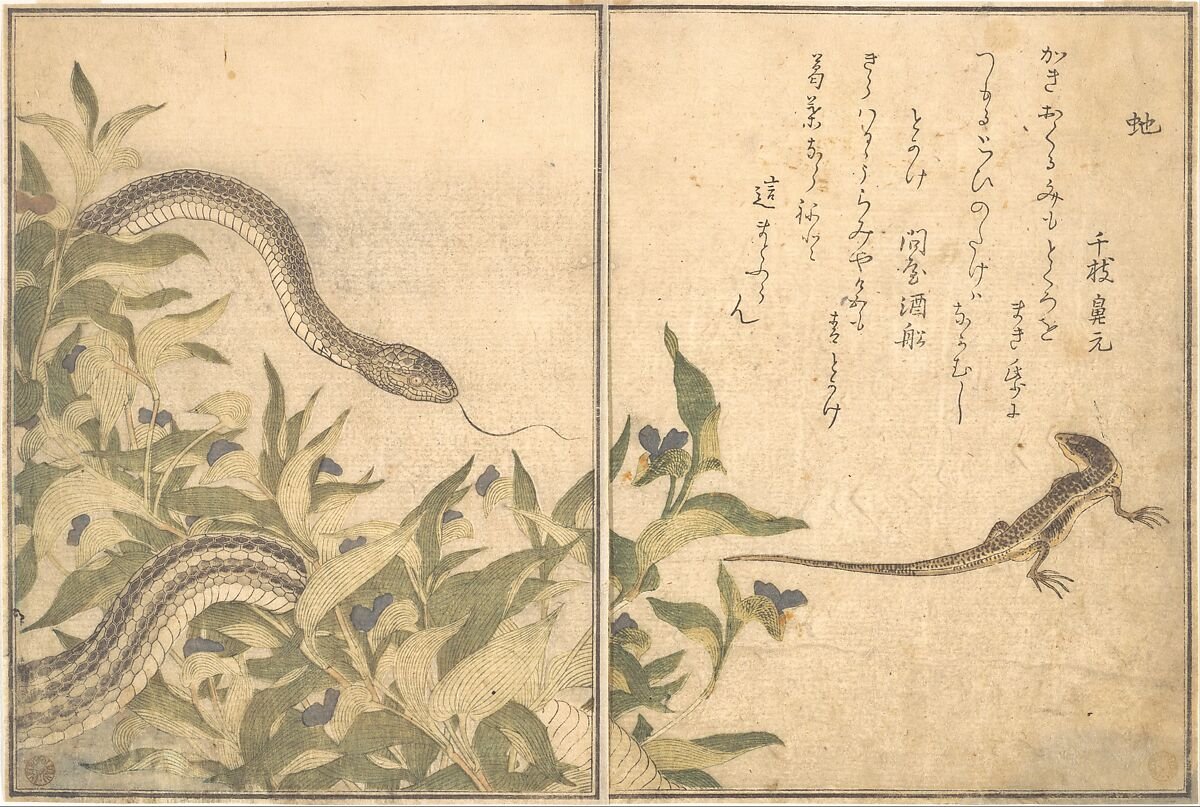
In Japanese tradition, the snake (hebi, 蛇) is associated with water, fertility, and the goddess Benzaiten (Saraswati in Hindu tradition), one of the Seven Lucky Gods. White snakes are considered messengers of Benzaiten and are treated as auspicious signs — encountering a white snake is believed to bring good luck, while encountering a dead snake is a bad omen. Snakes are also connected to agricultural cycles and water management — they appear near rice paddies where they control rodent populations, making them practical allies as well as spiritual symbols. The inoshishi (boar) represents reckless courage; the hebi represents something quieter — intuition, patience, and the ability to sense danger before it arrives.
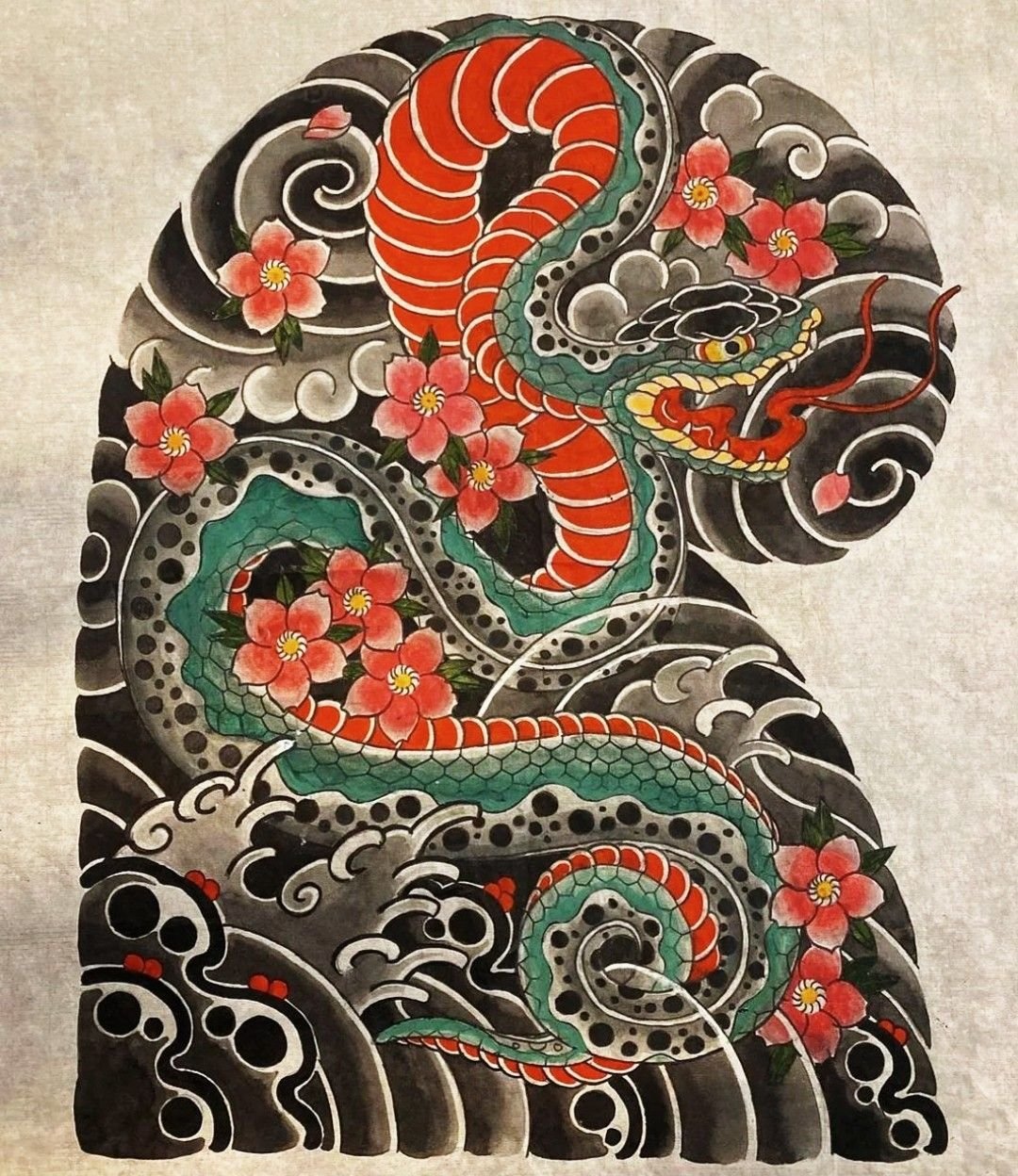
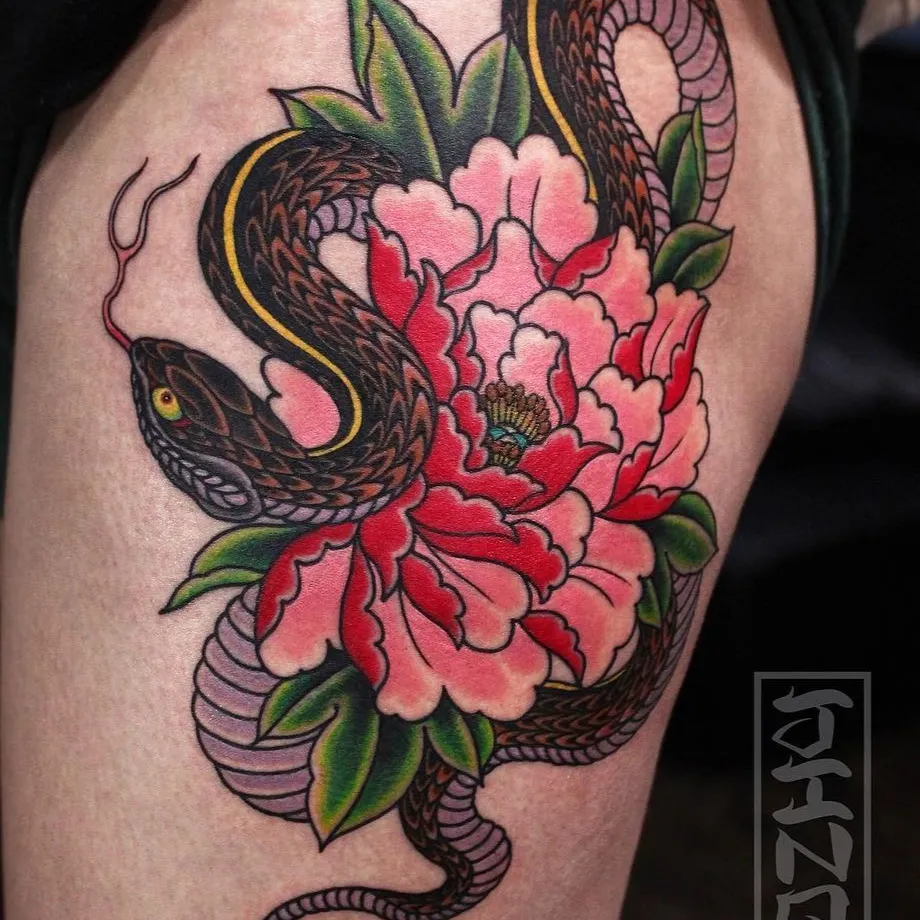
In Japanese tattooing (irezumi), the snake — hebi — is a core subject rendered with the same compositional seriousness as the dragon, tiger, or koi. It carries specific meanings within the irezumi tradition: protection from illness and bad luck, wisdom, regeneration, and a connection to water and the goddess Benzaiten. Snakes are also associated with femininity and, in certain contexts, with a wronged woman — the pairing of hebi with the hannya mask (a female demon face) references the story of Lady Rokujo, a figure consumed by jealousy and transformed by rage.
The colour of the snake in irezumi affects its meaning.
- A black snake (kuro) carries associations of wisdom, dignity, and formality.
- A white snake (shiro) connects to purity, holiness, and the sacred messenger role.
- A green snake represents vitality and energy.
- A gold or yellow snake carries associations with courage and prosperity.
The hebi in irezumi is almost never rendered alone. It is typically composed with specific accompanying elements:
- peonies (the king of flowers, representing prosperity and masculine boldness),
- chrysanthemums (longevity, completeness, the autumn season),
- cherry blossoms (transience, life’s brevity),
- maple leaves (the passage of time),
- waves and water (the snake’s elemental connection),
- rocks (stability, endurance),
- wind bars (atmosphere, movement, the supernatural).
A snake wrapped around a skull represents the cycle of life and death. A snake coiled around a namakubi (severed head) is a darker composition referencing mortality and consequence. A snake battling another animal — particularly a mongoose or a hawk — represents conflict between opposing forces.
The snake’s body is one of the most compositionally versatile elements in irezumi. It wraps naturally around arms, legs, and torsos, following the musculature and providing the connecting flow between other elements in a full sleeve or bodysuit. A skilled irezumi artist uses the snake’s body to link the foreground subject to the background, creating visual continuity that less adaptable subjects cannot provide. This structural function — the snake as compositional connective tissue — is one of the reasons it appears so frequently in Japanese tattooing, beyond its symbolic weight.
The snake in Western tattoo traditions
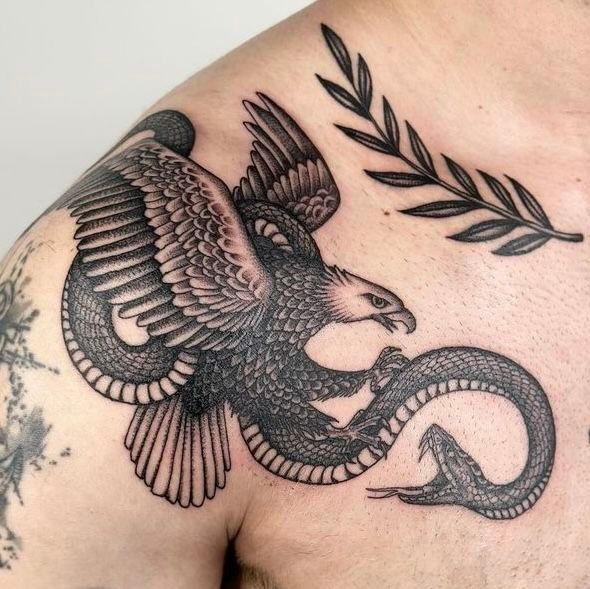
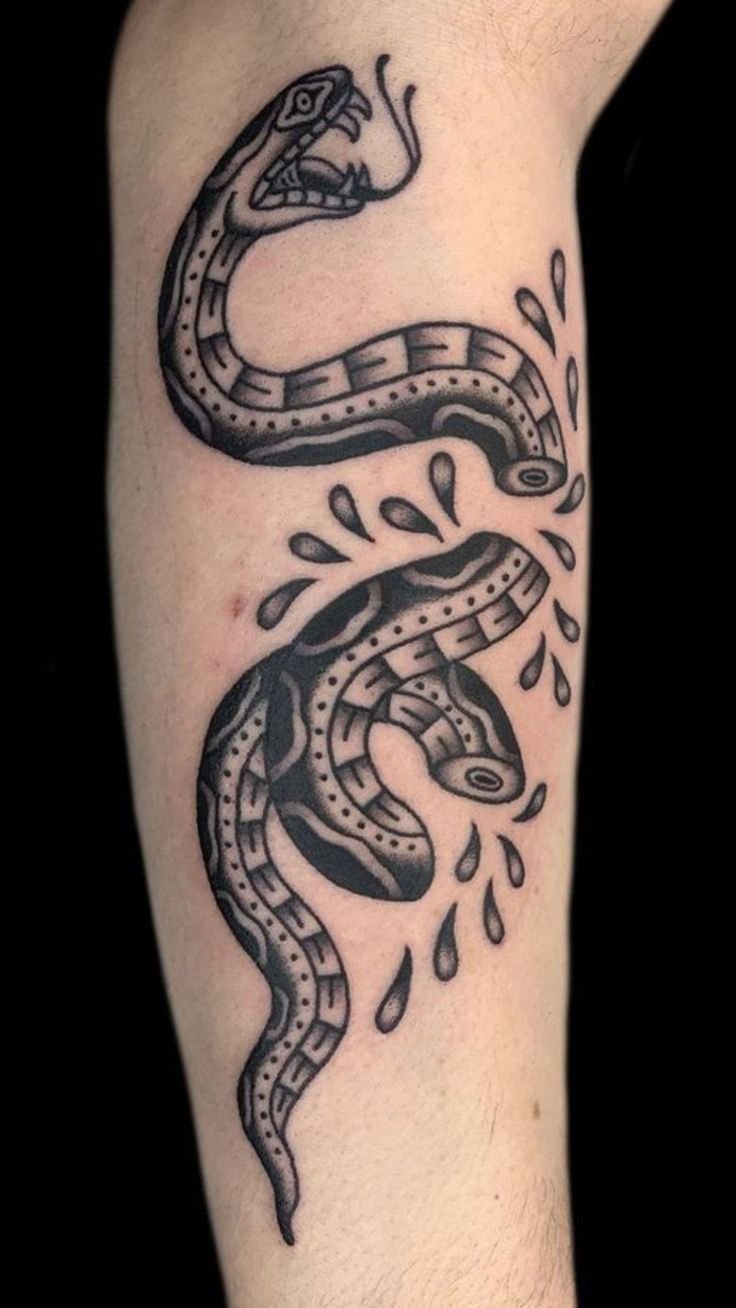
The snake has been a staple of American traditional flash since the style’s earliest codification. Sailor Jerry Collins, Owen Jensen, and other foundational flash artists included snakes in their standard repertoire. The most iconic composition is the snake and dagger — a serpent coiled around a blade, rendered in bold outline with a limited palette of greens, reds, and yellows on a black ink foundation. The image carries associations with survival, danger overcome, and bravery — a sailor’s design for a sailor’s life. The snake and skull is another classic pairing, representing the confrontation between life and death, and functioning as a memento mori. Snakes coiled through roses, wrapped around eagles, or emerging from flaming hearts are all standard American traditional compositions, each with its own layered meaning built up through decades of shop-floor use.
The snake’s body shape makes it uniquely suited to American traditional design principles. The flowing S-curve, the coiled spiral, and the striking pose all produce strong, readable silhouettes with clean outlines — the graphic clarity that the style demands. A well-drawn traditional snake fills its compositional space efficiently, with the scales providing a natural surface for shading and colour work.
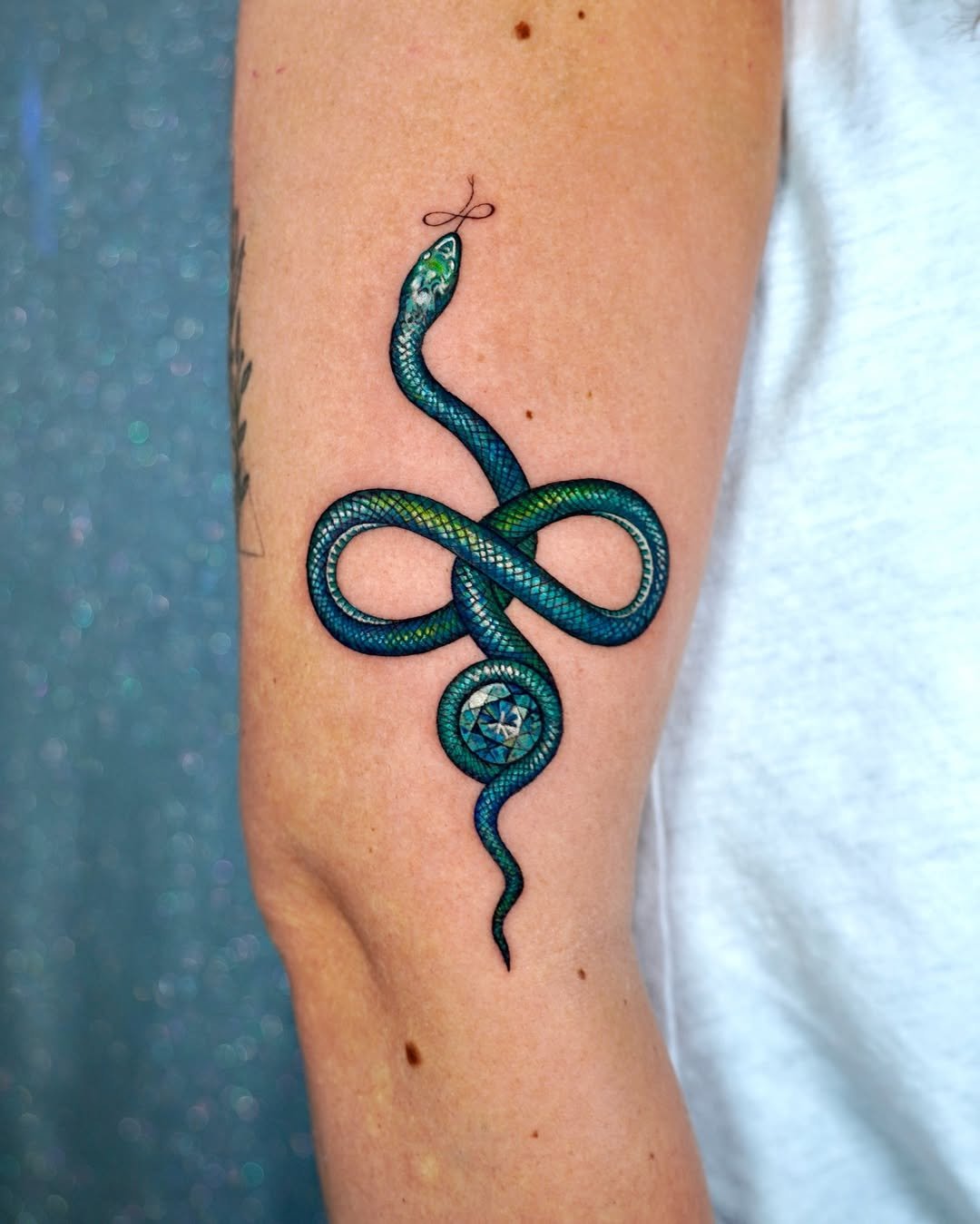
In neo-traditional tattooing, the snake gains more detail, broader colour range, and greater anatomical fidelity while retaining the bold outline and illustrative composition. Neo-traditional snakes often carry Art Nouveau influences — flowing organic curves, decorative framing elements, jewel tones — and are frequently paired with botanical elements: orchids, roses, poppies, and other flowers that create visual contrast between the hard scales of the snake and the soft petals of the bloom.
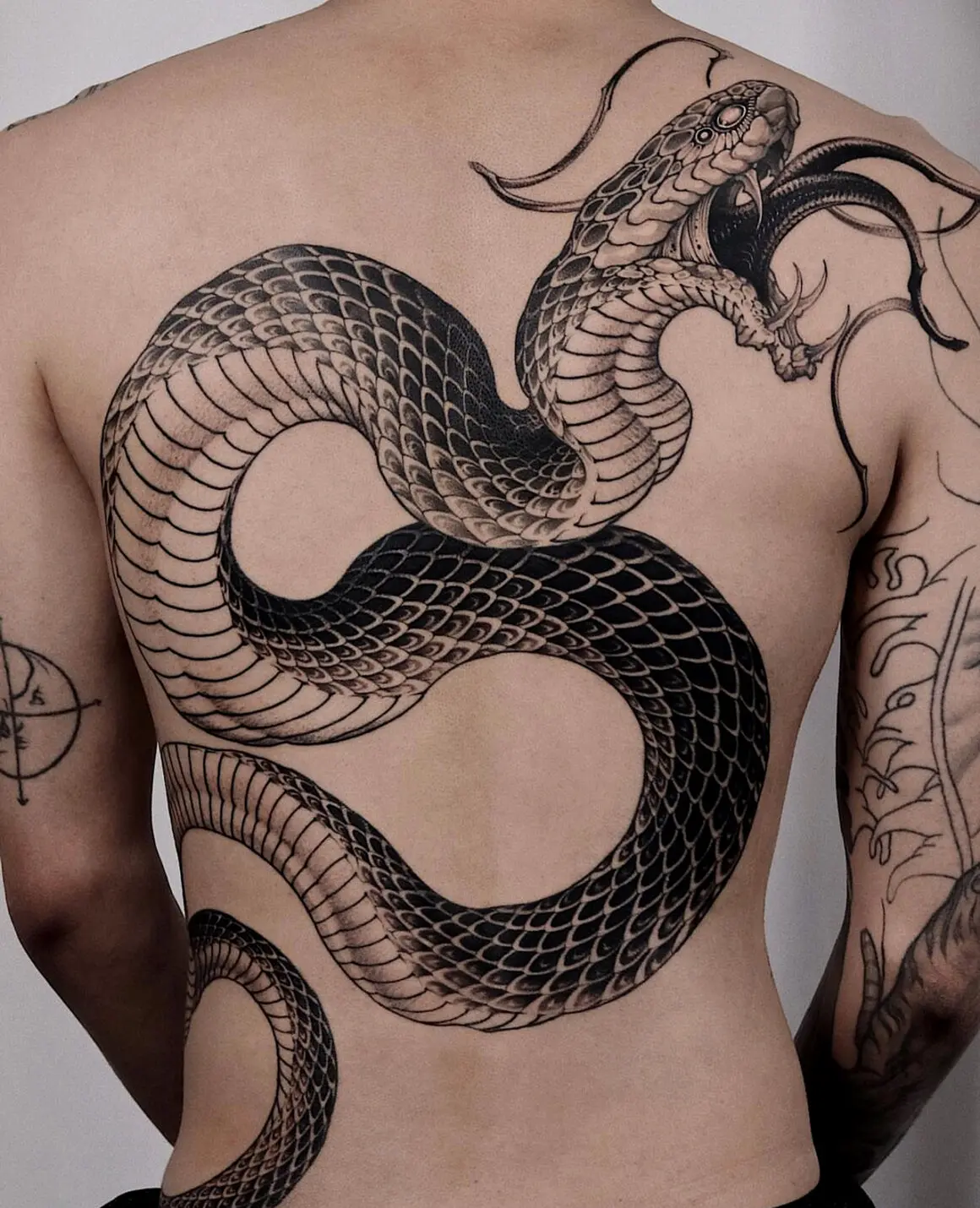
In realism and photorealism, the snake becomes a technical challenge centred on texture. The scales, the sheen of the skin, the translucency of a snake’s eye, the tension in a coiled body — all demand precise tonal control and anatomical knowledge. Realistic snake tattoos often depict specific species identifiable to a herpetologist: a ball python’s patterning, a king cobra’s hood, a corn snake’s banded colouring, a green tree python wrapped around a branch. The wearer’s choice of species frequently carries personal meaning — a particular snake encountered, kept as a pet, or admired for its specific qualities.
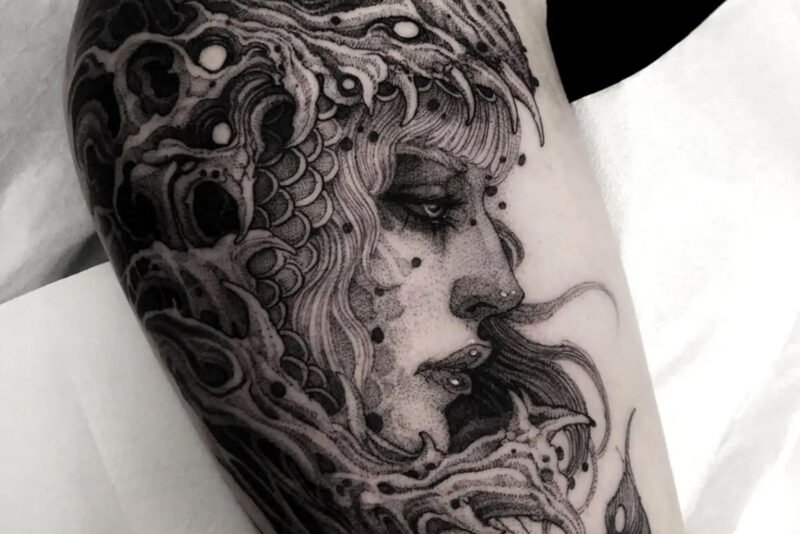
In blackwork and dotwork, the snake is reduced to its essential graphic form — outline, silhouette, pattern — and gains power through contrast and scale. Blackwork snake compositions can range from small, precisely rendered serpents to massive designs that use the snake’s body as a framing device for negative-space elements, geometric patterns, or sacred geometry.
In fine line and minimalist styles, a single continuous line can describe a snake’s entire body — the animal whose form most naturally lends itself to reduction. A minimal snake tattoo on a wrist, ankle, finger, or behind the ear communicates its meaning through shape alone, without the need for detail, colour, or compositional complexity.
Composition, placement, and pairing
The snake’s body is the most compositionally adaptable form in tattoo iconography. It coils, wraps, climbs, strikes, flows, spirals, and extends — and each of these poses communicates a different energy. A coiled snake at rest suggests latent danger, watchfulness, and contained power. A striking snake communicates aggression, defence, and immediacy. A snake in motion — flowing through water, climbing a branch, descending a limb — suggests fluidity, adaptability, and continuity. A snake eating its own tail (ouroboros) communicates eternity and cyclical renewal. A two-headed snake communicates duality and a divided nature.
The snake conforms to the human body more naturally than any other animal. Wrapped around a forearm, it follows the muscle from wrist to elbow without compositional strain. Coiled around a bicep, it uses the arm’s curvature. Descending a spine, it occupies the body’s central axis. Encircling a thigh, it wraps naturally with the limb’s taper. For this reason, snakes are often used as compositional elements in larger pieces — connecting sections of a sleeve, linking front and back panels of a bodysuit, or framing a central image with their body. The snake is as much an architectural element in tattoo design as it is a subject.
Common pairings across traditions and styles include:
- snake and skull (memento mori, life and death),
- snake and dagger (survival, bravery, danger overcome),
- snake and rose (beauty and danger, passion and pain),
- snake and eagle (conflict between sky and earth — a pairing with roots in Aztec, Greek, and American traditional imagery),
- snake and moon (femininity, intuition, the nocturnal, cycles),
- snake and apple / tree (the Edenic fall, forbidden knowledge),
- snake and peony (irezumi — protection and prosperity),
- snake and hannya mask (irezumi — feminine rage and transformation),
- snake and geometric forms (esoteric and occult associations),
- snake eating its own tail (ouroboros — eternity, alchemy, cosmic unity).
The snake is one of the few tattoo subjects that works at every scale. A tiny ouroboros on a finger and a full-back Jörmungandr encircling the world are both coherent compositions. A single-needle fine-line snake on an ankle and a bold American traditional cobra across a chest are both effective designs. This range is unmatched by almost any other tattoo subject, and it is one of the reasons the snake has remained among the most tattooed animals in the world across every era and style.
How much meaning a snake tattoo can carry?
The depth of meaning available to a snake tattoo is unmatched by any other animal in the symbolic vocabulary. A snake tattoo can reference the oldest narrative in literature (Gilgamesh), the oldest continuously maintained religious tradition in the world (the Rainbow Serpent), the symbol of modern medicine (Asclepius), the central image of Western alchemy (the ouroboros), a divine avatar of Vishnu (the Nagas), a creator deity of Mesoamerica (Quetzalcoatl), the boundary of the Norse cosmos (Jörmungandr), the instrument of humanity’s fall in the world’s most widely practised religions (Genesis), or the dormant spiritual energy coiled at the base of the human spine (Kundalini).
Or it can reference none of these — and simply be a snake, beautiful, dangerous, and perfectly shaped for skin.
The meaning depends on the tradition the wearer engages with, the visual language the artist works in, and the composition they build together. What a snake tattoo consistently offers, regardless of tradition or style, is an image that has meant something profound to every culture that has ever put ink into skin. The question for any wearer is which layer of that meaning they want to carry.
Sources & further reading
- Anonymous, N.K. Sandars et. al. (Translation). The Epic of Gilgamesh. First published 1801.
- Uraeus, Ouroboros, Rod of Asclepius, Caduceus, Python (mythology), Medusa, Kundalini, Nāga, Quetzalcoatl, Jörmungandr on Wikipedia, The Free Encyclopedia
- The Python in Greek Mythology. Greek Legends and Myths: greeklegendsandmyths.com.
- Richard Nielsen. Eve and the snake, part 1. richardnilsen.com, 2018
- Richard Sheposh. Rainbow serpent (deity). EBSCO, 2023
- Alexander Lapitskiy. The Rainbow Serpent: Symbolism and Significance in Indigenous Australian Lore. Foundation of Indigenous Sustainable Health, 2024.
- Albert Parry, Tattoo: Secrets of a Strange Art. Simon & Schuster, 1933; reissued in Dover, 2006.
- ArMargo DeMello, Bodies of Inscription: A Cultural History of the Modern Tattoo Community. Duke University Press, 2000.
- Matt Lodder, Painted People: Humanity in 21 Tattoos. Harper, 2024.