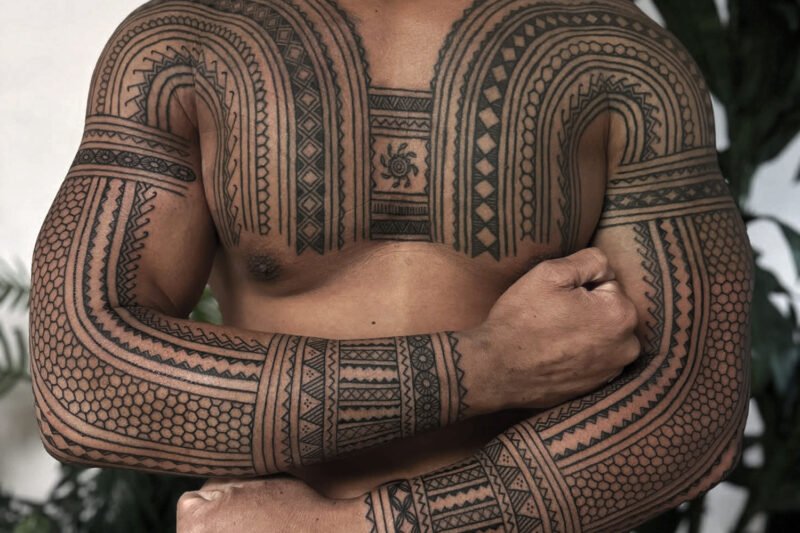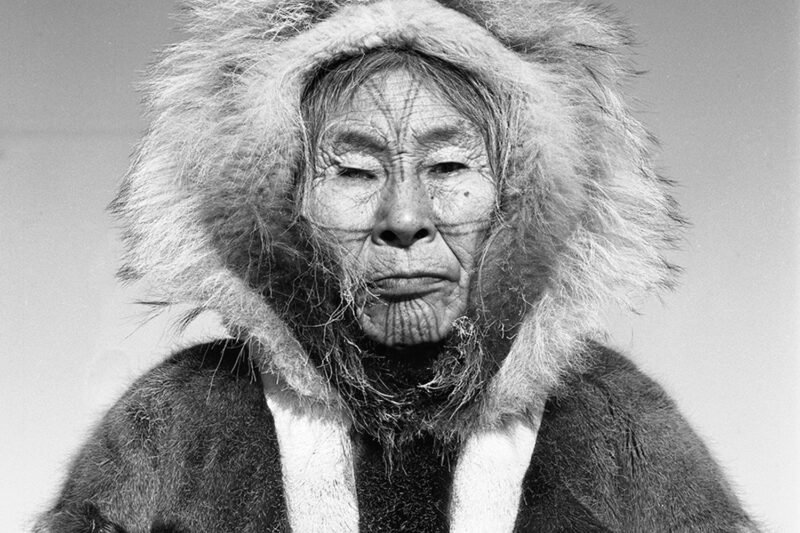
Māori tā moko
Māori tattooing tradition: Identity carved into the skin
The Māori are the Indigenous Polynesian people of Aotearoa (New Zealand), descended from Eastern Polynesian voyagers who arrived roughly 800 to 1,000 years ago in ocean-going canoes whose names are still remembered in oral tradition. Māori society is organised around iwi (tribes), hapū (subtribes), and whānau (extended families), and the relationships between individuals, families, and tribes are governed by whakapapa — genealogy, the tracing of descent from ancestors. Whakapapa is the organising principle of Māori life: who your ancestors were, which iwi you belong to, and what your position is within the web of kinship and obligation.
The Māori developed one of the most coherent visual cultures in the world. A single design language — built from curvilinear spirals, flowing organic forms, and a vocabulary of named motifs — runs through every medium: the carved interiors of meeting houses (whakairo), the painted rafter patterns (kōwhaiwhai), the woven lattice panels (tukutuku), the ornamental borders of cloaks (tāniko), and the carved greenstone pendants (pounamu). Tattooing — tā moko — belongs to this same system. The motifs on skin are the same as on wood, fibre, and stone. The identity carved into the body and the ancestral stories carved into the meeting house are written in the same visual language.
A warrior of the Urewera and Ngai-Tama tribes described moko in this way:
“You may lose your most valuable property through misfortune in various ways… your house, your weaponry, your spouse, and other treasures. You may be robbed of all that you cherish. But of your moko, you cannot be deprived, except by death. It will be your ornament and your companion until your final day.”
This is what tā moko is. Identity inscribed permanently into the skin — whakapapa, mana (prestige, authority, spiritual power), tribal affiliation, social rank, and personal history, all encoded in curvilinear designs unique to the individual who wears them. No two moko are identical. Each is composed for a specific person, by a specific practitioner, within a cultural framework that connects the wearer to their ancestors, their iwi, their hapū, and their place in the social world.
terminology
- Tā moko — the practice of Māori tattooing. Tā means “to strike” (the action of the chisel); moko refers to the design itself.
- Moko — the tattoo, the design on the skin. Also used as a general term for the practice.
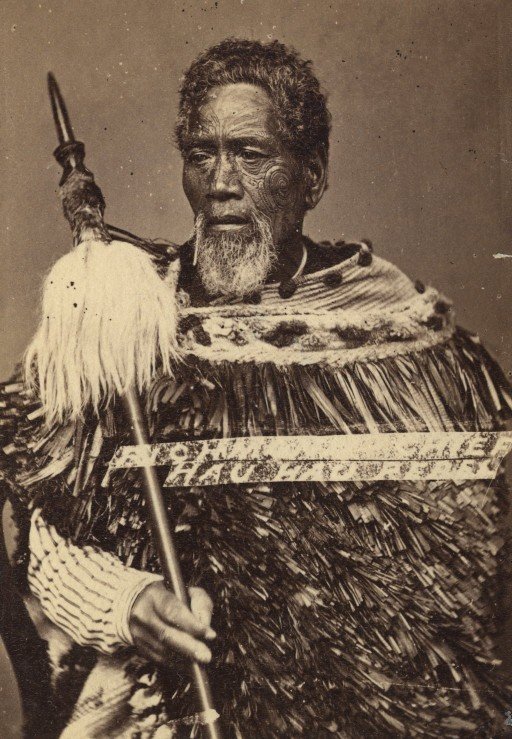
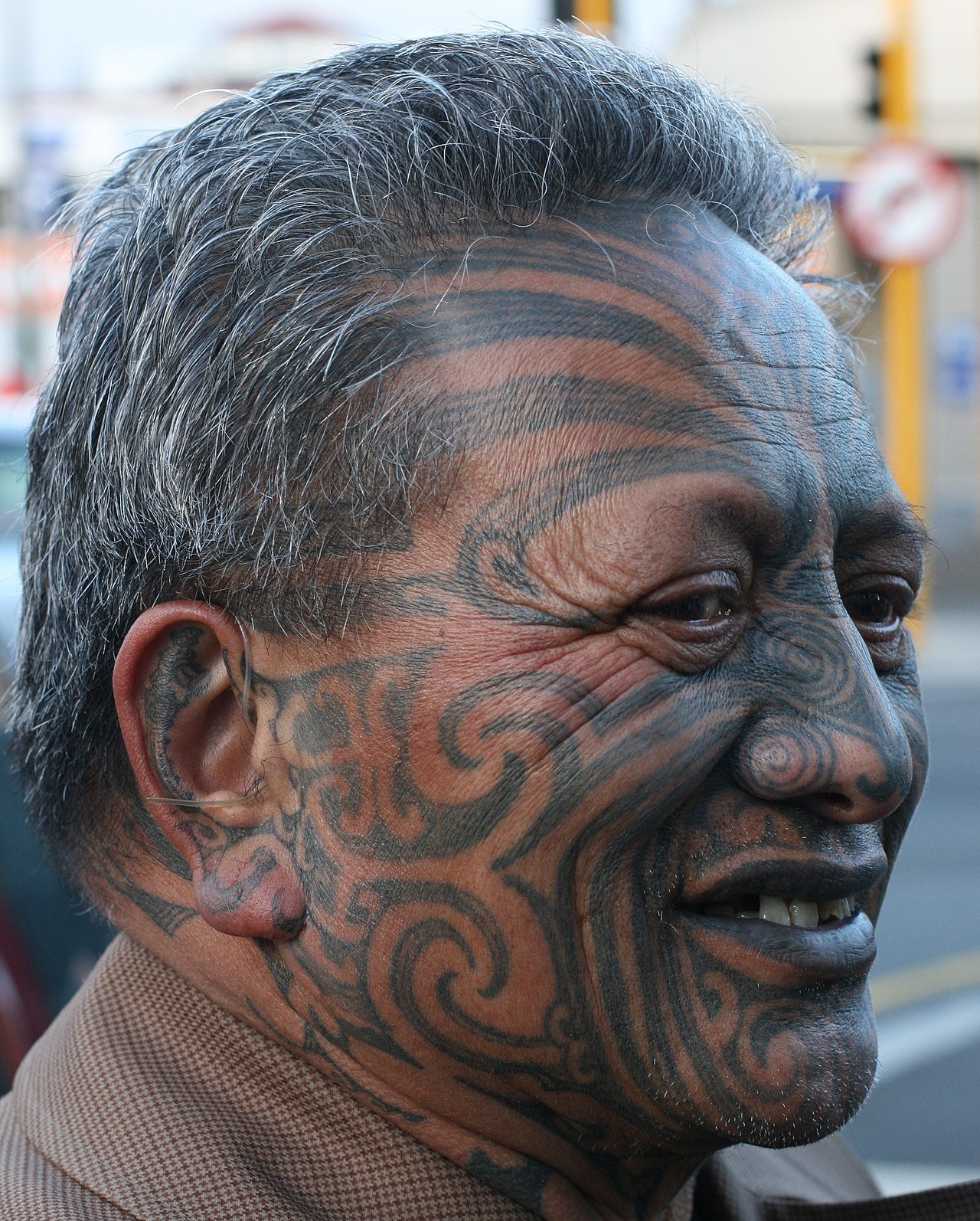
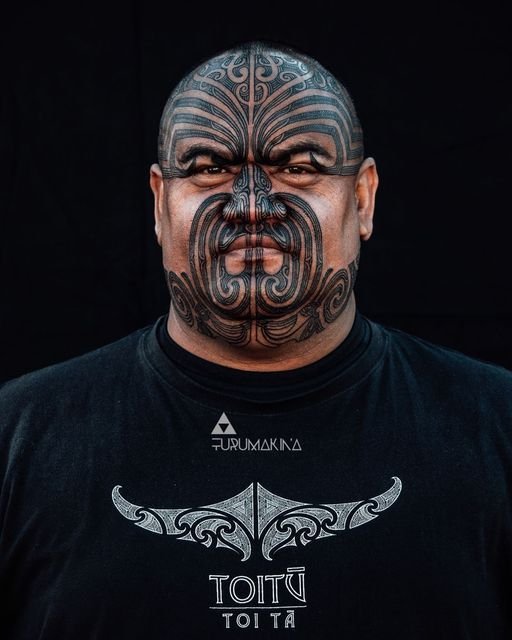
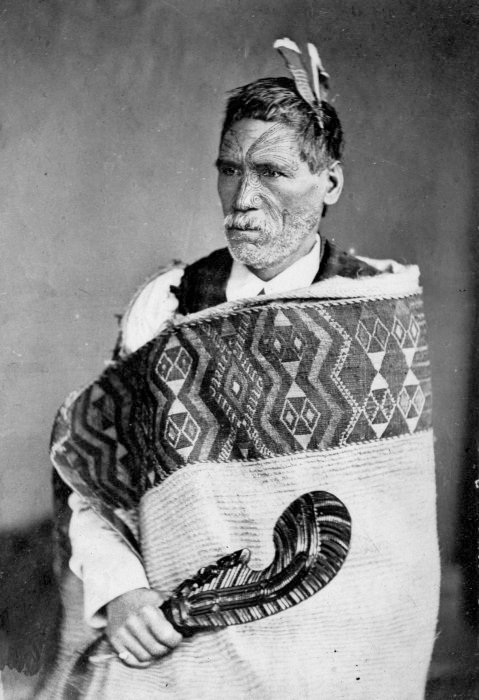
- Moko kanohi — facial moko (on men, historically covering the entire face).
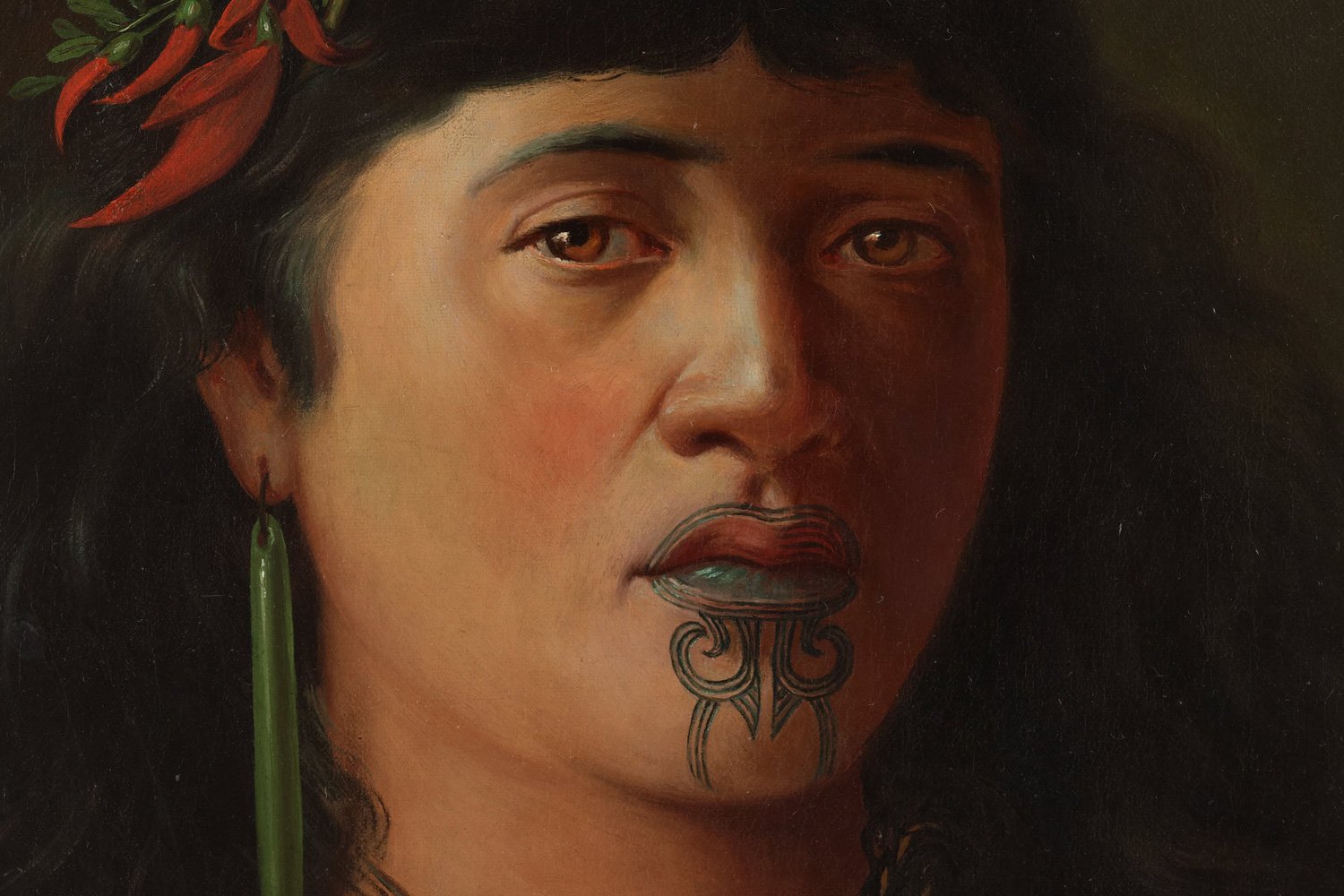
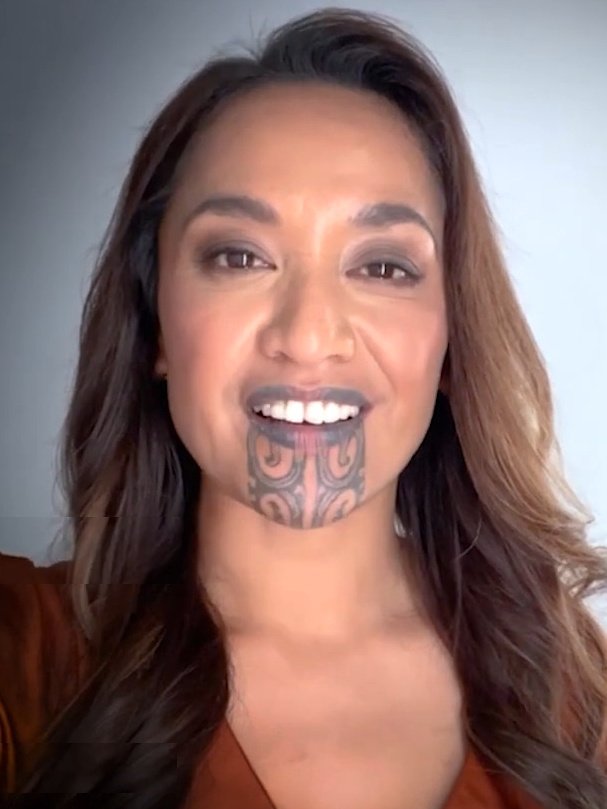
- Moko kauae — the women’s chin tattoo.
- Puhoro — body moko on the thighs and buttocks.
- Tohunga tā moko — the specialist practitioner. Tohunga means expert, priest, or person of knowledge.
- Uhi — the bone chisel used in the traditional technique.
- Kirituhi — “drawn skin” — Māori-inspired tattoo designs for non-Māori people.
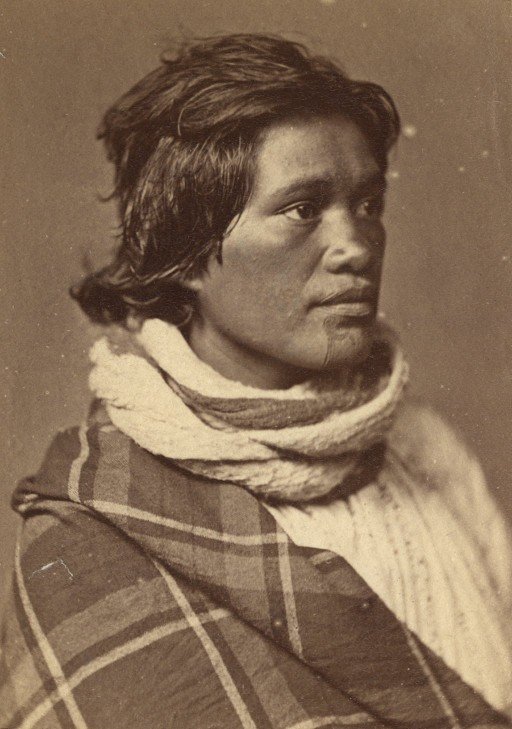
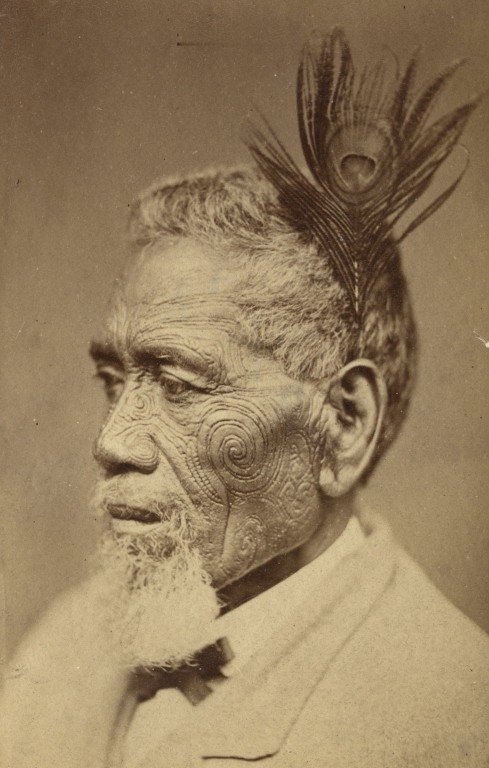
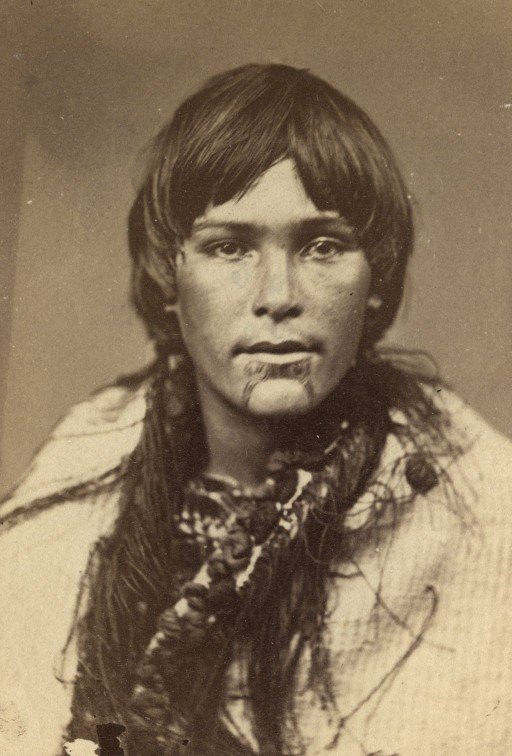
What makes tā moko unique
Tā moko is one of the five principal forms of Polynesian tattooing. Still, it developed in isolation in Aotearoa over roughly eight hundred years, evolving a technique and a design system found nowhere else in the Pacific. The technique — carving grooves into the skin with chisels rather than puncturing it with combs — is unique to Māori. The curvilinear spiral designs that define the aesthetic are unique to Māori. The facial moko, in which the entire face could be covered with a personalised genealogical record, is unique to Māori. The practice was severely disrupted during the colonial period, and its revival — which began in the 1970s and continues today — is one of the most significant cultural reclamation movements in the Indigenous world.
The origin story: Mataora and Niwareka
The origin of tā moko is told through the legend of Mataora and Niwareka, as recorded in Te Ara, the Encyclopedia of New Zealand.
Mataora, a rangatira (chief) who lived in Te Ao Tūroa (the natural world), married a tūrehu (spirit) named Niwareka, who came from Rarohenga (the underworld). One day, Mataora struck Niwareka in a rage. She fled back to Rarohenga — for domestic violence was unheard of in the underworld.
Mataora, overcome by guilt and love, set off to find her. In Rarohenga, he met Niwareka’s father, Uetonga — a rangatira descended from Rūaumoko (the god of earthquakes and volcanic activity) and a specialist in tā moko. Mataora was intrigued. In his world, moko was temporary — designs painted on the face with soot, blue clay, or red ochre, a practice called whakairo tuhi. Uetonga wiped Mataora’s face to show the worthlessness of a temporary tattoo, then offered to apply true moko — permanent, carved into the skin.
The pain was almost unbearable. Mataora began to chant to Niwareka. Summoned by her sister, Niwareka came — but Mataora, blinded by the swelling, was unrecognisable to her. She identified the cloak she had woven for him, pitied his suffering, and greeted him with tears.
When the moko healed, Mataora asked Niwareka to return with him to the natural world. He promised Uetonga that he would not harm his daughter again — the moko he now wore, unlike the painted designs of his old life, would not rub off. As a parting gift, Uetonga gave Mataora the knowledge of tā moko. Niwareka brought with her the art of tāniko — intricate decorative weaving. In this way, both arts entered the human world.
Mātaora then established Po-ririta, a whare-tuahi (house for teaching the arts), and began practising tā moko. His first attempt — on a man named Tū-tangata — was unsuccessful, and the recipient became known as Tū-tangata-kino (“ugly Tū-tangata”). But Mataora persevered, and his fame spread. The designs he executed were those taught to him in Rarohenga.
The legend establishes several things that remain central to the practice: tā moko is a gift from the spirit world, not a human invention. It is permanent — unlike the painted designs of ordinary life. It is connected to suffering and to the transformation that suffering produces. And it entered the world alongside weaving — the two arts are twinned, both brought from the underworld to enrich human life.
The word moko itself is thought by some scholars to refer to Rūaumoko — the unborn child of Ranginui (sky father) and Papatūānuku (earth mother), associated with earthquakes and volcanic activity, translated as “the trembling current that scars the earth.” The connection between the scarring of the earth and the scarring of the skin is deliberate.
The tā moko technique
Tā moko is unique among Polynesian tattoo traditions in its method of application. Where Samoan tatau, Tahitian tattoo, and other Pacific practices use toothed combs struck with a mallet to puncture the skin, Māori developed a two-stage process that carved the skin.
Stage one: the chisel
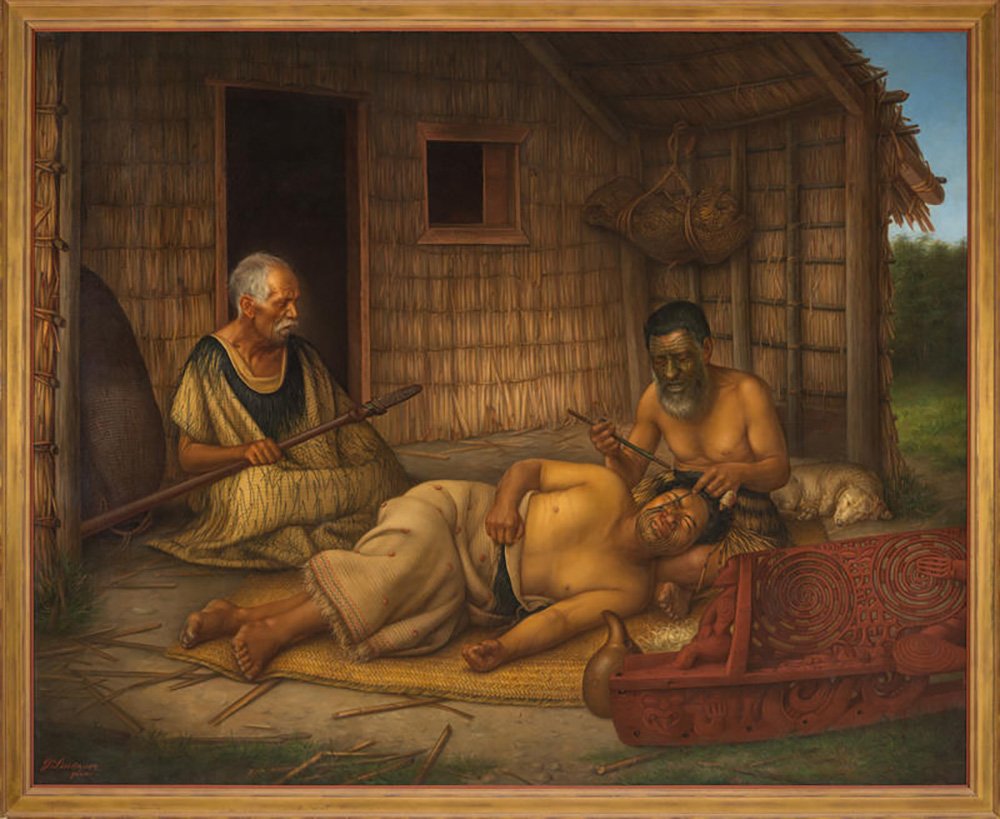
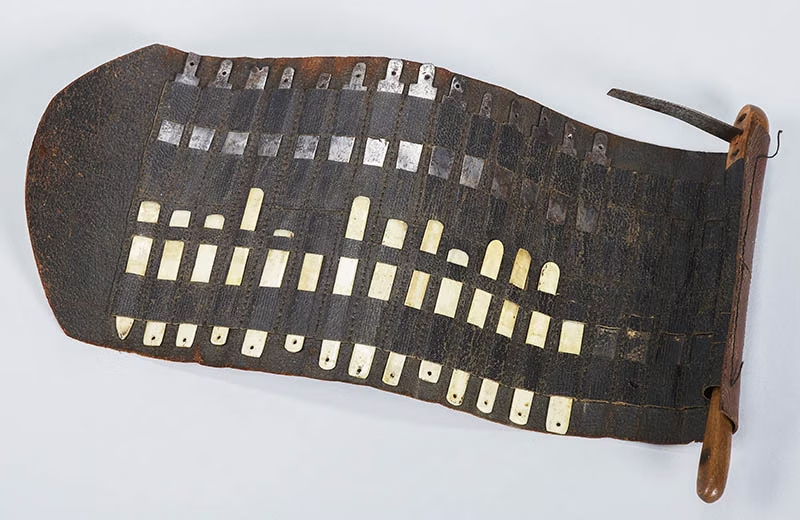
The tohunga tā moko (the specialist practitioner — tohunga meaning expert or priest) used an uhi — a flat-bladed chisel, typically made from albatross bone (uhi a toroa) — to cut grooves directly into the skin. The uhi was dipped in pigment and struck with a small mallet or fern stalk (he māhoe). The chisel cut through the skin, producing deep, textured grooves — not smooth, flat marks but raised, ridged lines that could be felt as well as seen. The chisels were called Te Uhi.
Stage two: the comb
After the grooves were cut, small toothed combs (uhi matarau — serrated chisels) were used to apply pigment into the carved channels and into the surrounding skin. This second stage deposited the colour that filled the grooves, creating the tonal contrast between the carved lines and the skin.
The result was a tattoo with a sculptural, three-dimensional quality — a textured surface of grooves and ridges that distinguished tā moko from every other tattoo tradition in the world. The face of a person bearing moko had a tactile quality: the designs could be felt as well as seen. This three-dimensionality connected tā moko to the broader Māori art of whakairo (carving) — the same carving traditions that produced the elaborate interiors of wharenui (meeting houses). Just as ancestral stories were carved into the wood of the meeting house, identity was carved into the body’s skin.
The pigment was made from natural materials: soot from burned kauri gum (awheto), wood, or caterpillar fungus, mixed with animal fat or other binders. The resulting ink was a deep blue-black — the characteristic colour of traditional moko.
The process was conducted with ritual solemnity. The tohunga tā moko often began with a karakia (prayer) and struck the first incision on the left shoulder. Chants and songs were recited throughout the session to comfort the recipient and to invoke spiritual protection. The recipient lay down, attended by family, while the practitioner worked.
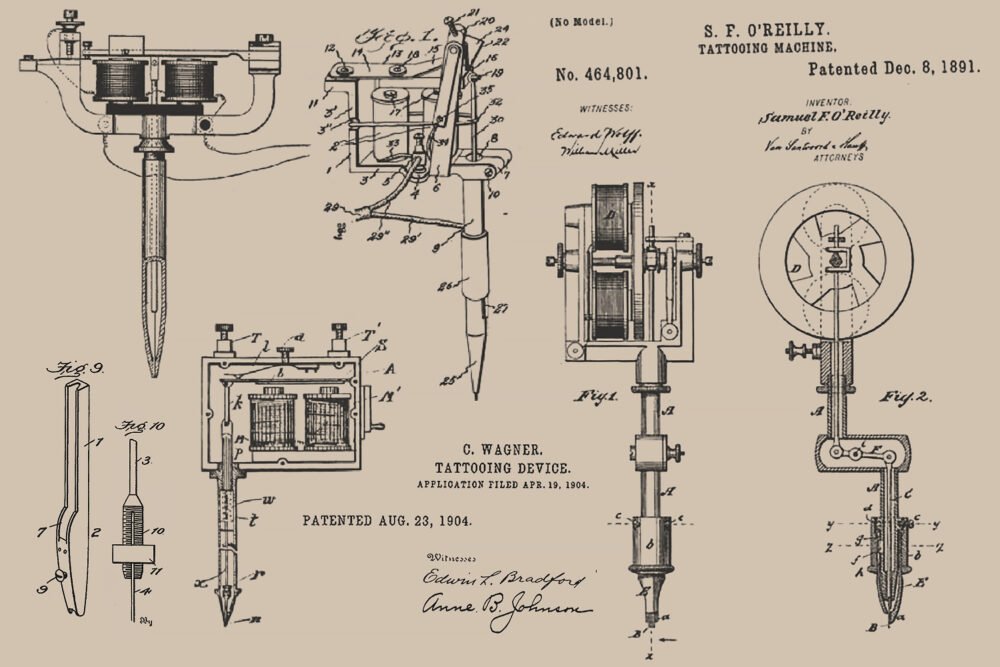
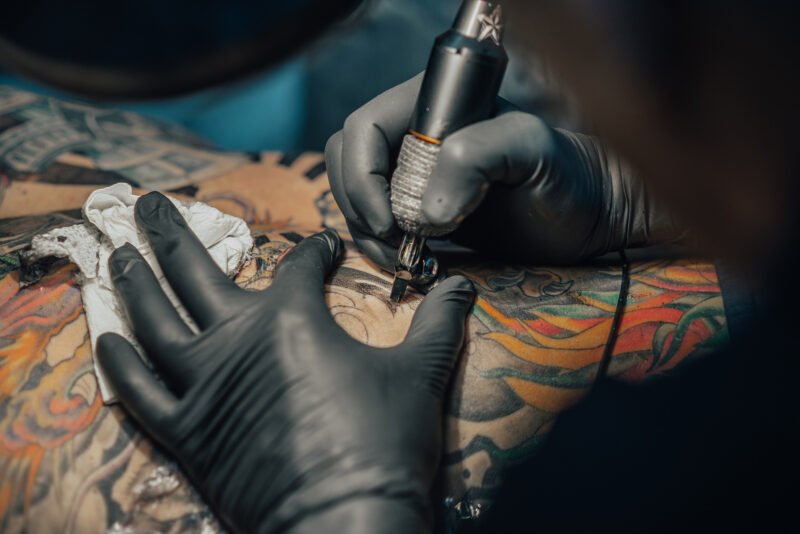
Modern technique: Contemporary tā moko practitioners use both the traditional uhi and modern tattoo machines. The choice of tool varies with the practitioner and the recipient’s wishes.
- The traditional uhi method produces the textured, three-dimensional quality of historical moko.
- The machine produces a smoother surface.
Both are considered valid by the community, and many practitioners use both tools within a single piece.
Moko kanohi: the face as a map
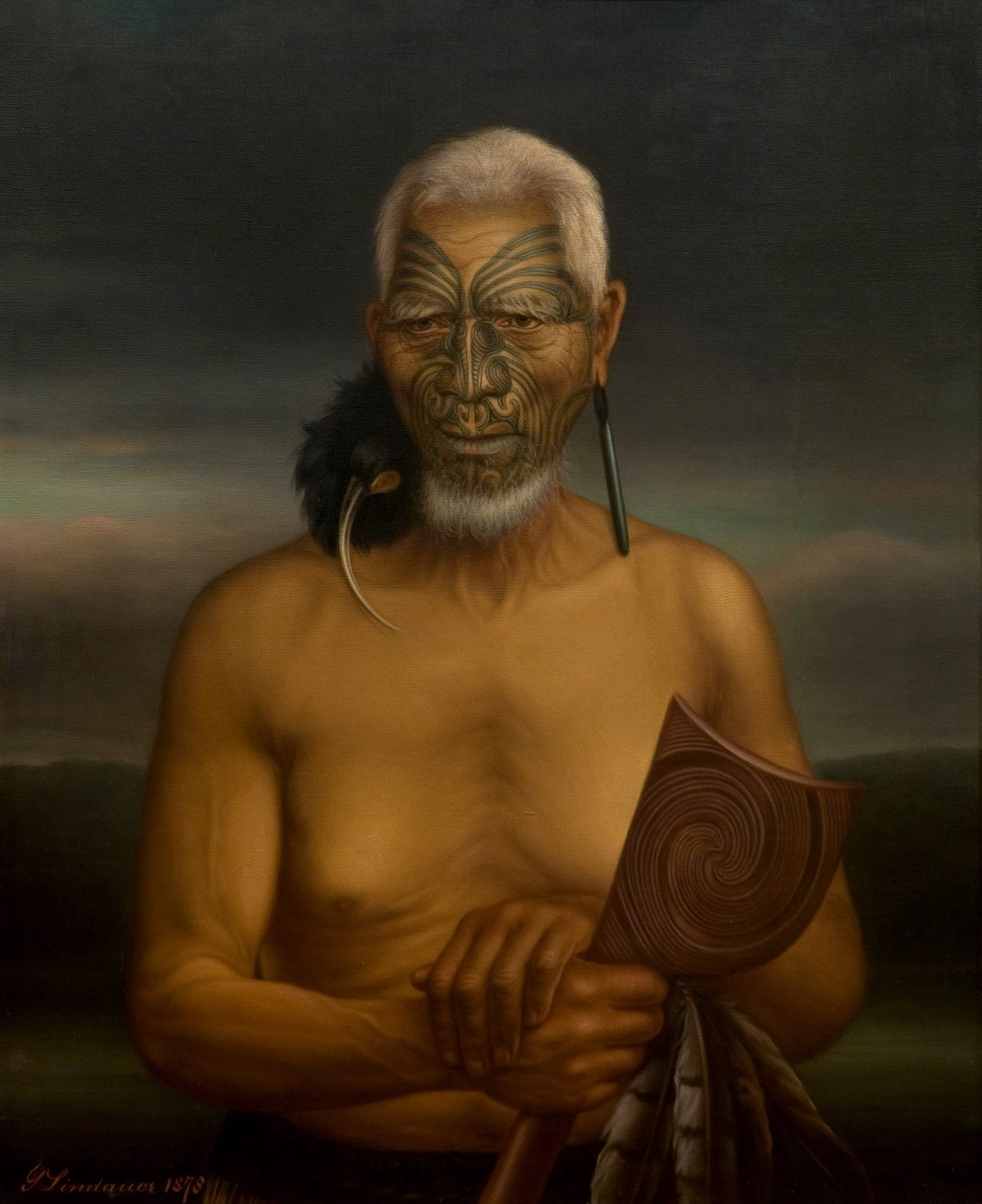
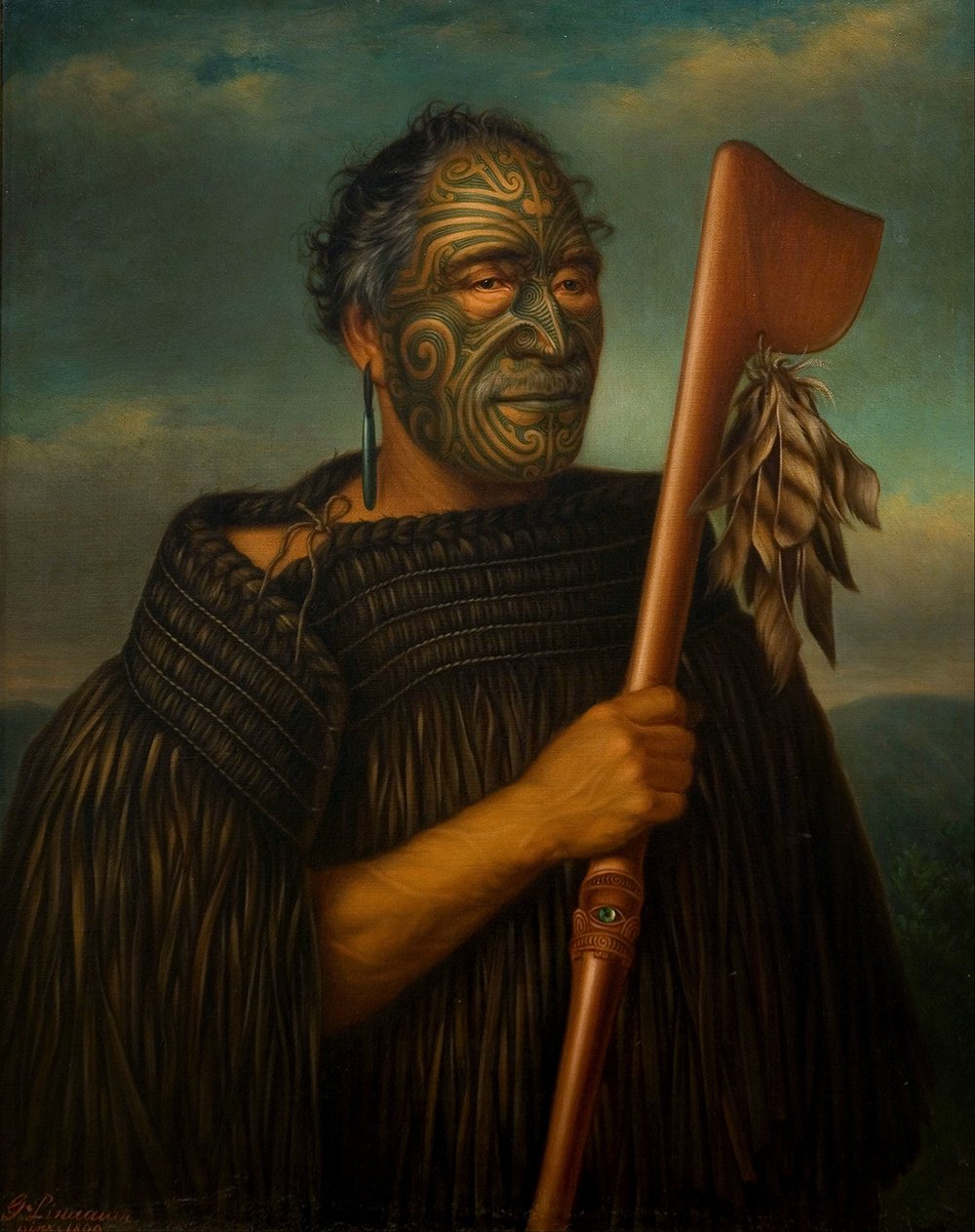
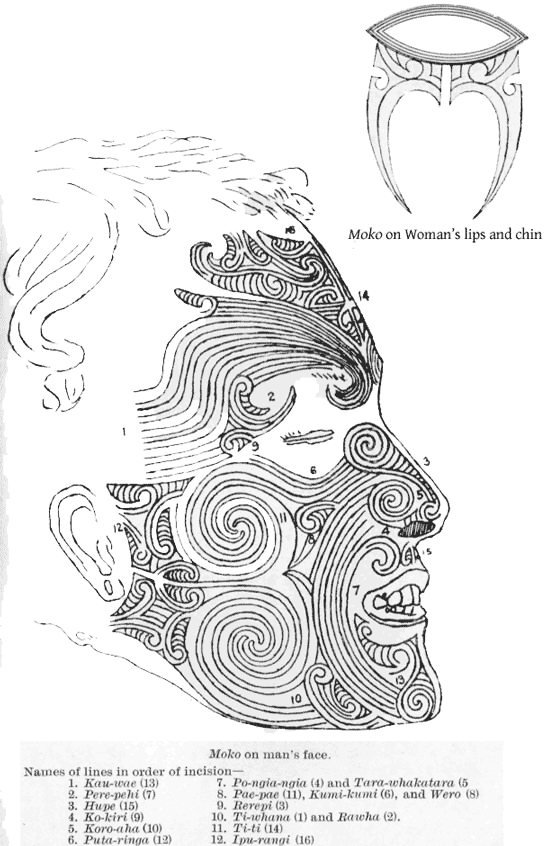
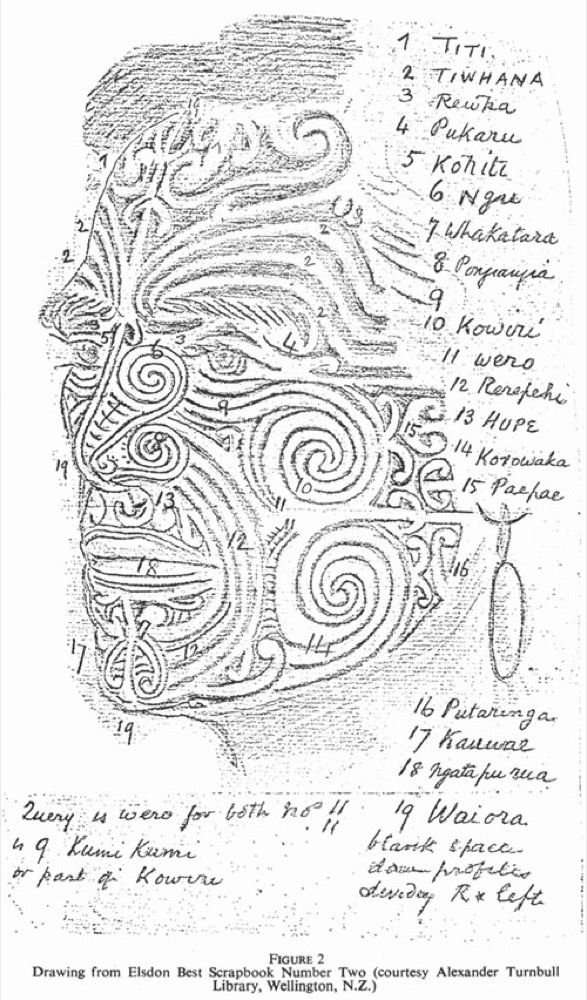
The male facial moko — moko kanohi — is the most significant form of tā moko. In historical practice, a high-ranking man could receive moko covering the entire face, with each zone of the face carrying specific information. The face was divided into eight named sections, each encoding a different dimension of the wearer’s identity.
- Ngakaipikirau — the centre of the forehead. Encoded the wearer’s rank within the tribe.
- Ngunga — around the eyebrows. Encoded the wearer’s position and status.
- Uirere — the eyes and nose area. Encoded the wearer’s hapū (subtribe) rank.
- Uma — the temples. Encoded marital status and the number of marriages.
- Raurau — the area below the nose. Contained the wearer’s tohu (signature) — a unique mark that chiefs memorised and used for authorising documents, signing land transactions, and issuing orders.
- Taiohou — the cheeks. Encoded the wearer’s occupation and work.
- Wairua — the chin. Encoded mana — prestige, spiritual authority, and personal power.
- Taitoto — the jaw. Encoded birth status — the wearer’s heritage and lineage at birth.
Ancestry was indicated on each side of the face: the left side (in most iwi, though the convention varied by tribe) represented the father’s lineage, the right side the mother’s. If one side of a person’s ancestry was not of rank, that side of the face would have no moko design. If the centre-forehead area had no moko, the wearer either held no rank or had not inherited rank. The design was a readable document — a knowledgeable observer could assess, at a glance, a person’s tribal affiliation, family connections, social standing, marital history, occupation, and authority.
No two facial moko were identical. Each was composed for the specific individual, by the tohunga tā moko, in consultation with the wearer and their family. The uniqueness was so specific that chiefs used the raurau section — their personal signature — for legal and commercial documents. Copies of moko signatures survive in colonial-era land transaction records.
Moko kauae
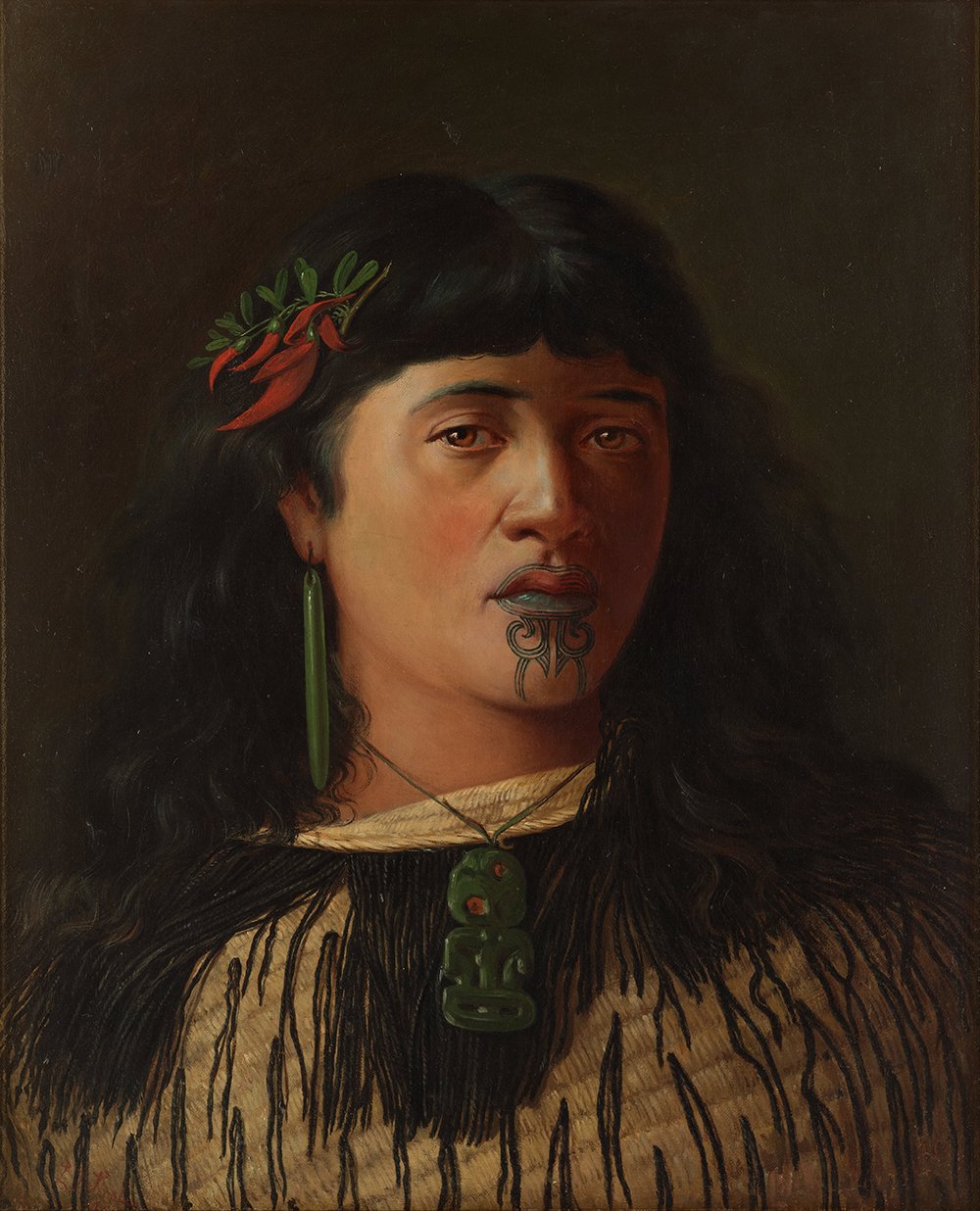
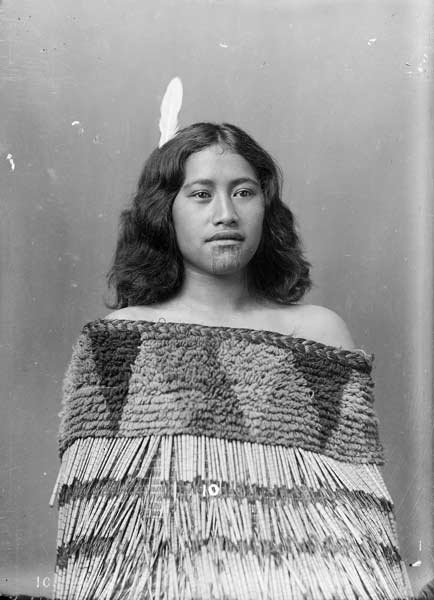
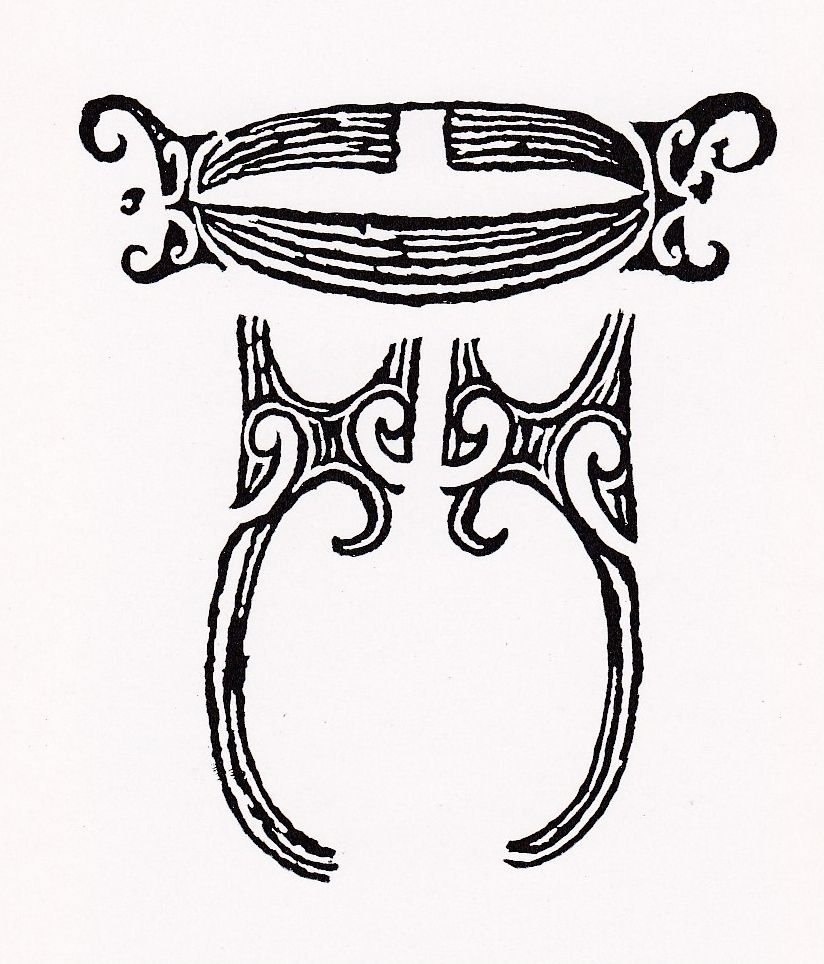
The moko kauae — the women’s chin tattoo — is the most widely practised form of tā moko in contemporary Aotearoa.
Traditionally, the moko kauae was applied to the chin and sometimes the lips. It represented a woman’s whakapapa, her mana wahine (female authority), her role as a knowledge bearer within her whānau (family) and iwi, and her status within the community. The tradition originates from the Niwareka legend — Niwareka, who brought tāniko weaving from the underworld, is the ancestral figure associated with the women’s tattoo.
The moko kauae was the most persistent form of tā moko through the colonial period. It continued to be practised even into the 1970s, when the rest of the tradition had nearly disappeared. It was the form of moko that survived longest, and it has been the form most prominently revived in contemporary Aotearoa.
Today, a growing number of Māori women in public life wear moko kauae — politicians, broadcasters, educators, artists, and community leaders. The visibility of moko kauae in Parliament, on television, and in everyday life is one of the most recognisable markers of the broader Māori cultural renaissance.
The design language
The motifs that compose tā moko — and that distinguish it visually from all other Polynesian tattooing traditions — are curvilinear. Where Samoan tatau uses straight lines, arcs, and angular geometric forms, and Marquesan patutiki uses dense rectilinear geometry, Māori design is built from spirals, flowing curves, and organic shapes derived from the natural world of Aotearoa. The curvilinear quality gives tā moko its visual identity and connects it to the specific landscape and ecology of New Zealand — particularly to the ponga (silver fern) whose unfurling frond is the source of the most recognisable Māori motif.
Structural elements
The manawa line is the central spine of a moko composition — a flowing line (or pair of lines) that runs through the centre of the design and from which the other elements branch. The manawa line gives the composition its structural coherence, connecting the individual motifs into a unified narrative. The word manawa means “heart” or “breath” — the vital centre from which life flows outward.
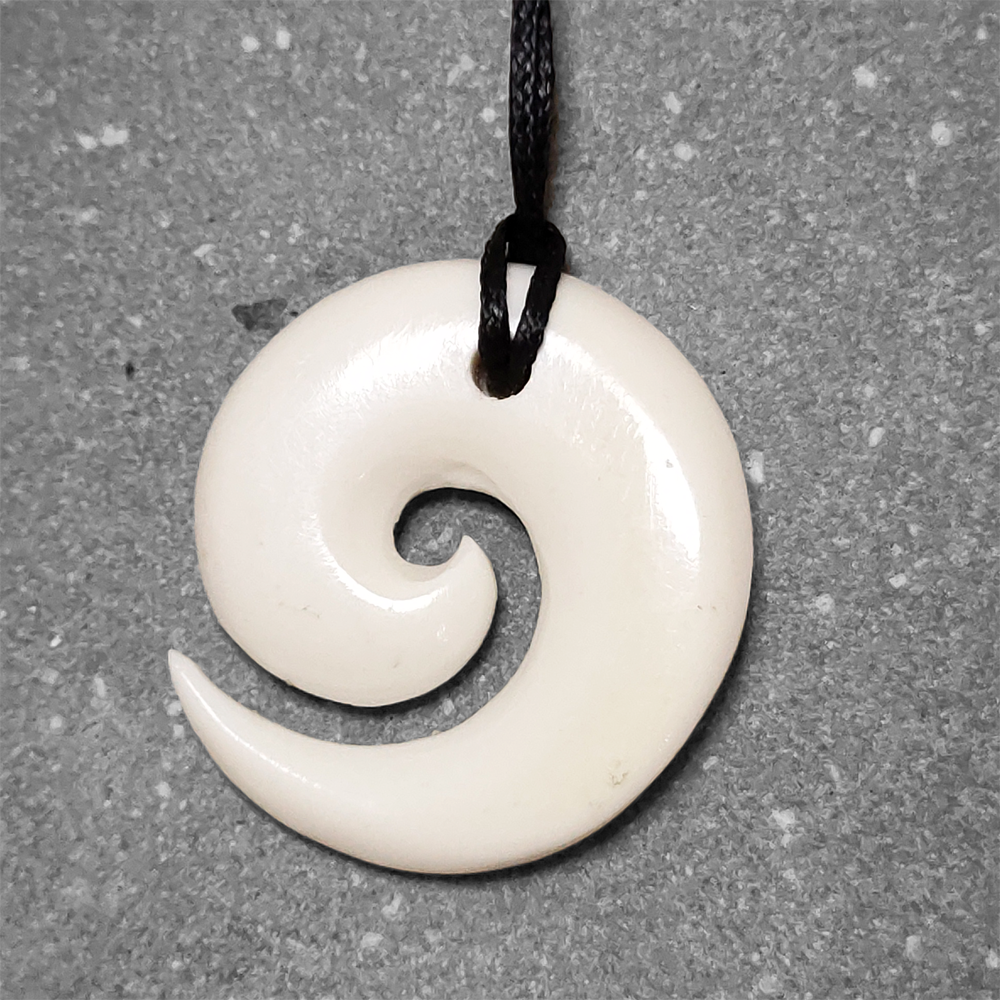
Koru — the spiral — is the most recognisable element in Māori art. It is derived from the unfurling frond of the ponga (silver fern) and represents new beginnings, growth, renewal, and the unfolding of life. In tā moko, koru spiral outward from the manawa line, each representing a person, a relationship, or a life event significant to the wearer. The number and arrangement of koru on each side of the manawa line can represent the people in the wearer’s life — family members on the mother’s side branching from one direction, the father’s side from the other.
The fill patterns
The solid areas within a moko composition are not left blank — they are filled with specific patterns, each carrying its own meaning. The fill patterns add layers of symbolism to the composition and give the work its visual density and texture.
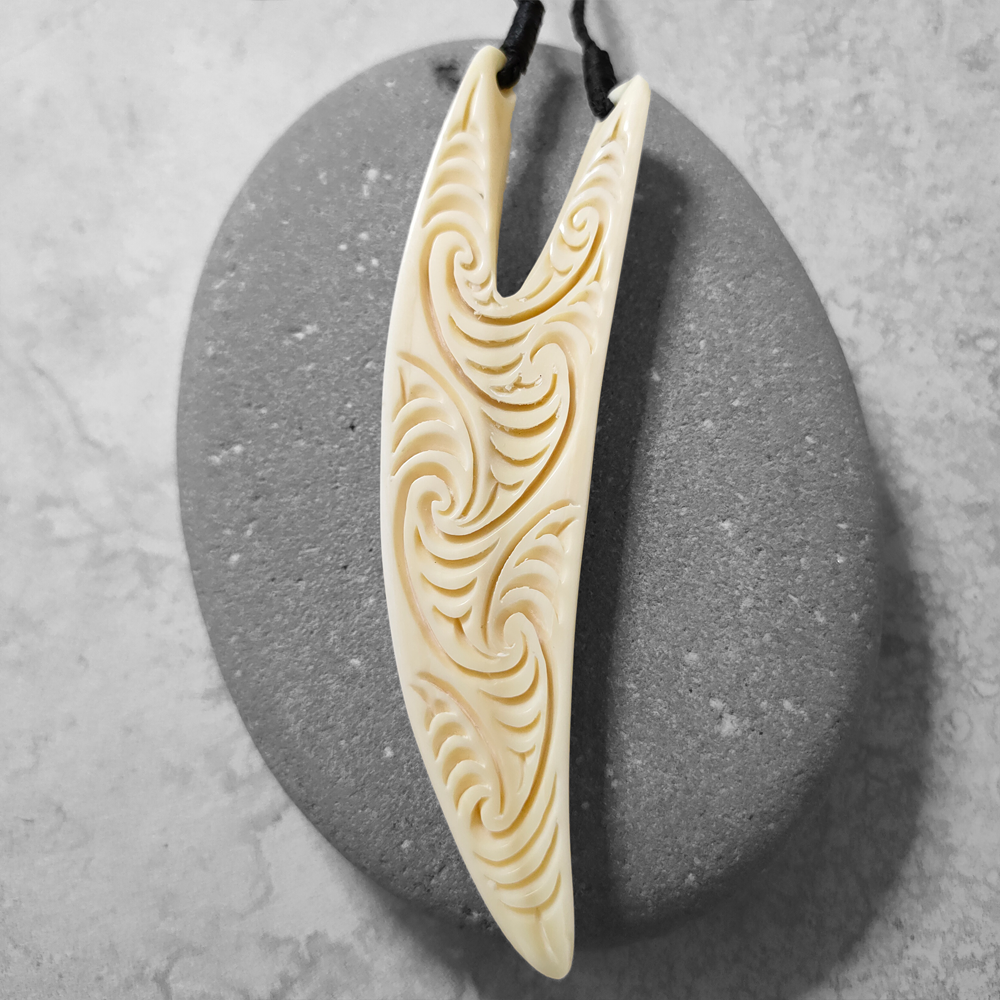
Pakati. A series of triangular notches or zigzag lines, often arranged in overlapping rows called haehae. Pakati represents strength, bravery, and the warrior spirit. The word refers to the action of notching or incising — the same cutting motion used in the uhi technique. The pattern adds texture and visual contrast to the smoother curves of the spirals.
Unaunahi. A pattern of crescent-shaped marks set at regular intervals, depicting fish scales. Unaunahi represents the ocean as a food source and as the link to the spiritual homeland of Hawaiki, and it symbolises abundance and health. In some traditions (Arawa), the pattern is called unaunahi; in others (Whanganui), it is called ritorito (the young shoots of a flax plant). When used in spiral form, it is known in Taranaki as pu-werewere (“spider”) because of its resemblance to a spider’s web.
Hikuaua. A pattern resembling the tail of a herring or mackerel. Hikuaua symbolises prosperity and abundance and is particularly associated with the Taranaki region. It reflects the Māori dependence on the sea and its creatures.
Ahu ahu mataroa. A stepped pattern representing a journey, personal transformation, and achieving new challenges. The motif is often chosen to mark a significant milestone in the wearer’s life — a transition, an achievement, a new direction.
Mangōpare. A pattern derived from the hammerhead shark, representing strength, determination, tenacity, and courage. The hammerhead is a fighter — relentless and powerful — and the motif connects the wearer to those qualities.
Guardian figures
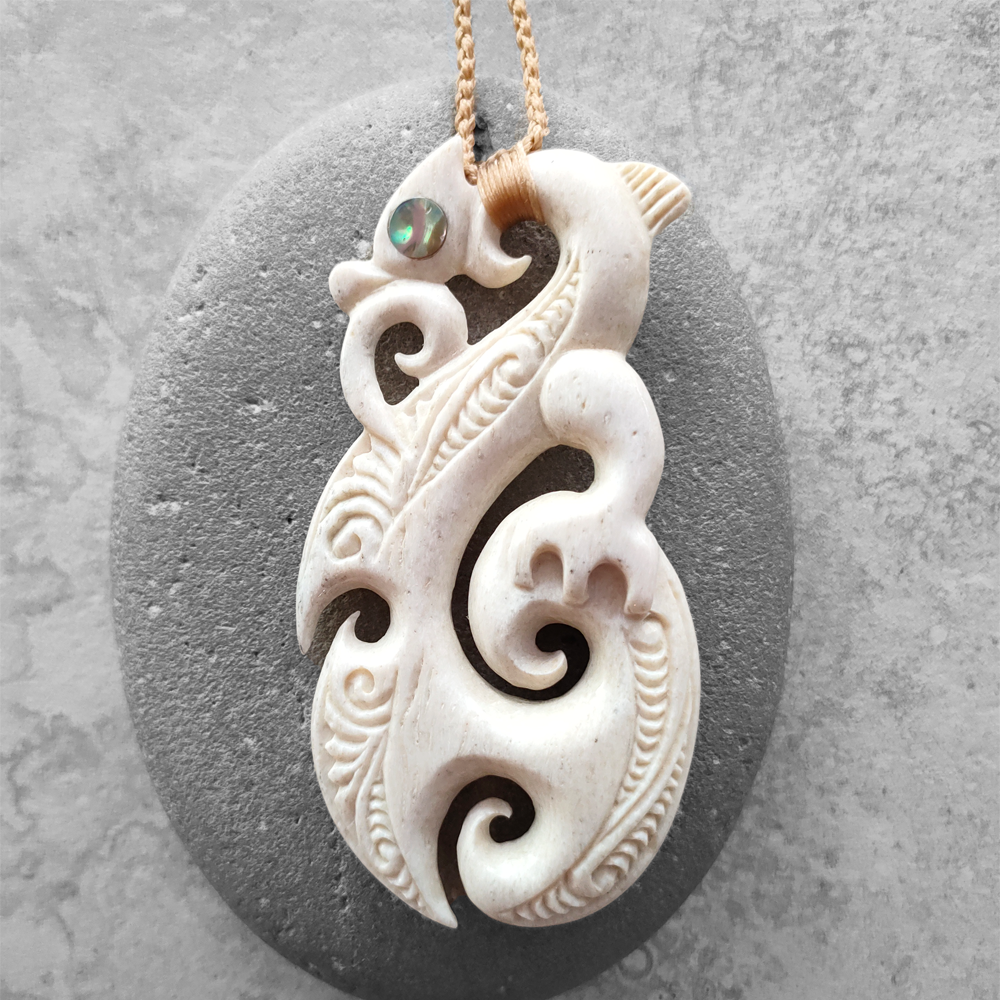
Manaia. A mythological figure depicted with the head of a bird, the body of a man, and the tail of a fish — a guardian that moves between sky, earth, and sea. The manaia represents spiritual protection and the balance between the physical and spiritual worlds. It is one of the most powerful symbols in Māori visual culture, appearing in carving, jewellery, and tā moko.
Hei matau. The fishhook — symbolising prosperity, strength, determination, and good health. The hei matau connects the wearer to the ocean and to the Māori tradition of deep-sea fishing and navigation. It is one of the most widely recognised Māori symbols.
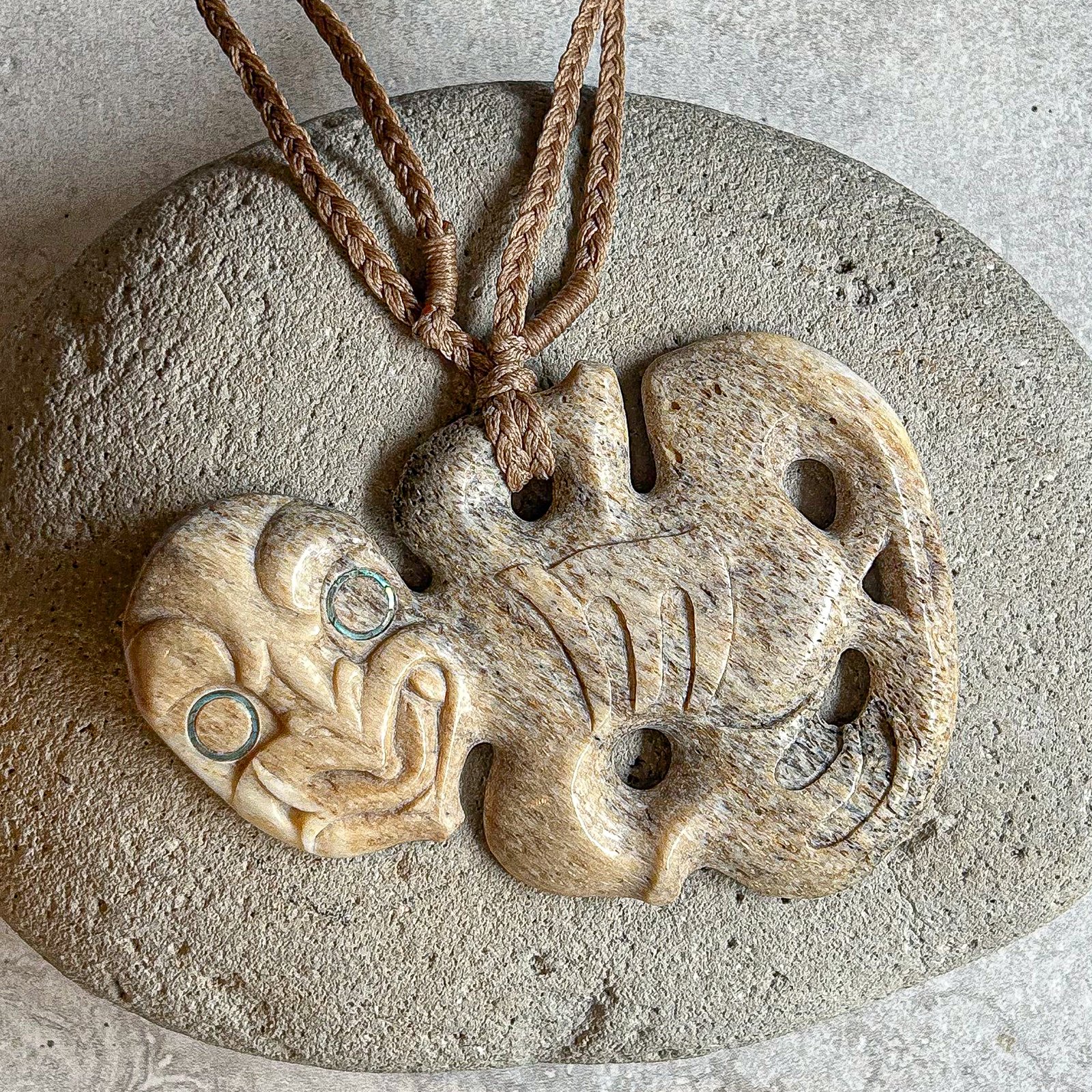
Hei tiki. A stylised human figure — often worn as a pendant and appearing in tā moko as a motif. The hei tiki represents ancestry, fertility, and the continuity of the lineage.
The design elements are combined into compositions unique to each wearer. A skilled tā moko practitioner listens to the wearer’s story, understands their whakapapa and life, and composes a design that encodes the wearer’s identity using the shared vocabulary. The result is a visual biography written in a language that only those trained to read it can fully understand — but whose beauty is visible to everyone.
Body moko
Tā moko was applied across the body, not only on the face. Historical practice included extensive body tattooing, and contemporary practice has expanded further to include areas (arms, chest, back) that are less stigmatised in modern society than facial moko.
Puhoro
The puhoro — designs applied to the thighs, buttocks, and the area from mid-waist to knee — is among the most complex forms of tā moko. The puhoro designs are dense, flowing compositions sculpted to follow the legs’ musculature. The patterns incorporate the full vocabulary of tā moko motifs — koru, pakati, unaunahi, manawa lines — arranged in compositions specific to the wearer, encoding their whakapapa and personal history.
Contemporary practitioners in the Te Uhi a Mataora collective have been developing major works of puhoro, which they describe as “complex networks of designs sculpted to fit the human form, incorporating the character and history of the recipient.” The puhoro is the form of body moko that most directly continues the pre-colonial tradition and is the body tattoo most commonly requested by Māori men seeking traditional tā moko.
Other body placements
- Rape — designs on the arms. Arm moko uses the same curvilinear vocabulary as facial and leg moko, adapted to the different proportions and musculature of the arm.
- Pakipaki — designs on the chest and torso.
- Neck, calves, and back — all documented as placement areas in both historical and contemporary practice.
Contemporary tā moko has expanded its range of body placements, partly because the social cost of visible facial moko in modern New Zealand society — particularly in employment contexts — has led some wearers to choose body placements that can be covered with clothing. The expansion does not diminish the cultural significance of the work; the whakapapa is encoded in the design regardless of where it is.
The colonial disruption
The first Europeans to document tā moko were the artists who accompanied Captain Cook’s expedition to Aotearoa in 1769. The drawings produced by Sydney Parkinson and others provided the first European visual record of Māori facial moko.
Later European visitors — traders, settlers, and missionaries — viewed tattooing as “savage” and “vulgar” and pressured Māori to abandon the practice. The introduction of muskets in the early nineteenth century produced the Musket Wars (1807–1842), during which mokomokai (preserved tattooed heads) became items of trade with Europeans — a grotesque commercialisation that produced its own specific horror, including the killing of slaves and captives to produce heads for sale. The trade in mokomokai was banned by the colonial government in 1831.
The broader suppression of Māori cultural practices during the colonial period — the Native Schools Act (which suppressed the Māori language in schools), the undermining of the matai system, and the general pressure to assimilate — contributed to the decline of tā moko. By the early twentieth century, the art had nearly disappeared. The moko kauae persisted longer than the male facial moko, but even this was increasingly rare by the mid-twentieth century.
The revival of tā moko
The revival of tā moko began in the 1970s as part of the broader Māori cultural renaissance — the same movement that produced the Māori Language Act (1987), the Waitangi Tribunal claims process, the revival of kapa haka (performing arts), and a general resurgence of Māori identity and cultural practice.
Key figures and organisations in the tā moko revival include:
Te Uhi a Mataora — a collective of tā moko practitioners including Riki Manuel (Christchurch), Mark Kopua (Gisborne), Patrick Takoko (Gisborne), and Turumakina Duley (Auckland). The collective has promoted tā moko through exhibitions, demonstrations, and public talks, including the “Ta Moko — A History on Skin” exhibition at Canterbury Museum (2005) and participation in the “Māori Art Meets America” exhibition in San Francisco.
Ngahuia Te Awekotuku — Professor of Psychology at Waikato University, Māori writer and academic, and the author of Mau Moko: The World of Māori Tattoo (2007, with Linda Waimarie Nikora) — the definitive study of the tradition. Te Awekotuku has said:
“Tā moko today is much more than a fashion statement, a passing fad for Māori. It is about who we are, and whom we come from. It is about where we are going, and how we choose to get there. And it is about for always, forever.”
The revival has produced a generation of tā moko practitioners who have studied both the traditional design system and contemporary tattooing methods. These practitioners work with Māori clients to create moko that encode the wearer’s whakapapa, iwi affiliation, and personal history within the traditional design system, using either the traditional uhi or modern machines (or both).
The kirituhi distinction
The term kirituhi (literally “drawn skin”) is used by some Māori practitioners to describe tattoo designs that use the Māori visual vocabulary — the koru, the spirals, the curvilinear forms — but are applied to non-Māori people who do not have the whakapapa that moko encodes.
The distinction is meaningful. A moko is a specific cultural object — it encodes specific genealogical information about a specific person within a specific Māori cultural framework. The right to wear moko is connected to Māori identity, whakapapa, and cultural authority. A kirituhi uses the same visual language but does not carry the same cultural weight — it is an appreciation of the aesthetic without the claim to the genealogical content.
The boundary between moko and kirituhi is maintained by many practitioners, though not all Māori artists agree on the terminology or the precise location of the line. Some practitioners are generous with non-Māori clients who approach the tradition with respect. Others maintain that the visual language of moko should be worn only by Māori people. The conversation is ongoing within the Māori community, and the appropriate response for non-Māori is to listen to what the community says and to respect the boundaries as they are stated.
The consistent principle: if you are not Māori, you do not wear moko. If you admire the aesthetic, kirituhi is the appropriate path — and the conversation about what that means should happen with a Māori practitioner who can guide the process.
Māori tā moko today
Tā moko is in the strongest position it has occupied since the colonial disruption. More Māori people are receiving moko than at any point in the past century. Moko kauae is visible in Parliament, in media, in education, and in everyday life. The revival is led by Māori practitioners working within the cultural framework, and the practice is understood — within the Māori community and increasingly within Aotearoa’s broader society — as a living expression of Māori identity and cultural sovereignty.
The 2010 Waitangi Tribunal claim WAI 262 (the “flora and fauna” claim, which addressed Māori intellectual property rights over traditional knowledge and cultural expressions) included tā moko among the cultural treasures whose protection the claimants sought. The claim recognised that tā moko designs are a form of cultural intellectual property — they belong to the Māori community, and their use by non-Māori without authorisation is a matter of cultural rights, not merely personal preference.
Ngahuia Te Awekotuku’s words remain the clearest statement of what the revival means:
“It is about who we are, and whom we come from. It is about where we are going, and how we choose to get there. And it is about for always, forever.”
Sources & further reading
- Ngahuia Te Awekotuku with Linda Waimarie Nikora, Mau Moko: The World of Māori Tattoo. Penguin New Zealand, 2007.
- Te Ara — the Encyclopedia of New Zealand, Tā moko — Māori tattooing.
- Te Papa Tongarewa — Museum of New Zealand, Tāmoko | Māori tattoos: history, practice, and meanings.
- Critic Te Ārohi (University of Otago student magazine), Ta Moko, A Revived Artform. Published April 2025.
- World History Encyclopedia, Traditional Maori Tattoo of New Zealand. Published June 2019.
- Polynesian Pride, Traditional Maori Tattoo: The Sacred Story Behind It. Published March 2026.
- Scoop News, Ta Moko — A History on Skin. Published July 2005.
- Mataora Programme, Victoria University of Wellington, The Story of Mataora and Niwareka.
- Rarohenga, Wikipedia, The Free Encyclopedia.
- Zealand Tattoo, Maori Tattoo: The Definitive Guide to Ta Moko.
- Mountain Jade, Traditional Māori symbols and meanings and Exploring Māori surface designs and patterns.
- Polynesian Cultural Centre, Tā Moko: The Art of Māori Tattooing. Published January 2026.
- Alfred Gell, Wrapping in Images: Tattooing in Polynesia. Clarendon Press, 1993.
- Horatio Gordon Robley, Moko or Maori Tattooing. Chapman and Hall, 1896.
- Lars Krutak, Spiritual Skin: Magical Tattoos and Scarification. Edition Reuss, 2012.
- Anna Felicity Friedman, The World Atlas of Tattoo. Yale University Press, 2015.
- Margo DeMello, Bodies of Inscription: A Cultural History of the Modern Tattoo Community. Duke University Press, 2000.