The oldest ink, the widest range

Black is the first tattoo pigment. Every tattooing tradition in human history — from Ötzi’s Alpine line tattoos five thousand years ago, through Polynesian tatau, Japanese irezumi, Berber facial marking, Inuit skin-stitching, and the improvised single-needle work of the California prison system — began with black. Carbon soot, lampblack, charcoal, India ink, and their regional equivalents were what was available, and black pigment on skin is the foundation on which every subsequent development in tattooing was built.

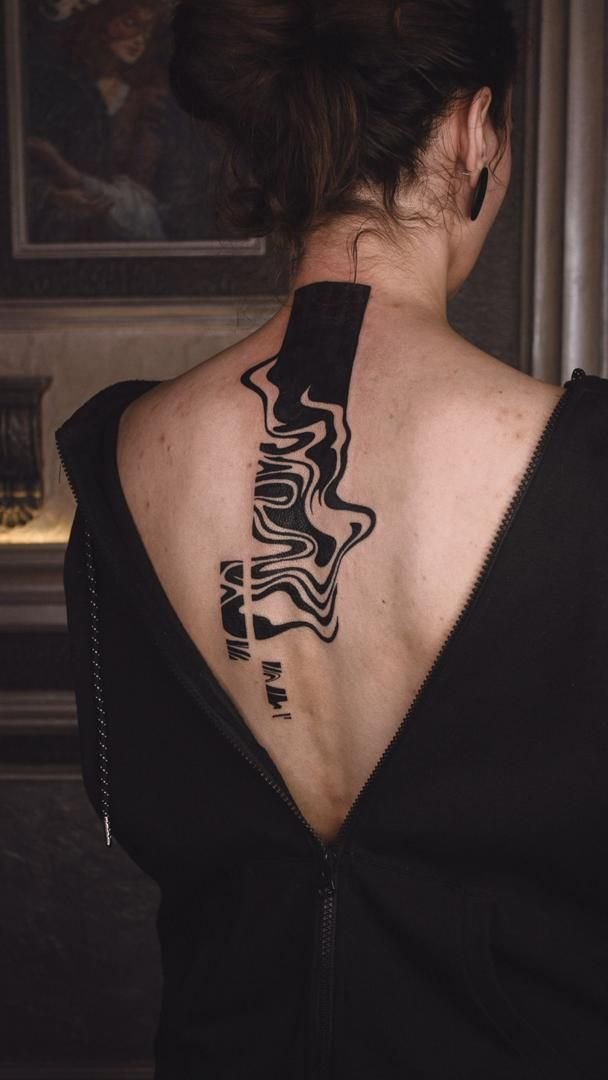
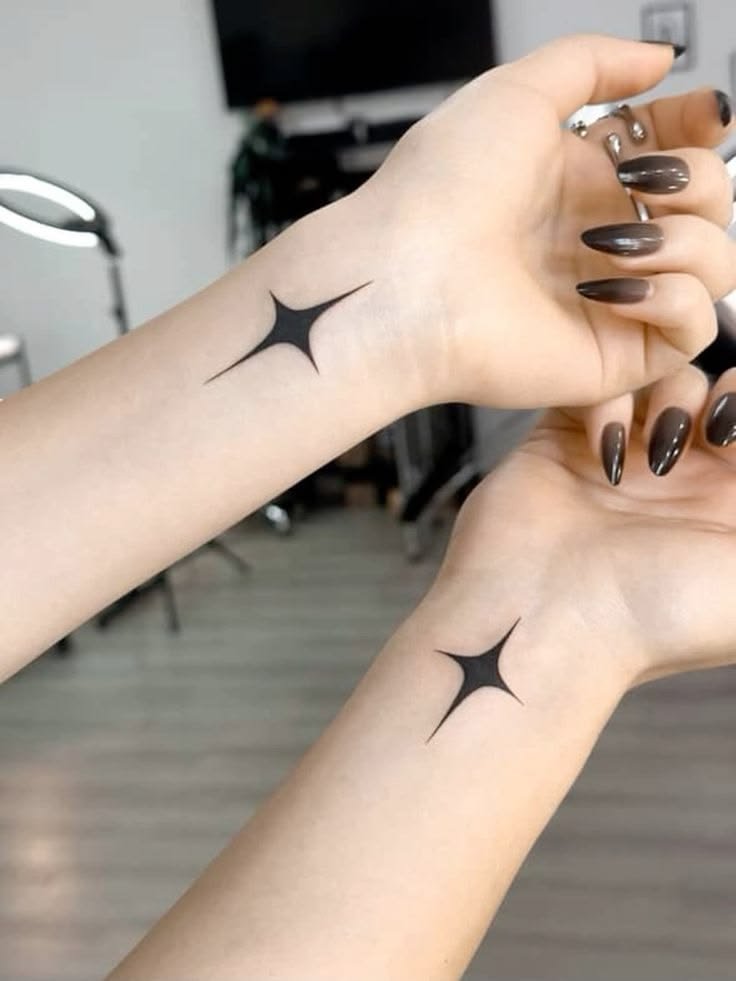
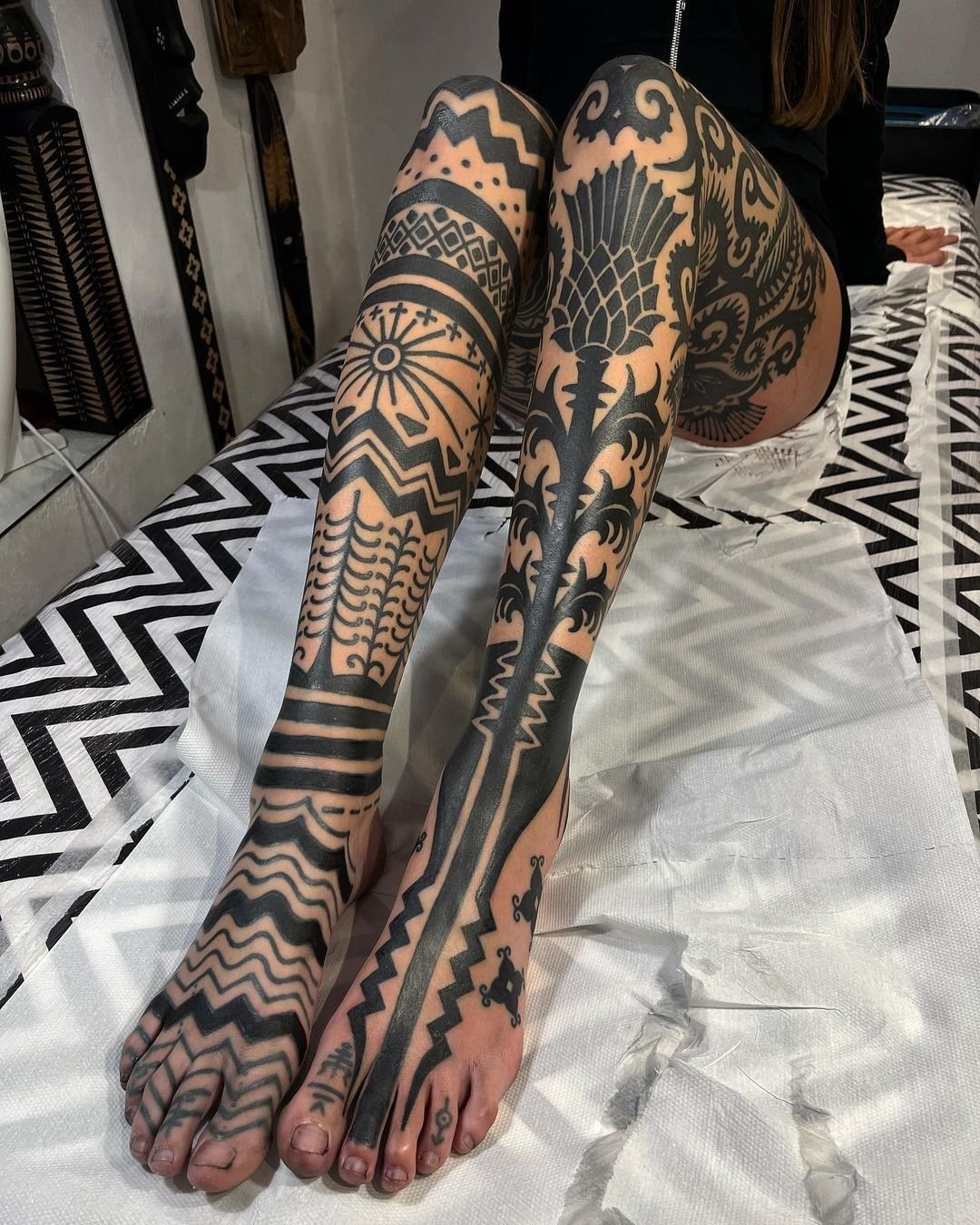
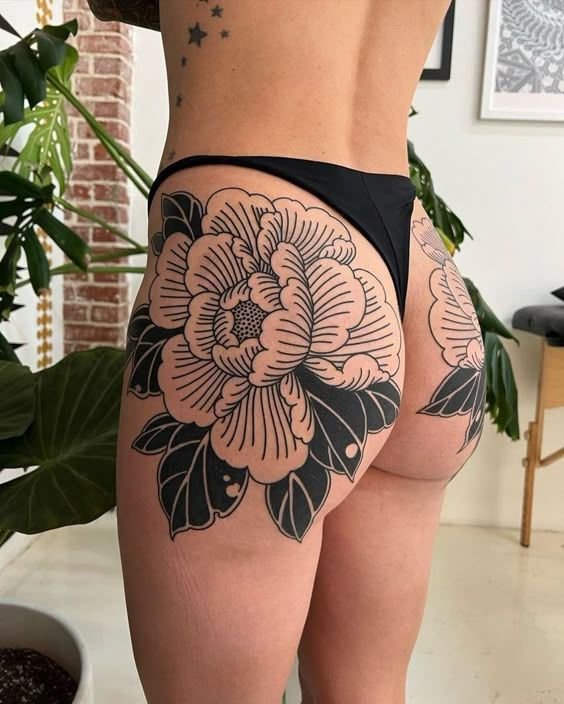
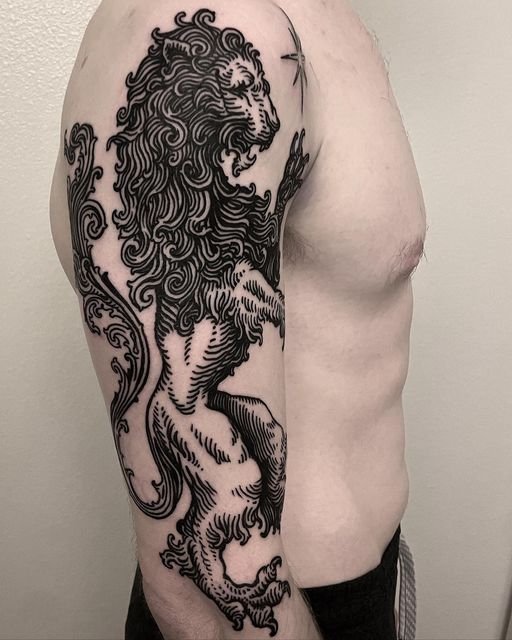
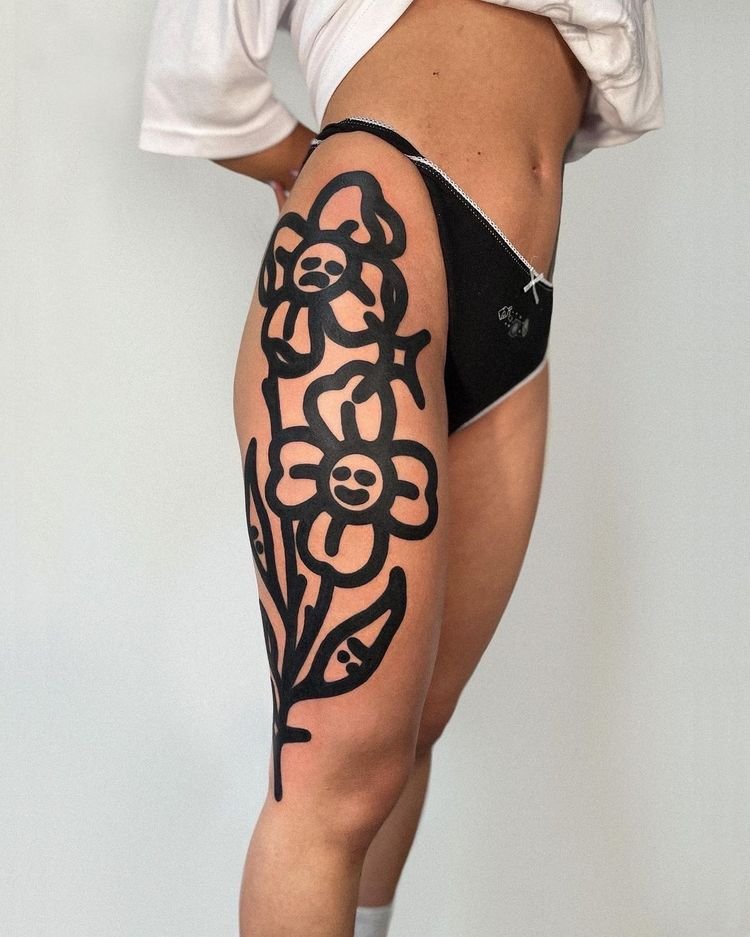
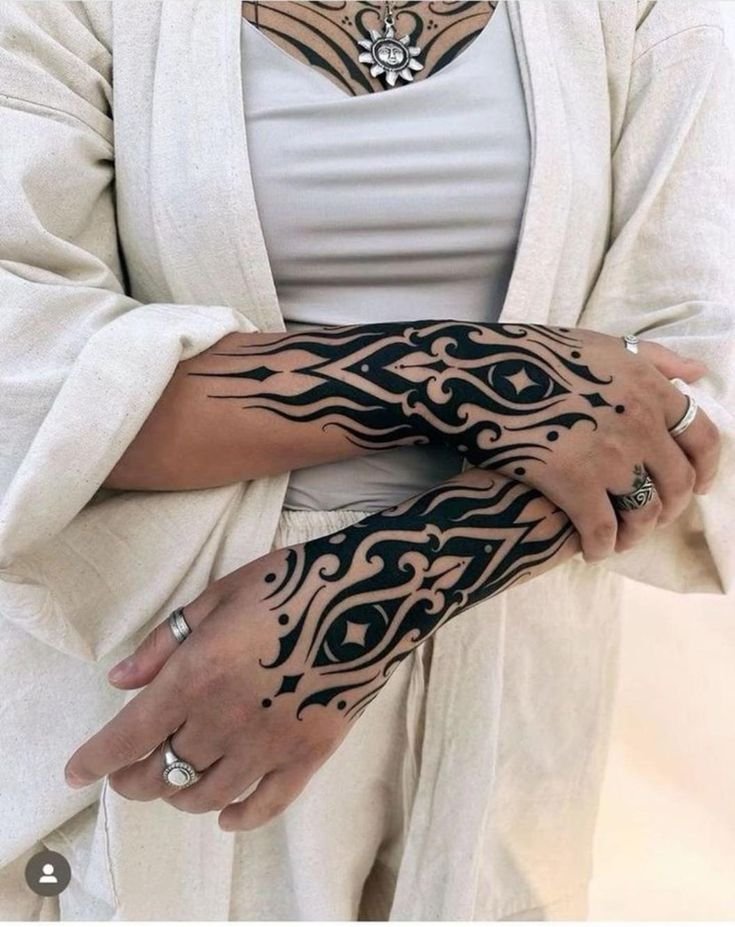
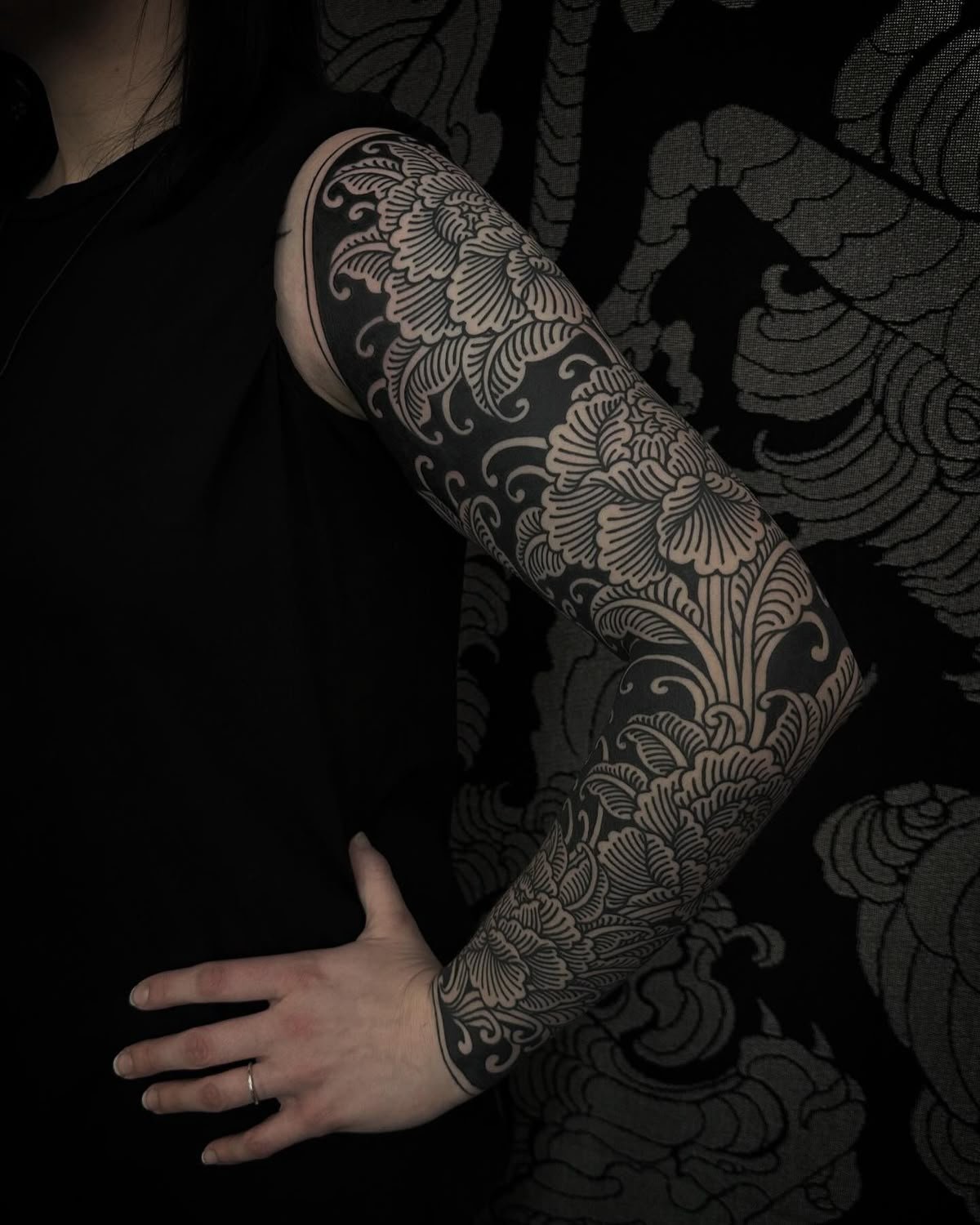
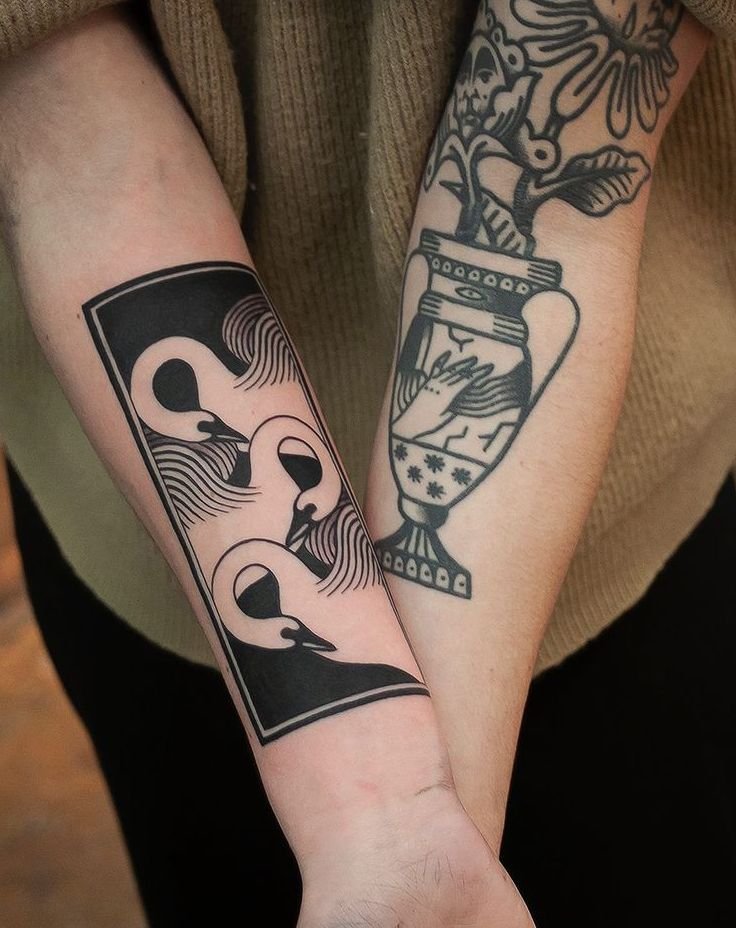
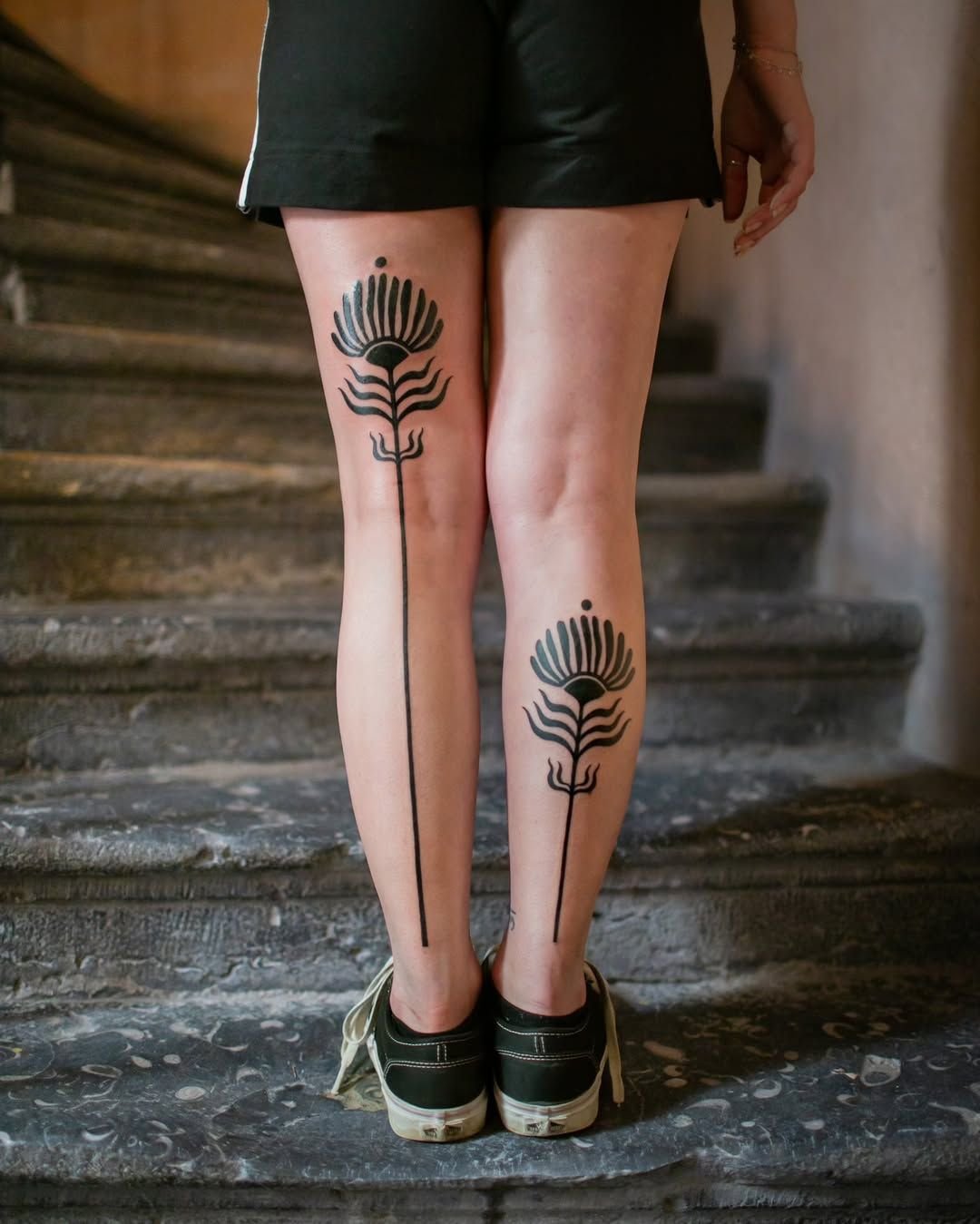
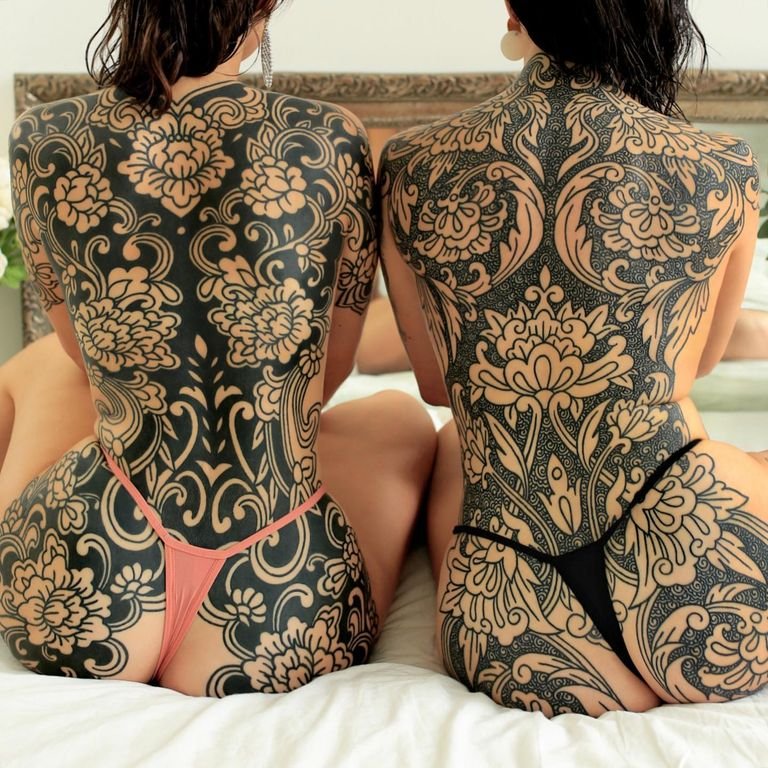
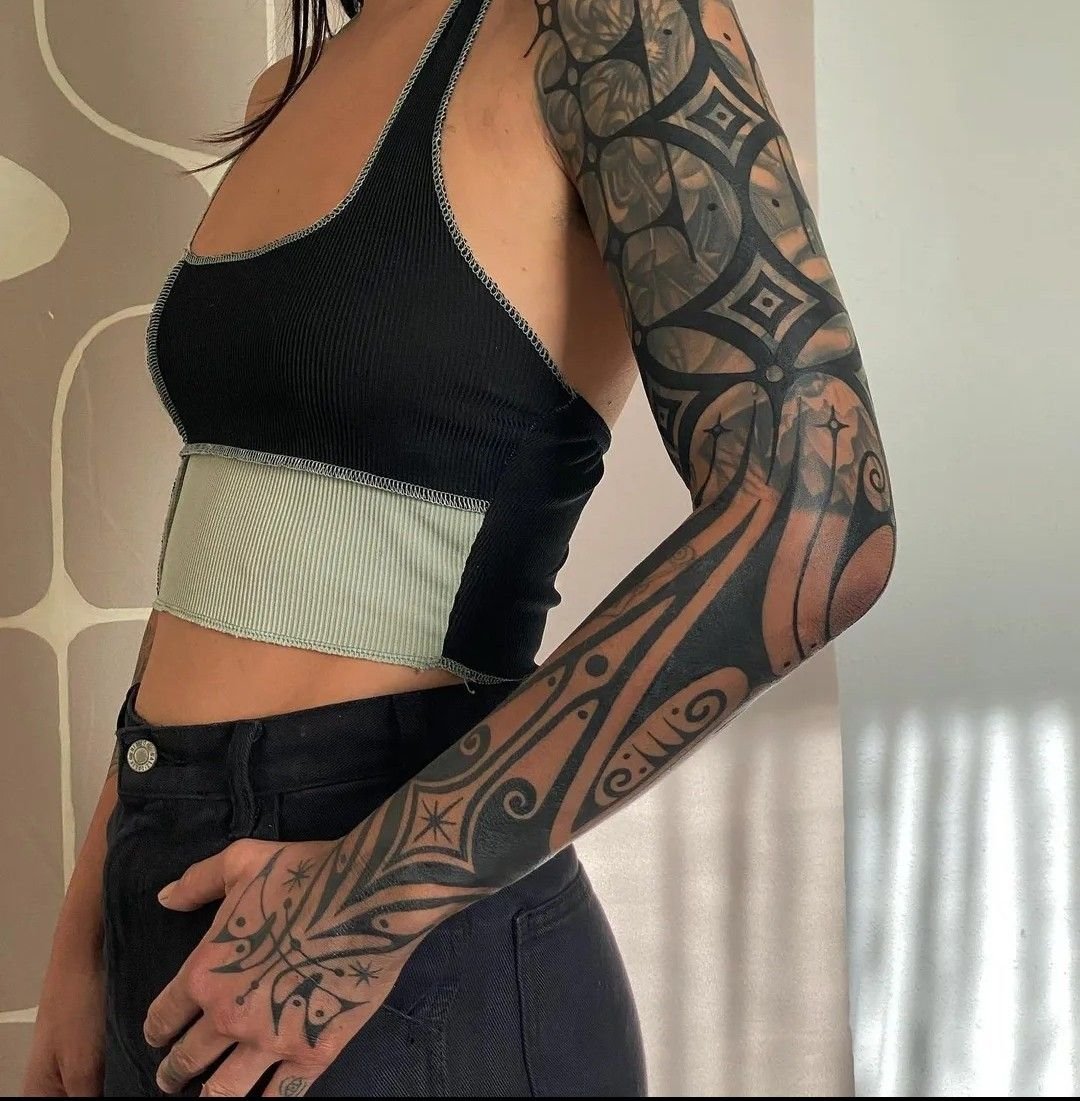
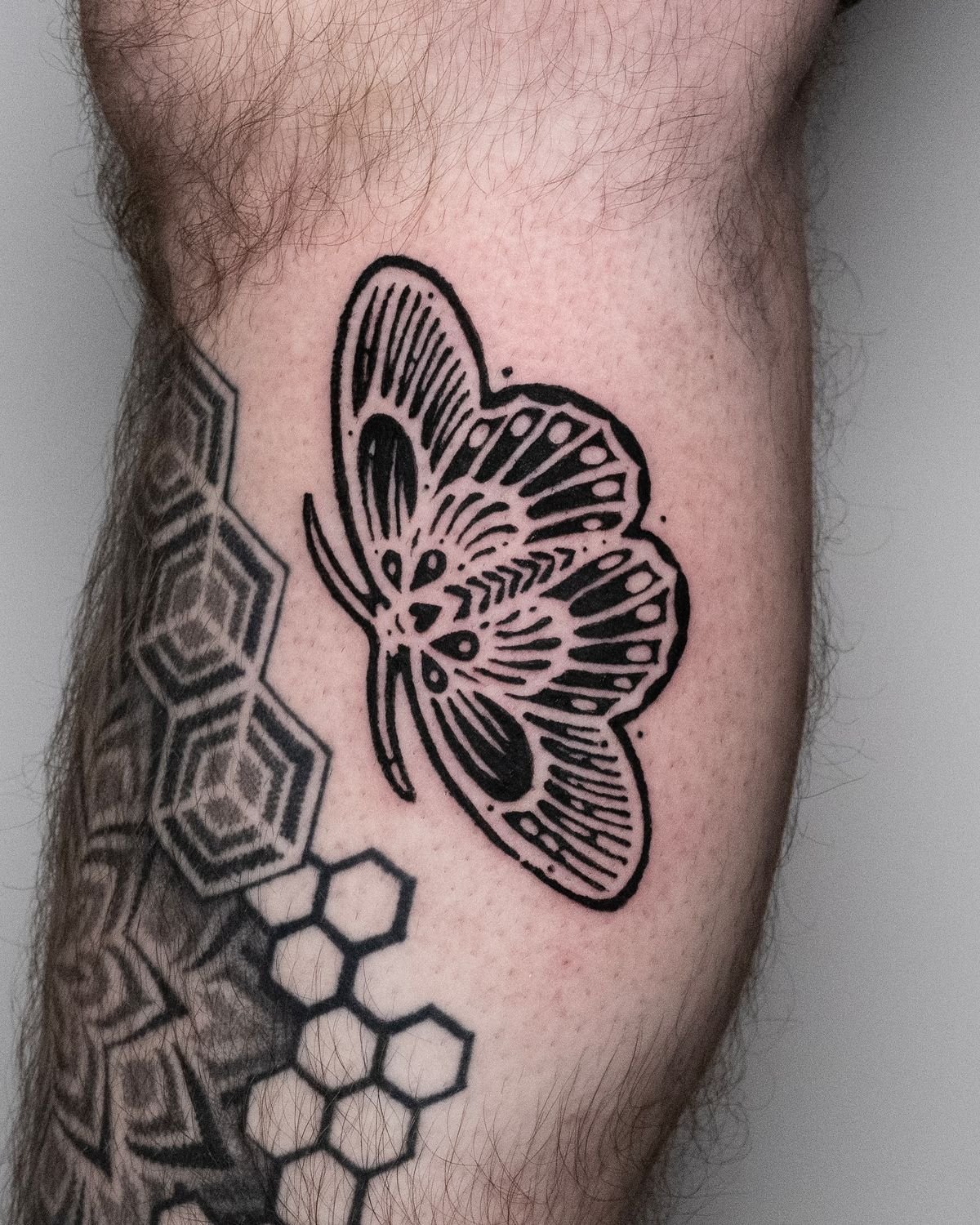
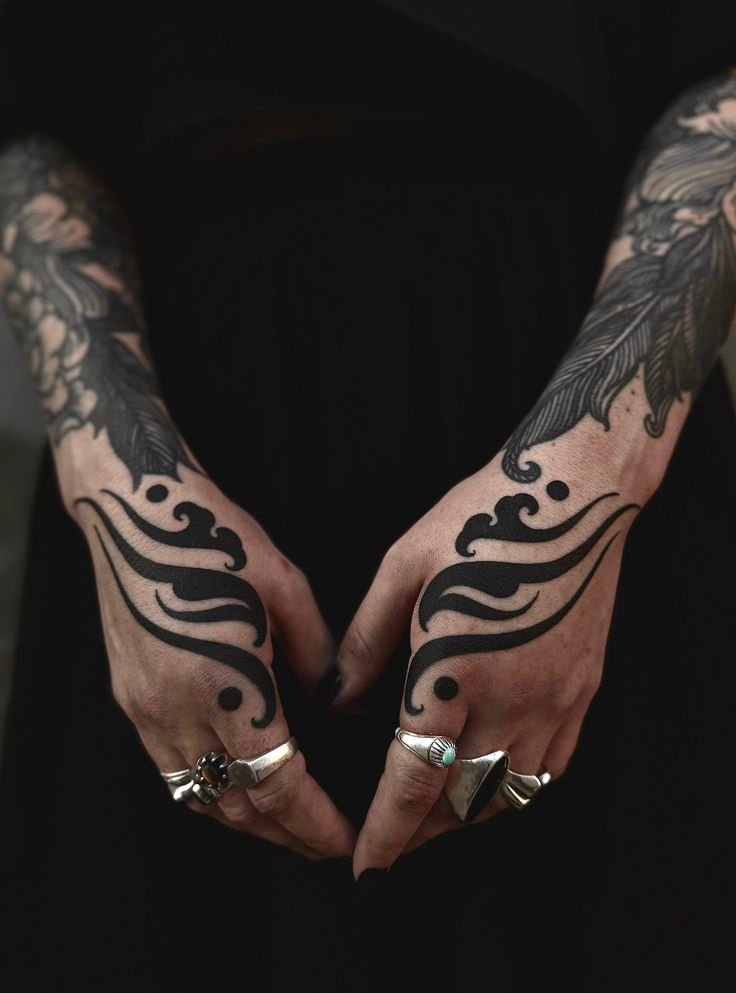
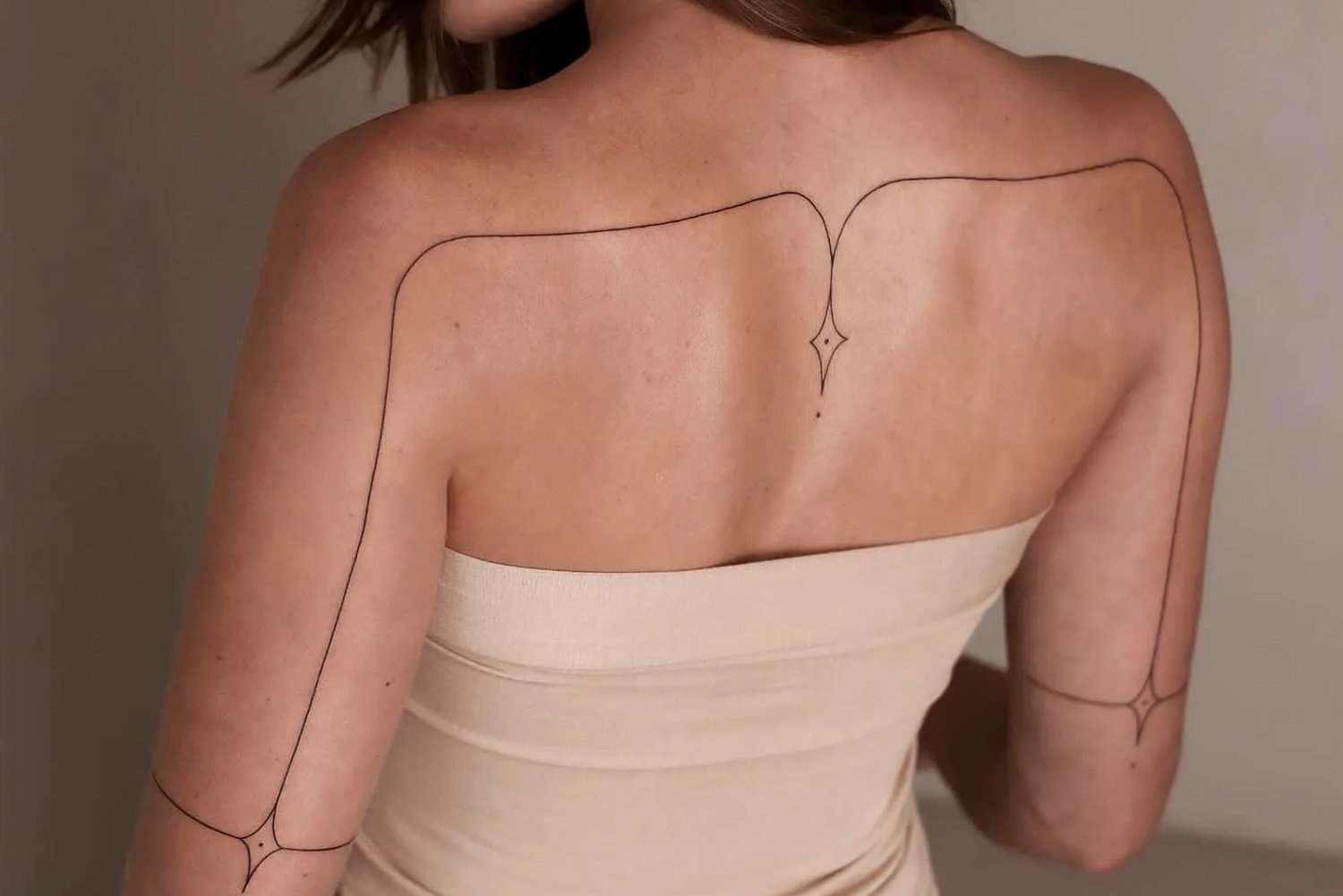
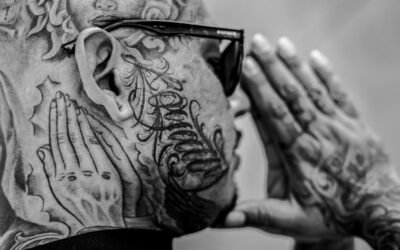
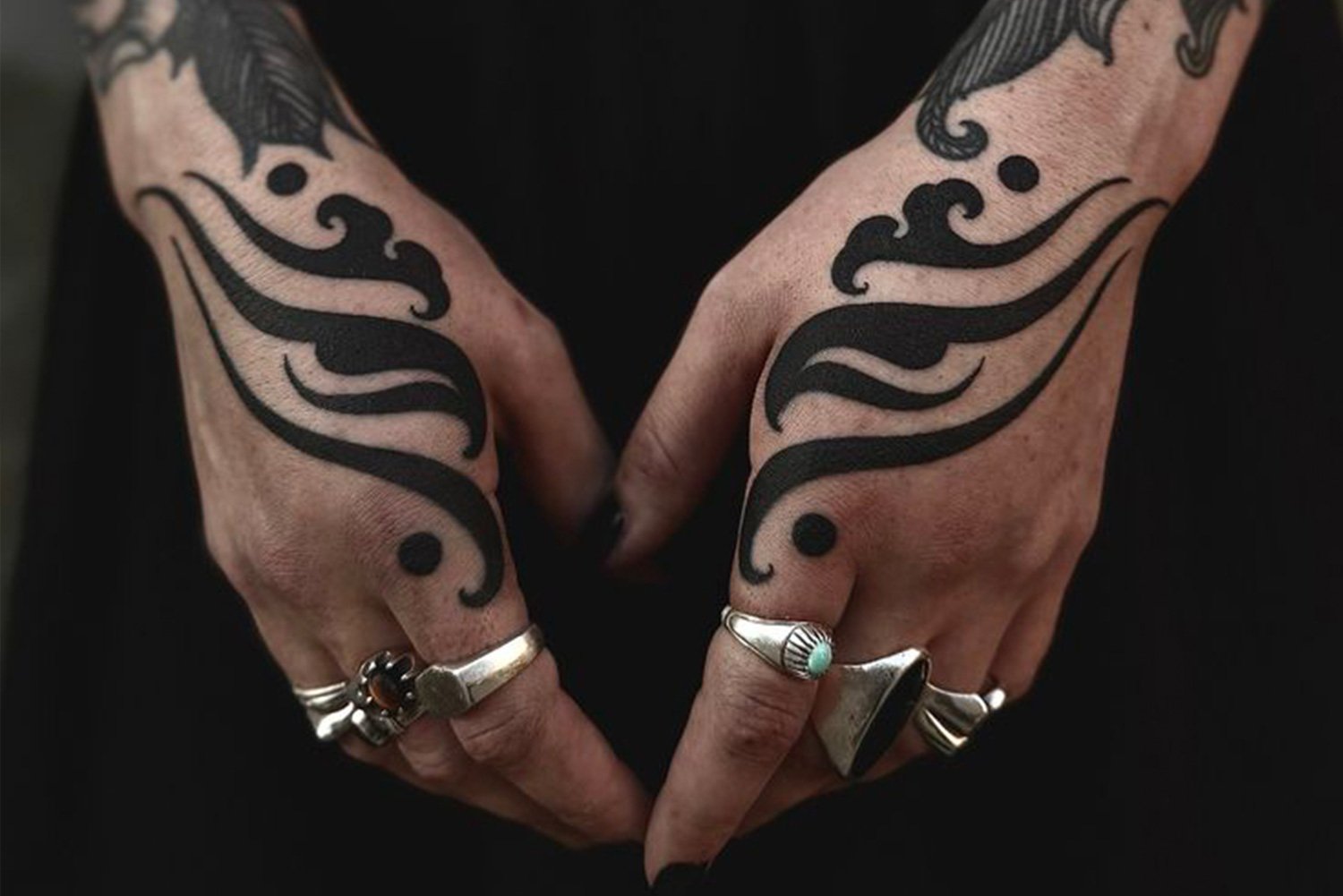
Blackwork, as a named contemporary tattoo style, refers to work done exclusively or predominantly in solid black ink — no colour, no greywash, no diluted tones. The term covers an enormous range of visual approaches, from geometric abstraction to dense figurative illustration, from Polynesian-derived pattern work to large-scale solid coverage, from ornamental mandalas to botanical renderings in the manner of woodcut prints. What holds the category together is the restriction to a single pigment used at full concentration, and the visual consequences of that restriction: high contrast, graphic clarity, and a relationship to light and skin tone that no other palette can produce.

The range is the challenge of writing about blackwork. The term encompasses practices with deep cultural roots (Polynesian tatau, Borneo hand-tapping) and practices with none (geometric abstraction developed in twenty-first-century European studios). It includes work that takes hours of meditative dotwork and work that involves flooding large areas of skin with solid black in a single session. Treating all of this as one style requires some care about what connects the branches and what separates them.

The ancestral traditions

Several Indigenous tattooing traditions work exclusively in black and have done so for centuries or millennia. These are not “blackwork” in the contemporary Western sense — they are complete, culturally embedded practices that predate and are independent of the Western tattoo industry — but they are the historical precedent for the idea that black ink alone can carry a full visual and symbolic vocabulary.

$

Polynesian tatau

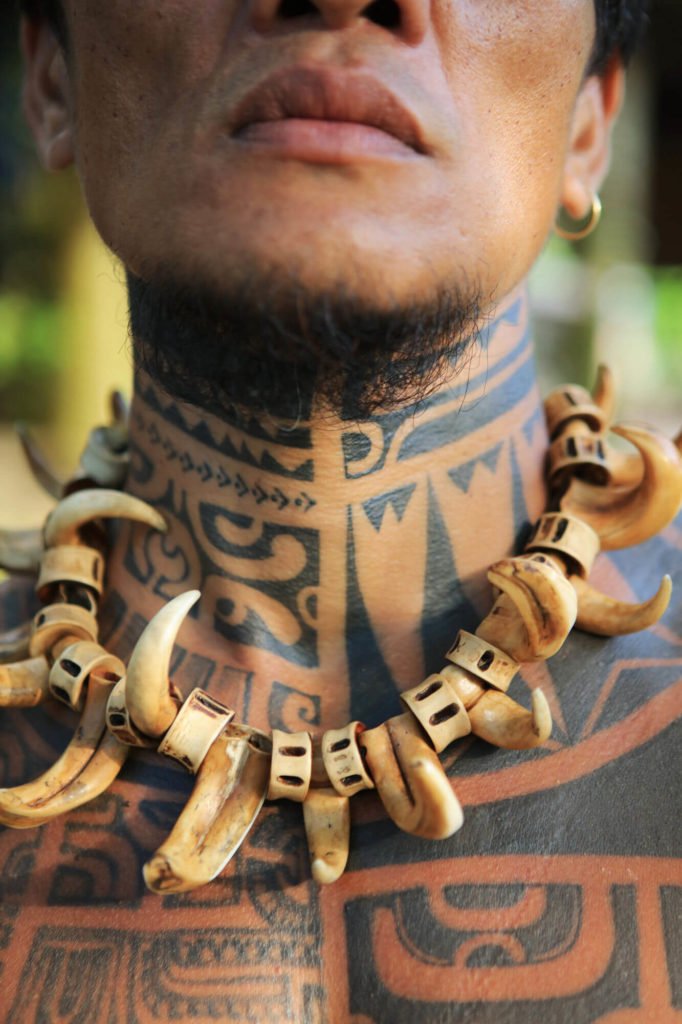
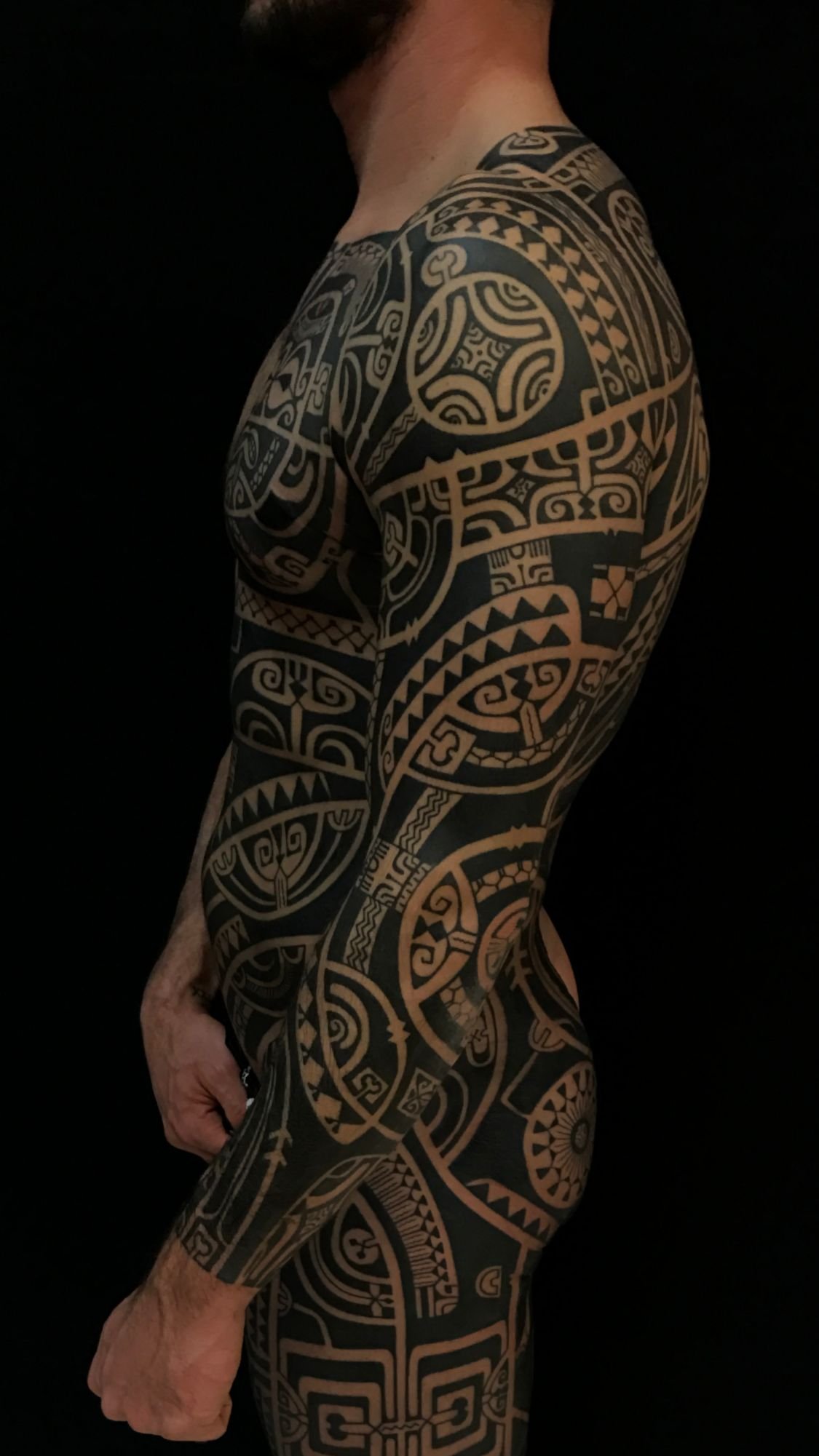
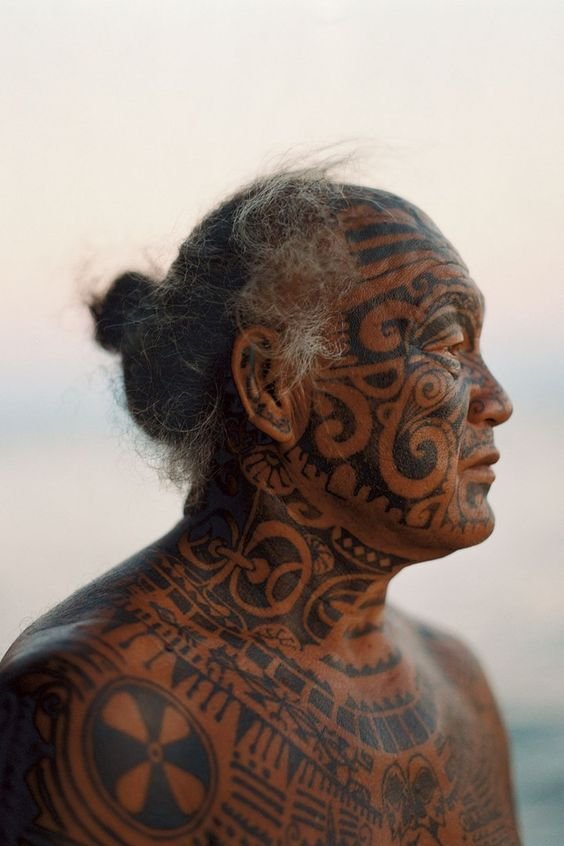
The tattooing traditions of Samoa, Tonga, Fiji, Hawai’i, Aotearoa (New Zealand), the Marquesas, and other Pacific Island nations are among the most sophisticated blackwork traditions in the world. Samoan pe’a (the full male body tattoo) and malu (the female leg tattoo) use dense geometric patterns — lines, arcs, solid fields, and repeated motifs — to cover large areas of the body in compositions that carry specific cultural meaning tied to genealogy, rank, and social role. The Māori tā moko tradition uses curvilinear designs carved into the skin with chisels (uhi) rather than punctured with needles, producing a textured surface distinct from needle-based tattooing. Marquesan tattooing uses dense geometric patterning that can cover the entire body.

These traditions use black pigment exclusively — traditionally made from candlenut soot (lama) mixed with water — and the visual vocabulary is built entirely from pattern, density, and the contrast between black ink and bare skin. The design systems are complex, rule-governed, and culturally specific: the patterns are not decorative choices but carry information about the wearer’s identity, family, achievements, and social position.

$

Bornean hand-tapping

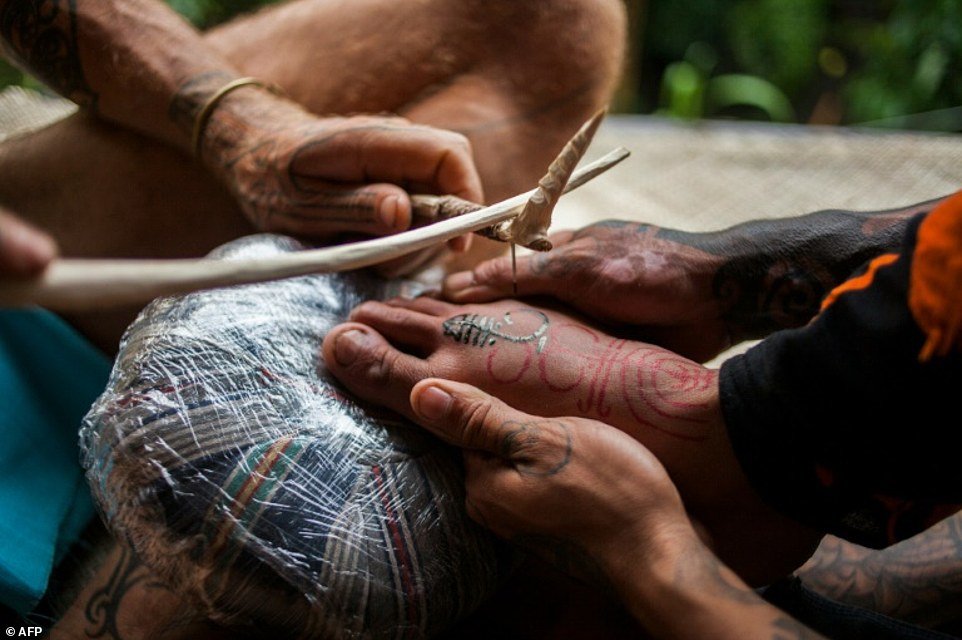
The Dayak peoples of Borneo (Iban, Kayan, Kenyah, and others) have a tattooing tradition that uses black ink applied with a hand-tapping method — a needle or group of needles set in a handle, struck with a mallet to drive the points into the skin. The designs are figurative and geometric, often incorporating stylised plant and animal forms, and they carry specific cultural meanings tied to status, achievement, and spiritual protection.
$

Inuit skin-stitching

Arctic Indigenous peoples, including Inuit and Yupik communities, practised a tattooing method in which a needle threaded with soot-coated sinew or thread was drawn through the skin, leaving a line of pigment beneath the surface. The resulting tattoos — typically on the face, chin, and hands — are rendered in black and carry specific cultural meanings related to identity, life events, and spiritual practice. This tradition is currently experiencing a revival led by Indigenous practitioners.

These traditions are not subcategories of Western blackwork. They are independent art forms with their own histories, rules, and cultural protocols. Including them here is a matter of acknowledging the historical depth of black-ink-only tattooing, and of being clear that the contemporary Western style called “blackwork” exists within a much longer global history of working in black. Artists and clients drawing on these traditions should understand the cultural context and approach the imagery with the respect that any borrowed cultural material demands.
The Western blackwork development

Contemporary Western blackwork emerged gradually through the 1990s and 2000s, consolidating as a recognised style category by roughly 2010. Several influences converged.

$

The tribal movement

The most direct precursor was the “tribal” tattoo trend of the 1990s, which drew — sometimes respectfully, often loosely — on Polynesian, Bornean, and other Indigenous design traditions. Artists like Leo Zulueta, who studied Bornean and Filipino tattooing and is often credited with popularising the term “tribal” in the American tattoo context, and Alex Binnie, who developed a bold geometric style at Into You in London, helped establish black pattern work as a serious practice within Western tattooing. The 1990s tribal movement produced a great deal of derivative, culturally unmoored work (the generic “tribal armband” is the most obvious example), but it also introduced the Western tattoo world to the idea that dense black patterning on skin could be a complete aesthetic — that colour was not a necessity.
$

Dotwork & sacred geometry

In the 2000s and 2010s, a generation of artists developed a blackwork vocabulary built from geometric forms — mandalas, tessellations, polyhedra, and patterns drawn from Islamic geometry, Hindu and Buddhist ornamental traditions, and mathematical structures. The work was done in black ink using dotwork (stipple) technique, fine line, or solid fill, and it drew on visual sources outside the tattoo tradition — architectural ornament, textile design, Op Art, and the broader Western interest in “sacred geometry” (a term that covers a range of traditions from Platonic solids to the Flower of Life pattern). Artists including Thomas Hooper, Chaim Machlev (DotsToLines), and Roxx (of 2Spirit Tattoo in San Francisco, later Berlin) were central to this development.
$

Ornamental blackwork

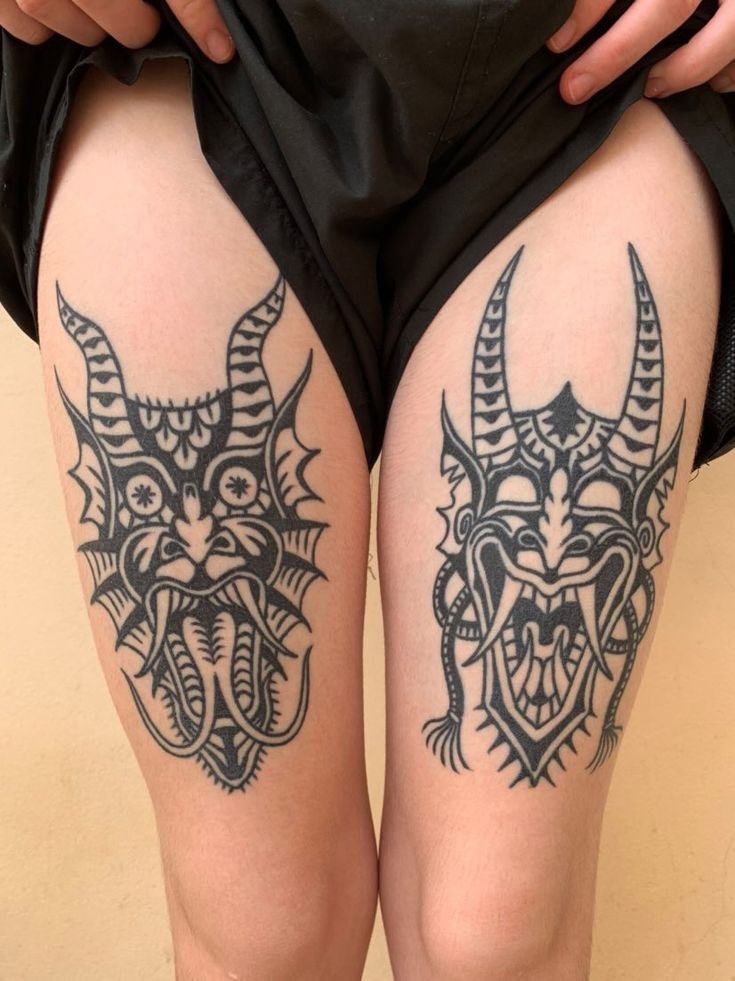
Closely related to the geometric branch, ornamental blackwork draws on specific decorative traditions — Indian mehndi patterns, Victorian lace, art nouveau scrollwork, Moorish tile geometry, Eastern European folk motifs — and renders them on skin in solid black. The result often resembles a piece of decorative art applied to the body, and the branch has a strong European presence, particularly in studios in London, Berlin, Barcelona, and Amsterdam.
$

Heavy blackwork & blackout

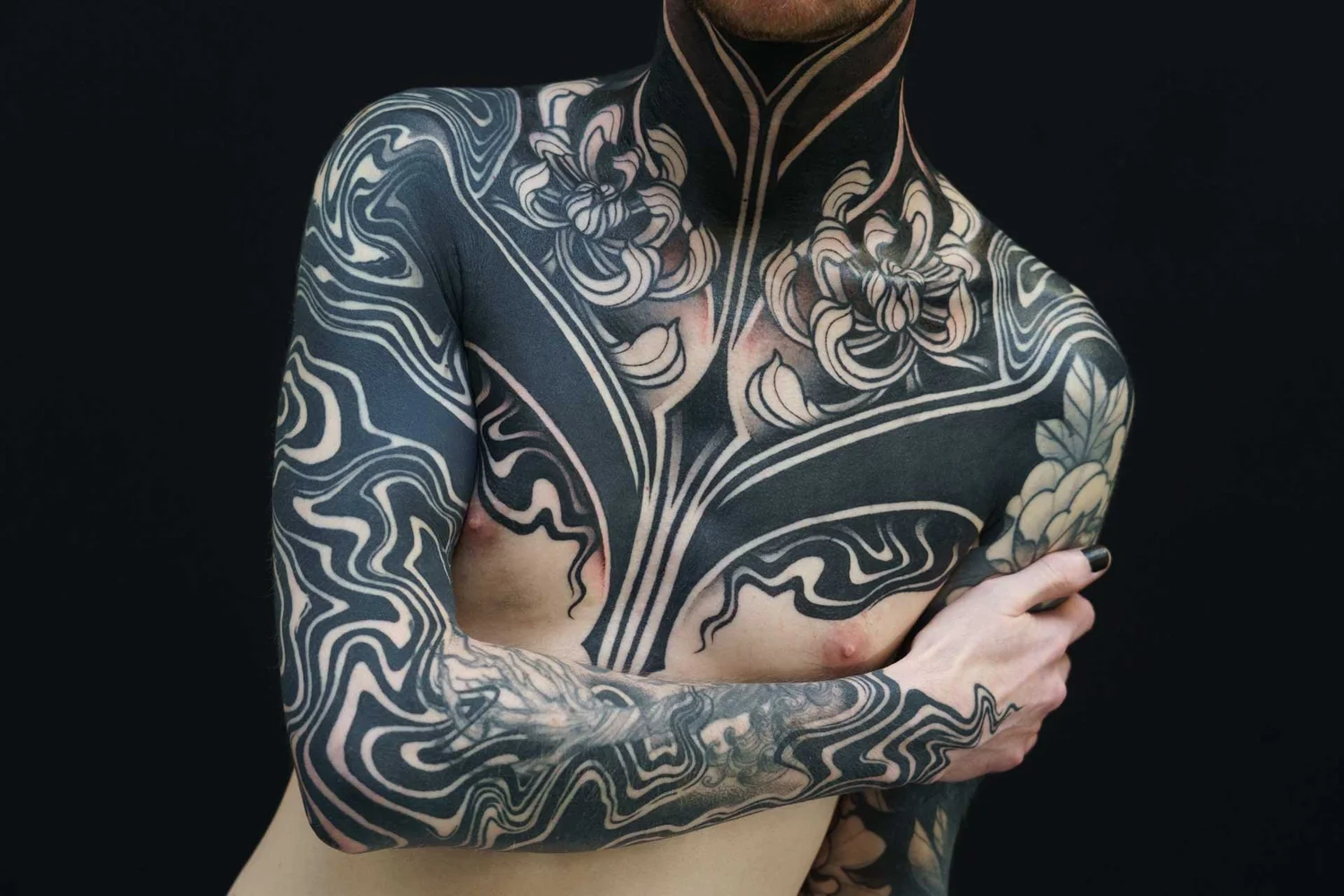
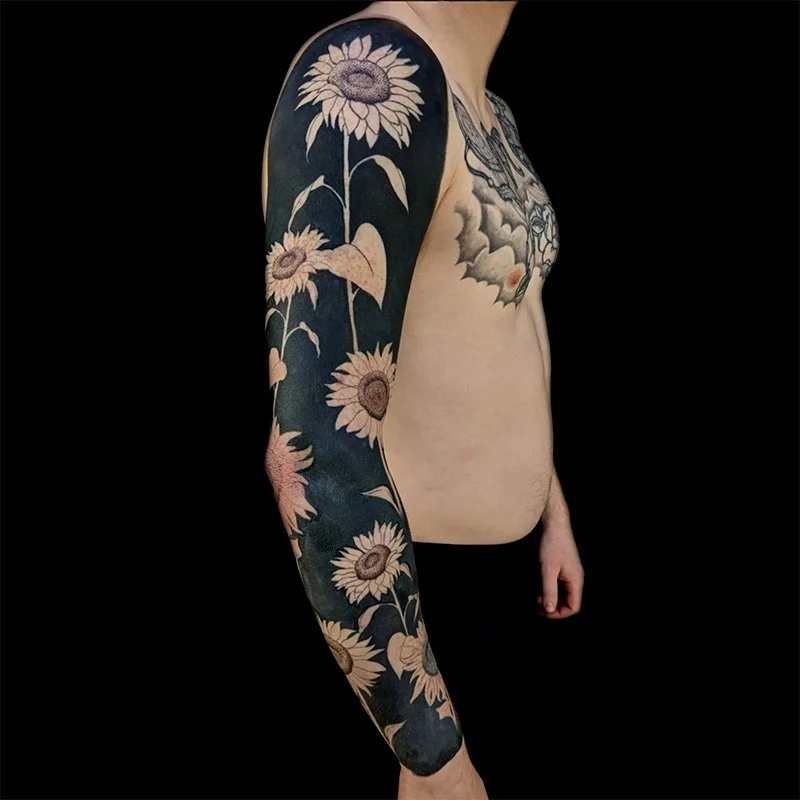
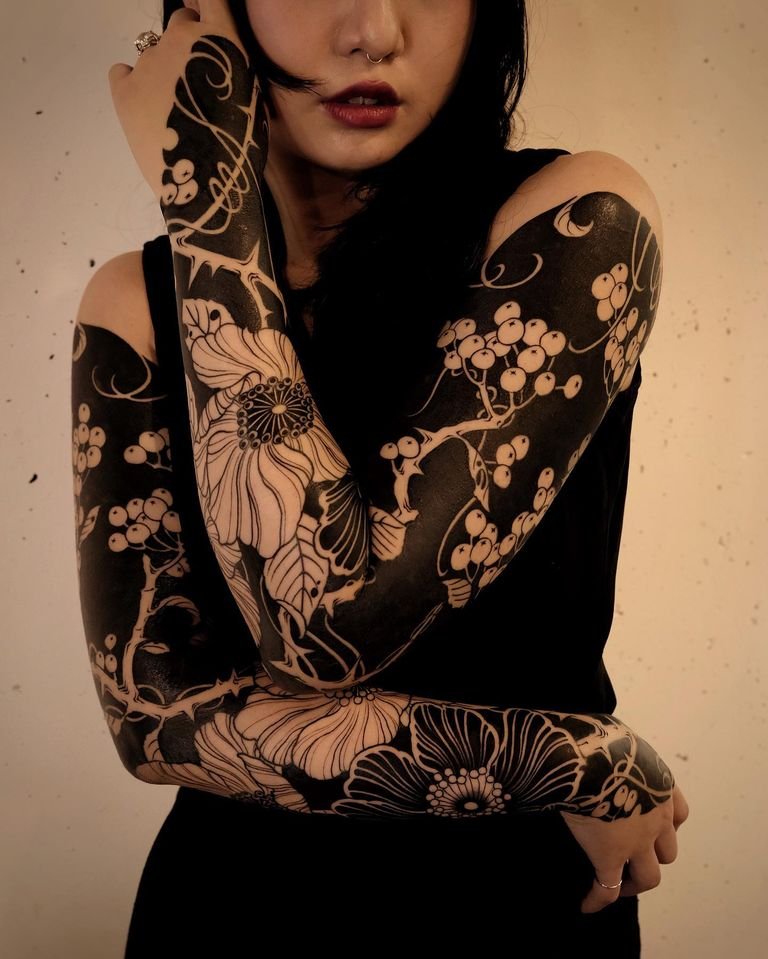
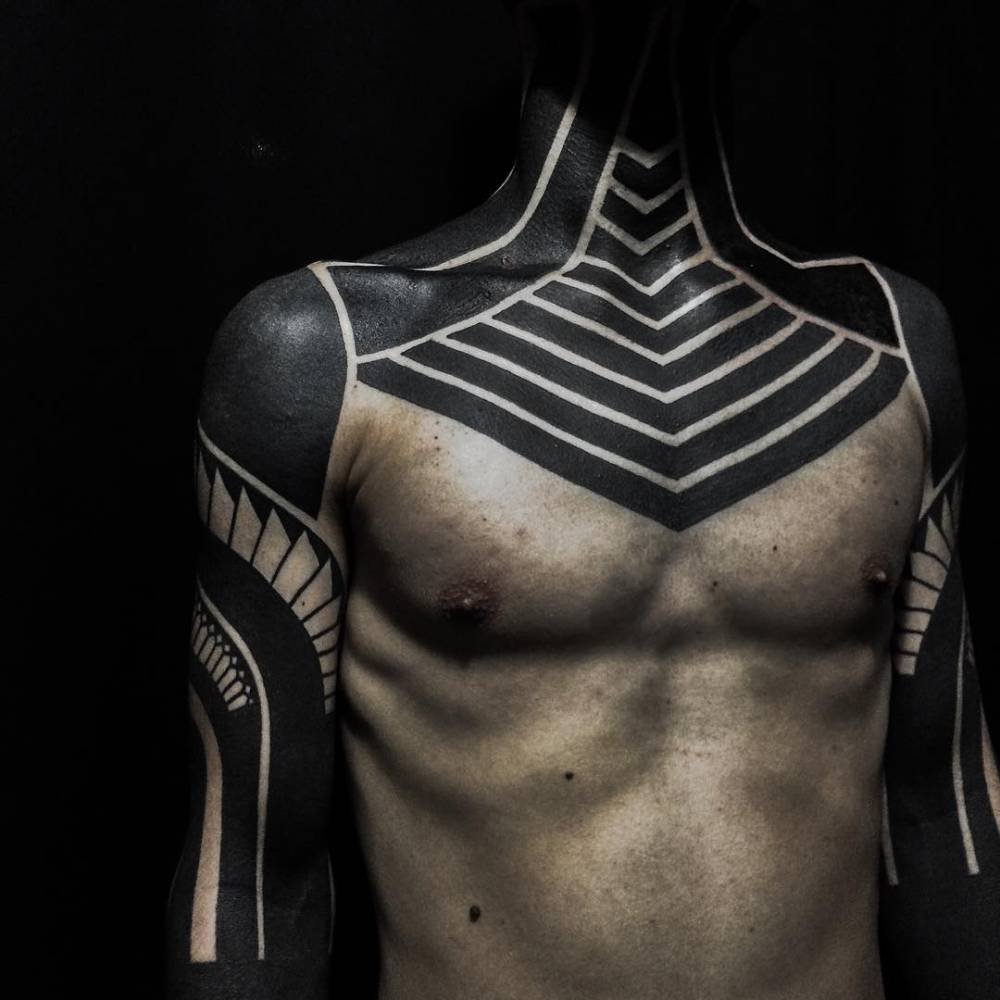
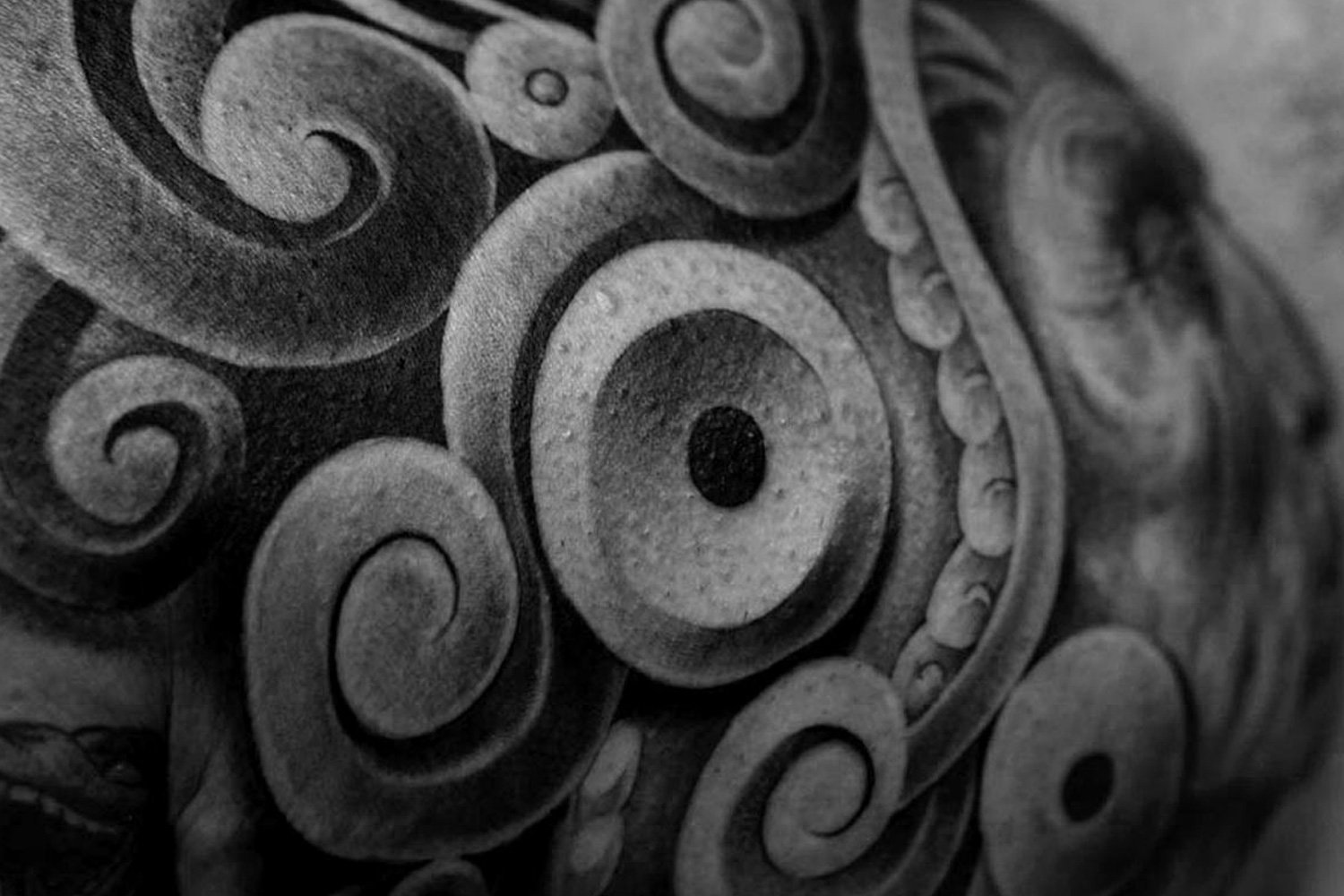
At the dense end of the spectrum, some artists began working with large fields of solid black — entire limbs, torsos, or sections of the body filled with unbroken black ink. This practice, sometimes called “blackout” tattooing, produces a visual effect unlike any other tattoo style: the skin becomes a black surface, and the unmarked skin around or within the blackwork becomes the positive space. The approach is connected to the cover-up tradition (large black fields can effectively conceal older tattoos) and to an aesthetic that treats the body as a sculptural surface to be reshaped with pigment. Artists including Gakkin (Kyoto/Amsterdam) and Chester Lee (Singapore) developed distinctive approaches to heavy blackwork.
$

Illustrative blackwork

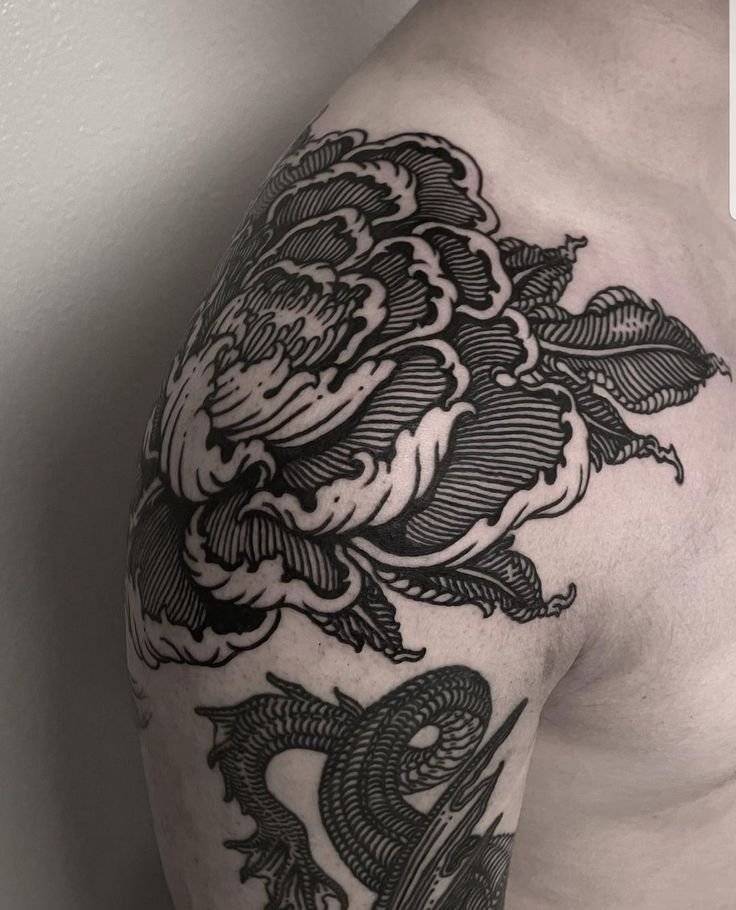
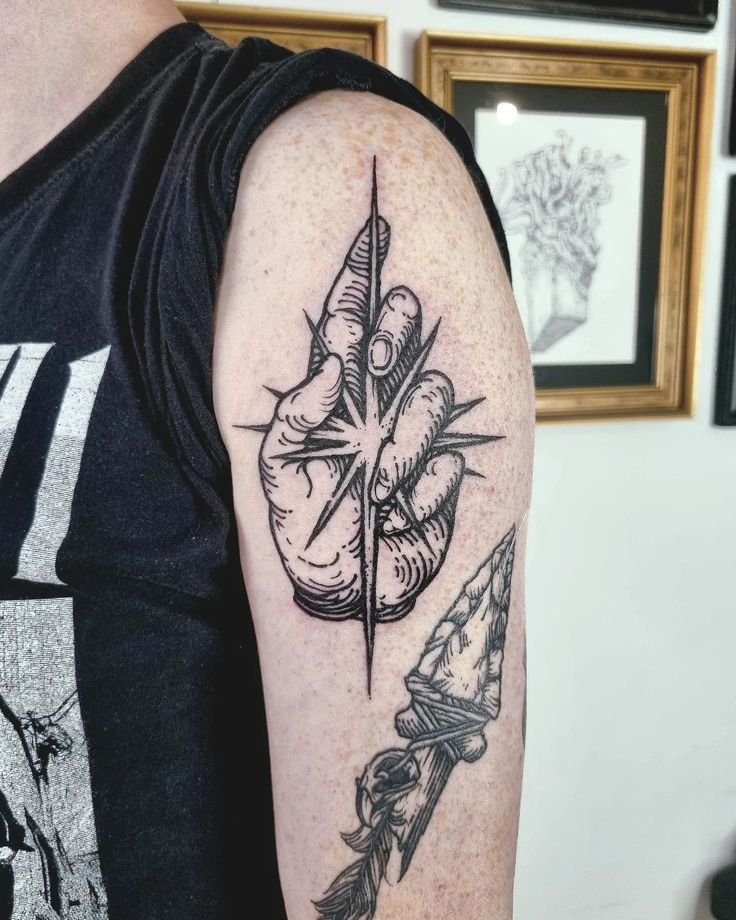
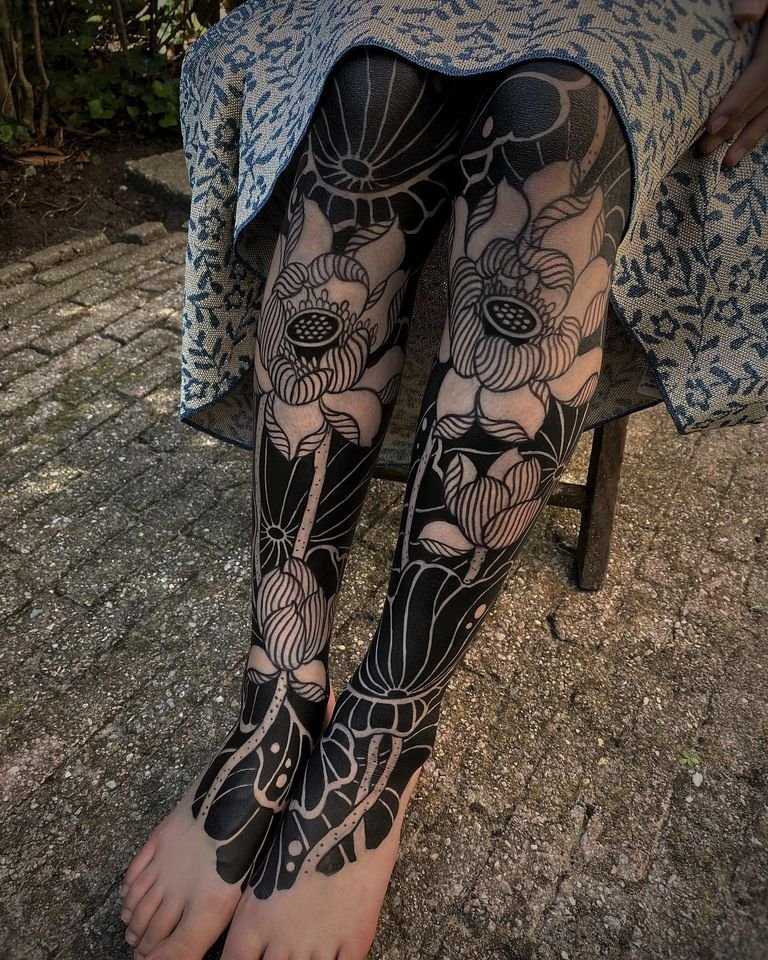
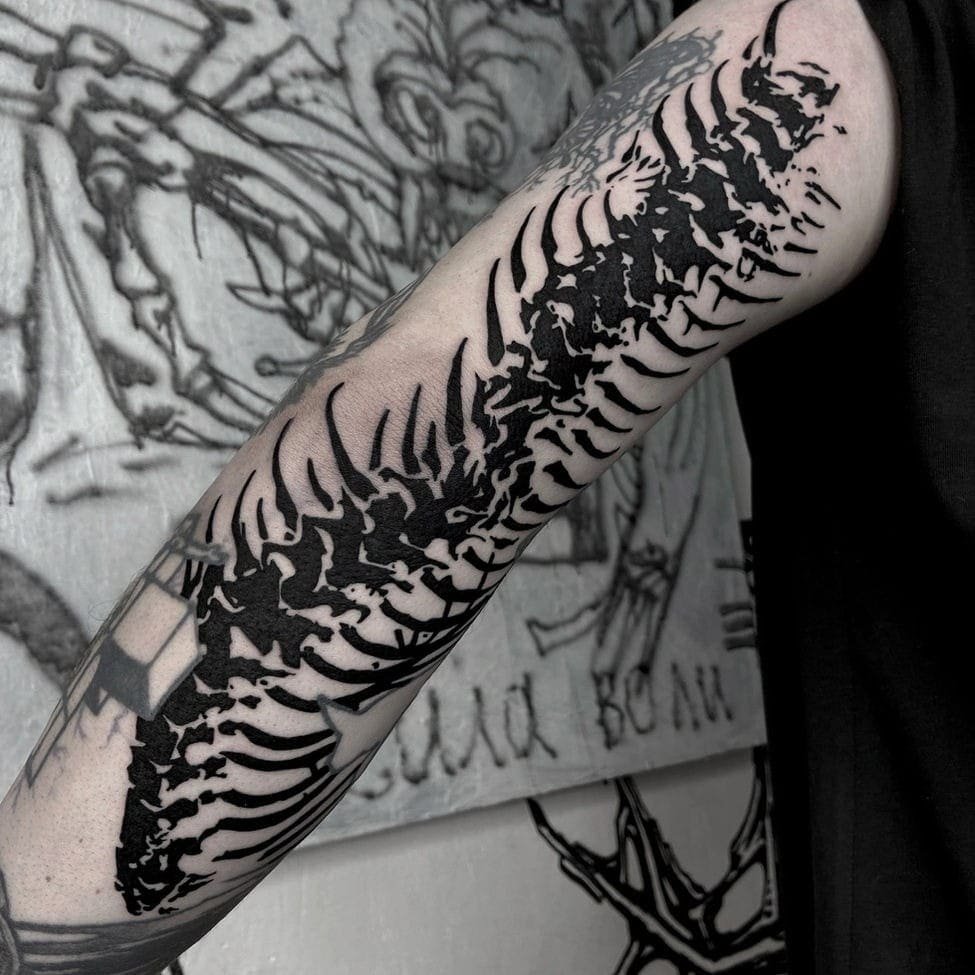
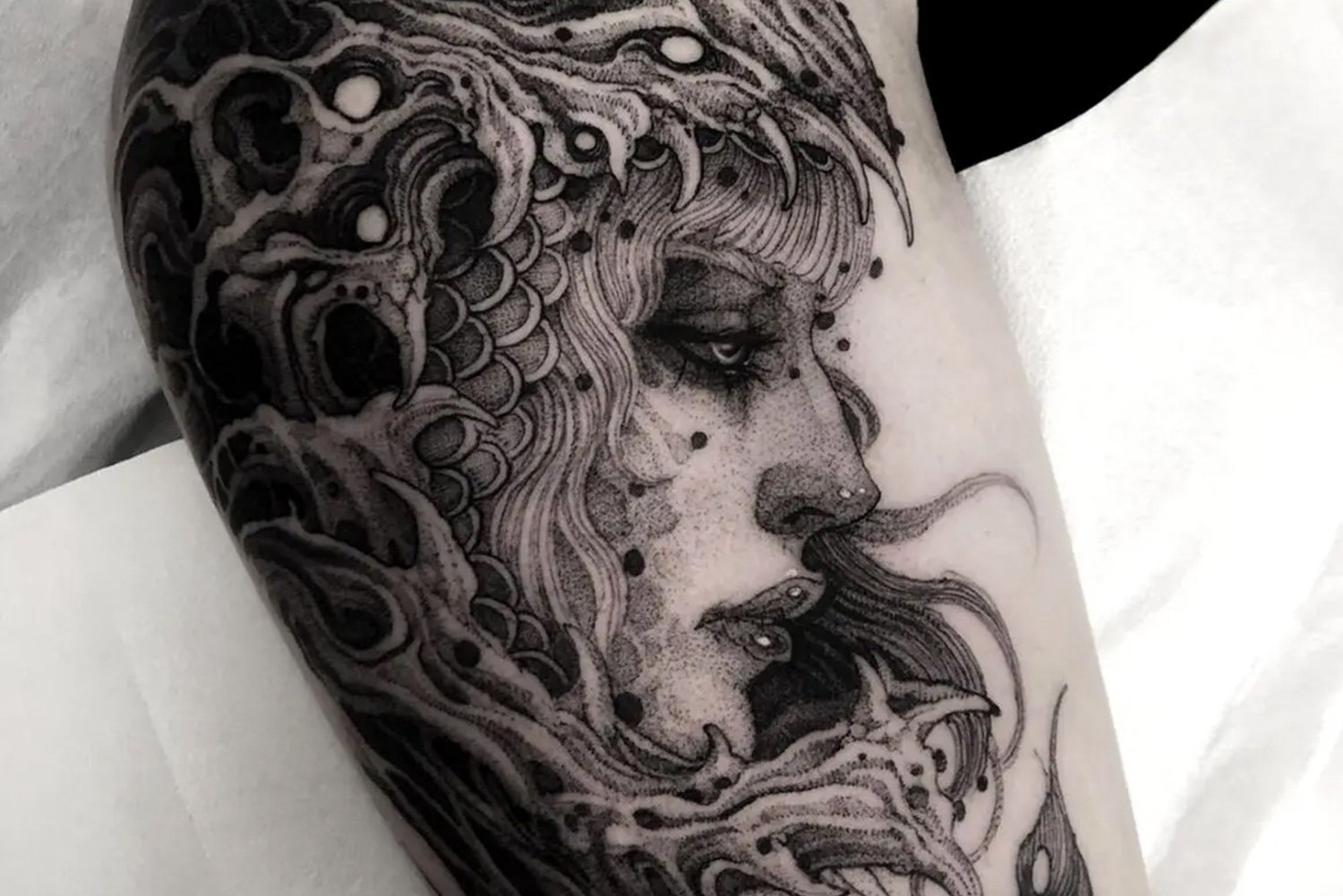
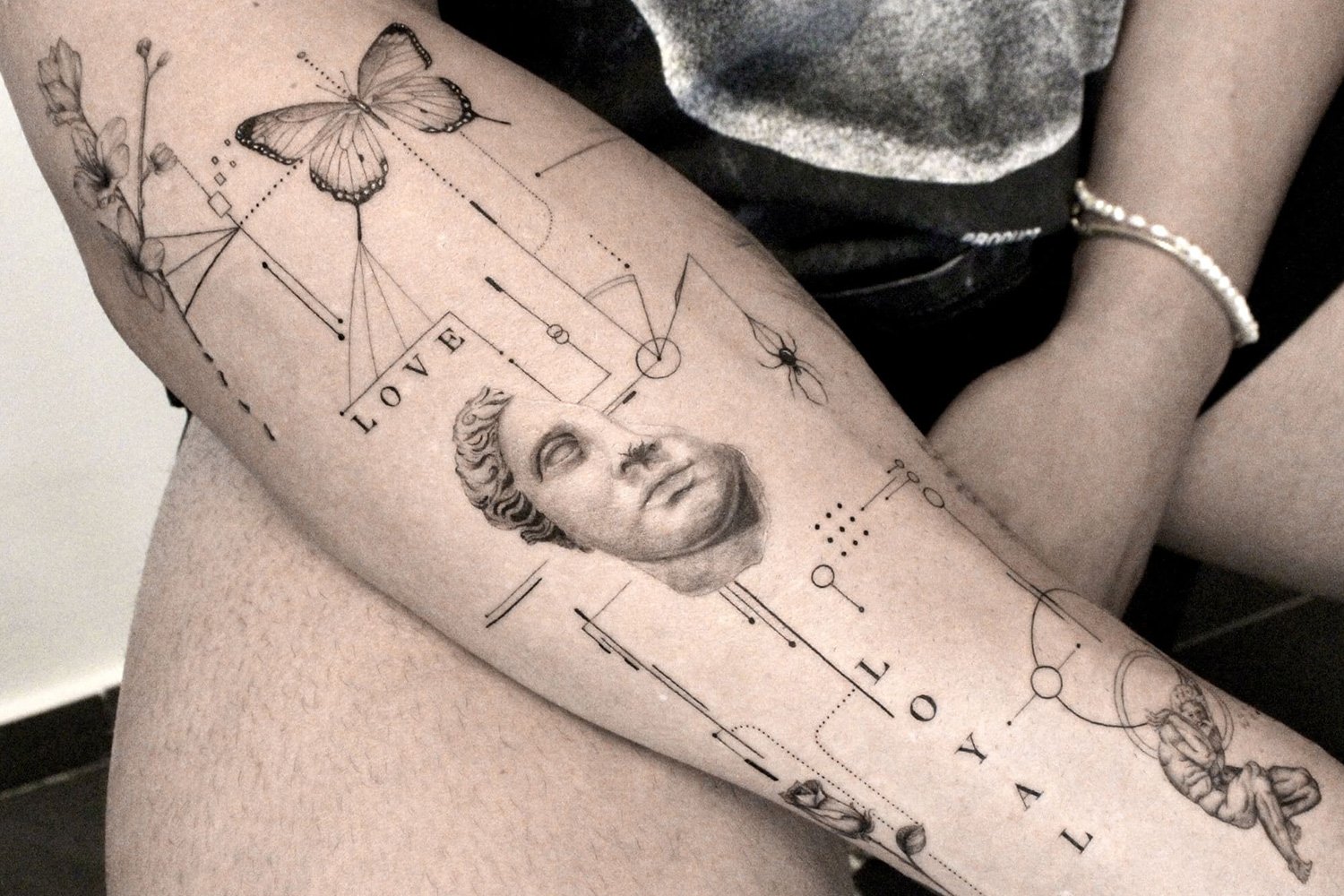
Work that uses black ink exclusively but in a figurative or illustrative mode — botanical drawings, anatomical renderings, animal portraits, literary and narrative illustration — rendered in the manner of woodcut, engraving, or pen-and-ink drawing. The visual reference is to print traditions rather than to pattern traditions, and the result looks like a page from a book transferred to skin. Artists including Pony Reinhardt, Nomi Chi, and Suflanda developed recognisable practices in this branch.

What connects the branches

The branches of blackwork are visually diverse, but they share a set of underlying principles that justify grouping them under a single term.
Z

Black ink only

The defining constraint. No colour, no greywash dilution. Every tonal value in the piece is produced either by the density of the ink deposit (solid black versus stippled or spaced marks) or by the ratio of black to bare skin. This constraint is what gives blackwork its graphic intensity — the contrast range is limited to two values (black and skin), and the visual effect depends entirely on how those two values are arranged.
Z

Skin as positive space

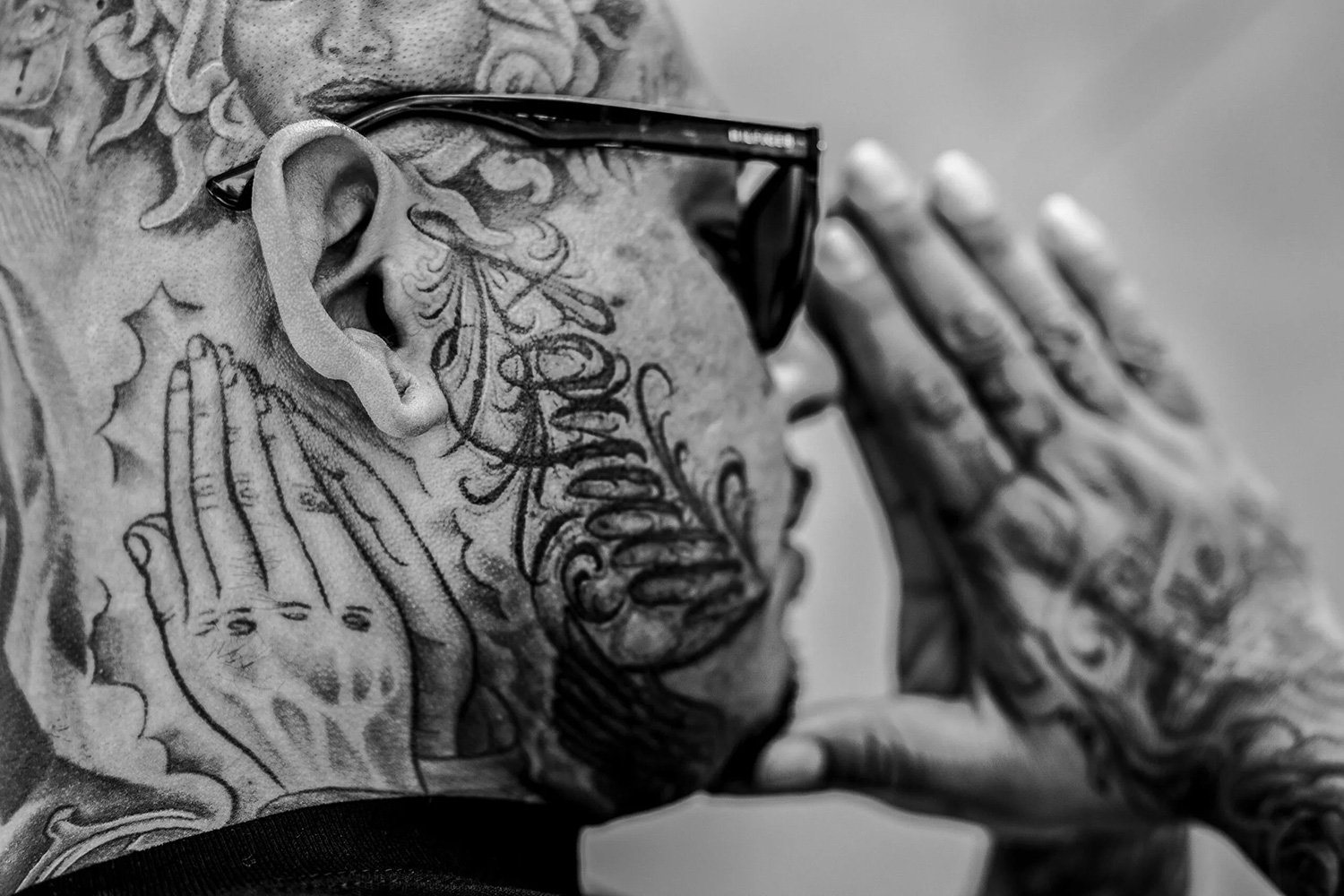
In most tattoo styles, the ink carries the image, and the skin is the background. In blackwork, the relationship is often reversed or equalised — the bare skin becomes as much a part of the design as the ink. In geometric and ornamental work, the skin between the black elements is a deliberate compositional choice. In heavy blackwork, the unmarked skin is the drawing, defined by the surrounding black. This reversal is one of the most distinctive visual properties of the style.
Z

Graphic clarity

Because there is no colour modulation and no greywash gradient, blackwork designs must read through their structure — through line, shape, pattern, density, and composition. The result is work that tends to be highly legible at a distance, and that retains its visual identity as it ages, because there are no subtle tonal transitions to lose.
Z

Durability

Carbon black is the most stable tattoo pigment available. It does not shift hue. It does not fade as quickly as coloured pigments. A well-executed blackwork piece will hold its visual identity longer than comparable work in any other palette. The practical consequence is that blackwork ages well — the contrast may soften slightly over decades, but the structure survives.

Technical considerations

Blackwork makes specific demands on the artist’s skill, and the demands vary by branch.

$

Solid fill

Flooding a large area of skin with even, consistent black is one of the more difficult technical tasks in tattooing. The ink must be packed densely and uniformly across the entire field — any patchiness, any area where the ink is thinner, will show as a grey spot or a mottled texture against the surrounding solid black. Multiple passes are usually required, and the artist has to manage skin trauma carefully because overworking the skin produces scarring and ink rejection. Large-scale solid blackwork (full sleeves, chest panels, back pieces) is among the most physically demanding work in the profession — demanding for the artist’s endurance and concentration, and demanding for the client’s pain tolerance.
$

Dotwork

Building an image from thousands of individually placed dots requires patience and consistency. Each dot must be placed at the correct depth, with consistent ink density and spacing. The spacing determines the tonal value — closely spaced dots produce a darker tone, widely spaced dots produce a lighter tone. Gradients are created by progressively varying spacing. Errors in dot placement or depth are very difficult to correct, and a dotwork piece with inconsistent dot size or uneven spacing looks messy in a way that the technique cannot disguise.
$

Line consistency

Blackwork line work — particularly in illustrative and ornamental branches — demands the same line consistency as any fine-line tattooing: even weight, even depth, even ink saturation. In blackwork, inconsistent lines are especially visible because there is no colour or shading to distract the eye. A wavering line in a geometric mandala ruins the piece.
$

Symmetry

Geometric and ornamental blackwork is often bilaterally or rotationally symmetrical, and the human eye immediately detects asymmetry in such compositions. Placement on the body — which is itself approximately symmetrical — amplifies the demand. A mandala centred on the sternum must be precisely centred, or it will look wrong every time the wearer looks in a mirror.
$

Skin tone interaction

Blackwork reads differently on different skin tones. On fair skin, the contrast is maximal — the black is stark against the light background. On darker skin, the contrast is reduced, but the graphic quality of the work can be equally strong because the tonal relationship shifts rather than disappearing. On very dark skin, some of the subtler blackwork techniques (light dotwork, fine stipple gradients) may not read as clearly, and artists experienced with darker skin tones adjust their technique and design accordingly. This is a practical consideration, not a limitation — blackwork on dark skin can be striking when the artist understands the specific tonal relationship.

Ageing and longevity

Blackwork is the most durable tattoo style in common practice. Carbon black pigment is chemically inert, UV-resistant, and stable over decades. A solid black field that was well-packed in 2010 will still be a solid black field in 2040, with minimal change. The edges may soften very slightly as the outermost pigment particles migrate, but the interior of a well-executed solid fill holds its density. Dotwork ages with a specific character. Individual dots spread very slightly over time, so a dotwork gradient that was crisp at one year will be marginally softer at ten. The overall effect remains readable, but the finest stipple work — dots at wide spacing, producing the lightest tones — tends to soften more noticeably than dense stipple. Artists who understand this build their dotwork compositions with the ageing behaviour in mind, using slightly larger dots and slightly closer spacing than would be ideal for the fresh piece, knowing that the passage of time will produce the final intended appearance. Illustrative blackwork that relies on fine lines without solid areas ages the way all fine-line work ages — the lines thicken slightly, and the finest details soften. Adding solid black areas to an illustrative composition gives the piece structural anchors that hold their form as the lighter elements shift.

What works on skin and what does not

Scale

Geometric and ornamental blackwork needs room for its patterns to read. A mandala with twenty concentric rings the size of a coin will be a blur in five years. The same design, at the size of a dinner plate, will retain its detail for decades. Solid blackwork and heavy coverage have no upper size limit — whole limbs and torsos are within the scope of the style. Fine illustrative blackwork can work at smaller scales because the visual structure is carried by line and composition rather than by pattern repetition.

Placement

Blackwork holds up well on the same stable body planes that suit every style: upper arm, thigh, back, chest, calf, ribs. It can work on the forearm and lower leg. Hands, fingers, and feet are high-friction, high-exposure areas where solid black can fade unevenly, and dotwork can blur. The sternum, spine, and back of the neck are popular placements for symmetrical geometric pieces and are durable.

Cover-ups

Blackwork — particularly heavy, solid black — is one of the most effective cover-up methods available. A solid black field will conceal almost any underlying tattoo, regardless of the original colours or density. Some artists specialise in blending solid black coverage with ornamental or geometric elements, creating new designs that incorporate the covered areas into a coherent composition.

Choosing a blackwork artist

The quality range is wide, and the branches of the style require different skills.
  • For geometric and ornamental work, look for mathematical precision — clean lines, accurate symmetry, consistent spacing. Check whether the artist works from their own geometric constructions or executes client-supplied designs. Artists with backgrounds in graphic design, architecture, or mathematics often produce the strongest geometric work.
  • For dotwork, check the consistency of the dots across healed pieces — are they uniform in size and spacing? Does the gradient read smoothly? Dotwork is one of the styles where the difference between good and excellent is most visible in healed photographs.
  • For solid blackwork and heavy coverage, check healed pieces for even saturation — no patchiness, no grey spots, no texture inconsistencies. Large-scale solid black is technically demanding, and the healed result is the only honest measure of the artist’s ability.
  • For illustrative blackwork, look for drawing skill — the ability to compose an image, to control line weight, and to create visual depth using only black and skin. A strong illustrative blackwordemonstrate shows evidence of a drawing practice independent of tattooing.
Across all branches, healed photographs — not fresh — are the test. Fresh blackwork always looks striking. The question is whether it holds.

Cultural considerations

The appropriation question applies to blackwork more directly than to most other styles, because the most developed black-ink-only traditions in the world belong to specific Indigenous cultures — Polynesian, Bornean, Inuit, Filipino — with specific rules about who can wear which patterns and under what circumstances. A Western artist working in geometric abstraction or illustrative blackwork is drawing on a different set of references (mathematical geometry, European ornament, print illustration) and is generally on solid cultural ground. An artist or client borrowing specific motifs from Samoan pe’a or Māori tā moko is entering territory that belongs to those communities and should be approached with the same care that applies to any culturally owned imagery. The distinction is between pattern traditions that carry specific cultural meaning (Polynesian, Bornean, Inuit — where the designs encode identity, genealogy, and status) and pattern traditions that are broadly shared or historically diffused (Islamic geometric tiling, Hindu mandala forms, Victorian lace, mathematical tessellation). Using the first without a cultural connection is appropriation. Using the second is participation in a shared visual heritage. The line between the two is not always sharp, and when it is not, asking is better than assuming.

Blackwork nowadays

Blackwork has grown steadily over the past fifteen years and shows no signs of contracting. The style appeals to clients who want tattoos with strong graphic presence, to clients who want large-scale coverage, to clients seeking cover-ups, and to clients drawn to the meditative quality of dotwork and geometric patterns. The fact that blackwork ages better than any coloured style gives it a practical advantage that compounds over time — clients with blackwork from ten or fifteen years ago can see the durability for themselves. The most interesting current work is coming from artists who combine branches — illustrative composition with geometric framing, dotwork gradients within solid black fields, and ornamental patterning integrated with figurative elements. These hybrid approaches are producing work that is new and that could not have been predicted from the branches individually. For a client considering blackwork, the practical situation is strong: the artist base is deep, the techniques are mature, the pigment is the most stable available, and enough work has aged a decade or more to give a reliable preview of long-term results. The main decision is which branch of the style serves the client’s intention, and finding an artist who works in that branch at a level worth committing to.

Sources & further reading

  • Lars Krutak, Spiritual Skin: Magical Tattoos and Scarification. Edition Reuss, 2012.
  • Lars Krutak, Tattoo Traditions of Native North America: Ancient and Contemporary Expressions of Identity. LM Publishers, 2014.
  • Lars Krutak and Aaron Deter-Wolf (eds.), Ancient Ink: The Archaeology of Tattooing. University of Washington Press, 2017.
  • Tricia Allen, Tattoo Traditions of Hawai’i. Mutual Publishing, 2006.
  • Sean Mallon, Tatau: A History of Sāmoan Tattooing. Te Papa Press, 2002.
  • Sean Mallon and Sébastien Galliot, Tatau: Sāmoan Tattoo, New Zealand Art, Global Culture. Te Papa Press, 2018.
  • Ngahuia Te Awekotuku with Linda Waimarie Nikora, Mau Moko: The World of Māori Tattoo. Penguin New Zealand, 2007.
  • Alfred Gell, Wrapping in Images: Tattooing in Polynesia. Clarendon Press, 1993.
  • Anna Felicity Friedman, The World Atlas of Tattoo. Yale University Press, 2015.
  • Matt Lodder, Painted People: Humanity in 21 Tattoos. Harper, 2024.
  • Margo DeMello, Bodies of Inscription: A Cultural History of the Modern Tattoo Community. Duke University Press, 2000.
  • Nick Schonberger and Rob Kingston, Forever: The New Tattoo. Gestalten, 2012.
  • Steve Gilbert, Tattoo History: A Source Book. Juno Books, 2000.