Related Posts

Black and grey
One ink, full range
Take a single pigment — carbon black — and dilute it in graduated steps. At full concentration, it is the darkest mark a tattoo machine can make. Cut with distilled water, it becomes a mid-grey. Cut further, it approaches a wash so faint that it barely tints the skin. Between those extremes lies a complete tonal range: enough to render a face, a landscape, a flower petal catching light, a skull receding into shadow. Black-and-grey tattooing is built on the discovery that you do not need colour to produce a full image on skin. You need control over a single pigment at different concentrations, and the skill to place each tone where it belongs.
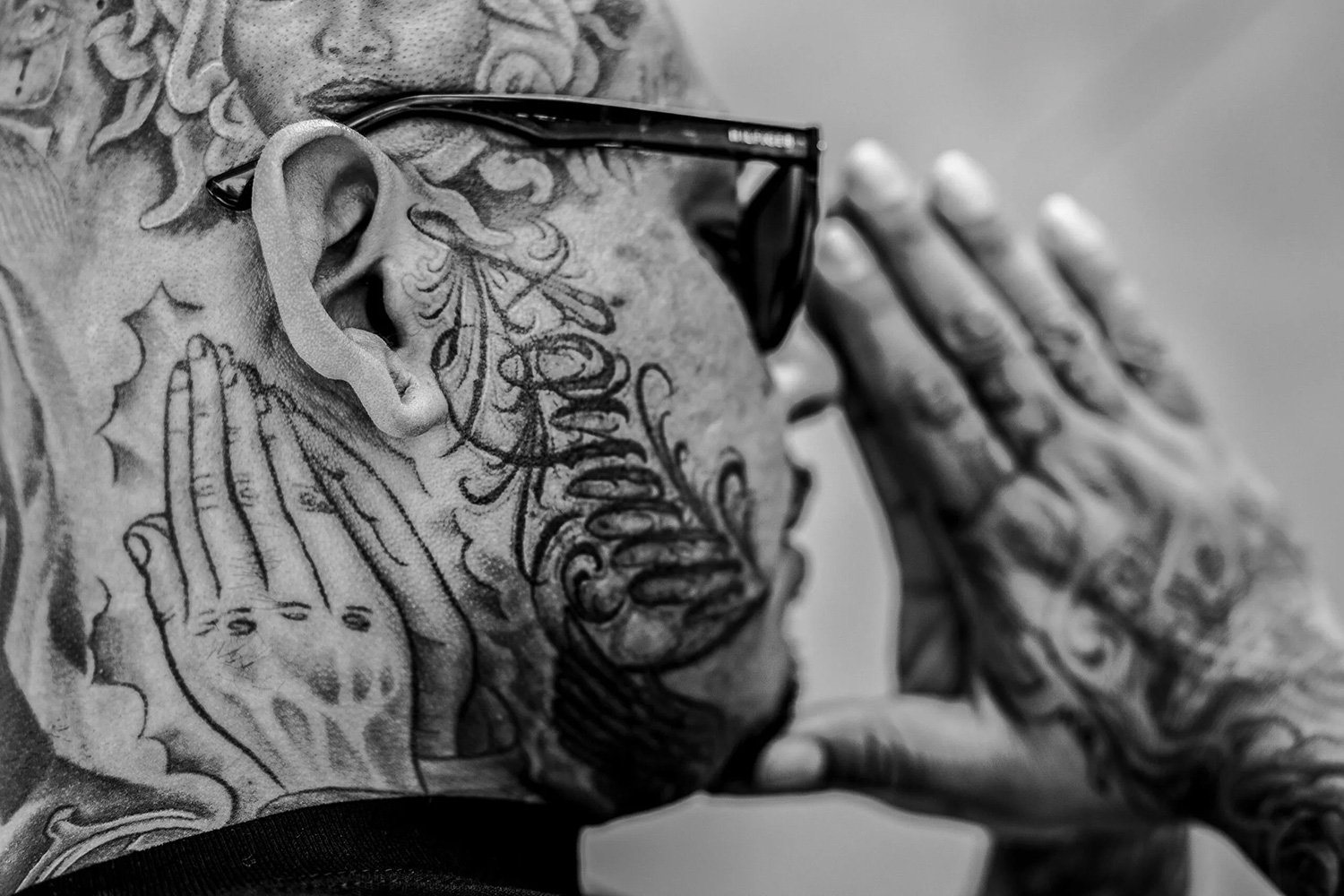
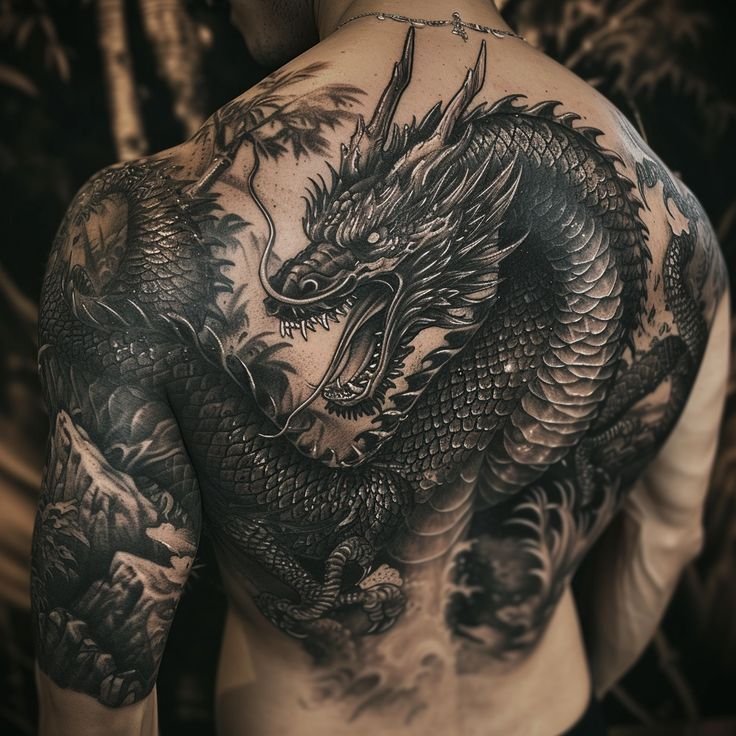
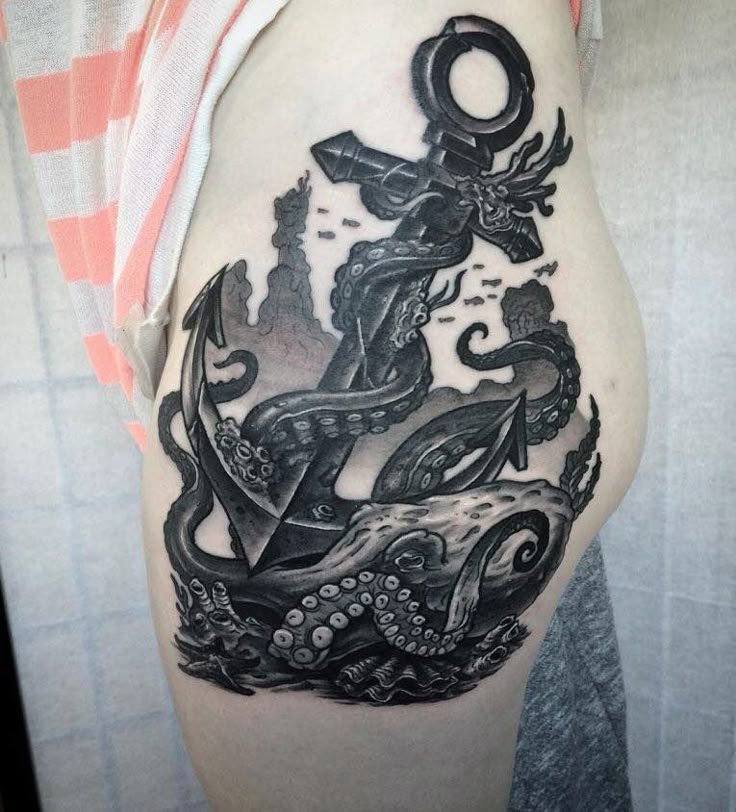
This sounds simple. It is one of the most technically demanding disciplines in tattooing, and the style that has produced the broadest range of applications from a single technical foundation. The same greywash method that renders a Virgin of Guadalupe on a Chicano client’s chest in East Los Angeles also renders a baroque skull in a London studio, a photorealistic lion on a forearm in Moscow, a fine-line botanical on a wrist in Seoul, and a full horror sleeve in Berlin. The technique is the common thread; the imagery is as varied as tattooing itself.
Where the technique comes from
Black-and-grey tattooing was developed in the California prison system in the 1960s and 70s by incarcerated Mexican-American men. The constraints were absolute: improvised machines built from whatever was available (guitar strings, ballpoint pen parts, small motors), a single ink source (usually soot-based black, sometimes India ink), and no access to the colour pigments, professional equipment, or sterilisation standards of a commercial tattoo shop. The technique of diluting the single available ink to create tonal variation was a creative solution to material poverty, producing a visual language that resembled pencil drawing on paper more than any prior tattoo style.
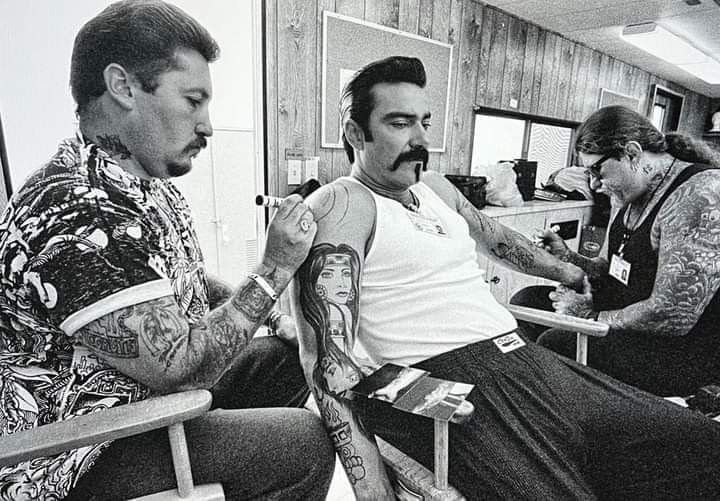
The artists who brought this prison-developed technique into professional shops — most importantly Freddy Negrete, Jack Rudy, and Charlie Cartwright, working together at Good Time Charlie’s Tattooland in East Los Angeles from 1975 — refined it with better equipment and better inks while preserving the fundamental method: single-needle or tight-grouping needles, black ink at varying dilutions, smooth tonal gradients built up through careful layered passes. Mark Mahoney, who later founded Shamrock Social Club in West Hollywood, was instrumental in spreading the aesthetic to a broader, more affluent clientele throughout the 1980s.
By the early 1990s, the technique had separated from its exclusively Chicano cultural context and was being practised by artists with no connection to the community of origin. The cultural history of Chicano tattooing — its imagery, its meanings, its community-specific conventions — remained with the Chicano tradition. The technical method became available to anyone willing to learn it. This separation is important to understand: black-and-grey, as a technique, is a shared tool; Chicano tattooing, as a cultural practice, belongs to the community that produced it.
The greywash method
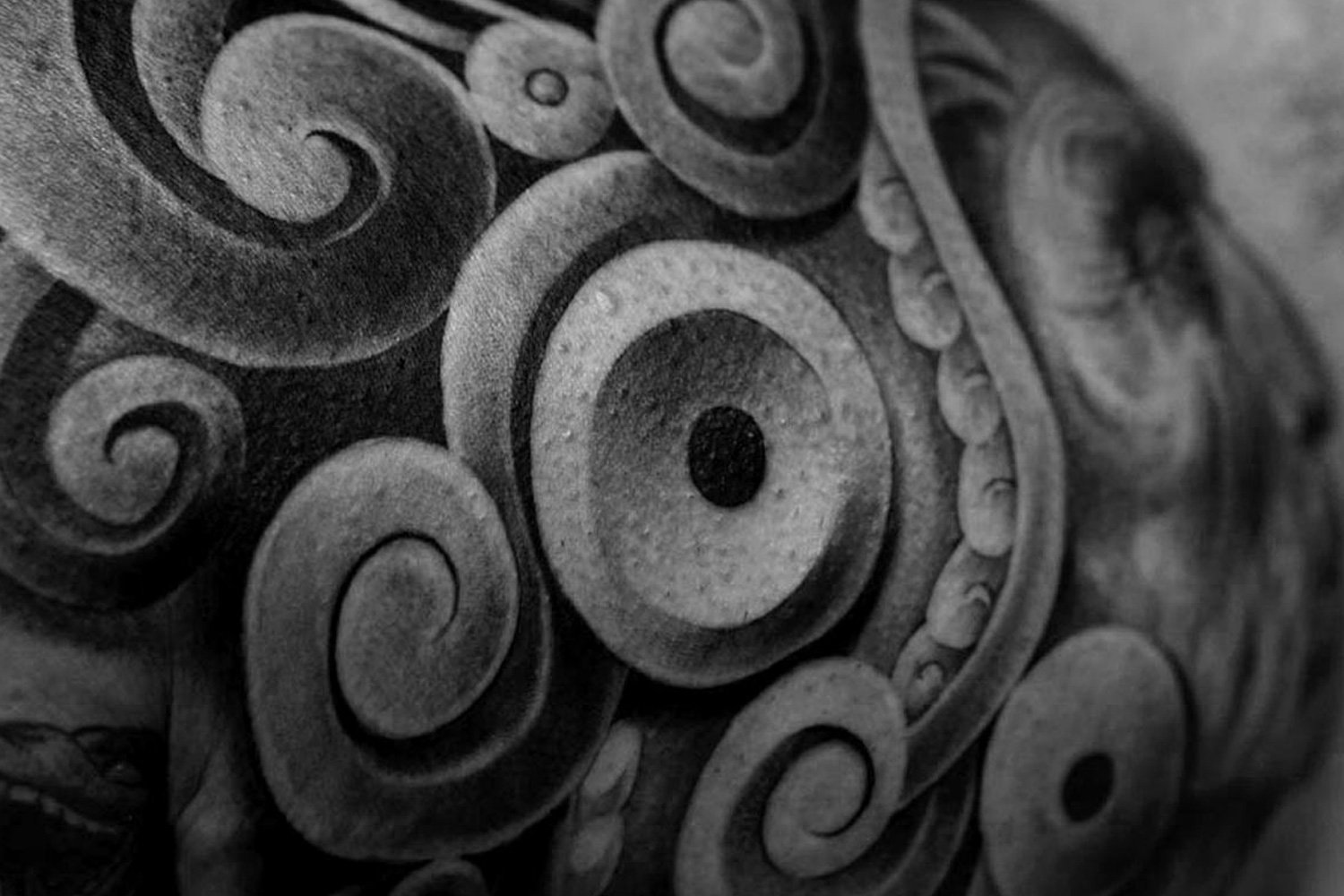
The core of black-and-grey work is the greywash — diluted black ink applied in controlled tonal passages to build a complete value range on skin. The method has several technical components that explain both the style’s strengths and its limitations.
Ink preparation
Most black-and-grey artists work with a set of pre-mixed washes: full black, a dark grey, a mid grey, a light grey, and sometimes one or two additional intermediate steps. The dilution medium is usually distilled water or witch hazel. Some artists pre-mix their washes before a session and work from a set of ink cups arranged dark to light; others mix on the fly, adjusting concentration as they work. The number of distinct wash steps varies by artist — some use three, some use seven or more — and the choice affects the smoothness of the tonal transitions in the finished piece.
Needle configuration
Traditional Chicano black-and-grey was done with a single needle — one needle soldered to the bar, producing the finest possible line and the most precise ink deposit. Contemporary black-and-grey uses a wider range of configurations: single needles and tight round liners (3RL, 5RL) for fine detail and precise tonal work; round shaders (7RS, 9RS, 14RS) for broader tonal fills; magnum configurations (stacked or flat) for large-area shading and smooth gradients. The choice of needle grouping determines the texture of the shading — a single needle produces a stippled, granular tone; a magnum produces a smoother, more continuous wash.
Layering
Greywash shading is built up in passes. The artist lays down a light wash first, allows it to settle, then works progressively darker, adding depth and contrast in subsequent passes. This layered approach is what produces the smooth tonal transitions that define the style. Attempting to achieve the final value in a single pass usually results in overworked skin and uneven healing.
Value mapping
Whip shading and pepper shading
The branches
Black-and-grey has diversified into several distinct applications, each with its own conventions and its own practitioners. The technique is the same; the imagery, the scale, and the cultural context vary.
Chicano black-and-grey
Black-and-grey realism
Dark and horror black-and-grey
Illustrative black-and-grey
Fine-line and micro black-and-grey
Lettering and script
Ornamental and geometric black-and-grey
What black-and-grey does well
The style has structural advantages over colour tattooing that explain why the technique has endured and spread as widely as it has.
Ageing
Black-and-grey ages better than colour work. Carbon black is the most stable tattoo pigment, with the least tendency to shift tone over time. Grey washes, being diluted black, share this stability — a grey that was cool-toned when fresh will still be cool-toned at twenty years. Colour pigments, by contrast, can shift: reds drift toward brown or pink, greens can turn blue-grey, yellows fade. A black-and-grey piece from 1985 that was well-executed will still read clearly as the image it was intended to be. The tones will have softened, some of the lightest washes may have lifted, but the overall structure holds. This is the single most practical argument for the style.
Skin tone compatibility
Black-and-grey works on a wider range of skin tones than colour tattooing does. Colour pigments interact differently with different melanin levels — certain reds, yellows, and light blues that read clearly on fair skin become muddy or invisible on darker skin. Black ink reads on every skin tone, and greywash gradients hold their tonal relationships across the spectrum. This is not to say that black-and-grey looks the same across all skin tones — the available tonal range shifts depending on the skin’s starting value — but it works reliably where colour often does not.
Compositional unity
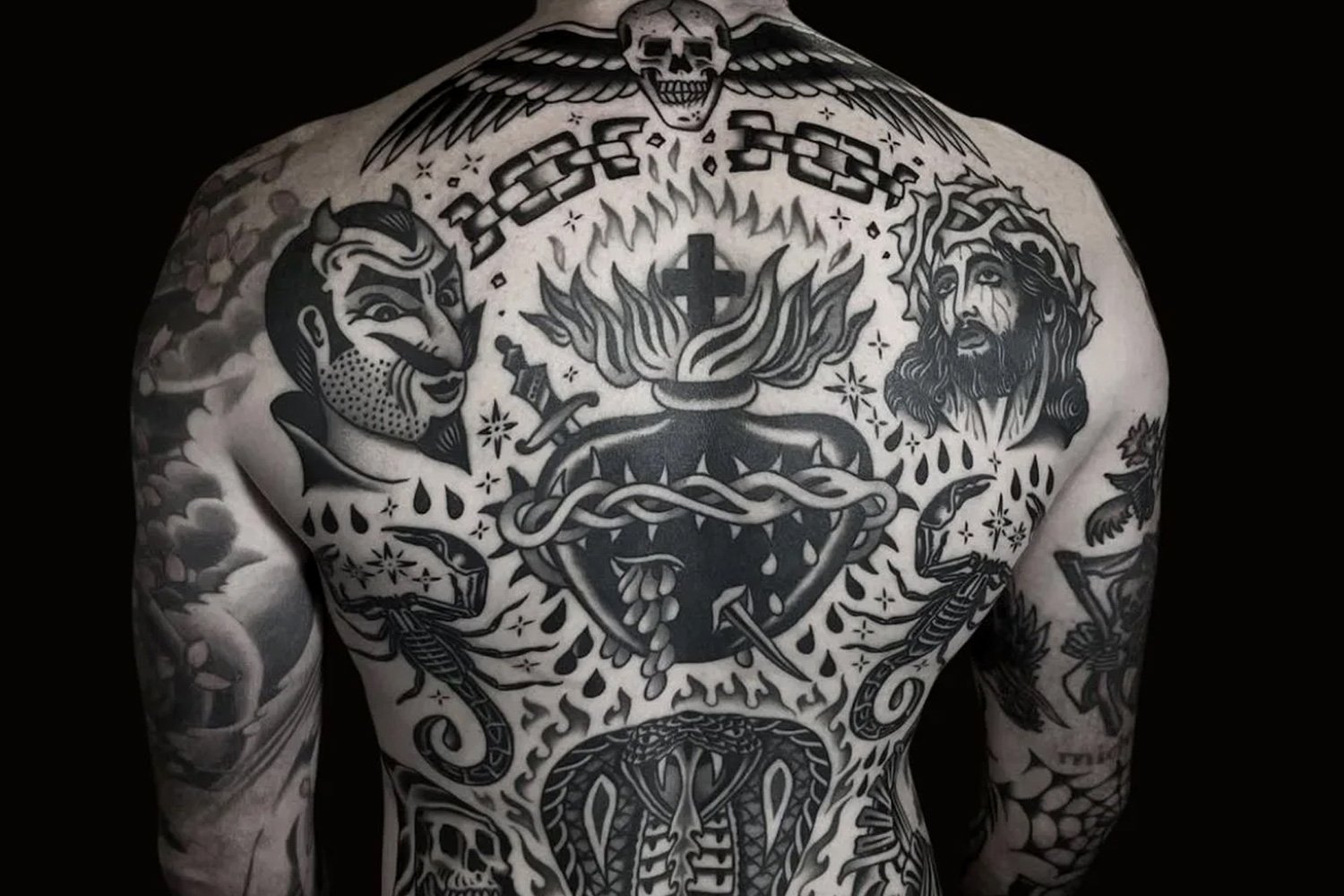
A complex composition in black-and-grey holds together visually in ways that a multi-coloured composition sometimes does not. The absence of hue variation means the eye reads the piece as a unified tonal field rather than as a collection of coloured shapes. This allows for denser, more detailed compositions without the visual noise that competing colours can produce.
Versatility
What black-and-grey does less well
Impact at a distance
A well-saturated colour tattoo can be read from across a room. Black-and-grey, particularly at the lighter end of the tonal range, can lose legibility at a distance. Pieces that sit primarily in mid-greys without strong dark anchoring can read as faded or washed out from a few feet away. Strong value structure — clear darks, clear lights, deliberate midtone placement — mitigates this, but the style as a whole has less immediate visual impact than saturated colour.
Perceived fading
Black-and-grey pieces are frequently described by their owners as “faded” when they are actually holding up well. The expectation set by the fresh tattoo — when the skin is still reacting, and the ink looks its most saturated — is almost always more dramatic than the settled piece. Clients who are not prepared for the settling process can mistake normal healing for degradation.
Light-wash fragility
The lightest tones in a greywash range — the faintest washes, just above bare skin — are the first to disappear over time. An artist who relies heavily on very light washes for large passages of a piece is building in a specific vulnerability. Experienced black-and-grey artists manage this by anchoring their compositions with strong darks and using the lightest washes sparingly or in areas where their eventual fading will not destroy the image.
Subject limitations
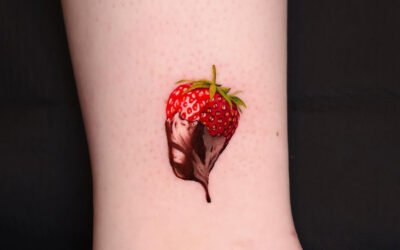
Certain subjects that depend on colour for their identity — tropical fish, certain flowers (sunflowers, poppies), national flags, food — lose a defining quality when rendered in black-and-grey. The technique can render any of these, but the question is whether the monochrome version of the subject still conveys what the client wants it to.
Practical considerations
Scale. Black-and-grey work at the realism or portraiture end of the style needs room to breathe. A portrait smaller than a large palm loses detail rapidly as it heals and ages. Illustrative and ornamental black-and-grey can work at smaller scales, because the visual structure is less dependent on fine tonal detail.
Placement. The same planes that hold colour work hold black-and-grey: upper arm, thigh, calf, chest, back, ribs. The greywash technique is particularly well-suited to the ribs and the inner arm, where the absence of colour keeps the piece from competing with the body’s own visual complexity. Hands, feet, and necks age black-and-grey work as aggressively as they age everything else.
Aftercare. Black-and-grey work heals like any other tattoo, but the lightest shades are most vulnerable to fading during healing. Clients who pick at healing skin, expose the area to the sun before it is fully healed, or neglect moisture can lose light tonal passages that the artist deliberately placed.
Touch-ups. Greywash pieces sometimes benefit from a single touch-up session once they have fully healed (usually six to eight weeks after the initial session). The touch-up reinforces light washes that did not hold and sharpens tonal transitions that softened during healing. Many artists include a touch-up in the original price; others charge separately.
Choosing an artist
The breadth of black-and-grey applications means that choosing an artist requires knowing which branch of the style you want.
A realism client looking at portraits should look for an artist who specialises in portraiture and can show healed work with intact tonal range and recognisable likenesses at the one-year and five-year marks. A client wanting Chicano work should seek an artist embedded in the tradition who understands the imagery and its cultural context. A client looking for illustrative or fine-line black-and-grey work should study portfolios for line quality, compositional intelligence, and evidence that the work holds up at the requested scale.
The common thread across all branches: look at healed photographs. Fresh black-and-grey photographs nearly always look more dramatic than the healed result, because the fresh ink is at its most saturated and the skin is still reacting. The healed image — at six months, at two years, at five — is the real test. Any artist who cannot or will not show healed work is not yet at the level where a client should commit.
Pricing varies widely by branch, by artist reputation, and by region. Chicano specialists in Los Angeles, realism artists in Moscow or Athens, and fine-line artists in Seoul or Barcelona may work in the same technical tradition but operate in very different markets. What is consistent is that the style rewards skill disproportionately — the gap between competent and excellent black-and-grey work is visible immediately and widens with every year the piece spends on skin. Paying for the right artist is the single most consequential decision a client makes.
Sources & further reading
- Freddy Negrete with Steve Jones, Smile Now, Cry Later: Guns, Gangs, and Tattoos — My Life in Black and Grey. Seven Stories Press, 2016.
- Tattoo Nation, dir. Eric Schwartz, 2013.
- Margo DeMello, Bodies of Inscription: A Cultural History of the Modern Tattoo Community. Duke University Press, 2000.
- Anna Felicity Friedman, The World Atlas of Tattoo. Yale University Press, 2015.
- Matt Lodder, Painted People: Humanity in 21 Tattoos. Harper, 2024.
- Clinton R. Sanders, Customising the Body: The Art and Culture of Tattooing. Temple University Press, revised edition 2008.
- Reality tv: Miami Ink (TLC, 2005–2008), LA Ink (TLC, 2007–2011), Ink Master (Spike / Paramount Network, 2012–2020).