about
Tattooing has never been more accessible than it is now. Most cities have several studios; most small towns have at least one working artist. The practice continues even in places where it sits awkwardly with prevailing religious or cultural norms — there are working tattooers and steady clients across the Islamic world, in religiously conservative regions of Europe and the Americas, and in countries where the legal status of the craft is still unsettled. Stigma has receded enough that getting tattooed no longer carries the professional or social cost it did a generation ago. The equipment has caught up, too: pen-style machines and disposable cartridges are now standard, making the work cleaner, safer, and easier to do well. Removal has become widely available and progressively cheaper, which lowers the stakes of changing one’s mind.
What this means in practice is that the person walking into a studio today is doing something familiar and ordinary, with motivations as varied as the studios themselves — a piece of art they fell in love with, a memorial, a private reference, a craft tradition they want to participate in, sometimes nothing more than a good joke. It also means there are now many more people, tattooed or not, who would like to read carefully about what a particular design actually is — where it came from, how it has been used, why it looks the way it does, and what it might mean to wear one. That kind of writing exists in scattered pieces — in academic papers, out-of-print books, the occasional good interview — but rarely in one place, and rarely written by someone with a foot in both the craft and the research.
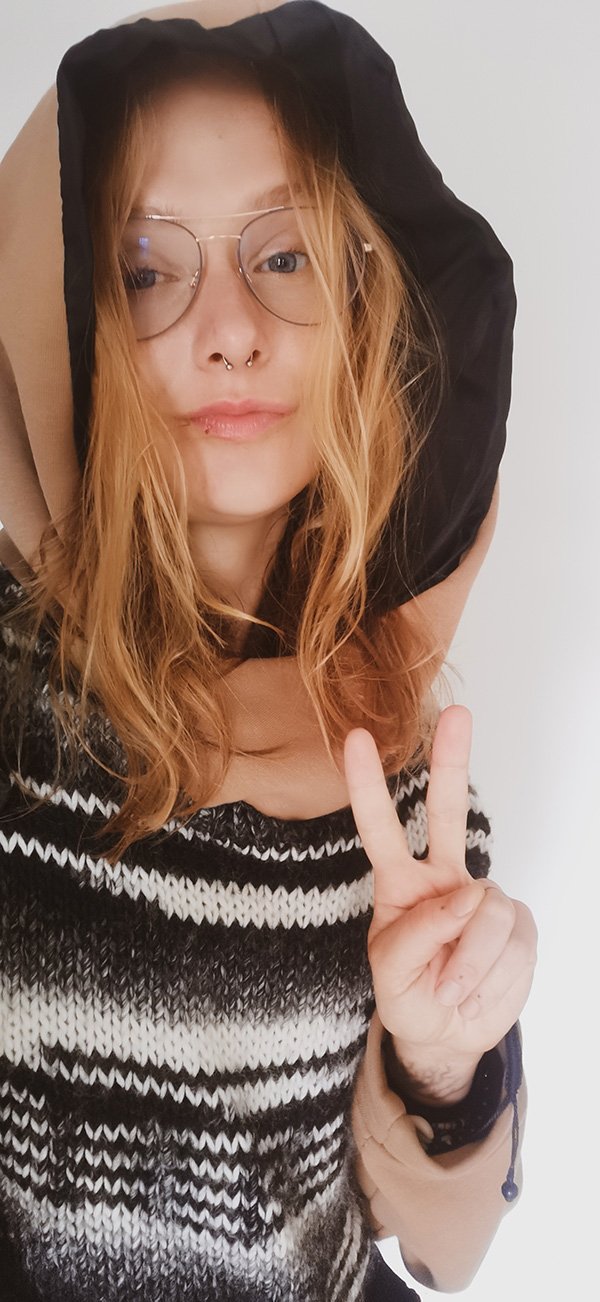
I’m Mira, and I’ve been tattooing for years: first in handpoke, and later, after professional courses, machine tattooing in many styles, ranging from minimal to hyperrealism. I’m also autistic, which means that when something interests me, I tend to fall deep into its history, biology, symbolism, and whatever else is connected to it. Inkscript is where I put what I find and work on. It has a few main parts: thematic flash books that I draw and write, and articles on tattoo styles, cultures, symbolism, and history. I make the kind of resource I would have wanted as an apprentice, and the kind I still reach for as a working artist. I hope you will find it useful too.

Tattoo Flash Collections
Each flash book is built around a theme — a single subject, a tradition, a set of motifs that share a history. The drawings are mine, hand-drawn, with no AI-generated material. Alongside the designs, each book carries the references and context I worked from: where the imagery comes from, how it has been used, and what is worth knowing before putting any of it on skin. PDF editions are available for instant download. Print editions on quality paper with durable binding are in preparation.
Browse collections »

Tattoo Ideas
A swallow, a moth, a four-leaf clover, the Virgin of Guadalupe, a single rose. The pieces in this section trace what each image is, where it comes from, how it has been used across different traditions, and what carrying it on skin tends to signify now. Useful if you are picking a design and want to know what you are picking, or if you have seen one a hundred times and want to understand it properly.
Browse tattoo ideas »

Tattoo Styles
These articles cover how tattoos are made — the visual languages, the schools, the lineages. American traditional, neo-traditional, realism, micro-realism, Japanese, blackwork, handpoke, and others. Each piece covers the style’s history, what defines it visually and technically, what it does well and badly, and what to consider before committing to working in it. Helpful for choosing a style, choosing an artist, or making sense of what you are looking at on someone else’s skin.
Browse tattoo styles »

Tattoo Encyclopedia
Everything else worth writing about: the mechanics of how a tattoo enters and stays in the skin, the biology of healing and ageing, the technology — machines, needles, pigments, cartridges — and how it has changed, the history of the craft itself, and the artists who have shaped it. For anyone who wants to know how the work actually works.
Browse the encyclopedia »

Let's stay in touch!
New books and articles go up regularly. The most reliable way to see them as they appear is @inkscript.tattoo on Instagram. I also invite you to follow my Pinterest @Inkscript, where I keep a nice library of various tattoo inspirations grouped by subject.